

Crypto World
No Email, No Account, No KYC: How GhostSwap Swaps 1,600+ Coins in One Step

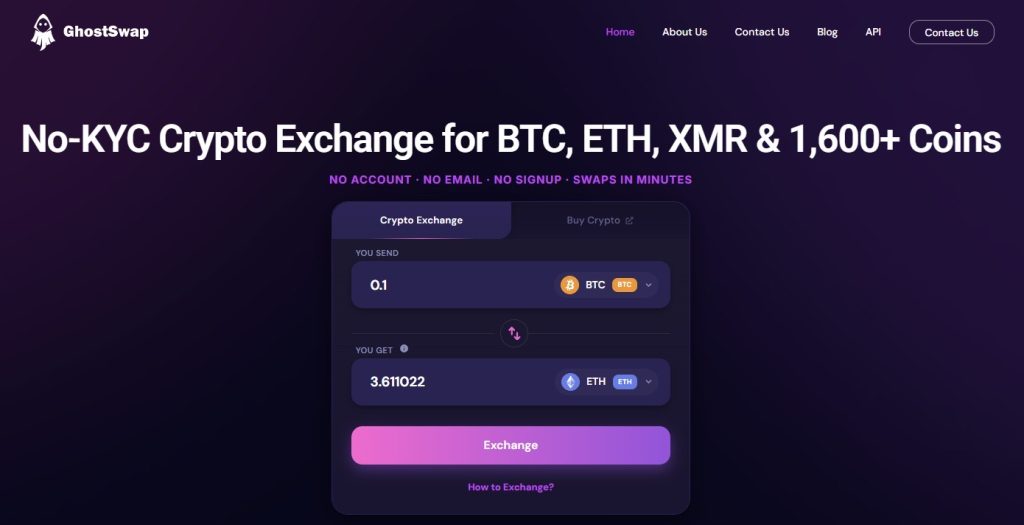
The traditional crypto exchange experience is anything but simple. You need to create an account, then verify your email, and submit identity documents. Then wait for approval and set up two-factor authentication. Deposit funds. Withdraw to your wallet. The process can take days and goes on and on before you actually own the asset you wanted.
For many users, this process can be completely unnecessary. Not everyone wants to trade on margin or place limit orders. Some just want to swap one cryptocurrency for another; quickly, privately, and without the overhead of creating yet another online account.
GhostSwap offers exactly that. It’s a non-custodial “instant swap” platform that lets users exchange cryptos without creating an account or providing personal information.
The process actually can’t be more simple: choose a pair, enter a destination address, send the source coin to a one-time deposit address, and receive the new coin, typically within minutes. No email, and no KYC. Just a swap.
What Is GhostSwap?
GhostSwap is a non-custodial swap aggregator that connects user transactions across multiple liquidity sources to find the best available rate. GhostSwap never takes long-term control of user assets, unlike centralized exchanges. Funds move directly from the user’s wallet through the swap process and land in the destination wallet.
GhostSwap supports over 1,600 tokens across major blockchains, including Bitcoin, Ethereum, Solana, Polygon, and (maybe most importantly) privacy-focused assets like Monero (XMR) and Zcash (ZEC). This deep support for privacy coins sets GhostSwap apart from many competitors that have delisted these assets due to regulatory pressure.
Key features, or let’s say, unique selling points, include:
- No signup, no email, no KYC for standard swaps
- 1,600+ supported assets across multiple chains
- Telegram bot for swaps without leaving the messaging app
- Public API for developers and business integrations
- Flat 2% fee quoted upfront, included in the exchange rate
GhostSwap has processed over $750 million in swaps for around 1.5 million users. The company is registered as a Delaware LLC and operates as an anonymous crypto exchange that prioritizes user privacy and simplicity.
How GhostSwap Works
The user experience is intentionally minimal. Here’s what actually happens during a swap:
Step 1: Choose the Coins You Want to Swap
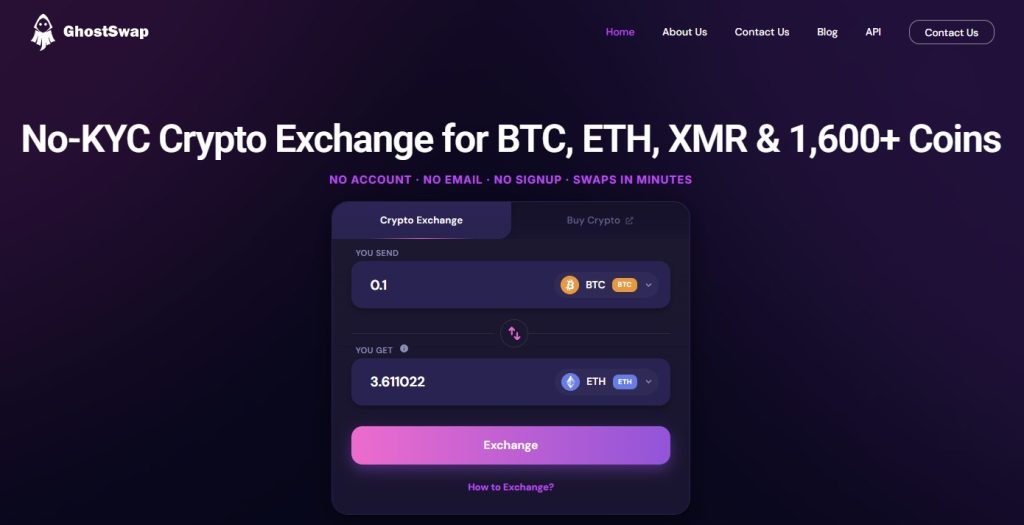
Users begin by selecting a coin to send and a coin to receive from drop-down menus. The interface supports cross-chain swaps, for example, Bitcoin to Solana or Ethereum to Monero. The source and destination assets can be on completely different blockchains; GhostSwap handles the bridge behind the scenes.
Step 2: Enter a Destination Wallet Address
The only information GhostSwap requires is a receiving wallet address for the output coin. There’s no account creation, no email verification, and no identity documents. Just paste the address where you want your funds to land.
Step 3: Send Your Crypto
Once the user confirms the swap details, GhostSwap generates a unique one-time deposit address. The user sends their source coin to this address directly from their own wallet. The address is temporary and tied exclusively to that specific transaction.
Step 4: Receive the New Asset
After the blockchain confirms the deposit, GhostSwap’s backend automatically executes the swap across its liquidity sources and sends the output coin to the user’s provided destination address. The entire process is on-chain and non-custodial.
Step 5: Verify the Transaction
Users can track their swap’s progress through GhostSwap’s status page or, if using the Telegram bot, through real-time updates in the chat. Once the transaction is complete, the funds are in the user’s wallet; no further action required.
Typical completion times range from a couple of minutes for fast chains like Solana or Polygon to about 30 minutes for slower chains like Bitcoin, depending on network congestion. GhostSwap warns users to have a bit of the chain’s native gas token (e.g., ETH) in their sending wallet to cover network fees.
The User Experience: What Makes GhostSwap Different?
Compare the GhostSwap workflow to a traditional exchange:
Traditional Exchange:
- Create account
- Verify email
- Complete KYC (submit ID, wait for approval)
- Set up 2FA
- Navigate to trading pair
- Place order
- Wait for execution
- Withdraw to wallet
GhostSwap:
- Select pair
- Enter destination address
- Send funds
- Receive coins
That’s it. Four steps instead of eight or more. No password management, no identity verification, no account recovery processes to remember. Fewer steps between intent and execution means less friction and a faster experience.
Supported Coins, Networks, and Privacy Assets
GhostSwap supports over 1,600 coins and tokens across numerous blockchains. The platform’s official documentation promotes cross-chain swaps, for example, Bitcoin to Solana or Ethereum to Polkadot, and specifically lists privacy coins like Monero (XMR) and Zcash (ZEC) among supported assets.
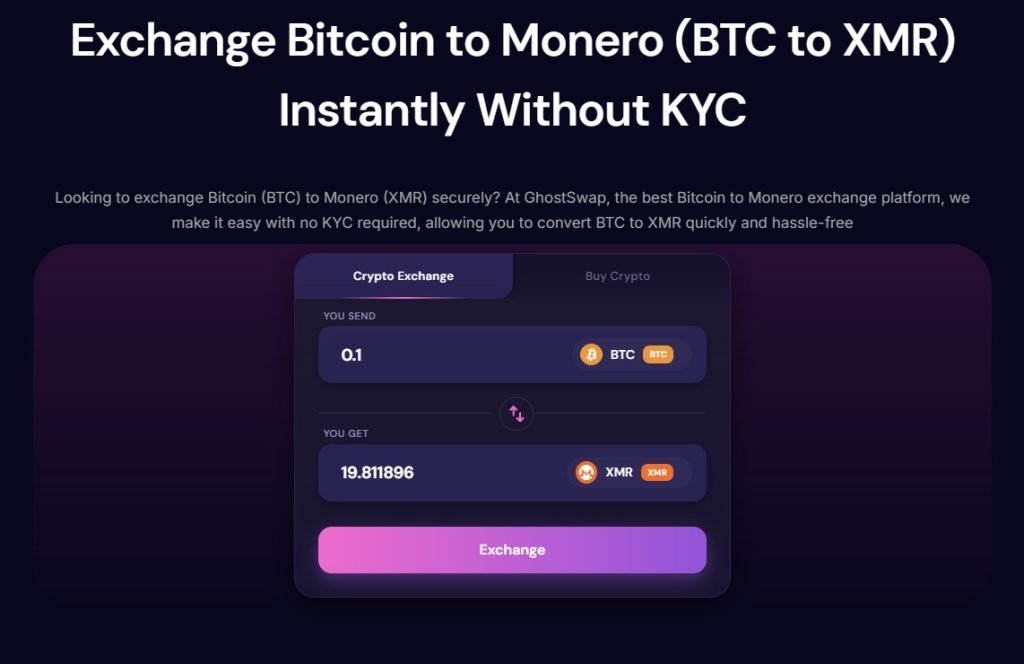
Monero (XMR) support: GhostSwap includes XMR as both a send and receive option. Pairs like BTC to XMR and ETH to XMR are listed among the platform’s top offerings. For users who value financial privacy, this is a pretty big advantage; Monero is the leading privacy coin, and its availability on GhostSwap means users can move in and out of it without creating a paper trail on a centralized exchange.
Zcash (ZEC) support: Similarly, Zcash appears in GhostSwap’s supported pairs list (BTC to ZEC, ETH to ZEC, USDT to ZEC, etc.) on the platform’s “All pairs” page. Zcash offers shielded transactions that hide sender, receiver, and amount; another option for privacy-conscious users.
The platform aggregates liquidity from multiple providers, so depth varies by coin. No official liquidity numbers are published, but GhostSwap claims to find “the best rates across multiple liquidity providers.” For smaller swap sizes (e.g., under several BTC worth), adequate liquidity should be available.
Privacy coins may be more thinly traded on global markets than majors like BTC or ETH, but GhostSwap’s aggregator model helps source liquidity where it exists.
GhostSwap’s Fee Structure
GhostSwap charges a flat 2.0% baseline fee (spread) on every swap, built directly into the quoted rate. Users see this fee upfront as part of the exchange rate and the final receive amount. For example, on a $10,000 swap, the implied cost is roughly $200, plus normal on-chain gas fees.
How the Fee Is Quoted Upfront
When a user selects a pair and enters an amount, the interface immediately shows the estimated output amount and the total fee. GhostSwap explicitly highlights that all fees are “included directly in the exchange rate displayed” before confirmation; no hidden charges appear at checkout.
Are There Additional Costs?
Standard blockchain network fees (miner/gas fees) are extra and come from the user’s wallet. These are not GhostSwap fees but rather costs inherent to sending any on-chain transaction. Additionally, if the market moves dramatically before the deposit confirms, extreme cases of slippage could occur; though GhostSwap does re-quote if confirmations take a long time.
Comparing Fixed-Fee Simplicity to Exchange Pricing
GhostSwap’s 2% fee is higher than some competitors. Changelly advertises fees around 0.25%, Godex charges approximately 0.5%, and FixedFloat offers 1% for fixed-rate and 0.5% for floating-rate swaps.
However, these platforms may not support the same range of privacy coins, may require accounts for certain features, or may have less transparent fee structures. GhostSwap’s simplicity (one flat rate, no tiers, no surprise charges) is good for users who want to know exactly what they’re paying before they commit.
Is GhostSwap Legit?
This is arguably the most important question for any user considering a new crypto platform.
What “Legit” Means in Crypto Swapping
In the context of instant swaps, legitimacy doesn’t mean guaranteed safety or regulatory approval. It means the platform delivers what it promises (fast, private, on-chain swaps) without scamming users or failing to execute transactions.
Signs That Users Commonly Look For
GhostSwap provides a public website and extensive documentation, a transparent swap process, a published API, a functional Telegram bot, and user-facing support channels. The platform has been operational for years and has processed over $750 million in swaps for approximately 1.5 million users.
Independent reviews and user reports generally confirm that swaps execute as advertised.
The Non-Custodial Element
GhostSwap is strictly non-custodial. It never takes long-term custody of user funds. Instead, each swap goes through a temporary deposit address: the user’s coins are sent from their wallet to this address, and immediately upon confirmation, GhostSwap releases the new coins from an upstream liquidity source into the user’s receiving wallet.
No pooled account is ever held on GhostSwap. This avoids many hacking risks associated with centralized exchanges, where large pools of customer funds become attractive targets.
What GhostSwap Does and Doesn’t Promise
GhostSwap delivers fast, anonymous crypto swaps with minimal friction. It does not promise to be the cheapest option, to provide advanced trading features, or to offer regulatory protection in every jurisdiction. Users should treat it as an advanced tool (ideal for moving privacy coins or cross-chain trades) and use small test amounts until comfortable.
Privacy and KYC: How Does GhostSwap Handle Identity Verification?
A core GhostSwap promise is no KYC. The site and terms repeatedly state that users need provide only a destination address; no name, ID, email, or phone. GhostSwap is an anonymous crypto exchange in the sense that it doesn’t collect identity-linked data from users. As one Binance.com guide puts it, GhostSwap has “zero registration, no identity documents.”
However, “no KYC” does not mean no compliance. GhostSwap is a Delaware-registered LLC and explicitly works with licensed crypto processing partners to handle AML/sanctions screening. In practice, each transaction is shared with these partners for automated checks. If a swap is flagged (e.g., for high value or hitting a blacklist), GhostSwap reserves the right to block, reject, or refund it.
The terms of use warn users that transactions may be subject to AML/KYC compliance “by licensed third parties.”
Information Users Are Not Required to Provide
Information needed to trade on GhostSwap is really simple; no email, no name, no address, no ID documents, no phone number. Users can even access GhostSwap via Tor or VPN without issue, which further enhances privacy.
Situations Where Compliance Obligations Could Arise
If a transaction is flagged by automated systems (often due to large size, unusual patterns, or connections to known suspicious addresses) GhostSwap may delay, block, or refund the swap. In some cases, third-party compliance partners may request additional information. This is relatively rare for standard swaps but is explicitly covered in GhostSwap’s terms.
Security Considerations Before Using Any Instant Swap Service
Even though GhostSwap’s non-custodial design eliminates many hacking risks, users should be aware of the risks that remain:
Verify Wallet Addresses Carefully
Once a transaction is sent to a blockchain address, it cannot be reversed. Mistyping a destination address or selecting the wrong network can result in permanent loss of funds. Always double-check addresses before confirming a transaction.
Double-Check Network Compatibility
Sending a coin to an address on the wrong network (e.g., sending BSC tokens to an Ethereum address) can result in loss. GhostSwap provides warnings, but the final responsibility lies with the user.
Start With a Small Test Transaction
Before swapping a large amount, send a small test transaction to verify that the address is correct, the network is compatible, and the swap executes as expected. This is standard practice in crypto and costs little in fees.
Understand Blockchain Confirmation Delays
Swap completion times depend on network confirmations. Bitcoin transactions can take 10–30 minutes; faster chains like Solana complete in seconds. If a transaction is delayed, it’s usually due to network congestion rather than a platform issue.
Keep Control of Your Private Keys
GhostSwap never asks for private keys. If any platform requests your private keys, it’s a scam. GhostSwap’s non-custodial design means the user remains in control of their funds throughout the process.
Beyond the Website: Telegram Bot and Public API
Using GhostSwap Through Telegram
Launched in 2025, the @GhostSwapBot on Telegram allows swaps without a browser. The bot mirrors the web UI: users start a chat, select coins, enter an amount, paste a destination address, and get a deposit address from the bot.
Real-time updates are shown as the swap proceeds. This integration allows users to swap without even leaving Telegram; a standout feature few swap platforms offer.
The Public API
GhostSwap exposes a server-to-server API for business integrations (wallets, apps). GhostSwap’s API is authenticated by bearer tokens. Key endpoints include:
- /v1/quotes (get price quote)
- /v1/addresses/validate (validate a payout address)
- /v1/swaps (create a swap)
The docs stress idempotency (retry safety) and real-time status polling. Rate limits are generous: up to 120 requests per second per IP and 30 requests per second per API key. Partners can quickly integrate swaps into apps with high throughput.
Why These Tools Matter
The Telegram bot and API expand GhostSwap beyond a standard web interface. Users can swap from anywhere – even from a messaging app – and developers can integrate GhostSwap’s swap functionality into their own applications, wallets, and services.
Who Is GhostSwap Best Suited For?
GhostSwap serves several distinct user profiles:
Privacy-Conscious Users
People who value financial privacy and don’t want their transactions linked to their identity. GhostSwap’s no-KYC model and support for privacy coins like Monero and Zcash make it an attractive option.
Users Making Occasional Swaps
For users who swap crypto infrequently – perhaps a few times a year – creating accounts on multiple exchanges is overkill. GhostSwap’s pay-as-you-go model is ideal for occasional needs.
People Who Want to Avoid Exchange Onboarding
Account creation, email verification, KYC, and 2FA setup can take days. GhostSwap eliminates all of this.
Developers and Service Operators Using the API
Businesses and developers integrating crypto swaps into their applications can use GhostSwap’s API to add swap functionality without building their own liquidity infrastructure.
Users Swapping Into or Out of XMR and ZEC
GhostSwap maintains support for privacy coins that many exchanges have delisted. For users who need to move into or out of Monero or Zcash, GhostSwap provides a reliable option.
Potential Drawbacks and Limitations
GhostSwap is not for everyone. Several limitations are worth noting:
- No advanced trading features: GhostSwap is designed for simple swaps, not trading. There are no order books, charting tools, limit orders, or margin trading.
- Not a full exchange account: Users cannot hold balances on GhostSwap or repeatedly trade without paying the 2% fee each time. It’s a swap service, not an exchange account.
- No order books: Prices are set by GhostSwap’s aggregator engine, not by user orders. Users cannot set their own prices or wait for specific market conditions.
- Dependence on blockchain conditions: Swap speed depends entirely on the underlying blockchain. Users cannot accelerate their swap beyond the chain’s confirmation requirements.
- Fees may not always be cheapest compared to active trading platforms: The 2% flat fee is higher than what a user might pay on an exchange with lower trading fees. For very large or frequent swaps, an exchange account might be more cost-effective.
- Regulatory ambiguity: GhostSwap operates in a regulatory gray zone. No formal licenses or public audits are mentioned. Users in jurisdictions with strict crypto laws should consider the legal implications of using an anonymous crypto exchange.
- Potential for flagged transactions: While GhostSwap itself doesn’t require KYC, its compliance partners may flag and block certain transactions, especially large ones.
Frequently Asked Questions
Do I Need an Account to Use GhostSwap?
No. GhostSwap requires no account, no email, and no password. Users simply select a pair, enter a destination address, and send funds.
Does GhostSwap Require KYC?
No. GhostSwap does not require identity documents, name, address, or phone number for standard swaps. Compliance checks are handled behind the scenes by partners and may occasionally flag transactions.
How Long Do Swaps Take on GhostSwap?
Typical completion times range from a couple of minutes for fast chains (Solana, Polygon) to approximately 30 minutes for slower chains (Bitcoin). Most swaps complete within 5–30 minutes.
Which Coins Are Supported on GhostSwap?
GhostSwap supports over 1,600 coins and tokens across major blockchains, including Bitcoin, Ethereum, Solana, Polygon, Monero, Zcash, and stablecoins like USDT and USDC.
Does GhostSwap Support Monero?
Yes. Monero (XMR) is fully supported as both a send and receive option. Pairs like BTC to XMR and ETH to XMR are available.
What Is the GhostSwap Fee?
GhostSwap charges a flat 2% fee built into the quoted exchange rate. This is the total service fee; users also pay standard blockchain network fees (gas).
Can I Use GhostSwap Through Telegram?
Yes. The @GhostSwapBot on Telegram allows users to perform swaps directly within the messaging app. The bot mirrors the web interface and provides real-time updates.
Does GhostSwap Offer an API?
Yes. GhostSwap has a Partners API for business integrations with endpoints for quotes, address validation, and swap creation. Rate limits are generous (120 requests/sec per IP, 30 requests/sec per API key).
Is GhostSwap Custodial or Non-Custodial?
Non-custodial. GhostSwap never takes long-term custody of user funds. Each swap uses a temporary deposit address, and funds are routed directly to the user’s destination wallet.
What Happens if I Send the Wrong Asset?
Sending the wrong asset to a deposit address can result in permanent loss. GhostSwap’s terms explicitly state that users are responsible for sending the correct coin to the correct address. Always double-check before confirming a transaction.
Wrapping Up
All in all, GhostSwap delivers on its core promise: fast, private, non-custodial crypto swaps without the overhead of traditional exchange onboarding. It’s not the cheapest option, and it doesn’t offer advanced trading features, but for users who value simplicity and privacy, it’s a compelling choice.
The platform’s support for Monero and Zcash, along with its Telegram bot and public API, make it a versatile tool for both individual users and developers.
The post No Email, No Account, No KYC: How GhostSwap Swaps 1,600+ Coins in One Step appeared first on Cryptonews.

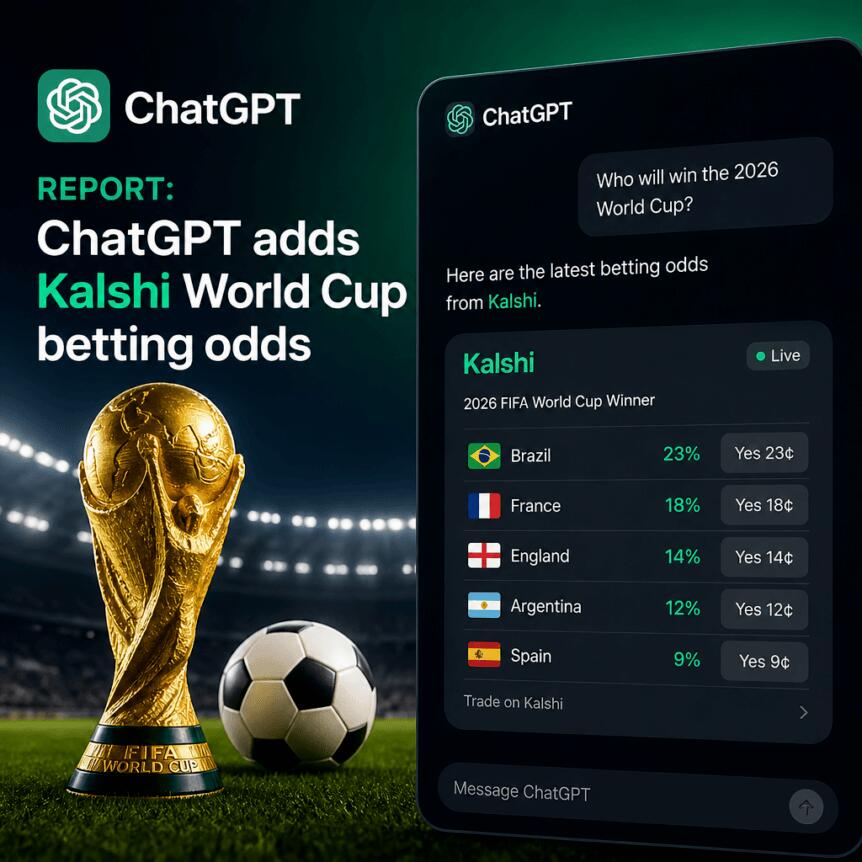
OpenAI has begun surfacing prediction-market odds from Kalshi directly inside ChatGPT search results for FIFA World Cup matchups, according to a report from The New York Times. The integration provides fans with an at-a-glance view of each team’s implied probability of winning, sourced from live market pricing—without turning the chat interface into a betting channel.
The partnership was not publicly announced at the time of the report. Kalshi declined to comment to Cointelegraph, and OpenAI did not respond to a request for comment.
Key takeaways
- ChatGPT search results now display Kalshi-derived odds for specific World Cup matches, presented as implied win probabilities for each team.
- OpenAI’s guidance cited by The New York Times indicates the feature is informational only and does not enable bets through ChatGPT.
- The World Cup deployment underscores the broader shift of prediction-market data from trading venues into mainstream consumer and media products.
- Dune Analytics data shows Kalshi scaled to more than $33 billion in monthly notional volume in June 2026, outpacing Polymarket by about $22 billion in the same period.
Odds graphics appear inside ChatGPT search
As described by The New York Times, when users search for World Cup fixtures in ChatGPT, the interface can show market-based odds as graphics. These visuals break down each team’s implied chance of winning, reflecting how prediction-market participants price outcomes.
In one example cited in the report, a ChatGPT search for France versus Spain showed France at a 59% probability of victory. Another query—England versus Argentina—displayed England at a 55% chance, with the probabilities attributed to Kalshi’s market pricing.
Importantly, the feature is framed as data display rather than a trading mechanism. OpenAI’s guidance, as referenced by the report, indicates users cannot place wagers through ChatGPT; the Kalshi feed is intended for informational purposes only.
Why prediction-market data is attractive to AI products
Prediction markets are built on the idea that crowds of participants, acting on available information, can collectively form price-based forecasts for real-world events. Translating those prices into implied probabilities gives users a compact summary of what the market currently thinks is more likely.
For consumer AI experiences, this is a notable shift: instead of relying solely on curated editorial forecasts or static historical analytics, the AI interface can present live, outcome-relevant probabilities that update as the underlying market changes. In practice, that matters for users who want a “current best guess” rather than a delayed consensus.
The World Cup is a particularly test-friendly environment for this approach. Matchups are clear, outcomes are well-defined, and the timing is within a single tournament window—attributes that make it easier for users to compare predictions with results as they unfold.
Kalshi’s scale and the “mainstreaming” trend
Kalshi is a regulated prediction market platform where traders can buy and sell contracts tied to real-world events, including sports, economics, and politics. While prediction markets have existed for years, their gradual integration into major technology and media ecosystems has accelerated recently.
Dune Analytics data cited in the report indicates Kalshi recorded more than $33 billion in monthly notional volume in June 2026, roughly $22 billion ahead of Polymarket. That kind of volume signal is often read by the market as evidence of liquidity and participation—factors that can influence how useful price-derived odds are for observers.
Calendar effects likely play a role as well. A World Cup naturally concentrates attention and trading activity, which can pull these odds into the mainstream at the exact moment sports audiences are most engaged.
From TV and finance portals to search interfaces
The ChatGPT feature follows a broader pattern: prediction-market data increasingly appears inside high-visibility platforms rather than remaining confined to trading dashboards.
Kalshi has already established partnerships with major media outlets. According to Kalshi’s announcements, it entered an arrangement with CNN and another with CNBC in December 2025 to integrate its market data into coverage.
Rival platforms have pursued similar distribution deals. Bloomberg reported that Polymarket partnered with Dow Jones in January 2026 to bring prediction market data to products including The Wall Street Journal, extending market-based odds into traditional finance publishing.
Tech search products are also getting involved. Google reportedly integrated prediction-market information from both Kalshi and Polymarket into Google Finance and Search products in November 2025, positioning those odds within everyday discovery flows rather than requiring users to visit a trading website first.
Against that backdrop, OpenAI’s use of Kalshi odds in ChatGPT looks less like a one-off novelty and more like part of a wider supply-chain for “market intelligence” becoming a feature—rather than a separate destination.
What to watch next
For readers, the key question is whether this remains a World Cup-specific display or expands into other event categories and geographies. If OpenAI continues to surface market-based forecasts beyond sports—and if more platforms treat those odds as an everyday reference point—the practical impact will be felt less in trading volumes alone and more in how quickly prediction-market consensus becomes embedded in routine decision-making.
Crypto World
Ethereum (ETH) Foundation spinout EthSystems targets banks with blockchain privacy technology

A team of former Ethereum Foundation researchers focused on institutional privacy has launched EthSystems, a new for-profit company aimed at building confidentiality infrastructure for financial institutions using Ethereum.
The startup emerged from the Ethereum Foundation, which spent the past year developing privacy technologies for enterprise use cases while engaging with central banks, regulators, global banks and asset managers.
The spinout comes amid one of the biggest organizational shakeups in the Ethereum Foundation in years. Following months of criticism over leadership, strategy and the foundation’s role in supporting Ethereum’s increasingly institutional user base, several teams have recently been spun out into independent organizations.
Among them are EthLabs, a nonprofit focused on advancing Ethereum protocol research and scaling, and Ethereum Institutional, a separate nonprofit designed to coordinate institutional adoption and engagement with large financial firms. Together, the organizations represent an effort to distribute responsibilities previously housed within the foundation across more specialized entities.
EthSystems said it plans to commercialize work it began inside the foundation, including confidential stablecoin transfers, private bond issuance, cross-chain settlement systems and open-source protocol specifications.


The American Bankers Association, the Independent Community Bankers of America, and 76 state associations sent Senate leaders a set of targeted revisions to the CLARITY Act, which is pending before the Senate.
The July 13 letter went to Majority Leader John Thune and Minority Leader Chuck Schumer. It focuses on Section 404.
The Targeted Edits Banks Want in The CLARITY Act
Section 404 of the CLARITY Act targets stablecoin yield. It bars covered parties from paying returns solely for holding payment stablecoins or for providing a yield equivalent to bank deposit interest. It preserves activity-based rewards tied to transactions or platform use.
The signers propose narrow changes to the section, plus a printed markup of the amended text. They want lawmakers to:
- Remove the word “solely” from subsection (1)(A).
- Cut the phrases “on a payment stablecoin balance” and “on an interest-bearing bank deposit” from (1)(B).
- Replace the “economically or functionally equivalent” test with a “substantially similar” standard, wherever it appears in Section 404.
- Delete subsection (3)(B)in its entirety.
The bankers say these would stop firms from engineering incentives that dodge the ban. They also argue that the rewards subsection works against the prohibition it sits beside.
Follow us on X to get the latest news as it happens
Banks Warn of Deposit Flight Risk
The groups said that they back responsible innovation and a well-regulated digital asset marketplace but want firmer guardrails. In the letter, the bankers expressed concerns regarding the current language in Section 404.
“In particular, we remain concerned that ambiguities within the bill could encourage stablecoin arrangements to effectively function as substitutes for deposits, despite Congress’s longstanding and clearly stated intent that payment stablecoins should serve as transaction tools rather than store-of-value products,” the association said.
The banking groups say the risk of deposit flight is concrete, not hypothetical. When local deposits shrink, so does the money banks recycle into their own towns.
Those deposits fund home loans, small-business credit, and financing for farmers. The letter frames that lending is the engine behind local growth.
Five US banking lobbies made similar arguments in an earlier letter this year. This round sharpens the specific statutory fixes.
The stablecoin yield is one of three key disputes stalling the bill. Lawmakers remain split over Section 604 developer protections and ethics rules.
President Trump has pushed senators to move quickly. At the same time, two groups, NOBLE and a federal law enforcement association, have backed the bill despite the open fights.
The Senate faces a narrow window before the August recess. Whether leaders can settle the stablecoin, developer, and ethics disputes in that window remains unclear.
Subscribe to our YouTube channel to watch leaders and journalists provide expert insights
The post 78 Banking Groups Push Senate to Rewrite CLARITY Act Section 404 appeared first on BeInCrypto.

June CPI fell a seasonally adjusted 0.4% month-over-month, the steepest monthly drop since April 2020, pulling the annual inflation rate to 3.5% against a Dow Jones consensus of 3.8%, and Bitcoin responded with an immediate push higher after the print. The data beat is real.

The energy index slumped 5.7% in June, with gasoline and fuel oil both falling more than 9%, accounting for the bulk of the monthly swing. Strip that out, and the picture is considerably less clean: core CPI, which excludes food and energy, printed flat on the month at a 2.6% annual rate versus a 2.9% forecast. Services ex-energy were flat; shelter rose 0.1%; transportation services declined 0.3%.
The distinction is directly relevant to Federal Reserve policy because policymakers target core and services inflation as the longer-run signal. A gasoline-driven headline miss does not move that needle, and the market’s own rate pricing reflects that.
As of now, the Fed is widely expected to hold at its July 28–29 FOMC meeting and then deliver a 25 basis point hike in September, keeping the overnight rate at 3.5%–3.75% for now before moving it higher.
BREAKING:
ODDS OF AN INTEREST RATE HIKE JUST DROPPED TO 16%
AFTER THE CPI INFLATION DATA RELEASE RATES WILL LIKELY REMAIN UNCHANGED
THIS IS EXTREMELY BULLISH FOR MARKETS!! https://t.co/4gc1fCUq8w pic.twitter.com/T2vbN6xmi0— ᴛʀᴀᴄᴇʀ (@DeFiTracer) July 14, 2026
That tone reinforces what the rate market is already pricing. The interest rates path remains higher-for-longer until core and services data show a convincing trend, not a one-month energy artifact.
Don’t Miss Out on Our $1,000 USDT Airdrop on ByBit
CPI Positioning and the Bitcoin ETF Flow Backdrop
CPI YoY 3.5 % vs Exp. 3.8% | Prior. 4.2%
Core CPI YoY 2.6 % vs Exp. 2.8% | Prior. 2.9%
Softer inflation could revive rate-cut bets, weaken yields and the dollar, and support stocks and Bitcoin. pic.twitter.com/SPfR3gi2nn— Coin Bureau (@coinbureau) July 14, 2026
Bitcoin entered Tuesday’s print with strong recent momentum, with traders watching whether inflation data could shift the Fed’s path quickly enough to keep risk appetite intact.
Bitcoin and crypto market commentary ahead of the CPI release pointed to ETF-flow and on-chain developments as supportive backdrops for the move. Pre-CPI analysis also suggested that bullish positioning could be vulnerable if macro expectations changed.
The caution flag comes from the derivatives view: positioning can unwind quickly when macro expectations reprice, even if the headline print looks constructive for crypto in the moment.
Discover: The Best Token Presales
Key Levels and the Forward Case for Bulls and Bears
Traders are focused on nearby resistance around $64,000, while technical desks are watching a sequence of higher targets if momentum holds after the CPI-driven pop.
On the downside, $62,000 is a key reference point for risk. Below that, traders expect attention to shift to prior supports, including around $60,000. Altcoins have their own closely watched levels as well, with ETH’s recent resistance area around $1,800 in focus after the June selloff.

Thomas Perfumo, chief economist at Kraken, framed the macro read accurately:
“Today’s print, read carefully, is more a reason for cautious optimism than alarm,” adding that “a broader inflationary impulse is shrinking.” Forward scenario he described, inflation continuing to decelerate in the second half of 2026, preserving “policy optionality for central banks” is the bull case for risk assets.
But that scenario requires several more months of data confirming the trend. Exchange reserve data and on-chain metrics support the structural setup, but a single energy-driven CPI print does not resolve the Fed’s September calculus.
Discover: The Best Crypto to Diversify Your Portfolio
The post June CPI Beat Sparks Bitcoin Surge, but the Fed’s September Hike Looms appeared first on Cryptonews.
Crypto World
For pension funds, tokenization’s real play is balance sheet management, not just 24/7 liquidity, Fidelity’s Lai says


Tokenized products already exist, though mainly for investing. The most popular category is tokenized money market funds, primarily backed by U.S. Treasuries. The largest, BlackRock’s USD Institutional Digital Liquidity Fund (BUIDL), debuted in March 2024.
This category now has more than $15 billion of assets under management (AUM), with the broader onchain real-world asset market (excluding stablecoins) surpassing $31 billion in value. Casting a wider net to include assets such as alternative investments and tokenized financial infrastructures, the global asset tokenization market is valued at roughly $2.1 trillion.
According to forecasts by Grand View Research, the sector is projected to hit $24.5 trillion by 2033, with some industry estimates suggesting tokenized markets could reach as much as $88 trillion by 2035.
The key advantage they offer is instant execution around the clock and fractional ownership, which allows traders to buy small portions at any time, with all stages of the transaction — including purchase, sale and final processing — completed immediately.
Faster, cheaper
That’s not the focal point for institutional investors, who are more interested in the properties of the tokenized assets than their ease of trading.
“Generally speaking, they are not asking for tokens,” Lai said. “They are asking for what tokens can do more compared to the existing wrappers they already have.”
Sam Altman’s OpenAI is bringing prediction market data to ChatGPT, giving World Cup fans a new way to track match predictions.
OpenAI has started displaying Kalshi’s prediction market odds for FIFA World Cup matches in ChatGPT search results, according to a report by The New York Times.
The integration had not been publicly announced at the time of publication. Kalshi declined to comment to Cointelegraph, while OpenAI did not immediately respond to a request for comment.
The move reportedly marks OpenAI’s first known partnership with a prediction market platform, highlighting the growing interest among technology companies in incorporating market-based forecasts into consumer products.
Market odds enter AI search experience
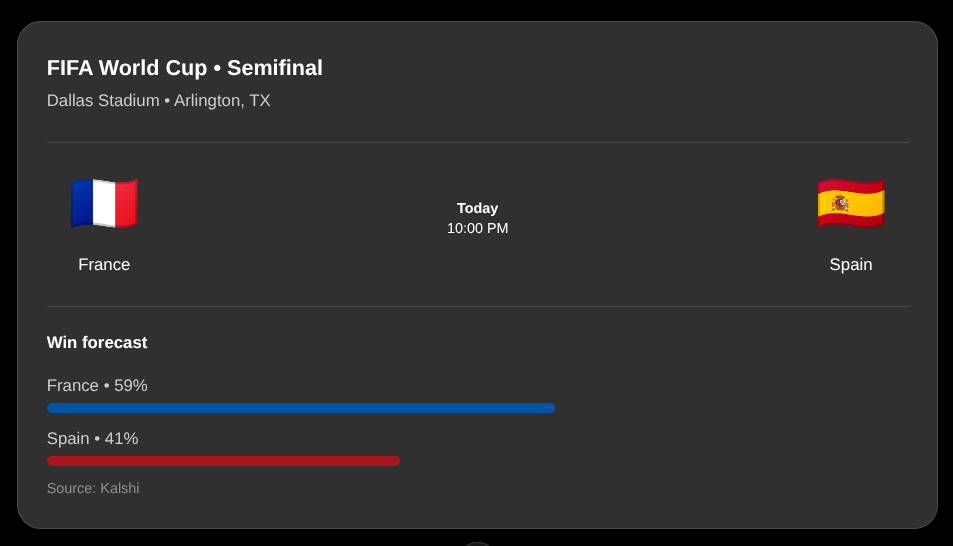
According to the report, ChatGPT displays Kalshi-based market odds when users search for World Cup matchups. The results appear as graphics showing each team’s implied chance of winning based on Kalshi’s prediction markets.
One example cited by the report involved a ChatGPT search for France versus Spain showing France with a 59% chance of victory, while a query about England versus Argentina displayed a 55% chance for England, with the Kalshi as the source for the forecast (see below).
Source: Cointelegraph via ChatGPT
The integration does not allow users to place bets through ChatGPT, according to OpenAI’s guidance cited by the report, with Kalshi data intended for informational purposes only.
Prediction markets move into mainstream platforms
Founded as a regulated prediction market platform, Kalshi allows users to trade contracts tied to real-world events, including economic indicators, politics and sports.
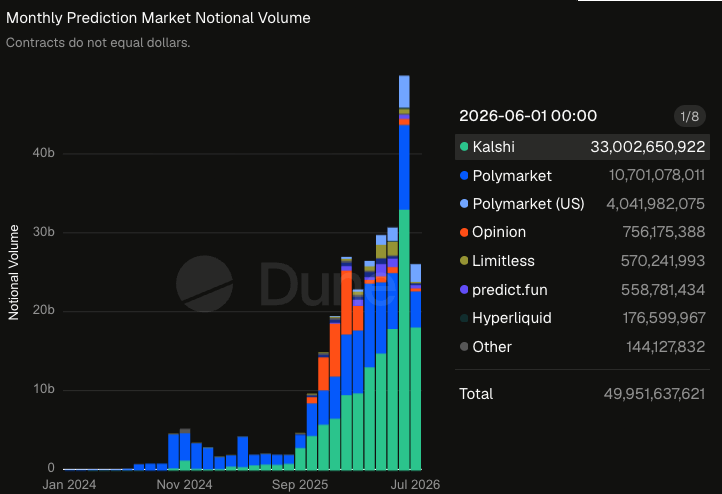
The platform has grown into one of the largest prediction market venues, with Dune Analytics data showing Kalshi recorded more than $33 billion in monthly notional volume in June 2026, about $22 billion ahead of Polymarket.
Related: Kalshi June trading volume tops $9B as World Cup fuels prediction markets
Source: Dune
Use of prediction market data has gained traction across major media and technology platforms, with Kalshi entering partnerships with CNN and CNBC in December 2025 to integrate its market data into their coverage. Rival Polymarket partnered with Dow Jones in January 2026 to bring its prediction market data to products including The Wall Street Journal.
Google also integrated prediction market data from Kalshi and Polymarket into Google Finance and Search products in November 2025.
Magazine: AI’s power crunch turns Bitcoin miners’ grid access into an asset
Crypto World
As AI Platforms Move Away From Unlimited, Sogni AI Launches a $20 Fair-Use Unlimited Plan on Community GPUs
[PRESS RELEASE – Singapore, Singapore, July 14th, 2026]
New plans cover image, video, music, language models and agent workflows while allocating 51% of net subscription revenue to participating GPU operators.
Sogni AI today announced Sogni Unlimited, a fair-use subscription providing credit-free generation across the open-source and open-weight image, video, music and language models hosted on its creative AI platform. The plan costs $20 per month or $199 per year and runs on the Sogni Supernet, a decentralized network of independently operated GPUs. It is available today on the web and in Sogni’s Mac, iOS and Android applications.

The launch comes one year after the Supernet’s public mainnet debut. The network has powered more than 158 million creations since its 2024 testnet launch, with rendering performed by participating operators on consumer-grade GPUs.
Several centralized AI platforms have reduced, capped or discontinued unlimited-generation offerings since late 2024. Sogni designed its network around a different cost structure: participating GPU operators accrue 51% of net subscription revenue — calculated after payment fees, taxes and refunds — in proportion to the rendering work they complete each month. Compute expense therefore scales with subscription revenue rather than with a fixed cloud bill, and the revenue share is intended to attract additional operators as demand grows.
“Unlimited creative AI has been difficult to sustain because generation costs rise directly with usage,” said Mauvis Ledford, CEO and co-founder of Sogni AI. “Sogni was designed the other way around: independent operators provide the infrastructure and are paid the majority of net subscription revenue for the work completed on the network. Fair-use unlimited is not a promotion — it is what this architecture was built to do.”
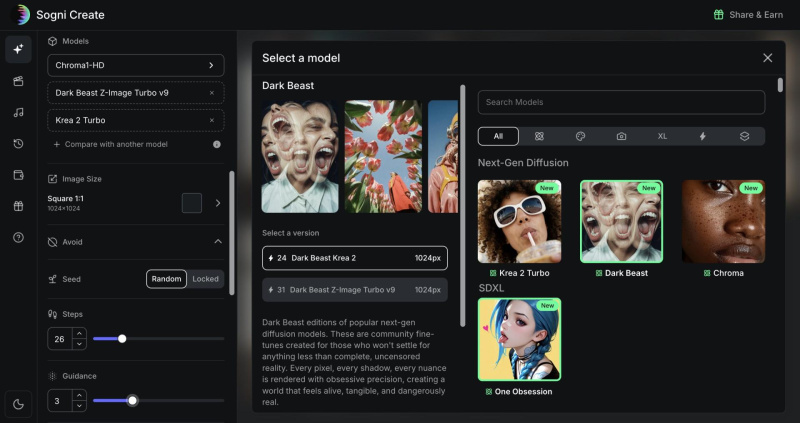
Sogni Unlimited covers more than 100 open-source and open-weight models hosted on the network, including Krea 2 Turbo, Z-Image Turbo, Chroma, Qwen Image Edit 2511, LTX-2.3 video, WAN 2.2 animation and ACE-Step 1.5 music generation, together with LLM chat, the Sogni Creative Agent, and SDK and API access across all Sogni applications. Newly released open-weight models are added as they become available on the network. Subscriptions are paid by card, and no wallet or crypto knowledge is required.
“Open models are improving quickly and run well on consumer hardware,” said Mark Ledford, CTO and co-founder of Sogni AI. “The network is built to bring them to creators quickly after release and to pay operators a fixed share of the revenue for that work.”
Covered renders spend no credits. Fair-use scheduling may queue exceptionally heavy sustained workloads during periods of peak demand, under published per-tier concurrency rules: up to four concurrent image jobs and one video job on Unlimited, and up to 16 image jobs and four video jobs on Unlimited Pro ($50 per month or $498 per year), which also carries larger queues and higher priority. Three frontier partner models with per-render licensing costs — GPT Image 2, Seedance 2.0 and HappyHorse 1.1 — remain pay-as-you-go, with a 5% discount for Unlimited subscribers and 10% for Unlimited Pro.
Eligible new subscribers receive a three-day trial at https://www.sogni.ai/unlimited. Subscription benefits apply across Sogni applications and through the Sogni SDK and API. App Store and Google Play pricing may differ from web pricing due to platform fees.
About Sogni AI
Sogni AI is a Singapore-based creative AI platform and decentralized inference network founded by former CoinMarketCap executives. Its applications provide image, video, music and language workflows through community-operated GPU infrastructure. More information is available at https://www.sogni.ai/ and https://docs.sogni.ai/.
Media contact: Mauvis Ledford, CEO, Sogni AI — press@sogni.ai
Press and brand kit: https://www.sogni.ai/brand
The post As AI Platforms Move Away From Unlimited, Sogni AI Launches a $20 Fair-Use Unlimited Plan on Community GPUs appeared first on CryptoPotato.
Ripple, alongside a range of other cryptocurrency-oriented firms, has joined the newly operational x402 Foundation as a premier member.
Hosted by the Linux Foundation, the organization is designed to oversee x402 – an open protocol contributed by Coinbase that embeds payments directly into standard web interactions.
The main purpose of the technology is to let AI-based agents, applications, and APIs send and receive money as easily as they exchange data.
Ripple is proud to join the x402 Foundation as a Premier Member.
As AI agents begin to take on more of the transaction lifecycle, they’ll need a way to pay that’s as fast and reliable as the way they already exchange data. We’ve been helping build that future on the XRP Ledger… https://t.co/eSzTyXBQFm
— Ripple (@Ripple) July 14, 2026
The protocol could become increasingly important as AI agents move from making recommendations to actually purchasing services, accessing paid APIs, and completing transactions entirely on their own. Through open, vendor-neutral governance, the foundation aims to ensure that this emerging payment infrastructure supports various networks and payment methods without being controlled by a single company.
Speaking on the matter was Markus Infranger, senior vice president of RippleX, who said:
“Open standards like x402 help lay the foundation for trusted, interoperable machine-to-machine payments.”
He also added that Ripple has already developed XRP Ledger infrastructure, which supports x402. This should enable AI agents to transact using XRP and the company’s RLUSD stablecoin.
The post Ripple, Coinbase, Circle Join Linux x402 Foundation to Help Shape AI Payments appeared first on CryptoPotato.
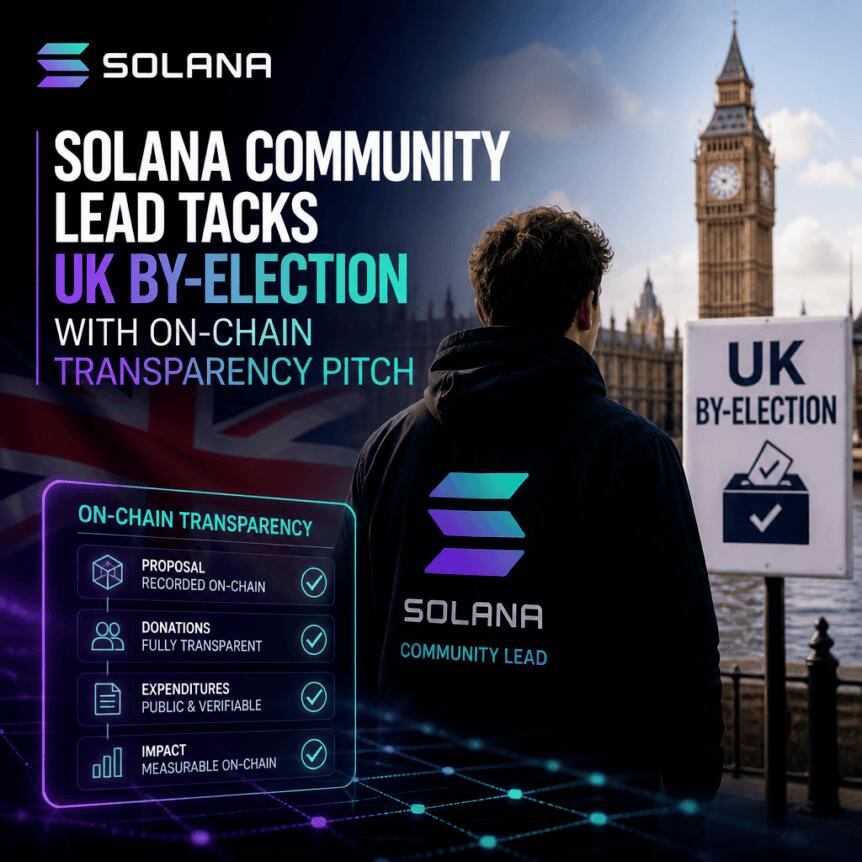
Stephen “Cap” Newnham, a prominent figure in the Solana community through the UK-based group Superteam UK, says he will run as an independent candidate in the Aug. 13 parliamentary by-election in Clacton. The move puts a blockchain-leaning platform into a race already defined by controversy surrounding Reform UK leader Nigel Farage’s finances and parliamentary disclosures.
Newnham announced on July 9 that he would stand independently and later laid out five campaign pledges. They include support for local entrepreneurs, education focused on digital and artificial intelligence skills, financial literacy initiatives, and—most notably—an onchain-style transparency agenda alongside a promise that pension holders should be able to choose where their retirement funds are held.
Key takeaways
- Solana community leader Stephen “Cap” Newnham will contest the Aug. 13 Clacton by-election as an independent, following his July 9 announcement.
- His platform includes “onchain political transparency” and publishing donations and meetings “in plain English and onchain,” though it does not outline pension-law changes.
- Newnham’s pension pledge focuses on existing options—such as SIPPs and small self-administered schemes—rather than proposing blockchain management of pension assets.
- The by-election is closely watched due to scrutiny of Farage’s decision to trigger a new vote after parliamentary standards concerns about alleged undeclared crypto-linked gifts.
- A national Ipsos poll showed 33% prefer satirical candidate Count Binface over 21% for Farage, but it did not measure views among Clacton residents specifically.
Newnham’s pledges: transparency and pension self-direction
In posts shared to X on Tuesday, Newnham described five campaign pledges for the Clacton contest. According to the same series of announcements, the independent candidate also said his campaign would publish donations and meetings in “plain English” and onchain.
One pledge—“You should own your pension”—argues that savers should have control over where retirement assets are held. The campaign’s framing points to existing UK pension structures, including self-invested personal pensions (SIPPs) and small self-administered schemes, which allow individuals to direct investments rather than leaving asset allocation entirely to a provider.
However, the campaign materials provided so far do not specify a role for blockchain technology in the day-to-day management of pension assets, nor do they propose any legislative changes to pension rules. A blockchain-based record system could potentially make published information harder to tamper with after the fact, but it would not automatically guarantee that every political donation or meeting has been fully disclosed in the first place.
Cointelegraph said it reached out to Newnham for additional detail on the proposals but had not received a response by publication.
From Solana ecosystem to UK election stage
Newnham’s candidacy is rooted in the Solana ecosystem through his work with Superteam UK. The linked Superteam UK description says the group was established to help retain technical talent in Britain by supporting founders and developers building on Solana, arguing that some entrepreneurs leave the country for better funding and startup opportunities abroad.
His LinkedIn profile, referenced in the article, states that he studied economics at the University of Edinburgh before joining the Solana ecosystem. It also notes that he leads Superteam UK and co-authored a report on blockchain and the future of work with Coinbase’s “Stand With Crypto” campaign and the DLT Science Foundation.
While the election entry brings crypto-adjacent themes into mainstream politics, the platform as described emphasizes public-facing transparency and financial education more than direct technical policy claims. Investors and users who follow blockchain projects may still view the pledges as an attempt to translate crypto concepts—particularly auditability and record-keeping—into political disclosure norms.
Farage’s scrutiny remains the race’s central storyline
Newnham’s candidacy lands in a by-election triggered after Farage resigned from Parliament on Wednesday and chose to contest the Clacton seat again. The renewed race is tied to a parliamentary standards investigation into whether Farage should have declared a £5 million personal gift, reported to have been made by crypto investor Christopher Harborne.
Farage has said he was not required to declare the gift because it was received before he entered Parliament. Still, the broader narrative includes additional allegations and scrutiny—according to earlier coverage referenced by Cointelegraph—over reported financial support from crypto entrepreneur George Cottrell and claims that financial relationships overlapped with Farage’s digital asset advocacy. Farage has denied wrongdoing and said he complied with parliamentary rules.
This matters beyond politics: when disclosures involving crypto-connected figures become part of public accountability debates, it can shape how regulators, lawmakers, and donors view compliance expectations around digital assets. For the crypto sector, the practical question is whether disclosure norms will be tightened, clarified, or interpreted differently in response to ongoing challenges to transparency.
Poll signals unusual voter attention, but local preferences remain unknown
The contest has attracted an eclectic mix. At the time of writing, Democracy Club lists 11 prospective candidates for the Clacton by-election, including Newnham, Farage, and the satirical candidate Count Binface. The council is not expected to confirm the official field until July 17.
A Friday Ipsos survey of 1,000 British adults found that 33% would prefer Count Binface to win, compared with 21% for Farage. The same survey also suggests that the by-election’s attention extends beyond typical party competition. But the poll did not measure voting intentions specifically among Clacton residents.
For analysts and campaign teams, that distinction is crucial. National sentiment can be influenced by awareness, media coverage, and novelty—especially in a contest where satire and controversy coexist—without necessarily predicting turnout or preferences in the constituency itself.
Democracy Club’s candidate listing is available here: https://candidates.democracyclub.org.uk/elections/parl.clacton.by.2026-08-13/. Ipsos’ findings were reported here: https://www.ipsos.com/en-uk/british-public-more-likely-prefer-count-binface-wins-clacton-election-nigel-farage.
With the candidate list still pending confirmation and scrutiny around Farage’s disclosures continuing to frame the narrative, the next key developments to watch are whether Newnham provides further specifics on how his onchain transparency pledge would work in practice, and how voters in Clacton respond once the official field is finalized and local campaigning intensifies.
Crypto World
Benchmark nearly doubles Hut 8 price target to $165 on Beacon Point AI data center deal
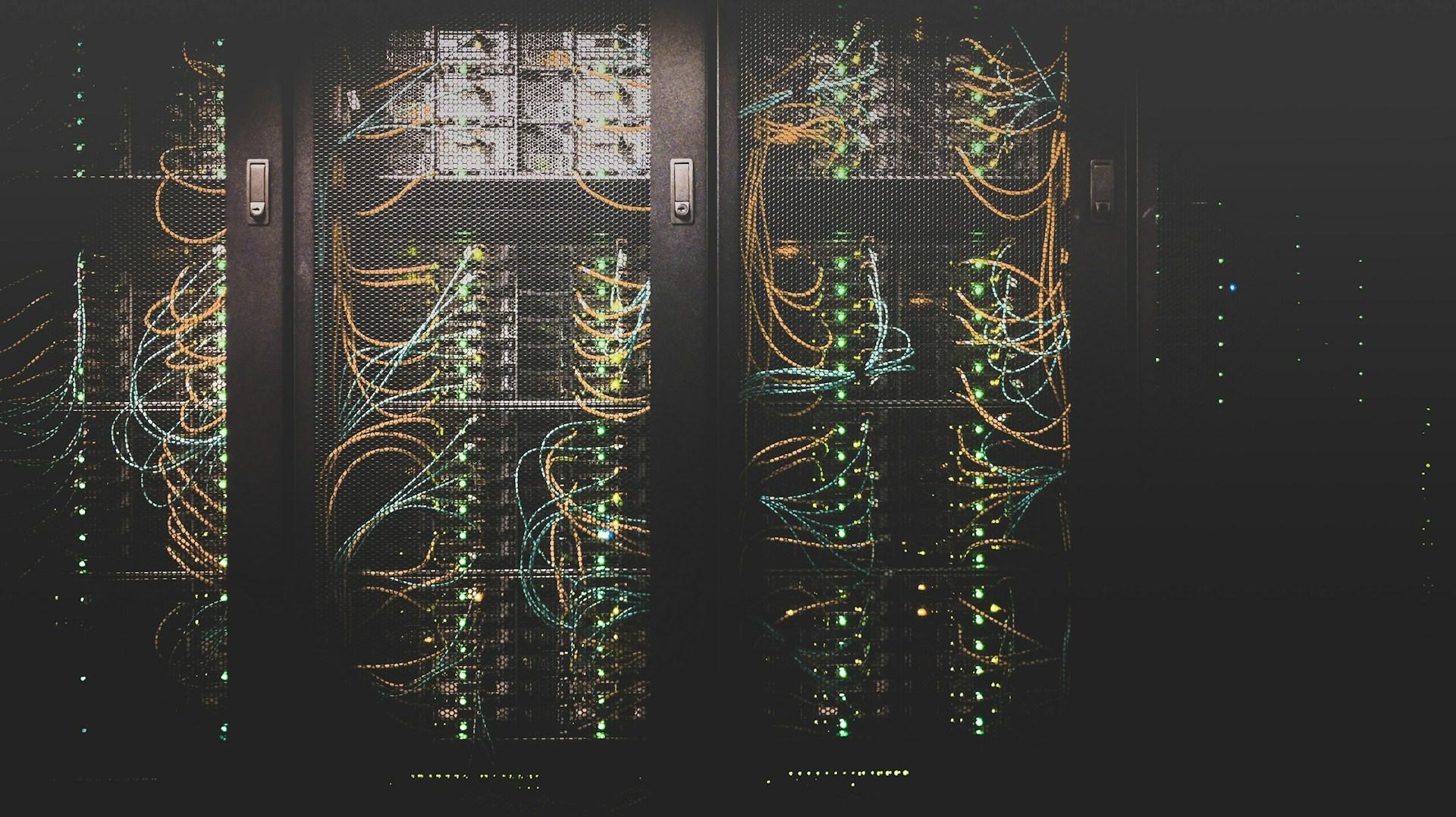
Companies including Hut 8, Core Scientific (CORZ), Hive Digital (HIVE) and Bit Digital (BTBT) have repositioned portions of their power and infrastructure assets to serve AI workloads, betting that long-term contracts with hyperscale customers will generate steadier, higher-margin revenue than cryptocurrency mining alone.
Hut 8 has signed two 15-year, triple-net, take-or-pay leases covering 597 megawatts of IT capacity at its River Bend, Louisiana, and Beacon Point, Texas, campuses. According to Palmer, the agreements represent $16.8 billion in contracted base-term lease value and could rise to $42.8 billion if tenants exercise renewal options.
Palmer said the Beacon Point agreement was the primary driver behind the higher valuation. The broker estimated that the project’s first phase alone carries $9.8 billion in base-term contract value and about $655 million in average annual net operating income.
He also pointed to Hut 8’s financing strategy, noting the company recently completed $4.25 billion of investment-grade project financing for Beacon Point after raising $3.25 billion for River Bend. The deals validate management’s strategy of lowering its cost of capital by converting development assets into long-term contracted cash flows.
Beyond its existing projects, the report highlighted Hut 8’s development pipeline, which totals more than 9 gigawatts across projects under exclusivity, development, construction and management, providing what it called a long runway for future growth.

The Year’s Most Unexpected ‘Andor’ and ‘The Mandalorian’ Team-Up Is Finally Here

Why does it seem like so many Asian Americans achieve financial success?? #money #finance #success

ChatGPT adds Kalshi World Cup betting odds


-

 Fashion5 days ago
Loro Piana Fall 2026 Enters Houston’s Art Scene
-

 Fashion4 days ago
Weekend Open Thread: Nutriplenish Leave-In Conditioner
-
 Sports5 days ago
2026 Genesis Scottish Open Thursday TV coverage: Round 1
-

 Sports7 days ago
Joshua Pacio ‘more complete’ ahead of ONE rematch vs Malachiev
-

 Tech6 days ago
Anthropic brings Claude Cowork to mobile and web as usage data shows most users aren’t coding
-

 Sports4 days ago
Super Eagles star Moses Simon opens up on Liverpool transfer regret
-
Sports7 days ago
We have punished the disrespect
-

 Tech5 days ago
Character.AI enters the microdrama arena with its own productions, but there’s a twist
-
 Crypto World7 days ago
Nasdaq arthritis company holding Moshe Hogeg crypto hits all-time low
-

 Tech10 hours ago
Get Your ESP32 Sunny Side Up With This Solar Dev Board
-

 News Videos6 days ago
Crypto Just Entered Its Most Important 6-Month Candle (Could Decide Everything!)
-
 Tech7 days ago
Keychron is stepping outside keyboards with a $349 Thunderbolt 5 dock aimed at power users
-
 Business6 days ago
ASX 200 Slides Over 0.6% as Rare Earths and Lithium Stocks Tumble Amid Global Semiconductor Sell-Off Today
-
 NewsBeat5 days ago
Major update after Huntingdon train attack as man enters plea
-
 Business6 days ago
Will Trent shares rebound after Q1 update triggers 13% crash? Here’s what technical charts indicate
-
 Tech7 days ago
OpenAI teams with Work Louder to launch Codex-native keyboard, weeks after CEO of Apps told staff ‘not to be distracted by side quests’
-

 Business6 days ago
SpaceX Shares Slide Nearly 6% Amid Post-IPO Volatility and Starship Test Focus
-

 Sports6 days ago
39-year-old Djokovic wins five-hour thriller to enter Wimbledon semis | Other Sports News
-
 Crypto World7 days ago
TeraWulf’s $19B Anthropic Lease Turns Bitcoin Miner Into AI Landlord
-

 News Videos24 hours ago
how to make coin bank box with cardboard #scienceproject #money #diy #shorts
You must be logged in to post a comment Login