

Crypto World
What to Watch This Week as Warsh Testifies and Bank Earnings Flood In


Federal Reserve Chair Kevin Warsh testifies before Congress twice this week, his first time as chair. His testimony coincides with a wave of major bank earnings and fresh inflation data.
The overlap creates one of the year’s most closely watched weeks for markets.
Warsh’s Testimony and Inflation Data
Warsh appears before the House Financial Services Committee on Tuesday, July 14, hours after the June Consumer Price Index report lands. He then testifies before the Senate Banking Committee on Wednesday, following the Producer Price Index release.
Both readings will shape how lawmakers interpret his stance on rates. The testimony follows Warsh’s first FOMC meeting in June where officials signaled openness to a rate hike if inflation stays elevated.
His remarks also arrive after economists trimmed recession odds while raising inflation forecasts. That combination leaves the Fed little room to ease policy this year. Warsh inherited the role from his predecessor’s final FOMC meeting, which left him a sticky inflation picture and a volatile energy market.
Bank Earnings Test Economic Health
JPMorgan, Bank of America, Wells Fargo, Goldman Sachs, and Citigroup all report their earnings Tuesday. The results give investors an early read on loan demand and credit quality.
Net interest margins and loan loss provisions will also draw close attention. The reports follow banks clearing the Fed’s annual stress test with capital levels intact.
Rest of the Week’s Wave of Things to Watch
Morgan Stanley, Johnson & Johnson, ASML, and United Airlines report Wednesday. Morgan Stanley offers an investment banking view, while ASML’s order book will signal AI-driven chip demand.
Taiwan Semiconductor, Netflix, UnitedHealth, and GE Aerospace follow on Thursday. TSMC’s results carry particular weight after a stretch in which semiconductor stocks outpaced Big Tech. Netflix will test subscriber growth against a tougher streaming market, and UnitedHealth faces continued scrutiny over medical cost trends.
Thursday also brings June retail sales data. The reading offers a final consumer health check for the week. It arrives as markets weigh inflation risk against growth concerns during a period of sector rotation toward defensive names.
The post What to Watch This Week as Warsh Testifies and Bank Earnings Flood In appeared first on BeInCrypto.

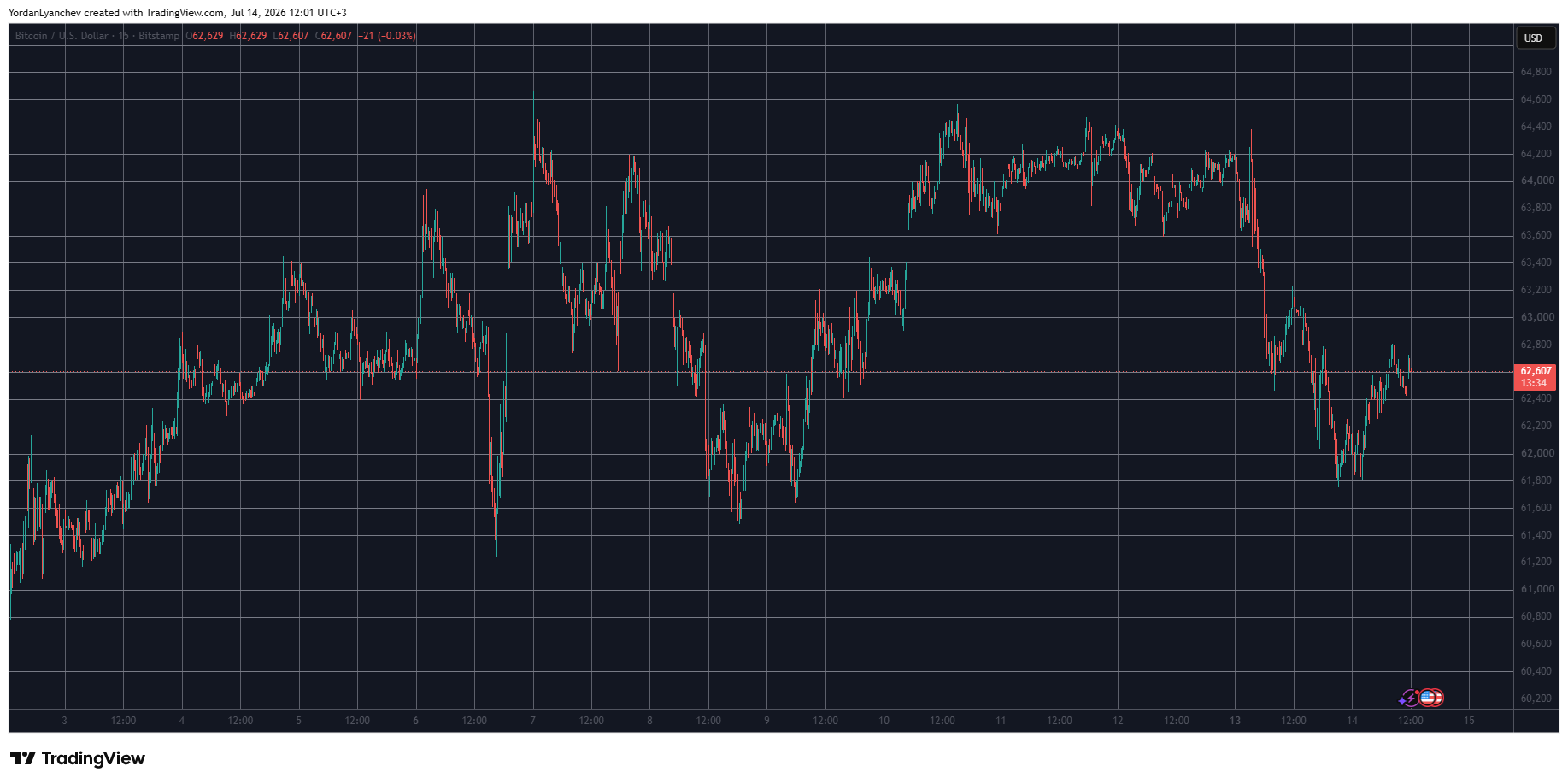
Perhaps factoring in the substantial escalation in the Middle East, bitcoin’s price tumbled on Monday from over $64,400 to a multi-day low of $61,800, where it finally found some support.
Most larger-cap alts are in the red once again today, with HYPE, ZEC, and XLM dropping by around 3%.
BTC Rebounds From Sub-$62K Dip
Strategy’s major bitcoin sale announced last Monday brought intense volatility to the market. At first, BTC reacted with a painful decline from $64,000 to $61,200, which was rather expected given the significance of such a move. What was more surprising was the subsequent reaction that saw bitcoin jump to $64,600 within hours.
Nevertheless, that was short-lived as the renewed attacks between the US and Iran increased the selling pressure once again. This time, BTC dipped to just $61,600 before it began its recovery. The culmination came during the weekend when the cryptocurrency spiked to $64,600 again. Although it was stopped there, it spent most of the weekend at around $64,000.
Strategy didn’t buy or sell BTC in the past week, which was a relief. However, Trump reinstated the US Navy blockade at the Strait of Hormuz, which led to another leg down to $61,800. Bitcoin has rebounded since then and now sits almost a grand higher, but it’s still 3% down monthly.
Its market cap remains under $1.260 trillion, while its dominance over the alts has stalled at 56.7% on CG.
PI Smashes New Record Lows
It’s safe to say that Pi Network’s native token is among the worst performers during this bear cycle. It was rejected at $0.30 in March and has plunged since then to consecutive all-time lows. After yesterday’s drop to $0.086, the token crashed once again in the past day to just over $0.07, marking yet another low.
DEXE is the other double-digit loser on a daily scale after its recent rally. In contrast, HASH is up by 25% to $0.0095, followed by BDX’s 10% surge to a very similar price tag.
ETH, XRP, SOL, TRX, DOGE, RAIN, and XLM have lost up to 2% daily, while HYPE, ZEC, and XLM are down by over 3%.
The total crypto market cap has lost another $20 billion and is below $2.220 trillion on CG.

The post Pi Network’s PI Crashes and Burns Again, Bitcoin Rebounds From $62K: Market Watch appeared first on CryptoPotato.
Crypto World
Crystal Intelligence launches Ask Crystal, the AI analyst behind every blockchain judgment
[PRESS RELEASE – Amsterdam, Netherlands, July 14th, 2026]
Ask Crystal, a new AI capability inside Crystal Expert, turns any transfer into one clear, evidence-backed narrative, so compliance, investigation, and risk teams decide in seconds, not minutes.
Crystal Intelligence today announced the rollout of Ask Crystal, an on-demand AI analyst built into Crystal Expert. Ask Crystal reads the full on-chain picture behind any transfer and returns one structured narrative, every answer backed by verifiable blockchain evidence. It is designed to support analyst work, to save time and make faster decisions.
Teams that review blockchain activity face a hard reality. Whether they work in compliance, investigations, or risk, case volumes keep climbing. The signals that matter, transfer details, fund connections, triggered alerts, and counterparty history, sit across separate screens. Two reviewers can read the same case and reach different conclusions. The result is slow reviews, inconsistent decisions, and heavy cognitive load on the people who can least afford a mistake.
Ask Crystal removes that friction. Inside Crystal Expert, on any transfer, a single tab generates a plain-language AI summary on demand, and regenerates it whenever the analyst needs a fresh read. Each summary consolidates four structured sections: a transfer overview, a connections analysis covering source and destination of funds, alert details explained by type and detection rule, and prior interactions with a trusted-list check. One read replaces minutes of manual correlation across tabs.
“Across compliance, investigations, and risk, teams are asked to make high-stakes calls under time pressure, with the evidence scattered across screens,” said Navin Gupta, Chief Executive Officer of Crystal Intelligence. “Ask Crystal changes that. This AI does the reading, the correlating, and the cross-referencing in seconds, then hands the analyst one clear, evidence-backed story. We are not automating the decision. We are giving every decision the full picture it deserves.”
What teams get
- Less operational complexity. Every key signal in one structured view of the transfer.
- More consistent judgments. Context, connections, alerts, and history are interpreted the same way, every time.
- Lower cognitive load. No manual correlation across tabs and alert screens.
- Faster onboarding. A guided, plain-language read makes cases easier to learn from.
Ask Crystal is part of Crystal Expert, the institutional-grade platform used by compliance teams, investigators, financial institutions, and regulators to detect crypto risk, trace funds across more than 330 blockchains, and prove compliance with reports regulators trust. Access to Ask Crystal is controlled through role-based permissions. The feature is rolling out to Crystal Expert customers now.
About Crystal Intelligence
Crystal Intelligence turns blockchain complexity into clear, actionable intelligence for compliance teams, investigators, financial institutions, and regulators. Crystal Expert covers more than 330 blockchains and over 110,000 attributed entities, giving teams the verified data they need to detect risk, trace funds, and prove compliance. Headquartered in Amsterdam, Netherlands, Crystal Intelligence is ISO 27001 and GDPR compliant, with EU-based data governance.
The post Crystal Intelligence launches Ask Crystal, the AI analyst behind every blockchain judgment appeared first on CryptoPotato.


South Korea plans to conduct a 2027 pilot linking tokenized government bonds to its institutional central bank digital currency (CBDC) infrastructure, moving sovereign debt tokenization from a proposal to an official government timeline.
On Tuesday, the government unveiled its 2026 Economic Growth Strategy for the Second Half, which includes the plan. In addition to assigning a date for the pilot, the strategy said authorities would study how to make the Bank of Korea’s (BOK) CBDC infrastructure interoperable with other blockchains, enabling a potential connection between external distributed ledgers and the bank’s permissioned system.
The project would test whether South Korea’s wholesale CBDC, designed for use by financial institutions, can support capital markets infrastructure, rather than serving only as a digital payment instrument.
The document did not identify which bonds would be included, the size of the pilot, the participants, or which blockchain technologies would be used. It also did not provide specifics on whether the project would cover the initial issuance of government debt, secondary-market trading or only post-trade settlement.
South Korea expands blockchain and tokenization agenda
The idea was first outlined publicly on July 1 by BOK Governor Hyun Song Shin during a panel at the European Central Bank Forum on Central Banking. Shin described government bonds as the “big prize” for tokenization and proposed bringing tokenized bonds, wholesale central bank money and tokenized commercial bank deposits onto a unified ledger as an extension of the BOK-led Project Hangang.
The government strategy said the bond pilot would form part of a broader effort to promote a “blockchain economy.” Authorities plan to introduce measures in the second half of 2026 to support large-scale demonstrations and the development of technologies across the digital asset and blockchain ecosystem.
The BOK said that faster, continuous settlement can transmit stress more quickly and introduce smart contract, liquidity and data oracle risks, as discussed in the paper at the ECB forum. It also said Project Hangang’s digital ledger and the central bank’s existing payment system do not yet communicate in real time.
Related: South Korea adds token securities to capital market overhaul
In addition to the pilot, the strategy called for broader measures to support the country’s blockchain and digital-asset industry, including legislation covering businesses and stablecoins.
The bond pilot is expected to coincide with the rollout of South Korea’s regulated token securities market. Amendments recognizing distributed ledgers as valid securities registries are scheduled to take effect in February 2027. This allows regulated issuance and circulation of tokenized securities, including stocks, bonds and money-market products.
Magazine: Thai scammer’s $122M wallet, Japan embraces crypto credit: Asia Express
The word bottom doesn’t seem to exist in the world of Pi Network and its native token as of now, as the asset has slumped to yet another all-time low of just over $0.07.
With PI getting smashed out of the top 70 alts by market cap, analysts are trying to determine what is happening and whether there is any end in sight.
New Day, New ATL
CryptoPotato reported yesterday the crash that drove the popular altcoin south to just over $0.086, which became its July 13 all-time low. However, we also warned that there might be more trouble ahead given the rather large number of coins scheduled to be released soon.
That trouble indeed didn’t wait long. Pi Network’s native token is the worst performer from the top 100 alts today, dumping by 14% daily. The worst took place a few hours ago when it slumped to $0.07059 to mark its latest all-time low. PI remains over 35% down weekly. Moreover, it has shed a mind-blowing 97.5% of its value since its all-time high in February 2025.

Popular X user Rizo weighed in on the asset’s poor performance, indicating that there’s more than one reason behind it. Yes, the significant token unlocks are a part of those, as investors who had been waiting for a long time feel more inclined to dispose of a coin that is crumbling.
Rizo added that there’s little to no actual buying demand at the moment as it fails to keep up with all the selling. Lastly, the user outlined the gloomy market sentiment as “uncertainty and cautious investors are weighing on the price.”
However, Rizo remains bullish on Pi Network’s overall ecosystem, which continues to grow, and the “long-term value depends on real utility, adoption, and more apps using PI.”
Silence Is No Longer an Option
Meanwhile, Dr Altcoin blamed the Core Team as it had “at least five years to prepare for this moment. Yet today, it appears completely unprepared for the reality of the market.”
The researcher added that over 775 million coins are scheduled to be released from now until the end of the year, a large portion of which will “end up on exchanges, creating even more selling pressure.”
“Let us be honest: no announcement, ecosystem update or Pi DEX will rescue the price on its own. Unless the Core Team addresses supply, demand and liquidity, Pi could remain under severe pressure throughout 2026. The market does not reward promises. It rewards demand, utility, transparency and decisive action,” Dr Altcoin further cast the blame on the team.
They believe the only path forward includes burning a “substantial portion of the remaining supply,” listings on major exchanges like Binance and Coinbase, and introducing a “transparent, sustainable, and verifiable buyback-and-burn mechanism.”
The post Why Is Pi Network’s Price Down by 14% Again? Analysts Discuss PI’s New All-Time Low appeared first on CryptoPotato.


Doppler Finance and SBI Digital Finance have formed a strategic partnership to expand institutional XRP finance in Japan.
Summary
- Doppler and SBI Digital Finance will build regulated institutional XRP infrastructure for Japan’s financial market.
- The partnership targets lending, liquidity, collateral management and tokenized assets rather than retail trading services.
- SBI’s broader crypto strategy includes exchanges, stablecoins, payments, rewards and institutional market infrastructure projects.
The companies announced the agreement on July 13, saying they will work on digital asset infrastructure for professional market participants.
The partnership combines Doppler’s tokenized capital market systems with SBI Digital Finance’s institutional network and crypto lending experience. The announcement did not disclose financial terms, launch dates, named clients or a specific product ready for release.
Partnership targets institutional XRP infrastructure
Doppler and SBI Digital Finance plan to support infrastructure for XRP and other digital assets in Japan. Their stated work areas include institutional solutions for XRP, tokenized assets and wider tokenized financial markets, subject to applicable Japanese rules. The services could target banks, funds and professional trading firms.
The companies said institutional demand now reaches beyond custody. They expect market participants to seek systems for liquidity, financing, collateral management and better use of capital. The partnership focuses on those functions rather than retail trading or a new consumer XRP service.
SBI Digital Finance brings lending experience
SBI Digital Finance operates HashHub Lending, a Japan-based service for lending crypto assets. Doppler said the company brings market relationships, risk controls and operational experience that could support products designed for institutions.
Rox, Doppler Finance’s head of institutions, said the company aims to “transform digital assets from passive holdings into productive financial capital.” The statement presents that goal as a development plan. It does not confirm that institutions can already access a new XRP lending, yield or collateral product through the partnership.
Agreement extends Doppler’s work with SBI companies
The new agreement follows an earlier link between Doppler and another SBI business. In December 2025, SBI Ripple Asia and Doppler signed a memorandum to explore XRP-based yield infrastructure and real-world asset tokenization on the XRP Ledger. The partners selected SBI Digital Markets to provide institutional custody for that initiative.
The July partnership names SBI Digital Finance, a separate lending-focused company within the wider SBI network. Doppler has not explained whether the two agreements will share products, custody arrangements or customers. Both initiatives center on regulated infrastructure intended to give institutions more ways to use XRP and tokenized assets.
SBI expands Japan’s regulated digital asset network
Japan already hosts a broad SBI-led XRP ecosystem. As previously reported, SBI companies have supported regulated prepaid tokens on the XRP Ledger, RLUSD distribution, tokenized bonds with XRP rewards and other payment and investment services. The latest partnership adds lending and capital-market infrastructure to that wider activity.
SBI has also expanded its exchange and institutional market reach. The group moved to acquire Bitbank after SBI VC Trade absorbed Bitpoint Japan. Separately, SBI led EDX Markets’ $76 million funding round for institutional trading, clearing and settlement infrastructure.
Related activity has also drawn XRP-focused firms toward Japan. As reported by crypto.news, Evernorth recently opened a Japanese-language presence while pursuing a planned public XRP treasury. SBI committed $200 million to the proposed transaction, although Evernorth did not announce a new Japanese license, office or product.
The Doppler partnership remains at the development stage. Neither company identified lending rates, supported assets beyond XRP, collateral terms, custody providers or an expected launch window. Future announcements will need to define the services institutions can use and the regulatory approvals required in Japan.

Key takeaways
- Solana (SOL) has fallen below its 50-day Exponential Moving Average (EMA), signaling increasing bearish pressure.
- The MACD has turned bearish, while the Relative Strength Index (RSI) has dropped below the neutral level.
- Key support sits at $67.50, the level that previously sparked a rebound in late June.
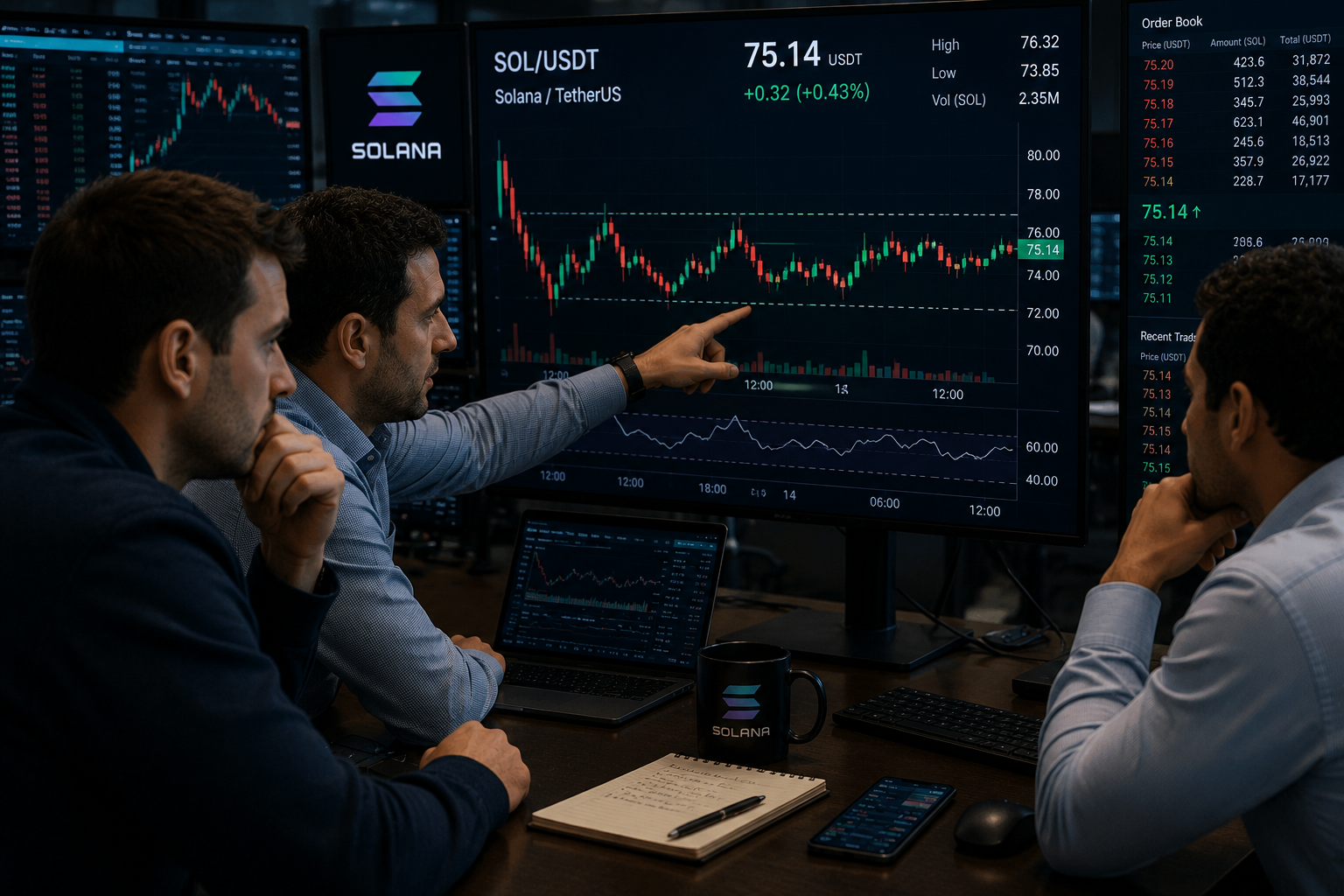
Solana (SOL) remained under pressure on Tuesday, extending its recent weakness as the token slipped below its 50-day Exponential Moving Average (EMA), a technical development that points to growing bearish momentum.
At the time of writing, SOL was trading below $75.00, remaining beneath both the 50-day EMA at $76.63 and the 200-day EMA at $97.65. The inability to reclaim these key technical levels suggests sellers continue to dominate the market.
Momentum indicators turn increasingly bearish
Technical indicators are signaling that bullish momentum is fading. The Moving Average Convergence Divergence (MACD) has crossed below its signal line, producing fresh bearish histogram bars that indicate strengthening downward momentum.
Meanwhile, the Relative Strength Index (RSI) has declined to 46, slipping below the neutral 50 mark. This suggests buying pressure is weakening while sellers gradually regain control of the market.
Together, these indicators reinforce the likelihood of continued downside unless market sentiment improves.
The most important support for Solana currently lies around $67.50. This horizontal support level previously triggered a notable rebound in late June and could once again attract buyers if selling pressure intensifies.
A decisive break below $67.50 would likely increase the risk of a deeper correction and could encourage additional bearish positioning.
For Solana to improve its short-term outlook, buyers must first reclaim the 50-day EMA near $76.63, which now serves as immediate resistance.
A sustained breakout above this level could open the door for a move toward the 200-day EMA around $97.65, where stronger selling pressure is expected to emerge.

Solana remains technically vulnerable after falling below its 50-day EMA, with bearish momentum indicators suggesting sellers remain in control. As long as SOL trades beneath its major moving averages, the risk of further downside persists.
Traders will be closely watching the $67.50 support level, while any meaningful recovery will depend on the token reclaiming the 50-day EMA and restoring bullish momentum.
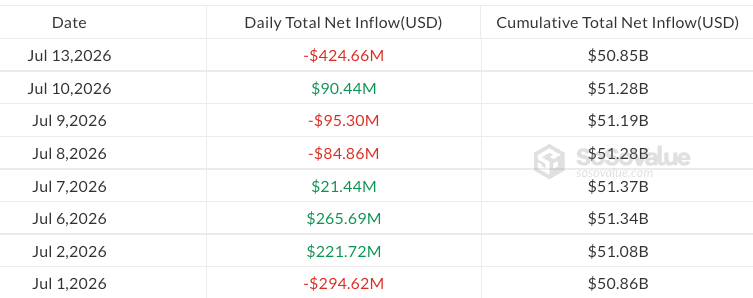
US-listed spot Bitcoin exchange-traded funds (ETFs) returned to outflows, reversing the previous week’s short-lived return to positive flows.
Spot Bitcoin ETFs recorded $424.66 million in net outflows on Monday, marking their biggest single-day withdrawal in July so far, according to SoSoValue data.
The latest outflow reversed last week’s $197.4 million new inflows, which had briefly ended an eight-week run of weekly withdrawals and raised hopes that institutional demand was recovering.
The renewed selling leaves ETF demand fragile after a record outflow month in June, even as some onchain data show large Bitcoin holders accumulating.
Bitcoin ETFs log $5.8 billion in net outflows this year
US spot Bitcoin ETFs have recorded roughly $5.8 billion in net outflows so far this year, with the latest withdrawals adding to a broader period of selling pressure.
June marked the largest monthly net outflow in history, with investors pulling $4.51 billion from the funds.
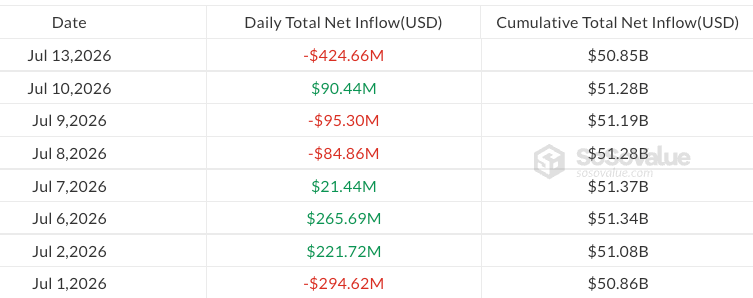
Daily flows in US-listed spot Bitcoin ETFs since July 1. Source: SoSoValue
Despite ongoing selling pressure, spot Bitcoin ETFs continue to hold significant investor assets, with total net assets standing at $74.79 billion and cumulative net inflows at $50.85 billion as of Monday.
Related: Lyn Alden says Bitcoin needs no savior as Strategy sells $216M of BTC
The funds first crossed the $50 billion cumulative inflow milestone in July 2025, about 18 months after launching in January 2024.
Bitcoin ETF reversal adds to uncertainty over market bottom
The failure of US spot Bitcoin ETFs to extend last week’s inflow streak adds to signs that investors remain cautious, with market observers divided over whether Bitcoin’s downturn is nearing an end or whether more losses are ahead.
CryptoQuant analyst Sunny Mom pointed to mixed signals in the market, with nearly $10 billion in outflows from US spot Bitcoin ETFs since Oct. 11, 2025, suggesting weak institutional demand, while the number of new Bitcoin whales has continued to grow.
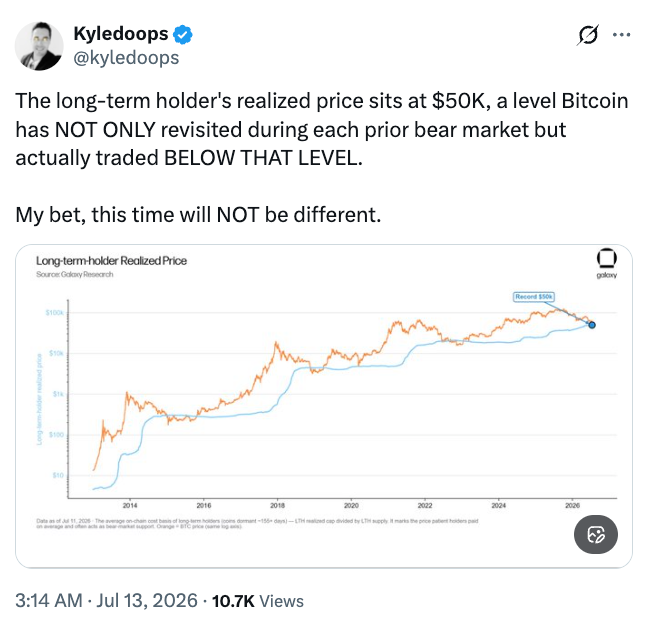
Source: Kyledoops
“A definitive, broad-based market bottom has yet to be confirmed,” Sunny Mom wrote in an update on Thursday, noting that whale accumulation could help limit further downside but does not yet signal a sustained recovery.
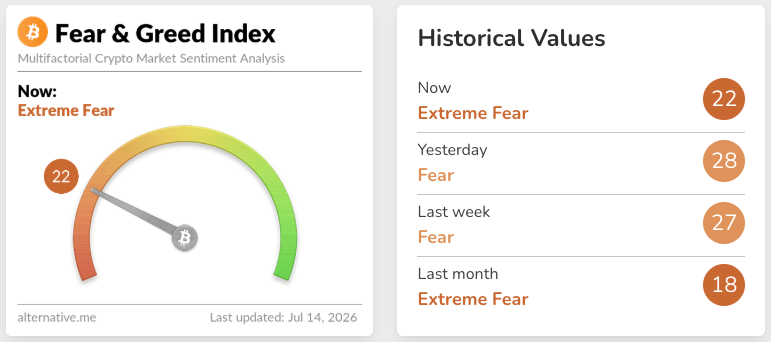
Crypto Fear & Greed Index. Source: Alternative.me
Bitcoin traded at $62,589 at publishing time, roughly 30% below its level at the start of the year, according to CoinGecko data.
Magazine: Bitcoin nearing late stages of bear market: Jamie Coutts, Real Vision
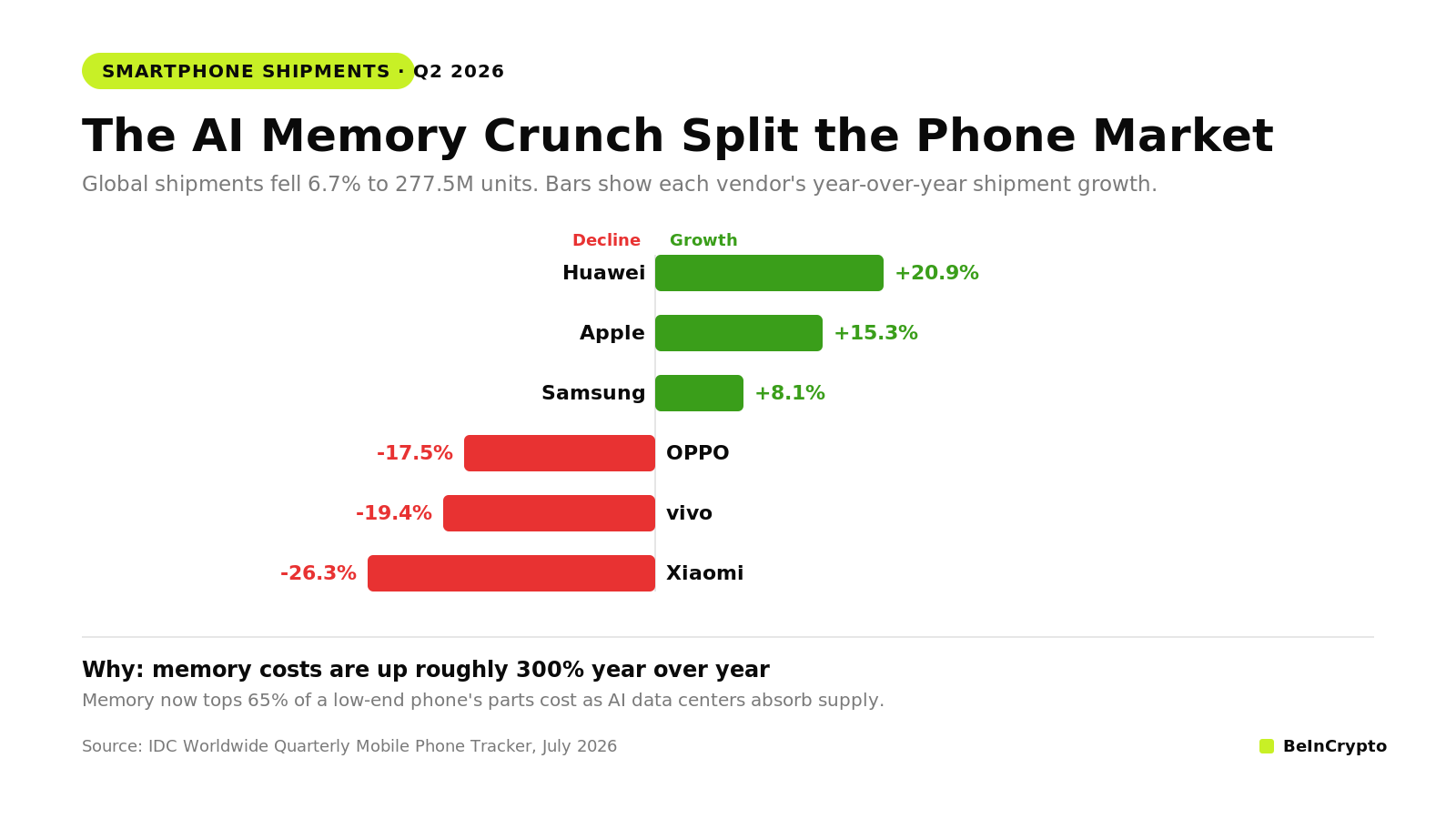
An AI-driven memory crisis is reshaping the global phone market, and Apple stock sits at a record high. Global smartphone shipments fell 6.7% last quarter, yet Apple grew 15.3% and posted record shipments.
The reason is cost. Memory chips now sell for nearly triple last year’s price, so budget phone makers raised prices and lost buyers, while premium brands with locked-in supply pulled away.
How AI’s Memory Grab Is Squeezing Phones
The squeeze starts in AI data centers. Hyperscalers are buying huge volumes of memory to train and run AI models, and that demand has drained supply for phones and PCs.
Want more insights like this? Sign up for Editor Harsh Notariya’s Daily Newsletter here.
Meanwhile, the biggest chip suppliers have chased profit. Samsung, SK Hynix, and Micron steered output toward high-margin AI memory, leaving less for consumer devices.
As a result, memory costs have climbed close to 300% over the past year, according to IDC or the International Data Corporation. Memory now makes up more than 65% of the parts cost in a cheap phone.
That shift has hit low-cost vendors hardest. Apple already passed some of the pain to buyers, raising Mac and iPad prices in June while holding iPhone prices steady.
A Smartphone Market Split In Two
The downturn is not uniform. IDC says the memory crisis has split the market, rewarding scale and premium supply while punishing cheap, high-volume phones.
The gap is stark. Apple and Samsung were the only top-five vendors to grow, up 15.3% and 8.1%. Xiaomi fell 26.3%, vivo dropped 19.4%, and OPPO slid 17.5%.

In China, Huawei and Apple stood alone with roughly 15%+ growth each, as rivals raised prices and lost hesitant buyers. Budget brands leaned on older 4G models to defend low prices as government subsidies faded.
The pattern is consistent. When the price gap narrows, buyers trade up to trusted brands rather than upgrade on the cheap.
Why The Squeeze Lifts Apple Stock
For Apple, a smaller market has meant a bigger lead. It is on track for a record 22% annual market share. Apple stock also hit an all-time high on July 13, closing at $317.31 after an intraday peak of $323.45, worth about $4.7 trillion.

Big investors positioned early. Institutions own about 81% of Apple and net-added roughly 1.24 billion shares last quarter, before its China rebound fully showed in the data.
Apple is also defending margins at the source. It is in talks with Chinese suppliers CXMT and YMTC to source memory for iPhones sold in China, which would ease the cost hit at home.
Even so, the win is relative, not absolute. The memory crisis lifts Apple against weaker rivals, but it still raises Apple’s own chip costs. So far the company has offset that by charging more, from higher Mac and iPad prices to an expected iPhone increase.
That defense has a limit. If Apple keeps raising prices, even loyal buyers may hold off, which would slow the growth now lifting the stock. The memory shortage could last into 2028, so those cost pressures are unlikely to ease soon.

The next test is close. Apple reports earnings on July 30, and that print will show whether premium demand can hold as the squeeze drags on.
The post Apple Stock Hits a Record as the AI Memory Crisis Guts Cheap Phones appeared first on BeInCrypto.
Cathie Wood’s Ark Invest has increased its exposure to SpaceX with purchases worth about $52.1 million during the week ended July 10, while cutting positions in semiconductor, streaming and genomics companies as it continued adjusting its portfolios.
Summary
- Ark Invest bought about $52.1 million worth of SpaceX shares while adding to positions in Coinbase, Circle and several AI and healthcare companies.
- The firm reduced holdings in AMD, Roku, Deere and multiple genomics stocks as it continued rebalancing its ETF portfolios.
- The latest purchases extend Ark’s recent strategy of increasing its SpaceX position after earlier buying during the stock’s post IPO decline.
According to Ark Invest’s latest weekly trading disclosure, Space Exploration Technologies Corp. (SPCX) received the firm’s largest allocation by value across multiple exchange-traded funds.
The investment manager also bought shares of Eli Lilly, Meta Platforms, X-Energy, Coinbase Global and Circle Internet Group, alongside several healthcare, artificial intelligence and defence-related companies.
Across individual funds, Ark added SpaceX shares to ARKK, ARKQ, ARKW and ARKX. The latest filings also showed fresh purchases of X-Energy across three ETFs, while Block, Kratos Defense & Security Solutions, Oklo, Pony AI, Kodiak AI and WeRide were among other additions. In healthcare, the firm increased positions in companies including Ionis Pharmaceuticals, Beam Therapeutics, Prime Medicine, Alamar Biosciences, Compass Pathways, and Recursion Pharmaceuticals.
Ark continues buying SpaceX after earlier dip purchases
The latest trades extend Ark’s recent buying activity in SpaceX after several purchases made during the stock’s post-listing decline.
Last month, the investment firm bought about $32.5 million worth of SpaceX shares after the stock dropped more than 16% from its post-IPO peak. The purchase followed an even larger investment of roughly $444.3 million made across four ETFs on the company’s Nasdaq debut on June 12.
Ark had also held exposure to SpaceX before its public listing through the ARK Venture Fund, where the aerospace company ranked as the fund’s largest holding. Earlier this month, Cathie Wood told Fox Business that SpaceX held a “10-year lead” over competitors, while Ark’s internal valuation models projected a base-case enterprise value of about $2.5 trillion by 2030 and a bull-case estimate of approximately $3.1 trillion.
Meanwhile, the latest portfolio changes showed the firm reducing holdings in Advanced Micro Devices, Roku, Robinhood Markets, Deere, and Iridium Communications. The disclosures also listed sales of several genomics companies, including Natera, Illumina, Twist Bioscience, 10x Genomics and BioNTech, alongside smaller reductions in Personalis, Absci and Strata Critical Medical.
The changes come ahead of the second-quarter earnings season, with the latest disclosures indicating continued portfolio rebalancing across Ark’s actively managed funds.
The recent buying activity also follows a pattern seen in previous weeks. On June 26, Ark increased its holdings in Coinbase, Circle, Bullish, and Robinhood after all four stocks declined during the trading session. Earlier in June, the firm also purchased about $18.4 million worth of Coinbase shares after the crypto exchange had fallen nearly 13% over the preceding month.
Ark manages its exchange-traded funds under a policy that limits any single holding to no more than 10% of a portfolio. The firm periodically adjusts positions to keep those weightings within its target allocations as share prices change.

ETH and XRP traders have become notably more optimistic, with market intelligence firm Santiment reporting the highest levels of fear of missing out (FOMO) for both assets in the past five weeks.
The change in tune has come even with prices struggling to build sustained momentum, raising the possibility that bullish sentiment may be running ahead of market performance.
XRP Leads Sentiment Spike While BTC Stays Balanced
According to a July 13 X post by Santiment, XRP’s bull-to-bear ratio sat at 3.02, meaning that there were more than three positive posts online for every negative one. Ethereum wasn’t far behind at 2.31, placing it in what the analytics platform described as “slight FOMO territory.” As for Bitcoin (BTC), it posted a much lower 1.40, suggesting that traders were relatively neutral about it.
Both BTC and ETH opened relatively strong on Monday but faded as the day went on, with Santiment pointing out that crowds tend to get loud at the wrong moment.
“Crypto typically moves opposite to what the crowd is loudly expecting,” the firm wrote. “When traders get too bullish on XRP or ETH while prices are already dipping, it can create short-term downside risk or at least slow the rebound.”
However, it argued that Bitcoin’s flatter reading may give it more room for a rally since the crowd hasn’t fully bought into the “higher prices next” trade yet. This assessment was echoed by trader Xaif Crypto, who also argued that BTC’s calmer sentiment “means more room to run,” while the heavier optimism surrounding XRP and ETH could limit their immediate recovery.
Looking at the price actions of the three assets, XRP had slipped below $1.08, a resistance level highlighted by analyst Cryptorphic, and was trading around $1.07 at the time of writing, a roughly 5% drop in the last seven days and almost 7% over the past month. According to the analyst, the token is quite vulnerable as long as it trades beneath $1.08, with even lower prices seeming likely.
On its part, ETH has held up better and was trading closer to $1,800 than $1,700, having gained a modest 1% over one week and more than 6% in the last 30 days. It did move briefly above $1,800 over the weekend before pulling back, although several market watchers have expressed optimism that the current level could see the asset push up to $2,500.
Meanwhile, Bitcoin dipped slightly in the last day after starting July rather strongly when it rebounded from around $57,700 to $64,000. It is currently changing hands below $63,000, with wallets holding between 10,000 and 100,000 BTC adding 11,000 BTC in the last week, suggesting that dip demand hasn’t dried up despite weeks of choppy trading.
Optimism Faces Mixed On-Chain and ETF Signals
While traders have become excited about XRP, the asset has had to contend with cooling institutional and whale activity, marked by spot XRP ETFs recording their first week of net outflows in more than 2 months.
Furthermore, on-chain data also showed a significant drop in XRP transactions of more than $1 million, which have gone from 70 to only 2 in about a week, while wallet creation on the XRP Ledger has also slowed compared with earlier in the year.
The post XRP and ETH Traders Turn Bullish as FOMO Surges to 5-Week High: Santiment appeared first on CryptoPotato.

Bank earnings live updates: JPM, BofA, Citi, Goldman
Pi Network’s PI Crashes and Burns Again, Bitcoin Rebounds From $62K: Market Watch

Freddy’s Back: Paramount Is Giving Nightmare On Elm Street Another Disastrous Reboot


-

 Fashion5 days ago
Loro Piana Fall 2026 Enters Houston’s Art Scene
-

 Fashion3 days ago
Weekend Open Thread: Nutriplenish Leave-In Conditioner
-
 Sports5 days ago
2026 Genesis Scottish Open Thursday TV coverage: Round 1
-

 Sports7 days ago
Joshua Pacio ‘more complete’ ahead of ONE rematch vs Malachiev
-

 Tech6 days ago
Anthropic brings Claude Cowork to mobile and web as usage data shows most users aren’t coding
-

 Sports4 days ago
Super Eagles star Moses Simon opens up on Liverpool transfer regret
-
Sports7 days ago
We have punished the disrespect
-

 Tech5 days ago
Character.AI enters the microdrama arena with its own productions, but there’s a twist
-
 Crypto World7 days ago
Claude AI Created Something Anthropic Never Designed
-

 Crypto World7 days ago
Nasdaq arthritis company holding Moshe Hogeg crypto hits all-time low
-

 Tech4 hours ago
Get Your ESP32 Sunny Side Up With This Solar Dev Board
-

 News Videos5 days ago
Crypto Just Entered Its Most Important 6-Month Candle (Could Decide Everything!)
-
 Tech6 days ago
Keychron is stepping outside keyboards with a $349 Thunderbolt 5 dock aimed at power users
-
 Business6 days ago
ASX 200 Slides Over 0.6% as Rare Earths and Lithium Stocks Tumble Amid Global Semiconductor Sell-Off Today
-
 Business6 days ago
Will Trent shares rebound after Q1 update triggers 13% crash? Here’s what technical charts indicate
-
 NewsBeat5 days ago
Major update after Huntingdon train attack as man enters plea
-
 Tech7 days ago
OpenAI teams with Work Louder to launch Codex-native keyboard, weeks after CEO of Apps told staff ‘not to be distracted by side quests’
-

 Business6 days ago
SpaceX Shares Slide Nearly 6% Amid Post-IPO Volatility and Starship Test Focus
-
 Crypto World7 days ago
TeraWulf’s $19B Anthropic Lease Turns Bitcoin Miner Into AI Landlord
-
 Sports6 days ago
39-year-old Djokovic wins five-hour thriller to enter Wimbledon semis | Other Sports News
You must be logged in to post a comment Login