





Connect with us
DAPA Banner
DAPA Coin
DAPA
COIN PAYMENT ASSET
PRIVACY · BLOCKDAG · HOMOMORPHIC ENCRYPTION · RUST
ElGamal Encrypted MINE DAPA
🚫 GENESIS SOLD OUT
DAPAPAY COMING

Business

Wall Street ends lower as Iran tensions spook investors

Published

on

Wall Street ends lower as Iran tensions spook investors

Tech shares have pulled US stocks lower after President Donald Trump announced he would reinstate a blockade on Iranian ports in the latest escalation of US-Iran hostilities that sent oil prices jumping and dampened risk appetite.

Continue Reading
Click to comment

You must be logged in to post a comment Login

Leave a Reply

Business

Monzo founder Tom Blomfield joins Anthropic AI

Published

on

Monzo founder Tom Blomfield joins Anthropic AI

Tom Blomfield, the entrepreneur who built Monzo into Britain’s best-known digital bank, has been hired by Anthropic, the artificial intelligence group behind the Claude AI models, in the latest sign that the world’s leading AI labs are hoovering up Britain’s most ambitious business talent.

Blomfield, 40, said he would take a leave of absence from his role as a partner at Y Combinator, the American start-up investor behind Airbnb, Stripe and Coinbase, to join Anthropic’s compute team. Compute is the industry term for the hardware, software and data centre infrastructure required to train and run AI models.

Writing on X, Blomfield said: “Powerful AI has the potential to improve the life of every human on Earth and, as we enter the early stages of recursive self-improvement, availability of compute becomes one of the most important issues to solve. I’m excited to get started.”

He will work alongside Tom Brown, Anthropic’s co-founder and chief compute officer. The hire is a coup for Anthropic, which this year overtook OpenAI to become the world’s most valuable private AI business.

For UK business owners the move carries a familiar sting. Blomfield is one of the country’s most influential angel investors in early-stage companies, and his energy is now heading into an American lab rather than the British start-up scene.

Advertisement

It also underlines quite how fierce the battle for elite AI talent has become. Technology groups including Meta and Alphabet, and dedicated AI firms such as Anthropic and OpenAI, are competing aggressively for researchers as they race to build next-generation systems.

Last month Andrej Karpathy, the AI researcher who co-founded OpenAI, joined Anthropic to work on the “pre-training” that underpins AI model development. He was joined by John Jumper, the Nobel prize-winning scientist who co-created AlphaFold at Google DeepMind, the breakthrough AI that has predicted over 200 million protein structures. Days earlier, Noam Shazeer, a vice-president of engineering at Google and co-lead of its Gemini models, said he would leave to join OpenAI. Rishi Sunak, the former prime minister, joined Anthropic as an adviser last year.

The stakes are rising because both Anthropic and OpenAI are preparing for blockbuster flotations, with OpenAI already lining up a confidential IPO filing, at a time when concerns are growing about a valuation bubble.

Blomfield launched Monzo, now widely expected to be a flotation candidate, in 2015, having earlier co-founded GoCardless, the payments company that recently agreed a sale worth nearly £1bn. He left Monzo in 2021 and has spoken openly about the toll that running the bank through the pandemic took on his mental health.

Advertisement

His departure for Anthropic will revive an uncomfortable debate he has led before. Writing in The Times in 2024, he said: “Our national psyche doesn’t allow for the celebration of entrepreneurs, we are extremely risk-averse, and the huge majority of smart, technologically adept young people in the UK aspire to be lawyers or consultants or work in finance.”

When he joined Y Combinator in 2023 he said there were more opportunities for entrepreneurs in the United States, and that problems with the attractiveness of London’s public markets to technology businesses were “very real”. That critique still lands: ministers are now making direct investments to keep high-growth AI firms listing in London.

Blomfield has previously written that “technological progress truly offers a path to a better world for all of humanity”, while warning that “technological progress is accelerating very rapidly and I don’t think most people are prepared for that future”.

For Britain’s SMEs, the message is double-edged. The AI boom is minting opportunity at extraordinary speed, but the people best placed to build it, including the founder of the UK’s flagship fintech, keep choosing to build it somewhere else.

Advertisement

Jamie Young

Jamie Young

Jamie is Senior Reporter at Business Matters, bringing over a decade of experience in UK SME business reporting.
Jamie holds a degree in Business Administration and regularly participates in industry conferences and workshops.

When not reporting on the latest business developments, Jamie is passionate about mentoring up-and-coming journalists and entrepreneurs to inspire the next generation of business leaders.

Advertisement
Continue Reading

Business

Political football: Karnup train station a by-election bonanza

Published

on

Political football: Karnup train station a by-election bonanza

ANALYSIS: One of the state’s best-known political footballs is almost certain to be kicked around during the Secret Harbour by-election campaign.

Continue Reading

Business

Freshpet Stock Jumps 8% Today as Investors Eye Rebound, Analysts Remain Mixed on Struggling Pet Food Maker

Published

on

Freshpet Stock Jumps 8% Today as Investors Eye Rebound, Analysts

Shares of Freshpet climbed 8.19% Monday morning, trading at $58.01 as of 10:17 a.m. Eastern, adding to a volatile stretch for the fresh pet food maker that has seen its stock swing sharply throughout 2026 amid competing signals from Wall Street analysts about the company’s near-term prospects.

Monday’s gain builds on a stock that has spent much of the year well off its highs. Freshpet shares are trading roughly 33% to 39% below the company’s 52-week high of $85.50 to $86, reached earlier this year, and had fallen as low as $46.45 over the past 12 months. As of Freshpet’s most recent close before Friday’s session, shares stood around $54.25, meaning Monday’s move represents a meaningful rebound from levels the stock had settled into over recent weeks.

The pullback that preceded Monday’s gain has been driven in part by shifting analyst sentiment on the New Jersey-based pet food maker. Several firms trimmed their price targets on the stock earlier this year, including Wells Fargo, which lowered its target to $70 from $75 in early May while maintaining an “Overweight” rating, citing increased competitive pressure in the fresh pet food category. Stifel and Jefferies also lowered their price targets around the same period, with Jefferies cutting its target to $70 from $75 and Stifel reducing its target to $78 from $84, even as both firms maintained generally constructive ratings on the stock.

Despite that string of target reductions, not every analyst has turned cautious on Freshpet. Morgan Stanley described the stock’s pullback earlier this month as presenting an “attractive entry point” for investors, according to TipRanks. JPMorgan had previously upgraded the stock to Overweight from Neutral in May, arguing that Freshpet’s sales growth would continue to outpace its peers in the broader pet food category. Piper Sandler has also maintained a bullish stance on the stock, reiterating an “Overweight” rating and an $87 price target following a meeting with Freshpet Chief Financial Officer John O’Connor, in which the firm argued that concerns about competition facing the company were likely overstated. Piper Sandler pointed to Freshpet’s focused marketing and distribution strategy, along with new production technology still in its early stages of implementation, as factors it expects to support both continued sales growth and improved profit margins going forward.

Advertisement

That split in analyst opinion reflects a broader pattern of unusually high volatility in Freshpet shares over the past year. According to data compiled by StockStory, the stock has recorded 29 separate moves greater than 5% in either direction over the trailing 12 months, a pace of volatility that suggests investors remain deeply divided over how to value the company’s growth trajectory against its profitability challenges. Freshpet’s beta coefficient, a measure of a stock’s volatility relative to the broader market, stands at 1.40, according to TradingView data, indicating the shares tend to swing more sharply than the market as a whole.

Freshpet’s underlying financial performance has been similarly uneven. The company’s first-quarter 2026 results, reported May 6, showed earnings per share of 91 cents, compared with a loss of 26 cents in the prior-year period, alongside revenue guidance calling for 8% to 11% growth for the full year from a 2025 base of $1.1 billion, a figure that came in below the market’s consensus expectation of $1.2 billion at the time. More recently, the company’s trailing quarterly earnings missed analyst expectations by a wide margin, with reported earnings per share of negative 3 cents against a consensus estimate of 25 cents, according to figures compiled by TradingView, a shortfall of more than 100% relative to expectations.

Freshpet’s most significant earnings beat over the past year came roughly eight months ago, when the company reported third-quarter results that dramatically exceeded Wall Street’s profit expectations, with net sales rising 14% year over year to $288.8 million and earnings per share of $1.86, far surpassing the average analyst forecast of 42 cents. That outperformance was driven in large part by a one-time deferred tax benefit of $77.9 million, though the quarter also featured genuine operational improvement, including volume growth of 12.9% and an operating margin that improved to 8.6% from 4.7% in the same period a year earlier.

Freshpet, founded in 2004 by Scott Morris and Cathal Walsh and headquartered in Bedminster, New Jersey, manufactures, markets and distributes fresh pet food for dogs and cats across the United States, Canada and Europe, selling its products through a network of company-branded refrigerated units known as Freshpet Fridges, alongside traditional grocery, mass-market, club and pet specialty retail channels. The company holds a market capitalization of roughly $2.7 billion and trades at a price-to-earnings ratio in the range of 14 to 15, according to recent data, a relatively modest multiple compared with some other high-growth consumer packaged goods companies.

Advertisement

The stock’s longer-term trajectory has disappointed investors who bought in near its peak. Freshpet’s all-time high closing price stands at $184.82, reached in April 2021, meaning current share prices remain more than two-thirds below that level nearly five years later. Investors who put $1,000 into Freshpet shares five years ago would today be left with an investment worth roughly $349, according to StockStory’s analysis, underscoring the scale of the decline the stock has experienced since its pandemic-era peak.

As of Monday, the specific catalyst behind the stock’s 8.19% morning gain had not been clearly identified in available market commentary, though the move continues a pattern of sharp single-day swings that has characterized Freshpet’s trading throughout the year. The company’s next quarterly earnings report is scheduled for early August, a date investors are likely to watch closely for further clarity on whether recent operational improvements can offset the competitive and margin pressures that have weighed on analyst sentiment throughout much of 2026.

Continue Reading

Business

Grade A office investment push for Preston as Government urged to put regional outpost in city

Published

on

Business Live

Five office blocks set to be built in Fishergate

The plans for the Fishergate Shopping Centre car park.

The plans for the Fishergate Shopping Centre car park(Image: The Martin Property Group)

The government is being urged to make a regional outpost of one of its biggest departments the centrepiece of a long-planned transformation of Preston city centre.

Advertisement

A vision for the regeneration of an area branded the ‘Station Quarter’ – based around the Fishergate Shopping Centre – was first unveiled back in 2022.

The first phase of the proposal – for which formal plans were submitted to Preston City Council last December – would see the creation of five office blocks on the current car park of the retail facility.

The buildings – between nine and 15 storeys tall – would offer the kind of ‘Grade A’ office space Preston is deemed to lack.

The aim is to attract public and private sector organisations to the development – both by bringing in new companies and government departments to Preston and retaining those already in the city, but currently based in other accommodation.

Advertisement

However, there was disappointment last year when Preston failed to appear on a list of 13 out-of-London locations to which thousands of civil servants are expected to be relocated by the end of the decade.

During a debate in Parliament last month about investment in Lancashire, Ribble Valley MP Maya Ellis – whose constituency covers northern Preston and parts of South Ribble near the city – asked the government whether it would “progress the office relocation requirements of His Majesty’s Revenue and Customs (HMRC) as an anchor tenant to bring forward a new office quarter around Preston station”.

Her question did not get a direct answer, but was one of several seemingly designed to put specific investment opportunities on the government’s radar.

The Local Democracy Reporting Service (LDRS) understands a broader lobbying operation is under way to try to secure government occupation of some of the proposed new Butler Street blocks opposite the railway station.

Advertisement

The LDRS approached HMRC and the Cabinet Office for comment about any plans for civil service relocations to – or within – Preston.

It is understood a long-term commitment made by HMRC in 2023 to having a base in Preston remains unchanged – but it is not known whether that might ultimately mean a move to the Station Quarter site, should that scheme go ahead.

Preston is also home to staff from the Department for Work and Pensions who were retained in the city in spite of the closure of that department’s previous Preston offices three years ago.

A spokesperson for Lancashire County Council said: “Preston Station Quarter is one of Lancashire’s most significant place-shaping regeneration opportunities, with strong potential to attract major employers and create high-quality jobs.

Advertisement

“We are working closely with partners including Preston City Council and the University of Lancashire with an economic ambition to deliver a long-term vision for the area, focused on high-quality office space, improved connectivity and a modern commercial environment that supports economic growth.

“We have consistently made the case for investment in Preston and the wider Lancashire economy, including the importance of attracting major public and private sector organisations to the area.”

To find all the planning applications, traffic diversions, road layout changes, alcohol licence applications and more in your community, visit the Public Notices Portal.


Advertisement
Continue Reading

Business

Integrating building energy systems into regional power grids

Published

on

Integrating building energy systems into regional power grids
  • Southeast Asia’s electricity demand is projected to double by 2050, driven by industrialization, digitalization, and population growth, while nearly 80% of the region’s energy still relies on fossil fuels. ASEAN countries are pursuing regional cooperation to address energy security, affordability, and decarbonization goals.
  • Key initiatives include strengthening the ASEAN Power Grid to enable cross-border electricity trading and renewable integration, and exploring civilian nuclear energy as a stable, low-carbon complement to intermittent renewables. Coordinated planning and shared investment are central to building more resilient and efficient energy systems across the region.

Southeast Asia faces surging energy demand due to industrialization, digitalization, and population growth. To ensure secure, affordable, and sustainable energy, the region is prioritizing a more integrated power system. Key initiatives include strengthening the ASEAN Power Grid for electricity trading and renewable integration, and exploring nuclear energy as a stable, low-carbon option. Collaborative efforts, facilitated by shared learning and financing mechanisms, are crucial for building resilient energy systems and achieving net-zero ambitions, showcasing a pragmatic approach to the energy transition in the Global South.

  • Across Southeast Asia, energy demand is being driven by industrialization, digital expansion and population growth.
  • Meeting rapidly growing demand while keeping energy secure, affordable and sustainable will require a more integrated power system.
  • Countries in the region have already started to develop and collaborate on projects focussed on grid integration and nuclear energy.

Electricity demand across the Association of Southeast Asian Nations (ASEAN) is projected to double by 2050, according to the International Energy Agency, fuelled by rapid industrialization, digital expansion and fast-growing cities. But nearly 80% of the region’s energy still comes from fossil fuels, leaving economies exposed to volatile prices, supply disruptions and rising emissions.

Like many parts of the Global South, ASEAN must now work out how to meet this soaring demand while keeping energy affordable, reliable and aligned with net-zero ambitions. The answer lies in cooperation, not competition.

In an era of geopolitical uncertainty and fragmented institutions, ASEAN offers a counter-narrative: that regional cooperation still works. Collective action may take longer to align, but it delivers more scalable, resilient and impactful outcomes than isolated national strategies.

And as renewables scale, data-driven industries expand and transport electrifies, ASEAN energy systems are becoming far more interconnected and complex – making the case for a shared regional approach even stronger.

Setting ASEAN’s energy integration agenda

Meeting ASEAN’s rapidly growing energy demand while keeping power secure, affordable and sustainable requires deep regional cooperation and a more integrated power system. No single country can meet these needs alone – coordinated planning, shared investment and cross-border interconnection will be essential.

Advertisement

First, the ASEAN Power Grid (APG) links national power networks, enabling countries to trade electricity and integrate more renewable energy across borders. As demand grows, especially from data centres and energy-intensive industries, shared grids improve reliability and reduce the need for each country to build redundant infrastructure.

Second, the Civilian Nuclear Energy framework is exploring the role of nuclear power as a stable, low-carbon complement to intermittent renewables. Nuclear energy is gaining interest interest in ASEAN as a long-term solution for energy security, affordability and deep decarbonization. For countries that choose to explore it, regional dialogue helps ensure approaches are safe, coordinated, and aligned with global standards.

Together, these initiatives show how collective action and regional trust can make energy systems more secure, efficient and sustainable, reducing the risks and costs borne by individual nations.

Source link

Advertisement

Continue Reading

Business

City or Perth backs $240m St Martins Centre revamp

Published

on

City or Perth backs $240m St Martins Centre revamp

A redevelopment of St Martins Centre has been recommended for approval after the City of Perth backed the $240 million proposal.

The Metro Inner North Development Assessment Panel is scheduled to decide on St Martins Properties’ plan for the asset at 40-50 St Georges Terrace, at a meeting next week.
Kuwaiti government-owned St Martins Properties proposes to convert the three skyscrapers known as St Martins Centre into a 240-room hotel, with office and retail space.

In its report to the panel, the City of Perth recommended the application be approved subject to conditions including a four-year timeframe to substantially start construction.

Advertisement

“The proposed partial demolition and adaptive reuse of the existing buildings across the site for new and refurbished office, hotel and amenities, dining and retail uses will contribute to activation of the immediate locality especially St Georges Terrace and the Hay Street Mall on the weekends and nighttime,” the report read.

St Martins Centre is believed to be Perth CBD’s single largest landholding, comprising three office towers at 40, 44, and 50 St Georges Terrace, the arcade facing Hay Street mall and heritage assets, the McNess Royal Arcade and Bridal House.

The office towers are 13-storey, 14-storey and 34-storey high, with the tallest known as St Martins tower.

“The proposed adaptive reuse of the existing buildings including the McNess Royal Arcade and Bridal House will positively increase levels of activity and interest in the locality and add to the built form environment, which includes a number of recently conserved heritage listed properties, and positive sustainability benefits in the city,” the city’s report read.

Advertisement

“The design has been well considered, is of high quality and will positively contribute to the existing built form in the locality.”

The Kuwait government put the asset on the market but a sale to Melbourne-based Quintessential Equity fell through in 2023.

Former St Martins Centre anchor tenants that have recently relocated include Calibre, KordaMentha, and the Industrial and Commercial Bank of China.

Advertisement

The proposed redevelopment of St Martins Centre was designed by architecture firm Woods Bagot, with details unveiled earlier this year.

Advertisement
Continue Reading

Business

Baskin Financial Q2 2026 Newsletter

Published

on

Baskin Financial Q2 2026 Newsletter

Baskin Financial Q2 2026 Newsletter

Continue Reading

Business

GameStop Stock Ticks Higher as Ryan Cohen Presses Aggressively On With Rejected $125-a-Share eBay Bid

Published

on

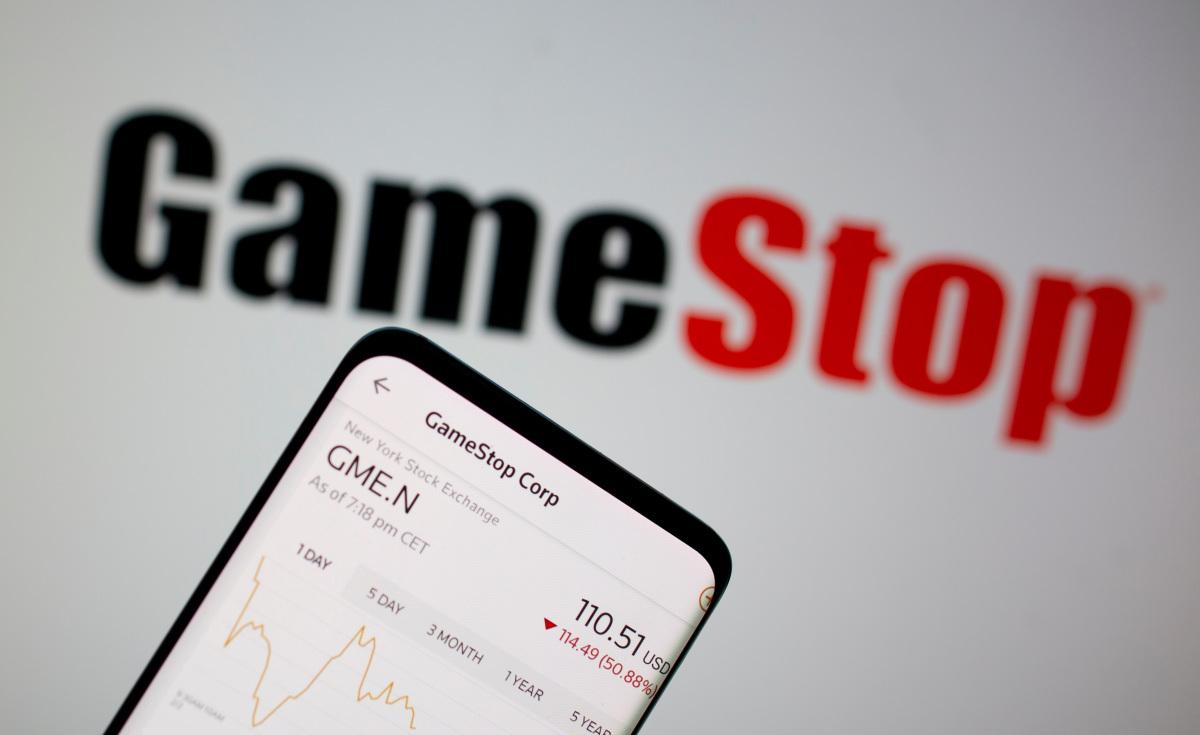
GameStop stock graph is seen in front of the company's logo

GameStop shares rose 0.83% Monday morning, trading at $21.86, as investors continued to weigh the video game retailer’s unusual pivot toward e-commerce ambitions, highlighted by Chief Executive Ryan Cohen’s continued pursuit of an unsolicited $125-per-share acquisition offer for eBay that the online marketplace’s board has already publicly rejected.

Monday’s modest gain came after a volatile stretch for GameStop shares, which remain closer to their 52-week low of $19.93 than their high of $28.10. The stock has traded within a range of roughly $21.66 to $22.02 over the past several sessions, moving on relatively light volume compared with the company’s average daily trading activity of around 4 million shares.

Much of the recent movement in GameStop’s stock has centered on the company’s continued pursuit of eBay. On May 3, GameStop delivered a non-binding proposal to eBay’s board of directors to acquire all outstanding shares it does not already own for $125 apiece, to be paid through a combination of cash and GameStop common stock, a deal reportedly valued at approximately $55.5 billion. Barchart reported that GameStop’s proposal followed the company’s earlier surprise announcement of interest in eBay, part of a broader strategy under Cohen to deploy the retailer’s substantial cash position toward transformative acquisitions well outside its traditional video game business. eBay’s board has already rejected the unsolicited offer, though Cohen has indicated plans to appeal directly to eBay shareholders in an effort to keep the pursuit alive, according to Yahoo Finance.

To support that continued push, GameStop stockholders approved a series of proposals at the company’s 2026 Annual Meeting, held July 7, including an amendment increasing the number of authorized shares of Class A common stock to 2.5 billion. The amendment passed with 68.7% of votes cast, according to a company statement, providing GameStop with additional flexibility to issue stock in connection with major strategic transactions, including a potential acquisition of eBay. Stockholders also re-elected all five director nominees at the meeting, with Cohen himself receiving the highest share of favorable votes among the nominees, and approved both an advisory vote on executive compensation and the ratification of the company’s independent auditor.

Advertisement

GameStop’s position in eBay itself remains structured through a combination of direct share ownership and derivative contracts. The company directly owns roughly 4.3 million shares of eBay common stock and has entered into put/call option transactions providing economic exposure to an additional 39 million shares, agreements set to expire in February 2028. After GameStop satisfied a Hart-Scott-Rodino Antitrust Improvements Act condition on June 3, those option positions became eligible for physical settlement rather than remaining limited to cash settlement, though GameStop does not hold voting or dispositive power over the underlying shares unless and until that physical settlement actually occurs. According to CoinCentral, the combined direct and derivative positions give GameStop economic exposure to roughly 9.8% of eBay.

The July 7 annual meeting also resolved a separate point of controversy that had complicated GameStop’s broader corporate narrative in recent weeks. Ahead of the meeting, Cohen withdrew a proposed shareholder vote on his own performance-based pay package, an arrangement that involved 171.5 million stock options structured across nine tranches tied to market capitalization and EBITDA milestones, with a theoretical maximum payout that could have approached $35 billion if every target were met. The proposal had drawn scrutiny in part because critics argued that completing the eBay acquisition could itself help push GameStop toward the market cap and profitability thresholds required to unlock a portion of that reward, creating what some viewed as a potential conflict of interest tied directly to Cohen’s pursuit of the deal. A shareholder lawsuit had also sought to delay the July 7 vote on the compensation package entirely, accusing GameStop of a “bait-and-switch” through changed voting rules and an allegedly misleading proxy statement. By withdrawing the compensation proposal ahead of the vote, Cohen removed that specific controversy from consideration at the meeting.

Alongside its regulatory filings reaffirming the eBay pursuit, GameStop also raised its financial outlook for the year, projecting adjusted EBITDA above $600 million for fiscal 2026, nearly double the $345.4 million the company reported in fiscal 2025. That improved guidance came on the heels of a strong first-quarter report, in which GameStop posted net sales of $835.3 million, up 14% year over year from $732.4 million in the prior-year period, while selling, general and administrative expenses declined to $201.6 million from $228.1 million. The combination pushed operating income to a record first-quarter level of $143.3 million, with net income climbing to $389.6 million from $44.8 million a year earlier and adjusted earnings per share improving to 30 cents from 9 cents. GameStop’s balance sheet remained a particular point of strength, with cash, cash equivalents and marketable securities totaling approximately $8.4 billion and total liquidity near $9.7 billion, positioning the company well to fund a major acquisition should the eBay pursuit ultimately advance.

GameStop has also continued expanding beyond its traditional video game retail business in other ways, launching Power Packs, a digital trading card platform aimed at building out its presence in the broader collectibles market, and approving a new $2 billion share repurchase program extending through 2029. According to Yahoo Finance, collectibles have grown to represent 41.8% of GameStop’s first-quarter revenue, reflecting the company’s continued shift away from its historical reliance on physical video game sales, a trend reinforced by Sony’s recent announcement that it plans to end production of physical PlayStation game discs by 2028.

Advertisement

Despite the improved financial results and the strategic ambition behind the eBay pursuit, Wall Street analysts have remained broadly skeptical of GameStop’s current valuation. The average analyst price target on the stock stands at $13.50, according to Barchart, implying substantial downside of more than 37% from recent trading levels, with Wedbush among the firms maintaining a particularly cautious stance on the shares. Traders Union analyst Viktoras Karapetjanc characterized the company’s authorized share increase as a fundamental shift that expands GameStop’s flexibility for major deals while simultaneously raising dilution risk for existing shareholders, noting persistent bearish technical momentum in the stock following recent support-level breakdowns. “Unless we see a decisive move above resistance, I expect sellers to stay in control in the short term,” Karapetjanc said, pointing to the $22.31 level on the Ichimoku Kijun indicator as a key technical threshold that would need to be cleared for any sustained recovery in the shares.

GameStop is scheduled to report its next quarterly earnings on September 9, a date investors are likely to watch closely for further updates on both the company’s core retail performance and the ongoing status of its pursuit of eBay, a deal that remains far from certain given the target company’s public rejection of the initial offer and the substantial scale of the transaction relative to GameStop’s own market capitalization.

Continue Reading

Business

Sensex falls 500 points, Nifty slips below 24,100 as US-Iran conflict escalates. What lies ahead?

Published

on

Sensex falls 500 points, Nifty slips below 24,100 as US-Iran conflict escalates. What lies ahead?
The Indian stock market traded lower on Tuesday, with Sensex and Nifty falling up to 0.6% as tensions in the Middle East escalated, driving up oil prices.

Sensex dropped more than 515 points to 77,096.34, while Nifty 50 dropped 146 points to 24,064 during Tuesday’s session. The broader market also edged lower, with Nifty Smallcap 100 and Nifty Midcap 100 indices dropping up to 0.5%.

HCL Technologies, IndiGo, Bajaj Finance, L&T, Bajaj Finserv, UltraTech Cement, M&M, Kotak Mahindra Bank and HDFC Bank shares were the top losers on Sensex, falling 1-3%. Tata Steel, TCS and Infosys shares meanwhile rose nearly 1% each.

The downtrend comes as India VIX, which measures volatility in market, inched slightly higher to 13.39 on Tuesday morning. Nifty Financial Services was the worst hit, crashing 1%. Nifty IT, Nifty Metal, Nifty Pharma and few other sectoral indices however were trading in the green with marginal gains. The overall market breadth was bearish, with NSE seeing 1,608 declines and 780 advances, while 139 stocks remained unchanged.

Advertisement

US-Iran conflict escalates

The conflict between US and Iran continued to escalate further, after the former conducted fresh strikes against the latter. This came after Iranian forces struck a commercial ship in the Strait of Hormuz early on Sunday, before announcing closure of the critical waterway that accounted for 20% of daily global oil and gas supply shipments before the war.
Following the fresh strikes oil prices rose sharply higher, with Brent crude futures jumping around 2% to trade near $85 per barrel while WTI Crude futures rose to $80 per barrel.
Rupee weakens
As a result of the rising oil prices, rupee dropped past the 96 per dollar mark for the first ‌time since ⁠late ⁠May. The ⁠rupee fell nearly 0.5% to 96.0775, its weakest level since May 22. “The renewed escalation in US-Iran tensions also supported the US dollar, keeping pressure on emerging market currencies. Market participants will closely watch the upcoming US CPI inflation data, which could determine the next move in the Dollar Index and global currencies. FII flows will remain another key factor, as recent improvement in foreign inflows has helped cushion the rupee’s downside,” said Jateen Trivedi, VP Research Analyst – Commodity and Currency, LKP Securities.

What lies ahead?
There are some headwinds blowing again which might impact the Indian market in the near-term, said VK Vijayakumar, Chief Investment Strategist at Geojit Investments. He noted the escalation of tensions in the US-Iran conflict has pushed Brent crude to $84. If this spike continues it will again start impacting India’s macros, he added, saying the BoP vulnerability and the potential impact on the rupee can again become issues that may impact the market adversely.

“The spike in the U.S. 10-year yield to 4.61% is another concern which can impact FPI flows. India’s CPI inflation in June has increased to 4.38% and is likely to inch up higher.

Given these headwinds, investors have to exercise caution. In this fast changing geopolitical and economic environment, investment decision-making is becoming extremely challenging. Investors may watch this dynamic situation and wait for clarity to emerge, particularly on the crude price front,” according to Vijayakumar.

Advertisement

Technical view on Nifty
Technically, the near-term outlook remains cautiously neutral, said Rajesh Palviya, Head of Research at Axis Direct. He noted that Nifty needs to reclaim and sustain above 24,100 to improve sentiment, with 24,400 emerging as the next resistance zone.

On the downside, the analyst saw 24,000 to act as the immediate support zone, while a breach could trigger further weakness toward 23,900. A moderation in crude prices would be the key catalyst for a stronger market recovery, he said.

(With inputs from agencies)
(Disclaimer: Recommendations, suggestions, views and opinions given by the experts are their own. These do not represent the views of The Economic Times)

Continue Reading

Business

Fremantle port operator Patrick Terminals electrifies truck fleet

Published

on

Fremantle port operator Patrick Terminals electrifies truck fleet

Container terminal operator Patrick Terminals will use electric trucks at its Fremantle operations after a trial found cost cuts and emission reductions.

Continue Reading

Trending

Copyright © 2025