

Tech
Google Home Speaker (2026) review: Smarter and punchier, with a subscription pinch


Google Home Speaker
MSRP $99.99

“A delightful smart speaker that’s easy to love.”
Pros
- Gemini makes voice control feel genuinely conversational
- Strong smart home integration
- Better sound than previous compact Google speakers
- Modern, compact design
- Excellent value at $99
Cons
- Advanced features require a subscription
- Best experience requires buying into Google’s ecosystem.
- No display for visual controls or information
Quick Recap
Google just introduced a new Home Speaker powered by Gemini, and it may represent the biggest shift that the company’s smart home lineup has seen in years. This isn’t simply a hardware refresh with improved sound or a new design. Instead, Google is positioning Gemini as the foundation of a smarter home assistant, one that understands natural conversation instead of relying on rigid voice commands. At $99, the new Home Speaker also enters one of the most competitive segments of the smart home market, where it will inevitably be compared with devices like Apple’s HomePod mini.
Having used the speaker for the past couple of weeks, it quickly becomes clear that Gemini is the real upgrade. The hardware itself is a step forward over Google’s previous compact speakers, but the biggest difference comes from how naturally the speaker understands requests and carries on conversations. Rather than forcing you to think about the right command, it adapts to the way you naturally speak.
Google Home Speaker specs: What’s inside the round shell?
| Colors | Berry, Porcelain, Hazel, Jade |
| Dimensions | Product: 3.4″ height x 4.2″ diameter Power Cable: 59.1″ |
| Weight | 0.9 lbs (speaker + captive cable, excludes power adapter) |
| Power Adapter & Ports | Adapter: 30W Type-C USB-PD PPS PDO: 5V/3A, 9V/3A 15V/2A, 20V/1.5A PPS: up to 11V/2.73A, 16V/1.88A, 21V/1.43A Dimensions: 2.3″ H x 1.1″ W x 2.2″ L Weight: 0.1 lbs |
| Memory & Storage | Memory: 1 GB LPDDR4 Storage: 4 GB EMMC |
| Processor | Quad Core A55 2.0 GHz with NPU |
| Speaker & Microphones | Omnidirectional sound with 58mm full-range driver 3 far-field microphones 2-stage mic mute switch (hardware mute) |
| Technology | Gemini for Home, Voice match technology |
| Sensors | Capacitive touch controls (3 touch areas) |
| Materials | Made with at least 37% recycled materials based on product weight 100% plastic-free packaging |
| Smart Home Connectivity | Wi-Fi 6 802.11ax (2.4 GHz/5 GHz) Bluetooth® 5.4 Thread 1.3 border router (2.4 GHz) |
| Smart Home Compatibility | Works with Google Home, Matter Works as a hub for Matter with Google Home |
| Supported OS | iOS, Android |
| In the Box | Google Home Speaker, Power adapter, 59.1″ captive power cable, Quick start guide, Safety & warranty document |
Google Home Speaker design and setup: It’s clean and breezy

Measuring 3.44 inches tall, 4.2 inches in diameter, and weighing just 0.9 pounds, the new Google Home Speaker is compact enough to blend into almost any space while still feeling more premium than Google’s older Nest speakers. Setup is straightforward. Inside the box, Google includes the speaker, a 30W USB-C power adapter, and a 1.5-meter power cable, with everything configured through the Google Home app.
Google is offering the speaker in four colors: Hazel, Porcelain, Jade, and Berry, with Jade and Berry currently exclusive to the U.S. The Porcelain model used for this review has a clean finish that should fit comfortably into most homes without drawing attention to itself. Overall, the design feels minimal, modern, and understated. Rather than becoming the focal point of a room, it blends naturally into a desk, shelf, or living space. Like much of Google’s recent hardware, recycled materials are used throughout the design, including the 3D-knit fabric exterior, which immediately brings Apple’s HomePod to mind.
One of my favorite details is the dynamic light ring around the base. It changes depending on whether the speaker is listening, processing a request, or responding, so instead of wondering what it’s doing, you always have visual feedback. It sounds like a small addition, but it makes the entire experience feel more alive. Omnidirectional microphones round things out, allowing the speaker to hear requests clearly from across the room without constantly asking you to repeat yourself.
Google Home Speaker interactions: Gemini changes how you use a smart speaker

The biggest shift with Google’s new Home Speaker has very little to do with the hardware. Instead, it comes from replacing Google Assistant with Gemini, and that fundamentally changes how you interact with the speaker.
Previous Google smart speakers worked best when you thought in commands. You would ask it to turn off the lights, set the thermostat, or play music, usually one request at a time. Gemini moves away from that approach. Rather than remembering specific phrases, you simply talk to it the way you would another person. Saying something like, “Set the house up for bedtime,” is enough for Gemini to understand the intent behind the request and carry out the necessary actions. It can also handle multiple requests in a single sentence and even adapt if you change your mind halfway through speaking.
Reasoning is where Gemini begins to separate itself from Google’s previous assistants. During testing, asking whether it would rain during a baseball game didn’t just produce the day’s weather forecast. Rather than simply pulling information, Gemini reasons through the request by combining context from multiple sources. Google calls this real reasoning rather than simply retrieving data, and it is one of the biggest differences between Gemini and the Google Assistant experience that came before it.
Gemini is just as useful for everyday tasks. It can help with reminders, calendar events, shopping lists, and planning your day while supporting natural follow-up questions that build on the conversation instead of starting over each time. Users can also choose from 10 different voice options to personalize how the assistant sounds.
Google is making the core Gemini experience available without an additional subscription. Buyers who purchase the Home Speaker before the end of September also receive six months of Google Home Premium, which unlocks Gemini Live. Instead of issuing commands, you can simply say, “Let’s chat,” and have a full back-and-forth conversation with your home assistant. Premium also introduces more advanced smart home features, including camera search history that lets you ask questions like whether someone left the garage open or whether the dog jumped on the couch, along with Home Briefs, which summarize everything that happened while you were away. Google Home Premium is available in two tiers, with the standard version included in Google AI Pro and the advanced tier bundled with Google AI Ultra

Google Home Speaker sound quality: It’s okay for the mission
Audio has received meaningful upgrades alongside Gemini. Google says the new Home Speaker features improved microphone processing for better voice pickup, true 360-degree sound, and 2.5 times stronger bass than the Nest Mini. Compared to Google’s previous compact smart speakers, the difference is immediately noticeable, making this a worthwhile upgrade for anyone coming from an older Nest Mini.
Stereo pairing is available when using two Home Speakers together, while integration with Google TV Streamer, Nest devices, and Cast-enabled products allows it to become part of a whole-home audio setup. Rather than existing as a standalone smart speaker, it slots neatly into Google’s broader ecosystem. As far as the raw audio quality goes, it avoids the expected pitfall of overtly-processed and synethetic tunes. It can fill a small to medium-sized room with punchy audio without any jarring distortion at high volume levels.
The sound profile is pleasant, in general, it’s sufficiently clear for listening to podcasts and audiobooks. Notably, it excels at mids, which means vocal-heavy tracks and classic music will please you ear canals. On the flip side, don’t expect delicate instrumental separation and at high volumes, complex tracks definitely get a tad muddy. If you seek that kind of audio nirvana, you might want to pay up a little bit and get the Sonos Era 100, or the bigger Google Nest Audio.
Google Home Speaker vs. HomePod mini
Comparison with Apple’s HomePod mini is almost unavoidable since both speakers occupy the same $99 price point. Both feature compact, fabric-covered designs that are meant to blend into a room and are available in multiple colors. The difference lies in what each product is trying to be. HomePod mini feels like a music-first accessory for the Apple ecosystem, while Google’s new Home Speaker is designed as a display-less AI hub powered by Gemini.
Gemini is also where Google creates the biggest distinction. Natural conversations, follow-up questions, and multi-step requests all feel more fluid than the command-driven interactions that have traditionally defined smart speakers. Apple has introduced Siri AI, but the current HomePod mini will not support those new capabilities. Anyone looking for Apple’s next-generation AI assistant will likely need to wait for future HomePod hardware.

Buyers already invested in HomeKit will still find plenty to like about the HomePod mini, but Google’s approach feels more flexible today. Gemini supports multi-action commands, context-aware conversations, and AI-driven automation, making interactions feel less reactive and more conversational.
Audio performance is another area where the two speakers differ. HomePod mini delivers clean, balanced sound for its size, while Google’s new Home Speaker focuses on stronger bass, wider 360-degree room-filling audio, and stereo pairing. Neither is intended to replace a dedicated speaker system, but Google places greater emphasis on creating a more immersive listening experience throughout a room.

Should you buy
Stepping back, this is more than a speaker upgrade. Google is rethinking what a smart home assistant should actually feel like. The future is not about commands or repeating yourself. It is about natural interactions, and that is ultimately the biggest selling point of the new Google Home Speaker. For its size, the sound quality is surprisingly punchy, and it performs pretty well if you’re more into listening to podcasts or music without deep audiophile expectations.
It, however, excels with arguably the smartest on-device AI assistant out there. Voice interactions are natural, the cross-device interplay is rewarding, and it can actually get work done across different apps and services, if you have linked the respective accounts with your Google account. The biggest caveat is that some of the smartest capabilities are locked behind a subscription, but if you merely need a no-frills tiny smart speaker, the Google Home Speaker’s latest avatar is as good as it gets.
Why not try
Amazon Echo Dot Max — If audio quality is your top preference, the two-way speaker fitted on the latest Amazon Echo Dot Max is right up your alley. Packing a dedicated woofer and tweeter, it delivers a surprising amount of bass and clarity. The cool Omnisense system brings presence awareness to the table, and it also offers support for multiple smart home protocols, including Matter and Thread. On the audio side, it even adapts to the layout of your room or home space. Plus, the new Alexa+ assistant is a meaningful upgrade.
Apple HomePod mini — The direct rival to Google’s speaker, Apple’s HomePod mini offers a similar design and build profile. It offers a signature audio output that is pleasing, though not hte loudest or room-filling kind. Where it wins is the deep Apple ecosystem integration, and finally, a much smarter Siri AI that is now ready to pull intelligence from — and get work done across — third party apps. But if you have an Android device in your hands, it’s not the best bet because a healthy bunch of features get locked.
Sonos Era 100 SL — In case you’re chasing a true audio pedigree, the Sonos Era 100 SL is arguably the best bet, even though it’s slightly more expensive. It delivers more refined audio, deeper bass, wider soundstage, and stereo separation, thanks to the combination of dual-angled tweeters and a bigger mid-woofer. It seamlessly allows multi-room audio playback and offers meaningful EQ tuning, as well. The assistant situation takes a hit, however, and the Sonos app still needs some work.
How we tested
We tested the Google Home speaker for a couple of weeks. In that span, it was linked to a personal Google account for accessing all the Gemini smart home features and automations. The audio quality was tested standalone, and to get a better perspective, it was also compared against the latest Apple HomePod mini. While testing, we focused on three core areas for qualitative evalauation, and they include raw sound quality, responsiveness and accuracy of the onboard AI assistant, and the wider cross-device weaved around it.
For audio quality evaluation, we played a variety of songs across difference genres to gauge how it handles different frequency ranges. Additionally, the onboard AI assitant was tested by throwing natural language queries its way, ranging from day-to-day smart device controls to knowledge delivery. We focused on accuracy and latency as the key metrics to assess the digital assistant’s efficacy. For the overall setup, we tested it across different positions under varying network and cross-device syncing environments.

Tech
Startup Spotlight: Hedgehog bets that open-source networking will power the next generation of AI clouds


As AI workloads drive soaring cloud bills, more companies are weighing whether to move computing out of public clouds and into their own data centers. But building and operating AI infrastructure is far more complicated than simply buying servers — networking has become one of the biggest technical hurdles.
That’s the opportunity Seattle startup Hedgehog is chasing.
Founded in 2022 by CEO Marc Austin, a Cisco networking veteran, Hedgehog develops open-source software designed to make private AI data centers operate more like hyperscale clouds. It has raised $11 million in seed funding, with plans to raise a series A financing round.
We caught up with Austin for the return of GeekWire’s Startup Spotlight to learn more about the 20-person company, the AI networking boom and what surprised him most about building a startup in one of tech’s fastest-moving markets.
In 50 words or less, give us your elevator pitch?
Hedgehog is open-source software that makes AI networking simple. AI clouds and enterprises use it to run GPU networks the way hyperscalers do — deployed in hours instead of months, operated by DevOps teams instead of armies of network engineers, on open hardware with no vendor lock-in.
What problem are you obsessed with solving?
Time to GPU value. A GPU cluster is the most expensive asset most companies will ever buy, and every day it sits idle waiting on the network is money burning. That wait is rarely the hardware — it’s the fabric: weeks or months of scarce network engineers hand-designing, cabling, tuning, and validating it across proprietary CLIs and locked-in vendor gear.
Meanwhile the people told to “own the network” usually aren’t network engineers at all — they’re platform and DevOps teams. We’re obsessed with collapsing that timeline: declare your network like intent in Kubernetes and go from racked GPUs to inference in hours instead of months — on open hardware, no lock-in, no room full of specialists. Cloud-grade networking without hyperscaler headcount.
What surprised you after talking to customers?
How rarely the buyer is a network engineer. It’s platform and DevOps teams, often at AI clouds who just took delivery of thousands of GPUs who are told “you own the network now.” They don’t want to learn BGP; they want a network that behaves like the rest of their cloud-native stack. The other surprise: they don’t just want to run the network, they want to sell it by carving up capacity for their own customers, like a cloud provider does.
How has AI changed the way you build your company?
Twice over.
Our product exists because AI broke traditional networking. Training and inference traffic melts networks designed for web apps.
And AI changed how we build: we use it heavily across engineering, testing, and go-to-market, which lets a small team continuously test every supported device and configuration in our lab and ship with hyperscaler-grade rigor. AI raised the bar for what a startup-sized team can deliver.
What’s one thing people misunderstand about your startup?
That “open source” means hobbyist. The opposite is true: openness is the enterprise feature. Our customers can audit every line of code that runs their fabric, extend it, and never get locked in. Nearly every competitor markets “open networking” while shipping a proprietary controller. Hedgehog is the only one that actually publishes the repo.
What’s the toughest decision you’ve made in the past year?
Betting entirely on Ethernet. We decided open, standards-based Ethernet would win AI networking and put everything behind it. Watching the industry’s largest AI operators now standardize on that same approach makes us feel good about the call — but saying no was hard.
What’s the one piece of advice you give to other entrepreneurs?
Pick the wave, not just the surfboard.
Product decisions are recoverable; betting against a structural industry shift isn’t. Find the standard, the architecture, or the buyer behavior that’s inevitable, align everything to it early, and be patient while the market catches up to your bet.
We’ll know our company has made it when…
Networking is boring again. When a platform engineer stands up a multi-tenant GPU cloud and the network is just a few lines of declared intent that nobody thinks twice about. When “network like a hyperscaler” describes every AI cloud, not just the giants running on Hedgehog, then we will have made it!


A look at Anthropic safety hiring shows exactly what it fears: analysts brought in to stop its models teaching anyone how to build nuclear, chemical, and biological weapons.
Most job ads sell a mission. Anthropic’s read like a threat assessment.
The company has posted a run of openings for enforcement analysts whose job is to keep its AI from helping people build weapons, run scams, or commit cybercrime, Axios first reported. One listing seeks an “Enforcement Analyst focused on Radiological & Nuclear Harms.” Others cover chemicals and explosives, financial fraud, and more.
The pay lands in the mid- to upper-$200,000s. The work is not coding. Anthropic wants real-world expertise in fields like biology and explosives. It also wants people who can think like an attacker trying to slip past its defences.
Naming the harm on purpose
The blunt job titles are deliberate. “Ensuring our models don’t provide potentially harmful information is central to responsible development,” a spokesperson said. The company said it regularly hires experts in sensitive fields to stress-test its models before a release.
Spelling out the exact harm, it added, is how you recruit the right people. Anthropic says hundreds of staff now work on safety, probing for weak spots and patching them.
This is the company that critics call the industry’s biggest doomsayer. The pattern in Anthropic safety hiring is its answer to that label. It is spending real money on the risks it keeps describing.
The catastrophe Amodei keeps describing
Chief executive Dario Amodei has spent months sketching the downside. In a January essay he called biological attacks the scenario that worries him most.
“I do not think biological attacks will necessarily be carried out the instant it becomes widely possible,” he wrote. “But added up across millions of people and a few years of time, I think there is a serious risk of a major attack, with casualties potentially in the millions or more.”
He has also warned about AI helping cybercriminals and empowering authoritarian states. Earlier this year Anthropic broke with the US Defense Department over the use of its technology for mass surveillance and autonomous weapons.
The labs are writing their own rules
OpenAI is doing the same. It is hiring a researcher on biological and chemical risks, at a base salary of up to $445,000. As models grow more capable, every serious lab is racing to staff a red team.
That race is happening in a vacuum. The US still has no comprehensive AI safety law. Congress has tried for years and passed nothing. Some want a referee: Google’s Demis Hassabis has floated a Wall Street-style watchdog for frontier models. Fewer than one in a hundred AI PhDs go into government, so the expertise sits inside the companies.
The result is a strange kind of self-regulation. The firms building the most dangerous capability are also the ones deciding how to fence it in. Amodei has named that tension himself, calling AI companies the next tier of risk after hostile states. His careers page is the argument and the warning in one place. The people best placed to stop the catastrophe work for the company that could help cause it.
Tech
T+A Launches $74,800 HV Streaming DAC and Power Amplifier With DSD1024, 500 Watts and No Interest in Restraint
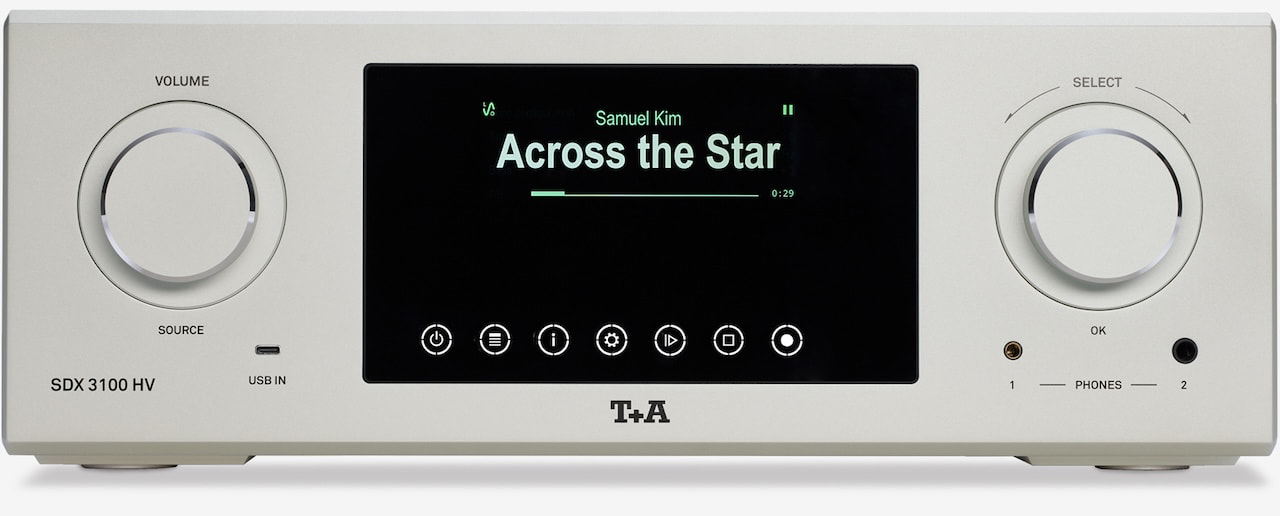
T+A does not build inexpensive audio components, and its new HV reference pairing makes no attempt to wander into that unfamiliar part of town where tourists buy four-euro spätzle and lederhosen assembled somewhere considerably less German.
The German manufacturer has formally launched the SDX 3100 HV streaming DAC and preamplifier for $44,900 alongside the A 3100 HV stereo power amplifier for $29,900. The complete two-box system costs $74,800 before adding loudspeakers, cables, an equipment rack, or the optional $2,190 MM or MC phono module.
We first encountered both components at AXPONA 2026, but confirmed pricing, final specifications, and availability make them worthy of a closer look. The A 3100 HV began shipping on July 9th in silver or titanium, while SDX 3100 HV availability is rolling out through dealers, with some North American listings indicating August delivery.
The price will dominate the conversation, because $74,800 remains a serious amount of money even by high-end audio standards. What T+A is offering, however, is not merely another streamer connected to a large amplifier. The SDX 3100 HV and A 3100 HV represent a highly integrated reference system that combines some genuinely unusual digital architecture with enough amplification to drive almost any conventional passive loudspeaker.
Related Reviews:
The SDX 3100 HV Is More Than a Streamer
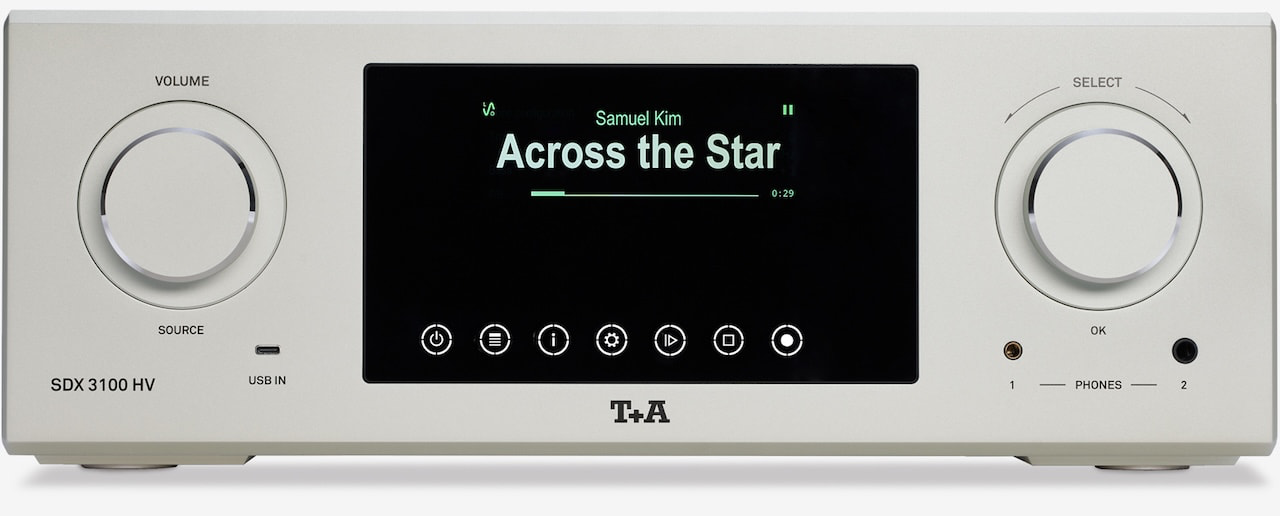
The SDX 3100 HV replaces the SDV 3100 HV at the top of T+A’s digital lineup, combining a network streamer, DAC, fully analog preamplifier, headphone amplifier, tuner, and system controller inside a 57-pound aluminum chassis.
Its most significant technical feature is T+A’s Path Separation Technology, which routes PCM and DSD through different conversion architectures rather than forcing both formats through the same DAC design.
PCM signals are handled by a double-differential quadruple converter using four 32-bit sigma-delta DAC channels per side, supporting rates up to 768kHz through USB. DSD travels through T+A’s proprietary True 1-Bit converter without first being converted to PCM, with USB playback supported up to DSD1024.
There is an important distinction buried beneath that impressive headline number. DSD512 and DSD1024 require a compatible Windows computer with T+A’s driver or a Linux system running a supported kernel. Network streaming is currently specified up to DSD256, which remains more than sufficient for almost every commercially available recording but is not quite the same as streaming DSD1024 from a NAS while congratulating yourself on having survived another firmware update.
T+A’s De-Jitter Masterclock examines incoming clock signals and routes anything failing its stability requirements through an additional PLL stage. Separate quartz oscillators are used for the 44.1kHz and 48kHz frequency families, reducing the need for sample-rate conversion between them. The SDX also provides selectable digital filters, including FIR, Bezier, and two NOS options.
Streaming Without Another Proprietary Island
The third-generation Audiophile Streaming Architecture, or ASA G3, supports TIDAL Connect, Qobuz Connect, Spotify Connect, Amazon Music HD, Deezer, HIGHRESAUDIO, Apple AirPlay 2, Audirvana, internet radio, and locally stored music.
Roon certification is still listed as being in progress. That will need to be completed quickly because a $44,900 streaming component should not arrive with a significant software feature still waiting in the departure lounge.
Wired Gigabit Ethernet and dual-band Wi-Fi 6 are included, along with Bluetooth 5.4 using aptX HD, AAC, SBC, and MP3. Bluetooth is clearly present for convenience rather than as the preferred method for extracting everything the SDX can deliver.
Physical connectivity is extensive. The digital section includes AES/EBU, coaxial, BNC, optical, USB, two HDMI inputs, and an HDMI output with ARC. The specification currently lists ARC rather than eARC, although that is unlikely to present a meaningful bandwidth limitation in a two-channel system.
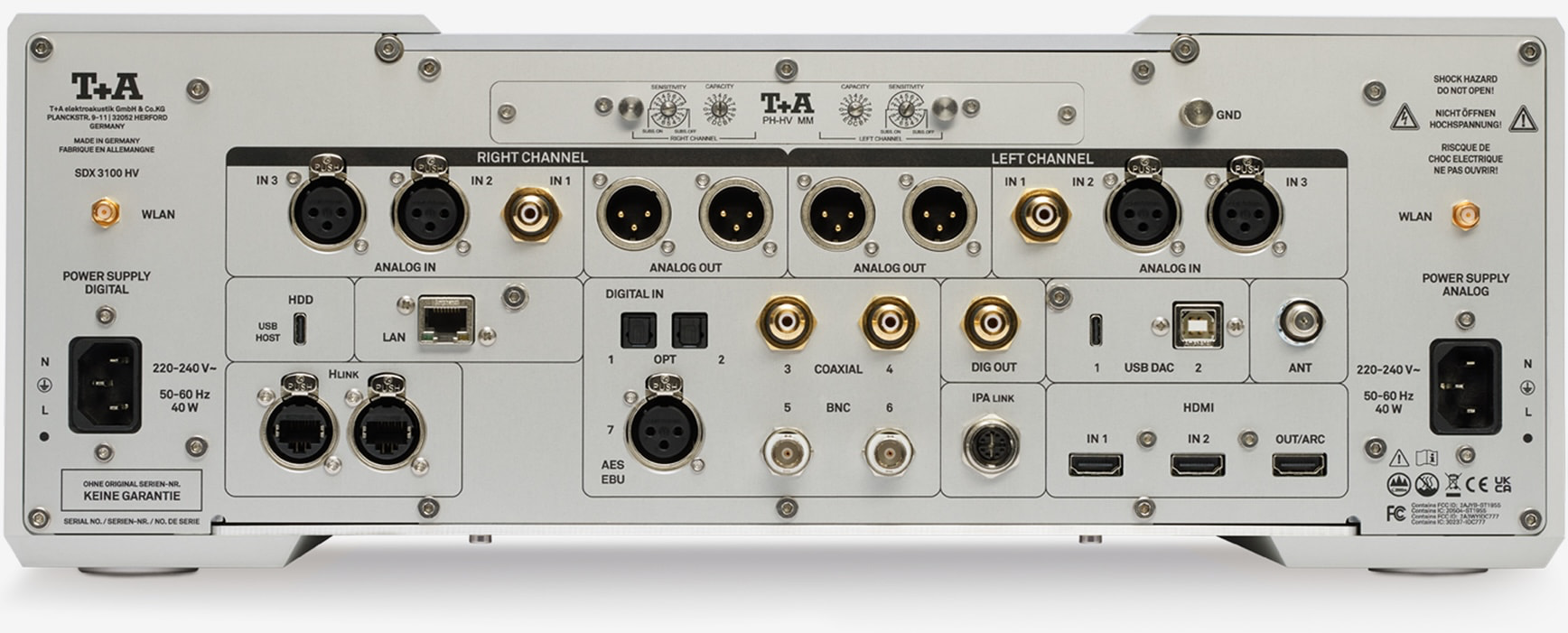
A Proper Analog Preamplifier
Many streaming DACs offer variable output and describe themselves as preamplifiers. The SDX 3100 HV takes the role more seriously.
Its fully symmetrical, double-mono preamplifier is constructed with discrete components and galvanically isolated from the digital circuitry. Volume is controlled by a relay-switched network with channel matching specified within 0.05dB at minus 60dB, where less carefully designed controls can begin shifting the image toward one loudspeaker.
The SDX also includes balanced and single-ended analog inputs, making it possible to connect tape machines, external phono stages, or other analog sources without converting them into the digital domain.
T+A has even included fully analog tone controls with individually adjustable bass and treble levels and selectable turnover frequencies. That is a more sophisticated approach than the usual bass and treble knobs, allowing some correction for loudspeaker balance, room placement, and difficult recordings without passing the signal through DSP.
It is not room correction, and there is no automated measurement system or sophisticated subwoofer bass management. Buyers looking for Dirac Live, ARC Genesis, or Linn Space Optimisation will need to solve those problems elsewhere.
The optional phono board is available in separate MM and MC versions for $2,190. At this price, including both cartridge types in one adjustable module would not have caused the accountants to begin rationing office supplies, but the internal option is still useful for owners seeking to avoid another box.
A discrete Class A headphone amplifier supplies both 6.3mm and 4.4mm Pentaconn outputs. T+A specifies a six-ohm output impedance and up to 200mA of current, making it considerably more substantial than the convenience headphone circuits often added to digital components.
The A 3100 HV Offers Two Amplifiers in One
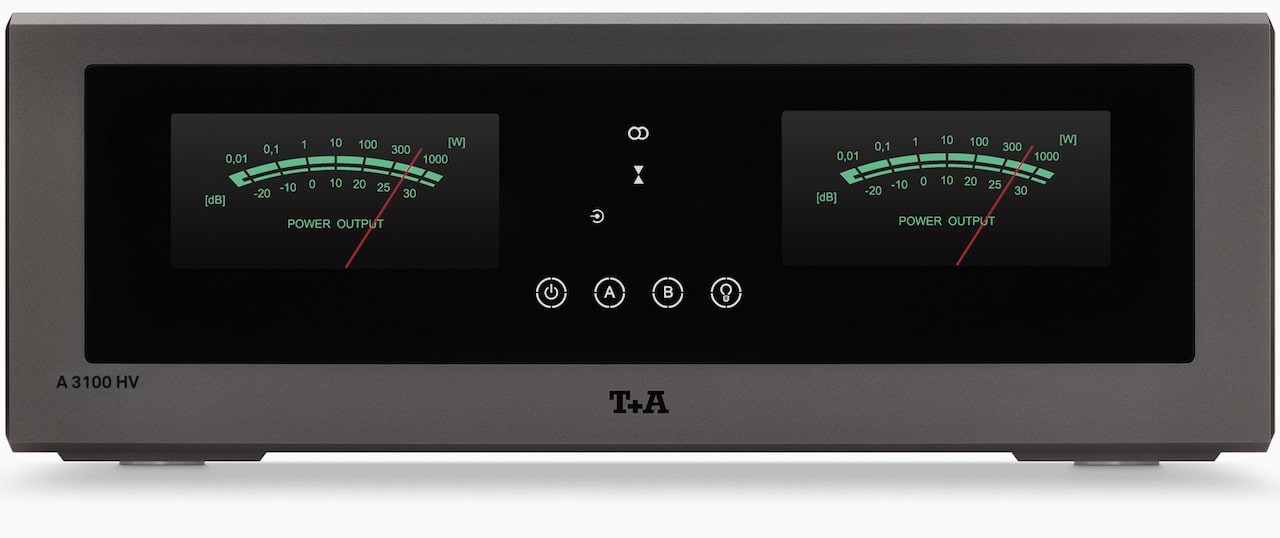
The matching A 3100 HV replaces the A 3000 HV, which remained in production for more than a decade. T+A claims more than 270 engineering changes, including revised board layouts, tighter-tolerance components, improved thermal management, and a new High Current operating mode.
T+A’s HV designation refers to its use of much higher internal operating voltages than conventional solid-state circuits. The objective is to keep the transistors working within a smaller and more linear portion of their operating range, pursuing some of the linearity associated with tubes without using tubes or their eventual maintenance requirements.
In High Current mode, the output stage runs at substantially increased idle current and can deliver up to 75 watts in pure Class A before transitioning into Class AB operation. This mode is intended for systems where listeners value the amplifier’s highest-bias operation and do not require maximum output.
Switching to High Power mode changes the priorities. The A 3100 HV is rated at 300 watts per channel into eight ohms and 500 watts into four ohms, with short-term output reaching 380 watts into eight ohms and as much as 650 to 700 watts into four ohms, depending on the measurement listed.
Those figures come from a 1,000-watt toroidal transformer and 120,000µF of reservoir capacitance. The power supply is magnetically shielded and physically separated from the audio circuitry behind a 10mm aluminum partition. Voltage and current amplification are located on separate boards and galvanically isolated to reduce interaction between the input stages and the current being delivered to the loudspeakers.
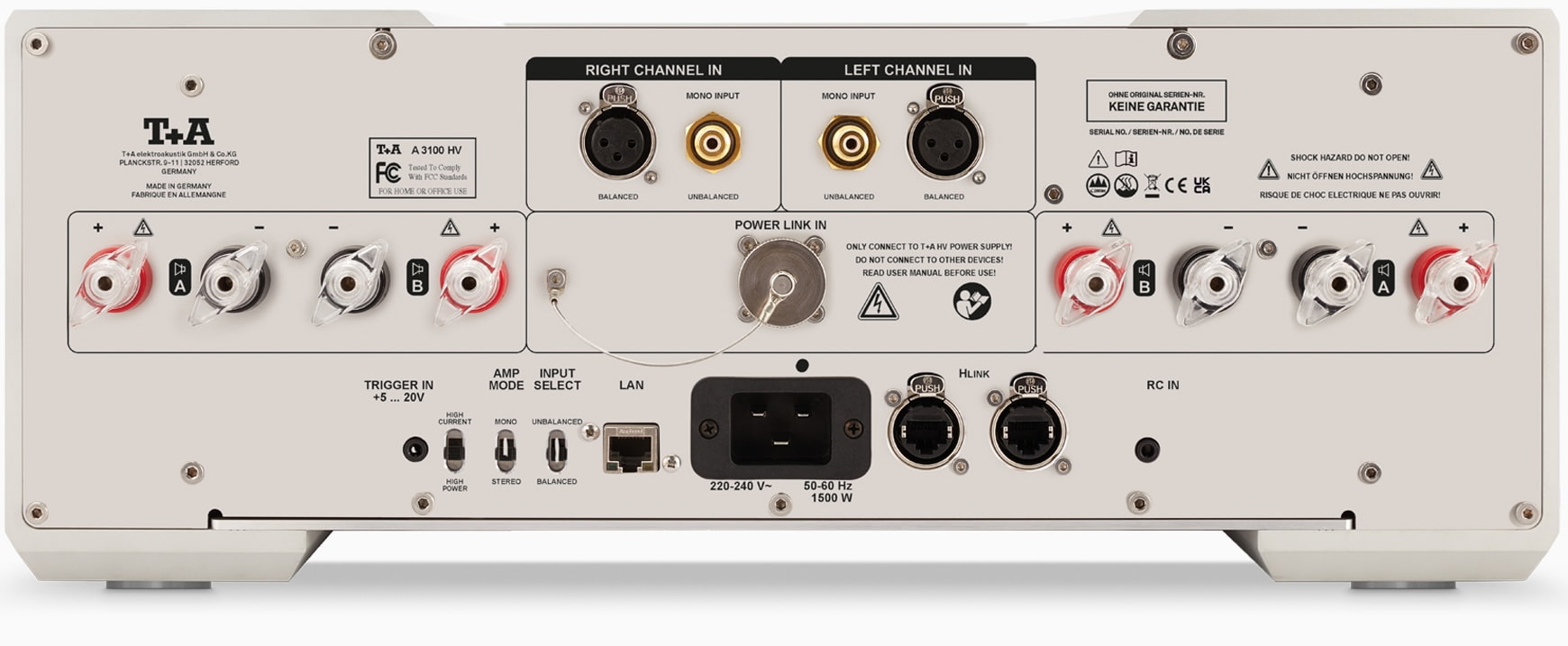
The amplifier can also be switched into mono operation, allowing owners to add a second A 3100 HV. At that point, the electronics alone rise to $104,700 before contemplating T+A’s optional external power supplies. The phrase “diminishing returns” may be heard faintly in the distance, but nobody in this market appears to be returning its calls.
What Does It Compete With?
There is no perfect direct competitor because T+A combines several product categories in an unusual two-box arrangement.
Naim’s closest conceptual alternative requires an NSS 333 streamer, NAC 332 preamplifier, and two NAP 350 mono power amplifiers. The NAP 350 delivers 175 watts into eight ohms and 345 watts into four ohms, making the Naim system less powerful on paper while requiring four chassis before optional external power supplies enter the discussion.
The CH Precision I1 takes the opposite approach. It combines preamplification, power amplification, DAC functionality, and optional streaming and phono modules in one configurable chassis. Its modular architecture is extremely flexible, but rated output is 100 watts per channel into eight ohms. The T+A system requires two shelves but provides far greater power and includes its full streaming platform as standard.
Boulder’s 866 Digital integrated amplifier also consolidates streaming, DAC, preamplification, and power amplification into one component. It delivers 200 watts into eight ohms and 400 watts into four ohms and supports Ethernet, USB, AES3, optical, AirPlay, and Roon. It is the more compact approach, although it lacks T+A’s separate native DSD conversion path and extensive direct streaming-service integration.
Linn’s Klimax DSM and Klimax Solo 800 amplifiers represent another logical comparison, especially for listeners interested in streaming, system integration, and room optimisation. Pricing places the T+A system in some perspective: a single Klimax Solo 800 starts at $51,190 in the United States, making a stereo pair $102,380 before adding the Klimax DSM source and preamplifier. Suddenly $74,800 starts looking merely extravagant rather than requiring intervention from concerned relatives.
Why This System Is Different
The SDX 3100 HV and A 3100 HV stand apart because they do not force buyers to choose between old-school analog engineering and a modern streaming system.
The SDX offers direct access to the major streaming platforms, HDMI ARC, high-resolution USB playback, analog inputs, optional phono support, proper preamplification, analog tone controls, and a robust headphone amplifier. The A 3100 HV can prioritize Class A operation for lower-level listening or switch to 500-watt Class AB output when the loudspeakers demand considerably more persuasion.
T+A has also managed to keep the complete system to two chassis. That will matter to buyers who want reference-level separates but have no desire to assemble a seven-box shrine requiring its own electrical subpanel and structural engineer.
The Bottom Line
There is no sensible way to describe $74,800 as affordable, and T+A does not need anyone performing financial gymnastics to make it sound reasonable.
A complete system with the phono module costs $76,990. Adding T+A’s optional $19,490 PS 3100 HV external power supply pushes the total to $96,480. Two amplifiers in mono operation take the system comfortably beyond six figures.
That pricing excludes almost everyone, including many serious audiophiles with excellent systems and perfectly healthy credit scores.
But judged within the reference electronics category, the T+A pairing is not an outlier. It competes with systems from Linn, CH Precision, Naim, Boulder, dCS, and other manufacturers for whom five-figure source components and power amplifiers are entirely normal.
The more relevant question is whether T+A’s two-box architecture can deliver enough of the performance, flexibility, and long-term usability of those larger systems to justify its substantial price.
On paper, the answer is at least plausible. The engineering is ambitious, the specifications are formidable, and the combination of native DSD conversion, real analog preamplification, selectable amplifier bias, and 500-watt output is unusual at any price.
Whether it sounds like $74,800 will require far more than reading the specification sheet while making approving German noises.
Pricing & Availability
The T+A A 3100 HV is available in silver or titanium for $29,900 and began shipping through authorized dealers on July 9, 2026.
The SDX 3100 HV is priced at $44,900, with dealer availability rolling out through July and August 2026.
The optional MM or MC phono module is $2,190.
The complete SDX 3100 HV and A 3100 HV system costs $74,800, or $76,990 with one of the phono modules.
For more information: ta-hifi.de
Related Reading:
We may receive a commission on purchases made from links.
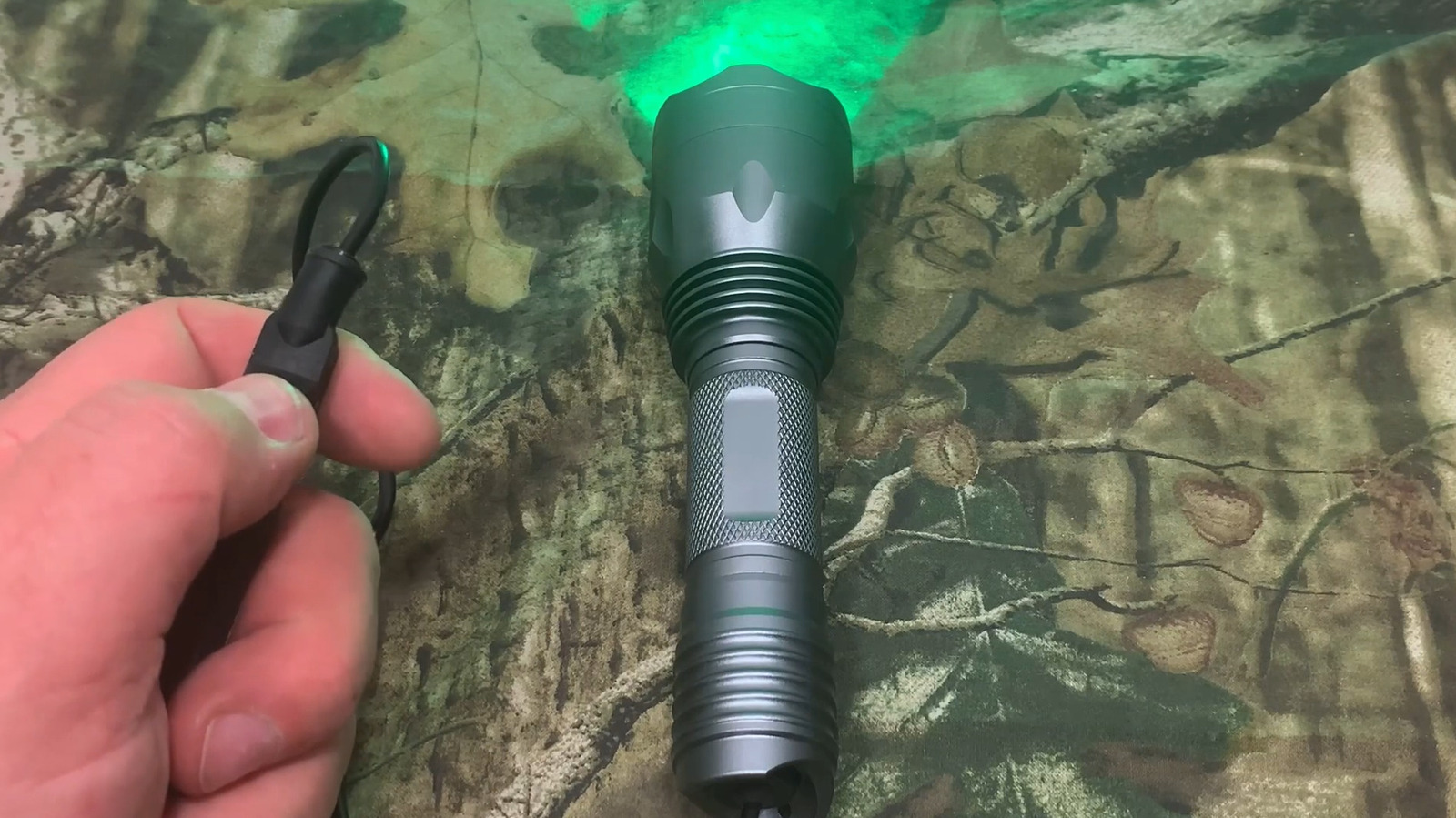
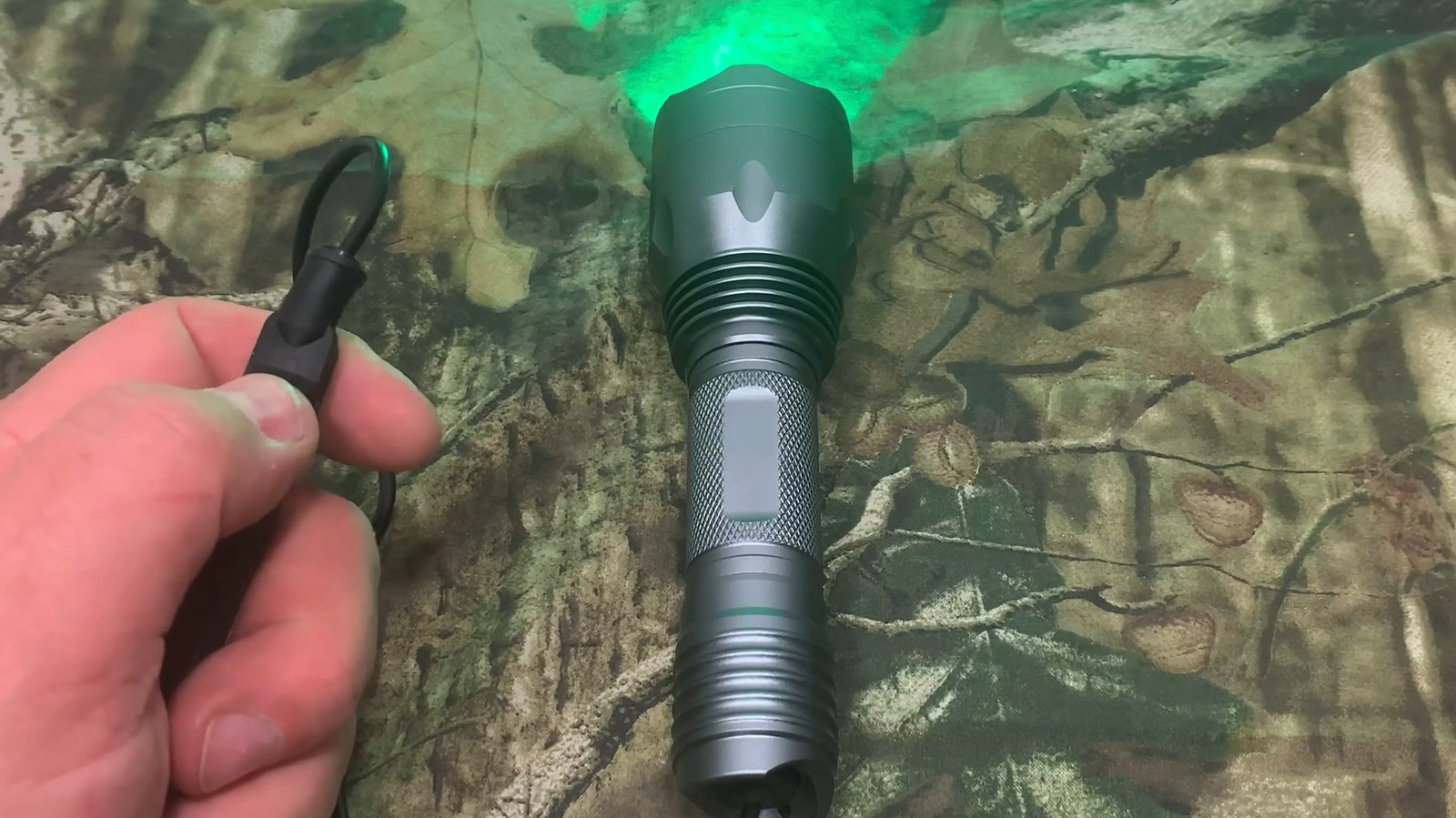
Compared to the more well-known standard that are white light flashlights, a green light flashlight is a specialized tool primarily used for certain night activities. At the mention of the words green and flashlight, the first association might be military-related, but everyday people can easily use them and acquire them from popular flashlight brands. While the military and some law enforcement indeed use them, a green light flashlight has many uses, and it’s particularly helpful for wildlife, such as during hunting or observation. It’s because green light is much less alarming to animals compared to a bright white light, so they’re less likely to get spooked.
Additionally, a green light is less intrusive to human sight, and it helps our eyes adjust better at night. If you have ever had a bright white light flashlight pointed at your eyes when it’s dark, you know how disorienting it is. The reason for this is that a green light sits at a medium range wavelength of around 510nm to 565nm on the visible spectrum. This is relevant because in the dark, our eyes respond best to 380nm and 650nm wavelengths, reaching peak adaptation at 507nm, which is very close to green.
What are the benefits of a green light flashlight?
A green light flashlight is also good for navigation at night, or if you need to read a map or an instrument. Along with the aforementioned wildlife hunting or observation, a green light flashlight is useful for night fishing as well. Just like mammals, fish are less likely to be startled by a green light. It can be used to attract baitfish, making it one of the more essential tools to keep on your boat. Because of its subtle nature and reduced glare, a green light flashlight is also used in military and law enforcement operations or surveillance.
It’s important to note that a green light flashlight, or rather the green light itself, isn’t inherently harmful to animals. It could interfere with natural behavior in some cases, but a green light flashlight isn’t physically damaging to them, since it’s designed with wavelengths less disruptive to wildlife. Most animals, especially mammals, are dichromatic, meaning they only see colors in two wavelengths, blue and yellow. In other words, they struggle to distinguish green properly, which is why the green light is a better option.
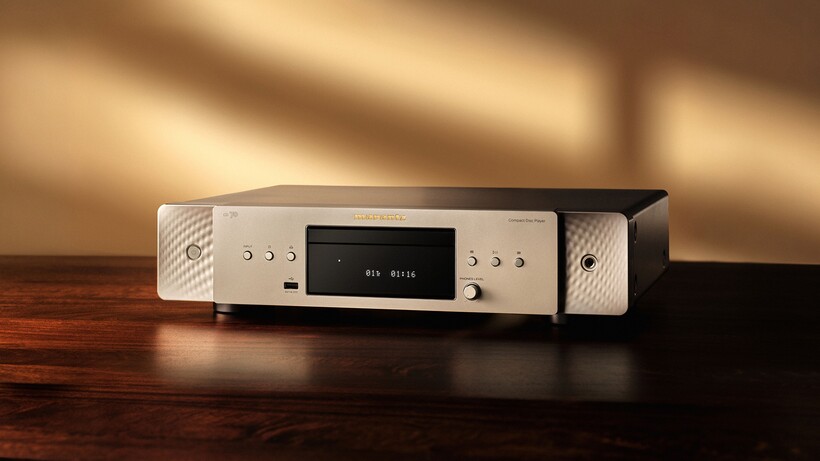
Marantz has announced the launch of two new hi-fi separates at a more affordable prices.
The Model 70 integrated amplifier and CD 70 build on the success of the PM6007 and CD6007, and shows that while everyone’s getting into hybrid hi-fi products and active speakers, there’s still room for specialist hi-fi separates in the market.
Both feature Marantz’s full-width architecture that’s made their recent products stand out, and will be available in black and silver-gold finishes, a look that Marantz hopes will “appeal to culture-driven consumers who see audio as an integral part of their home environment”.
Inside the Model 70 is Class AB amplification that can deliver 50W per channel, and is supported by an enhanced power supply and larger toroidal transformer. Marantz says that this configuration results in “greater dynamic expression, improved speaker control and increased authority across a wide range of loudspeaker pairings.”
There’s a “high-performance” DAC for “exceptional” digital playback quality, and even at this lower price, there’s room for Marantz’s proprietary HDAM circuitry that aims to “preserve the speed, accuracy and musical character” that’s defined the warm, detailed and musical sound of Marantz’s products.
Vinyl fans can make use of an MM phono stage, while there’s also HDMI ARC for connecting to a TV and aptX Adaptive Bluetooth to stream to the amplifier or connect a pair of wireless headphones to the amp. A range of analogue and digital inputs are provided, plus preamplifier and sub outputs to suit a “broad range of listening environments and system configurations”.

With CD enjoying some time back in the spotlight, those committed the silver disc will be able to have a Marantz CD player as part of their set-up going forward.
It has the same DAC and HDAM circuitry as the Model 70, with a front-panel USB-A input and support for FLAC, ALAC, AIFF and DSD files. A built-in headphone amplifier ensures private listening with a pair of wired headphones.
Marantz says that “every aspect” of the CD 70’s build has been carefully optimised to minimise noise and preserve musical detail. and this includes an upgraded power supply: double-layered chassis base, rigid isolation feet and “strategically” deployed copper hardware that contribute to “improved stability and reduced interference”
The Model 70 integrated amplifier is priced at €850 / £749, and reportedly won’t be available to buy in North America. However, the CD 70 will go on sale in North America, with availability starting from August 15th for $750 / €600 / £499.


Starlink quietly released its latest V5 residential dish, and while it doesn’t boost data speeds, it offers several improvements. Compared to the previous V4 dish, the new model is smaller, lighter and more energy efficient, which should make it easier to install while also reducing your power bill.
SpaceX confirmed in a post on X that the product will arrive today in the US in certain regions at first. It follows the V4 model that debuted in 2023 and will continue to be offered via the Starlink Residential plan. “Starlink V5 has a smaller form factor, new lightweight design, greater power efficiency than the Starlink V4,” according to a support page that compares the two models.
You may expect a speed boost with a new dish, but the V5 actually supports a slightly lower data rate of 375+ Mbps compared to 400+ Mbps for the V4. However, the new model is considerably smaller at 2.4 pounds rather than 6.5 pounds and is just 5.12 x 12.05 x 1.34 inches in size, compared to 23.4 x 15.1 x 1.5 inches for the V4. It also consumes less power at 35 to 50 watts compared to 75 to 100 watts for the previous model.
It weighs nearly the same as the portable Starlink Mini, but unlike that model, the V5 isn’t designed for in-motion use, Starlink says. It will be bundled with the Router Mini and come with a “pipe adapter” for rooftop installation.
One region offering the new dish, according to a Reddit post seen by PCMag, is Drummond, Montana. There, the V5 dish is offered only with the least expensive $55 per month 100Mbps Residential plan. The pricier Residential and Residential Max plans only support the V4 dish with the superior Router 3, for now.
Elon Musk showed the new dish off recently in a video post on X, saying the new dish would be made in “much higher volume than the current terminals.” The company recently announced its next-gen Starlink Mobile network, set to launch in mid-2027, that would provide up to 150 Mbps speeds and “feel like you’re connected to a high-performing 5G terrestrial network.” Last year, the company also showed off a new $2,000 Performance dish designed to handle gigabit internet speeds.

A judge has dismissed an attempted class action lawsuit against Apple, which accused the tech giant of failing to stop the storage of child sexual abuse material on iCloud.
A lawsuit from August 2024 that accused Apple of “privacy-washing” and failing to properly deal with the issue of child sexual abuse material (CSAM) on iCloud has been dismissed.
In a ruling reported by Reuters on July 14, U.S. District Judge Noel Wise in San Jose, California, agreed with Apple’s argument that it was shielded from the claims by Section 230 of the Communications Decency Act. This refers to a section that protects online platforms from liability for third-party content, namely that of its users.
Representing the plaintiffs, Attorney James Marsh said that an appeal was being considered, as well as other potential legal claims. The attorneys claimed that the class of 2680 people were entitled to compensatory damages of $32.8 billion in total.
Under the ruling, Wise added that there’s no federal law that would force Apple to create new tools or deploy existing technology to identify and report CSAM on iCloud.
“Lawmakers can fix this problem that is contributing to the exploitation of children,” the Judge wrote in the ruling. “This Court cannot.”
The lawsuit was dismissed with prejudice, so it cannot be refiled under the same claims by the plaintiffs.
A CSAM failure
The lawsuit arrived after Apple attempted to implement measures to help prevent the spread of CSAM. But, after considerable outcry, it abandoned its plans.
Back in 2021, Apple announced a suite of tools it wanted to release across its platforms. There were two chief areas, consisting of Communication Safety and CSAM detection in iCloud Photos.
Communication Safety, which is intended to help prevent children from seeing or sending objectionable material, is still being developed as a service. The most recent changes expanded from nudity to violence and gore detection.
The second, CSAM Detection in iCloud Photos, used cryptographic techniques to detect collections of that content, which would then be reported to NCMEC (National Center for Missing and Exploited Children). The technique wasn’t scanning actual images, but instead detected existing CSAM files using known hashes.
Apple received a lot of criticism, including complaints from experts at other tech companies, over privacy and security fears.
Apple ultimately killed off the iCloud CSAM scanning plan in December 2022. In August 2023, Apple provided a more detailed reasoning for abandoning the plan, after being pressed by a child safety group.
This included the potential creation of new threat vectors for data thieves to find and exploit. There were also fears it could result in unintended consequences, such as leading to bulk surveillance and more demand to search other encrypted messaging systems.
Damned either way
While Apple had basically given up on its CSAM detection plans, instead focusing on Communication Safety, the issue simply didn’t go away.
A July 2024 report from the UK’s National Society for the Prevention of Cruelty to Children (NSPCC) accused Apple of vastly undercounting incidents of CSAM in its services.
Apple had made only 267 reports to NCMEC, as required by U.S. law, for incidents it detected globally in 2023. However, the NSPCC said that Apple was implicated in 337 offenses between April 2022 and March 2023 in England and Wales alone.
By comparison, Google reported over 1,470,958 cases in 2023, with Meta reporting 17,838,422 on Facebook and 11,430,007 on Instagram.
While Apple is not able to see the content of iMessage for CSAM scanning purposes, the NCMEC pointed out that Meta reported over a million suspected CSAM cases for the encrypted WhatsApp in 2023.
The now-dismissed lawsuit surfaced just one month later.
Aside from demanding damages, the lawsuit also wanted Apple to be forced to adopt CSAM measures. This included ways to prevent the storage and distribution of CSAM on iCloud, as well as making reporting more easily accessible and complying with quarterly third-party monitoring.

The US’s explosive diarrhea problem is worse than you think—and it’s about to get even messier.
The country is grappling with a large and fast-spreading outbreak of cyclosporiasis, a parasitic infection that causes extreme gastrointestinal distress. There are nearly 7,000 potential cases, more than 3,300 of which are in Michigan alone as of Tuesday, and state officials have identified tainted lettuce as the likely culprit.
The actual case count is almost certainly higher, though, because most people don’t seek medical care when they get diarrhea. And even when they do, labs don’t routinely test for cyclosporiasis, says Jeanne Marrazzo, CEO of Infectious Diseases Society of America. She estimates cases are at least double the Centers for Disease Control and Prevention’s numbers.
“That’s because of underdiagnosis and also because there are cases that are likely to be mild. Many people aren’t going to declare themselves and get counted,” she says. Cyclosporiasis isn’t as common as other foodborne illnesses, meaning it’s not included in standard panels that test for several types of gastrointestinal disease.
But for many folks who get sick, the effects are, let’s just say, not pleasant. “A lot of times with diarrhea, you have an episode and you feel better,” says Marrazzo. “With this, it just can kind of go on and on, and it really takes people out.”
Bad enough, yes. But about that whole getting worse thing.
Public health officials have urged people to thoroughly clean produce, and some restaurants have taken precautions. Notably, Taco Bell has said it had “voluntarily and temporarily removed limited ingredients at select restaurants as a precautionary measure.” While that might help those trying to live mas avoid getting cyclosporiasis, it’s not the only part of the produce supply chain that can be affected.
Norman Beatty, associate professor of medicine in the division of infectious diseases and global medicine at the University of Florida, says the cyclospora parasite has unique mechanisms that allow it to lodge into the crevices of other fruits and vegetables. It’s most commonly found in fresh, raw produce, particularly herbs, lettuce, and berries.
Unlike some of the more common foodborne pathogens, cyclospora is resistant to bleach and common sanitizers used by food manufacturers. “Despite the commercial approaches to washing the produce that ends up in our grocery stores, the oocysts can continue to stick,” says Beatty. (Oocysts are the infectious stage of the parasite.)
Cooking destroys the parasite, but because lettuce and berries are usually eaten raw, there’s no easy way to eliminate it before consumption.
Bill Marler, a lawyer who specializes in food poisoning cases, says that, historically, most cyclosporiasis cases have been linked to imported produce. But the last decade has seen the US’s first All-American cyclospora outbreaks, such as when bagged lettuce from a plant in Illinois sickened more than 700 people.
Marler described cyclospora as becoming “like pythons in the Everglades.” The invasive snakes have infamously taken over the wetlands of South Florida, outcompeting native fauna and inspiring a year-round python hunting season. Cyclospora threatens to do the same, using our guts as the host environment. As more people get cyclospora and poop it out, it becomes more likely that water gets infected. That in turn increases the risk of outbreaks.
“Likely what happens is, it gets into the water supply that’s utilized to irrigate crops,” Marler says. He adds that agricultural workers typically get blamed for outbreaks, but “this is unlikely to be one lone worker not washing his or her hands, or someone pooping in the field. Something has gotten a water supply contaminated, spreading over a larger amount of produce.”
The parasite is also resistant to chlorine, the primary disinfectant used in most municipal water and wastewater treatment systems.
Beatty says it’s likely that thousands more people around the country have been infected.
“This shows us how easily an organism can be distributed to one location within the United States to multiple locations pretty quickly through the networks that we have set up for food distribution,” he says. “This could end up being reported in all 50 states.”
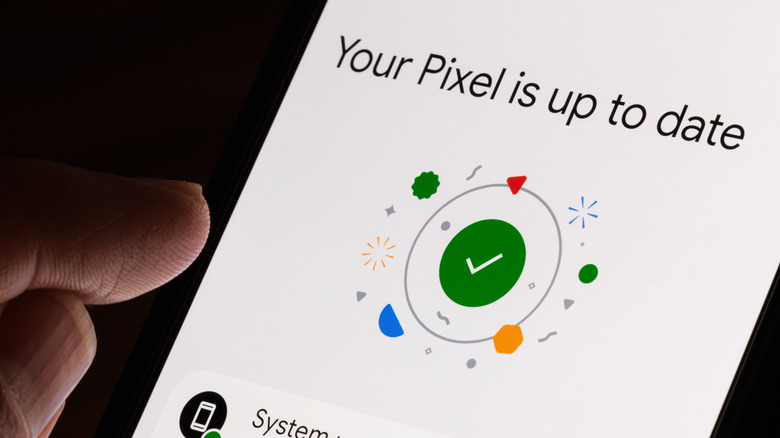
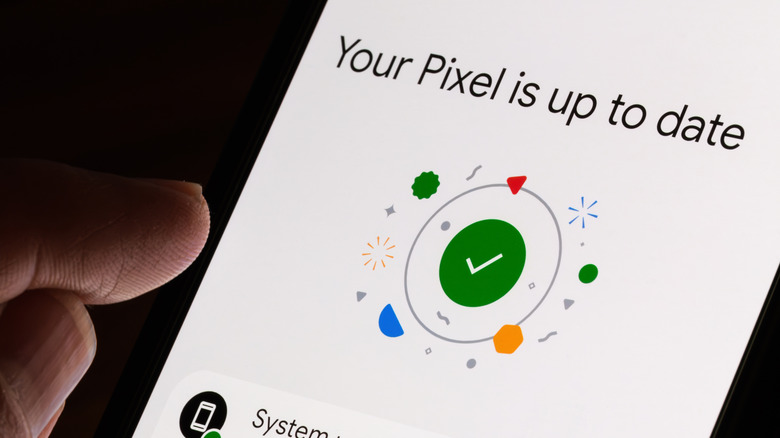
When a new smartphone from a top-tier company is on the horizon, it always brings attention in the tech world. The upcoming Google Pixel 11 is expected to be unveiled next month during the Made by Google event, which starts on August 12. Going by the rumors and how Google handled the releases of older Pixels, the release date of Google Pixel 11 should follow after the event ends in about 7 days or so. Speaking of rumors, many are speculating about the hardware and software of Google’s new phone. There’s a lingering worry that the Google Pixel 11 won’t be worth waiting for since it won’t be much of an improvement over the previous series, and that may be true.
Firstly, we do want to point out that this is mainly concerning the casual and everyday user base. That being said, the design and size of the Google Pixel 11 are likely to stay the same as the Pixel 10. What is expected to change, however, is the performance. Rather, we may see a new chipset. According to the online gossip, Pixel 11 will have Google’s new Tensor G6 chip with a 2nm process for better thermal control. This is probably the most impactful change, and while the CPU will get a boost, early leaks reported that an outdated GPU is coming to the Google Pixel 11. Naturally, this isn’t what users were hoping for, and if true, it’s going to be one of the downsides of buying a new Pixel.
How much will Google Pixel 11 cost?
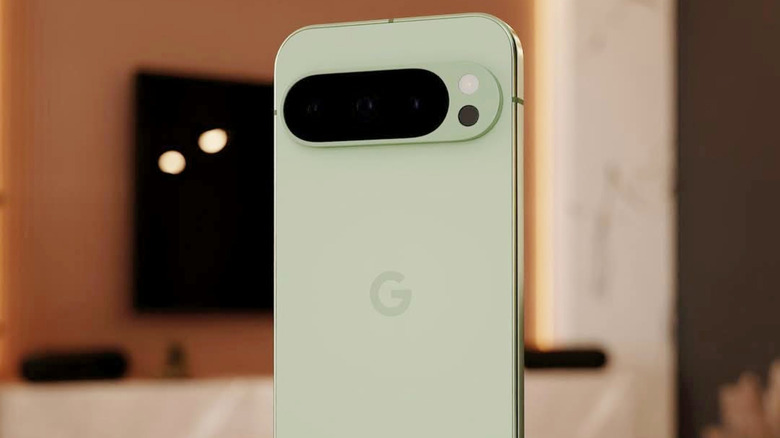
Like with the specs, the actual price is unknown, but there’s no shortage of guesses. Compared to the Pixel 10, a price increase is in order for the Google Pixel 11, and the reason is the current RAM shortage. By some estimations, the new version will cost around $115 more when compared to the Pixel 10, which means that the price will be above $900 and possibly closer to $1000. If so, that’s not a small increase by any means. In case you don’t need to have the latest tech every time it comes out or aren’t a demanding user, you’ll get a much better value for your money with a Pixel 10 during a Black Friday sale or similar.
Reportedly, unlike its predecessor, which had 128GB of storage as a starting point, the Google Pixel 11 series will come with 256GB of storage initially. This should somewhat lessen the price hike impact, although there is no official confirmation yet. Additionally, the camera is set for some improvements. Pixel 10 had a 48MP main lens, and there’s been talk of Pixel 11 getting a 50MP main lens. While an improvement, the Pixel series was never comparable in camera quality to Samsung Galaxy phones or iPhones. So, if you’re happy with what the Pixel 10 camera can do (there are some camera tricks worth trying), this may not be of much interest to you.
Should I buy Pixel 10 or wait for 11?
As one might expect, Google Pixel 11 will run on Android 17 (which has some cool new features), Google’s latest mobile OS, released in June 2026. Still, the question remains: Is Google Pixel 11 worth it? Well, everything about it is a rumor at the moment, so it’s hard to judge something that’s not official. Nonetheless, if rumors turn out to be true, most casual users likely won’t see much of a difference compared to a Pixel 10.
The new chipset and increased starting storage are nice, but the price increase is much less so. As it stands now, Google Pixel 11 will represent the usual yearly polish rather than some notable change and improvement. If you already have a Pixel 10, you probably don’t need an 11, though owners of older Pixel phones could find a reason or two to splurge on a Pixel 11. Though, if Google sets the price tag around $1000, you’re possibly better off waiting for the Pixel 10 to go on sale.

Miles Wang, an OpenAI researcher whose work includes using AI to accelerate scientific and biological discovery, is leaving the ChatGPT maker to launch a new startup focused on developing AI models for drug discovery, according to four people with knowledge of his plans. Several other OpenAI researchers are expected to join the new company.
Wang is in talks to raise about $200 million at a $2 billion valuation, two of the people said. Lightspeed is in discussions to lead the funding round, according to sources. Talks are ongoing, the deal may not be final and details could change.
Wang disputed the story’s funding figures and description of the company but did not specify the correct numbers or details. Lightspeed didn’t respond to a request for comment.
The funding discussions point to investor interest in applying AI to make breakthroughs in life sciences. Chai Discovery, a two-year-old startup developing AI models that can predict molecular interactions to identify new drugs, announced on Tuesday that it raised $400 million at a $3.8 billion valuation. (Co-founder Josh Meier also passed through OpenAI as a researcher.) Meanwhile, Google DeepMind spinout Isomorphic Labs, which also develops AI models for drug discovery, raised a $2.1 billion Series B in May.
Wang’s new startup may be working on AI models that will help find new uses for existing drugs and possibly those that previously failed in trials, a couple of sources told TechCrunch. Finding new uses for FDA-approved drugs can result in significantly faster time to revenue than developing new drugs from scratch, as these medicines have already been tested for safety.
Wang joined OpenAI in 2024 after dropping out from Harvard, where he was working on a bachelor’s degree in computer science. (In recent years, investors are once again comfortable betting on young founders who haven’t completed college.)
At OpenAI, he co-authored research papers, including evaluating how AI models can automate and accelerate scientific discovery.
When you purchase through links in our articles, we may earn a small commission. This doesn’t affect our editorial independence.

Startup Spotlight: Hedgehog bets that open-source networking will power the next generation of AI clouds

How I’m ONLY Using Claude Code to Make Money Online in 2026

Rider said to have no memory of quad bike crash in County Durham park


-

 Fashion6 days ago
Loro Piana Fall 2026 Enters Houston’s Art Scene
-

 Fashion4 days ago
Weekend Open Thread: Nutriplenish Leave-In Conditioner
-
 Sports6 days ago
2026 Genesis Scottish Open Thursday TV coverage: Round 1
-

 Sports5 days ago
Super Eagles star Moses Simon opens up on Liverpool transfer regret
-

 Tech6 days ago
Character.AI enters the microdrama arena with its own productions, but there’s a twist
-

 News Videos15 hours ago
XRP BOMBSHELL… XRP OMBOARDED FOR TRANSACTIONS!!!
-

 Tech1 day ago
Get Your ESP32 Sunny Side Up With This Solar Dev Board
-

 Tech15 hours ago
Dark Secrets Emerge When Jailbreaking LLMs
-

 News Videos6 days ago
Crypto Just Entered Its Most Important 6-Month Candle (Could Decide Everything!)
-
 NewsBeat6 days ago
Major update after Huntingdon train attack as man enters plea
-

 News Videos2 days ago
how to make coin bank box with cardboard #scienceproject #money #diy #shorts
-

 Sports7 days ago
39-year-old Djokovic wins five-hour thriller to enter Wimbledon semis | Other Sports News
-

 Tech6 days ago
Level Infinite Launches Gangstar Mirage City in India with Pre-Registrations
-
 Tech2 days ago
Cloudflare Precursor Watches Your Mouse and Keyboard To Decide If You Are Human
-

 Tech6 days ago
Entra passkey enrollment vishing targets Microsoft 365 users
-

 Crypto World6 days ago
DeFi Dashboard Zapper to Shut Down After 7 Years
-

 Crypto World6 days ago
Mark Cuban-Backed DeFi Dashboard Zapper Shuts Down After 7 Years
-

 Tech6 days ago
Claude’s New Reflect Dashboard Wants To Help You Log Off Of Claude
-

 Crypto World7 days ago
Fed minutes June 2026: officials split on rates
-
 Tech6 days ago
Hackers can use 9 of the most popular AI tools to assemble massive botnets
You must be logged in to post a comment Login