


Project backers say it would boost local economies and improve Peak District environment

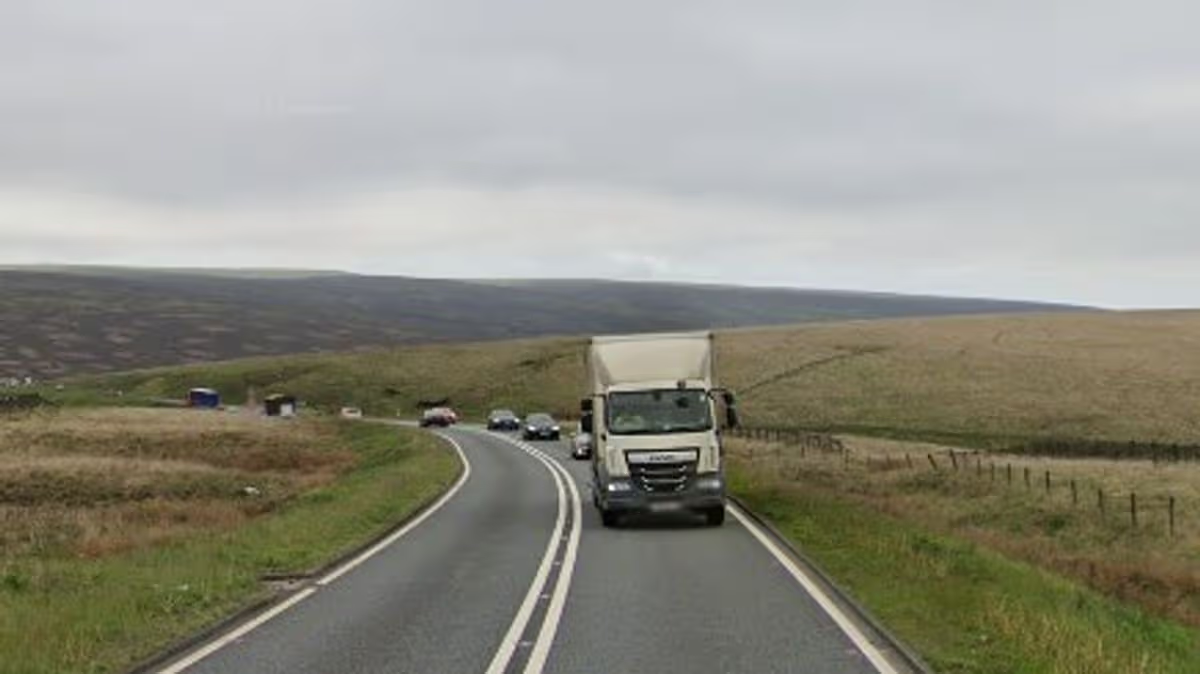
A628 Woodhead Pass(Image: Google Maps)
A 14-mile tunnel beneath the Peak District mountains could cut journey times between Manchester and Sheffield by 30 minutes, according to an ambitious proposal.
A Norway-inspired dual carriageway would see the snakes of traffic commuting between Manchester and Sheffield removed from the national park, and sent underground instead.
The Woodhead railway line between the major northern cities would also be restored under the plans. The fast line between the two major northern cities closed to the public in the 1970s and then entirely in 1981.
This scheme, named ‘Trans-Pennine Connect’, aims to make transport between south Yorkshire and the north west better. By putting that traffic underground, they say they can hand the Peak District landscape back to nature.
This in turn, they say, could boost the productivity of the region and inject millions into the local economy. The construction of the Mottram bypass is currently ongoing, there is belief Trans-Pennine Connect would link to this scheme and take traffic through the tunnel towards Sheffield – improving journey times.
Fresh plans to build the stretch of 14-mile dual carriageway come years after the government shelved a similar scheme – estimating a £10.6bn cost. Now Future Works, a group of infrastructure experts, believe this can be done for just under £2bn.
Michael Dnes, the co-founder of Future Works, says he had guilt about this scheme never getting off the ground during his time working at the Department for Transport. And when he left DfT in 2024 he sought out a cheaper way of getting it done.
He looked to Norway for answers – who built the world’s longest road tunnel, the 24.5km Lærdal in Norway, for around £130 million.
Rather than using the standard British approach of a tunnel-boring machine, Future Works has looked into the drill-and-blast method applied to tunnels in Norway. This system replaces giant machinery with more traditional mining techniques, the natural strength of the rock and small expert crews.
Although this would not work in many areas of the UK, the expert teams believe this ‘drill-and-blast’ method could work in this area due to the geology of the Pennines. This is because the tunnels built in Norway go through mountains with similar rocks.
A spokesperson for Future Works, said: “High demand for the route means that the project could pay for itself, without the need for Westminster funding.

A route map for the Trans-Pennine Connect scheme between Manchester and Sheffield(Image: Future Works)
“Scandinavian tunnels are often owned by local councils, who recover the costs through tolls. Equally, northern pension funds have hundreds of billions in investment capital that could be mobilised to build the project.
“Many options exist – public, private and partnership. Future Works was set up by infrastructure experts Michael Dnes and Alex Griffiths, with a combined expertise in more than £100bn of infrastructure projects. They aim to create a shovel-ready scheme, and to bring this through the planning system faster than the 10+ year processes that have become the norm in UK planning.
“Work could begin before the end of the decade, with the road and railway open in the mid-2030s.”
Now the ‘Trans-Pennine Connect’ scheme has been revealed, the next stage is to generate funding in order to actually get it started
. To find all the planning applications, traffic diversions, road layout changes, alcohol licence applications and more in your community, visit the Public Notices Portal.















































You must be logged in to post a comment Login