

Crypto World
SecondFi hack forces Cardano firm to give up running TOKEN2049

Cardano co-founder Emurgo has been forced to hand over the running of self-styled “world’s largest crypto event” TOKEN2049 to the Cardano Foundation, following the $20 million hack of its neo-finance platform SecondFi.
That’s according to Intersect, Cardano’s governance firm, which made the announcement on Tuesday.
Intersect stated that Emurgo “is unable to allocate the necessary resources to plan and execute Token2049.”
Emurgo added, “Following the recent SecondFi incident, we have confirmed that our priority right now must be solely the recovery of assets for all affected users.”
Read more: Cardano holders cancel own summit after rejecting $2M funding request
The Cardano Foundation said, “In addition to the Cardano booth, we are also organizing the side event CardanoxDraperxBitcoin funded by Draper and Cardano Foundation. More information will be available soon.”
Cardano users had already voted to cancel the Cardano annual summit in Singapore that was scheduled for October 2026.
The vote, held last month, also passed a proposal from Emurgo to attend and sponsor TOKEN2049 in Singapore this October.
SecondFi is eating into Emurgo’s responsibilities
Emurgo also stepped down last week from the “Pentad,” an executive body made up of multiple Cardano firms.
It said, “Our immediate priority is the @secondfiapp recovery process, and we are concentrating our resources where they are needed most.”
SecondFi was hacked for $2.4 million worth of ADA last June. Emurgo used emergency measures at the time to take $18.5 million worth of ADA from users as part of a mysterious white hat hack event.
The mystery stemmed from Cardano’s founder, Charles Hoskinson, who later relayed information that suggested the identity of the white hat hacker was unknown.
Read more: SecondFi is shutting down after Cardano wallet exploit
In early July, SecondFi claimed that these white hat hack funds “are currently protected and accessible,” and that they will “form part of the recovery effort to return assets to affected users.”
SecondFi also announced that it will shut down and dedicate its time to the recovery of stolen assets going forward.
Protos has reached out to Cardano Summit organizers for comment and will update this piece should we hear back.
Got a tip? Send us an email securely via Protos Leaks. For more informed news and investigations, follow us on X, Bluesky, and Google News, or subscribe to our YouTube channel.

Ripple’s cross-border token remains one of the most talked-about topics in the crypto space, but analysts have recently split into two distinct camps.
On one side, we have people calling for the end of the bear market and a price explosion toward new historical peaks, and on the other, pundits who believe XRP may drop well below $1 in the near future.
The Bearish Scenario
As of press time, the asset is worth around $1.07, which means a 5% plunge over the past week. According to X user Diana, losing the $1.08 support may result in a final shakeout to much lower levels.
She believes the next move could be a sell-off toward the $0.90-$0.93 liquidity zone, followed by a relief bounce above $1 and an ultimate flush into the $0.87 macro support, which is expected to complete the entire correction and set the stage for the next major expansion.
Cryptorphic also paid attention to $1.08, which remains strong resistance, indicating that the current structure favors sellers and could lead to further declines.
Some factors also suggest that the price of Ripple’s native token may head further south in the short term. As CryptoPotato reported, positive online posts about XRP have surged recently, with FOMO rising to a multi-month high. This may sound optimistic, but the cryptocurrency market is a weird one and often moves against the crowd’s expectations.
Another worrying element is the waning interest in spot XRP ETFs. Up until the beginning of July, the inflows consistently surpassed outflows, yet in recent weeks, pension funds, hedge funds, and other conservative investors started reducing their exposure to the asset, forcing Bitwise, Canary Capital, Franklin Templeton, 21Shares, and Grayscale to sell XRP to maintain the proper backing of the shares.

The Bulls Are Also Vocal
The XRP Army has a reputation for strong loyalty and consistent support for Ripple’s cryptocurrency, even in challenging times. That said, it is no surprise that some market observers continue to foresee fresh all-time highs.
Not long ago, X user Crypto Patel claimed that the asset is repeating a macro pattern that has previously led to 1,000%+ rallies. In their view, history suggests another expansion phase that could push the price to a new peak above $9.
Celal Kucuker is also highly optimistic, reminding XRP’s monthly rise by 500% two years ago. “Now people say $7 by year-end is impossible… yet there are still 6 months left. Never underestimate what Ripple can do,” they added.
Of course, expectations should remain tempered given the extended bear market gripping the crypto space. One should also know that such high price levels for XRP would require its market capitalization to skyrocket above $350 billion, and that seems far-fetched (to say the least) as of the moment.
The post Ripple (XRP) Tests a Key Support Level: Final Shakeout to $0.87 Now Beginning? appeared first on CryptoPotato.


Bitcoin has fallen in the past 24 hours to $62,600 as traders exited riskier investments amid growing inflation concerns tied to rising oil prices.
Brent crude is up nearly 4% in the period, reflecting the renewed open conflict between the U.S. and Iran. That’s reigniting the so-called Nacho (Not a Chance Hormuz Opens) trade, which bets the strategic waterway stays shut.
The broader CoinDesk 20 (CD20) index lost 0.6% of its value over the same period while equities benchmarks in Europe are down about 1% and U.S. index futures 0.3%.
Attacks on tankers have reduced traffic through the Strait of Hormuz, which carried about one-fifth of global oil and gas supplies before the conflict and has been de-facto closed for 136 days. Oil prices reached a four-week high after hostilities restarted.
The move reverses part of the peace trade that helped bitcoin recover from its late-June lows. Higher oil prices raise near-term inflation risks, pushing up Treasury yields and reducing demand for rate-sensitive assets.

The U.S. Department of the Treasury and the UK’s HM Treasury have released joint recommendations as part of a transatlantic working group aimed at coordinating financial-market oversight for digital assets—specifically stablecoins and tokenized finance.
In a statement published Tuesday, the two agencies said they want to align regulatory expectations in ways that promote financial stability without creating unnecessary market distortions. The guidance also points toward cross-border testing for tokenized assets and closer coordination between U.S. regulators and the Bank of England on shared approaches to tokenized-asset rules.
Key takeaways
- The U.S. and UK called for regulatory alignment around stablecoins, emphasizing requirements that avoid undermining cross-border competition.
- Stablecoins, under the joint framework, should be fully backed—at least on a one-to-one basis—by high-quality, liquid assets.
- For tokenized finance, the statement suggests authorities should consider a private-sector-led group to test cross-border use cases.
- The UK is pushing tokenization forward with a government-backed report that links adoption to meaningful economic gains by 2035.
Transatlantic recommendations target stablecoins and tokenization
The Treasury and HM Treasury’s joint statement was issued under the Transatlantic Taskforce for the Markets of the Future, a bilateral effort focused on cooperation across financial markets. According to the agencies, the recommendations reflect an intent to tailor rules in each jurisdiction while aiming for comparable outcomes for comparable risks and activities.
For stablecoins, the two governments said their goal is to support a “dynamic stablecoin market across borders.” The statement frames this as a balancing act: moving toward regulatory alignment while avoiding outcomes that could destabilize markets or discourage cross-border competition.
Crucially, the stablecoin guidance does not stop at general principles. The statement explicitly says stablecoins should be “fully backed, on at least a one-to-one basis, by high-quality, liquid assets.” That requirement mirrors the core concept embedded in U.S. legislation discussed in the same context.
The U.S. side did not explicitly name the Guiding and Establishing National Innovation for US Stablecoins (GENIUS) Act in the joint recommendations, though the statement’s “fully backed” framing is aligned with the approach that U.S. law takes. GENIUS was signed into law last year, and is waiting for regulations to be approved before its effective date in January 2027.
Cross-border testing and shared approaches for tokenized assets
Beyond stablecoins, the joint statement contains recommendations for tokenized finance and cross-border activity. The task force urged authorities to consider the creation of a private-sector-led group focused on “testing of cross-border use cases for tokenized assets.”
That emphasis on use-case testing matters because tokenization can mean very different implementations depending on the asset class, settlement structure, and counterparties involved. Cross-border testing is positioned as a practical step to identify where regulatory expectations diverge and where common standards might emerge through real-world experimentation.
On regulation itself, the statement says U.S. financial agencies and the Bank of England should identify shared approaches to the regulation of tokenized assets. While the statement does not lay out specific rule text, it signals that regulators on both sides of the Atlantic are looking for convergence in how tokenized assets are treated from a supervisory and risk-management perspective.
UK report links tokenization to economic upside—by 2035
The U.S.-UK recommendations arrive after renewed attention in the UK on tokenization’s potential economic benefits. Earlier coverage from Cointelegraph highlighted a UK government-backed industry task force report claiming the country could add up to $44 billion to annual economic output by 2035, if the UK becomes a leading jurisdiction for tokenization, tokenization scales globally, and domestic adoption grows alongside major peers.
In that report, the task force called for the UK to issue tokenized bonds by the first quarter of 2027 and proposed testing financial transactions on the blockchain. Those proposals point toward a strategy of moving from policy discussions toward concrete market infrastructure steps—something that would likely raise the stakes for regulators to define consistent frameworks for tokenized securities and settlement.
Read together, the transatlantic message from Treasury and HM Treasury underscores how tokenization is increasingly being treated not just as a technology topic, but as a cross-border financial market issue requiring coordination. If tokenized debt instruments and other blockchain-based transactions expand, regulators will need shared expectations on matters like custody, settlement finality, disclosure, and the perimeter of existing financial rules.
What investors and builders should watch next
These joint recommendations are best viewed as a direction-setting effort: they establish how the U.S. and UK want to align on stablecoin backing standards and how they may collaborate on tokenized-asset testing and regulatory coherence. For market participants, the most immediate question is how quickly alignment translates into implementable guidance—especially given that the U.S. stablecoin regime is still waiting on implementing regulations under GENIUS.
As the UK pursues tokenized bonds and blockchain transaction testing toward 2027, and as U.S. rulemaking progresses toward GENIUS’s timeline, the key watch items are whether cross-border use-case testing produces concrete recommendations and whether “comparable outcomes” on stablecoin and tokenized-asset regulation become more specific in practice.
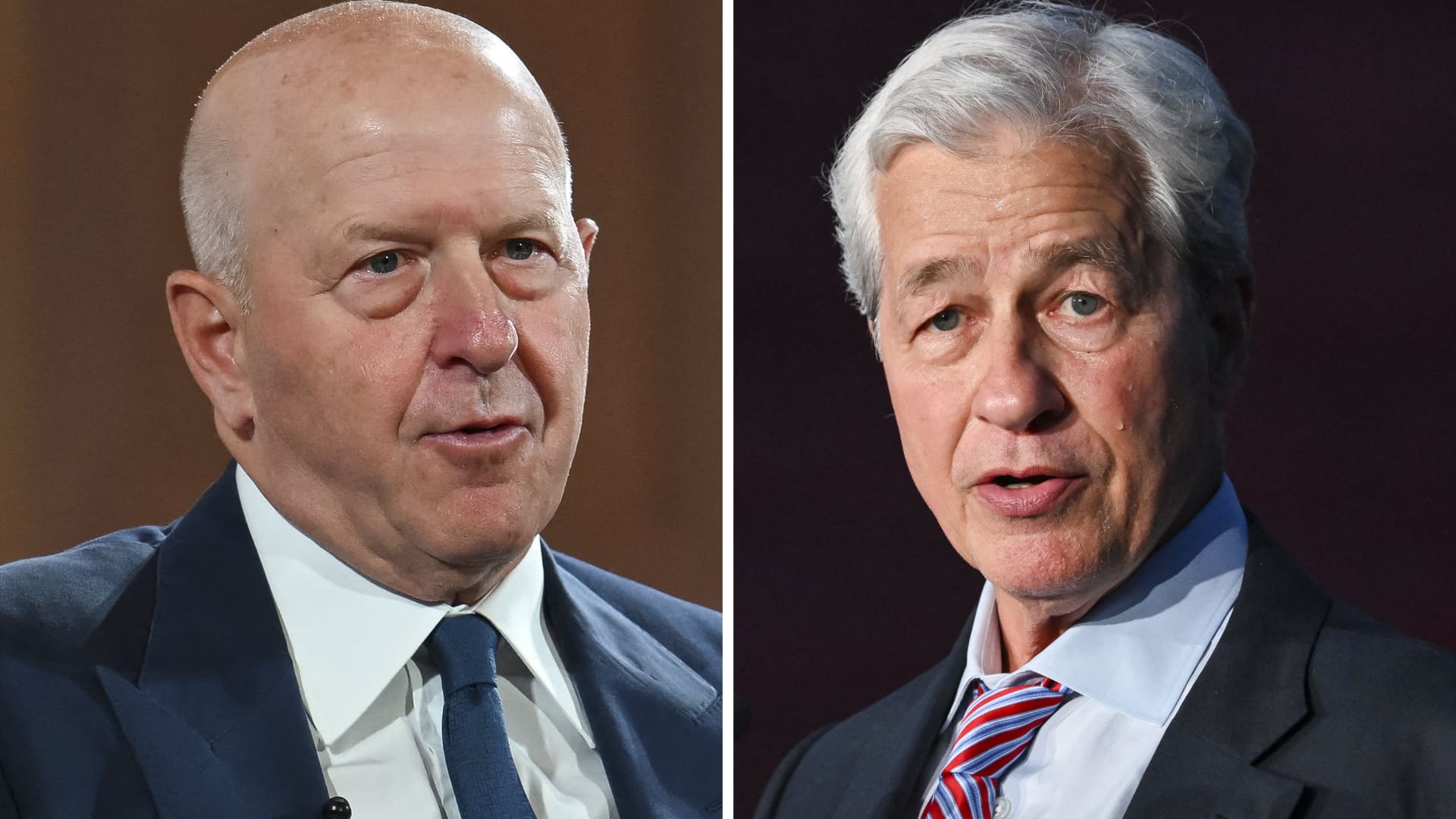
Chairman and CEO of JPMorgan Chase & Co. Jamie Dimon and Goldman Sachs Chairman and CEO David Solomon.
Angela Weiss | AFP | Getty Images
American megabanks on Tuesday gave evidence that the global artificial intelligence boom isn’t just benefiting tech giants and chip makers.
Goldman Sachs and JPMorgan Chase each posted record quarterly revenue hauls, fueled by massive gains in equities trading and investment banking.
Behind the surge in activity — Goldman revenue jumped 39% to $20.3 billion, while JPMorgan saw it rise 27% to $58 billion — is the fact that AI is “everywhere in financial markets,” JPMorgan CFO Jeremy Barnum told reporters.
“These are booming environments with a ton of activity, big IPOs, big index rebalancing, a lot of activity in Asia,” Barnum said Tuesday. “A lot of it is downstream of the AI theme, writ large on a global basis. It’s just a very, very, very active environment.”
The quarter showed that the AI boom is creating winners far beyond Silicon Valley. While Nvidia and hyperscalers including Alphabet have captured many of the headlines, Goldman, JPMorgan and other banks are profiting from the massive flows of capital into AI.
They are advising on AI-related deals, financing data centers and power infrastructure, underwriting debt and equity offerings, and facilitating the surge in trading that has accompanied the global race to deploy the technology.
That is creating “a ripple effect” across the American economy and giving banks a flood of new opportunities to provide financing and trading solutions across public and private markets, Goldman CEO David Solomon told analysts Tuesday.
“We are in the middle of an AI capex super cycle where there are demands on financing in every single financing instrument, in every region of the world and across every single industry,” Solomon said. Capex is short for capital expenditures, or investments made by a business for physical assets like factories.
Goldman is preparing for a three-to-five year investment cycle that is still in its early stages, he told analysts.
Goldman shares jumped 8% in afternoon trading, while JPMorgan rose 2%.
AI ‘tipping point’
While the AI buildout isn’t new, what’s changed is that it has broadened out beyond chips and software to include power providers and infrastructure players.
The top beneficiaries of this trend are the three biggest Wall Street firms: Goldman Sachs, JPMorgan and Morgan Stanley, according to Wells Fargo banking analyst Mike Mayo.
The AI investment boom “reached a tipping point” in the second quarter, Mayo said.
Mayo increased his price targets for Goldman and JPMorgan after Tuesday’s blowout results. Morgan Stanley is scheduled to report earnings on Wednesday.
Gas turbines made by GE Vernova, at the on-site natural gas plant under construction during a media tour of the Stargate AI data center in Abilene, Texas, US, on Wednesday, Sept. 24, 2025.
Kyle Grillot | Bloomberg | Getty Images
The clearest evidence of the AI impact appeared in equities trading, where global capital flows and blockbuster transactions helped produce some of the biggest revenue surprises of the quarter.
Revenue from equities trading rose 86% to $6 billion at JPMorgan and 72% to $7.42 billion at Goldman. Combined, that was a whopping $4.4 billon more than analysts had expected.
Other large banks also benefited. Bank of America, the second biggest U.S. lender by assets, saw equity trading revenue rise 70% to $3.6 billion.
Helping the quarter, investors broadened out their search for AI beneficiaries, pouring money into Asian markets, including South Korea, Taiwan and Japan, Soofian Zuberi, president and co-head of Global Markets at Bank of America, told CNBC.
“People looked at the AI trade and said, ‘What are the best reflections of it outside the U.S?,’” Zuberi said. “You’ve got American clients who are diversifying and allocating more money to Asia, including foundations, the endowments, and family offices.”
SpaceX, Alphabet
The AI impact also showed up in the banks’ strong advisory banking revenue for the second quarter.
Investment banking revenue at Goldman jumped 55% to $3.4 billion, and climbed 30% to $3.3 billion at JPMorgan Chase. That is a combined $1 billion more than analysts had expected.
In the quarter, Goldman was lead advisor on the SpaceX IPO and Alphabet’s $90 billion equity issuance and advised Dominion Energy on its sale to NextEra Energy, all moves driven by the AI cycle.
At Bank of America, investment banking fees jumped 50% to $2.1 billion.
At the same time as they reap record fees driven by AI, banks are starting to benefit from implementing the technology internally. That should help them increase revenue while keeping a lid on headcount and other expenses.
“AI is driving banking by helping streamline processes,” Zubieri said. “And banking is driving AI, because without banking you can’t have all these data centers financed.”
Dogecoin price has climbed more than 2% after softer US inflation boosted risk appetite, even as Binance traders have offloaded $1.2 billion in memecoins since October.
Summary
- Dogecoin price rose over 2% after US inflation eased to 3.5%, boosting demand for risk assets.
- CryptoQuant says Binance traders have sold $1.2 billion in memecoins since October 2025, weighing on DOGE.
- Technical charts show improving short-term momentum, but key resistance near $0.0755 still needs to break.
According to CryptoQuant analyst Darkfost, traders have reduced memecoin exposure because they consider these assets the riskiest part of the crypto market. Although Dogecoin has joined the latest recovery in risk assets, Darkfost warned that the rebound may fade unless buyers return with sustained demand.
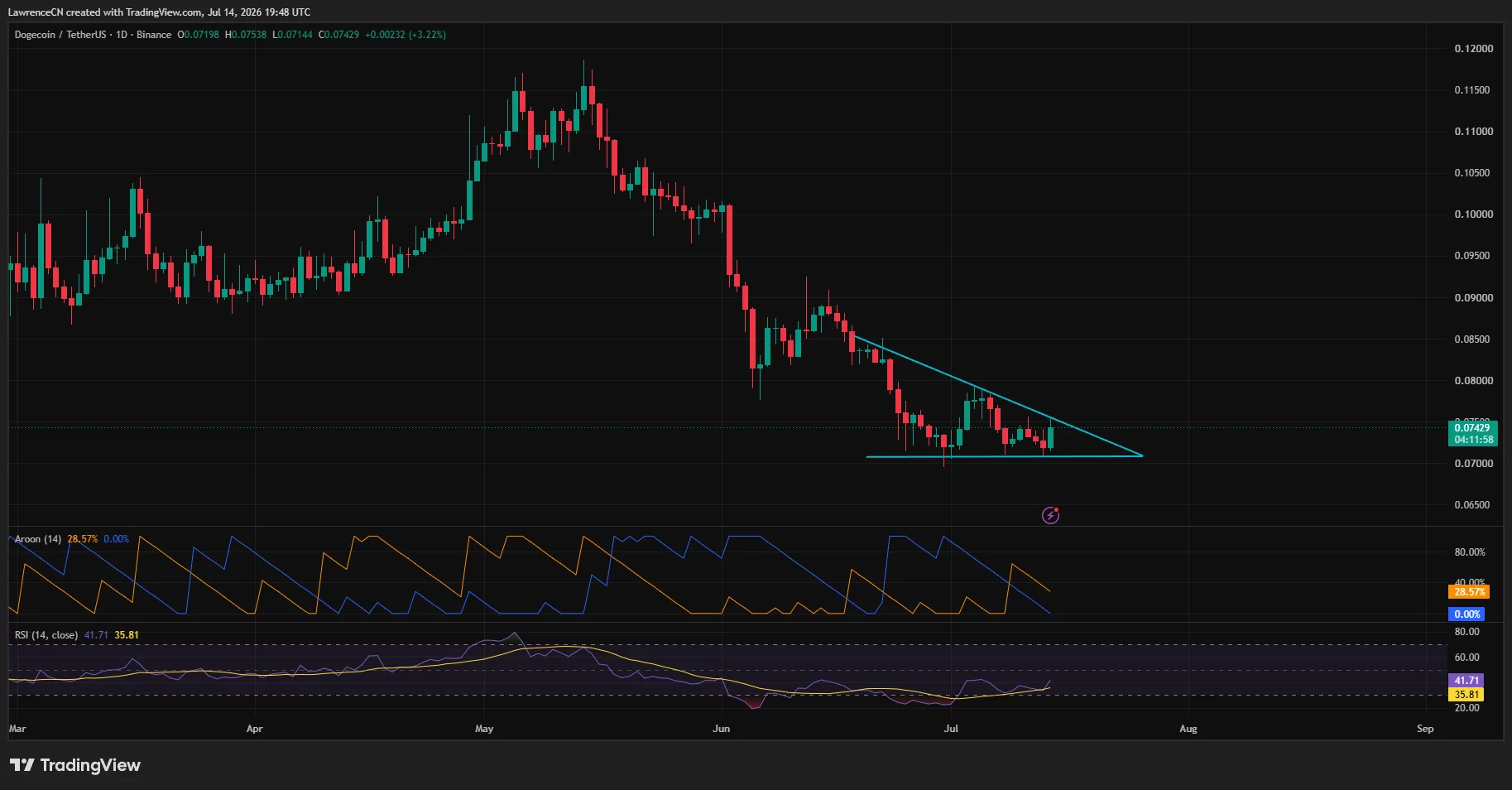
Dogecoin (DOGE) was trading near $0.074 at the time of writing, up about 4.4% over the past 24 hours. The move followed a decline in US inflation to 3.5%, which lowered pressure on the Federal Reserve to raise interest rates and improved demand for speculative assets.
Even after the daily gain, Dogecoin remains below its major exponential moving averages. TradingView data shows that the token is still moving within a long-running downtrend, leaving the latest advance vulnerable to renewed selling.
Binance selling has kept Dogecoin under pressure
CryptoQuant’s figures show that about $1.2 billion in memecoin value has left Binance since October 2025. Darkfost attributed the outflows to investors cutting exposure to high-risk tokens while market conditions remained weak.
Dogecoin has fallen from about $0.26 in October 2025 to close to $0.07 in July, a decline of roughly 73% over eight months. Bitcoin, by comparison, has dropped about 50% during the same period, according to the figures cited in the report.
The size of the decline shows that Dogecoin has underperformed Bitcoin during the selloff, though Darkfost’s analysis ties the weakness to the risk profile of memecoins rather than to a Dogecoin-specific event.
Interest in newer meme tokens has not disappeared completely. Since Robinhood Chain launched on July 1, tokens issued on the network have drawn fresh speculative activity, with CASHCAT reaching a market value of about $138 million.
While that activity has brought attention back to the memecoin sector, CryptoQuant’s data still points to persistent selling on Binance. Darkfost maintains that Dogecoin’s long-term outlook will remain bearish unless buying pressure becomes consistent.
DOGE is testing a key breakout area
TradingView’s daily chart shows Dogecoin trading near the upper boundary of a descending triangle, with support clustered around $0.070 to $0.071. The pattern keeps the larger trend bearish until price closes above the falling resistance line.
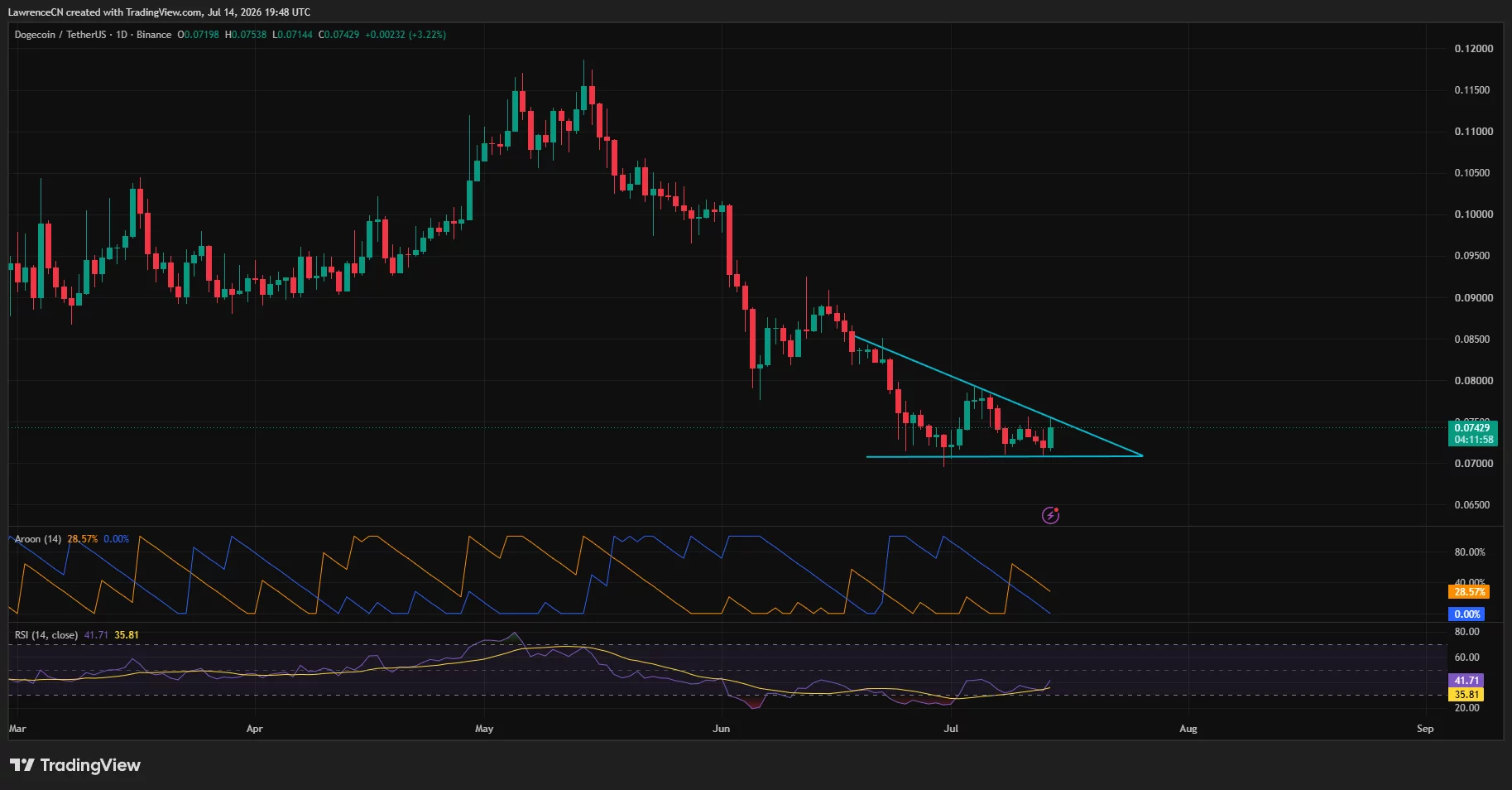
The daily Relative Strength Index has recovered to about 42, but it remains below the neutral 50 level. Aroon data also favors sellers, with Aroon Down at 100 and Aroon Up near 28, according to the chart.
On the 4-hour timeframe, the setup appears stronger. TradingView data shows a possible double-bottom pattern near $0.071, while the MACD has produced a bullish crossover and the Chaikin Money Flow reading has climbed to about 0.21.
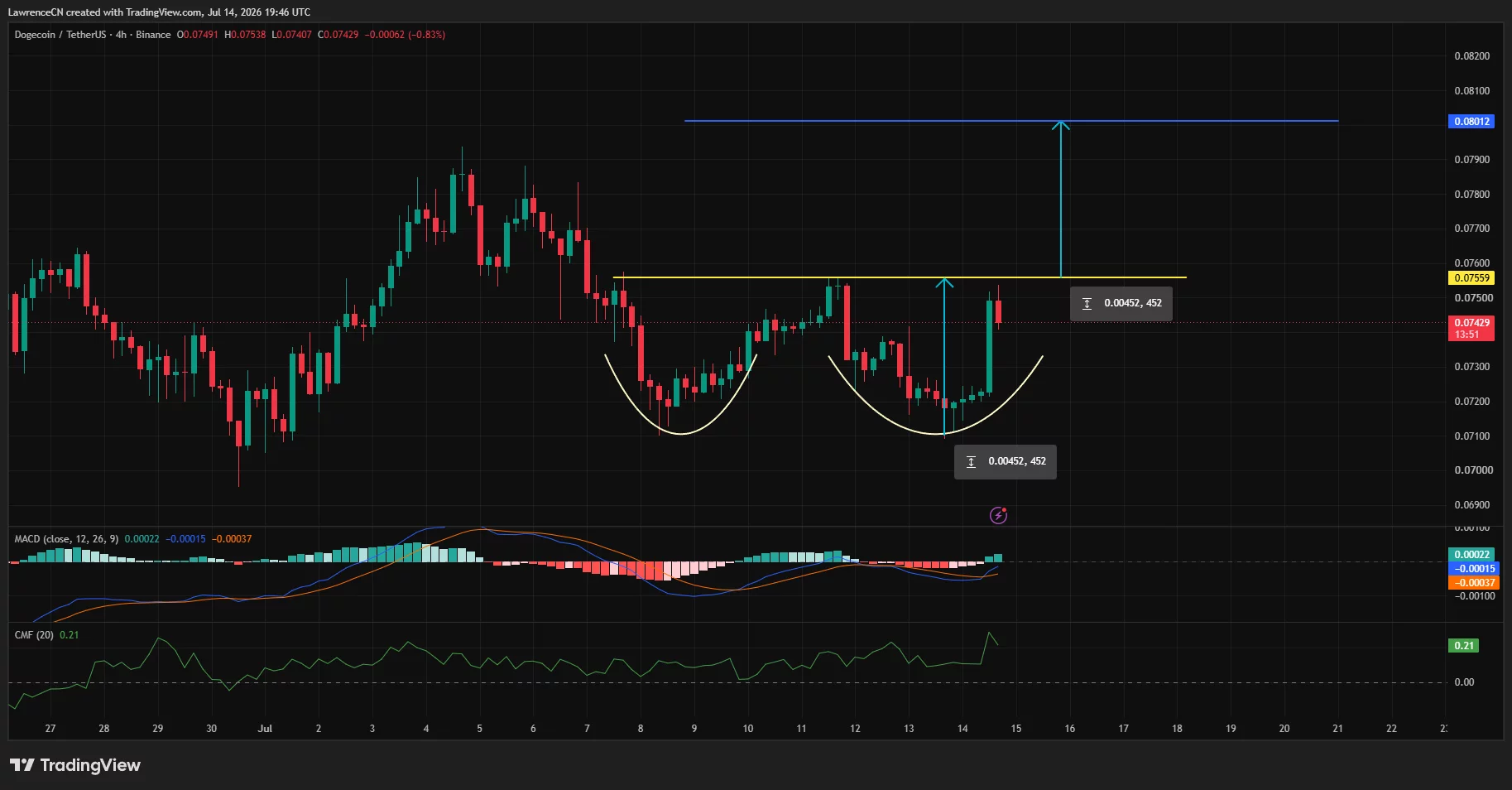
A break above the neckline near $0.0755 could open a move toward $0.080 to $0.081 based on the pattern’s measured target. Failure to clear that level could send DOGE back toward support around $0.072 or $0.071.
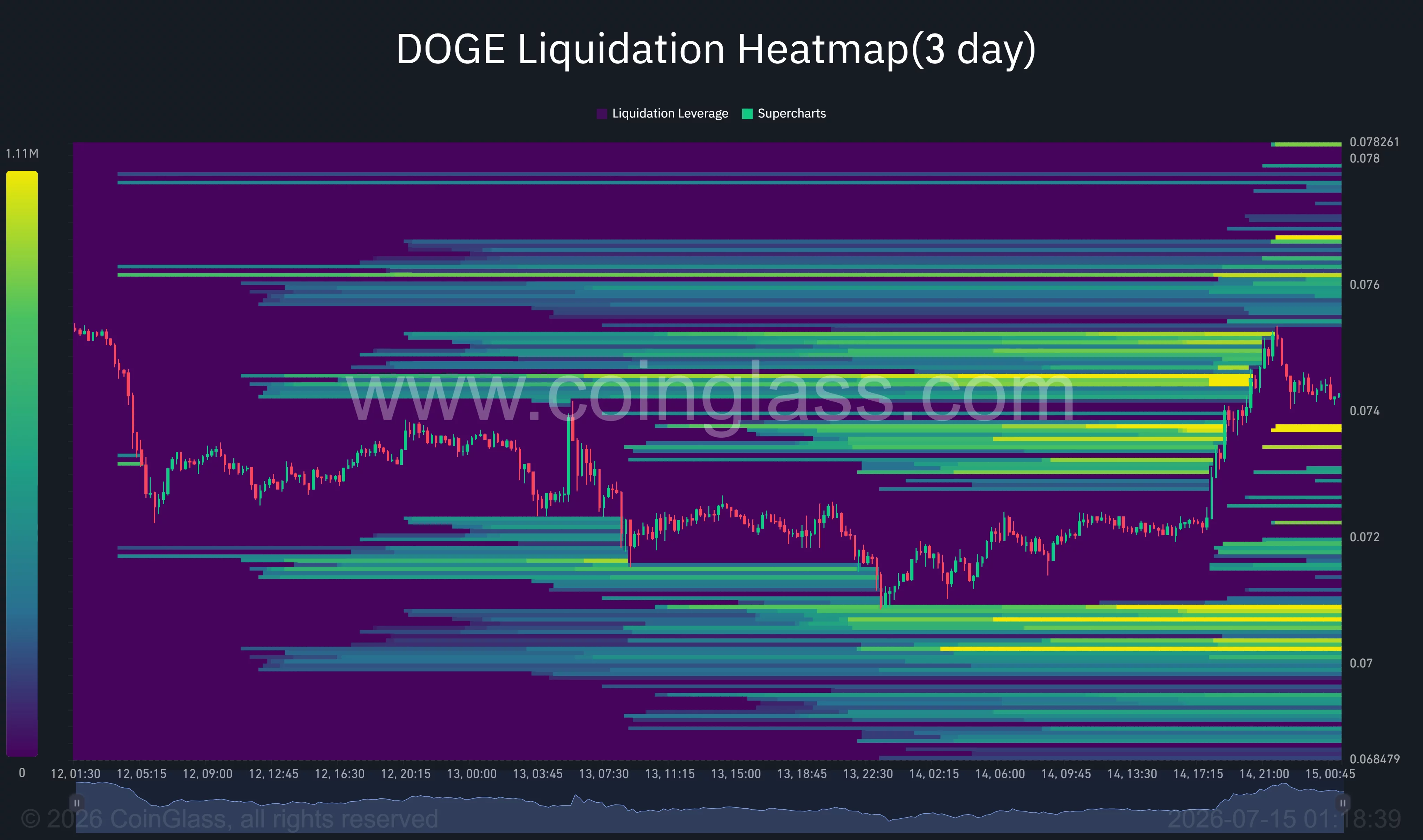
CoinGlass data places a dense group of short-liquidation levels between about $0.075 and $0.078. Another liquidity cluster sits near $0.070 to $0.071, leaving Dogecoin between two heavily traded zones as buyers attempt to extend the inflation-led rebound.
Disclosure: This article does not represent investment advice. The content and materials featured on this page are for educational purposes only.


The US Department of the Treasury and HM Treasury released a set of recommendations as part of the Transatlantic Taskforce for the Markets of the Future, which included stablecoin activity and tokenized finance.
In a joint statement on Tuesday, the two treasury entities issued four recommendations focused on digital assets as part of bilateral cooperation between the two countries on financial markets. The task force recommended that authorities consider a private-sector-led group focused on “testing of cross-border use cases for tokenized assets” and that financial agencies in the US and the Bank of England identify shared approaches on the regulation of tokenized assets.
On stablecoins, the US and UK released a joint statement aimed at regulatory alignment and establishing a “dynamic stablecoin market across borders.”
“Each government intends to tailor its requirements to seek comparable outcomes for comparable risks and activities, seeking to advance financial stability while avoiding market distortions or disincentivizing cross-border competition,” said the statement.
The Treasury statement did not explicitly mention the Guiding and Establishing National Innovation for US Stablecoins (GENIUS) Act, signed into law last year and waiting for regulations to be approved before its effective date in January 2027. However, the US-UK recommendations said stablecoins “should be fully backed, on at least a one-to-one basis, by high-quality, liquid assets,” aligning with the US law.
Related: UK government defers capital gains on certain crypto with ‘no gain, no loss’ approach
Report signals tokenization could add $44 billion to UK economic output
The US-UK statement followed a report that the United Kingdom could add up to $44 billion to its annual economic output by 2035, “provided the UK is one of the leading jurisdictions for tokenization, tokenization scales globally, and UK domestic adoption increases in line with major peers.“
The report, from a UK government-backed industry task force, called on the country to issue tokenized bonds by the first quarter of 2027 and plans to test financial transactions on the blockchain.
Magazine: Crypto’s CLARITY Act faces partisan fight over ethics on Senate floor
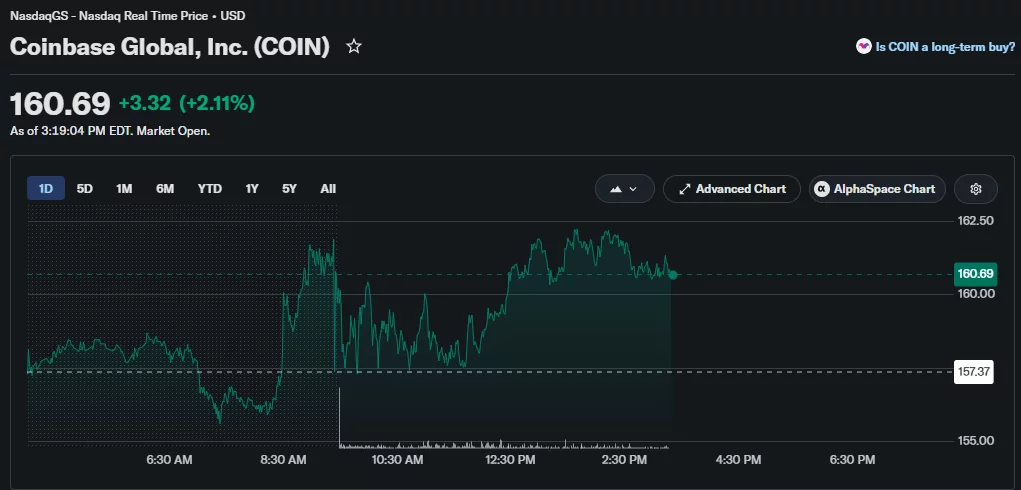
Coinbase Global stock has climbed more than 2% after the crypto exchange reportedly simplified its account registration process for users in mainland China.
Summary
- Coinbase has eased account registration for mainland Chinese users, according to Wu Blockchain.
- COIN stock gained over 2% as investors welcomed the onboarding update and improving crypto sentiment.
- Leadership changes and rising competition from Robinhood continue to weigh on Coinbase’s long-term outlook.
According to a report shared by Wu Blockchain, Coinbase now allows users in mainland China to complete identity verification using a Chinese national identity card and a mainland residential address, replacing the previous requirement that asked users to submit a Chinese passport together with a Hong Kong address. Wu Blockchain reported that Coinbase representatives confirmed the change.
The revised onboarding process has drawn attention because it lowers the barriers for mainland Chinese users who want to create accounts on the platform. Although the update does not indicate that Coinbase has officially re-entered the Chinese market, market participants have interpreted it as a step that could improve the exchange’s accessibility in the region.
China registration changes support investor optimism
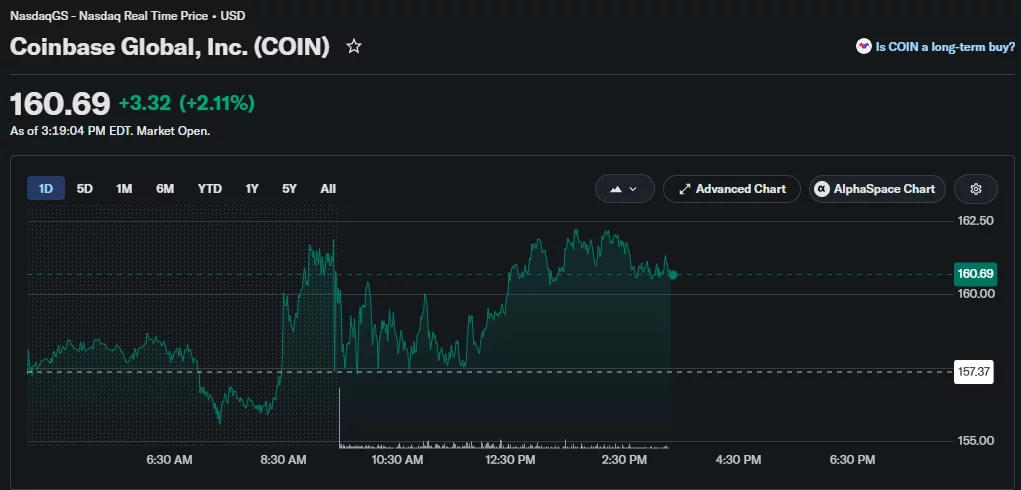
Following the reported policy update, Coinbase shares rose more than 2% to trade above $160 during the session. The gain came as the crypto market also recovered after softer-than-expected U.S. inflation data improved investor sentiment toward digital assets.
Meanwhile, the easier registration process has fueled expectations that Coinbase could attract more users outside its core markets if similar onboarding changes continue elsewhere.
While the company has not announced a broader expansion strategy for mainland China, the adjustment comes at a time when crypto exchanges are competing to add new customers across international markets.
The registration update also arrives as digital asset adoption continues to grow globally, increasing competition among major exchanges. Against that backdrop, any reduction in account-opening requirements is being closely watched by investors looking for signs of future user growth.
Leadership changes and competition remain key risks
Despite Tuesday’s rally, Coinbase stock remains under pressure over a longer period. The shares have fallen nearly 38% over the past six months, showing that investors continue to weigh several challenges facing the company.
Adding to those concerns, Coinbase Chief Legal Officer Paul Grewal recently announced that he will leave the company after six years. His departure comes during a period when the exchange is facing increasing competition across both trading services and blockchain infrastructure.
Analysts have also maintained a cautious stance on Coinbase following the recent launch of Robinhood Chain. Market commentators have argued that Robinhood’s blockchain platform could strengthen its position in digital assets and increase competitive pressure on Coinbase if user adoption continues to grow.
Robinhood introduced its Layer-2 blockchain earlier this month and has since reported strong early activity, including rising transaction volumes and growing total value locked, developments that several market observers have cited as evidence of increasing competition in the sector.
Still, Coinbase’s latest onboarding changes have shifted attention back to its international user base. If crypto market conditions continue improving after the latest U.S. consumer price inflation data, investors may watch whether higher trading activity and easier account access can provide additional support for Coinbase’s business and its stock performance, though the company has not linked the registration changes to any future expansion plans.
Ripple and XRP landed two institutional wins in 24 hours: a Japanese partnership between Doppler Finance and SBI Digital Finance, and a premier seat at the new x402 Foundation.
Neither headline lifted the token, which keeps sliding and widening the gap between real utility and market price.

Japan Opens an Institutional Path for XRP
Doppler Finance and SBI Digital Finance formalized their agreement through an official statement, without revealing launch dates or technical specifications. Doppler builds infrastructure for markets where instruments such as bonds and loans are issued directly on blockchain rails.
SBI Digital Finance, for its part, runs crypto lending services within the SBI Group, including the HashHub Lending platform. The partnership is limited for now to a shared roadmap, with concrete products still pending.
The plan centers on giving XRP concrete financial functions. Those include collateral management, institutional lending, and tokenized asset operations under Japanese regulation. Rox, Doppler’s Head of Institutions, described the objective as converting digital assets into productive capital.
Japan makes sense as the testing ground. Clear regulation, one of the world’s largest XRP communities, and a long Ripple relationship with SBI-linked entities give the initiative solid foundations, even if institutional demand remains unproven.
Ripple Joins the x402 Foundation for AI Agent Payments
The second announcement points to a different frontier. Ripple became a premier member of the x402 Foundation, an initiative hosted by the Linux Foundation and focused on payments between AI agents.
The x402 standard establishes how autonomous programs can pay each other natively across the internet. As software agents handle more of the transaction lifecycle, they will need settlement rails as reliable as their data channels.
Ripple has been preparing for that scenario on the XRP Ledger, where it already supports x402 for agentic payments. The company said it will participate in the foundation’s technical and governance work around open standards.
The Foundation describes itself as a neutral, industry-led home for the protocol. It remains in formation, with a governing board expected within the next few weeks.
Why Does the XRP Price Keep Falling Despite the News
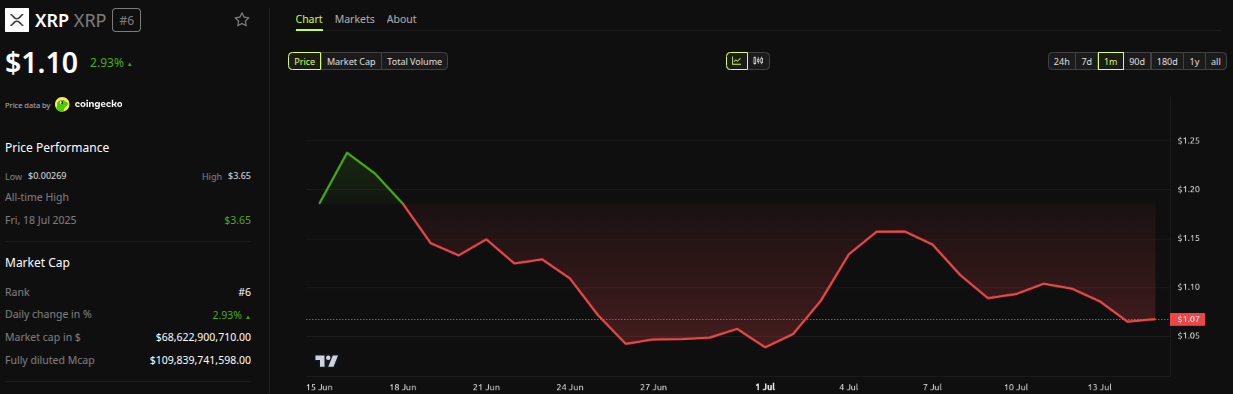
XRP trades near $1.10, soaring 2.93% over the past 24 hours, according to BeInCrypto data. However, the token has lost 6% over the past 30 days, a decline that no announcement has managed to reverse.
The disconnect is not unusual. Fundamental progress rarely produces immediate rallies, because short-term prices respond to trading volume, liquidity, and global risk appetite.
The muted reaction follows a well-known market pattern. Institutional and fundamental advances rarely move prices immediately, since trading volume, global risk appetite, and competing headlines dominate short-term action. History shows that utility milestones tend to compound slowly rather than ignite instant repricing.
Macroeconomic conditions currently weigh more than regional partnerships. Broader crypto sentiment remains cautious, keeping Ripple’s token anchored despite a market capitalization above $66 billion and a spot among the top cryptocurrencies. That scale means only large capital flows shift the price meaningfully.
The coming months will test whether these alliances generate measurable adoption. Until implementation details or fresh capital arrive, XRP holders face the same old equation: growing utility, falling price.
Subscribe to our YouTube channel to watch leaders and journalists provide expert insights.
The post 2 New Deals Make Ripple Productive Capital, but XRP Stays in Free Fall appeared first on BeInCrypto.
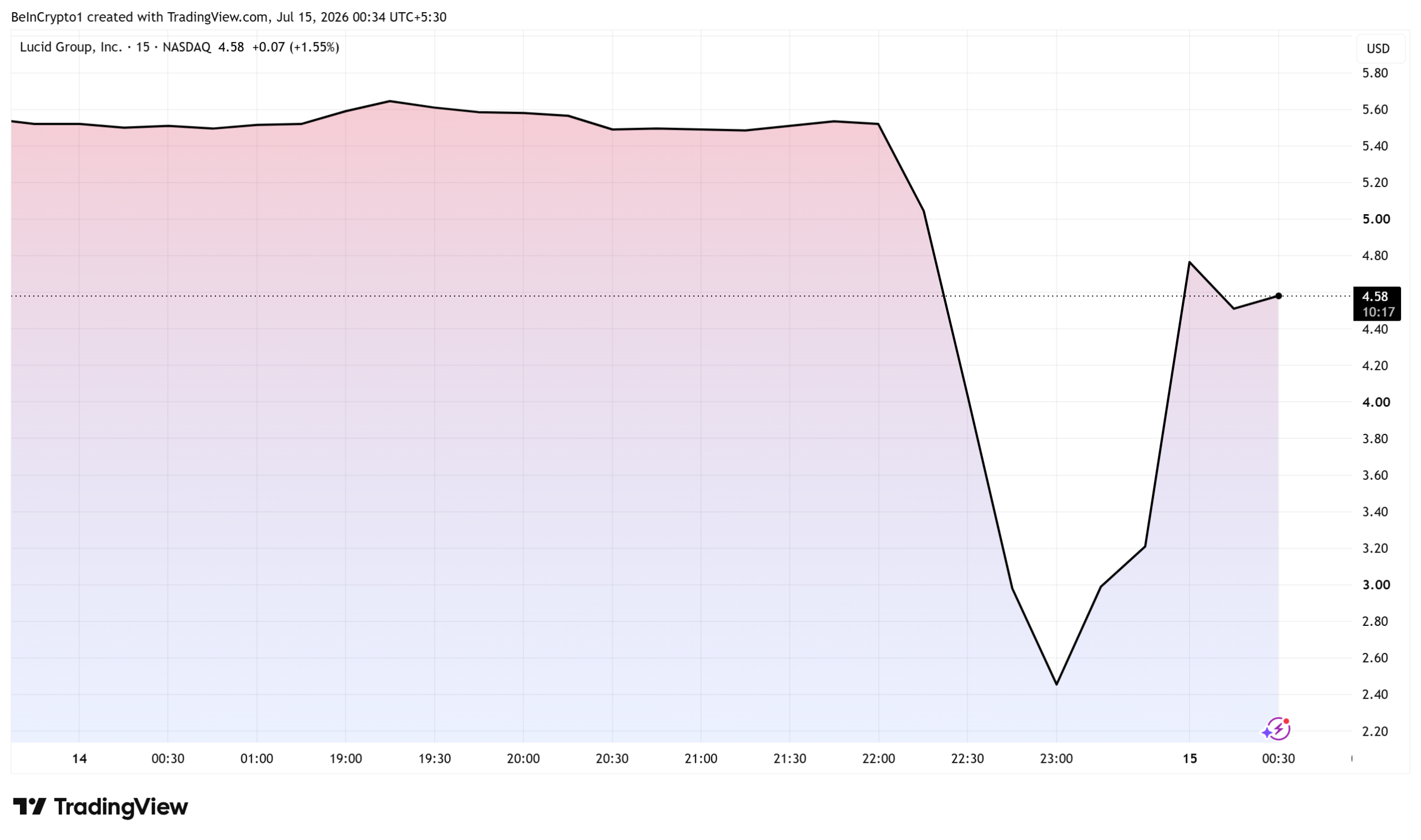
Lucid Group (LCID) shares crashed nearly 50% on Tuesday after a report raised bankruptcy fears. The stock fell so fast that exchanges paused trading three times.
The report claimed the electric vehicle (EV) maker may go private or file for bankruptcy. Lucid quickly denied it, yet the panic erased about half of its market value in one day.

Why the Lucid Stock Crash Ran So Deep
The panic started with a report from industry outlet EV. It said turnaround firm AlixPartners will soon present options to Lucid’s board. Two of those options reportedly stand out.
- The first is going private, meaning Lucid would leave the stock market.
- The second is Chapter 11 bankruptcy, a legal process that lets a company keep operating while it reworks its debts.
The adviser also reportedly wants Lucid to pause its push into Europe and pour its energy into the Gravity SUV. That vehicle has struggled with quality problems since production began in late 2024.
Follow us on X to get the latest news as it happens
The market reaction was brutal. Shares sank as much as 55% and hit a record low of $2.37. At that price, Lucid’s 330 million shares were worth under $800 million.

In November 2021, the company was valued near $90 billion, briefly more than Ford. Nerves were already raw after the SpaceX stock crash.
Lucid Pushes Back as August 4 Earnings Loom
Lucid called the rumors completely false. It said AlixPartners is helping the company run more efficiently, not preparing a court filing.
“AlixPartners is assisting us in that and nothing else and has not recommended bankruptcy to management or the Board. We undertake no duty to update our comments on this matter,” Nick Twork, Chief Communications Officer at Lucid Motors, said in a statement on Tuesday.
He added it has enough cash to last well into next year. BeInCrypto could not independently verify this claim.
Neither Lucid nor Twork immediately responded to BeInCrypto’s request for comment.
Notwithstanding, the clarification likely explains the ongoing LCID stock recovery.
However, the fear has roots in Lucid’s own numbers. The company lost $2.7 billion in 2025, per its filings. It lost another $1.03 billion in the first quarter of 2026, nearly triple the year before. That quarter, building cars cost $594 million against $282 million in sales.
That gap explains the constant need for fresh money. Lucid raised about $1.05 billion in April, including $200 million from robotaxi partner Uber. In July, it reportedly borrowed $800 million more from an affiliate of Saudi Arabia’s Public Investment Fund, its majority owner.
“So u are working with AlixPartners, one of the largest chapter 11 advisors but have had no reorganization talks??,” one user challenged.
Silvio Napoli, the former Schindler boss who became CEO on June 1, has been cutting costs and jobs since.
The next big test comes on August 4, when Lucid reports first-half results. Investors will watch closely, alongside Tesla’s bullish chart setup and July’s US stocks to watch.
The post Lucid Stock Crashes 50% on Alleged False Report appeared first on BeInCrypto.
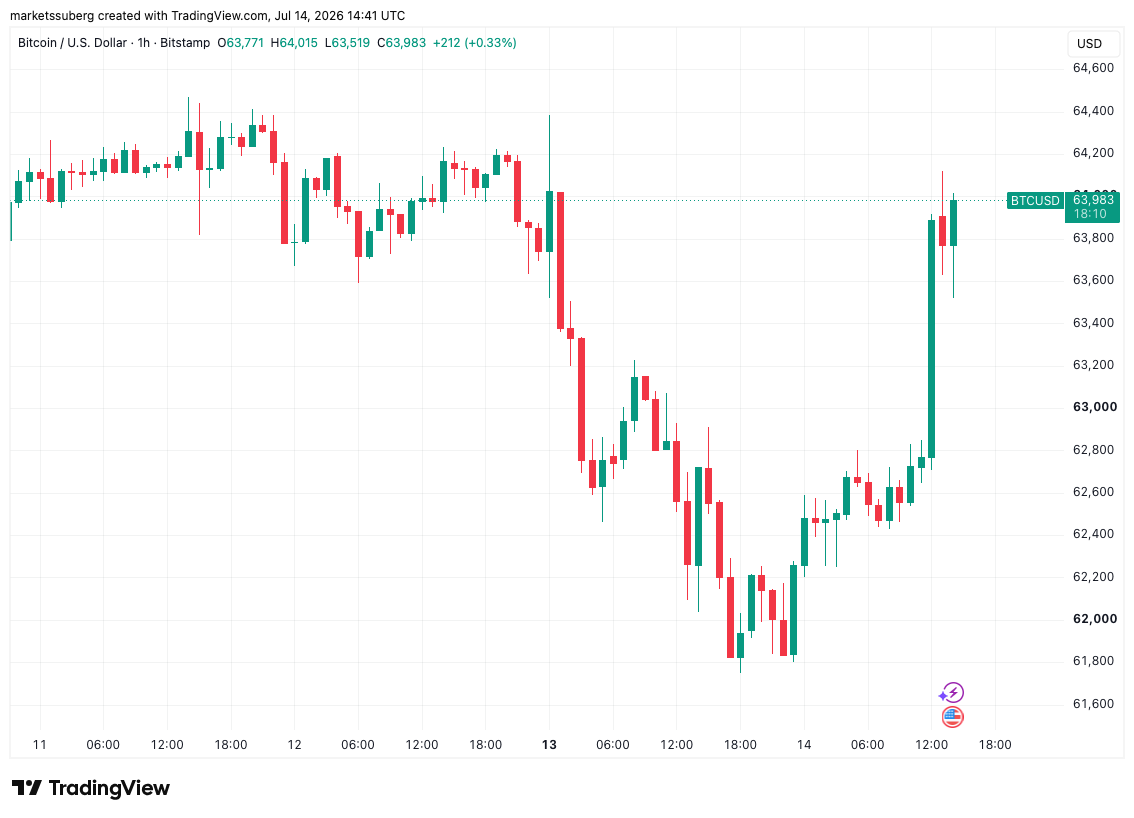
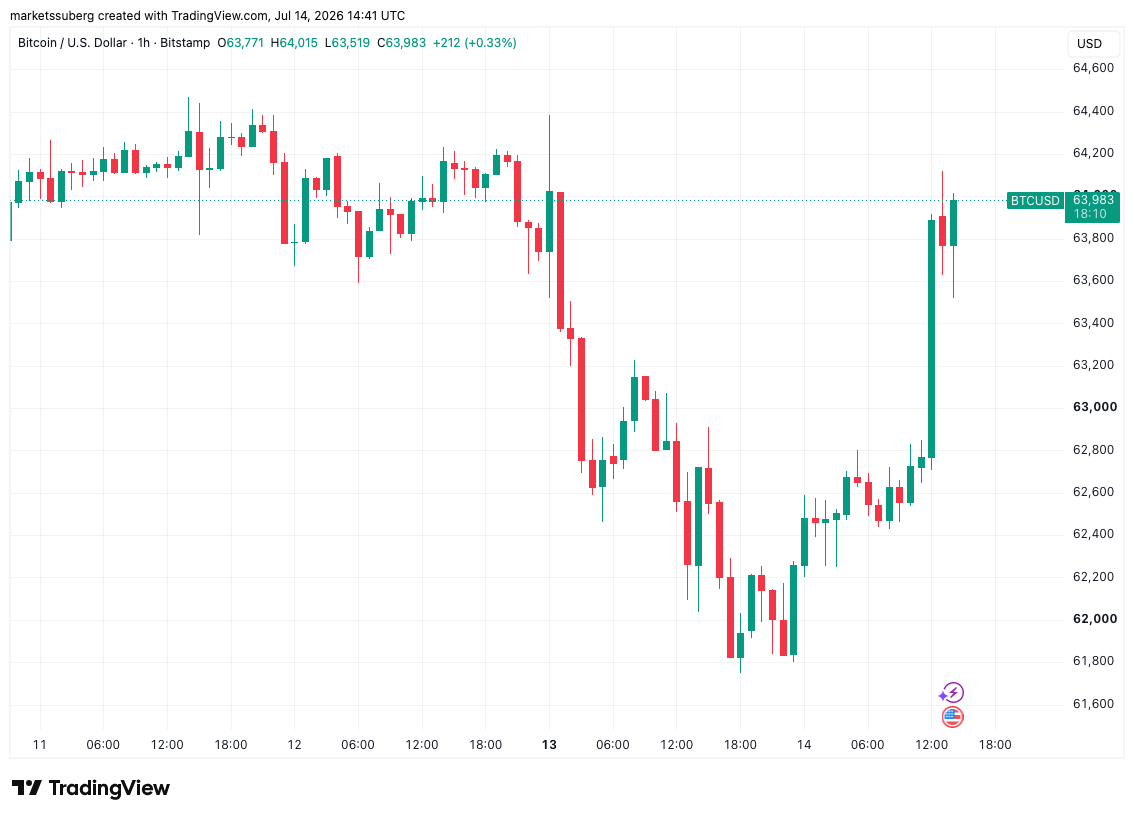
Bitcoin (BTC) spiked past $64,000 into Tuesday’s Wall Street open as US inflation saw a surprise sudden downturn.
Key points:
- Bitcoin returns to near the top of its local trading range on US inflation data.
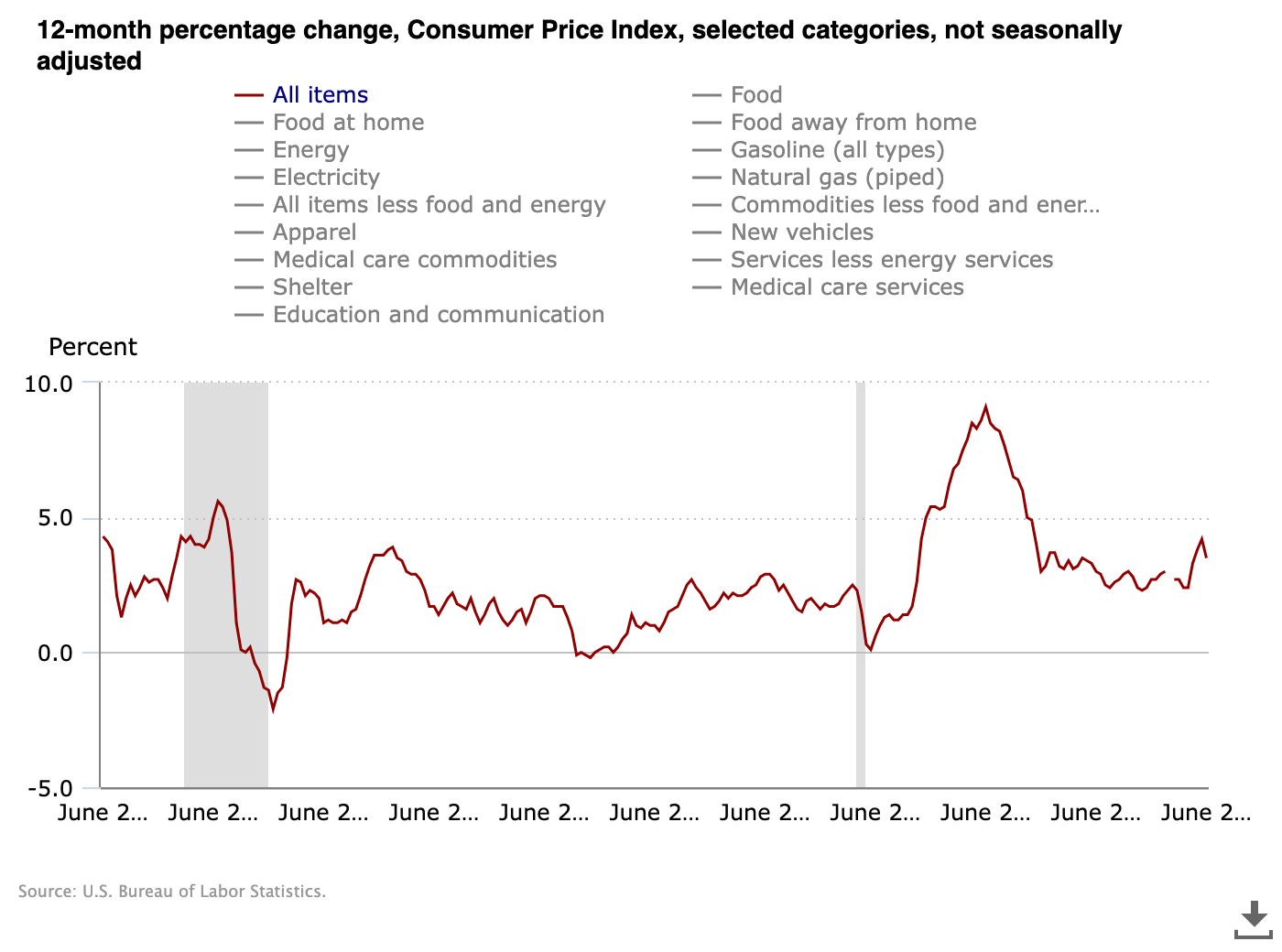
- The biggest drop in CPI since April 2020 boosts crypto and risk assets.
- Traders remain in wait-and-see mode over whether local resistance will break.
US CPI ignores Iran pressure with snap drop
Data from TradingView showed BTC/USD gaining more than 2% on the day as the June print of the Consumer Price Index (CPI) came in below expectations.
BTC/USD one-hour chart. Source: Cointelegraph/TradingView
At 3.5% versus the anticipated 3.8%, CPI posted its largest monthly decline since April 2020, per data from US Bureau of Labor Statistics (BLS). Energy led the drop despite headwinds from the US-Iran war and the closure of the Strait of Hormuz oil route.
“The index for energy fell 5.7 percent in June after rising 3.9 percent in May, 3.8 percent in April, and 10.9 percent in March,” an official news release stated.
“The energy index was the largest contributor to the monthly all items decrease, more than offsetting increases in other indexes including those for shelter and food.”
US CPI 12-month % change. Source: BLS
Risk assets reacted positively, with US stocks in the green and crypto showing particular relief.
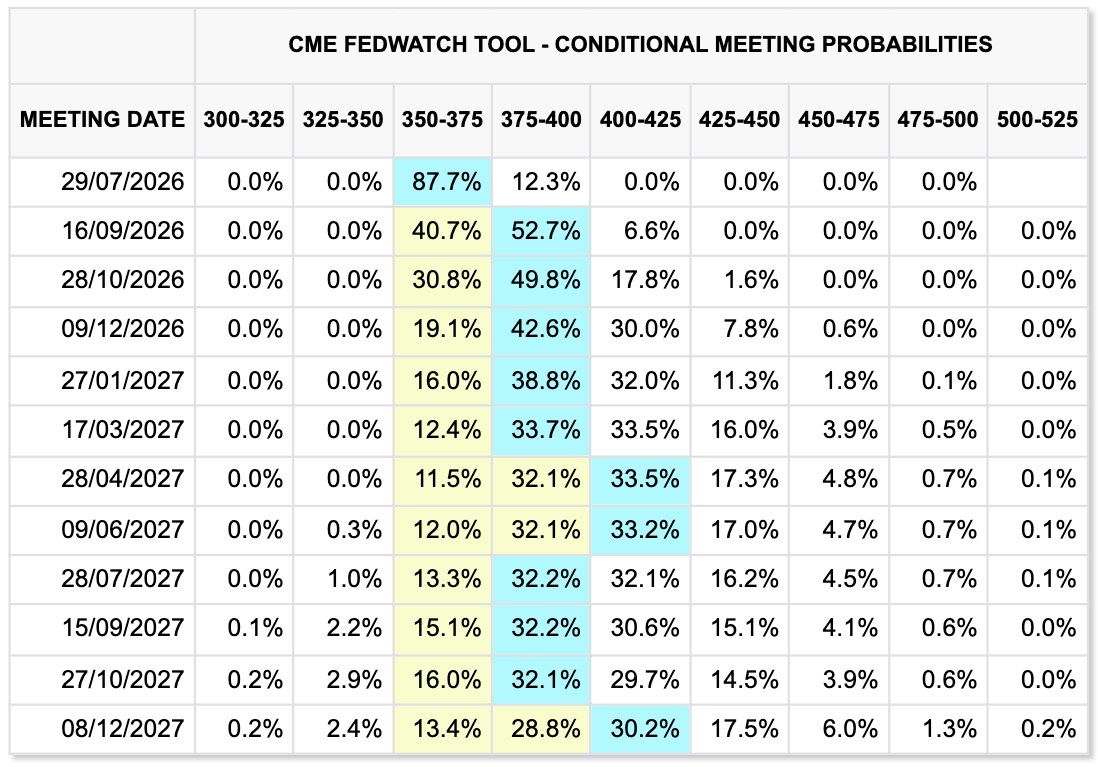
Market expectations of future Federal Reserve financial policy changes also turned dovish, with the odds of interest-rate hikes dropping sharply. The latest data from CME Group’s FedWatch Tool nonetheless maintained consensus for a 0.25% hike at the Fed’s September meeting.
Fed target rate probabilities (screenshot). Source: CME Group
“This print should help temper what had become an excessively hawkish market tilt to the monetary policy outlook,” economist Mohamed El-Erian wrote in a response on X.
Trader warns of BTC price rejection
Bitcoin traders remained cautious with local resistance above $64,000 still in place.
Related: Bitcoin bear market will bottom when two-month RSI metric hits zero, trader predicts
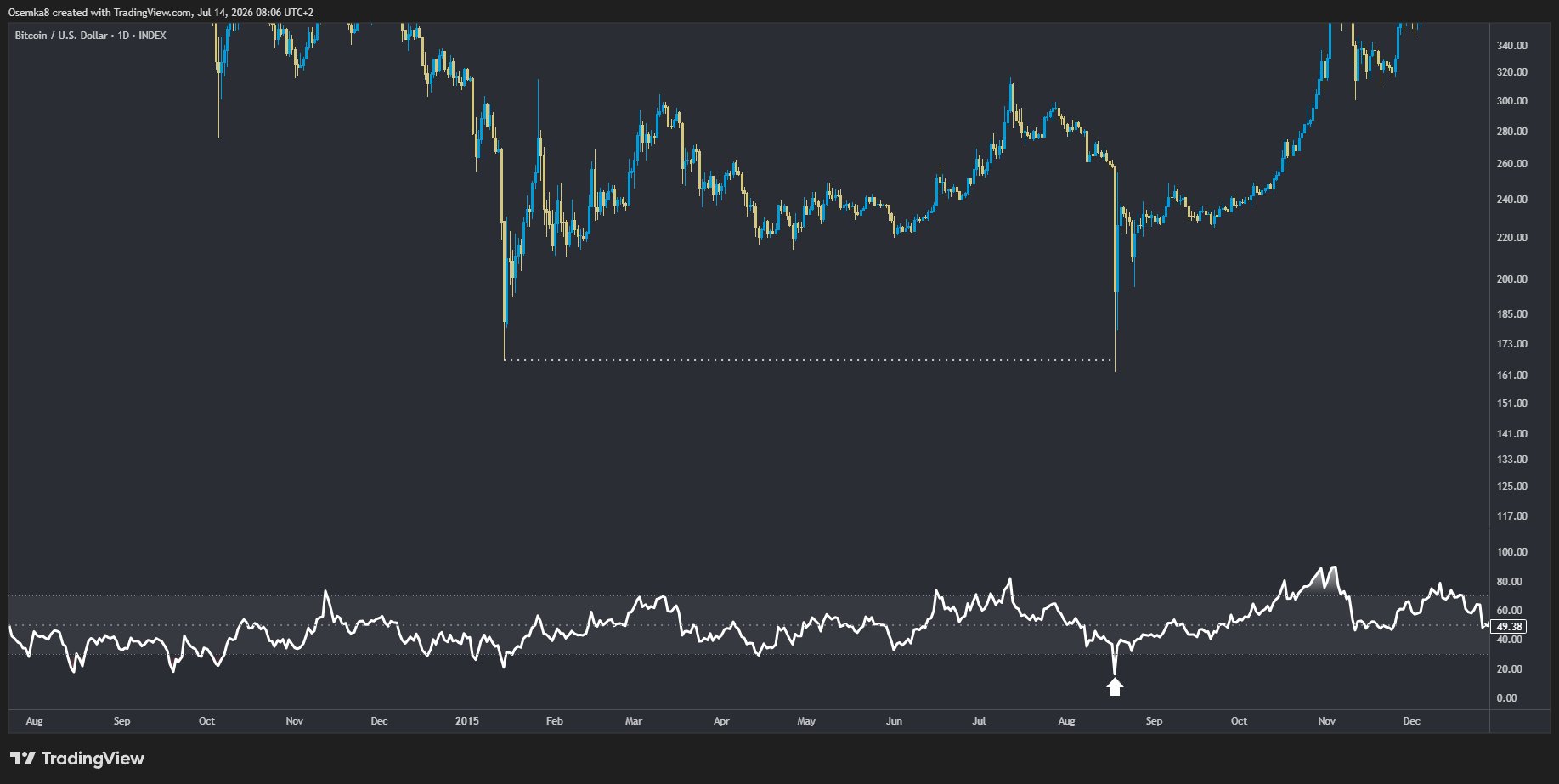
In ongoing market analysis, X commentator Exitpump noted short positions getting “squeezed” as a result of the CPI print.
“Sellers haven’t been able to push price lower because of strong passive demand and now seeing shorts closing out slowly forcing price to grind up,” it summarized.
“Still a range trading environment.”
BTC/USD one-day chart. Source: Exitpump/X
The latest data from CoinGlass put 24-hour crypto short liquidations at just over $220 million.
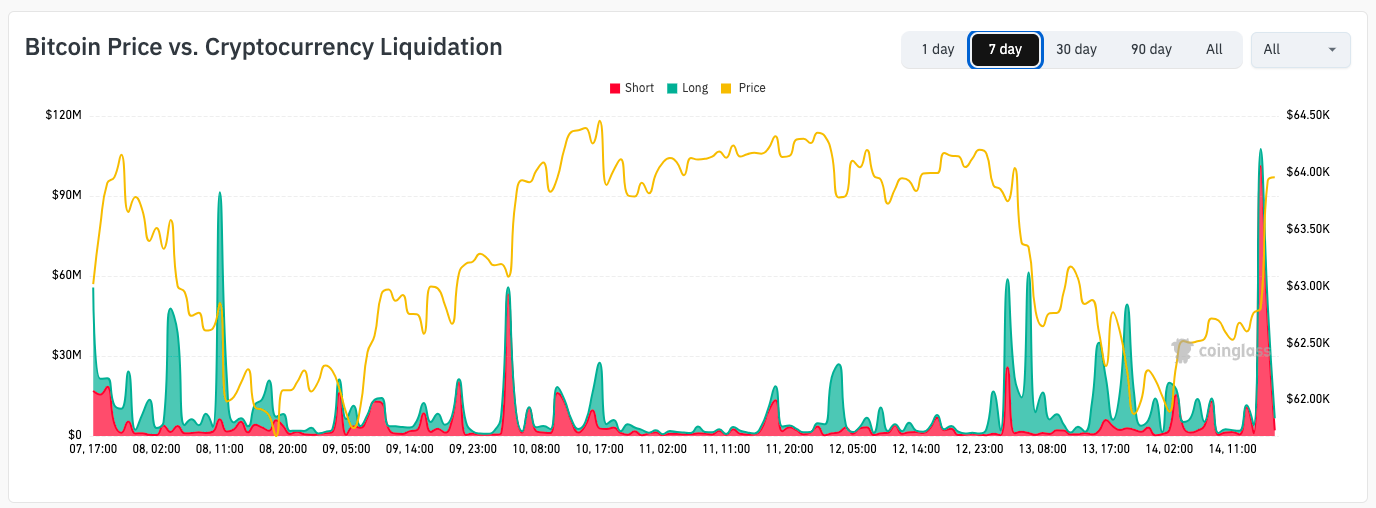
BTC/USD vs. crypto liquidations (screenshot). Source: CoinGlass
Continuing, trader Killa said that they would eye “signs of exhaustion” should the BTC price take out the local highs.
“There’s still a liquidity pool sitting above 64.8K, but right now we’re testing the weekly open. If we can’t reclaim and hold the weekly open, this is likely just a lower high before we move down to test the $60K region,” an X post read.

United announces new economy offering without a middle seat
Ripple (XRP) Tests a Key Support Level: Final Shakeout to $0.87 Now Beginning?

Cruiserweight notches third consecutive win at Caulfield in 2026

No Jackpot Winner as $257 Million Prize Rolls Over to $269 Million Monday Draw

Renter of Home in Anne Heche Crash Denies Settlement With Son

Weekend Open Thread: Staud – Corporette.com

Financial Advisor: How People On Normal Salaries Turn Their Paycheck Into Multiple Income Streams

Warning: Buying & Selling Cryptocurrency is Haram | Mufti Taqi Usmani’s Fatwa Creates a Stir

He’s so f*cked (I secretly brought in his wife) | Financial Audit
-

 Fashion5 days ago
Loro Piana Fall 2026 Enters Houston’s Art Scene
-

 Fashion4 days ago
Weekend Open Thread: Nutriplenish Leave-In Conditioner
-
 Sports5 days ago
2026 Genesis Scottish Open Thursday TV coverage: Round 1
-

 Tech7 days ago
Anthropic brings Claude Cowork to mobile and web as usage data shows most users aren’t coding
-

 Sports5 days ago
Super Eagles star Moses Simon opens up on Liverpool transfer regret
-

 Tech5 days ago
Character.AI enters the microdrama arena with its own productions, but there’s a twist
-

 Tech16 hours ago
Get Your ESP32 Sunny Side Up With This Solar Dev Board
-

 News Videos6 days ago
Crypto Just Entered Its Most Important 6-Month Candle (Could Decide Everything!)
-
 Tech7 days ago
Keychron is stepping outside keyboards with a $349 Thunderbolt 5 dock aimed at power users
-
 Business7 days ago
ASX 200 Slides Over 0.6% as Rare Earths and Lithium Stocks Tumble Amid Global Semiconductor Sell-Off Today
-
 NewsBeat5 days ago
Major update after Huntingdon train attack as man enters plea
-
 Business7 days ago
Will Trent shares rebound after Q1 update triggers 13% crash? Here’s what technical charts indicate
-

 News Videos52 minutes ago
XRP BOMBSHELL… XRP OMBOARDED FOR TRANSACTIONS!!!
-

 Business7 days ago
SpaceX Shares Slide Nearly 6% Amid Post-IPO Volatility and Starship Test Focus
-
 Sports6 days ago
39-year-old Djokovic wins five-hour thriller to enter Wimbledon semis | Other Sports News
-

 Tech6 days ago
Entra passkey enrollment vishing targets Microsoft 365 users
-
 Tech1 day ago
Cloudflare Precursor Watches Your Mouse and Keyboard To Decide If You Are Human
-

 News Videos1 day ago
how to make coin bank box with cardboard #scienceproject #money #diy #shorts
-
 Crypto World6 days ago
DeFi Dashboard Zapper to Shut Down After 7 Years
-

 Tech5 days ago
Level Infinite Launches Gangstar Mirage City in India with Pre-Registrations
You must be logged in to post a comment Login