

Crypto World
FLEOA Backs Digital Asset CLARITY Act With Four DeFi Accountability Demands


The Federal Law Enforcement Officers Association (FLEOA) endorsed the Digital Asset Market Clarity Act on July 10, coming just weeks before what many see as a make-or-break legislative deadline before the Senate’s August recess, and doing so with four specific demands to strengthen DeFi accountability language before the Senate votes.
The Senate’s August 8 recess acts as the de facto deadline for advancing the bill this legislative session. Industry insiders have framed the recess as a critical milestone for whether the bill moves this year.
Discover: The Best Token Presales
FLEOA Endorses, But Wants DeFi Provisions Tightened
In its July 10 statement to the Senate Banking Committee, the FLEOA said the current CLARITY Act text “represents meaningful progress toward balancing technological innovation with public safety.” The association commended the committee’s efforts to establish a regulatory framework that preserves criminal, anti-money-laundering, counterterrorism-financing, sanctions-enforcement, and investigative authorities.
The endorsement is conditional in practice. The FLEOA urged lawmakers to narrow the bill’s DeFi protections, make it clearer who is accountable in decentralized finance (DeFi) systems, stop firms from avoiding regulation by claiming to be decentralized, revise “specific intent” language to make it easier to establish liability, and explicitly affirm the bill does not curtail existing federal investigative powers.
Those demands directly address the fault lines that have defined law enforcement’s relationship with the bill. In June, four organizations, the National District Attorneys Association, the National Association of Assistant United States Attorneys, the International Association of Chiefs of Police, and the National Sheriffs’ Association, sent concerns to the White House about Section 604, which seeks to protect developers from liability for illicit activity carried out by users on their decentralized platforms.
The opposition prompted the White House to invite law enforcement organizations objecting to the language of the bill to a meeting in late June.
Around the same time, the Major County Sheriffs of America shifted from opposition to neutral, and FLEOA moved to active support with conditions.
Discover: The Best Crypto to Diversify Your Portfolio
Second Endorsement in Nine Days Reframes the Law Enforcement Narrative
FLEOA’s statement came nine days after the National Organization of Black Law Enforcement Executives (NOBLE) backed the bill, giving proponents back-to-back institutional cover on the law enforcement front.
The sequential endorsements are being used to counter the argument that the CLARITY Act would weaken the government’s ability to police crypto crime.

Ji Kim, CEO of the Crypto Council, said the group was expressing support for CLARITY and that the bill is strong on consumer protection and law enforcement.
The August Deadline Is Structural, Not Rhetorical
Senator Cynthia Lummis, on July 8, framed the stakes as generational: “This is likely our last chance to get real legislation for digital assets on the books before 2030.
If we fail to pass the Clarity Act, we are ensuring another country will write the rules for digital assets, and we spend the next decade catching up.” The statement is a lobbying argument as much as a forecast, but the structural point is accurate. The letter comes less than four weeks before the Aug. 8 Senate recess.
For traders, the CLARITY Act’s passage would aim to strengthen the bill’s regulatory framework for digital assets, including enhancing DeFi accountability and preserving investigators’ existing powers. The ethics provision hurdle and Senate vote timing remain the next procedural test, with the Banking and Agriculture Committee versions still requiring reconciliation before a floor vote can proceed.
The FLEOA’s requested language changes, including calls to narrow DeFi protections, clarify accountability in DeFi systems, revise “specific intent” language, and affirm existing federal investigative authority, are central points in ongoing negotiations as lawmakers approach the Aug. 8 recess. The question of how the DeFi liability language is handled remains a focus of scrutiny.
Don’t Miss Out on Our $1,000 USDT Airdrop on ByBit
The post FLEOA Backs Digital Asset CLARITY Act With Four DeFi Accountability Demands appeared first on Cryptonews.


Binance has marked its ninth anniversary by highlighting strong user growth and expanding beyond digital assets into traditional financial products. The exchange now reports 323 million registered users across more than 100 countries, reflecting its growing global presence.
The scale of that user base becomes clearer when placed in the context of global cryptocurrency adoption. According to the firm’s report, its users represent about 43% of the estimated 741 million people worldwide who currently own cryptocurrency. Notably, this compares with a global crypto user population of fewer than six million when Binance launched in July 2017.
User Growth and Trading Activity
Registered users on Binance grew by another 7% during the first half of 2026 despite mixed market conditions. The company also reported a 9% rise in institutional users over the same period, pointing to continued participation from larger market players.
This growth in user activity was accompanied by higher trading volumes. Binance’s cumulative trading volume reached $156 trillion after adding $11.4 trillion during the first six months of the year. That pushed total trading activity 7.8% above the level recorded at the end of 2025.
Expansion Into Traditional Financial Products
The exchange also reported steady activity outside its crypto business through newer financial products. Monthly trading volume for its traditional finance offerings has remained above $80 billion since March, according to the company.
One of the latest additions to that business is direct stock trading, which Binance introduced in June as part of its broader financial services strategy. The product reached $1 billion in assets under management within 30 days and generated more than $3 billion in cumulative trading volume.
The company’s tokenized U.S. equities, known as bStocks, also recorded early growth after launch. Binance said the offering reached $100 million in assets under management within two weeks, while 47% of trading activity occurred outside regular U.S. market hours.
Co-CEOs Yi He and Richard Teng said the company aims to serve both retail users and institutional participants through a wider range of financial products. They added that recent launches, including stocks and tokenized assets, support Binance’s goal of improving access to global markets.
To celebrate the milestone, Binance launched a community campaign called “Built by You,” featuring up to $4.5 million in rewards and an interactive virtual experience. The anniversary comes as regulatory frameworks continue to evolve in major markets and institutional participation in digital assets remains a key industry trend.
The post Binance Marks Ninth Anniversary With 323 Million Users and Expansion Beyond Crypto appeared first on CryptoPotato.
Crypto World
Retail traders are hyping up XRP and ether during a dip, but history says a crash could be next
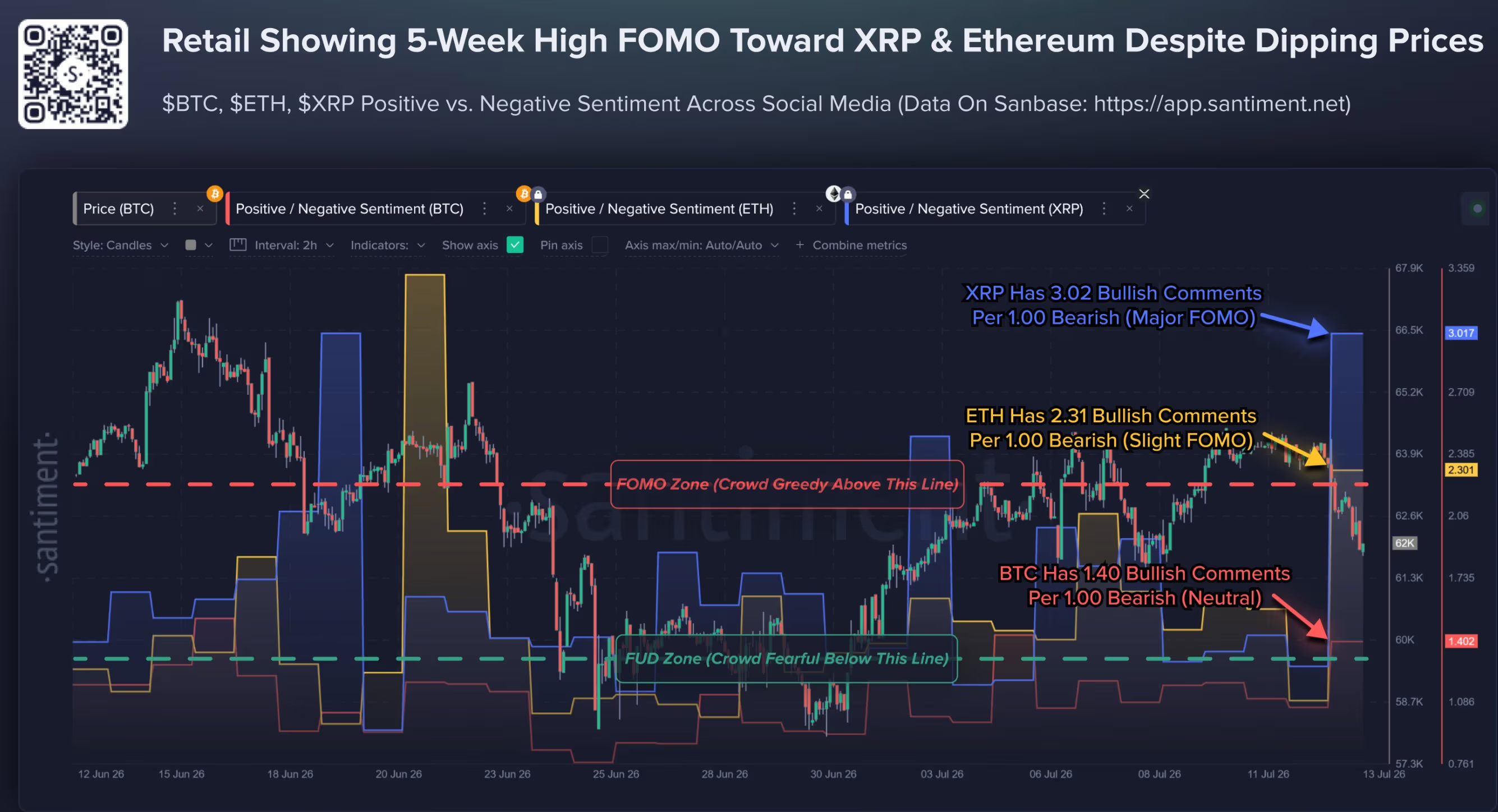
Retail traders are piling into XRP and ether while both tokens slip, the kind of crowd behavior that more often precedes further downside than a bounce.
XRP drew 3.02 bullish social media comments for every bearish one on Monday, its most positive reading in five weeks, according to Santiment. Ether ran at 2.31 and bitcoin at 1.40, which the firm classified as neutral. Bitcoin and ether both opened higher and faded through the day, so the loudest enthusiasm is landing on the assets that are falling.

Sentiment readings like these are used as contrarian signals, because crowd excitement usually peaks near local tops.
“Crypto typically moves opposite to what the crowd is loudly expecting,” Santiment wrote, adding that heavy bullishness on XRP or ether while prices dip can add short-term downside risk or slow any rebound.
Bitcoin’s flat reading is the healthier one, meanwhile. Retail chasing the smaller tokens while staying neutral on bitcoin is narrow speculation, not broad greed, and rallies have more room when the crowd hasn’t already crowded into the higher-prices trade. XRP traded near $1.09 on Monday, down on the week.
Crypto World
Prediction markets saw over $50 billion in volume as World Cup kicked off, crushing traditional sportsbooks


But the regulated U.S. app and the global platform are fundamentally different products. The U.S. version requires full KYC identity verification, is funded through registered futures commission merchants rather than crypto wallets and settles in U.S. dollars. The global platform, still geoblocked for U.S. IP addresses, has no identity checks, settles in USDC and carries a far wider range of markets.
The $571 million figure refers to Americans trading on that global platform through VPNs and existing crypto wallets. Allium tracked wallet behavior rather than IP addresses, which is how a VPN that defeats geoblocking still leaves U.S. fingerprints in the data.
Kalshi’s breakout moment
Named FIFA’s official prediction market partner part-way through the tournament, Kalshi had branding rights, in-venue presence and a media distribution deal with Fox Sports.Though notably, the user growth was already well underway when Kalshi signed its co-branding deal with ADI Predictstreet, the FIFA World Cup’s official prediction market partner, on June 26, just four days before Apptopia data was recorded. Both Kalshi and Polymarket have advertised heavily during games, with ads airing during the halftime break, as well as the so-called hydration breaks during the American broadcasts.
App data from Apptopia found that by June 30, Kalshi’s daily active users were 36% above their June 15 level. Over the same period, DraftKings fell 36% from its tournament peak, FanDuel dropped 41% and BetMGM and Caesars each declined 32%. Traditional sportsbook apps spiked early and faded, while prediction markets built steadily throughout.
The European Central Bank (ECB) has enlisted 36 payment firms to test the digital euro, its answer to the dollar stablecoins spreading through European payments. The central bank named the pilot group on Tuesday, July 14.
Deutsche Bank, UniCredit, and Revolut lead a roster that also includes US-based Stripe and European processors Adyen, SumUp, and Worldline.
A Digital Euro Pilot Built to Counter Dollar Stablecoins
Brussels frames the project as monetary sovereignty. ECB President Christine Lagarde has rejected euro stablecoin proposals, arguing a public digital currency should fill the role instead. The central bank has also warned about deposit risks from expanding private euro tokens.
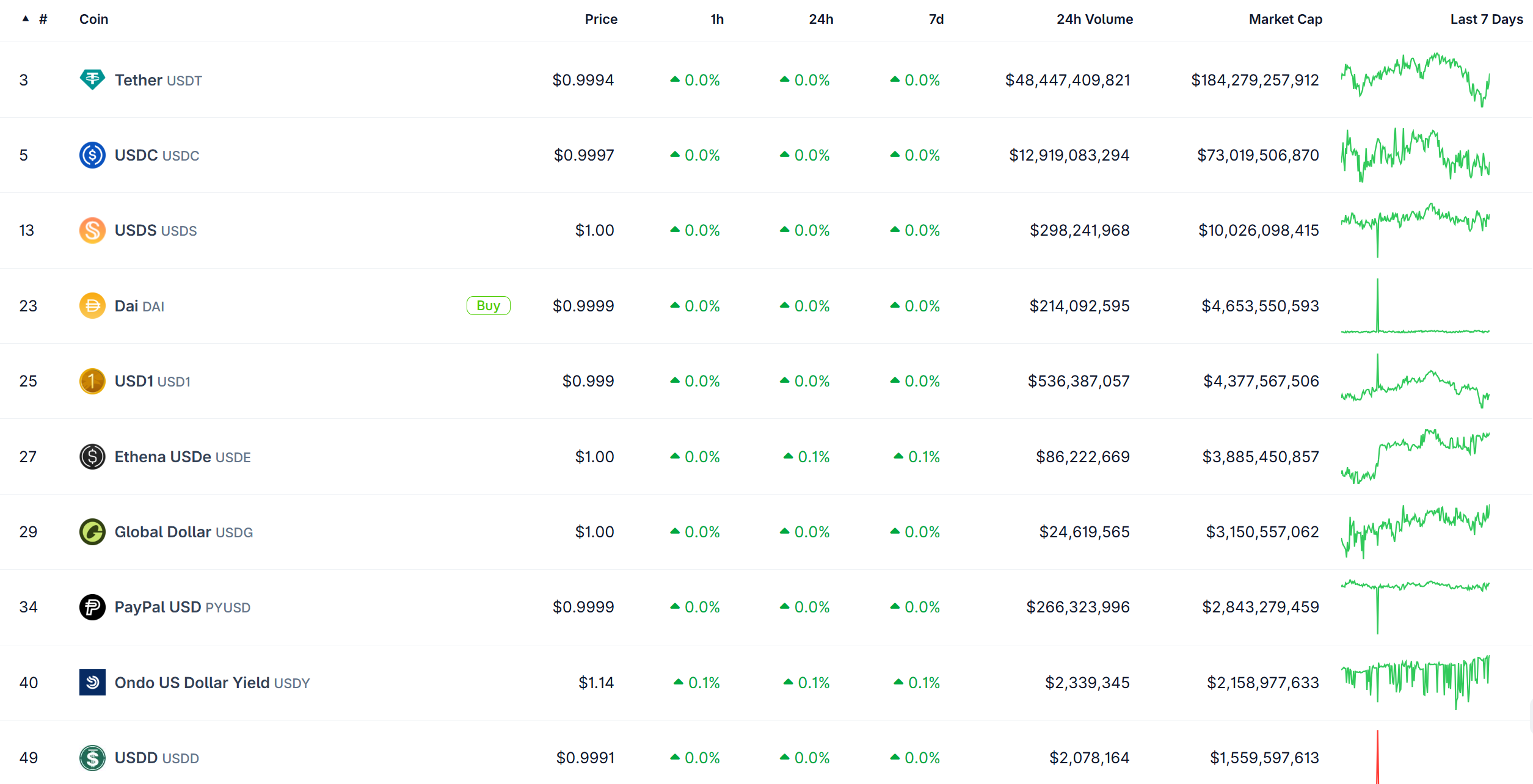
The mismatch is stark. Dollar-pegged tokens account for nearly all of the $306 billion stablecoin market, per CoinGecko data. Tether (USDT) and USD Coin (USDC) alone hold a combined 84%. Circle’s EURC, the largest euro-pegged token, circulates about $424 million, over 400 times smaller than USDT.

Notably, Tuesday’s announcement avoids naming stablecoins, framing the pilot around testing and user experience. The confrontation reading comes from Lagarde and other officials, who cast the project as protection for Europe’s monetary autonomy. The roster itself carries some irony, with US-based Stripe testing Europe’s independence project.
MiCA has already redrawn the field. Revolut, one of the 36, recently moved to delist USDT in Europe after Tether skipped authorization. The MiCA transition period ended this month, closing the EU market to unlicensed platforms.
What the 36 Firms Will Test From 2027
The pilot begins in the second half of 2027 and runs for 12 months. More than 50 firms applied for the 36 slots. According to the pilot framework, participants will test a beta digital euro in person-to-person, in-store, and e-commerce payments.
The exercise spans the ECB and 19 euro-area central banks. The beta currency will mirror the final product technically but will carry no legal tender status.

“Staff at participating central banks will have the opportunity to make beta digital euro payments from person to person (both online and offline) and from person to business (both at the physical point of sale, including Software Point of Sale, and via e-commerce, including mobile payments),” The ECB confirmed this in its Tuesday statement.
Follow us on X to get the latest news as it happens
The politics moved first. Parliament approved final negotiations in a 416-169 vote on July 9, and talks with member states and the Commission opened Monday.
Negotiators led by Spanish MEP Fernando Navarrete aim to finish the law this year. That would keep potential issuance on track for 2029.
For consumers, nothing changes before 2027. If the project reaches issuance, Europeans would hold central bank money in digital form, spendable in shops and online like cash.
After five years of study, the pilot will show whether public digital money can match the convenience that made dollar stablecoins the default.
Critics still argue the EU’s digital euro plan could hand advantages to US firms. The 169 votes against suggest the fight is not over.
Subscribe to our YouTube channel to watch leaders and journalists provide expert insights.
The post ECB Picks Revolut, Stripe, and 34 Others to Test the Digital Euro appeared first on BeInCrypto.


Bitcoin’s consensus rules have historically treated valid transactions equally regardless of purpose. BIP-110 prompted concerns that rules aimed at discouraging one category of transaction risked opening the door to future restrictions on others.
BIP-110 rejected
The means by which the proposal sought approval was equally contentious. Bitcoin upgrades typically only proceed after overwhelming support has emerged across miners, businesses, wallet providers and the wider ecosystem. BIP-110, instead, revived discussion around a user-led activation approach, with upgraded nodes enforcing the new rules if predefined conditions were met.
Supporters viewed that as a necessary safeguard if miners refused to act against what they considered abuse of block space. Opponents warned that attempting to introduce new consensus rules without broad agreement risked creating incompatible versions of Bitcoin, a scenario that many veterans still associate with the divisive block-size wars of 2017.
This was where BIP-110 fell short in winning support. Mining companies had little inventive to reject transactions that paid competitive fees, while institutional investors had no appetite for governance battles.
Michael Saylor, founder of Strategy, the largest corporate holder of bitcoin , said BIP-110 “turns a spam dispute into a consensus change that would invalidate some currently valid, fee-paying transactions.”
“That precedent is the danger,” he wrote on X on July 11. “We shoul save our energy for threats that really matter.”


The U.S. Commodity Futures Trading Commission threw itself in between Michigan courts and prediction market firm Kalshi on Tuesday, issuing an order to disallow the company from meeting a local court demand that it cancel previous customer transactions.
The CFTC move amplifies its legal fight with state governments and courts over what its chairman argues is its unbreakable and exclusive regulatory authority over trading at Kalshi, which it regulates as a designated contract market (DCM).
“The commission will not allow states or state courts to bully registered entities into violating the Commodity Exchange Act and CFTC regulations,” said CFTC Chairman Mike Selig in a statement alongside his agency’s order. Selig has embraced prediction markets and promised to institute friendly regulations, and he’s also vigorously defended his agency’s authority to regulate them in a way that negates state powers.
The CFTC has sued a number of states that have sought to halt or penalize event contract businesses as illegal gambling. The agency noted Tuesday that Michigan is the first state to attempt to interfere in transaction activity directly.
Ripple’s cross-border token remains one of the most talked-about topics in the crypto space, but analysts have recently split into two distinct camps.
On one side, we have people calling for the end of the bear market and a price explosion toward new historical peaks, and on the other, pundits who believe XRP may drop well below $1 in the near future.
The Bearish Scenario
As of press time, the asset is worth around $1.07, which means a 5% plunge over the past week. According to X user Diana, losing the $1.08 support may result in a final shakeout to much lower levels.
She believes the next move could be a sell-off toward the $0.90-$0.93 liquidity zone, followed by a relief bounce above $1 and an ultimate flush into the $0.87 macro support, which is expected to complete the entire correction and set the stage for the next major expansion.
Cryptorphic also paid attention to $1.08, which remains strong resistance, indicating that the current structure favors sellers and could lead to further declines.
Some factors also suggest that the price of Ripple’s native token may head further south in the short term. As CryptoPotato reported, positive online posts about XRP have surged recently, with FOMO rising to a multi-month high. This may sound optimistic, but the cryptocurrency market is a weird one and often moves against the crowd’s expectations.
Another worrying element is the waning interest in spot XRP ETFs. Up until the beginning of July, the inflows consistently surpassed outflows, yet in recent weeks, pension funds, hedge funds, and other conservative investors started reducing their exposure to the asset, forcing Bitwise, Canary Capital, Franklin Templeton, 21Shares, and Grayscale to sell XRP to maintain the proper backing of the shares.

The Bulls Are Also Vocal
The XRP Army has a reputation for strong loyalty and consistent support for Ripple’s cryptocurrency, even in challenging times. That said, it is no surprise that some market observers continue to foresee fresh all-time highs.
Not long ago, X user Crypto Patel claimed that the asset is repeating a macro pattern that has previously led to 1,000%+ rallies. In their view, history suggests another expansion phase that could push the price to a new peak above $9.
Celal Kucuker is also highly optimistic, reminding XRP’s monthly rise by 500% two years ago. “Now people say $7 by year-end is impossible… yet there are still 6 months left. Never underestimate what Ripple can do,” they added.
Of course, expectations should remain tempered given the extended bear market gripping the crypto space. One should also know that such high price levels for XRP would require its market capitalization to skyrocket above $350 billion, and that seems far-fetched (to say the least) as of the moment.
The post Ripple (XRP) Tests a Key Support Level: Final Shakeout to $0.87 Now Beginning? appeared first on CryptoPotato.


Bitcoin has fallen in the past 24 hours to $62,600 as traders exited riskier investments amid growing inflation concerns tied to rising oil prices.
Brent crude is up nearly 4% in the period, reflecting the renewed open conflict between the U.S. and Iran. That’s reigniting the so-called Nacho (Not a Chance Hormuz Opens) trade, which bets the strategic waterway stays shut.
The broader CoinDesk 20 (CD20) index lost 0.6% of its value over the same period while equities benchmarks in Europe are down about 1% and U.S. index futures 0.3%.
Attacks on tankers have reduced traffic through the Strait of Hormuz, which carried about one-fifth of global oil and gas supplies before the conflict and has been de-facto closed for 136 days. Oil prices reached a four-week high after hostilities restarted.
The move reverses part of the peace trade that helped bitcoin recover from its late-June lows. Higher oil prices raise near-term inflation risks, pushing up Treasury yields and reducing demand for rate-sensitive assets.

The U.S. Department of the Treasury and the UK’s HM Treasury have released joint recommendations as part of a transatlantic working group aimed at coordinating financial-market oversight for digital assets—specifically stablecoins and tokenized finance.
In a statement published Tuesday, the two agencies said they want to align regulatory expectations in ways that promote financial stability without creating unnecessary market distortions. The guidance also points toward cross-border testing for tokenized assets and closer coordination between U.S. regulators and the Bank of England on shared approaches to tokenized-asset rules.
Key takeaways
- The U.S. and UK called for regulatory alignment around stablecoins, emphasizing requirements that avoid undermining cross-border competition.
- Stablecoins, under the joint framework, should be fully backed—at least on a one-to-one basis—by high-quality, liquid assets.
- For tokenized finance, the statement suggests authorities should consider a private-sector-led group to test cross-border use cases.
- The UK is pushing tokenization forward with a government-backed report that links adoption to meaningful economic gains by 2035.
Transatlantic recommendations target stablecoins and tokenization
The Treasury and HM Treasury’s joint statement was issued under the Transatlantic Taskforce for the Markets of the Future, a bilateral effort focused on cooperation across financial markets. According to the agencies, the recommendations reflect an intent to tailor rules in each jurisdiction while aiming for comparable outcomes for comparable risks and activities.
For stablecoins, the two governments said their goal is to support a “dynamic stablecoin market across borders.” The statement frames this as a balancing act: moving toward regulatory alignment while avoiding outcomes that could destabilize markets or discourage cross-border competition.
Crucially, the stablecoin guidance does not stop at general principles. The statement explicitly says stablecoins should be “fully backed, on at least a one-to-one basis, by high-quality, liquid assets.” That requirement mirrors the core concept embedded in U.S. legislation discussed in the same context.
The U.S. side did not explicitly name the Guiding and Establishing National Innovation for US Stablecoins (GENIUS) Act in the joint recommendations, though the statement’s “fully backed” framing is aligned with the approach that U.S. law takes. GENIUS was signed into law last year, and is waiting for regulations to be approved before its effective date in January 2027.
Cross-border testing and shared approaches for tokenized assets
Beyond stablecoins, the joint statement contains recommendations for tokenized finance and cross-border activity. The task force urged authorities to consider the creation of a private-sector-led group focused on “testing of cross-border use cases for tokenized assets.”
That emphasis on use-case testing matters because tokenization can mean very different implementations depending on the asset class, settlement structure, and counterparties involved. Cross-border testing is positioned as a practical step to identify where regulatory expectations diverge and where common standards might emerge through real-world experimentation.
On regulation itself, the statement says U.S. financial agencies and the Bank of England should identify shared approaches to the regulation of tokenized assets. While the statement does not lay out specific rule text, it signals that regulators on both sides of the Atlantic are looking for convergence in how tokenized assets are treated from a supervisory and risk-management perspective.
UK report links tokenization to economic upside—by 2035
The U.S.-UK recommendations arrive after renewed attention in the UK on tokenization’s potential economic benefits. Earlier coverage from Cointelegraph highlighted a UK government-backed industry task force report claiming the country could add up to $44 billion to annual economic output by 2035, if the UK becomes a leading jurisdiction for tokenization, tokenization scales globally, and domestic adoption grows alongside major peers.
In that report, the task force called for the UK to issue tokenized bonds by the first quarter of 2027 and proposed testing financial transactions on the blockchain. Those proposals point toward a strategy of moving from policy discussions toward concrete market infrastructure steps—something that would likely raise the stakes for regulators to define consistent frameworks for tokenized securities and settlement.
Read together, the transatlantic message from Treasury and HM Treasury underscores how tokenization is increasingly being treated not just as a technology topic, but as a cross-border financial market issue requiring coordination. If tokenized debt instruments and other blockchain-based transactions expand, regulators will need shared expectations on matters like custody, settlement finality, disclosure, and the perimeter of existing financial rules.
What investors and builders should watch next
These joint recommendations are best viewed as a direction-setting effort: they establish how the U.S. and UK want to align on stablecoin backing standards and how they may collaborate on tokenized-asset testing and regulatory coherence. For market participants, the most immediate question is how quickly alignment translates into implementable guidance—especially given that the U.S. stablecoin regime is still waiting on implementing regulations under GENIUS.
As the UK pursues tokenized bonds and blockchain transaction testing toward 2027, and as U.S. rulemaking progresses toward GENIUS’s timeline, the key watch items are whether cross-border use-case testing produces concrete recommendations and whether “comparable outcomes” on stablecoin and tokenized-asset regulation become more specific in practice.
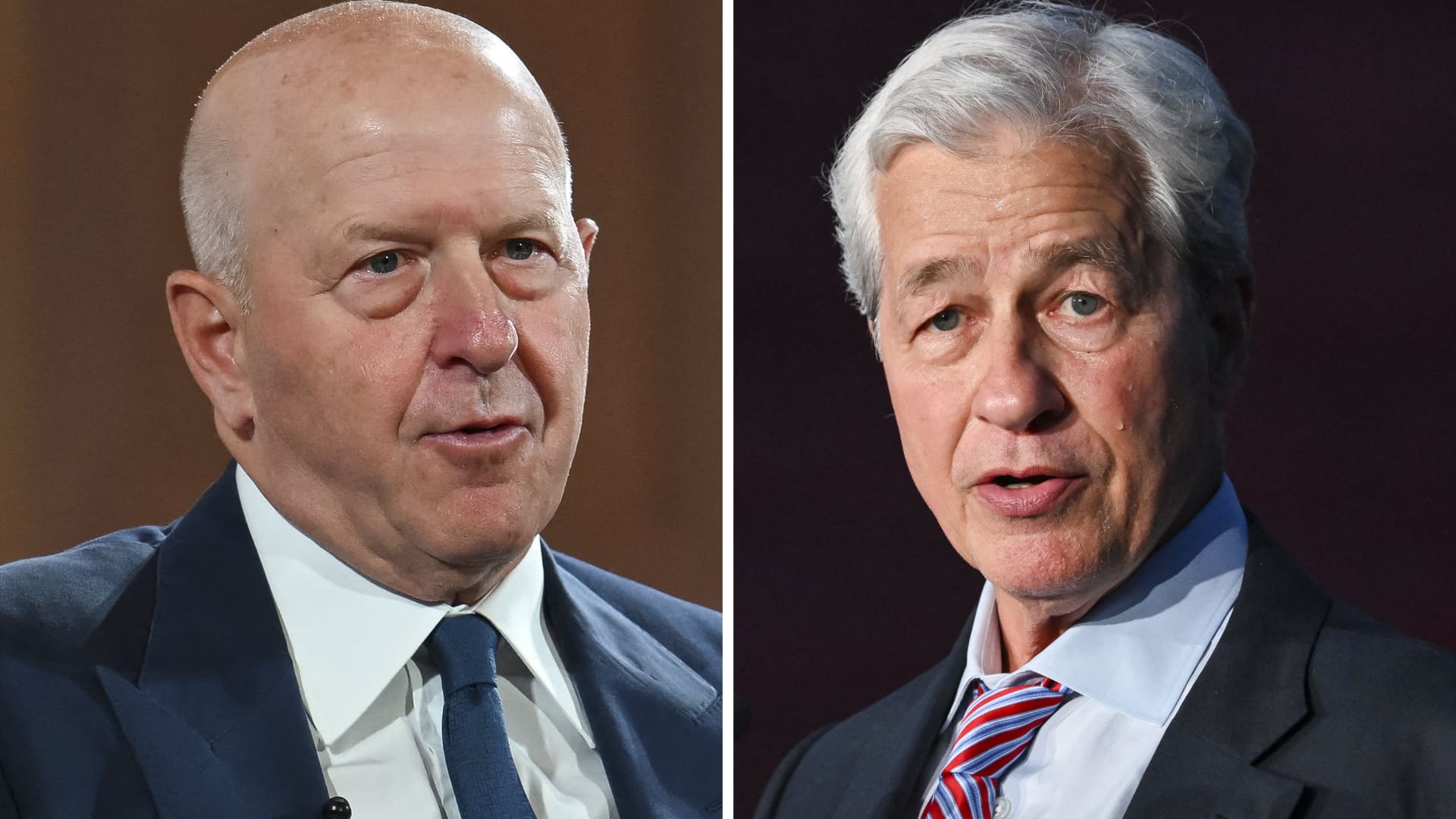
Chairman and CEO of JPMorgan Chase & Co. Jamie Dimon and Goldman Sachs Chairman and CEO David Solomon.
Angela Weiss | AFP | Getty Images
American megabanks on Tuesday gave evidence that the global artificial intelligence boom isn’t just benefiting tech giants and chip makers.
Goldman Sachs and JPMorgan Chase each posted record quarterly revenue hauls, fueled by massive gains in equities trading and investment banking.
Behind the surge in activity — Goldman revenue jumped 39% to $20.3 billion, while JPMorgan saw it rise 27% to $58 billion — is the fact that AI is “everywhere in financial markets,” JPMorgan CFO Jeremy Barnum told reporters.
“These are booming environments with a ton of activity, big IPOs, big index rebalancing, a lot of activity in Asia,” Barnum said Tuesday. “A lot of it is downstream of the AI theme, writ large on a global basis. It’s just a very, very, very active environment.”
The quarter showed that the AI boom is creating winners far beyond Silicon Valley. While Nvidia and hyperscalers including Alphabet have captured many of the headlines, Goldman, JPMorgan and other banks are profiting from the massive flows of capital into AI.
They are advising on AI-related deals, financing data centers and power infrastructure, underwriting debt and equity offerings, and facilitating the surge in trading that has accompanied the global race to deploy the technology.
That is creating “a ripple effect” across the American economy and giving banks a flood of new opportunities to provide financing and trading solutions across public and private markets, Goldman CEO David Solomon told analysts Tuesday.
“We are in the middle of an AI capex super cycle where there are demands on financing in every single financing instrument, in every region of the world and across every single industry,” Solomon said. Capex is short for capital expenditures, or investments made by a business for physical assets like factories.
Goldman is preparing for a three-to-five year investment cycle that is still in its early stages, he told analysts.
Goldman shares jumped 8% in afternoon trading, while JPMorgan rose 2%.
AI ‘tipping point’
While the AI buildout isn’t new, what’s changed is that it has broadened out beyond chips and software to include power providers and infrastructure players.
The top beneficiaries of this trend are the three biggest Wall Street firms: Goldman Sachs, JPMorgan and Morgan Stanley, according to Wells Fargo banking analyst Mike Mayo.
The AI investment boom “reached a tipping point” in the second quarter, Mayo said.
Mayo increased his price targets for Goldman and JPMorgan after Tuesday’s blowout results. Morgan Stanley is scheduled to report earnings on Wednesday.
Gas turbines made by GE Vernova, at the on-site natural gas plant under construction during a media tour of the Stargate AI data center in Abilene, Texas, US, on Wednesday, Sept. 24, 2025.
Kyle Grillot | Bloomberg | Getty Images
The clearest evidence of the AI impact appeared in equities trading, where global capital flows and blockbuster transactions helped produce some of the biggest revenue surprises of the quarter.
Revenue from equities trading rose 86% to $6 billion at JPMorgan and 72% to $7.42 billion at Goldman. Combined, that was a whopping $4.4 billon more than analysts had expected.
Other large banks also benefited. Bank of America, the second biggest U.S. lender by assets, saw equity trading revenue rise 70% to $3.6 billion.
Helping the quarter, investors broadened out their search for AI beneficiaries, pouring money into Asian markets, including South Korea, Taiwan and Japan, Soofian Zuberi, president and co-head of Global Markets at Bank of America, told CNBC.
“People looked at the AI trade and said, ‘What are the best reflections of it outside the U.S?,’” Zuberi said. “You’ve got American clients who are diversifying and allocating more money to Asia, including foundations, the endowments, and family offices.”
SpaceX, Alphabet
The AI impact also showed up in the banks’ strong advisory banking revenue for the second quarter.
Investment banking revenue at Goldman jumped 55% to $3.4 billion, and climbed 30% to $3.3 billion at JPMorgan Chase. That is a combined $1 billion more than analysts had expected.
In the quarter, Goldman was lead advisor on the SpaceX IPO and Alphabet’s $90 billion equity issuance and advised Dominion Energy on its sale to NextEra Energy, all moves driven by the AI cycle.
At Bank of America, investment banking fees jumped 50% to $2.1 billion.
At the same time as they reap record fees driven by AI, banks are starting to benefit from implementing the technology internally. That should help them increase revenue while keeping a lid on headcount and other expenses.
“AI is driving banking by helping streamline processes,” Zubieri said. “And banking is driving AI, because without banking you can’t have all these data centers financed.”

26 Teesworks jobs up for grabs – here’s how to apply

Sebi exempts Juhi Chawla-owned Mehta Family Trust from Saurashtra Cement open offer
Binance Marks Ninth Anniversary With 323 Million Users and Expansion Beyond Crypto


-

 Fashion5 days ago
Loro Piana Fall 2026 Enters Houston’s Art Scene
-

 Fashion4 days ago
Weekend Open Thread: Nutriplenish Leave-In Conditioner
-
 Sports5 days ago
2026 Genesis Scottish Open Thursday TV coverage: Round 1
-

 Tech7 days ago
Anthropic brings Claude Cowork to mobile and web as usage data shows most users aren’t coding
-

 Sports5 days ago
Super Eagles star Moses Simon opens up on Liverpool transfer regret
-

 Tech5 days ago
Character.AI enters the microdrama arena with its own productions, but there’s a twist
-

 Tech16 hours ago
Get Your ESP32 Sunny Side Up With This Solar Dev Board
-

 News Videos2 hours ago
XRP BOMBSHELL… XRP OMBOARDED FOR TRANSACTIONS!!!
-

 News Videos6 days ago
Crypto Just Entered Its Most Important 6-Month Candle (Could Decide Everything!)
-

 Tech7 days ago
Keychron is stepping outside keyboards with a $349 Thunderbolt 5 dock aimed at power users
-

 Tech59 minutes ago
Dark Secrets Emerge When Jailbreaking LLMs
-
 Business7 days ago
ASX 200 Slides Over 0.6% as Rare Earths and Lithium Stocks Tumble Amid Global Semiconductor Sell-Off Today
-
 NewsBeat5 days ago
Major update after Huntingdon train attack as man enters plea
-
 Business7 days ago
Will Trent shares rebound after Q1 update triggers 13% crash? Here’s what technical charts indicate
-

 Business7 days ago
SpaceX Shares Slide Nearly 6% Amid Post-IPO Volatility and Starship Test Focus
-

 Sports6 days ago
39-year-old Djokovic wins five-hour thriller to enter Wimbledon semis | Other Sports News
-

 Tech6 days ago
Entra passkey enrollment vishing targets Microsoft 365 users
-
 Tech1 day ago
Cloudflare Precursor Watches Your Mouse and Keyboard To Decide If You Are Human
-

 News Videos1 day ago
how to make coin bank box with cardboard #scienceproject #money #diy #shorts
-

 Crypto World6 days ago
DeFi Dashboard Zapper to Shut Down After 7 Years
You must be logged in to post a comment Login