

Politics
‘Intolerable whiff of racism’: Spanish soccer’s never-ending problem



MADRID — A soccer-racism row involving a former prime minister has triggered renewed scrutiny of a perennial Spanish problem.
Mariano Rajoy, who governed Spain between 2011 and 2018 as leader of the conservative People’s Party, described the French team in a column he wrote for El Debate news site as a “very high-level squad. Of course, without Frenchmen,” in reference to the African heritage of some of the players.
The remarks sparked a fierce backlash from across the border ahead of tonight’s World Cup semifinal between Spain and France in Dallas.
On Monday, French Foreign Minister Jean-Noël Barrot said, “France has no skin color. Any contrary claim stems from stupidity, racism or a combination of the two.”
Several other French politicians also criticized Rajoy, while the French soccer federation president, Philippe Diallo, wrote on social media that the remarks “carry an intolerable whiff of racism.”
Even the spokesperson for the far-right National Rally party, Julien Odoul, said: “Mr. Rajoy is a racist. Simply, his statements are scandalous, shameful, and regrettable. Everyone should condemn them.”
Spain’s socialist Prime Minister Pedro Sánchez also took France’s side against his predecessor.
“There are those who still measure belonging by surname, place of birth, or skin color,” he wrote on social media. “Spain belongs to those who love it and work for it. Not to those who shame it with xenophobic comments. France, we will see you in the semi-final. May the best team win and may racism lose.”
Rajoy’s comments have reignited a debate that has dogged Spanish soccer for decades, even as it has morphed into a World Cup superpower. While high-profile cases involving stars like Samuel Eto’o and Vinícius Júnior have prompted tougher punishments and greater public condemnation, racist abuse from the stands — and broader questions about race, identity and belonging in Spain — have proved harder to eradicate. The latest controversy underscores how soccer reflects Spanish tensions that extend beyond the pitch.
In 2004, Spain fans made monkey noises at Black English players during a game in Real Madrid’s Bernabéu Stadium. Weeks earlier, Spain’s then-coach Luis Aragonés had been caught on microphone calling French star Thierry Henry a “black shit.”
In 2006, Barcelona’s Cameroonian forward Samuel Eto’o refused to continue playing a league game in Real Zaragoza’s La Romareda Stadium after home fans repeatedly directed monkey chants at him. Eto’o’s stand was seen as a reckoning for racism in Spanish soccer, although many believed the €9,000 fine handed to Real Zaragoza was laughable.
In the years since, there have been a number of similar incidents. Most notoriously, in 2023, Real Madrid’s Brazilian forward Vinícius Júnior stopped playing and confronted Valencia fans who had been shouting racist abuse at him in their Mestalla Stadium. The controversy drew a show of outrage and solidarity for the player from the Brazilian government.
Racist abuse by fans had become increasingly common in the 1990s as Spanish soccer drew more players from abroad, including Africa and South America. At approximately the same time, Spain was also starting to see a large influx of immigrants, many of them from those same continents.
In a 2024 research paper on racism in Spanish soccer, the Funcas think tank, an independent institution focused on economic and social analysis, found that many radical fans were unhappy about the arrival of nonwhite players in La Liga.
“What is happening in football reflects what is happening, sooner or later, in broader society,” one fan was quoted as saying in the document.
“If there isn’t a solution, we’ll be invaded by a legion of foreigners and Spain will lose its identity,” the fan added.
Although Spanish authorities have clamped down on radical fan groups since the turn of the century, many of those sentiments have not gone away.
However, the Júnior episode shows that Spain’s soccer institutions take racist abuse more seriously than they did 20 years ago. Three Valencia fans were given eight-month jail sentences for their role in the Mestalla incident. Four fans of Real Madrid’s cross-town rival Atlético de Madrid were also given jail terms for hanging an effigy of Júnior from a bridge before a game.
The Rajoy racism case has surprised many because he is viewed as a moderate and yet his comments chime with the sentiments of the far right.
Political commentator Marc Bassets from the left-leaning El País warned in an op-ed that the kind of opinions voiced by Rajoy are too often tolerated or trivialized. He said the broader political context is significant, including the far-right Vox party’s introduction of a Spaniards-first “national priority” policy in regions where it governs alongside Rajoy’s PP.
“In times of ‘national priority’, the white noise of casual racism that can be seen in society risks becoming even more casual,” Bassets said.
At a press conference Monday, Spanish football star Lamine Yamal hit back at Rajoy.
“If football has a purpose, it is to unite society, and there is no better example [of that] than us and France,” Yamal said, describing both national teams as models of integration.

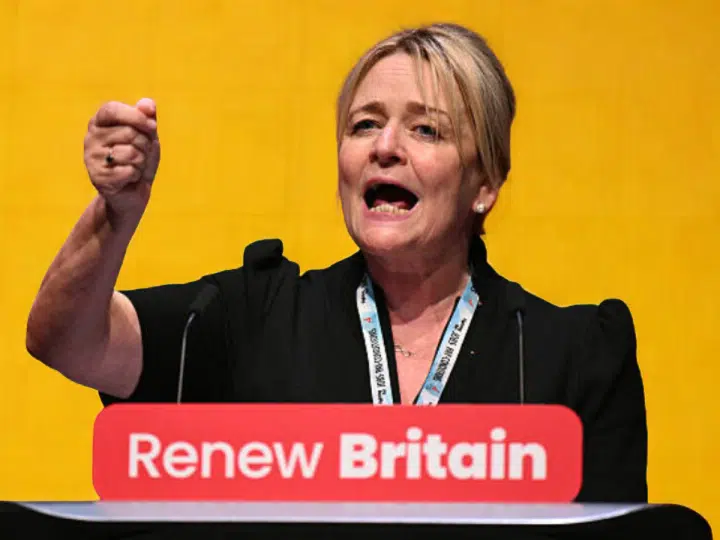

Unite general secretary Sharon Graham, who is trying to win re-election this summer, faces yet more alleged scandal. She has been accused by union insiders of collaborating with right-wing, friend-of-Israel MP Wes Streeting to write an attack piece on Ed Miliband.
The plan was to “boost” right-winger Streeting’s prospects under incoming PM Andy Burnham.
Hatchet job
Miliband was tipped to become chancellor when Burnham takes over from lame duck Keir Starmer. However, Starmer’s team, which includes the same people who ran Starmer, is now said to have ‘blocked‘ the appointment.
The ‘Reunite the union’ page, run by figures close to the left-wing resistance inside Unite, wrote:
Unite reps are demanding answers from Sharon Graham as accusations surface claiming Graham has “colluded” with Wes Streeting in order to support his jockeying for position in the incoming Burnham government.
Reunite understands from multiple sources, both inside and beyond the union, that Wes Streeting’s team have openly claimed to have worked with Graham to write her recent attack lines deployed in The Times and elsewhere, in which Graham called Ed Miliband “a noose around the neck” of job creation.
The intention of this hit piece was to dissuade incoming Prime Minster Andy Burnham from making Milliband Chancellor. In doing so this bolstered the position of Wes Streeting.
Unite was contacted for comment about the allegations, but did not respond. The undenied allegations are ironic. Graham won election in 2021 on a pledge to disengage Unite from Westminster politics, as ‘Reunite’ elaborates:
Sharon Graham stood in 2021 on a promise of no longer playing Westminster games with Labour factions. An intervention of this sort would put Unite squarely in the middle of a political power play of the Labour Right.
It is well known within Unite that all political contact with Ministers and senior government figures is conducted through the General Secretary’s office. This makes Graham’s political interventions completely unaccountable to members, with scant information reported to the Executive Council after the event. This has led to a wild veering of our union’s political approach, from authorising ‘secret talks’ with Reform in Birmingham to now allegedly being used by the Labour Right for Westminster games.
Unite reps are demanding answers.
Graham must explain to members in our health sector what, if any, contact her and her team have had with Streeting and his people.
A senior Unite NHS rep told the site:
I’m outraged that Sharon appears to be backing Wes Streeting or has allowed our union to be used by his team for their own manoeuvring. Wes Streeting has been no friend of the NHS and should have no place in the leadership of the Labour party.
As health secretary, Streeting was the target of NHS strikes, notably NHS doctors. He put together a ‘slash and burn’ plan of NHS cuts and closures, appointing notorious health privatisers to oversee it. He is also an advocate of the involvement of hated spy-and-kill firm Palantir in the NHS.
According to ‘Reunite’, some of Unite’s biggest branches have already begun passing motions condemning Graham’s collaboration with one of the Labour right’s most notorious figures. The condemnation comes on top of a flood of outrage among members, officers and activists at Graham’s conduct since she took over the union.
Challenger
Graham faces a strong challenge to her re-election bid from Unite’s former international director Simon Dubbins. Dubbins is a consistent supporter of the Palestinians and opponent of Unite’s disastrous disengagement from politics under Graham.
During the nominations phase of the election, Dubbins gained huge wins in big Unite sectors Graham would previously have considered sewn up tightly. These include defence, air travel and construction. Dubbins is also set to win Unite’s ‘Community’ section — which Graham had planned to wind down if she wins a second term.
Dubbins also has standing among Unite’s anti-genocide activists. He refused Graham’s order to cancel a pro-Palestine fringe at Labour’s conference. Graham then suspended him.
During nominations, Graham hid from union branches and declined to debate Dubbins at any hustings event, angering many, including allies, by sending weak proxies instead. Last week, Dubbins publicly challenged Graham to stop hiding and face him in an open debate in front of members. So far she has not responded, let alone taken up the challenge.
Unite’s Anti-union union boss
Outrage among members and union activists toward Graham is widespread. Publicly, she has been almost invisible on the issue of Palestine and Israel’s genocide. She has, though, been highly visible advocating for a bigger UK arms industry — but still lost the defence sector to Dubbins.
Behind the scenes, meanwhile, she has been accused by disgusted members of blocking activists from supporting the anti-genocide and climate movements on behalf of Unite. Graham has also held ‘secret’ talks with far-right Reform. Her lack of political engagement and education has seen support for the far-right mushroom in the union.
Despite running a union, Graham has been accused of using appalling, anti-union tactics against workers employed by Unite, leading to repeated strikes. In many cases, these tactics have been seen as Unite’s attempts to protect her husband, Jack Clarke.
Soon after her accession in 2021, Graham created a new Bargaining and Disputes Support Unit (BDSU). Outside of the union’s usual procedures, Clarke was appointed to run it despite being on a final warning for bullying and misogyny. Graham’s faction has staged counter-demonstrations against workers striking against Clarke and attacked their union reps.
Unite’s destruction of evidence against husband Clarke
Explosively, Unite’s lawyers admitted to Skwawkbox that the union had destroyed evidence that workers had gathered against him. This did not stop further complaints and strike action from workers in his new fiefdom, with almost all the women working under him quitting.
These and other issues have seen a flow of Graham’s former allies coming out in support of Dubbins, including some of her previously-closest supporters. The Community section’s long-time chair has also spoken out strongly, asking the section’s members to make sure to vote for Dubbins.
Against this backdrop and with voting now open in the election, the Streeting allegations will be a further blow to Graham’s hopes of clinging onto a position that many have accused her of abusing.
Featured image via the Canary
By Skwawkbox


A court has convicted the head of a genocidal UAE-backed Sudanese militia in absentia. Mohamed Hamdan Dagalo, known as Hemedti, was found guilty on multiple counts of war crimes, crimes against humanity and genocide.
Sudanese RSF verdict
Dagalo leads the Rapid Support Forces (RSF). RSF’s main backer in the three-year war with the Sudanese state is the UAE — a key UK ally.
The Sudan Tribune reported on 12 July:
A Sudanese counter-terrorism court on Sunday sentenced Rapid Support Forces (RSF) commander Mohamed Hamdan Dagalo, known as Hemetti [SIC], to death in absentia along with his two brothers and 13 others over the assassination of a regional governor and wartime atrocities.
The 16 defendants were convicted under Sudan’s criminal code for crimes against humanity, genocide, war crimes against individuals, destruction of public property, and using prohibited methods of warfare.
The court ordered the confiscation of all RSF assets in favour of the Sudanese government and instructed the state to request Interpol notices to secure the extradition of the convicted individuals.
The charges centred on several atrocities including the genocidal siege of el-Geneina in 2023. Middle East Eye (MEE) reported:
Dagalo was convicted of co-organising the siege of el-Geneina, the civilian displacement, and the genocide of the Masalit.
Sudan’s forgotten war
With gold interests and regional influence at stake, numerous foreign actors, including the UK, have caused the war to fester through active participation and/or outright passivity. Israel, too, is a player in the war.
The war in Sudan is theoretically between the Arab-majority RSF and the Sudanese government. But foreign states pursuing their own interests are backing the combatants. Turkey, Egypt and many more countries are pursuing their own interests in Sudan too.
The RSF has killed Sudanese civilians in vast numbers. Some estimates put the death toll at 150,000 people have died, and more than 10 million civilians have been displaced by fighting.
The judge made clear there was no way out for those convicted:
These international crimes are not subject to any statute of limitations and cannot be subject to political pardons under Sudan’s international obligations.
While much of the focus has been on the role of the UAE in facilitating the killing, the Brits have been deeply involved too. As the Canary has reported repeatedly:
British military components have shown up on the battlefield in RSF hands. The UK is a major arms supplier to UAE.
Sources have also claimed the UK downgraded the humanitarian situation in Sudan to avoid “pissing off the Emiratis”.
The ruling comes weeks after the first war crimes claim had been lodged against RSF in Kenya. Twelve victims backed by a Swiss legal NGO urged Kenya’s chief of prosecution to pursue the case. Associated Press (AP) reported on 9 June:
It is the first attempt to prosecute members of the Rapid Support Forces, or RSF, the paramilitary group fighting against the Sudanese military for over three years, outside Sudan.
The group, which has been accused by rights organizations of committing atrocities amounting to war crimes and crimes against humanity, has ties with Kenya’s government.
The court’s finding is partial justice at best. Those named are still at large. Someone must turn RSF’s taps off as far as arms and material support are concerned.
Featured image via the Canary
By Joe Glenton
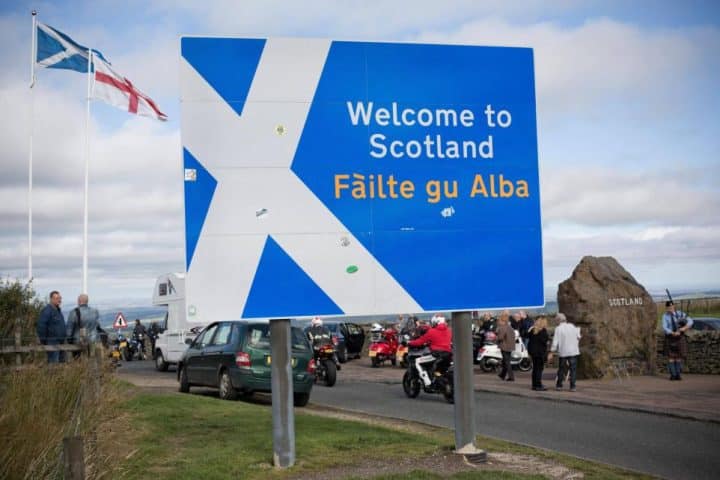
Reform UK has sparked outrage after putting forward plans which would criminalise election campaign materials in Gaelic and Scots. Another case of English supremacy within the Union…
The hard-right political party has endorsed plans to criminalise all political materials that are not written or spoken in English or Welsh. Nigel Farage‘s party has moved an amendment to a Westminster bill that would, if passed, make campaigning in other national languages illegal.
If Reform’s amendment to the Representation of the People Bill passes, those breaching the law could face jail time for up to six months. Those prosecuted could also face unspecified fines.
Reform UK’s deputy leader Richard Tice brought forward the amendment. Reform MPs Lee Anderson, Sarah Pochin, Danny Kruger, Robert Jenrick, Andrew Rosindell, and Suella Braverman all backed it.
Backlash to Reform’s English supremacism
The SNP have said that Reform UK are plotting “to crush Scotland’s native Scots and Gaelic languages“. Scotland’s ruling party has taken various measures to safeguard ancient Scottish languages. The SNP said Reform’s amendment was “despicable” and “anti-Scottish”.
The SNP Highlands and Islands representative, Maree Todd MSP, said Reform’s reactionary plans were
all too reminiscent of the brutal anti-Gaelic laws of the Highland Clearances.
This despicable anti-Scottish amendment is deeply telling – Reform want to see any trace of our native languages removed from Scottish politics.
Not content with plans to cut our MSPs and ‘review’ the powers of Holyrood, Farage and his cronies want to threaten jail time upon anyone in Scotland who publishes political materials in Scots or Gaelic.
Todd called on Reform to “do the right thing”. The MSP for Highlands and Islands, where more Scots speak endangered minority languages, said Reform must:
apologise to the people of Scotland for attempting to criminalise election materials written in Scottish languages.
She demanded the party “immediately withdraw this outrageous amendment”.
Language specialist and journalist Sophia Smith Galer branded Reform UK’s proposal as “plainly discriminatory“. The linguist says that it targets both indigenous UK languages and multilingual communities.
Smith Galer told Byline Times:
It’s discriminatory not only to the other indigenous languages of the UK … but also to individuals who could be publishing political literature in any of the migrant languages that also have a home here.
It comes after Farage launched an attack on bilingual children in Glasgow last year, many of whom speak Gaelic. Previously, Farage bizarrely accused them of “culture smashing” the city.
Alba’s history as a multilingual country
‘Alba’ is the Gaelic name for historic Scotland, seen on official signs. Gaelic was given official status alongside Scots in June 2025 via the Scottish Languages Bill, which was voted through unanimously.
Around 130,000 Scots have some Gaelic skills, according to the 2022 Census, while nearly 2.5 million have some skills in Scots. There was some argument that Gaelic was given greater priority than Scots. Last year, Emma Grae wrote in the National:
while Gaelic initiatives had a budget of at least £28 million between 2021 and 2023, Scots initiatives received just £448,000 of support…
Eventually both received the recognition they deserved in the Languages Bill. But the struggle for Gaelic and Scots language recognition is long and arduous. It has roots dating back to the “unification” of Scottish and English crowns in 1707, the early imperial period.
This article in the Scottish Left Review (re-)frames that sordid history, especially that century’s Highland Clearances, in considered detail:
In the two centuries following unification, the Anglicised Scots of the lowlands would fit into the new imperial Britain built upon capitalism, expansionism, and Protestantism. In contrast, the Gaels of west Scotland’s Highlands and Islands would be violently eradicated, along with their clan-based way of life and Celtic Catholicism.
In their place, their ancestral lands would be monetised to serve the colonial centre, and the brutally depopulated islands and dells would be mythologised as gloriously empty get-away destinations for those seeking an escape from life at the centre of empire. This is a story we are more familiar with in Ireland, and the Gaelic peoples of Ireland and western Scotland are closely connected.
… a campaign of ethnic cleansing was carried out in the western Highlands and Islands. This began with the erasure of Gaelic identity. Clan tartans were banned, as was the playing of the bagpipes. Such policies were intended to destroy Gaelic identity, born of an inherent racism held among the English and Anglicised Scots towards the Gaelic way of life.
They also served the practical purpose of diminishing clan identity and, thus, destroying the clans as a political force. The collectivist farms were broken up, and replaced with capitalist land farming – an approach familiar in the lowlands, but incompatible with the clan system of the Highlands and Islands.
… Whilst the scale of the clearances is dwarfed by the racist excesses of the British colonial project elsewhere in the world, it ought to be considered among them.
… Like Ireland, the Scottish islands are among the only places in western Europe now home to less people than at the start of the eighteenth century. The Clearances were not only an act of genocide, but an extremely successful one.
Featured image via the Canary

The post No, Waitrose, men don’t have periods appeared first on spiked.


New Jersey Gov. Mikie Sherrill’s office says the Garden State should get a cut of the MetLife Stadium grass FIFA plans to sell to soccer fans.
Soccer’s global governing body, a Zurich-based nonprofit, is plotting to charge $450 for sod from this weekend’s World Cup final. But like a lot of the costs for hosting the World Cup, the pitch was subsidized by local hosts.
“New Jersey paid for the vast majority of the total expense for the pitch at MetLife stadium, so New Jersey taxpayers should share in any proceeds from this latest money grab,” Sherrill spokesperson Sean Higgins told New Jersey Playbook.
This is only the latest battlefield in the turf war between FIFA and Sherrill. FIFA did not immediately reply to a request for comment.

Yes, some Gen Z trends, like obscure internet slang, are the kind of thing you’d expect from a younger generation.
But others – like a rise in birdwatching and a newfound fixation on nuns – might be a little more surprising.
Some articles say under-30s are booking convent stays instead of beach getaways. Meanwhile The Dominican Sisters Open Mic, a podcast hosted by Catholic nuns, has gone mega-viral.
Sister Gemma Simmonds, a sister of the Congregation of Jesus and author of A Time to Reflect, told HuffPost UK the appeal might stem from younger people being exhausted by “a life of endless optionality and FOMO [fear of missing out]”.
“Our fixed rhythms of prayer, work and community, and a life not built around consumption, are being experienced as freeing rather than restrictive,” she added.
While previous years have paved the way for ‘hot girl summers’, 2026 is giving a new energy entirely, which some have coined ‘nun girl summer’.
What is a “nun girl summer”?
The term is a play on Meg Thee Stallion’s years-old “hot girl summer” trend, which is “about being unapologetically YOU, having fun, being confident, living YOUR truth, being the life of the party etc”.
Sister Simmonds told us “nun girl summer” is also about being ourselves.
“I think it might look and feel free: free from the exhaustion caused by the expectation that every domain of the self is permanently being watched and rated for optimisation, including by the person herself,” she said.
“Nuns don’t need to perform for the camera – we are convinced that we are ‘awesomely and wonderfully made’. If you believe that, you don’t need to wait for anyone else’s approval of how you look or sound, how you rate in anyone else’s estimation.
“It’s a different account of female worth that reframes identity away from being chosen or wanted by a man, toward a life whose meaning doesn’t depend on romantic uptake at all.”
Indeed, comments under a viral Open Mic clip include wistful asides about the sense of female community the Sisters seem to have. One reads, “Waittt the idea with living with your girles”, while another jokes, “I’m one situationship away from this”.
Of course, not all of these women want to live in a convent, and many are not religious. So, how can we embody a “nun girl summer” if we’re not (excuse the pun) already in the habit?
4 rules for a “nun girl summer”
1) Be profoundly present
We’ve written before at HuffPost UK about the arrival fallacy, which makes it hard to enjoy what you’ve achieved due to worrying about what you haven’t got yet.
Sister Simmonds said it’s important to get in touch “with your own capacity for appreciation of the here and now, not always looking around the corner for what’s next” – that way, you’re present “to the richness” of what’s right in front of you.
2) Log off
Not only is it great for your sleep, but the Sister said mindfully staying away from your screens for an hour or so a day might make a big difference to how you feel, too.
Try to build in unplugged periods like “meals, a commute, an hour before bed, where nothing is being produced or consumed, just being”, she advised.
3) Stick to your routine, even when you don’t feel like it
You might already know that sticking to the same bedtime and wake time is great for your health, and that half-assing a workout is far better than skipping exercise altogether.
Sister Simmonds told us that much of nuns’ daily rhythm is “non-negotiable, regardless of mood”.
Whatever your reflective or health practices are, for her, “prayer works precisely because it doesn’t wait for you to feel like it”.
4) Build the capacity for real relationships
The Sister said it’s important to make space for relationships “that are non-transactional, that don’t come with an expiry date, that aren’t provisional, networked and subject to ghosting”.
“This can be hard work when you’re practising living with differences in age, outlook, culture, but it’s a strength worth building,” she said.
Research has shown that a strong sense of community may help to reduce dementia risk, and could even make you live longer.

Following Morocco’s defeat to France in the World Cup quarter-finals last week, violent disorder broke out in central London. Footage on social media showed hundreds of people gathered on the street after the match had finished. Some are captured throwing fireworks, bottles and other objects at Met officers. A few people, seemingly injured, can be seen being tended to by police. One officer was injured, and four people were arrested.
It seems pretty clear who the protagonists were. Edgware Road is home to a long-established Arab population, including many people of Moroccan heritage. And plenty of those seemingly involved in last week’s disturbances were wearing Moroccan football shirts or were draped in the Moroccan flag.
What happened in Edgware was replicated in other parts of Europe. Moroccan fans in the Netherlands took to the streets after the France defeat in Amsterdam, Rotterdam, The Hague and Utrecht, forcing riot police to intervene. This unrest followed the street ‘parties’ after Morocco knocked the Netherlands out of the World Cup in their round-of-32 fixture. During Moroccan fans’ celebrations, Dutch police officers were hit by stones, fireworks and other objects.
In Germany, Morocco’s defeat led to violent clashes between Moroccan fans and the police in Düsseldorf. These resulted in several arrests, as well as injuries to supporters and police alike. In France, the streets did remain comparatively calm. But this was largely thanks to the presence of over 20,000 police officers and gendarmes on the streets of Paris and other major cities.
It would be unfair to focus purely on the misbehaviour of Moroccan fans. There is a broader problem of football-related troublemaking among North African communities in Western Europe. In London, in the neighbourhood known as ‘Little Cairo’, also on Edgware Road, Egyptian fans clashed with police, climbed on double-decker buses and disrupted traffic after Egypt defeated Australia in their round-of-32 match.
In France, Algerian fans have, in the past, had serious clashes with the police, especially during the 2019 African Cup of Nations (AFCON). This year, there was trouble in several French cities following Algeria’s 2-0 loss to Nigeria in their AFCON quarter-final game. Much like the behaviour of Moroccan fans in the Netherlands during this World Cup, the results of the matches are not necessarily a predictor of whether or not disorder will unfold.
This new hooliganism shows that all is not well when it comes to integration in Western Europe. It also shows that the UK is far from being immune to trouble, despite its relative success historically at cohering diverse communities compared with its European counterparts. It seems that neither the UK’s laissez-faire multiculturalism nor France’s strict republican universalism is quelling football-connected disorder within North African communities.
It certainly looks as if the emotions prompted by an international football tournament are exacerbating pre-existing tensions in European societies – especially among Muslim youth of North African origin. Many are already estranged from, and antagonistic towards, mainstream European societies. And they now also have further cause for resentment as a result of Israel’s war in Gaza. They feel that the West has failed to express sufficient solidarity with the Palestinian people and has ultimately sided with Israel. This has turbo-charged their grievance levels. It seems their Muslim identity, their sense of solidarity with Muslim peoples and their attachment to their ancestral homelands have trumped their attachment to the European nations in which they live.
The drivers of the disorder may well vary, depending on the national context. But broadly speaking, anti-state resentment, hatred of the police, foreign-policy grievances and general feelings of identitarian victimhood are all at play. It’s this unhealthy concoction that is fuelling the surge in North African football hooliganism.
And if the Edgware unrest is any indication, Britain is in trouble, too. The claim that ‘diversity is our strength’ rings hollower by the day.
Rakib Ehsan is the author of Beyond Grievance: What the Left Gets Wrong about Ethnic Minorities, which is available to order on Amazon.
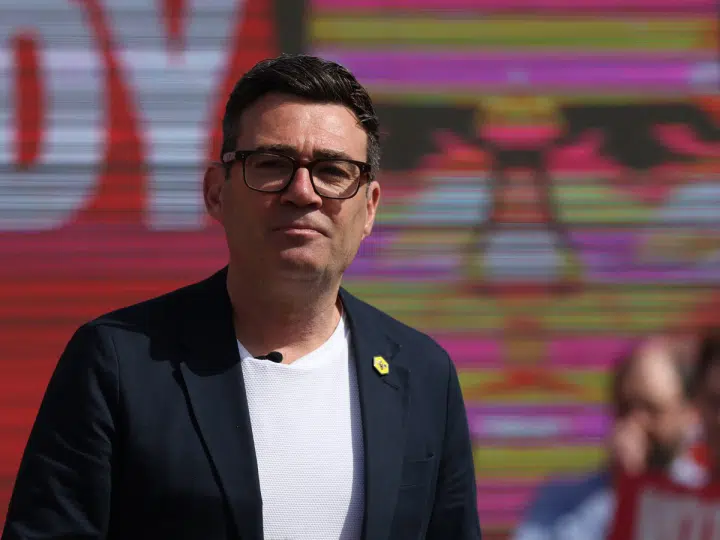

More than 80 MPs and peers have written publicly to foreign secretary Yvette Cooper, demanding immediate sanctions on Israel for its Gaza genocide.
Indefensible
Leeds East Labour MP published a copy of the letter. It reminds Cooper of her government’s “indefensible” failure to do anything meaningful to curb Israel’s arrogant impunity or fulfil the UK’s obligations under international law:
BREAKING: With @Imran_HussainMP and 80 other MPs and Lords, I have written to the Foreign Secretary calling for comprehensive sanctions on Israel.
The world’s top court is clear. Israel’s occupation of Palestine is illegal – and Governments must act now to end it! pic.twitter.com/bzRzwokgy5
— Richard Burgon MP (@RichardBurgon) July 14, 2026
In full, it reads:
14 July 2026
Dear Foreign Secretary,
Re: Two Years On – the Government Must Act in Line with the International Court of Justice’s Advisory Opinion on Israel
We write ahead of the second anniversary of the International Court of Justice’s (ICJ) landmark Advisory Opinion on Israel’s occupation of the Occupied Palestinian Territory, issued on 19 July 2024. We urge the Government to impose sanctions and other concrete measures to uphold its legal obligations under this ruling and wider international law.
The world’s highest court, the ICJ, found that Israel’s continued presence in the Occupied Palestinian Territory (OPT) is unlawful. It called for Israel to end this presence “as rapidly as possible” and cease all new settlement activity.
Two years on, Israel has not only ignored the Court but deepened its illegal occupation. This includes recent orders by Israeli Prime Minister Benjamin Netanyahu for Israel’s army to seize large areas of the Gaza Strip, alongside intensified annexationist measures in the occupied West Bank, including the approval of plans to register land there as Israeli state property.
These examples underline how, without much bolder action, the Israeli Government will continue to simply ignore the words of condemnation from political leaders and governments and deepen its illegal occupation.
All States have an obligation to act.
The ICJ is clear that all States have an obligation not to recognise this illegal situation and “not to render aid or assistance in maintaining the situation created by Israel’s illegal presence in the Occupied Palestinian Territory.”
The Court also made clear that all States must “abstain from entering into economic or trade dealings with Israel concerning the Occupied Palestinian Territory or parts thereof which may entrench its unlawful presence in the territory” and “take steps to prevent trade or investment relations that assist in the maintenance of the illegal situation created by Israel in the OPT.”
Additionally, the ICJ reiterated the obligations of all State Parties to the Fourth Geneva Convention to ensure Israel’s compliance with international humanitarian law.
The Government’s Responsibilities
The ICJ’s Opinion identifies clear legal responsibilities on the Government. Yet, despite acknowledging the Court’s findings, two years on, the Government has still not formally responded or taken the steps required to meet its legal and moral obligations. Further delay is simply indefensible.
The Government knows what needs to be done. It has rightly imposed widespread sanctions on Russia for its illegal war on Ukraine. Yet there has been no such comprehensive response to Israel’s actions in Gaza and the rest of the Occupied Palestinian Territory.
We are clear that international law cannot be applied selectively. The Government must apply the same principles to Israel’s unlawful occupation as it does elsewhere.
In line with the ICJ’s Advisory Opinion and to uphold its legal obligations, we urge the Government to act without delay by:
- Banning all trade in goods and services with illegal Israeli settlements and taking action against companies profiting from or sustaining the illegal occupation.
- Imposing targeted sanctions, including travel bans and asset freezes, on all individuals and entities complicit in maintaining Israel’s unlawful presence in the OPT, including political leaders responsible for illegal settlement expansion and annexationist policies.
- Suspending the UK-Israel trade agreement until Israel complies with international law.
- Ending all arms transfers to Israel, including F-35 components and other equipment that may be used in violations of international humanitarian law.
If the Government wants to show that its stated commitment to international law and human rights is more than words, then it must act decisively and without further delay.
Yours sincerely,
Richard Burgon MP and Imran Hussain MP
The letter is co-signed by the following parliamentarians. If your MP has not signed, write to them and demand that they do:
Diane Abbott MP
Lorraine Beavers MP
Shockat Adam MP
Orfhlaith Begley MP
Lord John Alderdice
Apsana Begum MP
Tahir Ali MP
Sian Berry MP
Paula Barker MP
Lara Bird MP
Lee Barron MP
Olivia Blake MP
Baroness Christine Blower
Rachael Maskell MP
Ian Byrne MP
Paul Maskey MP
Ellie Chowns MP
Douglas McAllister MP
Jeremy Corbyn MP
Andy McDonald MP
Pat Cullen MP
John McDonnell MP
Ann Davies MP
Llinos Medi MP
Marsha De Cordova MP
Abtisam Mohamed MP
Carla Denyer MP
Iqbal Mohamed MP
Dave Doogan MP
Lord Shaffaq Mohammed
Lord Alf Dubs
Grahame Morris MP
Neil Duncan-Jordan MP
Brendan O’Hara MP
Colum Eastwood MP
Simon Opher MP
Sorcha Eastwood MP
Kate Osborne MP
Cat Eccles MP
Yasmin Qureshi MP
John Finucane MP
Adrian Ramsay MP
Mary Kelly Foy MP
Martin Rhodes MP
Andrew George MP
Marie Rimmer MP
Mary Glindon MP
Bell Ribeiro-Addy MP
Lord Peter Hain
Liz Saville-Roberts MP
Claire Hanna MP
Lord Prem Sikka
Chris Hazzard MP
Lord Indarjit Singh
Lord John Hendy
Cat Smith MP
Chris Hinchliff MP
Hannah Spencer MP
Daire Hughes MP
Zarah Sultana MP
Rupa HuqMP
Jon Trickett MP
Adnan Hussain MP
Baroness Pola Uddin
Baroness Meral Hussein-Ece
Baroness Sayeeda Warsi
Kim Johnson MP
Nadia Whittome MP
Afzal Khan MP
Steve Witherden MP
Ayoub Khan MP
Mohammad Yasin MP
Ben Lake MP
Peter Lamb MP
Ian Lavery MP
Chris Law MP
Brian Leishman MP
Clive Lewis MP
Baroness Ruth Lister
Cathal Mallaghan MP
Starmer’s government is about to end. New PM Andy Burnham has offered only mealy-mouthed words on Israel and Gaza so far. He must be made to listen and implement real change.
Featured image via the Canary
By Skwawkbox

Is it us or are wasps everywhere right now?
According to conservation specialist Buglife, there are 9,000 species of wasps in the UK and, ideally, we’d like none of them to be in our homes.
Fortunately, it turns out, there are some unique ways to keep the stripy stingers away from your body (and pints) when out and about.
How to keep wasps away
Wear red clothing
Did you know that most insects can’t see the colour red? This includes wasps!
Wasps are drawn to brighter shades like yellows, blues and whites because they’re similar to flowers, however they’re not attracted to darker shades like brown and black.
But for clothing, the safest bet is red because wasps just can’t see it and therefore aren’t attracted to it.
Mix basil and garlic
Basil and garlic combined may sound dreamy to us – but to wasps, it’s a pretty revolting concoction. Keeping basil plants and garlic cloves around your home – especially near windows – can help to keep the stripy stingers outdoors.
Make your home minty-fresh
Wasps also hate the smell of mint so if you mix some peppermint oil with dish soap and spray it around the home, not only will your home smell minty fresh but wasps will steer clear.
Alternatively, mint plants placed near windows or on tables will help keep them at bay, too!
Lay off the perfumes and aftershaves
This probably isn’t all that surprising, but those perfumes and aftershaves you wear to smell vaguely floral? They smell like flowers and therefore attract wasps. Lay off the sweet scents and keep it neutral to keep pests away from you.
Splash the cash (or pennies) around
Wasps are reportedly averse to the smell of copper so if you rub some of the pennies you have and leave them lying around your home, they’re more likely to avoid buzzing about the place.


LONDON — A police cover-up after a 1989 football stadium tragedy was seminal in shaping soon-to-be new British Prime Minister Andy Burnham’s political outlook.
Upon returning to the House of Commons this evening for the first time as a member of parliament, Burnham used his maiden speech to hail a proposed new Hillsborough law — named after the Sheffield football stadium where 97 Liverpool fans lost their lives in a crush — which imposes a duty of candor on public officials.
Burnham faced raw anger and heckles of “justice” and “truth” in 2009, when he was culture secretary, at a memorial service at Liverpool’s Anfield stadium to commemorate the 20th anniversary of the disaster.
Days before he moves into No. 10 Downing Street, Burnham pledged to end the U.K.’s “cover-up culture” and put “decency back at the heart of the British state.”
Burnham said the law will “change the way this country thinks and works about justice,” as it “truly is a rewiring of the state and a passing of power from the authorities to the hands of ordinary people.” MPs approved the legislation Tuesday evening, and it will now go to the House of Lords for further scrutiny.

Three US Senators Oppose CLARITY Act on Ethics Grounds with Vote Expected Soon

Blue Beetle Returns for Superman: Man of Tomorrow as Xolo Maridueña Reprises His DC Role : Coastal House Media
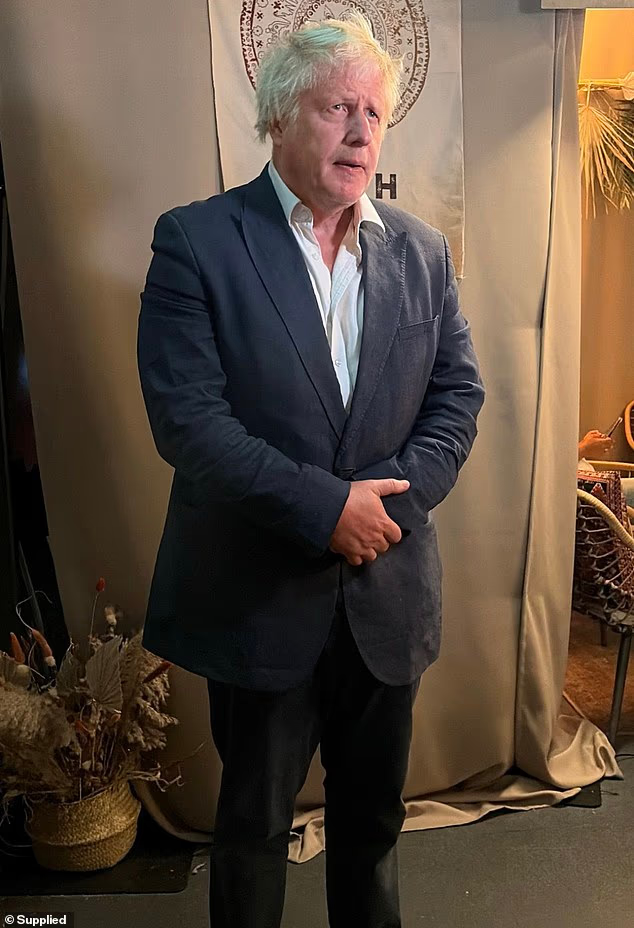
Exhibition showing horrors of October 7 attacks on Israel is ‘the bucket of cold water people need over their heads’, says Boris Johnson


-

 Fashion5 days ago
Loro Piana Fall 2026 Enters Houston’s Art Scene
-

 Fashion4 days ago
Weekend Open Thread: Nutriplenish Leave-In Conditioner
-
 Sports5 days ago
2026 Genesis Scottish Open Thursday TV coverage: Round 1
-

 Tech7 days ago
Anthropic brings Claude Cowork to mobile and web as usage data shows most users aren’t coding
-

 Sports5 days ago
Super Eagles star Moses Simon opens up on Liverpool transfer regret
-

 Tech5 days ago
Character.AI enters the microdrama arena with its own productions, but there’s a twist
-

 Tech17 hours ago
Get Your ESP32 Sunny Side Up With This Solar Dev Board
-

 News Videos2 hours ago
XRP BOMBSHELL… XRP OMBOARDED FOR TRANSACTIONS!!!
-

 News Videos6 days ago
Crypto Just Entered Its Most Important 6-Month Candle (Could Decide Everything!)
-

 Tech2 hours ago
Dark Secrets Emerge When Jailbreaking LLMs
-

 Tech7 days ago
Keychron is stepping outside keyboards with a $349 Thunderbolt 5 dock aimed at power users
-

 Business7 days ago
ASX 200 Slides Over 0.6% as Rare Earths and Lithium Stocks Tumble Amid Global Semiconductor Sell-Off Today
-
 NewsBeat5 days ago
Major update after Huntingdon train attack as man enters plea
-
 Business7 days ago
Will Trent shares rebound after Q1 update triggers 13% crash? Here’s what technical charts indicate
-

 Business7 days ago
SpaceX Shares Slide Nearly 6% Amid Post-IPO Volatility and Starship Test Focus
-
 Sports6 days ago
39-year-old Djokovic wins five-hour thriller to enter Wimbledon semis | Other Sports News
-

 Tech6 days ago
Entra passkey enrollment vishing targets Microsoft 365 users
-

 News Videos1 day ago
how to make coin bank box with cardboard #scienceproject #money #diy #shorts
-
 Tech1 day ago
Cloudflare Precursor Watches Your Mouse and Keyboard To Decide If You Are Human
-

 Tech5 days ago
Level Infinite Launches Gangstar Mirage City in India with Pre-Registrations
You must be logged in to post a comment Login