Connect with us
DAPA Banner
DAPA Coin
DAPA
COIN PAYMENT ASSET
PRIVACY · BLOCKDAG · HOMOMORPHIC ENCRYPTION · RUST
ElGamal Encrypted MINE DAPA
🚫 GENESIS SOLD OUT
DAPAPAY COMING

NewsBeat

In the ‘frenetic’ and ‘chaotic’ rush for PPE, one exception stood out: How Mail Force – and the Mail’s generous readers – rode to the rescue with protective equipment for nurses and care homes, costing taxpayers nothing

Published

on

Mail Force made vital deliveries of face masks and other PPE equipment to care homes, hospitals and charities across the UK

Advertisement

Amid the scandalous wastage of the PPE saga, there was one glittering exception: the Mail Force charity’s landmark mission supplying millions of pieces of protective equipment to the NHS free of charge.

Driven by the Daily Mail’s astonishingly generous readers and philanthropists, Mail Force raised £12million during the Covid crisis – and every single penny helped the NHS, care homes and charities through some of their darkest moments.

While businesses were pitching for lucrative access to what the Hallett report yesterday branded a ‘frenetic’ and ‘chaotic’ procurement process, Mail Force was sourcing reliable and verifiable PPE and giving it straight to those who needed it.

And unlike some suppliers, there were no profits taken or ‘VIP’ access routes for favoured firms.

Advertisement

And so it was that the Mail Force charity – set up by Lord Rothermere, the Chairman of the Daily Mail’s parent company – led the most successful public appeal in newspaper history.

It had been bleak in that spring of 2020: nurses with bin liners as uniforms; terrified pensioners trapped in germ-filled care homes. 

Yet by the end of 2020, Mail Force had acquired more than 42million pieces of PPE and handed them to the NHS, the care sector and charities great and small – without costing taxpayers a penny.

The protective equipment went through rigorous testing to ensure it met the UK’s very high standards. At the NHS’s central PPE hub in Daventry, our donations were held up sometimes for many days while the Government’s technicians meticulously examined everything from the thickness of gowns, measured down to the micron level, to their durability under intensive testing.

Advertisement

Mail Force made vital deliveries of face masks and other PPE equipment to care homes, hospitals and charities across the UK  

Care home staff at the Orchard Trust take a delivery of Mail Force masks and coveralls

Care home staff at the Orchard Trust take a delivery of Mail Force masks and coveralls

The Mail Force charity teamed up with the ISSA Group to bring millions of high quality PPE products to nurses, care workers and charities that desperately needed them

The Mail Force charity teamed up with the ISSA Group to bring millions of high quality PPE products to nurses, care workers and charities that desperately needed them

Advertisement

 It was not always plain sailing, and Mail Force had to send back one batch of masks for a refund. Overall, out of 42,304,000 pieces of PPE, 99.7 per cent passed muster.

Mail Force established a rigorous diligence process to ensure all certification was in place from reputable suppliers.

Throughout the endeavour, Mail Force talked to the highest echelons of the NHS and established clear guidelines.

In many cases, Mail Force’s PPE exceeded the requirements. Superior Type IIR fluid-resistant masks were sourced in their millions from our excellent Lancashire-based partners, the ISSA Group.

Advertisement

When Griffin Mill, a former carpet factory, switched to producing hospital aprons, Mail Force bought the first run of 1.5million, and they were such good aprons – so said the NHS staff who tried them – that we ordered nearly 20million.

Mail Force went on to raise millions more for crucial testing equipment and, latterly, to ensure that underprivileged schoolchildren had the laptops they badly needed in order to attend class remotely during the pandemic.

In total, Mail Force raised £25million, all of it logged in the public accounts submitted to the Charity Commission. With no staff, no overheads and no profit, the money from our readers went directly to where it was needed most.

Advertisement

Advertisement

Source link

Continue Reading
Click to comment

You must be logged in to post a comment Login

Leave a Reply

NewsBeat

Britons to get game-changing Alzheimer’s blood test that predicts if you’ll get the disease years before symptoms hit – but would you take it?

Published

on

Alzheimer's Disease is the most common form of dementia

GPs will be offer a new blood test to people suspected of having Alzheimer’s disease as part of a landmark trial in Scotland – with hopes it could later be rolled out across the UK. 

More than 50 GPs in central and northern Scotland are taking part in the study, which is called Bringing Alzheimer’s Disease Biomarkers to General Practice (BriDGe).

The aim is for up to 500 patients to be referred for a test, making it the largest UK study of Alzheimer’s blood tests in general practice. 

The project will explore how blood tests could speed up diagnosis, help GPs decide on the best care for patients, and give people earlier access to support and treatments.

Advertisement

There are an estimated one million people in the UK living with dementia – and by 2040 that figure is expected to climb to 1.4 million. 

Around 90,000 people in Scotland are living with the degenerative brain disease, and 3,000 are younger than 65. 

Scientists have spent decades looking for a cure, but there is mounting evidence that prevention may be the best form of defence for now.

A major consensus earlier this year by world-leading experts, building on The Lancet Commission on Dementia, concluded that almost half of all cases globally could be prevented, or at least delayed for several years if action was taken to address 14 risk factors. 

Advertisement

Alzheimer’s Disease is the most common form of dementia

These range from smoking and excess alcohol consumption, to loneliness and a sedentary lifestyle to obesity, blood pressure and hearing loss. 

Identifying people at risk of the dementia allows doctors to encourage patients to make lifestyle changes that could delay the onset of the disease and also opens up more treatment options. 

Advertisement

The blood tests used in the Scottish research are looking for two particular proteins that are linked to the condition, p-tau181 and p-tau217.

 When found in the blood, these proteins reflect changes in the brain associated with Alzheimer’s, with international research showing they may detect or rule out the condition earlier and more accurately than many existing memory tests or scans.

 The study aims to build GP experience and confidence in using the new tests, and to assess their value at the earliest stages of disease progression – where quicker, more accurate information could make the greatest difference for patients and their families.

Dr Sheelagh Harwell, senior associate GP at GP-Plus in Edinburgh, is one of the medics participating in the study.

Advertisement

She said: ‘The BriDGe study heralds an exciting time in general practice as new diagnostic blood tests become available.

‘Consultations are shifting from physicians discussing dementia risk with patients, to discussing brain health.

Chris Hemsworth found out he has the 'dementia gene' in 2022

Chris Hemsworth found out he has the ‘dementia gene’ in 2022 

‘An earlier diagnosis of Alzheimer’s can aid patients with lifestyle modifications, allow them to access support sooner, and plan ahead.’

Advertisement

At present, the most accurate way to find out if you are at risk of dementia is through genetic testing – which is prohibitively expensive. 

Australian actor Chris Hemsworth took a hiatus in 2022 after learning that he had inherited two copies of APOE4, dubbed ‘the Alzheimer’s gene’, from his parents. 

Studies show that having both copies increases the risk by 10 to 15 times. Having one copy can double a person’s risk. 

The Hollywood star, 42, received the shock diagnosis after taking a genetic test on the National Geographic documentary series Limitless with Chris Hemsworth. 

Advertisement

‘You’re constantly thinking you’re going to live forever, especially as a young individual. Then to be told that this might be the thing that might take you out was like, whoa –  it kinda floored me,’ Hemsworth said on the show.

Following the test, Chris made changes to his already extensive workout routines and now focuses more on his brain health.

In an interview with Men’s Health, he said he was ‘incorporating more solitude into his life’ as well as focusing on cardio exercise rather than lifting heavy weights. 

He said: ‘I’ve always been pretty consistent with my exercise commitments, but lately I’ve really felt the importance of taking time for yourself without any outside voice or stimulation and making time for stillness.’ 

Advertisement

The Scottish initiative comes as new research into the potential of dementia-predicting blood tests was presented at the Alzheimer’s Association International Conference 2026 in London and published simultaneously in JAMA. 

Advertisement

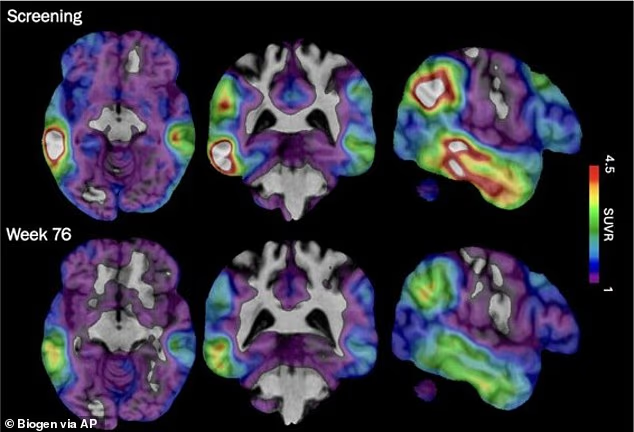
A team from Mass General Brigham and Harvard Medical School found that measuring levels of p-tau217 could help identify people at risk of Alzheimer’s-related cognitive decline up to a decade before symptoms appear.

Advertisement

They followed nearly 2,700 adults – with an average age of 70 – who were cognitively healthy at the start of the study for almost five years on average, with some tracked for more than a decade.

Those with very high levels of the biomarker had an estimated 38 per cent chance of developing cognitive impairment within five years and a 78 per cent risk within ten years. People with moderately raised levels still faced a 15 per cent risk over five years and a 45 per cent risk over ten.

The blood test also provided useful predictive information beyond brain scans and genetic testing, raising hopes it could eventually be used to identify symptom-free patients for prevention trials and guide earlier monitoring or treatment. 

Researchers said the findings offer some of the clearest evidence yet that Alzheimer’s risk may be detectable years before memory problems begin.

Advertisement

However, the experts stressed that p-tau217 cannot predict an individual’s future on its own, and that age, genetics, kidney function, obesity and ethnic background can all influence biomarker levels and dementia risk.

Also presented at the conference was the announcement of a new trial into the potential of trontinemab, a revolutionary drug which scientists believe could ‘reverse’ Alzheimer’s. 

The study, known as PrevenTRON, will recruit cognitively healthy volunteers in countries across the world, including the UK, aged between 55 and 80. 

The drug, which is administered as a monthly infusion, will be offered to about 1,600 people with no current memory problems but who are at high risk of the disease, having been found to have high levels of p-tau217 in the blood.

Advertisement

Source link

Continue Reading

NewsBeat

French newspaper L’Equipe brutally rate Premier League star 2/10 after France’s World Cup humbling by Spain – with Didier Deschamps’ flops sent packing after one-sided contest in Dallas

Published

on

French newspaper L'Equipe issued brutal ratings following France's World Cup exit

France’s World Cup stars were not spared by L’Equipe after their World Cup campaign came to an underwhelming end with a 2-0 defeat by Spain in the semi-finals.

Didier Deschamps’ side had headed into the tournament as favourites to win the World Cup, with the view having only grown with free-flowing attacking performances through to the semi-finals.

France, however, came unstuck with a Mikel Oyarzabal penalty and Pedro Porro strike preventing them from reaching a third successive World Cup final.

Spain succeeded in keeping France’s stellar attack, which had scored 16 goals at the tournament, at arm’s length throughout the match in Dallas.

Advertisement

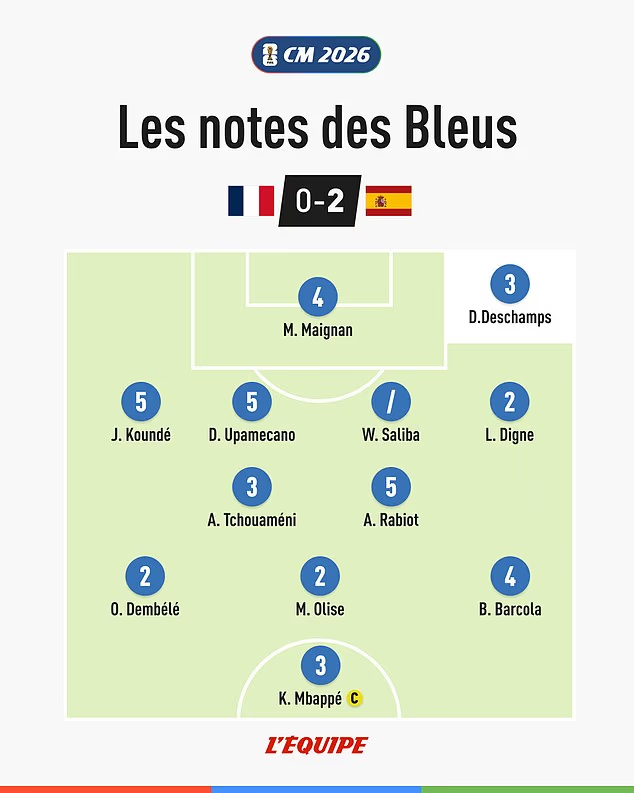
French newspaper L’Equipe were damning in their assessment of the performance as Deschamps’ side were beaten in the semi-finals of a third straight tournament by Spain. 

Lucas Digne was particularly criticised by L’Equipe, with the Aston Villa full back having clumsily given away the penalty after kicking Lamine Yamal as he went to clear the ball, unaware that the Spain star was closing him down.

French newspaper L’Equipe issued brutal ratings following France’s World Cup exit

Advertisement
Kylian Mbappe was given a 3/10 rating by L'Equipe after France lost 2-0 to Spain in the World Cup semi-finals

Kylian Mbappe was given a 3/10 rating by L’Equipe after France lost 2-0 to Spain in the World Cup semi-finals

Lucas Digne was given a 2/10 rating after giving away the penalty that led to Spain's opening goal

Lucas Digne was given a 2/10 rating after giving away the penalty that led to Spain’s opening goal

Ousmane Dembele was also marked at 2/10 after he did 'almost everything wrong'

Ousmane Dembele was also marked at 2/10 after he did ‘almost everything wrong’

Between his uncontrolled header and his foul on Lamine Yamal, he made two mistakes that resulted in a penalty,’ L’Equipe wrote, while giving Digne a 2/10 rating.

Advertisement

‘He seemed to have got back into the game before the break but his second half was marked by repeated losses of the ball and his replacement by Theo Hernandez.’

Digne was one of three players in the French team to be given a 2/10 mark, with two of their brightest stars Michael Olise and reigning Ballon d’Or Ousmane Dembele also critiqued.

‘Initially on the right, then moved centrally after half an hour, nothing helped: the Ballon d’Or winner did almost everything wrong,’ L’Equipe said of Dembele’s display. 

‘As the minutes ticked by, he gradually faded until he became almost invisible. A huge disappointment.’

Advertisement

The newspaper stated that after Olise had ‘risen so high in previous matches, he fell very low this time’.

Olise’s lack of precision with several failed passes and dribbles had meant he was unable to do any harm to the Spanish defence.

Captain Kylian Mbappe received a 3/10 rating for his performance, with the outlet noting that he ‘often seemed very isolated’ and ‘tried to do everything himself, without success’.

Advertisement
Didier Deschamps received a 3/10 score after his France side came up short against Spain

Didier Deschamps received a 3/10 score after his France side came up short against Spain

Dani Olmo received an 8/10 rating with the Spain star deemed to be the player of the match

Dani Olmo received an 8/10 rating with the Spain star deemed to be the player of the match

No French player received a rating above the 5/10, which was given to Jules Kounde, Dayot Upamecano and Adrien Rabiot.

Rabiot was noted as having shown ‘personality and a huge impact off the ball’, despite the midfielder having to be substituted at half-time due to being booked in the first half.

Advertisement

The defeat meant Didier Deschamps’ long reign as France head coach will come to an end in the third place play-off.

Deschamps, who led France to World Cup glory in 2018 and the final in 2022, was given a 3/10 rating for his management of the semi-final.

‘It’s hard to understand how his team could have missed the mark so completely in terms of their approach, arriving with so much confidence,’ L’Equipe stated. 

‘The decision to replace [Desire] Doue with [Bradley] Barcola didn’t pay off, and the coaching was too deferential to the established order.’

Advertisement

By contrast, L’Equipe highlighted several Spanish players and their head coach Luis de la Fuente for praise. 

Porro and Dani Olmo were the top scoring players with 8/10 ratings, with the latter named as their player of the match.

The mark also given to De la Fuente, with the newspaper stating his team ‘displayed complete control of the match’ and ‘never looked threatened’.

How much is David Beckham set to pocket from his World Cup brand deals? Take on our quiz in our newsletter HERE

Advertisement

Source link

Continue Reading

NewsBeat

England have never beaten a top-tier nation in a World Cup knockout game overseas. Now is the moment to make history – and after the Hand of God and Beckham’s red card, it’s time for revenge, writes OLIVER HOLT

Published

on

England v Argentina is more than just a game for both nations and this semi-final is no different

A trail of tears has led Thomas Tuchel and his players here to the gateway of America’s South where Argentina and Lionel Messi bar their path. 

England are in the World Cup semi-finals for only the third time in their history on foreign soil and they have only pain, regret and recrimination for precedent.

This is the game of their lives and of ours, too. It is the biggest game England have played for 60 years. It is a gateway to a changed mentality, a gateway to redemption, to a restoration of pride, a gateway to glory. 

But England have flown here to Georgia with much on their mind. They will face the failures of their forebears on Wednesday as well as Argentina.

Advertisement

The image of Paul Gascoigne crying in the Stadio delle Alpi in Turin when England lost on penalties to West Germany in the last four at Italia 90 has become one of the most enduring symbols of our game, a picture that captures England’s decades of crushed dreams and shattered hopes.

In 2018, when England took the lead in their World Cup semi-final against Croatia in Moscow and then fell to a 2-1 defeat, it was Marcus Rashford, a 20-year-old with everything ahead of him, who was inconsolable. After the optimism that that run to the last four engendered, the loss left only disappointment, anti-climax and a feeling of opportunity missed.

England v Argentina is more than just a game for both nations and this semi-final is no different

Advertisement
Diego Maradona's 'Hand of God' goal in 1986 has been etched into both nations' history

Diego Maradona’s ‘Hand of God’ goal in 1986 has been etched into both nations’ history

Harry Kane, Jude Bellingham and the rest have the chance to break that cycle when they line up against Lionel Scaloni’s side under the roof of the Mercedes-Benz Stadium here. 

But they will be up against not just Messi, Julian Alvarez and Emiliano Martinez. They will be up against their nation’s own battered psyche.

This is about vengeance, too. England have never truly exacted revenge over Argentina for Diego Maradona‘s Hand of God goal at the Azteca in Mexico City in the 1986 World Cup quarter-finals. It has been a blot on our football history, an injustice excused by the miracle goal that followed it.

Advertisement

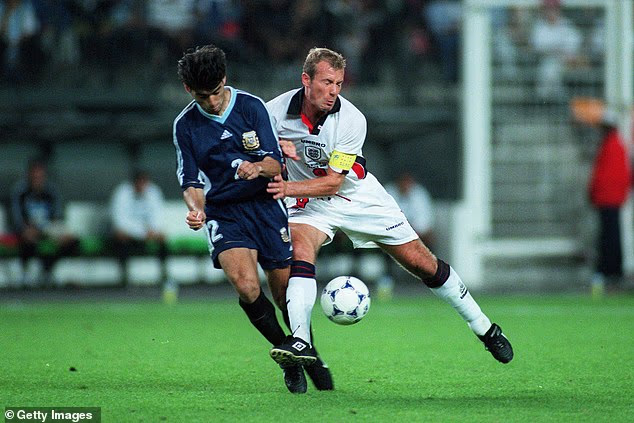
The biggest games against Argentina are twinned in our minds with torment and controversy. David Beckham’s red card against them in the second round of the 1998 World Cup in Saint-Etienne was the prelude to a penalty shoot-out defeat and a summer of vilification for the former Manchester United star.

Even the 1966 quarter-final at Wembley when Argentina’s captain Antonio Rattin was sent off felt like a trauma. England won but the game was an ordeal. Sir Alf Ramsey was so appalled by their brutality that he called Argentina’s players ‘animals’. 

England did beat them at the 2002 World Cup in Sapporo but it was a group game. It did not carry the same weight.

If England win on Wednesday, though, if an England victory sends Messi into international retirement, if defeat to Bellingham and the rest is the last experience of the World Cup for the world’s greatest player and Argentina’s all-time football hero, then that vengeance will be sweet indeed.

Advertisement

Because of all that history, because of the enmity between the two nations that stems from the Falklands War of 1982 and Argentina’s own feelings of injustice that still manifest themselves in the songs their players sing about ‘Las Malvinas’ after matches, this is now England’s biggest rivalry in international men’s football.

‘I was born in Argentina, land of Diego and Lionel,’ the Muchachos song goes, ‘of the kids from Malvinas, which I will never forget.’ 

As the fans leap in their post-match celebrations, they chant ‘anyone who doesn’t jump is an Englishman.’ There is an undercurrent of visceral unpleasantness in the rivalry that supersedes any other for England now.

Failing in games like this, failing heroically, failing because of a red card, failing because of an inability to seize the day, failing because of a saved penalty, have all become part of England’s collective make-up. At World Cups, these are the games we lose. These are the games we cannot get past.

Advertisement

At some level deep within, we think Argentina will win on Wednesday afternoon. 

England must show they can beat one of the world's great footballing nations in a World Cup

England must show they can beat one of the world’s great footballing nations in a World Cup 

Michael Owen pictured scoring a stunning goal against Argentina at the 1998 World Cup

Michael Owen pictured scoring a stunning goal against Argentina at the 1998 World Cup

Call it muscle-memory if you want. Call it the Messi factor. Or just call it bitter experience. England have never beaten a top international team in a World Cup knock-out game outside England. It has become ingrained in us that we are inferior to the best sides.

Advertisement

This time, it can be different. This time, it has to be different. 

This is why the FA took the gamble of appointing Tuchel. They wanted to break the cycle of inferiority. They wanted to shed all that emotional baggage. They wanted a world-class manager in his prime, an intensely intelligent, focussed individual who cared nothing for history.

They wanted a farewell to promise and a hello to trophies. They wanted a man who could move the team beyond all that Gareth Southgate had achieved and get England over the line. 

Well, now England can see the line. Now Argentina and Messi stand in their way and it is time for Tuchel to laugh in the face of all England’s previous disappointments.

Advertisement

A fire is burning in the England head coach. You can see it raging. It was there in the aftermath of his team’s gutsy win over Norway in Miami on Saturday when he praised his players’ spirit but railed against the technical deficiencies in their performance, which nearly cost them the quarter-final.

That’s the kind of thing the FA signed him for. That’s the kind of thing that can help England get past Argentina on Wednesday. That kind of hunger, that kind of abrasiveness, that lack of compromise. Tuchel is challenging players in a way many of them have never been challenged before and the best of them, Bellingham and Kane, are responding with the tournament of their lives.

That is the kind of implacable attitude England will need to get past Argentina. Tuchel knows they will have to be better than they were against Norway to have any chance of making the final so what has he got to lose in urging them to improve? 

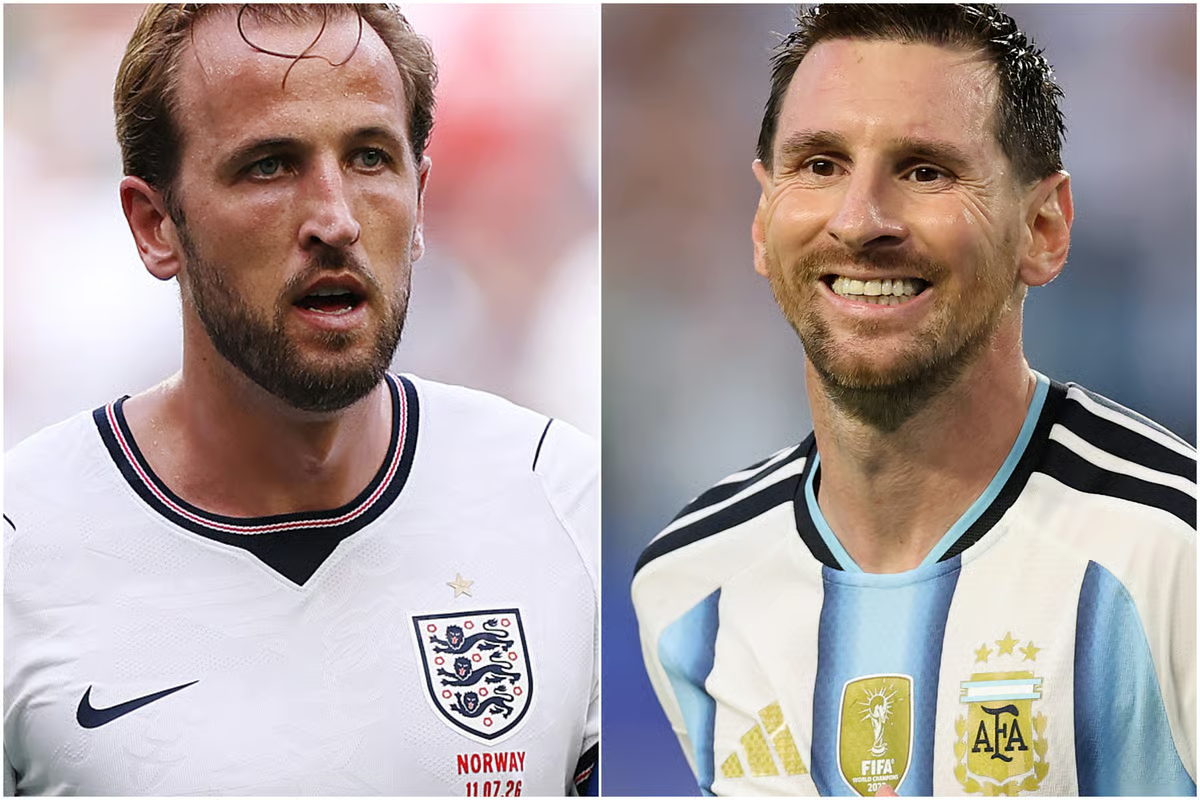
There is an aura around Lionel Messi (left) but England are battling their own psyche, too

There is an aura around Lionel Messi (left) but England are battling their own psyche, too

Advertisement
England can turn to two of this tournament's best in Jude Bellingham and Harry Kane (right)

England can turn to two of this tournament’s best in Jude Bellingham and Harry Kane (right)

He has failed to get the best out of them at this tournament in close to a month on the road. Time is running out to find the formula.

Wednesday’s semi-final will be tough and it will be unforgiving. 

Messi might walk around with a halo over his head but most of the rest of his team-mates play as if they were sporting devil’s horns. They are nasty and niggly, they are hard and unrelenting and unyielding and they are masters of gamesmanship.

Advertisement

Remember the boorish antics of Martinez after the World Cup Final in Qatar when he turned his Golden Glove trophy into a lewd prop at the presentation ceremony? Remember Argentina’s taunting of Holland after they beat them in a quarter-final penalty shoot-out at the 2022 World Cup? Remember Enzo Fernandez leading Argentina players in a racist chant about France players after they won the Copa America in 2024?

This is why the FA took the gamble of appointing Thomas Tuchel. They wanted to break the cycle of inferiority. They wanted to shed all that emotional baggage. They wanted a world-class manager in his prime, an intensely intelligent, focussed individual who cared nothing for history. 

There are also widespread concerns about the number of critical decisions that appear to be going Argentina’s way amid suggestions that Fifa and their sponsors are desperate to keep Messi in the competition for as long as possible to maximise revenue and viewing figures. In previous tournaments, that might have been dismissed as an empty conspiracy theory. But not this time.

Advertisement

Argentina’s favourable treatment started when Messi avoided a red card for appearing to rake his studs down the back of the calf of Algerian defender Aïssa Mandi in an Argentina group game. 

In their Round of 16 game against Egypt, a brilliant Egypt team goal was ruled out for an infraction that had happened long before the move was finished off.

Egypt made public accusations that the game was rigged. There were more allegations of bias after Argentina survived a scare against Switzerland in their quarter-final in Kansas City. Argentina rolled on, all the way to Atlanta.

So now they collide, these two football enemies. 

Advertisement

This is not a great Argentina team. They have shown over and over again at this World Cup that they are beatable and that they have weaknesses in defence, particularly at full-back, that can be exploited and that have been exploited.

Thomas Tuchel (right) was recruited by the FA to inspire England in moments such as this one

Thomas Tuchel (right) was recruited by the FA to inspire England in moments such as this one

They need to be respected because they know how to win the tournament and they never know when they are beaten, both of which are invaluable assets. 

But England have Bellingham and Kane and they have, in Tuchel, a coach who has been recruited to make the difference specifically for occasions like this. England will lean on him hard on Wednesday.

Advertisement

Whatever happens, Argentina will not go quietly. If they are behind, it will get ugly. If they are winning, it will get ugly, too. They will try to target Bellingham, just as they once targeted Beckham nearly 30 years ago. England must keep their discipline and keep their eyes on the prize.

In Piedmont Park, not far from where they are staying in Atlanta, there is a sculpture called The Last Meter, which is a depiction of the close finish of the Men’s 5,000m race at the 1976 Olympics in Montreal. One of the runners in falling as Lasse Viren breasts the tape. England are in the last meter, too. This time, they must not fall.

Source link

Advertisement
Continue Reading

NewsBeat

Bolton homeless charity warns of heatwave hidden dangers

Published

on

Bolton homeless charity warns of heatwave hidden dangers

Elaine Guest-Evans, a volunteer for Homeless Aid UK, said that while people are aware of the dangers of winter weather and homelessness, the hot weather can be just as risky.

Ms Guest-Evans said: “There’s lots in place for when it gets cold, but when it’s hot it’s not the same and they don’t have those places to go.

“They are literally outside all the time… carrying around tents and bags makes it hotter just from the movement, and they can’t leave them as they move around because they will get stolen or thrown away.”

Advertisement

With the majority of waterproof tents and sleeping bags designed to keep the cold weather out, the high temperatures create new risks of dehydration and heat stroke.

Many homeless people do not have anywhere to go to get out of the intense sun and often resort to seek shade under trees in parks, somewhere they can be wary of going due to embarrassment.

Ms Guest-Evans helps run a street kitchen on Fridays for those experiencing homelessness and helps at local food banks.

She also responds to calls from the public and the council when they are concerned about someone’s welfare.

Advertisement

In the summer months, the charity provides people with sun hats, water, lighter clothing and sun cream to help keep people safe in the challenging conditions.

Volunteers can also be seen handing out fresh fruit and water to refresh those outside in the sun all day.

As well as being vigilant and keeping an eye on people they may see on the street, Ms Guest-Evans said people can help by checking in with anyone they see sleeping rough and making sure they have the cool drinks they need to stay hydrated.

“People can be frightened of approaching, but they are all human beings when all is said and done.”

Advertisement

You can find out more about how to help and donate, or get information for yourself and others, by visiting the Homeless Aid UK website at www.homelessaid.co.uk/

Source link

Advertisement
Continue Reading

NewsBeat

England vs Argentina: World Cup 2026 prediction, kick-off time, team news, TV, live stream, h2h results, odds

Published

on

England vs Argentina: World Cup 2026 prediction, kick-off time, team news, TV, live stream, h2h results, odds

Source link

Advertisement
Continue Reading

NewsBeat

I put my insomnia down to drinking and perimenopause. Then a scan revealed my LIVER could be to blame… and it affects more women than you think. Here’s how to find out if you have it too: GEORGINA FULLER

Published

on

Georgina Fuller was told there is ‘room for improvement’ when it comes to the ‘stiffness’ of her liver by technician Cérine Cherkaoui

Damn, I think as I roll over to look at the clock next to my bed. It’s 3am and here I am again, lying wide awake with worry, thoughts churning. As I ruminate, a new fear hits me: could this latest insomnia bout actually be linked to my liver?

It might sound strange but a recent health check has given me serious pause for thought.

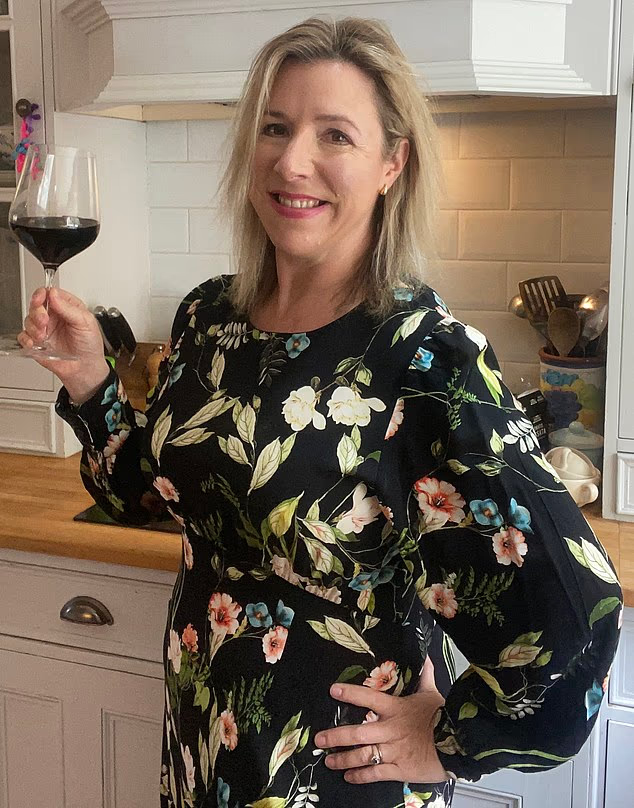
At 48, I’ve become increasingly aware how important it is to look after my health, especially after a friend got diagnosed with fatty liver disease (now usually referred to as steatotic liver disease) recently. She is a health-conscious vegetarian in her early 50s but, like me, loves nothing more than a good glass of wine or three.

While I walk my two Labradors, Luna and Mabel, every day, and try to eat a balanced diet with lots of fruit and veg, my Achilles heel, especially at this time of year – rosé season – is wine. Or a large Hendrick’s G&T. Or crémant or even champagne if I’m feeling flush. You get the picture.

Advertisement

What if I have damaged my liver over the years with all those 6pm summer drinks in the garden?

I feel quite nervous when I step through the doors at The Liver Clinic, located in John Bell & Croyden, a swanky, upmarket pharmacy in Marylebone, London.

I am here to have a ‘fibroscan’, an ultrasound test to measure fibrosis (scarring and thickening) and steatosis (fat content) in my liver.

Advertisement

Georgina Fuller was told there is ‘room for improvement’ when it comes to the ‘stiffness’ of her liver by technician Cérine Cherkaoui

I’ve been told to fast for three hours beforehand and I’m slightly holding my breath as technician Cérine Cherkaoui begins to move the ultrasound probe around the skin below my ribs while looking at the screen. But within minutes she reassures me that, thankfully, I have a steatosis score of 219, which puts me in the ‘normal’ category with less than 10 per cent liver fat.

I heave a sigh of relief and think I’m off the hook – but then Cérine casually mentions that there is ‘room for improvement’ when it comes to the ‘stiffness’ of my liver, and that it is something I should keep an eye on.

The liver is meant to be squishy and adaptable so anything that indicates stiffness – hardness brought on by inflammation and scarring (fibrosis) – can disrupt normal function.

Advertisement

Around 10 per cent of women are thought to have elevated liver stiffness (a score of over 8 kilopascals), according to a recent US study, and this can reportedly increase during the menopause. Alcohol use has a big impact, too.

A normal fibroscan liver stiffness result typically ranges from 2-7 kPa, which indicates no or minimal liver scarring.

Mine was a 4.6kPa which, while still in the healthy range, risks creeping up with too many heatwave rosés.

But is it solely alcohol that’s the root of my problems? I spoke to Siggi Clavien, founder of The Liver Clinic, who says liver stiffness can be linked to stress – it is often the organ that absorbs the most stress within the body.

Advertisement
Georgina said her Achilles heel is a glass of wine, especially at this time of year, which she likes to enjoy in the sunshine

Georgina said her Achilles heel is a glass of wine, especially at this time of year, which she likes to enjoy in the sunshine

Could the stresses and strains of my everyday life – juggling the demands of three children alongside menopause symptoms and tight daily deadlines as a freelance journalist – be exacerbating my liver stiffness?

Yes, says Siggi.

‘We often think of stress as something that affects the mind but the liver is one of the organs that carries much of the physiological burden,’ he explains. ‘Every emotional, physical, environmental or toxic stressor creates a cascade of hormones, inflammatory compounds that must, ultimately, be processed by the liver.’

Advertisement

Over time, this cumulative burden can contribute to increased liver fat, inflammation, stress, and ultimately increased liver stiffness, Siggi says. ‘The liver acts as the body’s shock absorber, making it a central player in resilience, metabolism and overall health.’

I ask if this could help explain my occasional insomnia, too.

‘The liver plays a critical role in regulating both cortisol and blood sugar throughout the night. If blood sugar drops or the liver is under metabolic stress, the body may release cortisol and adrenaline to restore balance, which can trigger those frustrating 3am wake-ups,’ Siggi says.

So what can I do about it? Siggi has a solution… but it’ll cost me. He recommends trying his specially created supplement, de-liver-ance, which is, he says, specifically designed to enhance the metabolic capacity of the liver. It’s a mixture of 17 different antioxidants and anti-inflammatory properties including Kudzu, a plant thought to help the body process booze by breaking down acetaldehyde, a toxic by-product of alcohol.
Advertisement
The mother-of-three was introduced to de-liver-ance, which she was told is designed to enhance the metabolic capacity of the liver

The mother-of-three was introduced to de-liver-ance, which she was told is designed to enhance the metabolic capacity of the liver

At £227 a month, de-liver-ance is eye-wateringly expensive, yet Siggi swears it can help with everything from combating hangovers and jet lag to, yes, improving sleep, reducing stress and boosting energy levels.

I remain sceptical but start by taking one vial, which comes in a small plastic tube, after lunch, a time when my energy levels typically start to flag.

It doesn’t taste particularly pleasant, quite bitter in fact, but it feels a bit like a non-alcoholic ‘sharpener’ and jolts me into feeling a little more awake.

Advertisement

During my first week of daily doses, I only wake up once at 3am – but otherwise I can’t say I really notice any difference to my wellbeing.

But by the end of the second week, my rosacea-prone skin, which is also linked to stress, is looking a bit smoother and calmer and, after an evening at a newly opened bar at the Cotswolds Distillery, where I enjoy several cocktails, I feel remarkably perky the next morning when I would usually feel groggy.

Still, after taking the supplement for over a month, I don’t notice any significant differences other than the fact I don’t have a single hangover and feel a bit perkier than usual. So I’m not sure it’s worth the price tag. I think I’m better off doing things the old-fashioned way: losing a bit of weight (losing between 7-10 per cent can reportedly reverse inflammation and early-stage scarring), eating a healthier diet and doing more exercise. Oh and perhaps refusing that third glass of wine in the sunshine. Shame.

Source link

Advertisement
Continue Reading

NewsBeat

Is Will Best Leaving Big Brother To Compete On Strictly Come Dancing?

Published

on

Is Will Best Leaving Big Brother To Compete On Strictly Come Dancing?

Strictly and Big Brother will run around the same time later this year, and given just how demanding the long-running BBC dance show can be on its participants, many pondered if Will planned to step down from Big Brother after three seasons co-hosting with AJ Odudu.

On Tuesday evening, The Sun cited an undisclosed “source” who claimed that Will had “no plans to leave” Big Brother, and would remain as its co-host.

This has now been confirmed to be the case to HuffPost UK.

Notably, Big Brother doesn’t air its evictions or live shows on a weekend, meaning Will will be free to dance for the whole nation.

Advertisement

HuffPost UK has also contacted Will’s team for additional comment.

Announcing his involvement in Strictly 2026, he enthused: “I can’t quite believe it… I’m doing Strictly! What an absolute dream. Albeit a pretty terrifying one.”

“I’ve been lucky to do lots of live telly before, but absolutely nothing like this. And I cannot wait!”

The TV presenter added: “I have no idea if I can actually dance, but bring on the sequins, bring on the quicksteps, bring on the dance floor! I’m going to try to enjoy every minute of it.”

Advertisement

Will’s Big Brother co-host AJ took part in Strictly back in 2020, making it all the way to the final with her professional partner Kai Widdrington.

Source link

Advertisement
Continue Reading

NewsBeat

Historic stretch of Little Lever canal reopens with guided walk

Published

on

Historic stretch of Little Lever canal reopens with guided walk

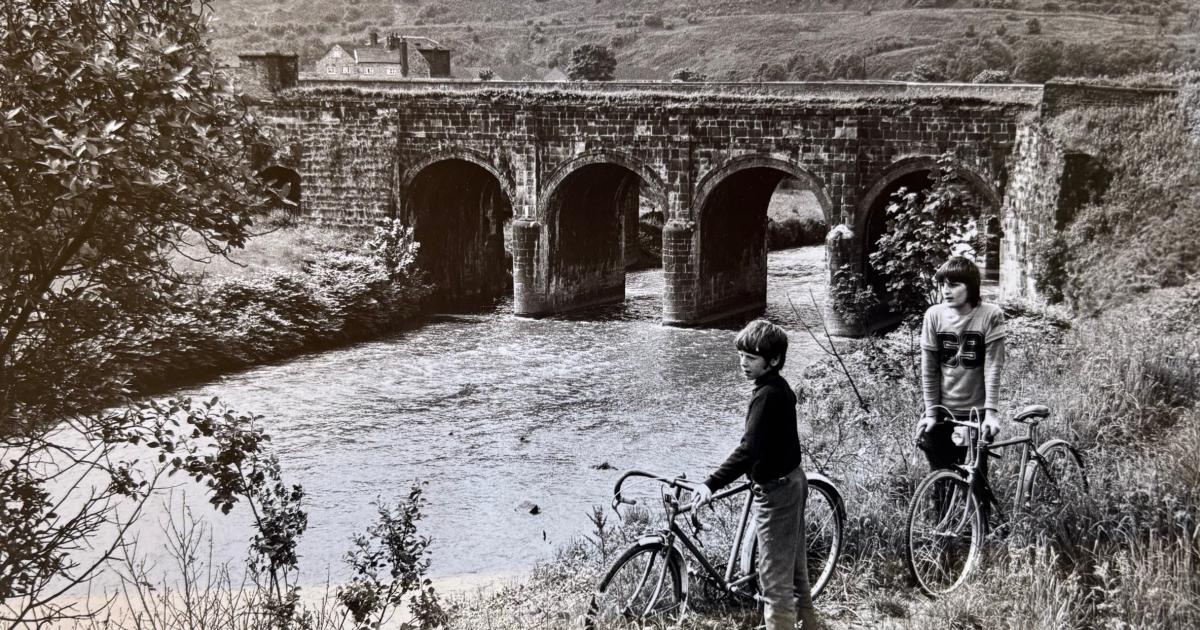
A 700-metre stretch of towpath at Nob End, Little Lever, reopened earlier this month, allowing walkers to once again travel from Meccano Bridge, through the canal breach site and under Mytham Road towards Ladyshore.

The route had been closed while major repairs were carried out as part of Watson Homes’ Creams Mill development.

The restoration includes a section of the canal that has remained cut off since a catastrophic breach almost 90 years ago.

A aerial view of the work progressing to repair the breach (Picture - Inland Waterways Association - photographer Craig Elias).A aerial view of the work progressing to repair the breach

The temporary reopening gives residents a rare chance to see the scale of the engineering work taking place before the route closes again in the autumn and winter for the next phase of construction.

Advertisement

Among the upcoming works will be the installation of a huge canal liner, with the next major milestone expected in August 2027 when the restored section is due to be refilled with water.

(Image: Chris Nash)

The restoration focuses on repairing the 60-metre breach at Nob End, where the canal collapsed on July 6, 1936, after erosion and subsidence undermined the embankment.

Millions of gallons of water poured into the River Irwell below, effectively severing the canal.

Although nobody was injured, the breach was never repaired, contributing to the eventual decline and abandonment of the Manchester, Bolton and Bury Canal.

Advertisement

Originally authorised by Parliament in 1791, the canal opened in stages from 1797 and became a vital route for transporting coal, stone, timber and other goods between Bolton, Bury and Salford.

CanalManchester, Bolton and Bury Canal Society (Image: Chris Nash)

Today, around 40 per cent of the canal remains in water, with restoration groups continuing efforts to reconnect sections for future navigation.

Chris Nash, of the Manchester, Bolton and Bury Canal Society, welcomed the latest progress.

He said: “We’re really pleased with the progress being made in partnership with Watson Homes and the reopening of this section of the canal.

Advertisement

“It’s fantastic that local people can now see the transformation taking place first-hand.

“The team at Watson Homes have asked for regular monthly meetings with us, which is a great example of partnership working in the community.

“We’d love to see this kind of collaboration replicated across the entire canal network as we work towards the long-term ambition of full restoration and reopening.”

Residents will have the chance to learn more about the project during a guided walk on Monday, July 20, showcasing the reopened towpath and the ongoing restoration work.

Advertisement

Sunrise over the meccano bridge, Nob End, Little Lever by John Norris...Sunrise over the Meccano bridge, Nob End (Image: John Norris)

The walk will begin at the Meccano bridge from 2pm until 4pm.

The guided walk is one of several events marking the 90th anniversary of the 1936 breach.

A Community Canals Celebration will also be held at Little Lever Sports Club on September 20, featuring community stalls, arts and crafts, music and entertainment.

Advertisement

Source link

Continue Reading

NewsBeat

Pregnant mum given two years to live after terminal cancer diagnosis

Published

on

Daily Record

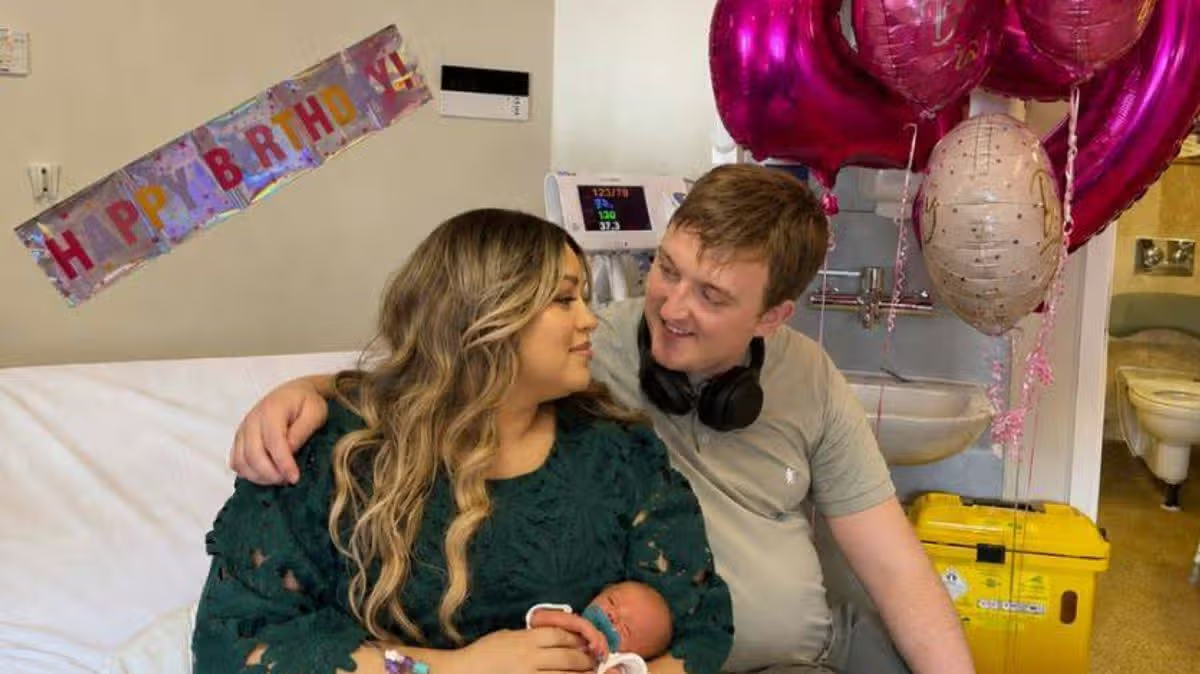
Thouhida Chowdhury, 29, known as Tia, was diagnosed with terminal lung cancer during her second trimester — her four-week-old daughter Isabella will only be two years old when she loses her mum

A mum-to-be was handed a devastating three-year life expectancy while 14 weeks into her pregnancy.

Thouhida Chowdhury, 29, received the terminal lung cancer diagnosis during her second trimester, and tragically her four-week-old daughter will likely never know her mother beyond toddlerhood.

The family are now racing against time to create precious memories together over the coming 24 months while they’re able. Thouhida, who goes by Tia, hails from Liverpool city centre, and her 29 year old husband Lewis, whom she met at work a “long time” ago, had envisioned building an idyllic future together.

Advertisement

Their dreams were simple: two children, a home of their own, and marriage. When news arrived that Tia was expecting Isabella, the pair were “beyond happy”.

In conversation with the ECHO, Tia recalled: “Isabella is our first daughter, we were only just starting our journey together as a family. We wanted a normal, average life, we had it all planned. We were so excited when we found out we were pregnant. It was November [last year] we found out.”

At that point, Tia had been battling what she’d presumed was a chest infection. She’d been prescribed multiple courses of antibiotics over roughly six months, yet her condition continued to deteriorate, reports the Liverpool Echo.

Advertisement

During her final round of antibiotics, Tia’s mum spotted her daughter’s complexion “turning blue” while they shared dinner and rushed her immediately to A&E. Tia would remain at the Royal Liverpool Hospital for the following five months.

She said: “I was told I had cancer a few days after being taken to the Royal. I had a CT scan which showed my lymph nodes were all inflamed and my left lung had collapsed. At first doctors said it could either be TB or cancer, at that moment we just knew it was cancer. It was so worrying, we were hopeful, but deep-down we knew.”

Tia was booked in for a biopsy and within days received the devastating confirmation of lung cancer. She said: “I asked for my prognosis and the oncologist told me I had two to three years. My whole world felt like it fell apart in that moment. We found out it was a disease that I was going to die from.”

She added: “We were told it was untreatable but there’s chemo that could slow it down, without the chemo they said I’d have eight to 12 months. I remember feeling numb and asking a lot of questions. Then, it was like a dam, I started crying and didn’t stop for hours.

Advertisement

“My husband wasn’t there for at the appointment with me, so I then had to face telling him, and my parents, and all the other people that love me that I’m going to die in a couple of years.”

At just 14 weeks pregnant when her world came crashing down, Tia said: “What should have been the happiest time of my life was shattered. I had been told that I wouldn’t watch my daughter grow older, I wouldn’t see her first day of school, I wouldn’t be there for her first breakup, her wedding and everything else.

“It was like someone was playing a joke on me. We had a very different life planned out. We wanted to buy a house, we had plans to move back to Cheshire, where I’m originally from, so Isabella could have a rural upbringing like I had. Now, all these things can’t happen, I can’t even get a mortgage with cancer and I only have two years with my child.

Advertisement

“My biggest fear is her not remembering me; remembering my voice, my touch, she will only be two years old when she loses me. We’re making her a scrapbook and taking pictures of everything and everyone so she has these memories to keep. I’ve also written her letters to open when shes 16, 18, and when she gets married.”

While Tia underwent chemotherapy treatment in hospital during June, Isabella arrived prematurely at 30 weeks and continues her stay in the Neonatal Unit, “growing stronger every day.”

Following more than five months as an inpatient, Tia has since been discharged from hospital. She reflected: “I feel like I’ve already put my child through so much, I feel like the worst mother ever. I couldn’t even paint her nursery or build her cot because I was stuck in hospital.”

The unforeseen pregnancy coupled with the cancer diagnosis has drained the young couple’s savings on expenses they never anticipated facing at merely 29 years of age. Lewis has been forced to take on additional employment to support his wife and daughter, meaning precious time with his terminally ill partner has been significantly reduced.

Advertisement

The family are hoping to raise funds to cover essential costs for making their home more accessible and covering hospital travel expenses.

Tia explained: “My whole life is upside down, I used to be such an independent woman and now I’m not even being able to go to Tesco by myself. I don’t want my daughter to remember me like this, I want to make memories and make our life as normal and good as possible.

“I’ve already had to have my baby shower and registered our marriage in hospital, it’s important after five months that I can now spend time at home with my family before we’re out of time.”

Those wishing to support Tia and Lewis can contribute to their online fundraiser, which aims to help create precious memories with Isabella.

Advertisement

Meanwhile, their relatives, who operate Tess Riley’s in Liverpool city centre, have organised a special fundraising evening to generate additional support. The event is scheduled for August 19, kicking off at 3pm.

Entry costs £10, with all proceeds going directly to Lewis, Tia and Isabella.

Source link

Advertisement
Continue Reading

NewsBeat

Motorists warned about traffic light outage in Bury centre

Published

on

Motorists warned about traffic light outage in Bury centre

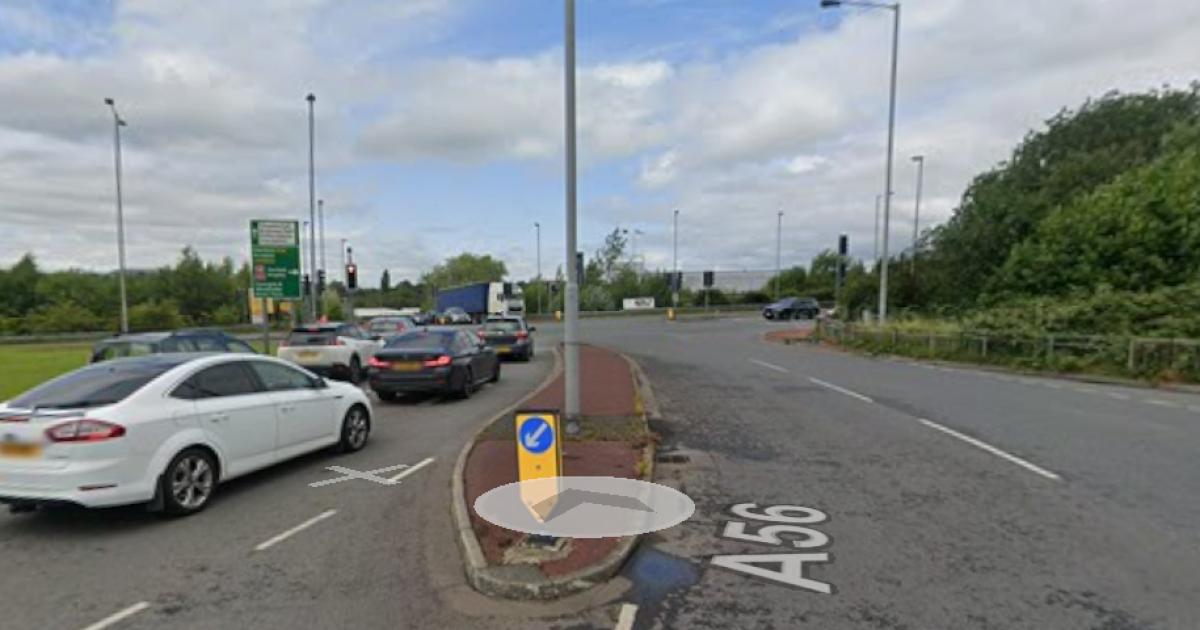
The Bee Network has confirmed the issue at the junction of Bolton Street, Peel Way, Jubilee Way, and Harvard Road in Bury town centre.

Drivers have been urged to approach the junction with “care and caution”.

Engineers are working to resolve the issue.

Advertisement

We will update you when the issue is resolved.

A spokesperson for the Bee Network said: “We’re currently experiencing traffic light outage at the junction of Bolton St/Peel Way/ Jubilee Way/Harvard Rd (Bury Town Centre).

“If you’re driving, please approach with care and caution.

“Engineers are working to resolve the issue as soon as possible.”

Advertisement

Source link

Continue Reading

Trending

Copyright © 2025