T+A does not build inexpensive audio components, and its new HV reference pairing makes no attempt to wander into that unfamiliar part of town where tourists buy four-euro spätzle and lederhosen assembled somewhere considerably less German.
The German manufacturer has formally launched the SDX 3100 HV streaming DAC and preamplifier for $44,900 alongside the A 3100 HV stereo power amplifier for $29,900. The complete two-box system costs $74,800 before adding loudspeakers, cables, an equipment rack, or the optional $2,190 MM or MC phono module.
We first encountered both components at AXPONA 2026, but confirmed pricing, final specifications, and availability make them worthy of a closer look. The A 3100 HV began shipping on July 9th in silver or titanium, while SDX 3100 HV availability is rolling out through dealers, with some North American listings indicating August delivery.
The price will dominate the conversation, because $74,800 remains a serious amount of money even by high-end audio standards. What T+A is offering, however, is not merely another streamer connected to a large amplifier. The SDX 3100 HV and A 3100 HV represent a highly integrated reference system that combines some genuinely unusual digital architecture with enough amplification to drive almost any conventional passive loudspeaker.
Advertisement
Related Reviews:
The SDX 3100 HV Is More Than a Streamer
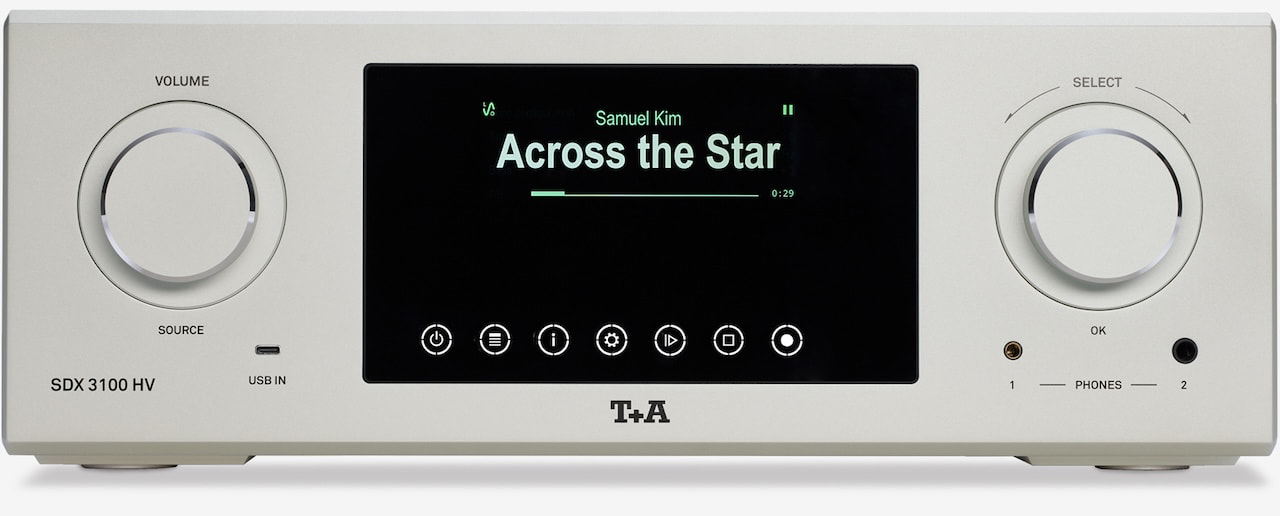
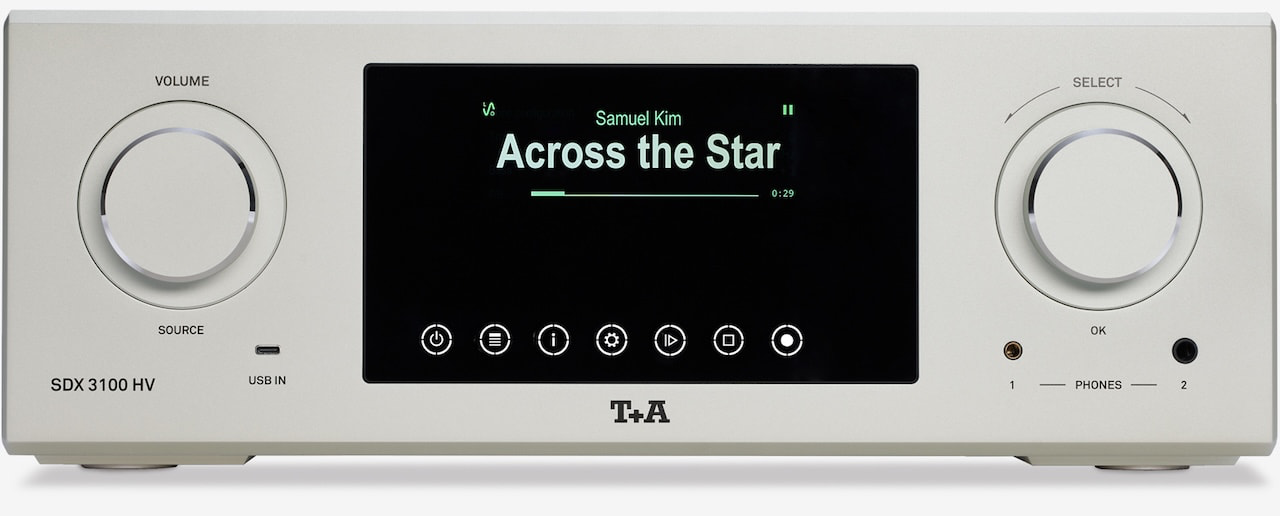
SDX 3100 HV
The SDX 3100 HV replaces the SDV 3100 HV at the top of T+A’s digital lineup, combining a network streamer, DAC, fully analog preamplifier, headphone amplifier, tuner, and system controller inside a 57-pound aluminum chassis.
Its most significant technical feature is T+A’s Path Separation Technology, which routes PCM and DSD through different conversion architectures rather than forcing both formats through the same DAC design.
PCM signals are handled by a double-differential quadruple converter using four 32-bit sigma-delta DAC channels per side, supporting rates up to 768kHz through USB. DSD travels through T+A’s proprietary True 1-Bit converter without first being converted to PCM, with USB playback supported up to DSD1024.
There is an important distinction buried beneath that impressive headline number. DSD512 and DSD1024 require a compatible Windows computer with T+A’s driver or a Linux system running a supported kernel. Network streaming is currently specified up to DSD256, which remains more than sufficient for almost every commercially available recording but is not quite the same as streaming DSD1024 from a NAS while congratulating yourself on having survived another firmware update.
T+A’s De-Jitter Masterclock examines incoming clock signals and routes anything failing its stability requirements through an additional PLL stage. Separate quartz oscillators are used for the 44.1kHz and 48kHz frequency families, reducing the need for sample-rate conversion between them. The SDX also provides selectable digital filters, including FIR, Bezier, and two NOS options.
Advertisement
Streaming Without Another Proprietary Island
The third-generation Audiophile Streaming Architecture, or ASA G3, supports TIDAL Connect, Qobuz Connect, Spotify Connect, Amazon Music HD, Deezer, HIGHRESAUDIO, Apple AirPlay 2, Audirvana, internet radio, and locally stored music.
Roon certification is still listed as being in progress. That will need to be completed quickly because a $44,900 streaming component should not arrive with a significant software feature still waiting in the departure lounge.
Advertisement. Scroll to continue reading.
Wired Gigabit Ethernet and dual-band Wi-Fi 6 are included, along with Bluetooth 5.4 using aptX HD, AAC, SBC, and MP3. Bluetooth is clearly present for convenience rather than as the preferred method for extracting everything the SDX can deliver.
Advertisement
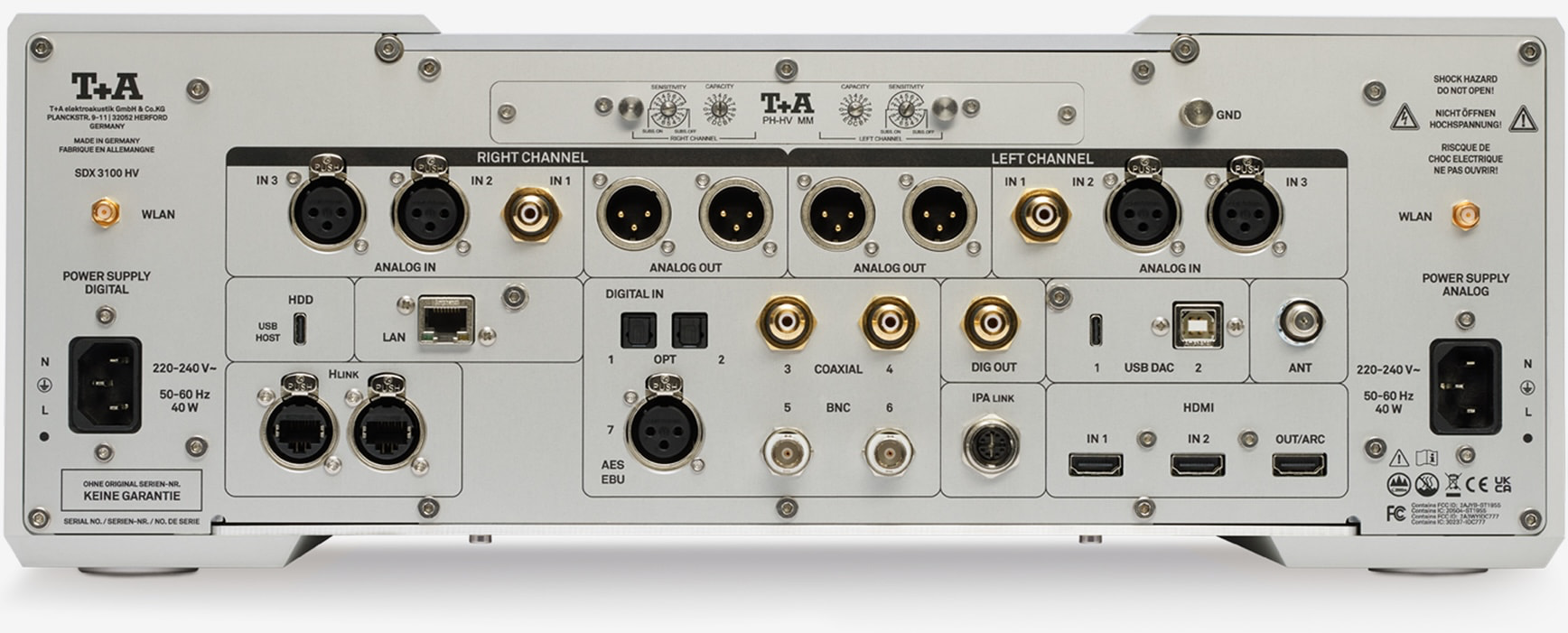
Physical connectivity is extensive. The digital section includes AES/EBU, coaxial, BNC, optical, USB, two HDMI inputs, and an HDMI output with ARC. The specification currently lists ARC rather than eARC, although that is unlikely to present a meaningful bandwidth limitation in a two-channel system.
SDX 3100 HV (rear)
A Proper Analog Preamplifier
Many streaming DACs offer variable output and describe themselves as preamplifiers. The SDX 3100 HV takes the role more seriously.
Its fully symmetrical, double-mono preamplifier is constructed with discrete components and galvanically isolated from the digital circuitry. Volume is controlled by a relay-switched network with channel matching specified within 0.05dB at minus 60dB, where less carefully designed controls can begin shifting the image toward one loudspeaker.
The SDX also includes balanced and single-ended analog inputs, making it possible to connect tape machines, external phono stages, or other analog sources without converting them into the digital domain.
Advertisement
T+A has even included fully analog tone controls with individually adjustable bass and treble levels and selectable turnover frequencies. That is a more sophisticated approach than the usual bass and treble knobs, allowing some correction for loudspeaker balance, room placement, and difficult recordings without passing the signal through DSP.
It is not room correction, and there is no automated measurement system or sophisticated subwoofer bass management. Buyers looking for Dirac Live, ARC Genesis, or Linn Space Optimisation will need to solve those problems elsewhere.
The optional phono board is available in separate MM and MC versions for $2,190. At this price, including both cartridge types in one adjustable module would not have caused the accountants to begin rationing office supplies, but the internal option is still useful for owners seeking to avoid another box.
A discrete Class A headphone amplifier supplies both 6.3mm and 4.4mm Pentaconn outputs. T+A specifies a six-ohm output impedance and up to 200mA of current, making it considerably more substantial than the convenience headphone circuits often added to digital components.
Advertisement
The A 3100 HV Offers Two Amplifiers in One
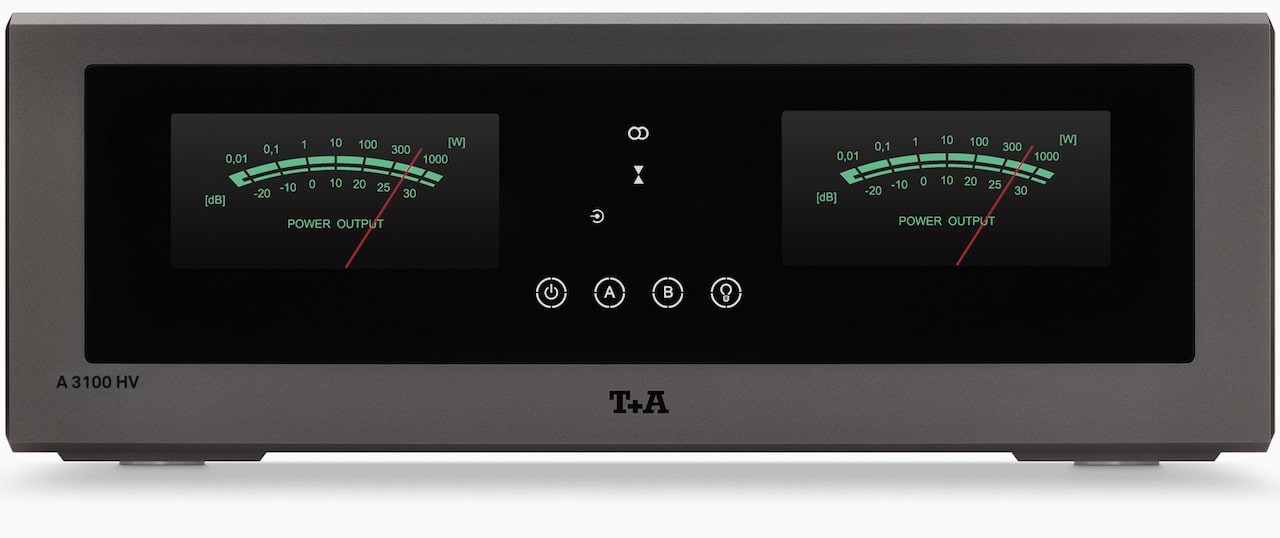
A 3100 HV
The matching A 3100 HV replaces the A 3000 HV, which remained in production for more than a decade. T+A claims more than 270 engineering changes, including revised board layouts, tighter-tolerance components, improved thermal management, and a new High Current operating mode.
T+A’s HV designation refers to its use of much higher internal operating voltages than conventional solid-state circuits. The objective is to keep the transistors working within a smaller and more linear portion of their operating range, pursuing some of the linearity associated with tubes without using tubes or their eventual maintenance requirements.
In High Current mode, the output stage runs at substantially increased idle current and can deliver up to 75 watts in pure Class A before transitioning into Class AB operation. This mode is intended for systems where listeners value the amplifier’s highest-bias operation and do not require maximum output.
Advertisement. Scroll to continue reading.
Switching to High Power mode changes the priorities. The A 3100 HV is rated at 300 watts per channel into eight ohms and 500 watts into four ohms, with short-term output reaching 380 watts into eight ohms and as much as 650 to 700 watts into four ohms, depending on the measurement listed.
Advertisement
Those figures come from a 1,000-watt toroidal transformer and 120,000µF of reservoir capacitance. The power supply is magnetically shielded and physically separated from the audio circuitry behind a 10mm aluminum partition. Voltage and current amplification are located on separate boards and galvanically isolated to reduce interaction between the input stages and the current being delivered to the loudspeakers.
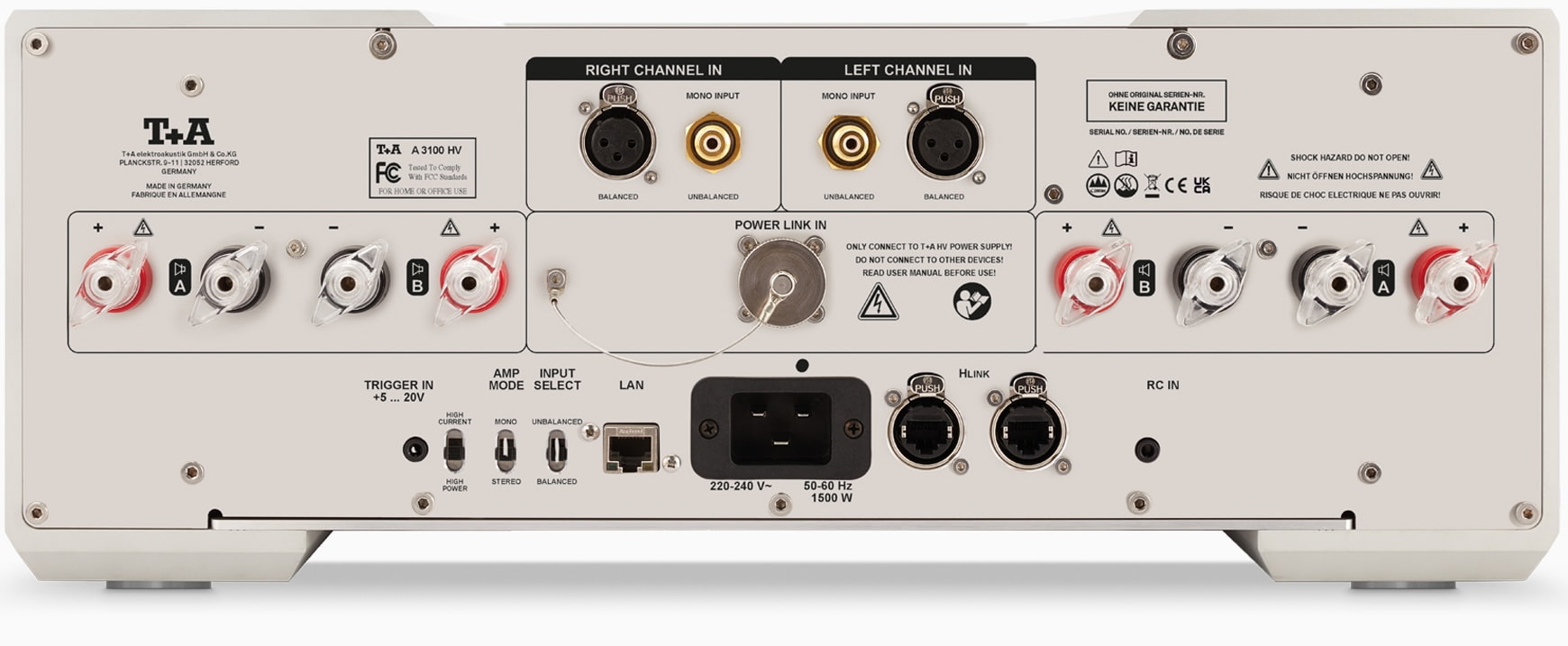
A 3100 HV (rear)
The amplifier can also be switched into mono operation, allowing owners to add a second A 3100 HV. At that point, the electronics alone rise to $104,700 before contemplating T+A’s optional external power supplies. The phrase “diminishing returns” may be heard faintly in the distance, but nobody in this market appears to be returning its calls.
What Does It Compete With?
There is no perfect direct competitor because T+A combines several product categories in an unusual two-box arrangement.
Naim’s closest conceptual alternative requires an NSS 333 streamer, NAC 332 preamplifier, and two NAP 350 mono power amplifiers. The NAP 350 delivers 175 watts into eight ohms and 345 watts into four ohms, making the Naim system less powerful on paper while requiring four chassis before optional external power supplies enter the discussion.
Advertisement
The CH Precision I1 takes the opposite approach. It combines preamplification, power amplification, DAC functionality, and optional streaming and phono modules in one configurable chassis. Its modular architecture is extremely flexible, but rated output is 100 watts per channel into eight ohms. The T+A system requires two shelves but provides far greater power and includes its full streaming platform as standard.
Boulder’s 866 Digital integrated amplifier also consolidates streaming, DAC, preamplification, and power amplification into one component. It delivers 200 watts into eight ohms and 400 watts into four ohms and supports Ethernet, USB, AES3, optical, AirPlay, and Roon. It is the more compact approach, although it lacks T+A’s separate native DSD conversion path and extensive direct streaming-service integration.
Linn’s Klimax DSM and Klimax Solo 800 amplifiers represent another logical comparison, especially for listeners interested in streaming, system integration, and room optimisation. Pricing places the T+A system in some perspective: a single Klimax Solo 800 starts at $51,190 in the United States, making a stereo pair $102,380 before adding the Klimax DSM source and preamplifier. Suddenly $74,800 starts looking merely extravagant rather than requiring intervention from concerned relatives.
Why This System Is Different
The SDX 3100 HV and A 3100 HV stand apart because they do not force buyers to choose between old-school analog engineering and a modern streaming system.
Advertisement
The SDX offers direct access to the major streaming platforms, HDMI ARC, high-resolution USB playback, analog inputs, optional phono support, proper preamplification, analog tone controls, and a robust headphone amplifier. The A 3100 HV can prioritize Class A operation for lower-level listening or switch to 500-watt Class AB output when the loudspeakers demand considerably more persuasion.
T+A has also managed to keep the complete system to two chassis. That will matter to buyers who want reference-level separates but have no desire to assemble a seven-box shrine requiring its own electrical subpanel and structural engineer.
The Bottom Line
There is no sensible way to describe $74,800 as affordable, and T+A does not need anyone performing financial gymnastics to make it sound reasonable.
Advertisement. Scroll to continue reading.
Advertisement
A complete system with the phono module costs $76,990. Adding T+A’s optional $19,490 PS 3100 HV external power supply pushes the total to $96,480. Two amplifiers in mono operation take the system comfortably beyond six figures.
That pricing excludes almost everyone, including many serious audiophiles with excellent systems and perfectly healthy credit scores.
But judged within the reference electronics category, the T+A pairing is not an outlier. It competes with systems from Linn, CH Precision, Naim, Boulder, dCS, and other manufacturers for whom five-figure source components and power amplifiers are entirely normal.
The more relevant question is whether T+A’s two-box architecture can deliver enough of the performance, flexibility, and long-term usability of those larger systems to justify its substantial price.
Advertisement
On paper, the answer is at least plausible. The engineering is ambitious, the specifications are formidable, and the combination of native DSD conversion, real analog preamplification, selectable amplifier bias, and 500-watt output is unusual at any price.
Whether it sounds like $74,800 will require far more than reading the specification sheet while making approving German noises.
Pricing & Availability
The T+A A 3100 HV is available in silver or titanium for $29,900 and began shipping through authorized dealers on July 9, 2026.
The SDX 3100 HV is priced at $44,900, with dealer availability rolling out through July and August 2026.
Advertisement
The optional MM or MC phono module is $2,190.
The complete SDX 3100 HV and A 3100 HV system costs $74,800, or $76,990 with one of the phono modules.
Yard care can take more time than expected and if you find that you’re spending too much time mowing, it’s possible you don’t have the right sized lawn mower deck. But before you decide to buy a bigger one, beware that even if a new deck looks like it may fit, that does not mean it will. It all comes down to individual manufacturer design and how a deck is engineered to fit a specific model.
Each lawn mower manufacturer builds the frame, mounting points, and lift system around a fixed deck setup. This means that even decks with the same cutting width may not attach or operate correctly on another model. The mower’s PTO system also plays a major role, because both manual and electric PTO setups use different configurations that must match up precisely with the deck’s drive. The deck’s lift components are designed for very specific pivot points as well, which means that even small differences can prohibit a proper fit.
The key factor to remember is that because mower decks are designed to fit specific models, your best move is to verify part numbers before moving forward. Simply buying a deck from the same manufacturer as your mower isn’t enough, as similar setups may not be compatible with your exact model. If you’re browsing for a replacement deck from another manufacturer, be sure it’s compatible with your mower and always buy from a reputable retailer.
Advertisement
Understanding lawn mower deck size and why it matters
zoff/Shutterstock
Lawn mower deck size is actually the cutting width of the mower, or the total reach of grass that’s cut in a single pass. For example, a 42-inch deck cuts a 42-inch path, while a 60-inch deck covers five feet at a time. Technically speaking, a larger deck does increase overall efficiency because you don’t need as many passes while mowing as you would with a smaller deck.
Replacing a deck isn’t the same as replacing the mower, but going with a bigger deck in order to save time does come with a price. That’s because a larger deck generally requires more engine power to operate. You’ll also need more space while mowing, which can be challenging when working in tight corners. This is why manufacturers match the deck size to the mower’s design, so the components will work together to deliver the expected performance.
Advertisement
Installing an Original Equipment Manufacturer (OEM) deck usually involves a process specific to the mower as well. Typically, the deck is lowered and disconnected from the mounting points and support rods. The drive belt is then removed from the engine pulley and the deck is slid out from under the mower. New deck installation follows the same steps in reverse. In many cases, this can be a complex process requiring precise connections that must be set correctly. Otherwise, the deck may not operate properly.
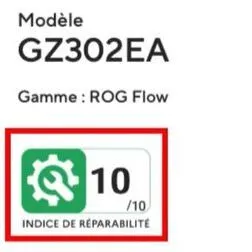
A few years ago, France introduced a mandatory repairability score for consumer goods like laptops and tablets. It involves five criteria that range from documentation and availability of spare parts to ease of disassembly, with the manufacturer using a government-provided checklist to determine their score.
Recently Asus determined that their Asus ROG Flow Z13 – model GZ302EA – scored a 10 out of 10 using this system. This led [iFixit] to run the same tablet/laptop hybrid through their own rating system.
You can find the filled-out spreadsheet for this device here, with this Asus-provided site showing a list of devices that all score a 10/10 or a measly 9.9/10 according to this system. As a self-reported score it is hard to take it as the objective truth, as there is every incentive for the manufacturer to tweak the truth to their own benefit and gloss over inconveniences. This is where it’s interesting to compare it with [iFixit]’s 7/10 score.
On documentation, Asus gives itself a perfect score but [iFixit] finds it to be incomplete. Removal of one fan requires the disassembly of the cooler with its liquid metal thermal interface on the CPU. The wireless card, and most ports, are soldered to the mainboard. On the bright side, after you get the screen off, the insides are quite modular, which is a plus.
[iFixit] dings three points: for documentation, soldered-down components, and a fan accessibility glitch. Parts accessibility outside of France is also significantly harder, but one can hardly blame the French system for that. Overall the French self-reported rating would seem to be a fair start, but depending on which criteria you define as required you may find yourself disagreeing with the score.
Advertisement
In the case of LPDDR5 RAM one could argue for example that with LPCAMM2 modules soldering RAM onto the mainboard ought to be a thing of the past, and Wi-Fi modules should always be removable as well. You can take that up with the French regulators.
The co-inventor of Apple’s FaceID and Vision Pro technology has spent the last six years building a frontier artificial intelligence model that could one day help decode electrical activity in the brain to diagnose cognitive disorders.
Now, Gidi Littwin’s startup, Hemispheric, has raised $52 million in funding after gathering data on 100,000 people’s brains to train deep learning models to examine the brain without the need for invasive procedures.
Littwin left Apple in 2020, looking for a change. He found it when his Hemispheric cofounder Hagai Lalazar cold-messaged him on LinkedIn. Lalazar had begun to develop artificial intelligence to study the brain without the need for surgery, and was looking for a commercially minded cofounder to drive the company forward. By the time he found Littwin, he had spoken to around 75 candidates.
Littwin had helped develop FaceID, and at that time was working on hand-tracking for an augmented reality product, the Vision Pro. As part of this, he had to collect what he told WIRED were “hundreds of thousands of subjects’ worth of data” to train the deep learning models powering the technology.
Advertisement
“There were massive data collection operations behind these projects and we knew we had to build something very similar at Hemispheric,” Littwin says, “and we have.”
Because each individual’s brain activity looks different, doctors have largely had to rely on subjective questionnaires and behavioral observations to diagnose depression, Alzheimer’s, and Parkinson’s. To get around that, Littwin and Hagai collected their “most prized possession:” a quarter of a million hours of brain data from 100,000 paid volunteers across Asia, as well as Tel Aviv and Boston. Subjects undertook a series of activities that look like games but activated different parts of their brains.
That data helped train a frontier model, which infers brain function from electrical activity within the skull in the same way that large language models deduce meaning by statistically analyzing text. They then tested the generalized model on subsets of people, including those diagnosed with PTSD, schizophrenia, and depression and said the model made accurate deductions about the individuals’ brain health. The team is currently working on a clinical study to test whether their model can diagnose and even predict Alzheimer’s.
The team will submit their first product, which will be used to study PTSD, to the FDA for approval early next year. They hope that will allow them to roll the product out to the public later in 2027.
Advertisement
To help diagnose a cognitive disorder, a patient wears a lightweight EEG headset that measures electrical activity in the brain for around 15 minutes while interacting with an app on a tablet. Hemispheric says its AI model will then help clinicians decode the signals to make diagnoses, select the most effective intervention by making predictions about treatment, and monitor progress.
“The future that we envision is one where this is akin to a blood test,” Lalazar says. “The device is going to be very, very cheap; it will be able to be sold and distributed throughout mental health clinics, hospitals, and even psychologists’ offices.”
AI-assisted diagnostic tools for conditions like lung cancer are already in clinical use and speeding up access to treatment across Europe. Meanwhile, AI giants including OpenAI and Anthropic are expanding into health care, intensifying competition for the raft of startups in the space.
Hemispheric has raised early-stage funding from investors including American and Israeli venture capital firms and individual investors, among them early Uber-backer Howard Morgan. They will use the money to advance partnerships with governments, healthcare organizations, and pharmaceutical firms, hire more in the US, and work towards regulatory approval. They also plan to measure more brain data from millions of people in an effort to improve their model
Advertisement
The pair are also developing their own brain scanners to obtain information that the company believes can provide more useful data for its models than traditional EEGs. “These devices were never built for machine learning and definitely not deep learning,” Littwin says.
Something to look forward to: League of Legends has joined the popular trend of long-running live service games that introduce classic modes to emulate their early years. However, instead of reverting to a specific moment in the game’s evolution, Riot Games will combine elements of how LoL felt between 2009 and 2013.
The League of Legends Classic game client is now available to download. The new mode, set to open at the end of this month, will focus on characters and gameplay elements from the game’s first three seasons.
Rather than simply relaunching League of Legends 1.0, Riot decided to start with Season 3 as a base and add features from the prior two seasons with a few modern touches. For example, while it revives the early Summoner’s Rift map, the company decided to improve readability by enhancing lighting, shadows, and textures.
Classic mode will include Summoner’s Rift, the original 40 playable characters from League of Legends’ 2009 debut and an additional 20 characters hand-selected from the game’s first four years. Items, runes, builds, masteries, skins, and other mechanics from this era will also return, including Atmogs, the Metagolem setup, and Zz’Rot Portal.
Advertisement
Playing rounds in Classic mode will unlock characters through a new progression system called Classic Level, which runs alongside progression in the main game – though players can immediately select characters they have already purchased. Another new progression system, called Summoner’s Journey, begins at Classic Level 10 and allows players to earn items without the pressure of ranked play.
League of Legends Classic will debut with a player-versus-player draft queue, co-op, and custom game modes. Runes and Masteries must be pre-selected before starting a Classic match. Both are unlocked only via gameplay and cannot be upgraded, as they are all set to the old Tier 3 baseline.
Although Classic mode aims to remind players how League of Legends felt before more than a decade of additions and balance changes, it will not remain static. Riot plans to release patches and balance updates according to player feedback, favoring users with higher Classic levels.
Meanwhile, fans are still awaiting League Next, which Riot teased late last year. The update, expected in 2027, will be the largest ever, bringing significant changes to the graphics, gameplay, and technology underpinning League of Legends. With a new onboarding experience, optional WASD controls, and changes to Summoner’s Rift, Riot aims to reverse declining player numbers by making the influential MOBA more accessible to newcomers.
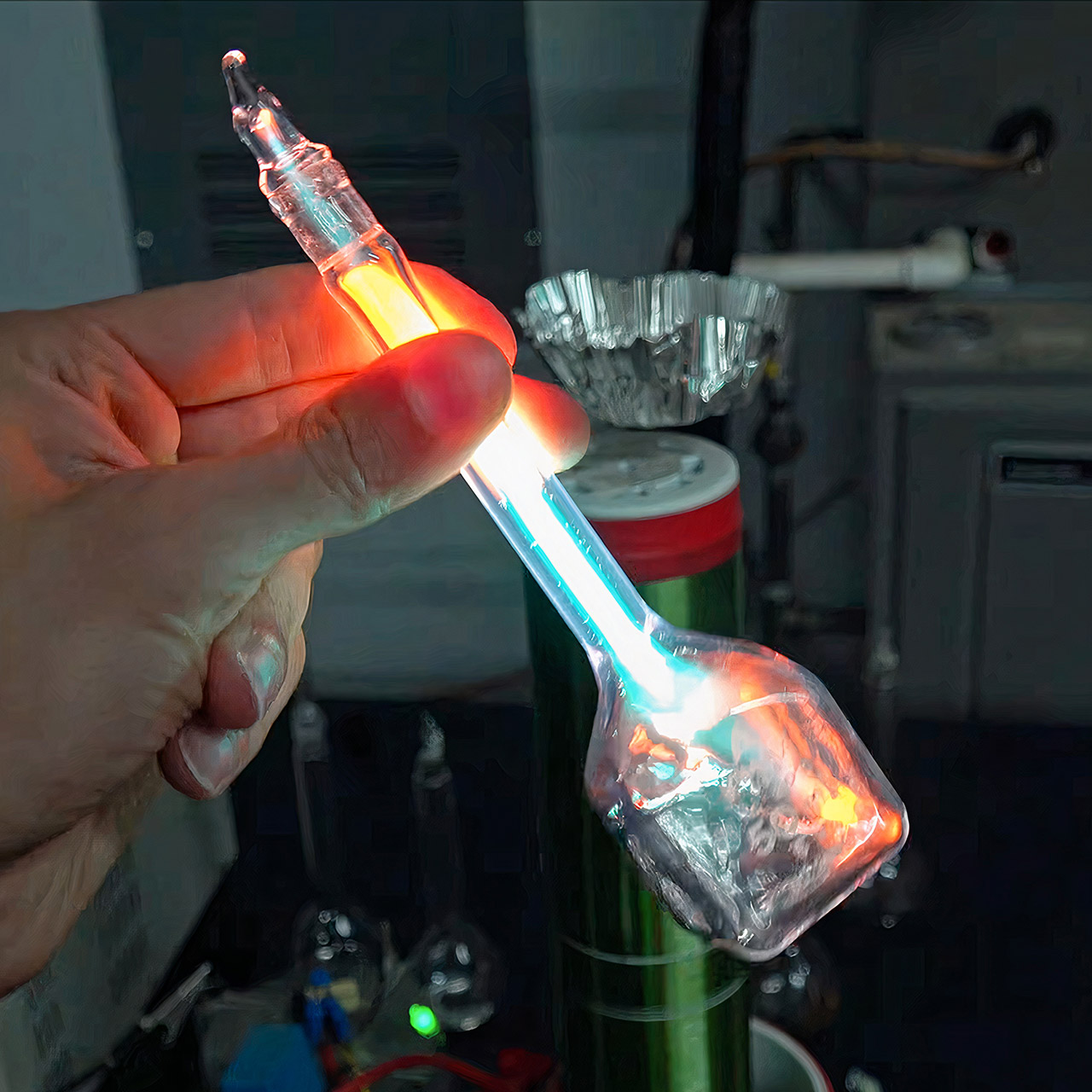
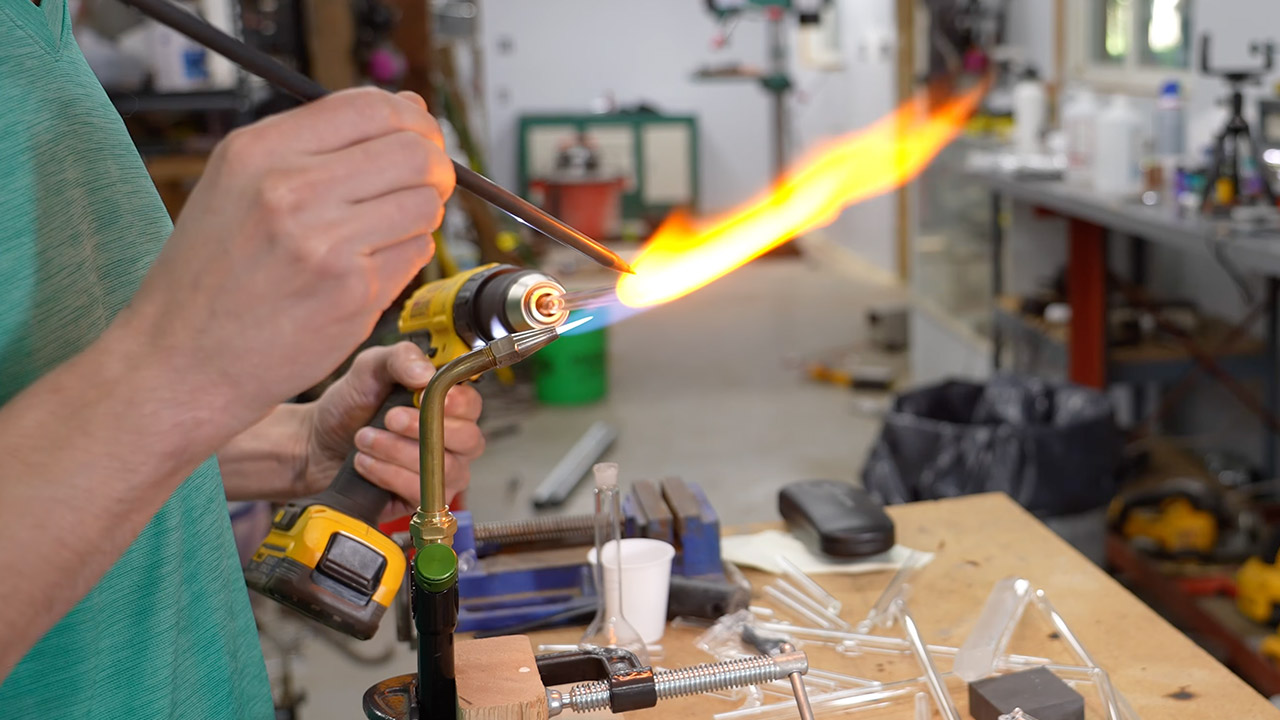
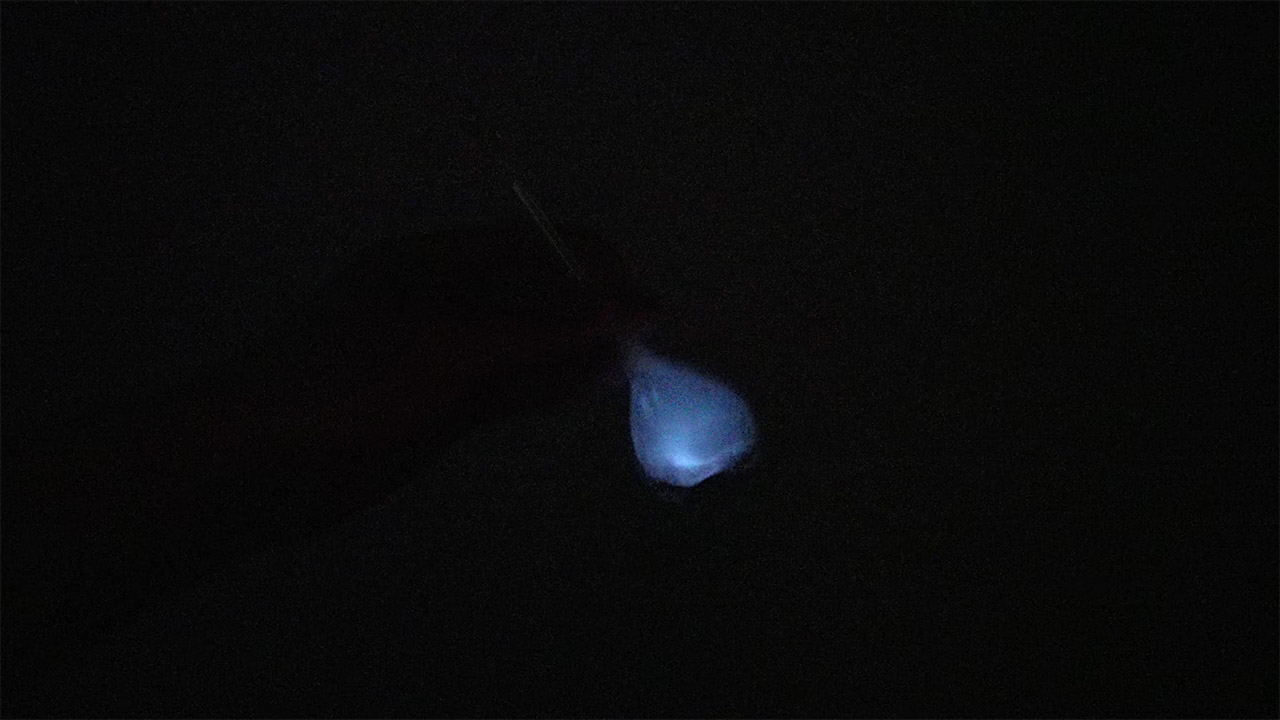
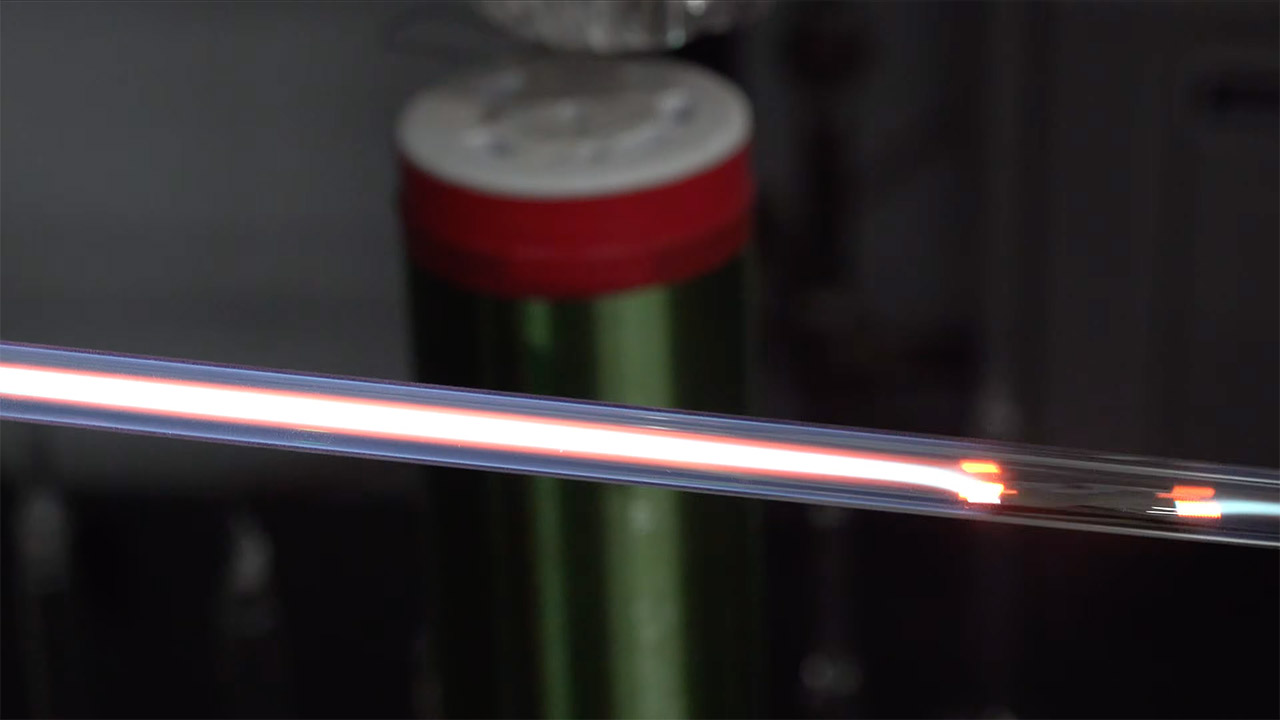
Drake Anthony spends a lot of time in the workshop, continually pushing the boundaries of what you can produce with basic materials. His recent video on the styro pyro 2 channel attempts to replicate a phenomenon discovered over three centuries ago. The ultimate result is a glass flask that emits visible light when shaken, eliminating the need for batteries, wiring, or other external power sources.
The story begins in 1675, with French astronomer Jean Picard out on the streets of Paris on a dark, clear night. He’s carrying a mercury barometer, and as he moves, a small glow begins to form in the glass tube above it. This light appears only when he stirs the mercury and exposes some new glass for it to play on. The whole thing is a strange sight, which he describes to several of his scientific friends at the time and ends up giving the nickname ‘barometric light’.
EXTRA BRIGHT HEAVY DUTY FLASHLIGHT: Its brightness is several times that of the small model.This extra bright LED spotlight casts a super bright…
WATERPROOF & FLOATING, IMPACT RESISTANT: This spot lights outdoor handheld is IP67 waterproof and submersible up to 3ft, and even float back up to the…
LONG TIME LIGHTING & POWER PORT: Built-in rechargeable batteries, YIERBLUE’s proprietary battery technology give you up to 9 hours lighting on lower…
It takes the scientists some time to figure out what’s going on, but friction turns out to be the key to everything. When mercury flows smoothly over a clean glass surface, it leaves a trail of electric charge that can travel through the air inside the container. When that electric charge strikes the gas molecules within, they begin to emit light, which is similar to how neon signs work, except that the energy comes from friction and contact between the two materials.
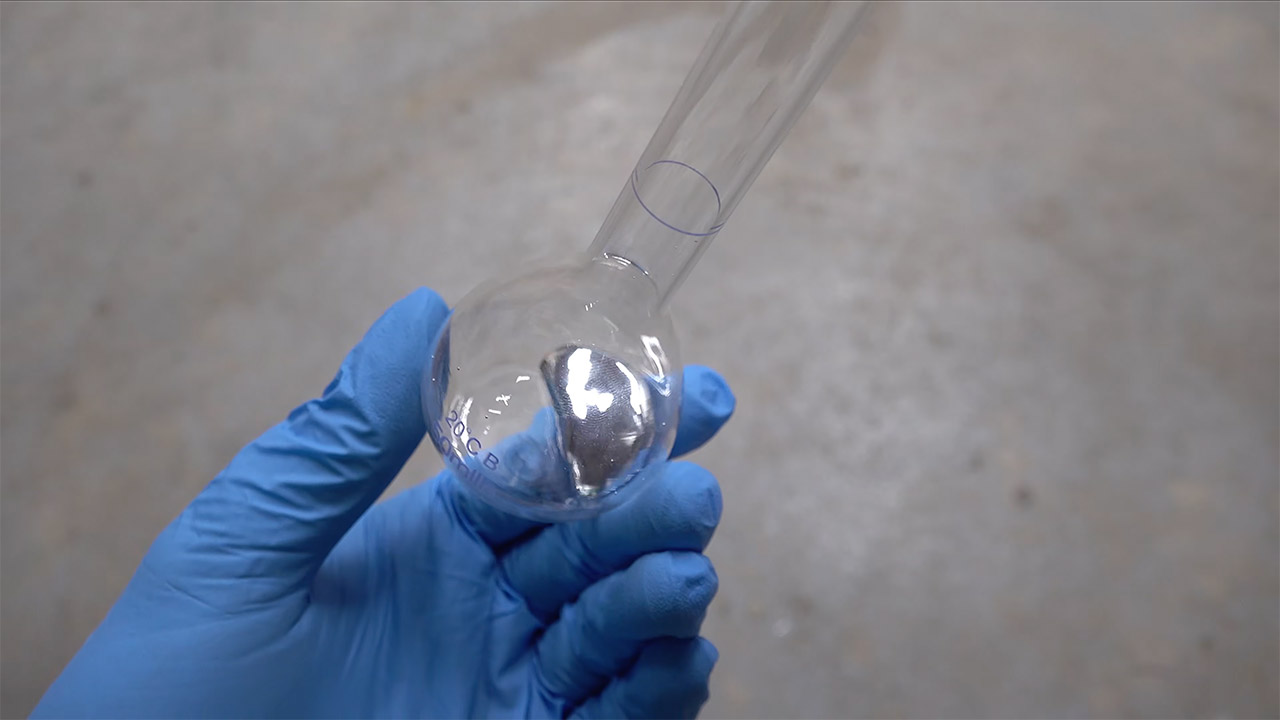
Anthony sets out on a journey to recreate this entire effect from scratch. First, he takes a round glass flask and uses a propane-oxygen flame to create a slender glass stem for it. Glassblowing was a completely new ability for him, and things became even more difficult because he only has limited depth vision in one eye. Nonetheless, he completed it successfully. After attaching the stem, he connects the flask to a vacuum pump and gradually drops the pressure to approximately 5 millitors, leaving only a whisper of the original air inside. There was still some residual gas and mercury vapour within, which he later learned was necessary for the light to work.
The next step is to transfer the mercury into the flask. He puts a little more in and then screws the top back on. When he initially shakes the flask in full darkness, you may see a faint blue-white glimmer. The reason it’s so faint is that the mercury he’s using isn’t pure, which limits the amount of charge that accumulates when the mercury passes over the glass. Even so, the light illuminates whenever he shakes the device, which is a pretty good indicator given that the technology is nearly 350 years old.
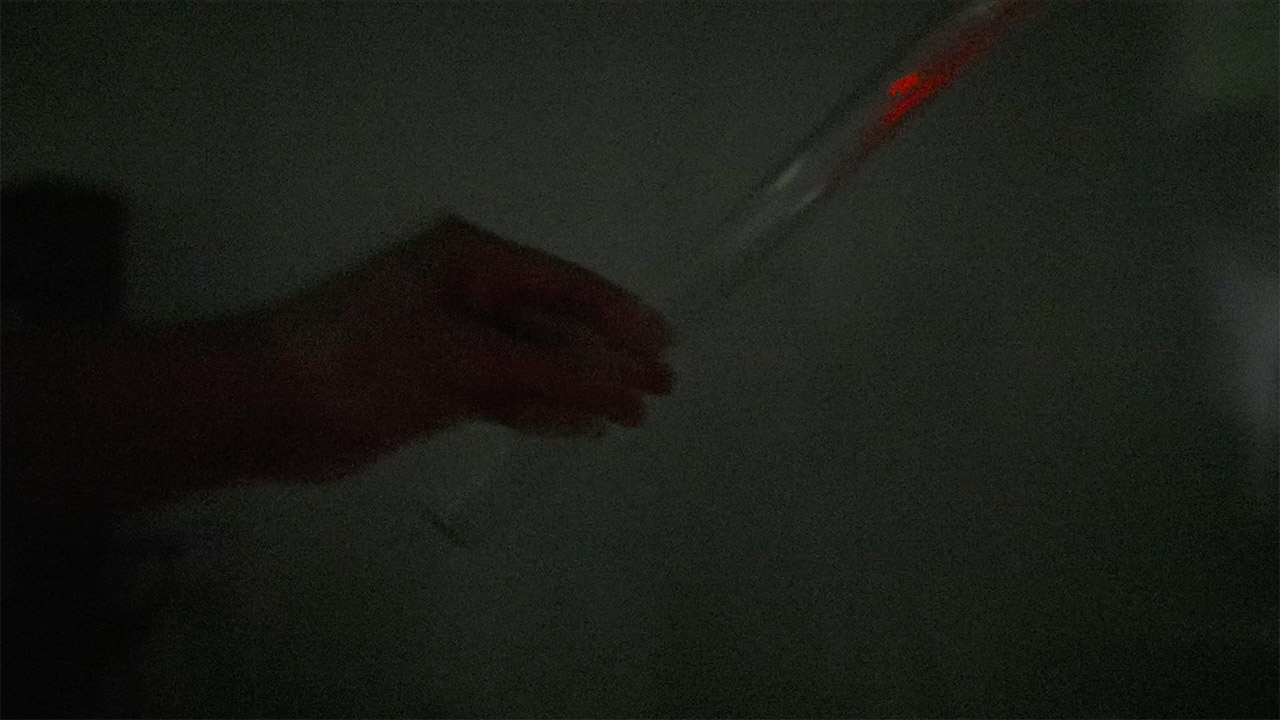
Anthony wanted to brighten up his own light display, so he started experimenting with adding little amounts of noble gases to the flask after he had the vacuum running. It was a feeling that starting with neon at around 100 torr would be a good place to start, and boy was it correct, as shaking the flask generated a really dazzling light that appeared almost electric and could be seen in regular room lighting. The neon seemed to make the entire process more easier from beginning to end, getting the discharge started and maintaining it flowing.
The other experiments he carried out in identical flasks were quite interesting. Adding copper pellets appeared to work just as well as glass in producing a decent light through friction, but then he tossed in a few of chunks of Teflon, which resulted in a few little sparks. The Galinstan experiment was similarly a failure, as he attempted to use a liquid metal alloy instead of mercury, but it stuck to the flask’s glass walls, making it nearly difficult to generate a sufficient charge. As expected, employing a straight tube was far less effective than using a curved or bent one since the gas would simply break contact and re-form whenever it encountered an edge, giving him even more possibilities to build a charge.
Anthony decided to add a Tesla coil to the mix just for fun, to give the gas within the flask a little extra kick from the outside. And let me tell you, the results were just plain cool, as the coil supplied a little more juice to the previously charged region, resulting in some amazing plasma displays with nice pinching effects and distinct color zones.
Astronauts on SpaceX’s Fram2 mission successfully captured diagnostic X-ray images in orbit for the first time. The milestone gives space medicine a second imaging option beyond ultrasound and could help future crews diagnose injuries, inspect equipment, and support longer missions to the moon or beyond. Popular Science reports: Commercial off-the-shelf X-ray machines like the ice cooler-sized MinXray TR90BH now allow users to perform scans on subjects far away from traditional facilities. In 2022, [Mayo Clinic researcher Sheyna Gifford] assisted in preparing a crew to successfully generate digital X-rays while experiencing microgravity during a parabolic flight. Gifford’s team then spent years collaborating with SpaceX to plan another feasibility study. This time, they didn’t want to operate an X-ray machine aboard an aircraft simulating the conditions in space — they intended to use the equipment during an orbital mission.
The process was detailed in a recently published study in the journal Radiology, and focuses on last year’s Fram2 mission. Instead of days of medical training, astronauts spent only four hours learning how to use their portable radiography device. They then took preflight X-rays of a hand, forearm, chest, abdomen, and pelvis ahead of their SpaceX Falcon 9 rocket launch on March 31, 2025. Once in orbit, the team calibrated the system before testing their MinXray on the same body parts as well as a smartwatch.
Once the crew returned, a trio of independent radiologists reviewed the orbital X-ray images based on their positioning, spatial and contrast resolutions, and general scan quality. Although positioning scores were slightly decreased for the central body images, every other scan held up to similar examples created on Earth. Meanwhile, the astronauts reported that using the machine was easy despite minimal prior coaching. Looking ahead, researchers hope to conduct further X-ray tests during orbital missions, while continuing to reduce the overall size of equipment.
I test 4K Blu-rays for a living and these are my 6 picks from Amazon’s big sale, including reference-level discs from Disney, Marvel, and 20th Century Studios that I use for AV testing
I regularly test 4K Blu-ray as part of our monthly Blu-ray Bounty feature, where we test the best new 4K releases. I’ve picked six discs from the sale that all featured as part of the Blu-ray Bounty, so I know just how good they look and sound.
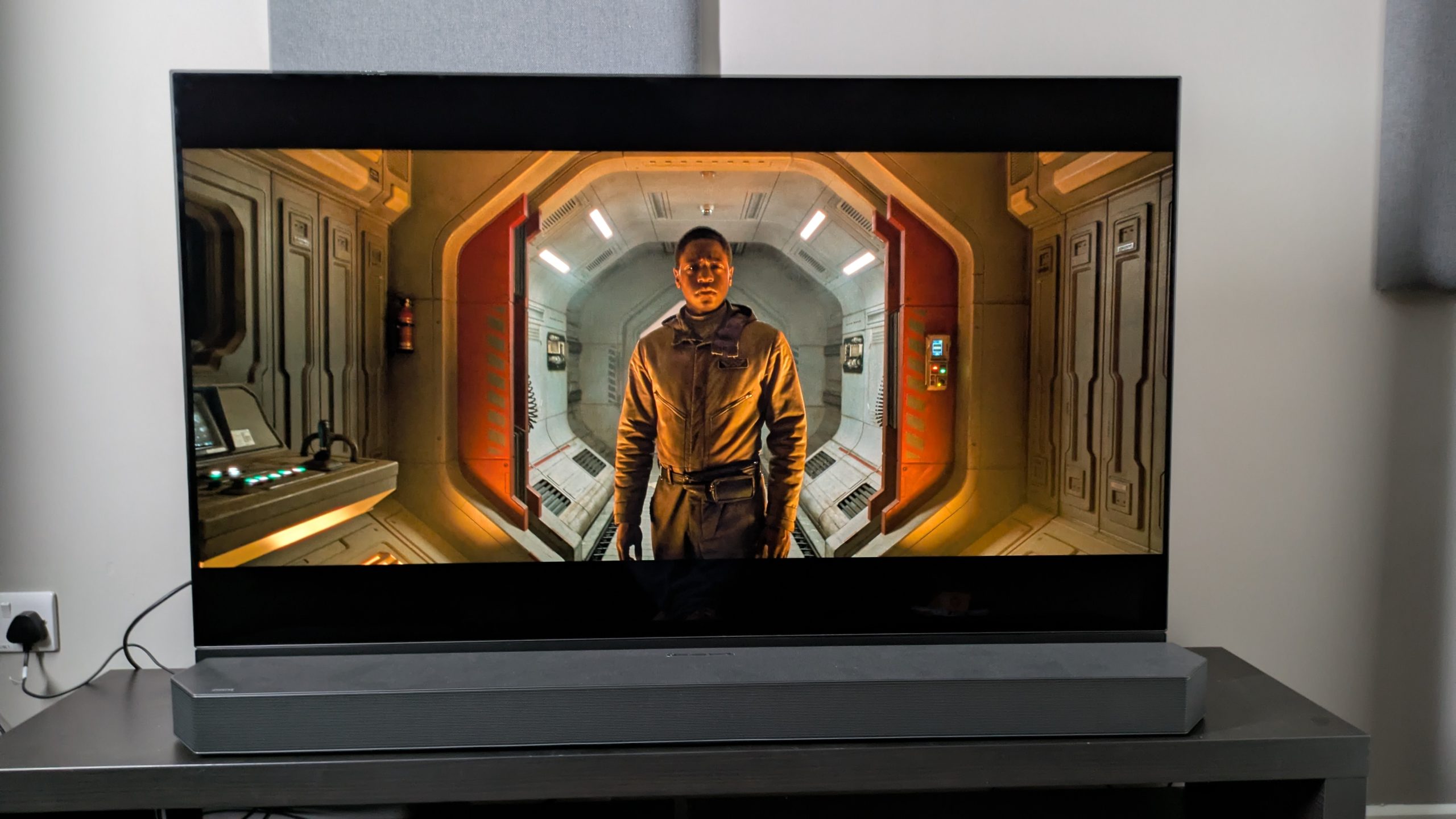
First up is Alien: Romulus, one of my reference discs for testing contrast and black tones on the best TVs. Its also excellent Dolby Atmos soundtrack is immersive and spine-chilling too.
Advertisement
The Sound of Music is one of the best restorations I’ve seen, with spectacular colours and detail. Edward Scissorhands is another disc that delivers superb colour reproduction, surpassing my expectations completely.
If you want action-packed titles with brilliant Dolby Atmos soundtracks, Master and Commander delivers pinpoint-accurate sound, while Fantastic Four: First Steps delivers the power you’d want from a superhero flick. Finally, Tombstone looks crisp and offers a fantastic DTS-HD 5.1 MA soundtrack that will show off your surround setup.
For my thoughts on each disc, scroll further down the page.
Advertisement
My picks from Amazon’s 2 for £30 4K Blu-ray sale
Alien: Romulus
(Image credit: Future)
Set between the events of Alien and Aliens, Alien: Romulus follows a crew of scavengers who come across a derelict space station called Renaissance, where they encounter hostile aliens.
Sign up for breaking news, reviews, opinion, top tech deals, and more.
Advertisement
Alien: Romulus delivers a truly stunning picture in 4K. Its inky black levels and high-contrast scenes look superb on the best OLED TVs, and it’s a real showcase for 4K detail. Textures are crisp, with impressive intricate detail in objects and environments that show just how good modern movies can look in 4K. When I want to test a TV’s backlight and contrast, this is one of the first discs I reach for.
The Dolby Atmos soundtrack featured is incredible. While the more powerful moments, such as gunfire or the sound of engines igniting, have real impact, it’s the detail that impresses. The sound of face-hugger feet is so precisely mapped, it had me looking around our testing lab when I first tested it, as their path came from the rear channels with astonishing accuracy. The movie’s more visceral moments, as characters meet their demise, can be particularly realistic.
The Sound of Music
(Image credit: 20th Century Studios / Future)
One of cinema’s most iconic musicals, The Sound of Music follows Maria (Julie Andrews), a nun who is sent to take over as the nanny of the Von Trapp family children, set in pre-WWII Austria.
Advertisement
The Sound of Music is one of the best examples of a 4K restoration I’ve seen. Textures have been cleaned up beautifully, and the breathtaking cinematography of the Austrian landscape has never looked more detailed. Really though, it’s the colours that stand out the most here. Green fields and blue skies have serious pop, and other colours such as red, yellow and orange are delivered with real vibrancy. One of my reference discs, the market scene, in particular, is brilliant.
Never has the movie’s legendary soundtrack sounded better than here. The Dolby Atmos mixes are all perfectly balanced between the score and vocals, and speech is crystal clear throughout. Songs like ‘Do Re Mi’ and ‘My Favourite Things’ sound clean, with superb depth and clarity.
Edward Scissorhands
(Image credit: 20th Century Studios / Future)
Edward Scissorhands follows the story of Edward (Johnny Depp), an artificial humanoid with scissors for hands, who is taken in by a suburban family, where he falls for the family’s daughter, Kim (Winona Ryder).
Advertisement
When I first tested Edward Scissorhands on 4K, I didn’t expect to be wowed by the disc’s colours as much as I was. The gothic nature of the movie is juxtaposed with the vibrant, often garish, colour scheme of the neighbourhood, and these colours are superb in 4K. The bright, multi-coloured houses are vivid, and if your TV has good colour reproduction, you’ll be rewarded. Textures have also been refined here to give everything a lifelike look.
The disc’s Dolby Atmos soundtrack is excellent. It shows real depth by accurately capturing subtle effects like the clicking of Edward’s scissors. Danny Elfman’s unmistakable score, with big horns balanced with delicate bells, is delivered with plenty of gusto and detail.
Master and Commander: The Far Side of the World
(Image credit: 20th Century Studios / Future)
Master and Commander: The Far Side of the World is the tale of the HMS Surprise, a British ship during the Napoleonic Wars in 1805, as they pursue the French ship Acheron. It stars Russel Crowe as Surprise’s Captain Aubrey and Paul Bettany as Maturin, the ship’s surgeon.
Advertisement
Where Master and Commander‘s 4K disc shines is with its Dolby Atmos soundtrack. Naval battles deliver room-shaking power as cannons fire, with intricate details such as splintering wood coming through clear in the mix. In several scenes, as cannonballs flew through the ship, I found myself looking around the room, following its trajectory as it was mapped with incredible accuracy.
The 4K presentation looks amazing, too. Night scenes deliver deep black tones with some strong contrast, as lamps balance with said dark tones. The crew looks lifelike, and the vast ocean looks stunning in 4K. Colour, while sparing, has some nice pop, whether it’s the red of blood or the gold details on ships.
The Fantastic Four: First Steps
(Image credit: Disney / Future)
Set in a 1960’s, futuristic world and based on the Marvel superhero family, The Fantastic Four: First Steps follows the Fantastic Four as they must protect Earth from Galactus and the Silver Surfer. Starring Pedro Pascal (Mr Fantastic), Vanessa Kirby (The Invisible Woman), Joseph Quinn (Human Torch), and Ebon Moss-Bachrach (The Thing).
Advertisement
The 4K disc of The Fantastic Four: First Steps has brilliant picture quality, accurately delivering the alt-1960s aesthetic. The bright blues and whites of the team’s uniforms pop on screen, but the oranges and yellows of decor and civilian clothing look great too. A big-budget Marvel movie, textures are refined and 3D-like and look top-notch on 4K.
As you’d expect from a Marvel movie with a Dolby Atmos soundtrack, this disc sounds fantastic. There are plenty of room-rattling explosions that deliver punchy bass and impact. Anytime the Human Torch flies overhead, height channels are utilised perfectly and will sound great through an Atmos system.
Tombstone
(Image credit: Disney / Future)
Tombstone follows Wyatt Earp (Kurt Russel), a retired lawman who moves to the town of Tombstone and ends up as its de facto sheriff after a gang of outlaws wreaks havoc. The movie also stars Val Kilmer, Sam Elliot, and Bill Paxton.
Advertisement
Tombstone looks stunning in 4K. A fantastic restoration means textures are clean and crisp, demonstrating almost 3D-like levels of depth and detail. Colours are bold and punchy throughout, and black tones are rich, whether it’s the night sky or the Earp group’s clothes.
The disc’s DTS-HD 5.1 MA soundtrack is excellent too. Gunfights deliver precise sound mapping, as bullets fly around and ricochet off buildings. Galloping horses offer plenty of rumble that will let your subwoofer flex its muscles, and even subtle sound effects like spurs on boots as people walk have nice detail.
Microsoft’s July 2026 Patch Tuesday fixed a record 622 vulnerabilities, including 58 critical, two exploited in the wild, and one publicly disclosed, plus 428 Chromium bugs
Actively abused flaws include CVE‑2026‑56155 (AD FS privilege escalation) and CVE‑2026‑56164 (SharePoint privilege escalation), alongside notable issues in BitLocker and Copilot
Surge in fixes is linked to Microsoft’s use of Anthropic’s Mythos AI, with patch volumes rising sharply since its adoption
Microsoft has released its July 2026 Patch Tuesday download, marking another record-breaking update, addressing hundreds of flaws across the ecosystem.
The release, which is currently rolling out to Microsoft users, fixes a staggering 622 vulnerabilities, including 58 critical-severity ones, two that were observed as being abused in the wild, and one which has already been publicly disclosed.
On top of that, Microsoft shipped fixes for another 428 Chromium bugs, as well.
Latest Videos From
A jump in numbers
There are simply too many vulnerabilities to mention all of them, however two that are being exploited in the wild are CVE-2026-56155 and CVE-2026-56164. The former is described as an “Insufficient granularity of access control in Active Directory Federation Services (AD FS)” bug, which allows an authorized attacker to elevate privileges locally. It carries a severity score of 7.8/10 (high).
Advertisement
The latter is a “Missing authentication for critical function in Microsoft Office SharePoint” bug that allows an unauthorized attacker to elevate privileges over a network. Microsoft assigned it a medium severity score (5.3/10), but the National Vulnerability Database gave it a 9.8/10 (critical).
Other notable mentions include CVE-2026-50661, a protection mechanism failure in Windows BitLocker that allows unauthorized attackers to bypass a security feature with a physical attack, and CVE-2026-48561, an improper neutralization of special elements used in a command in Microsoft Copilot, that allows an unauthorized attacker to execute code over a network.
If you think fixing 622 vulnerabilities in a month is a lot, you’re absolutely right. It’s well above what Microsoft is used to do, and this is most likely due to the company now using the fabled Mythos – Anthropic’s cybersecurity-oriented AI.
Advertisement
Sign up to the TechRadar Pro newsletter to get all the top news, opinion, features and guidance your business needs to succeed!
In June 2026, roughly a month and a half after the release of Mythos, Microsoft fixed 206 flaws, which raised eyebrows because it was significantly above the company’s usual amount of bugs fixed.
In May it fixed 120 flaws, in April 167, and in March – 79.
Anthony Albanese has told the AI industry that Australian books, music, and journalism are not free training data, and that any large data centre built in the country will have to put more electricity into the grid than it draws out. Neither of those things is law yet.
The prime minister used a speech at the University of Sydney on Wednesday to announce an Office of AI inside his own department, effective immediately, plus Australian Standards covering energy, water, copyright, and siting.
It lands two days after Anthropic and others were reported to be weighing tens of billions in data centre investment against a copyright carve-out Canberra had already ruled out.
The energy obligation is the sharpest thing in the speech. Operators of the next generation of large data centres would be required to underwrite new power supply, pay their full share of grid connection so that no costs land on homes or businesses, and put at least as much energy into the grid as they take out of it.
Advertisement
“To be net-generators, not net-users,” Albanese said. That means funding new renewable generation and firming rather than joining a queue for someone else’s electrons, a heavier ask than anything hyperscalers face in Europe or the US, where grids are already buckling under connection requests.
The 💜 of EU tech
The latest rumblings from the EU tech scene, a story from our wise ol’ founder Boris, and some questionable AI art. It’s free, every week, in your inbox. Sign up now!
Water got similar treatment. Operators would have to minimise water use, maximise energy efficiency, and pay for any additional water infrastructure they need, on a continent Albanese called both the sunniest and the driest on earth.
Advertisement
Copyright got the rhetoric. “Let me make this crystal clear: not everything produced in Australia is up for grabs,” he said. “Not at all.” Australian writers, musicians, artists, and journalists “must retain ownership and control of their work”, and no company should train on it without the artist’s control of its price and value. “Anything less, is theft.”
What the speech did not contain was a mechanism. The policy has been read as obliging AI firms to reach agreements with local artists and media before using their content, but Albanese never said how that control would be enforced, and the attorney-general’s consultation on copyright is still open.
The distance between announced and legislated is the story here. Nothing unveiled on Wednesday binds anyone: the Office of AI is an executive creation, the standards go to National Cabinet next month, and legislation is only targeted for introduction early next year.
Albanese was candid that he does not want an exhaustive rulebook. “It is not our goal to try and legislate for every possible eventuality or risk,” he said. That is a lighter touch than the language around it implies, and closer to the ground Brussels has been retreating to than to the AI Act as drafted.
Advertisement
His claim that Australia “will be the first country in the world to bring these issues into a single, national framework” is doing work it cannot carry. The EU adopted the AI Act in 2024 and built an AI Office to run it, as legal scholars noted within hours.
Reaction divided on schedule. Greenpeace Australia’s Joe Rafalowicz called the facilities “water-guzzling energy vampires”, accusing the government of rolling out the red carpet while leaving them unregulated until at least 2027. Opposition Leader Angus Taylor said the office would just create more bureaucracy.
New York, hours before Albanese spoke, halted large data centre builds for a year, the pause Australia has now declined to take. Washington is still arguing over who pays when data centres raise power bills, the question Albanese thinks he has answered in advance.
Anthropic, which told Treasurer Jim Chalmers that its A$21.6bn Australian investment depended on copyright certainty, said it respected the process and would meet the terms the government sets. That is a company waiting for the fine print.
Advertisement
APRA AMCOS chief executive Dean Ormston welcomed the certainty but said the Office of AI “must seriously interrogate the numbers AI platforms are putting on the table”. The numbers are not on the table yet. Neither is the bill.
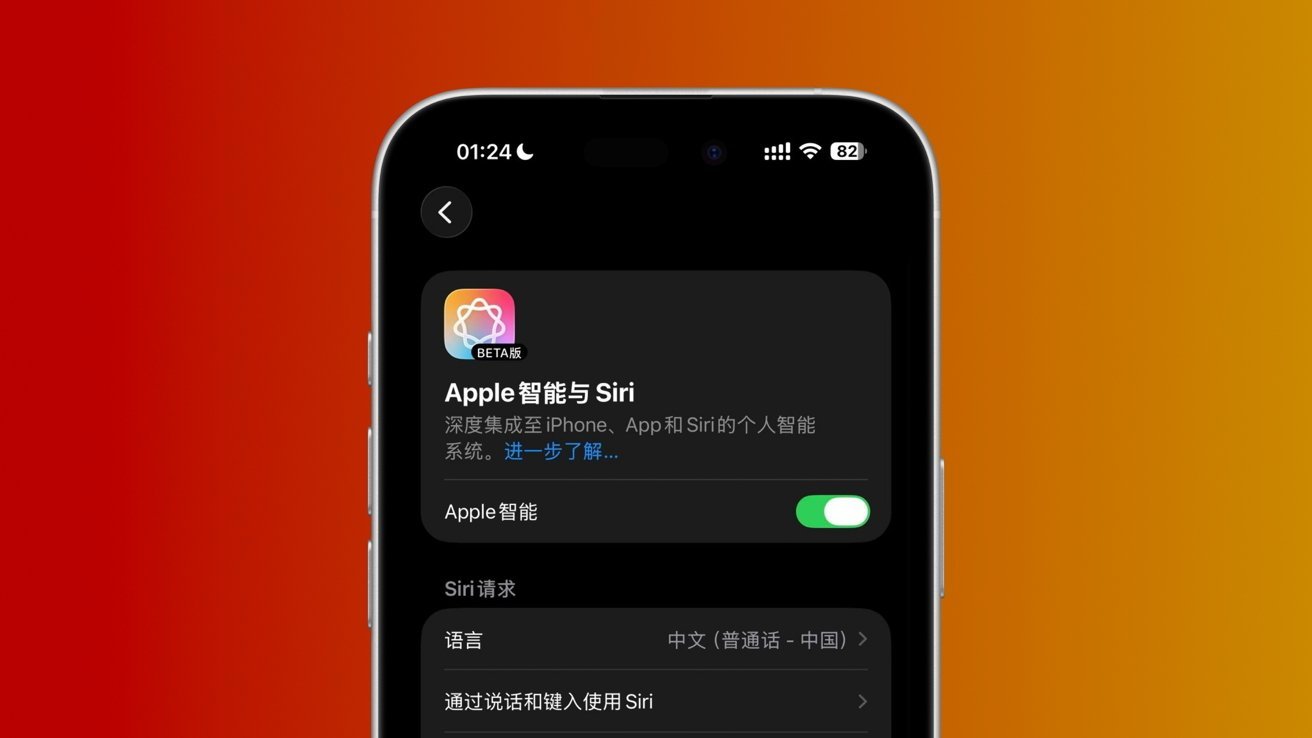
A new official filing marks the conclusion of another regulatory hurdle that has been preventing Apple Intelligence from launching in Apple’s crucial Chinese market.
In mid-June 2026, Apple’s Chinese partner Alibaba unveiled its latest AI model and, most significantly, revealed that it was now compatible with Apple Intelligence. Now according to Reuters, China’s cyberspace regulator has allowed Apple Intelligence to be registered for use on iPhones in the region.
China has complex requirements for regulatory approval, and sufficiently so that US firms typically need to involve a local partner. It’s not certain yet whether this latest listing is the final step toward Apple Intelligence launching in China, but it appears to be, and it marks more than two years of effort from Apple.
Apple has not commented on the regulator’s listing, and Alibaba has only confirmed certain details that were already presumed. Specifically, the company stated that its new Qwen AI model will be integrated into Apple Intelligence, when that becomes available for iPhone, iPad, Mac, and Apple Vision Pro users in China.
Advertisement
The report also cites an unspecified source saying that Apple Intelligence will also incorporate technologies from Baidu. This has also been presumed, as despite seemingly choosing against Baidu as a full partner in 2024, Apple reportedly signed with the company for specific functions such as Visual Intelligence.
Apple Intelligence has effectively required partnerships with local companies even though Apple has been able to release iOS in the country without the same level of scrutiny. This is because China has restrictive laws about generative AI software, large language models, and data privacy.
It’s sufficiently difficult to obtain Chinese government approval for any such services, that OpenAI is banned in the country. Apple needed to partner with firms such as Alibaba and Baidu which already had certain approvals. Use of these Chinese firms, though, also raises issues over how Apple Intelligence will be censored in the country.
Apple appears to have worked through all the technical issues, though, and has been waiting only for regulatory approval. That’s because in March 2026, Apple Intelligence was briefly enabled in China, apparently by mistake.







 A few years ago, France introduced a mandatory repairability score for consumer goods like laptops and tablets. It involves five criteria that range from documentation and availability of spare parts to ease of disassembly, with the manufacturer using a government-provided checklist to determine their score.





















































You must be logged in to post a comment Login