Pupils from Lakes Primary School and Wilton Primary Academy in Redcar have buried a time capsule at the site of The Lookout, a new development in Redcar town centre.
Harry, Aria, Katie and Lillian were among the pupils who helped seal and bury the capsule filled with letters and messages to their future selves, creating a snapshot of life in Redcar today for generations to come.
Local school children bury a time capsule at The Lookout in Redcar. (Image: Stuart Boulton)
The capsule has been buried on the High Street side of the development, just outside the attraction, where it will remain hidden until it is one day rediscovered.
The Lookout is one of the flagship projects in the Redcar Town Deal programme that aims to create a modern community hub featuring a library, learning spaces, family-friendly attractions, food and drink outlets, and a programme of year-round events.
Advertisement
Once complete, The Lookout will offer digital technology and learning areas, flexible indoor and outdoor event spaces, and family-friendly activities.
Local school children bury a time capsule at The Lookout in Redcar. (Image: Stuart Boulton)
Jacqui Hutchinson of RCVDA coordinated the event with the help of the schools and Robertson Construction North East.
Ms Hutchinson said: “This was a lovely opportunity for local children to become part of the story of The Lookout.
“The messages they’ve placed inside the time capsule will give future generations a glimpse into what life was like in Redcar today.
Advertisement
“The Lookout is all about creating opportunities, learning and experiences for local people, so it’s fitting that young people have played such an important role in this milestone.”
The scheme follows extensive public consultation and sits alongside other Town Deal projects aimed at regenerating Redcar’s town centre and seafront.
Local school children bury a time capsule at The Lookout in Redcar. (Image: Stuart Boulton)
Cllr Alec Brown, leader of Redcar & Cleveland Borough Council, said: “It’s fantastic to see local schoolchildren helping mark this exciting stage in the development of The Lookout.
“Burying a time capsule is a great way of connecting the town’s future with its present, and I hope the children will look back proudly knowing they’ve contributed to a project that will benefit Redcar for years to come.”
Advertisement
Local school children bury a time capsule at The Lookout in Redcar. (Image: Stuart Boulton)
As construction continues, the community is being reminded that the heart of Redcar remains open and ready to welcome shoppers, diners, and day-trippers alike.
The visit ended on an even sweeter note for the pupils, with an ice cream from iconic Italian parlour, Pacitto’s.
If anyone has any information, CCTV footage or mobile phone footage that may relate to GMP’s investigation you can provide it via the Major Incident Public Portal here: Public Portal.
You can also contact police via 101 or the Live Chat at gmp.police.uk, quoting log 744 of 17/07/26.
Alternatively, you can contact the independent charity Crimestoppers, anonymously, on 0800 555 111.
Potatoes may be a kitchen essential, but keeping them fresh for more than a few weeks can prove surprisingly difficult
Potatoes are among the most versatile vegetables around. Whether you’re after a classic Sunday roast, a hearty potato salad or simple sausage and chips, it’s always handy to have a few spuds tucked away.
Advertisement
Yet far too often, we head to the larder only to discover they have turned green and sprouted or, even worse, gone soggy and mouldy.
YouTuber Marandia Wright has a surprisingly straightforward, old-fashioned storage technique that could spare you from repeatedly binning bag after bag of rotten spuds. She explains: “Those of you who have grown potatoes know that, when you dig your potatoes up out of the dirt, you can put them in a cardboard box and just put them in a dark room.
“You can go and get them whenever you want them and they’re good all the way through until the next growing season,” she says on her Survival HT channel.
However, Marandia points out that shop-bought potatoes will rarely keep for more than a couple of weeks: “One of the major reasons is the plastic bag,” she says. “This thing sweats, it gets them wet, it starts them rotting and rot starts spreading.”
Advertisement
The solution, she explains, requires no costly equipment or specialist knowledge — in fact, she insists, “a toddler can do it.”
“This works with any kind of potato,” Marandia says. “Even sweet potatoes, and all you need is a box and some dirt.”
She explains that the first and most crucial step is to remove your potatoes from the plastic bag the moment you arrive home, as the humid environment inside encourages rot: “Another major reason,” Marandia says, “is because they have washed them.
Advertisement
“When you harvest [potatoes] yourself you do not wash them. You leave them in the original dirt, the original microbes, the things that they grew with are going to help to protect and to preserve them.”
Marandia says that you can restore shop-bought potatoes to a more natural condition simply by removing them from the bag and leaving them somewhere sheltered to dry out: “Make sure there’s no moisture on the skins,” she says, “and then all you have to do is get a cardboard box.”
The following step, she adds, is to gather some soil from your garden and leave it in direct sunlight for a day to make certain it’s completely dry. You won’t need a great deal of earth, Marandia says, just enough to give each potato a light coating.
Finally, Marandia says, you should ensure each potato is kept apart from the others: “You can do this with newspaper by layering them: a potato layer and then a newspaper layer, then another newspaper layer.”
Should you not have sufficient newspaper to hand, she says, extra soil will do the trick, simply using a layer of earth to keep each potato separate.
With this straightforward age-old technique, you can keep a bag of shop-bought potatoes fresh for up to a year — that’s if you can resist tucking in!
King Charles has a ‘vermin infestation’ in gardens on his sprawling Sandringham estate in Norfolk, local residents have complained.
At a recent Sandringham parish council meeting one resident raised the issue of vermin in the gardens of the 300 or so rental properties.
The Sandringham estate manager, Rob Timmins, attending the meeting, said the responsibility for pest control lies with the ‘occupier, not the property owner.’
It comes after Andrew Mountbatten Windsor’s new home on the estate, Marsh Farm in Wolferton, was invaded by moles earlier this year – with dozens of molehills suddenly appearing all over the front lawn.
Advertisement
But the problem is believed to be worse than that, including rats and mice attracted by the nearby crops and food sources.
Tenants in King Charles’ properties at Sandringham are banned from keeping cats, which means that mice, rats and other vermin are more common in the area.
The prohibition dates back to Queen Elizabeth II, who brought it in to save wildlife – but according to one tenant, it gives rats ‘a free pass’.
‘There are always rodents in an agricultural area like this,’ one tenant told the Daily Mail, on condition of anonymity, ‘but most people can keep the numbers under control by having a cat.
Advertisement
King Charles has a ‘vermin infestation’ in gardens on his sprawling Sandringham estate in Norfolk, local residents have complained. Pictured: The King attending church in Sandringham earlier this year
At a recent Sandringham parish council meeting one resident raised the issue of vermin in the gardens of the 300 or so rental properties. Pictured: File photo of the Sandringham estate
It comes after Andrew Mountbatten Windsor’s new home on the estate, Marsh Farm in Wolferton, was invaded by moles earlier this year. Pictured: Andrew driving around the Sandringham estate in April
Advertisement
‘Here that’s not permissible, so it means that they are free to multiply. Traps can only be used indoors and on their own aren’t really effective, and poison bait stations can’t be used outside because they are potentially dangerous to other wildlife such as hedgehogs, so we’re a bit stuck.’
It is understood that there have been no complaints about vermin from tenants to the Sandringham Estate.
Country Life reported in 2014 that the late Queen was allergic to cats, but other reports have suggested that the main reason behind the cat ban was to protect young game birds such as pheasants and partridges.
In 2020, Prince William faced calls to address hunting and wildlife management at Sandringham – shortly after he had become patron of the British Trust for Ornithology.
Advertisement
The row came after a protected bird, a little owl, was killed in a trap set by gamekeepers on the 20,000 acre estate.
The bird was found in a Fenn trap used to kill vermin such as rats, which eat the eggs of pheasants and partridges.
In 2023, The Guardian claimed to identify 18 cases in the previous 20 years involving suspected wildlife offences or the alleged misuse of poisons linked to the Royal estate and neighbouring farmland owned by King Charles.
The cases included the alleged poisoning, shooting and disappearance of some of the UK’s rarest birds of prey.
Advertisement
One involved the mysterious loss of eastern England’s last breeding female montagu’s harrier, a critically endangered species.
Many of the cases were detailed by official regulators in internal documents released under freedom of information legislation.
The dossier revealed that police and enforcement officials regularly investigated the Windsors’ private estate.
The documents also revealed how the estate appeared on occasion to have hindered official investigations.
Advertisement
Recently, a Command Pest Control van, which has a Royal Warrant and works across the East of England, was seen driving out of Andrew’s five-bedroom Marsh Farm (pictured)
The company deals with removing moles, as well as unwanted rats, mice, squirrels and wasp nests. Pictured: The van leaving Marsh Farm
In 2016, Natural England, the conservation regulator, recorded that it was unable to investigate the suspicious deaths of up to 40 wood pigeons on the estate as it appeared the area had been ‘cleaned up’ early one morning.
In another incident, staff burned the body of a goshawk, a legally protected raptor, which made it impossible to investigate the cause of its death.
Advertisement
Questions were also raised over whether the estate has been treated leniently by official agencies, a suggestion rejected by the estate.
A spokesperson for Sandringham said at the time that it ‘fully supports and cooperates with any investigation into alleged wildlife or pesticide incidents’.
They said the vast majority of allegations outlined by the Guardian ‘were either investigated with no further action taken, or are assertions based on little or no substantive evidence’.
Only one of the incidents led to a prosecution. In 2006 a Sandringham gamekeeper was fined £500 and £470 in costs after he admitted maiming a legally protected tawny owl in a trap. Three other charges were dropped; one of those involved the incorrect use of rat poisons.
Advertisement
Recently, a Command Pest Control van, which has a Royal Warrant and works across the East of England, was seen driving out of Andrew Mountbatten-Windsor’s five-bedroom Marsh Farm.
The company deals with removing moles, as well as unwanted rats, mice, squirrels and wasp nests.
Their website promises ‘swift and humane’ removal of the creatures, which are known to wreck garden lawns.
It states: ‘Moles can wreak havoc on your property by digging holes and tunnels across your lawn, gardens, and root systems.
Advertisement
‘Moles are extremely sensitive to vibrations which make them hard to control within a domestic setting.’
The Daily Mail contacted Sandringham Estate and Buckingham Palace.
Emergency services were called to Baydale Farm on Coniscliffe Road at around 5.10pm.
County Durham and Darlington Fire and Rescue Service tackled the field fire for around 48 minutes.
A spokesperson said: “On Friday, July 17, at around 5.10pm, we were called to a fire in the open on Coniscliffe Road, Darlington.
Advertisement
“Our control room mobilised one fire appliance, which arrived at the scene within seven minutes and quickly extinguished the fire using high-pressure hose reels.
“The fire involved approximately 50sqm of grass and hay.
“The incident was safely dealt with, and crews left the scene at around 5.58pm.”
The fire service also gave a warning for people enjoying open countryside this summer, especially with the dry weather.
Advertisement
They said: “As we continue to experience warm and dry conditions, we would encourage people to take extra care when enjoying outdoor spaces.
“Even small fires can spread quickly and have a significant impact on the local environment and nearby communities.”
Baydale Farm put out its own post on social media, saying that the Pick Your Own flowers experience, which it’s unveiling for the 2026 season today (July 18), is unaffected by the incident.
They said: “With the incredibly hot and dry weather we’ve experienced this season, this could very easily have spread through the entire field within minutes.
Advertisement
“We’ve lost straw that we rely on for bedding for our livestock. It also posed a serious risk to anyone nearby, who could easily have been injured had the fire spread more quickly.
“A huge thank you to Darlington Fire and Rescue for their rapid response today.
“Harvest is challenging enough without unexpected incidents like this, and as we’re also busy preparing to open our Pick Your Own flowers tomorrow, it’s certainly been an eventful day.”
Aberdeen Muslims issued a heartbreaking plea for information on the whereabouts of Sumon Hoque, who helped establish the organisation.
A man described as “kind and inspiring” by the charity he helped set up has gone missing for nearly a month, prompting a heartfelt plea for information. Sumon Hoque was last seen in Kings Crescent on June 20.
Advertisement
He has not been seen since and concerns are growing for his safety. Sumon is described as 5ft 8ins tall, of slim build, with short black hair and bushy eyebrows. Police Scotland launched a desperate appeal this week and a search is underway.
The appeal has been echoed by Aberdeen Muslims. Sumon was a founding member of the charity which has been dedicated to community work.
Sumon helped set up the Food Box project, which provides thousands of hot meals to people across Aberdeen, and was involved in initiatives like Aberdeen Beach Clean-up events and Seaton Park activities. Sufian Ali, Chairman, posted on Facebook on Friday: “Aberdeen Muslims is deeply saddened to hear of Sumon Hoque’s disappearance.
“On behalf of our Board of Trustees, volunteers and the wider Aberdeen Muslims community, our heartfelt thoughts and prayers are with Sumon, his family, friends and everyone affected. Sumon played an important role in helping establish and shape our organisation during its early years.
Advertisement
“It was a privilege and an honour to work alongside him. His passion for charity and helping others was truly inspiring.
“Sumon was someone who genuinely cared about serving others. His kindness, dedication and willingness to help people will always be remembered, and we are grateful for the time, effort and energy he gave.
“We sincerely hope Sumon is found safe and well.”
A Police Scotland spokesperson said: “We are appealing for the public’s help as part of our efforts to trace a male reported missing in Aberdeen. Sumon Hoque, was last seen in the area of Kings Crescent, Aberdeen on 20 June 2026. He has not been seen since and there are growing concerns for his welfare.
“Sumon is described as 5ft 8ins tall, of slim build, with short black hair and bushy eyebrows.” The police statement also said Sumon “has links across Scotland and England”, however no further information has been given on specific locations.
Advertisement
Anyone who may have seen Sumon since this time, or who has any information on his whereabouts, is urged to contact Police Scotland via 101 quoting incident number 0945 of the 8th of July.
Get Daily Record Premium for just £1 per month in exclusive offer to celebrate the world cup. Click HERE.
The reigning world champions take on the reigning European champions in Sunday’s World Cup with Argentina hoping to retain the trophy after facing Spain.
It will be a case of what could have been for England fans and players alike after they were beaten 2-1 by Lionel Messi and Co late on.
Spain comfortably defeated France 2-0 in their semi-final with Luis de la Fuente’s side conceding just one goal en route to the final.
Sunday’s final in New Jersey will see Messi and Lamine Yamal share a pitch for the first time which is an exciting prospect on its own.
Advertisement
So who will leave the United States victorious? Daily Mail Sport experts give their predictions…
Lionel Messi is expected to play his final ever World Cup game in this year’s final on Sunday
Mike Keegan
Advertisement
Spain. Why? Because it’s not Argentina! Only joking – I think England just blew an incredible opportunity because our old friends from South America are just not that good, and certainly nowhere near as good as England made them look for half an hour, thanks to an unnecessary retreat that will continue to sting for a very, very long time. Spain, with Rodri pulling the strings (unless they kick him out of the game), will ease some of that pain.
Matt Barlow
Spain. With no great confidence but they were my pre-tournament tip, so I’ll stay loyal. There’s no reason not to. They’re probably the most complete team. Supreme technical quality throughout. Swift and fluent, with awareness of the shapes and the spaces required to keep the ball. They have strong tactical acumen channelled through Rodri. They create and score. They have depth and options from the bench. They win the ball back quickly. They keep clean sheets, which will be put to the test against Argentina, the top scoring team at the World Cup with 19 goals, with the enduring genius Lionel Messi and a frenzy of desire when they need it most. The best attack against the best defence. Could be a classic.
Jack Gaughan
Advertisement
Argentina. They just have this will, this spirit and it all appears pre-written for them. Lionel Messi’s final World Cup match as a winner after so many years of hurt before 2022 would feel fitting, especially at the end of a tournament in which he has conjured such stardust on a personal level. Lionel Scaloni again proved he is more than just an extension of the players in the semi-final and sometimes there feels like unstoppable momentum for a country on these occasions. In Atlanta, it seemed Argentina were convinced of their destiny and that weight is what Spain are trying to stop.
Lewis Steele
Spain. They were my pre-tournament pick to win although I have to admit I projected the final as Spain v England. Oh well, there’s always next time. France are the team that impressed me the most throughout the World Cup but they were felled by the mighty Spain, who pass, pass, pass teams to death. They have a rock-solid defence and do not concede many chances, the midfield is elite and they have several goal-scorers. I can’t see past them to triumph.
Ian Ladyman
Advertisement
Spain. They were my tip before the tournament started and I am sticking with them. Argentina have been involved in three thrilling comebacks in this tournament but that just shows they have been unable to actually control games. Theirs has been a World Cup built on emotion and passion and big momentum shifts. England weren’t good enough to cope with it but Spain will be. The Euro 2024 champions scored early against France in the semi-final and completely dictated the game from that point on. We need a strong ref though! Fingers crossed.
Lamine Yamal will be hoping to get his hands on the World Cup trophy at the tender age of 19
Chris Wheeler
Spain. They have played the most consistently good football at this World Cup – if not the most spectacular – following an opening goalless draw with Cape Verde that doesn’t look so bad in hindsight, and I expect Luis de la Fuente’s side to deservedly be crowned world champions in New Jersey.
Spain showed Thomas Tuchel and England how to hold onto a lead when they went ahead against France in the semi-finals. If they can exert that level of control against the French, they can do it against Argentina as well.
Advertisement
The reigning world champions have sailed close to the wind in the knockout stages against Cape Verde, Egypt and England, relying on sheer belligerence and the brilliance of Lionel Messi. It has been a dogged defence of their title, but I think Argentina’s luck is about to run out.
Isaan Khan
Spain. They have been the most balanced team in the tournament. They have conceded just one goal thus far – against Belgium in the quarter-finals – and dominate possession through a stranglehold on the midfield area.
Against France, Spain showed a different side of their game, a willingness to suffer without the ball and strike with devastating efficiency when opportunities arrived.
Advertisement
Argentina do possess that spark in attack, which is so dangerous when ignited — as seen in the final 10 minutes against England. The South American nation have also edged a number of knockout matches in high-pressure scenarios where facing an exit to the tournament.
The Lionel Messi factor can’t be discounted, either. He can have a quiet game but then suddenly kick into gear out of nowhere, making the pivotal difference with a piece of brilliance. On the wing against England late on, the forward was unstoppable.
Though I think Spain will have the edge – as long as they cope with Argentina’s quick transitions.
Anthony Hay
Advertisement
Argentina.I know this will not be a popular prediction in England given all of Argentina’s antics during this week’s semi-final but I just think the world champions always seem to find a way to get the job done.
Their late wins over Cape Verde (in extra time), Egypt and England show they will fight until the very end.
Despite Rodri’s brilliance and Lamine Yamal’s eagerness to prove his stardom on the big stage, Lionel Messi will still be the best player on the pitch.
Messi’s team-mates will go the extra mile to help the superstar lift another trophy on what is likely to be his last ever World Cup appearance and maybe even the last time he dons an Argentina shirt.
Advertisement
Julian Alvarez and Enzo Fernandez have shown they are not bad sidekicks to Messi while Lautaro Martinez poses a big threat off the subs’ bench.
I can see it being the perfect ending for Messi on the World Cup stage despite Spain’s impressive defensive capabilities.
James Sharpe
Spain. Any side that can control and constrict France so completely, to the point where their heralded front four of Kylian Mbappe, Ousmane Dembele, Bradley Barcola and Michael Olise barely had a chance of note between them, will have no problem seeing off Argentina. Lionel Messi or no Lionel Messi.
Advertisement
Spain won’t retreat. Spain won’t give Enzo Fernandez the freedom of New York to fire in from 20 yards. Spain won’t let Messi have all the space in the world to put tons of crosses into dangerous areas. Spain won’t take the lead and then give up 88 per cent of the ball.
Spain will just do what they have done all tournament: press, pass and prevail.
How much is David Beckham set to pocket from his World Cup brand deals? Take on our quiz in our newsletter HERE
For days he had been reported missing, but on Wednesday his family in India received the news they had been dreading.
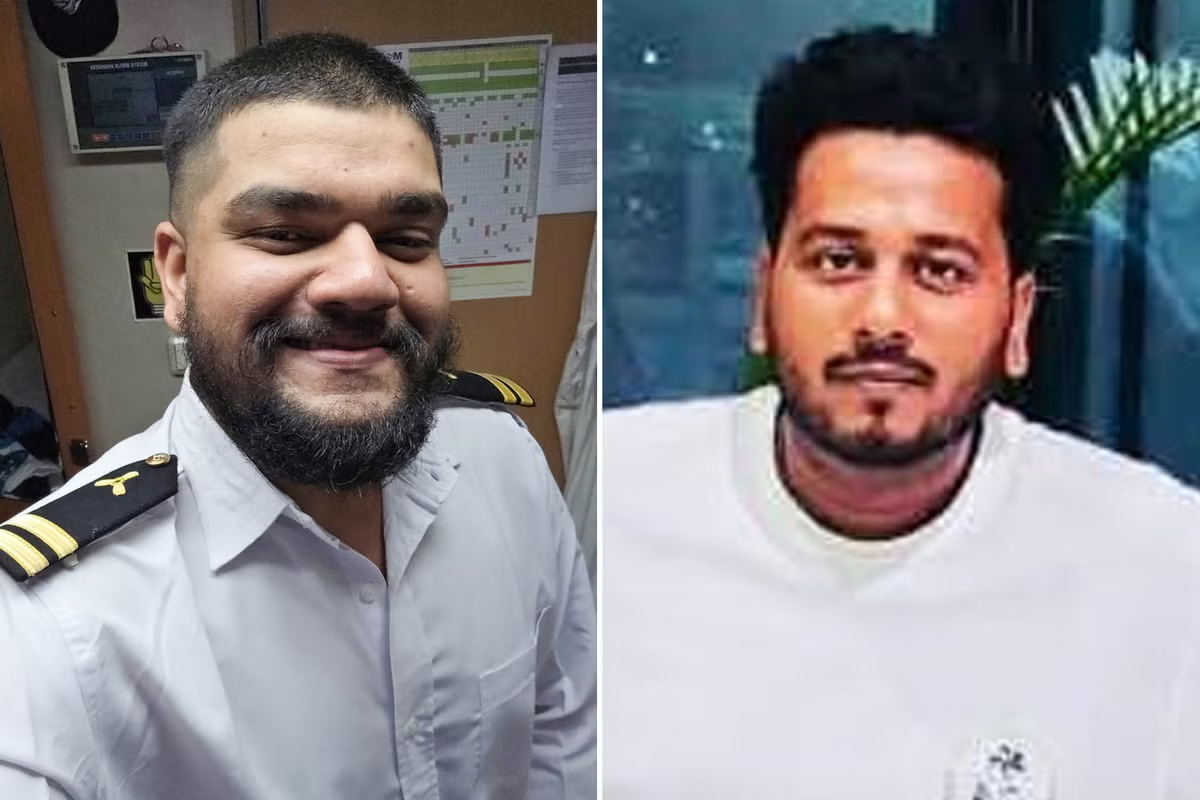
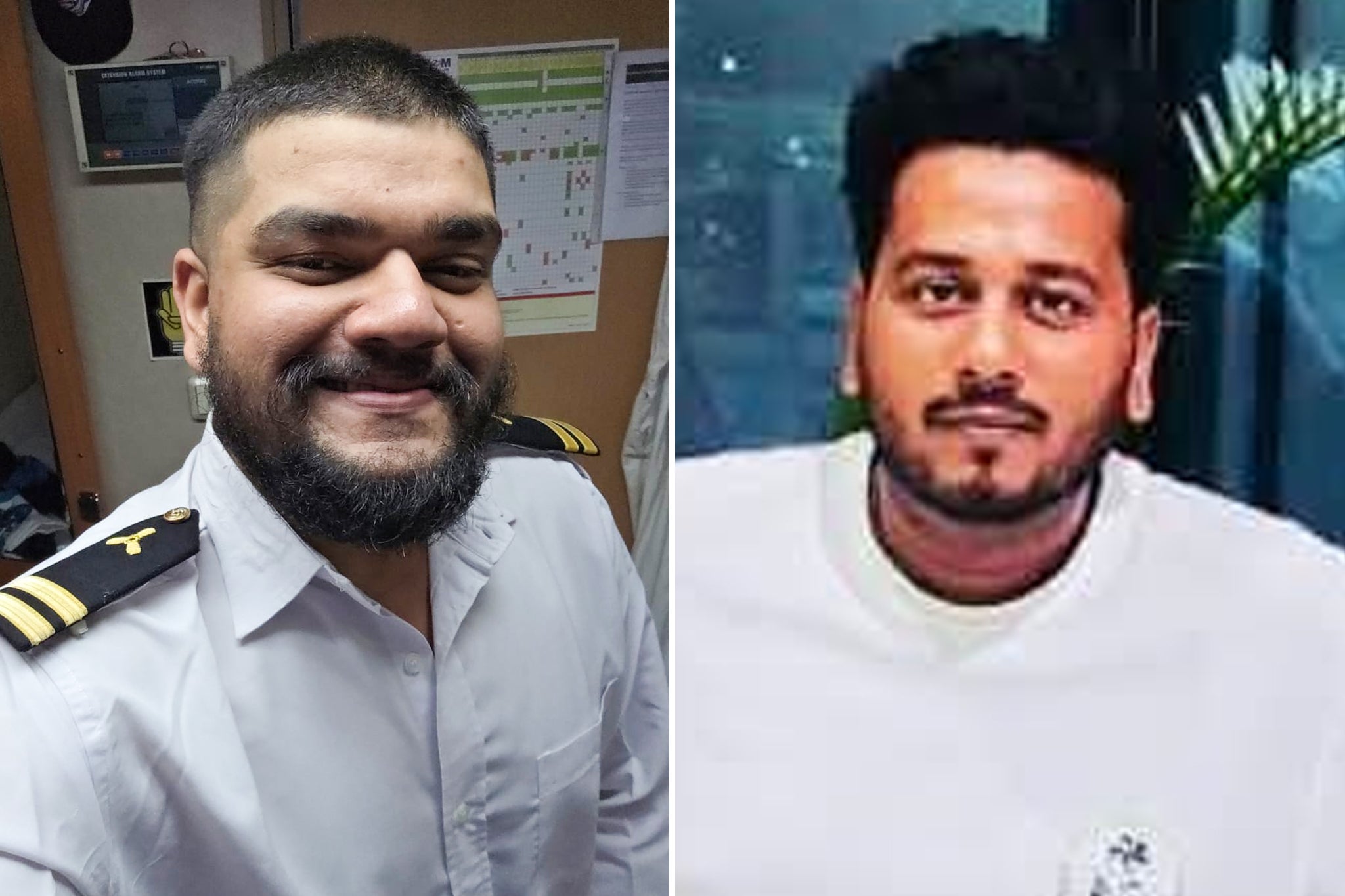
“We received a condolence message from the company saying that Herambh is no more,” the seafarer’s father-in-law Vivek Tandon told The National.
Advertisement
“We are all in a bad state after receiving this news. Now we just want Herambh back to complete his last rites.”
Herambh Karmarkar, 30, and Rohan Kumar, 31, were killed in Iranian strikes on commercial vessels (FSUI/Family handout)
US Central Command said that his ship, a Dubai-bound container vessel with 24 crew members on board, had been struck by an unidentified projectile while crossing the Strait of Hormuz. Since the beginning of the US-Israeli war on Iran in February, ships have faced frequent attacks as Tehran seeks to weaponise the route in a bid to disrupt oil supply and damage the global economy.
Herambh is not the only seafarer to die while crossing the strait. At least 16 others, mostly Indian nationals, have been killed since the war began.
Rohan Kumar, 31, was killed after two Emirati oil tankers, the Mombasa B and Al Bahiyah, came under attack on Tuesday. His brother Manesh Kumar told the Hindustan Times that Rohan had been “working tirelessly” at sea to support the family. “Those dreams are shattered now,” he said.
India has since barred its seafarers from working in Hormuz until further orders. Over 20,000 workers of all nationalities are based in the region with plans to evacuate at least 6,000 of them who are stranded, according to the International Maritime Organisation.
Advertisement
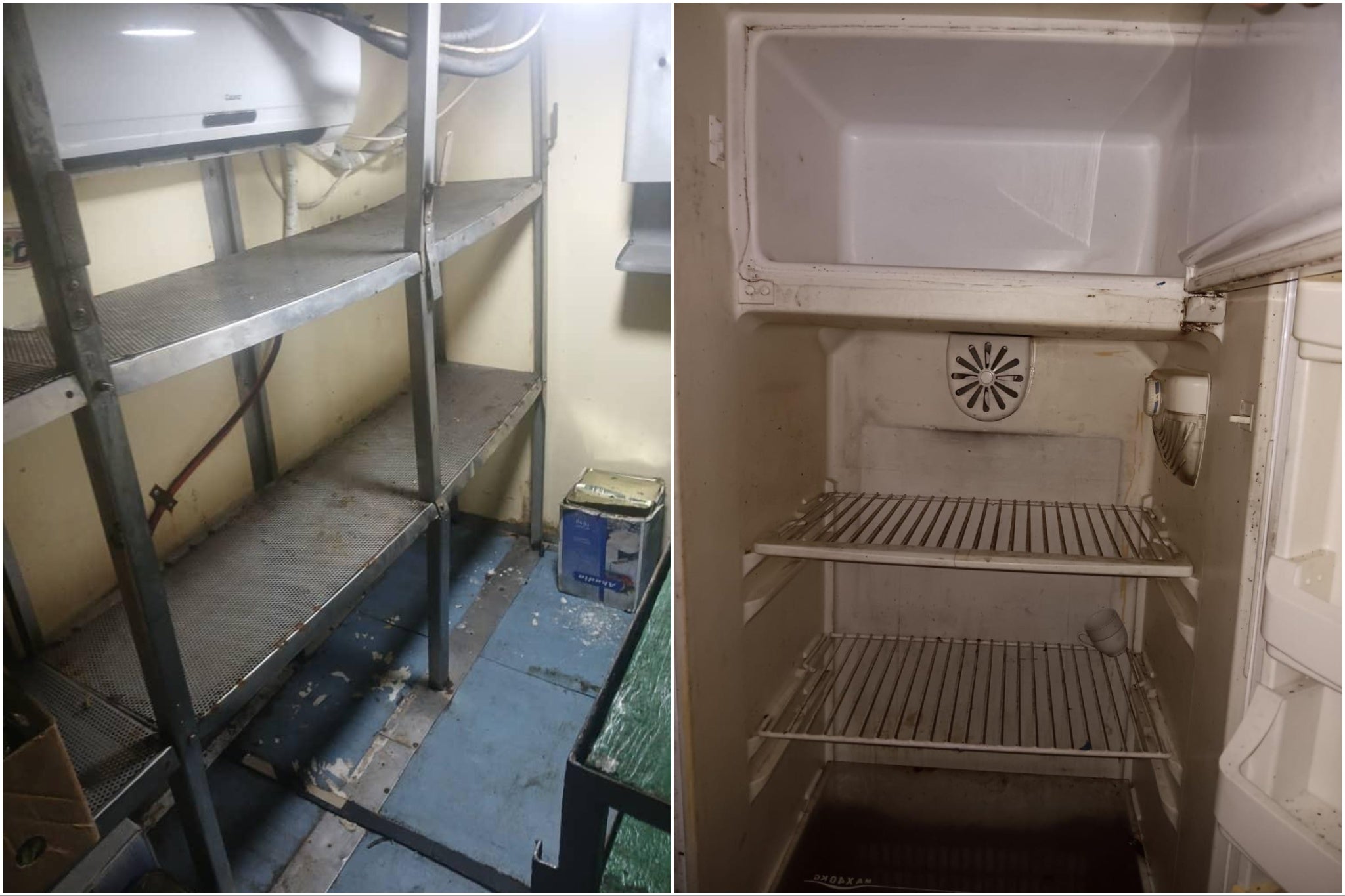
Fridges and food stocks have been left empty on board stranded ships (International Transport Workers Federation)
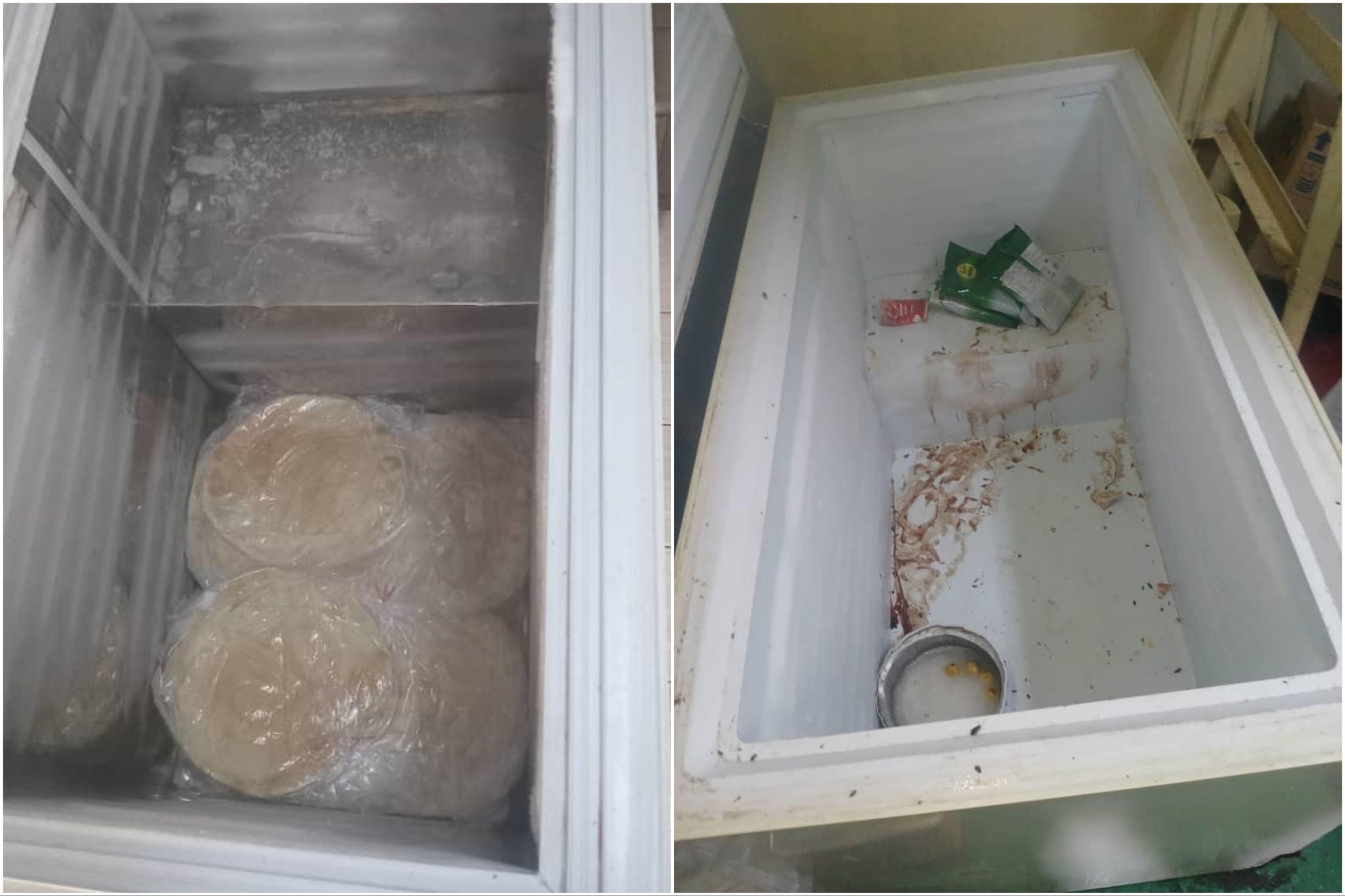
Those who are not killed or injured by Iranian attacks face horrific conditions on board and the situation has spiralled into a humanitarian catastrophe, trade unions told The Independent. For weeks and months at a time, workers have been left without food, fuel for amenities including air conditioning in sweltering summer temperatures, and medication.
Most of the seafarers are from the global South with families dependent on their sole income. But many have not been paid in months, unions say. Hidden behind headlines about stagnating economies, fuel shortages and oil prices is a devastating human cost.
“This is impunity. This is modern day slavery and systemic exploitation,” says Mohamed Arrachedi, the International Transport Workers’ Federation’s (ITF) network coordinator for the Arab world and Iran.
“Especially when you don’t give food and water, these are basic human rights.”
Since February, the ITF says that it has had over 3,000 requests for help from stranded seafarers. “That is not the number of individuals, which is far higher. Each call is from someone representing their crew, which can be five people or 20.”
Advertisement
Trapped in legal limbo
Most of the requests are for unpaid wages and requests for repatriation, with 10 per cent relating to concerns about low provisions and fuel. Mr Arrachedi says that workers are terrified and nervous while they remain legally “abandoned” on the ships.
Under the Maritime Legal Convention 2006, crew members are considered legally abandoned when they are not provided with food, water, fuel and medical care, for at least two months.
Frozen bread and dwindling supplies in the Strait of Hormuz (International Transport Workers Federation)
But the convention is difficult to enforce with international waters becoming a legal no man’s land. Ship crew can be of several nationalities on a ship that is dubiously marked with the flag of a nation that is not tied to the destination or shipping company, which are based in multiple other countries. It makes it a lengthy process to attribute responsibility, and finding a resolution can take months.
In the meantime, Mr Arrachedi says that seafarers are desperate.
Advertisement
“One of the guys told me that if there is no solution to this, he will take his own life. And it’s not the only one that we’ve received since the war started, because human beings have limitations.”
Others have serious medical conditions such as high blood pressure and have been left without medication for months. One needs to go to the doctor for a potential prostate problem because he is passing blood in his urine, says Mr Arrachedi.
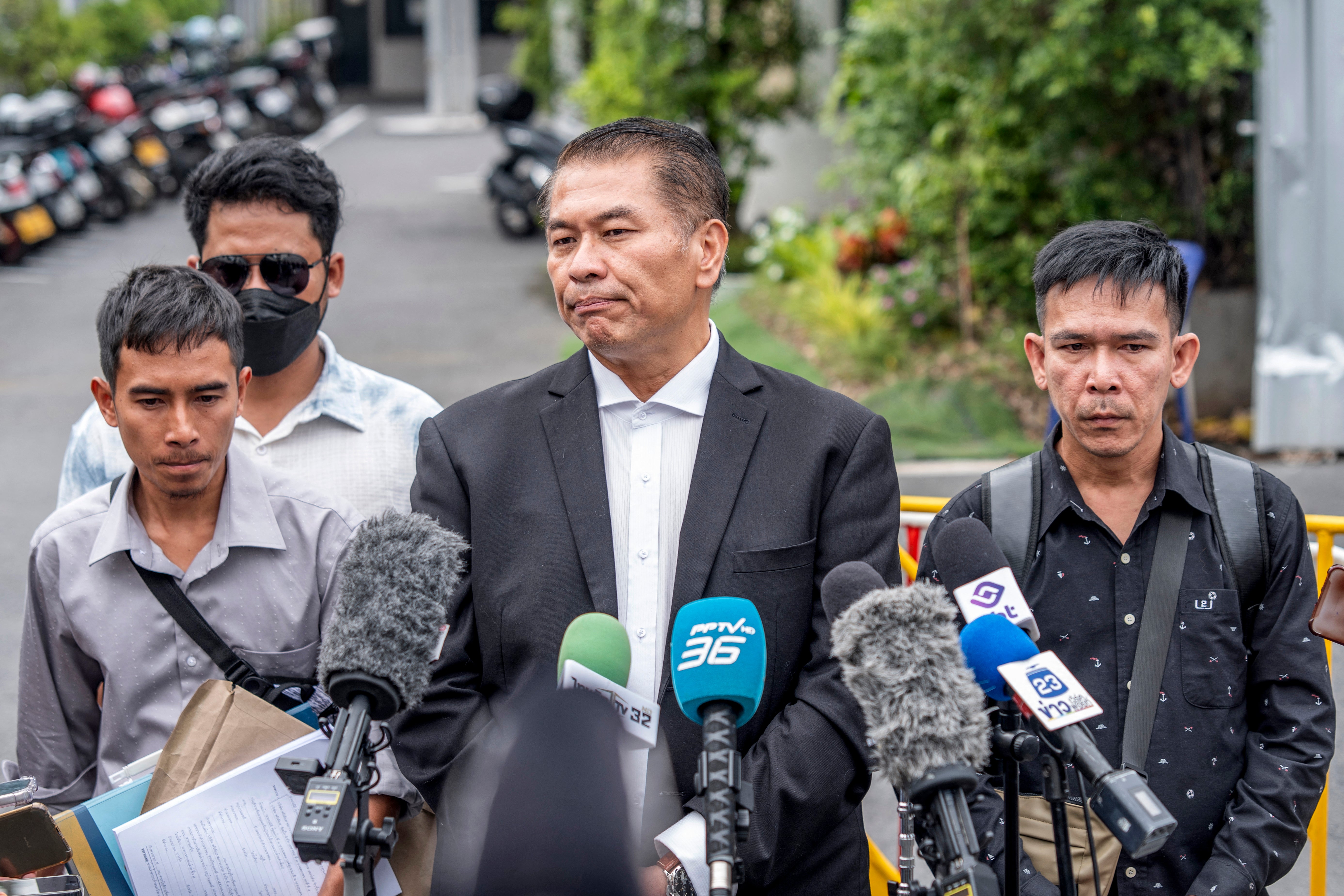
Thai lawyer Kunpat Singhathong speaks to the media with three former sailors from the Thai-flagged ship Mayuree Naree outside the Central Labour Court in Bangkok (AFP/Getty)
Responses from shipping companies are mixed. Some require workers to pay for their own flight repatriation tickets, which can cost over $1,000. For a seafarer earning around $200 a month, the costs are eye-watering and prohibitive.
Mr Arrachedi shares the case of one man who requested repatriation and has been taken off work by the employer and confined to his cabin.
The ITF and others are working on collective bargaining strategies to allow workers the agency to refuse to pass through the strait. But thousands of non-unionised workers remain unprotected with insecure employment contracts and no knowledge of their rights. There are approximately 15,000 vessels that are not unionised and remain exposed.
Advertisement
Unions also demand compensation for workers whose lives have been at risk while working.
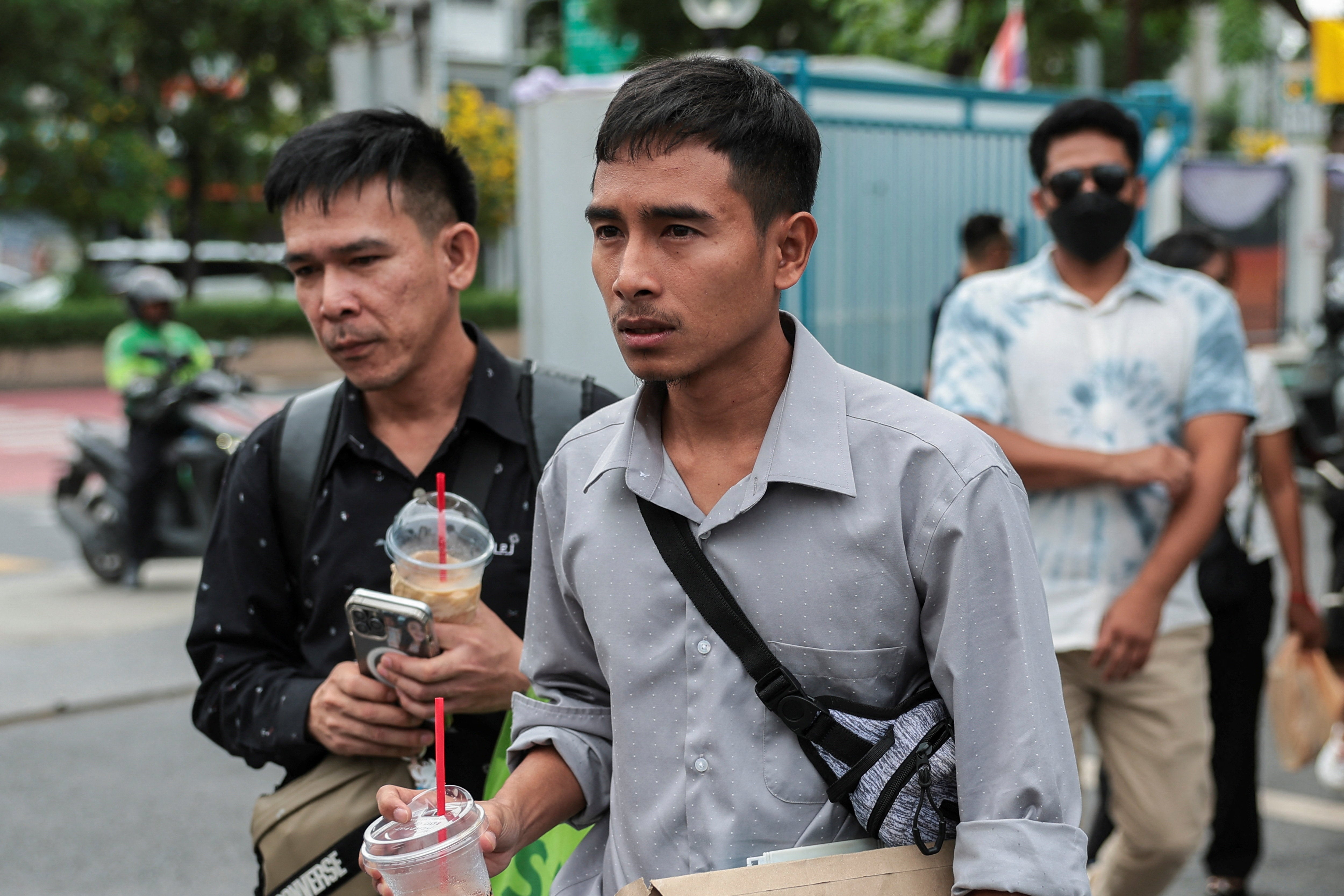
Panithi Tumkaew, Noppadon Wongsuvan and Surades Manpuen – Thai crew members of the cargo ship Mayuree Naree that was struck on 11 March (Reuters)
Sailors stand up for their rights
In a landmark case, three Thai nationals who were aboard the ship Mayuree Naree, which was hit by a projectile north of Oman on 11 March, are suing the vessel’s operator over labour rights violations and unfair dismissal. Three people were killed and the remaining 20 rescued.
The lawsuit, filed earlier this month, alleges that the claimants endangered their lives by sailing through the strait despite the security risks, according to their lawyer Kunpat Singhathong.
They were subsequently dismissed before the end of their nine-month employment and received compensation equivalent to two months’ salary, which they say is inadequate.
Advertisement
“We tried to negotiate with the company, but it denied responsibility, so we believe the matter should be brought to the court,” Kunpat said before filing the case with the Central Labour Court in Bangkok.
“The seafarers are absolutely deeply distressed and affected psychologically,” he continues, sharing footage workers have taken that show blown-up vessels imploding in flames within eyesight.
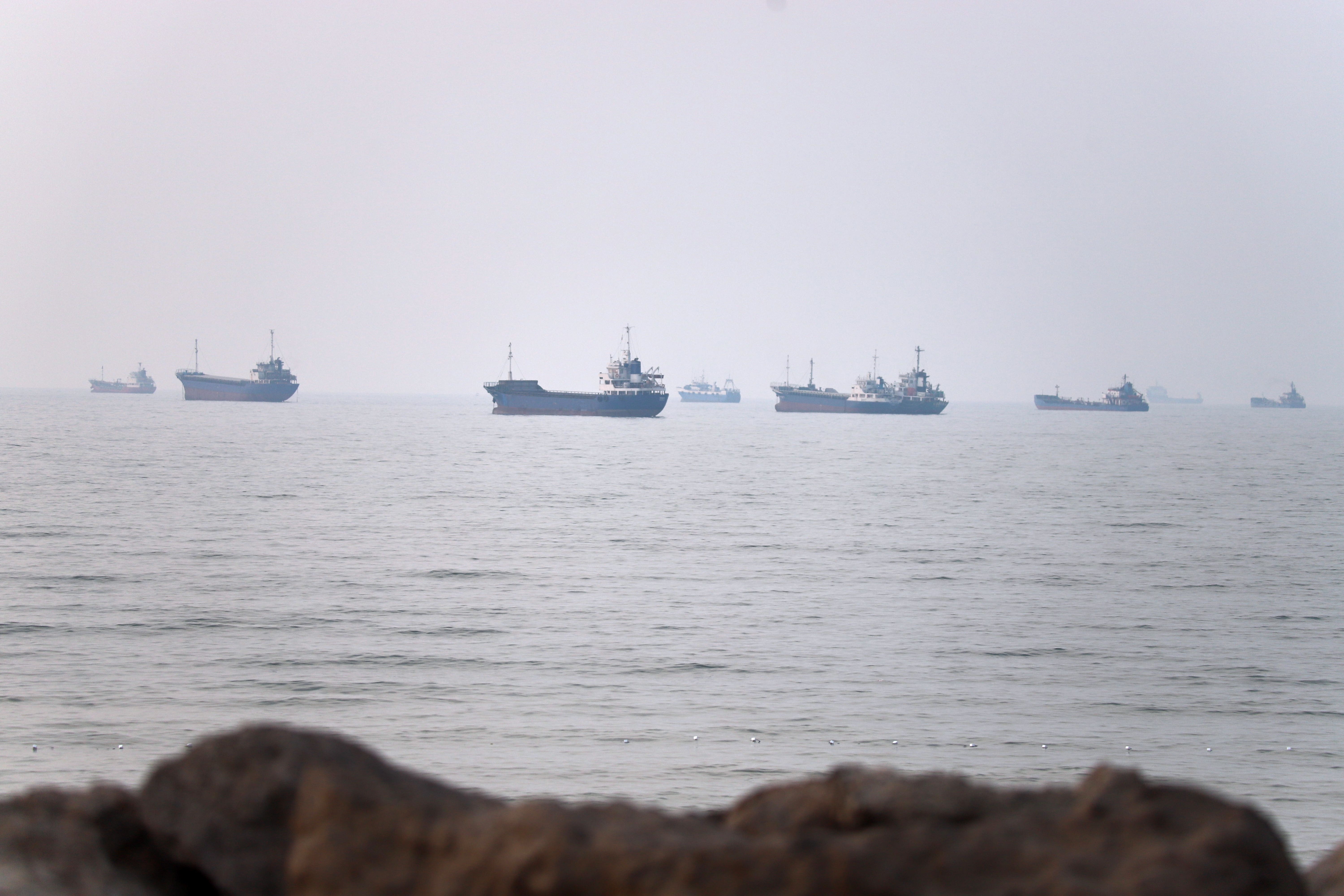
The Strait of Hormuz remains a flashpoint (AP)
‘I’m going to die here’
One anxious seafarer became “obsessive” about the risk, says Mr Arrachedi, messaging him every hour or two to check if there had been any development on his bid to be repatriated. The union says others have messaged: “I’m going to die here.”
Many have said they will “never go back” to the work, which is already in high demand and low supply. Over 80 per cent of global trade is conducted by sea, according to the United Nations Conference on Trade and Development (UNCTAD).
Advertisement
The UN’s maritime chief Antonio Dominguez told The Independent there is a feeling of disappointment among workers that the concern around Hormuz has focused solely on oil supply disruption and not on the welfare of sailors stranded in its waters.
A message from a sailor who has not been paid for 11 months (International Transport Workers’ Federation)
“They feel that the media focuses more on the impact of the global economy. Particularly when it comes to oil, LNG, and fertilisers rather than the health and the wellbeing of the innocent people working on board for all those essential goods to be transported.”
The sea workers industry kept the global economy afloat during Covid. Mr Dominguez recalls a slogan from the industry: “No shipping, no shopping.”
“Everybody loves shopping. We always seem to pay attention to shipping and very little to the seafarers when we get affected. This conflict is affecting us all. This is increased prices, shortage of essential goods or goods that we would like to have.”
He adds that shipping should not be used by parties as “leverage”.
Advertisement
“We should be all raising our voices how shipping should not be used in geopolitical conflicts as leverage because it doesn’t impact just the countries of the parties that are in a conflict. It impacts all of us,” he says.
He urges the public to think about the seafarers as if they were a family member.
“How would you feel if that relative is going through such a difficult situation? You would think about the person all the time. That’s what I want people to do.”
Advertisement
A solution to the crisis in Hormuz looks increasingly distant, with Tehran and the US trading strikes around the strait in the past week. Donald Trump has said that an interim peace deal agreed last month is effectively over. Iran will not give up its control of Hormuz – its most valuable asset in negotiations.
Mr Dominguez says that the US and Iran must get around the table to save the peace agreement.
“They can work and build on it if there are areas that need clarification,” he adds. “That’s what multilateralism is all about. But the message goes even beyond those two parties. Other parties can also engage. We are all suffering from this.”
Tourist convicted of killing fellow Brit with single punch outside Greek nightclub is extradited back to the country where he’s facing 12 years for manslaughter
A man convicted of killing a fellow British holidaymaker with a single punch during a drunken brawl outside a nightclub will be extradited to a Greek prison.
Father-of-two Matt Jeffery, 35, from Yeovil, Somerset, was punched in the street outside the Sizzle bar in the beach resort town of Laganas, Zante, on May 23, 2019.
Mr Jeffery, who had travelled to the Greek island with friends on a stag do, fell to the ground and hit his head on the pavement. He died five days later from his injuries.
Luke Brownsdon and a second man were arrested and charged, but were allowed to leave the island.
Advertisement
They were both convicted in their absence in a Greek court in March 2023, with Brownsdon – who was accused of landing the fatal punch – handed 12 years for causing fatal bodily harm with serious intent. His co-defendant was given 10 years.
On Friday, Westminster Magistrates’ Court ordered that Brownsdon should be extradited to Greece to serve his sentence.
He has been held inside a British prison since his arrest in April 2025 by officers from the National Extradition Unit.
CCTV from the scene showed a fight initially broke out between Mr Jeffery and his friends, and another group from Essex who were not known to them, while inside the nightclub.
Advertisement
Mr Jeffery and his group left shortly afterwards, but the Essex group followed the men outside.
Footage taken on a mobile phone showed him being approached by two men before being struck in the face.
A man convicted of killing Matt Jeffery, 35, (pictured) from Somerset, who died after being punched in the street in Laganas, Zante in 2019, will be extradited to Greece
Advertisement
Phone footage captured the moment Mr Jeffery was punched outside the nightclub in 2019
The incident occurred outside Sizzle nightclub in Zante, where Mr Jeffery was punched before falling and hitting his head on the pavement
Westminster Magistrates’ Court heard that Brownsdon, after being arrested by Greek police, told them he had been drinking and could not control his actions at the time.
He also told the court he had not been provided with an interpreter during police interviews, was not represented fairly at his Greek trial and had been unaware of when it was due to take place.
Advertisement
Brownsdon also argued his extradition would contravene Article 3 of the European Convention on Human Rights because of overcrowding in Greek prisons.
The court heard that the jail he would be sent to in Patras was already at 139% occupancy.
Brownsdon, who challenged the extradition request in June, now has seven days to appeal the ruling.
He has also launched an appeal against his conviction and sentence, which is due to be heard in November in Greece.
Advertisement
Avon and Somerset Police told Daily Mail an investigation had been opened into Mr Jeffery’s death.
In a statement, the force said: ‘We’ve opened an investigation into the death of 35-year-old Matthew Jeffery, from Templecombe, who died after being assaulted in Laganas, on the Greek island of Zakynthos, in May 2019.
‘Matthew’s death is subject to a criminal investigation in Greece and there are ongoing legal proceedings underway.
‘Officers with our Major Crime Investigation Team are making active enquiries and will continue to liaise with the Greek authorities.
Advertisement
‘A specialist family liaison officer is supporting Matthew’s family to keep them fully updated on any developments.’
At the time of the incident in 2019 Mr Jeffery had been on a stag do with a group of close friends.
Brownsdon seen after his arrest in April 2025 by officers from the National Extradition Unit
Brownsdon was convicted in his absence in a Greek court in March 2023 and handed 12 years for causing fatal bodily harm with serious intent
Advertisement
Sheridan Knight (left) with Mr Jefferey (right) and another friend. Mr Knight said: ‘I can’t put into words my devastation and upset, my heart is broken, we went away with my closest friends for a celebration for me getting hitched’
Mr Jeffery (left), pictured with his friend Josh Harris, died after sustaining a serious head injury during stag do celebrations on Zante
Groom Sheridan Knight wrote on Facebook shortly after the incident: ‘This is the most painful thing I’ve ever had to write.
‘I can’t put into words my devastation and upset, my heart is broken, we went away with my closest friends for a celebration for me getting hitched.
Advertisement
‘Matt you really were a one in a million, I have made some of the best memories of my life with you and that is something I will never forget.
‘You went above and beyond for me and everyone who’s crossed your path, you were one of the kindest and one of the most supportive people anyone would want to meet.
‘I feel extremely privileged to have had you in my life and I will never forget what you have done for me. I will miss you deeply and so will everyone. All my love. RIP Matt Jeffery.’
Another friend, Josh Harris said of the AA worker: ‘To the most selfless and supportive guy with the biggest brightest smile in the room.
Advertisement
‘I thank you for all the favours, fixing my cars and hilarious memories we have shared together spanning roughly 20 years.’
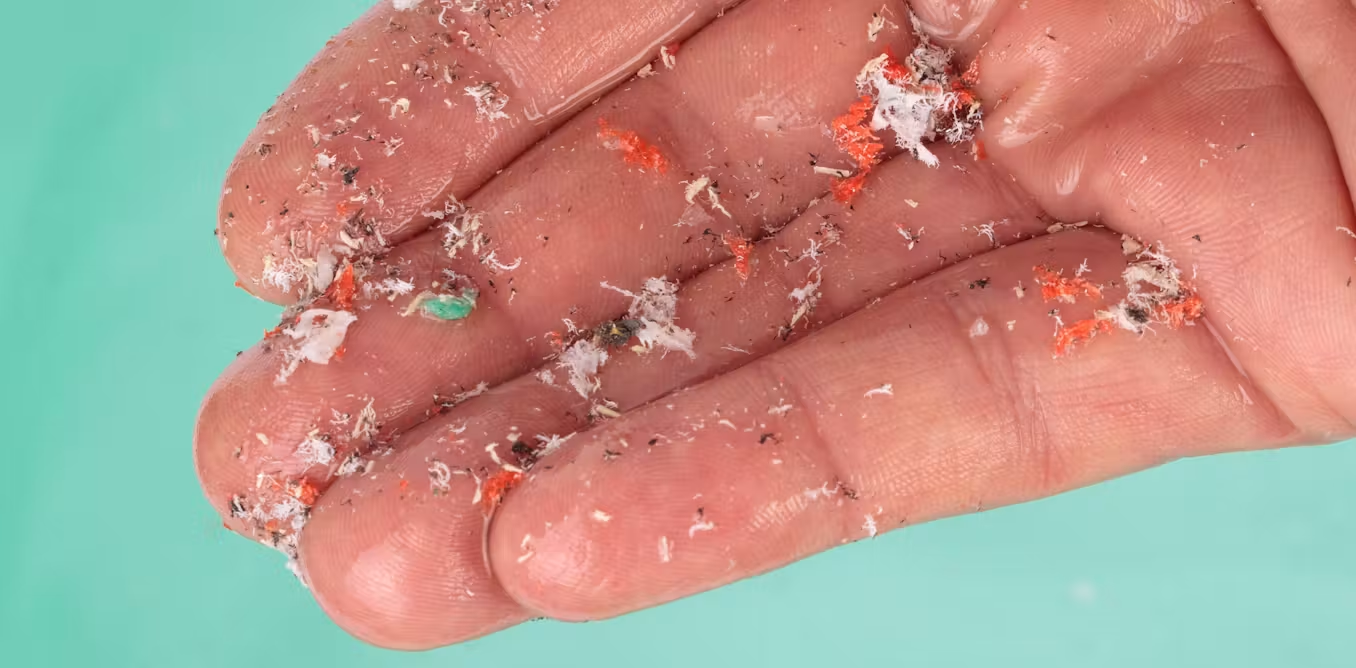
Microplastics are a big environmental issue. They’ve been found in oceans, drinking water, seafood, the air we breathe, and increasingly throughout the human body, from the placenta to the brain.
A new study by researchers in Italy, published in the European Heart Journal, adds another organ to that growing list: the heart’s own blood supply. But while the discovery of microplastics in coronary blood is concerning, the most intriguing finding may not be the plastics themselves. It is how they may be getting there.
Researchers found that people who smoke were six times more likely to have detectable micro- and nanoplastics in the blood supplying their hearts than non-smokers. Even more notable, every smoker who was also exposed to higher levels of air pollution had plastics detected in their blood, compared with just 12.5% of people who neither smoked nor experienced high pollution exposure. That is a remarkable difference, even in a small population.
Rather than simply confirming another harmful consequence of smoking, these findings raise an intriguing possibility: cigarettes may also act as an efficient delivery system for microscopic plastic particles. For decades we’ve understood why smoking damages the heart and blood vessels. Tobacco smoke contains thousands of chemicals that trigger inflammation, damage blood vessels, promote clotting and accelerate the build-up of fat inside arteries.
The new research suggests another mechanism could be operating alongside these well-established risks. Cigarette smoke contains enormous quantities of fine particles that penetrate deep into the lungs. The researchers propose that inhaled micro- and nanoplastics may hitch a ride with these particles, crossing the delicate air sacs of the lung, called alveoli, and entering the bloodstream far more readily than previously thought. Air pollution may facilitate a similar process.
This doesn’t necessarily mean the detected particles originated from the cigarette itself, although most cigarette filters are made from the plastic cellulose acetate and may contribute. Rather, smokers inhale air that already contains microscopic plastic particles from synthetic clothing fibres, tyre wear, degraded packaging and countless other environmental sources. Smoking may simply make it easier for these particles to cross from the lungs into the circulation.
The researchers studied 61 patients undergoing a heart test called coronary angiography. They compared three groups: people who had experienced a heart attack, patients with stable coronary artery disease and people with normal coronary arteries.
Micro- and nanoplastics were detected in 84% of patients who had suffered a heart attack compared with 40% of those with chronic coronary disease and 32% of those with normal coronary arteries. Heart attack patients also carried a greater variety of plastic polymers, with polyethylene, commonly used in packaging, being the most frequently detected.
Advertisement
Importantly, the researchers also observed higher levels of inflammatory markers in patients with detectable plastics. Since inflammation plays a central role in destabilising fatty blockages in the heart and triggering heart attacks, this biological link deserves further investigation.
Why this isn’t proof yet
This study, however, does not prove that microplastics cause heart attacks. The study was based on a small number of participants and was observational. That means researchers identified associations but cannot determine whether one factor caused another.
People who smoke often experience greater exposure to environmental pollution and may differ in many other lifestyle factors that influence cardiovascular risk. Patients treated for acute heart attacks receive intravenous fluids and medical devices that themselves may introduce tiny plastic particles into blood samples.
That caution matters. Microplastics have become a topic that attracts considerable public attention, and it is tempting to assume every new discovery represents proof of harm. Science rarely works that way. Instead, each study contributes another piece to a much larger puzzle.
Advertisement
Whether or not microplastics ultimately prove to play a direct role in heart disease, this study reinforces a broader message that has become increasingly difficult to ignore. Our heart health is shaped not only by our genes and personal lifestyle choices but also by the environments we live in.
Air pollution is already recognised as a major contributor to cardiovascular disease worldwide. Smoking remains one of the largest preventable causes of premature death. If both exposures also increase the movement of environmental plastics into the bloodstream, they may represent overlapping rather than separate risks.
This idea fits with a growing understanding of the exposome; the sum of environmental exposures we accumulate throughout life. Rather than considering tobacco smoke, air pollution and plastic pollution independently, researchers are beginning to examine how these exposures interact.
The findings should not distract from the established reasons to stop smoking. Cigarette smoking already dramatically increases the risk of heart attack, stroke, cancer and chronic lung disease.
Advertisement
But if future research confirms that smoking also acts as a gateway through which microscopic plastics enter the bloodstream, it would add yet another mechanism by which tobacco harms health.
The statistic likely to resonate most with readers is also the simplest: in this study, every participant who both smoked and had high air pollution exposure had detectable plastics in their blood, compared with only one in eight people exposed to neither.
This small study doesn’t prove plastics caused heart disease, but it does remind us that smoking is more than a source of toxic chemicals. It may also be helping transport another modern pollutant to places in the body we never expected to find it.
















.jpg)










































You must be logged in to post a comment Login