

Crypto World
Is Shiba Inu (SHIB) Dead? On-Chain Data Shows a Sad Reality

Shiba Inu (SHIB) price sits near multi-year lows, and its biggest recent headline, a physical collectible coin from Japan’s Rakuten, does nothing to change the token’s weak on-chain reality.
The data tells a blunt story. With burns too small to matter and network usage close to zero, SHIB’s recovery may depend far more on a return of meme coin hype than on anything the project itself controls.
Shibarium Usage Points to a Hollow Utility Case
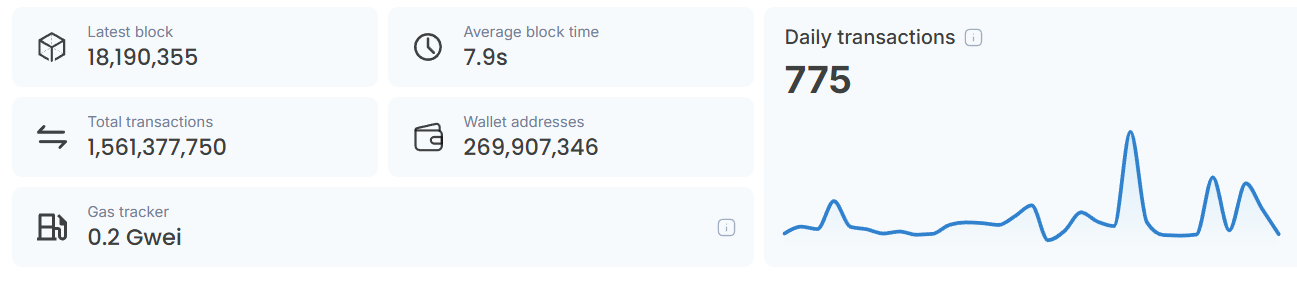
Shibarium, the Layer-2 network designed to give SHIB real utility, processed roughly 775 transactions per day at the time of writing. That figure sits against more than 269 million lifetime wallet addresses and over 1.5 billion cumulative transactions.
The gap between those totals and current activity is the problem. A large installed base means little when daily usage stays this thin.

Burns tells a similar story. Even on active burn days, a microscopic share of the 589 trillion tokens in circulation is removed. As a result, the deflation narrative carries almost no weight.
One community analyst has also questioned recent wallet growth, suggesting that contract auto-generated addresses are used to inflate holder counts.
For the signal to flip, Shibarium would need sustained, order-of-magnitude growth in daily transactions.
The Meme Sector, Not SHIB, Holds the Key
That weak internal picture matters less once the wider sector comes into view. The GMCI Meme Index, which tracks the broad meme coin market, peaked near 160 in January 2026 before sliding to about 66 by late July.
SHIB’s chart maps almost step-for-step onto that decline. The token did not break on its own merit, and it fell as the entire category lost momentum.

This reframes the question. If Shiba Inu moves as a high-beta piece of the meme complex, its next real move is likely to arrive with a sector-wide hype wave rather than a project update.
Such waves have fired before. In early 2026, a single session sent Dogecoin (DOGE) up double digits. That move pulled SHIB and other dog-themed tokens higher alongside it.
However, current conditions look muted. The Altcoin Season Index hovers near its midpoint rather than signaling a rotation into risk.
Shiba Inu Price Prediction Rests on the $0.0000055 Ceiling
On the daily chart, Shiba Inu trades around $0.0000041, little changed over the past day and pinned inside a tight accumulation zone near its multi-year low. Its market cap sits close to $2.4 billion, placing it in the mid-30s among all crypto assets.
Two overhead supply zones frame the path higher. The first sits near $0.0000055 and the second near $0.0000065, both former support levels that flipped to resistance during June’s sell-off.
A move from current levels to the first zone would mark a roughly 30% gain. A push to the second implies closer to 55%. Reclaiming both would signal that a genuine trend change is underway.

Momentum offers little conviction for now. The Relative Strength Index (RSI) sits near the 40 midline rather than in oversold territory, and volume has thinned through July. That combination suggests a market basing quietly, not one coiled for an immediate rebound.
The catalyst that could accelerate any move is external. Rakuten’s SHIB support in Japan may lift brand awareness, yet a broad return of meme coin demand remains the clearest trigger.
Absent that wave, Shiba Inu looks more likely to grind sideways than to stage a fundamentals-driven recovery. Whether SHIB reclaims $0.0000055 or slips back toward its lows may come down to the sector, not the project.
The post Is Shiba Inu (SHIB) Dead? On-Chain Data Shows a Sad Reality appeared first on BeInCrypto.


The White House has reached an agreement on the Clarity Act ethics provision, the main sticking point blocking a Senate floor vote, and has begun circulating deal language with Republican senators, according to Eleanor Terrett.
The agreement removes what had been the single biggest procedural overhang on the legislation, but the bill still faces a compressed timeline and a 60-vote cloture threshold.
This latest CLARITY Act development comes as the crypto market is bouncing hard, with Bitcoin leading the charge after reclaiming $66,000 on the back of a +3.5% daily move and $31.5Bn in trading volume.
— Eleanor Terrett (@EleanorTerrett) July 20, 2026
 NEWS: I’m hearing from multiple industry sources that the White House has agreed on an ethics package for the Clarity Act and sent the language to certain Senate Republicans this afternoon.
It’s still unclear what the details of the agreement are (I’ve reached out for…
Why the Ethics Provision Stalled the CLARITY Act Bill
The ethics provision at the center of the dispute is designed to prevent senior officials from holding or profiting from digital assets they are responsible for regulating – a structural conflict-of-interest bar that Democrats made a hard condition of their support. The political charge intensified after an Office of Government Ethics disclosure.
The White House’s negotiating position, previously articulated by crypto adviser Patrick Witt, held that any ethics language must apply uniformly rather than targeting the president or his family specifically.
A prior compromise involving state attorneys general as enforcers collapsed after Democrats rejected it as inadequate, and a Senate committee amendment from Sen. Chris Van Hollen failed 13–11 along party lines. The July 20 agreement suggests the two sides found language that threads that needle, though the specific text has not been publicly released.
The Clarity Act is built around establishing a comprehensive federal market-structure framework for digital assets, codifying key elements of US crypto market regulation. It passed the House in July 2025 and cleared the Senate Banking Committee in May 2026.
The bill still needs additional steps before a floor vote can occur. That ethics provision deadlock had driven Senate passage odds into the 40–45% range by late June.
Discover: The Best Crypto to Diversify Your Portfolio
The Legislative Window Is Now Measured in Days
The Senate heads into its August recess after the first week of August, leaving only a matter of weeks for the chamber to process and vote on the legislation this year.
That August deadline has been the defining constraint on the bill’s timeline since spring, and if no vote occurs before the recess, momentum likely slips into 2027. The agreement on the ethics provision is necessary to unlock floor scheduling, but it is not sufficient.
The bill still needs additional steps before a floor vote can occur. The 60-vote threshold means Democratic senators must cross, and the deal language now being shared with Republican senators will need to satisfy Democratic holdouts.
What Passage Would Mean for Markets
For active traders, the main implication of the passage is regulatory clarity for US exchanges, issuers, and investors. A defined federal framework can reduce legal uncertainty and encourage broader institutional adoption.
Failure carries the inverse risk: if the bill stalls again, regulatory uncertainty extends well into next year, and the political window for a comprehensive market structure bill narrows further.
The ethics agreement meaningfully shifts the probability distribution toward passage, but traders should treat the outcome as unresolved until the revised text clears and Democratic floor commitments are on record.
Discover: The Best Token Presales
The post Ethics Provision Deal Could Unlock Senate Vote on the Clarity Act appeared first on Cryptonews.
Crypto World
BTC price rally has broad-based support as institutions, whales, options traders pile in: Crypto Daily
“Large Bitcoin whales have been building up their positions over the last two months, while medium-sized wallets have been selling. This divergence in behaviour could be a ‘constructive signal’ for BTC in the medium term, according to CryptoQuant [data],” Alex Kuptsikevich, the chief market analyst at FxPro, said in an email.
Blockchain analysis firm Glassnode noted that the market looks much more balanced now than it did a month ago.
“Overall, the market appears increasingly balanced, with long-term conviction providing support while speculative participation remains contained,” it said.
There are also signs of growing participation in BTC futures and options. Recently, a trader (or group of traders) purchased large bull call spreads in bitcoin, targeting $72,000 by month-end.
In short, the buyer profile right now appears diverse
Risks, however, remain. The most important near-term headwind is U.S. Treasury bond issuances, which could drain liquidity from the system and weigh on risk assets.
“Treasury bill settlements are expected to result in net new issuance of $56 billion, followed by an additional $37 billion on Thursday and a smaller coupon settlement of $13 billion on Friday. Treasury bill issuance will likely remain heavy until Labor Day, creating a headwind for risk assets as we move through the summer,” Mott Capital Management’s Founder Michael Kramer said in a blog post.

Nigeria’s President Bola Ahmed Tinubu has signed an executive order aimed at reducing what his administration described as the fragmentation of digital-asset regulation. The move is intended to align oversight across agencies, improve protections for consumers, and create a clearer compliance environment for businesses operating in cryptocurrencies and stablecoins.
According to a statement from Tinubu’s special adviser, Bayo Onanuga, the order—signed on Friday—sets out a framework to “harmonize” regulation of virtual assets, strengthen cooperation among Nigeria’s financial, revenue and capital markets bodies, protect citizens from fraud, and “safeguard the integrity of the financial system while enabling responsible innovation.”
Key takeaways
- Nigeria’s executive order is designed to coordinate existing regulators rather than create a new authority or transfer powers.
- A new virtual asset council will be chaired by senior representatives from major financial regulators to steer related policy.
- Registration requirements are expected to be tied to the “nature of the activity” and the specific asset involved, addressing gaps that previously allowed some operators to avoid oversight.
- Nigeria’s tax authority, the Nigerian Revenue Service, is preparing additional guidance following earlier reforms requiring crypto providers to link transactions to tax identifiers.
- The policy shift comes amid rapid stablecoin and crypto inflows into Nigeria, including a major share of sub-Saharan Africa’s stablecoin activity since 2019, per an IMF report.
Executive order targets regulatory gaps without changing mandates
Onanuga emphasized that the executive order does not create a new regulator or reallocate statutory powers. Instead, he said each institution retains its mandate and independence, while the new framework is meant to coordinate their work “rather than replacing it.”
The adviser also indicated that Nigeria plans to provide clearer certainty for market participants by basing registration on how an actor participates in the market and what type of asset is involved. In the administration’s framing, the order is intended to “close the gaps” that allowed certain unregistered operators to avoid supervision.
For investors, exchanges, payment firms, and other service providers, the core practical question is not whether regulators will become stricter overnight, but whether coordination will be more predictable. Fragmentation often translates into overlapping compliance demands or enforcement uncertainty; a harmonized approach can reduce friction while still increasing the barriers for entities that previously operated outside established oversight.
A virtual asset council to coordinate policy across regulators
The executive order establishes a virtual asset council, led by senior figures from Nigeria’s top financial regulators, with responsibility for directing related policies. The intention, as described by the administration, is to strengthen cooperation across agencies that oversee different parts of the broader financial system.
That matters because digital assets span multiple regulatory domains: market conduct, financial stability concerns, anti-fraud measures, taxation, and capital markets oversight. When these responsibilities are distributed without tight coordination, businesses can face inconsistent rules depending on which agency is driving enforcement at a given time.
Nigeria’s approach appears to be aimed at consolidating how policies are directed across agencies while leaving each regulator’s formal legal powers intact—an arrangement that could improve consistency without triggering the disruption that sometimes comes with sweeping institutional restructuring.
Tax reforms continue: Nigeria links crypto activity to identifiers
Beyond the coordination effort, the executive order also points to tax administration updates. Onanuga noted that the Nigerian Revenue Service would provide additional details about the effects on taxpayers, while earlier measures suggest the direction of travel is already underway.
In January, Nigerian authorities said that under the Nigeria Tax Administration Act, crypto service providers were required to link transactions to tax identification numbers. In some situations, national identification numbers were also required.
The policy emphasis on identifier-linked reporting is particularly relevant in a market where cross-border activity and informal rails can complicate compliance. If Nigeria tightens data requirements while harmonizing regulator oversight, firms operating locally may need to upgrade their onboarding and transaction-record systems to demonstrate that counterparties and transactions can be mapped to the relevant tax records.
The next watchpoint is how the “additional details” referenced in the executive order translate into enforceable operational requirements—such as what data formats will be expected, how compliance will be assessed, and how reporting obligations interact with existing rules for different classes of digital-asset services.
Rapid stablecoin adoption increases pressure for clearer rules
Nigeria’s regulatory attention comes as digital asset usage has expanded quickly. According to a June report from the International Monetary Fund (IMF), Nigeria accounted for about 60% of stablecoin inflows within sub-Saharan Africa since 2019. The IMF also reported that Nigeria had approximately $59 billion in crypto inflows between July 2023 and June 2024, citing the scale of activity tied to crypto demand in the region.
The IMF also framed Nigeria’s policy challenge as balancing innovation with risk control. In its discussion of stablecoin adoption, the institution said the problem is to “narrow the gap that made the workaround attractive” in cross-border payments while ensuring that “new risks remain contained.” The IMF added that doing so requires “a clear strategy: open to innovation but anchored in sound macroeconomic policy and effective regulation.”
That framing highlights a tension policymakers often face: stablecoins can meet real user needs—especially when traditional payment channels are costly or slow—but they can also introduce compliance, consumer protection, and financial integrity risks if governance is unclear. Nigeria’s executive order is positioned as an attempt to bring those risks under a more coordinated regulatory umbrella while keeping the market open for “responsible innovation,” in the administration’s wording.
The meaningful change from a practical standpoint will be whether harmonization leads to consistent enforcement and clearer registration pathways. The administration’s commitment that registration follows the nature of the activity and the asset suggests rules may be tiered rather than one-size-fits-all, which could help regulators target higher-risk activities while reducing uncertainty for lower-risk providers.
What to watch next
Market participants should focus on how the new virtual asset council operationalizes guidance, how registration requirements will be defined by activity type and asset category, and what specific compliance and reporting updates the Nigerian Revenue Service issues following earlier identifier-based tax reforms.
Crypto World
Clarity odds jump to 43% on Polymarket after unverified reports Trump agreed to ethics deal


Polymarket traders sharply raised the odds of the Clarity Act becoming law this year after reports that President Trump reportedly agreed to the ethics provision that had stalled the bill.
The market pricing whether the crypto market structure bill is signed into law in 2026 rose to about 43% on the predictons market on Monday, compared to 32% on Friday. This was its lowest level since the market started trading in January.
The jump tracked a series of reports that the final sticking point in months of negotiations had been cleared.
Democrats have not seen the bill text, a source familiar with the matter told CoinDesk, and no text has been publicly released. The White House and the offices of the senators involved had not commented.
Ethics has been the last major obstacle to the Clarity Act, which would create the first comprehensive federal framework for digital assets and split oversight between the Securities and Exchange Commission (SEC) and the Commodity Futures Trading Commission (CFTC).
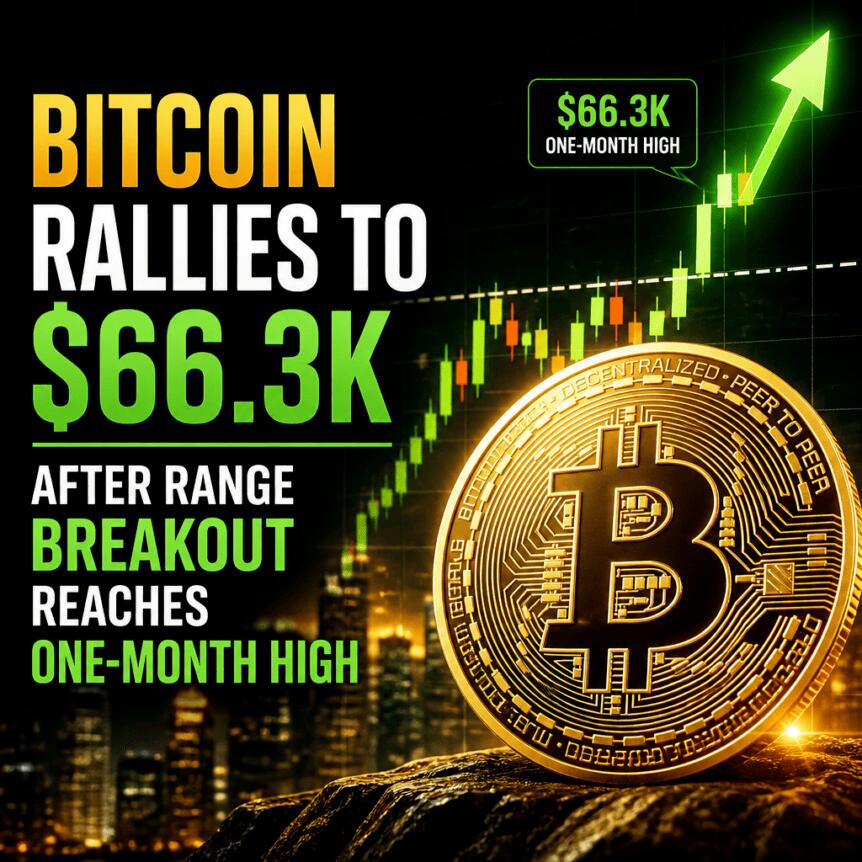
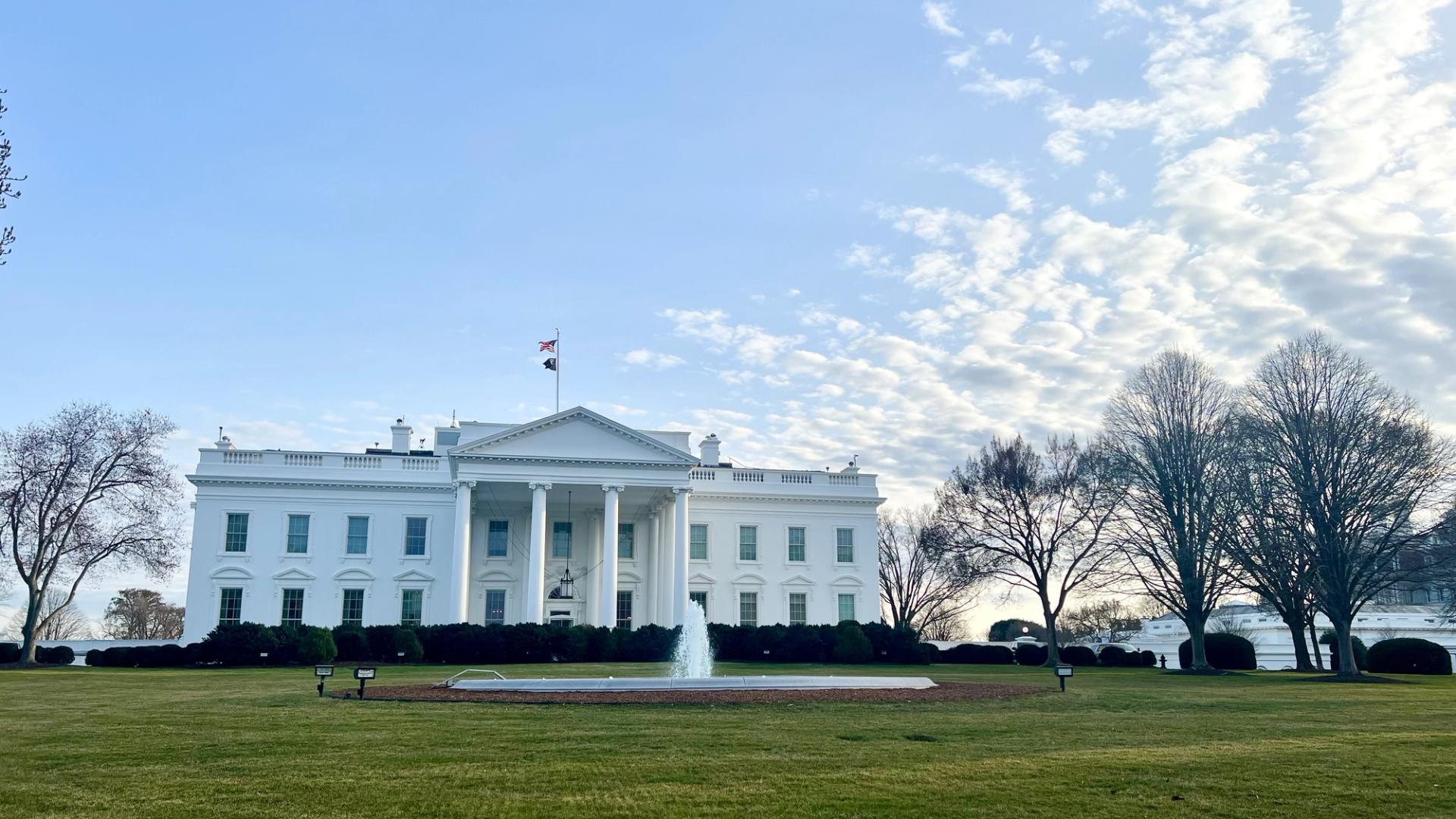
Bitcoin pushed past one-month highs on Tuesday, breaking above the $65,000 area and reaching $66,000 on the back of strengthening short-term momentum. According to TradingView data cited by the market, BTC/USD hit a high of $66,306 on Bitstamp—levels last seen on June 17.
The move appears to be drawing in traders who were previously watching for confirmation through nearby resistance. At the same time, derivatives activity suggests the latest breakout is beginning to spill over into liquidations and higher-beta positioning heading into the end of July.
Key takeaways
- BTC/USD traded at $66,306 on Bitstamp, the first time above $66,000 in more than a month.
- Traders cited $67,000–$68,000 as the next resistance zone, with one analyst suggesting 5%–6% upside could follow if reclaimed.
- CoinGlass reported roughly $200 million in cross-crypto liquidations over 24 hours as the breakout accelerated.
- QCP Capital flagged “some demand” for higher Bitcoin options pricing into late July, implying dealers may be positioned in a way that can amplify upward moves.
From failed $65,000 attempts to a clean break higher
Price action had repeatedly met resistance around $65,000, with a “series of rejections” in that zone failing to fully cool enthusiasm. Still, traders continued to reference upside levels above $67,000, while pointing to upcoming psychological markers such as $70,000.
One widely followed market commentator, trader Jelle, wrote on X that BTC had “reclaimed the range lows” and was “now pushing higher.” In the same analysis, Jelle described the 65,000 to 67,000 band as resistance from the earlier Q1 range, adding that it “might not put much of a fight” given how quickly BTC moved through it on the way down.
“The area between 65 and 67k is resistance from the Q1 range, but given how we sliced through it on the way down – it might not put much of a fight up here either. Eyes on those 70k range highs if so.”
Liquidations rise as traders reposition
As Bitcoin moved through range highs, short liquidations began to build. CoinGlass data, cited in the article, put total cross-crypto liquidations at about $200 million over the prior 24 hours—an indicator that leverage is being stress-tested as the market reprices.
Another trader highlighted the same nearby structure. Ted Pillows argued that reclaiming $65,000 shifts attention to $67,500–$68,000 as the next major resistance, framing the breakout as leaving Bitcoin “some room to pump.” Pillows further suggested that if BTC can reclaim the $68,000 level, a fast continuation higher could follow.
“If BTC manages to reclaim the $68,000 resistance too, it could rally another 5%-6% very quickly.”
Not all voices were convinced the rally reflected broad spot demand. Commentator Exitpump cautioned on X that there was “very little real buying interest” and pointed instead to derivatives dynamics—specifically the idea that closing short positions can help drive price higher. That distinction matters for traders: rallies powered mainly by squeeze mechanics can accelerate quickly, but they may also reverse faster if spot participation doesn’t keep up.
Options positioning and the macro calendar ahead
beyond spot price levels, the article points to derivatives and options flows. Trading firm and market maker QCP Capital said it observed “some demand” for higher Bitcoin bets into the end of July, according to a “QCP Market Colour” note referenced in the report.
QCP’s framing is important because it implies not just directional interest, but a specific positioning profile in options markets. The firm said dealers are short upside gamma into the 28–29 July FOMC window, which can raise the odds of an “accelerated move higher” if market stress or macro uncertainty eases. In other words, if price starts climbing and options hedging flows kick in, volatility and directional momentum can reinforce each other.
“This positioning leaves dealers short upside gamma into the 28 to 29 July FOMC meeting, increasing the potential for an accelerated move higher should tensions around the Strait of Hormuz ease.”
QCP also connected the setup to the broader geopolitical situation, referencing an ongoing focus on the Strait of Hormuz and the potential impact on global oil routes. The link is indirect for crypto, but it feeds into macro risk appetite—something investors often watch for when crypto moves in tandem with wider risk assets.
Macro expectations were also part of the backdrop. The report notes that the US Federal Reserve would hold its next interest-rate meeting on July 29, with chair Kevin Warsh potentially providing additional guidance. It further cites CME Group’s FedWatch Tool probabilities: 83.4% that the Fed keeps the current policy target range of 3.50%–3.75% at the July 29 meeting, and 53.8% for a hike to 3.75%–4.00% at the Sept. 16 FOMC meeting.
That calendar is relevant to Bitcoin traders because catalysts around central bank policy can shift liquidity conditions and risk-taking behavior quickly—especially when derivatives positioning creates leverage to amplify price moves.
What to watch if the breakout holds
Bitcoin’s jump above $66,000 suggests momentum is returning, but the next phase hinges on whether the market can convert that breakout into a sustained trend. Traders cited $67,000–$68,000 as the most immediate hurdle; passing through that zone would likely determine whether the market stays in “squeeze and continuation” mode or transitions into a more stable range.
Heading into the end-of-July FOMC window, readers should also watch for signs of whether options-driven risk appetite grows—or whether commentary about “little real buying interest” proves more prescient. If upside gamma effects are indeed in play, volatility could rise sharply around key macro moments; if not, the move may fade after the initial liquidation wave.

Bernstein analysts have lifted their price target for Robinhood Markets to $160 from $130, arguing that the company’s next growth phase will be driven more by tokenized equities and prediction markets than by conventional crypto trading. In a research note released on Monday, Bernstein kept an “Outperform” rating on the stock, which was last seen trading around $101 at the time of publication.
The investment firm’s central thesis is that Robinhood’s expansion into financial applications on-chain is still early, and that prediction markets could become its fastest-growing segment. Bernstein forecasts segment revenue of $1.7 billion by 2028, implying a 64% compound annual growth rate.
Key takeaways
- Bernstein raised Robinhood’s price target to $160 from $130 and maintained an Outperform rating.
- Analysts expect prediction markets to become Robinhood’s fastest-growing business, reaching $1.7 billion in segment revenue by 2028.
- Tokenized equities are framed as a major long-term opportunity tied to Robinhood’s push into blockchain infrastructure.
- Bernstein points to Robinhood Chain—an Arbitrum-based layer-2—as the firm’s proprietary route to building on-chain financial products.
- Industry momentum is highlighted by new integrations aimed at bringing shareholder governance tooling to tokenized securities.
Why Bernstein is betting on prediction markets
Bernstein’s upgrade is rooted in a shift from “crypto trading first” to “financial markets on-chain.” While the report doesn’t suggest traditional crypto activity will disappear, it places prediction markets at the center of Robinhood’s near-to-medium term growth story.
According to the analysts, prediction markets are positioned to scale faster than many other adjacent lines of business because they map closely to trading behavior and user engagement patterns already familiar to Robinhood customers. Bernstein’s segment revenue projection—$1.7 billion by 2028—also signals that it views this category as more than a pilot product.
Investors will likely focus on whether Robinhood can convert early adoption into durable volume and retention, particularly as the competitive landscape evolves. The report frames prediction markets as a “battleground” area alongside other market products that can benefit from on-chain infrastructure, but the key question remains whether growth matches Bernstein’s expectations as the category matures.
Tokenized equities and Robinhood Chain’s role
Beyond prediction markets, Bernstein highlighted tokenized equities as a long-term opportunity. The analysts connected this to Robinhood’s investment in blockchain infrastructure, specifically calling out Robinhood Chain—an Arbitrum-based layer-2 network—as the company’s proprietary foundation for tokenized real-world assets.
The report’s emphasis is not only on tokenization itself, but on the ability to build on-chain financial products without relying on third-party blockchains. That distinction matters commercially: if Robinhood can control key infrastructure layers, it may reduce integration friction and speed up product iteration, though the market will still require regulatory and operational clarity as tokenized securities expand.
Bernstein also argued that tokenization is becoming a foundational layer for capital markets. It projected that on-chain real-world assets could rise to between $2 trillion and $4 trillion by 2030, compared with roughly $35 billion today. The analysts further expect tokenized equities to capture an increasing share of that growth as adoption extends beyond areas such as Treasury instruments and private credit.
For traders and builders, the practical implication is that tokenized equities are increasingly tied to mainstream market infrastructure—not just crypto-native rails. If that plays out, Robinhood’s strategy would benefit from the broader shift toward digitized settlement, programmable compliance, and infrastructure that can support capital markets workflows end-to-end.
Wall Street accelerates governance for tokenized securities
The Bernstein note landed amid continued progress in tokenization infrastructure—particularly around the capabilities needed for investors to exercise rights in tokenized formats. On Monday, brokerage infrastructure provider Alpaca and Broadridge Financial Solutions announced they integrated Broadridge’s shareholder governance tools into Alpaca’s Instant Tokenization Network.
Per the announcement, the integration adds functions such as proxy voting, investor communications, and regulatory disclosures for tokenized securities. The stated goal is to offer governance rights comparable to those available to holders of traditional shares.
That matters because governance is one of the most concrete “real world” hurdles for tokenized markets. It’s not enough to tokenize ownership; participants also need operational pathways for voting, disclosures, and other mechanisms that align with existing securities frameworks.
The integration follows a partnership disclosed last week between tokenization platform Securitize and investment bank Cantor Fitzgerald, aimed at developing infrastructure for blockchain-based initial public offerings and follow-on equity offerings while operating within existing US securities regulations. Together, these developments suggest an increasing focus on making tokenized instruments usable at scale, not just technically feasible.
Momentum in the tokenized stocks category is also reflected in market sizing. According to RWA.xyz, the asset class has grown to nearly $2 billion in market value this year, underscoring that tokenized equities are still early but no longer confined to isolated experiments.
What to watch as Robinhood’s thesis meets execution
Bernstein’s upgrade frames Robinhood’s roadmap around two overlapping themes: prediction markets as the fastest path to meaningful segment revenue growth, and tokenized equities as a longer-duration structural bet supported by infrastructure investments such as Robinhood Chain. The next phase for investors will be whether execution and regulatory readiness can keep pace with the market narrative.
Key signals to monitor include product rollout and performance in prediction markets, plus measurable progress toward wider tokenized equity adoption—particularly where governance tooling and compliant issuance infrastructure are required. With Wall Street simultaneously building the connective tissue for tokenized securities, the competitive advantage may shift toward companies that can operationalize these capabilities quickly and reliably.


JPMorgan Chase CEO Jamie Dimon said investors are underestimating the risks facing the global economy and that he wouldn’t buy either equities or long-dated U.S. Treasurys at their current prices.
In an hourlong interview with Wilfred Frost released late Monday, Dimon said markets aren’t fully accounting for a growing list of geopolitical and fiscal threats.
“I do think those risks are probably bigger than other people think,” Dimon said, pointing to wars in Ukraine and the Middle East, tensions between the U.S. and China, and rising military spending in a time of mounting government deficits.
Asked whether markets are underpricing the chance of a major shock, Dimon said it’s difficult to know exactly what risks are already reflected in asset prices.
“It’s possible something’s baked in, but what’s not baked in is what actually happens,” he said.
Dimon, who leads the world’s largest bank by market cap, often warns the public about the economic risks he sees.
Jamie Dimon, chief executive officer of JPMorgan Chase & Co., speaks during the 2025 Institute of International Finance annual membership meeting in Washington, Oct. 16, 2025.
Samuel Corum | Bloomberg | Getty Images
His latest comments contrast with investors’ recent willingness to look past wars, tariffs and other shocks. The S&P 500 has returned nearly 10% this year as consumers continue to spend, inflation has moderated and investors have embraced the artificial intelligence trade.
Last week, JPMorgan Chase and its peers posted blockbuster quarterly results powered by surging trading and investment banking revenue, reinforcing the view that the U.S. economy has weathered recent geopolitical turmoil better than many expected.
Dimon acknowledged in the interview with “The Master Investor Podcast” that the global economy has become more resilient because of a lower energy dependence than in previous decades, but warned that doesn’t eliminate the possibility of a sudden inflection point.
“You may need more straws in the camel’s back to cause that tipping point,” he said. “Even this current war starting up again, maybe that’s not enough to do it.”
Persistent U.S. budget deficits will eventually force a reckoning, potentially driving interest rates higher, Dimon said.
“My view is it will become a problem,” he said, predicting higher interest rates as so-called bond vigilantes demand greater compensation to finance the government’s debt.
Stocks, AI cycle
When asked, Dimon said he wouldn’t purchase long-dated Treasurys: “Personally, no,” he said.
Even if inflation falls back to the Federal Reserve’s 2% target, “the 10-year bond should probably be at 4% to 4.5%,” he said, adding that he sees little upside for Treasury prices.
He was similarly cautious on stocks. While he would consider an individual stock if it was “a great investment,” Dimon said he wouldn’t be a buyer of the broader market at current valuations.
Dimon also struck a measured tone on artificial intelligence, comparing today’s spending boom to the early days of the internet.
“The amount of money being spent is huge. Will it in total pay off? Probably, just like the internet did,” Dimon said.
He also pointed out that during that internet boom, big early players such as Yahoo and Netscape faded while eventual winners such as Google and Facebook emerged later.
“Will it pay off the way you expect and the timetable you expect? Definitely not,” Dimon said.


- Cardano (ADA) gained 7.8% in 24 hours as buying momentum returned.
- Van Rossem upgraded Cardano with faster smart contracts.
- Whale accumulation has put the $0.20 level back in focus.
Cardano has bounced back after a sharp sell-off, with ADA climbing nearly 8% over the past 24 hours to trade around $0.1747.
The recovery comes amid a combination of strong whale accumulation, a major network upgrade, and renewed buying interest, even as lingering security concerns persist in the broader ecosystem.
Notably, the recovery has also brought a key level back into focus.
After gaining 11% over the past seven days and reaching an intraday high of $0.1774, focus is now on whether ADA can build enough momentum to challenge the $0.20 mark in the coming sessions.
Whale accumulation and price recovery strengthen bullish sentiment
Cardano’s recent rebound comes after a period of heavy selling that pushed ADA to a 24-hour low of $0.1615 before buyers stepped in.
The token has since recovered to around $0.1747, reflecting a 7.8% daily gain and signalling that demand has returned after the decline.

One of the biggest developments supporting the recovery is increased whale activity.
Large holders have reportedly accumulated substantial amounts of ADA during the recent weakness, a trend that is often viewed as a sign of confidence from long-term investors.
The accumulation has fueled speculation that Cardano could attempt a move toward $0.20, a level that has emerged as an important psychological resistance.
Trading activity has also remained strong. Cardano recorded approximately $435 million in 24-hour trading volume, highlighting continued participation as the token recovered from recent lows.
Van Rossem hard fork marks a major milestone for Cardano
Beyond price action, Cardano has received a fundamental boost through the successful activation of the Van Rossem hard fork, which upgraded the blockchain to Protocol Version 11.
The upgrade introduces several technical improvements designed to enhance the network’s efficiency.
These include lower-cost and faster execution of Plutus smart contracts, updated cost models, additional built-in functions for developers, and stronger node security.
Perhaps more importantly, the upgrade represents a governance milestone for the blockchain.
It is the first Cardano hard fork approved entirely through the network’s on-chain governance system, with participation from Delegated Representatives (DReps), Stake Pool Operators (SPOs) and the Constitutional Committee.
The successful implementation reinforces Cardano’s transition toward community-led governance while providing developers with improved tools for decentralised finance, NFT applications and other blockchain-based services.
Hoskinson shifts focus to long-term network development
As ADA experienced heightened volatility, Charles Hoskinson, the founder of Cardano and chief executive of Input Output Global (IOG), urged investors to focus on the network’s long-term development rather than short-term price swings.
Hoskinson said Cardano should be measured by the strength of its technology and the continued decentralisation of its ecosystem.
He also explained that IOG intends to place greater emphasis on research and innovation while more organisations take responsibility for maintaining Cardano’s core infrastructure.
According to Hoskinson, development of Cardano’s Haskell-based node software is already being shared among multiple companies, reflecting the project’s broader push toward decentralised development.
These comments came as the network continued expanding its governance model following the Van Rossem upgrade, adding another layer to Cardano’s long-term roadmap.
Bridge exploit adds caution despite improving outlook
While Cardano has benefited from positive developments, the ecosystem also faced negative headlines after an exploit involving Wanchain’s Cardano bridge.
The incident resulted in the theft of approximately 515 million NIGHT tokens, valued at around $9 million. However, the exploit affected the bridge infrastructure rather than Cardano’s Layer 1 blockchain itself.
That distinction is important because cross-chain bridges operate independently from the underlying blockchain.
The incident therefore did not indicate a flaw in Cardano’s consensus mechanism or protocol, although it highlighted the security risks that continue to surround interoperability platforms across the cryptocurrency industry.
Wanchain @wanchain_org Cardano bridge was reportedly being attacked, with ~515M $NIGHT drained from the bridge Treasury.
Our initial investigation suggests that the root cause seems to be a non-injective signed-message encoding in the TreasuryCheck validator. The signed message… https://t.co/bnWEnw3Dxc pic.twitter.com/PQFAN6lRn9
— BlockSec Phalcon (@Phalcon_xyz) July 21, 2026
For investors, the exploit served as a reminder that infrastructure built around a blockchain can still introduce risks even when the core network remains unaffected.
Cardano price prediction
Cardano enters the coming sessions with improving momentum after recovering from its recent lows.
ADA’s move from $0.1615 to around $0.1747, combined with an 11% weekly gain, suggests buying interest has strengthened following the latest market correction.
At the same time, whale accumulation, the successful rollout of the Van Rossem hard fork and continued development under Input Output Global have provided supportive fundamental developments for the network.

The next major level remains $0.1917, with the next higher level at $1.20. A sustained move above that price would represent the next significant technical milestone after ADA’s recent recovery.
Until then, traders are likely to watch whether buying volume remains strong enough to maintain the current rebound while the market continues to digest both the positive network upgrades and the recent bridge-related security incident.
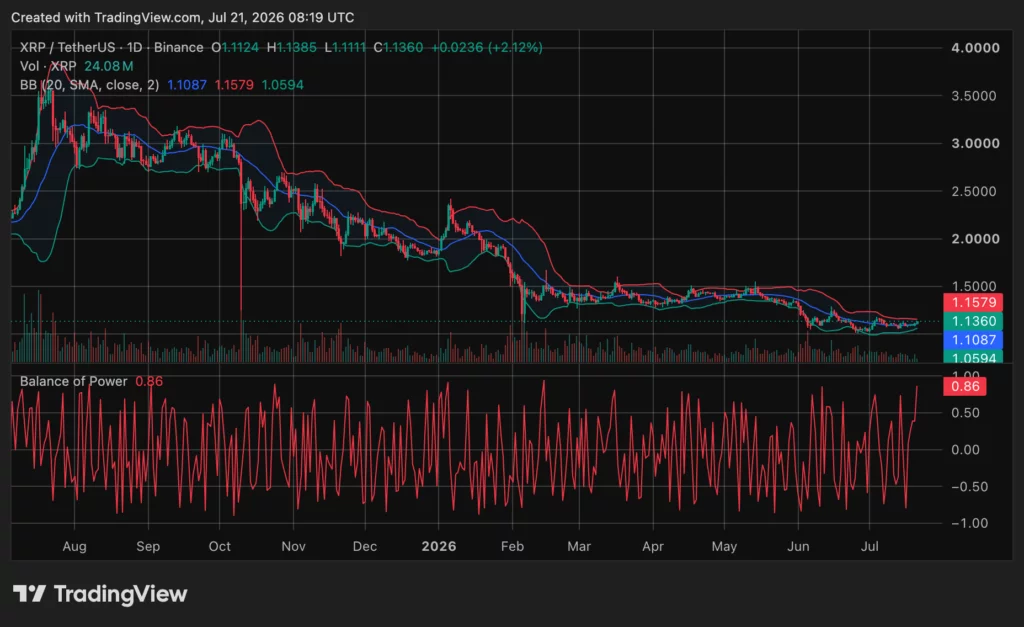
Ripple’s native token pushed back toward $1.13 on Tuesday as buyers defended the $1.08-$1.10 area and tried to turn a short-term recovery into a breakout.
Summary
- XRP reclaimed $1.13 as short-term momentum improved, though its broader descending channel remains firmly intact.
- Spot XRP ETFs added $2.49 million, extending institutional demand despite persistent weakness in the token.
- Analysts see $1.35 upside after breakout confirmation, while longer-term resistance keeps downside risks clearly active.
At press time, crypto.news market data showed XRP near $1.13, up about 4.1% over 24 hours.
The rebound has improved short-term momentum, but the larger structure remains weaker. The token still trades inside a descending channel that has limited rallies, leaving the market with two different signals: a possible near-term breakout and a broader trend that has not yet turned bullish.
XRP tests $1.13 as traders watch $1.35
Crypto analyst Ali Martinez said XRP’s monthly chart had produced a TD Sequential buy signal, while the hourly chart showed price compressing inside a symmetrical triangle. He said a sustained move above $1.13 could open a roughly 20% rally toward $1.35. The setup gained attention as the token climbed from the lower end of its recent range.
However, $1.13 is only the first test. A recent crypto.news analysis placed resistance near $1.17, followed by about $1.27 and $1.37 if buyers continue to gain control. The supplied daily chart also shows XRP above the middle Bollinger Band near $1.11 but below the upper band around $1.16. A close above $1.16 would strengthen the recovery, while a drop below $1.11 would weaken momentum.
The Balance of Power indicator near 0.86 points to strong buying pressure on the latest candle. Still, one strong reading does not confirm a trend reversal. XRP has produced several relief rallies during its wider decline, so buyers still need to hold reclaimed levels and build volume above resistance.
ETF inflows support the rebound
U.S.-listed spot XRP ETFs recorded $2.49 million in net inflows on July 20, according to SoSoValue data. Bitwise’s fund was the only product to record net buying for the session, lifting its cumulative inflows to about $501 million. Total XRP ETF assets stood near $1.017 billion, while cumulative net inflows remained around $1.489 billion.
That demand continues a pattern seen through much of 2026. XRP ETFs have absorbed close to one billion tokens while exchange reserves have fallen to multi-year lows. Yet the tighter available supply has not produced a sustained rally. XRP has remained far below its July 2025 peak despite steady ETF demand.
U.S. spot XRP ETFs attracted $6.78 million last week while the listed products held about 971 million XRP. That steady demand provides support, but price still needs a clear technical break before traders can treat the current move as more than another rebound inside a larger decline.
Analysts split over the larger trend
The latest bounce has produced sharply different long-term forecasts. EGRAG CRYPTO said XRP may be forming a third macro bottom around the $0.90-$1.00 area, supported by long-term exponential moving averages. His roadmap places $1.23 as an initial reclaim level and $1.56 as a stronger confirmation before much higher long-term targets.
Those projections remain speculative. EGRAG said the third bottom has not yet been fully confirmed, while his targets of $9, $15 and $31 rely on Fibonacci extensions and a future macro breakout.
Chart analyst ChartNerd has taken a more cautious view, arguing that XRP remains in a long-term downtrend after a bearish 20-week and 50-week EMA crossover formed earlier in 2026.
ChartNerd said rallies toward roughly $1.29 or even $1.60 could still face heavy resistance unless XRP breaks above its larger descending structure. The broader technical picture also remains cautious, with recent analysis placing XRP beneath descending resistance despite improving short-term price action.
A move toward $1.35 would confirm the short-term triangle breakout described by Martinez, but XRP would still need to reclaim higher weekly resistance before the larger trend changes. The divide between improving momentum and continued long-term weakness remains central to the current setup.
XRP bulls need to clear $1.16
The clearest short-term levels sit close to the current price. The $1.11 area, which aligns with the middle Bollinger Band, acts as the first support. The $1.16 area marks the upper band and a nearby resistance zone. A sustained move through that level would strengthen the case for a push toward $1.20, $1.27 and eventually $1.35.
On the downside, losing $1.11 would weaken the latest recovery and put the $1.08-$1.10 area back in focus. A deeper breakdown could return attention to the $1.05-$1.00 zone, where buyers have recently defended the market.
Meanwhile, institutional demand remains a supporting factor rather than a confirmed breakout driver.
Disclosure: This article does not represent investment advice. The content and materials featured on this page are for educational purposes only.

Bitcoin is trading at just a nod above $66,000 after a 3% rally since yesterday morning, with price prediction pointing at a $70K target. That may not look dramatic at first glance, yet the weekly trend tells a stronger story. Bitcoin has added 6% over the past seven days, while improving on-chain positioning and whale accumulation continue supporting the bullish case. Unsurprisingly, $70,000 is becoming the next target.
Meanwhile, the total crypto market cap has climbed to around $2.25 trillion, recovering ground lost earlier this month. A decisive move above June’s local high could open the door to another leg higher. Cardano led the major gainers after the Van Rossem hard fork went live on the mainnet. This was a meaningful network upgrade that reduced the cost of executing Plutus smart contracts.
Elsewhere, FTX’s fifth creditor payout remains scheduled for July 31, releasing roughly $900 million to eligible users. That will bring total distributions to about $10 billion. Some recipients could lock in profits, while others may redeploy capital into crypto. Either way, the payout is one event traders will keep on their radar.
Even so, the macro backdrop still deserves attention. Stablecoin outflows from Binance and Bybit reached roughly $2.3 billion over the past month, leaving less sidelined capital available for fresh buying. That partly explains why Bitcoin has struggled to clear resistance despite improving sentiment. Still, the longer-term bullish structure remains intact. Sometimes the market prefers a short breather before making its next move.
Discover: The Best Crypto to Diversify Your Portfolio
Bitcoin Price Prediction: $70K This Week?
Bitcoin is pressing against the $66K to $68K zone, a former support area that flipped into resistance after the recent breakdown. The 61.8% Fibonacci retracement of the May to June decline sits near the upper end of that range. Price action has remained steady rather than explosive, which often hints at accumulation rather than a panic-fueled squeeze.
Meanwhile, options positioning still favors the bulls. Call buying around the $70K to $75K strikes has increased, suggesting traders are paying for upside exposure instead of downside protection. Large whale wallets have continued accumulating for weeks, while mid-sized holders have trimmed positions. Sometimes the big fish really do eat first.

If Bitcoin pushes above $68K and turns that level into support, momentum could carry it toward $70K. That level has become the next obvious magnet for traders. However, bulls still need a convincing close above resistance before popping the champagne.
The base case remains a period of consolidation between $64K and $68K as liquidity rebuilds. Markets rarely move in straight lines, no matter how much traders wish they would. If that range holds, the eventual breakout could simply arrive a little later than expected.
On the flip side, a firm rejection from the $66K to $68K resistance zone could drag Bitcoin back toward the $61K to $62K support area. A break below $60K would weaken the current market structure and force traders to reassess the trend. Spot ETF flows and macroeconomic data remain the key swing factors.
Trade BTC on Bybit and Get a Chance to Win Our $1,000 USDT Airdrop
Bitcoin Hyper Targets Early Mover Upside as Bitcoin Tests Key Levels
Bitcoin at $66K is a meaningful recovery, but at its market cap, the math on percentage gains is unavoidably different from what early BTC holders experienced. Traders who want Bitcoin-correlated exposure with asymmetric upside potential are increasingly looking at infrastructure projects built on top of Bitcoin itself, where the upside multiples are structurally larger.
Bitcoin Hyper ($HYPER) is one project drawing serious attention in that category. It positions itself as the first Bitcoin Layer 2 with Solana Virtual Machine (SVM) integration. The argument being that it can deliver faster transaction performance than Solana while inheriting Bitcoin’s security model.
Hyper boasts a sub-second finality and low-cost smart contract execution on a Bitcoin-secured network, addressing three of Bitcoin’s persistent limitations simultaneously: slow throughput, high fees, and limited programmability.
The presale has raised $32,97 million at a current token price of $0.0136834, with staking available for early participants. It’s a no-brainer of an investment at the current Bitcoin price prediction.
For traders wanting to research the thesis: explore Bitcoin Hyper’s presale details here.
Discover: The Best Token Presales
The post Bitcoin Price Prediction: Now, $70K is the Target appeared first on Cryptonews.

Thousands of websites taken down for illegal World Cup streams
Ethics Provision Deal Could Unlock Senate Vote on the Clarity Act

D-backs’ Nolan Arenado reaches 2,000 career hits with double vs. Athletics

Renter of Home in Anne Heche Crash Denies Settlement With Son

No Jackpot Winner as $257 Million Prize Rolls Over to $269 Million Monday Draw

Weekend Open Thread: Staud – Corporette.com

8 Smart Money Habits to Clear Debt Faster | Tamil Motivation & Financial Tips#financialfreedom

Bitcoin Already Won | Wall Street Just Doesn’t Know It Yet!

Financial Records ni VP Sara Duterte at Mans Carpio, IPA-SUBPOENA NA! #shorts
-
 NewsBeat5 days ago
London Mayor Sadiq Khan handed a peerage by Keir Starmer alongside 15 other Labour figures… just days before the PM leaves No10
-

 Fashion4 days ago
Weekend Open Thread – Corporette.com
-

 Politics3 days ago
The House | The City of London can help the new chancellor deliver growth in every postcode
-

 Politics6 days ago
Young campaigners urge incoming PM to act on outdoor junk food ads
-

 Crypto World5 days ago
CFTC blocks Kalshi from unwinding Michigan trades after court order
-
Crypto World4 days ago
Two July Windows Left: The CLARITY Act’s Senate Fight and What Failure Means
-

 Crypto World3 days ago
Ripple Payments Joins MiCA With 14 Firms, Does It Mean Anything For XRP?
-

 Business5 days ago
Nvidia Stock Slips After Big Tuesday Rally as Huang Confirms Vera Rubin Chip Is Now in Production Today
-

 Politics2 days ago
Democrats look to World Cup watch parties to register thousands of voters
-
 Entertainment6 days ago
Disney’s Most Ambitious Failed Star Wars Attraction Is Coming to SDCC
-

 Crypto World4 days ago
Ripple wins EU-wide access as ESMA adds it to MiCA register
-

 Crypto World3 hours ago
Grayscale Files For Worldcoin ETF, WLD Registers Sharp Rise
-

 Crypto World5 days ago
Injective Submits SEC Transfer-Agent Registration to Onchain Ownership Records
-

 Business5 days ago
Palantir Shares Rise After Expanded Nvidia Partnership and Fresh Analyst Upgrades Ahead of Earnings Day
-

 Tech11 hours ago
Sail Virtually Aboard The “Itanic” With IA-64 Emulator
-
 Tech9 hours ago
Turtle Beach Command Series KB7 review: a nifty screen-equipped gaming keyboard
-

 Tech7 days ago
Dark Secrets Emerge When Jailbreaking LLMs
-

 NewsBeat4 days ago
Registration is now open for March for Men with Kev 2026
-

 News Videos7 days ago
XRP BOMBSHELL… XRP OMBOARDED FOR TRANSACTIONS!!!
-

 NewsBeat1 day ago
Unregistered fitter used Gas Safe logo on business flyers
You must be logged in to post a comment Login