

Crypto World
Bitcoin Holds Firm as Tech Stocks Slide; Traders Reassess $70K Bull Case


Bitcoin demonstrated resilience over the past week, holding up better than many risk assets even as investors pulled back from parts of the technology complex. While BTC failed to reclaim the level above $65,500, it still managed to rebound after the weekend and traded through $65,000 on Monday—highlighting a growing disconnect between the world’s largest cryptocurrency and broader market moves.
That relative strength comes as market participants remain cautious in Bitcoin derivatives. Perpetual funding and options positioning suggest large players have been more focused on limiting downside than pressing for an aggressive upside push toward $70,000. At the same time, macro pressures—especially rising Treasury yields and renewed geopolitical risk—have been feeding a broader risk-averse tone across markets.
Key takeaways
- Bitcoin’s perpetual funding rate sat near neutral at around 8% on Monday, while trader behavior remains oriented toward hedging rather than leverage.
- Bitcoin’s spot strength amid declines in AI-linked equities points to continued decoupling from traditional risk assets.
- Deribit data shows a 30-day options put-call delta skew of 13% on Monday, indicating premium pricing for downside exposure versus upside calls.
- Rising US Treasury yields and weaker tech sentiment have pressured sentiment broadly, even as BTC found support.
Derivatives signal hedging focus despite BTC strength
Bitcoin’s derivative tape did not mirror the weekend’s price firmness. According to the article’s metrics from Laevitas, the Bitcoin perpetual futures annualized funding rate was at roughly the 8% neutral mark on Monday, unchanged from a week earlier. When funding runs above 12%, it typically reflects elevated demand for bullish leverage; the last time that threshold was observed was July 10, indicating that leverage appetite has cooled since then.
The options market added another layer of caution. The piece cites Deribit data (via Laevitas) showing the Bitcoin 30-day options delta skew at 13% on Monday. Under neutral conditions, the metric is expected to sit between -6% and +6%. The move from the prior week’s 19% reading suggests slightly less intensity in bearish demand than before, but the still-positive skew implies that puts (downside) continued to trade at a premium relative to calls (upside).
In practical terms for traders, these indicators point to a market where large participants and makers are not fully committing to a sustained rally. That can matter because when hedging costs remain elevated, upside follow-through can be harder to sustain—particularly if macro factors keep risk appetite in check.
Tech weakness, Treasury moves, and the case for “decoupling”
The article links Bitcoin’s comparatively stable performance to sharp sell-offs in parts of the AI and broader semiconductor/technology landscape. It notes declines across companies including IBM, SanDisk, Oracle, ARM, SpaceX, and Intel, alongside a rise in US Treasury yields. The connection is reinforced by the piece’s reference to TradingView data for the Nasdaq-100: Nasdaq-100 futures dropped below 28,800 on Friday for the first time in five weeks, while BTC showed relative strength over the weekend.
Meanwhile, macro pressures have been pushing yields higher. The article states that the US 5-year Treasury yield rose to 4.33% on Monday, up from 4.22% two weeks earlier. It also notes that gold has been trending downward since mid-May, underscoring that the deterioration in global growth outlook and ongoing Middle East geopolitical tensions have weighed broadly across asset classes.
This is where the “decoupling” narrative strengthens: even as traditional risk proxies weakened and the market priced higher returns for holding government bonds, Bitcoin found its way back toward $65,000. In the article’s framing, the move supports the idea that BTC may be responding more to liquidity and monetary-base expectations than to equity beta alone.
Strategy’s cash raise helps ease BTC-sell-pressure fears
One near-term factor highlighted in the article is corporate positioning involving Strategy. It points to Strategy’s reported raise of $263 million in cash by selling common stock during the prior week, linking it to easing concerns that the company might be forced into selling Bitcoin.
The market focus is understandable. The article notes that investors had grown anxious about Strategy’s $1.76 billion annual dividend payout to its preferred perpetual equity shareholders, alongside $2.6 billion of convertible debt maturing in 2028 and 2029. According to the piece, Strategy raised cash reserves to $3.22 billion with the stated goal of reducing uncertainty related to unrealized Bitcoin losses reflected on its balance sheet.
Why this matters for broader traders: when a prominent Bitcoin-linked corporate holder strengthens its liquidity buffer, it can reduce perceived forced-selling risk. Even if BTC derivatives show caution, improved balance-sheet confidence can help stabilize spot demand during periods when sentiment elsewhere is deteriorating.
Geopolitics and the upside catalysts investors still watch
The article connects the risk environment to geopolitics and policy. It states that US President Trump vowed to retaliate against Iran following a missile strike that killed US soldiers in Jordan, pushing risk assets “on high alert.” In such conditions, traders often scramble for hedges, which can help explain why Bitcoin’s derivatives metrics leaned toward downside protection rather than fresh bullish leverage.
Still, the piece argues that Bitcoin’s ability to hold near $65,500 strengthens the case for continued separation from traditional markets—particularly if monetary conditions remain supportive. It also identifies a potential trigger for upside if macro and corporate signals shift: weak corporate earnings could keep pressure on traditional equities while potentially redirecting attention toward crypto, with the article specifically flagging the AI sector as a place where disappointment could deepen.
For readers, the key is to watch whether the derivatives caution persists as price tests higher levels. If funding and delta skew move closer to neutral while BTC maintains support, it would suggest hedges are becoming less necessary and a rally attempt could gain traction. If, instead, skew and leverage indicators worsen alongside renewed equity stress, BTC’s decoupling could remain more fragile than it appears on the surface.


Gate Europe’s CEO Giovanni Cunti says the Markets in Crypto-Assets Regulation (MiCA) has raised the long-term operating burden for firms already authorized to serve EU customers, warning that some licensed providers may eventually decide they cannot afford the compliance costs.
Speaking to Cointelegraph’s Chain Reaction on Monday, Cunti argued that MiCA’s stricter requirements have tightened competition—particularly for newcomers—and that the market may now be too small for some businesses to sustain the resources required to operate under the EU framework.
Key takeaways
- MiCA compliance costs are increasingly viewed as a barrier for some licensed crypto-asset service providers (CASPs), according to Gate Europe’s CEO.
- The July 1 end of MiCA’s 18-month transition period forced a retrenchment in some services across Europe, while licensed firms continued under the new regime.
- Regulatory burden may push certain startups and projects to launch outside the EU to preserve room for product iteration and growth.
- Despite the pressure, ESMA’s CASP authorizations continue to expand, though at a slower pace since the transition deadline.
- As the market contracts from “thousands” of operators to “hundreds,” remaining providers may benefit from customer migration rather than losing users.
MiCA’s transition deadline changed who can serve EU users
MiCA is the EU’s comprehensive regulatory framework for crypto assets. The bloc’s 18-month transition period ended on July 1, meaning crypto firms serving EU customers needed authorization under MiCA or otherwise had to stop offering regulated services.
Cointelegraph previously reported that the deadline triggered service changes from several exchanges in parts of Europe while firms sought MiCA approvals. A notable example is Binance, which Cointelegraph said was unable to secure a MiCA license before the deadline. The result was a patchwork of restrictions depending on jurisdiction—an early sign that the authorization process would determine who could continue operating as usual.
Gate Europe warns some licensed firms may not endure
Cunti’s central concern is not simply that compliance is costly, but that the costs and staffing requirements needed to operate continuously under MiCA could outweigh the revenue potential for some firms—especially those that acquired a license expecting the broader market to remain large.
He told Cointelegraph that “quite a few” firms that obtain MiCA licenses may ultimately lack the capacity to sustain the “cost and the resources” required “in the long term.”
For investors and operators, the implication is straightforward: in a regulated environment with ongoing obligations, survival increasingly depends on business scale and risk management—not only on obtaining a license once. That can favor larger, better-capitalized platforms and reduce room for smaller providers that cannot spread compliance overhead across higher volumes.
Regulation may drive projects to other jurisdictions
Beyond business continuity, Cunti also suggested that MiCA’s stricter approach could affect where new crypto products and projects choose to launch. He said MiCA strengthens investor protections, but also leaves less space for innovation compared with jurisdictions that apply lighter regulatory requirements.
That, he argued, may lead some teams to choose non-EU markets as a first stop. “We may need to be prepared that some projects, possibly some important projects, may be looking at other jurisdictions with different guidelines,” Cunti said.
At the same time, the EU framework still appears to be gaining institutional traction. ESMA continues to add CASPs to its public register, indicating that the compliance pathway exists—though Cunti’s comments point to a tougher economic reality for firms after authorization.
ESMA licensing continues, but momentum is slower
According to ESMA updates cited by Cointelegraph, the number of companies authorized under MiCA has kept rising. On Friday, ESMA added 14 crypto-asset service providers to its register, bringing the total to 294. Cointelegraph noted that this followed the addition of 37 firms in ESMA’s first update after the July 1 transition deadline.
While the steady increase shows that regulatory onboarding is continuing, Cunti framed the broader effect as a reshaping of competition rather than a simple expansion of the market. He pointed to the difference between the pre-MiCA landscape—when, in his view, there were “thousands of operators”—and the post-deadline environment, which is now closer to “hundreds.”
From a market-structure perspective, this distinction matters. A shrinking number of compliant providers can reduce choice and increase regulatory concentration, but it can also redirect demand. Cunti suggested that customers still want access to EU-regulated services and therefore may migrate toward the remaining compliant platforms rather than leaving the ecosystem entirely.
“So definitely there is a big opportunity for all of us,” he said, adding that “there is an ongoing migration because customers do not want to lose access to this market.”
ESMA’s role also remains active as regulators oversee how major venues adapt. Earlier coverage from Cointelegraph referenced an ESMA warning that brought Binance’s EU service changes into scrutiny—another signal that MiCA implementation is ongoing, not a one-time switch.
What to watch next
The key question after MiCA’s transition is whether authorization translates into sustainable operations. Readers should watch for evidence that some licensed firms scale down, exit, or consolidate—alongside continued ESMA licensing updates and any further regulatory scrutiny over how exchanges restrict services in different EU regions.


In attempting to modernize and better meet its customers’ needs, MoneyGram has partnered with the Stellar network, which has underpinned many of the company’s blockchain initiatives over the past five years. But the company has also started exploring other ecosystems: while Stellar remains a core partner, MoneyGram has also become a validator on Solana and Tempo. For MoneyGram, the immediate payoff isn’t speculative crypto activity, it’s replacing legacy financial rails.
Today’s cross-border settlement still largely depends on banking hours and weekday processing. Blockchain-based infrastructure, Soohoo argued, enables real-time settlement around the clock, reducing operational costs while improving the customer experience.
“We believe if we do it right, we can achieve all three,” he said, referring to helping customers save time, effort and money. Instant settlement also allows MoneyGram to lower back-office costs, savings the company hopes to eventually pass on through lower prices. Currently, MoneyGram’s fees start at $1.89 and vary depending on what country you send them to.
Soohoo doesn’t believe consumers need to understand the technology powering those improvements. He compared blockchain to the processors inside Apple’s iPhone.
“I can’t tell you what processor is inside my iPhone,” he said. “I just know it’s faster.” In the same way, he argued, remittance customers care about whether money arrives quickly and reliably, not whether it traveled over a blockchain.

July has been historically a positive month for bitcoin and this edition hasn’t disappointed so far. The cryptocurrency began the month on the wrong foot, dipping below $58,000 for the first time in nearly two years, but it rebounded swiftly in the following weeks.
Earlier today, it rocketed past $66,000 for the first time in over a month, gaining over $8,000 since that July 1 low. Here are some of the possible reasons behind it.
Whale and ETF Accumulation
As June was coming to an end and it became known that it would be a highly painful month for the asset with a nosedive of over 20%, we outlined several factors that had to change in July for a price resurgence. One of them was the ETF inflows. The financial vehicles went on a violent eight-week withdrawal-only streak, which was finally snapped a couple of weeks ago.
Moreover, investors continued to pour funds into the ETFs, which ended two weeks in the green in a row for the first time in months. July 20 extended the streak as the funds attracted almost $227 million.
The second major reason for the price revival is whale behavior. Data shared by CryptoQuant indicated that large market participants holding between 1,000 and 10,000 BTC increased their 60-day net accumulation to roughly 66,700 units, which is close to the recent record seen a month ago.
“This is the cohort’s strongest accumulation reading since February 17, when net accumulation briefly exceeded 106,000 BTC.”
News From the US
The third reason has a more macro scent. It came a week ago when the US CPI numbers for June were announced, showing softer-than-expected inflation rates. BTC rallied immediately after the news went live as lower inflation reduced the pressure on the Fed to hike interest rates. Similar market conditions are regarded as beneficial for risk-on assets like bitcoin.
Last but perhaps most importantly at the moment comes a development on the CLARITY Act. After the odds of approval dropped toward 30% just days ago, reports emerged that the White House had agreed on an ethics package for the key legislation and sent the language to certain Senate republicans for further validation.
Although the details are still scarce, industry experts believe this is a major step in the right direction for the bill, and it increases the chances for a 2026 approval.
The post 4 Key Reasons Behind Bitcoin’s (BTC) Rally Above $66K appeared first on CryptoPotato.


Prism, a token that pays a share of trading fees to everyone who holds it, is relaunching on a new Ethereum contract after disclosing that an attacker spent most of July siphoning off nearly 40% of those fees. The original PRISM token, which the project is now abandoning, plunged about 91% in the… Read the full story at The Defiant
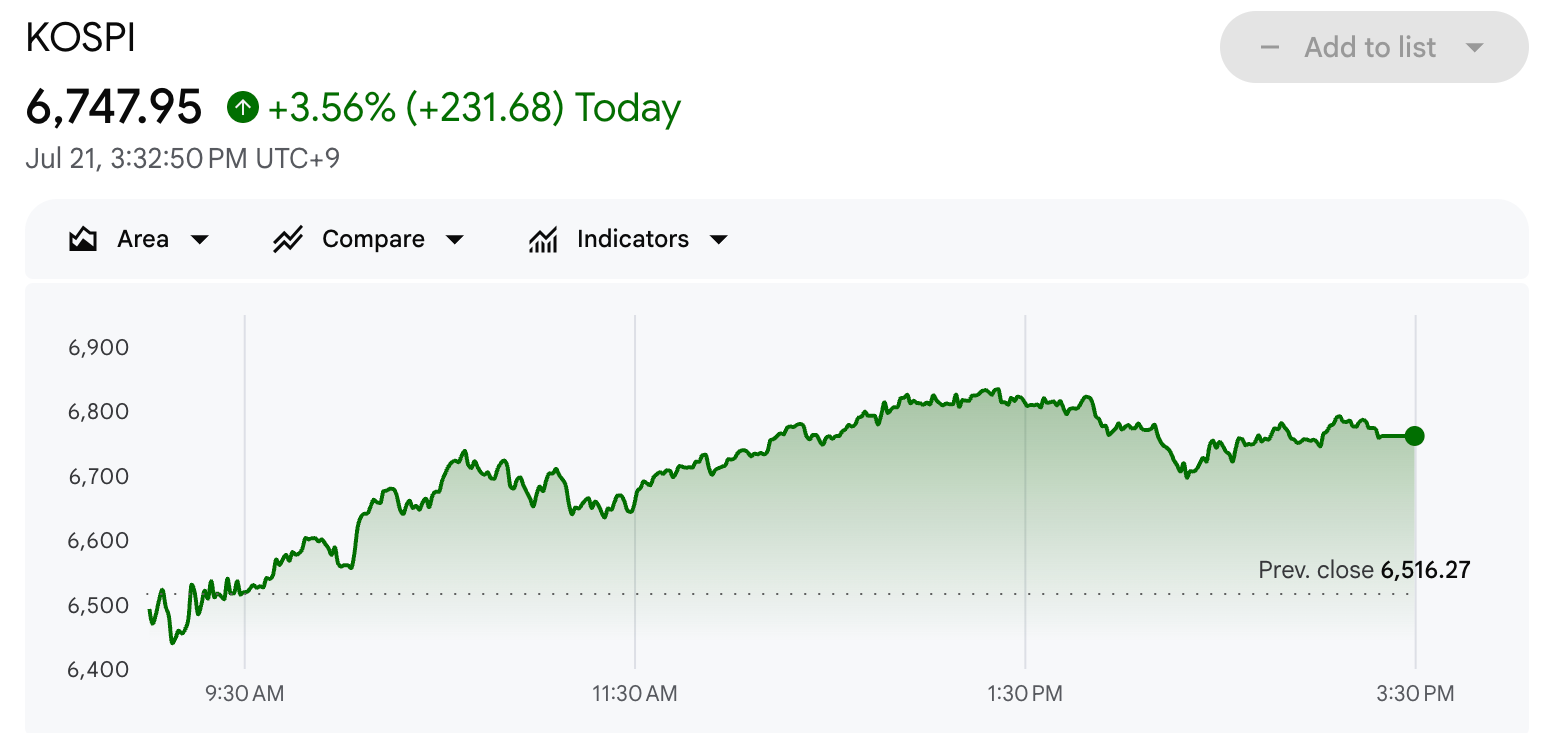
Citigroup has reaffirmed its KOSPI price target of 10,000, projecting that the recent sell-off in South Korean stocks could soon reverse.
The index has shown notable volatility in 2026, forcing the Korea Exchange to trigger sidecars and circuit breakers across repeated sessions.
Why Citi Sees a Buying Opportunity For KOSPI
The KOSPI has slid into a broader decline since setting a record closing high of 9,114.55 on June 22. Citi remains bullish on a revival.
The bank’s analysts told clients in a Monday note that the market’s headwinds have peaked. Citi argues that strong economic fundamentals and a market-friendly policy mix can drive the recovery.
“We think the recent share price pullback of KOSPI equities, led by KR memory suppliers, is more of a technical correction driven by market-wide profit-taking and therefore could represent a potential buying opportunity,” the analysts stated.
Meanwhile, the index posted another red session on Monday, dropping more than 4%. It reversed sharply on Tuesday. The surge tripped a buy-side sidecar at 12:41 p.m., a curb that briefly suspends program buy orders when KOSPI 200 futures rise 5% or more for at least a minute.
The KOSPI closed Tuesday up 3.56% at 6,747.95. From that level, Citi’s 10,000 target implies a 48% gain, and it sits nearly 10% above the previous closing record.
Follow us on X to get the latest news as it happens

Notably, volatility remains the KOSPI’s defining feature. Volatility on the index has topped 60% this year, almost double Japan’s Nikkei 225 and higher than Bitcoin (BTC).
The turbulence forced the Korea Exchange to trigger circuit breakers seven times through mid-July, up from none in 2025.
Tuesday’s rebound closed part of the distance Citi flagged. Whether it holds remains to be seen.
Subscribe to our YouTube channel to watch leaders and journalists provide expert insights
The post Citi Keeps 10,000 KOSPI Target Despite Market Selloff appeared first on BeInCrypto.
Crypto World
Pi Network (PI) Rises 25% in a Week But Warning Signs Point to Another Possible Pullback
Pi Network’s PI has emerged as one of the strongest performers in the top-100 crypto ranking over the past week, outpacing countless major digital assets.
However, this rally may prove short-lived and could be followed by another sharp pullback in the near future.
PI Flashes Green
In mid-July, the native token of the controversial crypto project tumbled to a new all-time low of around $0.07, while its market capitalization slipped well below the $1 billion psychological level.
Since then, though, the bulls have stepped in, and now PI trades at around $0.093 (per CoinGecko), representing a roughly 25% increase on a weekly basis.
The exact catalyst of the resurgence remains unclear since Pi Network’s team has been rather silent over the past few days and has not unveiled any new ecosystem updates. Of course, one potential factor could be the overall revival of the crypto market, where Bitcoin (BTC) crossed $66,000, while Ethereum (ETH) aims to reach $2,000.
Many analysts are now optimistic that PI can post further gains. X user Crypto With Gopal claimed that the asset is printing a “Falling Wedge” after a prolonged downtrend where selling pressure is fading, and the price is “squeezing toward the wedge apex.” They believe this formation often signals that momentum is shifting back to the bulls.
“Buyers are quietly defending support while lower highs continue to compress. A strong breakout above the wedge resistance could spark a sharp relief rally as sidelined buyers step in. If bulls reclaim the trendline with volume, PI could be setting up for a major expansion move. Market sentiment is cautiously turning bullish,” they added.
Prior to that, OxNeena argued that after months of selling pressure, PI has finally shown signs of accumulation. They believe that if buyers step in, this could mark the beginning of a strong trend reversal, with $0.20 and $0.32 set as potential upside targets.
Brace for Potential Drop
PI investors should remain cautious, as previous pumps like this have often been abruptly ended by another major move downward. The prolonged bear market and the concerning condition of the entire crypto sector reinforce those fears.
Meanwhile, the PI community must take other factors into account, including the upcoming token unlocks. Around 127.5 million coins are set for release in the next 30 days: a development that doesn’t guarantee a price drop but increases selling pressure.
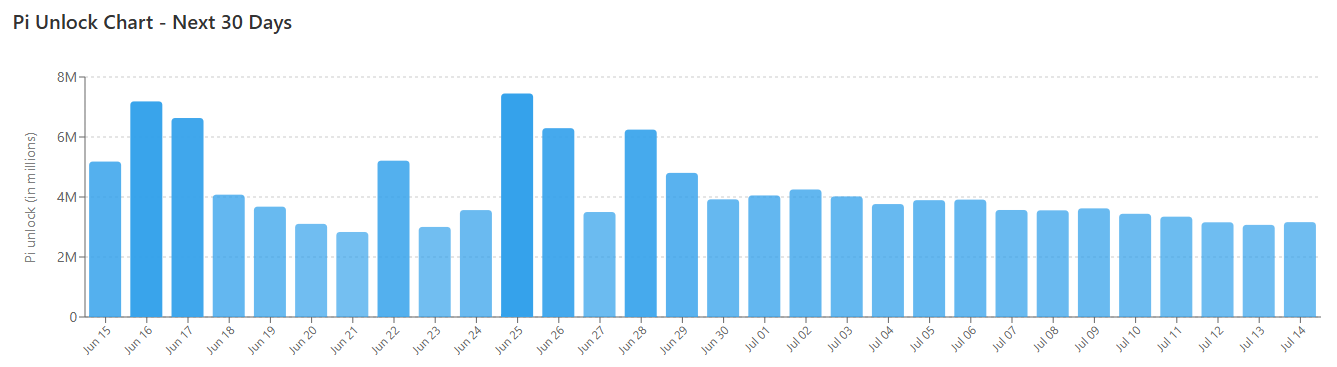
- PI Token Unlocks, Source: piscan.io
X user Travladd told their nearly 500,000 followers on X that PI is “looking cooked,” noting that there is too much supply. “Won’t catch me buying into any relief rally,” they added.
The post Pi Network (PI) Rises 25% in a Week But Warning Signs Point to Another Possible Pullback appeared first on CryptoPotato.
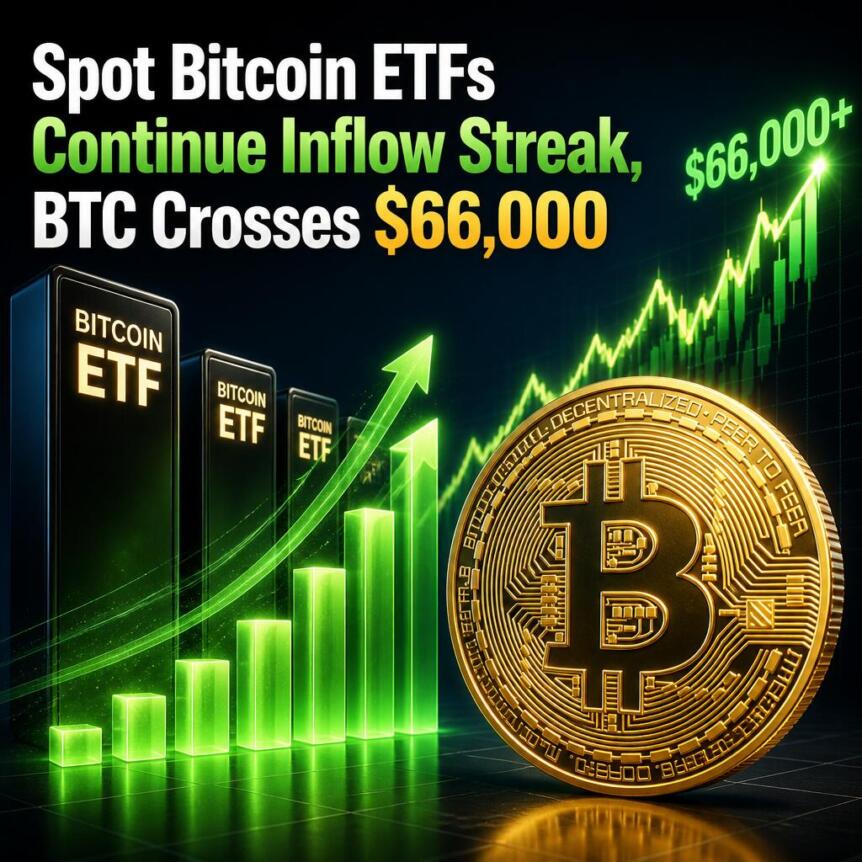
US spot Bitcoin ETFs recorded their fifth consecutive day of inflows, their longest streak since May, as the flagship cryptocurrency crossed $66,000. Strong inflows suggest price action and investor sentiment could be stabilizing after a period of sustained outflows.
Bitcoin (BTC) has regained momentum over the past seven days, reclaiming $65,000 on Monday and extending its gains on Tuesday to surpass $66,000. BTC registered an increase of over 3% in the past 24 hours and is currently trading around $66,158.
Spot Bitcoin ETFs Extend Inflows
Spot Bitcoin ETFs registered their fifth consecutive day of inflows, recording $226.80 million on Monday, the highest single-day inflow since July 6, as institutional demand returned. The ETFs have recorded a total net inflow of $727.3 million over the five-day streak and posted back-to-back positive weeks for the first time since May.
BlackRock’s IBIT recorded the highest inflows on Monday with $116.5 million, followed by ARK Invest’s ARKB with $72.7 million. Fidelity’s FBTC recorded $24.1 million in net inflows, while Bitwise’s BITB added $8.8 million and VanEck’s HODL registered $1.8 million in net inflows. Morgan Stanley’s MSBT recorded inflows of $6.9 million. However, Grayscale’s Bitcoin Trust recorded $45.4 million in outflows. Those outflows were offset by Grayscale’s Mini Bitcoin Trust, which recorded $41.4 million in net inflows.
Institutional Interest Returning?
Consistent inflows have returned after a period of sustained outflows as institutional investors pulled capital from Bitcoin ETFs. Analysts believe the inflows suggest returning institutional interest in Bitcoin and their preference for ETFs for crypto exposure. However, Simon-Peter Massabni, the head of business development at XS, believes the inflows indicate easing sell-side pressure rather than returning institutional interest and demand. According to Massabni, BTC must break and hold above $65,000 to strengthen the bullish argument.
Richard Galvin, executive chairman of DACM, believes the inflows suggest Bitcoin was beginning to find a bottom. BTC is trading above $66,000, a level it must sustain to convince the market of a sustained uptrend. The flagship cryptocurrency has largely traded between $60,000 and $65,000 in recent weeks amid geopolitical and macroeconomic headwinds.
Damien Loh, CIO at Ericsenz Capital, warned of rising inflation and interest rate hikes if the conflict between the US and Iran continues dragging on. Loh believes this could make institutional investors reluctant to put capital in BTC and other risk assets. However, he added that if the CLARITY Act passes before the August recess, it could provide the catalyst needed to push prices higher.
Strategy Building $3.23 Billion Warchest
Rising ETF inflows come amid Strategy’s efforts to improve its liquidity. The Bitcoin treasury company sold some of its Bitcoin holdings for the first time since June 2022, as it attempts to mitigate the impact of BTC’s recent decline and meet its dividend obligations. BTC is down nearly 50% from its October 2025 high of $126,000, and recently sold $263.5 million in common stock. However, it did not use the proceeds from that sale to purchase additional BTC. Instead, the company used the funds to bolster its dollar reserve.
Disclaimer: This article is provided for informational purposes only. It is not offered or intended to be used as legal, tax, investment, financial, or other advice.

Bernstein just raised its price target on Robinhood stock to $160, and the key driver is not crypto trading volume. Instead, the firm sees long-term value in Robinhood’s blockchain infrastructure. Robinhood Wrapped ETH on Robinhood Chain has gained about 2% over the past week, while daily trading volume sits near $44 million. Those numbers suggest the network is attracting steady activity rather than short-lived hype.

Bernstein analysts, led by Gautam Chhugani, lifted their HOOD target from $130 to $160, based on a 2028 EPS estimate of $4.56 and a 35x forward P/E multiple. The firm expects prediction markets, perpetual futures, and Robinhood Chain to generate 18% of total revenue by 2027, rising to 23% in 2028. Prediction markets alone could contribute $1.7 billion by 2028.
Discover: The Best Crypto to Diversify Your Portfolio
Robinhood, The Stock Platform Juggernaut
Robinhood’s second-quarter earnings arrive on July 29, and Bernstein expects new businesses to soften any slowdown in crypto trading revenue. That fits a growing trend across the market. Investors increasingly reward companies building the rails for digital assets instead of simply benefiting from speculative token rallies. Building the highway often pays better than collecting tolls during rush hour.
Robinhood Chain could also benefit the crypto market beyond its own ecosystem. More Layer 2 infrastructure gives users cheaper transactions and faster settlement while helping Ethereum scale. As more developers deploy applications and liquidity spreads across new networks, on-chain activity becomes easier to access for retail users. Fresh competition rarely hurts innovation, especially in crypto.
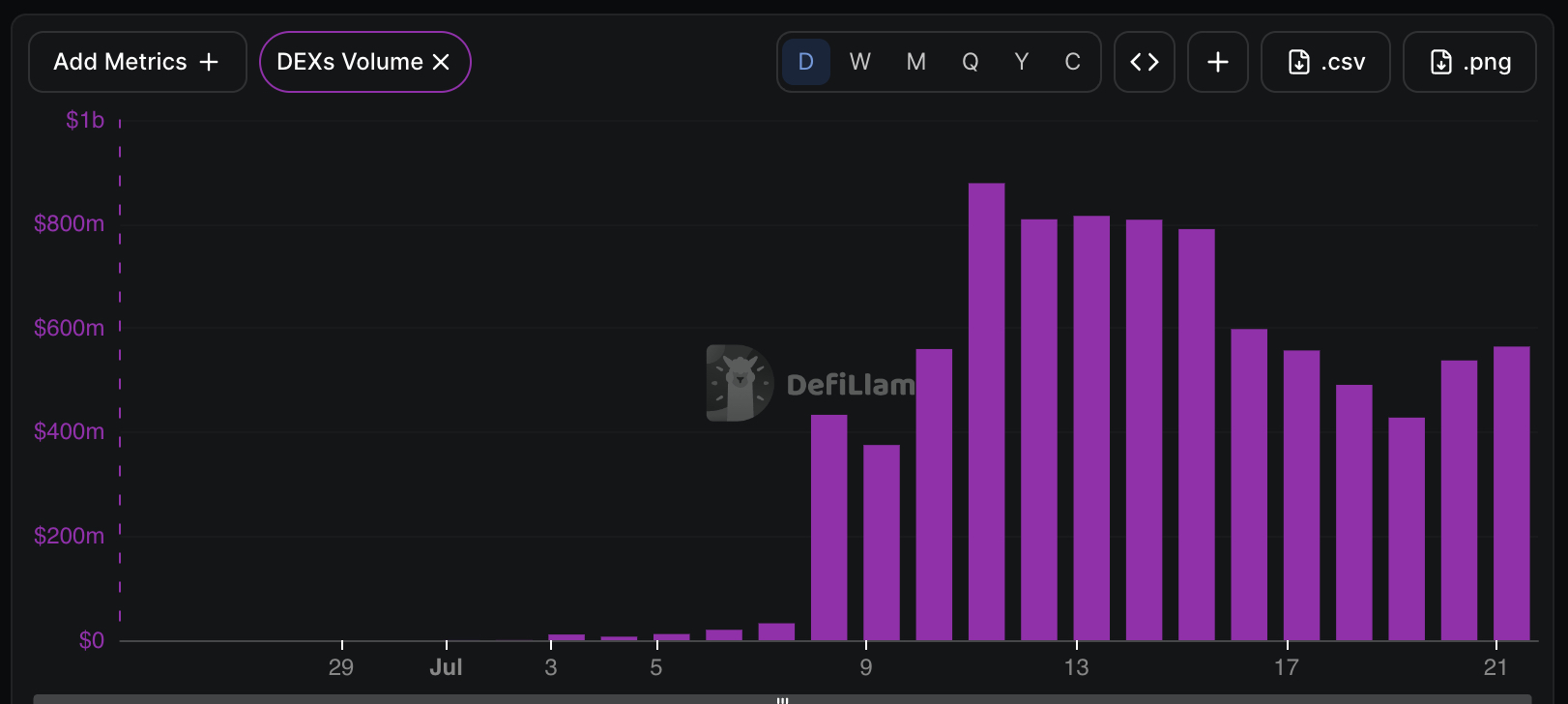
For traders, the takeaway is simple. Robinhood Chain appears to be gaining real usage, and that matters more than any single token’s price action. If network adoption keeps climbing, it could strengthen Ethereum’s ecosystem and encourage more capital to flow into decentralized finance. In crypto, the flashiest coin grabs headlines, but the strongest infrastructure often wins the longest race.
Bridge to Robinhood Chain With The Lowest Fee Using RocketX
LiquidChain Targets Cross-Chain Infrastructure as HOOD Token Tests Lows
The Robinhood Chain story is a reminder that chain-level infrastructure can capture value before native tokens catch up. That gap is exactly where early-stage infrastructure finds its pitch. Investors rotating out of speculative token exposure are increasingly looking at what’s being built at the execution layer.
LiquidChain is positioning as a Layer 3 infrastructure project with a specific structural thesis: fuse Bitcoin, Ethereum, and Solana liquidity into a single execution environment. The USP is architectural with a Unified Liquidity Layer with Single-Step Execution, Verifiable Settlement, and a Deploy-Once framework that lets developers access all three ecosystems without rebuilding for each chain.
The next generation of infrastructure won't stand alone. — LiquidChain (@getliquidchain) July 21, 2026
It'll connect everything around it.  ⟁https://t.co/vqvBcdSQYC pic.twitter.com/mWc9fGndPd
The presale is live at $0.01482 per $LIQUID, with $915K raised to date. As covered in earlier presale reporting, the project is approaching the $1M milestone.
Research LiquidChain here before sizing any position.
Trade Memecoins like DOGE on Bybit and Get a Chance to Win Our $1,000 USDT Airdrop
The post Robinhood Chain Booming, Bernstein Puts Higher Target on HOOD appeared first on Cryptonews.
Twenty One Capital (XXI) CEO Jack Mallers stepped down on Monday, seven months after the company went public. Tether also dropped its plan to merge the Bitcoin treasury firm with Strike, Mallers’ payments company.
The bigger story is the new game plan. Twenty One listed five fresh priorities, and buying more Bitcoin (BTC) is not one of them.
Why Tether Is Rewriting Its Bitcoin Treasury Playbook
Back on April 29, Tether pitched a grand plan. It wanted to fold Twenty One, Strike, and Elektron Energy, a Bitcoin mining firm, into a single Bitcoin platform.
Galaxy Research said the combined group could rival Strategy’s dominance among corporate holders. Now, Jack Mallers is leaving, and has announced his step-down as CEO of Twenty One.
That vision lasted less than 12 weeks. Strike now stays independent. A deal with Elektron is still possible, but talks are early. There is also a catch. Tether owns majority stakes on both sides, so any deal would face extra review as a related-party transaction.
The timing is no accident. Digital asset treasury (DAT) companies, firms that mainly buy and hold crypto, are under pressure. Bloomberg reported that Bitcoin’s price slump has brought losses and job cuts across the sector.
XXI has felt that pain. The stock listed on the New York Stock Exchange (NYSE) in December after a rocky market debut. It closed Monday at $5.32, down about 43% this year. The company is now worth about $1.85 billion.
Zagury Takes Over With a Cash Flow Mandate
New CEO Raphael Zagury comes from the money side of the business. He held senior roles at Goldman Sachs, Deutsche Bank, and Merrill Lynch. He later ran finances at OpenCo, once among Brazil’s largest fintech lenders.
His plan reads simply. Buy and build businesses that earn money, and keep the Bitcoin. The company compared its new model to Berkshire Hathaway. It also wants to lend against Bitcoin, so holders can access cash without selling.
“My job is to build the operating company around it, with the discipline, governance, and executional rigor of an institution. I believe our business will perform best when we also focus on the cash flow we generate and the rigor with which we allocate capital, not only by the Bitcoin we hold,” Zagury said in a statement.
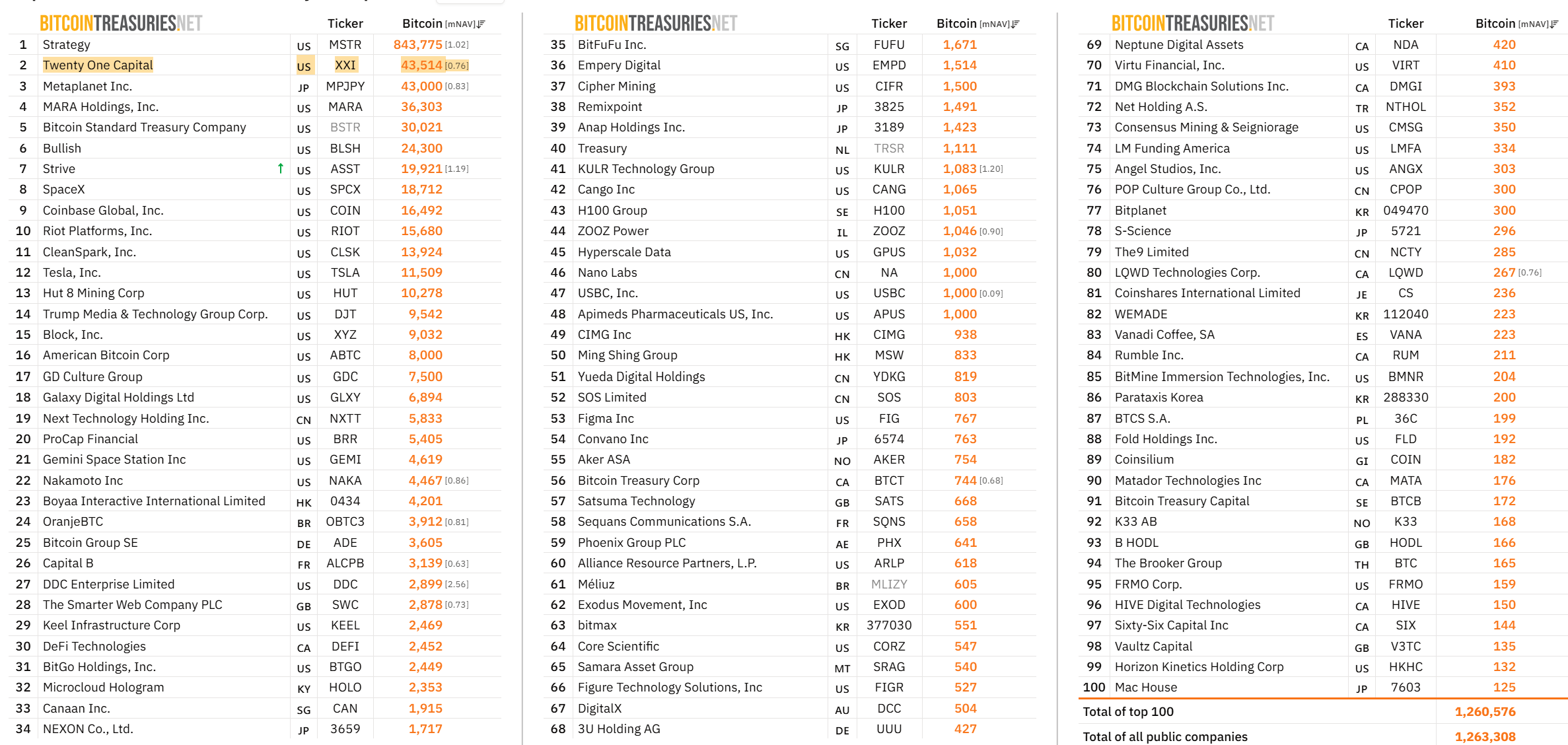
Tether saw this coming. It took full control in May by buying SoftBank’s 25% stake. Twenty One still holds 43,514 BTC, second only to Strategy in BitcoinTreasuries.net data. It also keeps its strict Bitcoin-only treasury stance.

The big question is what happens next. If the second-largest Bitcoin treasury needs more than Bitcoin, others may follow. The Elektron talks should offer the first clue.
The post Tether Rethinks XXI’s Bitcoin Treasury Model After Just 7 Months appeared first on BeInCrypto.


Tether-controlled Twenty One Capital (XXI) named Raphael Zagury as CEO, replacing Jack Mallers, and dropped Strike from a proposed three-way merger, the companies said.
Mallers stepped down effective July 20 to focus on Strike, the bitcoin payments firm he founded. Strike will remain independent and is no longer being considered for a business combination with Twenty One, according to a press release.
Tether, Twenty One’s controlling shareholder, confirmed the changes in a separate announcement.
Tether proposed combining Twenty One, Strike and Elektron in April, seeking to place bitcoin treasury, financial services and mining under one listed company.
Twenty One’s revised strategy will focus on acquiring operating businesses, expanding capital markets capabilities and developing bitcoin-backed lending.
XXI is little changed in pre-market trading.
CoinDesk has reached out to all three companies, but hasn’t heard back at the time of writing.

More MiCA-licensed firms may leave EU market

Celtic & Rangers cited after unrest ‘near miss’ at Ibrox

Does dark energy really exist? Our work identifies cracks in the foundations of today’s cosmological model

Renter of Home in Anne Heche Crash Denies Settlement With Son

No Jackpot Winner as $257 Million Prize Rolls Over to $269 Million Monday Draw

Weekend Open Thread: Staud – Corporette.com

YS Jagan Mohan Reddy Extended Financial Support To Vishakapatnam Fisherman Families #trending #viral

$10,000 ETHEREUM ROBINHOOD TO START ALTCOIN SEASON? #ethereum #xrp #robinhood #stocks

Crypto Gold Live Trading 20 JULY | Market Trader | #goldtrading #cryptotrading #bitcoin
-
 NewsBeat5 days ago
London Mayor Sadiq Khan handed a peerage by Keir Starmer alongside 15 other Labour figures… just days before the PM leaves No10
-

 Fashion4 days ago
Weekend Open Thread – Corporette.com
-

 Politics3 days ago
The House | The City of London can help the new chancellor deliver growth in every postcode
-

 Politics6 days ago
Young campaigners urge incoming PM to act on outdoor junk food ads
-

 Crypto World6 days ago
CFTC blocks Kalshi from unwinding Michigan trades after court order
-
 Crypto World4 days ago
Two July Windows Left: The CLARITY Act’s Senate Fight and What Failure Means
-

 Crypto World3 days ago
Ripple Payments Joins MiCA With 14 Firms, Does It Mean Anything For XRP?
-

 Business5 days ago
Nvidia Stock Slips After Big Tuesday Rally as Huang Confirms Vera Rubin Chip Is Now in Production Today
-

 Politics2 days ago
Democrats look to World Cup watch parties to register thousands of voters
-
 Entertainment6 days ago
Disney’s Most Ambitious Failed Star Wars Attraction Is Coming to SDCC
-

 Crypto World4 days ago
Ripple wins EU-wide access as ESMA adds it to MiCA register
-

 Business5 days ago
Palantir Shares Rise After Expanded Nvidia Partnership and Fresh Analyst Upgrades Ahead of Earnings Day
-

 Crypto World5 hours ago
Grayscale Files For Worldcoin ETF, WLD Registers Sharp Rise
-

 Crypto World5 days ago
Injective Submits SEC Transfer-Agent Registration to Onchain Ownership Records
-

 Tech13 hours ago
Sail Virtually Aboard The “Itanic” With IA-64 Emulator
-
 Tech11 hours ago
Turtle Beach Command Series KB7 review: a nifty screen-equipped gaming keyboard
-

 Tech7 days ago
Dark Secrets Emerge When Jailbreaking LLMs
-

 NewsBeat4 days ago
Registration is now open for March for Men with Kev 2026
-

 News Videos7 days ago
XRP BOMBSHELL… XRP OMBOARDED FOR TRANSACTIONS!!!
-

 NewsBeat1 day ago
Unregistered fitter used Gas Safe logo on business flyers
You must be logged in to post a comment Login