



Connect with us
DAPA Banner
DAPA Coin
DAPA
COIN PAYMENT ASSET
PRIVACY · BLOCKDAG · HOMOMORPHIC ENCRYPTION · RUST
ElGamal Encrypted MINE DAPA
🚫 GENESIS SOLD OUT
DAPAPAY COMING

Business

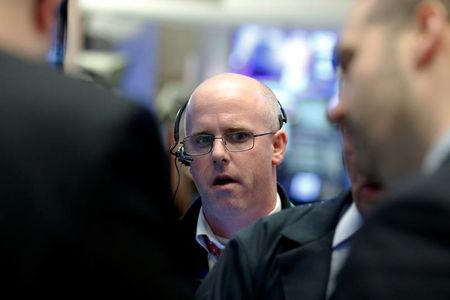
Asian stocks rise as Mideast mediation takes oil lower

Published

on

Continue Reading
Click to comment

You must be logged in to post a comment Login

Leave a Reply

Business

Senate Democrat calls for probe of US derivatives regulator’s staff cuts

Published

on


Senate Democrat calls for probe of US derivatives regulator’s staff cuts

Continue Reading

Business

Lindt’s Easter chocolate sales fall after price hike

Published

on

Two young women surrounded by studio lights and tripods selling eyelash serums on a live stream

Lindt has partially U-turned on its decision to hike prices after Easter chocolate sales dropped.

The Swiss chocolate maker said a “necessary groupwide” price surge of 11.8% was one of the reasons revenue shrank in the first half of this year, particularly in the UK, Germany, and Switzerland.

It also blamed weaker Easter demand and a drop in tourism from Asia and the Middle East “due to geopolitical uncertainties”. In response, it said it has adjusted prices and boosted marketing in certain regions for the second half of the year.

Around Easter, Lindt is known for its chocolate rabbits wrapped in gold-coloured foil and decorated with a red ribbon and bell on their necks.

Advertisement

Overall, the company’s sales dipped 0.9%, with European sales down by 2.1%. It added that “performance was impacted by more price-sensitive and mature markets such as Germany, Switzerland and the UK”.

By volume, meaning the amount of chocolate sold rather than the money it made, overall sales sank 7.5%. Pre-tax profit fell 1.5%.

Meanwhile, sales of Lindt chocolate in airports decreased “due to ongoing conflicts in the Middle East, and therefore declining passenger traffic”.

Lindt said its sales picked up in North America, Australia, China, and Japan, though these countries account for a much smaller slice of its sales than Europe, where it makes over half its revenue.

Advertisement

Lindt chief executive Adalbert Lechner said: “The actions we have initiated focus on volume recovery in the second half of 2026 and lay the foundation to regain volume growth momentum in 2027.”

Lindt is not the only chocolate firm which has been putting prices up.

Experts say climate change has led to extreme rainfall and droughts which have decreased cocoa farmers’ crops.

This pushes up costs of making chocolate, and companies have chosen different ways to react to this, with some reducing chocolate content or sizes rather than raising prices.

Advertisement

According to the latest official data, the annual rate of chocolate and sweet price rises is 7.9%, external – much higher than the general rate of UK inflation at 2.8%, external.

Continue Reading

Business

The Great North calls for a new alliance between Government and Northern leaders

Published

on

Business Live

‘The next chapter of devolution must be about a new relationship between national government and Northern leaders’

Burnham walking into the Cabinet room

Andy Burnham walks into the Cabinet room on his second day as prime minister (Image: Eddie Mulholland-WPA Pool/Getty Images)

The Great North has urged new Prime Minister Andy Burnham’s Government to build a new partnership with Northern leaders which places devolution at the centre of national renewal.

In an open letter to the Prime Minister, Northern mayors and leaders came together to call for a devolution-first approach that gives Northern leaders the powers, investment and freedoms needed to drive growth, strengthen communities and deliver greater prosperity across the country.

They argue that devolution has already transformed local leadership across the North. However, they say that a more fundamental shift in the relationship between central government and England’s largest economic region must now be established.

Mr Burnham, a founding member of The Great North when Mayor of Greater Manchester, has made devolution the focal part of his agenda for Government, including establishing a ‘Number 10 North’ to rebalance power and prosperity across the country.

Advertisement

The Great North says the North should be recognised as a strategic partner in the governance of the UK, alongside the devolved nations, with a stronger collective voice in national decision-making that reflects its scale, economic weight and democratic leadership.

Chair of The Great North and North East Mayor Kim McGuinness said: “The North is mighty. We power Britain’s industries, produce world-leading innovation, create culture that is recognised around the world and are home to millions of talented people with huge ambition.

“Andy Burnham knows the North and the massive potential at our disposal. He helped shape The Great North and, as Mayor, consistently argued that Westminster had to trust places like ours with more power and responsibility. Now he has the opportunity to turn those arguments into lasting change – working us to create a more prosperous future for the North of England and the United Kingdom.

“The next chapter of devolution must be about a new relationship between national Government and Northern leaders, recognised as a strategic partner in the governance of the UK, alongside the devolved nations.”

Advertisement

Meanwhile, the leader of the Greater Manchester business membership group has called upon new Prime Minister Andy Burnham to help unlock business investment. Emma Holt, CEO of Greater Manchester Chamber of Commerce, penned an open letter to the new PM, congratulating him on his new role while setting out the main business issues that concern its members.

Andy Burnham and his ministers in the Cabinet room

Andy Burnham held his first Cabinet meeting on Tuesday (Image: Eddie Mulholland/Daily Telegraph/PA Wire)

The Chamber, which has around 3,500 members and a further reach of 37,000 businesses, stressed how cities and city regions are vital in the UK’s growth story and that its data “can provide the regional pulse of business, demonstrating business challenges as reported by the businesses themselves, with suggestions on what will work on the ground as solutions for business”.

In the letter, Ms Holt says: “Since 2017, in Greater Manchester, we have enjoyed stability of leadership, delivery of policy, and strong engagement with local government which we’re sure will continue. Nationally, we look forward to seeing clearer, longer-term policy, to greater investment and focus on the North of England, and to the devolution model, proven in Greater Manchester, developed across more Mayoral authorities.

“What the country needs now is the excitement, optimism and economic growth you delivered for Greater Manchester. We encourage policy certainty for businesses, this will help unlock business investment and showcase Britain as not just open for business but the best destination for investment and job creation.

Advertisement

“We look forward to continuing our relationship and would welcome the opportunity to meet in the coming weeks to discuss how we can support your government’s priorities for Greater Manchester and the North. We also work closely with our Chamber network and would be happy to coordinate a regional CEOs roundtable or similar to give you a direct channel.”


Continue Reading

Business

Electricity prices: Three reasons why they are high in the UK

Published

on

Two young women surrounded by studio lights and tripods selling eyelash serums on a live stream

Network costs are projected to increase further by 2030, adding another £48 to a typical bill, according to calculations by energy analyst Ben James.

However the government and some energy groups also argue that reducing our national reliance on volatile international gas prices via the government’s 2030 clean power policy will keep down the UK’s wholesale electricity costs and mean household bills will be lower than they would otherwise have been.

This would be by reducing the amount of time in each year that gas sets the wholesale electricity price.

A great deal though depends on future wholesale gas prices which are impossible to accurately forecast.

Advertisement

Some analysts, including the government’s Climate Change Committee, also say the government should go further to remove policy costs from household electricity bills and meet them through general taxation instead, in order to avoid discouraging people from using electricity rather than gas to heat their homes.

“The way you allocate those costs matters,” says Mayo.

“They may be being put on bills or they may be being paid by consumers in other ways that are less visible, such as taxes.”

Advertisement
Continue Reading

Business

Earnings call transcript: RBB Bancorp tops Q2 2026 EPS forecast

Published

on


Earnings call transcript: RBB Bancorp tops Q2 2026 EPS forecast

Continue Reading

Business

Anant Raj to demerge data centre arm into separately listed company

Published

on

Anant Raj to demerge data centre arm into separately listed company
Listed real estate firm Anant Raj Ltd will de-merge the data centre business and cloud operations under one entity before carving them out into Ashok Cloud Pvt Limited, a dedicated digital infrastructure and cloud services company that will be listed independently.

Anant Raj Limited currently operates 28 MW of IT load across its campuses in Manesar and Panchkula and is expanding its data center footprint across Haryana. It aims to achieve a total capacity of 307 MW by FY32 across Manesar, Panchkula and Rai, supported by a planned capital expenditure of approximately USD 2.1 billion.

The restructuring is aimed at creating two focused businesses one in real estate and infrastructure and the other in digital infrastructure.

The restructuring has been approved by a Composite Scheme of Arrangement by its Board of Directors. The Composite Scheme, approved under Sections 230 to 232 of the Companies Act, 2013, will create two focused listed companies.

Advertisement

Ashok Cloud Pvt Limited will emerge as a dedicated digital infrastructure and cloud services company, providing advanced data centres, co-location services, sovereign public cloud offerings, Artificial Intelligence (AI) ready cloud infrastructure, DC & DR services including cloud migration, data backup solutions and other allied services.


As an independent listed entity, the Company will be well positioned to capitalize on the rapidly growing demand for digital infrastructure and cloud services in India.
“Our real estate, infrastructure business and Data Centre & Cloud Services Business have evolved into two distinct platforms, each with its own growth trajectory, operational priorities, and capital needs. As both businesses enter their next phase of expansion, the proposed composite scheme is designed to provide greater strategic focus, management autonomy, and flexibility to pursue long-term value creation,” said Amit Sarin, Managing Director, Anant Raj Ltd.The proposed demerger is also expected to facilitate independent market recognition of the Data Centre Business while enabling eligible Anant Raj Ltd shareholders to participate directly in its future growth and value creation.

“By bringing together the data centre and cloud services operations currently housed across Anant Raj Ltd and Anant Raj Cloud Pvt Ltd under one roof, we are creating a more focused and scalable platform that will be well-positioned to attract investments, pursue strategic partnerships, and capitalize on emerging opportunities in the digital infrastructure sector,” Sarin said.

Upon the scheme becoming effective, eligible shareholders of Anant Raj Limited will receive one fully paid-up equity share of face value of Rs 2 each in Ashok Cloud Private Limited for every one fully paid-up equity share of face value of Rs 2 each held in Anant Raj Limited.

The scheme will not result in the cancellation of Anant Raj Limited’s existing shareholding in Ashok Cloud Private Limited, and ACPL will continue to remain a subsidiary of Anant Raj Limited.

Advertisement

The proposed scheme is subject to receipt of all necessary statutory, regulatory and judicial approvals, including approvals from the National Company Law Tribunal (NCLT), SEBI, the stock exchanges, shareholders, creditors and other applicable authorities, as required.

The group remains on track to achieve an installed IT load capacity of around 117 MW by FY28 across its strategic data center locations. In June 2024, AnantRaj also partnered with Orange Business, the French IT and telecom services provider, to deliver managed cloud services in India, further strengthening its integrated digital infrastructure offerings.

Continue Reading

Business

Most AI-ready UK city 2026: Manchester tops SAS index

Published

on

Most AI-ready UK city 2026: Manchester tops SAS index

Manchester has been named the UK’s most AI-ready city for the third year in a row, and the message for business owners is hard to miss: the country’s AI economy is no longer a London story.

The SAS AI Cities Index 2026, now in its fifth year, ranks cities outside the capital across eight criteria, including AI job opportunities, innovation funding, education, broadband speed and business activity in the sector.

Manchester’s grip on top spot rests on sheer commercial depth. The city hosts 655 AI businesses, the most of any location in the index, representing 2.8 per cent of its entire business landscape. It also boasts some of the strongest AI employment outside London, second only to neighbouring Salford and its Media City cluster.

For founders weighing up where to base or expand a business, the funding picture matters just as much. Innovate UK grants for AI and the Data Economy average more than £279,000 per business in Manchester, while the city council has approved a budget exceeding £1 billion for the first time to support infrastructure and long-term growth.

The talent pipeline is being built deliberately. New ‘MEGA hubs’, a collaboration between Salford-based IN4 Group and the Greater Manchester Combined Authority, will give more than 3,000 secondary school pupils access to technology learning and an AI Academy, with sites planned for Rochdale, Salford, Tameside and Wigan. The Future of Work Alliance, a five-year, £5 million initiative announced in May, and the University of Manchester’s Unit M Deep Tech Accelerator add further weight. Little wonder the city was also recently crowned the best city outside London for women founders.

Advertisement

The chasing pack is the real story for SMEs elsewhere. Bristol climbed from fourth to second on the back of strong R&D funding and its semiconductor cluster, Birmingham rose to fifth with the largest number of AI-related university courses, and Derby entered the top 20 for the first time, securing the highest average Innovate UK funding per business of any city at more than £2.6 million. Southampton jumped 19 places into the top ten, helped by average Innovate UK support of £330,000 per business.

That regional spread should sharpen minds, given repeated warnings that smaller firms risk being left behind on AI and that UK businesses are underinvesting in the technology compared with global leaders. The infrastructure is increasingly on SMEs’ doorsteps; the question is whether they use it.

Glyn Townsend, senior director of education services at SAS for EMEA, said: “It’s great to see so much development in other cities too, proving that AI excellence doesn’t need to be London-centric. The likes of both Southampton and Derby, which have rapidly risen through the rankings, shows that cities are embracing and harnessing AI, recognising how it can be used to boost jobs, increase opportunities and assist in long-term economic growth.”

SAS is a founding partner in the government’s programme to train 10 million workers in AI skills by 2030, offering businesses free training materials and access to its AI experts.

Advertisement

Kanishka Narayan, AI minister at the Department for Science, Innovation and Technology, said: “We’re mobilising the UK’s businesses, innovators, and our trade unions to unlock AI’s potential for Britain – with more than £200 million earmarked for work that will drive responsible AI adoption in every part of the country.”


Amy Ingham

Amy Ingham

Amy Ingham is a reporter at Business Matters, covering UK business news with a focus on breaking news, business policy, late payments and insolvency. She joined the magazine in 2026 after completing the NCTJ Diploma in Journalism at Harlow College’s journalism school. Her recent reporting includes British Steel’s nationalisation and its impact on SME suppliers, the decline in late payments by large firms, and Insolvency Service director disqualifications. Reach her at aingham@cbmeg.co.uk.

Advertisement
Continue Reading

Business

ICICI Bank eyes $500 million dollar bond issue via GIFT City

Published

on

ICICI Bank eyes $500 million dollar bond issue via GIFT City
ICICI Bank is close to raising at least $500 million through five-year dollar-denominated bonds as it looks to tap the Reserve Bank of India’s concessional dollar-rupee swap facility, sources familiar with the matter said. The bonds would be raised under SEC’s144A rules that allows companies to raise capital rapidly from Qualified Institutional Buyers (QIBs) in the US without full SEC registration.

The issuance, through the bank’s GIFT City IFSC unit, will mark ICICI Bank’s first US dollar bond sale in almost 10 years. The proceeds are expected to be used to provide leverage of up to nine times to clients, the sources said, adding that the bank is likely to announce the fundraising plan soon.

“The proceeds will primarily be used to support client financing requirements, with the concessional swap making the economics significantly more favourable,” a source said. “The bonds would tightly priced. It could be 90-95 basis points over US treasury,” he added. The bank is expected to announce fund raise plans this week.

ICICI Bank eyes $500 million dollar bond issue via GIFT City
Advertisement

ICICI Bank is close to raising at least $500 million through five-year dollar bonds via its GIFT City unit, leveraging the RBI’s concessional swap facility. The proceeds will support client financing, marking the lender’s first US dollar bond issuance in nearly a decade.


ICICI Bank did not respond to a request for comment.
The fundraising comes after the RBI in June introduced a concessional swap facility that allows eligible external commercial borrowings by banks and state-owned companies to be hedged at a fixed rate of 1.5% per annum, compounded semi-annually. The scheme sharply lowers hedging costs, making overseas dollar borrowing more attractive for Indian lenders.


“We have partnered with various parties to provide leverage and are committed to making this initiative a success,” ICICI Bank Executive Director Sandeep Batra said in a post-earnings media call. “We will offer leverage based on the customer profile and on what our partners are providing; customers will get a reasonable return.”
ICICI Bank follows HDFC Bank and Axis Bank in tapping the facility. HDFC Bank raised $750 million through five-year senior unsecured dollar bonds via its GIFT City IFSC unit, pricing the notes at 90 basis points over US Treasuries for a yield of 5.067%, becoming the first Indian lender to use the RBI’s concessional swap window for overseas borrowings.Axis Bank subsequently raised $800 million through dollar bond issuances under the facility, comprising $500 million of Additional Tier 1 perpetual bonds priced at 6.87% and $300 million of five-year senior unsecured notes.

Indian banks have collectively mobilised $20.7 billion under the RBI’s special incentive window as of Monday, within six weeks of the scheme becoming operational. Of this, FCNR(B) deposits accounted for the largest share at $17.4 billion, followed by overseas foreign currency borrowings (OFCBs) at $2 billion and external commercial borrowings (ECBs) at $1.3 billion.

For comparison, the last time such a facility was operationalised, in 2013, it ultimately attracted $34 billion — $26 billion via FCNR(B) deposits and $8 billion via ECBs — helping cushion the fallout of the so-called taper tantrum.

Advertisement
Continue Reading

Business

Topgolf founders target cue sports

Published

on

Topgolf founders target cue sports

Steve and Dave Jolliffe, the creators of Topgolf and Puttshack, have persuaded investors to hand them $55 million to do for pool what they once did for golf, and their London flagship is the proving ground.

The growth equity round in Poolhouse, announced on Friday, was led by Bluestone Equity Partners, the private equity firm focused on sports, media and entertainment. It marks the tenth investment from Bluestone’s inaugural $350 million fund.

The prize, as Poolhouse sees it, is one of the world’s oldest social games. Cue sports claim more than 200 million weekly players globally and an industry-estimated total addressable market of roughly $35 billion, yet the category has barely been touched by technology.

At the heart of the business is BillyQ, a gameplay system developed over six years with the team behind Hawk-Eye, the computer vision technology familiar from line calls at Wimbledon and goal-line decisions in football. BillyQ overlays a responsive digital layer onto the pool table, enabling interactive games, automated scoring and real-time player analytics.

There is a canny piece of game design in there too. A dynamic handicapping model adjusts to player ability, letting mixed-skill groups compete on level terms, which matters when your customer base is a work night out rather than a league team.

Advertisement

For UK hospitality operators, this is a story worth watching closely. Poolhouse’s flagship venue at Liverpool Street in London has opened to strong customer and critical reception, and the company reports strong landlord interest in the US, including New York City and Nashville, alongside a franchise agreement with Signature Hospitality Group, a leading Australian operator.

The venues, though, are the shop window. The capital will primarily fund the rollout of BillyQ beyond Poolhouse’s own sites into hotels, traditional pool halls, casinos and bars, and eventually into homes, building a recurring revenue platform on top of tens of millions of installed tables. For the thousands of British pubs, clubs and halls with a table gathering dust, the technology may eventually arrive as a licensing proposition rather than a competitor.

“We set out to build Poolhouse because we saw the same opportunity in pool that we once saw in golf: a beloved, mass-participation game that could be transformed through technology, design, and a better player experience,” said Steve Jolliffe, co-founder of Poolhouse.

Bobby Sharma, founder and managing partner of Bluestone, said the category “has never had a scaled technology and data layer”, calling the deal “a compelling opportunity to back exceptional operators in one of the largest global participatory sports categories”.

Advertisement

Andrew O’Brien, Poolhouse’s chief executive, said the company is “well-positioned to accelerate our global expansion and establish BillyQ as the underlying infrastructure for cue sports worldwide”.

The deal also says something about where leisure money is flowing. Experience-led venues have boomed as employers swap the traditional pub social for activity-based nights out, and investor appetite for the sector has recovered, from Justin King’s £50 million hospitality fund to a broader revival in UK private equity dealmaking.

Poolhouse’s backers already include DMG Ventures, Bolt Ventures, Active Partners, an early investor in Soho House, Sharp Alpha and Emerging Fund. Its leadership bench features Ross Butler, former chief executive of Gaucho, Steve Lane, who helped scale Toptracer globally at Topgolf, and Hawk-Eye founder Paul Hawkins.

For SME founders, the lesson is a familiar Jolliffe one: take a game everyone already knows, remove the intimidation, add a layer of technology, and the capital tends to follow.

Advertisement

Jamie Young

Jamie Young

Jamie Young is Senior Reporter at Business Matters, covering SME finance, employment law and Westminster policy since 2016. He has reported on every Budget and Autumn Statement since 2018, helped make sense of the ‘covid era’ and the bounce-back loan scheme from launch through the fraud investigations, and broke the magazine’s coverage of the 2024 late-payment reforms. He joined Business Matters straight from completing his BA in Administration from Exeter University and is NCTJ-qualified. Reach him at jyoung@cbmeg.co.uk

Advertisement
Continue Reading

Business

WK Kellogg adds prebiotic granola

Published

on

WK Kellogg adds prebiotic granola

The Kashi Gut Health Granola is formulated with fiber and prebiotics.

Continue Reading

Trending

Copyright © 2025