Jamie Dimon has handed Andy Burnham’s day-old government both a vote of confidence and a warning shot. The JP Morgan chief executive says he wants London to remain the US bank’s home “for a long period of time”, but whether Britain stays attractive as a place to do business rests on the new prime minister and his chancellor reviving growth.
“The new chancellor [is] going to need good policies that actually cause growth. So I’m praying that they get policy right [as] government after government get it wrong,” Dimon, who has run the bank since 2006, said in an interview with The Master Investor Podcast with Wilfred Frost, released on Tuesday.
For the owners of Britain’s small and medium-sized firms, that is the question of the moment put with unusual bluntness. When the boss of America’s largest bank says he is reduced to prayer, smaller businesses waiting on the same policy decisions might be forgiven a similar approach.
Burnham formally succeeded Sir Keir Starmer on Monday, promising a “new political and economic model” for Britain and arguing that MPs had fallen short for decades in creating the conditions for lasting and more equal growth. He enters Downing Street with eight in ten SME owners already braced for impact, so Dimon’s cautious optimism will be read closely on both sides of that divide.
The man charged with answering Dimon’s prayer is John Healey, the surprise pick for No 11 after early favourites Ed Miliband and Shabana Mahmood lost out. Burnham has also promised to set out measures to ease the cost of living as soon as Tuesday, and has hinted at lifting the earnings threshold at which workers first pay income tax, frozen at £12,570 since 2021.
Advertisement
The arithmetic is unforgiving. Burnham has repeatedly committed to the existing fiscal rules, funding day-to-day spending from tax revenues within three years, but economists warn the war in the Middle East may have whittled his fiscal headroom from £23.7 billion to just £10 billion. Every giveaway must be paid for, and the City knows where chancellors tend to look.
Which is why Dimon reserved his sharpest words for the bank levy, the balance sheet tax introduced in the wake of the global financial crisis. “I have always thought it was wrong,” he said. “JP Morgan did not damage the UK … we’re a great citizen there. We hire people there. We want to be bigger there. We train people there. We hire veterans there.”
“It’s still there 17 years later. Is that fair to a shareholder? I mean, it may sound great, ‘tax the banks’, but it’s $5 billion that my shareholders paid on that extra tax. And I just think things like that have adverse consequences.”
Asked whether an increase in the levy would sink the bank’s planned £3 billion UK headquarters, having already threatened to reconsider the Canary Wharf project if Britain turned hostile to banks, Dimon was more measured: “I don’t know what I’d do. I wouldn’t make a binary decision like that.”
Advertisement
That matters well beyond the Square Mile. A £3 billion construction project feeds contractors, fit-out firms, caterers and suppliers across the SME economy, and the tax treatment of Britain’s biggest inward investors sets the tone for everyone weighing whether to commit capital here.
There was warmth, too, for the departed. Rachel Reeves, sacked by Burnham this week after two years at the Treasury, “did a great job”, Dimon said. Investors credited her fiscal prudence with keeping a lid on government borrowing costs.
Her successor inherits the goodwill, the £10 billion of headroom, and one of Wall Street’s most powerful men praying he does not waste either.
Amy Ingham
Amy Ingham is a reporter at Business Matters, covering UK business news with a focus on breaking news, business policy, late payments and insolvency. She joined the magazine in 2026 after completing the NCTJ Diploma in Journalism at Harlow College’s journalism school. Her recent reporting includes British Steel’s nationalisation and its impact on SME suppliers, the decline in late payments by large firms, and Insolvency Service director disqualifications. Reach her at aingham@cbmeg.co.uk.
Listed real estate firm Anant Raj Ltd will de-merge the data centre business and cloud operations under one entity before carving them out into Ashok Cloud Pvt Limited, a dedicated digital infrastructure and cloud services company that will be listed independently.
Anant Raj Limited currently operates 28 MW of IT load across its campuses in Manesar and Panchkula and is expanding its data center footprint across Haryana. It aims to achieve a total capacity of 307 MW by FY32 across Manesar, Panchkula and Rai, supported by a planned capital expenditure of approximately USD 2.1 billion.
The restructuring is aimed at creating two focused businesses one in real estate and infrastructure and the other in digital infrastructure.
The restructuring has been approved by a Composite Scheme of Arrangement by its Board of Directors. The Composite Scheme, approved under Sections 230 to 232 of the Companies Act, 2013, will create two focused listed companies.
Advertisement
Ashok Cloud Pvt Limited will emerge as a dedicated digital infrastructure and cloud services company, providing advanced data centres, co-location services, sovereign public cloud offerings, Artificial Intelligence (AI) ready cloud infrastructure, DC & DR services including cloud migration, data backup solutions and other allied services.
Live Events
As an independent listed entity, the Company will be well positioned to capitalize on the rapidly growing demand for digital infrastructure and cloud services in India. “Our real estate, infrastructure business and Data Centre & Cloud Services Business have evolved into two distinct platforms, each with its own growth trajectory, operational priorities, and capital needs. As both businesses enter their next phase of expansion, the proposed composite scheme is designed to provide greater strategic focus, management autonomy, and flexibility to pursue long-term value creation,” said Amit Sarin, Managing Director, Anant Raj Ltd.The proposed demerger is also expected to facilitate independent market recognition of the Data Centre Business while enabling eligible Anant Raj Ltd shareholders to participate directly in its future growth and value creation.
“By bringing together the data centre and cloud services operations currently housed across Anant Raj Ltd and Anant Raj Cloud Pvt Ltd under one roof, we are creating a more focused and scalable platform that will be well-positioned to attract investments, pursue strategic partnerships, and capitalize on emerging opportunities in the digital infrastructure sector,” Sarin said.
Upon the scheme becoming effective, eligible shareholders of Anant Raj Limited will receive one fully paid-up equity share of face value of Rs 2 each in Ashok Cloud Private Limited for every one fully paid-up equity share of face value of Rs 2 each held in Anant Raj Limited.
The scheme will not result in the cancellation of Anant Raj Limited’s existing shareholding in Ashok Cloud Private Limited, and ACPL will continue to remain a subsidiary of Anant Raj Limited.
Advertisement
The proposed scheme is subject to receipt of all necessary statutory, regulatory and judicial approvals, including approvals from the National Company Law Tribunal (NCLT), SEBI, the stock exchanges, shareholders, creditors and other applicable authorities, as required.
The group remains on track to achieve an installed IT load capacity of around 117 MW by FY28 across its strategic data center locations. In June 2024, AnantRaj also partnered with Orange Business, the French IT and telecom services provider, to deliver managed cloud services in India, further strengthening its integrated digital infrastructure offerings.
Manchester has been named the UK’s most AI-ready city for the third year in a row, and the message for business owners is hard to miss: the country’s AI economy is no longer a London story.
The SAS AI Cities Index 2026, now in its fifth year, ranks cities outside the capital across eight criteria, including AI job opportunities, innovation funding, education, broadband speed and business activity in the sector.
Manchester’s grip on top spot rests on sheer commercial depth. The city hosts 655 AI businesses, the most of any location in the index, representing 2.8 per cent of its entire business landscape. It also boasts some of the strongest AI employment outside London, second only to neighbouring Salford and its Media City cluster.
For founders weighing up where to base or expand a business, the funding picture matters just as much. Innovate UK grants for AI and the Data Economy average more than £279,000 per business in Manchester, while the city council has approved a budget exceeding £1 billion for the first time to support infrastructure and long-term growth.
The talent pipeline is being built deliberately. New ‘MEGA hubs’, a collaboration between Salford-based IN4 Group and the Greater Manchester Combined Authority, will give more than 3,000 secondary school pupils access to technology learning and an AI Academy, with sites planned for Rochdale, Salford, Tameside and Wigan. The Future of Work Alliance, a five-year, £5 million initiative announced in May, and the University of Manchester’s Unit M Deep Tech Accelerator add further weight. Little wonder the city was also recently crowned the best city outside London for women founders.
Advertisement
The chasing pack is the real story for SMEs elsewhere. Bristol climbed from fourth to second on the back of strong R&D funding and its semiconductor cluster, Birmingham rose to fifth with the largest number of AI-related university courses, and Derby entered the top 20 for the first time, securing the highest average Innovate UK funding per business of any city at more than £2.6 million. Southampton jumped 19 places into the top ten, helped by average Innovate UK support of £330,000 per business.
Glyn Townsend, senior director of education services at SAS for EMEA, said: “It’s great to see so much development in other cities too, proving that AI excellence doesn’t need to be London-centric. The likes of both Southampton and Derby, which have rapidly risen through the rankings, shows that cities are embracing and harnessing AI, recognising how it can be used to boost jobs, increase opportunities and assist in long-term economic growth.”
Kanishka Narayan, AI minister at the Department for Science, Innovation and Technology, said: “We’re mobilising the UK’s businesses, innovators, and our trade unions to unlock AI’s potential for Britain – with more than £200 million earmarked for work that will drive responsible AI adoption in every part of the country.”
Amy Ingham
Amy Ingham is a reporter at Business Matters, covering UK business news with a focus on breaking news, business policy, late payments and insolvency. She joined the magazine in 2026 after completing the NCTJ Diploma in Journalism at Harlow College’s journalism school. Her recent reporting includes British Steel’s nationalisation and its impact on SME suppliers, the decline in late payments by large firms, and Insolvency Service director disqualifications. Reach her at aingham@cbmeg.co.uk.
ICICI Bank is close to raising at least $500 million through five-year dollar-denominated bonds as it looks to tap the Reserve Bank of India’s concessional dollar-rupee swap facility, sources familiar with the matter said. The bonds would be raised under SEC’s144A rules that allows companies to raise capital rapidly from Qualified Institutional Buyers (QIBs) in the US without full SEC registration.
The issuance, through the bank’s GIFT City IFSC unit, will mark ICICI Bank’s first US dollar bond sale in almost 10 years. The proceeds are expected to be used to provide leverage of up to nine times to clients, the sources said, adding that the bank is likely to announce the fundraising plan soon.
“The proceeds will primarily be used to support client financing requirements, with the concessional swap making the economics significantly more favourable,” a source said. “The bonds would tightly priced. It could be 90-95 basis points over US treasury,” he added. The bank is expected to announce fund raise plans this week.
ICICI Bank is close to raising at least $500 million through five-year dollar bonds via its GIFT City unit, leveraging the RBI’s concessional swap facility. The proceeds will support client financing, marking the lender’s first US dollar bond issuance in nearly a decade.
ICICI Bank did not respond to a request for comment. The fundraising comes after the RBI in June introduced a concessional swap facility that allows eligible external commercial borrowings by banks and state-owned companies to be hedged at a fixed rate of 1.5% per annum, compounded semi-annually. The scheme sharply lowers hedging costs, making overseas dollar borrowing more attractive for Indian lenders.
Live Events
“We have partnered with various parties to provide leverage and are committed to making this initiative a success,” ICICI Bank Executive Director Sandeep Batra said in a post-earnings media call. “We will offer leverage based on the customer profile and on what our partners are providing; customers will get a reasonable return.” ICICI Bank follows HDFC Bank and Axis Bank in tapping the facility. HDFC Bank raised $750 million through five-year senior unsecured dollar bonds via its GIFT City IFSC unit, pricing the notes at 90 basis points over US Treasuries for a yield of 5.067%, becoming the first Indian lender to use the RBI’s concessional swap window for overseas borrowings.Axis Bank subsequently raised $800 million through dollar bond issuances under the facility, comprising $500 million of Additional Tier 1 perpetual bonds priced at 6.87% and $300 million of five-year senior unsecured notes.
Indian banks have collectively mobilised $20.7 billion under the RBI’s special incentive window as of Monday, within six weeks of the scheme becoming operational. Of this, FCNR(B) deposits accounted for the largest share at $17.4 billion, followed by overseas foreign currency borrowings (OFCBs) at $2 billion and external commercial borrowings (ECBs) at $1.3 billion.
For comparison, the last time such a facility was operationalised, in 2013, it ultimately attracted $34 billion — $26 billion via FCNR(B) deposits and $8 billion via ECBs — helping cushion the fallout of the so-called taper tantrum.
Steve and Dave Jolliffe, the creators of Topgolf and Puttshack, have persuaded investors to hand them $55 million to do for pool what they once did for golf, and their London flagship is the proving ground.
The growth equity round in Poolhouse, announced on Friday, was led by Bluestone Equity Partners, the private equity firm focused on sports, media and entertainment. It marks the tenth investment from Bluestone’s inaugural $350 million fund.
The prize, as Poolhouse sees it, is one of the world’s oldest social games. Cue sports claim more than 200 million weekly players globally and an industry-estimated total addressable market of roughly $35 billion, yet the category has barely been touched by technology.
At the heart of the business is BillyQ, a gameplay system developed over six years with the team behind Hawk-Eye, the computer vision technology familiar from line calls at Wimbledon and goal-line decisions in football. BillyQ overlays a responsive digital layer onto the pool table, enabling interactive games, automated scoring and real-time player analytics.
There is a canny piece of game design in there too. A dynamic handicapping model adjusts to player ability, letting mixed-skill groups compete on level terms, which matters when your customer base is a work night out rather than a league team.
Advertisement
For UK hospitality operators, this is a story worth watching closely. Poolhouse’s flagship venue at Liverpool Street in London has opened to strong customer and critical reception, and the company reports strong landlord interest in the US, including New York City and Nashville, alongside a franchise agreement with Signature Hospitality Group, a leading Australian operator.
The venues, though, are the shop window. The capital will primarily fund the rollout of BillyQ beyond Poolhouse’s own sites into hotels, traditional pool halls, casinos and bars, and eventually into homes, building a recurring revenue platform on top of tens of millions of installed tables. For the thousands of British pubs, clubs and halls with a table gathering dust, the technology may eventually arrive as a licensing proposition rather than a competitor.
“We set out to build Poolhouse because we saw the same opportunity in pool that we once saw in golf: a beloved, mass-participation game that could be transformed through technology, design, and a better player experience,” said Steve Jolliffe, co-founder of Poolhouse.
Bobby Sharma, founder and managing partner of Bluestone, said the category “has never had a scaled technology and data layer”, calling the deal “a compelling opportunity to back exceptional operators in one of the largest global participatory sports categories”.
Advertisement
Andrew O’Brien, Poolhouse’s chief executive, said the company is “well-positioned to accelerate our global expansion and establish BillyQ as the underlying infrastructure for cue sports worldwide”.
Poolhouse’s backers already include DMG Ventures, Bolt Ventures, Active Partners, an early investor in Soho House, Sharp Alpha and Emerging Fund. Its leadership bench features Ross Butler, former chief executive of Gaucho, Steve Lane, who helped scale Toptracer globally at Topgolf, and Hawk-Eye founder Paul Hawkins.
For SME founders, the lesson is a familiar Jolliffe one: take a game everyone already knows, remove the intimidation, add a layer of technology, and the capital tends to follow.
Advertisement
Jamie Young
Jamie Young is Senior Reporter at Business Matters, covering SME finance, employment law and Westminster policy since 2016. He has reported on every Budget and Autumn Statement since 2018, helped make sense of the ‘covid era’ and the bounce-back loan scheme from launch through the fraud investigations, and broke the magazine’s coverage of the 2024 late-payment reforms. He joined Business Matters straight from completing his BA in Administration from Exeter University and is NCTJ-qualified. Reach him at jyoung@cbmeg.co.uk
Kaylee Hottle, the young actress best known for playing Jia in the “Godzilla vs. Kong” films, died early Tuesday following a car accident in Maryland. Here are 10 things to know about her life, her career and the trailblazing role she played in bringing authentic deaf representation to a major Hollywood franchise.
1. She was born into a multi-generational deaf family
Hottle was born in Atlanta, Georgia, on May 1, 2007, into an all-deaf family with four generations of deaf relatives on her father’s side, according to Variety. She was fluent in American Sign Language from an early age, a skill that would later become central to her acting career.
Advertisement
2. Her career began in commercials advocating for the deaf community
Hottle got her start in commercials promoting support for the deaf and hard-of-hearing community. At age 9, she appeared in a widely viewed public service announcement for Glide, a live video messaging app commonly used within the deaf community. In 2017, she appeared in an advertisement for Convo, a video relay and ASL translation service, an appearance that would later prove pivotal to her acting career.
3. A casting director discovered her through that Convo ad
According to Wikipedia, casting director Sarah Halley Finn was searching for a deaf actress to portray the deaf character Jia in “Godzilla vs. Kong” and was connected to Hottle through an assistant director from the earlier film “Kong: Skull Island,” who had seen her in the Convo commercial and believed she matched the character’s description.
Advertisement
4. “Godzilla vs. Kong” marked her feature film debut
Hottle made her feature film debut in 2021’s “Godzilla vs. Kong,” playing Jia, a deaf orphan native to Skull Island who forms a close bond with Kong and is taken in by Dr. Ilene Andrews, played by Rebecca Hall. Early in the film, Jia presents a handmade doll to Kong, marking the beginning of a relationship that becomes central to the story.
5. Her co-stars learned sign language to work with her
Starring actors Rebecca Hall and Alexander Skarsgård both learned American Sign Language specifically so they could communicate with Hottle on set outside of scenes being filmed, according to Wikipedia. Skarsgård later praised Hottle’s remarkable talent and professionalism in the role, according to Forbes.
Advertisement
6. She reprised the role in the franchise’s 2024 sequel
Hottle returned as Jia in the 2024 sequel, “Godzilla x Kong: The New Empire,” once again portraying the character’s evolving bond with Kong. For that performance, she received a nomination for the Saturn Award for Best Performance by a Younger Actor.
7. She spoke openly about the importance of deaf representation
Ahead of the 2024 sequel’s release, Hottle spoke with Digital Spy about what it meant to bring a deaf character to a major franchise. “Jia being a Deaf person in this world, it’s so amazing to see her on the big screen,” Hottle said. “In general, I hope that Deaf people see her and they think the same thing, that she is as amazing as I think she is.”
Advertisement
Hottle also reflected on Jia’s emotional connection to Kong, describing it as central to the character’s journey. “I think Jia grew up not having anybody and now she’s able to connect with King Kong, they have such a caring relationship for each other,” she said. “Both of them are able to find their own paths and where they’re from and where their home is, but that also brings them together. They are able to get to that place they want to call home.”
8. She also appeared in the “Magnum P.I.” reboot
Beyond the Godzilla franchise, Hottle appeared in the “Magnum P.I.” reboot series, playing a character named Joon in a Season 4 episode, adding television credits to her growing filmography alongside her feature film work.
9. She was a senior at the Texas School for the Deaf
Advertisement
At the time of her death, Hottle was a senior at the Texas School for the Deaf, according to Forbes. The school confirmed her death in a public statement, writing: “It is with profound sadness that we share the heartbreaking news that one of our TSD seniors, Kaylee Hottle, tragically passed away yesterday in a car accident in Frederick, Maryland. Our hearts are with Kaylee’s family, friends, classmates, and everyone who knew and loved her during this incredibly difficult time.” The school also asked the public to respect the family’s privacy and refrain from speculating about the circumstances surrounding the accident.
10. Her father announced her death through a livestream in ASL
Hottle’s father, Joshua Hottle, who is also deaf, shared news of his daughter’s death through a nearly 23-minute Facebook livestream delivered in American Sign Language. He explained that he was flying from Texas to Maryland to claim her body, describing the shock of learning that his daughter had been involved in a severe crash. According to the Frederick County Sheriff’s Office, deputies responded around 2:52 a.m. Tuesday to a single-vehicle collision on Windsor Road in Ijamsville, Maryland. A preliminary investigation found that a 1995 Honda Accord left the roadway and struck a culvert, with authorities saying excessive speed is believed to have contributed to the crash. The driver, a 19-year-old Frederick man, was hospitalized with injuries not considered life-threatening, while another passenger declined treatment at the scene. The crash remains under investigation.
A legacy of representation
Advertisement
Hottle’s death has prompted an outpouring of grief across the entertainment industry and the deaf community alike, with tributes highlighting both her groundbreaking on-screen representation and the promise of a career and education that ended far too soon.
Seeking Alpha’s transcripts team is responsible for the development of all of our transcript-related projects. We currently publish thousands of quarterly earnings calls per quarter on our site and are continuing to grow and expand our coverage. The purpose of this profile is to allow us to share with our readers new transcript-related developments. Thanks, SA Transcripts Team
General Motors Company (GM) Q2 2026 Earnings Call July 21, 2026 8:30 AM EDT
Company Participants
Ashish Kohli – Vice President of Investor Relations Mary Barra – Chairman & CEO Paul Jacobson – Executive VP & CFO
Advertisement
Conference Call Participants
Joseph Spak – UBS Investment Bank, Research Division Dan Levy – Barclays Bank PLC, Research Division Andrew Percoco – Morgan Stanley, Research Division Itay Michaeli – TD Cowen, Research Division Michael Ward – Citigroup Inc., Research Division Emmanuel Rosner – Wolfe Research, LLC Gautam Narayan – RBC Capital Markets, Research Division Mark Delaney – Goldman Sachs Group, Inc., Research Division Rajat Gupta – JPMorgan Chase & Co, Research Division
Presentation
Advertisement
Operator
Good morning, and welcome to the General Motors Company Second Quarter 2026 Earnings Conference Call.
[Operator Instructions] As a reminder, this conference call is being recorded, Tuesday, July 21, 2026. I would now like to turn the conference over to Ashish Kohli, GM’s Vice President of Investor Relations.
Advertisement
Ashish Kohli Vice President of Investor Relations
Thanks, Julie, and good morning, everyone. We appreciate you joining us as we review GM’s financial results for the second quarter of 2026. Our conference call materials were issued this morning and are available on GM’s Investor Relations website. We are also broadcasting this call via webcast.
Joining us today are Mary Barra, GM’s Chair and CEO; along with Paul Jacobson, GM’s Executive Vice President and CFO. Susan Sheffield, President and CEO of GM Financial, will also be joining us for the Q&A portion.
On today’s call, management will make forward-looking statements about our expectations. These statements are subject to risks and uncertainties that could cause actual results to differ materially. These risks and uncertainties include the factors identified in our filings with the SEC. Please review the safe harbor statement on the first page of our presentation as the content of this call will be
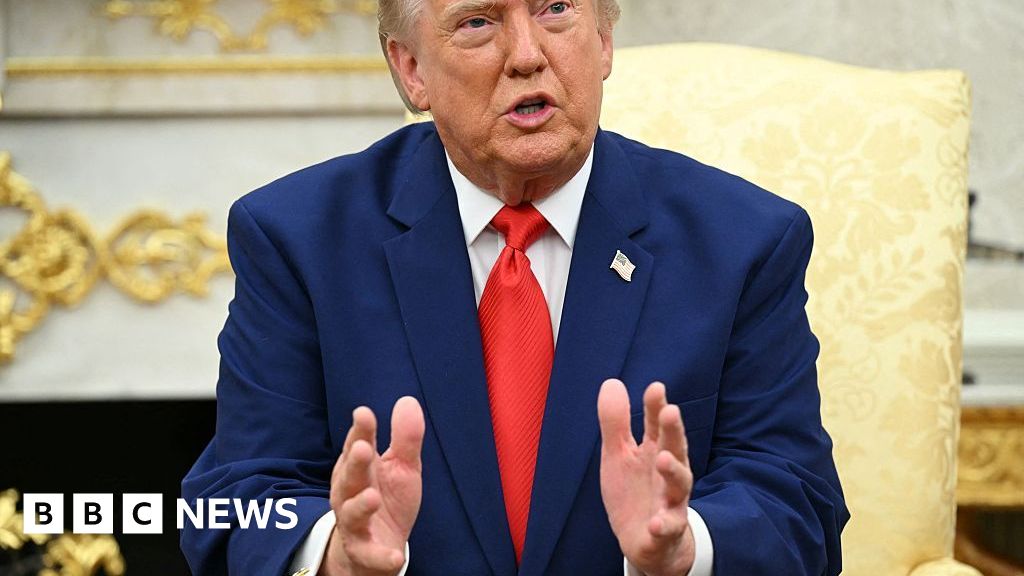
US President Donald Trump has imposed a 50% tariff on a wide range of goods imported from Canada, in retaliation for what he called “unequal treatment” of US cars, dairy and alcohol. On Tuesday, he said the tariffs are a response to how Canada has treated US farmers. The White House said the duties would take effect in 30 days. It marks a major escalation in trade tensions between the North American neighbours.
Leading contract manufacturer of healthy snack bars, Wholebake, is investing £3m in new high-speed production lines at its factories in North Wales.
The company has two manufacturing sites in Wrexham and one in nearby Corwen, Together they employ 425.
The investment will see two new high-speed production lines launching later this year. They will have capacity to run at 360 bars per minute compared with 120 on its existing lines – a threefold increase in output.
The new lines add capacity on top of current production rather than replacing it, giving Wholebake’s customers the headroom to grow. To support the expansion, Wholebake is recruiting for 15 skilled operators and engineers.
Advertisement
Latest data from NIQ EPOS show that total cereal bars market is now worth £819m having grown 3% over the last year. Protein bars are worth £261m having achieved a year-on-year growth rate of of 8.3% and account for 83% of the category’s value growth.
John McMullen, chief executive of Wholebake, said:“The way Britain snacks is undergoing a structural shift. People aren’t snacking more, they’re snacking better, trading traditional confectionery for healthier alternatives made with ingredients they recognise.
” The data makes clear this is not a passing fad but a lasting change in behaviour, and one where consumers are willing to pay more for snacks that fit their lifestyle.
“As a manufacturer, our job is to help brands and retailers keep pace with that demand. That’s exactly why we’re investing in new high-speed production lines this year, to give our customers the capacity, quality and flexibility they need to grow in one of the fastest-moving parts of the food industry.
Advertisement
“Wholebake has spent more than 25 years building expertise in healthy snacking, and the shift we have seen in that timeframe has been monumental.”
Wholebake has been backed by private equity firm Elysian Capital following its investment into the firm in 2021.



























































You must be logged in to post a comment Login