










Connect with us
DAPA Banner
DAPA Coin
DAPA
COIN PAYMENT ASSET
PRIVACY · BLOCKDAG · HOMOMORPHIC ENCRYPTION · RUST
ElGamal Encrypted MINE DAPA
🚫 GENESIS SOLD OUT
DAPAPAY COMING

Business

Why is V2X stock surging today?

Published

on

Continue Reading
Click to comment

You must be logged in to post a comment Login

Leave a Reply

Business

Goldman Sachs creates private markets platform to court rich investors

Published

on

Goldman Sachs creates private markets platform to court rich investors

A Spacex Flacon 9 rocket lifts off from Space Launch Complex 40 on June 08, 2026 in Cape Canaveral Space Force Station, Florida.

Joe Raedle | Getty Images

Goldman Sachs has created a new platform to expand its offerings for wealthy clients and family offices who increasingly want direct stakes in fast-growing private companies, CNBC has learned.

Advertisement

The new group, called the alternative investments platform, combines Goldman’s existing alternatives business with two newly established teams, according to a memo seen first by CNBC.

The new teams focus on direct investments in individual private companies, rather than broader private equity funds, and on helping clients buy and sell those stakes, according to the memo.

“There has been a lot of focus on the big growth tech names and getting clients access to those before they debut in the public markets,” Kristin Olson, Goldman Sachs’ global head of alternatives for wealth, told CNBC in an interview.

Goldman’s move reflects two of the biggest trends reshaping Wall Street. The firm has spent years pushing deeper into wealth and asset management because of its perception as providing steadier revenues than investment banking and trading. At the same time, the most successful startups are staying private far longer than they once did, allowing early investors to capture most of the gains before public investors get a chance.

Advertisement

“Companies are going public at a trillion dollars,” Olson said. “If you haven’t participated along the way, you’re clearly missing a big part of the growth cycle.”

AI boom

Goldman has been arranging direct investments in later-stage private companies for wealthy clients for roughly two decades, Olson said, pointing to Facebook before its 2012 IPO and later SpaceX, Stripe and Canva. But growth in demand for the asset class convinced executives to break out the business, she added.

The firm’s goal, Olson said, is to help clients identify promising companies before they become household names.

Rather than targeting early-stage startups, Olson said Goldman generally focuses on later-stage companies that have established products, meaningful revenue and clearer paths toward profitability, seeking what she described as a “sweet spot” between risk and return.

Advertisement

The AI investment boom has only intensified demand. Beyond leading model developers, Goldman is increasingly steering clients toward investments in the infrastructure underpinning AI, including data centers and related projects, Olson said.

Investors are increasing their allocation to growth and venture managers: Goldman's Kristin Olson

The announcement comes days after Goldman reported record quarterly revenue, with executives highlighting AI-driven activity across investment banking, trading and financing businesses. The results reinforced investors’ view that Goldman is positioned to benefit from multiple facets of the AI investment cycle.

The announcement also formalizes Goldman’s growing business helping clients find liquidity for private investments.

Through its new secondary advisory group, the firm plans to expand a marketplace that allows clients to buy and sell private holdings while also advising clients looking to exit investments held outside Goldman.

“We said, let’s break that out and let’s make it very clearly defined as something that we’re leaning into,” Olson said.

Advertisement
Choose CNBC as your preferred source on Google and never miss a moment from the most trusted name in business news.
Continue Reading

Business

Apple Music subscription prices rise due to higher licensing costs

Published

on

Apple to invest $30 billion in US chip manufacturing

Apple is raising prices on Apple Music subscriptions as well as certain Apple One plans as the company faces higher licensing costs.

The tech giant last week hiked prices for Apple Music plans across subscription tiers. Individual plans will rise by $1 a month to $11.99, while student plans will increase by the same amount to $6.99 a month.

Advertisement

Prices for the Apple Music family plan are also rising by $3 per month to a new monthly rate of $19.99.

The company also hiked prices for some tiers of Apple One – the company’s bundle that allows consumers to subscribe simultaneously to Apple TV, Music, iCloud+, Arcade, Fitness+ and News+ or the first four services.

APPLE RAISES IPAD AND MACBOOK PRICES AS MEMORY CHIP COSTS SURGE

Apple Store

Apple raised prices on Apple Music plans as well as some Apple One packages. (CFOTO/Future Publishing via Getty Images)

Prices for the Apple One family tier are set to rise by $2 to a new total of $27.95 per month. Family plans may be shared with up to five people and have up to 200 gigabytes of iCloud storage, though they don’t include News+ or Fitness+ in the package.

Advertisement

The individual Apple One subscription, which includes the same four services but with 50 gigabytes of iCloud storage, is unchanged at $19.95 a month.

Apple One’s Premier package, which includes all six of the company’s subscription services with up to 2 terabytes of storage and may be shared among five people, will rise in price by $2 to $39.95 per month.

APPLE BRIEFLY OVERTAKES NVIDIA AS WORLD’S MOST VALUABLE COMPANY AMID AI INVESTMENT DOUBTS

Ticker Security Last Change Change %
AAPL APPLE INC. 326.59 -7.15 -2.14%

The price increases apply to consumers in the U.S. as well as other countries around the world.

Advertisement

The moves weren’t announced by Apple, which adjusted the prices for the various subscriptions and tiers on its website on Friday. Apple told 9to5Mac, “As a result of rising licensing costs, Apple Music is increasing its subscription price beginning today.”

FOX Business reached out to Apple for comment.

APPLE HIT WITH LAWSUIT CLAIMING ICLOUD+ PRIVACY TOOL COULD EXPOSE USERS’ REAL EMAILS TO WEBSITES

The new MacBook Air connected to monitors

Apple’s subscription price hikes follow higher iPad and MacBook prices. (Apple)

In late June, Apple announced price hikes for its iPad tablets and MacBook laptops amid rising memory chip costs.

Advertisement

The company raised the price of the MacBook Air by $200 to a new total of $1,299, while the budget Neo laptop price rose from $599 to $699. The price of a MacBook Pro with 1 terabyte of storage rose $300 to $1,999, while the iPad Air with 128 gigabytes of storage rose from $599 to $749.

GET FOX BUSINESS ON THE GO BY CLICKING HERE

Apple said at the time that it has “never seen a component price increase this much, this quickly,” adding that it had “shielded our customers from these increases so far, but we have now reached a point where we need to begin raising prices on a number of products.”

Advertisement
Continue Reading

Business

The Every Co.’s OvoPro gains ADM production boost

Published

on

The Every Co.’s OvoPro gains ADM production boost

ADM commercially scaling production of high-protein egg ingredient at Clinton, Iowa, facility.

Continue Reading

Business

Scott Bessent says Treasury has found the Iranian ayatollah’s ‘money man’

Published

on

Gas prices under scrutiny as Bessent vows to hold retailers accountable

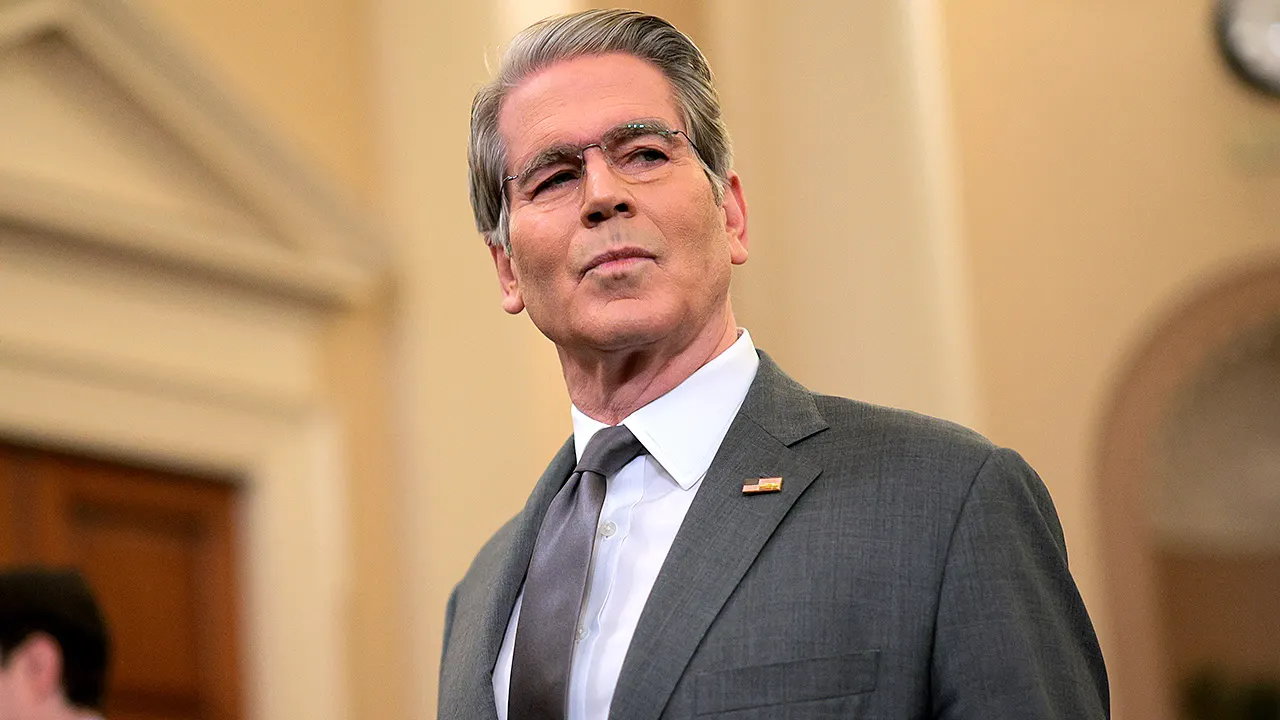
The Trump administration has successfully tracked down the ayatollah’s “money man,” Treasury Secretary Scott Bessent revealed to FOX Business on Tuesday, detailing plans to publicly expose more than $100 million in properties linked to Iran’s supreme leader around the world.

“We have found the money man for the ayatollah. We are tracking the ayatollah’s properties around the world,” Bessent told “Mornings With Maria.”

Advertisement

“We hope to soon be able to print his $100 million-plus properties and show the addresses, and we’re preserving this money for the American people.”

MAJOR DISPUTE TO THREATEN TRUMP’S IRAN DEAL OVER BILLIONS IN FROZEN TEHRAN FUNDS: EXPERT

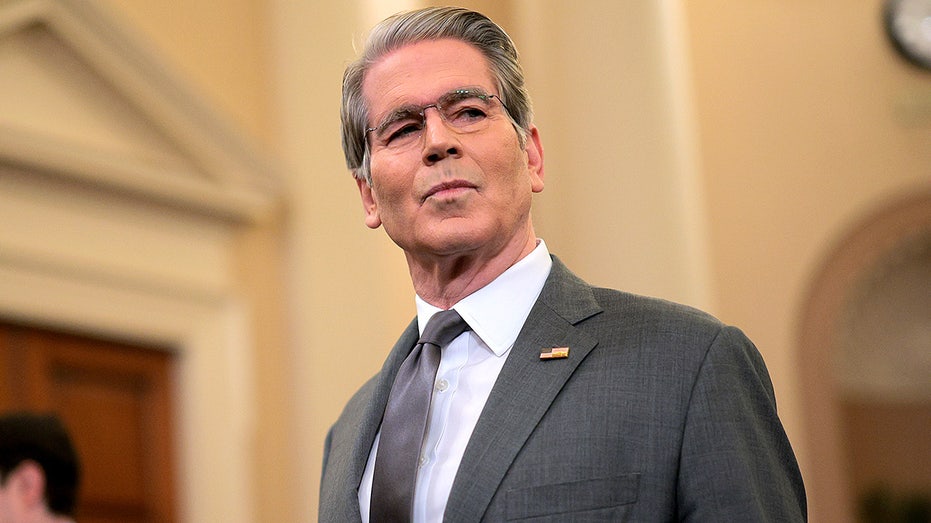
Treasury Secretary Scott Bessent arrives for House committee hearing.

Treasury Secretary Scott Bessent arrives to testify before the House Ways and Means Committee in the Longworth House Office Building on June 4 in Washington, D.C. (Chip Somodevilla/Getty Images)

The Trump Treasury chief said the effort is part of the administration’s broader “Economic Fury” campaign against Iran, a “one-two punch” combined with the military “Epic Fury” campaign that rattled the region.

“Economic Fury,” he said, aims to dismantle the regime’s financial network by tracking overseas assets, freezing accounts and ratcheting up economic pressure following recent military operations.

Advertisement

Bessent said officials are pursuing Iranian assets across the globe while working to choke off the regime’s access to funding, arguing the pressure campaign has already helped drive Iran’s currency to record lows against the U.S. dollar and fueled soaring inflation inside the country.

TRUMP’S 60-DAY IRAN DEAL REACHES HALFWAY MARK AS CEASEFIRE COLLAPSES INTO ESCALATING WAR

Iran flag in rubble and debris

An Iranian flag amid rubble and debris in Tehran. (Atta Kenare/AFP/Getty Images)

“[Their currency] is at an all-time low versus the dollar. It’s in freefall, and we think the inflation rate is upwards of 180% in Iran,” he said.

“So, the government is causing the people to suffer, and we’re going to keep pressing, but we’re also going to marshal the resources and save the resources that we recover for the Iranian people when we get on the other side of this.”

Advertisement

GET FOX BUSINESS ON THE GO BY CLICKING HERE

Bessent added that Treasury is also targeting Iran’s oil revenues, pointing to sanctions on Chinese “teapot” refineries and what he described as a roughly 40% decline in China’s purchases of Iranian crude in recent months, which he said has intensified financial pressure on the regime.

Advertisement
Continue Reading

Business

Daktronics EVP Wiemann sells $76,880 in DAKT stock

Published

on


Daktronics EVP Wiemann sells $76,880 in DAKT stock

Continue Reading

Business

Is the internet broken? – BBC

Published

on

Is the internet broken? - BBC

Around 75% of the world’s population is online and – in many ways – this makes all our lives better. But faced with a barrage of ads, misinformation, AI slop, toxicity and doom-scrolling, it can feel like the internet is kind of… broken.

What happened? And where are we headed next?

Featuring interviews with: Wikipedia founder Jimmy Wales, Hatelab director Matthew Williams, author and activist Cory Doctorow and author and co-founder of Logging Off Club Adele Zeynep Walton. Big thanks to students at the University of Cardiff.

Film by Daniel Nils Roberts

Advertisement

💡Watch more videos at BBC Ideas

Continue Reading

Business

Senate Democrat calls for probe of US derivatives regulator’s staff cuts

Published

on


Senate Democrat calls for probe of US derivatives regulator’s staff cuts

Continue Reading

Business

Lindt’s Easter chocolate sales fall after price hike

Published

on

Two young women surrounded by studio lights and tripods selling eyelash serums on a live stream

Lindt has partially U-turned on its decision to hike prices after Easter chocolate sales dropped.

The Swiss chocolate maker said a “necessary groupwide” price surge of 11.8% was one of the reasons revenue shrank in the first half of this year, particularly in the UK, Germany, and Switzerland.

It also blamed weaker Easter demand and a drop in tourism from Asia and the Middle East “due to geopolitical uncertainties”. In response, it said it has adjusted prices and boosted marketing in certain regions for the second half of the year.

Around Easter, Lindt is known for its chocolate rabbits wrapped in gold-coloured foil and decorated with a red ribbon and bell on their necks.

Advertisement

Overall, the company’s sales dipped 0.9%, with European sales down by 2.1%. It added that “performance was impacted by more price-sensitive and mature markets such as Germany, Switzerland and the UK”.

By volume, meaning the amount of chocolate sold rather than the money it made, overall sales sank 7.5%. Pre-tax profit fell 1.5%.

Meanwhile, sales of Lindt chocolate in airports decreased “due to ongoing conflicts in the Middle East, and therefore declining passenger traffic”.

Lindt said its sales picked up in North America, Australia, China, and Japan, though these countries account for a much smaller slice of its sales than Europe, where it makes over half its revenue.

Advertisement

Lindt chief executive Adalbert Lechner said: “The actions we have initiated focus on volume recovery in the second half of 2026 and lay the foundation to regain volume growth momentum in 2027.”

Lindt is not the only chocolate firm which has been putting prices up.

Experts say climate change has led to extreme rainfall and droughts which have decreased cocoa farmers’ crops.

This pushes up costs of making chocolate, and companies have chosen different ways to react to this, with some reducing chocolate content or sizes rather than raising prices.

Advertisement

According to the latest official data, the annual rate of chocolate and sweet price rises is 7.9%, external – much higher than the general rate of UK inflation at 2.8%, external.

Continue Reading

Business

The Great North calls for a new alliance between Government and Northern leaders

Published

on

Business Live

‘The next chapter of devolution must be about a new relationship between national government and Northern leaders’

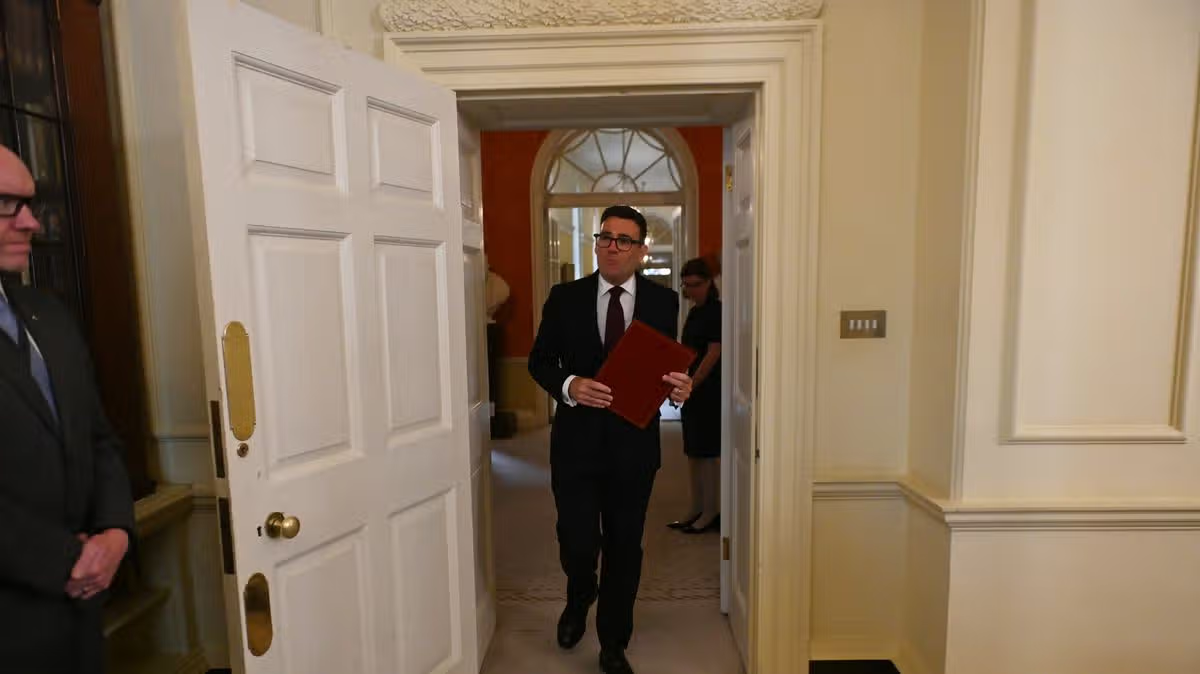
Burnham walking into the Cabinet room

Andy Burnham walks into the Cabinet room on his second day as prime minister (Image: Eddie Mulholland-WPA Pool/Getty Images)

The Great North has urged new Prime Minister Andy Burnham’s Government to build a new partnership with Northern leaders which places devolution at the centre of national renewal.

In an open letter to the Prime Minister, Northern mayors and leaders came together to call for a devolution-first approach that gives Northern leaders the powers, investment and freedoms needed to drive growth, strengthen communities and deliver greater prosperity across the country.

They argue that devolution has already transformed local leadership across the North. However, they say that a more fundamental shift in the relationship between central government and England’s largest economic region must now be established.

Mr Burnham, a founding member of The Great North when Mayor of Greater Manchester, has made devolution the focal part of his agenda for Government, including establishing a ‘Number 10 North’ to rebalance power and prosperity across the country.

Advertisement

The Great North says the North should be recognised as a strategic partner in the governance of the UK, alongside the devolved nations, with a stronger collective voice in national decision-making that reflects its scale, economic weight and democratic leadership.

Chair of The Great North and North East Mayor Kim McGuinness said: “The North is mighty. We power Britain’s industries, produce world-leading innovation, create culture that is recognised around the world and are home to millions of talented people with huge ambition.

“Andy Burnham knows the North and the massive potential at our disposal. He helped shape The Great North and, as Mayor, consistently argued that Westminster had to trust places like ours with more power and responsibility. Now he has the opportunity to turn those arguments into lasting change – working us to create a more prosperous future for the North of England and the United Kingdom.

“The next chapter of devolution must be about a new relationship between national Government and Northern leaders, recognised as a strategic partner in the governance of the UK, alongside the devolved nations.”

Advertisement

Meanwhile, the leader of the Greater Manchester business membership group has called upon new Prime Minister Andy Burnham to help unlock business investment. Emma Holt, CEO of Greater Manchester Chamber of Commerce, penned an open letter to the new PM, congratulating him on his new role while setting out the main business issues that concern its members.

Andy Burnham and his ministers in the Cabinet room

Andy Burnham held his first Cabinet meeting on Tuesday (Image: Eddie Mulholland/Daily Telegraph/PA Wire)

The Chamber, which has around 3,500 members and a further reach of 37,000 businesses, stressed how cities and city regions are vital in the UK’s growth story and that its data “can provide the regional pulse of business, demonstrating business challenges as reported by the businesses themselves, with suggestions on what will work on the ground as solutions for business”.

In the letter, Ms Holt says: “Since 2017, in Greater Manchester, we have enjoyed stability of leadership, delivery of policy, and strong engagement with local government which we’re sure will continue. Nationally, we look forward to seeing clearer, longer-term policy, to greater investment and focus on the North of England, and to the devolution model, proven in Greater Manchester, developed across more Mayoral authorities.

“What the country needs now is the excitement, optimism and economic growth you delivered for Greater Manchester. We encourage policy certainty for businesses, this will help unlock business investment and showcase Britain as not just open for business but the best destination for investment and job creation.

Advertisement

“We look forward to continuing our relationship and would welcome the opportunity to meet in the coming weeks to discuss how we can support your government’s priorities for Greater Manchester and the North. We also work closely with our Chamber network and would be happy to coordinate a regional CEOs roundtable or similar to give you a direct channel.”


Continue Reading

Business

Electricity prices: Three reasons why they are high in the UK

Published

on

Two young women surrounded by studio lights and tripods selling eyelash serums on a live stream

Network costs are projected to increase further by 2030, adding another £48 to a typical bill, according to calculations by energy analyst Ben James.

However the government and some energy groups also argue that reducing our national reliance on volatile international gas prices via the government’s 2030 clean power policy will keep down the UK’s wholesale electricity costs and mean household bills will be lower than they would otherwise have been.

This would be by reducing the amount of time in each year that gas sets the wholesale electricity price.

A great deal though depends on future wholesale gas prices which are impossible to accurately forecast.

Advertisement

Some analysts, including the government’s Climate Change Committee, also say the government should go further to remove policy costs from household electricity bills and meet them through general taxation instead, in order to avoid discouraging people from using electricity rather than gas to heat their homes.

“The way you allocate those costs matters,” says Mayo.

“They may be being put on bills or they may be being paid by consumers in other ways that are less visible, such as taxes.”

Advertisement
Continue Reading

Trending

Copyright © 2025

















