Connect with us
DAPA Banner
DAPA Coin
DAPA
COIN PAYMENT ASSET
PRIVACY · BLOCKDAG · HOMOMORPHIC ENCRYPTION · RUST
ElGamal Encrypted MINE DAPA
🚫 GENESIS SOLD OUT
DAPAPAY COMING

Business

Light Flip Phone Revives the Motorola Razr Look With a $299 Price Tag, No Apps, and an April 2027 Release Date

Published

on

Light Flip Phone Revives the Motorola Razr Look With a

Light, the Brooklyn-based startup known for stripped-down “dumb phones,” has unveiled its newest device: a flip phone designed by one of the original engineers behind the Motorola Razr, aimed at users who want to spend less time staring at a screen rather than more.

The device, called the Light Flip, is not made or sold by Motorola. But its resemblance to the company’s iconic early-2000s flip phone is intentional. Kaiwei Tang, one of the phone’s designers, was a member of the original Razr design team two decades ago, and the new device leans heavily on that legacy — a compact clamshell shape, a hinge built to snap shut with a satisfying click, and a deliberate absence of the sprawling app grids that define modern smartphones.

The Light Flip will sell for $299 when it ships in April 2027, a sharp discount from the $700 starting price of the company’s most recent device, the Light Phone III, which launched last year. Preorders are open now.

A phone built to be put down

Advertisement

Light has spent the past decade building a reputation among people trying to cut back on smartphone use, starting with a Kickstarter-funded device in 2015. Its devices strip away social media, web browsers, and most other attention-grabbing features, offering only basic tools like calling, texting, music and navigation.

The Flip pushes that philosophy into a new form factor. The phone has no touch screen. Instead, it uses a 12-button keypad reminiscent of the T9 texting era, along with three function buttons and a four-way directional pad for moving a cursor around the interface. A home button and volume switches sit on the side, and the phone includes a 3.5mm headphone jack and USB-C port.

Unlike most flip phones on the market today, the Light Flip has no external display when closed — only a small notification light to signal an incoming call or message. The interior 2.8-inch OLED screen runs at a modest resolution, displaying the same stark, white-text-on-black interface found on the Light Phone III.

On the hardware side, the phone includes a 50-megapixel rear camera that outputs 12-megapixel photos, stereo speakers, a MediaTek MT8873 chipset, 6GB of RAM and 128GB of storage. It supports 5G connectivity along with both nano-SIM and eSIM. The battery is removable, tucked behind a screw-down panel, and the phone comes in six colors: black, navy, red, pink, yellow and light gray.

Advertisement

Why revisit the flip phone now

Light co-founder Joe Hollier said the company had been fielding requests for a flip-style device for some time, particularly from younger users looking for something even further removed from a typical smartphone than the company’s earlier bar-style phones. Hollier said the company saw an opening in a flip-phone market that has largely been filled with either premium foldables or flimsy budget devices with limited functionality.

“We felt there was a huge opportunity [for a flip phone] with our OS and eco-system,” Hollier said. “We’re uniquely positioned with our experience.”

Hollier has described the design choice to omit an external screen as part of what he calls the phone’s “symbolic closure” — the idea that shutting the phone should feel like a genuine break from digital life, not just a pause.

Advertisement

Not as slim as the original

Despite the throwback design, the Light Flip is considerably bulkier than the phone that inspired it. At roughly 19 millimeters thick when folded and about 160 grams, it is noticeably heavier and thicker than Motorola’s original Razr V3, which measured about 13 millimeters and weighed around 95 grams when it debuted more than 20 years ago. It’s also thicker than early folding smartphones such as the first Samsung Galaxy Fold.

The company has acknowledged the size trade-off but has framed the device’s plastic build, replaceable battery and physical keypad as features rather than compromises for the audience it’s targeting.

Software and expansion plans

Advertisement

The Light Flip runs LightOS, the same minimalist software found across the company’s device lineup. All existing tools built for the Light Phone III — including navigation and a basic music player — will work on the Flip, and the company says its T9-style dialer will include predictive text.

Light is also developing a software development kit that would let outside developers build and distribute a curated set of third-party tools for its devices. The company has said that project is progressing and could begin rolling out new tools this fall, which could help address one of the most common criticisms of Light’s phones: that stripping away too many features leaves some users missing basic day-to-day functionality.

Pricing and service plans

Alongside the phone itself, Light is introducing its first bundled service plan. For $39 a month over two years, buyers can get the Light Flip along with unlimited voice and text and 1GB of monthly data. A $69-a-month unlimited data option is also available, aimed at customers who plan to use the phone’s 5G hotspot feature more heavily. The company says a similar phone-and-service bundle for the Light Phone III will follow, priced at $59 a month.

Advertisement

Light did not immediately respond to a request for additional comment on manufacturing timelines or where the device will be assembled.

The bigger picture

The Light Flip arrives as smartphone prices climb across the industry and as several major manufacturers, including Samsung, prepare new foldable and flip-style devices of their own. But Light’s pitch remains different from that of its mainstream competitors: rather than adding capability, the company is betting that some consumers want less.

Whether that bet pays off may depend on how many buyers are willing to wait nearly a year for delivery, and whether the SDK expansion can close the functionality gaps that have drawn criticism of Light’s earlier devices. For now, the company is counting on nostalgia, a recognizable design pedigree, and a lower price point to draw in the “digital detox” crowd it has spent a decade courting.

Advertisement
Continue Reading
Click to comment

You must be logged in to post a comment Login

Leave a Reply

Business

Shares trim gains as bets narrow on interest rate hike

Published

on

Shares trim gains as bets narrow on interest rate hike

Australian shares have reversed most of the session’s gains after hotter-than-expected jobs figures and energy supply worries heightened the odds of higher interest rates.

Continue Reading

Business

Argentina vs Spain FIFA World Cup Final to be replayed? Petition for a rematch crosses 60,000 signatures

Published

on

Argentina vs Spain FIFA World Cup Final to be replayed? Petition for a rematch crosses 60,000 signatures
An online petition asking FIFA to replay the 2026 World Cup Final has crossed 61,500 signatures, with Argentine fans pointing fingers at Slovenian referee Slavko Vinčić for how the summit clash against Spain played out. The petition, live on Change.org, went up soon after the July 19 final in New York and calls on football’s governing body to take a second look at the officiating that shaped the result.

What Argentianian fans are demanding?

The petition was started by supporter Gisela Sánchez, and her demand is simple: FIFA should review the calls made during the Final. The text goes further, alleging “irregularities” during the match, though it does not back this up with any solid evidence. Still, that hasn’t stopped it from picking up steam fast.

Why FIFA Isn’t Bound To Listen

Here’s the catch nobody signing the petition can get around, Change.org has no say over football’s rulebook. A petition, however big, cannot force FIFA to change an official result. Match replays are reserved for very specific, exceptional circumstances laid out in the sport’s own regulations, and only the relevant governing bodies can rule on them.

French supporters also ran a similar campaign

Argentina’s fans aren’t breaking new ground here. Days before the Final, French supporters ran their own version of this campaign after Spain beat France in the semifinal, collecting more than 82,000 signatures over a disputed incident that led to the opening goal. That petition made noise online but changed nothing on the scoreboard — a fate this one looks set to share.

Advertisement

Not everything about the aftermath was bitter, though. Away from the petition drama, thousands of Argentine fans gathered across the country to cheer on their team simply for reaching the Final and coming heartbreakingly close to defending the World Cup title.

Continue Reading

Business

Emeco MD Testrow extends tenure

Published

on

Emeco MD Testrow extends tenure

Emeco Holdings has extended Ian Testrow’s contract as managing director and chief executive by a further four years.

Continue Reading

Business

VAT to be cut from Isle of Man electricity bills in line with UK

Published

on

Rachel, a woman with straight shoulder-length blonde hair wearing a graduation cap. She has a nose stud, and wears light pink lipstick.

A reduction in VAT from 5% to 0% will be applied to domestic electricity bills on the Isle of Man from October, the government has confirmed.

The move mirrors the measure outlined in the UK, which is expected to be in place until the end of the 2026-27 financial year.

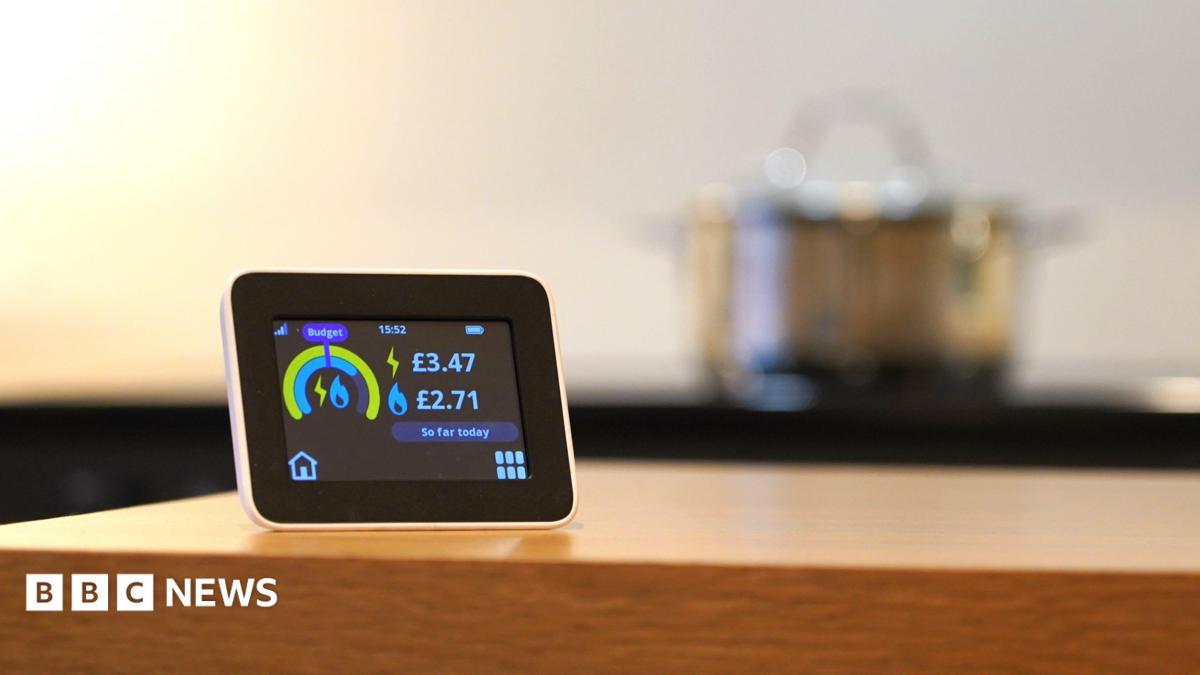
Manx Utilities said, while the amount saved will vary depending on electricity usage during the period, removing VAT would save a typical household about £50 per year.

The Treasury said the overall reduction in VAT revenue collected as a result of the change would be between £1 million and £1.4 million, depending on consumption during the winter.

Advertisement

The reduction was announced in the UK on Tuesday as part of measures to ease cost-of-living pressures on households.

The Manx government said the change would be made in line the island’s reciprocal arrangements under the Customs and Excise Agreement, which sees the island maintain the same VAT rates as the United Kingdom.

As well as domestic customers, small businesses that already qualify for domestic energy VAT relief – where electricity consumption is below an average of 1,000 kWh per month – and are not VAT registered will also benefit.

Eligible charities and residential care homes will also qualify for the reduction.

Advertisement
Continue Reading

Business

Allegion stock surges 8% on strong second quarter beat

Published

on


Allegion stock surges 8% on strong second quarter beat

Continue Reading

Business

Babcock signs deal with Plymouth firm to arm drone boats to ‘protect UK ports’

Published

on

Business Live

The partnership is amining to develop a low-cost way to protect British ships, ports and critical maritime infrastructure against mass drone attacks

Babcock International, Devonport Dockyard, Plymouth. November 09, 2021.

Babcock International, Devonport Dockyard, Plymouth(Image: Matt Gilley/PlymouthLive)

Babcock has signed a Memorandum of Understanding with a Plymouth-based tech company to explore the use of low-cost missiles on uncrewed boats.

The defence giant will work with ACUA Ocean Technologies to develop “capabilities” that will allow the UK to counter the threat of “mass drone attacks”, it said. Babcock will also partner with Estonia-based Frankenburg Technologies on the project.

It is understood the parties will bring together three elements: Babcock’s multi-domain launcher system; Frankenburg’s low-cost missile systems; and uncrewed boats built by ACUA.

Last month, ACUA’s vessel – the PIONEER USV – operated continuously for 16–20 nautical miles offshore, completing more than 100 hours at sea without any hands-on intervention.

Advertisement

Meanwhile, Babcock’s launcher system, which can be built and scaled quickly, can be fitted onto both crewed and uncrewed surface vessels.

“As threats from low-cost UAS continue to evolve, the need for effective and adaptable counter-drone capabilities has become increasingly important across the defence and security landscape,” Babcock said in a statement

“This new agreement will create integrated solutions to combat that threat.”

The MoU was signed at Farnborough Air Show this week.

Advertisement

Neil Tinmouth, chief executive of ACUA Ocean Technologies, said: “Partnering with Babcock and Frankenburg enables true persistent, multi-domain defence capabilities.

“To counter mass drone attacks, maritime air defence must be uninterrupted, yet rough weather often forces traditional systems out of limits.

“The unique stability of ACUA’s Pioneer-class, which we’ll be using for this collaboration, ensures these counter UAS and interchangeable payloads remain online and fully operational in high seas where other platforms fail.”

Babcock said the partnership builds on a MoU it signed with Frankenburg in January to explore new air defence systems that can withstand the rapid rise in one-way attack drones.

Advertisement

Sir Nick Hine, chief growth officer for Babcock, said: “We’re excited to partner with innovative companies to develop an integrated approach that directly addresses some of the biggest challenges our customers face in today’s defence landscape.

“As a trusted systems integrator, collaborations like this will help protect critical national assets and infrastructure from attritable one-way attack drones.”

Daniel Hallett, managing director UK at Frankenburg Technologies, added: “Affordable missile defence is heading farther out to sea.

“By equipping ACUA’s uncrewed vessels with Frankenburg’s mass-manufacturable missiles and Babcock’s launcher technology, we aim to create a persistent and low-cost way to protect the UK’s ships, ports and critical maritime infrastructure against mass drone attacks.”

Advertisement
Continue Reading

Business

Hasbro Stock Gets the ‘Magic’ Touch

Published

on

Natasha Khan hedcut

Hasbro shares rose 8.8% after the toy company posted strong results for its “Magic: The Gathering” card game and raised its outlook for the year.

Chief Executive Chris Cocks boasted that Magic is “off to a ripping start” this year, with sales up 34% in the first half.

Cocks said a new series of Magic cards based on Marvel superheroes set a record for first-day and first-month sales of the game.

Continue Reading

Business

Millionaires ask Andy Burnham to tax them more

Published

on

Rachel, a woman with straight shoulder-length blonde hair wearing a graduation cap. She has a nose stud, and wears light pink lipstick.

Millionaires including former footballer Gary Lineker and music producer Brian Eno have written to new prime minister Andy Burnham asking to be taxed more.

In an open letter, 120 well-off Britons told Burnham: “We can afford it. We’re not talking about higher taxes on those who get up and go to work for their income every day, but on the very richest whose income is derived from the wealth they hold.”

Organised by Patriotic Millionaires, the letter said it would lead to a more equal society, and urged a “devolution of wealth and power from the very richest”.

People can already give money or stocks voluntarily to the Treasury using its donation facility.

Advertisement

Conservative leader Kemi Badenoch said Lineker is “very welcome to pay more tax he can write a cheque to the treasury, no one is stopping him.”

The group supports a 2% tax on wealth over £10m.

“Millionaires are a patriotic bunch,” the letter states. “We love this country and we want it to succeed.

“But success requires investment and a primary source of untouched capital investment is sitting with us, in untaxed potential.”

Advertisement

Other signatories include Richard Curtis, director of Notting Hill and Love Actually and Ian Gregg, the former managing director of Greggs and son of the bakery chain’s founder.

The renewed call for higher tax on the wealthy follows a similar campaigns in previous years.

Burnham did not rule out a wealth tax when asked about it by Lineker a few days before he became prime minister.

He suggested he may have “to ask for a little more” tax at some point.

Advertisement

The latest call from Patriotic Millionaires said there is a “need to embrace a new kind of devolution of wealth and power, from the very richest in order to reinvest back into our greatest asset in every region”.

It added that in its own poll, the majority of millionaires wanted a higher tax on themselves.

“There are a few people left with outdated economic thinking and few others desperate to hold onto every penny they can… Those that can’t see past the end of their own self interest have no place in designing a Britain for the future,” the letter said.

Advertisement
Continue Reading

Business

Getty Realty's Low Drama Growth Continues In Q2

Published

on

Getty Realty's Low Drama Growth Continues In Q2

Getty Realty's Low Drama Growth Continues In Q2

Continue Reading

Business

Building at the Crossroads of Medicine and AI

Published

on

Building at the Crossroads of Medicine and AI

When most people choose a career, they stay in one lane. Jonathan Pinkston took a different path.

Over the past two decades, he has worked across holistic medicine, real estate, hospitality, conservation, and emerging technology. At first glance, those fields seem unrelated. Pinkston sees them as parts of the same system. His work is driven by one idea: solving problems by looking at the bigger picture instead of focusing on one piece at a time.

“My work spans what most people keep separate: future tech and medicine,” Pinkston says. “The tools we build should make us more whole, not less.”

That mindset has shaped his career. It has also influenced the way he approaches business, leadership, and long-term planning.

Who Is Jonathan Pinkston?

Jonathan Pinkston is an entrepreneur based in Santa Rosa, California. He grew up in Sonoma County and developed an interest in both science and nature at an early age.

Advertisement

He attended Sonoma State University before earning a Master of Science in Oriental Medicine (MSOM) from the Acupuncture and Integrative Medicine College (AIMC) in Berkeley. He later completed a Doctor of Acupuncture and Oriental Medicine (DAOM) at Five Branches University.

His formal education was only part of the journey. Pinkston also spent about 15 years studying Ayurvedic, Functional, and Chinese medicine outside traditional degree programs.

“I help people heal by treating the whole system rather than the symptom,” he says.

That systems-based thinking would later influence every business he became involved with.

Advertisement

Building a Career Across Several Industries

Pinkston began working in real estate in 2008 while also developing his healthcare career. Since 2010, he has practiced as a holistic medical practitioner.

Instead of viewing business opportunities as separate careers, he approached them as connected projects.

His work expanded into hospitality and wellness through Soft Medicine Sanctuary and community-focused projects such as The HUB Sebastopol. Along the way, he also became involved in conservation work through a nonprofit land trust beginning in 2020 and volunteered in Sonoma County civic initiatives between 2022 and 2025.

More recently, Pinkston has started working as an Agentic AI developer.

Advertisement

Rather than seeing artificial intelligence as replacing human expertise, he believes technology should strengthen it.

“The thread through all of it is a simple belief,” he says. “The tools we build should make us more whole, not less.”

Why Systems Thinking Shapes Jonathan Pinkston’s Leadership

Many business leaders focus on immediate results. Pinkston prefers to think decades ahead.

“I look at a 50-year term and set goals that work now and in the future,” he says.

Advertisement

That long-term view affects how he evaluates projects. Success is measured by more than revenue or growth.

“The total impact on the environment, society and culture of the people involved matters,” he says. “Long-term systemic change is what matters versus just internal metrics of growth and commerce.”

This approach has influenced projects ranging from healthcare to community spaces and emerging technology.

Lessons Learned From Collaboration

Pinkston says one of the biggest lessons in his career has come from working with people.

Advertisement

He believes successful teams require shared purpose more than individual ambition.

“People’s egos get in the way of real success for the collective versus individuals,” he says. “You have to weed these people out and find collaborators that truly are selfless and work for the benefit of everyone.”

He says learning that lesson early changed how he builds partnerships.

“Two or three selfish people can foil a perfect plan if left to their own devices.”

Advertisement

Those experiences helped shape his leadership style, especially while managing projects that brought together people from different backgrounds.

Overcoming Setbacks and Staying Focused

Like many entrepreneurs, Pinkston says his career has included setbacks alongside successes.

“I’ve been canceled, blamed and told that what I’m doing is invalid,” he says. “Every time I get told something wont work, from someone, I find many more people who believe its possible.”

Rather than allowing criticism to define his direction, he says he learned to focus on the work itself.

Advertisement

“Life is not defined by the people who told you it wouldn’t work, but by the things you accomplished despite the pushbacks.”

He believes resilience comes from maintaining perspective instead of reacting to every obstacle.

Travel, Nature, and Continuous Learning

Outside work, Pinkston’s interests have continued to shape his professional outlook.

He has traveled extensively, with a goal of visiting 80 countries before age 35. He is also a professional musician, writer, restaurateur, and longtime advocate for nature conservation.

Advertisement

He credits quiet reflection as an important part of making decisions.

“Take space and get quiet and listen,” he says. “Have fun and keep things light.”

He also believes regular rest creates better ideas.

“Take space for rest and reflection.  Doing is not everything.”

Advertisement

Looking Toward the Future

Pinkston sees healthcare and artificial intelligence becoming increasingly connected over the coming decades. His interest lies in creating systems that combine technology with a whole-person view of health rather than treating those fields as competitors.

At the same time, he continues to explore entrepreneurship through medicine, technology, real estate, and community-focused projects.

“If you are happy with what you do,” he says, “everything flows from there.”

Looking back, Jonathan Pinkston’s career shows a consistent pattern. Whether studying medicine, developing businesses, working in real estate, supporting conservation efforts, or exploring AI, he has repeatedly returned to the same principle: understand the whole system first. That philosophy has become the common thread connecting a career built across multiple industries rather than confined to just one.

Advertisement

Continue Reading

Trending

Copyright © 2025