

Politics
The steady, if uneven, UK influence on European integration

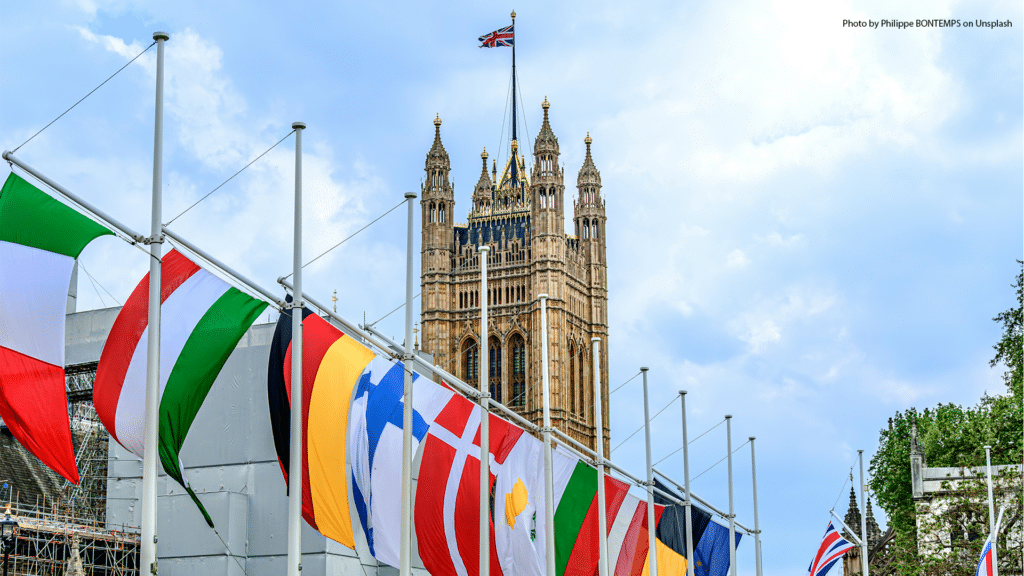
Laurent Warlouzet looks at the evolution of European integration and the role the UK has played from within and outside.
Britain has been at the core of the European integration process since its inception, despite frequent upheavals. In my recently published book, Liberty, Solidarity and Community: Capitalism and European Integration, I argue that there has always been a discrepancy between the official discourse of British leaders, who portrayed themselves as isolated champions of freedom battling continental Europeans, and the day-to-day reality of Britain’s constant engagement with Europe.
An examination of the British archives from Margaret Thatcher’s leadership (1979–1990), in particular, sheds light on how the Iron Lady sought to steer the single market programme in a free-market direction. She also supported greater cooperation in foreign policy and research and development, and she even lobbied Brussels to provide massive amounts of state aid for a limited number of favoured pet projects, from the Harland & Wolff shipyard to the Nissan plant in Sunderland. Obviously, she was later disappointed by what she perceived as excessive dirigisme emanating from Brussels.
Britain was highly influential in Brussels during its membership of the European Economic Community and later the European Union (1973-2020), notably through its powerful Commissioners, from Roy Jenkins to Leon Brittan and Neil Kinnock. Even after Brexit, once the disputes over the Covid-19 vaccines subsided, Britain has remained influential in Europe, largely thanks to its substantial involvement in supporting Ukraine. Even in trade, the attraction of the single market is so great (for the simple reason that, geographically speaking, Britain is still in Europe!) that it has proved difficult to conclude a comprehensive trade agreement with the United States. Such an agreement would probably require significant divergence from EU single market rules, causing major disruption to UK-EU trade in the process. For example, during talks about a putative US-UK trade agreement under the Premiership of Boris Johnson, the issue of the European Union‘s (in)famous ban of chlorinated chicken, which is permitted in the US, was raised.
Even before Thatcher, the UK had played an instrumental role in establishing the first European organisations: the Organisation for European Economic Cooperation (OEEC), which administered the Marshall Plan (1948), and the Council of Europe (1949). Although it initially refused to join the European Communities, it eventually became a member in 1973. Britain failed in its attempts to promote alternatives to the European Communities, such as the 17-country Free Trade Area proposed in 1956 or, failing that, the smaller seven-country European Free Trade Association (EFTA), established in 1960. Yet it remains to be seen whether Britain could revive a new kind of EFTA for the whole of Europe, now that Brussels is embarking on a wave of deregulation. The rise of far-right parties in Europe could hollow out the European Union from within by weakening its regulatory framework and federal judicial system, thereby reviving the model of a free-trade area as the organising principle of the European continent.
Britain is also still an “awkward partner” (an expression coined by a diplomat in 1980) for a European Union that seeks to pursue a more assertive trade and industrial policy. The book shows that Brexit has strengthened the European Union by enabling France to advance long-standing legislative proposals on industrial policy and protectionism that Britain had consistently opposed. Reintegrating Britain into the European Union, or even into some of its initiatives, such as European rearmament or proposals to establish a “European preference” for certain strategic products, would mean greater competition for EU firms. Should Britain be treated as a privileged partner or simply as a friendly neighbour?
Beyond the British case, the book advances two broader arguments. First, capitalism is not simply a contest between free-market advocates and supporters of welfare and environmental policies. There is also a third camp that favours protectionism and a more assertive foreign and defence policy. Accordingly, the governance of capitalism rests on three foundational principles: liberty (the free market), solidarity (social and environmental policies), and community (protectionism and assertive foreign and defence policies).
Second, in seeking to preserve peace while managing growing economic, social, and environmental interdependence, Europeans have chosen a distinctive path: European integration. This project has never been exclusively neoliberal. Rather, it has evolved through a combination of supranational ‘liberty capitalism’ national ‘community capitalism’ (industrial policy), and various forms of ‘solidarity capitalism’ (cohesion policy, the joint procurement and distribution of Covid-19 vaccines, environmental policy, and so forth). Drawing extensively on archival sources, the book also highlights the many alternatives considered by European leaders, including a free-trade area, economic planning, a carbon tax (as early as 1992), fiscal harmonisation, joint industrial projects, a common foreign policy, and a European army.
The book highlights some of the major questions for the EU, such as: is it able to cope with the return of power politics, or is it merely a regulated market? How does industrial policy need to shift in response to Trump’s policies? And how else might the European Union evolve to deal with the new world order?
Today, the central challenge is to develop European forms of ‘community capitalism’ – that is, a European approach to industrial policy and strategic protectionism. A major foreign policy challenge for the United Kingdom in the years ahead is whether the evolving European model is one which it wants to participate more deeply in.
By Laurent Warlouzet, Professor, Paris Sorbonne Université. For a longer summary of the book, see here, or the book is available in open-access here.

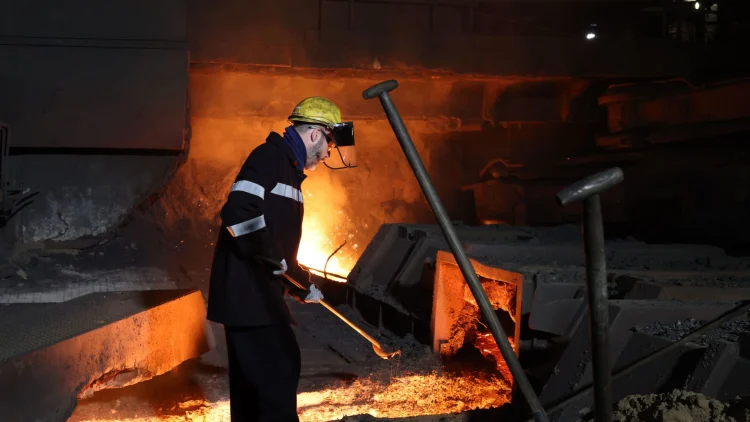

Jonathan Reynolds – then business secretary, and who has returned to the role under Andy Burnham – lifts molten metal during a visit to the British Steel site in Scunthorpe, Lincolnshire, April 2025 (PA Images / Alamy)
5 min read
The defining political question for the next decade is not the size of the state, nor the level of taxation. It is whether Britain can once again become a country where ordinary working people have the freedom to build a good life.
That is why Andy Burnham is right to place reindustrialisation at the heart of his agenda. It is also why I’m part of Labour’s Reindustrialisation Research Group of MPs. Because reindustrialisation is not simply an economic strategy – it is a freedom agenda.
For too long, we have spoken about freedom almost exclusively in negative terms: freedom from regulation, freedom from taxes, freedom from government. Those debates have their place, but they overlook a deeper truth.
Freedom is not simply the absence of restraint. Freedom is the presence of opportunity. It is the freedom to earn a decent wage; to learn a skilled trade; to own a home, raise a family and build a future in the community that shaped you. Above all, it is the freedom to become everything you are capable of becoming.
That freedom has steadily been taken away from too many Red Wall communities. Across the North, the Midlands and Britain’s industrial heartlands, people did not lose ambition. They lost opportunity. They lost industries that had sustained families for generations, and they lost secure, skilled work. And with that went something far more valuable than a payslip: the confidence that if you worked hard, your children would live better lives than you had.
That was never simply an economic loss. It was a loss of freedom. Deindustrialisation did not just close factories – it hollowed out communities, weakened civic institutions and left too many towns dependent upon decisions made hundreds of miles away by people who neither understood their history nor shared their aspirations.
For decades, Britain has attempted to manage that decline. We have redistributed wealth rather than creating it. We have expanded welfare while shrinking productive capacity. We have concentrated investment in already successful places while asking everyone else to be patient. It has not worked.
The answer is not to manage decline more efficiently. It is to reverse it. That is the mission of reindustrialisation. The Reindustrialisation Research Group exists because Britain needs far more than another set of short-term economic interventions. We need a new political economy that makes more things, in more places, with more British workers. One that builds resilience against global shocks, creates good jobs close to where people live and restores agency to communities that have too often felt powerless.
This is not nostalgia but necessity. The world is becoming less globalised and more competitive. Nations are once again thinking seriously about energy security, manufacturing capacity, critical minerals and strategic supply chains. Britain cannot afford to watch from the sidelines while others rebuild their industrial strength, nor can Red Wall communities afford another generation of missed opportunities.
Reindustrialisation means producing more of our own energy, making more of our own steel, building more advanced manufacturing, and investing in defence, nuclear, engineering and new technologies. It means patriotic procurement that backs British workers, affordable energy that allows industry to compete and an active state willing to invest where markets alone will not.
Most importantly, it means spreading that investment fairly across every nation and region of the United Kingdom. Economic growth that benefits only London is not national renewal. It is geographical inequality with a larger GDP. The true measure of success is whether a young person growing up in Hartlepool, Stoke, Wrexham, Grimsby or Bolsover has the same freedom to build a successful life as someone growing up anywhere else in Britain.
That is why education matters. Vocational skills matter. Transport matters. Industrial policy matters. Every apprenticeship, skilled job and factory built expands freedom. Every community connected to opportunity expands freedom.
That is why I joined the Reindustrialisation Research Group. Its mission is not merely to scrutinise policy but to help shape a long-term national strategy capable of transforming Britain’s economy. One that matches the scale of the challenge with the scale of investment required, recognising that Parliament has a responsibility not simply to react to change but to help lead it.
The objective is straightforward: to build an economy that works everywhere, not just somewhere. Working-class communities are not asking for special treatment. They are asking for the chance to contribute again. They do not want dependency. They want dignity. They do not want permanent redistribution. They want productive work. They do not want managed decline. They want national renewal. And they do not simply want freedom from government.
They want the freedom that comes from opportunity: the freedom to work, to earn, to build, to innovate, to stay close to family, to own a home and to believe that hard work will once again be rewarded. That is the promise of reindustrialisation. Not simply stronger economic statistics, but stronger communities. Not simply higher growth, but wider opportunity. Not simply a wealthier Britain, but a freer one.
If we are serious about taking back our freedom, then we must once again become a nation that makes things, builds things and believes in the people who have always been at the heart of Britain’s success. For Red Wall Britain, freedom will not be won through slogans. It will be won through opportunity. And opportunity begins with reindustrialisation.
Jonathan Brash is Labour MP for Hartlepool and a founding member of the Reindustrialisation Research Group




(dennizn/Alamy)

4 min read
Politicians making a meal of it. This week: the Golden Arches Theory
The observation was simple, but one that might contain a profound truth: no two countries with a branch of McDonalds had ever gone to war with each other.
The writer Thomas L Friedman, who first noticed this phenomenon back in 1996, had been worried he’d missed an example. Might there have been golden arches in Buenos Aires when Argentina seized the Falkland Islands? No, the chain didn’t open in the country until four years after the conflict.
Friedman’s argument was always tongue-in-cheek, but there was a serious theory underneath it: once a country had reached the point where it could sustain a market in McNuggets, it would have a population wealthy and comfortable enough that they wouldn’t support a government that took them into wars of aggression. With the burger giant spreading to more countries, the implication was that one day we might see world peace delivered simply through the medium of Happy Meals.
Thinking about it now, it’s a slice of 90s nostalgia as vivid as an Oasis concert or a Tony Blair speech about education, a reminder of how optimistic that decade felt: the Berlin Wall was down, Nelson Mandela had gone from jail to government, football might even be coming home (to one part of the UK, anyway). A couple of years before Friedman set out his idea, Pulp Fiction had opened with a long riff about the differences between McDonald’s in France and the US. Thanks to the metric system, Americans learned, in Paris a quarter pounder was called a royale with cheese. Although “a Big Mac’s a Big Mac, but they call it le Big-Mac”.
Sadly, the Golden Arches Theory, as it became known, was doomed. In 1999, Nato bombed Belgrade. In response, locals attacked their branch of McDonald’s, possibly having failed to understand the mechanism by which its presence was supposed to keep them out of a war with the US.
Friedman argued that the short duration of that conflict made it an exception that proved the rule: Serbians didn’t want war, they wanted fries and cheeseburgers (and other things that came with the capitalist post-Soviet order). Unfortunately, more challenges were on the way. Israel’s retaliation against Hamas in 2023, and its subsequent attack on Lebanon, put a strain on the relationships between McDonald’s franchises in the Middle East.
A McDonald’s wasn’t necessarily a sign that a society was getting rich enough to be peaceful
But the final failure of the theory came in the very place where it had arguably first taken root. The 1990s had begun with the grand opening of a McDonald’s in Moscow. Tens of thousands queued to get it. It was a news story around the world, with the BBC interviewing a man who ate half a burger and took the other half home for his wife. This was the West winning. And McDonald’s was a Russian hit: by 2022, there were more than 800 branches in the country, employing 62,000 people.
The company’s presence survived a couple of breaches of the Golden Arches Theory: Georgia had a McDonald’s nearly a decade before the 2008 Russo-Georgian War, as did Ukraine when the Crimea was annexed. But the 2022 full-scale invasion of Ukraine was the final straw. McDonald’s closed and then sold up its stake in Russia.
Even in the 90s, Friedman had acknowledged that getting a McDonald’s wasn’t necessarily a sign that a society was getting rich enough to be peaceful. After all, a big part of the chain’s appeal is that the food is cheap. But he’d still hoped that a world of quick, abundant food would be more appealing to people than war. It turned out that the forces that drive people to attack their neighbours were stronger.
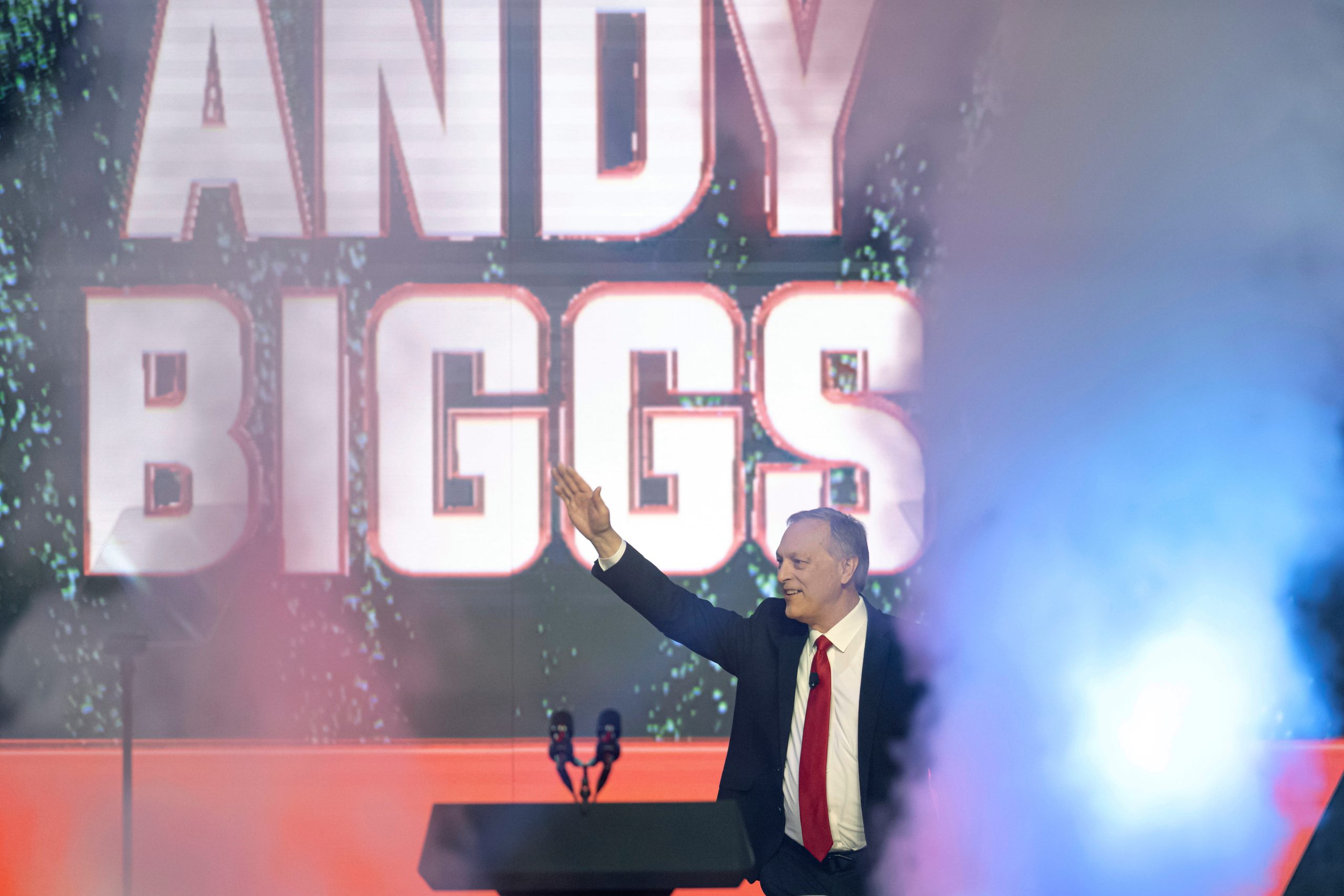

To make it out of a Republican primary in Arizona, there’s one key litmus test: believing the 2020 election was stolen from Donald Trump.
Election deniers who played prominent roles in efforts to overturn the 2020 results triumphed in statewide Republican primaries Tuesday, from Rep. Andy Biggs for governor to state Rep. Alexander Kolodin for secretary of state. State Senate President Warren Petersen was leading his primary for attorney general, though his race was not yet called as of early Wednesday morning.
Biggs, a staunch Trump ally who helped try and overturn the election on Jan. 6, 2021, was later subpoenaed in an Arizona probe. Kolodin represented a slate of fake electors, leading to discipline from the Arizona state bar, and filed lawsuits to try to overturn both the 2020 and 2022 elections. Petersen launched a taxpayer-funded audit into Maricopa County’s election system that eventually led to a subpoena.
Their victories show GOP primary voters continue to prefer candidates who have pushed false narratives about elections or worked to overturn them. But that can prove toxic in November — and Democrats plan to make their rivals pay for those positions in the fall.
“It’s one of those things that just won’t go away,” said former Rep. Matt Salmon (R-Ariz.). “In the Republican Party in Arizona, in the primary, carrying the Trump line on virtually everything — and that includes election denialism — is still something that benefits you.”
But in the general election, “it’s a stone around your neck,” Salmon said. “Among independents and moderate Republicans who vote in the general election, election denialism is not an asset.”
Each of the triumphant election deniers Tuesday centered election integrity in their 2026 campaigns. Biggs has been a prominent supporter of the SAVE America Act, the stalled election bill that Trump has pushed repeatedly. Kolodin has advocated for ending Arizona’s permanent early voting list and for stringent ID requirements. And Petersen has pledged to expand the attorney general office’s election integrity unit in order to investigate election results. Arizona was one of the most competitive — and most contested — states in the 2020 election. Fox News’ decision to declare then-candidate Joe Biden’s victory in the state on election night sent shockwaves through Trump’s orbit. It took then-Republican Gov. Doug Ducey several weeks to acknowledge Biden won.
The Grand Canyon State became ground zero for Trump’s effort to overturn the election. Trump and his allies pressured Arizona leaders, including then-House Speaker Rusty Bowers, to call the legislature back into session and recall the state’s slate of electors. A group of Republicans falsely posing as alternate electors were later charged with forgery, fraud and conspiracy, a case that is ongoing.
Even still, running as an election denier hasn’t been a successful strategy for the Arizona GOP once November rolls around. In 2022, Arizona Republicans nominated hardline election deniers up and down the ballot — Kari Lake for governor, Blake Masters for U.S. Senate, and Mark Finchem for secretary of state — and saw losses in each race, even as Republicans nationally enjoyed an otherwise strong year. And in 2024, Lake again lost, this time for U.S. Senate, even as Trump won the state by more than five percentage points.
“Biggs and Kolodin will be saddled with election denialism for the next three months,” said longtime Arizona GOP strategist Barrett Marson. “While Democrats would be wise to focus on affordability, certainly some of their talking points will focus on how these two are dangerous for democracy.”
Arizona Gov. Katie Hobbs, who ran unopposed in the Democratic primary Tuesday and will face Biggs in November, served as secretary of state during the 2020 election. She has portrayed this year’s gubernatorial election as a contrast between confidence and conspiracy in the state’s election system.
“Arizona is one of seven swing states that will decide the presidential election,” Hobbs said during an MS NOW appearance Tuesday evening. “If Andy Biggs is governor, Arizona is the first swing state with an election denier in charge, and the time to stop that is not 2028. It is right now.”
It’s almost impossible to be a Republican officeholder without agreeing with the president on the 2020 election and the need to dramatically change election law.
“As long as Donald Trump, who has the bully pulpit and is the party leader … is talking about election integrity, it will be a top issue in GOP primaries,” said one Arizona Republican strategist, granted anonymity to discuss the issue candidly.
“Election integrity measures are broadly popular, but the issue being front and center highlights divisions about Jan. 6th and wasn’t a winning general election issue in 2022,” the strategist continued. “Not sure that general election voters will care much about that in 2026 with such a focus on affordability issues. We are about to find out!”
Trump, for his part, has proven unwilling to move past the 2020 election even after winning a return to the White House in 2024. He has never acknowledged he lost that election, and in a primetime speech last Thursday, he announced his administration would declassify documents he alleged show Chinese interference in the 2020 race.
“Our elections were left vulnerable to being rigged and stolen, and the trust of the American people was lost,” Trump said Thursday. “This cannot be allowed to continue.”
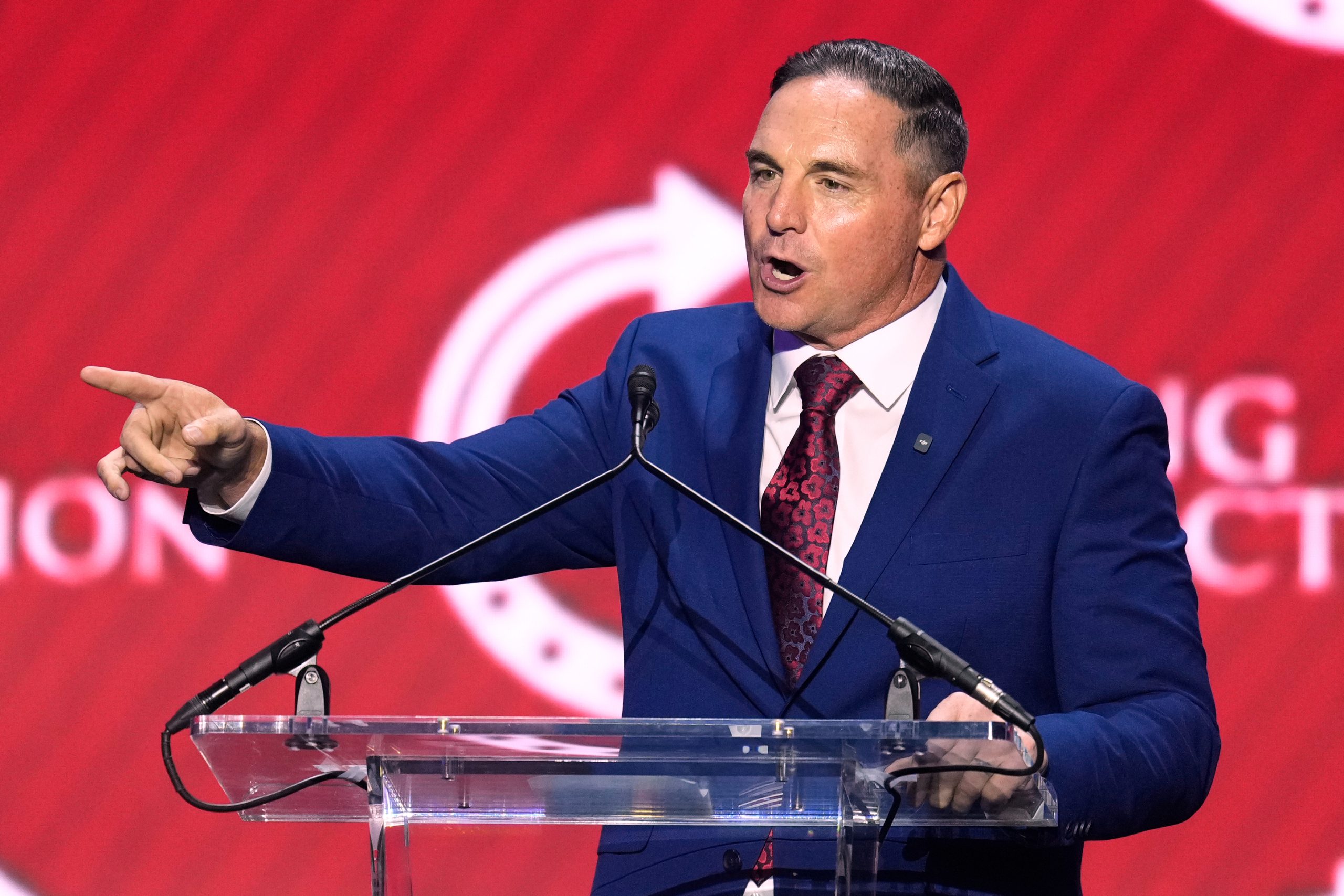

Former Arizona Cardinals kicker Jay Feely cruised to victory in Arizona’s 1st District on Tuesday, one of the nation’s most competitive battlegrounds.
Feely, a close ally of President Donald Trump, leveraged Trump’s endorsement to topple former state Rep. Joseph Chaplik.
He’ll face a steep challenge defeating the Democratic nominee in November: The 1st District, which spans the affluent suburbs north of Phoenix, is one of House Democrats’ top targets after Trump won it by just three points in 2024. Feely is looking to keep the seat under GOP control amid a midterm year that presents major headwinds for the party.
During the primary, Chaplik, a member of the Arizona Freedom Caucus, attacked Feely for being insufficiently conservative on gun rights and for his humanitarian work in Haiti. But Feely, one of Trump’s occasional golf partners, leaned on his proximity to the president.
“Who can call [Trump] and who can get him to answer? That’s me,” Feely said in a debate. “He will take my call and he will listen. I have the ability to have the ear of the president.”
Feely, a former professional football player who counts Tom Brady among his college roommates, first announced his candidacy for GOP Rep. Andy Biggs’ seat in the 5th District. But after Trump backed former Pinal County sheriff Mark Lamb in that race, Feely switched to the 1st District, where he earned the president’s dual endorsement, alongside former state GOP chair Gina Swoboda.
“Both fierce advocates of Make America Great Again, Jay and Gina have been with us from the very beginning, and either one would be an incredible Representative,” Trump said in January on Truth Social.
In February, Swoboda dropped her candidacy for the 1st District and instead ran for secretary of state, leaving the path clear for Feely.
As a member of the National Republican Congressional Committee’s MAGA Majority fundraising program, Feely will likely be a top recipient of outside Republican spending in the months leading to November.
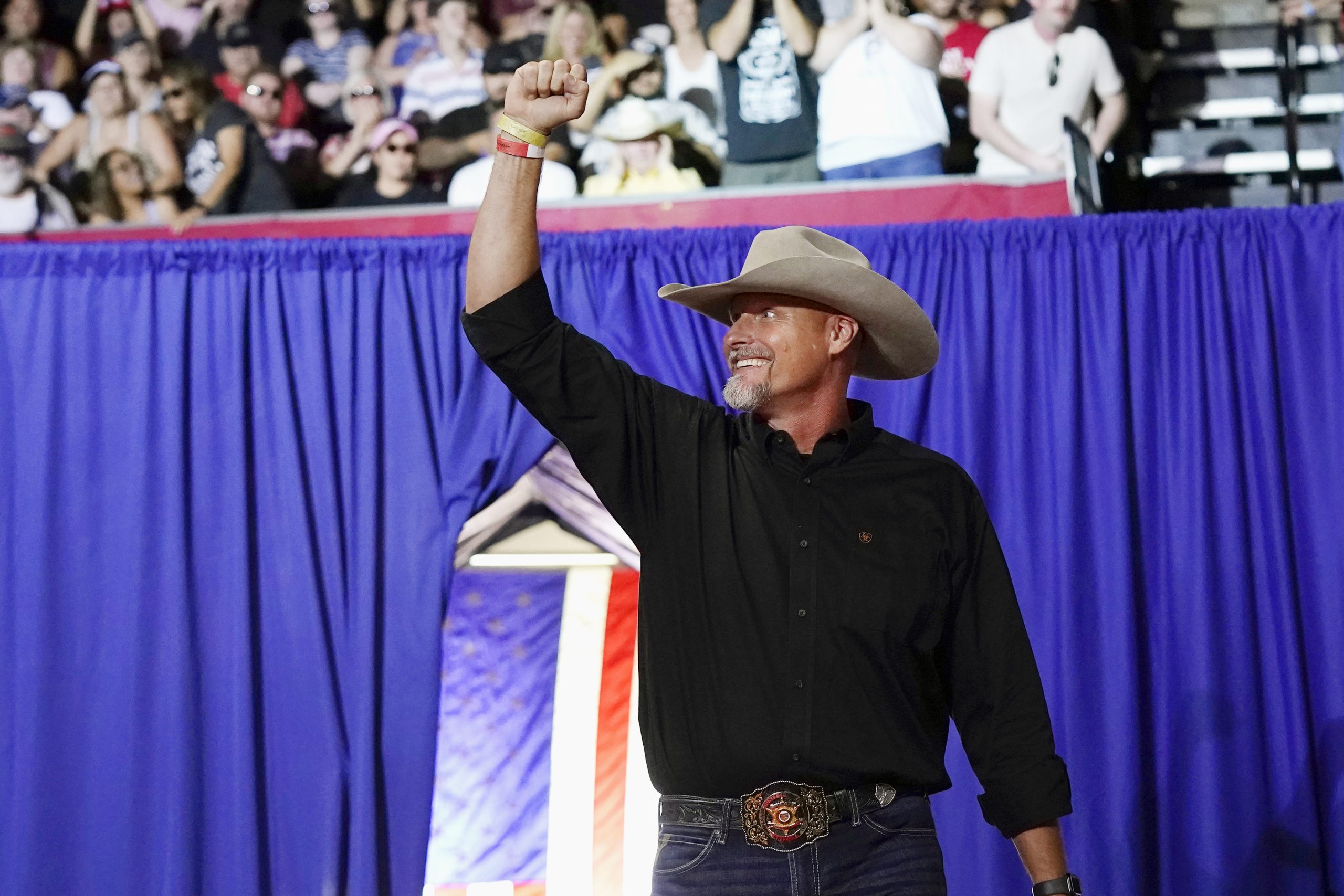

A scandal-plagued House candidate powered by President Donald Trump’s endorsement won a messy primary Tuesday.
Mark Lamb, the former Pinal County sheriff, overcame a late push from self-funding candidate Daniel Keenan in Arizona’s 5th District. Lamb will enter November as the heavy frontrunner in the deep-red Phoenix-area district to replace Rep. Andy Biggs (R-Ariz.), who is running for governor.
Keenan had poured nearly $2 million of his own cash into the campaign and attempted to make Lamb’s alleged sexual misconduct and abuse of power central to the race. Lamb has denied the allegations.
But Lamb — bolstered by Trump and Arizona-based Turning Point USA — managed to ward off the attacks.
The race’s outcome reveals the strength of Trump’s endorsement, and it’s the latest example of how willing GOP primary voters have been to accept scandal-ridden candidates favored by the president.
Lamb, who served as sheriff until 2024, earned national notoriety as a gun-toting critic of the Biden administration’s immigration and border policy. He secured Trump’s backing for the 5th District contest last year.
Then in May, the Arizona Republic launched a multi-part investigation alleging that Lamb engaged in a yearslong pattern of sending sexual images and instigating intimate encounters between him, his wife and others. One woman involved, Jillian Stannard, accused Lamb of encouraging her husband to have sex with other women, including Lamb’s wife. She also alleged that Lamb threatened her, saying there would be consequences, when Stannard raised concerns to religious leaders.
Screenshots the Republic obtained of messages with another woman, Tammy Peacock, suggest Lamb — then a sitting county sheriff — threatened to leverage Arizona’s revenge porn law against her.
In a statement last week, Lamb spokesperson Ed Morabito told POLITICO that “these allegations are false and come from long-discredited political opponents.”
Lamb did not lose any significant endorsements in the wake of the scandals — Trump reinforced his endorsement in mid-July — even as Keenan made the allegations central to his campaign.
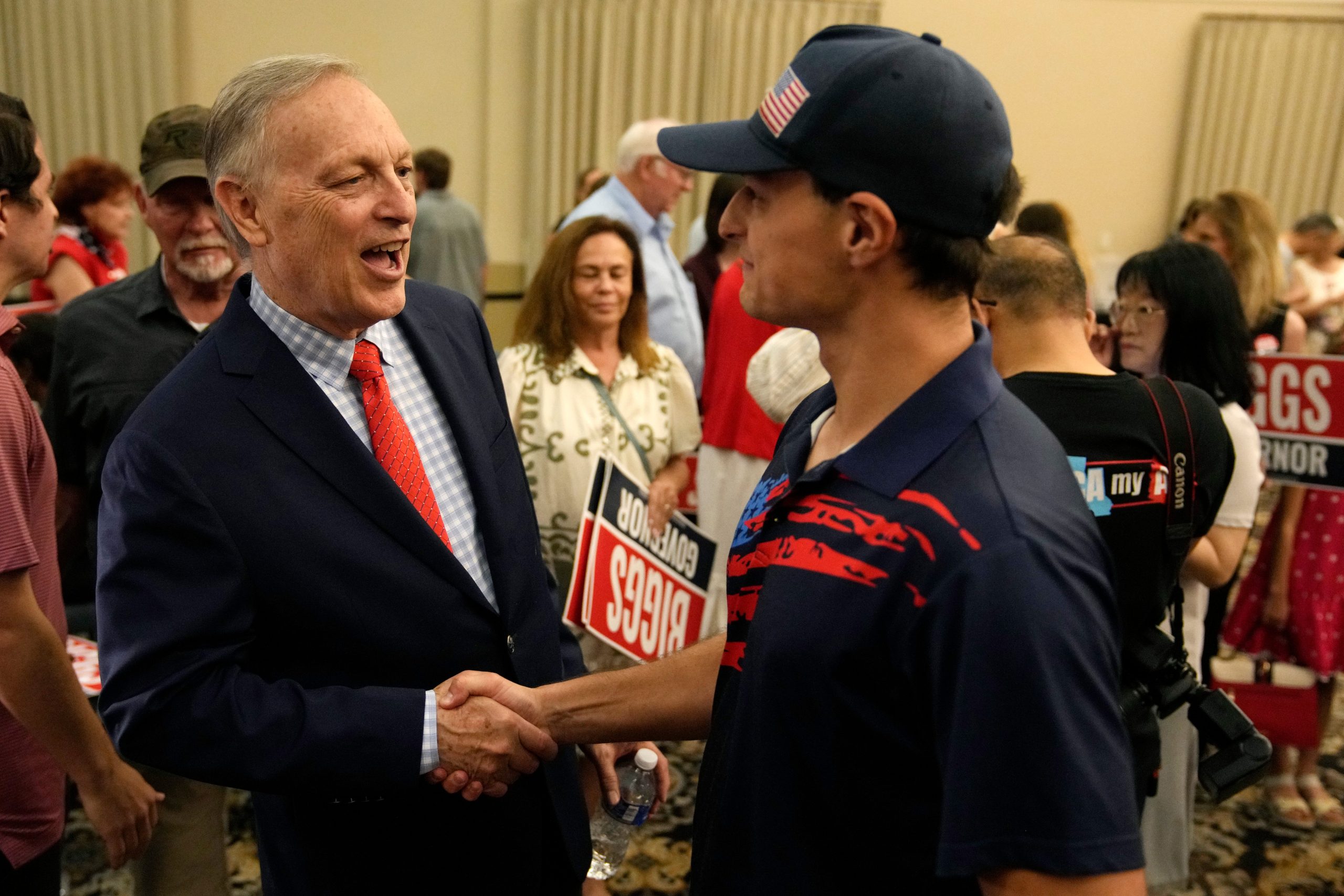

Trump-endorsed Rep. Andy Biggs has won the GOP primary to face Democratic Gov. Katie Hobbs in November, setting up a marquee governor’s race in one of America’s most competitive states.
Biggs, a former chair of the hardline House Freedom Caucus and a close ally of President Donald Trump, easily dealt with his only serious challenger, Rep. David Schweikert, on Tuesday. Before the primary results were official, he had already begun pivoting to the general election against Hobbs, who is seen as one of the most vulnerable Democratic governors this fall.
Republicans feel bullish about their odds of flipping the governorship, after Trump carried the state by five points in 2024. But even though Trump won last time, the state has gradually shifted to pure tossup territory over the past few years, electing Democrats to both Senate seats, as well as the attorney general and secretary of state’s offices.
Hobbs had already shifted her focus to Biggs as well. Her campaign has amassed a significant warchest for the race and has already started running ads. Biggs, given his lack of a significant primary challenge, has been able to hold onto more cash than his GOP rivals, but is still behind Hobbs.
The race will test whether Republicans, who are starting down a potentially bruising midterm cycle, can reclaim the top office of a state that has long been a place of success for the party.
During the Republican primary debate, Biggs spent more time talking about his working relationship with House Minority Leader Hakeem Jeffries and Arizona Democratic Sen. Mark Kelly than he did flexing his endorsement from Trump or highlighting his House record, including his time atop the Freedom Caucus. Instead, he tried to refocus on his bipartisanship in Congress and his leadership in the state legislature.
“I know how to reach across the aisle,” Biggs said during the debate.
But he will still have to contend with many of his past stances, including his role in trying to overturn the 2020 election.
And Hobbs is already working to ensure voters know where Biggs stands on key issues as a longtime member of the House, including his anti-abortion positions and his role in 2020. Her campaign has repeatedly attacked him as “too extreme” for the state and has dubbed him “basement Biggs” for keeping a relatively low profile throughout the GOP primary.
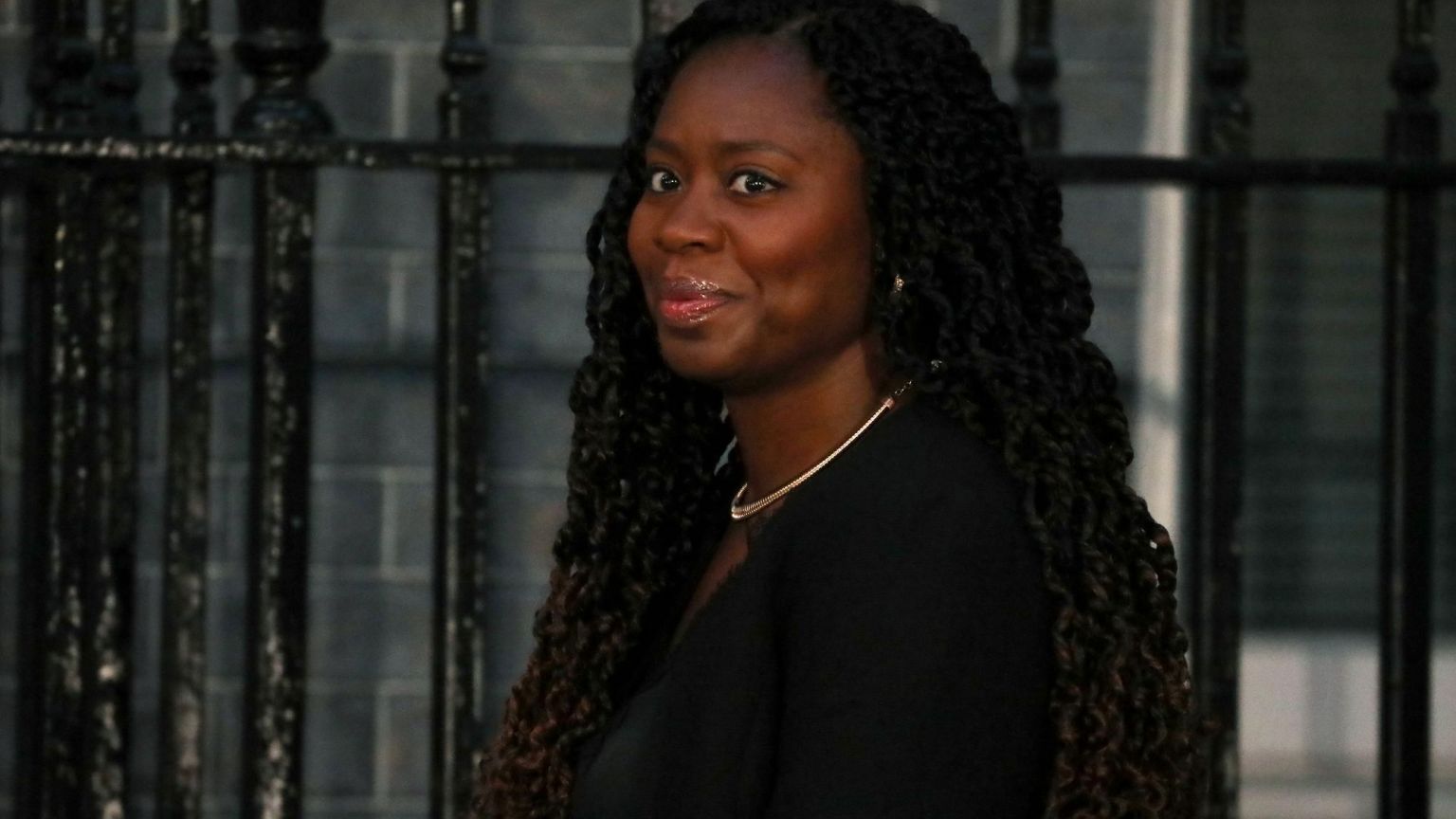
‘When you think that you’ve lost everything’, sang Bob Dylan, ‘you find out that you can always lose a little more.’
Ahead of Andy Burnham announcing his new cabinet, the widely held view among right-thinking people was that nothing was more important than Ed Miliband losing his job at the Department for Energy Security and Net Zero. Surely no one could be worse than this fanatic? Miliband not only lost his job but will now spend much of his time abroad in his new role as UK foreign secretary. Happy days. Alas, those who couldn’t think of anyone worse to be in charge of the nation’s energy supply had forgotten about Miatta Fahnbulleh, former chief executive of the New Economics Foundation and Britain’s new Minister for Energy Security and Net Zero, with the emphasis heavily on ‘Net Zero’.
Fahnbulleh has accused Zack Polanski of stealing her vision of a green economic revolution and she has a point. The economically illiterate, tree-hugging, anti-growth agenda that the New Economics Foundation (NEF) has been pushing for the past 40 years is indistinguishable from that of the current Green Party. Indeed, the NEF sprang out of what was then known as the Ecology Party in the 1980s. For years, it provided a little light relief in the think-tank world, with its happy-clappy focus on ‘wellbeing’ over wealth and its hare-brained policy proposals, such as setting up its own rival to Uber and creating local currencies like the Brixton Pound.
According to the NEF’s Happy Planet Index 2012, Rwanda was a better place to live than Luxembourg, and Costa Rica was the greatest country in the world. How we laughed! The think-tank’s obsession with climate change seemed to be motivated by a perverse desire for the sacrifices it assumed would have to be made. Privation was a feature rather than a bug of its efforts to save the planet. In 2009, it dished out carbon ration books, which limited people to a certain number of showers, baths and toilet flushes per week to get them ready for the future. In 2010, it followed up its book, Growth Isn’t Working, with the sequel, Growth Isn’t Possible. In the same year, it called for a 21-hour working week to help tackle unemployment and ‘over-consumption’ and to ‘help to engineer a “steady-state” economy’.
As the 2010s wore on and the public began to see what an economy without growth actually looked like, the NEF quietly pivoted away from wanting a ‘steady-state economy’. By 2020, it was complaining that the UK’s GDP per capita was slightly lower than it had been in 2008 (for which the NEF blamed the government’s failure to ‘invest in insulation and renewables’), but it never lost its fondness for terrible policies. Rent controls? Yes please! A wealth tax? You bet! Price caps? Of course! No wonder Fahnbulleh thinks Polanski has stolen her ideas. (Having your ideas stolen by politicians is kind of the point of think-tanks, by the way.)
The NEF worldview is driven by a way of thinking that is not so much ‘new economics’ as anti-economics. Its belief that a 21-hour working week will reduce unemployment shows that it has fallen for the lump of labour fallacy – the false notion that there is a fixed, finite amount of work available in an economy. Its idea of replacing fiscal rules with ‘fiscal referees’ appointed by the government – who, the NEF assumes, will give governments greater latitude for borrowing – ignores the fact that the bond markets do a ruthlessly efficient job of refereeing already. The Bristol Pound and similar local currencies rest on the foolish belief that places get rich by not trading with outsiders.
Immerse yourself in the world of the New Economics Foundation and you will be transported to a parallel universe in which Britain is a night-watchman state practising ‘trickle-down economics’, ruthlessly cutting benefits and doing sod all about the ‘climate crisis’. Despite public spending rising from 40 per cent to 46 per cent of GDP and the national debt trebling since 2007, the NEF has consistently maintained that Britain is labouring under ‘austerity’. Despite income inequality falling to the lowest level in 30 years, the NEF’s current chief executive, Danny Sriskandarajah, insists that this is ‘a time of rising inequality’ and that we are ‘living through an inequality crisis’.
This is the organisation that Miatta Fahnbulleh ran between 2017 and 2023, when it dropped the silly but endearing hippy stuff and became a run-of-the-mill left-wing think-tank. Now she is at the heart of government and her latest successor has congratulated Andy Burnham for ‘calling time on trickle-down economics’ and for going ‘beyond aggregate growth’.
As for Net Zero, there can be no doubt that Fahnbulleh is at least as zealous as her old boss, Ed Miliband. In an article written in 2019, in which she claims that British governments on the left and right have ‘spent decades following a neoliberal recipe of tax cuts, reduced social welfare benefits, and deregulation’, she called for Net Zero to be achieved ‘within 10 to 15 years’, which would be ruinously expensive if it were not utterly impossible. She is a staunch supporter of the Green New Deal, which the NEF helped devise back in 2008. She has applauded Extinction Rebellion and used to be the chair of the Croydon Climate Crisis Commission. If she’s using the issue of climate change to climb the greasy pole, she has been playing a very long game.
Instead, there is every indication that Fahnbulleh is a true believer, a dyed-in-the-wool climate ideologue with delusional economic beliefs for whom no cost is too great for the prize of decarbonising the United Kingdom. She genuinely believes that energy costs are too high because we are over-reliant on fossil fuels and wants to make a ‘big sprint’ towards a Net Zero electricity grid by 2030.
Don’t assume that things cannot get worse. Things can always get worse.
Christopher Snowdon is director of lifestyle economics at the Institute of Economic Affairs and the co-host of Last Orders, spiked’s nanny-state podcast.
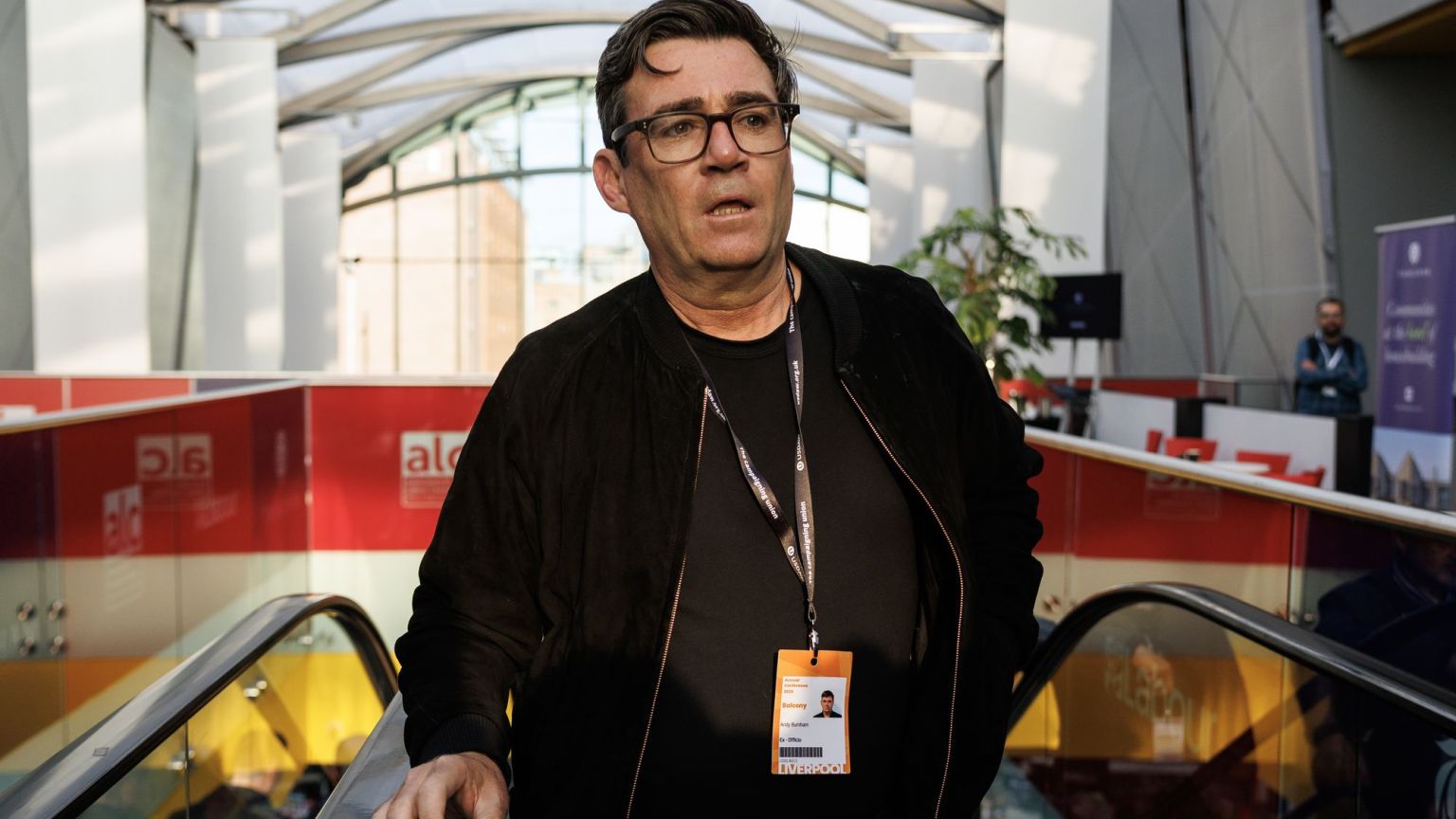
Andy Burnham has pledged to do politics differently. He certainly wants to change the look of politics, if not necessarily the substance. In his inaugural speech yesterday, out went the official lectern. So too, it seems, will the protocol of formal dress normally associated with high office. Burnham let it be known last week that he intends to wear a suit and tie only in the House of Commons.
So, we face the grim prospect of the UK prime minister conducting affairs of state in ‘figure-hugging’ black t-shirts, jogging bottoms and expensive trainers, as though permanently recovering from a rave in Manchester’s Northern Quarter. The tieless days of Tony Blair and Alastair Campbell may soon come to look positively Edwardian. Whether nose piercings and neck tattoos make an appearance in cabinet meetings remains to be seen.
Does any of this really matter? Isn’t attachment to the suited-and-booted look merely a fogeyish affectation, the last refuge of people who still iron their handkerchiefs?
Not really. Clothes are never just clothes. They are statements of intent. They tell us how an institution sees itself and how seriously it expects to be taken. Burnham’s determination to import work-from-home aesthetics into the highest offices of state is a strangely adolescent gesture. The office becomes an extension of the sofa. Government becomes just another Microsoft Teams meeting.
For centuries, the workplace has deliberately distinguished itself from the home. The transition from private to public life was symbolised by changing how one dressed. We still understand this instinctively. We put schoolchildren into uniforms not because wearing blazers improves their maths skills, but because uniform marks the transition from the private world of the family into the public world of shared rules, responsibilities and expectations. Dressing differently encourages behaving differently.
That principle once applied even more strongly to high office. Putting on the suit, the gown or the uniform was never simply about appearances. It was a ritual acknowledgement that the office mattered more than the individual occupying it. Ministers were expected to adapt themselves to the institution rather than expecting the institution to adapt to their personal brand.
Burnham’s declaration implies the opposite. The message is that public office should accommodate the lifestyle preferences of those who hold it. It reflects the broader cultural assumption that institutions should become more ‘authentic’, more casual and more like us, rather than expecting us to rise to their standards. It is a curious inversion. The prime minister is no longer expected to look like the prime minister – instead, he is expected to look like everybody else.
Dress codes have always signalled seriousness. Judges still wear robes. Military officers still wear uniforms. Diplomats still dress with painstaking formality because clothes communicate respect – for the occasion, for the office and for those with whom they are dealing.
Nobody imagines that a well-cut suit makes someone more competent. But it does say that the occasion deserves more than whatever happened to be hanging over the back of the chair. Winston Churchill famously wore his informal ‘siren suit’ during the Blitz without diminishing his authority. But Churchill understood that this exceptional clothing reflected exceptional circumstances.
Dress also marked the divide between the old Britain of duty and the new Britain of perpetual youthfulness. Tony Blair and Alastair Campbell understood perfectly well that loosening the tie was never just about comfort. It symbolised a broader rejection of the formality and restraint of the pre-New Labour world. Politics would become more informal, more conversational, more relaxed – and, inevitably, more personal.
Since then, every institution has been encouraged to ‘dress down’, flatten hierarchies and blur distinctions. Universities resemble tech start-ups. Bank managers look like marketing executives. Senior civil servants often dress like they are on their way to Glastonbury. The assumption is always that informality breeds creativity, even though it more often breeds familiarity and lowered expectations.
There is, after all, a reason why nobody wants to see airline pilots flying in hoodies or surgeons operating in cargo shorts. Uniforms and conventions reassure us because they communicate professionalism before a word has been spoken. We instinctively associate standards of appearance with standards of conduct, even if we know intellectually that the relationship is imperfect.
None of this means politicians need to resemble Victorian undertakers or City solicitors. But symbols matter because politics itself runs on symbols. Ceremonies, traditions, robes, despatch boxes, Black Rod and yes, even suits and ties, all remind us that democratic government is larger than the personalities temporarily passing through it.
Andy Burnham’s wardrobe may seem a trivial matter. Yet it reflects a deeper instinct of contemporary politics. The irony is that, in trying so hard to look ordinary, politicians risk making the extraordinary responsibilities of government appear ordinary, too.
Keir Starmer proved that a suit and tie are no guarantee of good government. But it is difficult to believe Britain will be better governed by a prime minister who looks as though he’s just nipped out of PureGym.
Neil Davenport is a writer based in London.
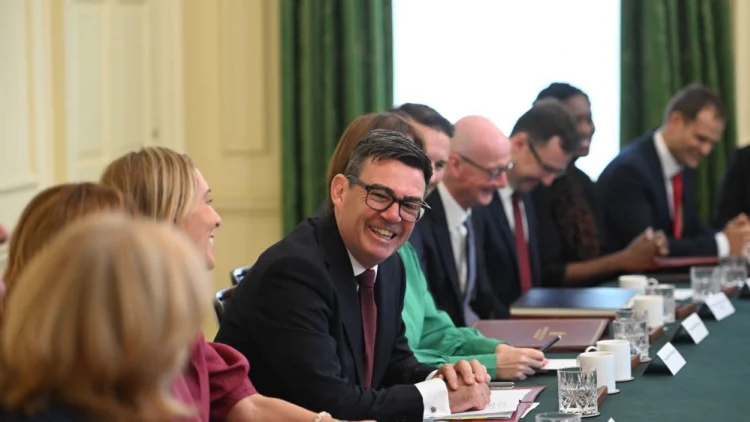

Andy Burnham appointed his cabinet on Monday (Alamy)
2 min read
Andy Burnham’s Cabinet has been described as a northern takeover of government. Analysis shows one part of the north in particular is on the rise.
After taking office on Monday, the new Prime Minister gave high-profile ministerial jobs to fellow northern Labour MPs like Angela Rayner and Lucy Powell. There are also seats at the Cabinet table for Lou Haigh and Anneliese Midgley, who both played key parts in Burnham’s journey from the Manchester mayoralty to Downing Street.
Burnham’s northern roots, particularly “Manchesterism”, are an important part of his political identity.
He has set up a new Downing Street base in Manchester, ‘No 10 North’, where he intends to work at least one day a week, starting on Friday, and where he could host foreign leaders.
It’s not just the politics of these places and his devolution agenda, but the cultural side, too, like his love for Everton FC, rugby league and The Smiths.
A comparison of Burnham’s Cabinet with Keir Starmer’s top team when he stood down to make way for his successor shows that specifically the northwest – the PM’s home region – is the big winner in terms of senior ministerial representation.
Burnham has appointed six Labour MPs representing seats in part of the country: Education Secretary Powell; Communities Secretary Rayner; Chief Whip Midgley; Business Secretary Jonathan Reynolds; Environment Secretary Angela Eagle; and Culture Secretary Lisa Nandy.
This compares to two MPs in Starmer’s cabinet at the time of his resignation who were from constituencies in the northwest.

Icahn Enterprises sells Pep Boys to Mavis in $700M auto services deal

Kalshi pushes deeper into politics as it eyes commodity contracts

‘Star Wars Jedi’ Gets Official Sequel Release Coming This Year


![Is The Bitcoin & Crypto Cycle Low In? [Here’s The Facts]](https://wordupnews.com/wp-content/uploads/2026/07/1784724876_maxresdefault-80x80.jpg)


-
 NewsBeat6 days ago
London Mayor Sadiq Khan handed a peerage by Keir Starmer alongside 15 other Labour figures… just days before the PM leaves No10
-

 Fashion5 days ago
Weekend Open Thread – Corporette.com
-

 Politics4 days ago
The House | The City of London can help the new chancellor deliver growth in every postcode
-
 Crypto World5 days ago
Two July Windows Left: The CLARITY Act’s Senate Fight and What Failure Means
-

 Crypto World6 days ago
CFTC blocks Kalshi from unwinding Michigan trades after court order
-

 Crypto World4 days ago
Ripple Payments Joins MiCA With 14 Firms, Does It Mean Anything For XRP?
-

 Business6 days ago
Nvidia Stock Slips After Big Tuesday Rally as Huang Confirms Vera Rubin Chip Is Now in Production Today
-

 Politics3 days ago
Democrats look to World Cup watch parties to register thousands of voters
-
 Entertainment7 days ago
Disney’s Most Ambitious Failed Star Wars Attraction Is Coming to SDCC
-

 Crypto World5 days ago
Ripple wins EU-wide access as ESMA adds it to MiCA register
-

 Crypto World1 day ago
Grayscale Files For Worldcoin ETF, WLD Registers Sharp Rise
-

 Business6 days ago
Palantir Shares Rise After Expanded Nvidia Partnership and Fresh Analyst Upgrades Ahead of Earnings Day
-

 Crypto World6 days ago
Injective Submits SEC Transfer-Agent Registration to Onchain Ownership Records
-

 Tech2 days ago
Sail Virtually Aboard The “Itanic” With IA-64 Emulator
-
 Tech1 day ago
Turtle Beach Command Series KB7 review: a nifty screen-equipped gaming keyboard
-

 NewsBeat2 days ago
Unregistered fitter used Gas Safe logo on business flyers
-

 NewsBeat5 days ago
Registration is now open for March for Men with Kev 2026
-
 Sports7 days ago
New Cornerback Enters Vikings Trade Rumor Mill
-
 Business9 hours ago
New Jersey voter registration controversy explained: How 6,600 noncitizens got on the rolls, and what happens next
-

 News Videos5 days ago
Money | Class 12 Economics | CBSE Board Exam 2026-27
You must be logged in to post a comment Login