

Crypto World
Dogecoin (DOGE) Prints a Major Buy Signal: Big Pump on the Way?

The biggest meme coin, like many other leading cryptocurrencies, has been underperforming over the past several months, with its price down 73% on a yearly scale.
And while the bear market remains persistent and could linger a bit longer, some analysts have highlighted key reasons why DOGE could be gearing up for a rebound.
‘Invest When No One Else Cares’
Dogecoin has dropped to its current $0.07 (per CoinGecko), but the renowned analyst Ali Martinez outlined that the weekly TD Sequential indicator has flashed multiple consecutive buy signals. He described the trend as “a rare setup that could be warning a major bull rally is approaching.”
X user Cryptollica also chipped in. They pointed to the “dead attention” surrounding the meme coin lately, claiming that investors looking to make money should hop on the bandwagon when interest is at its weakest.
The analyst also touched on the Market Value to Realized Value (MVRV) ratio, which tumbled below 1. This development indicates that most holders are sitting at a paper loss and the asset is trading below its average cost basis. Usually, dropping to such territory appears near cycle bottoms, suggesting the bulls may soon take control.
JAVON MARKS joined the topic, too, saying DOGE could be on the verge of a major rally and could mirror its performance in past years. That said, the analyst envisioned a parabolic rise to $0.653, $0.7, and even $1.25 in the following years.
Trader Tardigrade made the most optimistic prediction, opining that DOGE has staged a massive double bottom formation that could trigger a price explosion to as high as $3.25.
The Bearish Case
It is hard to ignore other factors that suggest Dogecoin’s valuation could head south soon. The first one is the asset’s Relative Strength Index (RSI), which has risen above 70. Such high levels indicate that the meme coin has entered overbought territory and could be due for a correction. Conversely, readings below 30 are often seen as buying opportunities.

Next on the list is the lack of institutional support. Spot DOGE ETFs have not been attractive for pension funds, hedge funds, and other conservative investors, and that is no good news for the valuation. The opposite scenario would have forced the issuers of these products to buy real DOGE, thus potentially fueling a price appreciation. Since day 1, spot Dogecoin ETFs have generated a cumulative total net inflow of just $11.77 million, which is far below what spot XRP ETFs, for instance, have attracted.

The post Dogecoin (DOGE) Prints a Major Buy Signal: Big Pump on the Way? appeared first on CryptoPotato.


The Head of Digital Assets and Innovation for a $2 trillion asset manager “just said to buy ETH,” commented former BlackRock VP and host of Milk Road Daily, John Gillen, on Tuesday. His statement came in response to a lengthy post on X from Franklin’s Sandy Kaul on the use cases for crypto in agentic AI payments.
Most investors buy shares of AI-aligned companies to capture the growth opportunity today, he said. US stock markets have boomed with the S&P 500 climbing 20% over the past year to an all-time high in early June, largely driven by tech and AI stocks.
However, the same playbook may not work for agentic AI, he said.
Ethereum is the AI Bet
AI agents can independently initiate, track, and fulfill transactions, and estimates suggest agentic commerce could reach $3 to $5 trillion by 2030.
Legacy payment rails with high fees and slow transaction times do not work for micropayments. Additionally, AI agents cannot open bank accounts or access financial services, which have rafts of strict KYC requirements.
Therefore, it is likely that AI agents will use decentralized blockchains to transact, and Ethereum and its layer-2 networks are the current industry standard with the largest developer base and institutional support.
“I believe what will become increasingly clear in coming years is that in order to capture the value of decentralized networks and businesses, investors will need to buy the cryptocurrencies and altcoins being issued by those entities.”
“Such investments are likely to become key holdings in portfolios, especially for those looking to capture the emerging agentic AI opportunity,” he added.
The Head of Digital Assets and Innovation for a ~$2T Asset Manager just said to buy $ETH
“I believe what will become increasingly clear in coming years is that in order to capture the value of decentralized networks and businesses, investors will need to buy the cryptocurrencies… https://t.co/KeaHLq7Aid
— John Gillen – WartimeEthereum.eth (@BitcoinJesusETH) July 21, 2026
In April, the IMF released a report stating that agentic AI will reshape payments and standards are already being developed.
“A growing set of industry actors, including payment networks, technology platforms such as Ethereum, and AI model providers, are in a race to experiment with these capabilities,” it said.
Crypto commentator Leo Lanza said on Tuesday that “everyone sees Ethereum as a tokenization bet,” adding:
“Almost nobody sees it as an AI bet. But AI agents will need financial rails to hold assets, settle payments, and transact with each other.”
ETH Price Nudges Higher
Ethereum prices hit a seven-week high of $1,945 on Tuesday, and it has largely held on to those gains into early trading on Wednesday.
The asset was changing hands for $1,930 at the time of writing, up 27% since its cycle low on June 26 and nudging ever closer to the psychological $2,000 barrier
The post Franklin Templeton Exec Calls Agentic AI Crypto’s ‘Killer Use Case’ as ETH Nears $2K appeared first on CryptoPotato.


Paradigm, a crypto-focused venture capital firm co-founded by Matt Huang, said Wednesday it raised $1.2 billion for its fourth fund to invest across crypto, artificial intelligence and robotics. Huang announced the raise in a post on his official X account, writing the new vehicle will fund… Read the full story at The Defiant
Digital asset infrastructure provider BitGo and OTC Markets Group, the operator of regulated over-the-counter securities markets, plan to partner on digital asset trading and custody infrastructure for broker-dealers, a move that could expand institutional access to tokenized securities through existing market infrastructure.
The companies said Wednesday that the proposed alliance will serve more than 150 broker-dealers using OTC Link ATS, an alternative trading system regulated by the US Securities and Exchange Commission. If implemented, participating broker-dealers would be able to quote, trade and settle digital asset securities using the same electronic trading infrastructure they currently use for over-the-counter and US equity markets.
Under the proposal, BitGo Bank & Trust would act as the qualified custodian, while settlement would be facilitated through BitGo’s Go Network. The proposed framework is initially intended to support digital asset securities, with the potential to expand to tokenized assets and commodities as regulatory frameworks evolve.
The announcement comes as traditional financial institutions increasingly explore tokenized versions of real-world assets, while US regulators have moved toward establishing clearer rules for digital asset markets.
In December, BitGo received final approval from the US Office of the Comptroller of the Currency to operate as a federally chartered national trust bank, allowing it to provide qualified custody services under federal banking oversight.
Investors lifted OTC Markets Group’s stock price roughly 2.7% by midday on Wednesday, to $53.50 a share on thin volume.
Related: SoFi taps BitGo to provide infrastructure for bank-issued stablecoin
Why broker-dealers matter for tokenization
Broker-dealers could play a major role in the transition to tokenized securities because they already operate within established regulatory and market frameworks. By integrating digital asset trading and custody into existing infrastructure, the BitGo-OTC Markets alliance could reduce operational barriers for broker-dealers looking to offer tokenized securities without requiring them to adopt entirely new crypto-native systems.
The proposed alliance comes as the market for tokenized securities continues to expand. Analysts at Bernstein have projected that the value of tokenized real-world assets could reach up to $4 trillion by 2030, driven by broader adoption across equities, commodities, and other financial assets.
The announcement also follows similar efforts by companies including Securitize and Cantor Fitzgerald to bring tokenization to capital markets, including initial public offerings and follow-on equity offerings.
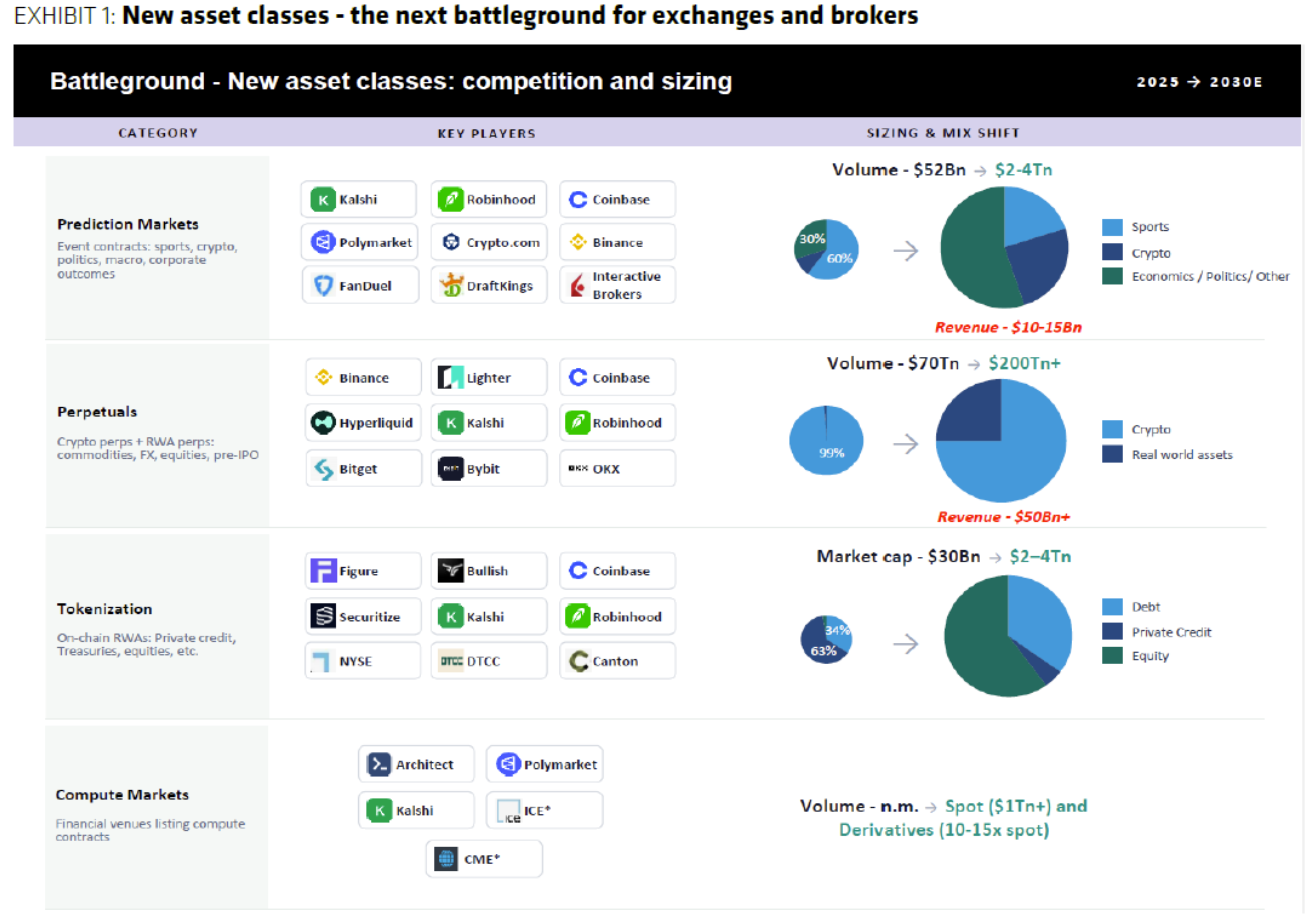
Bernstein analysts identified tokenization and prediction markets as the next assets “battleground” for exchanges and brokers. Source: Bernstein
Related: Tradable’s $1B Stellar deal adds to institutional tokenization boom
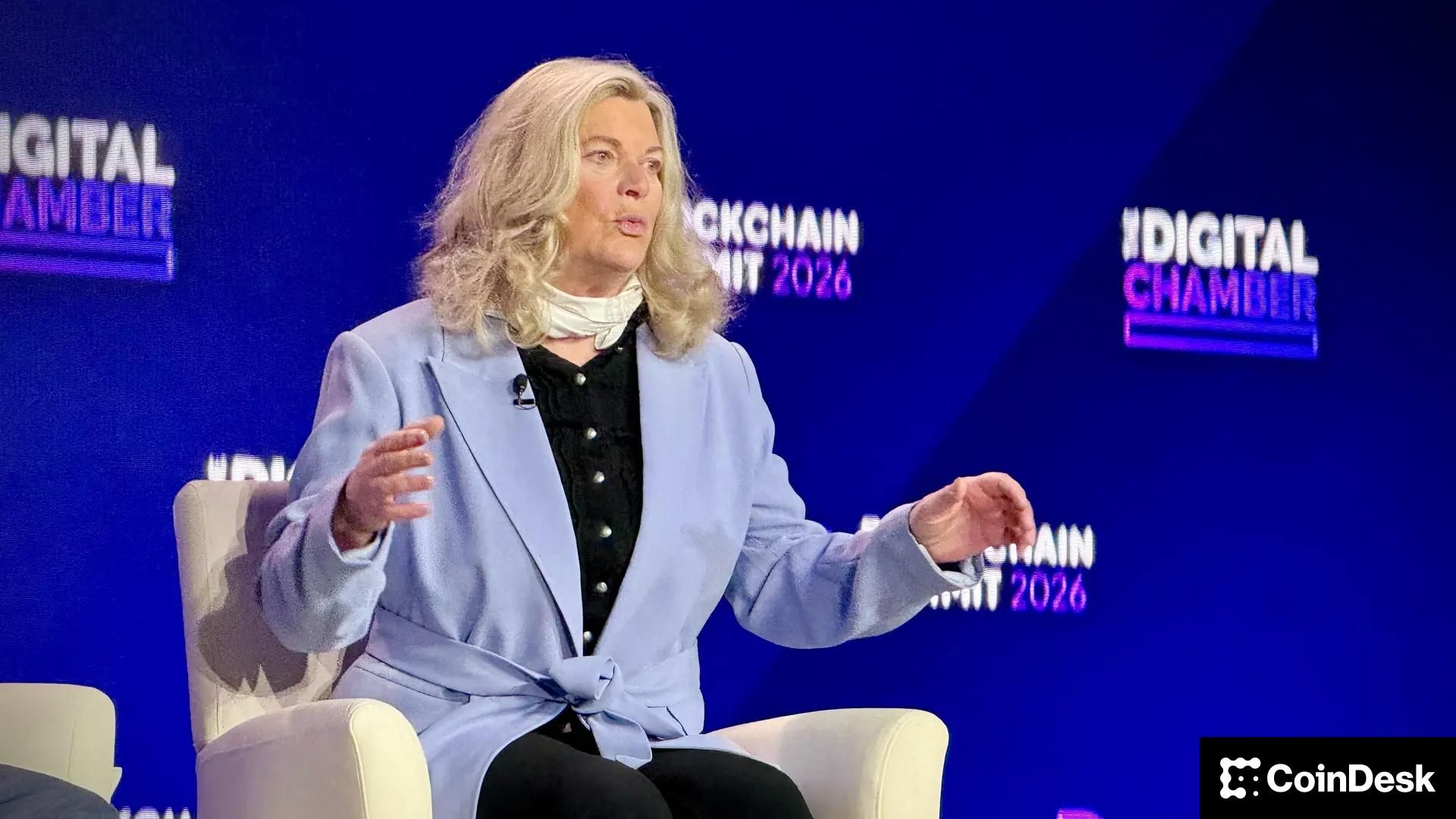
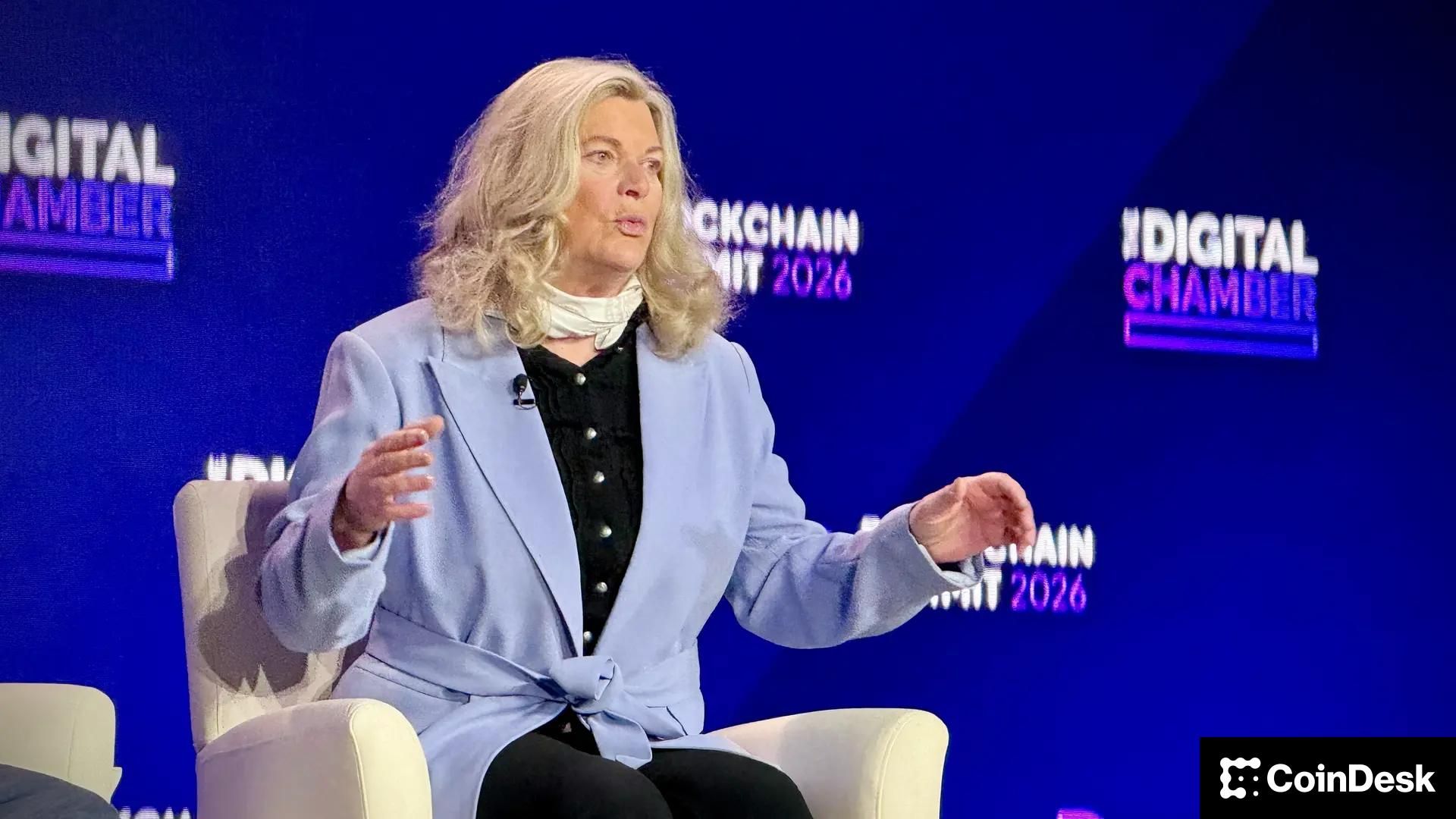
A group of Democrat Senators said in a statement late Wednesday that the bill still fell “short” of where it needed to be to get their support, but that they would keep working on it with Republicans. Senator Elizabeth Warren, the top Democrat on the Senate Banking Committee, argued Wednesday that the policy as written would let Trump continue his crypto businesses largely untouched, and any improper activity would be ignored by his loyal Department of Justice and then legally fenced off from prosecution once he leaves office.
Other outstanding issues
Beyond ethics, lawmakers may continue to negotiate over illicit finance provisions, Lummis said.
“We think we’ve landed in a good place,” she said, because the effort addresses the Bank Secrecy Act, money-laundering protections, sanction coverage for exchanges and decentralized finance (DeFi).
Some of the new additions were made at the request of law enforcement, such as a provision addressing crypto automated teller machine (ATM) fraud.
There is also a safe harbor for crypto platforms to freeze funds if they suspect the assets are tied to suspicious transactions, particularly if those companies are cooperating with law enforcement, she said.
The text also includes a provision saying it is the “sense of Congress” that at least two of the commissioners on the Securities and Exchange Commission and Commodity Futures Trading Commission would be nominated in consultation with the minority party. Right now, neither agency has any Democratic commissioners, with the SEC helmed by three Republicans, while the CFTC just has a single commissioner running the agency.
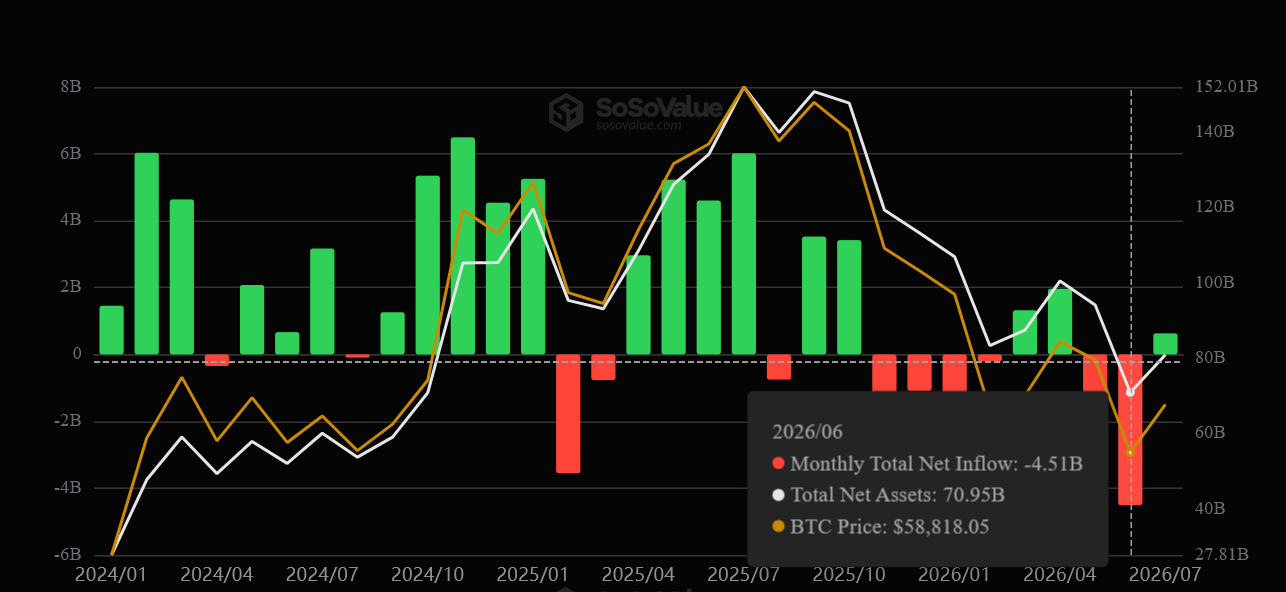
Bitcoin has returned to the $65,000 range, but the recovery is struggling to develop into a wider rally. The asset traded near $65,975 on Wednesday after briefly crossing $66,000, its highest level since early June.
US spot Bitcoin ETFs recorded $203.2 million in net inflows on Tuesday, marking six consecutive positive days. However, those inflows remain small compared with the combined $6.9 billion withdrawn during May and June.
The main obstacle is no longer limited to the crypto market. Bitcoin now faces pressure from an AI investment boom that is influencing inflation, interest rates, bond yields and competition for investor capital.

The AI Boom Is Keeping Inflation Alive
The Federal Reserve directly linked some of the recent inflation pressure to artificial intelligence investment in the minutes of its June meeting.
Officials said strong demand for data centers, electricity and high-tech equipment was pushing up prices. They also warned that AI investment could keep economic growth above its sustainable rate, making inflation more persistent.
The latest corporate results show the scale of that demand.
Alphabet raised its expected 2026 capital spending to between $195 billion and $205 billion after Google Cloud revenue jumped 82% in the latest quarter.
Microsoft expects to spend around $190 billion this calendar year, including roughly $25 billion caused by higher component prices.
Meanwhile, Nvidia reported that data-center revenue rose 92% year-on-year to $75.2 billion in its latest quarter. The figures show that companies are still competing heavily for chips, servers, energy, and construction capacity.
Fed Chair Kevin Warsh said high-tech equipment investment had grown by nearly 25% over the year to the first quarter. He said the central bank was watching the effect on inflation and employment.
Higher Rates Leave Less Money for Bitcoin
This matters for Bitcoin because persistent inflation reduces the Fed’s ability to lower interest rates.
US inflation eased in June as energy prices fell. However, consumer prices remained 3.5% higher than a year earlier, while producer prices were up 5.5%.
Both remain above levels that would give the Fed a clear reason to ease policy quickly.
Bond markets have responded. The two-year Treasury yield reached 4.301% on Wednesday, its highest level in more than a year, while the 10-year yield approached 4.66%.
Higher yields make government bonds and cash more attractive compared with volatile assets such as Bitcoin.
Nikita Zuborev, senior analyst at BestChange, described the same pressure.
“For now, an expensive dollar and high bond yields are pulling liquidity away from risky assets such as cryptocurrencies,” he said.
The dollar has also received support from higher rate expectations and renewed Middle East tensions. That creates another problem for Bitcoin, which often struggles when the dollar strengthens.
AI Stocks Are Competing for the Same Capital
Evgeny Popov, editor-in-chief at InvestFuture, said capital that previously might have entered crypto was moving toward companies linked to AI, chips, data centers and energy infrastructure.
“That is where investors currently see money, growth and a clearer story about the future,” Popov said.
Market performance broadly supports his argument. Semiconductor stocks remained up around 69% for 2026 as of this week, while Bitcoin was still down about 25% for the year.
Bitcoin has performed better than chip stocks during July, suggesting some capital may be rotating back, but the longer-term gap remains wide.
Bitcoin may need more than several days of ETF inflows to break out of the $60,000 – $70,000 zone. A stronger move would likely require lower inflation, falling bond yields, a less hawkish Fed and sustained institutional demand.
The Fed’s next decision is due on July 29. Until then, Bitcoin remains caught between improving ETF flows and an AI investment cycle that is keeping money expensive.
The post Why Bitcoin Is Stuck Near $65,000 as AI Fuels Inflation appeared first on BeInCrypto.
Robinhood Chain's onchain activity surged this week as a memecoin frenzy, a Pump.fun integration and a defecting Solana app converged on the barely week-old network — even as its largest single inflow traced to a stablecoin deposit rather than the meme trade. Cumulative addresses on the… Read the full story at The Defiant

Given the popularity of some cryptocurrency projects, they tend to be targeted by bad actors trying to exploit either the network behind them or vulnerable and unsuspecting users for their coins.
A recent post on X outlined a potential threat for some Pi Network users (referred to as Pioneers) and urged immediate action from the Core Team.
Pioneers, Beware
In a post titled ‘strange scam activity reported involving a Pi Wallet,’ the user Rizo outlined someone else’s issues in which the third party’s three-year lockup period for Pi coins finally came to an end. When they went to migrate the 143 tokens, it displayed that the wallet balance remained at 0. Moreover, they found a large number of failed transactions.
Rizo was quick to flag the suspicious activity and believes the solution for this would be the implementation of 2FA or “another strong authentication method to become mandatory for Pi Wallets.” Moreover, they asked the Core Team behind the project to investigate the matter and strengthen the overall wallet security to protect users.
It’s worth noting that this is far from the first instance of suspicious activity not only in the Pi Network ecosystem but overall in crypto. As such, many teams, including Pi’s, have issued consistent warnings over the past few years. In one of the posts published by the Core Team, they outlined several steps users can undertake to ensure higher protection levels against potential scams or fraud.
Critical Stage of Development
In bear market times in which the project faces intense pressure online while the native token plunges to new depths, a large part of the community behind Pi Network has started to question the overall direction. To address this, Daniel Carter, an X user with over 20,000 followers, said he works as a Senior Technical Engineer at Pi and has stayed with the project for a decade.
After working on R&D at Pi, he is currently responsible for ecosystem review and compliance. He believes Pi Network is now at a “critical stage of its development, and maintaining close communication with the community is more important than ever.” This is something that has been missing lately, according to Pioneers.
Nevertheless, most of the comments below the post were skeptical, as some even questioned whether Carter indeed has a role at Pi Network.
The post Pi Network Warning: Strange Scam Activity Leaves Pioneer Wallet at Zero appeared first on CryptoPotato.
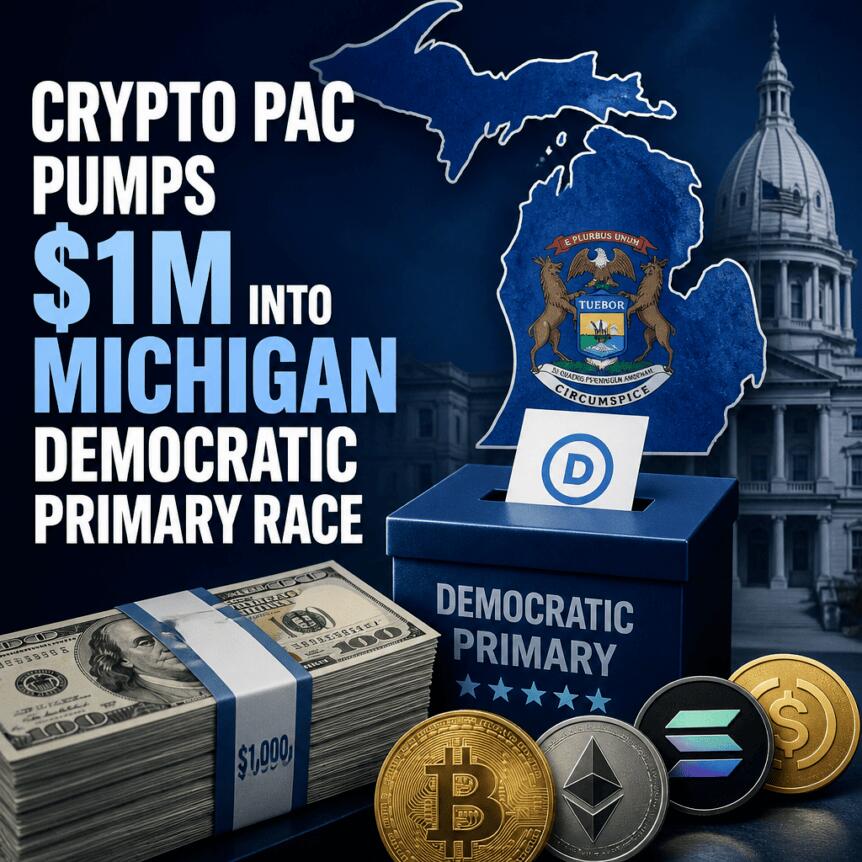
A cryptocurrency-aligned political action committee (PAC) affiliate is spending heavily in a Michigan Democratic primary that will decide who advances to the November general election. According to Federal Election Commission (FEC) filings posted as of Tuesday, Protect Progress PAC has poured more than $986,000 into ads backing Rep. Shri Thanedar while also funding messaging against his challenger, Donavan McKinney, ahead of an Aug. 4 primary.
The spending comes at a moment when crypto industry-linked political groups are working to shape which candidates reach Congress. The Michigan race is one of several contests referenced in recent FEC disclosures showing continued efforts by Fairshake and related entities to influence elections on “pro-crypto” policy priorities.
Key takeaways
- Protect Progress PAC reported spending over $986,000 on ads supporting Shri Thanedar and opposing Donavan McKinney ahead of Michigan’s 13th district Democratic primary on Aug. 4.
- The PAC’s approach mirrors its 2024 spending, when it backed Thanedar with about $1 million before he won both the primary and the general election.
- Fairshake and affiliates have reported a sizable political “war chest,” with filings indicating $191 million available to influence key races.
- In addition to Michigan, Protect Progress PAC activity cited in FEC data includes Arizona media buys supporting Rep. Greg Stanton.
- Other Fairshake-linked groups referenced in FEC reports are also active in Washington primaries, including a media spend to support a candidate described as publicly supportive of crypto.
Protect Progress steps up in Michigan’s 13th district
FEC paperwork filed by Protect Progress PAC shows that, as of Tuesday, the committee had spent more than $986,000 on advertising tied to Michigan’s 13th congressional district. The ads were described in filings as supporting Democratic incumbent Shri Thanedar and opposing his Democratic primary challenger Donavan McKinney.
Those expenditures were reported roughly two weeks before the scheduled primary on Aug. 4. The timing is notable because primary races often hinge on relatively short bursts of messaging that can define a candidate’s perceived record and priorities for voters before ballots are cast.
Protect Progress’ media push in Michigan also reflects its earlier investment in Thanedar’s political trajectory. In 2024, the PAC reportedly spent about $1 million supporting Thanedar. That year, he won the Democratic primary with 54.9% of the vote and then carried the general election with 68.6% against Republican and other opponents.
Crypto policy backdrop: votes, investments, and campaign narratives
The Michigan ads and counter-messaging are unfolding against a record that has been used by both sides to frame the race as a referendum on crypto-related legislation and financial ties.
The article notes that Thanedar previously supported multiple crypto-related bills while serving in the House, including the CLARITY Act, the GENIUS Act, and the Promoting Innovation in Blockchain Development Act. Those policy positions have been a consistent element in how “pro-crypto” advocacy groups portray candidate alignment.
For his part, McKinney has not been described in the filing coverage as having made prominent public statements directly supporting or opposing digital assets before this campaign. By contrast, the coverage describes Thanedar as having invested campaign funds into crypto companies while in office, citing reporting that he lost more than $600,000 in the second quarter of 2026 after investing $3.7 million of campaign funds into crypto-related companies.
McKinney’s response to the Protect Progress spending was pointed. In a Tuesday statement referenced in the coverage, he argued that “the crypto lobby” was effectively backing his opponent, accusing it of seeking to stop his movement in the race.
Election influence spreads beyond Michigan
The Michigan primary is only one piece of a larger map of political spending. FEC reporting referenced in the coverage indicates that Fairshake and affiliated entities have reported having $191 million available in a “war chest” intended for election influence across multiple key races.
That broad capacity is linked to a network of PACs connected to the crypto industry’s political engagement. The coverage points to other groups including Fellowship, which is described as backed by Cantor Fitzgerald and Anchorage Digital, and the Blockchain Leadership Fund, described as a hybrid PAC backed by Anchorage and Chainlink Labs.
Even within the same Protect Progress ecosystem, the cited FEC activity goes past Michigan. According to the article, Protect Progress PAC also spent more than $100,000 on media supporting Representative Greg Stanton’s reelection bid in Arizona. It further notes that Stanton voted for CLARITY and GENIUS while in the House and that he won his Tuesday primary in Arizona’s 4th district with 65% of the vote.
In Washington, the primary calendar listed for Aug. 4 is also tied to possible Fairshake-affiliated involvement. FEC filings cited in the coverage indicate that the Defend American Jobs PAC spent more than $65,000 on media to support Amanda McKinney, a Republican candidate running for Washington’s 4th congressional district. The reporting also notes that she has made at least one public statement supporting crypto.
The article further states that Representative Dan Newhouse announced in 2025 that he would not seek reelection in that district, underscoring why outside spending could matter more in open-seat or competitive races.
What to watch between now and the primary
With Protect Progress’ reported advertising push arriving just weeks ahead of Michigan’s Aug. 4 primary, the most immediate signal for voters and campaign strategists will be how quickly counter-arguments—particularly around crypto policy alignment and campaign-finance-related claims—gain traction in the same short window.
Readers following crypto-linked political spending should also watch whether Fairshake-affiliated committees continue to shift focus across multiple states on the same calendar, and whether forthcoming reporting from election filings adds clarity on how far these media buys extend as the primaries near.
Zapper, the DeFi portfolio tracker and dashboard, will shut down entirely on August 3rd, co-founder and CEO Seb Audet said in a post on X Wednesday. The company's website, mobile apps and API services will all go offline. Audet said the team "evaluated a number of different options, pursued some to… Read the full story at The Defiant


MARA Holdings said Thursday it signed a definitive agreement with HIF to acquire a powered land site of more than 1,200 acres in Matagorda County, Texas, in a post on its official X account. The site will carry up to 1 gigawatt of grid capacity by October 2027 and up to 2 gigawatts by April 2028,… Read the full story at The Defiant

7 Soft Sci-Fi Shows Where Every Episode Is a Masterpiece

Burnham is forced to review the early prison release scheme after PC Harper’s widow blasts soft justice programme

World No. 1 Shin Jin-seo Beats AI KataGo 2-1, Ten Years After Lee Sedol’s Historic Match With AlphaGo


-
 NewsBeat6 days ago
London Mayor Sadiq Khan handed a peerage by Keir Starmer alongside 15 other Labour figures… just days before the PM leaves No10
-

 Fashion5 days ago
Weekend Open Thread – Corporette.com
-

 Politics5 days ago
The House | The City of London can help the new chancellor deliver growth in every postcode
-
 Crypto World6 days ago
Two July Windows Left: The CLARITY Act’s Senate Fight and What Failure Means
-

 Crypto World7 days ago
CFTC blocks Kalshi from unwinding Michigan trades after court order
-

 Crypto World5 days ago
Ripple Payments Joins MiCA With 14 Firms, Does It Mean Anything For XRP?
-

 Business7 days ago
Nvidia Stock Slips After Big Tuesday Rally as Huang Confirms Vera Rubin Chip Is Now in Production Today
-

 Politics3 days ago
Democrats look to World Cup watch parties to register thousands of voters
-

 Crypto World5 days ago
Ripple wins EU-wide access as ESMA adds it to MiCA register
-

 Crypto World2 days ago
Grayscale Files For Worldcoin ETF, WLD Registers Sharp Rise
-

 NewsBeat3 days ago
Unregistered fitter used Gas Safe logo on business flyers
-

 Crypto World6 days ago
Injective Submits SEC Transfer-Agent Registration to Onchain Ownership Records
-

 Tech2 days ago
Sail Virtually Aboard The “Itanic” With IA-64 Emulator
-

 Business7 days ago
Palantir Shares Rise After Expanded Nvidia Partnership and Fresh Analyst Upgrades Ahead of Earnings Day
-
 Tech2 days ago
Turtle Beach Command Series KB7 review: a nifty screen-equipped gaming keyboard
-

 NewsBeat6 days ago
Registration is now open for March for Men with Kev 2026
-
 Business20 hours ago
New Jersey voter registration controversy explained: How 6,600 noncitizens got on the rolls, and what happens next
-
 Crypto World6 days ago
Claude Fable 5 Slips to Second in AI Coding Leaderboard
-

 News Videos6 days ago
Money | Class 12 Economics | CBSE Board Exam 2026-27
-

 Business6 days ago
Banco Bilbao Vizcaya Argentaria, S.A. (BBVA) Discusses Global Macro Environment and Economic Outlook for Core Markets Transcript
You must be logged in to post a comment Login