

Crypto World
S&P Launches Blockchain Fundamentals Index Based on Protocol Revenue

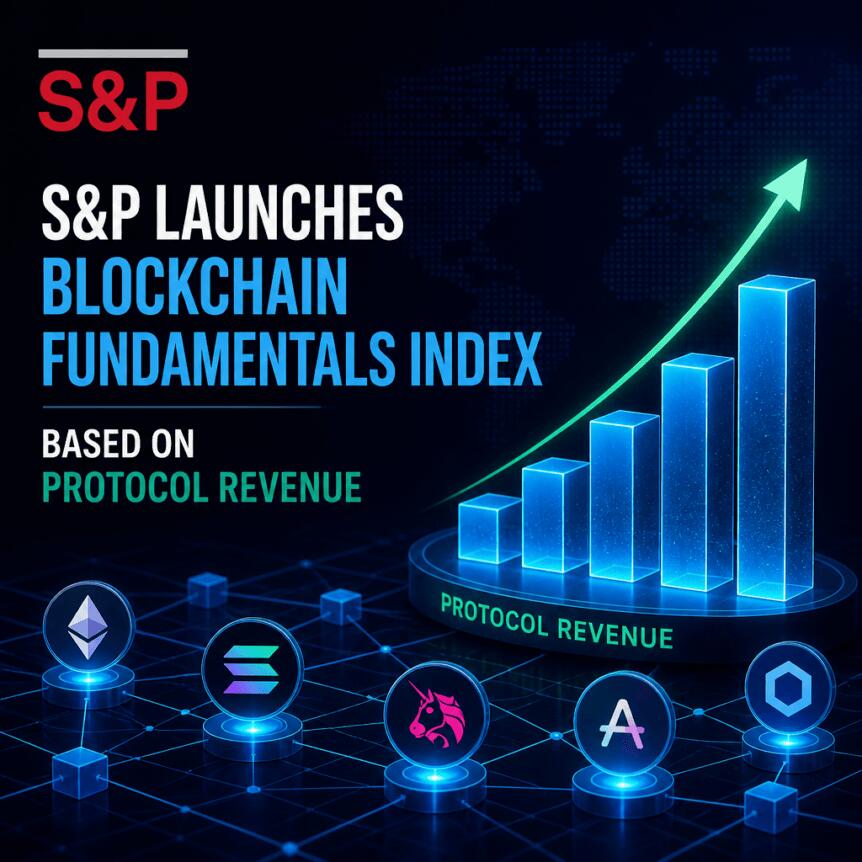
S&P Dow Jones Indices and Pantera Capital have launched a new rules-based digital asset index designed to evaluate blockchain networks and protocols using protocol revenue rather than token prices or pure market capitalization. The move signals a continued shift toward “productive activity” metrics as institutional players look for benchmarks that better reflect real-world usage.
In an announcement on July 21, the firms said the index is intended for institutional allocation and could be used as the basis for investment products or as a reference portfolio for actively managed strategies. The methodology also aims to help investors distinguish established on-chain business activity from more speculative exposure.
Key takeaways
- Protocol revenue is central: networks are selected and ranked based on aggregate protocol revenue over the prior two quarters.
- Liquidity and size gates apply: eligibility requires minimum thresholds for protocol revenue, market capitalization, and liquidity.
- Concentration is controlled: the largest holding is capped at 35%, while most other constituents are capped at 20%.
- Quarterly rebalancing: the index is recalculated and rebalanced on a quarterly schedule.
- Bitcoin and XRP are not included at launch: per S&P’s methodology discussion, BTC and XRP are the largest non-constituents versus the S&P Cryptocurrency Broad Digital Asset Index.
A revenue-based benchmark for “productive” blockchain activity
Traditional crypto benchmarks often track assets using market capitalization or token price movements. By contrast, S&P and Pantera’s index focuses on protocol revenue to measure how much economic value is being generated by the networks and the applications built on them. The firms draw from the S&P Cryptocurrency Broad Digital Asset Index, but filter the eligible universe using minimum thresholds for protocol revenue, market capitalization, and liquidity.
After networks pass the eligibility requirements, they are ranked by aggregate protocol revenue across the previous two quarters. Weighting then uses adjusted market capitalization, subject to portfolio construction rules. According to S&P, the framework is designed to emphasize established blockchain activity and reduce reliance on exposure that may be driven mainly by speculation.
This distinction matters for investors because protocol revenue is intended to function as a proxy for sustained usage and monetization, whereas market cap and token price can reflect expectations and sentiment even when on-chain monetization is weaker. The index’s quarterly rebalancing also means the benchmark can respond to changes in protocol performance over time, rather than remaining tied to a static basket.
Initial constituents and what’s different versus a broad benchmark
The index launched with 18 constituents. In S&P Dow Jones Indices’ Indexology blog post, the five largest holdings at launch were Ether (ETH), BNB (BNB), Solana (SOL), TRON (TRX), and Hyperliquid (HYPE).
The blog post also highlights a key selection contrast: Bitcoin (BTC) and XRP (XRP) were identified as the largest non-constituents compared with the S&P Cryptocurrency Broad Digital Asset Index. That outcome is consistent with a methodology that prioritizes protocol revenue-based eligibility and ranking. In other words, assets can be large by market cap yet still fail to become constituents if they do not meet the index’s revenue criteria as defined under the benchmark rules.
For allocators, this is one of the index’s most practically important implications. A revenue-driven selection mechanism changes not only what investors own, but also what risks the benchmark is implicitly targeting—shifting away from pure token beta toward networks whose protocol economics are feeding the index construction process.
Why institutions are pushing beyond market-cap indexes
The launch comes as the broader industry continues to develop institutional-grade crypto benchmarks. These efforts are unfolding alongside traditional finance firms expanding crypto capabilities and the growing adoption of tokenized assets, which increases demand for standardized measurement frameworks.
In the US, ETF and index activity has accelerated. Hashdex launched the Nasdaq Crypto Index US ETF on Feb. 14, 2025, which was described as the first multi-asset spot crypto exchange-traded fund in the United States. Franklin Templeton followed six days later with the Franklin Crypto Index ETF, tracking Bitcoin and Ether through the US CF Institutional Digital Asset Index, which is market capitalization-weighted.
Other benchmark approaches have also emerged. In April, MarketVector Indexes and Coinbase Asset Management launched the Coinbase Store of Value Index, which combines Bitcoin with tokenized gold using an inverse-volatility weighting model—an example of how benchmark design can shift exposure toward different portfolio goals.
Market participants have argued that as crypto ecosystems evolve, diversification across networks and strategies may become more operationally attractive. Earlier coverage referenced Bitwise chief investment officer Matt Hougan stating that crypto index funds are expected to be a major theme in 2026 as investor needs grow and the market becomes more complex. The core rationale, as described, is that it is increasingly difficult to predict which blockchain networks will prove durable winners, making diversified index solutions a pragmatic way to obtain broad exposure.
S&P’s latest step in digital asset benchmark expansion
Beyond this new product, S&P Dow Jones Indices has been broadening its digital asset benchmark footprint. Last October, S&P introduced the S&P Digital Markets 50 Index, which combines 15 cryptocurrencies with 35 publicly traded companies tied to the crypto ecosystem. That earlier index illustrates how S&P is experimenting with different ways to connect crypto exposure to both on-chain activity and publicly traded crypto-adjacent equities.
With the new protocol-revenue index, the emphasis is narrower and more specific: measure blockchain networks through the economics of their protocols. Investors watching for benchmark evolution should pay attention to whether revenue-based methodologies gain traction in index-tracked products, and how issuers translate those rules into investable strategies—particularly in terms of transparency around revenue estimation and how methodology changes affect index constituents over time.
Next, investors and portfolio managers will likely focus on how the benchmark performs as protocols’ monetization trends shift quarter to quarter, and whether the revenue-based framework attracts liquidity and product sponsorship comparable to traditional market-cap indexes.


Franklin Templeton’s head of digital assets and innovation says AI agents are poised to become a major demand driver for blockchain networks—specifically the protocols that can support rapid, low-cost payments between machines.
Speaking in a long-form post on X on Wednesday, Sandy Kaul argued that the “agentic AI” economy will require settlement speeds and fee structures that legacy card rails struggle to deliver. He pointed to blockchain ecosystems such as Aptos, Solana, and BNB Chain as better aligned with that needs-based shift.
Key takeaways
- Franklin Templeton’s Sandy Kaul links AI agents to increased demand for blockchain protocols that can handle machine-to-machine micropayments.
- Kaul argues traditional payment cards are a poor fit for agentic payments due to fees and slow settlement compared with blockchain transaction finality.
- A joint Visa and Artemis report contends card-based infrastructure is insufficient for AI agents that require near-zero fees and fast settlement.
- According to that Visa-Artemis report, the x402 payment protocol processed $15 million in adjusted volume across 109 million+ adjusted transactions since its May 2025 launch.
Why AI agents change the payment requirements
The central thesis is that agentic systems—software that can act autonomously on behalf of users or other systems—will generate a different kind of commerce than today’s human-driven transactions. Kaul framed the opportunity as an evolution beyond the way investors typically approach AI: rather than focusing only on companies “aligned” with AI, he suggested the market may also reward infrastructure designed for automated execution and continuous micro-interactions.
In his view, the payment layer becomes a bottleneck if it cannot support high-frequency, small-value transfers. Agentic micropayments are likely to be time-sensitive and cost-sensitive, meaning even modest frictions—such as higher fees or longer settlement—can make recurring machine payments economically unattractive.
Legacy cards vs. settlement speed
Kaul’s argument is not that card networks are obsolete, but that they were engineered for a different pattern of usage: relatively low-frequency human commerce where settlement delays are rarely a primary constraint.
He highlighted that visa network settlement can take one to three business days, while certain blockchain networks can finalize transactions in seconds. That timing gap is likely to matter when agents are coordinating continuously, where delays can ripple through workflows and reduce the viability of rapid settlements.
Kaul also pointed to “high fees and settlement times” as the factors that, in his assessment, make traditional payment rails unsuitable for agentic micropayments.
Visa and Artemis: infrastructure gaps for “agentic” commerce
The Franklin Templeton executive’s remarks align with a joint report released last Wednesday by Visa and investment thesis platform Artemis. In that report, the partners argue that conventional cards built for human-scale payments are not designed for the demands of AI agents.
Visa and Artemis specifically emphasize that agentic payments require infrastructure with near-zero fees and faster settlement to make micropayments commercially viable. The report’s framing reinforces Kaul’s thesis that the real battleground is payments throughput and cost efficiency—not just AI capabilities at the application layer.
Importantly for readers, this is not presented as a purely speculative concept; the report also points to existing machine-payment experimentation and early adoption signals, including activity tied to x402.
What “early adoption” looks like: x402 activity
In the Visa-Artemis report, the x402 payment protocol is highlighted as an example of a machine payment rail showing measurable usage. The report claims that x402, developed by Coinbase, processed $15 million in adjusted volume across more than 109 million adjusted transactions since its May 2025 launch.
For investors and builders, the value of that statistic is less about any single figure and more about the direction it suggests: that machine-payment protocols are beginning to attract usage under a framework designed for frequent transfers. Still, it’s also worth noting the metric is reported as “adjusted volume” and “adjusted transactions,” so readers should treat it as an operational indicator from the report rather than a direct translation into end-user revenue or broader market share.
Signals from payments providers
While the Visa-Artemis analysis criticizes card-based infrastructure as insufficient for agentic needs, the companies are also actively exploring how the broader payment ecosystem might support agentic behavior.
Visa’s crypto-related division and Stripe-backed Tempo launched AI tools in March, according to coverage referenced in the same context. Visa’s offering is described as enabling same-day payments—an attempt to address speed constraints that agentic micropayments depend on.
In parallel, Kaul’s remarks point readers to blockchain environments where settlement speed is structurally faster, suggesting a practical mismatch: even if card providers add features to move payments more quickly, the fee and settlement model may still not align with the economics of high-volume, machine-to-machine exchanges.
Going forward, the key thing to watch is whether agentic payment demand materializes in a way that drives sustained usage of low-fee, fast-settlement rails—particularly as protocols like x402 and newer infrastructure compete to serve recurring micropayment flows. The open question remains how quickly mainstream agent deployments will scale enough to make settlement and fee constraints decisive rather than theoretical.
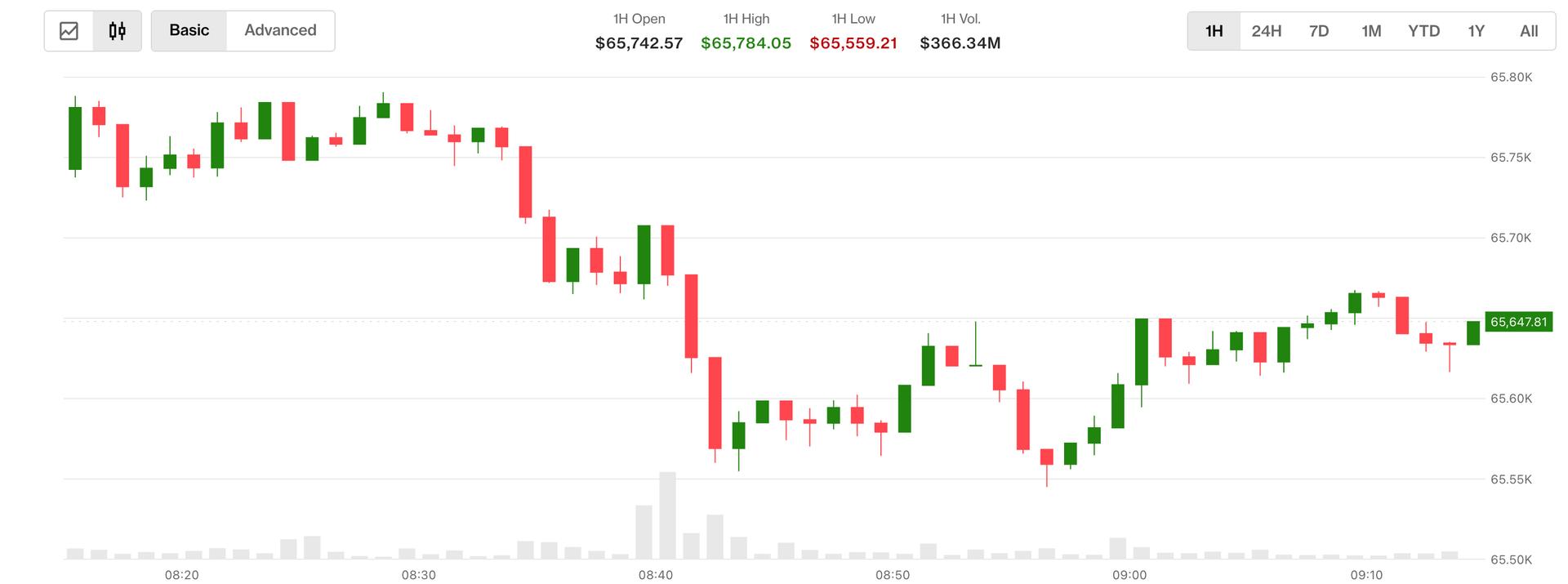
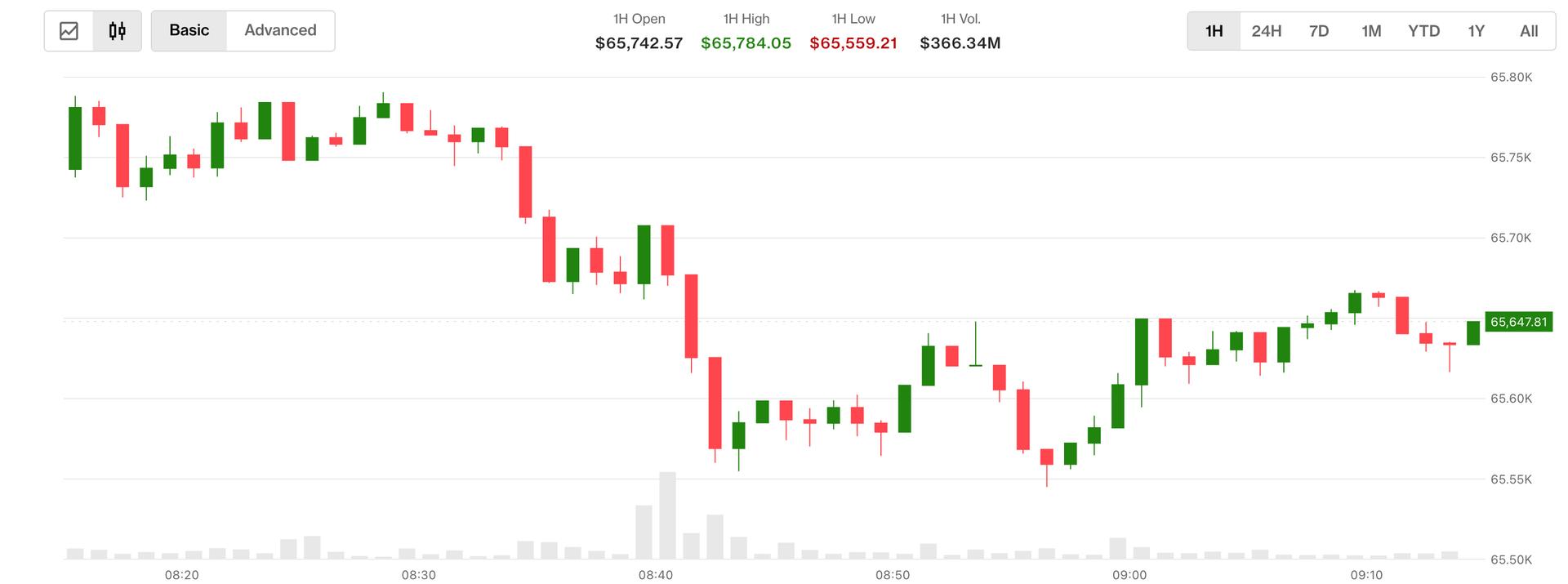
Bond markets are already reacting. The U.S. two-year Treasury yield jumped to 4.31%, its highest level since February 2025, while the benchmark 10-year yield rose to 4.66%, the highest since May, according to TradingView data. Higher yields raise the opportunity cost of holding non-yielding assets such as bitcoin and gold, often prompting investors to rotate out of speculative holdings and into fixed-income securities that now offer more attractive returns.
Adding to the cautious market sentiment, Axios reported that the U.S. military deployed a B-1 long-range bomber on Tuesday to strike targets linked to Iran’s Islamic Revolutionary Guard Corps. The use of the heavy bomber represents a clear escalation in the scale of U.S. operations and suggests Washington may be preparing for a broader campaign, rather than continuing with the more limited strikes seen in recent days.
Regulatory uncertainty persisted after a group of key Senate Democrats said the newest draft of the Digital Asset Market Clarity Act (Clarity Act) “falls short” on ethics and other critical provisions.
Betting markets on decentralized platform Polymarket reacted swiftly, with the implied odds of the Clarity Act passing tumbling from 46% to 38%.
Senate Republicans released the updated draft earlier Wednesday, which includes an ethics provision agreed to by the White House and President Donald Trump. Senator Bernie Moreno called it “the most powerful ethics language in U.S. history.


Payments-focused cryptocurrency XRP’s price has risen over 8% in five weeks and during this time, there has been a notable divergence in accumulation trends of large holders or whales and small holders.
According to on-chain data from Santiment, wallets holding between 100,000 and 100 million XRP added 2.8% more coins to their balances over the past five weeks. This accumulation by whales and sharks coincided with the token rebounding to $1.16 from $1 at the end of June, suggesting stronger hands are leaning into the current price action.
At the same time, the smallest wallets have shed 5.2% of their holdings during the same period. This capitulation by small holders stands in sharp contrast to the buying pressure from key stakeholders.
These diverging trends are bullish for XRP, according to Santiment.
“Historically, XRP price has tended to move more with key stakeholders and against the smallest retail wallets, so this split supports the bullish case behind the bounce,” the firm noted on X.
The timing aligns with several positive fundamental developments for XRP such as Improved institutional access through potential ETF products and continued utility on the XRP Ledger for payments, tokenization, and the RLUSD stablecoin, the firm explained,
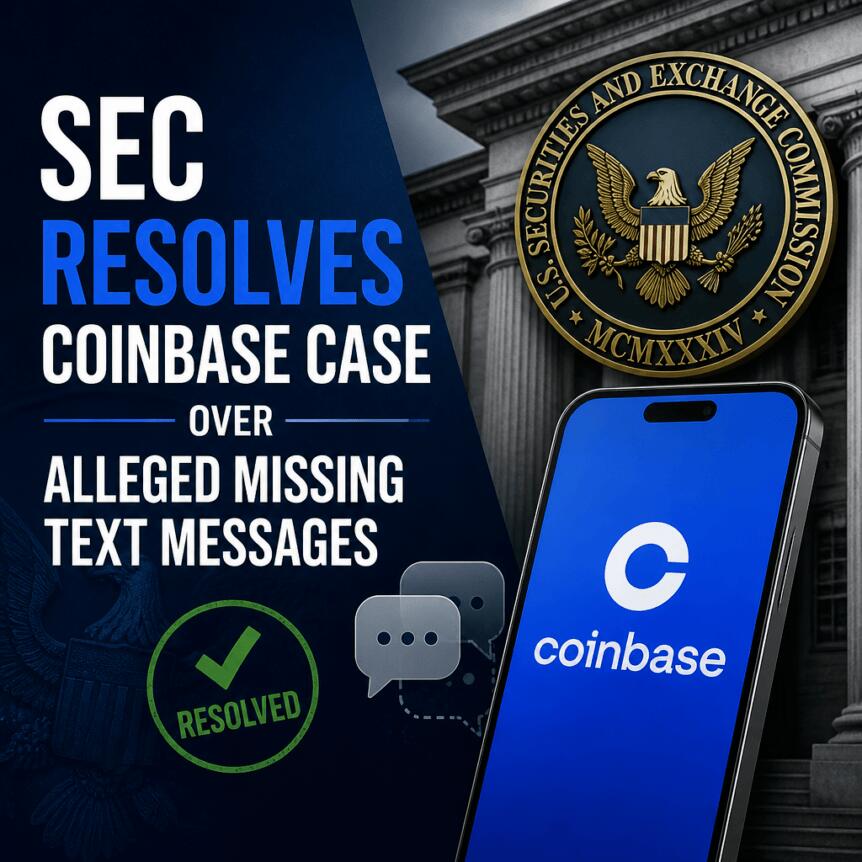
The U.S. Securities and Exchange Commission has agreed to pay $150,000 in legal fees to settle a dispute with Coinbase over the regulator’s internal records. The settlement ends a lawsuit that Coinbase filed two years ago seeking access to SEC materials related to what it described as an enforcement-led approach to crypto regulation.
According to a filing made Wednesday in the case docketed at CourtListener, the SEC will also compensate Coinbase with the fee award while stating it has addressed its record-retention practices. Coinbase’s legal chief, Paul Grewal, framed the settlement as part of a broader accountability effort over document retention inside the agency.
Key takeaways
- The SEC will pay Coinbase $150,000 to resolve the records-access lawsuit.
- The case centered on Coinbase’s request for internal SEC documents during the period of heightened crypto enforcement.
- Coinbase says the dispute helped uncover material it views as evidence of an enforcement strategy.
- Coinbase’s top legal executive announced a leadership transition to take effect on July 31.
- The settlement is also presented as reflecting a shift toward a more crypto-friendly enforcement posture at the SEC.
What the SEC–Coinbase settlement covers
The dispute arose after Coinbase sought internal agency documents from the SEC, alleging that the regulator’s recordkeeping did not provide the transparency Coinbase believed it was due. The complaint targeted access to materials that Coinbase argued were important for understanding the SEC’s approach at the time.
In coverage of the settlement, Coinbase leadership pointed to what it said were documentation and retention problems. Coinbase chief legal officer Paul Grewal wrote in a Wall Street Journal op-ed published Wednesday that the SEC—responsible for policing corporate recordkeeping—had effectively lost significant portions of its own communications during what Coinbase characterized as the SEC’s most intense period of anti-crypto activity.
Grewal also stated that the SEC has fixed its record retention policies as part of the resolution. The settlement agreement, as reflected in the docket, brings the two-year legal fight to a close.
Record retention controversy and the 2025 internal report
A central element in Coinbase’s argument was not only the availability of records, but the adequacy of the SEC’s retention of its own correspondence. The article’s account references an internal report released in 2025 indicating that the SEC deleted nearly a year of former Chair Gary Gensler texts due to “avoidable” errors.
Coinbase’s position is that such losses matter because they could prevent outside parties from obtaining a complete picture of how enforcement-related decisions were discussed inside the agency. Grewal’s op-ed also emphasized that message deletions occurred during the most aggressive phase of the SEC’s crackdown on crypto.
As part of the settlement, the SEC will pay the $150,000 fee award and has reportedly updated its record retention practices, addressing one of the core practical concerns that drove the lawsuit.
A legal win for Coinbase amid a changing SEC
Coinbase has portrayed this outcome as another favorable development in its litigation strategy. The settlement comes as the SEC’s leadership and approach to crypto enforcement have shifted.
The article notes that the settlement occurred under the Trump administration, characterizing it as a “legal victory” within a wider transition in how the SEC pursues crypto cases. It further states that under the SEC’s leadership—identified in the article as Paul Atkins—the agency has dropped multiple high-profile enforcement actions against crypto companies, including Coinbase, during 2025.
While the settlement resolves this particular records case, the broader implication for industry watchers is that disputes over enforcement process and documentation remain a recurring theme. Even as enforcement posture changes, Coinbase’s case underscores how document access, retention policies, and internal compliance practices can become legally consequential.
Grewal steps back from Coinbase’s legal role
Coinbase’s legal leadership is also in transition. According to the article, Paul Grewal, who has served as chief legal officer since 2020, is set to transition into an advisory role starting July 31.
The article says Coinbase will elevate two executives into expanded leadership roles: Molly Abraham will become general counsel, and Ryan VanGrack will move into the position of vice chair.
For observers, the timing matters because legal strategy has been central to Coinbase’s relationship with regulators. Leadership continuity—via internal promotions—suggests the company plans to maintain institutional knowledge as it navigates the ongoing evolution of U.S. crypto oversight.
As the settlement takes effect, the next question for market participants is how the SEC’s updated retention practices will function in practice and whether similar records disputes emerge elsewhere—especially as enforcement priorities continue to evolve under the current SEC leadership.


Pump.fun said Wednesday it added support for trading tokens tied to Robinhood's blockchain, a move that comes as a memecoin modeled on the brokerage's old mascot has posted quadruple-digit percentage gains on the week-old network. "Robinhood tokens are now available to trade on the Pumpfun app!"… Read the full story at The Defiant


Crypto exchange AscendEX ceased operations effective July 1, 2026, and moved all withdrawal requests to manual review starting July 6, according to a notice posted on its website addressed to retail account holders. The exchange cited the European Union's Markets in Crypto-Assets Regulation (MiCA),… Read the full story at The Defiant


Bitwise Chief Investment Officer Matt Hougan named 2 crypto bets he views as well-positioned for the next bull market. He pointed to revenue-generating crypto apps and established firms building on blockchain rails.
Hougan tied both bets to what he calls the convergence of onchain and traditional finance. He stated that stablecoins, tokenization, and around-the-clock trading will lead the cycle.
Bitwise’s CIO Names Best Positioned Investments for the Next Crypto Bull Market
The first lane covers crypto applications with real revenue and tokenomics that tie token value to usage. Hougan cited Hyperliquid (HYPE) as the model.
Hyperliquid runs a Layer 1 blockchain and hosts a perpetual futures trading platform. The platform is on track to generate close to $800 million in annual revenue this year. It directs almost all of that into buying back HYPE.
Notably, this model has worked out well for the altcoin. Hougan stressed that HYPE has climbed about 146% this year despite the broader crypto downturn, citing real platform growth as the driver.
“I think the token could double in price and still be fairly valued,” he said. “Over time, I believe a new wave of crypto assets will copy HYPE’s tokenomics and introduce exciting ‘next-gen’ token opportunities.”
The executive also named Uniswap (UNI), Aave (AAVE), and Morpho (MORPHO) as existing protocols moving toward tying token value to usage.
Follow us on X to get the latest news as it happens
The TradFi Side of the Bet
The second lane covers established companies running crypto at scale rather than small pilots. Hougan pointed to Robinhood as the clearest example.
Robinhood launched its own blockchain on July 1. BeInCrypto reported that the chain has seen notable growth and ranks among the top 5 days by DEX volume.
“Robinhood is learning 10,000x more from a live chain in 120 countries than any pilot could teach it,” Hougan noted.
However, he conceded that much of the early activity on Robinhood’s chain involves meme coins rather than tokenized stocks. The executive expects stock volume and users to scale over time
Hougan also flagged Coinbase, Figure, and BlackRock as firms with real exposure. He added Visa, Stripe, and JPMorgan to the watchlist.
The Bitwise CIO affirmed that he stays bullish on Bitcoin (BTC), Ethereum (ETH), and Solana (SOL) as the broad base for any rally.
Subscribe to our YouTube channel to watch leaders and journalists provide expert insights
The post Bitwise CIO Names 2 Crypto Bets Best Positioned for the Next Bull Market appeared first on BeInCrypto.


Kraken parent Payward has partnered with fintech infrastructure provider GTN to expand its xStocks tokenized equity platform beyond U.S.-listed stocks and exchange-traded funds.
Summary
- Payward and GTN will take xStocks beyond U.S. equities, starting with Hong Kong-listed shares globally.
- GTN will provide execution, custody and record-keeping infrastructure across more than 90 international financial markets.
- xStocks has grown past 500 tokenized assets and $37 billion in transaction volume since launch.
The companies will start with equities listed in Hong Kong before targeting the UK, Europe, South Korea and other markets. The expansion will depend on local regulatory approvals and licences, according to a July 22 announcement from Payward. The partnership could also bring other asset classes to xStocks over time.
GTN will provide the traditional market infrastructure that supports the next phase of xStocks. Its services include execution, custody, ledgering and record-keeping across more than 90 markets. Payward will continue to provide the tokenization framework that creates blockchain-based versions of the underlying assets.
The companies chose Hong Kong as the first market for the international expansion. They plan to add UK-listed shares, European securities and South Korean assets later. GTN also plans to offer xStocks to institutional clients once it secures the required licences in each market.
Mark Greenberg, Global Head of Payward Services, said traditional capital markets still separate investors by geography, currencies and trading hours.
“For decades, we’ve accepted that capital markets should be fragmented by country, currency, and market hours,” Greenberg said. “The biggest asset class that hasn’t been tokenized yet is the rest of the world, and our partnership with GTN is about changing that.”
GTN brings infrastructure across more than 90 markets
GTN will connect xStocks with its global execution and custody network through one infrastructure layer. The arrangement gives Payward a route into international markets without building separate traditional finance systems for every country.
Ankit Shah, Global Head of FinTech at GTN, said financial firms want access to new markets without rebuilding their technology for each expansion. He said GTN’s infrastructure can support Payward across more than 90 markets while providing the sub-accounting systems needed for tokenized products.
The companies said the partnership has already started, although GTN must secure regulatory approvals before distributing xStocks to its institutional clients. Payward also said the expanded assets could become available across more than 100 exchanges, wallets and decentralized finance applications that already support the xStocks ecosystem.
The international expansion comes as tokenized equities continue attracting more trading activity. As crypto.news reported, tokenized stock transfer volume reached $8.41 billion during a recent monthly period, while distributed value climbed to about $2.16 billion. xStocks ranked among the largest platforms in the sector at the time.
Payward expands xStocks beyond basic stock exposure
Payward says xStocks now includes more than 500 tokenized assets spanning equities, ETFs and IPO-related products. The company reports more than $37 billion in total transaction volume and nearly 200,000 holders worldwide. Each xStock uses underlying securities to maintain 1:1 backing.
The platform has also added more uses for tokenized equities during 2026. As previously reported, Kraken began allowing eligible clients to use selected xStocks as collateral for futures and margin positions. The change lets qualifying traders maintain exposure to tokenized stocks while using the assets to support other positions.
Payward has also moved xStocks into IPO access. Crypto.news reported in June that eligible Kraken users and xStocks Alliance members could register interest in U.S.-listed IPO allocations and receive tokenized shares after listing.
The company expanded its control over the technology behind xStocks after agreeing to acquire Backed Finance in December 2025. Payward completed the acquisition in January 2026, according to its first-quarter financial update.
Tokenized equity competition continues to grow
Payward’s international push comes as more crypto companies and traditional market firms compete in tokenized equities. Ondo, Robinhood, Coinbase, Backpack and other platforms have expanded their own products, while exchanges and clearing firms are also testing blockchain-based securities infrastructure.
As crypto.news recently reported, competition now includes different models for moving public shares onchain. Some products offer tokens backed by securities held with custodians, while other projects aim to issue or record the securities themselves through regulated blockchain systems.
Regulatory questions remain part of that expansion. A separate crypto.news report said U.S. securities transfer groups had asked the Securities and Exchange Commission to draw clearer distinctions between issuer-backed tokenized securities and products created by third parties.
Payward and GTN will now focus on securing the approvals needed to expand xStocks into additional markets. Hong Kong will serve as the first planned step, followed by other major financial regions. The partnership also gives Payward infrastructure that could support tokenized assets beyond equities as the platform expands its international product range.
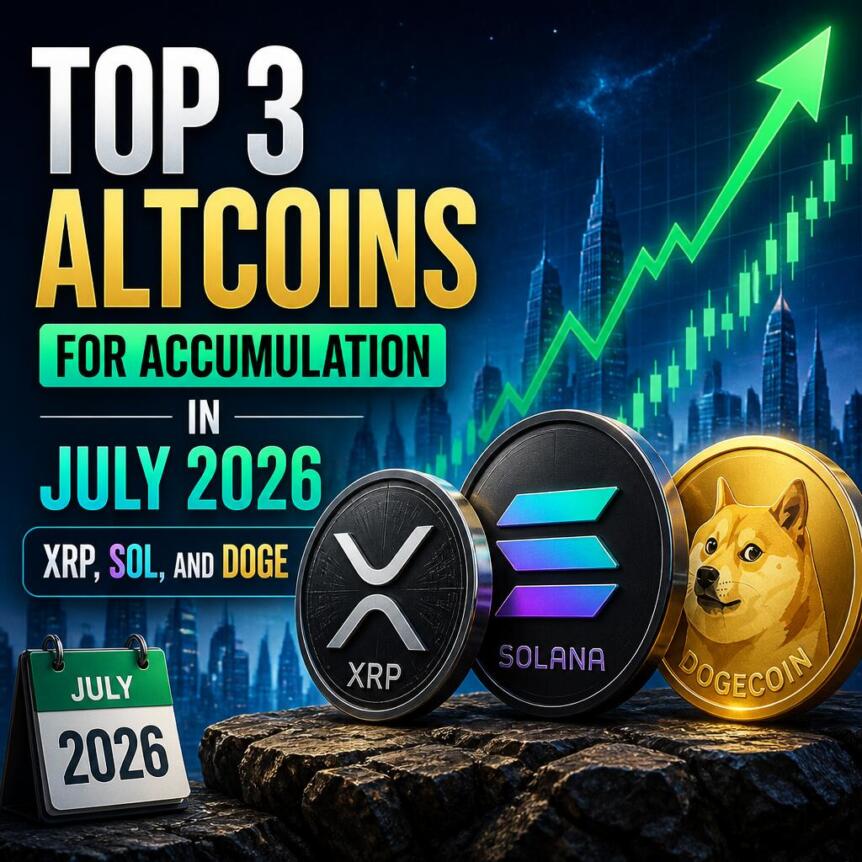
Learn the top 3 altcoins that one should accumulate in July 2026. Get to know how XRP, Solana (SOL), and Dogecoin (DOGE) stand out because of their institutional adoption, updates, and growth prospects.
Key Insights
- XRP is still reaping the benefits of increased institutional adoption, regulatory support, and ETF options.
- The Alpenglow update on Solana will increase the speed and efficiency of the network.
- Dogecoin will be sustained by its huge community, ETF expectations, and integration with X Payments.
- Market correction periods will offer excellent accumulation chances for long-term investors.
XRP: Institutional Interest Keeps Powering Up the Altcoin
XRP is still one of the dominant cryptocurrencies centered around cross-border payments and financial settlements. Ripple continues adding new banks, payment service providers, and financial firms to the list of its partners in several geographic locations, which keeps supporting XRP’s presence in the global payments space.
The regulatory picture has improved drastically. The SEC’s decision not to press its appeal was one of the biggest risks hanging above XRP. After that point, investor sentiment became much more positive because some XRP exchange-traded funds (ETFs) have been approved in several foreign countries.
Institutional interest has kept growing, but not only through ETFs. The Central Bank of Singapore has tested the technology of financial settlement on the XRP Ledger, which shows increased confidence in blockchain-based payments infrastructure. All of these factors make XRP an interesting long-term investment because they add utility to the cryptocurrency rather than just speculation. Technically speaking, XRP stays close to significant exponential moving averages.
Solana (SOL): Alpenglow Upgrade Can Boost Network Development
The Solana platform has been proving itself to be a serious competitor to Ethereum with higher transaction speeds and reduced fees. The platform remains active in attracting various developers to create DeFi protocols, games, NFTs, and other consumer applications.
The largest driver of Solana network development can be seen in an upgrade known as Alpenglow, created by Anza, the Solana Labs spinoff. This consensus protocol upgrade will replace Proof of History and Tower BFT with two new solutions called Votor and Rotor.
In particular, Votor should finalize all transactions within 100–150 milliseconds, while Rotor will boost transmission of data across the network of validators. These innovations may positively affect network performance, scalability, and other parameters.
With more decentralized apps launched on the Solana network, there could appear additional activity that can lead to increasing demand for SOL tokens. Solana remains among the most watched and promising blockchain projects for 2026.
Dogecoin (DOGE): Community Strength And Emerging Catalysts
Dogecoin is still the biggest and best-known meme cryptocurrency in terms of market presence and community activity. Despite being created as a joke, DOGE has remained relevant for many cycles and still attracts attention from retail investors.
The recent macroeconomic environment has helped Dogecoin trade in a range amid market volatility. Market participants keep monitoring important levels and trying to understand what the next step will be.
There are also several catalysts that support a long-term positive outlook on DOGE. Investors expect the creation of ETF products related to Dogecoin, and speculation about integrating X Payments has raised the possibility of using Dogecoin as a daily payment method.
Together with one of the largest communities in the whole crypto industry, these factors help Dogecoin remain relevant from a long-term perspective.
Why Are These Altcoins Special This July
There is a unique investing story behind each of these cryptocurrencies. XRP benefits from growing adoption by institutions and improving regulation. Solana keeps developing with big technology updates and increased developer participation. The uniqueness of Dogecoin comes from a combination of its great community along with new factors like payments and ETF.
Despite volatility in cryptocurrency trading, people tend to use such moments to acquire assets with good fundamentals. Those who want exposure to different parts of the crypto space, such as payments, smart contracts, and community-based tokens, can focus on XRP, SOL, and DOGE as altcoins to watch this July.


The U.S. cryptocurrency industry directly employs about 34,000 people and supports an estimated 232,000 jobs across the broader economy, according to a new report commissioned by the National Cryptocurrency Association.
Summary
- NCA estimates U.S. crypto directly employs 34,000 people while supporting 232,000 jobs economywide in 2026.
- The report projects crypto will contribute $55 billion to U.S. GDP and $31 billion income.
- California and New York lead supported employment, while engineering remains crypto’s largest direct occupational group.
The study also estimates that crypto-related activity will contribute more than $55 billion to U.S. gross domestic product in 2026.
Pragmatic Policy Group conducted the analysis for the NCA, which funded the research. The report separates direct jobs at crypto companies from jobs supported through suppliers and worker spending. It estimates that about $31 billion of the industry’s total economic contribution flows to workers as income.
The report places direct employment at crypto companies at 34,000 full-time equivalent jobs in 2026. Software, blockchain and data engineering form the largest direct job group, with about 10,100 roles. Compliance, finance and business operations account for another 5,450 positions, while executives and managers make up about 5,100.
The study compares the direct crypto workforce with several traditional industries. It lists 28,400 jobs in coffee and tea manufacturing, 15,300 in cement manufacturing and 10,600 in tobacco manufacturing. Most benchmark figures come from 2024 Bureau of Labor Statistics data, while the crypto estimate covers 2026. The report also puts the average annual wage across all supported jobs at $133,000, versus a $64,000 national median.
Within direct employment, the study also counts 2,470 sales and business development roles, 1,480 hardware and systems engineering jobs, and 1,160 legal and regulatory positions across the industry.
Most supported jobs sit outside crypto companies
The 232,000 total includes 75,000 jobs in supplier industries and another 123,000 jobs linked to worker spending. The report says every direct crypto job supports about six other jobs across the broader U.S. economy. These roles can include workers in cloud services, legal services, insurance, housing, transportation and restaurants.
The total therefore does not represent 232,000 people employed by crypto businesses. The report’s appendix says the figure reflects standard economic multiplier effects. It also estimates that crypto will contribute more than $55 billion to U.S. GDP in 2026, including about $31 billion in worker income. Securities, commodity contracts and investments form the largest sector in the model.
In addition, California accounts for an estimated 57,649 supported jobs, while New York accounts for 53,766. Together, the two states represent close to half of the national total. Texas follows with 26,536 jobs, while Washington has 15,097 and North Carolina has 9,524.
The report also estimates that the 12 states it defines as the Heartland support more than 17,000 jobs combined. Colorado accounts for about 5,797 supported jobs and $1.3 billion in economic contribution. These state figures include direct crypto employment, supplier jobs and positions supported through household spending rather than only payroll headcounts at blockchain companies.
Report lands amid mixed crypto hiring trends
The NCA released the study while employment trends inside individual crypto companies remain mixed. As crypto.news reported in March, Gemini, Crypto.com and Algorand were among several firms that announced workforce cuts in early 2026. More recently, Exodus cut about 25% of its workforce as it reorganized around stablecoin payments, while Polygon Labs also reduced staff during its Coinme integration.
Those company-level cuts do not directly contradict the NCA estimate because the study measures a broader economic footprint and relies on modeling rather than a live industry headcount. The model uses 2024 Bureau of Economic Analysis input-output tables, Bureau of Labor Statistics data and a $23.22 billion U.S. crypto industry revenue estimate sourced from Statista.
Because the Bureau of Economic Analysis does not classify crypto as a standalone industry, Pragmatic Policy Group mapped crypto businesses into existing sectors. The report says it allocated most financial-related crypto revenue to securities and commodity contracts, with a smaller share assigned to data processing and internet publishing. The model also assumes that 2024 production relationships remain in place.
The NCA funded the research, while Pragmatic Policy Group described the work as independent analysis. NCA President and Ripple Chief Legal Officer Stuart Alderoty called the sector a “real, positive” contributor to American jobs, wages and economic growth. As crypto.news previously reported, a separate NCA survey estimated that more than 67 million U.S. adults now own crypto.
The report gives two different measures of the industry’s labor reach. The direct figure stands at 34,000 jobs. The broader 232,000 estimate adds supplier employment and jobs supported by worker spending across the economy.
Asia FX: Yen steadies near 40-year low; won hits 2-1/2 month high

How Morgan Rogers gives Chelsea a clear advantage and hint at how they will attack under Xabi Alonso

Franklin Templeton Sees Agentic AI as Blockchain’s Next Core Use

Renter of Home in Anne Heche Crash Denies Settlement With Son

No Jackpot Winner as $257 Million Prize Rolls Over to $269 Million Monday Draw

Weekend Open Thread: Staud – Corporette.com

Pakistan Seeks $10 Billion Financial Assistance from the US for 5 Years | Latest News | SAMAA TV

The Devil’s Door | Journalists Uncover an Ancient Evil Beneath the Border | Full HD Horror Movie

Most Humble Crypto Billionaire #267
-
 NewsBeat7 days ago
London Mayor Sadiq Khan handed a peerage by Keir Starmer alongside 15 other Labour figures… just days before the PM leaves No10
-

 Fashion5 days ago
Weekend Open Thread – Corporette.com
-

 Politics5 days ago
The House | The City of London can help the new chancellor deliver growth in every postcode
-

 Crypto World5 days ago
Ripple Payments Joins MiCA With 14 Firms, Does It Mean Anything For XRP?
-
 Crypto World6 days ago
Two July Windows Left: The CLARITY Act’s Senate Fight and What Failure Means
-

 Politics4 days ago
Democrats look to World Cup watch parties to register thousands of voters
-

 Crypto World5 days ago
Ripple wins EU-wide access as ESMA adds it to MiCA register
-

 Crypto World2 days ago
Grayscale Files For Worldcoin ETF, WLD Registers Sharp Rise
-

 NewsBeat3 days ago
Unregistered fitter used Gas Safe logo on business flyers
-

 Tech2 days ago
Sail Virtually Aboard The “Itanic” With IA-64 Emulator
-

 Crypto World6 days ago
Injective Submits SEC Transfer-Agent Registration to Onchain Ownership Records
-
 Tech2 days ago
Turtle Beach Command Series KB7 review: a nifty screen-equipped gaming keyboard
-

 NewsBeat6 days ago
Registration is now open for March for Men with Kev 2026
-
 Business1 day ago
New Jersey voter registration controversy explained: How 6,600 noncitizens got on the rolls, and what happens next
-
 Crypto World6 days ago
Claude Fable 5 Slips to Second in AI Coding Leaderboard
-

 News Videos6 days ago
Money | Class 12 Economics | CBSE Board Exam 2026-27
-

 Business6 days ago
Banco Bilbao Vizcaya Argentaria, S.A. (BBVA) Discusses Global Macro Environment and Economic Outlook for Core Markets Transcript
-

 Crypto World5 days ago
Kaspersky exposes OkoBot’s 20-module crypto wallet attack
-

 News Videos3 days ago
Big Money Is Entering XRP
-

 NewsBeat5 days ago
Durham County Council to send out electoral registration emails
You must be logged in to post a comment Login