

Business
Signs Your Business Has Outgrown Its Current eCommerce Platform


As an eCommerce business grows, the platform that once supported its operations may gradually become a limitation rather than an advantage.
What worked well during the early stages of growth may struggle to keep pace with increasing traffic, expanding product catalogs, evolving customer expectations, and more complex business operations. Unfortunately, many businesses fail to recognize these warning signs until performance issues begin affecting revenue, customer satisfaction, and operational efficiency.
Outgrowing an eCommerce platform is not necessarily a reflection of choosing the wrong solution initially. Every platform is designed with a particular audience, level of complexity, and growth stage in mind. A platform that is ideal for a small or mid-sized business may become restrictive as the organization scales, enters new markets, or introduces advanced functionality.
Recognizing when your platform has become a bottleneck is the first step toward building a stronger foundation for sustainable growth. In many cases, businesses reaching this stage begin evaluating enterprise-level solutions such as Adobe Commerce (formerly Magento), which offers greater flexibility, scalability, and customization for organizations with more sophisticated requirements.
This article explores the most common signs that your business has outgrown its current eCommerce platform and explains why addressing these limitations early can position your business for long-term success.
Your Website Slows Down as Your Business Grows
Website performance directly influences customer experience, search engine visibility, and conversion rates. As your product catalog expands and visitor numbers increase, your current platform should continue delivering fast, reliable performance without requiring constant workarounds.
If pages begin loading more slowly during seasonal promotions, marketing campaigns, or periods of high traffic, your platform may no longer be capable of handling your business’s growing demands efficiently. Customers today expect websites to respond almost instantly, and even small delays can increase bounce rates while reducing completed purchases.
Performance issues often become more noticeable as businesses introduce additional functionality such as personalized recommendations, customer segmentation, advanced search features, or third-party integrations. Instead of supporting these improvements seamlessly, an outdated or limited platform may struggle under the increased workload.
Enterprise platforms like Adobe Commerce are designed with scalability in mind, allowing businesses to accommodate significantly larger traffic volumes and product catalogs without sacrificing performance when properly optimized.
Your Product Catalog Has Become Difficult to Manage
Managing a few hundred products is very different from managing thousands or even hundreds of thousands of SKUs across multiple categories, brands, and inventory locations.
As product catalogs become more sophisticated, businesses require greater control over product attributes, configurable products, bundled offerings, inventory rules, pricing structures, and merchandising strategies. If your existing platform makes these everyday tasks unnecessarily time-consuming or requires repetitive manual work, it may no longer align with your operational needs.
A growing business should be able to introduce new products, update pricing, manage inventory, and organize categories efficiently without constantly fighting against platform limitations. When administrative tasks consume increasing amounts of staff time, productivity suffers, and growth opportunities become harder to pursue.
As catalogs continue to expand, merchandising teams also benefit from specialized tools such as a product grid checker, which helps verify that products are displayed correctly across category pages, identifies inconsistencies in product listings, and supports a more organized shopping experience for customers.
Adobe Commerce offers highly flexible catalog management capabilities that allow businesses to organize large and complex product catalogs while maintaining operational efficiency.
Customization Has Become Increasingly Difficult
Every successful eCommerce business eventually develops unique operational requirements that distinguish it from competitors. These may include specialized pricing rules, customer-specific catalogs, subscription models, advanced shipping logic, custom checkout experiences, or unique product configurations.
Many entry-level platforms perform exceptionally well when businesses follow standard workflows. But they become restrictive when organizations require functionality that pre-built themes or applications cannot provide.
If your development team frequently encounters limitations that require expensive workarounds or functional compromises, your platform may no longer support your long-term business strategy. Businesses should not be forced to adapt their operations to fit platform restrictions when the platform should instead adapt to support business objectives.
Adobe Commerce is widely recognized for its flexibility because it allows developers to build highly customized experiences that align with complex business requirements rather than relying solely on standardized templates.
You Depend on Too Many Third-Party Apps
Third-party extensions and applications can significantly enhance an eCommerce platform by adding useful functionality. However, there comes a point where relying on dozens of separate integrations introduces more complexity than value.
Each additional extension increases the potential for compatibility issues, security vulnerabilities, performance degradation, and ongoing maintenance requirements. As businesses continue layering new applications to compensate for missing native features, managing the platform becomes increasingly complicated.
Frequent software conflicts, unexpected updates, or integration failures often indicate that the underlying platform lacks the flexibility or built-in functionality required to support your evolving operations.
Enterprise platforms typically provide more robust native capabilities while also offering deeper integration possibilities with business systems such as enterprise resource planning (ERP), customer relationship management (CRM), warehouse management systems (WMS), and marketing automation platforms.
Managing Multiple Sales Channels Has Become Complicated
Modern commerce extends well beyond a single online storefront. Businesses frequently sell through marketplaces, physical retail locations, social commerce platforms, mobile applications, and international websites while expecting inventory and customer information to remain synchronized.
If managing these channels requires significant manual effort or multiple disconnected systems, your current platform may no longer support your omnichannel strategy effectively.
Growing businesses benefit from centralized management that allows inventory, pricing, customer accounts, and orders to remain consistent across every sales channel. Without this level of integration, operational inefficiencies increase while customer experiences become inconsistent.
Adobe Commerce supports more sophisticated commerce ecosystems by integrating with numerous business systems and enabling businesses to deliver unified customer experiences across multiple channels.
Your International Expansion Is Becoming More Difficult
Expanding into international markets introduces challenges that extend far beyond translating product descriptions. Businesses often require support for multiple languages, currencies, tax regulations, shipping methods, regional pricing strategies, localized content, and country-specific customer experiences.
Many smaller eCommerce platforms offer limited international functionality or require extensive customization to accommodate global operations. As expansion continues, these limitations become increasingly difficult to manage.
An enterprise platform should enable businesses to operate multiple storefronts from a centralized administration panel while maintaining flexibility for regional customization. This capability simplifies operations while allowing businesses to provide localized experiences that improve customer engagement and conversion rates optimization across international markets.
Adobe Commerce was specifically designed to support global commerce, making it a strong choice for organizations operating across multiple countries and regions.
Your Marketing Team Is Restricted by Platform Limitations
Marketing strategies continue evolving as customer expectations change and new technologies emerge. Personalization, customer segmentation, dynamic promotions, loyalty programs, AI-driven recommendations, and advanced merchandising have become increasingly important for competitive online retailers.
If your marketing team regularly discovers that desired campaigns cannot be implemented because the platform lacks necessary functionality, business growth may begin slowing despite strong marketing initiatives.
An effective eCommerce platform should empower marketing teams rather than limit their creativity. Businesses should be able to create targeted promotions, personalized shopping experiences, and sophisticated pricing rules without requiring extensive custom development for every campaign.
Adobe Commerce includes powerful merchandising and promotional capabilities that provide marketers with greater control over customer experiences while supporting more advanced personalization strategies.
Search Engine Optimization Has Become Increasingly Challenging
Organic search remains one of the most valuable sources of long-term customer acquisition, making technical SEO capabilities an essential consideration when evaluating an eCommerce platform.
As websites grow larger, businesses require greater control over URL structures, canonical tags, structured data, metadata, redirects, XML sitemaps, page performance, and crawl management. If your platform restricts these capabilities or makes technical optimization unnecessarily complicated, your search visibility may eventually suffer.
Enterprise platforms generally provide more comprehensive SEO flexibility, allowing businesses to implement advanced optimization strategies that improve search engine visibility while supporting larger and more complex website structures.
Adobe Commerce offers extensive control over technical SEO elements, making it well suited for businesses that rely heavily on organic search as part of their growth strategy.
Operational Efficiency Continues to Decline
One of the clearest indicators that a platform has reached its limits is a steady increase in manual work. Tasks that should be automated begin requiring spreadsheets, duplicate data entry, or disconnected processes that consume valuable employee time.
As order volumes increase, businesses should experience improved efficiency through automation rather than greater administrative complexity. If your staff spends increasing amounts of time correcting inventory discrepancies, manually updating customer information, or reconciling orders between different systems, the platform may no longer support efficient operations.
Modern enterprise commerce solutions emphasize automation and integration because reducing operational friction allows businesses to focus on strategic growth rather than repetitive administrative tasks.
Security and Compliance Requirements Have Become More Complex
As businesses grow, security responsibilities become increasingly important. Customers expect their personal information and payment data to be protected through modern security practices, while businesses must also comply with evolving industry regulations and data protection standards.
Smaller platforms may provide sufficient security for basic operations, but growing organizations often require stronger access controls, advanced user permissions, improved monitoring capabilities, and more sophisticated infrastructure management.
Adobe Commerce provides enterprise-grade security features and supports businesses with more demanding compliance and governance requirements, making it a suitable choice for organizations handling larger transaction volumes and sensitive customer data.
Your Development Roadmap Is Constantly Delayed
Technology should enable innovation rather than prevent it. When development teams consistently postpone new features because the underlying platform cannot support them efficiently, the business risks falling behind competitors.
Whether introducing subscription services, B2B functionality, AI-powered personalization, advanced checkout experiences, or custom integrations, businesses should be able to execute their digital strategy without repeatedly encountering technical limitations.
A flexible platform provides developers with the tools necessary to build new capabilities while maintaining long-term stability, allowing innovation to become part of ongoing business growth instead of a recurring technical challenge.
The Total Cost of Ownership Is Increasing Instead of Decreasing
Many businesses initially choose a platform because of its affordable monthly pricing, only to discover that long-term operating costs increase substantially as the business grows.
These additional expenses may include premium applications, custom development, integration maintenance, performance optimization, manual labor, security management, and ongoing workarounds that compensate for missing functionality.
Evaluating platform costs should extend beyond subscription fees alone. Businesses should consider the total cost of ownership, including operational efficiency, scalability, maintenance, customization, and future growth potential.
Although enterprise platforms often require greater initial investment, they frequently provide stronger long-term value by reducing operational complexity while supporting continued business expansion.
When Adobe Commerce Becomes the Right Choice
Not every growing business requires an enterprise eCommerce platform, and migrating too early can introduce unnecessary complexity. However, organizations experiencing multiple challenges discussed throughout this article often benefit from evaluating whether their existing platform still aligns with their strategic objectives.
Adobe Commerce is particularly well suited for businesses that manage complex product catalogs, operate across multiple markets, require extensive customization, support both B2C and B2B customers, or expect significant future growth. Its flexibility, scalability, extensive API capabilities, robust merchandising tools, and enterprise-grade architecture make it a strong option for organizations seeking a platform that can evolve alongside their business rather than limit its potential.
A successful migration is not simply about replacing software. It represents an opportunity to improve website performance, modernize customer experiences, streamline operations, strengthen SEO, and build a digital commerce infrastructure capable of supporting the next stage of growth.
Is Your eCommerce Platform Ready?
Outgrowing an eCommerce platform is often a positive milestone because it reflects business growth, increasing customer demand, and expanding operational complexity. However, continuing to rely on a platform that no longer supports these evolving requirements can gradually limit performance, reduce efficiency, and restrict future opportunities.
Businesses should regularly evaluate whether their platform continues to align with their long-term objectives rather than waiting for serious performance issues or operational challenges to emerge. By recognizing warning signs early and investing in a scalable solution when the time is right, organizations can create a stronger technological foundation that supports innovation, enhances customer experiences, and enables sustainable growth.
For businesses that have reached this stage, Adobe Commerce offers the flexibility, scalability, and enterprise capabilities required to support increasingly sophisticated eCommerce operations while providing room for continued expansion in the years ahead.


The author is a director at a small Boston-based software company where he oversees India operations across HR, finance, and business development. His broader professional background spans entrepreneurship, operations, and management across multiple industries. Earlier in his career, he was involved in building out a bottled beverages plant, reflecting a longstanding interest in business building, execution, and commercial strategy. He also holds a PhD in history and teaches part-time at a local college, bringing a research-driven and analytical perspective to both his professional and investing workHe has been investing in U.S. equities for nearly two decades, having started well before international access to U.S. markets became commonplace for Indian investors. Over time, he has developed a style that sits between value and growth. He is most interested in businesses where long-term earnings potential, competitive positioning, or strategic optionality are not yet fully reflected in the stock price. His work is grounded in valuation, but he also looks closely at business quality, management execution, industry structure, and the durability of growth.His primary sector focus is software, IT, and AI, including the growing application of AI across industries such as healthcare. He is especially interested in companies with scalable models, improving economics, and the ability to compound earnings over time. At the same time, his interests are not limited to technology. He also follows real estate-related opportunities, including REITs, and remains open to writing on other sectors where the investment case is compelling.On Seeking Alpha, he aims to write thoughtful, research-based articles that combine business analysis with valuation discipline. His goal is not simply to identify attractive stories but to assess whether the market is mispricing risk, growth, or long-term earnings power. He writes to share well-reasoned ideas with serious investors, refine his own thinking through public analysis, and contribute to a more disciplined discussion around investing. The author is associated with another Seeking Alpha analyst – Dr. Manimala M.
Analyst’s Disclosure: I/we have no stock, option or similar derivative position in any of the companies mentioned, and no plans to initiate any such positions within the next 72 hours. I wrote this article myself, and it expresses my own opinions. I am not receiving compensation for it (other than from Seeking Alpha). I have no business relationship with any company whose stock is mentioned in this article.
Seeking Alpha’s Disclosure: Past performance is no guarantee of future results. No recommendation or advice is being given as to whether any investment is suitable for a particular investor. Any views or opinions expressed above may not reflect those of Seeking Alpha as a whole. Seeking Alpha is not a licensed securities dealer, broker or US investment adviser or investment bank. Our analysts are third party authors that include both professional investors and individual investors who may not be licensed or certified by any institute or regulatory body.
Business
Only Four Countries Now Host Trillion-Dollar Companies in 2026 as AI Boom Reshapes Global Wealth Map

A small and increasingly exclusive club of nations is now home to the world’s most valuable public companies, as a historic run in artificial intelligence spending pushes corporate valuations to levels once considered unthinkable.
As of late July 2026, roughly a dozen publicly traded companies carry market capitalizations above $1 trillion, and only four countries can claim to host them: the United States, Taiwan, South Korea and Saudi Arabia. The lineup reflects a global economy increasingly organized around semiconductors, cloud computing and the artificial intelligence infrastructure race, with chipmakers and technology platforms crowding out nearly every other industry from the top of the rankings.
The United States still dominates
America remains the undisputed center of the trillion-dollar economy. Nvidia, the AI chip designer, has emerged as the world’s single most valuable company, with a market capitalization exceeding $5 trillion. The Santa Clara, California-based firm’s graphics processing units have become the backbone of AI data centers worldwide, and its rise has been one of the fastest wealth creation stories in stock market history. Nvidia crossed the $1 trillion threshold in 2023 and the $4 trillion mark just two years later, in July 2025, before continuing its climb this year.
Apple and Alphabet, Google’s parent company, both sit above $4 trillion, while Microsoft and Amazon remain comfortably in the trillions as well. Rounding out the American contingent are Broadcom, Meta Platforms, Tesla, drugmaker Eli Lilly, memory-chip manufacturer Micron Technology, and Warren Buffett’s Berkshire Hathaway — the lone non-technology name on the list and the only company built primarily on insurance and diversified holdings rather than software or silicon.
That gives the United States roughly 11 companies above the trillion-dollar line, by far the largest concentration in the world. Analysts tracking global market capitalization say American firms account for the overwhelming majority of value among the world’s top 50 and top 100 public companies, a dominance built on decades of tech-sector leadership that has only accelerated since the generative AI boom began in 2023.
Taiwan’s chip giant joins the ranks
Taiwan Semiconductor Manufacturing Company, commonly known as TSMC, has become Asia’s first trillion-dollar company and remains the most valuable business based outside the United States, with a market capitalization above $2 trillion. TSMC manufactures advanced chips for Nvidia, Apple and nearly every other major technology company, making it one of the most systemically important firms in the global electronics supply chain. Its dominance in cutting-edge chip fabrication has made Taiwan a focal point of both the AI investment boom and broader geopolitical tension over semiconductor supply chains.
South Korea enters the club — twice
South Korea has become the newest entrant to the trillion-dollar tier, and it arrived with two companies rather than one. Samsung Electronics crossed the $1 trillion threshold for the first time this year, becoming just the second Asian company to do so after TSMC. The milestone came amid a sharp rally in chip stocks tied to surging demand for high-bandwidth memory used in AI servers, with Samsung shares jumping more than 15% in a single session in May after the company reported an eightfold increase in quarterly operating profit.
SK Hynix, Samsung’s domestic rival in memory chips, also joined the trillion-dollar tier this year. The combined value of the two South Korean chipmakers has, at times, surpassed the combined market capitalization of China’s two largest internet companies, Alibaba and Tencent, according to data reported by Bloomberg in February — a shift that underscored how the AI-driven memory chip boom has reordered valuations across Asian technology markets. The rally has also helped push South Korea’s benchmark Kospi index above 7,000 points for the first time.
Saudi Arabia’s oil giant remains the outlier
Saudi Aramco, the state-controlled oil producer, continues to hold its position as the world’s most valuable non-U.S., non-technology company, with a market capitalization near $1.7 trillion. Aramco went public on the Saudi Exchange in December 2019 in what remains the largest initial public offering in history, and it remains the only trillion-dollar company built primarily around fossil fuel production rather than software, chips or consumer technology. The Saudi government owns roughly 90% of the company, with the country’s sovereign wealth fund holding a significant additional stake.
A narrower club than before
The current four-country lineup is notably narrower than it was just a few years ago, when Chinese internet giants such as Alibaba and Tencent regularly featured among the world’s most valuable companies. Their retreat from the trillion-dollar tier reflects a broader shift in investor enthusiasm away from Chinese consumer internet platforms and toward the chipmakers and cloud infrastructure providers powering the AI buildout in the U.S., Taiwan and South Korea.
Market analysts note that membership in the trillion-dollar club is fluid. Companies can drop below the threshold during downturns and climb back above it as investor sentiment shifts, meaning the list of countries represented could expand or contract in the months ahead. Walmart, for instance, has approached the trillion-dollar threshold from below in recent months, and further gains in retail or other sectors could eventually add a wider range of industries — and potentially additional countries — to the list.
For now, though, the story of the trillion-dollar economy remains a story about semiconductors and artificial intelligence. Nine of the roughly dozen companies above the threshold are directly tied to AI chips, cloud computing or the software platforms built on top of them. The exceptions — Berkshire Hathaway, Eli Lilly and Saudi Aramco — stand as reminders that insurance, pharmaceuticals and energy can still produce world-beating valuations, even in a market increasingly defined by silicon.
With earnings season underway across major exchanges, investors are watching closely for signs of whether the AI-fueled rally that has lifted Nvidia, TSMC, Samsung and their peers can be sustained, or whether the trillion-dollar club will see further reshuffling before the year is out.

US aimed to send envoys to Brazil to question its electoral system – sources


I am Gen Alpha. I have more than 14 years of investment experience, and an MBA in Finance. I focus on stocks that are more defensive in nature, with a medium- to long-term horizon. I provide high-yield, dividend growth investment ideas in the investing group iREIT®+HOYA Capital. The group helps investors achieve dependable monthly income, portfolio diversification, and inflation hedging. It provides investment research on REITs, ETFs, closed-end funds, preferreds, and dividend champions across asset classes. It offers income-focused portfolios targeting dividend yields up to 10%. Learn more.
Analyst’s Disclosure: I/we have a beneficial long position in the shares of TPG either through stock ownership, options, or other derivatives. I wrote this article myself, and it expresses my own opinions. I am not receiving compensation for it (other than from Seeking Alpha). I have no business relationship with any company whose stock is mentioned in this article.
I am not an investment advisor. This article is for informational purposes and does not constitute as financial advice. Readers are encouraged and expected to perform due diligence and draw their own conclusions prior to making any investment decisions.
Seeking Alpha’s Disclosure: Past performance is no guarantee of future results. No recommendation or advice is being given as to whether any investment is suitable for a particular investor. Any views or opinions expressed above may not reflect those of Seeking Alpha as a whole. Seeking Alpha is not a licensed securities dealer, broker or US investment adviser or investment bank. Our analysts are third party authors that include both professional investors and individual investors who may not be licensed or certified by any institute or regulatory body.


The Investment Doctor is a financial writer, highlighting European small-caps with a 5-7 year investment horizon. He strongly believes a portfolio should consist of a mixture of dividend and growth stocks.
He is the leader of the investment group European Small Cap Ideas which offers exclusive access to actionable research on appealing Europe-focused investment opportunities not found elsewhere. The a focus is on high-quality ideas in the small-cap space, with emphasis on capital gains and dividend income for continuous cash flow. Features include: two model portfolios – the European Small Cap Ideas portfolio and the European REIT Portfolio, weekly updates, educational content to learn more about the European investing opportunities, and an active chat room to discuss the latest developments of the portfolio holdings. Learn more.
Analyst’s Disclosure: I/we have a beneficial long position in the shares of BAC either through stock ownership, options, or other derivatives. I wrote this article myself, and it expresses my own opinions. I am not receiving compensation for it (other than from Seeking Alpha). I have no business relationship with any company whose stock is mentioned in this article.
I also have a long position in BAC.PR.B and BAC.PR.L
Seeking Alpha’s Disclosure: Past performance is no guarantee of future results. No recommendation or advice is being given as to whether any investment is suitable for a particular investor. Any views or opinions expressed above may not reflect those of Seeking Alpha as a whole. Seeking Alpha is not a licensed securities dealer, broker or US investment adviser or investment bank. Our analysts are third party authors that include both professional investors and individual investors who may not be licensed or certified by any institute or regulatory body.

Lauren Simonetti breaks down the impact of the US-Iran conflict on global shipping and oil prices, noting public frustration with escalating gas costs. She highlights how many Americans expect the conflict to last over a year.
The fuel most Americans never think about could become the Iran conflict’s biggest economic consequence. While gasoline prices grab headlines, diesel quietly powers the trucks, farms, freight trains and heavy equipment that keep the U.S. economy moving.
From the groceries on supermarket shelves to the Amazon package on your doorstep and the materials used to build new homes, diesel is embedded in nearly every step of the supply chain. As prices rise, businesses face higher transportation costs that economists say often ripple through the economy, pushing up the cost of everyday goods.
Diesel prices, which averaged $3.56 a gallon in January 2025, have climbed to $5.13 following the Iran conflict, according to the U.S. Energy Information Administration.
A fully loaded semi-truck typically gets just 6 to 7 miles per gallon of diesel, according to Department of Energy data. Filling its roughly 250-gallon tanks can cost more than $1,280 at today’s prices.
BBQ LOVERS BEWARE: MIDDLE EAST CONFLICT MIGHT DISRUPT YOUR SUMMER PLANS THIS YEAR
“We all focus on gasoline because, ultimately, we’re consumers and pump prices are very visible. But what we don’t think about is the price of diesel, which is the workhorse fuel for the U.S. economy and especially for key sectors,” Bernard Yaros, lead U.S. economist for Oxford Economics, told Fox News Digital.
“From an inflationary perspective, I’m very concerned about the recent rise in diesel prices as it pertains to the cost of food or grocery store prices,” Yaros said.
“Take the food industry, for instance. Diesel powers the irrigation pumps, the tractors in the field and the trucks that bring food from the farm to your local grocery store. It’s part of every layer of food production in the U.S.”
‘KEEP A LOW PROFILE’: STATE DEPARTMENT WARNS AMERICANS OVERSEAS THEY COULD BE TARGETED

A person is seen grabbing the nozzle for diesel fuel at a gas station. (Rebecca Noble/Bloomberg/Getty Images / Getty Images)
An energy industry source, who requested anonymity because they were not authorized to speak publicly, said the recent diesel surge shows how geopolitical conflicts can quickly filter into the broader economy.
“The great majority of the price movement that you’ve seen in diesel markets over the last five months has been the direct result of the conflict in Iran and specifically the closure of the Strait of Hormuz,” the source told Fox News Digital.
The Strait of Hormuz, a narrow waterway between Iran, Oman and the United Arab Emirates, is one of the world’s most important energy chokepoints. Roughly 20 million barrels of oil pass through it each day, and disruptions can quickly tighten fuel supplies and drive diesel prices higher.
WHY THE STRAIT OF HORMUZ MATTERS AS TRUMP ISSUES FRESH ULTIMATUM TO IRAN
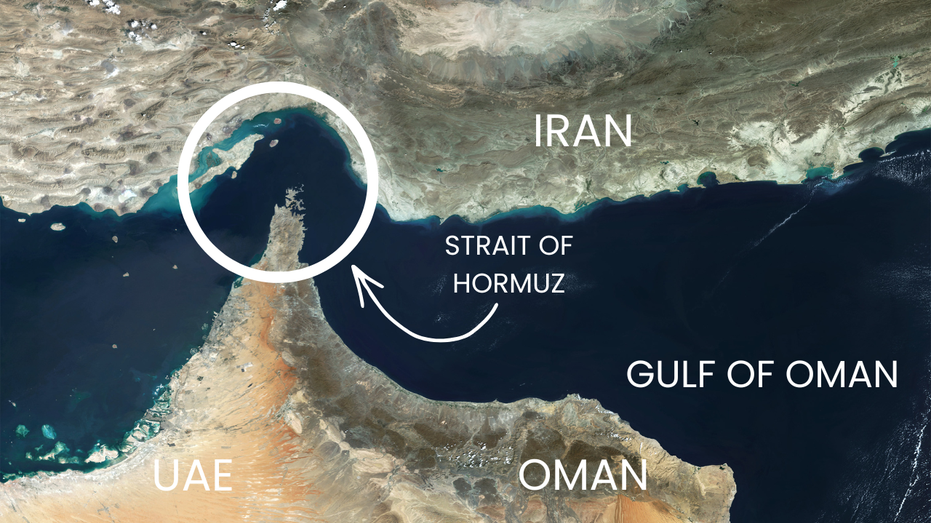
A satellite image shows the Strait of Hormuz, a key maritime passage connecting the Persian Gulf to the Gulf of Oman, vital for global energy supply. (Amanda Macias/Fox News Digital / Getty Images)
Even if tensions in the Middle East ease, diesel prices may not quickly return to pre-conflict levels.
“Refineries don’t process crude instantaneously,” the source said. “A lot of times what you’re filling up your car with today was refined a week and a half ago and was produced two months before that.”
That lag means higher diesel costs can continue working their way through the economy even after crude oil prices stabilize, leaving consumers to pay more for groceries, deliveries and other everyday goods long after the headlines from the Middle East begin to fade.

Rotate to China: BCA tips 3-month reversion trade away from South Korea stocks

Blue-Chip 12% Yields: Why I Give Hercules Capital The Edge Over Trinity Capital
Business
10 Things You Must Know About the 2026 Tour de France as Pogacar Nears Historic Fifth Title in Paris

Tadej Pogačar is on the verge of one of the most dominant performances in modern Tour de France history, with the Slovenian all but locking up his fifth yellow jersey as this year’s race enters its final two days. Here are 10 things to know about the 2026 edition of cycling’s biggest event.
1. The race started in Spain for just the third time ever
The 113th Tour de France opened in Barcelona on July 4, marking the first time the Grand Départ has been held in Catalonia and only the third time Spain has hosted the race’s start, following San Sebastián in 1992 and Bilbao in 2023. Barcelona is the most southerly city ever to launch the Tour. Race director Christian Prudhomme said the route was built to keep the overall competition unsettled deep into the final week. “It’s designed to maintain the suspense until the end,” Prudhomme said when the route was unveiled last October.
2. It opened with an unusual team time trial
Stage 1 featured a 19.7-kilometer team time trial through Barcelona, including two climbs up Montjuïc — a rare choice for a Tour opener. It was the first time the race began with a team time trial since 1971, when Eddy Merckx’s Molteni squad won an 11-kilometer test in Mulhouse. This year’s version also introduced a new scoring wrinkle: rather than every rider on a team receiving the same time, each individual’s own time counted toward the general classification. Jonas Vingegaard’s Visma–Lease a Bike squad won the stage.
3. The route covers 3,333 kilometers and finishes in Paris
Running from July 4 to July 26, the race spans 21 stages and roughly 3,333 kilometers, with about 54,450 meters of total climbing — a genuine test of endurance built around the Pyrenees, the Massif Central, the Vosges and the Alps. After skipping northern France almost entirely this year, the route finishes, as it has since last year, beneath the Arc de Triomphe following three ascents of the cobbled Rue Lepic in Montmartre.
4. Pogačar has been nearly untouchable
The UAE Team Emirates–XRG rider seized the yellow jersey on stage 3 with a decisive move on the climb to Les Angles and never relinquished it. He extended his advantage through the Pyrenees, the Massif Central and the Alps, and comfortably held off his closest challengers in the race’s lone individual time trial. Pogačar is chasing his fifth Tour title in six years, a run interrupted only by Vingegaard’s back-to-back victories in 2022 and 2023.
5. His stage-win total is closing in on cycling history
Pogačar’s victory atop the brutal, mountain-heavy 20th stage — his fourth stage win of this year’s race — pushed his career Tour de France stage tally to 24, leaving him one shy of the all-time record shared among the sport’s most prolific winners. With one more opportunity in Paris on the final day, Pogačar has a chance to add to that mark before the race concludes.
6. Remco Evenepoel has emerged as the clearest challenger
While Vingegaard entered the race as Pogačar’s most credible rival, a crash mid-race dropped the Dane out of serious GC contention. Belgium’s Remco Evenepoel capitalized, winning the race’s individual time trial and consolidating second place overall. Mexico’s Isaac del Toro, Pogačar’s UAE teammate, has held third, giving the team a rare shot at a 1-2 finish in Paris.
7. A teenager has been one of the breakout stars
Paul Seixas, a 19-year-old from Lyon riding for Decathlon CMA CGM, became the youngest rider in the Tour in nearly nine decades and quickly established himself as a legitimate climbing talent. Seixas arrived off a breakthrough spring that included a win at La Flèche Wallonne and the Tour of the Basque Country, and he has spent the mountain stages trading blows with the sport’s biggest names while targeting a podium finish in the young rider’s white jersey classification.
8. Alpe d’Huez was climbed twice in as many days
For the first time, organizers routed the Tour up the legendary Alpe d’Huez on both stage 19 and stage 20, part of a brutal Alpine finale designed to reward attacking racing over defensive tactics. Stage 20, a 170.9-kilometer route from Le Bourg-d’Oisans finishing atop the Alpe, included more than 5,600 meters of elevation gain and was widely described by riders and organizers as one of the toughest single days in the race’s modern history.
9. Sprinters and breakaway riders still found their moments
Even with the general classification battle dominating headlines, sprinters including Mads Pedersen, Jasper Philipsen and Olav Kooij collected stage wins along the flatter and rolling stages, while riders such as Richard Carapaz and Mathieu van der Poel scored victories out of breakaways. Pedersen has held the green points jersey for much of the race, while Carapaz has led the mountains classification, giving the race multiple storylines beyond the yellow jersey fight.
10. The race wraps up with a decisive final weekend
With Pogačar’s overall lead considered all but insurmountable heading into the final stages, attention has shifted to the fight for the remaining podium spots and the young rider’s classification, along with the traditional processional-turned-competitive finale into Paris. The 21st and final stage on July 26 will once again send riders through Montmartre before the traditional sprint finish on the Champs-Élysées, closing out a race that has been defined by an unusually southern start, a punishing mountain-heavy back half, and another commanding performance from cycling’s dominant rider of the decade.

ASEAN foreign ministers in Manila agreed to develop benchmarks for measuring Myanmar’s progress and discussed a longer-term special envoy, refining proposals from Bangkok talks. Officials will finalize details before November’s summit. Ministers reaffirmed the Five-Point Consensus, emphasizing measurable steps, while analysts view this as recalibration, not a fundamental policy shift.
Key Points
- ASEAN foreign ministers meeting in Manila agreed to develop benchmarks for assessing progress in Myanmar and discussed appointing a longer-term special envoy, refining proposals from senior officials before November’s summit.
- Discussions reaffirmed the Five-Point Consensus, not a departure, despite Myanmar’s foreign minister disputing parliament’s rejection; a “non-paper” will define “demonstrable progress.”
- Analysts call it recalibration, not policy shift, amid ongoing conflict, humanitarian crisis, and calls for coordinated engagement.
ASEAN Moves to Strengthen Myanmar Peace Efforts
Manila outcomes: ASEAN foreign ministers meeting in Manila on July 21 agreed to develop benchmarks for measuring progress in Myanmar and began discussing the appointment of a longer-term special envoy, replacing the current rotating role. These proposals will be refined by senior officials before being presented to ASEAN leaders at the November summit, according to Philippine Foreign Secretary Ma. Theresa Lazaro.
Bangkok origins: The Manila talks built on an informal Bangkok meeting on July 12, the first to bring together nearly all ASEAN foreign ministers with Myanmar’s foreign minister since the 2021 coup, where similar reform ideas were first floated, including a proposed ASEAN Secretariat unit to support the envoy’s work.
Reaffirming the Five-Point Consensus Amid New Proposals
Clarifying intent: Lazaro stressed these discussions do not signal abandonment of the Five-Point Consensus, ASEAN’s 2021 peace framework. She noted Myanmar’s foreign minister disputed claims that the plan had been rejected by Parliament, insisting it remains valid. ASEAN is now drafting a “non-paper” to define what constitutes “demonstrable progress” in Myanmar.
Collective reaffirmation: Singapore’s Foreign Minister Vivian Balakrishnan and fellow ministers reaffirmed the Consensus, calling for measurable steps—a permanent end to violence, release of political prisoners, and unimpeded humanitarian access. Ministers also addressed Middle East tensions, urging respect for international law and safe passage through key straits.
Analysts Weigh Recalibration Versus Real Progress
Cautious optimism: Experts, including ISEAS-Yusof Ishak Institute’s Sharon Seah and Joanne Lin, described the shift as a “recalibration rather than a fundamental change.” They warned that bilateral engagement with Naypyitaw must remain coordinated and linked to clear expectations, cautioning that fragmented approaches could weaken ASEAN’s collective leverage and credibility as a regional institution.
Humanitarian urgency: With over 100,000 deaths and 22,400 political detainees, including Aung San Suu Kyi, analysts see realistic progress markers as improved humanitarian access, envoy engagement, and localized violence reduction—not a full breakthrough. The bloc’s credibility, they add, hinges on translating dialogue into tangible, coordinated action across Myanmar and other regional flashpoints.
Source : ASEAN weighs benchmakrs to bolster Myanmar peace plan
Other People are Reading
Intel Stock: Q2 AI Has Revived CPU Franchise, Foundry Not Earned Valuation (NASDAQ:INTC)

Russia’s largest bank Sberbank plans crypto trading infrastructure by December

Which Criminal Minds Stars Are, Aren’t Returning for Season 20?


-

 Fashion23 hours ago
Weekend Open Thread: Brooks Brothers
-

 Politics6 days ago
Democrats look to World Cup watch parties to register thousands of voters
-

 News Videos6 days ago
Big Money Is Entering XRP
-

 Crypto World4 days ago
Grayscale Files For Worldcoin ETF, WLD Registers Sharp Rise
-

 Tech5 days ago
Sail Virtually Aboard The “Itanic” With IA-64 Emulator
-
 Tech5 days ago
Turtle Beach Command Series KB7 review: a nifty screen-equipped gaming keyboard
-

 NewsBeat5 days ago
Unregistered fitter used Gas Safe logo on business flyers
-
 Business4 days ago
New Jersey voter registration controversy explained: How 6,600 noncitizens got on the rolls, and what happens next
-
 Entertainment4 days ago
Johnny Depp’s R-Rated Gothic Cult Classic Gets New Release Ahead of Sydney Sweeney Remake
-

 Crypto World3 days ago
Ethics, other provisions in crypto Clarity Act to be further discussed
-

 Tech5 days ago
Watch Flock Safety CEO Garrett Langley discuss the future of surveillance at TechCrunch Disrupt 2026
-
 NewsBeat5 days ago
Shanghai science forum photos show China’s AI and robotics advances in rivalry with US
-

 Crypto World5 days ago
Circle’s President Sold Over 360,000 Shares, The Filings Explain Why
-

 Tech5 days ago
Subway Sandwich Computers Get a Second Life as Gaming Machines
-

 Sports2 days ago
2026 3M Open leaderboard: Scottie Scheffler finds putter in Round 1, sits three back
-

 News Videos2 days ago
The Peugeot Family: How 200 Years of an “Old Money” Dynasty Died in A Boardroom
-

 Tech6 days ago
How To Use Claude’s Reflect Dashboard And Learn When It’s Time To Touch Grass
-

 Tech5 days ago
The 35 Best Board Games for Family Game Night
-

 Fashion2 days ago
16 Dresses for the High Summer Event
-

 Entertainment6 days ago
Stephen Colbert Returns to Social Media After Late Show End
You must be logged in to post a comment Login