

Business
Which London Neighbourhood Actually Suits Your Business?

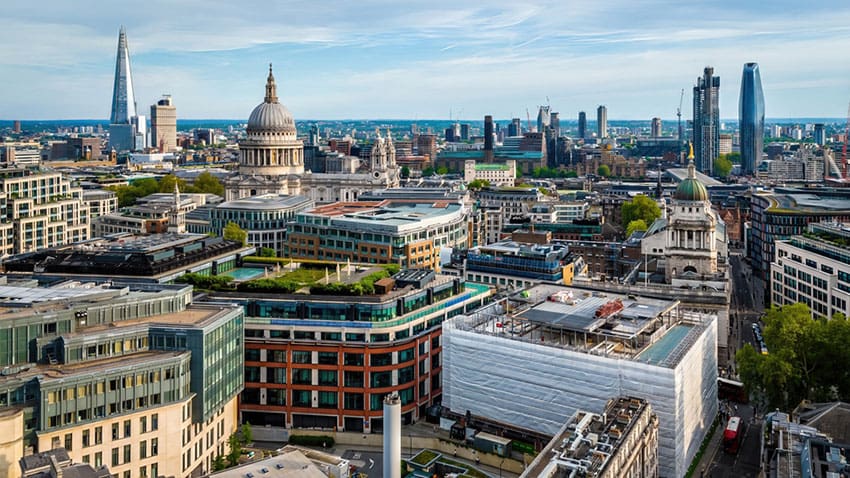
The London office location decision has become genuinely more nuanced over the past five years. What was once a relatively straightforward choice between the West End, the City, Canary Wharf and a fringe of alternative neighbourhoods has developed into a much wider range of considered options, each with distinct characteristics that suit different kinds of businesses.
For growing UK companies making London office decisions in 2026, the question is no longer simply where to base the team. It is which of London’s now genuinely distinct working neighbourhoods actually matches how the business operates, who it hires, who its clients are, and how its team wants to spend the working week.
The neighbourhoods themselves have specialised. The professional services concentration in the West End, the financial services depth of the City, the technology and creative cluster around Shoreditch and Old Street, the media and creative industries base at King’s Cross, and the emerging West London corridor centred on Hayes and the Elizabeth Line have all developed distinct characteristics that suit different business types in different ways.
For UK founders, chief executives and operations directors working through the London office question, a considered reading of which neighbourhood actually fits matters more than defaulting to the traditional business district assumptions.
The West End: for client-facing professional services and premium hospitality
The West End remains the London base of choice for businesses whose client relationships genuinely require a central Mayfair, Marylebone or Fitzrovia address. Family offices, private equity, high-end professional services, luxury retail head offices, premium hospitality groups and the London operations of international corporate clients concentrate here for reasons that continue to matter.
The talent pool leans professional services, corporate and senior. Client entertaining infrastructure is unmatched. Premium hotels, restaurants and member clubs support the pattern of business where entertaining, discretion and central location genuinely affect commercial outcomes.
The cost is substantial. West End prime office rent sits around £182.50 per square foot. Central London serviced office pricing in the West End typically runs £550 to £800 per desk per month before add-ons. For businesses whose client base and hiring profile actually require the West End, the cost is a considered investment. For businesses where the West End is a default assumption rather than an operational requirement, the calculation deserves reconsideration.
Best suited to: family offices, private equity, corporate legal, corporate finance advisory, luxury goods head offices, premium hospitality groups, international corporate UK operations.
Shoreditch: for growing businesses at Series A, Series B and early growth
Shoreditch has quietly matured from its Silicon Roundabout fringe technology characterisation into a mainstream growing-business location that suits a wider range of sectors than the coverage typically suggests. The neighbourhood concentrates one of the deepest technology, creative and professional services talent pools in the UK, with sustained venture capital, founder density and technology employer concentration.
The current tenant mix extends well beyond technology and creative sectors. Professional services firms, health and wellness businesses, consultancies, media companies, hospitality groups, legal and financial services businesses at the growing team stage, and international businesses establishing UK operations all now form part of the Shoreditch base.
Cost sits meaningfully below West End and central City comparables. For growing UK businesses at Series A, Series B and early growth stages, the cost differential is not marginal over a three- to five-year growth trajectory.
Shoreditch is worth understanding properly in 2026 because the neighbourhood that shaped the London tech and creative scene through the 2010s has quietly evolved into something more mature and more mixed. The Shoreditch of 2026 is not the Shoreditch of 2018.
Varsha Yadav, Head of Marketing at Purpose Group, told BM Magazine: “Shoreditch has evolved well beyond its reputation as London’s technology and creative hub. Today, we’re seeing a much broader mix of businesses from consultancies and professional services firms to health and wellness brands and international companies choosing the area because it offers the right environment to support growth.”
“As businesses scale, they’re becoming far more intentional about where they locate, looking for neighbourhoods that provide access to talent, strong connectivity and a vibrant ecosystem that reflects how their teams actually work. Compared with just a few years ago, the conversation has shifted from simply securing office space to finding a location that actively supports business performance, collaboration and long-term growth.”
The Purpose Group serviced offices in Shoreditch reflect this broader Shoreditch shift, offering fully managed workspace for the wider mix of businesses that now choose the area, from technology and creative through to consultancies, professional services and international teams.
The City: for financial services, insurance and adjacent professional services
The City continues to serve the businesses whose operational reality requires proximity to the London financial services cluster. Investment banks, asset managers, insurance, corporate legal, corporate accounting and adjacent professional services concentrate here for network, talent and client reasons that remain intact.
The talent pool leans deeply into financial services, corporate legal, corporate accounting and adjacent professional. Regulatory proximity to the Bank of England, FCA and PRA matters for certain sectors. The infrastructure supports the specific patterns of financial services work.
Cost sits at central London serviced office levels. The neighbourhood has continued to develop a broader lifestyle and food infrastructure over the past decade, though it remains meaningfully more corporate in feel than the West End, King’s Cross or Shoreditch.
Best suited to: investment banking, asset management, insurance, corporate legal, corporate accounting, corporate finance, financial technology at the enterprise stage, professional services adjacent to the City client base.
King’s Cross: for media, creative industries and technology at scale
King’s Cross has developed as one of London’s most integrated working neighbourhoods, anchored by Google’s UK headquarters, Meta, DeepMind, Universal Music, the Guardian, Havas and Central Saint Martins. The 67-acre regeneration has delivered one of London’s most considered mixed-use environments, with food, cultural, retail and wellness infrastructure that supports the wider working experience.
The talent pool leans media, technology, creative industries and adjacent professional services. The cultural programming (Frieze Week, London Design Festival, Central Saint Martins) forms part of the working infrastructure. Connectivity is exceptional: six London Underground lines, two mainline stations, Eurostar international rail, and one-stop Elizabeth Line access.
For technology businesses at scale, media and creative industries, and businesses whose team hiring and cultural fit benefit from the King’s Cross ecosystem, the calculation has become meaningfully compelling.
Best suited to: technology at scale, media, creative industries, design agencies, professional services adjacent to the King’s Cross ecosystem, international businesses establishing UK operations, businesses hiring from the Central Saint Martins graduate pool.
Hayes and the West London corridor: for businesses valuing team lifestyle and Heathrow proximity
The Elizabeth Line has materially changed the West London workspace calculation. Hayes and Harlington reaches Paddington in 17 minutes, connects to Heathrow Terminal 5 in around 10 minutes, and provides direct connections through central London to Canary Wharf and Stratford. West London serviced workspace sits at meaningfully more accessible price points than the West End and City comparables.
For businesses with substantial West London-resident teams, meaningful international operations requiring Heathrow proximity, or growth stages where cost efficiency matters, the West London option has developed into a genuine mainstream choice. The regeneration around Old Vinyl Factory Hayes and the wider Elizabeth Line corridor has delivered workspace of a quality that meets contemporary expectations.
The talent pool leans towards professional services, technology, creative sector and consulting workers who live in West London and increasingly want to work closer to home on hybrid working days. For businesses whose team hiring skews West London-resident, the Hayes calculation supports both hiring and retention meaningfully better than central London alternatives.
Best suited to: businesses with substantial West London-resident teams, international businesses valuing Heathrow proximity, growing professional services firms optimising for cost, hybrid-first teams whose staff live across West London.
The neighbourhood-to-business-type framework in practice
The London office decision in 2026 rewards a considered approach that starts with how the business actually operates rather than with which business district is the default assumption.
The questions worth working through include: where does the team actually live, and how does that shape hiring and retention? Where are the clients actually based, and how does entertaining actually happen? What does the talent pipeline look like for the specific roles the business hires? What is the actual cost differential over a three- to five-year growth trajectory, and how does that compare to the operational value of the different locations? How does the working week actually flow across office days and hybrid days, and which neighbourhood supports that flow?
The answers vary meaningfully by business. A private equity firm and a growing consumer technology business face genuinely different London location questions. A creative agency and a corporate legal firm operate differently in the working week. A growing hospitality group and a financial services firm entertain clients differently.
For UK founders and business leaders working through office location decisions in 2026, the value is in the fit between neighbourhood and business rather than in the default assumption that a particular business district is the automatic answer.
What the neighbourhood specialisation means
London’s working neighbourhoods have specialised. The West End, the City, King’s Cross, Shoreditch and the West London corridor now offer materially different working propositions, each of which suits different kinds of businesses in different ways.
For growing UK businesses, this specialisation is genuinely good news. The considered choice of neighbourhood matched to how the business actually operates supports better hiring, better client relationships, better team retention, better cost efficiency and better cultural fit than defaulting to whichever business district happens to be nearest to where the founders happen to have historically worked.
The London office decision in 2026 rewards the businesses that make it thoughtfully. The businesses that continue to default to traditional business district assumptions typically pay for that default in ways that only become visible over the three-to-five-year growth trajectory. The businesses that match neighbourhood to operational reality typically find that the location decision compounds meaningfully into wider commercial outcomes.
For UK businesses considering their London base this year, the framework matters more than the default. Match the neighbourhood to how the business actually operates, and the location decision does its share of the work in supporting the business over the years that follow.
This article is for general information only. Workspace requirements and pricing vary by tenant, contract length and included services. Purpose Group is a London workspace provider with ten buildings across eight London locations, including Development House in Shoreditch.

US aimed to send envoys to Brazil to question its electoral system – sources


I am Gen Alpha. I have more than 14 years of investment experience, and an MBA in Finance. I focus on stocks that are more defensive in nature, with a medium- to long-term horizon. I provide high-yield, dividend growth investment ideas in the investing group iREIT®+HOYA Capital. The group helps investors achieve dependable monthly income, portfolio diversification, and inflation hedging. It provides investment research on REITs, ETFs, closed-end funds, preferreds, and dividend champions across asset classes. It offers income-focused portfolios targeting dividend yields up to 10%. Learn more.
Analyst’s Disclosure: I/we have a beneficial long position in the shares of TPG either through stock ownership, options, or other derivatives. I wrote this article myself, and it expresses my own opinions. I am not receiving compensation for it (other than from Seeking Alpha). I have no business relationship with any company whose stock is mentioned in this article.
I am not an investment advisor. This article is for informational purposes and does not constitute as financial advice. Readers are encouraged and expected to perform due diligence and draw their own conclusions prior to making any investment decisions.
Seeking Alpha’s Disclosure: Past performance is no guarantee of future results. No recommendation or advice is being given as to whether any investment is suitable for a particular investor. Any views or opinions expressed above may not reflect those of Seeking Alpha as a whole. Seeking Alpha is not a licensed securities dealer, broker or US investment adviser or investment bank. Our analysts are third party authors that include both professional investors and individual investors who may not be licensed or certified by any institute or regulatory body.


The Investment Doctor is a financial writer, highlighting European small-caps with a 5-7 year investment horizon. He strongly believes a portfolio should consist of a mixture of dividend and growth stocks.
He is the leader of the investment group European Small Cap Ideas which offers exclusive access to actionable research on appealing Europe-focused investment opportunities not found elsewhere. The a focus is on high-quality ideas in the small-cap space, with emphasis on capital gains and dividend income for continuous cash flow. Features include: two model portfolios – the European Small Cap Ideas portfolio and the European REIT Portfolio, weekly updates, educational content to learn more about the European investing opportunities, and an active chat room to discuss the latest developments of the portfolio holdings. Learn more.
Analyst’s Disclosure: I/we have a beneficial long position in the shares of BAC either through stock ownership, options, or other derivatives. I wrote this article myself, and it expresses my own opinions. I am not receiving compensation for it (other than from Seeking Alpha). I have no business relationship with any company whose stock is mentioned in this article.
I also have a long position in BAC.PR.B and BAC.PR.L
Seeking Alpha’s Disclosure: Past performance is no guarantee of future results. No recommendation or advice is being given as to whether any investment is suitable for a particular investor. Any views or opinions expressed above may not reflect those of Seeking Alpha as a whole. Seeking Alpha is not a licensed securities dealer, broker or US investment adviser or investment bank. Our analysts are third party authors that include both professional investors and individual investors who may not be licensed or certified by any institute or regulatory body.

Lauren Simonetti breaks down the impact of the US-Iran conflict on global shipping and oil prices, noting public frustration with escalating gas costs. She highlights how many Americans expect the conflict to last over a year.
The fuel most Americans never think about could become the Iran conflict’s biggest economic consequence. While gasoline prices grab headlines, diesel quietly powers the trucks, farms, freight trains and heavy equipment that keep the U.S. economy moving.
From the groceries on supermarket shelves to the Amazon package on your doorstep and the materials used to build new homes, diesel is embedded in nearly every step of the supply chain. As prices rise, businesses face higher transportation costs that economists say often ripple through the economy, pushing up the cost of everyday goods.
Diesel prices, which averaged $3.56 a gallon in January 2025, have climbed to $5.13 following the Iran conflict, according to the U.S. Energy Information Administration.
A fully loaded semi-truck typically gets just 6 to 7 miles per gallon of diesel, according to Department of Energy data. Filling its roughly 250-gallon tanks can cost more than $1,280 at today’s prices.
BBQ LOVERS BEWARE: MIDDLE EAST CONFLICT MIGHT DISRUPT YOUR SUMMER PLANS THIS YEAR
“We all focus on gasoline because, ultimately, we’re consumers and pump prices are very visible. But what we don’t think about is the price of diesel, which is the workhorse fuel for the U.S. economy and especially for key sectors,” Bernard Yaros, lead U.S. economist for Oxford Economics, told Fox News Digital.
“From an inflationary perspective, I’m very concerned about the recent rise in diesel prices as it pertains to the cost of food or grocery store prices,” Yaros said.
“Take the food industry, for instance. Diesel powers the irrigation pumps, the tractors in the field and the trucks that bring food from the farm to your local grocery store. It’s part of every layer of food production in the U.S.”
‘KEEP A LOW PROFILE’: STATE DEPARTMENT WARNS AMERICANS OVERSEAS THEY COULD BE TARGETED

A person is seen grabbing the nozzle for diesel fuel at a gas station. (Rebecca Noble/Bloomberg/Getty Images / Getty Images)
An energy industry source, who requested anonymity because they were not authorized to speak publicly, said the recent diesel surge shows how geopolitical conflicts can quickly filter into the broader economy.
“The great majority of the price movement that you’ve seen in diesel markets over the last five months has been the direct result of the conflict in Iran and specifically the closure of the Strait of Hormuz,” the source told Fox News Digital.
The Strait of Hormuz, a narrow waterway between Iran, Oman and the United Arab Emirates, is one of the world’s most important energy chokepoints. Roughly 20 million barrels of oil pass through it each day, and disruptions can quickly tighten fuel supplies and drive diesel prices higher.
WHY THE STRAIT OF HORMUZ MATTERS AS TRUMP ISSUES FRESH ULTIMATUM TO IRAN
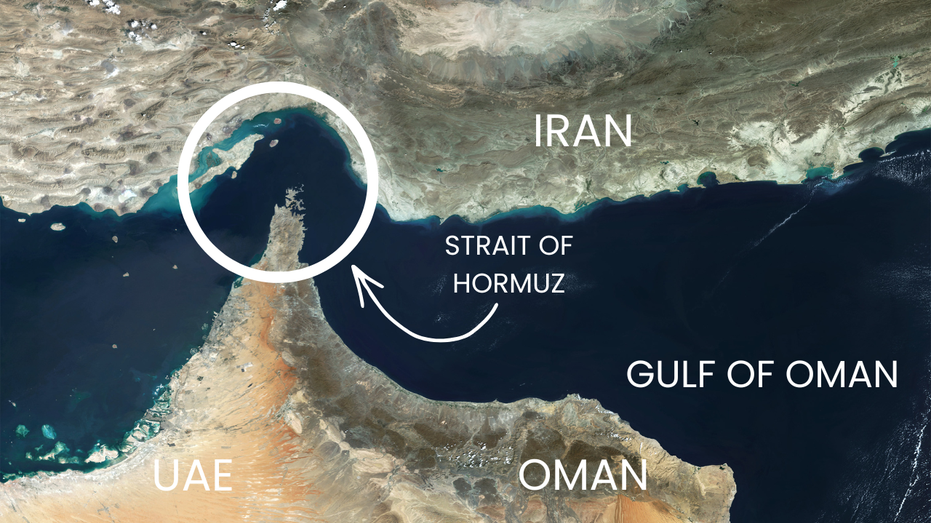
A satellite image shows the Strait of Hormuz, a key maritime passage connecting the Persian Gulf to the Gulf of Oman, vital for global energy supply. (Amanda Macias/Fox News Digital / Getty Images)
Even if tensions in the Middle East ease, diesel prices may not quickly return to pre-conflict levels.
“Refineries don’t process crude instantaneously,” the source said. “A lot of times what you’re filling up your car with today was refined a week and a half ago and was produced two months before that.”
That lag means higher diesel costs can continue working their way through the economy even after crude oil prices stabilize, leaving consumers to pay more for groceries, deliveries and other everyday goods long after the headlines from the Middle East begin to fade.
Rotate to China: BCA tips 3-month reversion trade away from South Korea stocks

Blue-Chip 12% Yields: Why I Give Hercules Capital The Edge Over Trinity Capital
Business
10 Things You Must Know About the 2026 Tour de France as Pogacar Nears Historic Fifth Title in Paris

Tadej Pogačar is on the verge of one of the most dominant performances in modern Tour de France history, with the Slovenian all but locking up his fifth yellow jersey as this year’s race enters its final two days. Here are 10 things to know about the 2026 edition of cycling’s biggest event.
1. The race started in Spain for just the third time ever
The 113th Tour de France opened in Barcelona on July 4, marking the first time the Grand Départ has been held in Catalonia and only the third time Spain has hosted the race’s start, following San Sebastián in 1992 and Bilbao in 2023. Barcelona is the most southerly city ever to launch the Tour. Race director Christian Prudhomme said the route was built to keep the overall competition unsettled deep into the final week. “It’s designed to maintain the suspense until the end,” Prudhomme said when the route was unveiled last October.
2. It opened with an unusual team time trial
Stage 1 featured a 19.7-kilometer team time trial through Barcelona, including two climbs up Montjuïc — a rare choice for a Tour opener. It was the first time the race began with a team time trial since 1971, when Eddy Merckx’s Molteni squad won an 11-kilometer test in Mulhouse. This year’s version also introduced a new scoring wrinkle: rather than every rider on a team receiving the same time, each individual’s own time counted toward the general classification. Jonas Vingegaard’s Visma–Lease a Bike squad won the stage.
3. The route covers 3,333 kilometers and finishes in Paris
Running from July 4 to July 26, the race spans 21 stages and roughly 3,333 kilometers, with about 54,450 meters of total climbing — a genuine test of endurance built around the Pyrenees, the Massif Central, the Vosges and the Alps. After skipping northern France almost entirely this year, the route finishes, as it has since last year, beneath the Arc de Triomphe following three ascents of the cobbled Rue Lepic in Montmartre.
4. Pogačar has been nearly untouchable
The UAE Team Emirates–XRG rider seized the yellow jersey on stage 3 with a decisive move on the climb to Les Angles and never relinquished it. He extended his advantage through the Pyrenees, the Massif Central and the Alps, and comfortably held off his closest challengers in the race’s lone individual time trial. Pogačar is chasing his fifth Tour title in six years, a run interrupted only by Vingegaard’s back-to-back victories in 2022 and 2023.
5. His stage-win total is closing in on cycling history
Pogačar’s victory atop the brutal, mountain-heavy 20th stage — his fourth stage win of this year’s race — pushed his career Tour de France stage tally to 24, leaving him one shy of the all-time record shared among the sport’s most prolific winners. With one more opportunity in Paris on the final day, Pogačar has a chance to add to that mark before the race concludes.
6. Remco Evenepoel has emerged as the clearest challenger
While Vingegaard entered the race as Pogačar’s most credible rival, a crash mid-race dropped the Dane out of serious GC contention. Belgium’s Remco Evenepoel capitalized, winning the race’s individual time trial and consolidating second place overall. Mexico’s Isaac del Toro, Pogačar’s UAE teammate, has held third, giving the team a rare shot at a 1-2 finish in Paris.
7. A teenager has been one of the breakout stars
Paul Seixas, a 19-year-old from Lyon riding for Decathlon CMA CGM, became the youngest rider in the Tour in nearly nine decades and quickly established himself as a legitimate climbing talent. Seixas arrived off a breakthrough spring that included a win at La Flèche Wallonne and the Tour of the Basque Country, and he has spent the mountain stages trading blows with the sport’s biggest names while targeting a podium finish in the young rider’s white jersey classification.
8. Alpe d’Huez was climbed twice in as many days
For the first time, organizers routed the Tour up the legendary Alpe d’Huez on both stage 19 and stage 20, part of a brutal Alpine finale designed to reward attacking racing over defensive tactics. Stage 20, a 170.9-kilometer route from Le Bourg-d’Oisans finishing atop the Alpe, included more than 5,600 meters of elevation gain and was widely described by riders and organizers as one of the toughest single days in the race’s modern history.
9. Sprinters and breakaway riders still found their moments
Even with the general classification battle dominating headlines, sprinters including Mads Pedersen, Jasper Philipsen and Olav Kooij collected stage wins along the flatter and rolling stages, while riders such as Richard Carapaz and Mathieu van der Poel scored victories out of breakaways. Pedersen has held the green points jersey for much of the race, while Carapaz has led the mountains classification, giving the race multiple storylines beyond the yellow jersey fight.
10. The race wraps up with a decisive final weekend
With Pogačar’s overall lead considered all but insurmountable heading into the final stages, attention has shifted to the fight for the remaining podium spots and the young rider’s classification, along with the traditional processional-turned-competitive finale into Paris. The 21st and final stage on July 26 will once again send riders through Montmartre before the traditional sprint finish on the Champs-Élysées, closing out a race that has been defined by an unusually southern start, a punishing mountain-heavy back half, and another commanding performance from cycling’s dominant rider of the decade.
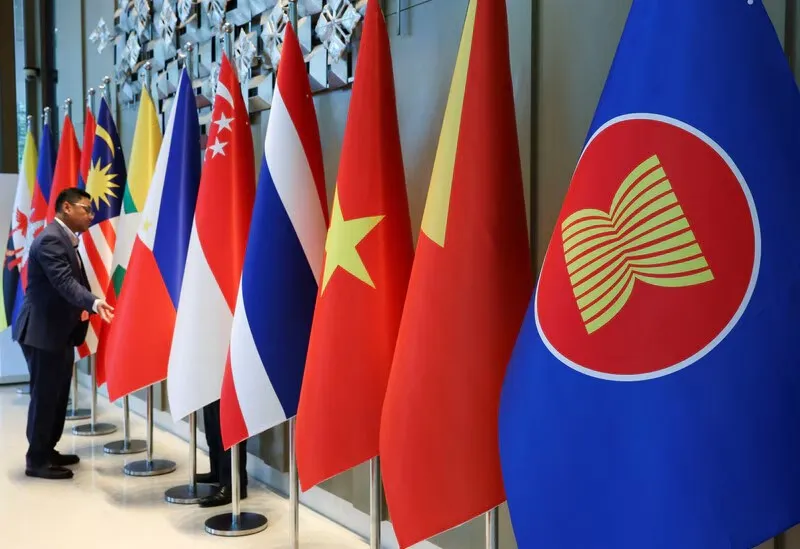
ASEAN foreign ministers in Manila agreed to develop benchmarks for measuring Myanmar’s progress and discussed a longer-term special envoy, refining proposals from Bangkok talks. Officials will finalize details before November’s summit. Ministers reaffirmed the Five-Point Consensus, emphasizing measurable steps, while analysts view this as recalibration, not a fundamental policy shift.
Key Points
- ASEAN foreign ministers meeting in Manila agreed to develop benchmarks for assessing progress in Myanmar and discussed appointing a longer-term special envoy, refining proposals from senior officials before November’s summit.
- Discussions reaffirmed the Five-Point Consensus, not a departure, despite Myanmar’s foreign minister disputing parliament’s rejection; a “non-paper” will define “demonstrable progress.”
- Analysts call it recalibration, not policy shift, amid ongoing conflict, humanitarian crisis, and calls for coordinated engagement.
ASEAN Moves to Strengthen Myanmar Peace Efforts
Manila outcomes: ASEAN foreign ministers meeting in Manila on July 21 agreed to develop benchmarks for measuring progress in Myanmar and began discussing the appointment of a longer-term special envoy, replacing the current rotating role. These proposals will be refined by senior officials before being presented to ASEAN leaders at the November summit, according to Philippine Foreign Secretary Ma. Theresa Lazaro.
Bangkok origins: The Manila talks built on an informal Bangkok meeting on July 12, the first to bring together nearly all ASEAN foreign ministers with Myanmar’s foreign minister since the 2021 coup, where similar reform ideas were first floated, including a proposed ASEAN Secretariat unit to support the envoy’s work.
Reaffirming the Five-Point Consensus Amid New Proposals
Clarifying intent: Lazaro stressed these discussions do not signal abandonment of the Five-Point Consensus, ASEAN’s 2021 peace framework. She noted Myanmar’s foreign minister disputed claims that the plan had been rejected by Parliament, insisting it remains valid. ASEAN is now drafting a “non-paper” to define what constitutes “demonstrable progress” in Myanmar.
Collective reaffirmation: Singapore’s Foreign Minister Vivian Balakrishnan and fellow ministers reaffirmed the Consensus, calling for measurable steps—a permanent end to violence, release of political prisoners, and unimpeded humanitarian access. Ministers also addressed Middle East tensions, urging respect for international law and safe passage through key straits.
Analysts Weigh Recalibration Versus Real Progress
Cautious optimism: Experts, including ISEAS-Yusof Ishak Institute’s Sharon Seah and Joanne Lin, described the shift as a “recalibration rather than a fundamental change.” They warned that bilateral engagement with Naypyitaw must remain coordinated and linked to clear expectations, cautioning that fragmented approaches could weaken ASEAN’s collective leverage and credibility as a regional institution.
Humanitarian urgency: With over 100,000 deaths and 22,400 political detainees, including Aung San Suu Kyi, analysts see realistic progress markers as improved humanitarian access, envoy engagement, and localized violence reduction—not a full breakthrough. The bloc’s credibility, they add, hinges on translating dialogue into tangible, coordinated action across Myanmar and other regional flashpoints.
Source : ASEAN weighs benchmakrs to bolster Myanmar peace plan
Other People are Reading
DeepSeek tells prospective investors of funding pause, Bloomberg News reports
Business
Viral Video Falsely Claims Kate Middleton Was ‘Sneaking Out the Back Door’ as Royal Fans Push Back Online
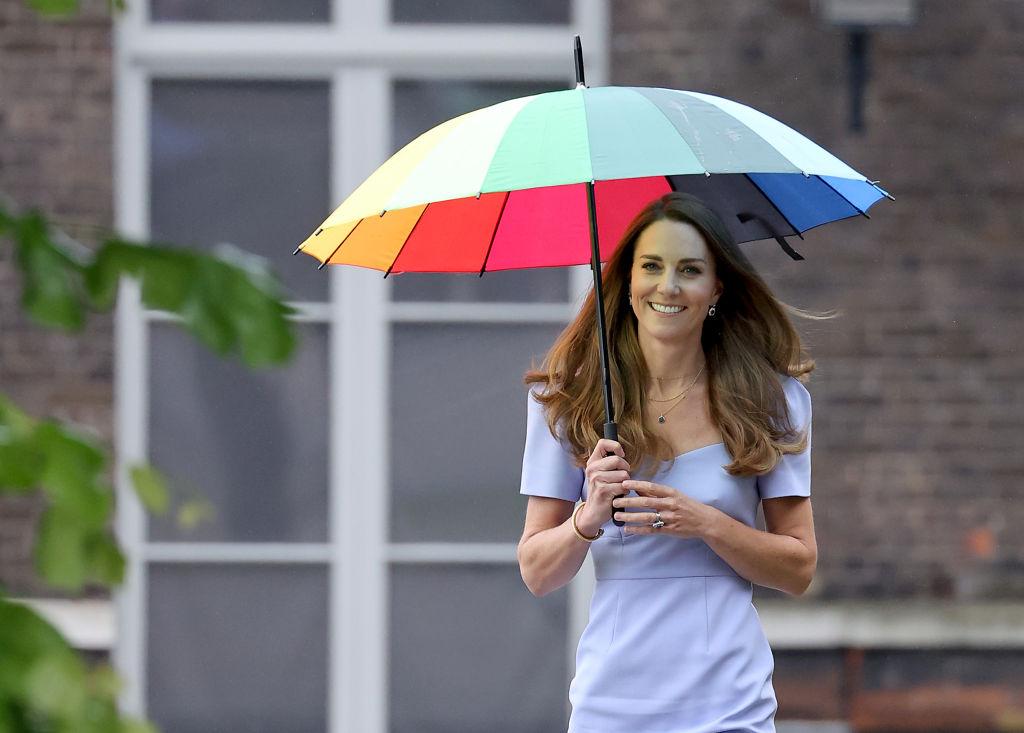
A months-old video of Kate Middleton has resurfaced online with a misleading new caption, prompting a wave of criticism from royal watchers who say the clip has been stripped of its original context to suggest something it does not show.
The video was shared this week on X by an account belonging to Matt Wallace, which has more than two million followers. The post described the footage as showing the Princess of Wales “caught sneaking out the back door in all red,” adding that she “looks extremely nervous after she sees the camera.” The characterization quickly drew backlash from supporters of the Princess of Wales, who pointed out that the footage was neither new nor evidence of anything unusual.
Where the video actually came from
The clip did not originate this week. It first circulated in January, when the Princess of Wales was filmed during a rainy Changing of the Guard ceremony at Windsor Castle. In the footage, Middleton is seen hurrying across the castle grounds while holding an umbrella alongside an aide, dressed in a crimson outfit.
That red ensemble was not incidental. Middleton had worn it earlier the same day for a reception at Windsor Castle honoring England’s Women’s Rugby team, known as the Red Roses, following their World Cup victory. As patron of the Rugby Football Union, Middleton hosted the squad at the castle to celebrate their championship win, which came after England defeated Canada in the tournament final the previous September.
Video and photos from the reception itself showed a relaxed, engaged Middleton greeting players and posing with the World Cup trophy, dressed in the same red suit later seen in the misleadingly captioned clip. The rainy footage that circulated this week appears to capture her departure from the event, dashing across a courtyard to avoid the weather — a mundane moment recast online as something more dramatic.
A pattern of scrutiny
The episode is the latest example of a recurring dynamic surrounding Middleton’s public appearances, in which routine footage is reinterpreted and recirculated with dramatic or suspicious framing, often stripped of the context that explains it. Members of the public and royal commentators responding to the post noted that the video showed nothing more than the princess trying to stay dry, not a covert exit or a nervous reaction to being filmed.
Momentum around the clip built quickly given the size of the account that shared it. Accounts with large followings on X have periodically found renewed traffic recirculating older royal footage under new or misleading captions, a trend that has previously affected Middleton’s public image, particularly following a period last year when her public appearances were more limited during medical treatment. That earlier period fueled a wave of unverified claims and conspiracy theories about her whereabouts and health, several of which were later shown to be false or based on manipulated or misread images and footage.
Royal engagements continue as scheduled
Middleton has remained an active presence in her official role since the January reception, with Kensington Palace continuing to document her engagements through official channels, including social media posts marking events like the rugby reception itself. At the time, the palace shared images from the Windsor Castle gathering, describing it as a celebration of the Red Roses’ championship run.
The rugby reception marked one of Middleton’s early public engagements of the year and came shortly after a joint appearance with Prince William earlier the same month, their first public outing together since the previous Christmas. The pairing of engagements signaled a return to a fuller public schedule after a period of reduced appearances.
Why the claim spread
Misleading captions attached to genuine footage tend to spread differently than fabricated images or synthetic video, since the underlying visual material is real and can appear more credible at first glance. In this case, the video itself was authentic footage of Middleton at a legitimate royal engagement; the misrepresentation came entirely from the added narrative framing, which implied secrecy or distress where public records and prior reporting show neither.
Royal commentators and fans responding to the post highlighted the discrepancy between the caption and the documented record of the day, noting that the event itself, the outfit, the setting and the reason for Middleton’s brisk pace across the courtyard were all previously reported and photographed in detail at the time.
The broader context
The recirculation reflects a wider pattern in how royal-related content moves across social media platforms, where video clips can be detached from their original reporting and reframed to generate engagement, regardless of the accuracy of the accompanying claims. Large accounts with global followings can amplify such reframed content rapidly, often reaching audiences unfamiliar with the original event the footage depicted.
For Middleton specifically, the pattern has repeated periodically over the past two years, with various photos and videos drawing outsized scrutiny and speculative commentary before being clarified by contemporaneous reporting, official palace statements, or additional footage from the same events. This week’s episode follows that same arc: an old clip, a new and inaccurate caption, and a swift public correction from those familiar with the original context.
As of publication, there was no indication that Kensington Palace had issued a direct response to the specific post questioned this week. The palace has generally declined to comment on individual pieces of viral social media content involving the Princess of Wales, instead continuing to document her official engagements through its own channels.
The episode adds to an ongoing conversation about how quickly authentic but recontextualized footage can spread online, and how difficult it can be for accurate context to catch up once a misleading caption has already reached a large audience.
US aimed to send envoys to Brazil to question its electoral system – sources
Bitcoin Price Analysis: BTC’s Rally Could Be a Bull Trap as Sub-$60K Target Remains

Star Wars Show So Awful It Was Hidden Away Is Finally Coming Out


-

 Fashion23 hours ago
Weekend Open Thread: Brooks Brothers
-

 Politics6 days ago
Democrats look to World Cup watch parties to register thousands of voters
-

 News Videos6 days ago
Big Money Is Entering XRP
-

 Crypto World4 days ago
Grayscale Files For Worldcoin ETF, WLD Registers Sharp Rise
-

 Tech5 days ago
Sail Virtually Aboard The “Itanic” With IA-64 Emulator
-
 Tech5 days ago
Turtle Beach Command Series KB7 review: a nifty screen-equipped gaming keyboard
-

 NewsBeat5 days ago
Unregistered fitter used Gas Safe logo on business flyers
-
 Business4 days ago
New Jersey voter registration controversy explained: How 6,600 noncitizens got on the rolls, and what happens next
-
 Entertainment4 days ago
Johnny Depp’s R-Rated Gothic Cult Classic Gets New Release Ahead of Sydney Sweeney Remake
-

 Crypto World3 days ago
Ethics, other provisions in crypto Clarity Act to be further discussed
-

 Tech5 days ago
Watch Flock Safety CEO Garrett Langley discuss the future of surveillance at TechCrunch Disrupt 2026
-
 NewsBeat5 days ago
Shanghai science forum photos show China’s AI and robotics advances in rivalry with US
-

 Crypto World5 days ago
Circle’s President Sold Over 360,000 Shares, The Filings Explain Why
-

 Tech5 days ago
Subway Sandwich Computers Get a Second Life as Gaming Machines
-

 Sports2 days ago
2026 3M Open leaderboard: Scottie Scheffler finds putter in Round 1, sits three back
-

 News Videos2 days ago
The Peugeot Family: How 200 Years of an “Old Money” Dynasty Died in A Boardroom
-

 Tech6 days ago
How To Use Claude’s Reflect Dashboard And Learn When It’s Time To Touch Grass
-

 Tech5 days ago
The 35 Best Board Games for Family Game Night
-

 Fashion2 days ago
16 Dresses for the High Summer Event
-

 Entertainment6 days ago
Stephen Colbert Returns to Social Media After Late Show End
You must be logged in to post a comment Login