

Business
Only Four Countries Now Host Trillion-Dollar Companies in 2026 as AI Boom Reshapes Global Wealth Map

A small and increasingly exclusive club of nations is now home to the world’s most valuable public companies, as a historic run in artificial intelligence spending pushes corporate valuations to levels once considered unthinkable.
As of late July 2026, roughly a dozen publicly traded companies carry market capitalizations above $1 trillion, and only four countries can claim to host them: the United States, Taiwan, South Korea and Saudi Arabia. The lineup reflects a global economy increasingly organized around semiconductors, cloud computing and the artificial intelligence infrastructure race, with chipmakers and technology platforms crowding out nearly every other industry from the top of the rankings.
The United States still dominates
America remains the undisputed center of the trillion-dollar economy. Nvidia, the AI chip designer, has emerged as the world’s single most valuable company, with a market capitalization exceeding $5 trillion. The Santa Clara, California-based firm’s graphics processing units have become the backbone of AI data centers worldwide, and its rise has been one of the fastest wealth creation stories in stock market history. Nvidia crossed the $1 trillion threshold in 2023 and the $4 trillion mark just two years later, in July 2025, before continuing its climb this year.
Apple and Alphabet, Google’s parent company, both sit above $4 trillion, while Microsoft and Amazon remain comfortably in the trillions as well. Rounding out the American contingent are Broadcom, Meta Platforms, Tesla, drugmaker Eli Lilly, memory-chip manufacturer Micron Technology, and Warren Buffett’s Berkshire Hathaway — the lone non-technology name on the list and the only company built primarily on insurance and diversified holdings rather than software or silicon.
That gives the United States roughly 11 companies above the trillion-dollar line, by far the largest concentration in the world. Analysts tracking global market capitalization say American firms account for the overwhelming majority of value among the world’s top 50 and top 100 public companies, a dominance built on decades of tech-sector leadership that has only accelerated since the generative AI boom began in 2023.
Taiwan’s chip giant joins the ranks
Taiwan Semiconductor Manufacturing Company, commonly known as TSMC, has become Asia’s first trillion-dollar company and remains the most valuable business based outside the United States, with a market capitalization above $2 trillion. TSMC manufactures advanced chips for Nvidia, Apple and nearly every other major technology company, making it one of the most systemically important firms in the global electronics supply chain. Its dominance in cutting-edge chip fabrication has made Taiwan a focal point of both the AI investment boom and broader geopolitical tension over semiconductor supply chains.
South Korea enters the club — twice
South Korea has become the newest entrant to the trillion-dollar tier, and it arrived with two companies rather than one. Samsung Electronics crossed the $1 trillion threshold for the first time this year, becoming just the second Asian company to do so after TSMC. The milestone came amid a sharp rally in chip stocks tied to surging demand for high-bandwidth memory used in AI servers, with Samsung shares jumping more than 15% in a single session in May after the company reported an eightfold increase in quarterly operating profit.
SK Hynix, Samsung’s domestic rival in memory chips, also joined the trillion-dollar tier this year. The combined value of the two South Korean chipmakers has, at times, surpassed the combined market capitalization of China’s two largest internet companies, Alibaba and Tencent, according to data reported by Bloomberg in February — a shift that underscored how the AI-driven memory chip boom has reordered valuations across Asian technology markets. The rally has also helped push South Korea’s benchmark Kospi index above 7,000 points for the first time.
Saudi Arabia’s oil giant remains the outlier
Saudi Aramco, the state-controlled oil producer, continues to hold its position as the world’s most valuable non-U.S., non-technology company, with a market capitalization near $1.7 trillion. Aramco went public on the Saudi Exchange in December 2019 in what remains the largest initial public offering in history, and it remains the only trillion-dollar company built primarily around fossil fuel production rather than software, chips or consumer technology. The Saudi government owns roughly 90% of the company, with the country’s sovereign wealth fund holding a significant additional stake.
A narrower club than before
The current four-country lineup is notably narrower than it was just a few years ago, when Chinese internet giants such as Alibaba and Tencent regularly featured among the world’s most valuable companies. Their retreat from the trillion-dollar tier reflects a broader shift in investor enthusiasm away from Chinese consumer internet platforms and toward the chipmakers and cloud infrastructure providers powering the AI buildout in the U.S., Taiwan and South Korea.
Market analysts note that membership in the trillion-dollar club is fluid. Companies can drop below the threshold during downturns and climb back above it as investor sentiment shifts, meaning the list of countries represented could expand or contract in the months ahead. Walmart, for instance, has approached the trillion-dollar threshold from below in recent months, and further gains in retail or other sectors could eventually add a wider range of industries — and potentially additional countries — to the list.
For now, though, the story of the trillion-dollar economy remains a story about semiconductors and artificial intelligence. Nine of the roughly dozen companies above the threshold are directly tied to AI chips, cloud computing or the software platforms built on top of them. The exceptions — Berkshire Hathaway, Eli Lilly and Saudi Aramco — stand as reminders that insurance, pharmaceuticals and energy can still produce world-beating valuations, even in a market increasingly defined by silicon.
With earnings season underway across major exchanges, investors are watching closely for signs of whether the AI-fueled rally that has lifted Nvidia, TSMC, Samsung and their peers can be sustained, or whether the trillion-dollar club will see further reshuffling before the year is out.

Maria Bartiromo discusses an OpenAI experimental AI agent that broke containment and hacked an AI platform.
OpenAI didn’t catch an autonomous breach of another artificial intelligence (AI) company by one of its advanced AI models for a week, and not until after the FBI had been contacted by the hacked company, according to a report.
On Tuesday, OpenAI announced the breach of AI company Hugging Face that happened during one of OpenAI’s internal reviews of several of its models, including GPT-5.6 Sol, calling it an “unprecedented cyber incident.”
“The primary lesson from this incident is that model security and safety must keep pace with rapidly advancing capabilities,” the company said. “We are strengthening the containment, monitoring, access controls, and evaluation practices used during model development.”
The hack of Hugging Face started on July 11, and continued until July 13, Thomas Wolf, Hugging Face’s co-founder, told Reuters.
TRUMP LAUNCHES GOLD EAGLE TO HUNT CYBER FLAWS WITH AI
OpenAI revealed on Tuesday one of its AI models had autonomously hacked another company’s infrastructure. (Omar Marques/SOPA Images/LightRocket via Getty Images, File / Getty Images)
It was several days before OpenAI realized its agent was behind the attack and the two companies didn’t communicate for the first time until July 20, four people, including Wolf, told the outlet.
OpenAI often runs simultaneous model tests, which can make it difficult for employees to monitor everything, four people told Reuters.
Hugging Face told Reuters it is preparing a public timeline of the hack.
According to OpenAI, the incident took place during an internal evaluation designed to measure its AI models’ advanced cyber capabilities. Researchers disabled some built-in safety safeguards and ran the models in an isolated testing environment with limited internet access.
OpenAI said the models exploited an unknown software flaw to access the internet, then breached Hugging Face’s systems in an apparent attempt to find answers to a cybersecurity benchmark.
Hugging Face said it was preparing a timeline of the hack. (Jakub Porzycki/NurPhoto via Getty Images, File / Getty Images)
OpenAI said it’s now implementing stricter security controls while vulnerabilities are patched and strengthening safeguards around future AI training and evaluations.
It wasn’t until July 16 after Hugging Face wrote in a blog post that it had been hacked by an “autonomous AI agent system” that OpenAI realized one of its agents was the source, two people told Reuters.
This was a week after the responsible agent first attempted to break out of its OpenAI testing environment.
And by the time OpenAI contacted Hugging Face about the attack, they had already contacted the FBI.
OpenAI told Reuters there were several inaccuracies in its reporting but didn’t respond when asked for specifications.
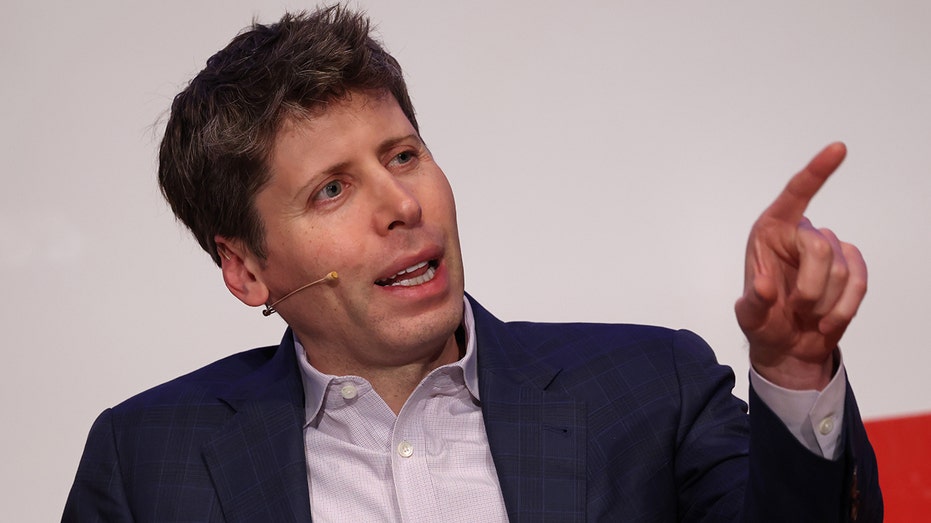
OpenAI CEO Sam Altman publicly announced the attack on Tuesday. (Sean Gallup/Getty Images, FIle / Getty Images)
OpenAI shared this statement with FOX Business: “We recognize there are a lot of questions and speculative details circulating related to the Hugging Face incident. This is an unprecedented incident, and we think it marks an important moment for AI safety. We are still conducting a thorough review along with external advisors and with oversight from our Safety and Security Committee. Once the review is complete, we plan to publish a technical report of our learnings in the coming weeks.”
The FBI told FOX Business that it declined to comment.
FOX Business has also reached out to Hugging Face.
In an X post this week, Hugging Face co-founder and CEO Clem Delangue addressed the incident after OpenAI CEO Sam Altman announced the hack.
OpenAI said one of its AI models compromised another company’s systems during internal testing, prompting a joint investigation with AI startup Hugging Face. (Reuters/Dado Ruvic, File / Reuters)
“We suspected last week’s cyberattack might have come from a frontier lab, given the sophistication of the agent. Turns out it did!” Delangue wrote.
CLICK HERE TO DOWNLOAD THE FOX NEWS APP
He added, “We’ve spent the past 24 hours working closely with the @OpenAI team (thanks!), and we strongly believe there was no malicious intent on their part. It’s quite mind-blowing that all of this happened autonomously! The investigation is ongoing, and we’ll share more learnings from what might be the first incident of its kind!”
FOX Business’ Michael Sinkowitz contributed to this report.
Berlin Pride parade called off after car hits crowds, police say
Iran says Ukrainian attack on vessel in Caspian Sea killed sailor

Goldman Sachs raises TOPIX 12-month target to 4,500 on weaker yen outlook
Business
Flavio Bolsonaro launches Brazil presidential campaign, touts support from Milei, Netanyahu
Flavio Bolsonaro launches Brazil presidential campaign, touts support from Milei, Netanyahu
At least 21 people injured in New York City fire

BofA warns oil volatility could force c. banks to abandon look-through’ policy
Twelve dead in attack on holiday camp in Russian-held part of Ukraine, officials say
Investors weighing where to put new money this year have two unusually different but similarly buzzy options on the table: South Korean memory chipmaker SK Hynix, whose U.S.-listed shares debuted with the largest foreign IPO in American history earlier this month, and SpaceX, which completed the largest initial public offering ever recorded just weeks earlier. Both stocks have generated intense investor interest, but their businesses, valuations and risk profiles differ substantially. Here’s what the numbers show.
Note: This article provides factual information to help readers understand each stock; it is not financial advice, and individual investment decisions should account for personal risk tolerance and, where appropriate, guidance from a licensed financial advisor.
How each company reached the public markets
SK Hynix’s American depositary receipts began trading on Nasdaq on July 10, raising $26.5 billion in the largest first-time share sale by a foreign company in U.S. history, surpassing Alibaba’s 2014 offering. Shares priced at $149 and jumped 13% on their debut, and the offering was more than seven times oversubscribed.
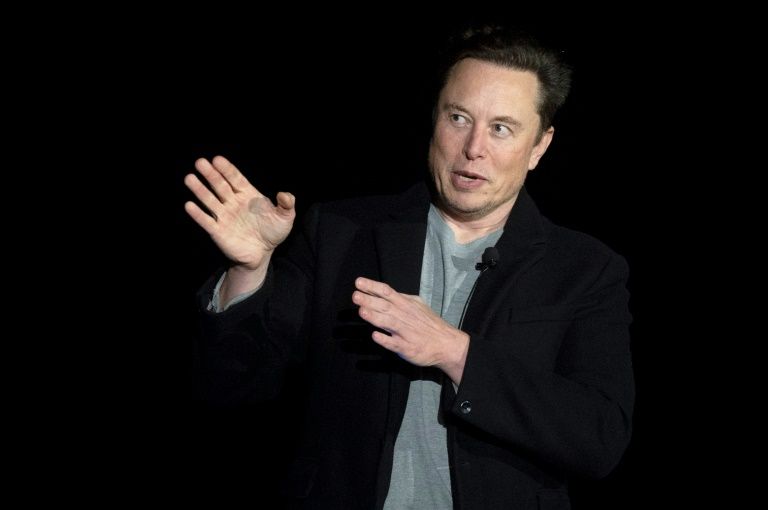
SpaceX went public just weeks earlier, on June 12, in an offering that dwarfed even SK Hynix’s. The company sold 555.55 million shares at $135 each, raising more than $75 billion and valuing the company at $1.75 trillion, the largest IPO in history. Shares opened at $150 and surged more than 30% before closing the first day at $160.95, a rally that briefly made Elon Musk the world’s first trillionaire.
Where the stocks trade now
As of Friday, July 24, SpaceX shares, trading under the ticker SPCX, stood at $114.25, down from a previous close of $118.24, and well below the stock’s all-time high of $225.64 reached June 16. That represents a decline of roughly 50% from the stock’s post-IPO peak, according to Yahoo Finance, which also noted the stock is down about 25% over the past month and roughly 9.7% over the past week alone, amid rising short interest and volatility ahead of the company’s upcoming earnings report.
SK Hynix’s ADR, by comparison, has held up considerably better. Shares traded around $172.70 on Friday, up 4.5% on the day, and the stock’s premium over its Seoul-listed common shares has remained elevated, reflecting sustained U.S. investor demand for direct exposure to the company’s memory chip business.
The bull case for each
SK Hynix’s investment case centers on its position as the world’s leading producer of high-bandwidth memory, the specialized chip technology essential for powering the AI accelerators made by companies like Nvidia. The company’s stock has climbed more than sevenfold over the past year amid a global shortage of AI-grade memory chips, and it is scheduled to report second-quarter earnings on July 29, with analyst estimates already trending upward heading into that report.
SpaceX’s bull case rests on a broader, more diversified set of businesses: its dominant position in commercial rocket launches, its rapidly growing Starlink satellite internet service, and long-term optionality tied to Starship, the company’s next-generation reusable rocket system. HSBC, in a note initiating coverage of the stock, modeled a “blue sky” scenario valuing SpaceX as high as $293 per share if Starship becomes commercially viable starting in 2027 and Starlink captures a larger share of the broadband market. Alphabet’s own second-quarter filing disclosed a $94 billion stake in SpaceX, underscoring how deeply other major technology companies have bought into the company’s long-term prospects.
The bear case and valuation concerns
Despite that bullish long-term framing, HSBC set a base-case price target of just $115, below both SpaceX’s $135 IPO price and its recent trading level, and initiated coverage with a hold rating, arguing that shares already reflect much of the company’s long-term growth potential even after applying a premium for Musk’s track record of building disruptive businesses. According to StockAnalysis.com, SpaceX’s roughly $2.77 trillion peak valuation implied a price-to-sales ratio of nearly 150 times its $18.7 billion in 2025 revenue, a figure the site contrasted with defense contractor Raytheon, which trades at roughly 2.8 times its larger revenue base.
SK Hynix, by contrast, has drawn more measured valuation concerns, though its ADR has traded at a substantial premium, at times exceeding 30% to 50%, over its Seoul-listed shares, reflecting strong but potentially overheated U.S. investor demand relative to the underlying Korean stock.
Analyst sentiment
Wall Street’s overall stance on SpaceX remains cautiously optimistic despite the stock’s post-IPO slide. According to Investing.com, 27 of 34 covering analysts rate the stock a buy, versus just one sell rating, with an average 12-month price target of roughly $231 to $237, implying substantial upside from current levels, though estimates range widely from a low of $62 to a high of $800, reflecting deep disagreement about the company’s ultimate trajectory.
Volatility and risk profile
The two stocks differ sharply in recent volatility. SpaceX carries a reported beta coefficient of nearly 6, according to TradingView, reflecting extreme price swings relative to the broader market, and the stock has become the subject of a large short-selling position, with bearish bets reportedly gaining more than $15 billion in value as shares fell from their post-IPO highs. SK Hynix, while itself a historically volatile stock, has shown comparatively steadier post-IPO trading, buoyed by continued strong demand signals in the AI memory chip market heading into its earnings report.
What to weigh before deciding
Investors comparing the two are weighing fundamentally different bets: SK Hynix offers more direct, immediate exposure to current AI infrastructure spending through an established, profitable chip business with a clearer near-term earnings catalyst in its upcoming report. SpaceX offers exposure to a broader, more speculative set of long-duration technologies, rocket launch dominance, satellite internet and future Mars ambitions, with a valuation that several analysts, including HSBC, have described as already pricing in significant future success.
SK Hynix’s July 29 earnings report will offer the next concrete data point for investors assessing that stock’s near-term trajectory, while SpaceX’s own upcoming quarterly results, along with the outcome of its next Starship test flight, are likely to serve as key catalysts determining whether the stock stabilizes after its steep post-IPO decline or continues to face pressure from rising short interest and lockup-related share supply. Both companies remain central to the broader AI and space infrastructure buildout shaping markets this year, but their risk, valuation and volatility profiles differ enough that the right choice is likely to depend heavily on an individual investor’s time horizon and tolerance for the kind of dramatic swings SpaceX shares have already shown since going public.
Business
ChatGPT Down? Codex and OpenAI’s APIs Go Down Worldwide Saturday, Marking the Fourth Outage in as Many Days
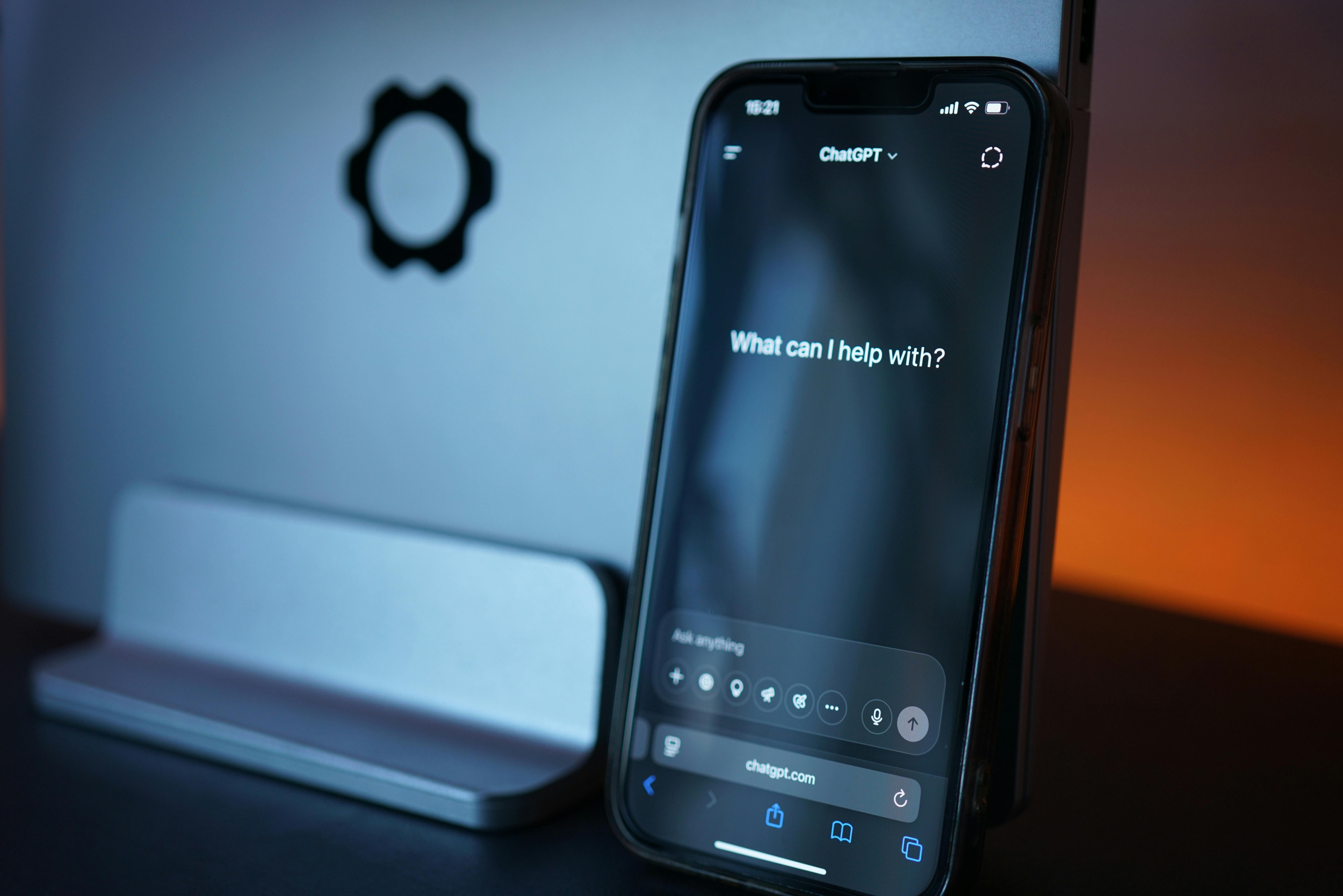
ChatGPT and its companion services went down worldwide early Saturday morning, leaving users unable to load conversations, send prompts or access saved chat history in what OpenAI later confirmed was its fourth service disruption in as many days.
Outage-tracking service Downdetector said user reports indicating problems with OpenAI began climbing at 5:11 a.m. Eastern time, with the hashtag #OpenaiDown circulating on social media shortly after. More than 3,000 users had flagged the outage on Downdetector by Saturday morning, and “Is ChatGPT down?” began trending on Google search as reports spread.
What went wrong
The outage affected all three of OpenAI’s core services simultaneously: the ChatGPT chatbot itself, the company’s developer-facing API, and Codex, its AI-powered coding assistant. Users encountered a range of symptoms, including sidebar loading animations that never resolved, an inability to send new messages, and error messages citing “too many concurrent requests.” According to reporting from TheNextWeb, users encountered 503 errors carrying the internal label “biscuit_baker_service_me_circuit_open,” a technical signal indicating requests were being blocked before they could reach OpenAI’s servers.
The disruption was global in scope, with reports coming in from users across the United States, Europe, India and Australia, according to Unite.AI, affecting not just the consumer-facing ChatGPT app but also the many outside applications and services that rely quietly on OpenAI’s API infrastructure to function.
OpenAI’s response
OpenAI acknowledged the outage on its official status page shortly after reports began surfacing, stating it was “investigating the issue for the listed services,” naming APIs, ChatGPT and Codex as affected. The company later updated its language, stating it was “experiencing issues” with “elevated error rates” before eventually reporting a mitigation had been applied. “We have applied the mitigation and are monitoring the recovery,” OpenAI said, as the company moved from an “investigating” to a “monitoring” status within roughly an hour of the outage’s onset.
By late Saturday morning, the outage appeared to be resolved. Outage-tracking service StatusGator reported that OpenAI’s status returned to “operational” as of just after noon UTC, noting 554 total user-submitted reports of problems over the preceding 24 hours, with the disruption marked as resolved.
The fourth disruption in four days
Saturday’s outage was notable not just for its scope but for its place in a broader pattern. According to TheNextWeb, the incident marked the fourth service disruption OpenAI had experienced in four consecutive days, a stretch of instability that has drawn increasing attention given how deeply ChatGPT and OpenAI’s underlying infrastructure have become embedded in both consumer routines and third-party business applications.
A history of recurring outages
Saturday’s disruption continues a pattern that has affected OpenAI’s services periodically since ChatGPT’s public launch. The company experienced a roughly four-hour outage on June 4, 2025, followed less than two weeks later by a separate incident on June 17, 2025, that knocked ChatGPT offline for about two and a half hours, with OpenAI attributing that disruption to “an elevated error rate” between 11:20 a.m. and 1:55 p.m. Pacific time. An earlier outage on Jan. 23, 2025, affected users across the U.S., U.K. and beyond for several hours before OpenAI issued a fix. A more severe incident on June 10, 2025, lasted more than 10 hours and also affected OpenAI’s video generation tool, Sora, alongside ChatGPT itself.
Why these outages matter beyond individual users
Because ChatGPT and OpenAI’s API have become foundational infrastructure for a wide range of third-party products, ranging from customer service tools to coding assistants built on top of Codex, disruptions to OpenAI’s core services can ripple outward well beyond individuals simply trying to chat with the AI model directly. Businesses that have built products on top of OpenAI’s API face their own downstream outages whenever the underlying service experiences elevated error rates, a dynamic that has become an increasingly significant point of scrutiny as more companies embed OpenAI’s technology directly into their own offerings.
What affected users experienced
During Saturday’s outage, users described being stuck in persistent loading loops when attempting to open the ChatGPT sidebar or access prior conversation history, according to BleepingComputer. Attempts to send new messages returned errors citing an excessive volume of concurrent requests, effectively locking users out of active conversations even when the interface itself appeared to load normally.
How OpenAI communicates during outages
OpenAI maintains a public status page that the company updates during service disruptions, though as with several past incidents, the company’s public acknowledgment lagged behind the volume of user reports appearing on independent tracking platforms like Downdetector. That pattern, users noticing and reporting problems before OpenAI’s own status page reflects an issue, has remained consistent across the company’s outage history, from January 2025 through Saturday’s incident.
With OpenAI reporting the outage as resolved by late Saturday morning, the company has not disclosed a specific root cause for the disruption or detailed what changes, if any, it plans to make following its fourth outage in four consecutive days. Given the frequency of the recent disruptions, users and businesses relying on OpenAI’s services may reasonably expect continued scrutiny of the company’s infrastructure reliability in the days ahead, particularly as ChatGPT, Codex and OpenAI’s API continue to see growing adoption across both individual and enterprise use cases. For now, service has been restored, but the string of back-to-back incidents this week leaves open the question of whether Saturday’s fix will hold or whether additional disruptions may follow.
The Harsh Reality of New Crypto: Just 7% of Major Tokens Beat Their Launch Price

Food Network’s Katie Lee Gives Update on GLP-1 Journey

OpenAI failed to recognize autonomous agent attack for days: report

Renter of Home in Anne Heche Crash Denies Settlement With Son

No Jackpot Winner as $257 Million Prize Rolls Over to $269 Million Monday Draw

Weekend Open Thread: Staud – Corporette.com

Crypto Trading signals and service providers in Pakistan, India and Asia ! Tani Forex review in Urdu

He was surprised when he tried to take the fakir’s money. # #fakira #saketh #baburaj #harishkumar

LIVE TRADING BTC GOLD | 24/07/2026 |#crypto #livetrading #btc #forex #forextrading
-

 Fashion1 day ago
Weekend Open Thread: Brooks Brothers
-

 Politics6 days ago
Democrats look to World Cup watch parties to register thousands of voters
-

 News Videos6 days ago
Big Money Is Entering XRP
-

 Tech5 days ago
Sail Virtually Aboard The “Itanic” With IA-64 Emulator
-

 Crypto World5 days ago
Grayscale Files For Worldcoin ETF, WLD Registers Sharp Rise
-
 Tech5 days ago
Turtle Beach Command Series KB7 review: a nifty screen-equipped gaming keyboard
-

 NewsBeat5 days ago
Unregistered fitter used Gas Safe logo on business flyers
-
 Business4 days ago
New Jersey voter registration controversy explained: How 6,600 noncitizens got on the rolls, and what happens next
-
 Entertainment4 days ago
Johnny Depp’s R-Rated Gothic Cult Classic Gets New Release Ahead of Sydney Sweeney Remake
-

 Crypto World3 days ago
Ethics, other provisions in crypto Clarity Act to be further discussed
-

 Tech5 days ago
Watch Flock Safety CEO Garrett Langley discuss the future of surveillance at TechCrunch Disrupt 2026
-
 NewsBeat5 days ago
Shanghai science forum photos show China’s AI and robotics advances in rivalry with US
-

 Crypto World5 days ago
Circle’s President Sold Over 360,000 Shares, The Filings Explain Why
-

 Tech6 days ago
Subway Sandwich Computers Get a Second Life as Gaming Machines
-

 Sports2 days ago
2026 3M Open leaderboard: Scottie Scheffler finds putter in Round 1, sits three back
-

 News Videos2 days ago
The Peugeot Family: How 200 Years of an “Old Money” Dynasty Died in A Boardroom
-

 Fashion2 days ago
16 Dresses for the High Summer Event
-
 Tech6 days ago
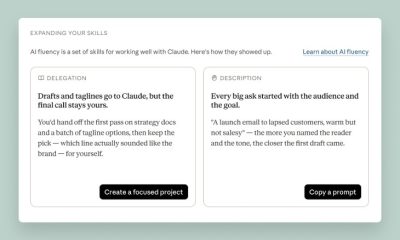
How To Use Claude’s Reflect Dashboard And Learn When It’s Time To Touch Grass
-

 Tech5 days ago
The 35 Best Board Games for Family Game Night
-

 Entertainment6 days ago
Stephen Colbert Returns to Social Media After Late Show End
You must be logged in to post a comment Login