

Business
Labour seat projection: 117 short of majority

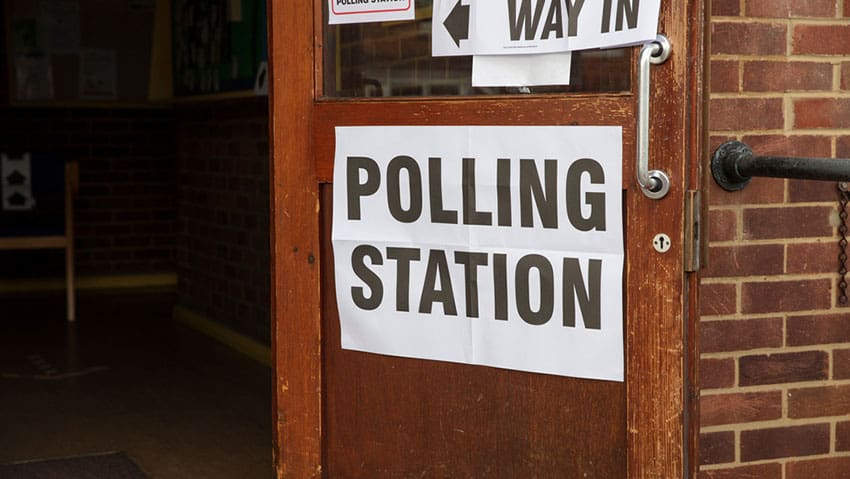
Labour would be the largest party in the House of Commons but fall 117 seats short of an overall majority if a general election were held now, according to a seat projection published by UK Polling Report, as Prime Minister Andy Burnham ruled out going to the country before 2029.
The projection puts Labour on 209 MPs, 202 fewer than the 411 the party won at the 2024 general election, and short of the 326 seats needed to command a majority.
Reform UK would come second on 149 seats, with the Conservatives on 133 and the Liberal Democrats on 72. The SNP would take 44 seats, the Greens seven and Plaid Cymru four.
The seat numbers are drawn from an average of opinion polls that puts Reform on just under 25 per cent, Labour on 22 per cent and the Conservatives on 20 per cent.
Reform therefore leads on votes but trails on seats. UK Polling Report’s analysis attributes that to the first-past-the-post system, which rewards Labour for a wider geographical spread of support.
Burnham, who entered Downing Street on 20 July as Britain’s seventh prime minister in a decade, was asked about the polling in an interview with the BBC’s Laura Kuenssberg.
He ruled out an early contest. “There is no general election,” he said. “And the thing I would say to you is 20 million people voted for a manifesto. We’re in a parliamentary democracy, so that is what people voted for, and I will honour that manifesto.”
Pressed on whether that was a firm commitment, he said: “Well I’m going to rule it out. There’s no early general election. I don’t think people want it.
“The opinion polls might say some people do, some people don’t. I just think what I most need to do is get Britain focused on getting the country back where it should be, getting it working.”
The findings come less than a week into Burnham’s premiership. He became Labour leader on 17 July following Sir Keir Starmer’s resignation, and was appointed prime minister the following Monday.
Burnham has said he will honour Labour’s 2024 manifesto commitments not to raise VAT, income tax or national insurance. “I stick by the manifesto and the promises that it made,” he said before taking office. “So, let me be absolutely clear about that, but there is some room within that manifesto for movement on tax.”
He has since removed VAT from electricity bills, a measure most businesses do not qualify for.
Reform’s standing in the polls has already prompted calls for closer examination of its economic programme by companies. Liam Byrne, the Labour chairman of the Commons business and trade select committee, said in December that businesses were right to be worried about Reform UK.
“If Reform is set to become the predominant party of the right, then businesses absolutely are going to need to understand where they’re coming from,” Byrne said. “Particularly when the economic evidence says that populist, interventionist administrations are pretty catastrophic for the economy.”
Reform’s deputy leader Richard Tice has rejected that characterisation, saying both Labour and the Conservatives had “wrecked the public finances” and that his party would cut spending, borrowing costs and regulation before cutting taxes.
A general election is not due until 2029. Burnham’s first Budget is due in the autumn.

Paul Jones
Harvard alumni and former New York Times journalist. Editor of Business Matters for over 15 years, the UKs largest business magazine. I am also head of Capital Business Media’s automotive division working for clients such as Red Bull Racing, Honda, Aston Martin and Infiniti.


France and Spain race to curb wildfires before new heatwave arrives
Business
Oil Prices Plunge Over 8% as US and Iran Pause Strikes, Reviving Hopes for Strait of Hormuz Shipping

Oil prices tumbled sharply Monday, with the non-expiry crude contract dropping 8.21% to $82.24, as a weekend pause in hostilities between the United States and Iran raised hopes for a diplomatic breakthrough that could restore normal shipping traffic through one of the world’s most critical energy chokepoints.
Oil prices tumbled more than 5% Monday after the U.S. and Iran paused strikes over the weekend following two weeks of attacks, raising hopes of a diplomatic solution that would de-escalate the conflict and allow shipping to resume in the Strait of Hormuz. Brent crude futures fell $5.70, or around 5.9%, to $91.08 a barrel by early morning trading, briefly slipping under the key support level of $90 during the session. U.S. West Texas Intermediate crude traded at $84.51 a barrel, down $4.80, or roughly 5.4%.
Iran Signals Willingness to Hold the Pause
Oil prices fell further after Iran reportedly indicated it would suspend its own attacks as long as the U.S. pause in hostilities remains in place, easing concerns after nearly two weeks of escalating conflict in the region. International benchmark Brent crude futures for September delivery fell 7.4% to around $89.58 a barrel, while U.S. West Texas Intermediate crude futures for September delivery dropped 6.8% to $83.25 a barrel.
Iran indicated it would stop carrying out attacks as long as the United States also refrains from striking, according to a senior Iranian official cited by Reuters on Sunday. The pause follows Washington’s decision to suspend its bombing campaign after President Trump’s advisers reportedly warned that the military was running low on viable targets and raised concerns about depleting U.S. munitions stockpiles.
Shipping Traffic Remains Thin Despite the Pause
Even with the de-escalation, actual maritime traffic through the region’s most critical waterway has yet to meaningfully recover. Fewer than 10 commodity vessels passed through the Strait of Hormuz daily during the weekend, according to shipping data from Kpler. MST Marquee analyst Saul Kavonic said any rebound in flows through the Strait is likely to prove slow and only partial, since many shippers remain cautious and will want greater confidence in vessel safety before sending more empty ships back into the waterway.
In addition, ship traffic through the Bab el-Mandeb strait fell Sunday after Yemeni Houthi forces attacked Saudi oil installations along the Red Sea coast, though a third Chinese supertanker did manage to exit through the strait during the same period.
Analysts Remain Cautious on the Durability of the Pause
Despite Monday’s sharp price move, market analysts cautioned that a pause in fighting does not guarantee a swift return to normal oil flows from the region. One analyst noted that a stay of military strikes might look like an improvement on paper, but it comes with no guarantees that oil will soon resume flowing from the area, adding that prices are more likely to keep falling if elevated energy costs once again weigh on global demand rather than because of fragile, short-term ceasefires.
Continued Attacks Complicate the Picture
The optimism driving Monday’s selloff comes even as fighting has not fully stopped. Despite renewed prospects for peace, strikes continued in recent days, with Iranian forces firing ballistic missiles at Kuwait and sending attack drones toward the Strait of Hormuz. That continued military activity has left analysts wary of declaring the conflict fully resolved, even as headline oil prices react favorably to diplomatic signals.
A Volatile Stretch for Global Oil Markets
Monday’s decline is only the latest swing in what has been an extraordinarily volatile period for crude prices this year, as the Middle East conflict has repeatedly pushed prices sharply higher during periods of active fighting, only to see them retreat just as quickly whenever ceasefire talks gain momentum. Both Brent and WTI contracts were trading at their lowest levels in nearly a week on Monday, following three consecutive weeks of price increases driven by the escalating conflict. Brent crude had climbed as high as $100 per barrel at the peak of the conflict, as fighting disrupted oil shipments through the Strait of Hormuz and spilled over into the Red Sea, hindering exports from Saudi Arabia, the world’s top oil exporter, through the Bab el-Mandeb strait.
The pullback in oil prices has had ripple effects across broader financial markets, easing inflation concerns and boosting risk appetite among investors. Major U.S. stock indices advanced Monday as falling energy costs reduced pressure on interest rate expectations, with the retreat in crude prices seen as a modestly positive development for consumers and businesses that had been bracing for a prolonged period of elevated energy costs tied to the conflict.
What Comes Next
With Iran’s willingness to maintain the pause contingent on the U.S. continuing to refrain from strikes, the durability of Monday’s price relief remains uncertain. Traders and analysts will be watching closely in the coming days for signs of whether shipping volumes through the Strait of Hormuz begin to meaningfully recover, or whether the current lull in fighting proves to be only a temporary reprieve in a conflict that has repeatedly flared back up after periods of apparent calm. For now, markets appear to be pricing in cautious optimism, even as the underlying security situation in the Gulf remains far from fully resolved.

New England Patriots legend Rob Gronkowski talks about which player’s card he would most like to pull.
Rob Gronkowski, the card collector?
The New England Patriots legend said he has been in the “collecting game” since he was a kid and is diving back in as the hobby has surged in popularity once again.
“That’s when collecting trading cards was huge,” Gronkowski told FOX Business. “That was at its peak and then it kind of dipped a little bit, and now it’s at its super peak.”
CLICK HERE FOR MORE SPORTS COVERAGE ON FOXBUSINESS.COM

Rob Gronkowski #87 of the New England Patriots watches from the sidelines in a game against the Buffalo Bills at New Era Field on Oct. 30, 2016, in Buffalo, New York. (Tom Szczerbowski/Getty Images)
“I collected baseball cards and NHL cards. Those were my two favorite hobbies to do.”
Before taking the stage at The National Sports Collectors Convention on Aug. 1, Gronkowski is teaming up with eBay Live to launch “Gronk Geeks Out.” The new series will follow the 37-year-old as he dives headfirst into the world of collecting and learns the ins and outs of the hobby.
One of Gronkowski’s friends made it a point to collect as many cards of the former Tampa Bay Buccaneers tight end as possible during his playing days.
ZERO BS. JUST DAKICH. TAKE THE DON’T @ ME PODCAST ON THE ROAD. DOWNLOAD NOW!

Founders FFC tight end Rob Gronkowski during the Fanatics Flag Football Classic at BMO Stadium in Los Angeles, California, on March 21, 2026. (Kirby Lee/Imagn Images)
“My buddy was a big collector throughout my career, and he was buying cards on eBay of myself,” Gronkowski said. “He did it for like 10 years straight. Then he finally told me, and he has like a hundred of my playing cards, and he said he bought them all off of eBay. He says they’re worth even more now. So he’s all pumped.”
As for Gronkowski, he said there is one player’s card that he would want to pull more than anything else.
GET FOX BUSINESS ON THE GO BY CLICKING HERE

New England Patriots tight end Rob Gronkowski (87) gains yards after a catch during the first half of an AFC divisional playoff game against the Kansas City Chiefs at Gillette Stadium in Foxborough, Massachusetts, on Jan. 15, 2016. (The Providence Journal/Bob Breidenbach)
“If I ever pulled like a one-of-one, or even a number like a one-of-10 Michael Jordan card, that would be absolutely legendary,” Gronkowski said. “I don’t even know if it’s possible anymore or not, but a Michael Jordan pull, a numbered Michael Jordan would be my ideal pull.”
Follow Fox News Digital’s sports coverage on X, and subscribe to the Fox News Sports Huddle newsletter.
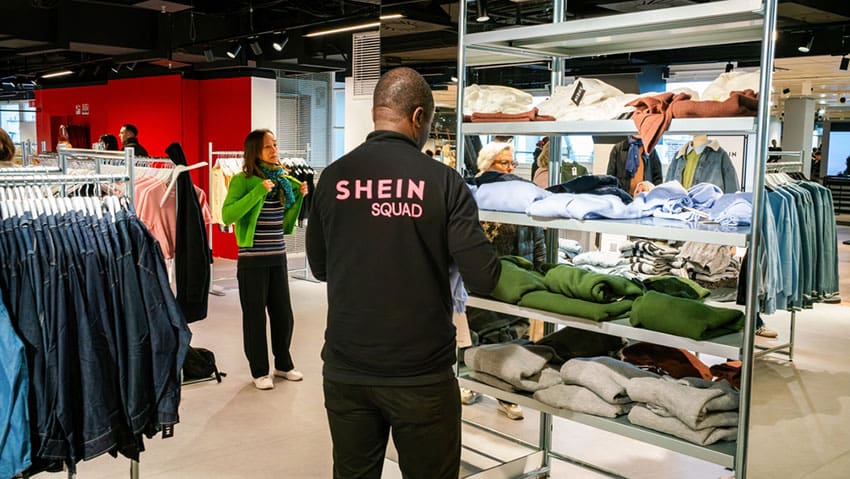
Shein lost $99m (£74.1m) in the first three months of the year, against net income of $395m a year earlier, the fast-fashion group said in a filing lodged ahead of its planned stock market debut in Hong Kong.
The company, which has its headquarters in Singapore but was founded in China, said the removal of a US import duty exemption on low-value packages had cut into sales.
“The removal of the US de minimis exemption has had an adverse impact on our sales in the US and the overall growth of our net revenues,” Shein said in the filing.
The de minimis exemption had allowed goods valued at $800 or less to enter the United States without paying tariffs. US consumers used it to buy low-cost goods from online sellers including Shein and Temu.
President Donald Trump signed an executive order ending the exemption globally, which came into effect on 29 August 2025. It broadened an earlier presidential action targeting cheap products from China and Hong Kong to cover the rest of the world. The White House said the global exemption was being used to “evade tariffs and funnel deadly synthetic opioids” to the US.
The order also raised costs for UK exporters shipping low-value goods into the American market.
Shein said it was considering how to respond to the higher charges. “In response to the increased duties and taxes, we are pursuing a wide range of options, including increasing our prices in the US market to offset a portion of the increased costs,” the company said in the filing.
Paper loss on investor shares
The first-quarter figure partly reflected a paper loss of $328m arising from an accounting change relating to special investor shares. Those shares can be converted into ordinary stock at a later date, and their value can move before a listing.
Shein also said the Iran war had hit demand, increased costs and delayed deliveries in some markets. Uncertainty remains over the US-China tariff dispute, which is currently paused.
The filing showed that in the year to the end of March 2026, Shein had 281 million active customers, a rise of more than 16 per cent on a year earlier, who placed more than one billion orders in total.
Hong Kong listing
The China Securities Regulatory Commission approved a Hong Kong share sale on 10 July, after failed attempts to list in New York and London. The listing is expected in the coming months.
The filing did not give details on the size, timetable or pricing of the initial public offering.
Shein had targeted the third quarter of 2025 for a London listing at a projected valuation of £50bn, but paused those preparations after the US tariff changes.
EU levy takes effect
Earlier in July, the European Union imposed a €3 (£2.56; $3.42) levy on low-value e-commerce imports, aimed at what the bloc has said is unfair competition from China.
The European Commission said the temporary duty applies from 1 July 2026 to parcels worth up to €150 imported from outside the EU, and is charged per tariff classification rather than per item. It runs until July 2028.
The UK has taken a slower route. The government has confirmed it will abolish the £135 de minimis customs relief, but not until 2029, citing the need for a gradual transition to avoid border disruption. Helen Dickinson, chief executive of the British Retail Consortium, said in June: “Every day the government delays introducing a new customs system for low-value imports is another day that harms British businesses.”
A Treasury spokesman said the reform “backs our businesses to compete and grow, controls safety and flow of goods at our border, and keeps the UK in line with our international partners”.

Amy Ingham
Amy Ingham is a reporter at Business Matters, covering UK business news with a focus on breaking news, business policy, late payments and insolvency. She joined the magazine in 2026 after completing the NCTJ Diploma in Journalism at Harlow College’s journalism school. Her recent reporting includes British Steel’s nationalisation and its impact on SME suppliers, the decline in late payments by large firms, and Insolvency Service director disqualifications. Reach her at aingham@cbmeg.co.uk.


Company says it made market share gains across all US categories.
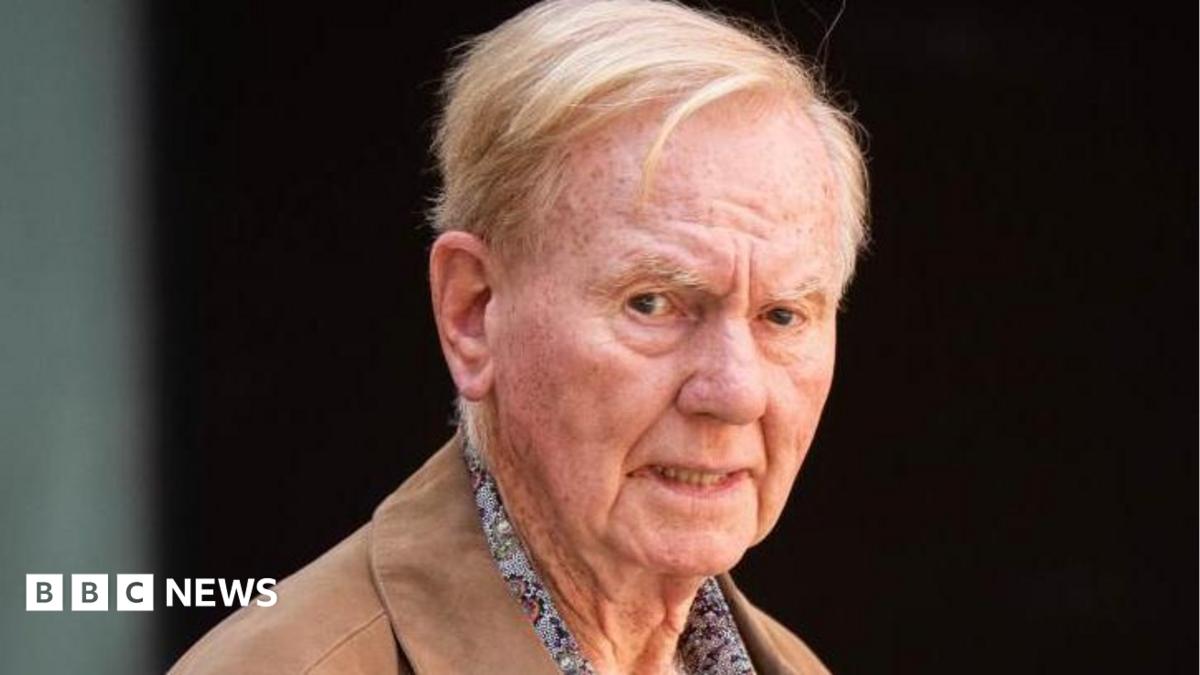
Investors who were defrauded out of more than £1m by a former Nasa scientist will get most of their money back.
John Burford, from Mansfield in Nottinghamshire, admitted defrauding 100 investors and was sentenced to two years in prison in 2025.
Despite not being authorised to, Burford had offered trade alerts and investment opportunities in “managed funds” through his firm Financial Trading Strategies between 2016 and 2021.
At a hearing at Southwark Crown Court on Monday, the 86-year-old was ordered to pay £655,951.40 after the Financial Conduct Authority (FCA) obtained a confiscation order against him.
Burford has a PhD in physics from the University of Toronto and worked for Nasa in its manned Mars exploration team based in Washington D.C. before moving into finance, according to his author biography on a publisher’s website.
The FCA said Westminster Magistrates’ Court heard he had generated more than £1m through his illegal investment schemes but only traded £760,000, most of which was lost.
Substantial amounts of money investors sent him were actually used to buy a house, a court heard in June 2025.
The FCA said he repeatedly misled investors about fund performance, concealed losses and used their money for personal gain.
The regulator said the payout ordered against Burford is the total value of assets the court found could still be recovered and returned directly to his victims.
It said the payments, together with previous payments from Burford to investors, means an estimated 99% of the money originally invested by the roughly 70 known victims will have been returned.
Steve Smart, executive director of enforcement and market oversight at the FCA, said: “Mr Burford scammed investors to fund his own lavish lifestyle.
“Clawing back stolen money from fraudsters and returning it to victims sends a clear message that crime doesn’t pay.”
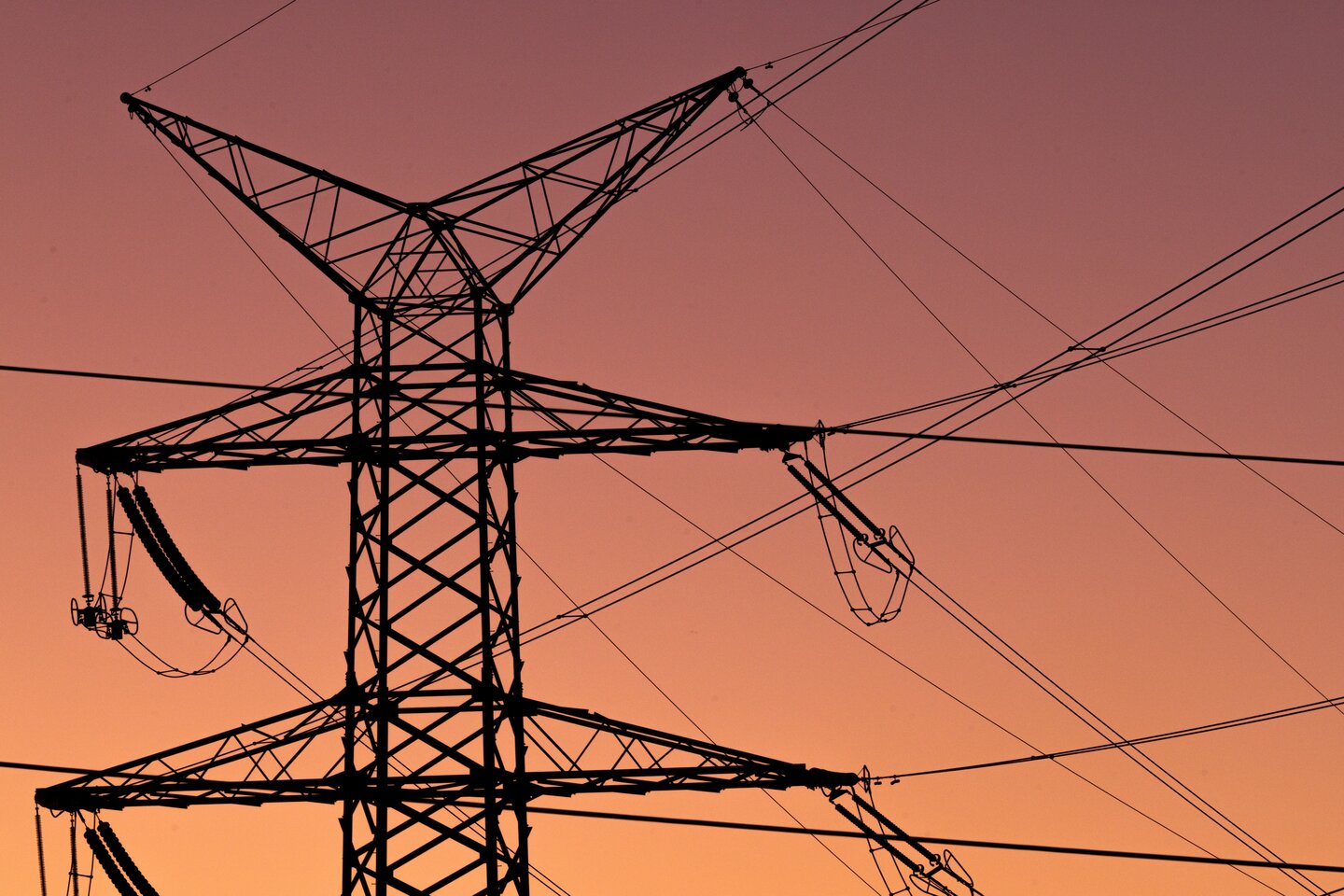
WA’s average real-time wholesale electricity price climbed 30 per cent last quarter compared with the same quarter in 2025, to a record high driven by a reliance on gas.
The finding is a key takeaway from the Australian Energy Market Operator’s quarterly outlook, released today, which said lower wind generation and reduced coal-fired power between the two periods had resulted in less lower-cost supply.
The lack of wind was attributed to outages because of expansion work at the Warradarge wind farm, and weaker seasonal conditions than in the previous comparable quarter.
The amount of coal in the grid fell by 137 megawatts, or 17 per cent, because of planned outages and last year’s retirement of the state-owned Muja C power station.
Instead, the grid turned to gas-fired generation – up an average of 27 per cent in the 2026 June quarter compared with the same period in 2025 – while renewable generation slid back from 33.6 per cent to 32 per cent.
Average renewable contribution to the state’s grid peaked at 52.4 per cent in the December quarter but has fallen in each quarter since.
But the market regulator tends to compare quarter with comparable quarter, in an ‘apples for apples’ model which removes seasonal factors at play.
Pricing was up considerably, to a record average Wholesale Electricity Market high of $117.87 per megawatt hour – up $27.41 per megawatt hour from the June quarter in 2025.
The pricing mechanism has been run since the commencement of the new wholesale market in 2023.
It is paid by a small number of market participants, with retail electricity subsidised by the state government for end users in the system.
AEMO executive general manager – Western Australia and strategy Kirsten Rose said the state’s ability to lean on gas during a challenging period for the commodity was notable.
“Overall, wholesale electricity prices increased due to reduced wind generation, lower coal availability due to planned and forced outages, and plant retirement, increasing the reliance on gas-powered generation,” she said.
“The domestic gas market also demonstrated its resilience.
“Despite maintenance activities, lower production and ongoing cyclone recovery impacts, coordinated operational management ensured gas supplies remained secure throughout the quarter.”
Ms Rose also noted a significant uptick in battery storage over the past year, with more than 1,000 megawatts of new capacity joining the network.
“We continue to see the positive impact of increased battery storage capacity transforming how the power system operates, strengthening system security, increasing competition and helping integrate more renewable energy into the market,” she said.

RPM International: Steady Progress And Better Positioning, Arguably Undervalued (Upgrade)
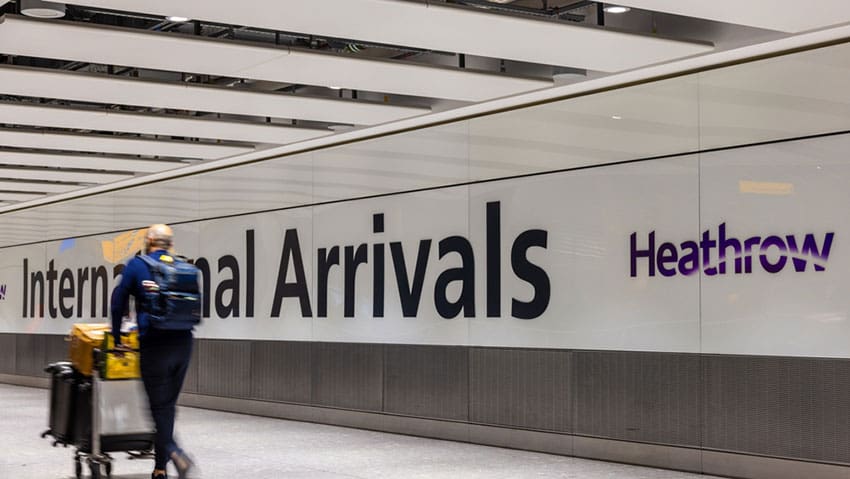
A third runway at Heathrow would move 15,200 aviation jobs that would otherwise accrue in the UK regions to the airport by 2050, according to New Economics Foundation analysis of Department for Transport modelling published last month.
The NEF analysis of the DfT economic paper also found that 6,400 jobs at other London and south-east airports would go to Heathrow instead.
Birmingham airport is set to lose 7.5 million passengers a year by 2050 under the DfT forecasts, a decrease economists put at about 9,500 jobs foregone at the airport and in its supply chain. That accounts for almost 10,000 of the West Midlands total.
The paper was published alongside the government’s consultation on the Heathrow expansion national policy statement, which MPs must approve before the runway can be built.
DfT modelling published with the consultation puts the overall GDP impact of expansion at up to 0.05 per cent a year. Rachel Reeves, the previous chancellor, had championed the scheme on growth grounds.
A peer review carried out for the DfT of its own GDP analysis states: “In my view, it would be erroneous to claim a broad distribution of the gains from Heathrow to regions on the basis of the modelling.”
The distribution of benefits across the UK is one of four tests the government set for approving the scheme.
The findings come a little over a week after Andy Burnham became prime minister. Burnham has said too much infrastructure spending goes to the south of England and has promised to rebalance it with a No 10 North.
Alex Chapman, head of economic policy at the NEF, said: “With every new release of data, Heathrow’s proposed third runway is looking less like a plan for growth and more like a plan to move jobs and investment to London and the south-east. The third runway will take spending out of the places that need it most, anathema to what Burnham stands for.
“As the GDP case for expansion has evaporated, and the environmental damages will be significant, it’s unclear why this is proceeding. The winners from the scheme are the foreign shareholders who, as things stand, will be gifted a guaranteed return in exchange for taking on minimal private risk.”
The government said the NEF analysis focused on a limited period and was misleading. A DfT spokesperson said: “This analysis doesn’t factor in the potential for over 60,000 local jobs that Heathrow expansion will bring. The benefits will be felt across the UK, with up to 40% of the £2.6bn boost to the economy outside of London and the south-east.
“In fact, by 2055 when the expansion is in full swing, passenger numbers at Birmingham airport are forecast to almost triple in size, leading to more local jobs.”
Thomas Woldbye, Heathrow chief executive, said the government’s economic models did not capture all the benefits, including £150bn in trade. “Trade unions, businesses and airports right across the country back this project because they can see the real benefits,” he said.
“The government itself acknowledges that the full economic value of these benefits extends far beyond what can be measured through traditional infrastructure appraisal models, which currently don’t capture any benefit from more exports or the tens of billions of pounds in private investment in UK supply chains.”
Other impact assessments published alongside the consultation found that constructing the runway would have significant adverse effects on the health and wellbeing of up to three million people living nearby.
The current plan is for a 3,500-metre runway passing over the present location of the M25, at an estimated cost of £33bn. It would allow Heathrow to operate up to 756,000 flights a year, against 480,000 now. Ministers have promised to accelerate construction so the runway opens by 2035.
The scheme has been approved by government twice and never completed, and questions over its cost and timeline have been raised by outside analysts. Sceptics include Ed Miliband, now foreign secretary, who opposed expansion within the last Labour government that approved it. Woldbye said: “We look forward to welcoming [Miliband] here a lot more when he is going travelling.”

Jamie Young
Jamie Young is Senior Reporter at Business Matters, covering SME finance, employment law and Westminster policy since 2016. He has reported on every Budget and Autumn Statement since 2018, helped make sense of the ‘covid era’ and the bounce-back loan scheme from launch through the fraud investigations, and broke the magazine’s coverage of the 2024 late-payment reforms. He joined Business Matters straight from completing his BA in Administration from Exeter University and is NCTJ-qualified. Reach him at jyoung@cbmeg.co.uk

Retail sales volumes fell at a slower pace in the year to July, with the weighted balance rising to -26 per cent from -54 per cent in June, according to the CBI’s monthly Distributive Trades Survey published on Monday.
Retailers expect sales volumes to decline at a similar rate in the year to August, at -26 per cent.
The survey was conducted between 26 June and 14 July, with 191 firms responding: 67 retailers, 105 wholesalers and 19 motor traders.
Retailers separately judged July’s sales to be poor for the time of year, though to a lesser degree than in June, at -18 per cent against -40 per cent. August’s sales are expected to fall short of seasonal norms by a wider margin, at -29 per cent.
Online retail sales volumes fell in the year to July at a balance of -47 per cent, from zero in June. Retailers expect internet sales to fall at a similar rate in August, at -48 per cent.
Retail orders placed upon suppliers contracted at a faster pace, at -31 per cent from -26 per cent in June. Retailers expect the rate of decline to accelerate to -36 per cent next month.
Retail stock volumes relative to expected sales stood at +16 per cent, against +19 per cent in June and a long-run average of +17 per cent. Stock positions are expected to soften to +12 per cent in August.
Elsewhere in the distribution sector, wholesale sales volumes were broadly unchanged in the year to July, at +2 per cent from -20 per cent in June, ending 25 consecutive months of decline. Wholesalers expect sales to fall again in August, at -7 per cent.
Motor trades sales volumes grew at +57 per cent in the year to July, the fastest pace since April 2024, from -30 per cent in June. Motor traders expect growth of +50 per cent in August.
Total distribution sales volumes were broadly flat at +1 per cent, from -33 per cent in June, the strongest reading since May 2024. Sales are expected to contract at -5 per cent next month.
Martin Sartorius, lead economist at the CBI, said: “Retailers reported that the ongoing sales downturn lost steam in July, but a recovery still looks some way off as gloomy sentiment and elevated cost pressures weigh on activity. That said, conditions in the rest of the distribution sector were less downbeat, with wholesalers seeing stable volumes for the first time in over two years and motor trade sales rebounding.”
He added: “Distribution firms will welcome the Prime Minister’s focus on supporting local high streets and will be looking for broader business rates reform to address one of the key constraints on investment and growth. To deliver inclusive growth in every postcode, the government must also take further action to tackle rising labour costs while protecting labour market flexibility, so that the sector can continue to provide young people with rewarding routes into work.”
The government announced on 23 July that pubs, social clubs and live music venues in England will receive a 20 per cent cut to their business rates bills from April next year, in a package it values at around £100 million a year. Nearly 32,000 premises will benefit, saving the typical pub an estimated £1,100 in the next financial year, according to the announcement. Prime Minister Andy Burnham had set out the rates cut in an interview earlier in July before taking office.
The government said it would return to wider business rates reform, including small business rates relief, at the Budget. The Federation of Small Businesses has asked the Treasury to lift the relief threshold from £15,000 to £25,000 after an estimated 104,000 small business premises were brought into the rates regime in April.
Figures compiled by UHY Hacker Young show that employers’ National Insurance contributions rose by £28bn in the 12 months to 31 March 2026, a rise of 24 per cent.
In June’s survey, the CBI reported that retail sales for the time of year were judged poor to the greatest degree since January 2024.
The mean retail sales balance in the survey since July 1983 is +7 per cent.
Paul Jones
Harvard alumni and former New York Times journalist. Editor of Business Matters for over 15 years, the UKs largest business magazine. I am also head of Capital Business Media’s automotive division working for clients such as Red Bull Racing, Honda, Aston Martin and Infiniti.

“Mirabai Chanu’s Gold Motivated Me”: Indian Weightlifter Gyaneshwari Yadav After Winning Silver At CWG 2026

5 Unexpected Ways Recycled Wind Turbines Are Being Used

Live Analysis Gold, Bitcoin & Ethereum | Live Trading Crypto And Gold Live 24 July 2026

Renter of Home in Anne Heche Crash Denies Settlement With Son

No Jackpot Winner as $257 Million Prize Rolls Over to $269 Million Monday Draw

Weekend Open Thread: Staud – Corporette.com
Live Analysis Gold, Bitcoin & Ethereum | Live Trading Crypto And Gold Live 24 July 2026

Virtual Bookkeeper & Financial Strategist for Business Owners #smallbusiness

“XRP IS READY” For HUGE Price Surge, Popular Analyst Declares -Report
-

 Fashion3 days ago
Weekend Open Thread: Brooks Brothers
-

 Crypto World6 days ago
Grayscale Files For Worldcoin ETF, WLD Registers Sharp Rise
-

 NewsBeat6 days ago
How a former Blue Peter presenter stunned America’s Got Talent judges
-

 Tech17 hours ago
Intel is reversing course and bringing hyper-threading back to its server chips
-

 Tech7 days ago
Sail Virtually Aboard The “Itanic” With IA-64 Emulator
-
 Tech7 days ago
Turtle Beach Command Series KB7 review: a nifty screen-equipped gaming keyboard
-
 Business6 days ago
New Jersey voter registration controversy explained: How 6,600 noncitizens got on the rolls, and what happens next
-
 Entertainment6 days ago
Johnny Depp’s R-Rated Gothic Cult Classic Gets New Release Ahead of Sydney Sweeney Remake
-

 Crypto World5 days ago
Ethics, other provisions in crypto Clarity Act to be further discussed
-

 Politics6 hours ago
Luke Littler dismantles Gerwyn Price to retain title in Blackpool
-
 NewsBeat7 days ago
Shanghai science forum photos show China’s AI and robotics advances in rivalry with US
-
 Sports20 hours ago
Commonwealth Games boxing: Jadumani Singh seals dominant 5-0 win over Pakistan’s Sumama Rehman to enter quarter-finals | Commonwealth Games News
-

 Sports4 days ago
2026 3M Open leaderboard: Scottie Scheffler finds putter in Round 1, sits three back
-

 News Videos4 days ago
The Peugeot Family: How 200 Years of an “Old Money” Dynasty Died in A Boardroom
-

 Fashion4 days ago
16 Dresses for the High Summer Event
-

 Politics1 day ago
Spain sweeps the board at 2026 World Cup with individual awards
-

 Crypto World7 days ago
Andrew Cuomo joins OKX board as crypto exchange expands in U.S.
-
 Entertainment3 days ago
A New Post-Apocalyptic Gundam Anime Series Blasts Into SDCC
-

 News Videos20 hours ago
BITCOIN JUST ENTERED THIS CRITICAL ZONE…
-

 Crypto World1 day ago
XRP Ledger adds $2.6B as RWA inflows rank second
You must be logged in to post a comment Login