

Politics
Nine Lorry Loads Stolen Every Day in Britain and the Government Still Won’t Give Freight Crime Its Own Police Code

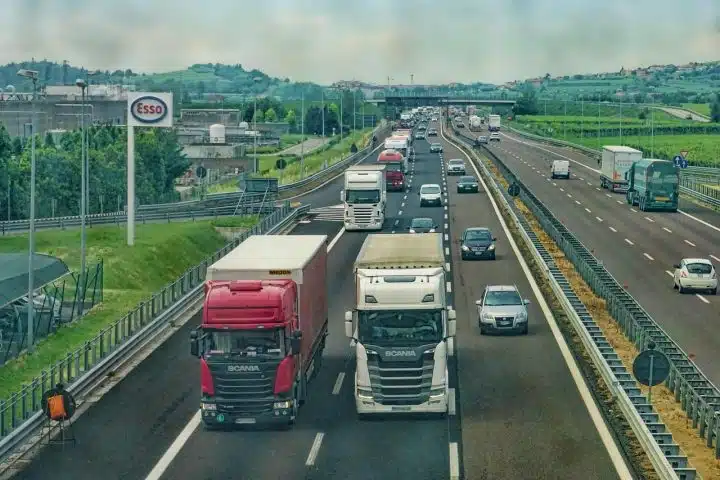
NaVCIS logged 3424 HGV cargo crime incidents in 2025, nine a day across a network that has no dedicated police crime code for any of it. A driver parks a loaded curtainsider at a layby off the A5 because there is nowhere else to stop, and by morning the load is gone. The loss gets recorded as theft from a vehicle, the same category that covers a smashed car window in a supermarket car park. Mike Dawber, a NaVCIS field intelligence officer, put the direct cost at £65.1 million for the year. He also said the real figure would more likely be about four times that, and some people say seven. Parliament’s own analysis of the wider damage, once you pull in insurance costs, vehicle repairs, delays cascading through supply chains, landed somewhere near £700 million. The Home Office has had those numbers for years and still classifies the whole thing as a statistical rounding error, which is the part I find hardest to explain to anyone outside the freight industry.
The RHA reported £111 million worth of goods stolen from lorries in 2024, up almost two thirds from £68 million in 2023. That jump did not come with a corresponding jump in enforcement resources or political attention. NaVCIS supported 48 police operations last year, and those operations produced 265 arrests, which, against 3424 reported incidents, is not a ratio that suggests the problem is under control. Dawber described freight crime as low risk and high reward, and the NaVCIS position is that probably three quarters if not more, of it is serious and organised crime rather than opportunist theft. The correlation NaVCIS draws is with a reduction in incidents like bank robberies. Armed robbery of a bank branch carries a serious custodial sentence, and the premises have cameras, time locks, and dye packs. A curtainsider in a layby at two in the morning has none of that, and the load inside it might be worth more than whatever sits in a rural branch’s cash drawer. Vehicle tracking data from haulage clients across northern England shows the same regional concentration that NaVCIS reports. The West Midlands, East Yorkshire and Humberside, the Southeast, the East Midlands. Three or four years of data on either side and the geography has barely moved.
Curtain slashing accounted for 26.9 percent of incidents last year, 915 cases, still the most common method because it requires nothing more than a blade and maybe ninety seconds of access to a parked trailer. Of the 3424 incidents, 1831 occurred at what NaVCIS calls independent parking locations, meaning industrial estates, laybys, and roadside pull ins that have no security infrastructure at all. Another 699 happened at motorway service stations. Those two categories together cover about 74 percent of all cargo thefts, and both are locations where drivers park because the alternative is a driving hours violation. The UK needs 11000 additional lorry parking spaces according to the RHA. The secured sites that do exist charge £30 to £50 a night, and a driver who pays that still might end up in a facility where half the perimeter lighting is broken, and the CCTV hasn’t been serviced in months. Nearly 40 percent of thefts occur in unsecured roadside parking or rest areas. Fleet managers I speak to regularly have started treating cargo loss as a line item, something they budget for annually the way they budget for tyre wear on poor surfaces. The difference, obviously, is that tyre wear does not involve organised criminal groups peeling back a curtain at three in the morning and driving off with £200000 worth of consumer electronics before anyone notices.
The crime code issue is the part that should probably generate more anger than it does among fleet operators. Police forces in England and Wales do not have a way to flag a crime as freight related when they record it. So a £200000 electronics theft from an HGV goes into the same generic bucket as shoplifting or someone nicking a bicycle from outside a train station. That data feeds into the models that determine police funding, decide how many officers go where, and shape what the force’s strategic priorities look like for the next budget cycle. Freight crime is not invisible because it is small. It is invisible because the recording system was never built to see it. West Midlands Police is running a trial to tag freight crime separately, and if it works, the idea is that other forces will adopt it. Nobody I have spoken to in the haulage sector expects that rollout to happen quickly.
SMEs make up 90 percent of the logistics sector. A single cargo theft can wipe out a small haulier’s margin for the quarter, sometimes longer. The insurance premiums that follow are often worse than the loss itself because they compound over years and they apply across the fleet, not just the vehicle that was hit. A haulage operator running maybe fifteen trucks out of a yard in the East Midlands told me his insurance went up by about 18 percent after two incidents in the same year, neither of which were his drivers’ fault. The loads were parked where they were parked because there was literally nowhere else to put them within legal driving distance. He considered installing additional tracking and alarm systems on every trailer, but the cost would have run to several thousand pounds per unit, and he was not confident it would bring the premium back down. The government’s response, to the extent that one exists, has been to talk about telematics and technology adoption. Real time tracking, geofenced alerts, door sensors, temperature monitoring on pharmaceutical loads. All of it is available right now, and the operators who can afford to spend on it are already running it. The gap is not a technology gap. It is a parking gap and a policing gap, and those are infrastructure problems that no amount of fleet software will fix on its own. The West Midlands tagging trial is still running. Nobody I have spoken to at NaVCIS or the RHA could tell me when results are expected, or what would need to happen for a second force to pick it up.

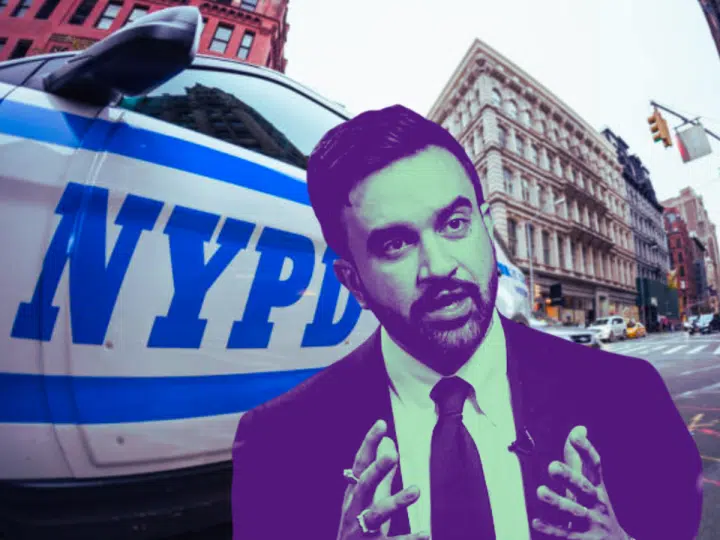

New York mayor Zohran Mamdani is in “active conversation” to see if he can seek an arrest warrant for Benjamin Netanyahu. The wanted Israeli war criminal will be visiting the big apple in September to attend a United Nations General Assembly.
Mamdani: ‘He belongs in the Hague’
Mamdani’s popularity continues to confound and irk the Israel lobby. He has rightly said Israel should not exist as an ethnostate. Both he and his family have been targeted by Israel’s lobbyists for daring to show solidarity with Palestinians against genocide.
He has also said that Netanyahu belongs in the International Criminal Court in the Hague and will be arrested, but only if US law allows. In an interview
I believe that Prime Minister Netanyahu belongs in the Hague. He’s a war criminal who has been charged by the International Criminal Court. And what you will find is that it is an opinion that is held by many, purely because of what his actions have wrought over these last many years.
Whatever the law allows me to do in New York City, that’s what we will do, but we won’t be writing our own laws to that end.
All too predictably, Netanyahu claimed that Mamdani ‘champions Hamas,’ and hates the US in an interview with a NY-based radio station:
I think he should look at who he’s condemning, who he’s praising. He’s condemning Israel… Who does he champion? Hamas, that calls openly to massacre every Jew on earth, that conducted that horrible massacre [on Oct. 7, 2023], the worst massacre on Jews since the Holocaust…
…And in fact I think secretly, he hates America.
International law is unequivocal that the UK has a legal obligation to arrest Netanyahu and other accused war criminals if they have the opportunity to do so.
While claiming to respect international law, the Starmer regime routinely gave special immunity to allow Israeli genociders to come to the UK with impunity. UK police forces have also refused even to investigate UK citizens accused of participating in Israel’s Gaza genocide.
At least Mamdani is making the right noises.
Featured image via the Canary
By Skwawkbox

The UK establishment continues to demonise and repress anti-genocide protest. But Jewish activists against genocide and apartheid were, as usual, at the forefront of the giant march for Palestine in London yesterday, 18 July 2026. All images are courtesy of activist photographer ‘BetterThanReal.’





Oi Burnham – be better!
Marchers celebrated the departure of now-ex PM Keir Starmer and challenged his successor Andy Burnham over his own links to the Israel lobby and whether he will be any better:


Genocide: ‘Bought and paid for’
Protesters carried giant banknotes linking Starmer’s ministers and advisers to Israel-linked donations, and the UK’s collaboration in Israel’s Gaza genocide:



Zionism is racism
They reminded onlookers of the fundamentally racist nature of an ideology that approves the theft and colonisation of a land from its indigenous people – and of the bloodshed it inevitably causes:



Collusion in Genocide
And they opposed UK collaboration in the illegal US-Israel war, while former Labour leader Jeremy Corbyn reminded the crowd of the extent of UK-Israel collusion:
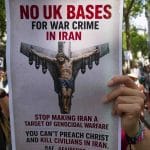
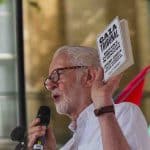
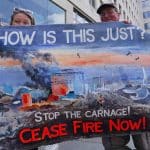
Free Palestine. End Israel’s genocide and occupation.
Featured image via the Canary
By Skwawkbox


The Young Greens have led the way for their machine-hindered parent party by dumping the pro-Israel, pro-colonialism so-called ‘IHRA working definition of antisemitism‘.
Young Greens break ranks
The Israel lobby within the Green party succeeded in sabotaging a ‘Zionism is racism’ motion at the Greens’ conference. However, today – 19 July 2026 – the Young Greens have passed a new resolution dismissing the party’s existing, IHRA-framed guidance as “unfit for purpose” and that the Greens’ youth section:
Believes:
Antisemitism is a serious form of racism that must be actively identified, challenged, and addressed within the Young Greens and the wider Green movement.
A robust antisemitism framework must be both genuinely protective of Jewish members and genuinely protective of free political expression, including Palestinian solidarity, criticism of Israeli state policy, and anti-Zionist political analysis.
The existing reference to a now-inaccessible guidance document does not provide members or officers with the clear and usable framework they need.
The document originally adopted by reference is unfit for purpose and should not be reinstated: it cites politically loaded authorities as neutral scholars, frames anti-Zionism as presumptively suspicious, presents a definition of Zionism that makes no mention of the Palestinian Nakba, explicitly instructs disciplinary bodies to use it, and is now out of date with Green Party policy on Gaza.
This motion is not a policy statement on Israel/Palestine and does not alter the Young Greens’ existing policy positions on Israel, Palestine, or BDS; it is intended as an educative rather than legalistic document.
Resolves
1. To replace the existing 2020 RoOS entry titled “Guidance on Antisemitism” with the following guidance.
2. To adopt the following as the Young Greens’ guidance on antisemitism, for educational and organisational purposes:
‘Speaking through tears’
The Canary‘s Cameron Baillie celebrated and explained the decision:
Speaking through tears following the motion passing—which passed in [a] 16:1 ratio—proposer Jo Dowbor said:
“Leftist greens have tried to drop the IHRA for 20 years—we just made history”. That is palpably true.
One of its Jewish proposers was Noam, born in Israel, who moved to [the] UK.
— C.J.Mc. Baillie (@cjmbaillie) July 19, 2026
Noam’s speech stated that the IHRA definition of antisemitism is “not only inaccurate but dangerous”.
They stated that it is harmful to equate Jews with [the] project of Israel, although this is repeatedly done by politicians.
…make Greens the party “not to compromise on its values”
— C.J.Mc. Baillie (@cjmbaillie) July 19, 2026
Distinguishing between actual racism and antisemitism, and not: pic.twitter.com/VzJgImzrkx
— C.J.Mc. Baillie (@cjmbaillie) July 19, 2026
The IHRA is widely used to suppress free speech on Israel and has been rejected by legal experts and even by the man who wrote it. It continues, unsurprisingly, to be pushed by Israel lobby groups and Israel-allied politicians. The UK government and Israel lobby have used it to target anyone who dares to speak out against Israel’s genocide, or even to show solidarity with its victims.
Accordingly, the Israel lobby was in meltdown at even the prospect of the party’s youth wing voting on the motion. That will only intensify now it has passed resoundingly.
Now it’s time for the Greens’ as a whole to block the manoeuvres of its Israel front group, dump the ‘IHRA definition’ and declare officially that Zionism is — as it unquestionably is — racism.
Featured image via the Canary
By Skwawkbox
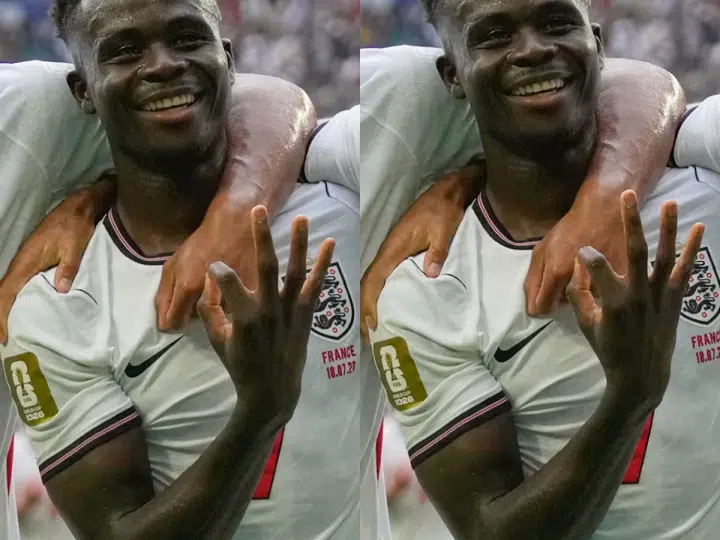
England’s 6–4 victory over France in the 2026 World Cup third-place play-off was already a memorable way to end their campaign. But thanks to Bukayo Saka, it became a historic night for English football.
The Arsenal winger stole the spotlight with a stunning hat-trick, helping England secure their first-ever World Cup bronze medal while becoming only the fourth English player to score three goals in a single World Cup match, following Geoff Hurst (1966), Gary Lineker (1986) and Harry Kane (2018).
Saka’s record-breaking night added another milestone to an already impressive international career. The 24-year-old took his England tally to 17 goals in 56 appearances. He also added a World Cup medal to the two European Championship silver medals he won in 2021 and 2024.
His hat-trick also moved him onto England’s all-time World Cup goal scoring list, with five goals at the tournament — matching the total of 1966 World Cup winner Geoff Hurst. Furthermore, he now sits behind only Jude Bellingham (7), Gary Lineker (10) and captain Harry Kane. Kane leads the way with 14 World Cup goals, including six in the 2026 tournament.
Hurst, Lineker and Kane all produced their World Cup hat-tricks during defining moments of their campaigns. Saka has now joined that group, becoming the fourth Englishman to score a World Cup hat-trick while helping England claim their first-ever bronze medal.
Featured image via the Canary
By Alaa Shamali


The race for the 2026 World Cup Best Young Player award is heating up, with four rising stars emerging as the leading contenders after standout performances throughout the tournament.
Spain’s Lamine Yamal is among the favourites after playing a key role in his country’s run to the final, further strengthening his reputation as one of world football’s brightest young talents. His teammate Pau Cubarsí has also entered the conversation, becoming a reliable presence in Spain’s defence during their title challenge.
Lamine Yamal’s impact on the 2026 World Cup beyond the statistics
The Spanish duo are not the only contenders, however. France’s Désiré Doué has impressed throughout Les Bleus’ run to the semi-finals, making a major impact with his attacking ability and decisive contributions during the knockout stages.
England’s nominee, defender Nico Aurélie, has also emerged as one of the tournament’s breakout stars under Thomas Tuchel. Having started most of England’s matches, the defender has impressed with his composure on the ball, recording a 93 per cent pass accuracy rate, while producing strong defensive displays — including a standout performance against Norway, where he helped contain striker Erling Haaland, according to FIFA statistics.
With the semi-finals and final still to come, the battle for the award remains wide open. These four young talents will have one final chance to strengthen their cases before FIFA decides who will be crowned the 2026 World Cup Best Young Player.
Featured image via the Canary
By Alaa Shamali

Spain not only claimed the 2026 World Cup title, but also dominated the tournament’s individual awards. Three of the four most prestigious honours went to Spanish players – a further testament to the excellence that led ‘La Roja’ to the pinnacle of world football.
Spain’s captain, Rodri, was crowned with the Golden Ball as the tournament’s best player, following his exceptional performances in midfield and his pivotal role in leading Spain to their second World Cup title, adding yet another achievement to his illustrious career.
Spain’s dominance did not stop at the Best Player award, as goalkeeper Unai Simón won the Golden Glove after an outstanding tournament, during which he conceded just one goal and was one of the key reasons for the Spanish side’s defensive solidity right through to the final.
Young defender Pau Cubarsí also continued to cement his place among the world’s most promising talents, having been crowned Best Young Player following his standout performances throughout the tournament, thereby confirming his status as one of the leading stars of football’s new generation.
World Cup sweep not total
The only exception to Spain’s dominance was the Golden Boot, which went to France’s Kylian Mbappé after he finished the tournament as top scorer with 10 goals, ahead of Argentina’s Lionel Messi with eight, thereby retaining the award for the second World Cup in a row.
The individual awards encapsulated the full picture of the 2026 World Cup, as Spain’s victory was not merely the result of a single final match, but the culmination of a complete tournament in which ‘La Roja’ established themselves as the best in both performance and results, securing both the World Cup trophy and three of the tournament’s most prestigious individual awards.
Featured image via the Canary
By Alaa Shamali
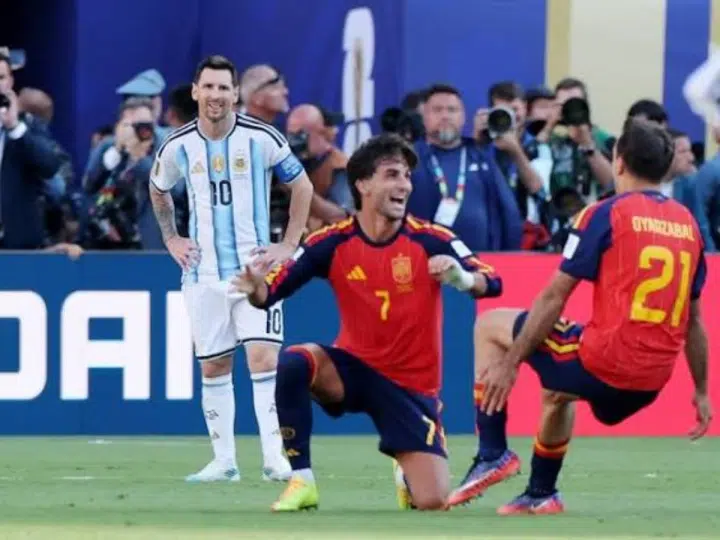
Spain’s second World Cup title did not arrive in a blaze of chaos or a flurry of goals. It came through something far more familiar, control. Luis de la Fuente’s side beat Argentina 1-0 in extra time in New Jersey. Ferran Torres delivered the decisive moment, but the story of this final was written long before the ball hit the net. Spain dominated every phase, every rhythm, every inch of the pitch. This was a victory for football philosophy.
Spain dominated
The match never resembled the dramatic, end‑to‑end final of 2022. It never threatened to. Spain imposed their game immediately, pinning Argentina back and suffocating any attempt to build through Lionel Messi or Julián Álvarez. Every attack flowed through red shirts. Every loose ball seemed to fall Spain’s way.
By the end of the night, Spain had taken 20 shots. Argentina had taken none. Not one. It was the most one‑sided a World Cup final as the competition has seen.
Spain completed 400 more passes than Argentina and spent almost the entire match in the opposition half. Even before Enzo Fernández’s dismissal, Argentina were chasing shadows. Messi, billed for a grand farewell, barely influenced the game. He drifted, he waited, he hoped, but he flopped because Spain never allowed him the oxygen to change anything.
Possession was a weapon
Spain’s commitment to possession football has been questioned at times over the past decade, but this tournament reaffirmed its value. They had more possession in all eight matches, including 74 per cent in their opening draw with Cape Verde. They conceded one goal all tournament.
Rodri, named player of the tournament, anchored everything. His control in midfield set the tempo, while Aymeric Laporte’s calm presence behind him ensured Spain were never exposed. But this was not a story of individuals. It was a collective machine.
When De la Fuente substituted both Rodri and Laporte at 0-0, it was very brave. Off came two of Spain’s most influential players. On came Eric García, Pau Cubarsí and Martin Zubimendi. The structure didn’t wobble. It tightened.
Unai Simón, winner of the Golden Glove, barely had anything to do. He made fewer saves across the entire tournament than Emi Martínez made in this final alone.
A new generation, same principles
Spain’s success is not a throwback to 2010. It is an evolution. Lamine Yamal and Nico Williams missed the opener but were central to Spain’s attacking threat throughout the tournament. Cubarsí, still a teenager, won the young player award. The depth is startling, but the identity is constant.
This is positional play at its purest: triangles, patience, circulation, control. It is football that demands technical excellence and tactical discipline. And Spain have it in abundance.
The reality is the team who was the best at possession based football has won this World Cup.
VARgentina overwhelmed
Argentina were never able to impose themselves. Their togetherness, their competitive edge, their emotional force, their dark arts all trademarks of Lionel Scaloni’s side. In this final those elements were irrelevant against Spain’s structure. They were outplayed, outpassed, outthought. To put it simply, they were outclassed.
Spain’s second World Cup title sits alongside their 2010 triumph and three European Championships in the last 18 years. It is a run of success built not on moments or individuals but on a belief in how football should be played.
De la Fuente’s appointment was a statement: the style stays. The principles stay. The identity stays.
This win is not just a trophy. It is validation. It is proof that, even in an era dominated by direct play, transitions and physicality, Spain’s way still works. Still wins. Still defines tournaments.
Spain: the best team won
Ferran Torres’ extra‑time finish will be remembered as the moment Spain claimed the World Cup. But the real story is the 120 minutes of control that preceded it. The passing sequences. The territorial dominance. The refusal to compromise.
Spain were the best team at this World Cup and in the final, and they played like it.
Football won, with FIFA and VARgentina humbled on the biggest of stages.
By Faz Ali
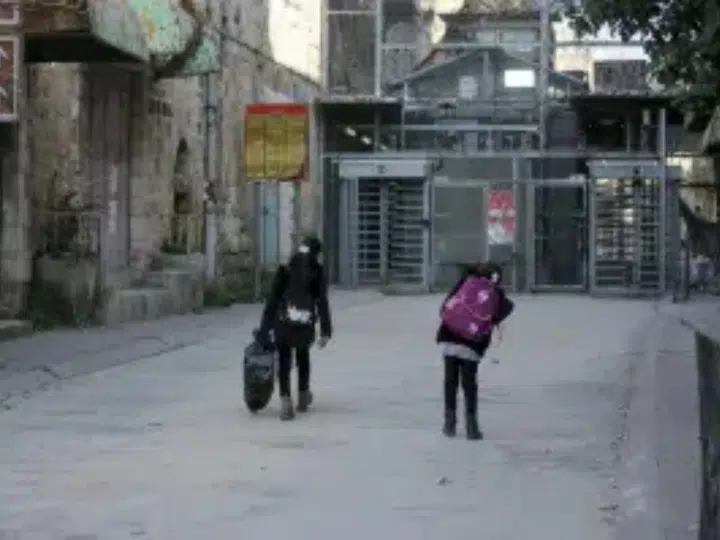
Education is a fundamental human right for everyone, but in the occupied West Bank, including East Jerusalem, access to safe and quality education for almost 835,000 school aged children has been undermined, severely threatening their futures.
West Bank education restricted
Movement restrictions, forced displacement, school demolitions, violence. and harassment by Israeli occupation forces (IOF) and Jewish colonial settlers are commonplace. So for many children, accessing education is a daily challenge. This story explores some of these difficulties.
Every morning, as the children go to school in the West Bank pic.twitter.com/DOFZ2OHNUr
— Johann Spischak (@SDGMasterglass) July 9, 2026
84 schools in the occupied West Bank remain under threat of demolition or subject to stop-work orders issued by “Israeli” authorities. This will affect around 13,000 children. At least 10 of these schools, serving 1000 students, are in the Masafer Yatta region, in the South Hebron Hills. These demolitions will deprive children of their education, a right under international law. They will also speed up the displacement of families from the area.
On 7 July, the occupation rejected an appeal against the demolition order targeting Al Rifaiyya School in Masafer Yatta. The school, which caters for 200 students, has now been given 14 days before demolition.
Khalil Hathaleen is head of the Village Council in Umm al Kheir, Masafer Yatta. He tells the Canary:
They claim the reason for the demolition is lack of a building permit, but they refuse these on the grounds that we live in a C rated area. In my village, Umm al Kheir, the settlers closed the road which the kids use to reach school. The school has now been closed for three months, with 55 students missing out on their right to education. This is an example of the settler violence we face on a daily basis.
Palestinian students from Umm al-Khair school protested the closure of the main road leading to their school after Israeli occupation forces and illegal settlers blocked it with a fence in Masafer Yatta, south of Hebron, in the occupied West Bank.
The closure prevented… pic.twitter.com/Uk44cCS6xb
— Palestine Info Center (@palinfoen) April 24, 2026
Schools demolished to prevent return
South of Nablus, violence by settlers backed by the IOF, emptied the village of Yanoun of its residents eight months ago. Now, these terrorists have demolished the village’s elementary school.
The demolition of the Yanoun Mixed Elementary School by settlers on Wednesday has intensified concerns over the future of the Palestinian village of Yanoun, east of Nablus, with local officials describing the incident as part of a broader effort to prevent displaced residents… pic.twitter.com/xguOTPsJCV
— Middle East Monitor (@MiddleEastMnt) July 10, 2026
In Area C, 10 schools have been abandoned, following the displacement of the communities they once served. By 6 July, 2026, eight of these were vandalised by settlers and two had been demolished.
“Israel” forcibly expelled thousands of Palestinians from the Northern refugee camps, in early 2025, during Operation Iron Wall, destroying homes and infrastructure. No one has been allowed to return, and six UNRWA schools in Nur Shams and Jenin refugee camps remain inaccessible. Then, in May 2025, the occupation’s armed police forcibly closed UNRWA’s six schools in occupied East Jerusalem. These include three in Shuafat Refugee Camp and one in Silwan. All remain shut today.
Students in al Mughayyir, Northeast of Ramallah, suffer daily attacks. In April 2026 two Palestinians, including 13 year old Aws Hamdi Naasan, were shot dead at the boy’s school by illegal settler Schmuel Wendy
Waheed Abu Naim, an English teacher and the principal’s assistant at al Mughayyir boy’s school, tells the Canary violence is directed against pupils on a daily basis, but usually comes from the IOF. And when students leave school, soldiers follow them home, throw tear gas at them, and scare them. The Ministry of Education told the school to continue with online lessons. But Abu Naim says the school does not want this to happen.
We need a proper solution. They want to scare the students and make us leave our teaching, so they can close the school. Parents are scared more than the children, and are talking about not sending their children to school. But we encourage them to continue, as education is the only thing we have to fight against our enemy.
Illegal settlers targeting children
Hebron is unusual in that several small settlement clusters are to be found in the centre of this West Bank city. After the Oslo Agreement, Hebron was divided into H1 and H2. H2 is under the control of the occupation’s military and encompasses the Old City and the holy sites.
Around 700 illegal settlers live amongst 7000 Palestinians in part of H2, so the occupation imposes strict movement regulations on Palestinians in this area. Out of the 925 movement obstacles in the West Bank, more than 100 are in Hebron’s H2 area. 34 out of the 89 checkpoints are also in this area. Palestinians living in the Restricted Areas near these settlements face many difficulties, including accessing education.
Hebron Community Peacemaker Teams (CPT) monitors checkpoints, maintains a protective presence, and documents human rights violations, especially in H2. Since 2002, it has also escorted Palestinian children and teachers through military checkpoints to school.
A CPT Hebron Team member, who wished to remain anonymous, told the Canary:
Since 7 October 2023, restrictions have intensified for Palestinians living in these areas, especially students. One of the restricted areas is Wadi al-Hussin, where Ziad Jaber School is located. Students living in this area must cross a checkpoint next to the school. They are often searched and sometimes detained by soldiers. There have also been multiple incidents where soldiers entered the school due to allegations of stone-throwing. Another restricted area is near the Ibrahimi Mosque, where two schools are located: Al-Ibrahimi School for boys and Al-Faihaa School for girls. Students must cross three checkpoints to reach these schools. The main checkpoint is Al-Salaimiya, known as Checkpoint 160.
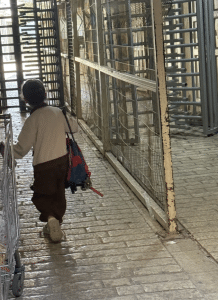
According to the UN, movement restrictions since October 2023 have reduced school attendance in H2 by about 25 percent. Since July 2025, a new checkpoint at Yasser Amr girl’s secondary school in H2, has resulted in more than 100 students leaving the school. Initially a gate and two concrete blocks formed the checkpoint, but this later expanded to include caravans, an IOF cabin, and surveillance cameras pointing in all directions.
Parents in Tel Rumeida, a Restricted Area in Hebron, tell the Canary they fear for their child’s safety while on their way to attend school. This is not only because of likely harassment and intimidation from the IOF at checkpoints, but also the ever increasing possibility of settler violence.
Persistent danger
Yasser’s son, Abdulrahman, must cross a frequently closed military checkpoint to reach school, leaving him vulnerable to delays and attacks. This makes his father feel extremely anxious. And a mother tells us she worries for her daughter, who walks through isolated areas where settlers have previously attacked her. She often escorts her and checks on her during the school day. Both parents describe a persistent sense of danger affecting their children’s daily routines and well-being.
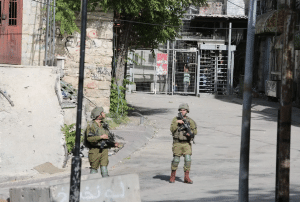
West Bank children traumatised
For many years, children attending schools in the H2 area of Hebron near Israeli occupation settlements have experienced intimidation, threats and violence. According to CPT, the daily harassment, access delays, school closures, and invasive security measures by “Israel” disrupt learning and create fear. This affects academic achievements and psychological wellbeing, and leads to less children registering to attend these schools.
Some of the occupation’s systematic violations documented by CPT at these schools include:
- A female settler entered al- Ibrahimi School under military protection, and attempted to identify and detain students. She then waited at the school gate. Students had to be protected, some changed clothing for safety.
- During morning assembly, drones hovered over Ziad Jaber school, causing fear, anxiety, and disturbance among students.
- On the first day of exams at both Qurtoba School and al Faihaa School, students were physically and verbally assaulted by settlers.
The above are not isolated incidents, but an integral part of life for schoolchildren in Hebron’s H2 area.
UNICEF’s global spokesperson, James Elder, warns the impact of recurring, targeted attacks on education “follows children out of the classroom.”
If these children are Palestinian, the consequences are measured not only in lost lessons, but in the lasting psychological toll of growing up where schools, teachers, and classmates are never beyond the reach of violence.
Featured images via Hebron Community Peacemaker Teams
By Charlie Jaay
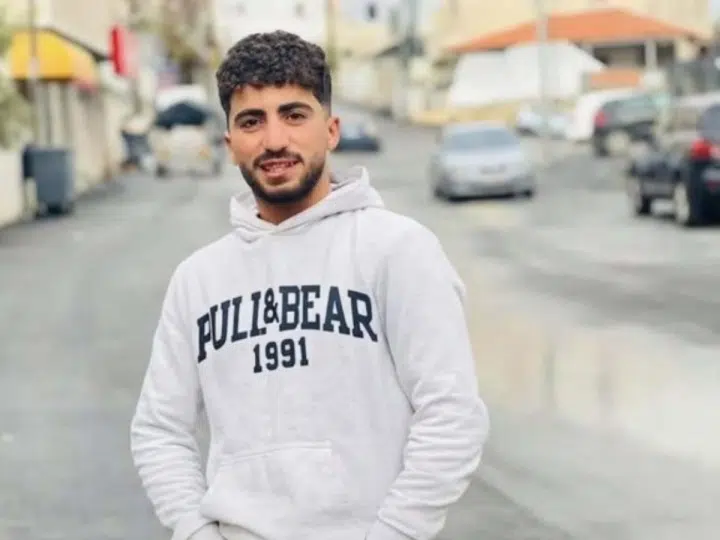
17 year old Fadi Hamdallah Al-Nassan has succumbed to his injuries, a week after being shot by the Israel occupation forces (IOF) with an expanding bullet to his thigh, in the West Bank village of Al-Mughayyir.
Israel martyr Fadi al-Nassan
Al-Nassan was martyred as a result of a two day raid on al-Mughayyir, which took place on 10 and 11 July 2026. The occupation’s military stormed the village early on the Friday morning. They shot three Palestinians, and beat others. The army also raided the home of Mohammed Hamed Abu Alia and his family. That particular attack came north east of Al-Mughayyir, with Israel forces beating and injuring those inside, and firing live shots at those trying to help. According to the Palestinian Red Crescent, ‘Israeli’ forces also detained their ambulance crews for around two hours, and confiscated their keys while they were attempting to treat the wounded.
On Saturday 11 July the raids continued, and so did the attacks on the Abu Alia family home, which Israeli settlers, under the protection of the IOF, had attacked. Fadi Al-Nassan was one of those who rushed to help the family. According to his father, Hamdallah al-Nassan, Fadi heard women and girls screaming, and had run towards the scene. But the IOF directed live fire at anyone who tried to defend the house and, as a result, Al- Nassan was injured.
Injury by an illegal expanding bullet
A local doctor, who wanted to remain anonymous, told the Canary:
Multiple injuries were recorded those two days. Fadi was injured with an expanding bullet in his thigh, his femoral artery was shattered. Two others were shot- one had an entry exit gunshot wound to the flank, and another a bullet in the leg. Raed Abu Aliya was hit with a stun grenade at his face. He requires surgery as his upper jaw bone was fractured. The house owner, his brother and two sons were also injured, beaten by the soldiers.
Fadi Al-Nassan suffered severe blood loss, and was evacuated to hospital. The first hospital he reached had no vascular surgeon, so he was transferred to the Palestine Medical Complex in Ramallah, where he remained in a critical condition on life support. According to doctors this delay gravely affected his case.
While in hospital, his condition deteriorated sharply, and there were signs of severe sepsis from the bullet wound. In a desperate attempt to treat the sepsis and save Al-Nassan’s life, doctors amputated his leg. But he passed away just 24 hours later, on 18 July.
Israel terrorises Palestinians in mourning
Before the funeral procession, the IOF set up a checkpoint at the village’s western entrance. This was an attempt at preventing people from attending, but was unsuccessful.
However, the harassment and attacks continued after the funeral, and into the night.
Marzouk Abu Naim is head of Al-Mughayyir Village Council. He tells us:
After the funeral procession of martyr Fadi Nassan, Israeli settlers clashed with local residents, West of the village. A resident, Jihad Jamil, was injured by pepper spray and was transferred to the medical centre in neighbouring Abu Falah. That night, after his funeral, Israeli occupation forces raided the village, entering with military vehicles. They fired tear gas and stun grenades at the condolence gathering, searched several homes, and carried out an arrest campaign that included three teenagers, and four adults.
Fadi Al-Nassan, was an 11th-grade student, and played football for Al-Mughayyir Club. He was also a member of the Palestinian national youth team.
Over 1000 Palestinian athletes murdered
A friend of Al-Nassan says:
Fadi loved everyone and was so passionate about football. His dream was to become a professional football player. But the brutal violence of the Israeli occupation made this dream impossible.

Fadi Al-Nassan was the cousin of Aws Hamdi Al-Nassan. Aws was killed in April when illegal settler Schmuel Wendy opened fire at Al Mughayyir boy’s school.
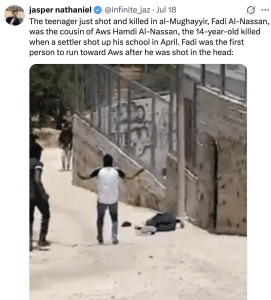
According to the Palestinian Football Association, Fadi’s passing brings the number of martyrs from the Palestinian sports movement to 1013, since 7 October 2023. 568 of these were footballers.
Al-Nassan has become the seventh martyr in Al Mughayyir since October 2023, with four of these being children. A total of 17 young men have been martyred in the village since 2006. Their deaths are a direct result of attacks by the IOF or settlers. According to Abu Naim, all are young, and include eight under the age of 18.
He says:
Al-Nassan was shot with an expanding bullet. This made treatment much more difficult, and ultimately led to his death.
Special treatment of terrorists must stop
Expanding ammunition is banned globally, since 1899, and its use in any armed conflict is classified as a war crime. The bullets cause horrific injuries, with massive exit wounds. They expand in the body, destroy internal tissue, shatter bone, and rip apart internal organs. These bullets also leave metal fragments in the body that can cause serious infection, and treatment is extremely difficult.
The use of expanding bullets by the Israeli occupation against Palestinians has been documented by doctors and human rights organisations for years. In 2018, a report by Euro-Med Human Rights Monitor claimed their use by the IOF was:
deliberately aimed at complicating casualties and inflicting further harm on protesters leading to long-term pain and health issues amounting to permanent disabilities.
Systematic impunity, shielding from politicians around the world, and internal military investigations all add to the absence of accountability,when it comes to “Israel’s” systematic human rights abuses. This terrorist state will continue inflicting suffering on Palestinians in the occupied territory unless action is taken against it now.
Featured image via the Canary
By Charlie Jaay
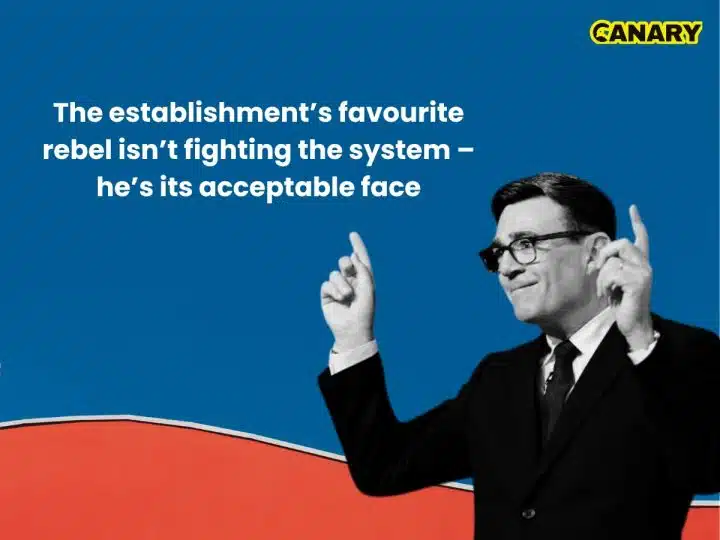
If you’ve ever watched a politician promise you a three-course meal only to hand you a single stale budget-brand biscuit, you will recognise that exact sinking feeling I get whenever Andy Burnham opens his mouth.
Andy Burnham: not sensible
For years now, he’s been held up as Labour’s great sensible left hope – the man who stood up for the north, who’d take on the Westminster machine, who might just drag the party back to its working-class roots without scaring off anyone who owns more than one house.
It’s a great story. It’s also about as believable as a government minister telling you that food banks are actually a nice treat for people who like trying new things.
And when you look at Burnham’s record, and the dead end the national Labour Party has walked into, two uncomfortable truths stare right back.
First, we should expect almost nothing from him, and the only shift that could save the party is one the establishment would rather eat a copy of The Manifesto for Public Ownership than actually allow.
Let’s start with the man himself. Burnham was a loyal sidekick to a regime that privatised everything that wasn’t nailed down, invaded a country on a hunch, and treated the super-rich like favourite nephews while telling the rest of us to tighten our belts.
As Mayor of Greater Manchester, he has delivered top-tier rhetoric. He raged against Tory neglect, called for proper devolution, and even once wore a high-vis jacket, which apparently counts as solidarity in some political circles.
But actions, as they say, speak louder than carefully rehearsed soundbites delivered in a train station.
Words. Words are all he has.
Burnham has spoken out against austerity — these are words. Yet Burnham has presided over vicious cuts to local libraries, youth clubs and care services — these are actions that he justifies as if it is the only ‘realistic option’, rather than doing what any self-respecting mayor would do and tell Westminster where to shove it’s worthless pity crumbs.
When bus workers went on strike for pay that doesn’t force them to choose between heating and eating, he spent more time warning about ‘disruption to commuters’ and urging ‘affordable, sustainable’ deals than standing with them – as if getting people to their underpaid jobs on time is the only thing that matters.
On social care, housing, the cost of living? Lots of “I feel your pain” faces, but zero policies that would make a single millionaire wince.
This isn’t a personal dig – I’m sure he’s very nice to his neighbours, doesn’t have a bonfire when next door have got their smalls drying on the washing line, and he probably remembers to take his recycling out. It’s just that Burnham’s leftism only ever stretches as far as the establishment will let it.
And that brings us to the bigger mess. The Labour Party itself.
For decades it’s drifted right, ditching redistribution, public ownership and solidarity to chase the votes of people who’ll never vote for them anyway, and the approval of CEOs who think a living wage is what they pay their gardener.
Drifters
Under Keir Starmer, that drift has become a panicked sprint down the wrong path. They’ve disowned pledges to nationalise energy, water and rail – apparently it’s a bit too radical to want our own utilities to work for us instead of shareholders in Bermuda.
They’ve backed away from taxing the rich, gone harder on refugees and benefits than some Tories, and spent more time purging socialists from the party than they’ve spent talking about how to fix the NHS.
They will tell you this is “electability”. But this is a myth built on fear and focus groups run by people who’ve never had to decide between filling the fridge or filling the car.
The last time Labour won big in 1997, they were helped along by a booming economy and a Tory government that had spent years tripping over its own feet. Since then, the world has shifted.
When Jeremy Corbyn stood on a left platform in 2017, Labour gained more votes than any opposition since 1945 – more than enough to win if the system wasn’t rigged against them.
Labour won’t win by being Tory-lite with slightly better manners and it certainly It won’t win by offering minor tweaks to a system that’s rigged against most of us.
The only way back is a proper, unapologetic lurch to the left. Bring key industries home, tax wealth not work, scrap the anti-union laws, build social housing faster than landlords can buy it up, and do the Green New Deal properly – the kind that creates jobs and cuts bills, not just gives tax breaks to big oil corporations.
But here’s the catch.
Spoiler alert: Burnham won’t save you
The establishment will never let that happen. The right-wing press would launch a smear campaign so ferocious even the Daily Mail’s headline writers would get cramps.
Big business would threaten to run away to Luxembourg — ignoring the fact most of them never actually do — they just like shouting about it, and Labour’s multi-millionaire donors who bankroll the party would take their chequebooks elsewhere faster than you can scream “corporate tax avoidance”.
We’ve seen it all before. Any leader who tries to put people before profit gets crushed, smeared and frozen out – and Burnham knows this better than anyone. He knows the rules of the game, and he’s chosen to play it safe rather than rewrite the rulebook.
That doesn’t mean we give up, of course. It means we have to stop waiting for politicians to save us. It means we build our own power – in unions, community groups, and even in grassroots football clubs like the Canary-sponsored Great Western FC, where they don’t have to worry about what the shareholders think before they pass the ball.
But right now, there’s no sign Labour is ready to change. No sign Burnham is ready to upset the people who will pay for his Number 10 soirée’s. And until there is, my expectations will stay firmly on the floor – right next to my winter fuel bill and the last time I could get a GP appointment without having to feel like a Squid Game contestant.
Hope is lovely, but I’m done falling for the same old tricks, and I’m most definitely done holding my breath for politicians who’d rather look good than do good.
Featured image via the Canary
First ‘Reacher’ Season 5 Plot Details Officially Revealed

Play giving deep dive into Jaws keeps audiences hooked – The Shark is Broken, by CCADS | Review

9 in 10 US Adults May Already Be in Early Stages of This Heart-Kidney-Metabolic Syndrome, Experts Say

Renter of Home in Anne Heche Crash Denies Settlement With Son

No Jackpot Winner as $257 Million Prize Rolls Over to $269 Million Monday Draw

Weekend Open Thread: Staud – Corporette.com

Bitcoin Treasuries are COLLAPSING and That’s Bullish! (Here’s Why)

Worst Financial Advisor Ever – Impractical Jokers #shorts #prank #funny

LEC 1 || VBU SEM 5 Financial Management Important Questions 2026 || 100% Most Expected Questions
-

 Fashion2 days ago
Weekend Open Thread: Brooks Brothers
-

 News Videos7 days ago
Big Money Is Entering XRP
-

 Crypto World5 days ago
Grayscale Files For Worldcoin ETF, WLD Registers Sharp Rise
-

 Tech6 days ago
Sail Virtually Aboard The “Itanic” With IA-64 Emulator
-
 Tech5 days ago
Turtle Beach Command Series KB7 review: a nifty screen-equipped gaming keyboard
-

 NewsBeat6 days ago
Unregistered fitter used Gas Safe logo on business flyers
-
 Business4 days ago
New Jersey voter registration controversy explained: How 6,600 noncitizens got on the rolls, and what happens next
-
 Entertainment5 days ago
Johnny Depp’s R-Rated Gothic Cult Classic Gets New Release Ahead of Sydney Sweeney Remake
-

 Crypto World4 days ago
Ethics, other provisions in crypto Clarity Act to be further discussed
-

 Tech6 days ago
Watch Flock Safety CEO Garrett Langley discuss the future of surveillance at TechCrunch Disrupt 2026
-
 NewsBeat5 days ago
Shanghai science forum photos show China’s AI and robotics advances in rivalry with US
-

 Crypto World6 days ago
Circle’s President Sold Over 360,000 Shares, The Filings Explain Why
-

 Tech6 days ago
Subway Sandwich Computers Get a Second Life as Gaming Machines
-

 Sports2 days ago
2026 3M Open leaderboard: Scottie Scheffler finds putter in Round 1, sits three back
-

 News Videos3 days ago
The Peugeot Family: How 200 Years of an “Old Money” Dynasty Died in A Boardroom
-

 Fashion2 days ago
16 Dresses for the High Summer Event
-

 Tech7 days ago
How To Use Claude’s Reflect Dashboard And Learn When It’s Time To Touch Grass
-

 Tech6 days ago
The 35 Best Board Games for Family Game Night
-

 Entertainment6 days ago
Stephen Colbert Returns to Social Media After Late Show End
-

 Crypto World6 days ago
Andrew Cuomo joins OKX board as crypto exchange expands in U.S.
You must be logged in to post a comment Login