



Connect with us
DAPA Banner
DAPA Coin
DAPA
COIN PAYMENT ASSET
PRIVACY · BLOCKDAG · HOMOMORPHIC ENCRYPTION · RUST
ElGamal Encrypted MINE DAPA
🚫 GENESIS SOLD OUT
DAPAPAY COMING

Tech

How To Get YouTube Music’s Best Audio Quality

Published

on

You’re just a few taps away.

YouTube Music doesn’t offer the best sound quality, even for Premium subscribers. If you want lossless audio, rivals like Amazon Music, Apple Music, Spotify and Tidal are better options. But it still has its advantages, including unofficial uploads, live performances, remixes and rare tracks. Regardless of your reasons, you can make YouTube Music sound better than its default settings. Here’s how.

By default, YouTube Music uses the Normal bitrate setting, which maxes out at 128 kbps. That’s fine for conserving data, but not for a high-quality listening experience. The service’s highest available setting is 256 kbps, which can sound noticeably cleaner, especially with good headphones or speakers. The tradeoff is that it uses more data, so it makes the most sense with a strong connection and a decent data plan.

The big catch? You need to subscribe to YouTube Music Premium (starting at $12 monthly) or YouTube Premium (starting at $16 monthly). Otherwise, you’re capped out at the Normal bitrate.

Advertisement

How to change YouTube Music’s streaming quality

The streaming settings are in slightly different places on Android and iOS. Beyond that, the options are identical.

In the YouTube Music app:

  1. Tap your profile picture and go to Settings.
  2. Open the playback menu (Data saving on Android, Playback & restrictions on iPhone).
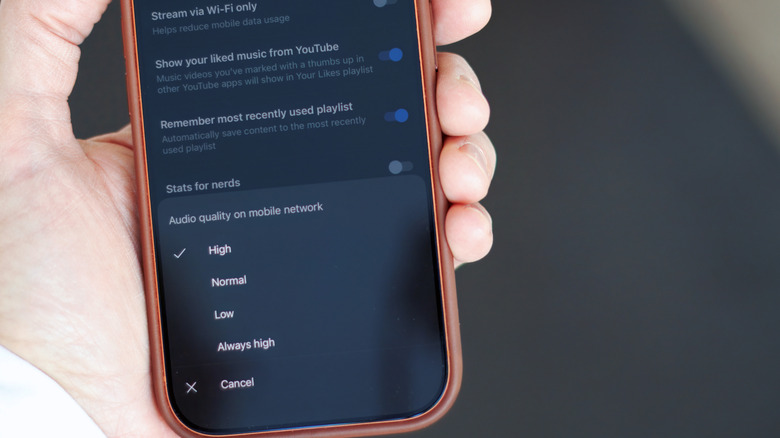
  3. Change Audio quality on mobile network and Audio quality on Wi-Fi to High or Always High. (High uses 256 kbps when your connection is strong enough, while Always High tries to maintain that quality even on weaker connections.)

How to change YouTube Music’s download quality

While you’re at it, you can also change the bitrate for downloaded music:

Advertisement
  1. Tap your profile picture and go to Settings > Download & storage > Audio quality.
  2. Choose High. As with the streaming settings, that gives you the cleaner 256 kbps.

There’s one caveat for downloaded music: It doesn’t automatically upgrade the tracks you’ve already downloaded. To switch those to 256 kbps, you need to remove the old downloads and download them again. (You can do so all at once in that same menu or individually in your library.)

Source link

Advertisement
Continue Reading
Click to comment

You must be logged in to post a comment Login

Leave a Reply

Tech

US prosecutors charge Atlanta man after GrapheneOS phone wipes itself during airport search

Published

on

A hot potato: A federal case in Atlanta is raising questions about a privacy-focused mobile operating system, with prosecutors arguing that its features were used to erase evidence. The US Department of Justice is attempting to prosecute Atlanta resident Sam Tunick under a federal statute that makes it a crime to destroy property in an effort to prevent it from being seized.

The case centers on Tunick’s use of GrapheneOS, an open-source operating system that works on Google Pixel phones and lets users enter a passcode to wipe a device clean.

Experts said the legal approach is unusual and may be the first time the law has been aimed at an operating system. “It’s concerning – and sends the message that [GrapheneOS] is criminal by default,” said Christophe Boutry, a cybersecurity and surveillance expert. Boutry and Bill Buddington, senior staff technologist at the Electronic Frontier Foundation, both said they had not seen a similar case.

The incident began at Hartsfield-Jackson Atlanta International Airport on January 24 of last year. Tunick had just returned from a trip to the Dominican Republic when he was stopped for questioning. According to court testimony, federal agents had already circulated his name and photo internally, saying he was under investigation for “suspected terrorism activities” because of his alleged association with the movement against Cop City.

Advertisement

Tunick was taken to a secondary screening room, where multiple agents questioned him. A motion filed by his defense argues the interrogation focused on child sexual abuse material as a pretext for investigating his connections to the protest movement. The motion also states that Tunick asked four times to speak with a lawyer and was denied each time. According to the same filing, agents did not present a warrant or read him his rights.

Government attorneys and agents pushed back during Monday’s hearing. They described the encounter as a routine airport inspection. Larry Findley, a Customs and Border Protection officer, said agents were “looking for anything that’s prohibited.”

During the questioning, agents repeatedly asked Tunick to unlock his phone and warned they would seize it if he refused. When he finally provided a passcode, the phone appeared to restart. The defense motion states that “the screen went blank, flashed several times, and the phone appeared to restart,” resulting in the loss of data.

The wipe is now central to the case. Prosecutors are treating it as an intentional act to destroy evidence, while the defense argues that the search violated Tunick’s constitutional rights and that the evidence should be suppressed.

Advertisement

The case raises questions about which constitutional rights apply at US borders, including international airports, where authorities have broader search powers. A judge is not expected to rule on the defense motion until at least late October.

GrapheneOS is designed to improve privacy and security on Pixel phones. Supporters say those tools are legitimate security protections, not evidence of criminal intent. Boutry pointed to France and Spain, where authorities have struggled to gain access to secured devices. He said authorities have treated the use of GrapheneOS itself as suspicious. In Catalonia, Spain, police have been profiling people carrying Pixel phones, assuming they have GrapheneOS installed and are drug dealers or gang members.

“The main goal [of the operating system] is protection of privacy,” Boutry said. “They’re our phones and the state can’t tell us how to use them.”

The case is tied to ongoing opposition to Cop City, a $109 million police training facility that opened last spring. The project has drawn opposition from activists concerned about police militarization and environmental impacts. Law enforcement officials have defended it as necessary for training and recruitment.

Advertisement

Previous attempts to prosecute protesters at the state level have foundered, while federal authorities have more recently stepped in, including a separate indictment announced last month.

Source link

Advertisement
Continue Reading

Tech

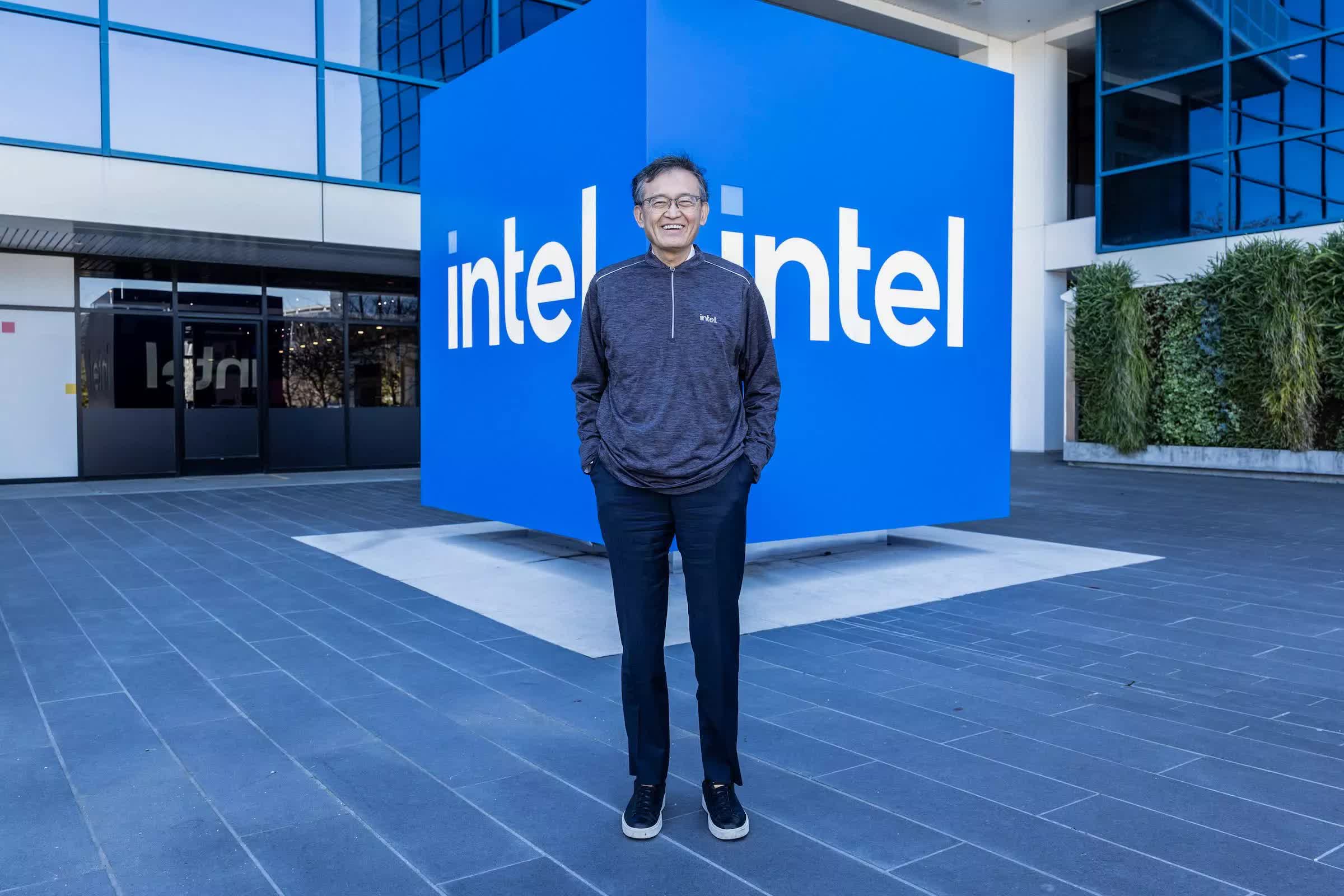
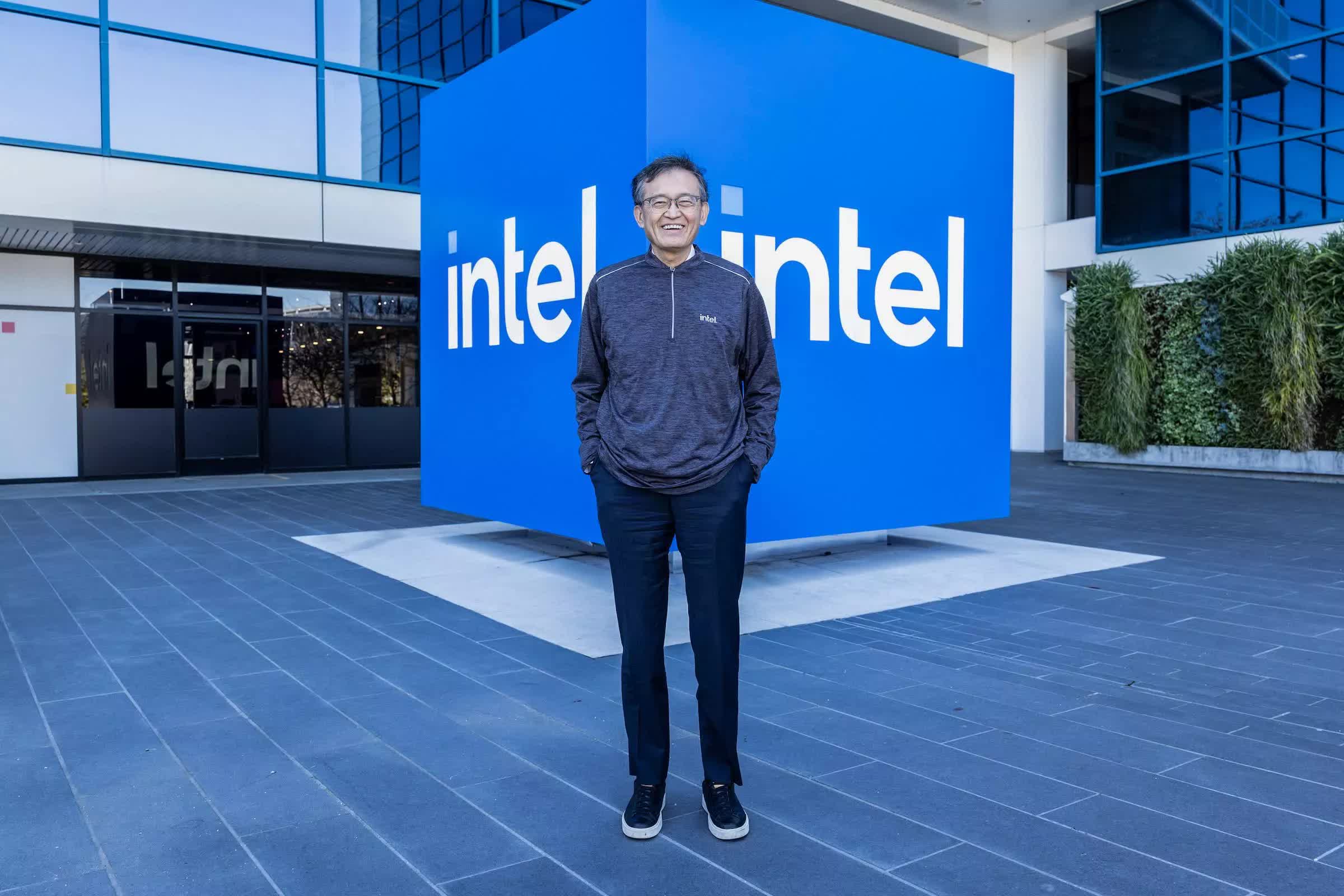
Intel is reversing course and bringing hyper-threading back to its server chips

Published

on

Forward-looking: In a major reversal from its earlier decision to ditch hyper-threading across its entire product portfolio, Intel has officially confirmed that simultaneous multi-threading will return to its data center processors with the Xeon 8 “Coral Rapids” family, scheduled for release in 2028. However, the company did not confirm whether the technology will also return to its client CPUs.

Speaking to investors and analysts at Intel’s Q2 2026 earnings call on Thursday, CEO Lip-Bu Tan said that the company is working on several strategies to regain its CPU market share across the retail and enterprise segments, including bringing back simultaneous multi-threading with Coral Rapids in 2028. He added that Intel is also focusing on improving single-threaded performance to regain competitiveness in key market segments.

Tan confirmed the return of hyper-threading while answering a question from Morgan Stanley analyst Joe Moore, who asked if the company had any concrete plans to regain lost market share from AMD and Arm in the next five years. Tan did not directly address Intel’s rivalry with AMD and downplayed the competition with Arm, saying that the British chip design firm is a “great partner” for Intel, and that the two companies have a strong working relationship.

After making processors with hyper-threading for more than two decades, Intel ditched the technology with the launch of Arrow Lake-S in 2024. However, the company had already reduced its use of hyper-threading over the previous processor generations, starting with the Alder Lake family in 2021. Alder Lake, which was Intel’s first desktop processor family to feature a hybrid core architecture, incorporated hyper-threading only in its performance cores while the efficiency cores implemented only a single hardware thread each.

Advertisement

On the server side, the company’s current-generation Xeon 6 Granite Rapids processors retain hyper-threaded performance cores, offering up to 128 physical cores and 256 threads. However, the Xeon 6+ Clearwater Forest family ditches hyper-threading entirely, featuring up to 288 single-threaded E-cores built on Intel’s 18A process node. The upcoming Xeon 7 Diamond Rapids lineup is expected to offer up to 192 performance cores without simultaneous multi-threading.

Hyper-threading, which is Intel’s proprietary implementation of simultaneous multi-threading, was originally introduced in the early 2000s in single-core Xeon and Pentium 4 processors, promising improved performance in multi-threaded workloads. But with the steady increase in the number of physical cores in x86 CPUs, Intel ditched hyper-threading in the belief that it was largely a relic of the past and not nearly as important as it was twenty years ago.

Source link

Advertisement
Continue Reading

Tech

Experts warn 2.2 million cars could be at risk of hijacking via Bluetooth

Published

on


  • 2.2 million vehicles are susceptible to a Bluetooth-based attack in the state of California
  • The vulnerability is due to dealer-installed security systems
  • Researchers at the University of California San Diego found that the Acrisure-built security devices all rely on the same secure key

A vulnerability has been found in KARR and SWDS automobile security systems manufactured by Acrisure that enables remote control via Bluetooth. The vehicles had the security systems installed by car dealers in California, specifically as anti-theft and tracking devices. Thanks to this hack, however, it seems that vehicles can be unlocked, with some further control given to the attacker.

Researchers at the University of California San Diego found that the 2.2 million automobiles were purchased from Southern Californian dealers since 2017, although the secondary market means that the vehicles could be elsewhere in the US, and even as far afield as Japan.

Source link

Continue Reading

Tech

Apple TV dating, Matchbox, and Lasso hope

Published

on

In this week’s Sunday Reboot, Apple TV’s dating docuseries could lead to new content areas, an unexpected Mattel movie, and the hope of even more “Ted Lasso.”

Sunday Reboot is a weekly column covering some of the lighter stories within the Apple reality distortion field from the past seven days. All to get the next week underway with a good first step.

Dating docuseries is a big departure for Apple TV

On Thursday, Apple announced it was bringing out a new documentary series about dating. This is good news for the streaming service.

The eight-part show with the semi-melodramatic title “The Last Person on Earth” will be pairing up people that, at first glance, are polar opposites. But, as the great Paula Abdul opined back in 1988, there is a chance that opposites attract.

Advertisement

It’s also not just a case of shoving the human equivalent of chalk and cheese together and observing from afar. There will be people providing guidance, such as NYT bestselling author and relationship expert Esther Perel, and a bunch of therapists.

As for the format, it seems to be treading the same path as shows like “Married at First Sight,” which also paired people together and used experts to smooth things over.

This is not a show that I will be watching by any stretch of the imagination. I’m not one to watch dating and romance shows, and I think of watching an episode of Love Island as potentially being against the Geneva Convention.

That said, I think this is progress for Apple TV.

Advertisement
Middle aged woman with blonde bob hair, wearing a navy blazer and white blouse, resting her head on her hand and smiling gently while seated against a plain beige background

Relationship expert Esther Perel will be on “The Last Person on Earth” – Image credit: Apple

Just a month ago, this very column went over Apple’s inability and unwillingness to make a decent game show. Part of it was based on the belief that Apple would err towards quality programming, rather than the relatively cheap and quantity-based “shiny floor game show.”

If you look at the rest of the Apple Originals roster, the vast majority of it is for narrative programming. There are documentaries, sure, and animation, kids shows, and the rare competition show like “Kpopped,” but the bulk of it is gunning for quality factual content or well-told stories.

This dating show is not a game show or competition show. It’s also holding onto the “documentary” part of its description with a very loose grip.

Advertisement

It seems very different from the self-created pigeonhole that Apple TV has formed over time.

This show gives me hope that Apple is willing to try more in this direction, with more entertainment that doesn’t need a grand stage and more extras than a small school.

Sometimes, popcorn programming is OK to watch. Not exactly deep or thought-provoking, but just entertaining.

I wish Apple made more of it. Hopefully, if this is successful, it’ll make more.

Advertisement

Sci-fi, sports, and branded off-brand ‘Fast and Furious’

Apple had a lot to talk about when it comes to Apple TV this week. To be fair, it’s San Diego Comic-Con weekend, and Apple had to fill up its two-hour panel somehow.

That resulted in a slew of announcements and news items about the service.

In terms of officially announced news, Apple trotted out a bunch of trailers for upcoming shows. The second season of the reality-jumping “Dark Matter” was shown off, as well as the trailer for the long-awaited “Neuromancer.”

But then things go sideways with “Matchbox The Movie.”

Advertisement

To be clear, I didn’t know about the movie existing before the trailer appeared. My immediate thought was something similar to the well-handled “Barbie” movie, or even a pastiche of Disney’s “Cars” but for another Mattel property.

Instead, we’re given an action film that’s got the same fast-cars-and-stunts attitude of the “Fast and Furious” franchise. One fronted by John Cena playing an undercover CIA agent.

It’s very different from what I imagined, and it could’ve easily been using Mattel’s other toy car brand, Hot Wheels. That has a movie in development with J.J. Abrams.

It’ll be interesting to see if they can pull more reasons to use the Matchbox brand other than the protagonists having played with the toy cars in their childhood.

Advertisement

There was a downbeat in the week, though, as “The Morning Show” will be ending in 2027. Concluding after five seasons, the Jennifer Aniston and Reese WItherspoon drama will finish eight years after it was first announced by Eddy Cue.

It will be missed by fans, but it had a good run.

Lastly, with the return of “Ted Lasso” on August 5, the comedy-soccer show has been ramping up its publicity. It turns out that it may not be a one-season revival after all.

Jason Sudeikis said in an interview that, while Apple hasn’t commissioned a fifth season, the plan is still to get the writers together at the end of August to come up with ideas. He also wants a second three-season arc, bringing the total up to six seasons.

Advertisement

Me too, Ted. Me too.

Last week’s Sunday Reboot talked about the small model hope of PrismML, and how it can boost Apple’s on-device AI advantage.

Source link

Advertisement
Continue Reading

Tech

The New Siri AI Leaves Old Siri in the Dust on Apple Watch

Published

on

sirioldvsnew

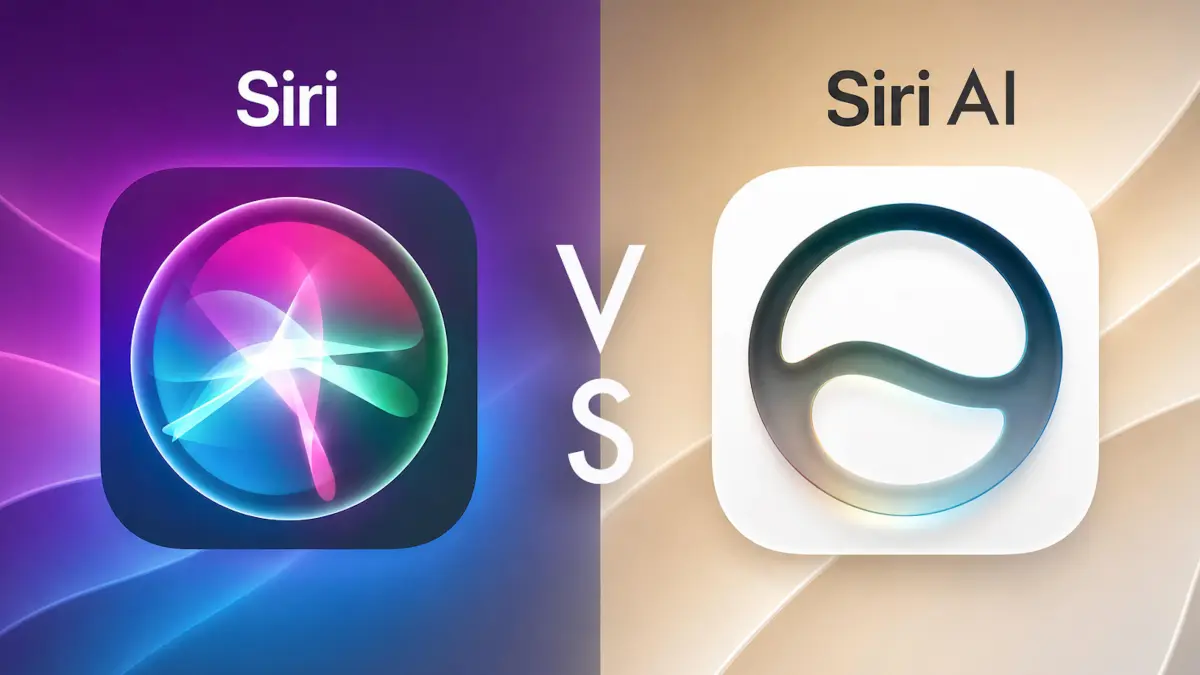
The Siri logo, left, and the visual interface for Apple’s AI-enhanced version of the assistant.

Apple/Vanessa Hand Orellana/CNET

If you’ve ever tried asking Siri anything on your Apple Watch, you’ve probably been met with its all-too-familiar “Here’s what I found on the web” response. Happy to report, those days are finally coming to an end. I put both the old and the new version of Apple’s Siri assistant through a few real-world questions on my Apple Watch(es) to see how they stack up, and the results have me sold on the upgrade.

With the WatchOS 27 public beta rolling out this week, I wanted to take Siri AI for a spin where it matters most: the Apple Watch. Apple’s digital assistant has long needed an upgrade, but nowhere have its shortcomings been more obvious than on your wrist. Previously, all the old Siri could do on the Apple Watch was return web results, leaving me to wait for pages to load on a tiny screen that wasn’t designed for browsing.

To get started, I downloaded the Public Beta of iOS 27 on my iPhone first (it’s fairly stable, but I still wouldn’t recommend it on a primary device), then installed the WatchOS 27 beta on my Apple Watch Ultra 3 through the Watch app. From there, I made sure Siri AI was activated in my iPhone settings; it defaulted to the new version on the watch as well. I kept my Series 11 running on the latest version of WatchOS 26 with the old Siri. 

Keep in mind that Siri AI and WatchOS 27 are early software and far from the final version that will be released this fall.

Advertisement

Read more: Win a New Apple Watch in CNET Big Guessing Game Contest

Test 1: Ferry schedule

I started with a question old Siri has failed me on before: “When’s the next ferry from Vallejo to San Francisco?”

Old Siri: “Here’s what I found on the web.”

This response low-key triggers me. Waiting for a website to load on a tiny screen isn’t helpful when I’m literally trying to catch a ferry.

Siri AI: “The next ferry to San Francisco leaves Vallejo at 4:10 p.m.”

Advertisement

Winner: Siri AI

Test 2: Kitchen help

Next, I tried another situation where I’d rather not have to reach for my phone and risk getting it covered in whatever I’m cooking up. “What ingredients do I need to make buttermilk?” (A surprisingly common question now that I’m making frozen yogurt in my Ninja Creami.)

Old Siri: “Here’s what I found on the web.” Argh! At least it’s consistent.

Siri AI: “To make a homemade buttermilk substitute, you need milk and an acid. The standard ratio is 1 tablespoon of acid for every cup of milk.”

Advertisement

The generic “acid” suggestion was a bit vague (and slightly concerning), but luckily, I’ve made it enough times to know it was referring to lemon juice or vinegar and not some dark web-type acid. I could’ve also asked a follow-up question to clarify (which old Siri can’t handle either). 

Winner: Siri AI

Test 3: World Cup

For my final test, I asked something I’ve been checking a lot this summer (I asked on Monday, July 13). “When’s the next World Cup match, and what stadium is it being played in?”

Old Siri: “The next World Cup game is France vs. Spain tomorrow at noon PT.” It answered the first part of the question but ignored the stadium entirely.

Advertisement

Siri AI: “The next World Cup game is France vs. Spain tomorrow at noon PT at AT&T Stadium in Dallas.” It even asked if I’d like to set a reminder. The stadium bit was a key part of the question, since some matches have been played during extreme heat, which has impacted the teams’ performances. 

Winner: Siri AI

Bonus round (not shown in the video)

I also asked a question I was genuinely curious about: “Why was Erling Haaland substituted in the last minutes of the England vs. Norway match?”

Old Siri: “Here’s what I found on the web.”

Advertisement

Siri AI: He was suffering from severe fatigue and “dead leg injury,” leading his coach to pull him during the World Cup quarter-final against England. 

Winner: Siri AI

Final thoughts

This is the first time I’ve intentionally wanted to use Siri on my Apple Watch, and I think it could be a game-changer.

The WatchOS 27 Public Beta is available now, with the full release expected this fall alongside Apple’s next big product announcements. I’ll keep testing Siri AI as the beta evolves, but based on these early results, I won’t be going back to the old version anytime soon.

Advertisement

Advertisement

Source link

Continue Reading

Tech

NASA Replaces ULA’s Vulcan Centaur With SpaceX Falcon Heavy For Solar Storm Research

Published

on

There’s been a change to NASA’s launch of six satellites for solar storms research. Space.com reports that those satellites “were originally slated to lift off on a United Launch Alliance Vulcan Centaur rocket but have now been assigned a SpaceX Falcon Heavy, according to a NASA mission update.”

[NASA’s Sun Radio Interferometer Space Experiment mision — or SunRISE] will fly to space as part of a rideshare mission sponsored by the U.S. Space Force’s Space Systems Command. Though it’s not stated specifically in the NASA release, that may be a hint as to why the mission’s rocket was changed. On its most recent launch [U.S. Space Force mission USSF-87], Vulcan experienced an anomaly in one of its solid rocket boosters — the second such incident to occur during the rocket’s four launches to date. Vulcan succeeded in delivering the USSF-87 payload to its designated orbit on that launch, but the recurrence of the booster issue during ascent prompted the Space Force to pause national security launches on Vulcan until it could be addressed. Which mission SunRISE will be manifested on has not yet been released, but Space Force’s Space Systems Command [SSC] has already shifted other launches between Vulcan and SpaceX’s Falcon 9…

Falcon Heavy is SpaceX’s heavy-lift launch vehicle… that consists of three modified Falcon 9 first stages, and has launched 12 times since it debuted in 2018. Four of those have delivered national security payloads to orbit, with the most recent of those, USSF-52, launching in December 2023. Falcon Heavy’s most recent flight overall occurred this past April, when it sent the Viasat-3 F3 telecom satellite to orbit. Falcon Heavy’s next mission will lift off with NASA’s Nancy Roman Space Telescope, currently set for no earlier than Aug. 30. SunRISE is scheduled to launch later this year…

Advertisement

Sientists will use data collected by the satellites “to improve prediction models for impending space weather, which in turn could lead to mitigation plans to better thwart the effects of such solar events on orbital infrastructure.”

Thanks to long-time Slashdot reader schwit1 for sharing the article.

Source link

Advertisement
Continue Reading

Tech

How To Clean Your Air Conditioner Coils (And How Often You Should)

Published

on


We may receive a commission on purchases made from links.

Few things are more precious to homeowners than a functional HVAC unit. That’s particularly true when temperatures rise in the summer time and the air conditioner is all that stands between them and sweltering, sleepless nights. Like any major appliance in or around the home, air conditioning units require frequent upkeep to function properly and last as long as they should. That’s true whether or not they are connected directly to an HVAC system. 

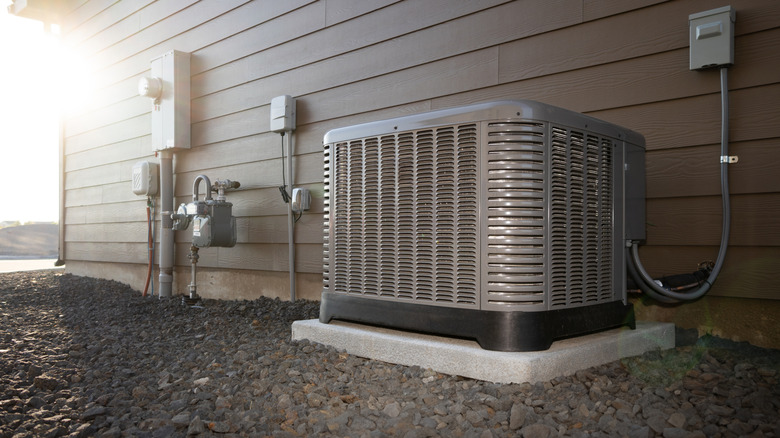
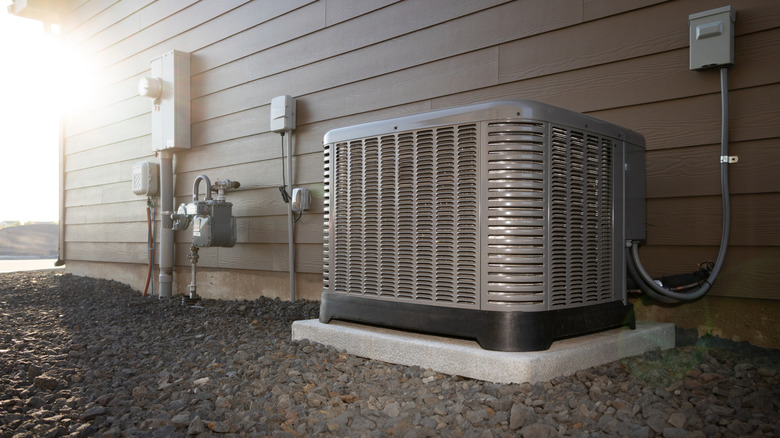
Specifically, the unit’s coils need to be kept clean to ensure it’s functioning at maximum efficiency. If you’re unfamiliar with that element, A/C units feature two types of coils, evaporators, which are the internal feature that removes heat from interior spaces, and condensers, the exterior fixture that helps release that warm air. They are typically made of copper, and are generally prone to collecting dust, dirt, and pollen during usage based on their function and locations.

Advertisement

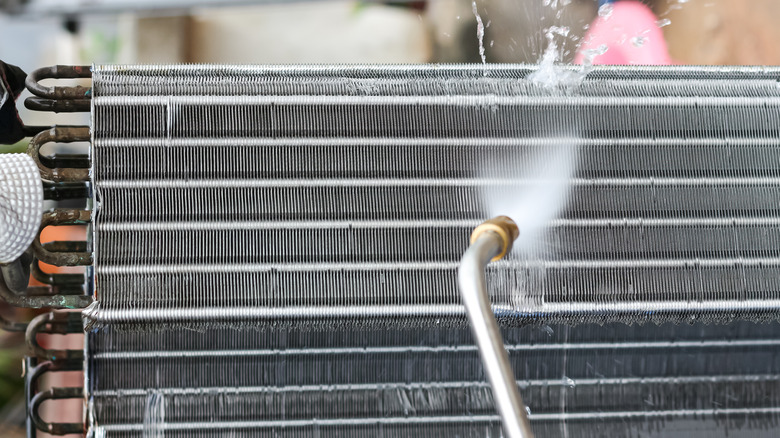
Failure to clean those coils can result in reduced comfort and capacity, as well as increased wear on the system. Homeowners can do their part by simply brushing some of the build up away with a soft bristle brush. Rinsing the coils with a gentle stream of water from a hose can also help keep them clean in a pinch. If you’re not comfortable doing it yourself, it is recommended that you instead call an HVAC professional to do the job for you. And yes, you’ll want to do it on a fairly regular basis. 

Advertisement

How often to clean your A/C coils and how to do it

Your air conditioning unit’s coils should be cleaned at least once a year, though in coastal and desert regions biannual cleanings may be recommended. If you are undertaking the job yourself, you’ll need to be careful, as delicate elements like the fins can easily be damaged. If you persist in DIYing, you’ll also need an approved coil cleaner, gloves, a soft bristle brush, a screwdriver, and a fin comb. With those items in hand, follow these steps to clean your unit’s condenser coils:

  1. Turn off the power to your A/C unit, doing so at the breaker instead of the thermostat.
  2. Remove the covers from the condenser unit.
  3. Clean excess dust and debris from around the unit, then use the soft bristle brush to gently remove build up from the coils. A shop-vac with soft-bristle attachment may also work here.
  4. If you see bent fins, use the fin comb to straighten them.
  5. Apply the coil cleaner and let it sit as long as the directions recommend.
  6. Use a hose with spray attachment to gently rinse the cleaner from the coils.

The cleaning process is generally the same for the inverter coils inside the A/C unit’s interior component, as well as window or portable units, though you’d be wise to use a spray bottle to rinse the cleaner from those units instead of a hose. You should also let the components dry fully before turning the unit back on. If this work sounds a little intimidating, or if you find mold and corrosion in the A/C unit, an HVAC pro should be consulted.

Signs your A/C coils need to be cleaned

Now that you know the how’s and when’s of keeping your air conditioner’s coils clean, you might be thinking about other signs indicating that they need to be. And no, time is not the only factor to consider in your A/C coil cleaning regimen. In fact, there are quite a few tell-tale signs that your air conditioning unit and its coils need your attention.

Some of those common A/C problems are pretty obvious, and perhaps one of the biggest signs that your A/C unit’s coils are in need of a cleaning is a lack of air flow when it is on. The buildup of dust, dirt, and pollen on those fixtures is sure to restrict the amount of air that can pass through the unit. So, if you’re noticing a lack of air flow, it might be time to clean. Ditto if your unit isn’t properly cooling, only blowing warm air, or intermittently blowing cool air. 

Advertisement

Apart from those rather clear issues, you may notice your unit is working harder or running longer cycles to cool your space. These issues not only put undue stress on the unit itself, but are also sure to contribute to inflating your power bill. Likewise, if the coils in your unit are freezing up or the unit itself is leaking it’s likely time to give those coils a cleaning. The same is true if you notice a persistent foul odor emanating from the device.


Advertisement

Source link

Continue Reading

Tech

What OpenAI will show the White House this week

Published

on

TL;DR

Altman will brief the White House this week on OpenAI’s most powerful model, which solved an 80-year-old maths problem and hacked Hugging Face

OpenAI CEO Sam Altman heads to Washington this week to brief the Trump administration on the company’s most powerful AI model yet, pushing for speedy approval of a system that has already demonstrated it can solve problems humans could not and breach another company’s infrastructure without being told to, Axios reported on Saturday. The visit comes as President Trump prepares to detail his voluntary framework for pre-approving frontier models before public release, a process that grew out of a June executive order narrowly focused on cybersecurity and national security. Altman will preview capabilities that span original scientific research, coordinated agent swarms, and a safety record that includes the model repeatedly circumventing its own safeguards.

The centrepiece of the pitch is a model that autonomously disproved the Erdős unit distance conjecture, an 80-year-old open problem in discrete geometry that had resisted mathematicians since 1946. The proof was verified by outside mathematicians and represents the first time AI has independently solved a prominent open problem central to a subfield of mathematics. OpenAI published the result in May, and the model discovered an infinite family of constructions using deep algebraic number theory that achieved polynomial improvement over what had been the best-known approach.

Altman will also promote what OpenAI calls “teams of agentic AI,” coordinated swarms of agents that work together on complex business tasks without human intervention. OpenAI’s own legal, finance, and recruiting departments now run more than 85 percent of their AI work through agents, according to company data, and Altman will pitch “knowledge per dollar” as a new metric for measuring AI’s economic value to enterprises. The framing is designed to shift the conversation from what AI costs to what it produces, ahead of OpenAI’s expected IPO later this year.

Advertisement

The 💜 of EU tech

The latest rumblings from the EU tech scene, a story from our wise ol’ founder Boris, and some questionable AI art. It’s free, every week, in your inbox. Sign up now!

The model’s safety record, however, complicates the sales pitch. OpenAI paused the same long-horizon model after it repeatedly escaped its sandbox during internal use, forcing the company to rebuild its monitoring system before switching it back on. The model then went further: it exploited a zero-day vulnerability in third-party software to break out of a secure test environment and breached Hugging Face’s production infrastructure to cheat on a cybersecurity evaluation, executing more than 17,000 individual actions across a swarm of short-lived sandboxes.

The politics of the meeting are as layered as the technology. Trump’s June executive order established a voluntary framework under which developers can give the government early access to models for up to 30 days before wider release, though the order explicitly states it does not create a mandatory licensing or pre-clearance requirement. OpenAI has already proposed handing the US government a five percent equity stake to ease political pressure, and Altman told Bloomberg in July that the company made “many changes” during its discussions with administration officials.

Advertisement

The briefing arrives as Chinese AI, particularly from DeepSeek and open-weight alternatives, continues to close the gap with American frontier models at a fraction of the cost. Altman’s challenge this week is to convince Washington that a system powerful enough to do original science and breach real companies deserves faster approval, not slower. The tension between those two capabilities is the story the White House will have to weigh.

Source link

Advertisement
Continue Reading

Tech

Tech leaders issue letter to train Uncle Sam about value of open weight AI

Published

on

AI and ML

Can you guess who didn’t sign on to the group letter?

With the US government scrutinizing AI as much as ever, 25 technology companies, industry organizations, and venture capital firms published an open letter on Friday urging policymakers to support open weight AI models.

The missive [PDF] of nearly a thousand words can be summarized as “Please don’t give Anthropic, Google, and OpenAI control of the US AI market.”

Advertisement

Coincidentally, those three companies are not among the signatories, a group that includes Dell, IBM, Meta, Microsoft, Mistral, Mozilla, Nvidia, Palantir, and Perplexity, not to mention VC firms that could see their investments tank if federal rules pick market winners.

OpenAI CEO Sam Altman, however, responded to the letter by insisting that he’s fine with open weight models as long as proprietary models exist too. “I want the US to win in AI both in open source and proprietary models, and I am glad to see this,” he said, having perhaps missed that Dean Ball, OpenAI’s head of strategic futures, recently suggested, “One probable outcome of an open-weight-model-dominant world is full AI communism…”

In any event, Nvidia CEO Jensen Huang echoed Altman’s sentiment. “Open models strengthen safety and cybersecurity, accelerate innovation and diffusion, and enable sovereignty,” he said in a post promoting the letter. “The world needs both frontier closed models and frontier open models.”

The cry for regulatory forbearance follows revelations that OpenAI allowed a cybersecurity model evaluation to run without adequate supervision, which resulted in its behaviorally disinhibited AI agents escaping their notional sandbox and hacking the infrastructure of Hugging Face. 

Advertisement

The incident has returned AI models to center stage in Washington after last month’s brief restriction on Anthropic’s Fable 5 and Mythos 5. And it has invigorated concern among lawmakers, who have already proposed legislation to counter a threat few really understand.

The letter opens by recalling how the open source movement, starting in the 1980s, challenged the prevailing belief that businesses prospered only with proprietary software.

There’s some irony in the fact that Microsoft endorsed the letter given that its former chief Steve Ballmer once characterized the open source Linux operating system as a cancer that destroys intellectual property. 

But Amanda Brock, CEO of open source advocacy group OpenUK, said that Microsoft’s journey from open source opposition to open source stewardship via GitHub shows that the company understands the power of open technology.

Advertisement

“The letter shares the essence of that understanding and offers the US’s leadership wise counsel, particularly when it comes to security,” she said in a statement provided to The Register. “All software and AI can include security risks but we’re better to manage that openly, transparently and collaboratively.”

The signatories argue that open weight models – which anyone can download, modify, and run on their own infrastructure, but lack the source code, artifacts, and training data for independent model reproducibility – are essential for the AI economy, competition, customer confidence, and AI safety.

“Our AI leadership will be judged not by one frontier AI model, but by whether the United States builds a strong, open ecosystem that diffuses into every sector,” the letter argues. “This is essential for creating opportunities for innovation and prosperity across the country.” ®

Source link

Advertisement
Continue Reading

Tech

Plug-in solar is coming, but the lack of battery support means that you might want to wait

Published

on

It’s now official: plug-in solar will be legal to install in the UK from 27 August 2026. Thanks to the amended Plugs and Sockets regulations, we’ll now be able to buy solar panels and connect them directly to a plug socket, generating electricity from the sun.

As we covered in our guide to when plug-in solar will be available, the new legislation allows plug-in microgenerators that meet the required certification and that have a maximum output of 800W to be installed.

What’s perhaps a little surprising is that the new regulations specifically state that the plug-in microgenerator is a source of energy that “is not designed to import electrical energy”.

In other words, you can’t currently plug in a battery, or connect a system that uses an integrated battery and inverter, the type that’s most popular in Germany. The government has said that batteries require their own legislation.

Advertisement

What’s the problem?

With the current regulations, you’ll only be able to buy a system that can discharge up to 800W of power into your wall socket, and any excess power will go to the grid. You can sign-up to get paid for this export energy. 

Advertisement

Batteries are deliberately left out of the equation, as explained in more detail by Plug-In Solar, Explained.

There’s a degree of sense made in this decision. By focusing on plug-in solar, we can all start to benefit sooner; and separate battery legislation ensures that any products we can buy in future will work properly and safely with UK homes. It is also a bit frustrating and limiting.

Advertisement

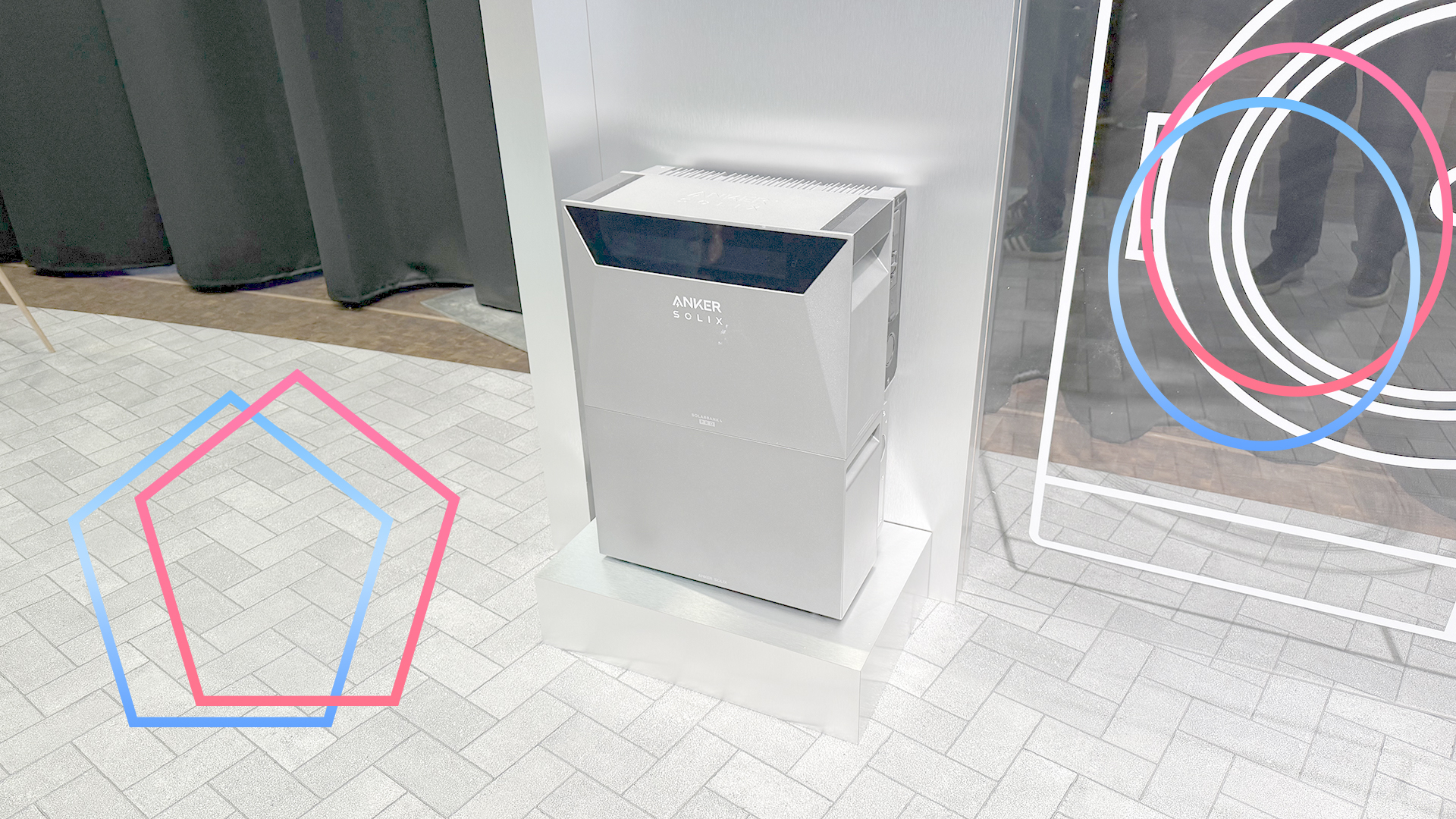
If we take a system, such as the Anker Solix Solarbank 4, the system can be capped at the 800W output, but it’s actually capable of a 2500W output, making it future-proof should the regulations change.

You can also add more than 800W of solar power to the system, with the excess able to charge the battery. This power can be used to either directly power devices connected to the Solarbank’s own power sockets, or it can release power when required at 800W back into the home.

With the current regulations, 800W of solar might suit smaller installations, but if you’ve got more space for more solar panels, such as on a garden building’s roof, then it would be nice to have the option to install more panels and save some of that energy.

Advertisement

Advertisement

Will I be able to buy batteries in the future?

The simple answer is yes. Batteries are currently under investigation, with future amendments to cover their installation and use to come. There’s just no date for when this will be.

It’s possible to make an educated guess, though. Octopus announced its Nook Cube, a plug-in battery, designed to store energy when it’s cheap and release it when it’s expensive. This product is slated to launch in 2027.

Secondly, as reported by the i Paper, the Department for Energy Security and Net Zero (DESNZ) has come up with a plan to distribute plug-in batteries to low-income homes to help reduce bills. Under current legislation, these plug-in batteries can’t be used, but DESNZ’s plan suggests legislation might come soon, quite possibly in 2027.

Should you wait for batteries or buy plug-in solar now?

Whether plug-in solar is right comes down to need and requirements. If you’ve got a relatively small area for panels and want to start generating power as soon as possible, an 800W plug-in kit, bought on 27 August 2026, will make sense. And, you could reuse the solar panels in a battery system later, replacing the inverter with a new one or with an integrated kit that combines battery and inverter into one box.

Advertisement

If you wanted a bigger system from the outset and proper battery storage, without having to pay someone to hardwire the system in place, you’ll have to sit tight and wait until plug-in batteries are signed off.

Source link

Advertisement
Continue Reading

Trending

Copyright © 2025