


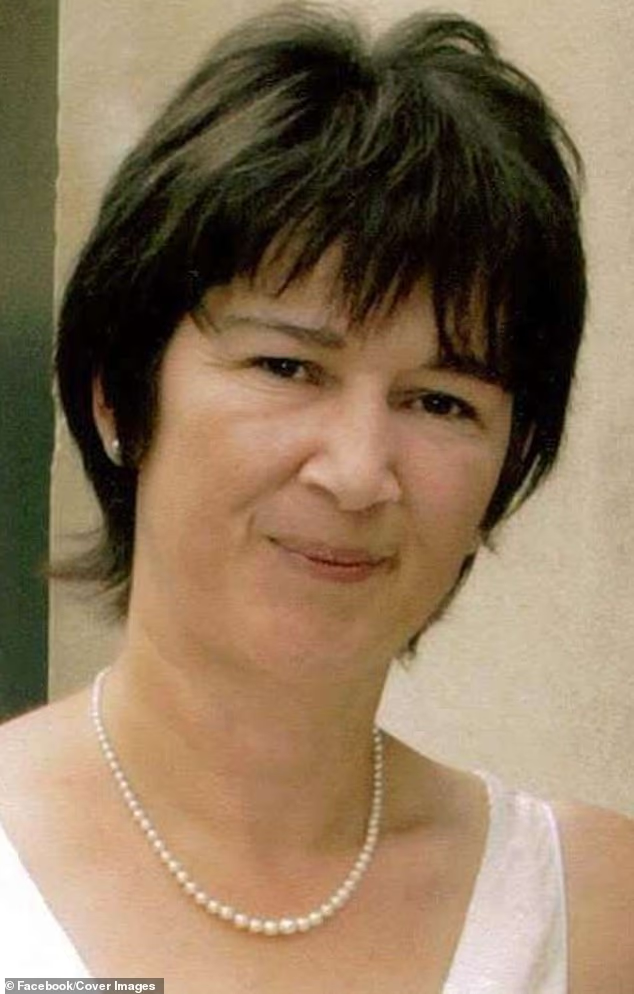
The allure of Trinidad and Tobago was in Elaine McGowan’s blood. For all the picturesque, windswept charm of the Kent village of Saltwood where she lived and once served locals as the landlady of the Castle Hotel, she dreamed of moving to the twin-island Caribbean nation.
It was the country of her prominent businessman father’s birth and, as the years passed, like her father before her, she hankered after its more relaxed pace of life, the climate, the food and proximity to family.
When her father, George Butcher, died on the island three years ago, leaving behind a thriving coconut farming business, Elaine saw an opportunity to turn her dreams into reality and live out the rest of her days in the Caribbean sunshine.
But all those dreams were shattered in a few seconds of appalling violence earlier this month in a crime that has sent shockwaves through two very different coastal communities on two sides of the Atlantic.
Elaine McGowan, a respectable, happily married, 65-year-old British woman, was gunned down in what is being described as a ‘gangland hit’ as she stood, with her husband by her side, outside her elderly uncle’s home in a quiet residential neighbourhood.
The killing has left everyone baffled. Was this a dispute over her father’s will, as some have suggested? Or had Elaine somehow fallen foul of locals as she tried to pick up the reins of the business he’d left behind?
The assassination – for that is almost certainly what it was – was captured on CCTV and is chilling in its brevity. The video footage begins at 11am on a quiet, sunny Sunday in the town of Trincity, in the north of Trinidad, on a street popular with retirees.
Birdsong can be heard moments before a small white car – a Nissan Tiida – pulls up alongside the pavement and a figure gets out and runs towards the nearest house, just out of sight.
Elaine McGowan, a respectable, happily married 65-year-old British woman was gunned down in what is being described as a ‘gangland hit’

Camera footage of the ‘gangland hit’ during Elaine’s trip to the Caribbean
Suddenly, three sharp bangs reverberate and the figure reappears, running towards the car.
As the gunman and at least one accomplice accelerate away, shouts of alarm puncture the air. And as quickly as the moment of devastating violence begins, it is over.
At that point, beyond sight of the camera, Elaine lay dying. Her husband Ian, 64, and 96-year-old uncle could only look on helplessly.
She did not, as the Daily Mail can exclusively reveal, die from a typical ‘kill’ shot. Instead she was shot as she stood with her back to the gate, the gunman deliberately aiming at her leg. The bullet severed the femoral artery, leading to her bleeding to death.
As a source close to the police investigation told the Daily Mail: ‘Someone was hired to put down a hit. But we think that murder was not the intention. It was to scare her into returning to the UK, which explains why she was shot in the leg but sadly bled out.’
So why on earth would a British woman, nearing retirement, from a well-respected Trinidadian family that has long owned a swathe of coastal farmland, be the target of such a calculated crime?
That is the question that has been weighing on Elaine’s grieving family and friends, just as it has been puzzling the authorities.
A police source told the Daily Mail this week: ‘We suspect there is some gang activity. There are several angles to the inquiry at this stage. We have a few suspects in mind but we are thinking the motive is likely due to the inheritance of the estate or a personal or interpersonal dispute.’

As Elaine lay dying, her husband Ian (pictured), 64, and 96-year-old uncle could only look on helplessly

The beautiful North Manzanilla coastline may give the illusion of serenity, but Trinidad and Tobago is a country riddled with gang-related violent crime
For all its palm-fringed white beaches and turquoise seas, Trinidad and Tobago is a country riddled with gang-related violent crime. The statistics are stark: Elaine was the 198th victim of murder this year (that figure has now swollen further to 213) in a country that has a population of only around 1.5million.
Its murder rate recently overtook Jamaica meaning it now ranks, in the Caribbean, second only to Haiti.
So what was it that made a woman who was once a former chairwoman of Folkestone’s independent traders association the target of a gangland hit?
The mystery deepened when the Daily Mail visited Saltwood last week, where news of Elaine’s murder has left locals stunned.
Having been given control of the business, following her father George’s death at the age of 90, she’d gone to Trinidad in May as a step towards a permanent move.
George, a mechanical engineer, left his homeland in the 1950s and met his Yorkshire-born wife Doreen at the Hammersmith Palais. They raised their two daughters, Elaine and her sister Joanne, 66, in London.
He built a thriving engineering business, with an office in Battersea overlooking the Thames.
In the 1970s he began to return more frequently to the Caribbean. His marriage eventually crumbled and he settled back in Trinidad where he formed a long-term relationship with a prominent Trinidadian architect who shared his passion for conservation.
As well as work on the development of Trinidad’s Piarco International Airport, George was a founding member of the National Trust for Trinidad and Tobago and a president of the heritage preservation lobby group Citizens for Conservation (CFC).
According to a source close to the family, part of the heritage he sought to preserve was in Manzanilla, a large tranche of land to the east of the island, fringed by palm trees, that had formerly been a colonial era coconut plantation.
Under his management, the land on which there are two villages and 42 farms cultivating coconuts and watermelons flourished.
George had sold some parcels of land before his death, but Cocal Retreat, his business which grows and sells coconuts and coconut water, remains his legacy.
Amid the speculation that comes with murder, there had been whispers George might have changed his will, causing upset among his beneficiaries. But this was firmly disputed by two sources close to the family this week.
‘George worked for many years on creating a will where many, many people benefit from his estate,’ said one. What is clear is that George, who had lot of other business interests, wanted his youngest daughter Elaine to follow in his footsteps and have overall management of what the family have always called ‘the farm’.
Back in Kent this week, Rosalie Terry, a close friend of Elaine’s, says that was all Elaine wanted, too. Elaine, she says, had obtained Trinidadian citizenship and her husband Ian was planning to follow suit.
‘Why would they have done that if he had written her out of the will?’ Rosalie asks. ‘All Elaine wanted was to follow her father’s wishes. He wanted her to go back to Trinidad and take over the running of his businesses. They just loved the way people live. It was a dream for them to be able to afford to go out there. They certainly didn’t mean to upset anybody.’
While she knew of no discontent over an inheritance, Rosalie had been in contact with Elaine and Ian and says: ‘Something was going off with the businesses over there. I don’t know the ins and outs but Elaine found out about it while she was over there.’ Rosalie got to know the McGowans after they moved to the Folkestone area from London more than 20 years ago.
Elaine had worked for a merchant bank in the capital but, having met Ian aged 40, wanted a more relaxed life on the coast.
The couple were devoted to each other, running property-related businesses together. They liked going to the races, cricket, and Elaine loved to cook Trinidadian food for her friends.
But in more recent years life had been more difficult.
Seven years ago, the couple took over the lease of the Castle Hotel in Saltwood, full of hope. They wanted a ‘challenge’ that suited their combined skills, they said.

The Caste Hotel in Saltwood, Kent, where Elaine worked
‘We took over in August 2019 aware that the building would require a huge amount of cleaning and renovation,’ they wrote online.
But within months of buying the lease and pouring thousands of pounds into renovations, Covid struck, wiping out profits. Ian, meanwhile, was diagnosed with cancer.
The impact of it all was laid bare in 2024, when Ian appeared in court in Leicestershire, charged with drink driving. He admitted the offence.
In mitigation, his solicitor said this: ‘They’ve been trying to sell this massive weight that’s around their necks. It’s been loss after loss since lockdown. His intentions were to drive to the lakes to take his own life. He didn’t intend to drink and drive.’
That things were difficult at the pub is underlined by those who recall a different Elaine to the warm, funny woman remembered by her close friends. Some customers experienced a more abrasive side to her and say she wasn’t always easy to get along with.
There are some who feel that the pub’s struggles were not entirely due to Covid, but Rosalie insists her friend was simply ‘up front’ and above all ‘a lovely woman’.
Could the rough edges that bothered some customers, prior to the couple selling up in 2025, have caused problems in Trinidad?
Out in the sweeping, wave-bashed fringes of Manzanilla, residents and farming tenants told the Daily Mail there were rumblings about farmers being at odds with management, refusing to pay rent for the land that they worked.
Elaine introduced herself to farmers in early 2024, after her father’s death, and had been back twice more since. But the business, run by a board of directors, largely ran as it always had, under the day-to-day management of longstanding staff.
One Cocal Retreat manager, who did not want to be named, said out of some 40 or so farmers operating in the area, about seven had refused to pay rent and been warned they faced legal action.
‘The seven defaulters have not been paying,’ said the manager. ‘They claim they were in communication with McGowan and they were paying her directly.
‘However, Elaine issued letters to these farmers in February this year.’
Elaine, the manager said, gave farmers until May 30 to respond to her letters, after which, the matter would go into the hands of lawyers who would issue legal letters. Whether those second letters were issued remains unclear.
Karen Alamby, another manager at the estate, had met Elaine only twice. She does, however, also allude to problems.
‘We had some inaction with some of the farmers and we wanted to get them off the land because they were not paying their fees,’ she says.
‘They said that no one could move them from the land except Elaine.’
What could have happened?
Typically, farmers would pay rent and then make a private arrangement with the estate with a share of the crop. Farmers we spoke to were circumspect.
‘Mr Butcher was a fairly honest fella,’ says one, who sells his produce out of a wooden shed. ‘He was the one who built all these sheds that we sell out of. Ms McGowan had her ways – everybody has their ways – but she was straightforward. We were good with each other.’
While there is shock that she was murdered, those who live here are no strangers to crime. One watermelon vendor we spoke to said the area is sometimes a target for drug drops and robberies. ‘The former owner of this vending spot here was robbed and chopped up by bandits. And for what? They wouldn’t get a lot of money from here.’
Another man said ‘bandits’ raided the farm where he lives.
‘They pushed in the door and robbed us and gun-butted my wife in the head.’
It’s clear that for all its natural beauty, Trinidad has its own problems that extend deep beneath its picture-postcard image.
Back in Trincity, the residential neighbourhood where Elaine was killed, there is an uneasy quiet.
‘It’s numbing,’ says one neighbour in his 60s. ‘This is a very quiet neighbourhood, very family-oriented. It’s alarming for this to happen in broad daylight.’
We traced Elaine’s footsteps back to the rental apartment where she and Ian had been staying in an area named Mohammedville.
Nafessa Mohammed, an attorney who remembers stopping to chat to Elaine only last month, says: ‘I asked the lady where they were from and she said the United Kingdom but they were planning to live here. It was a short interaction but the love and warmth she exuded will remain with me.
‘I remember seeing her husband after the incident. He looked like a broken man.’
Elaine’s funeral, where her body was laid in an open casket for mourners to pay their respects, was held a week ago and livestreamed on YouTube.
Ian, who was devoted to his wife, was one of a string of family members to speak.
‘We are here to remember my lovely wife, who was torn from us on July 5,’ he said.
‘Elaine was passionate, intelligent, joyful and loving of all family and friends. She lit up and touched lives wherever she went. We’ve been inseparable since we came together 26 years ago.
‘When she brought me to Trinidad, I fell in love with the country and the people just as she said I would. We’ve been coming to Trinidad as often as we could ever since. Loving the food, music, cultures and dreaming of settling here.’
His address ended with a heart-wrenching appeal: ‘How could this have happened?’
How indeed.
Additional reporting: CYRIL DIXON



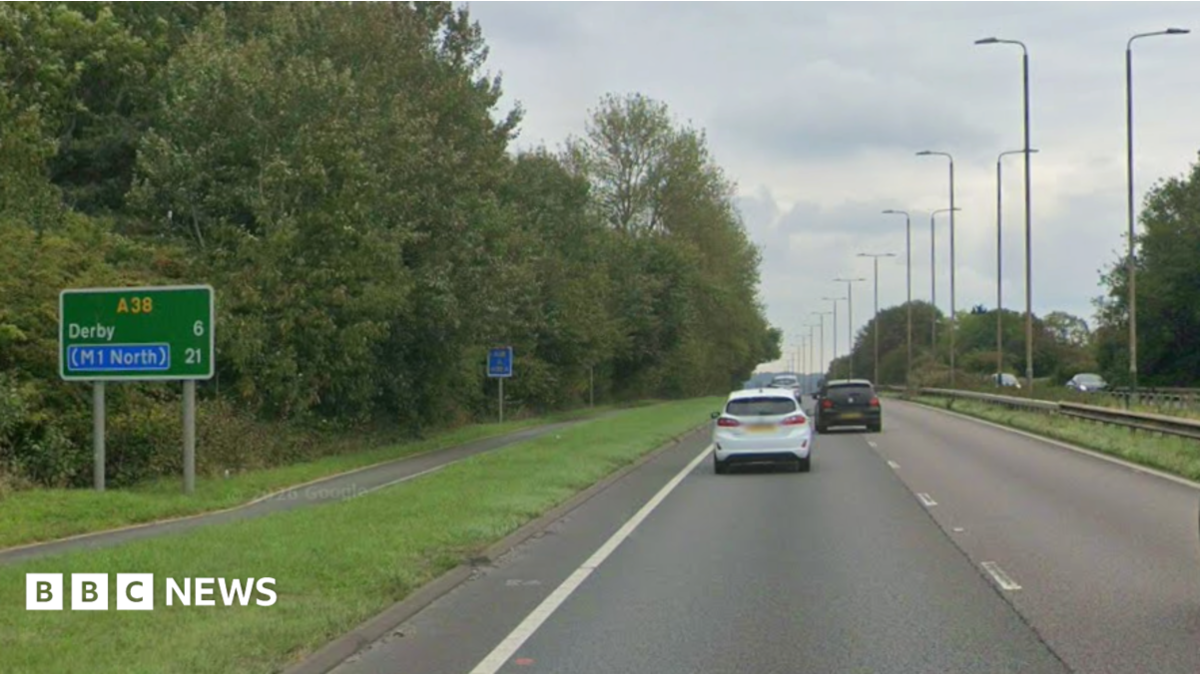
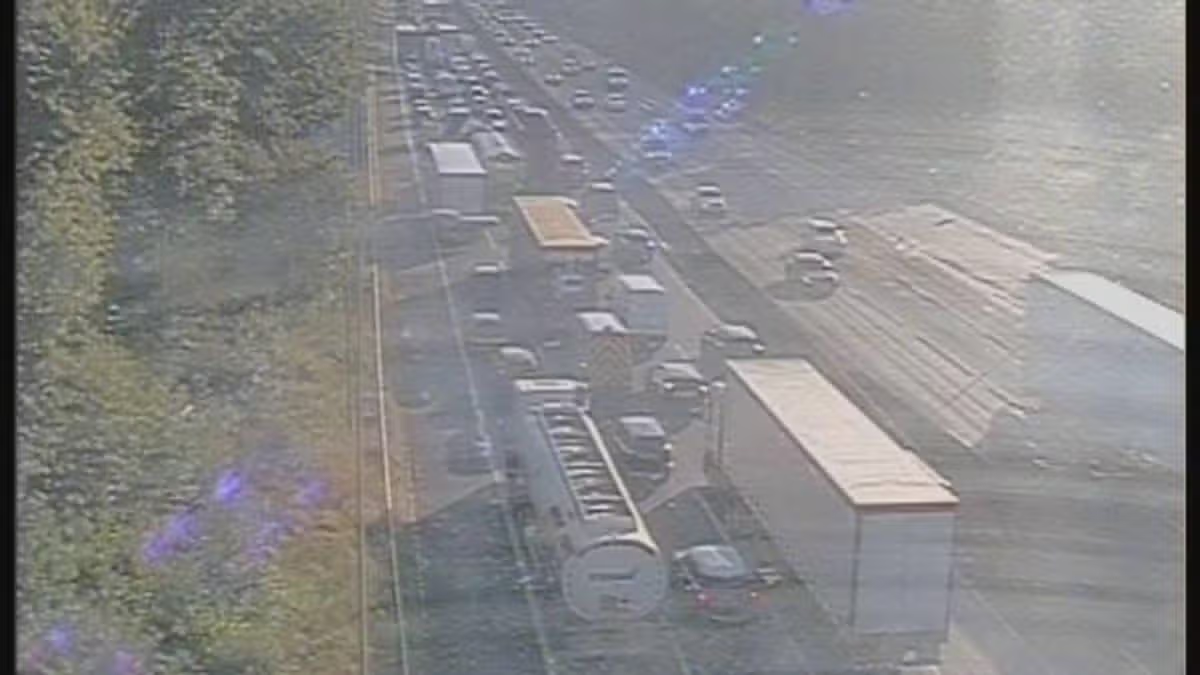

















































You must be logged in to post a comment Login