

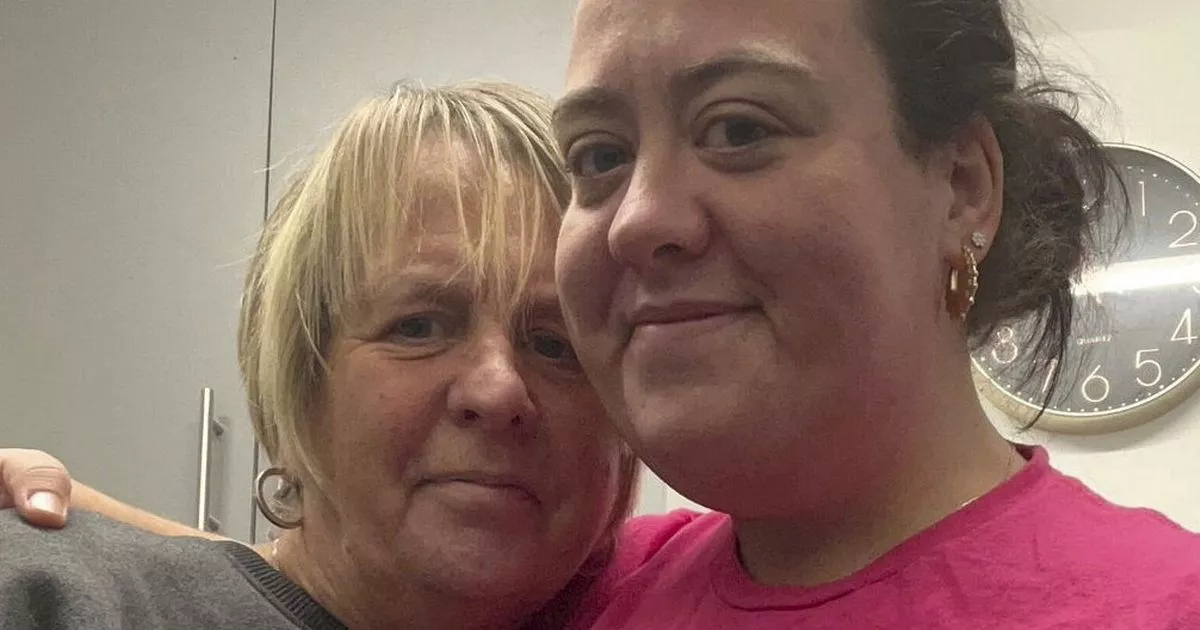
Alison Whybrow, 59 went to A&E with a fractured wrist after a fall but was left stunned when scans revealed a brain tumour.
A woman who went to hospital with a broken wrist was instead diagnosed with a brain tumour after doctors carried out further tests.
Alison Whybrow, 59, was admitted to Royal Stoke University Hospital in November 2022 after falling at home and breaking her wrist. While being treated, Alison unexpectedly lost consciousness due to the pain and remained unconscious for more than six hours, prompting doctors to carry out CT and MRI scans.
The scans revealed a 1.5mm low-grade meningioma — the most commonly diagnosed type of brain tumour in adults — located behind her right eye. Although the tumour was found to be benign, Alison now undergoes annual monitoring scans at Royal Stoke Hospital in Staffordshire to track any changes, as surgery may be required in the future.
Her daughter, Hannah Munday, 29, said the diagnosis came as a complete shock to the family. “If mum had not broken her arm, we would never have known she had a brain tumour,” she said.
“This is our fourth Christmas since the diagnosis, and each one feels more precious than the last. You quickly learn not to take anything for granted. Every Christmas we get to share together is a gift.”
Hannah revealed that her mother initially kept the diagnosis private, sharing the news only with her husband, Darryl, to avoid causing worry. Hannah discovered the truth after overhearing her mum speaking to a doctor on the phone.
“I was shocked and horrified,” she said. “It was such a relief to later find out that everything is stable.”
Inspired by her mother’s experience, Hannah is now working with Brain Tumour Research to help raise awareness and support the charity’s Christmas appeal.
Letty Greenfield, Community Development Manager at Brain Tumour Research, said: “Stories like this are a powerful reminder of how indiscriminate brain tumours are. They can affect anyone at any age. Hannah’s dedication is inspiring, and thanks to people like her, we can continue funding pioneering research and giving hope to those affected.”
Hannah added: “My mum is my best friend, so learning she had a brain tumour was incredibly frightening. I am so grateful for the research that is happening — research that is so desperately needed. Without continued progress, families like mine wouldn’t have the hope we hold on to. That hope means everything.”



