Sports
Why British cross-country runners are no longer kings and queens of Europe

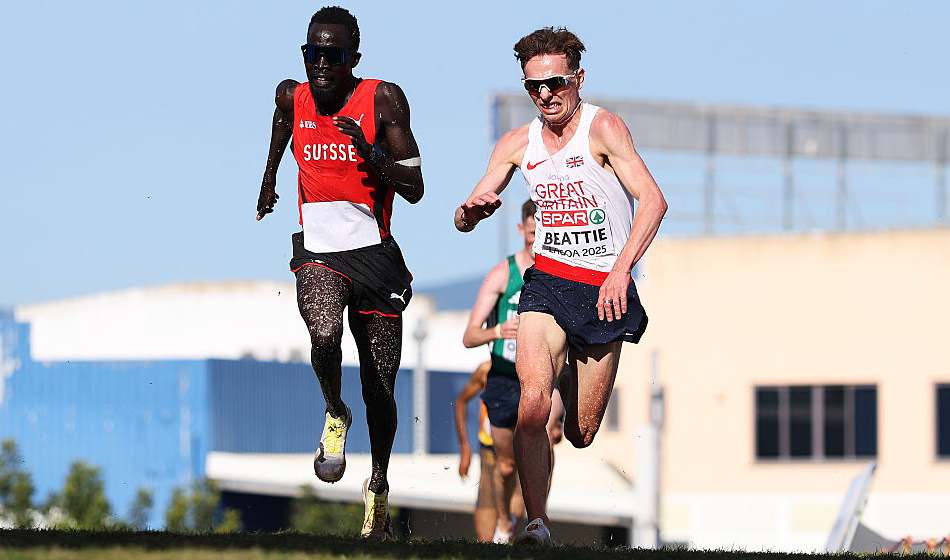
Crown slips in Portugal as Great Britain fail to win more medals than their Euro Cross rivals for the first time since 2003.
The European Cross Country Championships has traditionally provided rich pickings for British distance runners. From Jon Brown’s senior men’s victory in the mud of Charleroi in 1996 through to the remarkable sweep of the top six places in the under-20 women’s race in Brussels in 2008, British athletes have enjoyed incredible medal-winning success.
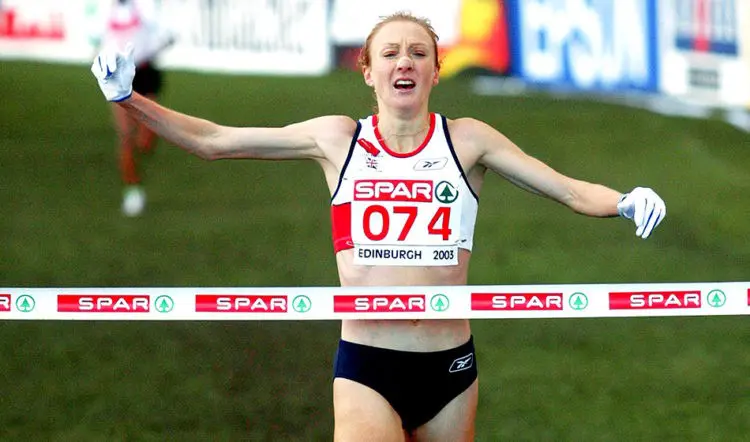
Up until this year’s event in Lagoa, Portugal, you had to go back to Edinburgh in 2003 to find an Euro Cross where another nation actually won more medals than Britain. On that occasion it was Russia, but even then Britain topped the medals table courtesy of its three golds to Russia’s two.
Since then, Britain has proved itself the strongest cross-country nation in Europe time and time again. Indeed, only twice has Britain ended up second on the medals table – in 2016 behind Turkey and 2018 behind Norway – but on both those occasions Britain won more medals in total.
Often, the British team prides itself on every member of the team coming home with a medal of some colour. From Albufeira to Antalya, Brussels to Belgrade, Toro to Tilsburg, airport metal detectors have been kept busy whenever the departing Brits turn up to fly home with their silverware.
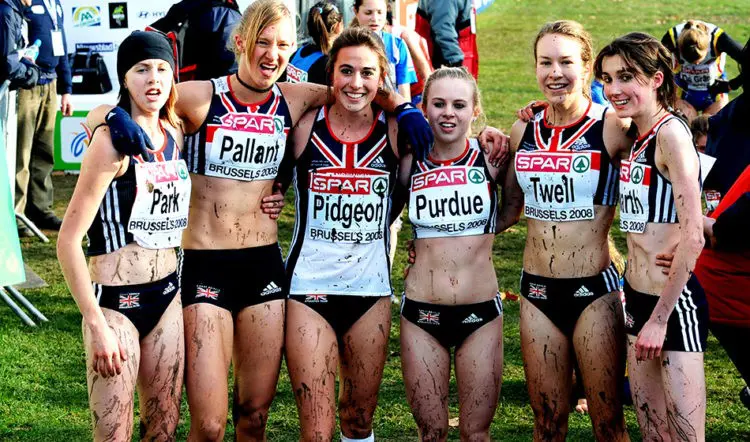
Such was Britain’s strength, even one of its athletics clubs – Aldershot, Farnham & District – was capable of single-handedly topping the medals table. At the 2011 Euro Cross in Slovenia, we reported: “If AFD had been entered as a separate nation at the past seven editions of the European Cross-Country Champs, they would top the overall combined medals table when it comes to medals won in individual races.”
The People’s Republic of AFD, as it was dubbed, does not have as much impact in the Euro Cross these days. But even last year in Antalya, runners from Birmingham University alone won nine medals including three individual podium places.
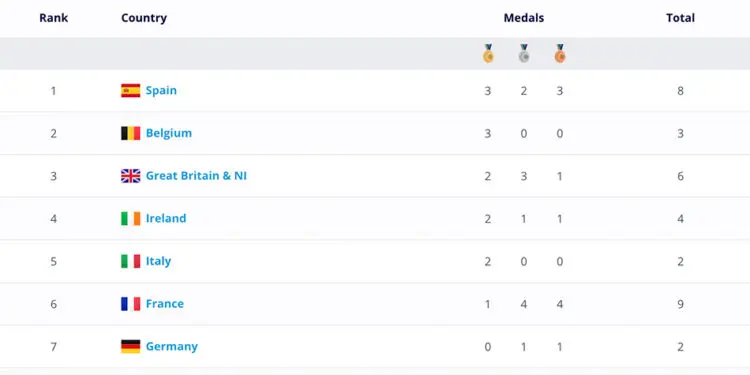
All this came to a screeching halt in the shifting sands of Lagoa on Sunday (Dec 14) though. With three golds and eight medals in total, Spain topped the medals table with Britain finishing third with two golds and six medals.
Even sixth-placed France won more medals than Britain with nine, although only one of these was gold. This meant France topped the placings table – where points are awarded from first to eighth positions – with Spain second and Britain third, just one point ahead of Belgium as Ireland finished fifth.
The crown has slipped. No longer are British cross-country runners the kings and queens of Europe.
So where did it go wrong?
Firstly, a word of praise for the medallists. Innes FitzGerald stormed to a big victory in the under-20 women’s race, taking her third title and looking every bit Britain’s next distance running superstar.
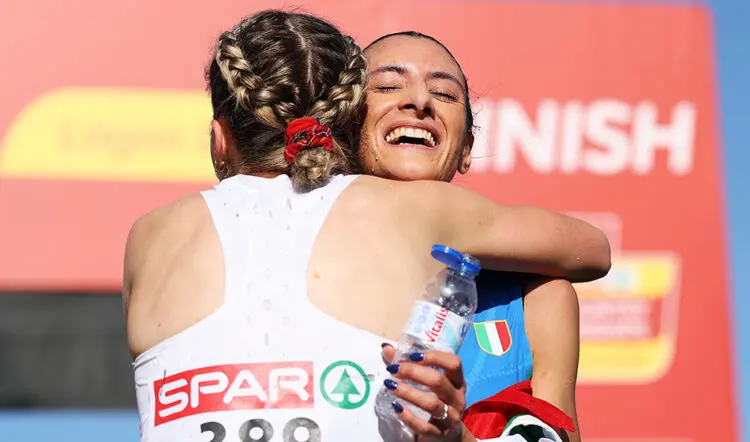
Megan Keith overcame an early fall to win senior women’s silver behind Nadia Battocletti of Italy. Keith led the Brits to team silver, too, whereas the under-20 men took team silver and there was a hard-fought bronze in the mixed relay.
Britain did have some bad luck, too. Apart from Keith’s fall, Scott Beattie was a whisker away from winning a senior men’s medal. Michael Clark, the under-20 British trials winner, lost a shoe in his race and finished 18th. Will Barnicoat’s build-up to the defence of his under-23 men’s title was interrupted by injury and he finished 14th.
There were of course a number of leading British athletes absent. Marathon runners like Emile Cairess, Alex Yee, Patrick Dever, Mahamed Mahamed, Phil Sesemann, Calli Hauger-Thackery and Eilish McColgan find the roads more alluring than cross country these days. Imagine a mixed relay team with Josh Kerr, Jake Wightman, Georgia Hunter Bell and Laura Muir. Britain has rarely fielded its absolute strongest names over the years, though, but has still managed to top the medals table.
Perhaps more of a direct factor in Britain’s under-par performance this year is the impact of the NCAA system in the United States. George Couttie, for example, finished a close runner-up to Niels Laros in the under-20 race in Turkey 12 months ago and would have made a fine addition to the GB class of 2025. But after finishing a fine 10th in the NCAA Cross Country Championships last month, he went to race indoors in Boston – clocking 7:36.74 for 3000m – instead of flying back to Europe.
This next point is a thorny topic but do enough current coaches truly see the value of cross-country running when it comes to developing their athletes? Athletes such as Paula Radcliffe (women’s winner in 1998 and 2003) and Mo Farah (men’s winner in 2006 and runner-up in 2008-2009), for example, are among those who used the Euro Cross as a springboard to greatness.
Mick Woods, the coach at the heart of AFD’s successes, led athletes such as Charlotte Purdue, Emelia Gorecka, Steph Twell, Jess Piasecki and others to cross-country success and, with the exception of Gorecka, they all ran fine marathons in later years.
Britain aside, it’s clear that Europe’s top track runners value the Euro Cross experience – from Olympic medallist Battocletti to world 10,000m champion Jimmy Gressier (a close runner-up on Sunday) to Olympic 5000m champion Jakob Ingebrigtsen (a late withdrawal this year when he would have been going for a fourth senior crown).
This is probably a small factor, but did the cloying turf of Sefton Park in Liverpool provide the best trials experience for the Brits? Given sandy course that faced athletes in Lagoa, the trials might have been better placed on Blackpool beach. Although to be fair, Sefton Park has of course served multiple British teams well in the past.
Finally, maybe the 2025 results were just a blip for Britain. Only 12 months ago, after all, Britain topped the medals table in Turkey with six golds and 12 medals in total – more than twice as many as their nearest rival, Italy.
READ MORE: 2025 Euro Cross coverage
Next year the event moves back to Belgrade. The Serbian city staged the Euro Cross in 2013 and on that occasion Britain topped the medals table with five golds and nine medals – well ahead of runners up France.
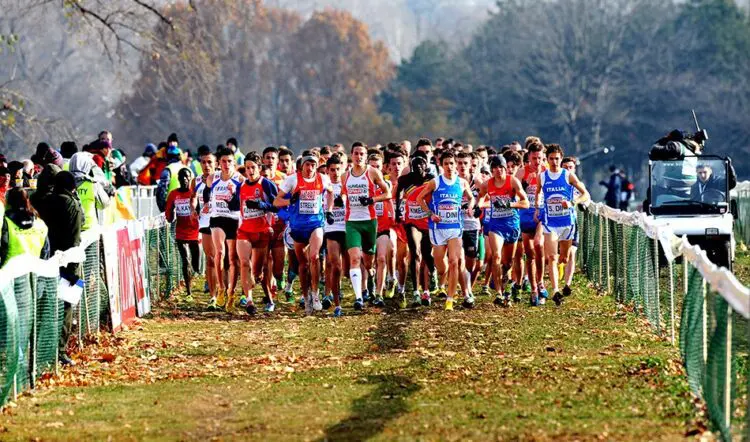
Plus, if rumours are true that Britain wants to host this event soon, they will definitely need to conjure up some gold medal contenders. Nothing improves the atmosphere of an event, after all, than some home nation hopes.