














This role of railway stations is set out in a recent report by Development Economics

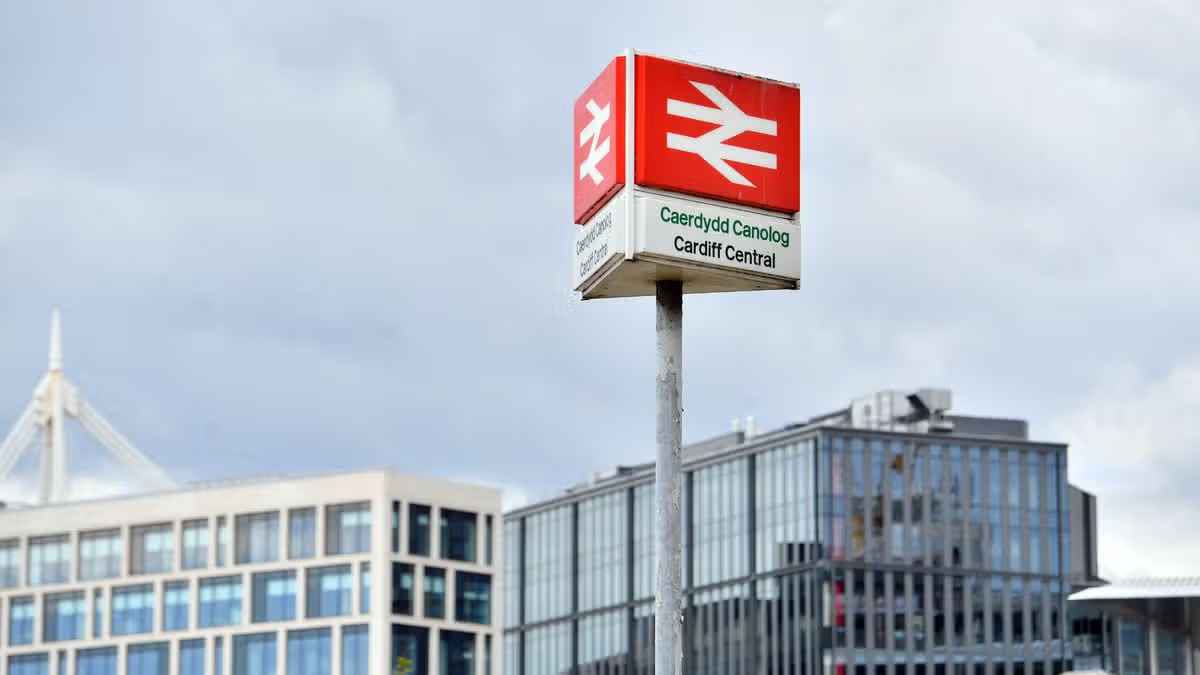
Cardiff Train Station.(Image: WalesOnline/Rob Browne)
We usually think of railways and railway stations as places to catch trains. And so they are. They provide us in parts of Wales with an alternative to the motor car particularly for longer journeys; and within the UK where air travel options are few.
Train travel has of course to be accessible, convenient and at an acceptable price to play a more socioeconomic role. It can support inward investment in jobs, our tourism industry (vitally important to Wales) and support housing in relation to work and leisure.
This role of railway stations is set out in a recent report by Development Economics: Growing Places – Railway Stations: Engines of Economic Growth. It illustrates the impact of Great Western main line stations including Carmarthen, a medium size station in terms of passenger numbers handling nearly half-a-million entries and exits annually.
Carmarthen is a historic town with a wide catchment area with a growing rail passenger market (21.5% up on pre-Covid levels).
Also relevant to the south Wales context and considered in the report are Moreton-in-Marsh and Okehampton railway stations which are not dissimilar to Llandrindod or Llandovery on the Heart of Wales Line (HoWL). Bristol Parkway, parallels proposals for a new station at Felindre on the Swansea District Line (SDL) north of Swansea at M4 junction 46.
The six new stations on the main line between Cardiff and Newport proposed in the Burns Report for south Wales commuter services also fall into the type of stations suggested in the Development Economics report.
This report highlights the expected future developments, in housing or offices, near stations particularly where land is available, as at Felindre. High frequency reliable train services at Bristol Parkway have attracted over 4,000 houses to date and a further 12,000 expected over the next 10 years. Employment generated at the 12 stations analysed in the report has reached 3,600 over the past five years and estimates of 20,000 by 2040.
Moreton-in-Marsh in the Cotswolds has features not dissimilar to those of Carmarthen and Llandrindod with historic origins and mid-nineteenth century railway stations.
They all have tourism and agriculture as their economic core.
Good train services and modernised comfortable railway stations will make stations on the HoWL and those west of Swansea more attractive to longer distance visitors from Manchester, London and south-east Wales.
The development of 4,000 houses at Newquay is being significantly enhanced by the Mid-Cornwall Metro (based on heavy rail) and an upgraded Newquay station. “Strengthening rail connections will open up new opportunities for residents and businesses, attract investment and re-enforce Cornwall’s position as a well-connected and vibrant place to live and work.
Developments such as the Newquay suburban site will support local business, encourage sustainable travel and create a thriving local economy” is the view of the Duchy of Cornwall who are behind the scheme.
This column has often identified the contribution of good transport connections to inward investment. If enhanced rail services are seen as essential in providing greener, more reliable travel choices and stronger links to jobs, education and leisure across south west England then surely this also applies to Wales.
While the scale at Felindre and the six stations in south-east Wales may not quite match the 2.25 million passengers at Bristol Parkway, the principles are the same. There are therefore parallels to be drawn with railway station developments in south Wales.
Railway stations can provide faster home/business to business movements in particular to city centres. Bristol Parkway provides a parallel to the proposed (SDL) West Wales/Swansea North Parkway station at Felindre as an access point from Swansea and west Wales into the Cardiff jobs market avoiding the congested M4 to the capital.
Adjacent government-owned land on the old Felindre tinplate works site can provide for housing (and a source of commuters) with local economic benefits though household expenditure and employment.
Felindre Parkway and the enhanced SDL route as the Swansea Metro (using heavy rail) will provide a more efficient means of reaching tourism centres in Carmarthenshire and Pembrokeshire saving up to 22 minutes in rail journey times.
The arguments made in the Development Economics report show the importance of railways services and stations in economic development and consequently increased jobs and wealth.
These arguments have been put forward in my Wales in Motion column many times particularly in relation to rural, less densely inhabited parts of Wales and the electrification of the north Wales and south Wales main lines.
- Professor Stuart Cole CBE is Emeritus Professor of Transport (Economics and Policy), University of South Wales.









































You must be logged in to post a comment Login