Sony may not be done with the WH-1000XM4 just yet. According to a fresh leak via Billbil-kun, the company is preparing to launch the Sony WH-1000XM4C, a more affordable version of its hugely popular noise-canceling headphones. The upcoming model is expected to arrive in early September, with pricing reportedly set at €249.99 in Europe and £219.99 in the UK, making it significantly cheaper than the flagship WH-1000XM6.
A familiar design with a lower price
The biggest surprise isn’t the name — it’s the design. Unlike the newer XM5, which dropped the foldable hinge, the leaked WH-1000XM4C reportedly sticks closely to the original XM4’s compact, foldable form factor. That could be welcome news for users who preferred the older design, especially after Sony only brought back folding hinges with last year’s XM6.
Sony WH-1000XM4Riley Young / Digital Trends
The headphones are tipped to launch in Black, Silver, and Lavender color options while retaining many of the features that made the XM4 a fan favorite. According to the leak, buyers can expect active noise cancellation powered by Sony’s QN1 processor, Hi-Res Audio support, Spatial Audio, and the familiar touch-sensitive earcup controls for playback and volume adjustments.
The trade-off appears to be battery life. While the original WH-1000XM4 offered up to 38 hours of playback with ANC turned off (or 30 hours with ANC enabled), the WH-1000XM4C is expected to deliver 34 hours without ANC and 27 hours with noise cancellation switched on. Everything else, however, appears to remain largely in line with the original formula.
A smart move for Sony?
To be fair, this positioning makes sense. Sony’s headphone lineup has steadily moved upmarket over the years, with the WH-1000XM6 launching at a much higher price than previous generations. The WH-1000XM4C could fill the gap for buyers who want Sony’s flagship-grade noise cancellation and audio features without paying flagship prices.
Advertisement
Sony WH-1000XM6.Simon Cohen / Digital Trends
Nothing has been officially confirmed by Sony yet, so the pricing and launch window should be treated as a leak for now. Still, the rumored strategy is an interesting one. Rather than replacing the XM6, the WH-1000XM4C appears to revive one of Sony’s most popular headphone designs at a lower price point. If the leak proves accurate, it could end up becoming the sweet spot in Sony’s lineup for users who care more about value and portability than having the company’s absolute latest hardware.
HR software provider Rippling this week unveiled AI Spend Console, an anti-tokenmaxxing product that helps a company track and contain its AI spending. One of the most interesting features is that it maps how much individual employees, teams, and roles are spending and if they are genuinely more productive, or generally producing more AI slop.
The company promises the tool will show “which engineers have high AI spend whose peers frequently ask them to redo work in code reviews,” the company says in its blog post.
The tool was born after Rippling went all in on tokenmaxxing at the start of the year — as so many did — only to discover employees were wildly burning cash. Chief Product Officer Matt MacInnis still recalls the executive team meeting in March when CFO Adam Swiecicki presented a number that shocked them.
Rippling was on track to burn 40% of its R&D headcount budget on AI tokens, meaning it was spending as much on tokens as 40% of all the compensation it paid employees in that unit. Millions of dollars. (The R&D org is home to engineering at most tech companies.)
Advertisement
Spending was growing by 80% month-over-month, and if that trend continued, the next year it would spend almost as much on AI tokens — 90% — as it spent on its high-paid R&D unit employees.
“We were incredulous,” MacInnis told TechCrunch.
Management immediately undertook an “urgent” project to understand the spending and what they were getting for that money, he said. In fact, the launch ad for this new product features Swiecicki sitting on a stool while employees are picking up wads of cash and dumping them into a paper shredder.
When Rippling conducted an analysis, it discovered facts like “roughly 10–15% of our employees were driving about 60% of total AI spend. One engineer was spending $50,000 a month,” its blog post shared.
Advertisement
Rippling didn’t want to stop AI usage, just rein it in — a lot. It started by negotiating a max spending cap with each of the tools its company used: Cursor, OpenAI, and Anthropic. It immediately found an obvious issue: Employees defaulted to using the most recent, and most expensive, frontier models for all tasks.
“The truth is that the inference providers, like Anthropic and OpenAI, have absolutely no incentives to help you control your spend. They have every incentive for it to be a runaway expense, and that’s exactly what they do. They don’t provide you with great usage insight, and they don’t collaborate with one another,” MacInnis said.
That was a common early-2026 problem. Now, eight months into the year, enterprises have figured out a couple of things. First, they know they need multiple models from multiple AI labs at various price points, including a frontier open weight option, perhaps of Chinese origin.
Rippling founder and CEO Parker Conrad noted last month that when his company conducted its own benchmarks for its own internal uses, it discovered SpaceX’s Grok was the all-around leader but that “GLM 5.2 is 85% cheaper but [had] nearly identical performance” to the frontier models. (SpaceX now owns Cursor, which offers access to Grok and dozens of other models.) Z.ai’s GLM 5.2 has become a particular favorite Chinese model for coding tasks among tech companies these days. Databricks has also been championing it.
Advertisement
Second, enterprises now know they need an AI gateway that routes prompts to the best, most cost-effective model for the task. Rippling came to that conclusion too. So it built its own AI gateway that is also part of this product. MacInnis says it is possible for enterprises that already use another gateway to still use the AI Spend Console product, though if they want the features that govern spending, they would need to use Rippling’s gateway.
AI Spend Console produces dashboards (once known as leaderboards in the tokenmaxxing days) that score attributes such as prompts per day combined with work output (lines of code/pull requests) and spend.
With this tool in place, Rippling said it dropped its token spend from 40% of its headcount budget to about 15%. But it didn’t curtail AI usage. The company spent a peak of 605 billion tokens the month the CFO issued his warning, MacInnis shared. In July, internal usage hit 600 billion tokens again, yet “the cost of July’s token spend was 37% of the cost of April’s token spend,” he said.
“That’s just because now we’re routing to the more effective models,” he said, joking that “we’re not letting the sales team do grammar updates using Fable.”
Advertisement
But technology solutions aren’t enough, Rippling notes. The company found people using AI effectively and made them “AI captains” tasked with assisting the rest of the company.
Still, such efforts to use AI beyond engineering are a work in progress, MacInnis says, as software engineers have been the primary users so far. But Rippling is, for example, working on it for customer onboarding teams to automate some mailing data and data-reconciliation tasks. The dashboard will then measure productivity in terms of onboarding more customers.
“We have to be able to link token consumption in G&A functions and in customer-facing functions back to productivity. If we can’t do that, all bets are off on any of this stuff being available to the broader employee base,” MacInnis says.
So, if Rippling is an example, tokenmaxxing may have swung so far the other direction that employee AI access may no longer be like Slack or email. If the company can’t measure productivity, then all employees might not have access.
Advertisement
As for the product, AI Spend Console is included for Rippling’s HR subscribers, though there are additional AI usage-based costs. It can also be purchased as a stand-alone product and integrated with another HR system of record, MacInnis says.
When you purchase through links in our articles, we may earn a small commission. This doesn’t affect our editorial independence.
A CRM strategy is a written plan for how your business collects customer data, uses it across sales and marketing, and turns first-time buyers into repeat customers. Without that plan, a CRM tool is just an expensive contact list.
Quick Take
A working CRM strategy does three things: it maps how customers actually move through their journey with you, it sets up your CRM system to support that journey, and it puts clear rules in place for how customer data gets used and protected. Get those three right, and the software becomes a growth engine instead of a filing cabinet. Skip any one of them, and you end up with a database nobody trusts.
What a CRM Strategy Actually Is
Customer Relationship Management, or CRM, is the practice of tracking and managing every interaction a business has with its customers and leads. A CRM strategy is the plan behind that practice. It decides what data you collect, who can see it, and how your team uses it to serve customers better.
Many businesses buy CRM software first and figure out the strategy later. This usually backfires. The software fills up with messy, inconsistent data, and nobody trusts it enough to use it for real decisions. Building the strategy first — even a simple one — gives the software a clear job to do from day one.
Advertisement
Map the Customer Journey Before You Touch Any Software
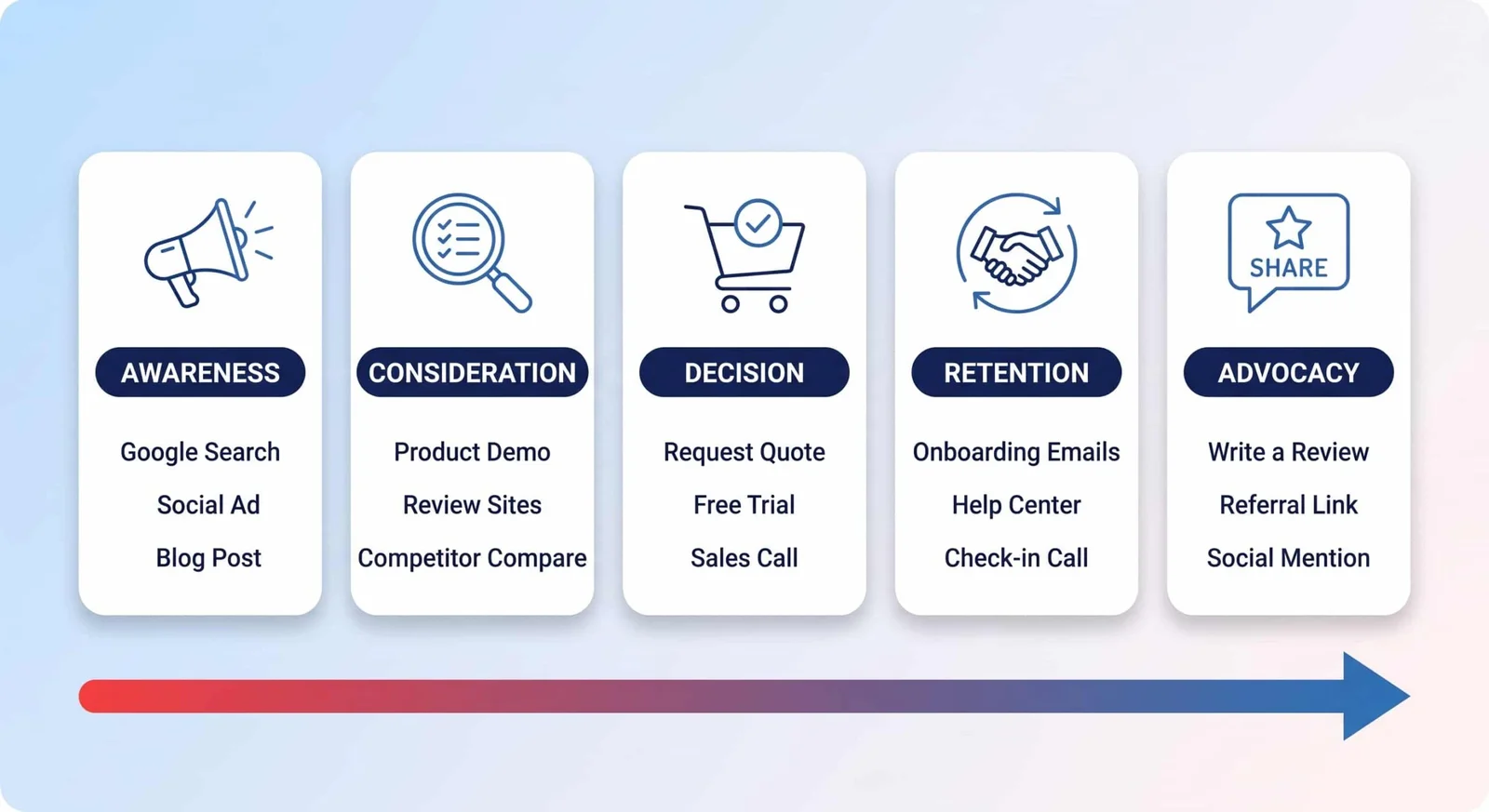
Before you can manage a relationship, you need to understand it. That starts with mapping the customer journey: the path someone takes from first hearing about your business to becoming a repeat customer who refers others.
A customer journey map is a visual picture of that path. It shows the stages a customer moves through and the touchpoints where they interact with your brand, such as your website, a social media ad, an email, or a phone call with support. IBM’s guide to customer journey mapping describes it as a tool for seeing the full path a customer takes, not just the moment they buy.
To build a useful map, ask what your customer is thinking and feeling at each stage:
Awareness: How do people find out about you? Search, social media, or a friend’s recommendation?
Consideration: What do they check before buying? Reviews, comparisons, or a free demo?
Decision: What actually gets them to buy? A discount, an easy checkout, or a helpful sales call?
Retention: What keeps them after the sale? Onboarding emails, support, or a check-in call?
Advocacy: What makes them tell other people about you?
Each answer becomes a job for your CRM. If most customers read reviews before buying, your CRM should track which review sites send you traffic. If a support call often saves a shaky customer, your CRM should flag customers who haven’t logged in for a while, so support can reach out first.
Choosing and Structuring Your CRM Architecture
Once you understand the journey, you can design a CRM system that supports it. This is more than picking software. It means planning how the system will grow as your business grows, without breaking or slowing down.
Advertisement
A small business might get by with a simple setup at first. But if you plan for growth from the start, you avoid a painful rebuild later. According to Forbes Advisor’s guide to CRM strategy, a strong plan defines clear, measurable goals before you pick software, so the tool serves the goal instead of the other way around.
Four things to plan before you commit to a platform:
Platform fit: HubSpot, Salesforce, and Zoho are three common choices, and they are built for different priorities. A side-by-side comparison of HubSpot and Zoho shows the kind of trade-offs to expect between marketing-heavy platforms and all-in-one options, and the same kind of comparison is worth doing for Salesforce before you choose.
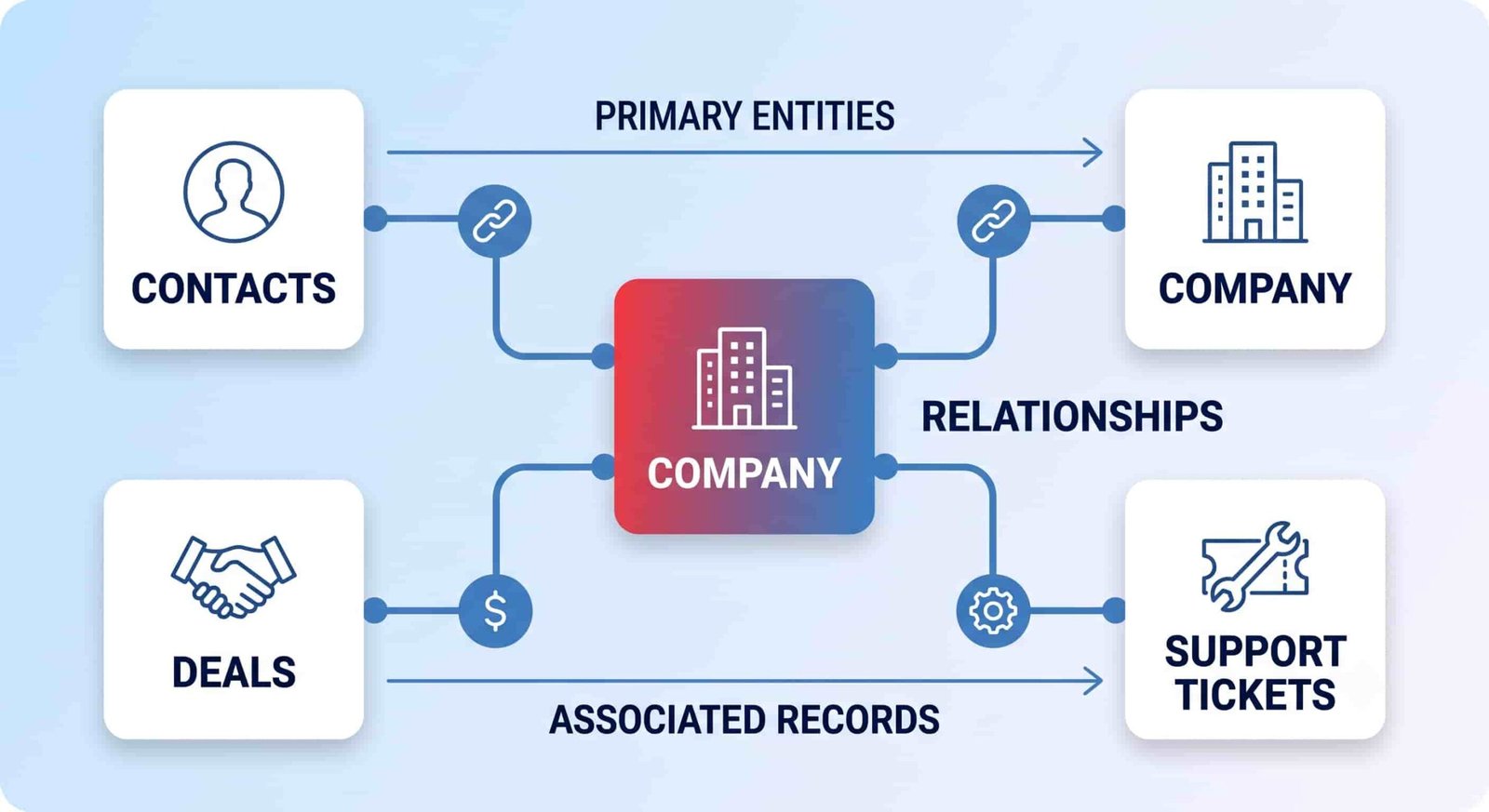
Data structure: Decide how you’ll organize contacts, companies, and any custom records your business needs, such as subscriptions or ongoing projects.
Integrations: Your CRM should connect to your email platform, accounting software, and online store, so all your customer data lives in one place instead of scattered across tools.
Configuration vs. custom code: Most needs can be met by adjusting settings inside the CRM. Custom code should be a last resort, since it makes future updates harder and slower.
Getting this architecture right from the start saves real time and money later. Many businesses bring in an experienced HubSpot consultant, or a specialist in whichever platform they’ve chosen, to design a system built for both today’s needs and next year’s growth.
Using CRM Data to Align Sales and Marketing
A well-set-up CRM gives your sales and marketing teams a shared, accurate view of every customer. That shared view stops the common problem of marketing generating leads that sales can’t actually close.
For marketing, a CRM makes it possible to:
Advertisement
Group customers by behavior. You can send a special offer to people who haven’t bought in six months, instead of blasting your whole list.
Automate follow-up emails. A new lead can get a welcome sequence automatically, without anyone remembering to send it manually.
See which campaigns actually lead to sales, not just clicks or opens.
For sales, a CRM makes it possible to:
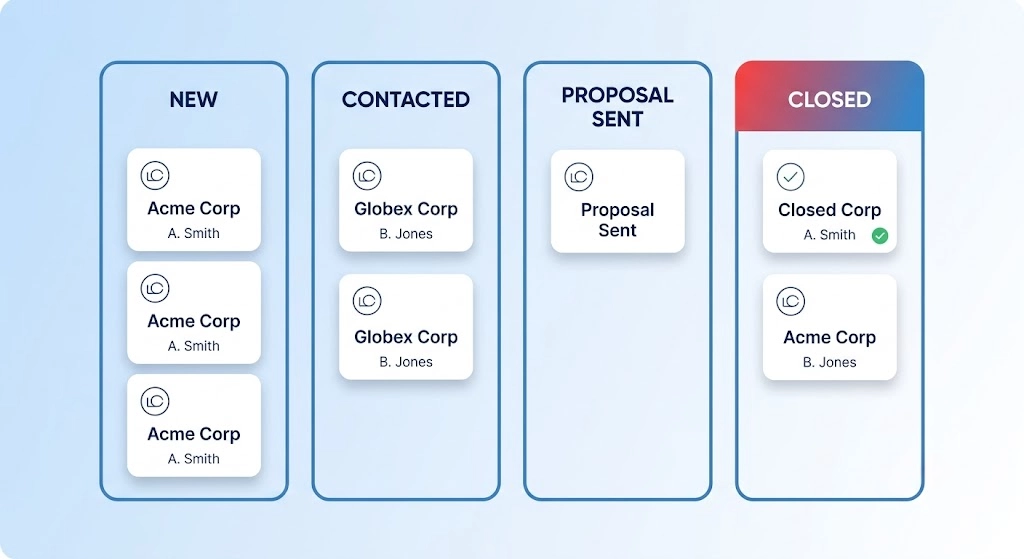
See the whole pipeline at once, so reps know where each deal stands and what’s stuck.
Rank leads by how engaged and how good a fit they are, so reps spend time on the leads most likely to buy.
Predict future sales using real pipeline data instead of guesswork.
This kind of alignment is one piece of a bigger picture. A CRM strategy works best inside a wider plan for growing the business, which is why it’s worth reading a broader guide to business development strategy alongside your CRM planning, not instead of it.
Protecting Customer Data: Privacy Rules Your CRM Strategy Must Cover
Your CRM holds personal information about real people. How you handle that data affects your legal exposure and your customers’ trust in you. Two major laws set the bar most businesses need to know about.
The General Data Protection Regulation (GDPR) applies to any business that handles personal data belonging to people in the European Union, even if the business itself is based elsewhere. The California Consumer Privacy Act (CCPA) gives California residents specific rights over the personal data businesses collect about them, including the right to know what’s collected and the right to ask for it to be deleted.
Five practices that keep your CRM strategy on the right side of both laws:
Track consent. Record when someone agrees to marketing emails, and make it just as easy for them to opt out.
Collect less. Only ask for the data you actually need. Extra fields on a form are extra risk with no upside.
Limit access by role. Not every employee needs to see every customer record. Set up your CRM so people only see the data relevant to their job.
Clean your data regularly. Old, duplicate, or wrong records aren’t just clutter — they’re a liability if something goes wrong.
Train your team. Most data breaches trace back to human error, not hacking. A short, regular training session closes that gap.
These aren’t optional extras bolted onto a CRM strategy. They’re part of the strategy itself, the same way a documented data privacy checklist is part of any serious data-handling plan. Real estate teams face this same challenge with sensitive client financial details, which is one reason CRM tools built for property sales put so much emphasis on controlled access to client records.
Common Mistakes That Sink a CRM Strategy
Most CRM strategies don’t fail because of bad software. They fail for a few repeatable reasons.
Advertisement
Buying the tool before writing the plan. This is the single most common mistake. Teams pick a platform based on a demo, then try to force their process to fit it. Write down your customer journey and your goals first, then choose software that fits them.
Letting data go stale. A CRM full of outdated contact info and duplicate records quickly loses everyone’s trust. Once a team stops trusting the data, they stop using the system, and the whole strategy collapses quietly, without anyone officially deciding to abandon it.
Skipping pipeline management setup. A CRM with no defined pipeline stages just becomes a list of names. Reps end up tracking deals in spreadsheets on the side, which defeats the purpose of having the CRM at all.
Over-customizing early. Heavy custom code makes sense for a mature, well-understood process. For a new CRM strategy, it usually just makes every future update slower and more expensive. Start with configuration. Add custom code only when configuration genuinely can’t do the job.
Advertisement
None of these mistakes show up on day one. They show up three to six months in, when the initial excitement fades and nobody has been assigned to keep the system clean. Assign that ownership before you launch, not after adoption drops.
Key Takeaways
A CRM strategy is a plan for how you collect, use, and protect customer data — the software is just the tool that carries it out.
Map your customer’s real journey first. Let that map decide what your CRM needs to track and automate.
Plan your CRM’s data structure and integrations for where your business is headed, not just where it is today.
Sales and marketing alignment inside a CRM comes from shared data, not shared meetings.
Data privacy rules like GDPR and CCPA aren’t separate from your CRM strategy. Build them in from the start.
Most CRM strategies fail from neglect, not bad software — stale data and skipped ownership are the real culprits.
FAQ
How is a CRM strategy different from CRM software?
CRM software is the tool. A CRM strategy is the plan that decides what the tool should do — what data to collect, how teams use it, and how it fits your customer journey. You can own CRM software with no strategy behind it, and it will still function poorly.
How long does it take to build a CRM strategy?
It depends on your business size and how much you already know about your customer journey, so there’s no single fixed timeline. A small business with a clear journey map can draft a working strategy in a few weeks. A larger organization with multiple departments and legacy data usually needs longer, since alignment across teams takes real coordination, not just planning time.
Do I need a CRM strategy if I’m a very small business?
Yes, though it can be much simpler than a large company’s. Even a one-person business benefits from deciding, in writing, what customer information to track and how to follow up consistently. The size of the strategy should match the size of the business, not skip the planning step entirely.
What’s the biggest sign a CRM strategy isn’t working?
Your team stops trusting the data and starts keeping their own spreadsheets or notes on the side. That’s a clearer warning sign than low login counts, because it means people have quietly decided the CRM isn’t reliable enough to depend on.
Creating custom WhatsApp stickers could soon become much simpler, especially if ChatGPT is already part of the workflow. A new APK teardown suggests OpenAI is developing a feature that would allow users to generate custom stickers inside ChatGPT and export them directly to WhatsApp. While the functionality isn’t live yet, hidden code discovered in the latest Android app points to native WhatsApp integration, potentially eliminating the need to save images and manually convert them into stickers first.
What the leak reveals
According to the APK teardown by Android Authority, the upcoming feature would let users create an image through ChatGPT and then choose “Add to WhatsApp” from the sharing menu. Instead of sending the image as a regular picture, ChatGPT would prepare it in WhatsApp’s sticker format before handing it off to the messaging app. That means users could create personalized reaction stickers, memes, or illustrations from a simple text prompt and add them to their sticker collection in just a few taps.
Unsplash
The code also suggests the integration is being built directly into ChatGPT rather than relying on a separate sticker-making app. Today, creating custom WhatsApp stickers often involves generating an image, removing its background if necessary, saving it locally, and then importing it into a third-party sticker tool. This new workflow would streamline the entire process into a single experience.
It makes sense, but don’t get too excited just yet
The feature feels like a natural next step for ChatGPT’s growing image-generation capabilities. As users increasingly create AI-generated memes, emojis, profile pictures, and illustrations, being able to turn those creations directly into WhatsApp stickers would make them much easier to share. More broadly, it also reflects OpenAI’s push to make ChatGPT more than just a chatbot by adding practical tools and integrations that let users take AI-generated content beyond the app itself.
Levart_Photographer / Unsplash
Since the feature was uncovered through an APK teardown, there’s no guarantee it will ever be released, and OpenAI hasn’t officially announced it. However, if it does arrive, it could make creating custom WhatsApp stickers far more seamless by letting users generate and export them directly from ChatGPT without relying on third-party apps or manual conversions.
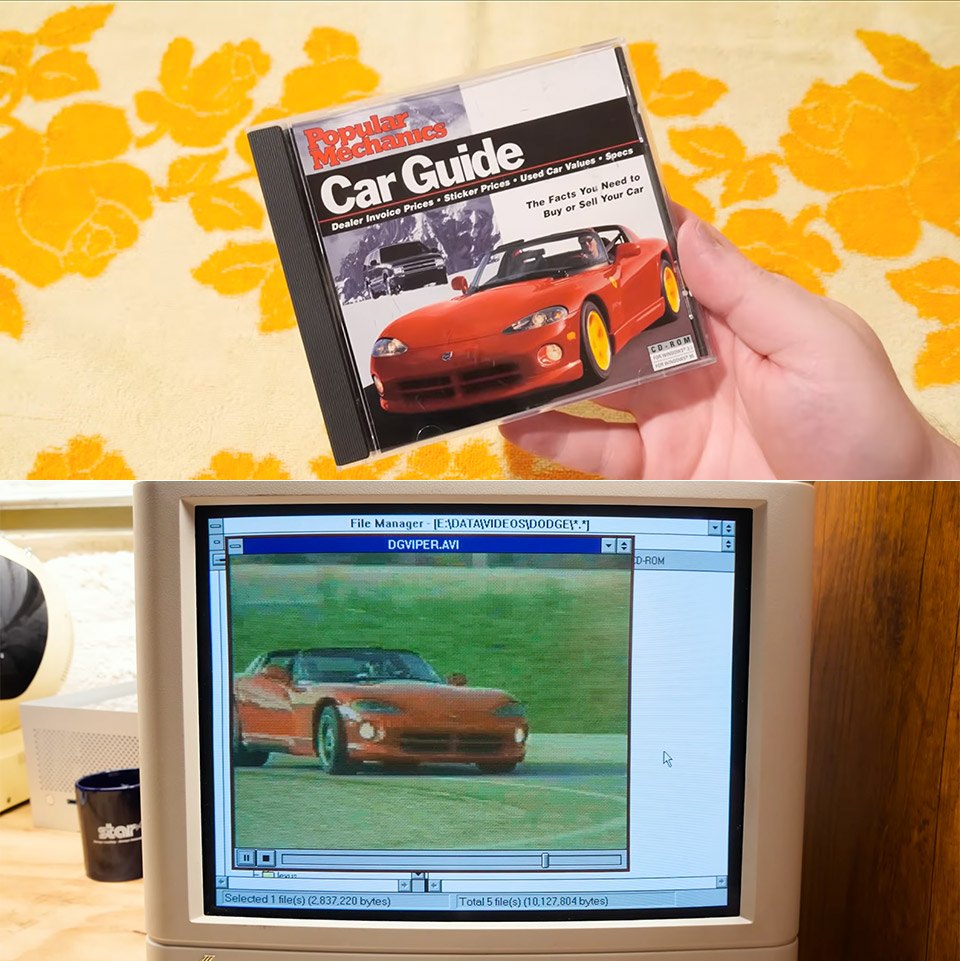
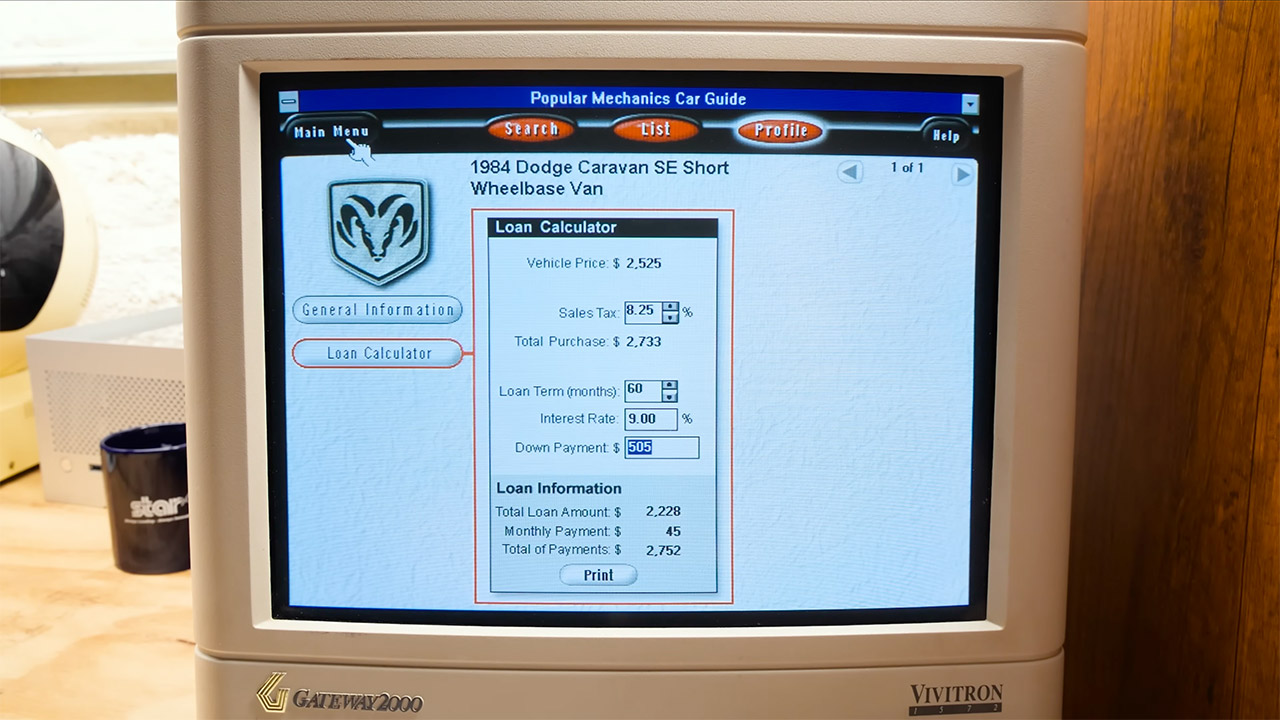
Clint from LGR Blerbs loaded up a mid-90s Popular Mechanics Car Guide disc on a Windows 3.1 machine and spent over twenty minutes poking around its menus, photos, and videos. The software, released around 1995-1996 for PCs that could handle Video for Windows, promised buyers a way to research new and used vehicles without leaving the house. It delivered pricing data, specifications, magazine articles, still images, and full-motion clips for thousands of cars, trucks, SUVs, and vans. A disc image sits on the Internet Archive now if anyone wants to try it themselves.
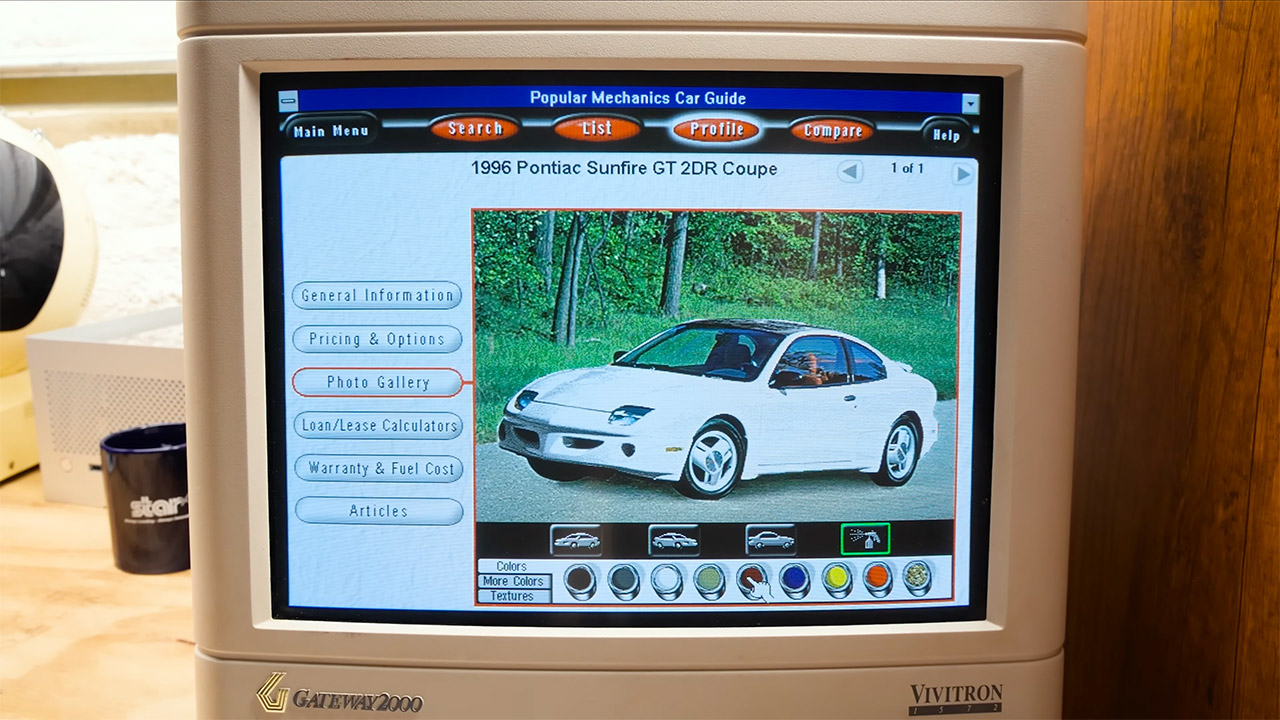
When you start the program, you’ll see a fairly simple interface that has been designed to take advantage of the hardware available at the time. Users can search for a car based on whether it is new or old, its body design, its price, or some of its features and safety equipment, such as dual airbags. Search results appear as lists, which direct you to detailed pages for specific models. Each listing provides a detailed look at the dealer’s invoice price as well as the suggested sticker price, which can be extremely useful if you intend to negotiate a decent bargain. Next to the standard equipment list, you’ll see the optional packages they provide, with prices that update in real time so you can get a decent indication of what you’re looking at.
LEGO FERRARI MODEL CAR KIT – Builders ages 10+ can create the legendary Technic Ferrari FXX K with authentic details and working mechanical features
AUTHENTIC RACE CAR DETAILS – This supercar building set features working butterfly doors, opening hood, and an engine cover that reveals the…
CAR MODEL KIT – Young engineers explore real automotive concepts with this educational learning toy as they build the working differential and watch…
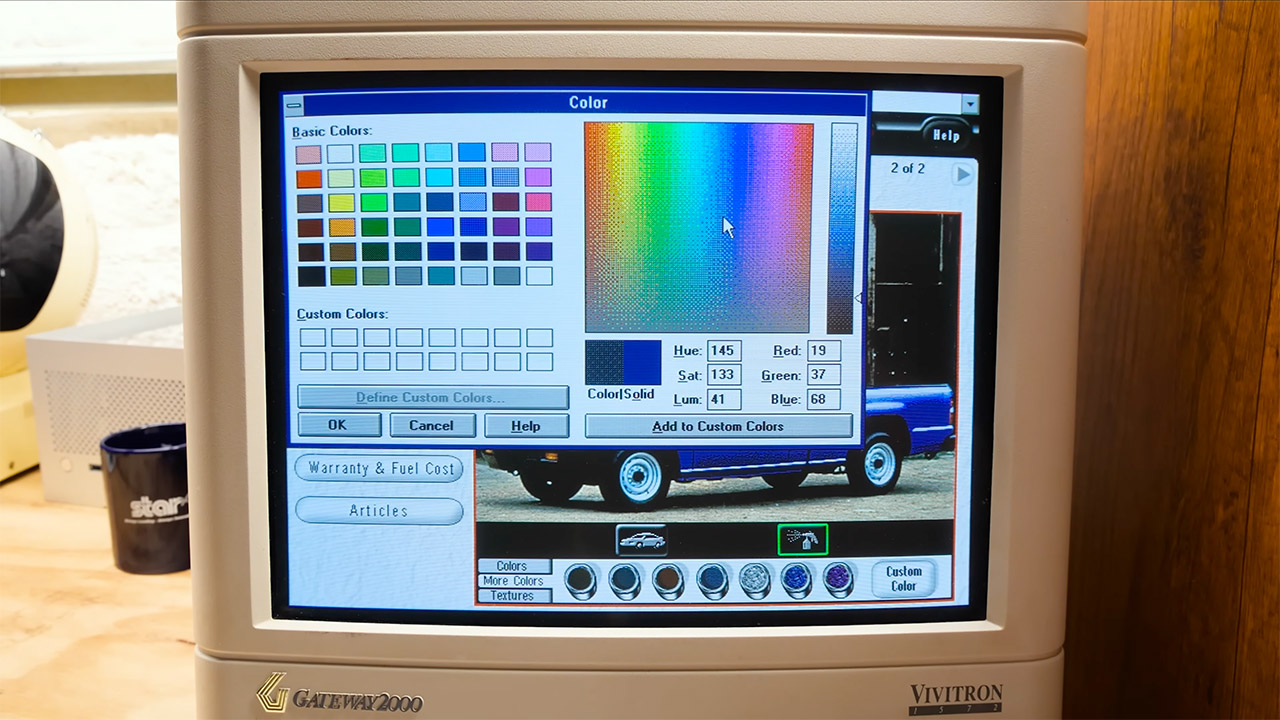
The screen is packed with photographs of the car from various angles on the outside, as well as some of its interior components such as the dashboard, console, and seats. One fun feature allows you to recolor the car just for fun. You can choose from the factory paint colors that came with it or utilize a far broader color pallet that includes metallic flakes and, yes, even wood grain designs. So, if you want to envision a Pontiac Sunfire GT or a Ferrari F355 with a bright pink metallic paint or a wooden dashboard, you can, and the end result is the type of wacky result that’s so typical of a CD-ROM from the 1990s.
The transition between pages is very smooth, thanks to some sliding effects and simple morphing, and if you want some background noise, there’s even a loop of some fairly pleasant, albeit cheesy, music playing in the background. Many of the cars on the disk feature full-motion video clips. Some work well, displaying cars like a Buick Park Avenue or a Mazda RX-7 traveling along the road or sitting in a showroom. Others can be difficult to find or get operating, which is due to the way video compression used to work in the past.
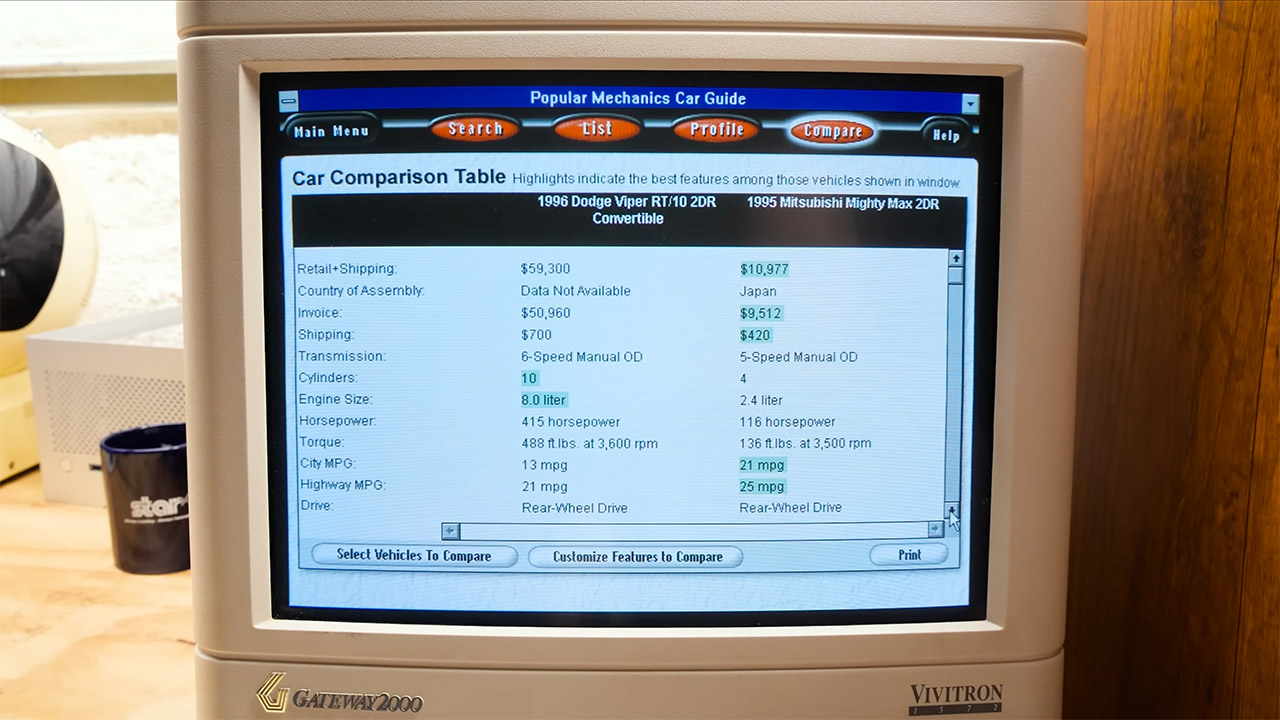
So, if you want to see how various cars compare to one another, utilize the comparison tools to place two models side by side. Putting a Dodge Viper next to a Mitsubishi Mighty Max emphasizes how different the two vehicles are, as it’s not only about the statistics, but also how the presentation works. Other features include calculators for determining how much a car will cost to buy or lease, as well as information on how to sell a car when you’re done with it. You may even locate phone directories with a variety of important information, such as where to obtain components or who to contact for an insurance quote.
If you already have a working Windows 3.1 setup or are using an emulator to get that ancient system up and running again, you can download the disk image and test everything out for yourself. What you’ll see is far less smooth than what you’d get in a current app, but much more akin to what automobile purchasers had to deal with back when CD-ROM drives were the thing to have in your computer.
The partnership could significantly strengthen Ireland’s position within the European pharmaceutical research and innovation space.
Research Ireland’s Rinn Pharma & Biopharma, Ireland’s national centre for research and innovation in the manufacturing of medicines, has today (7 August) announced its inclusion in the NordicPharmaTrain (NPT) network.
NPT is a European research and training network that connects academic and industry partners with the aim of advancing pharmaceutical innovation. The network supports collaborative research, researcher mobility and interdisciplinary training, as a means of developing the next generation of scientists and strengthening Europe’s pharmaceutical research ecosystem.
Rinn Pharma & Biopharma’s inclusion aims to enhance NPT’s network of research institutions and industry collaborators, strengthening cross-border collaboration and accelerating scientific progress within the larger pharmaceutical sector.
Advertisement
As part of the collaboration, Rinn Pharma & Biopharma will host visiting researchers and PhD students, providing them with access to state-of-the-art laboratories, infrastructure and training, with the aim of supporting skills development, as well as academic and industry engagement.
Commenting on the announcement, Prof Damien Thompson, the director of Rinn Pharma & Biopharma, said, “By joining NordicPharmaTrain, we are accelerating Ireland’s role in delivering innovative pharmaceutical solutions.
“This partnership enables us to collaborate internationally on advanced manufacturing, formulation and digital technologies, areas that are critical to the competitiveness and sustainability of Ireland’s life sciences sector.”
Dr Sarah Hayes, Rinn Pharma & Biopharma’s COO, added, “This partnership is mutually beneficial, providing access to a dynamic collaborative ecosystem with expanded opportunities for joint research, shared expertise and participation in European funding initiatives.
Advertisement
“It also enhances visibility within the Nordic and wider European research community, and broadens access to talented researchers and PhD candidates.”
Inlate July, it was announced that Rinn Pharma & Biopharma and Cork-based biotech spin-out ArrayPatch would collaborate on developing a novel skin cancer treatment using a patented dissolvable microneedle platform. The project aims to improve the effectiveness of treatments and minimise side effects by using microneedles to deliver drugs with increased precision.
Don’t miss out on the knowledge you need to succeed. Sign up for the Daily Brief, Silicon Republic’s digest of need-to-know sci-tech news.
Is it possible that an engine can be both iconic and under-appreciated at the same time? That might somehow be the case with Nissan’s VQ-series V6 engine. On one hand, both the VQ engine and the cars it’s powered — like the Nissan 350Z and Infiniti G35 — are well known to both enthusiasts and the general public, and even the VQ’s distinctive sound has a bit of notoriety to it.
What’s not talked about as much, though, are all the industry accolades that the VQ has received over its lifespan. Among these accomplishments, this Nissan engine has earned especially high marks from Wards Auto, which annually puts out its list of the 10 best engines (with electric propulsion systems recently being added to the rankings alongside internal combustion engines).
Advertisement
During the 20 years between 1995 and 2015, the VQ received a record 16 Wards Best Engine awards, with the run including 14 consecutive wins from 1995 to 2008. While the VQ’s award-winning reputation might be unexpected to some, those familiar with the background of this legendary V6 engine shouldn’t find it a surprise. Additionally, while the VQ isn’t nearly as prevalent today as it was back in the 2000s and 2010s, Nissan is still making VQ engines today, more than 30 years after the V6 made its original debut, which, is a feat in itself.
Advertisement
From sports cars to pickup trucks
The Nissan VQ engine was originally born in the mid-1990s and made its American debut as a 3.0-liter unit under the hood of the 1995 Nissan Maxima and Infiniti I30 sedans. The new VQ made the 1995 Wards Best Engine list right off the bat, but it wasn’t until the early 2000s that the engine really began to propel the Nissan and Infiniti brands into a new generation. This was the era of high-profile new releases like the Nissan 350Z and Infiniti G35, but the VQ also made its way under the hood of mainstream vehicles like the Altima sedan and Pathfinder SUV. Nissan would continuously update the VQ, eventually making versions as large as 4.0 liters –and the awards kept coming.
How does a motor make the Wards Best Engine list? Engines are graded in categories like horsepower, torque, NVH, and technical innovation, with those numbers combined into an aggregate score to get the overall winners. Although the Wards Best Engine designation doesn’t specifically select for long-term reliability or ease of maintenance, the VQ has generally backed up its strong out-of-the-box performance with above-average reliability.
What’s especially impressive about the Nissan VQ engine, though, isn’t just its power potential or mechanical durability; it’s the truly vast range of vehicles that used it. Far from just a performance car engine, the VQ family has been used all across Nissan’s lineup, powering everything from the aforementioned Z sports car to family minivans and pickup trucks.
Advertisement
The Nissan V6 is alive and well
Starting in the 2010s, the V6 engine, particularly in its naturally aspirated form, has become increasingly rare in the modern auto industry, with many carmakers switching to smaller-displacement, turbocharged four-cylinder engines. Even so, the Nissan VQ has endured.
In Nissan and Infiniti’s performance car applications, the VQ was phased out in favor of the turbocharged VR-series turbo V6 engines. However, the company still builds a direct-injected, naturally aspirated 3.8-liter VQ38DD engine for use in the Nissan Frontier pickup. This old-school engine is one of the things that makes the Frontier stand out in a segment where its competitors have moved to turbocharged four-cylinders.
Advertisement
Recently, however, there’s been one negative about the VQ engine that actually has nothing to do with the motor’s performance or reliability at all. With Nissan and Infiniti using this engine in so many rear-drive sports cars and sports sedans over the years, the inexpensive, used versions of those cars have gotten quite popular among a new generation of younger owners. Due to the anti-social actions of some of them, some car shows have had to ban VQ-powered cars in an effort to stop dangerous and disruptive behavior caused by some of these bad apples.
With at least 12 US states’ water systems having been hacked – most likely by Iran – we have to get better at cyber defense, according to retired General and Ex-NSA chief Paul Nakasone, who was speaking to reporters at DEF CON.
“We have to have higher standards,” Nakasone said. “These PLCs should not be connected to the internet.”
Advertisement
In late July, the FBI said it was investigating attacks conducted by “malicious cyber actors” targeting operational technology devices, including programmable logic controllers (PLCs). Iran-linked crews have targeted these devices, which monitor sensor data like tank levels, and can turn pumps on and off, for years.
Some private-sector security researchers say that they suspect Iranian intruders are behind the recent cyberattacks disrupting water and wastewater facilities. “I’d be shocked if it’s not Iran,” Halcyon Ransomware Research Center SVP Cynthia Kaiser told The Register at DEF CON on Friday. “It’s almost certain it’s Iran.”
Neither the FBI nor anyone in the Trump administration, however, has officially blamed Iran.
Nakasone said he believes that the feds are “taking a measured approach” to attribution. “But I see an actor here that has certainly shown a history of being able to do this,” he added, referring to earlier Iranian cyberattacks targeting water facilities’ PLCs.
Advertisement
“They certainly have the capability,” Nakasone said. “There’s an intent … we’re in conflict with Iran.”
US water systems present a massive attack surface across disparate facilities that are historically underfunded and have limited IT staff, and sometimes no dedicated cybersecurity employees.
“We have to think differently about how we defend it,” Nakasone said. “Let’s talk about the attack surface that we’re looking at right now. We’ve got 50,000 different water municipalities in the United States, 90 percent of our water comes from these 50,000.”
Defending these water systems requires partnerships, he added, pointing to DEF CON Franklin, a project launched two years ago at the annual event with hackers volunteering their time and talent to help secure water facilities.
Advertisement
Nakasone also serves as founding director of Vanderbilt University’s Institute of National Security, and its Wicked Problems Lab. He’s also working on Project Chimera, a cybersecurity platform being developed by academics and cybersecurity practitioners, and built on open-source technologies to boost critical infrastructure resilience.
“How do you defend better? You defend with a series of partners, in a much more involved approach than we have right now,” Nakasone said.®
Having a fully automated cotton candy vending machine in your possession is a great thing, but not if you do not have full access to its software. With [Block’s Retro Repairs] getting ghosted by the manufacturer on regaining account access to the machine he bought used for $300, there was little left but to try and break into the system.
We previously covered the journey in getting the vending machine back into a state where it’d actually reliably produce cotton candy again, a process which is quite tedious and temperamental. After a lot of fiddling with sensors and temperature settings this was fixed, but still left the issue that as a vending machine it should allow the owner to set prices and such. Sadly this could only be done remotely via a special account, which access to had been left with the previous owner.
Despite the very custom exterior, the vending machine runs what is effectively an Android system, consisting of an industrial computer board wired into a lot of stepper drivers and other control boards. To the extreme delight of everyone involved, it was possible to access the Ct Terminal application with adb and its product database on the device’s storage. Unfortunately writing back a changed database file didn’t change anything in the UI, so for a few months the project languished.
After nearly bricking the system and ending up factory resetting the control software including temperatures, it actually improved the performance of the machine and produced cotton candy, so that was one win. Ultimately the solution was to modify the original app, but a combination of weak coding skills and the app being in Chinese led him to use free LLM coding chatbots to assist here.
Advertisement
This resulted in a custom settings menu being added with the ability to modify pricing, no need for online access any more and a very nice cotton candy vending machine for the private arcade where presumably friends and family can enjoy cheap or even free cotton candy. Finally having the machine sealed against ant intrusion was also a major improvement.
Connecting the dots: Flock Safety’s rapid growth has made it a major player in police surveillance technology. But as cities deploy more connected cameras, a basic security concern is drawing increased attention: whether the video collected by those systems can be altered without leaving behind evidence. That concern has taken on new urgency following reports that one of Flock’s key investors also backs a company whose technology is designed to compromise camera systems.
Andreessen Horowitz, which led Flock’s $275 million funding round in March 2025, has also backed Toka, an Israeli cyber-intelligence company that has reportedly developed tools capable of breaking into connected cameras and manipulating their footage.
The connection between the two companies – their shared investor – came to light after an X post from @OrwellDay alleged that Flock’s lead investor also backed Toka. The post did not establish the connection on its own, but subsequent reporting confirmed that Andreessen Horowitz led Flock’s March 2025 funding round and has invested in Toka.
Flock has raised roughly $960 million across multiple funding rounds, including the March 2025 round, which valued the company at $7.5 billion. Andreessen Horowitz led that financing, with participation from Greenoaks Capital and Bedrock Capital. Meritech Capital, Matrix Partners, Sands Capital, Founders Fund, Kleiner Perkins, Tiger Global, and Y Combinator also participated.
The link between Flock and Toka puts a sharper focus on the risks surrounding camera networks used by police departments and local governments. Flock sells camera systems that help agencies identify vehicles, share information, and search video data. Toka, according to the Israeli newspaper Haaretz, has offered government clients technology that can locate cameras in a target area, access their feeds, and alter or erase video.
The reported capability is not merely about surveillance. It raises broader questions about the reliability of video evidence after it has been captured.
Haaretz reported, based on internal documents it reviewed, that Toka’s tools could access and modify live and recorded camera feeds without leaving forensic traces. Concern about the technology is especially relevant as public agencies increasingly rely on connected cameras, license-plate readers, and cloud-based investigative platforms. These systems can move large amounts of information quickly, but they also create more opportunities for attackers or unauthorized users to interfere with recorded evidence.
At Black Hat, Forescout researchers demonstrated a related risk by intercepting real camera feeds and sending pre-recorded video to network video recorders. An operator could see what appeared to be a normal live feed without realizing that the footage had been replaced.
Advertisement
Similar concerns have emerged in body-camera systems. POAM reporting described systems that allowed footage to be downloaded, edited, and uploaded again without indicating that changes had been made. In each case, the underlying problem is the same: video may appear authentic while providing no reliable way to determine whether it has been altered.
The ACLU has warned that widespread camera deployments paired with vulnerable infrastructure can create serious risks. A breach can expose private footage, but it can also create opportunities for video to be manipulated or misused after the fact.
For cities deploying Flock cameras and similar systems, the question is no longer only who can access the video. It is whether they can prove that what a camera recorded is the same evidence investigators, courts, and the public are actually seeing.
A developer has a 28.9-million-parameter model generating TinyStories-style text at 9.88 tokens per second, fully offline, on a $10 microcontroller
It was achieved by fitting a language model on a chip with 512KB of RAM by leaving most of it in flash storage
The project is available on GitHub under an MIT license
A developer going by slvDev has a 28.9-million-parameter language model generating text on an ESP32-S3, a microcontroller built for sensor nodes and smart plugs, at 9.88 tokens per second, with nothing leaving the chip.
The project, esp32-ai, went up on GitHub under an MIT license in late July 2026, was showcased on the Better Stack YouTube channel, and has since collected over 3,600 stars and has more than 470 forks of the underlying code.
Given the underlying hardware’s limitations, the attempt meant the model, which was trained on the TinyStories dataset by Microsoft Research, had to be scaled down.
Latest Videos FromTechRadar
Advertisement
Still a capable LLM despite the loss in accuracy
The arithmetic involved here is brutally unforgiving; weights typically need one to four bytes per parameter just to sit in memory, so 28.9 million parameters at 16-bit precision still require nearly 60 MB of RAM. An ESP32-S3 offers 512 KB of SRAM and 8 MB of PSRAM that is woefully inadequate at first glance.
Quantization closes the first part of the gap: dropping the weights to four-bit precision trades a little accuracy for a 75% reduction, bringing 60MB down to 14.9MB.
The second step is where the project earns most of its attention: most of a language model’s parameters sit in embedding tables that the model reads from rather than computes against, and something you only read can live somewhere slow.
Borrowing Per-Layer Embeddings from Google‘s Gemma 3n, slvDev moved about 25 million parameters (roughly 12 MB at four-bit) into the board’s 16 MB of flash, pulling around 6 rows, about 450 bytes, per token.
Sign up to the TechRadar Pro newsletter to get all the top news, opinion, features and guidance your business needs to succeed!
What remains in working memory is closer to 2 MB: the dense core and output head in PSRAM, and activations and norm weights in SRAM. Each tier stores whatever is read at its own frequency, and the chip’s memory hierarchy serves as the architecture that enables the LLM.
Advertisement
Offloading weights to storage is not new; it is how people coax frontier-class models onto hardware that has no business running them, but it usually destroys throughput, turning tokens per second into seconds or minutes per token.
The PLE approach avoids that because the offloaded weights are accessed sparingly, so flash bandwidth never becomes the bottleneck. The resulting performance, 9.88 tokens per second, is faster than most people read.
The LLM has its limitations, however: the model writes short, mostly coherent stories and will not answer questions, follow instructions, write code, or know facts. The developer says the limit stems from the small part of the model that performs the reasoning (~4M parameters) and that the memory trick does not change its capabilities. His repository also ships a second model, Barista, which expressly answers espresso questions only (pun intended).
In short, the approach doesn’t make small models smarter, but it does allow them to offload data within the board onto chips they could not previously run on, making it an interesting choice, though one with limited practical uses in its current iteration.
















 Having a fully automated cotton candy vending machine in your possession is a great thing, but not if you do not have full access to its software. With [Block’s Retro Repairs] getting ghosted by the manufacturer on regaining account access to the machine he bought used for $300, there was little left but to try and







































You must be logged in to post a comment Login