
Business
Castellum, Inc. 2026 Q2 – Results – Earnings Call Presentation




Kinetik Holdings director ISQ Global Fund II GP LLC sells $13.3m shares
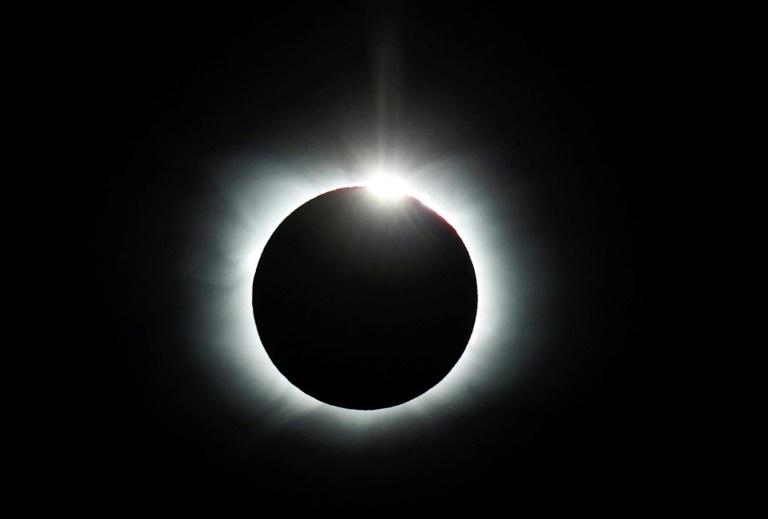
A total solar eclipse will sweep across the Northern Hemisphere on Wednesday, Aug. 12, and for the vast majority of the world’s population who won’t be standing inside the narrow path of totality, a livestream will be the only way to watch the moon fully block the sun. Here’s a country-by-country breakdown of where and how to watch online.
NASA’s Flagship Broadcast
NASA will anchor the day’s coverage with a live broadcast beginning at 1:15 p.m. Eastern time, available on NASA+, the agency’s website, and its social media accounts on Facebook, Instagram, X, Twitch and YouTube, as well as through Amazon Prime. The broadcast will feature telescope views from multiple points along the eclipse path, footage from a WB-57 high-altitude research aircraft chasing the moon’s shadow across the sky, and expert commentary from solar physicists throughout the event. NASA’s 2024 eclipse broadcast drew more than 15 million concurrent viewers, and the agency’s 2026 stream is expected to match or exceed that figure. Viewers can also access NASA’s stream through its dedicated app, available on iOS, Android, Roku, Apple TV and Fire TV devices, which supports background audio for those who want to listen to commentary while doing other tasks.
Where Totality Will Actually Be Visible
The path of totality begins over a remote, sparsely populated stretch of northern Russia before crossing the Arctic Ocean into eastern Greenland, sweeping down over Iceland, clipping the northwestern tip of Portugal, and finally crossing northern Spain and the Balearic Islands before ending over the Mediterranean Sea. Totality reaches Iceland at 1:45 p.m. Eastern time and arrives in Spain at 2:28 p.m. Eastern time, according to NASA. Only viewers physically located within that roughly 182-mile-wide band will see the sun fully disappear behind the moon; everyone else in the Northern Hemisphere positioned near the path will see only a partial eclipse.
Iceland
Iceland stands as one of the most accessible destinations along the path of totality and is expected to draw significant crowds of eclipse tourists. For those watching remotely rather than traveling, Iceland-based astronomy outlets and international broadcasters are expected to carry dedicated coverage as the shadow crosses directly over Reykjavik in the late afternoon local time, marking the first total eclipse visible from the Icelandic capital since 1433.
Spain
Spain will host the first total solar eclipse visible from mainland Europe since 1999, and as such is expected to be a major focus of international livestream coverage. NASA’s own broadcast will feature live feeds from multiple locations across Spain’s path of totality, including professional solar telescopes and wide-angle cameras designed to capture the dramatic 360-degree sunset effect created as totality occurs just before the sun sets locally in the late evening.
Greenland and Northern Russia
Coverage from Greenland and the remote stretch of northern Russia where the eclipse first makes landfall is expected to be more limited given the sparse population and logistical difficulty of broadcasting from those locations, though NASA’s broadcast is expected to include footage from the Greenland portion of the path as part of its overall coverage.
United States
The eclipse will not reach totality anywhere in the United States. Instead, parts of the northern U.S., ranging from Alaska down through the northeastern states to North Carolina, will see only a partial eclipse, with the moon taking what NASA describes as a small “bite” out of the sun. Alaska will see the strongest partial eclipse effect among U.S. locations, with visibility diminishing further south and east. American viewers hoping to see totality itself will need to watch NASA’s livestream, which begins at 1:15 p.m. Eastern time with views from Iceland and Spain.
Canada
Most of Canada will experience a partial solar eclipse, similar to the northern United States, without reaching totality at any point within the country. Canadian viewers can access the same NASA livestream available to American audiences, along with coverage from Canadian astronomy and science broadcasters expected to air alongside the international feed.
United Kingdom and Ireland
Neither the United Kingdom nor Ireland falls within the path of totality, but both will see a partial eclipse, appearing as a thin, low crescent of sunlight near the western horizon. Given the significant public interest generated by Spain hosting the first mainland European total eclipse since 1999, British and Irish broadcasters and astronomy outlets are expected to carry supplementary partial-eclipse coverage alongside international feeds of the Spanish totality.
Continental Europe
Much of continental Europe, including France, Germany, Italy and the Scandinavian countries, will see a partial eclipse, with the visible portion of the sun’s disk covered by the moon varying by location and generally increasing the closer a viewer is to the path of totality in Spain. European viewers can follow NASA’s English-language broadcast or the agency’s Spanish-language version, both of which will be accessible online, alongside expected coverage from national broadcasters across the continent given the historic nature of Spain’s eclipse.
Northwestern Africa
Parts of northwestern Africa are also positioned to see a partial eclipse as the moon’s shadow passes to the north over Spain, though as with much of mainland Europe, the sun will be setting locally while still partially eclipsed in the westernmost parts of the visible region, creating an opportunity for a striking sunset eclipse view for those watching in person or through regional broadcast coverage.
Additional Streaming Options
Beyond NASA’s flagship broadcast, astronomy website Time and Date is expected to offer its own dedicated eclipse livestream through a specialized app that automatically detects a viewer’s location and displays local eclipse timing and cloud cover forecasts specific to their city. Every major broadcaster covering the event is also expected to stream simultaneously on YouTube, meaning viewers searching “2026 total solar eclipse” on the platform on Aug. 12 should find multiple live options to choose from, castable to a television through devices like Chromecast for those who prefer to watch on a larger screen.
A Reminder on Safe Viewing
For anyone watching in person rather than online, NASA and eye-safety experts stress that certified eclipse glasses meeting the ISO 12312-2 international safety standard, or a properly fitted solar filter on any telescope, binoculars or camera, must be used throughout every partial phase of the eclipse. Only viewers standing within the narrow path of totality may safely remove eclipse glasses, and only during the brief window when the moon fully covers the sun.
Business
Chartwell Retirement Residences 2026 Q2 – Results – Earnings Call Presentation (TSX:CSH.UN:CA) 2026-08-07

Seeking Alpha’s transcripts team is responsible for the development of all of our transcript-related projects. We currently publish thousands of quarterly earnings calls per quarter on our site and are continuing to grow and expand our coverage. The purpose of this profile is to allow us to share with our readers new transcript-related developments. Thanks, SA Transcripts Team


Over fifteen years of experience making contrarian bets based on my macro view and stock-specific turnaround stories to garner outsized returns with a favorable risk/reward profile. If you want me to cover a specific stock or have a question for an article, just let me know!
Analyst’s Disclosure: I/we have no stock, option or similar derivative position in any of the companies mentioned, and no plans to initiate any such positions within the next 72 hours. I wrote this article myself, and it expresses my own opinions. I am not receiving compensation for it (other than from Seeking Alpha). I have no business relationship with any company whose stock is mentioned in this article.
Seeking Alpha’s Disclosure: Past performance is no guarantee of future results. No recommendation or advice is being given as to whether any investment is suitable for a particular investor. Any views or opinions expressed above may not reflect those of Seeking Alpha as a whole. Seeking Alpha is not a licensed securities dealer, broker or US investment adviser or investment bank. Our analysts are third party authors that include both professional investors and individual investors who may not be licensed or certified by any institute or regulatory body.

U.S. plans $1 billion security aid package for Colombia
Business
Trump administration to invest $3 billion in minerals projects to boost US defense supply chains

Trump administration to invest $3 billion in minerals projects to boost US defense supply chains

Gali Russell knows that his big bet on SpaceX might sound crazy. In recent weeks, the stock has shed $1 trillion in value.
“But how exciting is the idea that I could go to Mars? That my grandkids could be living in space?” said Russell, adding that shares of Elon Musk’s rocket, internet and AI company make up some 75% of his portfolio. “The vision is priceless.”
Copyright ©2026 Dow Jones & Company, Inc. All Rights Reserved. 87990cbe856818d5eddac44c7b1cdeb8


Financial analyst by day and a seasoned investor by passion, I’ve been involved in the world of investing for over 15 years and honed my skills in analyzing lucrative opportunities within the market.I specialize in uncovering high quality dividend stocks and other assets that offer potential for long term-growth that pack a serious punch for bill-paying potential. I use myself as an example that with a solid base of classic dividend growth stocks, sprinkling in some Business Development Companies, REITs, and Closed End Funds can be a highly efficient way to boost your investment income while still capturing a total return that follows traditional index funds. I created a hybrid system between growth and income and manage to still capture a total return that is on par with the S&P.
Analyst’s Disclosure: I/we have no stock, option or similar derivative position in any of the companies mentioned, and no plans to initiate any such positions within the next 72 hours. I wrote this article myself, and it expresses my own opinions. I am not receiving compensation for it (other than from Seeking Alpha). I have no business relationship with any company whose stock is mentioned in this article.
Seeking Alpha’s Disclosure: Past performance is no guarantee of future results. No recommendation or advice is being given as to whether any investment is suitable for a particular investor. Any views or opinions expressed above may not reflect those of Seeking Alpha as a whole. Seeking Alpha is not a licensed securities dealer, broker or US investment adviser or investment bank. Our analysts are third party authors that include both professional investors and individual investors who may not be licensed or certified by any institute or regulatory body.

Micron Pares Most of Its Losses Even as Other Memory Stocks Reel
Business
Doximity Shares More Than Double as AI Search Tool Earns 10 Times What It Costs to Run, Investors Cheer
Shares of Doximity soared Friday, more than doubling at one point and trading up 61.17% to $33.25 by mid-morning, after the digital platform for U.S. medical professionals delivered a stronger-than-expected quarterly report and revealed striking early profitability figures for its new artificial intelligence search product.
The Coeur d’Alene, Idaho-based company’s stock had entered the week down roughly 50% for the year, with a market value of $3.7 billion heading into the earnings release. Friday’s surge, one of the sharpest single-session rallies for any major U.S. stock in recent months, was fueled by a combination of a revenue beat, an upgraded full-year outlook and bullish commentary from the company’s chief executive about the economics of its AI-powered search tool.
A Beat on Revenue, a Narrow Miss on Profit
Doximity reported first-quarter fiscal 2027 revenue of $156.6 million, up 7.3% from the same period a year earlier and comfortably ahead of the $151.7 million analysts had expected. Adjusted earnings came in at 29 cents per share, narrowly missing the 30-cent consensus estimate by a single cent, a shortfall that investors largely brushed aside given the strength elsewhere in the report. Adjusted EBITDA reached $74.8 million for the quarter, representing a 48% margin and beating the high end of the company’s own guidance by roughly 8 percentage points.
The Comment That Sparked the Rally
The single biggest driver of Friday’s surge appears to have been remarks from Doximity Chief Executive Jeffrey Tangney regarding the profitability of the company’s newer AI search product. Speaking during the company’s earnings call, Tangney said that while it remains early days for the AI search offering, the product is generating more than 10 times what it costs to run in revenue per search, a margin figure that stunned analysts and investors tracking the stock.
Tangney also framed the AI push as central to Doximity’s next phase of growth, saying the company has established itself as the digital platform for physicians and that artificial intelligence represents the next evolutionary phase of that expansion.
Rapid Growth in AI Tool Adoption
Beyond the headline profitability claim, Doximity highlighted substantial growth in engagement with its suite of AI-powered products during the quarter. The company’s Scribe note-taking feature, which helps physicians automatically document patient visits, saw a tenfold increase in active users in July compared with the same month a year earlier. Utilization of the company’s Search AI functionality also expanded meaningfully during the quarter, according to the company, reinforcing the broader theme of accelerating adoption across Doximity’s AI product suite.
Guidance Sends Mixed Signals
Despite the overwhelmingly positive market reaction, Doximity’s forward guidance told a somewhat more nuanced story. The company projected second-quarter revenue in a range of $170 million to $171 million, with a midpoint of $170.5 million that aligned closely with Wall Street’s expectations but fell slightly below some of the more optimistic analyst forecasts heading into the report. For the full fiscal year, Doximity raised its revenue guidance midpoint by $6 million, even as it lowered its adjusted EBITDA guidance midpoint by $10 million, a combination that reflects the company’s willingness to sacrifice some near-term margin in favor of continued investment in its AI capabilities.
A Rally Amplified by Short Sellers
Part of the scale of Friday’s move has been attributed to a short squeeze, in which investors who had bet against Doximity’s stock were forced to buy back shares to cover their positions as the price surged, further amplifying the rally beyond what the underlying earnings beat alone might have generated. Given that shares had fallen by roughly half over the course of the year heading into the report, the stock had attracted a meaningful base of short interest that appears to have been caught off guard by the scale of Friday’s positive reaction.
A Strong Balance Sheet Heading Into the Report
Doximity entered the earnings release with a solid financial position, holding $687.8 million in cash and securities with zero debt on its balance sheet. The company also repurchased $91.6 million worth of its own shares during the quarter, part of an ongoing capital return program even as it continues investing heavily in its AI product roadmap. Free cash flow declined 34% during the quarter, however, as stock-based compensation rose 68%, factors that some analysts flagged as areas warranting continued scrutiny even amid the broader positive earnings reaction.
Analysts Weigh In
Ahead of Friday’s premarket trading, Doximity’s surge pushed shares 42% above the average analyst price target of $24.65, approaching Morgan Stanley’s more bullish $35 target but remaining below the single highest analyst target of $42. Analysts have generally cautioned that the coming quarters will serve as a more meaningful test of the AI search product’s staying power, with the third fiscal quarter in particular expected to be significant, since that is when a growing number of AI Search contracts, including an initial cohort of more than two dozen healthcare programs already signed, are expected to convert from signed agreements into formally recognized revenue.
A Longer-Term Growth Picture
Looking beyond the immediate quarter, Doximity has posted a compound annual revenue growth rate of 21.9% over the past five years, though that pace has moderated more recently, with the two-year annualized growth rate standing at 15.2%. Sell-side analysts currently project revenue growth of approximately 3.6% over the coming 12 months, a considerably slower pace that underscores the importance investors are placing on the company’s newer AI initiatives as a potential source of reacceleration.
With Friday’s dramatic rally driven in large part by early, unverified claims about the AI search product’s per-search economics, investors are likely to watch closely for further detail and independent validation of those figures in the coming quarters. The conversion of Doximity’s initial AI Search contracts into recognized revenue during the third fiscal quarter is expected to serve as the next major test of whether Friday’s optimism reflects a genuine inflection point in the company’s growth trajectory or a shorter-term reaction to a single quarter’s standout commentary.
Kinetik Holdings director ISQ Global Fund II GP LLC sells $13.3m shares

Kalshi markets power new AI risk tool for small firms

Car ‘set on fire and bricks thrown at house’ in suspected arson attack


-

 Politics5 days ago
Zack Polanski: an incitement to murder Nigel Farage?
-

 Crypto World7 days ago
MicroStrategy Post-Earnings CLARITY Act Push Could Add New Catalyst for Its Stock
-

 Crypto World7 days ago
XRP Ledger v3.3.0 brings five institutional features
-

 Crypto World6 days ago
Crypto PAC spending tops $2M in Michigan House race
-

 Business5 days ago
DTCR: Deleveraging And A Hedge Fund Collapse Point To A Possible AI Bottom
-

 Tech6 days ago
ESET tracks rise in malicious AI skills and adaptable malware
-

 Sports7 days ago
France Cricket implodes: letters hidden in a drawer and a board at war
-
Crypto World5 days ago
XRP Ledger urges node upgrade after manifest flood
-

 Crypto World7 days ago
Moneyflip CEO charged in $40K murder-for-hire plot
-

 Fashion15 hours ago
Frugal Friday’s Workwear Report: Cap-Sleeve Pointelle Crewneck Sweater
-

 News Videos6 days ago
Financial Crash Expert: The 90-Day Collapse Timeline They Are Desperately Hiding.
-

 Sports2 days ago
Jordan Coyle & Cordiamo take Laya Arena Stakes at RDS
-

 Crypto World4 days ago
US Tech Stocks See Largest 5-Week Inflow in History: Can Nasdaq Break Its Downtrend?
-
 NewsBeat6 days ago
Tourist plane on sightseeing flight in Peru crashes into a field, killing all 13 people on board
-
 Business2 days ago
US stocks: Dow closes at record on Mideast optimism; SpaceX, AMD drag Nasdaq
-

 NewsBeat7 days ago
Arsenal reach full agreement with Newcastle over Bruno Guimaraes transfer | Football
-

 Tech6 days ago
Page Not Found | WIRED
-
 NewsBeat6 days ago
Bikini-clad Jennifer Aniston, 57, kisses hypnotist boyfriend Jim Curtis as they enjoy a romantic getaway aboard a luxury yacht in Spain
-

 Politics2 days ago
Reform UK And Greens Sink To Lowest Favourability Ratings To Date
-

 Fashion10 hours ago
Weekend Open Thread: Mattifying Sunscreen
You must be logged in to post a comment Login