

Politics
Starmer still sucking up to Trump in Arctic aircraft carrier pledge


Keir Starmer has told the Munich Security Conference that he’ll send the navy’s aircraft carrier group to the Arctic. The move is meant to appease US president Donald Trump who recently threatened to annex Greenland. In his speech on 14 February Starmer said:
I can announce today that the UK will deploy our Carrier Strike Group to the North Atlantic and the High North this year led by HMS Prince of Wales, operating alongside the US, Canada and other NATO allies in a powerful show of our commitment to Euro-Atlantic security.
Starmer also said he would increase the number of Royal Marines in Norway, alongside other measures:
Doubling our deployment of British commandos in the Arctic. Taking control of NATO’s Atlantic and Northern Command in Norfolk, Virginia. And transforming our Royal Navy by striking the biggest warship deal in British history with Norway.
You can listen to the full speech here:
Right on cue, defence minister Al Carns – a former marine and rumoured coup candidate for Labour leadership – appeared 200 miles above the Arctic Circle:
-30°C. 200 miles above the Arctic Circle.
In the strategically vital High North, Britain’s Surveillance and Reconnaissance Squadron train where few others can.
Minister for the Armed Forces, Col @AlistairCarns, joined them in Norway. 🇳🇴
If you can operate here, you can operate… pic.twitter.com/I9Wv61JThg
— Ministry of Defence 🇬🇧 (@DefenceHQ) February 16, 2026
It remains to be seen whether any of this will appease Donald Trump. So far in 2026, Trump has struck Venezuela, threatened various countries, and is amassing naval forces within striking distance of Iran.
Yet being a minion to US authority seems to be Starmer’s default response.
Starmer bowing to US
The US in turning inwards. In line with it’s 2025 National Security Strategy (NSS), the US focus in increasingly on the Western hemisphere. US secretary of state Marco Rubio told the conference Europe has to stand up for itself now:
We want Europe to be strong. We believe that Europe must survive, because the two great wars of the last century serve for us as history’s constant reminder that ultimately, our destiny is and will always be intertwined with yours, because we know because we know that the fate of Europe will never be irrelevant to our own.
He also lamented the imagined civilisational decay described in the NSS:
Controlling who and how many people enter our countries, this is not an expression of xenophobia. It is not hate. It is a fundamental act of national sovereignty… It is an urgent threat to the fabric of our societies and the survival of our civilization itself.
Trump appeared to back off annexing Greenland. Or rather he appeared to back off using force to do so. Speaking at the World Economic Forum (WEF) on 21 January, he said:
We probably won’t get anything unless I decide to use excessive strength and force, where we would be, frankly, unstoppable. But I won’t do that.
I don’t have to use force. I don’t want to use force. I won’t use force. All the United States is asking for is a place called Greenland.
Starmer can’t get a break at the moment. And, in fairness, it’s entirely his own fault. He is under fire at home over disgraced Labour grandee Peter Mandelson’s links to dead child rapist and power broker Jeffrey Epstein. He may not last much longer. Yet on what passes for a UK foreign policy – i.e., sucking up to Donald Trump – he has been remarkably consistent.
Featured image via the Canary

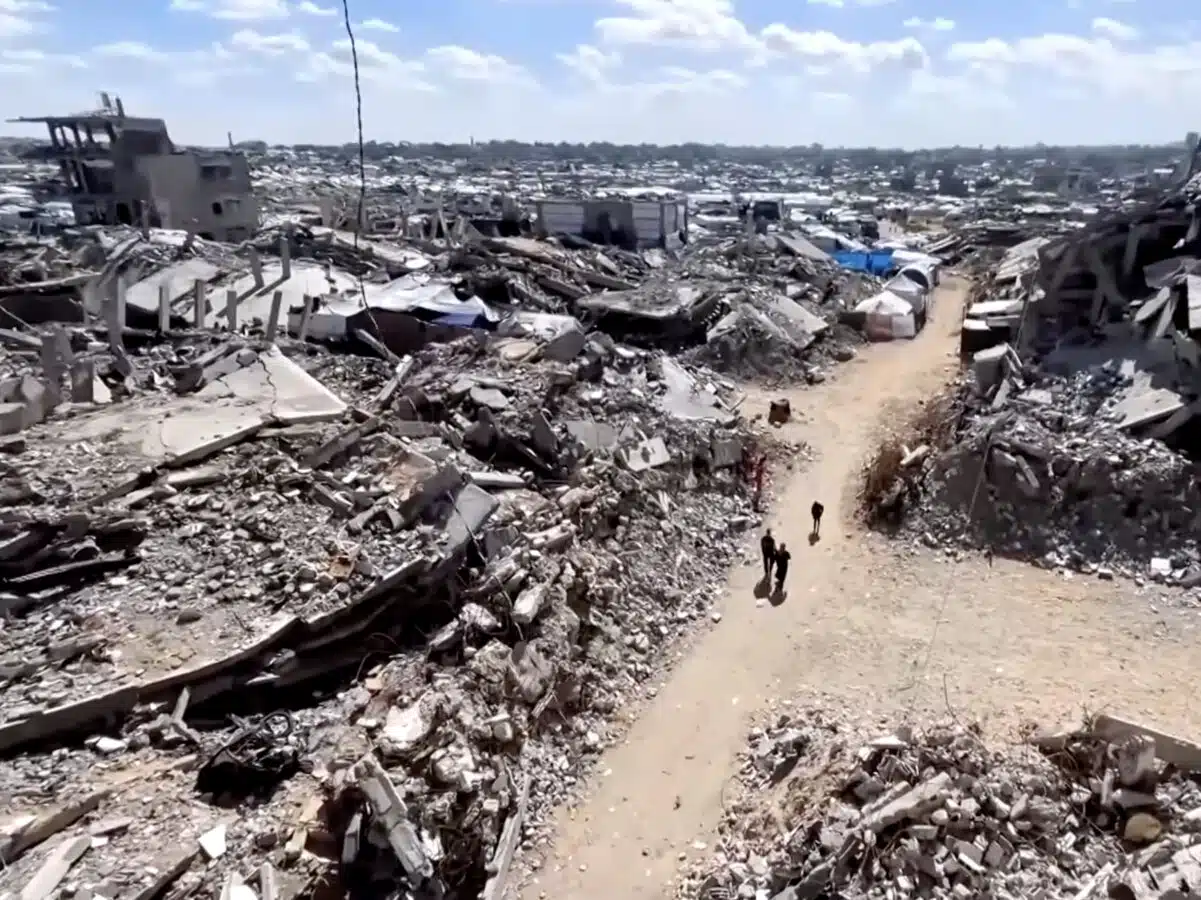
Israel has promised to inflict ‘Gaza-style destruction’ on Lebanon, despite denying for the last two years that it was deliberately carpet bombing it.
Israel destroys bridge in Lebanon, threatens Gaza-scale destruction https://t.co/CKrnkSBL8Y https://t.co/CKrnkSBL8Y
— Reuters (@Reuters) March 13, 2026
To make matters worse, the mainstream press, which has also spent over two years peddling zionist bullshit about ‘self-defence’ and ‘rooting out Hamas’ since October 7, are still repeating the same lies.
Even though Israel is now making its genocidal intentions even clearer.
There is a bitter irony in Western media invoking “Gaza-scale destruction” when for two years it denied that Gaza was being deliberately destroyed. https://t.co/K7VjXCr5B3
— gathara (@gathara) March 14, 2026
Reuters specifically has consistently repeated both Israel’s and Western politicians’ lies about Israel’s right to self-defence.
It also repeatedly failed to mention the words ‘apartheid’, genocide’, and ‘ethnic cleansing’.
So now editors at Reuters are finally choosing to acknowledge Israel’s destruction in Gaza, while not questioning the legitimacy of its attack on Lebanon. This may well be one of the most absurd editorial decisions of the last few years.
using “gaza scale destruction” as a unit of measurement while spending two years insisting what happened in gaza wasn’t deliberate is genuinely one of the most insane editorial choices in modern journalism
— Lucas (@TheLucasToday) March 14, 2026
I thought the destruction was meant to be all about the hostages?
Reuters has also published Israel’s threats to strike ambulances in Lebanon.
The article does mention that targeting healthcare workers is a war crime. However, before it gets to that point, it repeats a quote which states Hezbollah is using ambulances and medical facilities for military purposes. This is the same zionist bullshit spewed about Hamas as it carpet bombed Gaza.
Hezbollah denies using medical equipment for military purposes, and the Israeli military could not provide any evidence that they were doing so.
Israel has murdered at least 26 medics and first responders since March 2.
Israel restricting movement
But the zionists have already started carpet bombing Lebanon.
On Friday, March 13, Israel destroyed a bridge in southern Lebanon.
Video shows the aftermath of the destroyed Zrareih Bridge over Lebanon’s Litani River following an Israeli strike. The Israeli military claimed it was a key crossing used by Hezbollah. pic.twitter.com/Djh2uZuDZU
— Al Jazeera Breaking News (@AJENews) March 13, 2026
It destroyed the Zrariyeh bridge, which crosses the Litani River. This severely restricts residents’ ability to travel between northern and southern Lebanon.
The Israeli terrorists have also destroyed the Jardali Road, which further isolates parts of Southern Lebanon.
All of this suggests that Israel may be paving the way for a ground invasion.
Only yesterday, March 14, Israeli Occupation Forces (IOF) attempted to invade from both Al Khiam and Adaysi using helicopters and artillery for cover.
In what can only be described as a terrible, terrible shame — Hezbollah destroyed two tanks. IOF then retreated.
According to Al Mayadeen:
Using a combination of rocket salvos and guided missiles, the Resistance successfully engaged forces across multiple locations in the Lebanese south, particularly in the border town of Khiam, where intense confrontations have been reported, achieving direct hits on armored targets and overwhelming enemy positions.
This included:
At 01:50 am, Hezbollah fighters engaged an Israeli armored vehicle at the Khiam detention center with a guided missile, achieving a direct hit.
The presence of Hezbollah forces south of the Litani River will threaten Israel. This will be even more apparent if it launches a large-scale ground invasion in southern Lebanon.
From repeating Israel’s lies to failing to mention that Israel is committing a well-documented genocide, whilst also upholding a system of apartheid, international mainstream media outlets are complicit in Israel’s ethnic cleansing.
Israel is attacking sovereign nations — and now the US is helping it, in direct contravention of international law. And it is receiving zero pushback from any corporate media platform. Why would Israel stop murdering black and brown people when the media is whitewashing its crimes?
The Hague is not big enough for all the war criminals currently wasting the Earth’s oxygen — from Netanyahu and Trump, to Reuters and every other media outlet that doesn’t question Israel’s narratives. Hopefully, one day, they will all get what they deserve.
Feature image via Reuters/YouTube
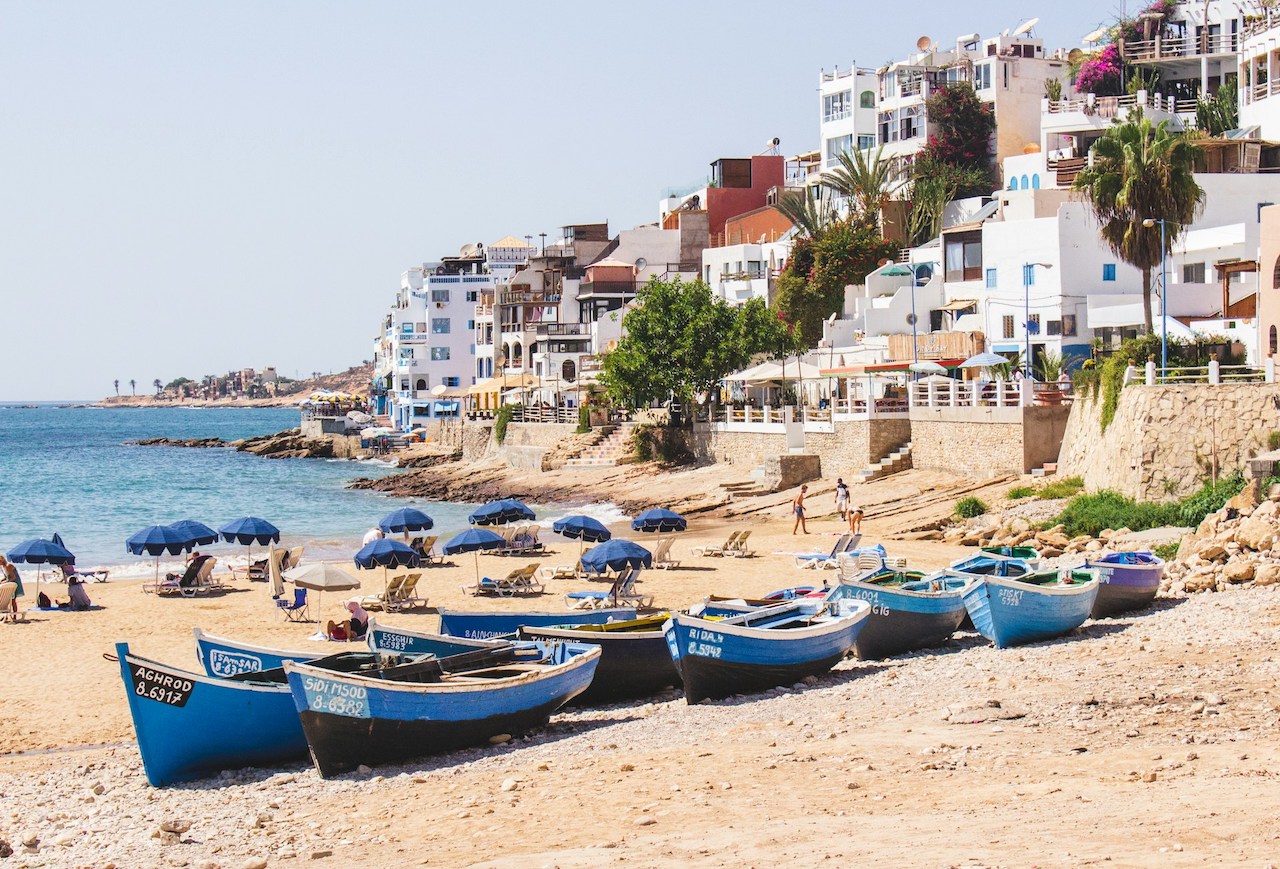
Morocco’s tourism industry plays a crucial role in its economy, attracting millions of visitors annually with its rich culture, diverse landscapes, and historical landmarks. From the vibrant markets of Marrakesh to the vast Sahara Desert, tourism contributes significantly to Morocco’s GDP, creating jobs and boosting infrastructure.
Many travelers explore Morocco through curated experiences, such as Morocco tours, which showcase the country’s unique attractions. This article explores how Morocco’s tourism development strategies can serve as a model for other emerging economies.
Political Stability and Government Support
The Moroccan government has made significant efforts to promote tourism through its Vision 2020 plan, which aims to make Morocco one of the top 20 tourist destinations globally. The government invested heavily in infrastructure, including the construction of new airports like Marrakech-Menara Airport and expansion of the Mohammed V International Airport in Casablanca.
It also introduced a Tourism Visa Waiver Program for citizens of certain countries, such as the U.S. and the EU, to encourage more visitors. In 2018, Morocco allocated $1.5 billion to enhance the tourism infrastructure, particularly in rural and less-visited areas. The government also launched “Morocco, Kingdom of Light”, an international marketing campaign, to attract high-end travelers and increase global visibility.
Public-Private Partnerships:
Morocco has fostered numerous successful public-private partnerships to drive tourism. For example, the Accor Hotels partnership with the Moroccan government resulted in the development of luxury resorts in Marrakesh and Agadir.
The Morocco Tourism Office (ONMT) collaborates with private companies to promote the country’s diverse offerings through marketing and promotional efforts.
Additionally, the Saharan Tourism Project in the southern region, developed through a partnership with local private tour operators and the Ministry of Tourism, has boosted eco-tourism and adventure travel. They provide guided tours in the Sahara Desert while preserving local communities and landscapes.
Diversification of Tourism Offerings
Cultural and Heritage Tourism:
Morocco has successfully leveraged its rich cultural heritage to attract international tourists. The country’s historic medinas, imperial cities, traditional architecture, and vibrant cultural festivals create a unique tourism experience.
Several sites, including cities such as Fez and Marrakesh, are recognized by UNESCO as World Heritage Sites. These destinations offer visitors an opportunity to explore ancient traditions, local crafts, and historic monuments, making cultural and heritage tourism a major pillar of Morocco’s tourism strategy.
Adventure and Nature Tourism:
Morocco has also diversified its tourism sector by promoting adventure and nature-based experiences. The country’s diverse geography provides opportunities for activities such as trekking, desert excursions, and mountain climbing.
Popular destinations like the Atlas Mountains attract hikers and climbers, while the Sahara Desert offers unique experiences such as camel trekking, sandboarding, and overnight desert camps. These landscapes make Trips to Morocco especially appealing for adventure travelers seeking both natural beauty and immersive outdoor activities.
Luxury Tourism:
In recent years, Morocco has also seen significant growth in luxury tourism. High-end accommodations, including boutique riads, luxury resorts, and exclusive desert lodges, have expanded across major tourist destinations.
Cities such as Marrakesh and Casablanca offer premium travel experiences, including private guided tours, spa retreats, and fine dining. This expansion into luxury tourism has helped Morocco attract affluent travelers seeking unique and high-quality travel experiences.
Sustainable Tourism Development
Morocco has integrated sustainability into its tourism strategy by promoting environmentally responsible travel practices. Eco-lodges and community-run accommodations are common in areas such as the Atlas Mountains and near the Sahara Desert, where tourism development focuses on low environmental impact.
Many projects use renewable energy, water conservation systems, and locally sourced construction materials. Conservation initiatives also support the protection of natural landscapes and wildlife while allowing tourism activities such as trekking and desert tours to operate responsibly.
Cultural Preservation:
Morocco manages tourism growth alongside the protection of historical and cultural assets. Historic districts in cities like Fez and Marrakesh are preserved through restoration programs supported by heritage frameworks from UNESCO.
Regulations limit structural changes within historic medinas to maintain architectural authenticity. At the same time, tourism promotes traditional crafts, cuisine, and cultural practices, supporting their continuation within local communities.
Infrastructure Development
Morocco has improved accessibility through expanded transportation infrastructure. International airports in Casablanca, Marrakesh, and Agadir connect the country with major global markets. The high-speed rail system Al Boraq links key cities, reducing travel time and supporting domestic tourism. Highway development has also improved connectivity between coastal destinations, inland cities, and rural tourism areas.
Accommodation development has expanded to serve different market segments. Traditional riads operate within historic medinas, while international hotel brands and resorts are concentrated in destinations such as Marrakesh and Agadir. Smaller towns offer guesthouses and locally managed lodgings. This range of facilities supports both budget travelers and high-end tourism.
Community Involvement and Empowerment
Tourism generates employment in hospitality, transportation, guiding, handicrafts, and food services. In regions near the Atlas Mountains and the Sahara Desert, tourism provides income beyond agriculture. Community-based tourism initiatives allow residents to operate guesthouses, guide trekking routes, and sell local products directly to visitors.
Women in Tourism:
Women’s participation in Morocco’s tourism sector has increased in hospitality, guiding, and small business ownership. Women-led cooperatives produce textiles, crafts, and food products for tourist markets. These initiatives provide income opportunities while supporting traditional skills and local cultural industries.
Leveraging Global Partnerships
Morocco works with global institutions such as the World Tourism Organization to develop tourism policies and sustainability frameworks. Foreign investment from international hotel groups has supported the expansion of resorts, hotels, and tourism infrastructure across key destinations.
Morocco promotes tourism through international campaigns, partnerships with travel agencies, and global cultural events. Events such as the Marrakech International Film Festival attract international attention and strengthen the country’s global tourism profile.
Lessons for Other Emerging Economies
Morocco’s tourism strategy demonstrates how emerging economies can build a competitive tourism sector by leveraging existing cultural and natural assets. Instead of relying on a single tourism segment, Morocco developed multiple offerings including heritage tourism in historic cities such as Marrakesh and Fez, adventure tourism in the Atlas Mountains, and desert tourism in the Sahara Desert.
Other emerging economies can adopt a similar approach by identifying their distinctive cultural traditions, landscapes, or historical landmarks and building tourism products around them. Strategic investment in infrastructure, destination branding, and diversified tourism experiences can help countries attract different categories of international travelers.
Endnote
Morocco’s tourism development reflects a structured approach built on diversification, infrastructure investment, sustainability, and international collaboration. Cultural tourism in cities such as Marrakesh and Fez, adventure travel in the Atlas Mountains, and desert tourism in the Sahara Desert have allowed the country to attract multiple traveler segments rather than relying on a single market.

The post Why is Labour censoring critics of Islam? appeared first on spiked.

The US is sending USS Tripoli, along with its Marine expeditionary unit, which can conduct ground operations, to the Middle East.
This comes only one day after the IRGC announced that it had successfully struck USS Abraham Lincoln. Of course, the US denied this claim, but then immediately called up the USS Tripoli.
أهم ما جرى في الساعات الأخيرة!
أحداث حاسمة.
بالنسبة لحاملة الطائرات أبراهام لينكولن هناك إعلان رسمي من حرس الثورة بأنها أصيب وتغادر إلى الولايات المتحدة. سنتكوم نفت وقالت إنها لاتزال في العمليات، في الوقت نفسه استدعيت حاملتا الطائرات تريبولي وبوش إلى الحرب، وهذا يؤشر إلى صحة…
— Mohamad Seifeddine (@mseiif) March 13, 2026
According to Mohamad Seifeddine:
Regarding the USS Abraham Lincoln aircraft carrier, there is an official announcement from the Islamic Revolutionary Guard Corps stating that it has been hit and is withdrawing to the United States. CENTCOM denied this and said it remains in operations. At the same time, the aircraft carriers Tripoli and Bush have been called into the fight, which points to the validity of Lincoln’s exit from the theater.
As for the Gerald R. Ford, the buzz is around a fire breaking out on it. The Americans said it was an electrical malfunction, while Iran said it was deliberately set by the carrier’s crew to avoid combat. This might mean it was also struck, with a “conspiracy of silence” from both sides to prevent the cost that could arise from two aircraft carriers being hit in a single day.
The incident with the two pilots is confirmed, and there’s chatter about it—the Iranians say it went down under fire, while the Americans say it was an accident and not from enemy fire or friendly fire. In the end, yes, there is a qualitative leap in the quality and level of the hits. And now a signal from the Houthis of imminent entry. This means we’ve entered the final level of means, or the last hundred meters of the war. Because Houthi involvement means maximum pressure on energy markets. And this assumes it would shatter the markets if it continues for long, in parallel with the closure of the Bab al-Mandab. The next five days are decisive!
This will add thousands of Marines, several warships, and F-35 fighter jets to the region.
The ships are sailing from Japan and will reach the region in around two weeks.
Strait of Hormuz
On March 2, Iran announced it was closing the Strait of Hormuz
Iran has been blocking the Strait of Hormuz in response to the US and Israel’s illegal and unprovoked attacks.
So far, the disruption has caused the US $11bn.
On Thursday, March 12, Scott Bessent, the Treasurer Secretary, said that US Navy escorts for commercial ships could start soon.
On March 4, a US submarine sank the Iranian frigate IRIS Dena off the coast of Sri Lanka. So far, at least 18 vessels have been hit in Gulf waters.
According to Axios, the United States military is planning:
potential operations for taking out land-based anti-ship missiles that the Iranians have deployed in the Strait area.
Pete Hegseth, Defense Secretary, said that:
But it’s not just that Iran doesn’t have a functioning Air Force, or that their entire Navy is at the bottom of the Persian Gulf, or their missile force is shrinking daily.
They also don’t have the ability to build more. That’s the most important component I’d like to emphasize today
But why are the US and Israel allowed to rebuild their armies when Iran shoots down their planes or sinks their ships?
And why do they not want brown Middle Eastern countries to be able to defend themselves?
USS Tripoli
The USS Tripoli is an amphibious assault ship — not an aircraft carrier. However, it functions almost like a small aircraft carrier.
This means that the United States will soon have four aircraft carriers, if we include the USS Tripoli, active in the West Asia.
The US has 11 nuclear-powered aircraft carriers in active service, but it can only deploy about half at any given time.
Aboard the USS Gerald R. Ford, an aircraft carrier currently operating in the Red Sea, a fire broke out, which was ‘unrelated to combat’. Two sailors were injured and received medical treatment.
The Ford has more than 5,000 sailors on board and carries more than 75 military aircraft.
US casualties
On Thursday, March 12, six crew members were killed when a US KC-135 refuelling aircraft crashed in Iraq.
The US claimed it was due to an incident with another aircraft, but the Islamic Resistance in Iraq claimed responsibility for downing the aircraft.
Then, on March 13, Iranian missiles also damaged 5 US Air Force refuelling aircraft at Prince Sultan Airbase in Saudi Arabia.
So far, Iranian strikes have damaged seven US refuelling planes and killed six crew members.
Since the US and Israel launched their illegal attacks on Iran, a total of 13 US personnel have died in the Middle East.
What happened to being the president of peace? Trump spent four years promising the American people that there would be no new wars. Yet as soon as he’s back in office, the US is blowing up civilians in Iran.
But the US must already be struggling. It announced it was deploying 2,500 marines, then quickly changed the figure to 5,000. US colonialism is in full swing — and Trump does not care how many black and brown people he murders — as long as he’s distracting us from the Epstein files.
It’s amazing what lengths powerful men will go to, just to cover up the evidence of them raping children.
Feature image via Armory Unveiled/ YouTube

I was a relatively normal person before I started running, but now, I accost my friends with topics like my VO2 max and “Jeffing”.
I can’t help it. Every runner I know wants to run a little faster and a little longer than their current PB.
So, we thought we’d share some science-backed ways to boost your pace:
1) Try tempo runs, like Fartlek sessions
The Swedish “speed play” method is a kind of interval training. It involves running at a slower pace for a set period, then sprinting for another preset interval.
There are no set rules as to what those intervals are.
“Fartlek and other types of tempo runs are a great way of getting your body used to small and frequent changes in pace, whether that be during hilly terrain or because you’re struggling during a particular section of the race,” Nuffield Health’s personal training lead, Nuffield Health, previously said.
One paper found that six sessions of sprint interval training improved the pace of seasoned athletes.
This doesn’t strictly have to be Fartlek training; it can be something like “Jeffing”, or the “run-walk-run” method, too.
2) Follow the 80/20 rule
According to Angela Ruskin University, “elite runners spend around 80% of their time training at what’s termed zone 2 running – a running pace which raises your heart rate, but is still slow enough that you can hold a conversation”.
Only about 20% of the time is spent at race pace, they added.
Zone 2 training happens below the lactate threshold, which means your muscles don’t get as tired after long distances.
That means you can build up a better aerobic base, which can really help you run faster for longer.
3) Try a “pyramid” running plan and get your miles in
One paper, which looked at 119,452 marathon runners in the 16 weeks preceding their races, found that “The fastest runners in this dataset featured large training volumes”.
In other words, the more kilometres under your belt, the faster you’ll probably run.
And among the fastest runners, a “pyramidal” running programme was more common.
That is another form of interval training which sees you ramp up from shorter, faster intervals to longer, slower parts, and then returning to smaller, speedier runs again at the end.
4) Don’t neglect strength training
A meta-analysis of 31 studies found that “strength training with high loads, plyometric training, and a combination of strength training methods may improve running economy in middle- and long-distance runners”.
And the better your running economy, the faster and longer you’ll be able to go.
But in this research, high-load strength training – working with heavy weights – might be especially helpful for those with a high VO2 max and faster running speeds.
5) Try plyometrics
Plyometrics, or exercises which lengthen, then rapidly shorten, your muscles, have been linked to improved explosive power.
One paper found that three plyometric sessions a week can reduce the “cost of running” (or energy used running) in athletes by about 6%. And another found that it increases stride length, too; both of which can improve your pace.

Baby boomers and Gen-Xers, we know younger generations are giving you a hard time these days. Your millennial and Gen Z relatives don’t always understand where you’re coming from or what you’ve experienced, and their stereotypes about your generation may seem undeserved.
If you’re craving deeper relationships with your younger relatives, one powerful way to bridge the gap is to ask thoughtful questions to get to know what matters to them and how you can best show up for them. Questions like these can open up a more fulfilling way of relating to each other.
We asked three experts on family dynamics to suggest meaningful questions to ask younger relatives, which they’ll deeply appreciate. And they may lead to you learning some important things about your loved ones. Win-win.
1. “How are things going?”
It may seem obvious, but asking this question in a way that shows you truly care about the answer can help your loved one open up.
“Family members tend to assume they know everything about one another,” Everett Uhl, a licensed marriage and family therapist, told HuffPost. “Asking open-ended questions encourages detailed responses rather than a yes/no or simple (good, fine) answer.”
Engaged listening will make all the difference in how the conversation goes. “If one continues to listen, stays curious and makes neutral statements (‘I support your position here; I totally agree with you; you are making total sense’), there is opportunity for continued dialogue with depth,” Uhl said.
“This benefits both parent and child as there will be deeper understanding between generations and each will understand the other’s inner world more.”

FG Trade via Getty Images
2. “Where do you see yourself in three years?”
Your younger relatives are in a different phase of their lives, which means that their days are very different, as are their goals for the short and long term. So asking about their hopes for the future can really help you understand where they’re coming from and figure out how you can support them no matter what stage they’re at.
“This question allows you as the parent to really see and be with your child in their life stage and understand what is important to them,” Uhl said. “This can lead to a back and forth about the life stage the adult child is in and if they are interested in moving to the next one, or if they are happy staying where they are a little longer.”
This question can replace more intrusive ones, such as “When are you getting married?” or “When are you having kids?” with empathy and curiosity. “This open-ended question lets the adult child share their wants, hopes and dreams about the future without the burden of pressure to be in a life stage by a certain age,” Uhl said.
3. “What does support look like to you right now?”
All three experts suggested you ask your younger relatives some version of this question – it’s that important for a thriving intergenerational relationship.
“This question does something quietly radical: It assumes that support is wanted and that the older relative is willing to provide it in whatever form is actually useful, not just the one they’re most comfortable with,” Saba Harouni Lurie, marriage and family therapist and founder of Take Root Therapy, told HuffPost.
“By asking rather than assuming, the older relative opens the door for the younger relative to be explicit, which is itself a form of respect. And for younger generations who have often felt like their needs were either invisible or inconvenient, simply being asked can be meaningful before a word of the answer is even spoken,” she continued.
Whatever the answer is – whether it be financial or emotional support or something else entirely – try your best to be open to it and to find ways to provide that support in a way that works for both of you.
4. “What am I missing?”
This is a winning question because it invites your child or younger relative to share what has perhaps felt difficult in your relationship or simply what’s important to them in life right now, and it demonstrates that you’re willing to look at your “blind spots” (because we all have them), said Harouni Lurie.
“The conversation that follows might surface moments the younger relative felt misunderstood or hurt and never knew how to bring up,” she added. “Or, it might open into bigger territory: the political climate, evolving values, the ways the world has changed in ways that aren’t always visible from the outside.”
Your family member will be grateful for your curiosity and open-mindedness.

zeljkosantrac via Getty Images
5. “Is there an expectation you feel I have of you that is weighing you down that I can release you from?”
We all grow up in families that have specific expectations of us in one way or another, whether these are explicit or implicit. Depending on our individual personalities and trajectories, though, some of these expectations can start to feel heavy – even if it’s totally unintentional.
“Expectations are the dirty word in parenting adult children,” said Catherine Hickem, a licensed clinical social worker. “They ruin relationships, damage trust, hurt a child’s self-worth, and place a burden on them that is not theirs to carry. They can put a child in the position of choosing between keeping peace with their parents or fulfilling their own needs, dreams, and desires.”
Knowing this, you likely want to help free your relative from any inadvertent expectations they may be living with, which is where this question comes in. When you ask, try your best to avoid getting defensive and listen with an open heart.
6. “Is there anything from our family’s history you want to understand better?”
We are all shaped by our family histories in big ways, and chances are your younger relatives have many questions about the values, events and traumas that have made up the generations before them.
“Younger relatives are often deeply curious about, and are being shaped by, family history that they were shielded from or handed down in incomplete or distorted form,” Harouni Lurie said. “Asking this question signals something important: that the older relative is willing to be honest, even about the hard things.”
Where previous generations might have preferred to leave the past in the past, younger generations are often highly introspective and want to better understand their family history.
“And with this question, the older relative becomes someone who wants to reckon with the past rather than guard a particular version of it,” Harouni Lurie added.
7. “What evidence do you need from me to know that I love you unconditionally?”
You love your children (or nephews or nieces, etc.). For you, that’s a given. But for them, they may need more hard proof than you think.
“Listen carefully to how your child responds to this question. Do you notice hesitancy? Defensiveness? Nervous laughter?” Hickem said. “Whatever their response, reinforce that nothing could change your love for them. But let me caution you on this: Do not say this if you are not certain you mean it. It is better to leave this question alone than to offer words you cannot stand behind.”
8. “Do you know what I really like about you?”
Loving your child or younger relative is one thing, but liking them for who they are is another.
“This may sound elementary, but when people are asked what their parents like about them, there is often a puzzled look or a joking response like, ‘I was the kid who didn’t keep them awake at night,’” Hickem said.

When asking this question, “parents should have a list ready in both their head and their heart of what they genuinely like about their child,” Hickem said. “Even if you have to reach back into childhood or adolescence to remember qualities you may not see clearly right now, look for the unique features that make them who they are.”
Asking this question and engaging in the conversation that ensues can help your loved one feel seen and valued, which in turn will naturally deepen your relationship.
9. “Is there any fear connected to our differences that we need to talk about?”
The socio-political climate today creates a huge rift between older and younger generations, something that has a significant effect on families. “We no longer know how to disagree without taking it personally or making the other person wrong or bad,” Hickem said.
Asking whether these differences between you and your younger relative cause them any fear gives “a parent the opportunity to clarify the difference between disagreeing about social issues, political concerns, or personal values and loving their child for who they are,” according to Hickem. “The relationship always matters more than the issue.”
Disagreeing on particular issues can feel really difficult, but it doesn’t mean you can’t have a healthy relationship that also includes disagreement. “Respect, compassion, sincere curiosity, and love can bridge differences,” Hickem said. “Parents may need to say, ‘I may not understand how you landed where you did, but I know you, I respect you, and I trust that you take these things seriously.’”
10. “How do you think we could have more fun at family gatherings?”
Many people end up dreading family gatherings because of their complex relational dynamics, but it doesn’t have to be that way. In fact, why have family gatherings at all if the guests don’t enjoy them? This question can encourage some beautiful dialogue about how to make family get-togethers occasions everyone looks forward to.
“We might not be able to take a family trip to Disney World anymore, but creating quality time and fun memories matters,” Uhl said. “This could allow for flexibility around who hosts during the holidays, roles that members play and/or contributions that family members provide. Sharing what would improve the overall experience or motivate family members to have more quality time together can strengthen the connection between generations.”

President Donald Trump did little to reassure Americans that war with Iran will end anytime soon, saying it will end only “when I feel it in my bones.”
It’s another stunning admission that Trump and his administration have no real timeline for ending the conflict in Iran started by the US and Israel just two weeks ago. Speaking to Fox News’ Brian Kilmeade on Friday, Trump said the economy “will bounce right back” when the war ends.
“We had the greatest economy in history, and we still do,” Trump said. “Oh, this will bounce right back. When it’s over ― and I don’t think it’s going to be long ― when it’s over, this is going to bounce right back, so fast.”
“When are you going to know when it’s over?” Kilmeade asked about the ongoing war.
“When I feel it,” Trump said. “When I feel it in my bones.”

Trump has repeatedly said the war will soon end, despite giving no substantial updates on how that goal will be achieved. At the start of March, Trump claimed the war could end as soon as “four weeks.”
“It’s always been a four-week process,” Trump told The Daily Mail at the time. “We figured it will be four weeks or so. It’s always been about a four-week process so — as strong as it is, it’s a big country, it’ll take four weeks — or less.”
On Monday, Trump boasted that war with Iran was “very complete, pretty much.”
The next day, Defence Secretary Pete Hegseth wouldn’t say the same.
“So it’s not for me to posit whether it’s the beginning, the middle or the end,” Hegseth told reporters about when the war might end. “That’s his, and he’ll continue to communicate that.”
Then on Wednesday, Trump took things a step further when he claimed that Iran was “about to surrender” in a call with G7 leaders. Just one small problem:
“Nobody knows who is the leader, so there is no one that can announce surrender,” Trump added.
Since starting war with Iran, 13 US service members have died. Trump attended the dignified transfer of six service members killed in action while wearing a white baseball cap with “USA” written on it. And despite Trump’s attempts to deflect blame, mounting evidence suggests it was the US that bombed a school in Iran, killing more than 170 people.
Adding to Trump’s troubles has been Iran’s ability to block the Strait of Hormuz, a key artery in the transport of the world’s oil supply. Trump said he’ll order an emergency release of strategic oil reserves to soften the blow of rising oil prices after Iran struck two oil tankers in Iraq on Thursday.
Hegseth promised Friday to carry out the highest volume of strikes yet against Iran.
For all his bluster about how soon the escalating war will end, Trump seemed to drop the veil when speaking to a crowd of supporters in Kentucky on Thursday.
“We don’t want to leave early, do we?” Trump asked. “We’ve got to finish the job.”

Donald Trump has called on allies including the UK to send ships to the strait of Hormuz amid Iran’s attempts to effectively close the major shipping lane.
The waterway, which sits at the south of Iran, transports a fifth of the world’s oil supply.
Tehran has been targeting any ships which use Hormuz as its war against the US and Israel escalates, meaning the price of oil has started to skyrocket and the global economy is showing signs of strain.
Initially Trump said the hike in the price of oil was a “small price to pay”.
But in a new post on TruthSocial, he wrote: “Hopefully China, France, Japan, South Korea, the UK and others that are affected by this artificial constraint, will send Ships to the area so that the Hormuz Strait will no longer be a threat by a Nation that has been totally decapitated.”
According to the UK Maritime Trade Operations, 16 British ships have been operating around Hormuz, the Arabia Gulf and the Gulf of Oman since the war began a fortnight ago.
Despite claiming the US has destroyed “100% of Iran’s military capability” in his post, Trump also suggested Tehran could easily still “send a drone or two, drop a mine, or deliver a close range missile”.
But Iran’s new supreme leader Mojtaba Khamenei promised to continue obstructing the strait on Thursday and Israel claims to it have detected new attacks from Iran over the weekend.
The president’s request for help follows a turbulent period in relations with the UK.
Just six days ago, Trump accused Keir Starmer of seeking to “join wars after we’ve already won”.
He also claimed the US did not need Britain to send two aircraft carriers to the Middle East, after alleging that Downing Street was considering it.
The White House has been fuming over Starmer’s refusal to allow the US to use British military bases to initiate pre-emptive attacks against Iran.
Starmer has since allowed Trump to use UK military sites for “limited and defensive” strikes, but the president publicly criticised Downing Street for not granting his first request.
Trump’s full post reads:
Many Countries, especially those who are affected by Iran’s attempted closure of the Hormuz Strait, will be sending War Ships, in conjunction with the United States of America, to keep the Strait open and safe. We have already destroyed 100% of Iran’s Military capability, but it’s easy for them to send a drone or two, drop a mine, or deliver a close range missile somewhere along, or in, this Waterway, no matter how badly defeated they are. Hopefully China, France, Japan, South Korea, the UK, and others, that are affected by this artificial constraint, will send Ships to the area so that the Hormuz Strait will no longer be a threat by a Nation that has been totally decapitated. In the meantime, the United States will be bombing the hell out of the shoreline, and continually shooting Iranian Boats and Ships out of the water. One way or the other, we will soon get the Hormuz Strait OPEN, SAFE, and FREE! President DONALD J. TRUMP

On Sunday, March 29, the clocks are set to go forward in the UK.
It’s been that way since 1916, though we’ve experimented with sticking to “British Summer Time” (BST) for the whole year and following “double summer time” since.
Some experts, though, say we should stop making people’s clocks jump fprward an hour in spring. For instance, the European Parliament has backed a proposal to get rid of daylight saving time (DST).
Here are some of the arguments for and against BST, sometimes also called “DST”:
Against: more heart attacks may happen right after BST
One study found that heart attacks rise by 24% the first working day after BST or DST (in the UK, BST always starts on the last Sunday of March).
Yet another paper noted an 8% increase in ischemic stroke in the two days following the clock change.
And a New York paper found that hospital admissions for atrial fibrillation rise in the Monday to Thursday following DST, but not during the clock change in autumn.
For: it’s linked to lower car accidents
The Royal Society for the Prevention of Accidents have called for the UK government to adopt BST year-round.
The charity previously told parliament, “more people are killed and injured on the road because of darker evenings in autumn and winter than would be if we adopted British Summer Time all year round… In 2017, the number of pedestrian deaths rose from 37 in September to 46 in October, 63 in November, and 50 in December”.
A University of Surrey paper found that car acccident go down by about 15-20% in the days leading up to BST, as drivers have more light in the evenings. And when we leave BST in winter, accidents rise by 13%.
Against: it wreaks havoc on your sleep
You lose an hour of sleep during BST, and your body doesn’t really care that the clock says seven o’clock; that first day you wake up, it’ll feel like rising at six.
Some sleep experts from the British Sleep Society have called for both BST and the winter clock changes to be abolished, because they mess with our body clock so much.
These disruptions to our sleep lead to a dip in “performance, productivity and safety for both paediatric and adult populations,” the researchers added.
Unsure: some say BST makes us more money, others say it doesn’t
Some people want us to adopt BST year-round because they say it’ll keep our working hours close to those in many EU countries and save us money on heating and lighting later on in the year. Others say those on the continent don’t actually have uniform working hours, and the energy savings are contested.
Even more confusingly, others, like Lib Dem MP Alex Meyer, have called to “double summer time” or “Churchill time,” which we followed in WWII. This meant the clocks sprang forward two hours in spring, and stayed at what is now BST in winter.
This was done to increase productivity in daylight and save electricity costs, Meyer called this “a low-cost, high-impact proposal” to “help meet climate goals, reduce energy bills, and boost our High Streets by making better use of the daylight hours we already have”.
But some research suggests that the energy we save by having brighter evenings is more than offset by “increased energy consumption in the warmer lighter evenings”.

President Donald Trump made sweeping claims on Friday about the United States’ weapons capabilities, only for users on social media to quickly point out how those claims drastically differ from comments he made days earlier.
“Look, nobody has the technology or the weapons that we have, and the Patriots are an example of it,” Trump told Fox News’ Brian Kilmeade in discussing the missiles at the US military’s disposal. “We have the Tomahawks, we have the Patriots, we have stuff that nobody’s ever been able to produce, and they can’t produce it like us.”
This counters Trump’s suggestion earlier this week that Iran had somehow obtained the American-made Tomahawk missiles and was possibly responsible for the Tomahawk strike on an Iranian girls’ school during the first days of the war. The strike killed at least 175 people, most of them young girls.
“I will say that the Tomahawk, which is one of the most powerful weapons around, is used by, you know, is sold and used by other countries,” Trump said on Monday.
“Whether it’s Iran, who also has some Tomahawks, they wish they had more, but whether it’s Iran or somebody else, the fact that a Tomahawk is very generic. It’s sold to other countries, but that’s being investigated right now,” he continued.
Trump had pinned the destruction of the girls’ school on Iran earlier in the month.
“In my opinion, based on what I’ve seen, that was done by Iran,” Trump said on March 7 when asked about the strike. “We think it was done by Iran, because they are very inaccurate, as you know, with their munitions. They have no accuracy whatsoever. It was done by Iran.”
There is no evidence supporting Trump’s claim that Iran had obtained a Tomahawk missile or carried out the strike on the girls’ school.
Users on X jumped on the inconsistencies.
“I’m old enough to remember when Trump claimed that the Iranians had Tomahawks in an attempt to blame the Iranians for the girls’ school he bombed,” user Polly Sigh wrote on X.
“But when he was asked about the bombing of the girls’ school, he said Iran had tomahawks,” MeidasTouch Editor-in-Chief Ron Filipkowski wrote.
The New York Times reported on Wednesday that a preliminary military investigation found the US was responsible for the strike on the girls’ school. When asked on Wednesday about the report and whether the US would take responsibility for the strike, Trump responded: “I don’t know about it.”

Prince Harry And Meghan Blast Royal Author’s ‘Deranged’ Claims

Caitlin Clark ignores Angel Reese high-five during Team USA game

How a Raspberry Pi Saved the Super Nintendo’s Infamously Inferior Version Of ‘Doom’


-
 Tech4 days ago
A 1,300-Pound NASA Spacecraft To Re-Enter Earth’s Atmosphere
-

 News Videos5 days ago
10th Algebra | Financial Planning | Question Bank Solution | Board Exam 2026
-
 Crypto World19 hours ago
HYPE Token Enters Net Deflation as HyperCore Buybacks Outpace Staking Rewards
-

 Business4 days ago
ExxonMobil seeks to move corporate registration from New Jersey to Texas
-

 Crypto World5 days ago
Paradigm, a16z, Winklevoss Capital, Balaji Srinivasan among investors in ZODL
-

 Fashion1 day ago
Weekend Open Thread: Addict Lip Glow
-

 Tech4 days ago
ChatGPT will now generate interactive visuals to help you with math and science concepts
-
Sports9 hours ago
Why Duke and Michigan Are Dead Even Entering Selection Sunday
-

 Sports7 days ago
Braveheart Lakshya downs Lai in epic battle to enter All England Open final | Other Sports News
-

 NewsBeat3 days ago
Residents reaction as Shildon murder probe enters second day
-

 Business6 days ago
Search for Nancy Guthrie Enters 37th Day as FBI Probes Wi-Fi Jammer Theory
-

 Business4 days ago
Search Enters Sixth Week With New Leads in Tucson Abduction Case
-
 NewsBeat5 days ago
Pagazzi Lighting enters administration as 70 jobs lost and 11 stores close across Scotland
-

 Tech5 days ago
Despite challenges, Ireland sixth in EU for board gender diversity
-

 Business11 hours ago
US Airports Launch Donation Drives for Unpaid TSA Workers as Partial Government Shutdown Enters Fifth Week
-

 NewsBeat3 days ago
I Entered The Manosphere. Nothing Could Prepare Me For What I Found.
-

 Business5 days ago
Search Enters 39th Day with FBI Tip Line Developments and No Major Breakthroughs
-
Crypto World6 hours ago
Coinbase and Bybit in Investment Talks: Could Bybit Finally Enter the US Crypto Market?
-

 Sports6 days ago
Skateboarding World Championships: Britain’s Sky Brown wins park gold
-

 Business12 hours ago
Country star Brantley Gilbert enters growing non-alcoholic beer market

