
Business
Surrey families to get back to school support from council fund

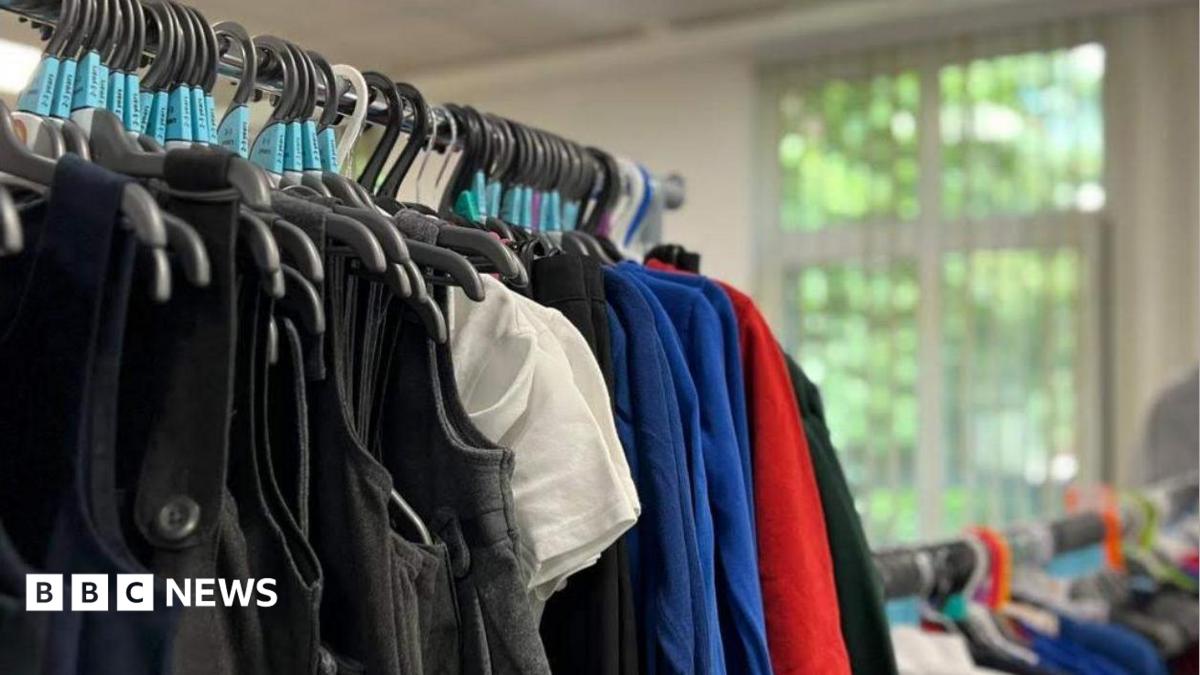
The funding comes from the £7.1m Crisis and Resilience Fund, a government-run scheme which provides local authorities with funding to help low-income households on a multi-year basis.
Last year, Stripey Stork supported 7,503 Surrey children from 4,116 families.
This latest funding will enable the charity to support around 8,500 children over the next 12 months.
Councillor Mark Nuti, SCC cabinet member for health and communities, said this money will help Stripey Stork to “reach even more families across Surrey with practical support at a time when it is needed most”.
Follow BBC Surrey on Facebook, external, on X, external, and on Instagram, external and listen to BBC Radio Surrey on Sounds. Send your story ideas to southeasttoday@bbc.co.uk, external or WhatsApp us on 08081 002250.


DA Davidson cuts Cellebrite stock price target on weak Q2 results

Atai stock hits 52-week high of $7.26

The Government has launched a consultation on the Zero Emission Vehicle (ZEV) Mandate, opening a review of the annual electric vehicle sales targets set for manufacturers ahead of the 2030 phase-out of new petrol and diesel cars. The consultation, announced today, runs until 23 October.
Vehicle manufacturers, suppliers, charge point operators, dealers, consumers and communities are being asked for their views on the pathway to ending sales of new petrol and diesel cars by 2030, and to all new cars and vans being zero emission by 2035. The consultation has been launched jointly by the UK and Devolved Governments.
The review comes as EV demand grows. According to the Department for Transport, July recorded the strongest new car market since 2019, more than one in four new cars sold are now electric, and EV sales were up 45 per cent on July last year. Over two million electric vehicles are now registered on UK roads.
The Government said its Electric Car Grant, which offers up to £3,750 off the cost of a new EV, has helped over 160,000 drivers buy an EV since it launched last July. It said drivers who make the switch can save up to £1,400 a year on running costs.
Transport Secretary Heidi Alexander said: “The UK EV market is strong – sales are up, British manufacturers and charge point operators are investing billions, alongside our backing of £7.5bn, including our Electric Car Grant that has helped over 160,000 people make the switch.
“It’s right we keep targets under review to ensure they’re practical and back British industry. The end goal hasn’t changed – but we need to take business with us on the journey, and that’s exactly what we’re doing today, by making sure industry has the chance to shape how we get there.”
According to the Government, manufacturers are currently on track to meet their 2025 targets and have built-in flexibilities to help them do so. It said the review is being carried out in the context of global economic conditions including supply chain disruption and tariff and trade uncertainty, and delivers a long-standing commitment to review the Mandate by 2027.
The consultation asks whether the existing annual targets for manufacturers remain appropriate. The Government is investing £7.5 billion in the transition, including £4 billion for DRIVE35 projects and £3.5 billion for van, truck and car grants, the Electric Car Grant and EV charging infrastructure.
Business Secretary Jonathan Reynolds said: “The UK’s automotive sector is vital to our economy and future growth, and we’re determined to keep it that way as we get on with reindustrialising Britain to deliver good growth in every postcode.
“This consultation is about listening to industry, examining the evidence and making sure the Mandate continues supporting investment, innovation and competitiveness, so Britain’s car sector can thrive.”
Mike Hawes, chief executive of the Society of Motor Manufacturers and Traders, said: “The automotive industry is fully committed to a zero-emission future, investing billions in new technologies, products and incentives. However, with the ZEV Mandate conceived under vastly different conditions, this welcome review is a timely opportunity to adjust the transition so it works for all. That means a commercially sustainable transition which supports UK competitiveness, investment and jobs whilst delivering greater choice and affordability for motorists – the sooner, the better.”
Others warned against loosening the targets. Gurjeet Grewal, chief executive of Octopus Electric Vehicles, said: “The ZEV mandate is working – giving manufacturers confidence to invest and drivers confidence to switch. Weakening it now would send exactly the wrong signal, just as EVs are becoming some of the best-value cars on the road.
“Carbon Brief estimates weaker targets could cost consumers £3bn a year in expensive petrol by 2030. We should be accelerating the transition, not creating another policy wobble that leaves drivers, businesses and the UK economy paying the price.”
Alongside the review, the Government is investing £600 million to roll out more charge points, building on the 120,000 already available on the public network and over a million in homes and workplaces. It said grants of up to £500 are available to landlords, flat owners and renters towards the cost of installing a home charger.

Paul Jones
Harvard alumni and former New York Times journalist. Editor of Business Matters for over 15 years, the UKs largest business magazine. I am also head of Capital Business Media’s automotive division working for clients such as Red Bull Racing, Honda, Aston Martin and Infiniti.

Homes line the streets of a neighborhood in Thousand Oaks, California, May 23, 2026.
Kevin Carter | Getty Images
A version of this article first appeared in the CNBC Property Play newsletter with Diana Olick. Property Play covers new and evolving opportunities for the real estate investor, from individuals to venture capitalists, private equity funds, family offices, institutional investors and large public companies. Sign up to receive future editions, straight to your inbox.
Investors in the single-family housing market are increasingly concerned about interest rates, rising insurance and home costs, and the ongoing war with Iran. As a result, they are less confident in their businesses than they have been in at least three years.
Investor sentiment at the end of June fell for the second straight quarter to an all-time low on the quarterly RCN Capital/CJ Patrick Company Investor Sentiment Index, or ISI. The index surveys more than 300 investors in the fix-and-flip and rental businesses.
Just 26% of respondents said they believe market conditions are better than they were a year ago, the lowest share since the survey began in 2023 and down from 35% in the first quarter. Fully 45% said the market has gotten worse, the highest in the survey’s history.
“In addition to the ongoing conflict in Iran, rising finance costs, limited inventory, escalating home and renovation costs and downward pressure on rental rates are all contributing factors for their increased pessimism,” said Jeffrey Tesch, CEO of RCN Capital, a private lender to real estate investors, in a release.
The vast majority of investors surveyed in this report were small to mid-sized. That’s in contrast to large institutional investors covered by the recently enacted 21st Century ROAD to Housing Act, which will generally prohibit investors with at least 350 single-family homes from acquiring additional single-family homes. Small- to mid-sized investors tend to use bridge loans, special investor loans for rental properties and conventional loans that are typically 30-year and fixed rate. Of those surveyed, 28% reported paying cash in their recent purchases.
Mortgage rates hit a recent low at the end of February but rose sharply at the start of the war with Iran. They are now at their highest level in over a year.
More than half of survey respondents said the high cost of financing is “one of the biggest problems in today’s market,” according to the report. Three-quarters of them said they do not expect to see any rate relief anytime soon, and some expect rates to rise.
All of this is impacting investor purchase activity.
“Real estate investors purchased 23% fewer homes in the first quarter of 2026 than they did in the previous quarter and in the first quarter of 2025. The survey also shows that 32% of the respondents don’t plan to buy any properties at all this year, and only 9% plan to buy more than they did a year ago,” said Rick Sharga, CEO of the CJ Patrick Company.
More than 60% of respondents expect home prices to rise over the next six months, up from just under 52% in the prior survey. Higher prices can raise investors’ acquisition costs while increasing the potential value of properties they already own.
Business
FDA Upgrades 19 Million Egg Recall To Highest Risk Level Amid Salmonella Outbreak Sickening Dozens

The Food and Drug Administration has upgraded a recall of nearly 19.1 million eggs to its most serious risk category as federal health officials continue investigating a multistate salmonella outbreak that has sickened nearly 100 people across 17 states.
The agency classified the recall from Midwest Poultry Services, L.P. as a Class I recall, the FDA’s highest designation, meaning there is a reasonable probability that exposure to the affected product could cause serious health consequences or death. Midwest Poultry Services originally announced the voluntary recall on July 22, covering 1,589,577 dozen eggs, or roughly 19.1 million individual eggs, due to potential contamination with Salmonella Enteritidis.
The recall covers white shell eggs and brown cage-free shell eggs produced at two of the company’s farms in Texas. The eggs were produced and distributed between June 6 and July 3, 2026, and carry sell-by or best-by dates ranging from July 20 through August 17, 2026, meaning some affected cartons may still be sitting in consumers’ refrigerators.
Recalled eggs were sold under several brand names, including Kroger, Simple Truth, Brookshire’s, Country Morning and Cal-Maine Sunups. According to the FDA, the eggs were distributed to retail and foodservice customers across Texas, Oklahoma and Louisiana, with retail availability specifically at Kroger stores in Texas and Louisiana, Brookshire Grocery stores across Texas, Oklahoma, Arkansas, Louisiana, New Mexico and Mississippi, and other smaller retail outlets.
Consumers can identify recalled cartons by checking for the identifying codes P-1950 or 0840962, along with a Julian date between 157 and 184, printed on the side of the carton in date-coding ink. The eggs were sold in a range of bulk and retail carton sizes, including packages of 6, 12, 18, 24, 30, 36 and 60 eggs.
The recall is tied to an ongoing salmonella investigation that has sickened 98 people across 17 states, including 26 hospitalizations. No deaths have been reported. According to the FDA, most people interviewed as part of the investigation reported having eaten eggs before becoming ill. Samples collected at Midwest Poultry Services’ farms also tested positive for salmonella, and genetic testing found that some of those samples matched the strain responsible for the broader outbreak.
“Laboratory, epidemiological, and traceback data from this investigation have determined that shell eggs recalled by Midwest Poultry Services, L.P are a likely source of illnesses in this outbreak,” the FDA said in its investigation update. The agency added that the recalled eggs do not account for every illness identified in the outbreak, noting that additional investigation is ongoing to determine whether other sources may also be contributing to the case count.
Midwest Poultry Services said it identified the potential contamination issue through its own proactive environmental monitoring practices and a subsequent root cause analysis. In a statement, the company described its commitment to food safety as central to its operations. “At Midwest Poultry Services, a family-owned and led business, we believe in the power of safe, nutritious eggs to make a real difference in people’s lives,” the company said, adding that safety practices are “rooted in our values and built into how we operate on every farm, every day.” The company said that once it learned of the possible issue, it began diverting eggs to a breaking plant, where they would be pasteurized to eliminate any foodborne pathogens, and that it has ceased distributing fresh eggs from the two affected farms.
Salmonella infections typically cause fever, diarrhea, nausea, vomiting and abdominal pain, with symptoms generally appearing between six hours and six days after exposure and lasting anywhere from four to seven days in most healthy individuals. Young children, older adults and people with weakened immune systems face a significantly higher risk of severe illness. In rare cases, salmonella infection can spread beyond the intestinal tract into the bloodstream, potentially leading to more serious complications, including infected aneurysms, endocarditis and arthritis.
Consumers who have purchased the recalled eggs are advised not to eat them. Instead, the FDA and Midwest Poultry Services are urging affected customers to return the eggs to their original place of purchase for a full refund, and to thoroughly clean any surfaces, containers or utensils that may have come into contact with the recalled product to prevent potential cross-contamination.
The Class I designation places this recall among the most serious food safety actions the FDA issues, a category reserved for situations where the agency has determined a reasonable probability exists that continued exposure to the product could result in serious injury or death, rather than more limited or temporary health effects.
With the outbreak investigation still active and the FDA continuing to examine whether additional sources beyond Midwest Poultry Services may be contributing to the case count, health officials are urging consumers across the affected states to check their egg cartons carefully against the listed plant codes and Julian dates, particularly given how many of the recalled cartons remain within their printed sell-by or best-by window well into mid-August.

MMG’s Anglo American nickel deal probe resumes with new deadline

Tompkins Financial Corp stock hits all-time high at 102.15 USD

The government has issued a temporary ban on the sale of disposable barbecues as they pose a “significant risk to the public” during the current drought and heatwave conditions, according to advice published online.
The Department for Business, Innovation, Science and Trade said the product has been the cause of “a number of serious wildfires across the country over the summer months”.
It added disposable barbecues “cannot be considered a safe product” in the current conditions and they “must not be made available for sale either in store or online at the current time” in Great Britain.
Prime Minister Andy Burnham advised people to take care, telling the BBC: “Britain is a tinderbox right now.”
Burnham said all retailers will be receiving guidance about the change, which will be kept under review.
Speaking to BBC Radio 5 Live’s Matt Chorley, the prime minister said: “We’ve got 37 fires across England and Wales right now, four of them are major incidents.”
Burnham said they were not all linked to disposable barbecues but “it’s probable that some of them have been caused in that way”.
He added: “We’re going into a difficult weekend, please just think about the situation that we’re in.
“Britain is a tinderbox right now. Setting a fire in any outdoor setting of any kind is a risk to other people’s homes, it’s a risk to other people’s lives, don’t do it, please don’t do it.”
The prospect of a temporary ban was discussed at an emergency Cobra meeting on Wednesday.
A number of large retailers and supermarkets had already voluntarily stopped selling the devices under a framework, agreed in 2023 between fire chiefs and the British Retail Consortium.
This said that retailers should suspend sales once an extreme heat event has been declared as imminent, or in response to “reasonable, evidence based” requests from local councils.
Business
Dow Dips Slightly Friday As Stocks Hold Near Records After S&P 500 Clears 7,800 For The Very First Time

NEW YORK — The Dow Jones Industrial Average edged lower Friday morning, holding near record territory a day after the S&P 500 closed above 7,800 for the first time ever, as Wall Street weighed cooling inflation data against a mixed batch of individual company earnings.
The Dow stood at 53,771.09 as of 9:32 a.m. Eastern time, down roughly 0.08% from Thursday’s close. The S&P 500 edged up 0.1% and the Nasdaq 100 gained 0.2% in early trading, with both indexes on pace for weekly gains even as the Dow lagged behind.
Friday’s modest pullback followed a strong session Thursday, when the S&P 500 rose 0.65% to a record close of 7,798.99, after briefly touching an intraday high above 7,800 for the first time in the index’s history. The Nasdaq Composite climbed 0.81% to close at 26,803.03, lifted by gains in Meta Platforms, Micron Technology and Netflix, while the Dow added a more modest 69.72 points, or 0.13%, to close at 53,839.99.
Thursday’s rally was driven in large part by easing concerns over the path of Federal Reserve interest rate policy following cooler-than-expected inflation data. The Consumer Price Index rose just 0.1% in July, putting the annual inflation rate at 3.4%, matching consensus estimates from economists polled by Dow Jones. Core CPI, which excludes volatile food and energy prices, rose 0.2% on the month, with the annual core rate landing at 2.5%. The in-line reading reinforced investor expectations that the Federal Reserve would have room to hold off on further rate increases, a dynamic that has continued supporting stocks even as markets sit at historically elevated valuations.
Asian markets carried that positive momentum into Friday’s session. South Korea’s Kospi index surged more than 2.4%, while Japan’s Nikkei 225 gained 0.6%, both continuing a broader rally across regional markets tied to strong technology and semiconductor sector performance. That overseas strength helped set a generally constructive tone heading into Friday’s U.S. trading session, even as American indexes themselves traded in a comparatively narrow, mixed range.
Oil prices remained a focal point for markets this week. Brent crude futures fell more than 2% Thursday to settle at $87.07 per barrel, while West Texas Intermediate futures slid a similar amount to close at $81.25 per barrel, as traders weighed signs of falling oil demand even as the broader U.S.-Iran conflict continued without resolution. The pullback in crude prices offered some relief to markets after weeks of elevated energy costs tied to persistent uncertainty surrounding the Strait of Hormuz.
Individual stock moves added texture to Friday’s otherwise muted overall market tone. Reddit shares jumped 10.4% in premarket trading after S&P Dow Jones Indices announced the social media and discussion platform would join the benchmark S&P 500 index ahead of the opening bell on August 18. Data storage company Sandisk gained 7% following its 2026 Investor Day, where management laid out a bullish long-term financial outlook for the business. SpaceX shares also rose, climbing 0.91% to $142.57 in premarket trading.
Not every earnings reaction was positive. IT and software development company Globant sank 12.6% after delivering a disappointing second-quarter earnings report. Natural gas producer Range Resources tumbled 7.3%, weighed down by persistently low natural gas prices, regional supply gluts and recent analyst price-target cuts. MDU Resources Group fell 6.3% after the natural gas and electricity utility reported second-quarter revenue that came in below Wall Street expectations.
Thursday’s session had also featured notable moves tied to artificial intelligence infrastructure spending. Cerebras Systems shares tumbled 14% following its results, while Coherent, a photonics company, lost nearly 3% in extended trading despite delivering guidance that topped analyst expectations, illustrating the continued volatility surrounding AI-adjacent hardware names even amid broader market strength.
With no major economic data releases scheduled for Friday, investor attention has increasingly turned toward next week’s retail earnings calendar, including reports from Target and Walmart, both of which are expected to offer fresh insight into the health of the American consumer heading into the back half of 2026. Beyond that, markets are also looking ahead to Nvidia’s highly anticipated earnings report, scheduled for August 26, a release widely viewed as a bellwether for the broader artificial intelligence trade that has powered much of this year’s market gains.
For now, Friday’s session reflected a market pausing to digest a strong week of gains, with major indexes holding near record levels even as the Dow specifically slipped modestly. Market participants said the overall tone remained constructive heading into the weekend, supported by easing inflation data, a resilient earnings season, and continued optimism around artificial intelligence spending, even as individual stock reactions to earnings reports this week underscored how selective investors have remained despite the broader market’s advance to fresh record territory.
Stocks open little changed after notching a record high in the previous session

PARKOUR VS MONEY HEIST 27!

Hand car wash to be replaced with EV charging hub
DA Davidson cuts Cellebrite stock price target on weak Q2 results


-

 Fashion7 days ago
Weekend Open Thread: Mattifying Sunscreen
-

 News Videos6 days ago
Can Astrology Help Find Gold and Silver Trends? A Financial Astrology Guide
-

 Tech7 days ago
Rinn Pharma & Biopharma to join NordicPharmaTrain network
-

 Business5 days ago
Datadog: Best Of Breed For Multiple Reasons
-

 Business5 days ago
How to Start a Cleaning Business: A Step-by-Step Guide
-

 Business5 days ago
BDC Weekly Review: Private BDC Q2 Numbers Are Strong
-
 NewsBeat3 days ago
Communication cards help banking customers access services or report scams
-
 Business4 days ago
Oil Price Today (August 11): Crude oil rises to $88 after Trump’s compensation demand dents Hormuz opening. Here’s why
-

 Fashion7 days ago
Weekly News Update, 8.6.26 – Corporette.com
-

 Fashion5 days ago
Amazon Sundays: Closet Care Before Fall
-

 Business6 days ago
SharkNinja Keeps Eating
-
 Entertainment6 days ago
10 R-Rated Drama Movies That Can Be Called Masterpieces
-

 Politics6 days ago
Be quiet, Miriam! – spiked
-

 Business6 days ago
Mutual Fund Manager Scoops Up Beaten-Down Stocks
-

 Politics5 days ago
Ben-Gvir’s crocodile project halted but abuses at Ketziot Prison continue
-

 Business5 days ago
5 Things You Must Know About Jorge Messi, the Father and Longtime Agent Who Shaped Lionel Messi’s Career
-

 Entertainment7 days ago
Warren Hudson’s Dad Releases Audio Of Threats
-

 Politics7 days ago
Welsh independence campaign group YesCymru sets 2032 referendum target
-

 Politics5 days ago
The Church of England’s ruinous reparations racket
-

 Politics6 days ago
Calls to permanently pedestrianise central Belfast following festival success
You must be logged in to post a comment Login