Connect with us

Tech

Apple sends new ‘Threat Notification’ alerts over mercenary spyware attacks

Published

on

Apple

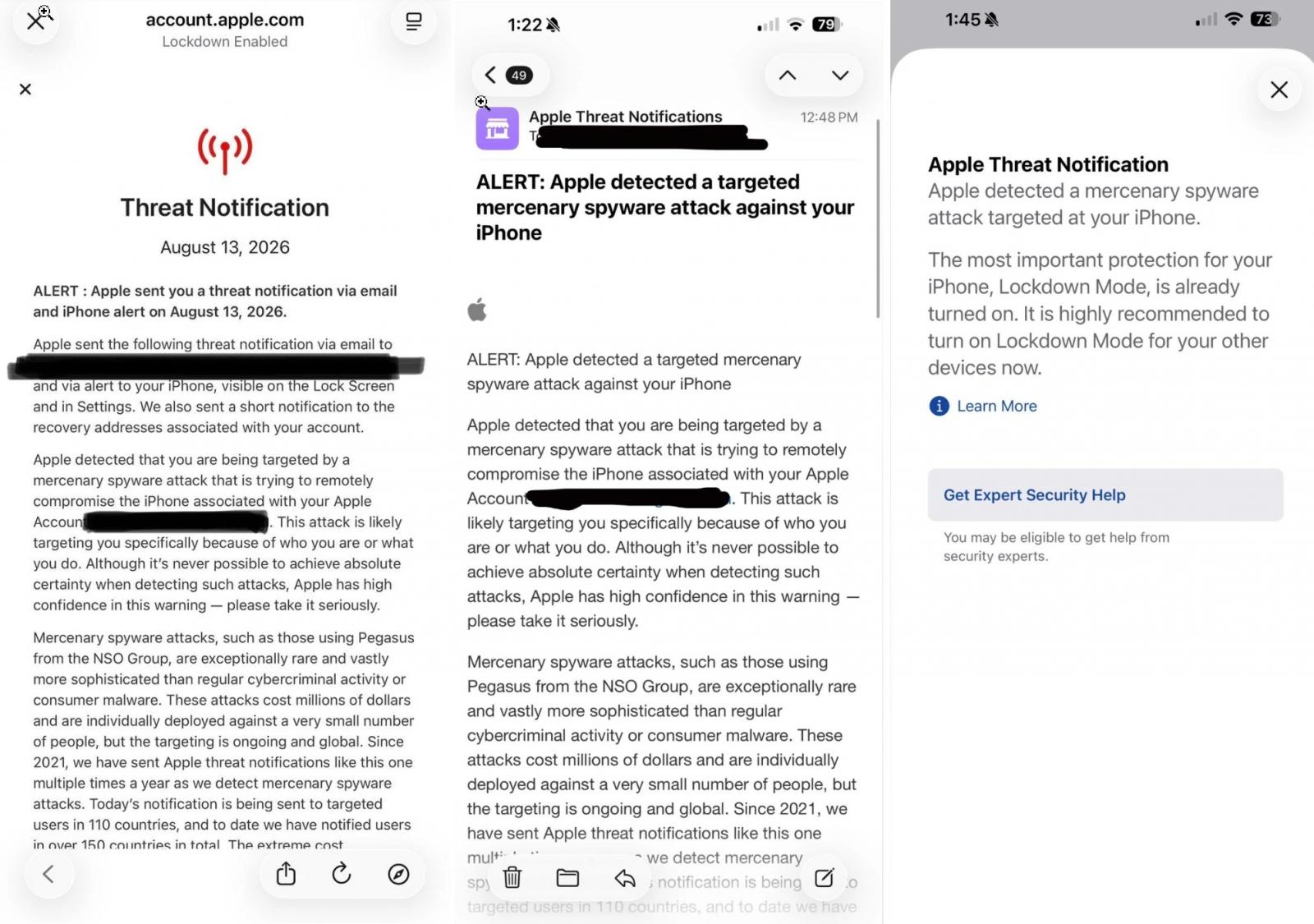
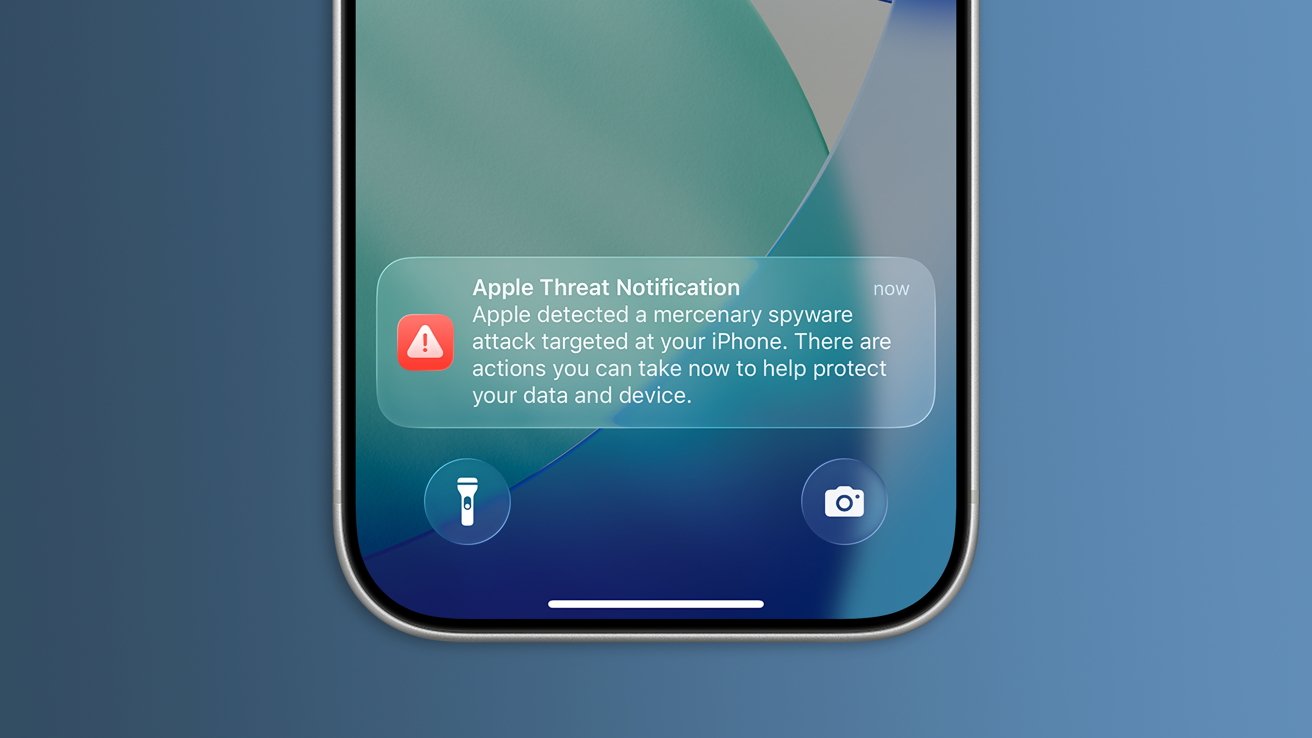
You’re not alone if you just received an “Apple Threat Notification” saying it detected a “mercenary spyware attack targeted at your iPhone.”

Some users on Reddit are reporting that they received these alerts today after Apple sent out a new batch of threat notifications on August 13, but the feature itself is not new.

Apple Threat
Apple sent a new batch of alerts to users on August 13

Source: Reddit

Apple has been sending these threat notifications multiple times a year since 2021, when it detects highly targeted mercenary spyware attacks.

image

It’s also worth pointing out that Apple does not identify the spyware behind individual alerts, so there’s no evidence that today’s notifications are specifically related to Pegasus.

However, Apple itself cites NSO Group’s Pegasus as an example of mercenary spyware historically associated with this type of attack, and forensic investigations into previous Apple threat notifications have confirmed Pegasus infections in some cases.

In a support document, Apple previously confirmed it sends threat notifications to users in more than 150 countries after detecting highly targeted mercenary spyware attacks against specific iPhone users.

Advertisement

The list of potential targets includes journalists, activists, politicians, and diplomats, who have historically been among those targeted by this type of spyware.

These attacks are expensive, highly sophisticated, and typically aimed at a very small number of people.

“Mercenary spyware attacks cost millions of dollars and often have a short shelf life, making them much harder to detect and prevent,” Apple explained.

“The vast majority of users will never be targeted by such attacks.”

Advertisement

The company does not attribute individual alerts to a specific government, company, or geographical region.

Apple says threat notifications should be taken seriously

Apple relies on its own threat intelligence and investigations to identify suspected mercenary spyware activity, which means these notifications are “high-confidence alerts” and not just a regular warning.

“Although our investigations can never achieve absolute certainty, Apple threat notifications are high-confidence alerts that a user has been individually targeted by a mercenary spyware attack, and should be taken very seriously,” Apple noted.

“We are unable to provide information about what causes us to issue threat notifications, as that may help mercenary spyware attackers adapt their behavior to evade detection in the future.”

Advertisement

If Apple detects this activity, it sends an email and iMessage notification to the email addresses and phone numbers associated with the user’s Apple Account. 

The emails are usually from threat-notifications@email.apple.com, and Apple also warns users about fake versions of these alerts.

You can verify whether a threat notification is genuine because Apple will not ask you to click a link, open a file, install an app or profile, or provide an Apple Account password or verification code.

You can also check the alert by signing in directly to account.apple.com. If Apple sent you a threat notification, it will appear at the top of the page after you’re logged in.

Advertisement

If you believe you’ve been affected, you should enable Lockdown Mode and reach out to a cybersecurity expert.

Apple recommends taking these alerts seriously because receiving one means it has high confidence that the user was individually targeted.

BleepingComputer has contacted Apple for a statement on the Threat Notifications, but we have not received a response at the time of publication.


article image

Overall prevention scores can hide what happens after initial access. Once attackers are using valid credentials, prevention drops sharply.

The Blue Report 2026 measures defenses technique by technique across 338 million simulations run in customer production environments.

Advertisement

Get the report

Source link

Continue Reading
Click to comment

You must be logged in to post a comment Login

Leave a Reply

Tech

Noise Launches Clutch HP-P01 Gaming Headset With Sub-30ms Wireless Latency

Published

on

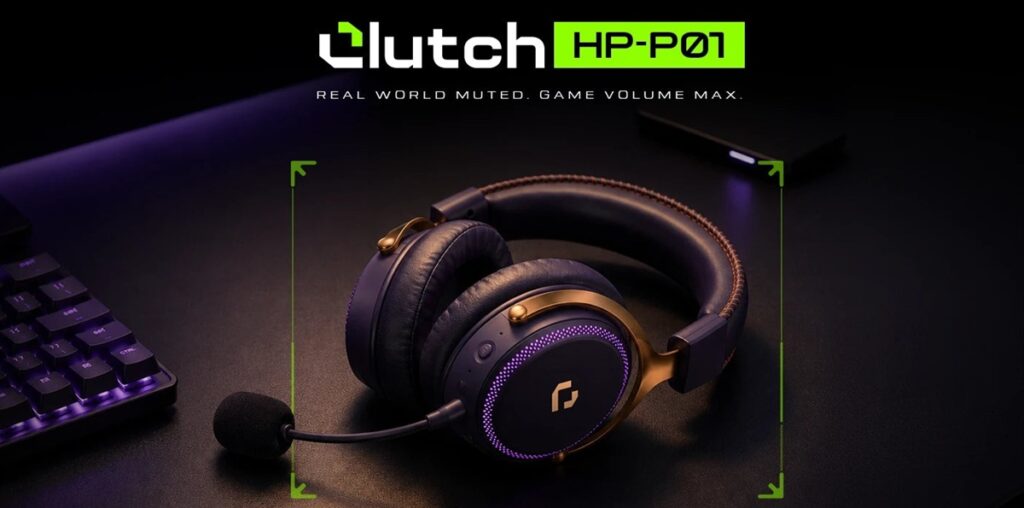
Noise is expanding into gaming audio with the launch of its new Clutch range in India. The company says the range is built around the needs of Indian gamers. The first product is the Noise Clutch HP-P01 gaming headphone with a 50mm driver and sub-30ms wireless latency. It also offers up to 40 hours of battery life. Pre-bookings are now open at Rs. 4,999 ahead of its August 27 launch.

Noise Clutch HP-P01: Key Highlights

The Noise Clutch HP-P01 focuses on accuracy, comfort, and dependability during gaming sessions. It uses a 50mm driver, which ensures clear sound positioning and helps players detect footsteps and movement. The headphones also feature sub-30ms wireless technology that synchronizes audio output with what is happening on the screen. This makes it easier for players to take action during their competition. It also includes a detachable boom microphone that facilitates effective communication during squad gaming sessions. The 7.1 virtual surround sound enhances audio depth for a more engaging gaming experience.

The HP-P01 combines a sturdy build with features designed for extended gaming sessions. Its breathable, fabric-wrapped cushions aim to keep users comfortable during longer sessions. Noise tested the headphones against drops, tumbles, and vibrations to check their durability. The company also tested the headband, sliders, and clamp through thousands of cycles. This helps the headphones retain a consistent fit during regular use.

Noise Clutch HP-P01 allows connecting the headphones through several methods. The connection options include 2.4GHz wireless, Bluetooth 6.0, and wired 3.5mm. Therefore, users can connect the headphones to mobile devices, computers, and gaming consoles. Additionally, the headphones offer up to 40 hours of battery life, giving users more freedom. Multi-mode RGB lighting gives a gaming touch to the product.

Price and Availability

Noise has announced pre-bookings for the Clutch HP-P01 via the official website gonoise.com. The gaming headset costs Rs. 4,999 with introductory offers. It will officially launch in India on August 27, 2026, with delivery starting from the launch date. Customers have a choice of colors: Black/Red, Purple/Gold, and Grey/Green. Noise also plans to add more products to the Clutch lineup through 2026. also plans to add more products to the Clutch lineup through 2026.

Advertisement

Source link

Continue Reading

Tech

New wave of Apple threat notifications reach 110 countries

Published

on

Apple threat notifications are meant to help notify users when they may have been targeted by mercenary spyware attacks, and another notification has been sent to users across 110 countries.

A new support document details what a threat notification is and what steps a user might take upon receiving one. Apple says it has sent out warnings to users across 150 countries to date.

According to a report from TechCrunch, Apple sent out threat notifications to users in 110 countries on Thursday. The number of users or types of entities targeting them was not shared.

Normal users should not worry about receiving a threat notification.

Advertisement

Also, a threat notification does not mean the user has been hacked, just that they may have been targeted, or could be targeted, as a part of an attack. As the report suggests, these notifications should be taken seriously.

The notification can arrive when a user’s iPhone, iPad, or Mac might have been targeted by mercenary spyware. Users will also receive an email about the potential attack.

Generally, those being targeted will be high-profile, like government officials, activists, journalists, military, or law enforcement. The likelihood of a random civilian being targeted is near zero, as these attacks can be quite expensive.

Apple has sent out threat notifications in September, July, and April 2025. The easiest first step to take upon receiving such a notification is to place the device into Lockdown Mode.

Advertisement

Source link

Continue Reading

Tech

Trump Slaps A 100 Percent Tariff On Heavy And ‘Sensitive’ Drones

Published

on

The move will force operators to find other suppliers or settle for models with lesser capabilities.

President Trump has imposed tariffs up to 100 percent on drones that are “particularly sensitive” for national security, the White House announced. The move will force operators to find other suppliers or settle for models with lesser capabilities than the Chinese drones that dominate the market in the US. 

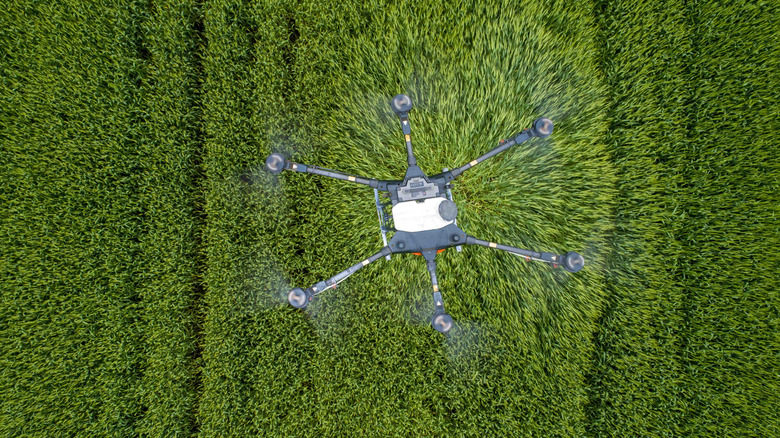
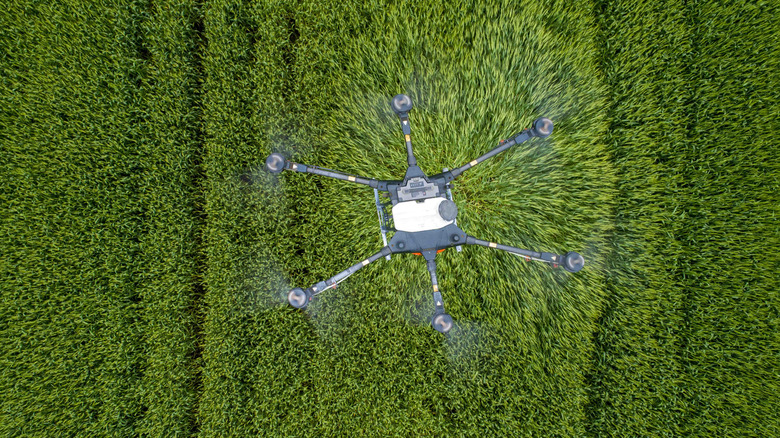
The White House will impose a 100 percent tariff on drones over 25kg (55 pounds), or those equipped with docking stations or thermal imaging capabilities. Those include commercial models from DJI and others used for operations like power line inspection, crop spraying and search and rescue. Drones under 25kg will be hit with a 25 percent tariff, and a 15 percent levy will be applied to models from the EU, Japan, Korea, Switzerland and Taiwan, provided their components are primarily made in those countries. UK drones will see a 10 percent tariff hit. 

The aim with the tariffs, the White House stated, was to strengthen national security and encourage “on-shoring” of drone components. To the latter end, the government is creating incentive programs for US companies that make new investments in the manufacturing drones and drone components. The move will also close a loophole that allowed companies to buy components from China and assemble them in the US, an expert told The Financial Post

Advertisement

The new White House tariffs follow a recent FCC move to ban sales of LiDAR-equipped drones it had previously approved, including models from DJI currently available in the US. The new tariffs appear unrelated to a current US ban on new DJI drones, cameras, microphones and other consumer products.

As with the manufacturing of smartphones and other high-tech products, China is leaps ahead of the US and any other country when it comes to drones. DJI’s models, for example, are so technologically superior to any other brand that they’re virtually irreplaceable in the market. They can’t easily be built in the US for the same reason smartphones can’t: America lacks the localized supply chains, specialized factories, unique engineering knowledge and large-scale skilled labor pools found in China.

Advertisement

Source link

Continue Reading

Tech

What’s The Minimum Height Electrical Outlets Should Be From The Floor?

Published

on


Placing power outlets around a home to use your local electrical plug format is a delicate dance of practicality, safety, and aesthetics. You want your power outlets to be in a spot that’s accessible, but not in the way of anything, though you can’t put them right on the floor or else someone may accidentally jam their toe into one. Surprisingly, there isn’t a mandatory outlet height set by the National Electric Code Association (NECA), but the general wisdom on the matter is that electrical outlets should be placed at least 12 inches up from a finished floor.

Placing an electrical outlet near the floor, without it actually being on the floor, is more or less the optimal positioning for typical residential usage. While not exactly considered official or mandated by any governing body, electricians will often stick to the unofficial “12-inch rule” for the sake of easy installation and identification, ensuring nobody makes any electrical mistakes in your home. It certainly helps that placing outlets in this particular spot is also convenient from a homeowner’s perspective, keeping wires off the ground while still being within easy reach.

Advertisement

Outlets are generally placed at least 12 inches up from the floor

The 12-inch rule stipulates that electricians place general-purpose electrical outlets in a home 12 inches up a wall from a finished floor. That’s 12 inches from the bottom of the outlet panel, and 16 inches from the top of the panel, to be specific. Sticking to this unofficial standard across the industry helps to create consistency when measuring, installing, and servicing outlets, which generally makes life easier for contractors while still adhering to mandated electrical safety codes.

Installing outlets in this fashion is also convenient for homeowners. An outlet 12 inches up is easily accessed without having to bend all the way down to reach the floor, and it prevents excessive loose wire hanging that could result in tangling or tripping hazards. At the same time, since this elevation is below the eyeline, it’s also optimal for hiding wires out of sight and keeping your home looking nice and neat. It’s also away from the hard bottom edges of furniture like desks or couches, so you can push them flush against the wall without blocking anything or risking damage.

While the majority of outlets in your home will adhere to the 12-inch rule, some outlets may be placed differently in specialized rooms. For example, outlets in bathrooms and kitchens, the kind that usually have a reset button, are usually placed around 42 inches off the ground in order to accommodate counters and countertop appliances, as well as avoid the occasional splash of water. Outlets in a dedicated home office may also be placed slightly higher than usual, around 24 to 30 inches up to better accommodate equipment on a desk like computers or printers.

Advertisement


Source link

Advertisement
Continue Reading

Tech

Rare Capcom 1996 Studio Tour Shows The Everyday Rooms Where Legends Took Shape

Published

on

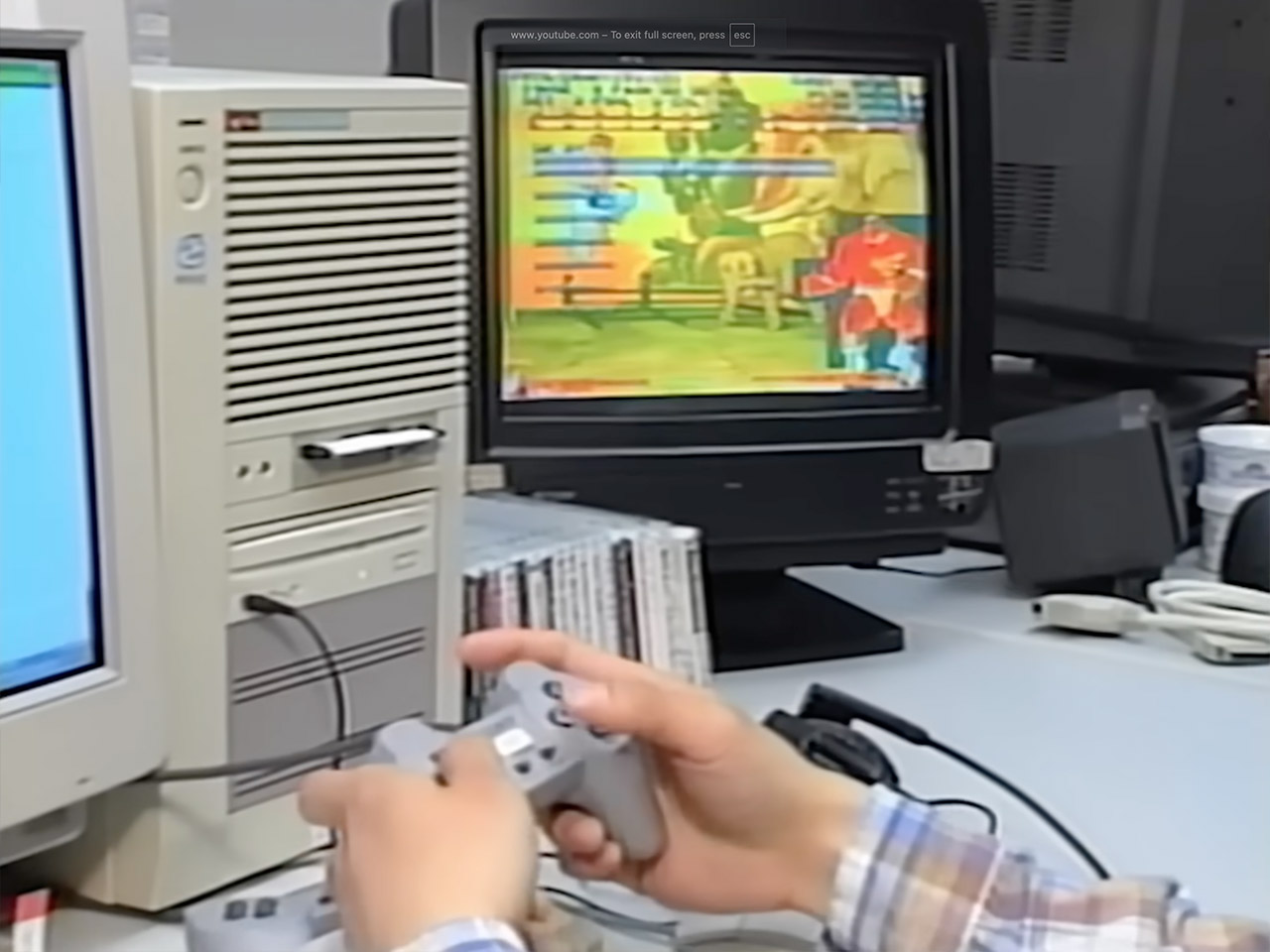
Capcom Studio Tour 1996
Capcom sat at the height of its creative run in 1996. Street Fighter Alpha 2 was packing arcades. Mega Man 8 and Mega Man X4 were preparing for home consoles. Breath of Fire III was taking shape as a major role-playing release. Star Gladiator was about to become the company’s first true 3D fighting game.


Resident Evil had already begun rewriting what horror could do on the PlayStation. In the middle of that surge, the company mailed a short VHS tape to members of its Japanese fan club. The tape offered something almost no one outside the company ever saw: a walk through the actual development floors where those games were being made.

Sale


Iconic Arcade Street Fighter II: The World Warrior XT – Home Arcade Machine
  • Relive the Arcade Era: Celebrate the legacy of Street Fighter with a 9/10 scale cabinet that captures the look, feel, and excitement of the iconic 90s…
  • Precision Gameplay: Perform your favorite combos with responsive joysticks and buttons, delivering authentic arcade-style control you know and love.
  • 15+ *Legendary Games: Choose from *15+ classic Capcom titles, including Street Fighter favorites, for endless hours of competitive and nostalgic…

The tour begins with a warm welcome as members of the Capcom Friendly Club receive their membership cards, notebooks, and a bagpack full of extras, as well as a fan book or movie like this one every two months. The host explains the club, claiming its major goal is to keep gamers close to the individuals who create the games. The camera then takes us into the research and development building, which the voiceover refers to as Capcom’s heart.

Advertisement

Capcom Studio Tour 1996
Things begin with planning, as the producers have the final say on each project, providing precise guidelines that guide all that follows. Staff are seated at tables packed high with documents and sketches. To the outside spectator, it appears to be business as usual: people speaking, pointing to papers, and making decisions that will determine whether a game simply feels good or utterly comes apart. The narrator portrays this as difficult and time-consuming, but those engaged make it sound like it’s just part of the process of transforming a concept into something tangible.

Capcom Studio Tour 1996
Next, we get to the artists, where character animators work with stacks of drawings, stitching together loads of separate frames to create a fluid jump or walk from a fighter or robot on screen. Meanwhile, the background designers are busily filling out papers with small details. Even the simplest elements attract attention. There’s a time when we see the artists focusing on the small items that help to make the game environment feel full. There are pencils, rulers, and reference photos all over the workstations.

Capcom Studio Tour 1996
Promotional illustrations have their own section, and artists are redrawing original character art for use on posters and periodicals. Many players will encounter a Capcom character for the first time thru one of these images rather than by playing the game. The staff claims to go all out on each item so that the completed product feels as good as the game. Old-school drawing equipment are scattered across the tables, and the room is quiet, with everyone concentrating on their work.

Capcom Studio Tour 1996
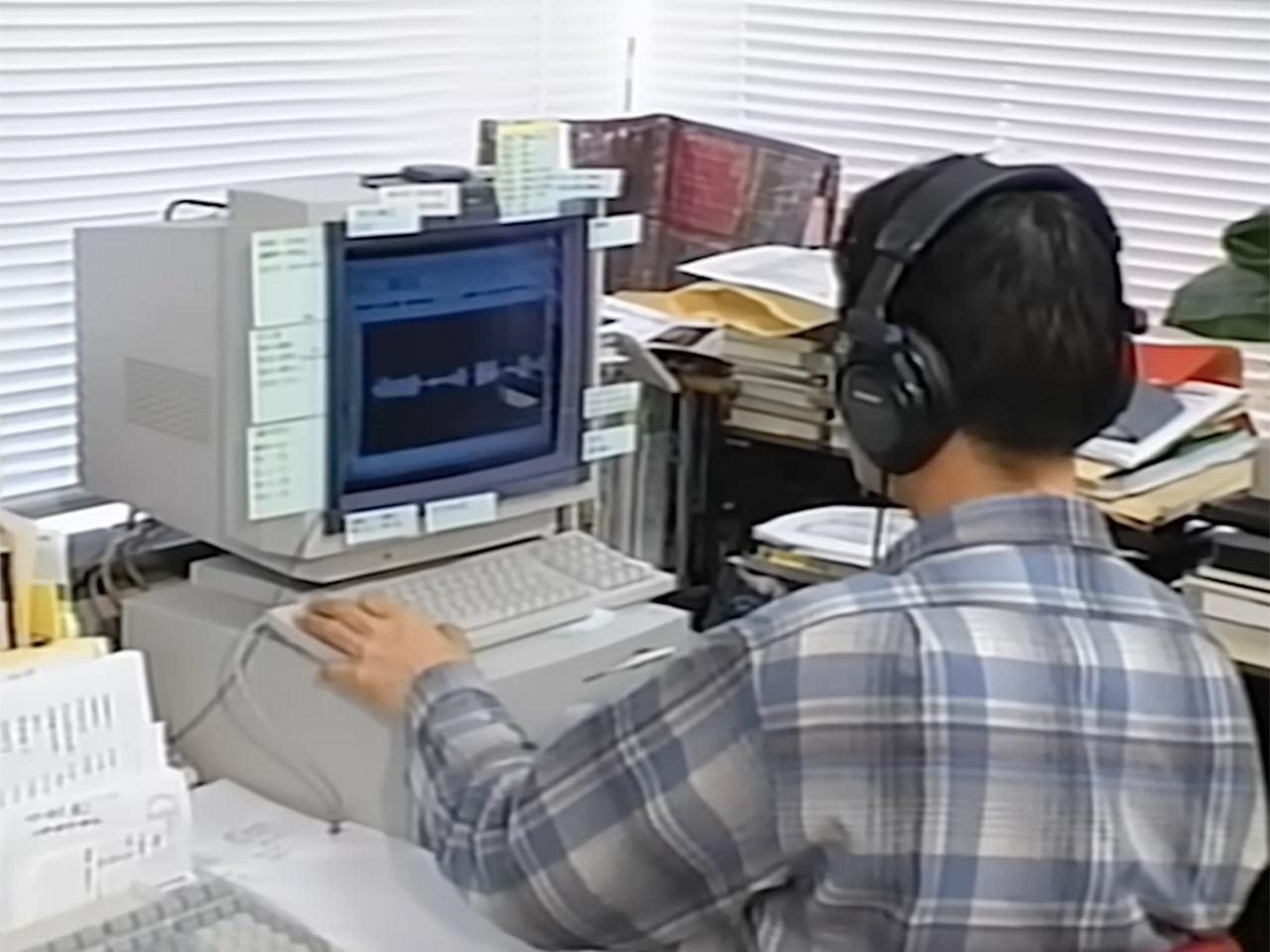
Sound work follows, in which composers are busy producing 100 pieces of music for a single title before cutting it down to the top fifty or so. They relate it to bringing extra water for a long journey. The tape includes a sample of the sharp, rising music for a well-known Street Fighter special move. Engineers sit at mixing equipment that appears to be out of date by today’s standards, with headphones connected to their desks. There are also the customary keyboards and ancient digital gear filling up the area, but it’s clear what they want: the sound should immerse the user in the experience.

Capcom Studio Tour 1996
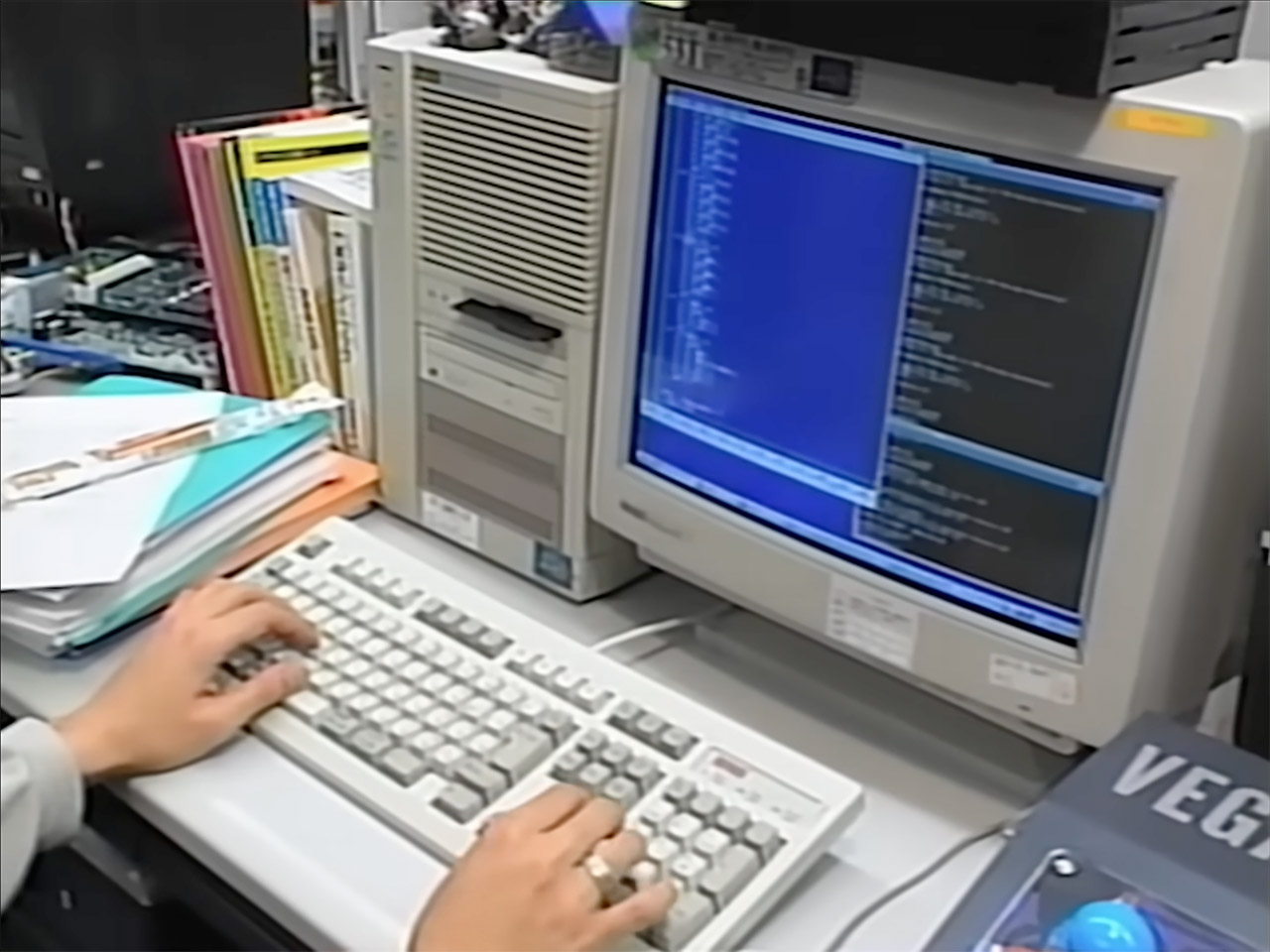
The next room over is where the programmers, or “software men,” do their job. Their goal is to get all of the animation, backgrounds, and music to work without crashing, and the screens are just one giant puzzle with lines of code that most people don’t understand. The problem is that one incorrect entry can bring the entire game to its knees. The camera shows them typing steadily, verifying the findings, and then moving on. It’s a job well done, but virtually unnoticed once the finished product reaches players.

Source link

Continue Reading

Tech

Doctors, Medical Associations Already Giving A Giant Middle Finger To Trump’s Vaccine EO

Published

on

from the ╭∩╮(-•̀_•́-)╭∩╮ dept

As expected, this didn’t take very long. Earlier this week we pointed out that Donald Trump supplanted RFK Jr. as the world’s most infamous anti-vaxxer when he vomited out a bonkers executive order that reduced the recommended childhood vaccination schedule for American children, pared down which diseases were recommended for vaccination, and demanded that the MMR vaccine be split into three separate shots on a spaced out timeline. Combined with Trump outright lying in the ceremony about how the MMR shot was the size of a soda bottle and was “lethal”, the waters around inoculating children against truly horrifying diseases became much more muddy.

The consequences for this will be the result of the actions of two different groups of people. The first are American parents. Because an EO is nothing like a federal mandate, parents will have the greatest influence on what shots their children receive, which is exactly how it should be. What shouldn’t be, however, is having an American population in which 30% proudly wear shirts and hats that say “Trump is right about everything!” and act upon that statement. Which means some not-insignificant percentage of American parents will take Trump’s EO and justifications as gospel and will refuse to get some of these shots for their children. That will endanger their own children, of course, but it will also endanger all the rest of us, too. Less vaccinations mean those that have health conditions so they can’t get vaccinated are put at risk as herd immunity disappears, while the rest of us get to sit around and wonder if the increased presence of these diseases will allow for them to evolve beyond our current immunity protections.

The other group are medical professionals themselves. Fortunately, that group at least is already giving a giant middle finger to Trump and his toilet-paper EO. Here’s a local example from Florida.

Pediatricians in Florida are pushing back on President Donald Trump’s executive order calling for changes to the childhood vaccination schedule.

And the state’s leading pediatric medical association, the Florida Chapter of the American Academy of Pediatrics, said they’re not on board.

Advertisement

“We don’t answer to this nonsense, we don’t recommend changing it,” said Dr. Rana Alissa, president of the FCAAP and an associate professor of pediatrics at the University of Florida. “We go by evidence-based science, we don’t go by politics and politicians.”

This is helpful, but it won’t be enough. Still, it is a good thing that the actual medical professionals out there are informing their patients that Trump and Kennedy are medical morons and that they shouldn’t listen to them. Those doctors are going to have some heavy lifting on their hands, specifically because Trump decided to make it harder for those doctors to keep their patients healthy.

In a statement, president of the American Academy of Pediatrics Dr. Andrew Racine called the executive order “dangerous.”

The order “will do nothing to support families of children with autism or advance understanding of the condition,” Racine said in a released statement. “The only purpose of this announcement is to sow confusion so that more people doubt the importance of vaccines. Delaying or skipping shots is risky, especially as measles continues to spread and children go back to school.”

This is where I think it’s worth reminding you all that the case count of measles for 2026 is already at least 2,465, compared with last year’s total of 2,289. And I’ll add on to that the fact that 68% of those cases occurred in children 19 years or younger and 93% of all cases occur in those that are unvaccinated or in which a vaccination status cannot be confirmed.

Advertisement

In other words, the very group of people that are currently being the most harmed by measles are in the crosshairs of this executive order for things to get much, much worse for them. And, and I cannot stress this all, for the rest of us as well.

Filed Under: anti-vaxxers, autism, donald trump, executive order, measles, mmr vaccine, rfk jr., vaccines

Source link

Advertisement
Continue Reading

Tech

Say goodbye to Chronicle. ChatGPT’s new Computer History feature does it better

Published

on

OpenAI just rolled out Computer History for the ChatGPT desktop app, and if you found Chronicle interesting but a little too screenshot-happy, this update should ease your mind.

What does Computer History do?

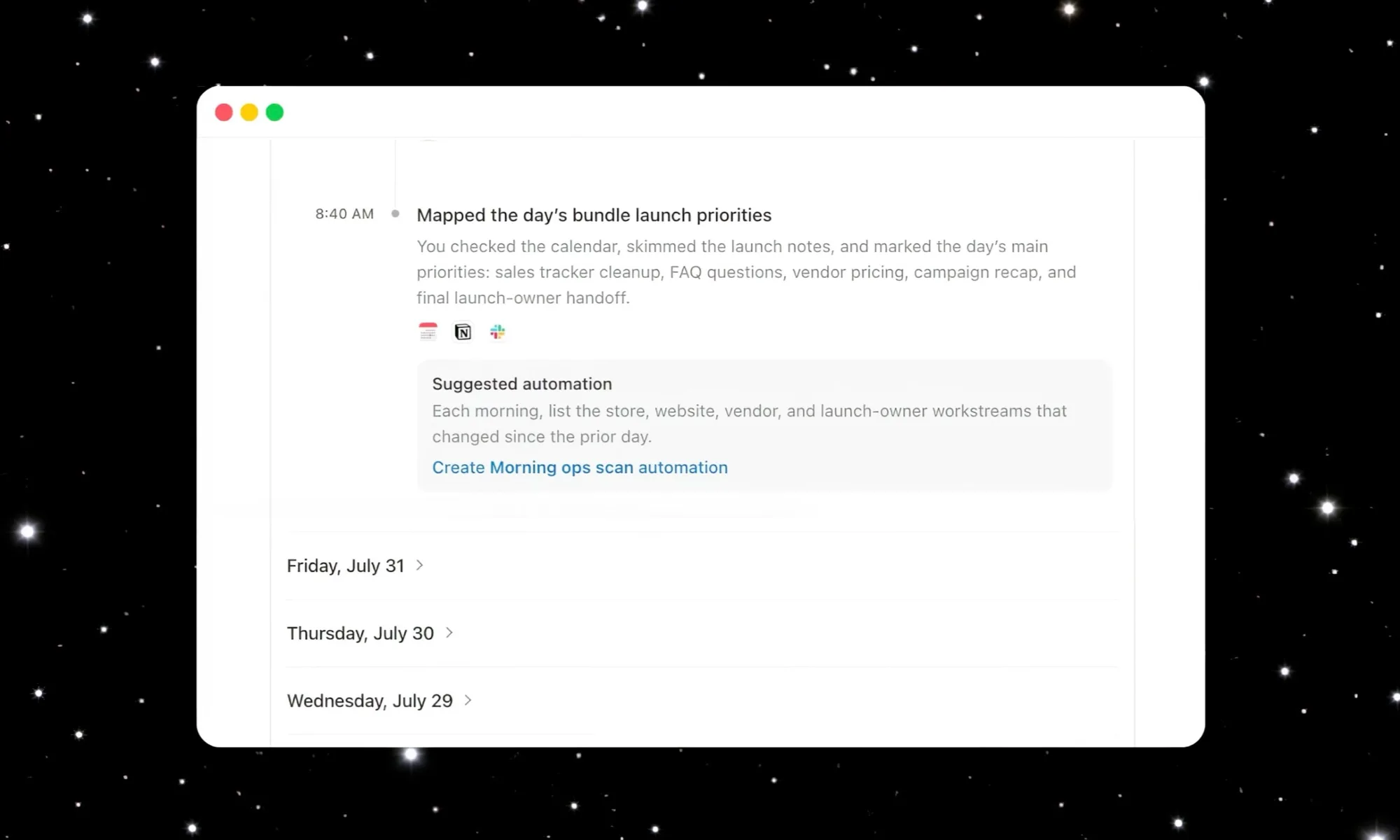
Instead of taking screenshots as Chronicle did, Computer History tracks your clicks, keystrokes, and app switches through macOS’s accessibility system, then turns all that activity into text summaries and a timeline you can scroll through. Think of it as ChatGPT quietly taking notes on your day so it can help you out later.

ChatGPT can now remember your activity across the apps and websites on your computer.

With Computer History in the desktop app, future interactions feel more personalized and require less explanation. pic.twitter.com/WHZPxPp31R

— OpenAI (@OpenAI) August 13, 2026

Advertisement

Once it’s turned on, you can ask ChatGPT things like what you were working on before your last break, or where that proposal document went. It digs through your recent activity and points you in the right direction instead of making you reconstruct your entire morning from memory.

If you find yourself doing the same task over and over, Computer History can notice the pattern and suggest turning it into a skill or automation. You just review the suggestion and let Codex build it out for you.

How do you turn it on, and is it actually private?

Computer History is off by default, and it stays that way until you flip the switch yourself. To turn it on, head to Settings → Integrations, and select Computer History to get started. You’ll also need Memories turned on, since that’s what lets ChatGPT actually use this context across your chats.

You get to pick exactly which apps and websites are allowed to contribute, and private browsing is never touched. There’s also a menu bar shortcut to pause collection whenever you want a break from being tracked, along with the option to delete your history at any time.

Advertisement

If you’re on a Business or Enterprise workspace, your admin needs to grant access first, and even then, you still have to opt in yourself. Pro users can enable it from the settings.

Overall, this feels like a solid privacy-first upgrade over Chronicle, and I like that OpenAI is giving users this much control over what gets remembered.

Source link

Advertisement
Continue Reading

Tech

Akira hackers disable EDR with Safe Mode, steal data but fail to encrypt

Published

on

Akira hackers disable EDR with Safe Mode, steal data but fail to encrypt

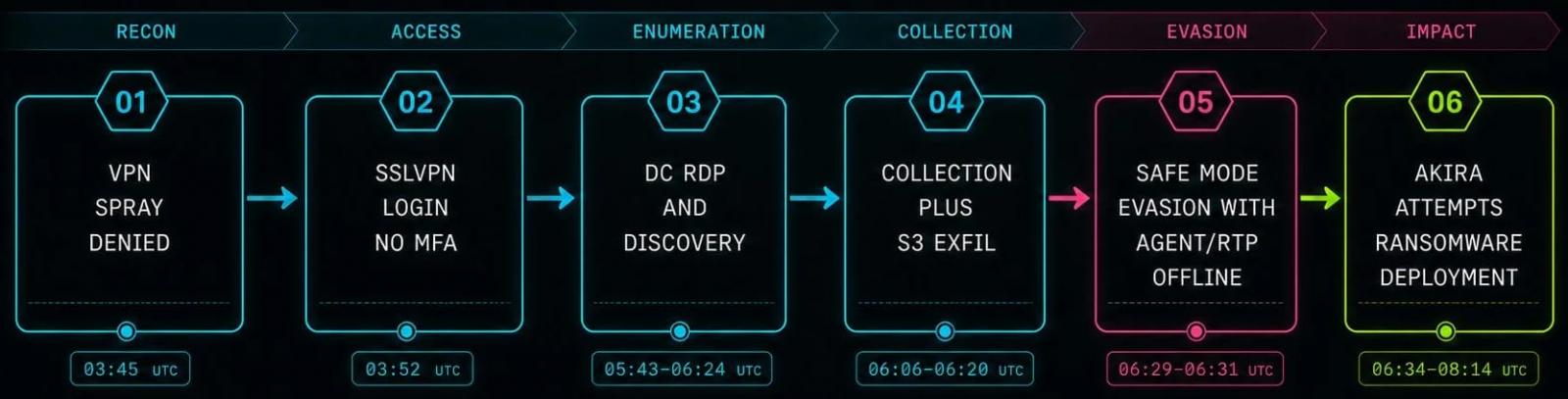
An Akira ransomware affiliate disabled the endpoint detection and response (EDR) solution on a compromised system by restarting the machine into Safe Mode with Networking.

The attack occurred on August 4 after the hacker obtained initial access through an exposed SonicWall VPN device without multi-factor authentication (MFA).

Managed detection and response (MDR) services company Huntress says that roughly two hours after a successful VPN login, the attacker connected to the domain controller via RDP, enumerated Active Directory users and computers, and then moved to an application server.

image

They used WinRAR to archive mapped file shares and the s5cmd command-line tool to upload the stolen data to an attacker-controlled S3 bucket, before installing AnyDesk for remote access.

At that stage, the attacker used AnyDesk to force the compromised host to boot into Safe Mode with Networking and disable both the Huntress agent and Microsoft Defender’s real-time protection.

Advertisement

Safe Mode is a Windows startup state designed for troubleshooting and diagnostic operations. It starts Windows with a limited set of drivers and services, generally preventing most third-party software and services from loading.

For 10 minutes while in Safe Mode, “the host had no working EDR, and AV was blinded,” Huntress says.

Meanwhile, the attackers added AnyDesk to Windows’ Safe Mode registry, allowing it to start after reboot and retain their remote access to the breached machine.

However, when they attempted to launch the main ransomware payload (akira.exe) via AnyDesk in Safe Mode, it failed to execute as the system reported low virtual memory and generated out-of-memory and PowerShell errors.

Advertisement
Akira attack flow
Akira ransomware attack flow
Source: Huntress

A scheduled Defender scan eventually detected the Akira executable, even if real-time protection was disabled in Safe Mode, but the security tool could not remove it while the machine remained in that mode.

Defender quarantined the file only after the attacker rebooted the system into normal mode, which restored real-time protection.

Despite the failure to encrypt files, the Akira operator still managed to steal credentials and files for data extortion, all in less than five hours from initial access.

Huntress notes that other ransomware families, such as Snatch and AvosLocker, have used this tactic for years, but this incident marks the first time the company observed it in an Akira attack.

The researchers recommend adding MFA to all VPN accounts, placing credential-spraying detection measures, and monitoring for Safe Mode boot configuration changes or remote-access tools being added to the Safe Mode service registry.

Advertisement

article image

Overall prevention scores can hide what happens after initial access. Once attackers are using valid credentials, prevention drops sharply.

The Blue Report 2026 measures defenses technique by technique across 338 million simulations run in customer production environments.

Get the report

Source link

Continue Reading

Tech

Investors eye $2trn Anthropic valuation in record IPO

Published

on

Fervour for a massive valuation comes as a result of Anthropic’s rapidly growing revenue, sources told the FT.

Investors expect Anthropic to be valued at $2trn or more in its October initial public offering, potentially doubling initial targets of $1trn and dwarfing SpaceX as the largest public listing in history.

Several of the company’s investors told the Financial Times (FT) that the fervour for a massive valuation comes as a result of Anthropic’s rapidly growing revenue, which reportedly hit nearly $11bn in the second quarter of this year – more than double the $4.8bn of the first quarter.

The AI giant, which filed to go public in June, is yet to fix on a valuation, the FT reported.

Advertisement

The company’s backers expect the five-year-old AI giant to reach an annualised revenue of between $100bn and $120bn this year.

Anthropic’s Claude AI products are repeat headline-makers as it competes for leadership in the space with its biggest rival OpenAI – which also hopes to go public – and the more recent crop of Chinese-made models taking the industry by storm with their cheaper alternatives.

Confident backers – including venture capitalists, other industry giants and institutional investors – have poured nearly $100bn into Anthropic just this year, fuelling the business as it looks to build its own AI chips to keep up with surging demand.

Last month, AMD pledged $5bn to Anthropic in a deal that also allows the AI giant access to 2GW of AMD’s latest-generation chips. In April, Amazon announced plans to pour up to $25bn into Anthropic, which in turn pledged to spend around $100bn over the next 10 years on the e-commerce juggernaut’s cloud technologies.

Advertisement

While Anthropic does not share details of how many use Claude, Statista placed it at around 245m monthly users as of June this year. Comparatively, OpenAI’s ChatGPT reached 1bn users in May.

Despite this, Anthropic trumped OpenAI’s valuation earlier this year, owing to its growing share of the more lucrative enterprise sector, where it has been capturing a higher volume of first-time users.

Earlier this year, the US government temporarily banned Anthropic from exporting two of its highly capable cybersecurity models over security concerns.

While that ban was eventually lifted after a little more than two weeks, sources told the FT that Anthropic’s June revenue suffered as a result. The company, however, rebounded at an “extraordinary rate” once the ban was lifted, they said.

Advertisement

Anthropic is separately embroiled in an ongoing legal battle with the US government over the banning of its products for official use.

Don’t miss out on the knowledge you need to succeed. Sign up for the Daily Brief, Silicon Republic’s digest of need-to-know sci-tech news.

Source link

Advertisement
Continue Reading

Tech

Thinking of a career in fintech? Then brush up on these skills

Published

on

The fintech space is moving along at an alarming pace, and these skills for staying informed and capable should be kept in mind.

In the rapidly evolving STEM space, it can sometimes feel as though the moment you have mastered a new skill or overcome an obstacle, a larger, more pressing challenge takes its place. It can be extraordinarily difficult to stay up to date on industry changes, but for ambitious jobseekers and professionals, falling behind is not an option.

The fintech space is no different. Modernisation, particularly in the area of digital assets and financial infrastructure, has resulted in an ecosystem where the vast majority of the work has moved online and the skills needed to stay informed have become increasingly complex.  

But that doesn’t mean that it is impossible to do so – in fact, now more than ever there are a myriad of fun, innovative and convenient ways to upskill, without breaking the bank. 

Advertisement

With that in mind, as part of SiliconRepublic.com’s August fintech and financial infrastructure coverage, here are some of the skills that you should definitely keep on your radar if you envision a long and successful career in this space. 

Keep it real

To start off, it is critical that in an evolved, automated and complex environment, where often you are dealing with deeply sensitive information, you have an arsenal of interpersonal skills. Many professionals or jobseekers in finance might assume that to get ahead, all you need are the technical skills and a decent understanding of the lingo. 

While this is an equally important component of a fintech or finance-based career, professionals looking for a robust skillset should ensure that they have strong communication skills, that they can address challenges and concerns with empathy, that they engage with private information ethically and that they can adapt to a rapidly changing sector. 

This adaptability will be evident in how you engage with new policies, tools, techniques and shifts in workplace expectations. Remember, your education, experience and qualifications are often what gets you the interview, but it is the soft skills and your attitude that indicate whether you are a good fit, not just for the industry but also the company or institution you are applying for, which will have its own set of values. 

Advertisement

Keep it relevant

Financial literacy is the bedrock of an education or career in fintech and financial infrastructure, as it enables the student or professional to understand core concepts and make informed decisions. Financial literacy gives those who possess it an evergreen, foundational knowledge of key topics such as budgeting, investing and borrowing, and it allows individuals to better understand an evolving marketplace. 

Online courses teaching financial literacy are an ideal resource, as are books, videos and essays covering the subject. Fintech applications and community organisations can also give professionals or students a learning outlet that feels more ‘real’, in comparison to a book or course, as activity occurs in-person or in real-time. While the industry is always changing, many of the core concepts stay the same, so don’t get distracted by the shiny new tools to the point that you forget the basics. 

Keep it skilful 

Since the evolution of coding towards a landscape where ‘vibe-coding’ and AI-powered programming do much of the work, some might consider traditional coding skills less important now. However, this couldn’t be further from the truth. As more and more roles become cross-collaborative and skill expectations evolve, coding capabilities give finance professionals an edge in an ecosystem that thrives on niche or under-represented skills.

Languages such as Python, Java and JavaScript are often used in the development of fintech platforms. Having the know-how to build an app and then deploy, maintain and use it has the potential to create an invaluable employee who is useful across multiple areas of an organisation. And it looks great on a CV or in a job interview, as it shows you are not confined by the typical skills expectations of a role. 

Advertisement

Keep it standing 

What is the point in having people skills, foundational skills or coding skills geared towards a fintech or finance-based career if your knowledge of the sector’s infrastructure is inherently weak?

Students and professionals eager to develop a strong career in this space should ensure that they have a strong understanding of the industry’s infrastructure. That includes, but isn’t limited to, banking systems (traditional and neo-banks), payment platforms, and the risk and compliance organisations that govern it all. Areas to prioritise include financial analysis, finance modelling skills, increased awareness of regulatory and political factors, and complex project management, among others.  

All in all, as long as you can say you are continuously learning and can show that you aren’t allowing your skills to atrophy, a good employer, who is serious about ensuring a candidate is a good fit, will reconsider the potential you bring. 

Don’t miss out on the knowledge you need to succeed. Sign up for the Daily Brief, Silicon Republic’s digest of need-to-know sci-tech news.

Advertisement

Source link

Continue Reading

Trending

Copyright © 2025