
Crypto World
‘Crypto Is Dead’ Talk Is Rising; Could Peak Fear Be a Contrarian Signal?


The market has been in a rough patch for some time. The total crypto market capitalization is down 1.1% today, falling to $2.17 trillion, as pessimism continues to grow. The mood has been getting darker as prices struggle to regain momentum and traders become increasingly cautious.
At the same time, crypto “dead” chatter is rising again across X, Reddit, Telegram, and other crypto channels.
“Dead, Dying, Finished”
Terms such as dead, dying, over, ended, ending, and finished are gaining traction. According to Santiment’s latest update, this language reflects fear and often appears as retail patience weakens, prices remain stuck, and traders view temporary weakness as lasting failure.
Crypto markets can move against the crowd when bearish views become too certain. If “crypto is dead” talk rises while Bitcoin holds key levels, stronger hands continue accumulating, and forced selling declines, the market structure can become more attractive for patient buyers, the analytic firm explained.
Bitcoin has had its obituary written many times before, but it has repeatedly bounced back and gone on to deliver strong returns. The cryptocurrency once existed largely as a sideshow in the underbelly of the internet. Over time, however, it moved from the fringes into the center of mainstream finance. Now, despite all that attention and acceptance, Bitcoin is facing another period of weakness. Its price has been stuck around $63,000 for weeks, bringing back the familiar debate over whether it has lost its momentum.
The latest wave of fear is worth watching, especially as some investors see opportunity instead. In a recent tweet, Crypto Patel said investors calling Bitcoin “dead” may be missing the bigger picture. Retail traders often see fear when prices weaken. But, according to the analyst, whales may see the same period as a long-term BTC accumulation zone.
This trend is evident in recent reports, which also suggest that the largest wallets are growing again. The number of wallets holding at least 10,000 BTC returned to a six-month high. There are currently 90 such wallets, up by six over the past eight weeks. During this period, holdings among micro wallets have declined in August.
Collapsing Sentiment
Chiming in on the growing narrative, another market watcher, Allen Rodgers, said the trend is worth watching because similar spikes in the narrative have appeared during periods of extreme fear, often when the asset was close to finding a bottom. According to Rodgers, the pattern usually starts with the crowd turning bearish and social sentiment collapsing. The market can then begin to turn before traders feel comfortable buying again.
“Then the market starts turning before anyone feels comfortable buying. Not saying history has to repeat. But when everyone starts calling the same market ‘dead’ again…”
The post ‘Crypto Is Dead’ Talk Is Rising; Could Peak Fear Be a Contrarian Signal? appeared first on CryptoPotato.

Crypto World
Bitcoin (BTC) price slips as U.S. PPI fails to spark gains, ETFs see August’s first two-day drawdown
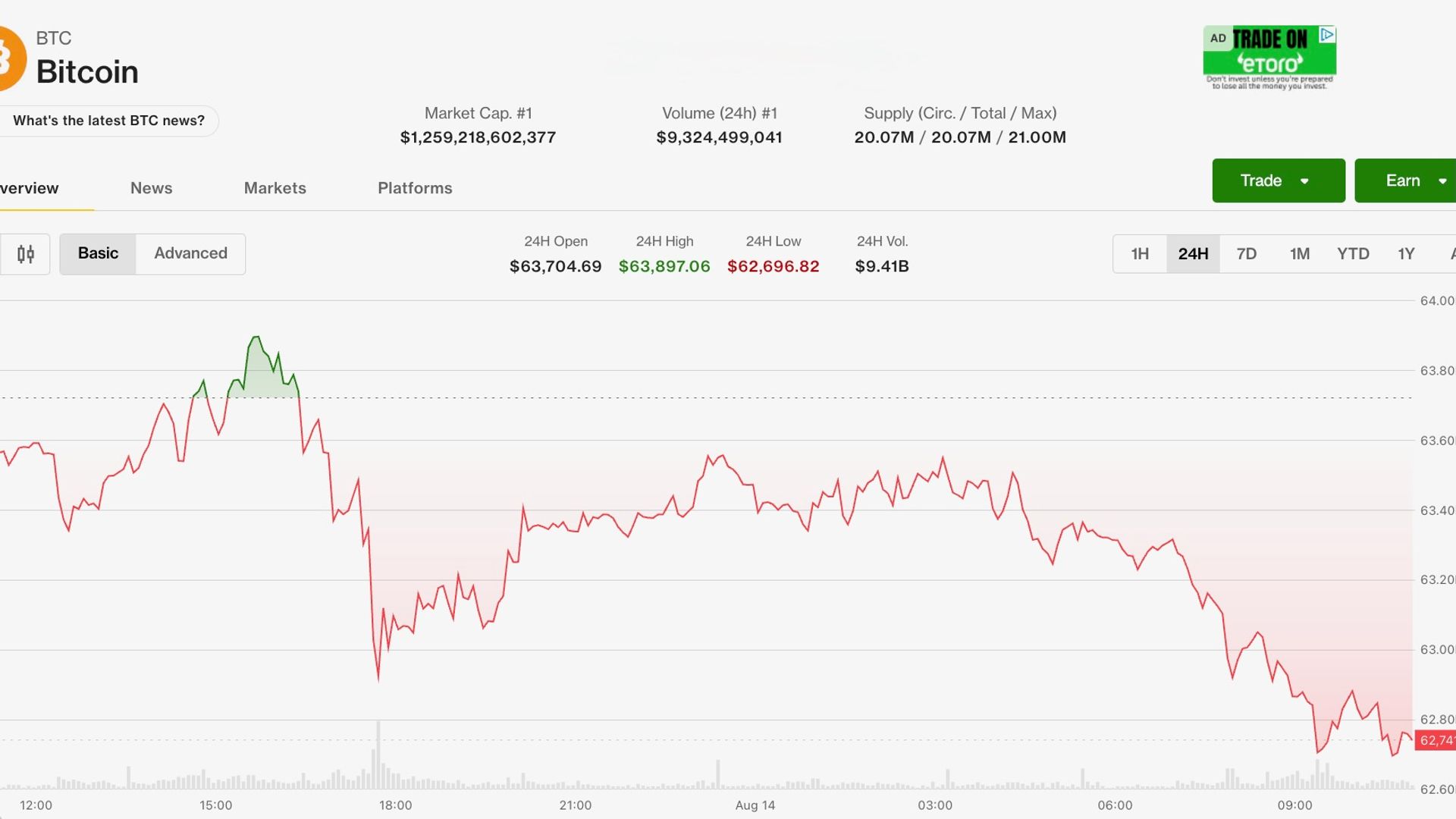
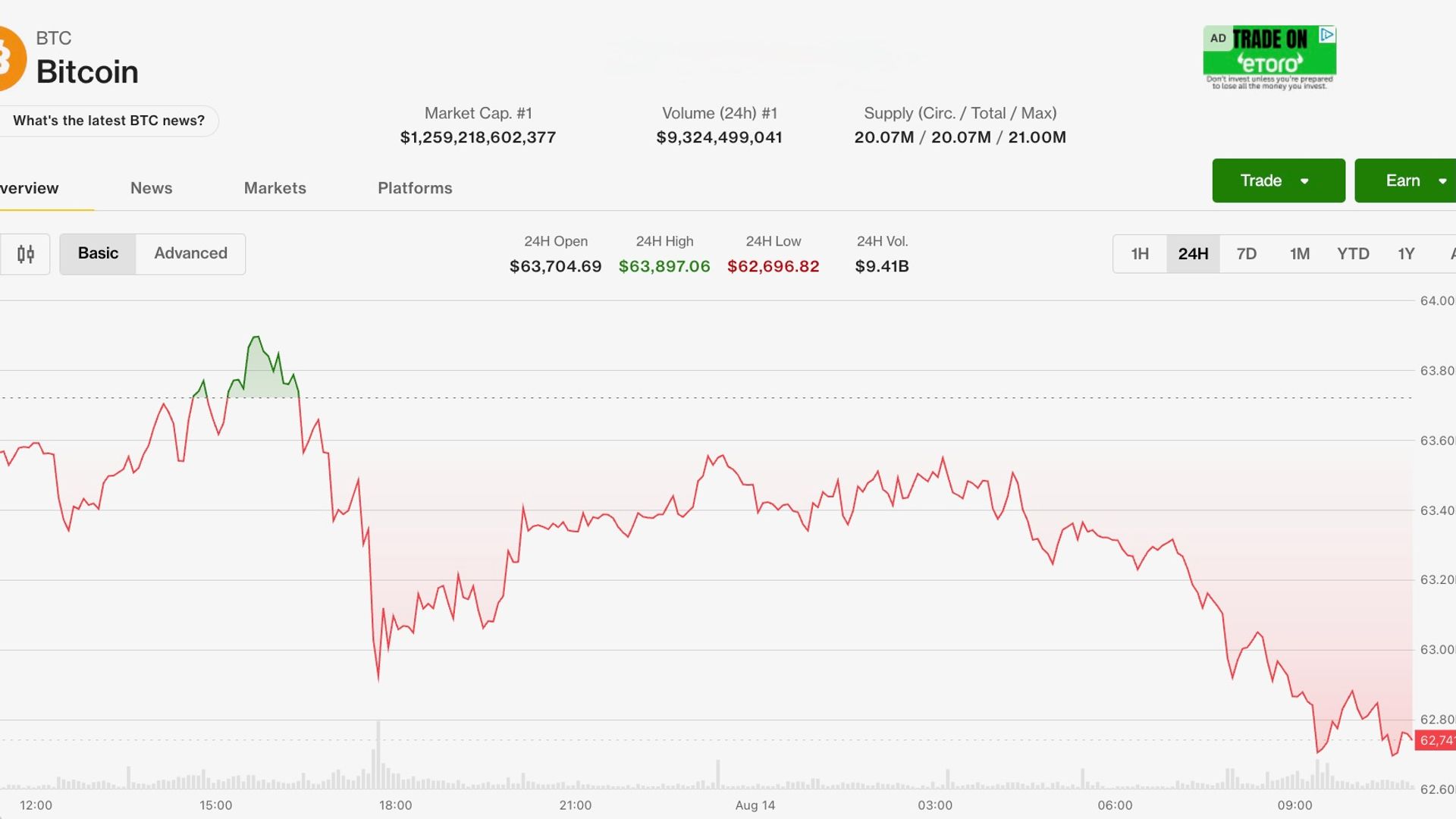
Bitcoin dropped below $63,000, losing 1.14% since midnight UTC as a second day of outflows from spot exchange-traded funds and a lack of bullish catalysts weighed on the crypto market.
Spot bitcoin ETFs experienced the first back-to-back days of outflows since late July with $192 million exiting the products, according to SoSoValue.
The largest cryptocurrency is now trading at its lowest point since Aug. 3 having wiped out all of last week’s rally. Ether is down by 0.73% since midnight, while a portion of the altcoin market continues to show resilience, outperforming crypto majors.
U.S. equities were boosted on Thursday by producer price inflation data, which cooled to 4.7%, below forecasts. The S&P 500 and Nasdaq 100 both rallied following the report, and futures on the indexes remain marginally in the black.
Derivatives positioning
- Futures churn continues: While the crypto market is under pressure, the long-short taker ratio in futures remains balanced, with longs accounting for half of the flow. 24-hour volume growth is again outpacing open interest (OI) growth by a wide margin. That’s a sign of churn rather than fresh positioning.
- BCH sees heaviest fresh shorting: Futures tied to Bitcoin Cash are the biggest OI gainer of the past 24 hours, adding 10% to 1.64 million tokens as the spot price drops 3%. That combination points to short positions being built up. Deeply negative annualized funding rates support that interpretation. The 24-hour OI-adjusted cumulative volume delta (CVD) is negative too, signaling that shorts are trading more aggressively via market orders rather than passive limit orders. Together, these signals point to positioning for a deeper selloff in the token.
- BTC OI rises alongside falling price: Bitcoin is another OI gainer, with the tally rising over 3% to 765,000 BTC alongside a negative CVD. Annualized funding rates, however, still hold mildly positive.
- HBAR shows the clearest bearish tilt: The token’s 24-hour CVD is the most negative among the top 25 coins, with funding rates around -20%, pointing to a market clearly dominated by bears. More broadly, all the top 25 are showing negative CVD.
- Bitcoin volatility cools: BTC’s 30-day implied volatility index, BVIV, fell back below 36%, erasing a spike to nearly 39% earlier this week. That points to continued investor interest in overwriting strategies — approaches aimed at generating extra yield on top of spot holdings. Ether’s equivalent index, EVIV, is showing the same pattern.
- Options positioning stays mixed: On Deribit, BTC calls at the $70,000, $69,000 and $67,000 strikes rank among the five most-traded bets. For ETH, puts at the $1,700 and $1,780 strikes ranked higher instead.
Token talk
- Ether.fi (ETHFI) is the standout performer over the past 24 hours, rallying by 11.5% after adding tokenized stocks and DeFi loans to its neobank platform. The token gave back some of the gains on Friday, dropping 3.3%.
- Cosmos also experienced upside. The token surged by more than 10% in 24 hours and trading volume jumped by 232% to $51 million despite the absence of a clear news catalyst.
- Fetch.ai and monero (XMR) extended their positive weeks, rising 0.55% and 0.81%, respectively, since midnight UTC.
- NEAR, MORPHO, TAO and JUP all lost around 2% since midnight as cautious sentiment remains the dominant theme across the crypto market.
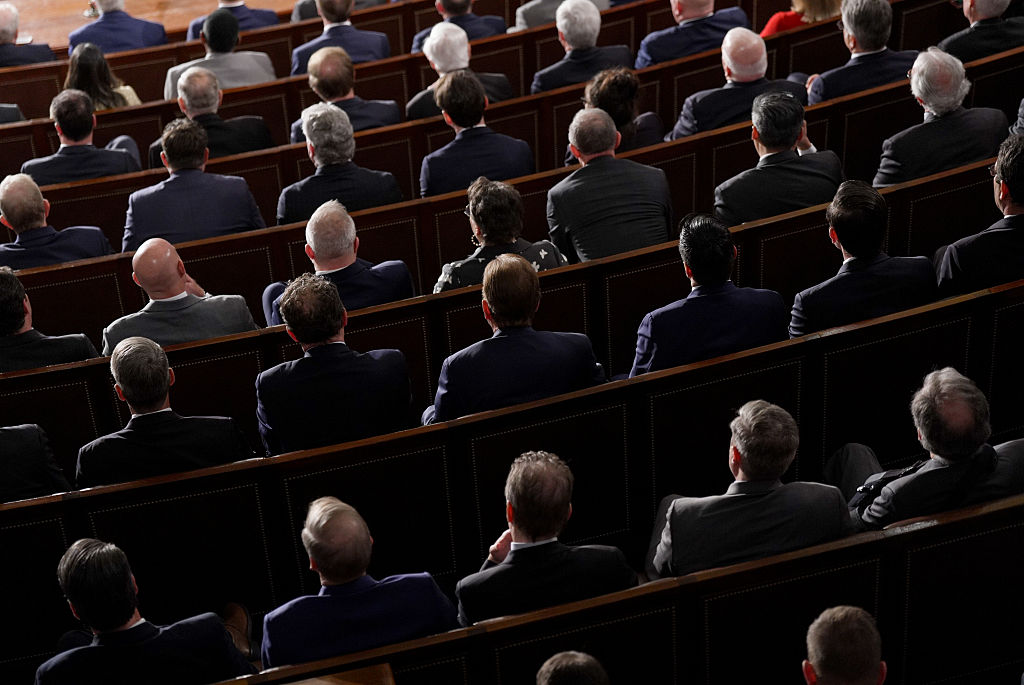
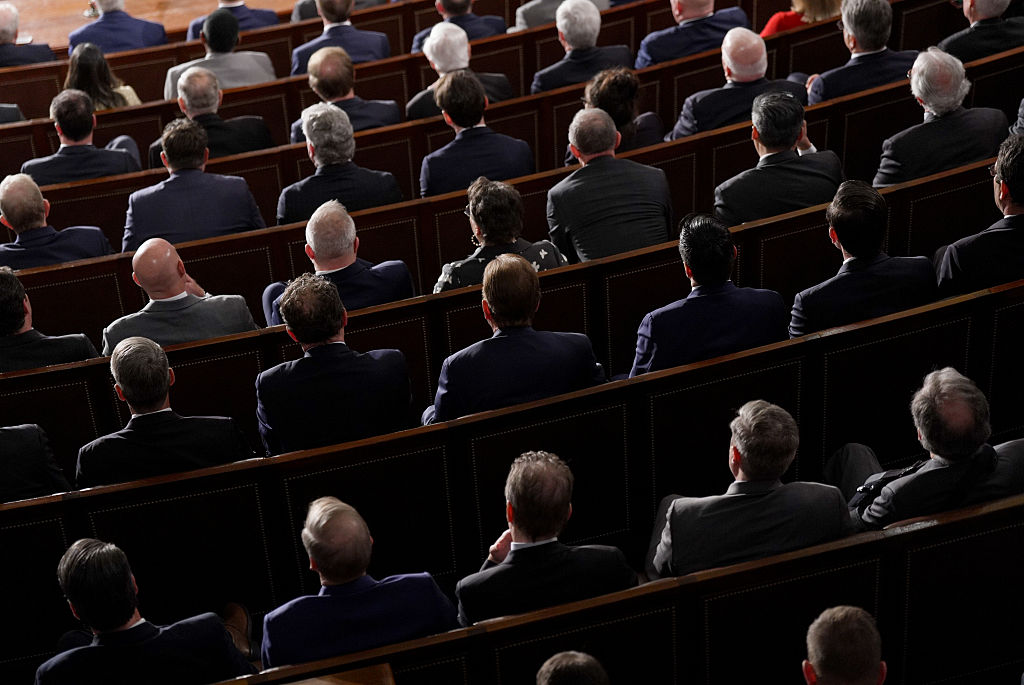
The 120th Congress is set to feature an unusually large number of new faces.
Ahead of the November elections, at least 83 incumbents across the U.S. House and the Senate won’t be returning to their seats.
Even now, the 119th Congress already looks different from when it began in January 2025, after a handful of resignations as well as deaths.
But the expected turnover at the end of the term will be even higher. The reasons vary: some members announced their retirement after decades of service, others have sought different offices. More than usual have lost primaries.
According to Ballotpedia, as of July, the number of lawmakers not seeking reelection is the highest since 2000.
According to a TIME analysis, as of Aug. 13, at least 70 sitting House representatives—30 Democrats and 40 Republicans—are not returning for another term. In the Senate, 13 incumbents also don’t plan to return next year, including one appointed this March, Sen. Alan Armstrong, to replace the seat vacated by now-Secretary of Homeland Security Markwayne Mullin. These counts do not include the 16 lawmakers who have resigned from or died during the 119th Congress.
With some primaries still underway, not to mention the November general elections in which every House seat and 35 Senate seats are up for a vote, the number of new faces expected in the upcoming Congress will only increase.
Here’s an overview of the lawmakers so far who won’t be returning in the next Congress.
Retirements
In the upper chamber, 10 Senators have announced their retirement. These include Republican stalwarts Mitch McConnell of Kentucky, whose recent health issues have raised questions of fitness for office, and Thom Tillis of North Carolina, an intraparty critic of President Donald Trump. Sen. Armstrong, who took over the seat vacated by Mullin, has said he will serve only until the end of Mullin’s term, which ends in January. Joining them are Sen. Steve Daines of Montana, Sen. Joni Ernst of Iowa, and Sen. Cynthia Lummis of Wyoming. On the Democratic side, Sen. Dick Durbin of Illinois, Sen. Gary Peters of Michigan, Sen. Jeanne Shaheen of New Hampshire, and Sen. Tina Smith of Minnesota have also said they will retire.
In the lower chamber, 32 sitting representatives—or almost half of those not seeking reelection—are retiring. Among them is Speaker Emerita Nancy Pelosi (D, Calif.).
Read More: The Colossal, Unexpected Career of Nancy Pelosi
Others who have announced their retirement are Reps. Mark Amodei (R, Nev.), Jodey Arrington (R, Texas), Don Bacon (R, Neb.), Julia Brownley (D, Calif.), Vern Buchanan (R, Fla.), Steve Cohen (D, Tenn.), Danny Davis (D, Ill.), Lloyd Doggett (D, Texas), Neal Dunn (R, Fla.), Chuck Edwards (R, N.C.), Dwight Evans (D, Pa.), Darrell Issa (R, Calif.), Chuy García (D, Ill.), Jared Golden (D, Maine), Sam Graves (R, Mo.), Steny Hoyer (D, Md.), Barry Loudermilk (R, Ga.), Michael McCaul (R, Texas), Morgan Luttrell (R, Texas), Jerry Nadler (D, N.Y.), Troy Nehls (R, Texas), Dan Newhouse (R, Wash.), Burgess Owens (R, Utah), Jan Schakowsky (D, Illinois), Elise Stefanik (R, N.Y.), Marc Veasey (D, Texas), Nydia Velázquez (D, N.Y.), Bonnie Watson Coleman (D, N.J.), Daniel Webster (R, Fla.), Frederica Wilson (D, Fla.), and Ryan Zinke (R, Mont.).
Delegate Eleanor Holmes Norton (D, D.C.), a non-voting member of the House, is also set to retire.
Resignations
The 119th Congress also saw several resignations.
Mike Waltz was reelected for a fourth term as representative of Florida’s 6th district in 2024 but resigned from the 119th Congress days after it opened to join the Trump Administration, first as national security adviser, then as U.S. ambassador to the U.N.
Mikie Sherrill, who represented New Jersey in the House since 2019, resigned from the chamber in November 2025 after winning the state’s gubernatorial election.
Marjorie Taylor Greene, a MAGA stalwart who represented Georgia, left office earlier this year amid a dramatic fallout with President Trump, and Mark Green, a Republican who represented Tennessee, left in 2025 in what he said was a “business decision.”
Other resignations were mired in ethics-related scandals: former Reps. Eric Swalwell (D, Calif.) and Tony Gonzales (R, Texas) abruptly left office amid threats of expulsion due to sexual misconduct allegations, while Rep. Sheila Cherfilus-McCormick (D, Fla.) also quit amid questions about her campaign finances.
Deaths
Five House representatives died during the 119th Congress: Rep. Gerry Connolly (D, Va.) at age 75, Rep. Raúl Grijalva (D, Ariz.) at 77, Rep. Doug LaMalfa (R, Calif.) at 65, Rep. David Scott (D, Ga.) at 80, and Rep. Sylvester Turner (D, Texas) at 70.
The lone Senator to have died in office this Congress was Sen. Lindsey Graham of South Carolina, a Republican fixture in the Capitol since 1995 and a Trump critic-turned-ally until his death in July at age 71.
Seeking other office
Twenty-eight members of Congress—27 representatives and Sen. Tommy Tuberville (R, Ala.)—announced that they were giving up their current seats to pursue another office. So far, 13, including five Democrats and eight Republicans, have lost those campaigns for new offices in primaries.
Six Republican House members have secured the Republican nomination for seats in the upper chamber: Andy Barr in Kentucky, Ashley Hinson in Iowa, Barry Moore in Alabama, Mike Collins in Georgia, Julia Letlow in Louisiana, and Kevin Hern in Oklahoma. Other Senate aspirants fell short: Rep. Buddy Carter lost to Collins in the Georgia primary, while Rep. Wesley Hunt (R, Texas) lost the Texas primary to state attorney general Ken Paxton.
Three other GOP representatives—Arizona’s Andy Biggs, Michigan’s John James, Wisconsin’s Tom Tiffany—as well as Tuberville have secured their party’s nominations in their respective gubernatorial races. Reps. David Schweikert (R, Ariz.), Dusty Johnson (R, S.D.), John Rose (R, Tenn.), Nancy Mace (R, S.C.), and Randy Feenstra (R, Iowa) lost their gubernatorial primaries. Rep. Chip Roy (R, Texas) also lost the Republican primary runoff for state attorney general.
On the Democratic side, several House members have lost Senate bids to progressives. In Minnesota’s Democratic Senate primary, moderate Rep. Angie Craig was defeated by Peggy Flanagan. And in Michigan’s expensive Senate primary, Rep. Haley Stevens narrowly lost to Abdul El-Sayed. In Illinois, Democratic Reps. Raja Krishnamoorthi and Robin Kelly lost the Senate primary to Lt. Gov. Juliana Stratton, who had the backing of Gov. J.B. Pritzker. In Texas, Rep. Jasmine Crockett, who announced her run for Senate after a Republican-led redistricting push placed her residence out of her existing district, ultimately lost in the Democratic primary to state representative James Talarico.
No Democratic lawmakers seeking other office have won their primaries so far, though some departing congressmembers on both sides are still awaiting primaries. On Aug. 18, Trump-endorsed Rep. Byron Donalds (R, Fla.) will compete for Florida’s Republican gubernatorial nomination, and Trump-endorsed Rep. Harriet Hageman (R, Wyo.) will seek the Republican nomination for Lummis’s seat. On Aug. 25, Rep. Ralph Norman (R, S.C.), who entered the special election for Graham’s seat after losing the state’s gubernatorial primary, will face Graham’s sister interim-Sen. Darline Graham, who has received Trump’s endorsement. On Sept. 1, moderate Rep. Seth Moulton (D, Mass.) will challenge 80-year-old progressive Sen. Ed Markey in a competitive primary. The final primary contest comes on Sept. 8 in New Hampshire, where Rep. Chris Pappas is favored to win the Democratic nomination for retiring Sen. Shaheen’s seat, potentially setting up a key battleground in the general election.
Reelection primary losses
Twelve incumbents lost their party’s nomination while seeking reelection, an unusually high count with several primaries still to go. House incumbents historically win more than 98% of the time when they seek another term. The 10 House losses so far already exceed the average of 6.5 per cycle since World War II. Seven Democratic incumbents have lost their primaries so far, already tying with 2012 for the most Democratic House incumbent defeats this century.
Democratic primaries have been shaped by a progressive revolt against the party establishment. Brad Lander and Darializa Avila Chevalier, both endorsed by New York Mayor Zohran Mamdani, respectively defeated incumbent Reps. Dan Goldman and Adriano Espaillat. In Michigan, state representative Donavan McKinney, backed by the Democratic Socialists of America, unseated Rep. Shri Thanedar. In Colorado, 29-year-old democratic socialist Melat Kiros toppled 15-term Rep. Diana DeGette for the party nomination. Democrats are favored to win all four races, according to Cook Political Report.
In a campaign centered more on generational change than ideological difference, 47-year-old former Hartford Mayor Luke Bronin beat 78-year-old, 14-term Rep. John Larson to secure the nomination in Connecticut’s 1st Congressional District earlier this week.
Other Democratic races took place amid a broader redistricting push. In Texas, new Republican-drawn maps pitted 78-year-old Rep. Al Green against 38-year-old freshman Rep. Christian Menefee, the latter of whom ended up winning their primary runoff for a Houston-area district. Also in Texas, Rep. Julie Johnson, whose 32nd district was redrawn to favor Republicans, ran instead in the 33rd district, where she lost in the primary runoff to former Rep. Colin Allred.
Republican primaries, meanwhile, have appeared largely to be tests of loyalty to Trump. In Texas, Trump-endorsed Paxton beat four-term Sen. John Cornyn in the most expensive Senate primary in history. Sen. Bill Cassidy (R, La.), whose vote to convict Trump over the Jan. 6, 2021, Capitol attack became a defining issue in his race, also lost renomination after he failed to advance to the runoff, which was ultimately won by Trump-endorsed Rep. Letlow.
Reps. Thomas Massie (R, Ky.) and Dan Crenshaw (R, Texas) also lost their reelection bids. Massie lost to Trump-backed challenger Ed Gallrein after repeatedly criticizing the President over his foreign policy moves, federal spending, and the Epstein files. Crenshaw, who criticized Trump over the Capitol attack and supported aid to Ukraine, lost to conservative Texas state representative Steve Toth.
In a rare defeat for a Trump-endorsed incumbent, Rep. Andy Ogles (R, Tenn.) lost the Republican primary to Charlie Hatcher, who benefited from a redrawn, more rural district and heavy outside spending from a clean-energy super political action committee.


Credit card and staking revenue drove Gemini’s services growth in Q2 as exchange revenue fell 38% and trading volume dropped by two-thirds.
Crypto World
Bitcoin’s (BTC) Defining Moment, Ethereum’s (ETH) Potential, and More: Bits Recap August 14

The formation of a certain setup suggests that BTC could be gearing up for a major price move, yet the exact direction can’t be predicted.
One popular analyst believes the current conditions present an ideal opportunity to invest in ETH, while Cardano’s ADA has lost momentum and might be headed for a substantial decline.
Up or Down for BTC?
The primary cryptocurrency has been hovering in the narrow range of $63,000-$65,000 over the past week, currently trading just south of the lower boundary. The X account Barchart claimed that the minor volatility has resulted in a huge squeeze of the Bollinger Bands.
The technical indicator, created by John Bollinger in the 1980s, features a moving average framed by two channels (upper and lower) that widen in turbulent markets and contract when things calm down.
Tightening the bands is usually a precursor to a big move, but it remains unclear whether it will be up or down, with historical data showing mixed signals. In March, the Bollinger Bands (on a monthly scale) tightened like never before, and shortly after, BTC plunged from approximately $75,000 to roughly $65,000.
It was a completely different story in May last year. The bands squeezed at a time when the asset was worth around $95,000 and, weeks later, exploded above $110,000.
Time to Buy ETH?
The second-largest cryptocurrency has been trading well below $2,000 for the past few months, with many traders and investors perhaps anticipating further declines that can confirm the cycle’s bottom. Analyst Michael van de Poppe believes the moment will never come, arguing that the ideal time to hop on the ETH bandwagon is right now.
“It’s always awkward to be positioning yourself into a position, as that’s the purpose of the markets. Previous breakouts of the market have resulted in generally big returns, as ETH is known for volatile movements. In that sense, last time a 60% breakout in less than a week took place. In 2023, the same happened,” he said.
Ali Martinez and Gerla also gave their two cents on the matter. The former thinks the June fall to $1,580 was the launchpad for a potential uptrend, setting $3,000 as the target. The latter was even more optimistic, envisioning a price explosion to a new all-time high of $10,000.
ADA Hits a Wall
Cardano’s native cryptocurrency started August on the right foot, eventually pumping to nearly $0.21 (the highest mark since early June). During its uptrend, the asset was the subject of numerous bullish predictions, with some commentators expecting a surge to $3.
However, the bears regained control, and overall sentiment shifted drastically. Ali Martinez paid attention to factors such as the declining number of whales, the formation of a death cross between Cardano’s MVRC ratio and its 7-day simple moving average, and the sell signal on the TD Sequential indicator to predict a potential plunge as low as $0.145.
Sjuul | AltCryptoGems also presented a cautious outlook. He claimed that ADA had “a nice run, but it seems in trouble now,” as “the structure is breaking bearishly, with a fresh lower low.”
The post Bitcoin’s (BTC) Defining Moment, Ethereum’s (ETH) Potential, and More: Bits Recap August 14 appeared first on CryptoPotato.


Citigroup CEO Jane Fraser has backed passage of the CLARITY Act while continuing to push for changes to its stablecoin reward rules, keeping the banking industry’s main concern with the crypto bill alive ahead of a Senate procedural vote expected next month.
Summary
- Citigroup CEO Jane Fraser supports passing the CLARITY Act but wants changes to its stablecoin reward rules.
- Fraser warned that stablecoin rewards could pull deposits from banks and reduce their ability to provide credit.
- A Senate compromise would ban rewards for simply holding stablecoins while allowing incentives tied to payments and transactions.
- The stablecoin yield dispute remains a key issue between banks and crypto firms ahead of the Senate vote.
Fraser told Fox Business on Thursday that Citigroup still wants lawmakers to improve parts of the legislation, but she supports getting a workable version through Congress because she believes the bill would benefit the financial system.
“So, we have not given up on pushing to get some improvements made to the bill, but we would like to see a good bill go through,” Fraser said. “I think it would be excellent for the system.”
Her support puts Citigroup in a less confrontational position than some other large banks, even as Fraser shares their concern over whether crypto platforms should be allowed to offer rewards tied to stablecoins.
Citigroup CEO says stablecoin rewards could affect bank deposits
Fraser’s main concern centers on the effect that stablecoin rewards could have on deposits held by U.S. banks, particularly institutions that rely on those funds to finance lending in communities with fewer credit options.
“If you are having a reward system on deposits, it could have a detrimental impact on their deposits, and therefore their ability to provide lending and access to credit in parts of the U.S. that crypto won’t reach, and frankly, the large banks don’t reach,” Fraser said. “So, I am worried about it from that perspective.”
Banking groups have made a similar argument during negotiations over the CLARITY Act. In July, the American Bankers Association, Independent Community Bankers of America and 76 state banking associations asked Senate leaders to tighten Section 404 before the legislation reached the floor.
As crypto.news reported in July, the groups warned that unclear reward provisions could encourage customers to move money from traditional bank accounts into payment stablecoins, reducing the deposits available to community lenders.
The dispute stems partly from the way stablecoin rewards are structured. The GENIUS Act, passed in 2025, prevents payment stablecoin issuers from directly paying interest or yield to holders. Crypto exchanges and other service providers, however, have used rewards programs that can pass benefits to users through arrangements not directly offered by the stablecoin issuer.
Banking groups have argued that customers may see little practical difference between interest paid by a bank and rewards received for keeping stablecoins on a crypto platform.
CLARITY Act compromise allows activity-based rewards
Senators Thom Tillis, R-N.C., and Angela Alsobrooks, D-Md., have tried to address the dispute through compromise language that separates passive yield from rewards linked to actual platform activity.
The proposal bars platforms from paying rewards simply because a customer holds a stablecoin. It still permits certain incentives connected with transactions, payments and other qualifying activities.
The compromise language circulated among crypto and banking representatives earlier this year after Tillis and Alsobrooks reached an agreement in principle in March. The draft prohibited passive yield while retaining activity-based rewards tied to payments, transfers or platform use.
A revised 309-page version released by the Senate Banking Committee in May retained that basic structure, allowing activity-based stablecoin rewards while prohibiting passive yield for simply holding the asset.
Lawmakers developed the language after months of disagreement between banks and crypto companies over whether third-party rewards would undermine the restrictions already placed on stablecoin issuers.
Banking groups remained dissatisfied after the compromise emerged. The American Bankers Association, Bank Policy Institute, Consumer Bankers Association, Financial Services Forum and Independent Community Bankers of America said in May that the revised provisions still did not adequately protect deposits.
The groups argued that incentives calculated using factors such as balances or holding periods could function much like deposit interest even if they were formally presented as rewards.
Crypto companies have taken the opposite position, arguing that restrictions extending beyond passive interest would prevent platforms from rewarding customers for legitimate activity.
Coinbase Chief Policy Officer Faryar Shirzad said during the May negotiations that banks had secured tighter restrictions while the compromise preserved rewards tied to actual use of crypto platforms and networks.
Stablecoin yield fight has divided banks and crypto firms
The dispute has become one of the most persistent issues surrounding the CLARITY Act, with banking organizations warning about deposit losses while crypto firms have pushed to preserve rewards that do not amount to passive interest.
Earlier this year, banking groups stepped up their lobbying as lawmakers prepared the legislation for Senate consideration. An American Bankers Association campaign sent thousands of messages to Senate offices as the industry sought changes to the stablecoin provisions.
Bank of America CEO Brian Moynihan has previously estimated that as much as $6 trillion could eventually move from bank deposits into stablecoins under a regulatory structure that lets the tokens compete more directly for customer cash.
The banking industry’s concerns extend to the lending consequences of such an outflow. Banks use deposits as a source of funding for mortgages, business loans and other credit, while stablecoin reserves are commonly held in cash, short-term U.S. Treasuries and similar liquid assets.
Crypto industry representatives dispute the scale of the risk. The White House Council of Economic Advisers challenged the deposit argument in April, estimating that prohibiting stablecoin yield would increase traditional bank lending by about $2.1 billion, or roughly 0.02% of total loans.
The council estimated that 76% of the additional lending associated with a yield ban would flow through large banks, undercutting claims that restrictions were primarily needed to protect smaller community institutions.
Coinbase CEO Brian Armstrong has also argued that banks are seeking to limit competition from stablecoins. During the negotiations, he accused large banks of trying to prevent consumers from receiving returns generated by stablecoin reserve assets.
Under the 2025 GENIUS Act framework, issuers must maintain qualifying reserves for payment stablecoins and cannot directly pay holders interest. Platforms such as Coinbase have offered rewards through separate programs, making the treatment of third-party incentives a central issue in the CLARITY Act talks.
Jamie Dimon has taken a harder position on the CLARITY Act
JPMorgan Chase CEO Jamie Dimon has gone further than Fraser in opposing the legislation as currently written.
During a Fox Business interview in May, Dimon said banks would fight the CLARITY Act because he believed its stablecoin provisions allowed crypto firms to provide interest-like returns without protections comparable to those imposed on banks. He said the industry would continue opposing the legislation even if it ultimately lost the vote.
Dimon also criticized Armstrong’s lobbying campaign during the interview, calling the Coinbase CEO “full of sh–” after the host referred to Armstrong’s claim that he represented the crypto industry’s position.
Fraser’s comments leave Citigroup supporting passage while seeking changes to the same issue that has driven much of the banking industry’s opposition.
The next procedural test is expected after lawmakers return from the Senate’s August recess. Senate Majority Leader John Thune has scheduled a cloture vote for Sept. 15, moving the initial vote into September after earlier delays.
Crypto World
Trump family ‘s World Liberty Financial (WLFI) delay plans to sell Maldives resort token


World Liberty Financial, the cryptocurrency project backed by the Trump family, delayed plans to sell a token related to a resort in the Maldives, Bloomberg reported on Friday.
The token was planned to go on sale next year, giving investors a share of revenue from loans financing the Trump-branded resort, but this has been pushed back due to the Iran war disrupting travel in the region, according to the report, citing people familiar with the matter.
World Liberty Financial tapped real-world asset (RWAs) platform Securitize in February to help represent loan interests tied to the resort’s development as a digital token that could be traded onchain.
It is unclear when the token will now be listed.
The venture is part World Liberty Financial’s plans in tokenization, the representation of RWAs on blockchains in token form. WLFI is exploring this concept not just in real estate, but in commodities like oil and gas.
A World Liberty Financial spokesperson declined to comment, according to Bloomberg’s report. The company did not immediately respond when contacted by CoinDesk for additional comment.
The protocol’s native token WLFI rose by 2.7% on the news before giving back all of the gains and returning to parity. It is now down by 88.5% from its record high in September, 2025.


Cointelegraph is committed to providing independent, high-quality journalism across the crypto, blockchain, AI, and fintech industries.
All news, reviews, and analyses are produced with full journalistic independence and integrity. For more details on our standards and processes, please read our Editorial Policy.
Crypto World
Volatility exits crypto, TradFi markets even as U.S.-Iran risks linger, sovereign debt rises: Crypto Daily
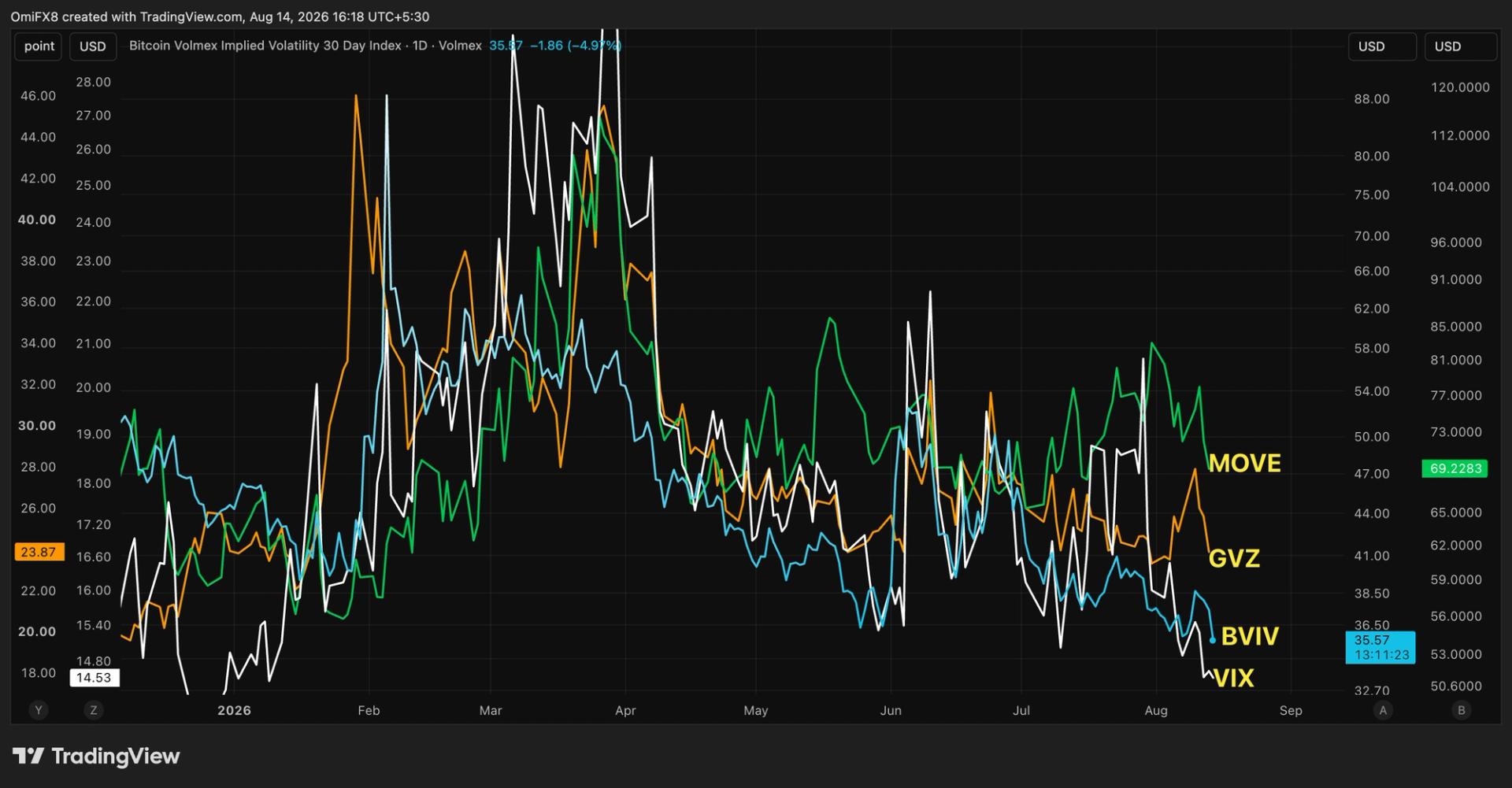
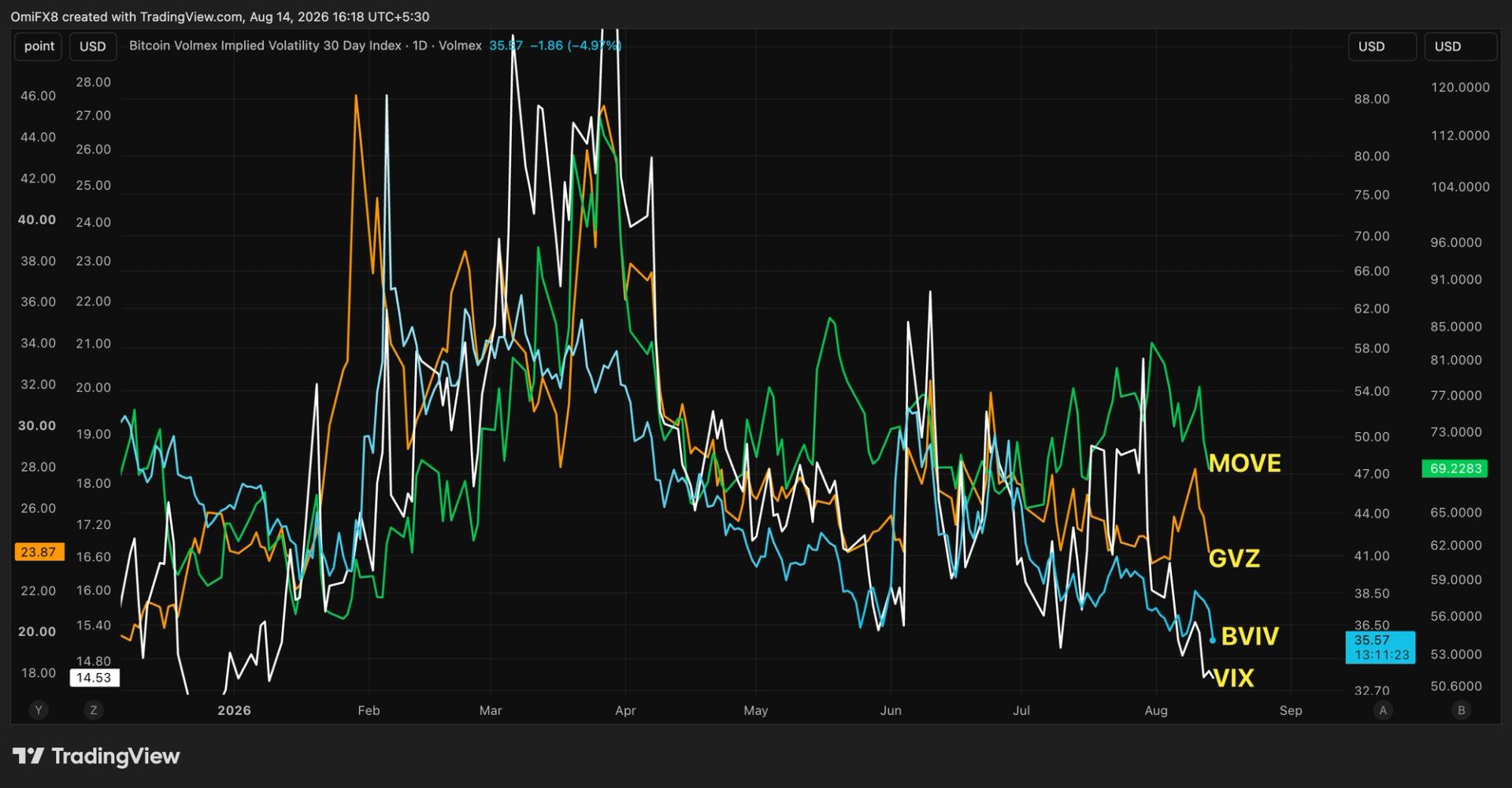
Scan the news and there are plenty of reasons for worry: continued U.S.-Iran escalation risks, mounting sovereign debt and rising bond yields among them. Crypto carries its own set of concerns, including regulatory disappointments, weak demand and hack risks.
Yet crypto, stocks, bonds and even commodity markets remain sanguine. That is clear from implied-volatility readings across these markets. Implied volatility is a measure of expected price turbulence, and is calculated from the demand for options and other derivatives used to hedge against wild swings and uncertainty.
Bitcoin’s 30-day implied volatility index, BVIV, has dropped back to a 2026-low near 36%, reversing the minor pop to nearly 38% earlier this week, according to data source TradingView. The same is true for ether, the second-largest digital asset market value.
Wall Street’s VIX index, often called a “fear gauge” tracking uncertainty and volatility in the S&P 500, has declined to the lowest level since January. The Treasury market equivalent, MOVE, is also under pressure, hovering near the lower end of its multi-month range of 66% to 84%. Even gold and oil volatility indexes are falling.
Crypto World
“World’s First” Trump Prediction Market Product Killed, What Happened to Truth Predict?
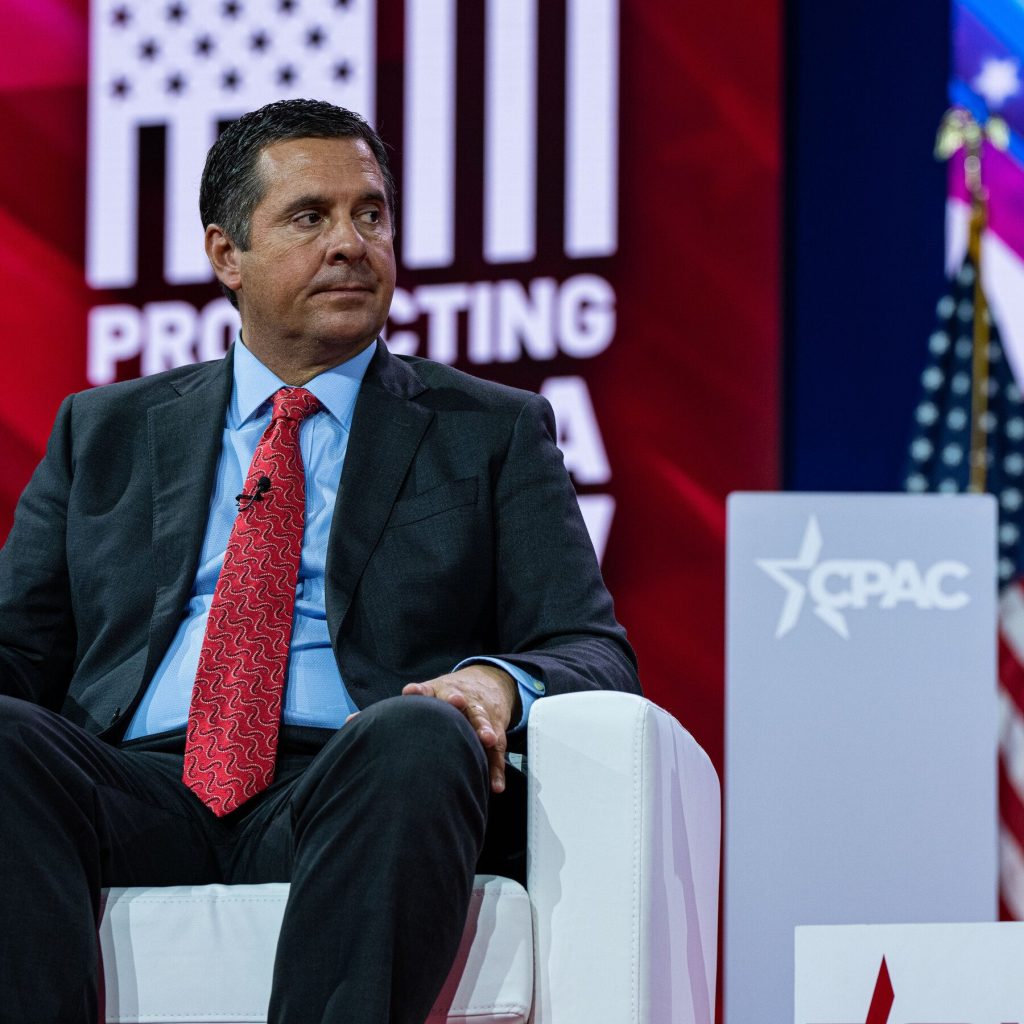
Trump Media has scaled back plans to embed a native prediction-market engine inside Truth Social, opting instead for a marketing arrangement that steers users toward Crypto.com’s existing event-contract platform.
The retreat lands ten months after Trump Media billed Truth Predict as a category-defining product, and it forces a blunt question: how much operating exposure was a Trump-linked platform ever willing to carry inside a market regulators still can’t agree on how to police.
Discover: Everyone’s Got a Take. Get Free $25 to Actually Trade Yours
Trump Prediction Market: From “World’s First” to a Marketing Deal
The original October 28, 2025 announcement was unambiguous. Trump Media said Truth Social would become the first social media platform to offer embedded prediction markets, built through an exclusive arrangement with Crypto.com | Derivatives North America (CDNA), a CFTC-registered exchange and clearinghouse.
The plan covered contracts on elections, interest and inflation rate changes, commodity prices, and every major sports league, with real-time pricing and a mechanism letting users convert Truth Social’s “Truth gems” into CRO to fund trades.
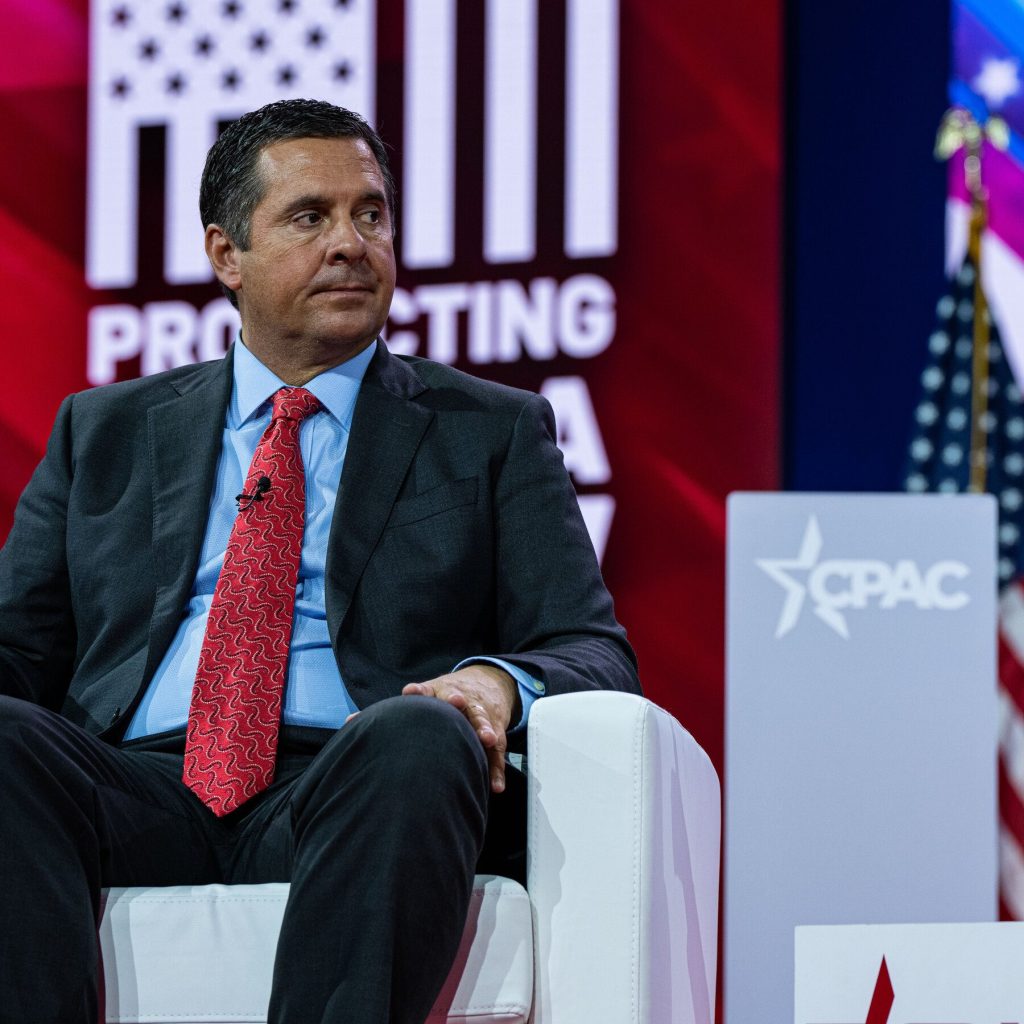
Then-CEO Devin Nunes framed the product as a way to democratize markets historically controlled by financial elites, while Crypto.com co-founder Kris Marszalek described prediction markets as a multi-decabillion-dollar opportunity for the two companies to build together. Neither framing survived intact.
Trump Media’s latest public filing now describes Truth Predict as still “in development,” with the initial rollout limited to a marketing and promotion collaboration that points users to OG.com, the Crypto.com-owned prediction markets app that launched in February 2026.
Discover: Your Market Calls Are Worth Something. Start With Free $25 on Kalshi
The CRO Treasury Deal Died With It
The prediction-market pullback wasn’t an isolated decision. Trump Media, Crypto.com and Yorkville Acquisition Corp mutually terminated plans for Trump Media Group CRO Strategy, the digital-asset treasury vehicle that was supposed to become the first and largest publicly traded holder of Crypto.com’s CRO token.
The companies pointed to shifting market conditions and stakeholder priorities, and interim Trump Media CEO Kevin McGurn said the goal now is to narrow the company’s focus rather than chase every crypto-adjacent product line.
The timing coincides with a broader crypto-treasury unwind: Bitcoin has fallen nearly half from its 2025 peak, and enthusiasm for token-hoarding stock vehicles has cooled sharply along with it.
McGurn said the prediction-market space is already crowded with established operators, making it a less attractive place for Trump Media to build back-end infrastructure than to sit on top of as a data and distribution partner.
That reframing matters more than the language suggests, it converts Trump Media from a would-be prediction-market front end into a promoter, a materially different operating posture.
A Jurisdiction Fight Trump Media Is Now Watching From the Sidelines
The retreat also lets Trump Media step back from an unresolved brawl over who actually regulates event contracts. The CFTC sued Arizona, Connecticut and Illinois in April 2026 to reaffirm what Chairman Michael Selig calls the agency’s exclusive jurisdiction over event contracts, arguing that a national framework beats a state-by-state patchwork.
States including Nevada, Wisconsin and Massachusetts have separately pursued prediction-market operators in court or through enforcement actions, arguing that sports event contracts amount to unlicensed gambling, a direct challenge to sports betting regulation as it currently exists at the state level.
That standoff is exactly the kind of exposure a company more directly involved in offering prediction markets could face. As a marketing partner routing traffic to Crypto.com’s infrastructure instead, Trump Media reduces its direct operating role while still capturing distribution value.
The broader federal-versus-state tension over who writes the rules for crypto markets is playing out in parallel fights over the SEC-CFTC jurisdictional divide, and the outcome of pending crypto market-structure rulemaking will shape how much room CDNA-style exchanges have to expand.
Don’t Miss Out on Our $1,000 USDT Airdrop on ByBit
The post “World’s First” Trump Prediction Market Product Killed, What Happened to Truth Predict? appeared first on Cryptonews.

In SEC crypto news today, the Securities and Exchange Commission canceled its August 14 open meeting, which had been scheduled to consider whether to propose new crypto-related rules.
An SEC spokesperson said the meeting would be moved due to an unforeseen scheduling issue, and no replacement date was announced.
What the SEC Crypto Meeting Was Supposed to Decide
Commissioners had been scheduled to vote on proposed exemptions that would allow crypto startups to raise capital without complying with traditional securities offering rules. Reuters reported that the SEC said the session would be moved because of an unforeseen scheduling issue, without providing a new date.
Under SEC Chair Paul Atkins, the agency has reversed parts of its previous crypto policy, including rescinding stringent crypto accounting guidance and dismissing lawsuits against Coinbase, Binance and other companies that had alleged the companies were flouting SEC rules. Reuters reported that Atkins has backed the view held by crypto companies that most tokens more closely resemble commodities than securities.
CLARITY Act Remains on a Separate Timeline
The SEC delay follows the Senate’s departure for a five-week recess without a vote on the CLARITY Act, the industry’s top legislative priority. Reuters reported that the missed vote suggested the bill’s chances of passage had dimmed. If passed, the bill would create new federal rules tailored to cryptocurrencies and put companies on firmer legal footing, according to lobbyists cited by Reuters.
The SEC meeting and the CLARITY Act involve separate approaches to crypto policy. The canceled SEC session concerned proposed exemptions for crypto fundraising, while the legislation would, if enacted, create new federal rules tailored to cryptocurrencies.
Atkins’ Startup Exemption Proposal
— Coach JV Warrior Academy (@CoachJVTop) August 13, 2026
 HUGE:
HUGE: The SEC Chair Paul Atkins will announce
NEW crypto RULES on Friday. pic.twitter.com/KKlCNrsg6v
In March, Atkins suggested that the SEC would propose a safe harbor intended to make it easier for companies to sell tokens and raise money. He also said the agency was considering a fit-for-purpose startup exemption that would allow crypto entrepreneurs to raise a certain amount of money or operate for a finite period while exempt from SEC rules.
The SEC is also working on an innovation exemption that Atkins has said would allow companies to experiment with new digital-asset business models, including blockchain-based stocks, without complying with all SEC disclosure and investor safeguards.
The canceled meeting had been scheduled to consider whether to propose the crypto fundraising exemptions. Its cancellation postponed that consideration, and the SEC did not announce a replacement date.
What Happens Next in the SEC Crypto Drama
No replacement date has been announced for the SEC meeting. The Senate is in a five-week recess after leaving Washington without voting on the CLARITY Act. The SEC proposal has not been considered at the canceled meeting, and the Senate has not voted on the legislation.
The post SEC Delays Vote on Exemptions for Crypto Fundraising appeared first on Cryptonews.

RHOSLC’s Meredith Marks Praises Mary Cosby After Son’s Death

2026 Rosebud: Central Europe carries Waller’s hopes amid stable uncertainty

These ‘Masturbation Consultants’ Were Hired to Pleasure Themselves With AI


-

 Fashion7 days ago
Weekend Open Thread: Mattifying Sunscreen
-

 News Videos6 days ago
Can Astrology Help Find Gold and Silver Trends? A Financial Astrology Guide
-

 Tech7 days ago
Rinn Pharma & Biopharma to join NordicPharmaTrain network
-

 Business5 days ago
Datadog: Best Of Breed For Multiple Reasons
-

 Business5 days ago
How to Start a Cleaning Business: A Step-by-Step Guide
-

 Business5 days ago
BDC Weekly Review: Private BDC Q2 Numbers Are Strong
-
 NewsBeat3 days ago
Communication cards help banking customers access services or report scams
-
 Business3 days ago
Oil Price Today (August 11): Crude oil rises to $88 after Trump’s compensation demand dents Hormuz opening. Here’s why
-

 Fashion7 days ago
Weekly News Update, 8.6.26 – Corporette.com
-

 Fashion5 days ago
Amazon Sundays: Closet Care Before Fall
-

 Politics6 days ago
Be quiet, Miriam! – spiked
-

 Business6 days ago
Mutual Fund Manager Scoops Up Beaten-Down Stocks
-

 Politics5 days ago
Ben-Gvir’s crocodile project halted but abuses at Ketziot Prison continue
-

 Business6 days ago
SharkNinja Keeps Eating
-

 Entertainment7 days ago
Warren Hudson’s Dad Releases Audio Of Threats
-

 Politics7 days ago
Welsh independence campaign group YesCymru sets 2032 referendum target
-
 Entertainment6 days ago
10 R-Rated Drama Movies That Can Be Called Masterpieces
-

 Business5 days ago
5 Things You Must Know About Jorge Messi, the Father and Longtime Agent Who Shaped Lionel Messi’s Career
-

 Politics5 days ago
The Church of England’s ruinous reparations racket
-
 Entertainment7 days ago
Jason Statham Officially Returns in 2 Weeks With Blockbuster New Release
You must be logged in to post a comment Login