


Connect with us

Business

Terry de Havilland US expansion: Macy’s, Nordstrom deals

Published

on

Terry de Havilland US expansion: Macy's, Nordstrom deals

British footwear brand Terry de Havilland is planning a US retail launch with Macy’s, Bloomingdale’s and Nordstrom later this year, according to Darren Spurling, who owns the business.

Spurling, 60, is the nephew of the late designer Terry de Havilland and runs the Newcastle-based company with his son Josh. The business has ten employees, designs in Britain and manufactures its shoes in Spain.

The move follows a rise in US online sales after recent sightings of actresses including Millie Bobby Brown and Margot Robbie wearing the brand’s shoes.

The label was founded by Terrence Higgins, who began designing shoes in 1972 and opened his King’s Road shop, Cobblers to the World, the same year. He took his trading name from a Paris phone book. “He didn’t think Higgins was a very good name for shoes,” Spurling said, “it didn’t seem exotic.”

The brand’s platform heels were worn in the 1970s by David Bowie and by customers Spurling listed as “Lulu, Cher, The Rolling Stones, Elton John”. Its Margaux wedge, named after Margaux Hemingway, has been in the collection since 1973, and the Deco heel, a five-inch sandal with metallic snakeskin trim, has been displayed at the V&A. The museum’s collection also includes a pair of his 1972 snakeskin platform shoes, given by the milliner David Shilling.

Advertisement

By the late 1990s the designer had moved away from the mainstream and was making bespoke shoes for customers in Camden Market. He returned to wider attention after Miu Miu, the label owned by Prada, produced shoes Spurling described as “literally exact copies, same materials, same designs”.

De Havilland pursued Prada through the courts over trademark infringement, arguing that his products were classed as art. The case did not progress far, but the publicity helped him secure licensing deals in America and Britain. Under Intellectual Property Office rules, a UK registered design must be renewed every five years and lasts a maximum of 25 years.

Spurling, who had previously sold his family’s chain of London sports shops to Blacks Leisure Group and served as managing director of surfwear brand O’Neill’s, reconnected with his uncle at a family party and began advising him on the licensing arrangements. “I helped him to buy out the licensing so that he could get the brand back, which we did in 2010,” he said. Spurling bought the company outright in 2015, when the designer was nearly 80. De Havilland died in 2019.

The pandemic followed. “In all honesty, we thought we were buggered,” Spurling said, given that the company specialised in occasion shoes. The business moved to a direct to consumer model and, in 2022, went “from nothing to doing over a million pounds” online. Spurling said that boom has since ended as consumers have become “more considered” and “more conscious” about what they buy.

Advertisement

He said he keeps the team small and outsources where possible because “the cost of hiring is an issue … the best way [is] to be adaptable”. The company has reintroduced 1970s designs and added matching bags and trainers, while remaining “very much focused on quality, on craftsmanship, on being slow fashion”.

Other British brands have moved in both directions on the US market. Wine merchant Berry Bros. & Rudd is opening its first US store in Washington, while athleisure label Tala suspended a planned £5 million US investment after a change in American tariff policy.

Spurling said the brand’s history gives it “real strong credibility”, adding: “what we need to do is make it as relevant as possible … and that’s a challenge.”


Amy Ingham

Amy Ingham

Amy Ingham is a reporter at Business Matters, covering UK business news with a focus on breaking news, business policy, late payments and insolvency. She joined the magazine in 2026 after completing the NCTJ Diploma in Journalism at Harlow College’s journalism school. Her recent reporting includes British Steel’s nationalisation and its impact on SME suppliers, the decline in late payments by large firms, and Insolvency Service director disqualifications. Reach her at aingham@cbmeg.co.uk.

Advertisement

Continue Reading
Click to comment

You must be logged in to post a comment Login

Leave a Reply

Business

Stocks open little changed after notching a record high in the previous session

Published

on


Stocks open little changed after notching a record high in the previous session

Continue Reading

Business

US firm that planned major investment into the Scarlets has ceased trading

Published

on

Business Live

Montana-based House of Luxury was founded by Pontyprid-born Kirsti Jane Bake

Kirsti Jane Baker addressing Scarlet fans last year,(Image: Riley Sports Photography)

A US company that had been lined up to make a major investment in rugby region the Scarlets as a new majority owner has ceased trading.

Montana-registered House of Luxury, which marketed itself as a broker selling and buying assets ranging from real estate to luxury cars and yachts for high net worth clients globally, was founded and headed by Pontypridd-born Kirsti Jane Baker.

Set up in 2024 and registered in Calabasas, a suburb of Los Angeles, House of Luxury re-registered its head office to Montana in 2025.Montana is more obscure than other US states when it comes to publicly available private-company data and is often viewed as America’s onshore equivalent of the British Virgin Islands.

There is no requirement to make end-of-year financial accounts public. House of Luxury was registered in Montana as a limited liability company, which benefits from the fact that its owners are generally not personally liable for the business’s debts.Through her LinkedIn account, Ms Baker was, at one stage, regularly posting on how House of Luxury had brokered major asset sales, although she did not provide specific details.

Advertisement

She claimed the business was tracking towards asset sales running into several billion dollars annually, which would have generated a sizeable turnover from brokerage fees. Ms Baker no longer has a presence on the platform.According to a document lodged by Ms Baker with Montana Secretary of State Christi Jacobsen, House of Luxury was voluntarily dissolved on July 1.Signed by Ms Baker, the articles of termination letter says: “The company’s business has been wound up and the legal existence of the company has been terminated. Any active trademarks or assumed business names associated with this limited liability company have been cancelled prior to this termination being submitted.”

In August last year House of Luxury were heralded by the Scarlets as potential investors in the club. Both parties had agreed an option, although not legally binding, for the broker to take a 55% equity stake in the rugby club.

In a media statement headlined “an historic investment partnership,” Scarlets chairman Simon Muderack said: “This partnership is the start of a new era for our club, strengthening our position with new investment, new ideas and a shared ambition to return the Scarlets to the top of European rugby.”

Ms Baker, who in a number of LinkedIn posts was critical of the WRU and its leadership team, said: “This is one of the most storied rugby clubs in the world and we believe it should be competing and winning at the highest level. We’re here to make that happen and help drive the Scarlets’ future success and protect its unique identity and legacy.”

Advertisement

Following the statement, she took part in a Q&A session with Scarlets fans at an event held at Parc y Scarlets, where she also outlined House of Luxury’s investment plans through its new sports and entertainment division, which was headed by former WRU chief executive David Moffett. However, after just a few months in a non-executive role, he quit with immediate effect without giving a reason.House of Luxury executive and minority shareholder, South African Simon Kozlowski, took up a role at Parc y Scarlets supporting the management team, with a remit to drive commercial revenues.

He has now confirmed that he resigned with immediate effect from House of Luxury in May, prior to the business ceasing to trade. He declined to comment when asked why he quit the company. Mr Kozlowski, who has launched a new business venture in South Africa, said he has had no contact with Ms Baker since leaving the business.

Efforts have been made to contact Ms Baker. Do questions have to be asked of the Scarlets board? With the well documented financial challenges facing the game, any board and executive team would be open to talking to potential investors. What was agreed was just an option to invest and taking an ownership stake.

There are plenty of examples of deals agreed in principle not being realised – just look at the WRU and Ospreys owner Y11 failing to agree terms for Cardiff after entering an exclusivity period.

Advertisement

Yes, things can leak, but wouldn’t it have been more prudent to keep quiet until a deal was finalised and if one hadn’t been reached the wider public would have been none the wiser?Possibly, but House of Luxury seemed very keen to talk about their investment intentions anyway. Having undertaken their own due diligence, the Scarlets board would no doubt have had confidence that House of Luxury had the funds to invest.

It is understood that Mr Muderack first met Ms Baker by chance when the Scarlets were playing in South Africa.Even if a deal had been finalised between the two parties as the governing body the WRU would have been required to undertake its own fit-and-proper assessment and a detailed examination of House of Luxury’s financials before sanctioning any investment.While the ruling from the legal arbitration case has not been made public, it is understood to have been an effective win for the WRU. T

he Scarlets’ position was that the union had effectively disadvantaged the other regions by acquiring Cardiff out of administration, with all the financial commitment required to make up its losses.With House of Luxury having gone silent and the Scarlets board having effectively discounted the prospect of any investment, earlier this year board member and founder of leading food services firm Castell Howell, Brian Jones, injected much-needed new capital into the club.

Since the arbitration ruling, the Scarlets have signed up to an improved funding deal with the WRU under PRA 25.The Scarlets are now facing a potential shoot-out with the Ospreys for one WRU regional licence in west Wales, as there is currently no prospect of a merger. However, the club remains optimistic for the future.

Advertisement

House of Luxury were also linked to a possible investment in English rugby side Coventry. The company also claimed to have approached Pontypridd RFC over a potential investment.

However, according to club director Mark Rhydderch-Roberts, no offer was received through standard direct channels or business advisory intermediaries.He said:“Obviously, we would talk to any potential investor looking to back the club, but no offer was made to the board from House of Luxury, a company we knew nothing about.”

Alongside her husband Lloyd, Ms Baker set up numerous UK businesses. According to Companies House, their first venture was Extreme Cage Fighting, registered from an address in Pontypridd in November 2009. They voluntarily removed the business from the Companies House register in April 2011.

They then launched a wedding business called Simply Charming Events in 2010. They resigned as directors in November 2011, a month before an application was made to strike the company off the register.

Advertisement

It was eventually dissolved via a compulsory strike-off initiated by Companies House in July 2014.

She has also served as a director of now-dissolved businesses Pink Dolphin Companies and Rise Companies, both registered from the same address in Truro. Both were compulsorily struck off the register in November 2019. Another venture, KLB Group, founded by Ms Baker and her husband in October 2024, was dissolved last October.


Continue Reading

Business

Red Violet Inc: Mission Critical Software Fuels Growth

Published

on

Adding, Not Replacing: Gold In The Age Of Efficient Capital

Red Violet Inc: Mission Critical Software Fuels Growth

Continue Reading

Business

China buying raises stakes before presidential summit

Published

on

China buying raises stakes before presidential summit

The pace of purchases could influence commodity markets.

Continue Reading

Business

what the numbers actually say

Published

on

Pound rallies after Donald Trump considers limits to tariffs plan

Ask someone how they plan to get into business ownership and you will usually hear some version of the same answer. An idea, a company registration, a website, and then the long slog of finding customers who have never heard of you.

That is the route we celebrate. It is also the harder one, by a considerable margin.

There is another path that has been gaining quiet momentum among experienced managers and investors across Europe, and it involves buying a business that already works rather than building one that might. The reasoning is not complicated. If a company already has customers, staff and a proven model, why spend three years trying to recreate all of that from nothing?

The survival gap nobody talks about

The argument for buying rests on a comparison that founders rarely want to sit with.

Roughly half of UK startups do not make it to their fifth birthday. Most European markets tell a similar story. The failure reasons are usually mundane rather than dramatic. Cash ran out before the model clicked. The addressable market turned out to be a fraction of what the spreadsheet promised. A key hire left at the wrong moment.

Advertisement

Businesses acquired through succession behave very differently. Swiss market data puts their five year survival rate substantially above that of new ventures, and the reason has nothing to do with buyers being cleverer than founders. They are simply buying something that has already cleared the hardest hurdle. Somebody else absorbed the risk of finding out whether the thing worked at all.

What changes hands in an acquisition is an operating business with a track record. Revenue on record, customers who already pay, processes that function even if nobody has written them down. A founder starts with a hypothesis. A buyer starts with evidence.

Europe’s quiet succession wave

The reason this route has opened up has less to do with entrepreneurship than with demographics.

A generation of owners who built their companies in the eighties and nineties is now reaching retirement, and a growing share of them have nobody to hand the business to. The children went into other careers. The management team wants the responsibility but cannot raise the capital. The obvious internal successor left four years ago.

Advertisement

What that produces is a pool of profitable, well run companies quietly looking for an owner, most of which never appear on a public listing.

Switzerland shows the pattern more clearly than most markets. The Swiss umbrella organisation for business succession estimates that around 100,000 Swiss SMEs will face a succession decision within the next five years. For a country of nine million people, that is a remarkable figure, and it has turned the Swiss SME succession market into one of the most active buyer markets in Europe.

The UK sits on a comparable curve, though it gets discussed less. Anyone with capital, operational experience and a bit of patience has arrived at an unusually good moment.

What you actually inherit when you buy

It would be dishonest to sell acquisition as the easy option. It is not easier. The risks just arrive in a different order, and they arrive faster.

Advertisement

A founder accumulates problems slowly and understands every one of them, because they built each one personally. A buyer inherits the entire set on day one and has to work out which ones matter while operating under time pressure and incomplete information.

The advantages are genuine and hard to replicate. An existing customer base. Staff who know the work. Supplier relationships that took a decade to earn. A local reputation that no amount of marketing spend buys quickly.

The same transaction hands over everything else too. Contracts you did not negotiate and might not have signed. A culture shaped by someone whose instincts differ from yours. Customer relationships that exist because of the departing owner rather than the company.

That last one deserves particular attention in smaller businesses. A great deal of operational knowledge tends to live in the owner’s head rather than in any system, and on completion day it walks out of the building. Buyers who plan for a proper handover period do considerably better than those who treat the signing as the finish line.

Advertisement

None of this makes a deal unwise. It makes preparation non-negotiable.

The mistakes that cost first time buyers the most

Three errors come up again and again, and every one of them is avoidable.

Searching before defining. Plenty of buyers start by browsing listings, then burn six months evaluating companies that were never a realistic fit. Sector familiarity, region, size, financing capacity and the role you actually want to play all need settling before the search begins. A clear buyer profile does not narrow your opportunity. It removes the wrong opportunities early, which is not the same thing.

Falling for the business before checking it. Enthusiasm is an expensive negotiating position. A company can look excellent on the surface and still be the wrong purchase, particularly if most of the revenue sits with one client, or if the profit margin depends on an owner working sixty hour weeks and paying himself well below market rate. Neither of those shows up in a headline EBITDA figure.

Advertisement

Treating due diligence as paperwork. It is not a compliance exercise to get through before completion. It is the mechanism by which every assumption gets tested and turned into a negotiating position. Following a structured acquisition process that sequences valuation, financing and due diligence properly tends to produce better prices and far fewer unpleasant discoveries than one improvised as the deal moves along.

Financing is the step most people leave too late

Worth mentioning separately, because it derails more deals than any other single factor.

Buyers frequently spend months in discussions before establishing whether the purchase is financeable at all. By the time the funding question gets serious, the seller has grown impatient or another buyer has appeared with their capital already arranged.

Most SME acquisitions get funded through a combination rather than a single source. Some equity from the buyer, a bank facility, and often a seller loan where part of the price is paid over time out of future earnings. That last element is more common than people expect, and it carries a useful side effect. A seller with money still tied up in the business has every reason to make the handover work.

Advertisement

Getting an indicative financing position early does two things. It stops you wasting time on companies you could never buy, and it makes you a materially more credible bidder when you find one you can.

So is buying right for you?

Not for everybody, and the honest answer usually surfaces fairly early.

Acquisition requires capital, whether your own or arranged through banks, sellers or investors. It requires operational appetite, because most SME purchases expect the buyer to actually run the business rather than watch it from a distance. And it requires the temperament to inherit decisions you would never have made and improve them gradually instead of tearing everything up in month one.

What it does not require is spending years proving that a market exists.

Advertisement

For experienced managers who want ownership without starting at zero, that trade increasingly makes sense. The demographics have created the window. Whether a particular deal turns out well depends almost entirely on how carefully the buying gets done.

Advertisement
Continue Reading

Business

Earnings call transcript: Edible Garden posts Q2 2026 revenue growth as loss narrows

Published

on


Earnings call transcript: Edible Garden posts Q2 2026 revenue growth as loss narrows

Continue Reading

Business

Earnings call transcript: Aegis Logistics posts record Q1 2026 revenue beat

Published

on


Earnings call transcript: Aegis Logistics posts record Q1 2026 revenue beat

Continue Reading

Business

Tyson Foods to close two more beef plants

Published

on

Tyson Foods to close two more beef plants

The company is anchoring its beef production around three beef plants in the central US.

Continue Reading

Business

Wall St futures muted as oil gains curb risk appetite after S&P record close

Published

on


Wall St futures muted as oil gains curb risk appetite after S&P record close

Continue Reading

Business

Entain chief hits back at Burnham plan

Published

on

Entain chief hits back at Burnham plan

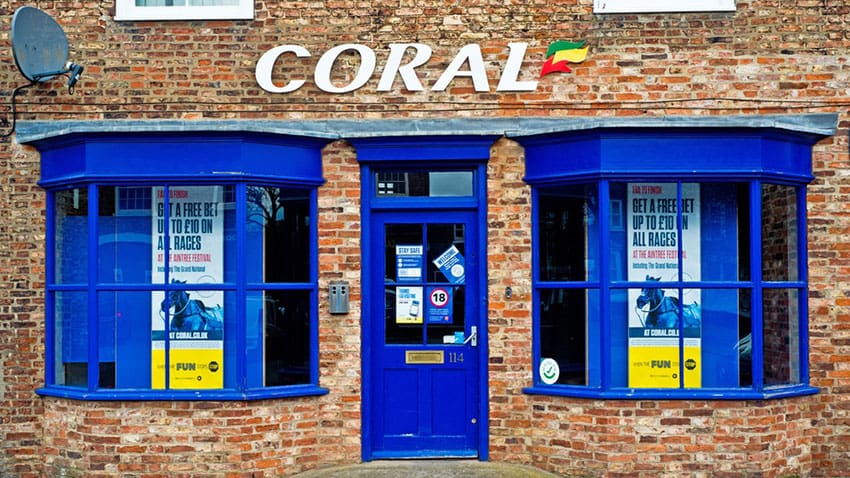
The chief executive of Entain, the FTSE 100 group behind Ladbrokes and Coral, has said traditional betting shops should not be grouped with adult gaming centres under government plans to scrap the Gambling Act’s “aim to permit” rule, announced by the prime minister on Tuesday 11 August.

Stella David said the government needed to “be very careful not to bundle our great traditional betting shops” with adult gaming centres, which she said have a “very different style and tone”.

Andy Burnham said this week that he would give local councils the power to block gambling, gaming and vaping shops, pledging to bring high streets “back to life”. Under the measures announced by Downing Street, the government intends to revoke the aim to permit rule, which restricts the ability of councils to refuse new betting shops and 24-hour slot machine shops even where there are strong local concerns.

Adult gaming centres, which are adult-only venues offering up to 24-hour access to gambling machines, will also require planning permission under proposals due to come into effect at the start of next year.

Adult gaming centres have expanded across the country in recent years while traditional high street bookmakers have continued to decline. The number of adult gaming centres, which offer high-stakes gaming machines such as digital slot and fruit machines, rose 7 per cent to 1,451 between 2022 and 2024, according to Gambling Commission data.

Advertisement

The Betting and Gaming Council said the number of betting shops in Britain had fallen by more than a third since 2019, and that about 3,000 shops had closed. Entain has about 2,300 betting shops.

An industry source said that although the aim to permit reforms will cover betting shops, they are likely to focus on adult gaming centres. In a video posted on X, Burnham singled out vape shops and gaming centres when talking about the new powers given to councils.

Michael Snape, Entain’s finance boss, said the company’s shops “provide a safe place for people to gamble. We are very strict about underage people not coming in, unlike a lot of adult gaming centres, and we pay higher taxes.”

He added: “If you look at other operators who perhaps don’t pay taxes and don’t do anything for player safety, that’s where the problem is.”

Advertisement

The Betting and Gaming Council said it was wrong for the government to “lump highly regulated, licensed betting shops together with rogue or criminal businesses”.

The intervention follows earlier warnings from Entain that higher gambling duties could trigger shop closures, and from Betfred, which said 1,300 shops and 7,000 jobs were at risk if taxes on the sector rise. Ministers had previously shelved a separate set of slot machine reforms.

Entain started as GVC Holdings in 2004 under Kenny Alexander and has grown into one of the biggest betting businesses in the world. It owns the betting brands BetCity, Coral and Eurobet, as well as the gaming brands Foxy Bingo, Gala and Partycasino.

The company reported that net gaming revenues in the six months to the end of June rose 5 per cent, ahead of management’s expectations. Online net gaming revenues were up 7 per cent, helped by the World Cup. Twice as many first-time deposits came into its sports arm during the tournament compared with the 2022 World Cup.

Advertisement

Underlying operating profits were £479 million, 2 per cent down on the same period last year but ahead of analysts’ expectations.

Entain stuck by its aim for online net gaming revenue to grow by between 5 per cent and 7 per cent this year, and said it remained “comfortable” that it would be able to deliver underlying profits, excluding its US joint venture, of £934 million.

Advertisement
Continue Reading

Trending

Copyright © 2025