
Crypto World
Solana’s Fee Overhaul Increases Burn and Makes Resource Hogs Pay

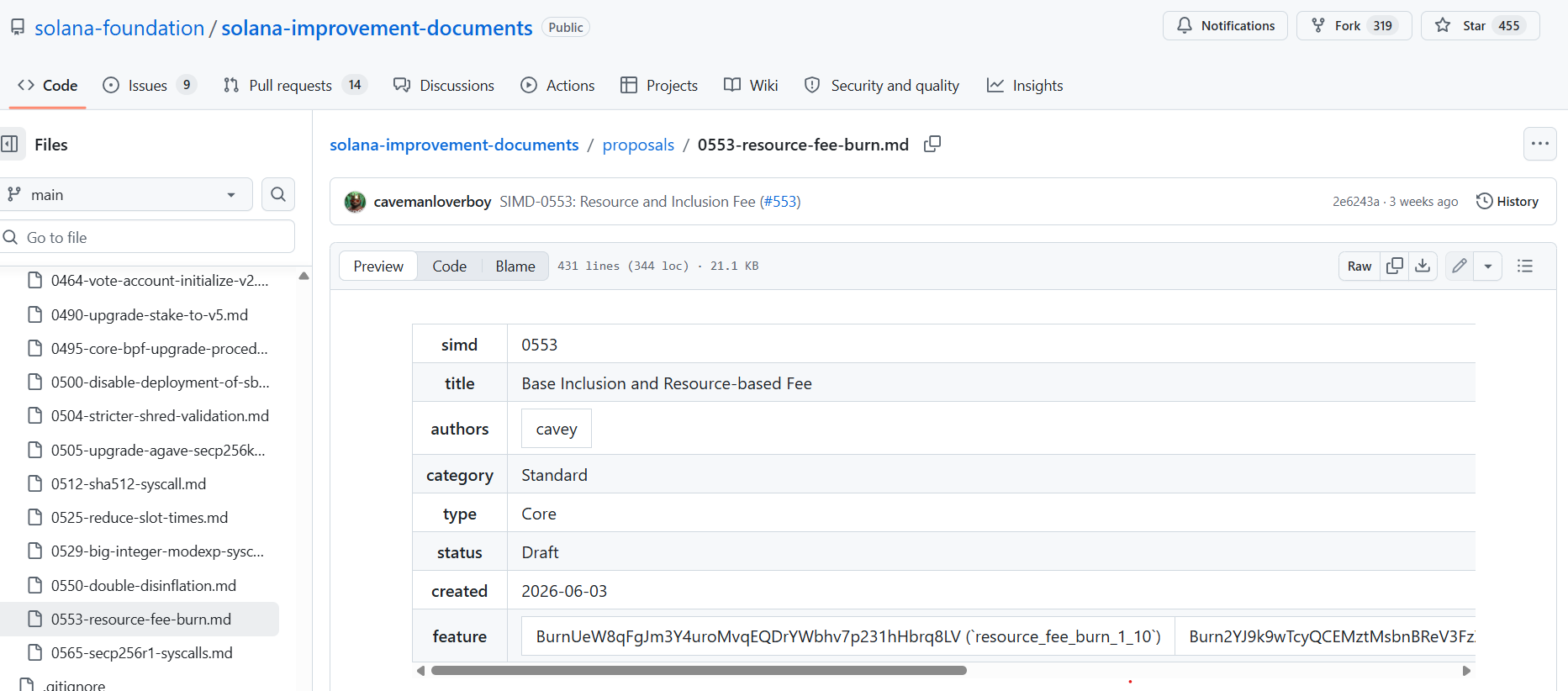
Solana is preparing to change how it charges for computing resources on the network.
Solana Improvement Document (SIMD-0553) would make its most resource-intensive users pay more while cutting the costs for simpler transactions. As a bonus, it would increase SOL’s burn rate in stages — and one day could even help make it deflationary.
Cavey, a researcher at Solana infrastructure firm Temporal and author of the proposal, tells Magazine that fees currently don’t reflect the real costs:
“If I submit a transaction that does nothing versus a transaction that burns 200 million CPU cycles, I’m charged the same amount.”
This proposal would change that by tying fees more closely to the resources each transaction requests. Rather than going to validators, the resource fee would be burned, removing SOL from circulation.
Of course, reducing validator income has not been welcomed by all. Contributor bji argues on github:
“I like the aspect of this proposal that gives tx submitters extra incentive to be accurate with CU limits. Everything else I’m meh to negative on. ‘More burn’ should not be a goal. Validator incomes should not be arbitrarily reduced.”
SIMD-0553 entered Solana’s new onchain governance process in early August and cleared its initial support phase on August 4.
It is currently in the support and discussion phase, which typically lasts seven epochs, or roughly two weeks. If it’s approved, it would change the incentives around Solana’s cheap blockspace.
So what’s the catch?
Wasting resources becomes expensive
Cavey says that Solana’s current fee structure creates a problem for developers.
Core Solana devs have spent years making the network faster, but applications have almost no financial incentive to stop wasting resources — an inefficient transaction costs the same as an efficient one.
Related: Ethereum, Solana led crypto hack losses in H1 2026: Blockaid
“By installing this resource pricing right now, suddenly app developers have to optimize,” Cavey says.
If the proposal is adopted, developers who reduce resource use could lower costs for end users and make their apps more attractive. Developers who consume more of Solana’s computing capacity would have to pay their fair share.
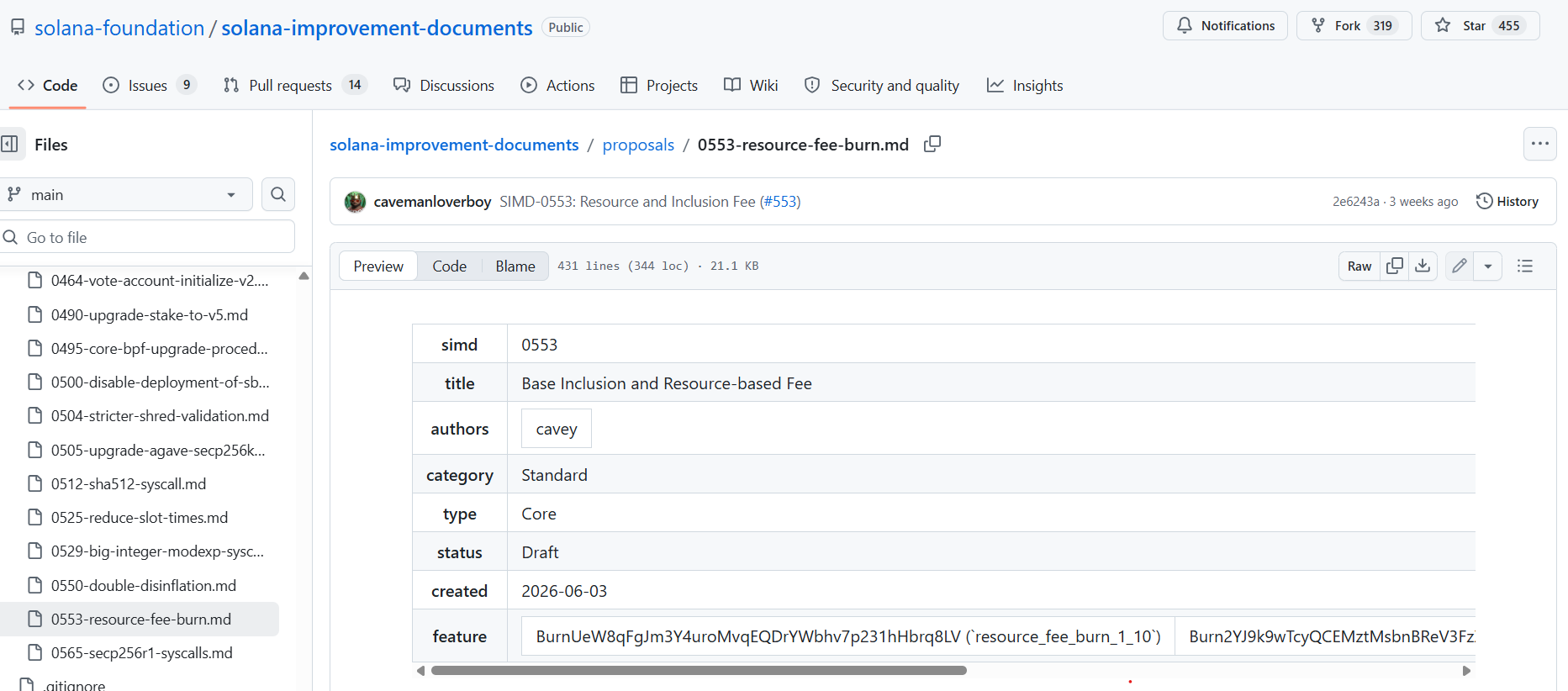
Solana Improvement Document (SIMD-0553). Source: Solana Foundation GitHub
Cavey says the proposal is particularly aimed at computationally wasteful arbitrage, where searchers can submit huge numbers of transactions that mostly fail, while paying very little.
In the past 30 days, he says, five of the traders with the highest failure rates submitted 11.5 million transactions, consuming 929 million compute units across 2,477 trades that generated $16,091 in profit, while paying just 78 SOL in fees.
A resource fee would push arbitrage searchers toward more informed and reactive strategies.
Stablecoin and token transfers could become roughly 20% cheaper, Cavey says. Temporal’s modeling also finds that vote transactions would cost around 12.3% less and oracle updates 16.9% less under the proposed model.
The trade-off?
Some trading activity would become considerably more expensive.
Temporal estimates that a high-priority swap routed through DFlow would cost 9.72% more under the proposed terminal fee rate, while a mid-priority OKX swap would cost 301% more and a pump.fun swap with zero priority would cost 3150% more.
That means some of the network’s heaviest users could see their transaction costs balloon, particularly traders using bots that submit large numbers of transactions.
Don’t worry though, as the fee increase is off a low base. Cavey argues that even the most compute-intensive transactions would cost around $0.05 under the proposed model, compared with the $2 to $5 fees a user might pay to swap $100 on a centralized exchange.
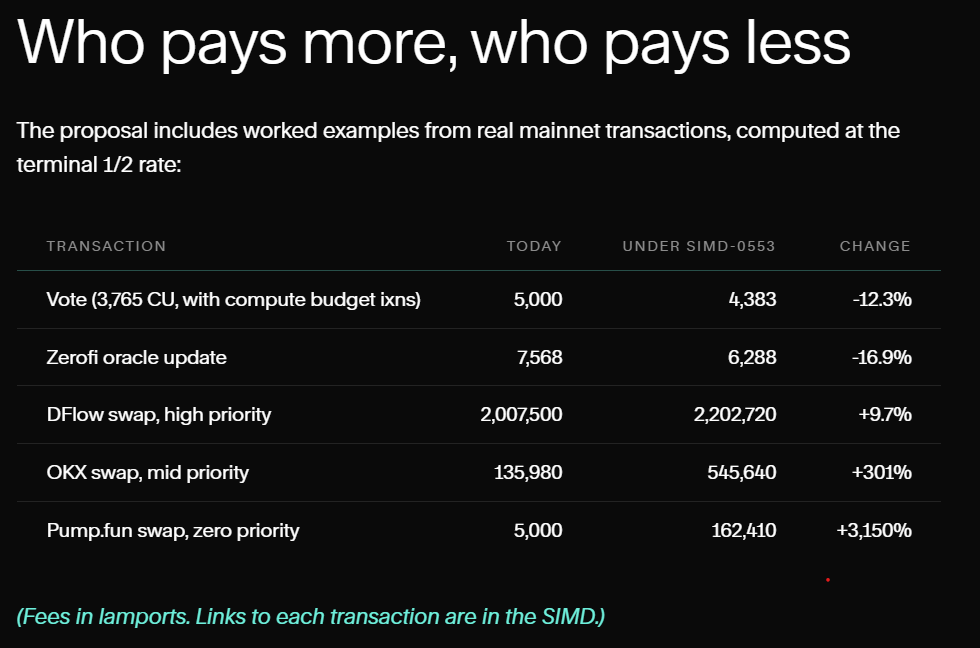
Who pays more, who pays less. Source: Temporal.xyz
The current proposal rejects a uniform increase to Solana’s existing 5,000-lamport fee, arguing that it would disproportionately hurt high-volume senders such as market makers while still failing to properly price resource usage.
Other costs to consider
“There have been a few people that have raised concerns about the parameters, but overall, everyone’s been very supportive,” Cavey says, citing validator income, higher costs for high-frequency users and increased complexity among the core issues.
One contributor, mschneider, asks why fees should be based on the resources a transaction requests rather than what it actually uses. “Units used seems more natural,” he says.
Cavey says there’s a reason the fee is based on the resources a transaction requests, rather than what it actually uses: it lets users know the cost upfront and allows validators to check they can afford it before processing the transaction. But it also means users can pay for resources they don’t end up using, giving developers an incentive to estimate their needs accurately.
Validators could initially see a small reduction in base-fee revenue by around 4%. While Cavey says the parameter can be adjusted to offset that impact if needed, some contributors like bji remain unconvinced and believe validator income should take precedence over the additional burn.
Related: MoneyGram expands crypto cash ramps to Solana
The proposal also raises questions about complexity, with some contributors questioning whether the new fee model could make Solana harder to use. Cavey rejects the concern, saying most users will not have to calculate fees themselves because applications and exchanges generally handle it. Automated traders are already “sophisticated” enough to adapt to changes in Solana’s fee structure, he says.
What about the SOL burn?
SIMD-0553 would increase the amount of SOL burned by transaction fees, reducing more of the token from circulation rather than paying it to validators.
According to the proposal, the current daily burn of around 648 SOL could rise to roughly 7,500 to 9,000 SOL at the proposed terminal fee rate, representing a roughly 12 to 14-fold increase if current resource demand remains unchanged.
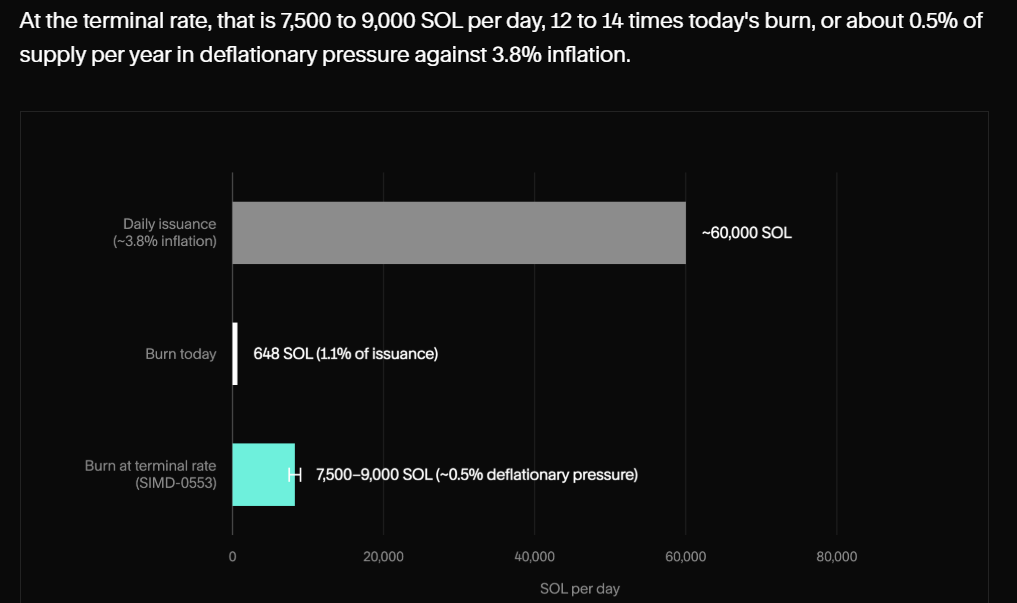
SIMD-0553 would increase the amount of SOL burned by transaction fees. Source: Temporal.xyz
Cavey says the higher burn could eventually push SOL into deflationary territory:
“If Solana wins, there’s a chance that Solana could actually become a deflationary currency.”
Burning the resource fee also reduces incentives for validators to include unnecessarily resource-intensive transactions.
Solana currently issues roughly 60,000 SOL a day, so even a 9,000-SOL daily burn would not by itself make the token deflationary (although a separate proposal called SIMD-0550 would curb inflation faster than currently scheduled). Network activity would need to grow substantially before the burn outweighed new issuance. Cavey says that would be “a nice secondary effect” rather than the main objective.
“The primary goal is to align core devs, developers, and app developers to make Solana faster. That is objective number one, and that is enough of a reason for this proposal, in my opinion.”
Magazine: El Salvador’s Bitcoin experiment turns 5: ‘It was for us, not them’
Cointelegraph publishes long-form journalism, analysis and narrative reporting produced by Cointelegraph’s in-house editorial team with subject-matter expertise. All articles are edited and reviewed by Cointelegraph editors in line with our editorial standards. Some articles contain affiliate links, from which Cointelegraph may earn a commission. These relationships do not influence which products we review or our editorial conclusions. Content published in here does not constitute financial, legal or investment advice. Readers should conduct their own research and consult qualified professionals where appropriate. Cointelegraph maintains full editorial independence.

Robert Kiyosaki connected his personal trajectory to his mentor’s predictions and to the future of Bitcoin and AI in a recent, highly symbolic post.
The author of Rich Dad Poor Dad frames transformation as both a technological and a deeply personal matter.
The Mentor Behind His Turning Point
A futurist is someone dedicated to anticipating long-term technological and social trends. Kiyosaki studied for three summers with R. Buckminster Fuller, one of the most influential of the last century.
Fuller was an architect, systems theorist, and inventor best known for the geodesic dome. His work centered on doing more with fewer resources, a principle applied to housing and global resource distribution.
Kiyosaki met him after years in the rock merchandising business. That venture was profitable, though the author describes a persistent sense that the work lacked meaning beyond revenue.
Those summers changed his direction entirely. He calls Fuller the friendly genius of the planet and locates his life’s turning point in that period.
The core idea was philosophical rather than financial. Fuller held that nobody belongs to themselves but to the universe, and that purpose gets fulfilled by committing one’s existence to the benefit of others.
Follow us on X to get the latest news as it happens.
That principle shaped everything afterward. Kiyosaki spent the following decades teaching millions about financial freedom, framing education as the service he owed.
According to Kiyosaki, Fuller also anticipated shifts as disruptive as those driven by Bitcoin and artificial intelligence today. The futurist argued that accelerating innovation would restructure how societies organize wealth and work.
Whether Fuller specifically foresaw either technology is impossible to verify. He died in 1983, decades before Bitcoin existed, so the connection remains Kiyosaki’s interpretation rather than documented prophecy.
What Robert Kiyosaki Says About Bitcoin and AI
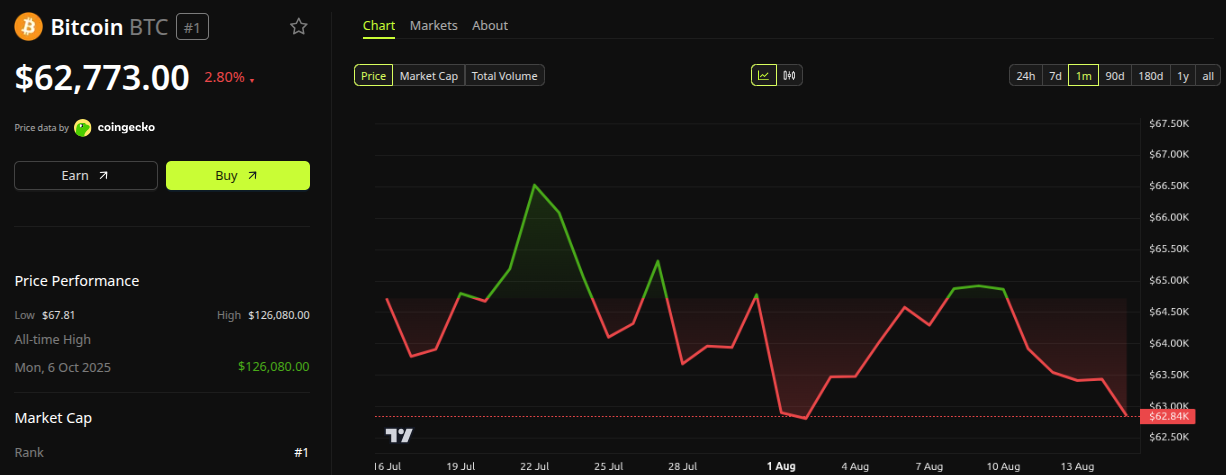
Current conditions add relevance to the message. Bitcoin trades near $62,773, roughly 50% below the record high above $126,000 reached in October 2025, according to BeInCrypto data.

The author maintains his position despite that decline. He defends the asset as a hedge against money printing and US debt, holding positions since 2012. His projections remain ambitious. Kiyosaki has forecast prices reaching $750,000 following what he calls a financial reset.
Artificial intelligence forms the second pillar of his argument. Massive infrastructure investment drives growth, generates extraordinary wealth, and threatens to replace routine jobs.
His reading of that phenomenon is blunt. Thinking as an employee leads to being replaced by AI, while thinking like an entrepreneur enables people to use it.
Some analysts draw a connection between the two themes. Accelerated wealth creation and potential credit stress from data-center debt could push capital toward scarce assets.
Subscribe to our YouTube channel to watch leaders and journalists provide expert insights.
Those projections deserve caution, however. They represent hypotheses about future correlations rather than demonstrated relationships between AI spending and Bitcoin prices.
The transformation Kiyosaki describes extends well beyond finance. His argument points toward finding purpose in service to others amid profound technological change.
The post Robert Kiyosaki Links Bitcoin and AI to an Old Prediction: Who Made It? appeared first on BeInCrypto.
The activity of Ethereum whales has not shown any clear trend in the last seven days, although there is high volatility, meaning whales are very much in action. In a recent analysis, no dominant buying or selling bias was seen despite the high activity.
One question that needs to be answered is whether the whales are moving their wealth into stablecoins or whether the reverse is the case. This will give us an idea of the dominant sentiment among large buyers who hold a significant portion of the market value.
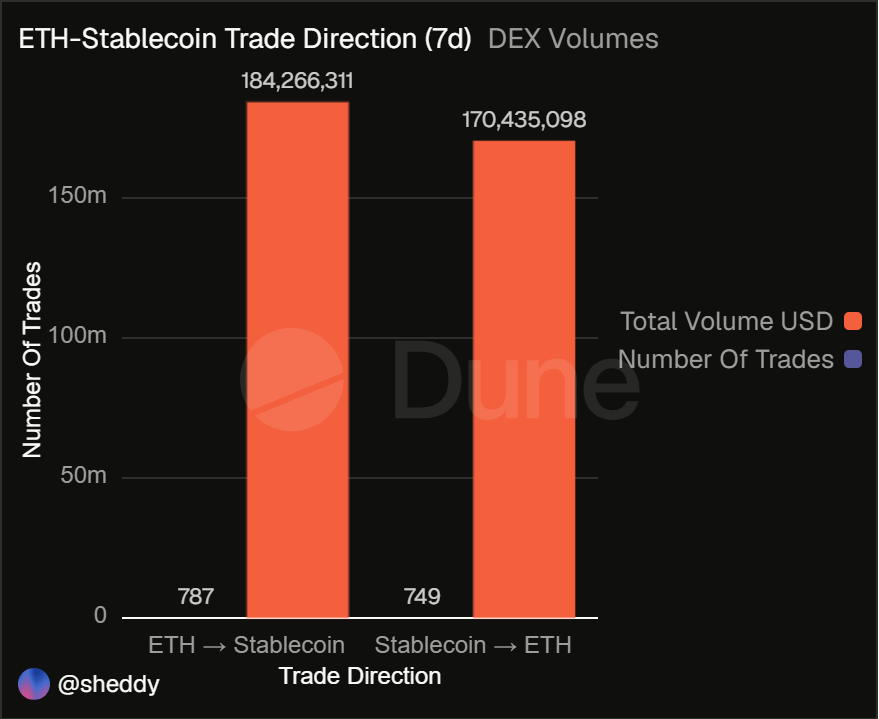
We analyzed data sourced from Dune Analytics for USDT and USDC, the top two stablecoins, on decentralized exchanges (DEXs) for the last seven days and found that there is only a slight difference favoring stablecoins against Ethereum.
However, something more interesting could be going on, as USDC is also clearly preferred over USDT. We dug deeper to uncover the reason for this preference.
Whales Show Slight Bias Toward Stablecoins Against Ethereum
Just like there is no significant bias toward buying or selling of ETH on DEXs as revealed by the last study, whales seem to be buying a little more stablecoins than ETH. ETH to stablecoin transactions had a volume of $184 million, while stablecoin to ETH had $170 million. This shows a difference of roughly $14 million in favor of stablecoins.
However, the relatively small imbalance suggests cautious positioning rather than a decisive exit from ETH. A significant difference in volume would have suggested that large buyers are exiting ETH, which would raise concerns about a potential worsening of the bearish trend, but that is not the case at the moment.
 Large buyers show slight bias towards stablecoins. Source: Dune.com | Analysis by author
Large Buyers Prefer USDC Over USDT
The data further revealed that large buyers are not just slightly flowing into stablecoins, but they prefer USDC by a wide margin. Of the roughly $162 million stablecoin volume traded over the last seven days, over $120 million was in USDC, while USDT only accounted for about $41 million.
Two scenarios are possible here. The first is that large buyers genuinely prefer USDC to USDT for different reasons ranging from security to fees. Secondly, the data may be showing pseudo bias toward USDC because most DEXs offered trades in USDC more than USDT, but that seems to be the case.
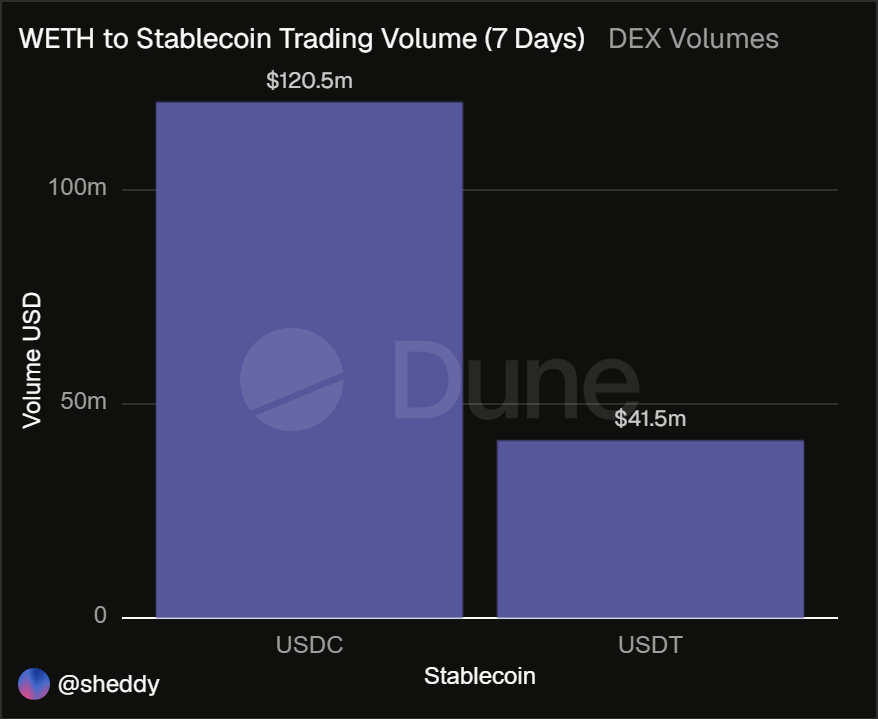 Large buyers prefer USDC over USDT. Source: Dune.com | Analysis by author
We analyzed the trading volume by trading platforms to see how the two stablecoins performed on platforms offering both options. Interestingly, Uniswap was the leading platform of choice, accounting for $135 million in volume (over 83%) of the total of $162 million, and offers both USDC and USDT.
USDC still outperformed USDT, accounting for over 77% of the Uniswap-bound stablecoin volume, worth over $104 million. This shows that large traders truly prefer USDC over USDT, which only had a little over $30 million in volume.
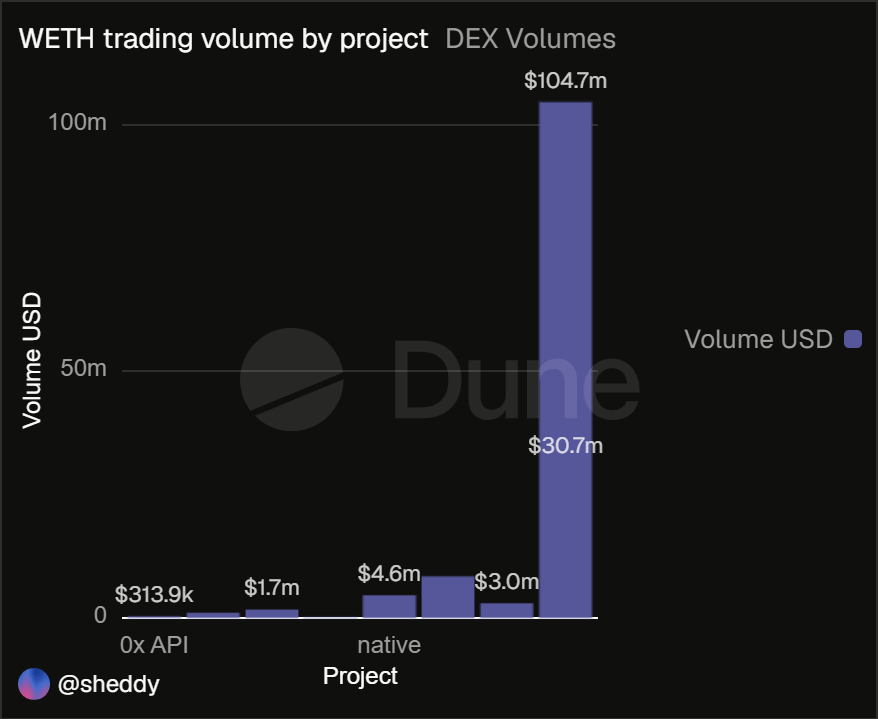 USDC volumes are significantly higher on Uniswap. Source: Dune.com | Analysis by author
Conclusion
Large buyers showing bias toward USDC could be for a number of reasons. First, it could be that USDC has deeper liquidity than USDT. This allows large traders to execute large trades running into millions with as little slippage as possible, which can save them thousands of dollars.
USDC is also commonly used as a dollar-denominated asset throughout DeFi, which is seeing significant growth, resulting in the higher volume relative to USDT.
In conclusion, large buyers are not exiting ETH. The difference in flow direction is marginal, suggesting cautious positioning rather than an outright bearish bias, despite ETH’s price decline. This is good news for retail traders, especially as we already established that the decline is not linked to whale activity.


Cointelegraph is committed to providing independent, high-quality journalism across the crypto, blockchain, AI, and fintech industries.
All news, reviews, and analyses are produced with full journalistic independence and integrity. For more details on our standards and processes, please read our Editorial Policy.

Binance Research says Gen Z traders using the exchange’s ecosystem are increasingly treating exchange-traded funds as a core part of their equity exposure. In early August, ETFs made up 25% of the cohort’s equity trading volume—an increase from earlier months—while interest in single-company stocks has eased.
The findings, based on activity across direct equities, tokenized stocks and traditional finance perpetual contracts, also highlight behavioral differences between younger traders and older generations, including how often they trade, whether they place sell orders, and the extent to which they use leveraged or inverse ETF products.
Key takeaways
- According to Binance Research, ETFs accounted for 25% of Gen Z equity trading volume in early August, up from 21.9% in July and 18.5% in June.
- Gen Z direct-equity accounts increasingly skew toward buy-only behavior, with 22% never placing a sell order—compared with 19% for Gen X and 9% for Baby Boomers.
- Gen Z traded less frequently than other working-age generations across TradFi perpetuals, averaging 13 monthly trades versus 17 for Millennials and 16.5 for Gen X.
- Leveraged and inverse ETFs appear to have limited pull among Gen Z: 88.2% of Gen Z TradFi perpetual accounts recorded no activity in those products.
Gen Z tilts equity activity toward ETFs
Binance’s analysis focused on how different generations allocate trading activity across three equity-related categories: direct equities, tokenized stocks, and traditional finance perpetuals. It compared account behavior across Gen Z, Millennials, Gen X and Baby Boomers using metrics such as trading frequency, net flows and leverage use.
Within that framework, ETFs gained share among Gen Z. In July, ETFs represented 21.9% of Gen Z net equity inflows. That compares with 18.5% in June, suggesting an accelerating preference for fund-based exposure rather than a rotation toward individual companies. Over the same period, the portion of Gen Z inflows allocated to individual stocks declined to 74.2% from 77%.
Binance Research did not frame this as a single-driver story, but the pattern is notable for traders deciding where to deploy capital: ETFs can offer diversified exposure, while direct equity allocation depends more heavily on idiosyncratic company performance.
Trading frequency and sell-order behavior differ by age
The report also points to structural differences in how Gen Z participates compared with older cohorts. Binance Research said Gen Z traded less frequently across all three equity products. For TradFi perpetuals, Gen Z averaged 13 monthly trades, compared with 17 for Millennials and 16.5 for Gen X.
Account behavior provides another window into how Gen Z approaches positioning. Among Gen Z direct-equity accounts, 22% had never placed a sell order. The share was lower for older groups—19% for Gen X and just 9% for Baby Boomers—while Millennials showed the highest level of buy-only behavior at 30%.
For Gen Z buy-only accounts, Binance reported that the most purchased assets by cumulative buying included Broadcom, Tesla and the Schwab US Dividend Equity ETF. The inclusion of a dividend-focused ETF among top cumulative buys aligns with the broader trend toward fund exposure rather than single-stock selection.
Binance also noted a key limitation for interpreting longer-term trends: its direct-equities offering only reached “meaningful scale” in June, leaving a comparatively short window to observe multi-month behavior changes.
Low use of leveraged and inverse ETF products
Beyond what Gen Z is buying, the report examines what it is avoiding—particularly in more complex ETF structures. Binance Research said Gen Z showed relatively little appetite for leveraged and inverse ETFs within TradFi perpetuals. Specifically, 88.2% of Gen Z TradFi perpetual accounts recorded no activity in leveraged or inverse ETFs.
For context, the no-activity shares were 84.5% for Millennials and 85.9% for Gen X, meaning Gen Z’s participation in these higher-risk product types appears modest relative to other cohorts. For traders, that matters because leveraged and inverse exposure can amplify volatility and risk management complexity, affecting how portfolios behave during market stress.
While the report does not provide breakdowns on whether the remaining Gen Z accounts used these products heavily or lightly, the headline takeaway is clear: for most Gen Z participants, ETF exposure—at least within these categories—has been largely non-leveraged.
Tokenized stocks: bStocks briefly overtake xStocks
Separately from the Gen Z cohort analysis, tokenized equities market data suggests shifting competitive dynamics among issuers. Binance’s bStocks briefly overtook Kraken’s xStocks as the second-largest tokenized stock issuer this week, according to Token Terminal data cited in the source.
As of Tuesday, bStocks held $610.6 million in tokenized stock value, compared with $601.2 million for xStocks. By Friday, the positions reversed: Token Terminal showed xStocks at $610.7 million and bStocks at $579.6 million. The report described these levels as about 22.3% and 21.2% of the roughly $2.7 billion tokenized stock market, respectively. Ondo Finance remained the largest issuer with $971.8 million.
Looking at the market as a whole, the source also pointed to continued expansion in distributed value tracked by RWA.xyz, which reported $2.43 billion in distributed value as of Friday—about 5% higher than over the previous 30 days. For investors, the issuer “leadership” flip between bStocks and xStocks underlines how quickly tokenized-stock balances can shift as flows move across platforms and products, even while the top issuer maintains its position.
That fast-moving ranking is also a reminder that tokenized equities remain a developing segment: total market growth is measurable, but individual issuers can move up or down quickly as their tokenized exposure rises and falls.
Going forward, traders should watch whether Gen Z’s ETF share continues to rise beyond the current early post-scale window for Binance direct equities, and whether the limited leveraged/inverse activity persists as more participants enter. In parallel, the tokenized-stock rankings may remain fluid—so changes in issuer balances could be as important as the broader market growth trend.

“Before two leaders like that have a summit meeting, there’s lots of prep work that goes into it,” recalls Souza. “But this was very last minute. The Reagan administration went to great effort leading up to Reykjavik, to not call it a summit. They’d say, ‘It’s just a meeting, and we’re not characterizing it as a summit.’”
The summit’s purpose was to discuss the arms controls between the two nations, in hopes of bringing an end to the long-lasting threat of nuclear war hanging over both countries, and the world as a whole. Over 30 hours, Reagan and Gorbachev fiercely debated in an effort to bring peace and the end of the Cold War. Now, a new film from writer-director Michael Russell Gunn, The Brink of War, gives this historical moment a worthy spotlight. The film stars Jeff Daniels as Reagan, Jared Harris as Gorbachev, and J.K. Simmons as Secretary of State George Shultz.
For Gunn, the idea for The Brink of War came from a meeting he had with the real George Shultz, to whom the film is dedicated. Shultz told him all about the Reykjavik Summit. “I had never heard of this summit before,” says Gunn, “but once I found out I couldn’t stop thinking of it.”
Coinbase and Ripple executives have been named among the expected attendees at an Aug. 19 White House meeting involving at least six crypto and prediction market companies.
Summary
- Six crypto and prediction market firms are expected to have representatives at the White House meeting.
- Coinbase, Ripple, a16z, Chainlink, Paradigm, and Kalshi are among the reported participants.
- The CLARITY Act faces a Sept. 15 procedural vote requiring at least 60 Senate votes.
- CFTC advisers will meet one day later to discuss crypto, AI, and prediction markets.
Semafor reporter Eleanor Mueller said executives from Coinbase, Ripple, a16z, Chainlink, Paradigm and Kalshi were expected to attend the White House meeting, citing people familiar with the plans.
The report did not identify the individual executives who will represent each firm. Coinbase CEO Brian Armstrong and Ripple CEO Brad Garlinghouse have both supported the Digital Asset Market Clarity Act, which remains stalled in the Senate after lawmakers left Washington for their August recess.
President Donald Trump may attend with members of his administration, according to the original report supplied for this story. However, an earlier crypto.news report said the White House had not released a formal participant list and that Trump’s attendance remained unclear.
CFTC Chairman Michael Selig and SEC Chairman Paul Atkins are also expected to participate, according to people familiar with the planning. Neither the White House nor the two regulators had published a formal agenda for the meeting at the time of writing.
Coinbase and Ripple bring CLARITY Act interests
For Coinbase and Ripple, the meeting comes before a scheduled Senate test for legislation that could decide how the two main U.S. market regulators divide responsibility for digital assets.
The CLARITY Act would place spot markets for qualifying digital commodities under CFTC oversight while keeping crypto assets classified as securities within the SEC’s authority. It would also establish federal requirements for exchanges, brokers, dealers, advisers, and digital asset custodians.
American investors could be directly affected by that division because a token’s regulatory status can determine where it may trade, which disclosures apply, and whether a platform must register with the SEC or comply with CFTC market rules.
Coinbase has supported the legislation while continuing to raise concerns about provisions governing stablecoin rewards and decentralized finance. In an Aug. 7 statement, Armstrong called the Senate delay disappointing but said adoption would continue regardless of Congress’ timetable.
“The momentum behind this technology keeps growing with or without a congressional calendar,” Armstrong said.
An Aug. 8 report on Armstrong said the Coinbase chief pointed to stablecoin use, tokenized assets and perpetual futures as areas where activity could continue while lawmakers negotiate. He also argued that a consistent federal framework could support investment and offer stronger protections for U.S. consumers.
Garlinghouse has also backed the bill during negotiations. Ripple and Coinbase were part of a coalition of more than 120 companies that urged lawmakers to advance the proposal in April, according to a May report on Garlinghouse.
Andreessen Horowitz, better known as a16z, has also supported the legislation, while Chainlink works with financial companies on blockchain infrastructure. Paradigm invests in crypto businesses and is a backer of Kalshi, a CFTC-regulated prediction market operator.
CLARITY Act faces a Sept. 15 Senate test
Senate Majority Leader John Thune filed cloture on the motion to proceed with the CLARITY Act before the chamber began its August recess. The Senate Daily Press schedule says the motion will ripen at 2:15 p.m. on Sept. 15, one day after senators return for regular business.
The procedural vote would not pass the bill or send it to Trump. Clearing cloture would allow the Senate to begin formal consideration, after which lawmakers could debate the proposal, introduce amendments, and hold a separate vote on final passage.
At least 60 senators must support cloture. Republicans cannot reach the threshold alone, making Democratic votes necessary even if most Republican senators back the measure.
The House approved its version in July 2025 by a 294–134 vote, with 78 Democrats joining Republicans. In May 2026, the Senate Banking Committee advanced its part of the legislation by a 15–9 vote after Democratic Sens. Ruben Gallego and Angela Alsobrooks voted with Republicans.
Any text approved by the Senate that differs from the House measure would require another House vote or negotiations between the two chambers before reaching the president.
Unresolved disagreements include political ethics provisions, rules for rewards paid on stablecoin balances, protections for software developers, illicit finance controls, and consumer safeguards. The White House has not said whether any of those subjects will appear on the Aug. 19 meeting agenda.
Prediction markets remain doubtful about passage
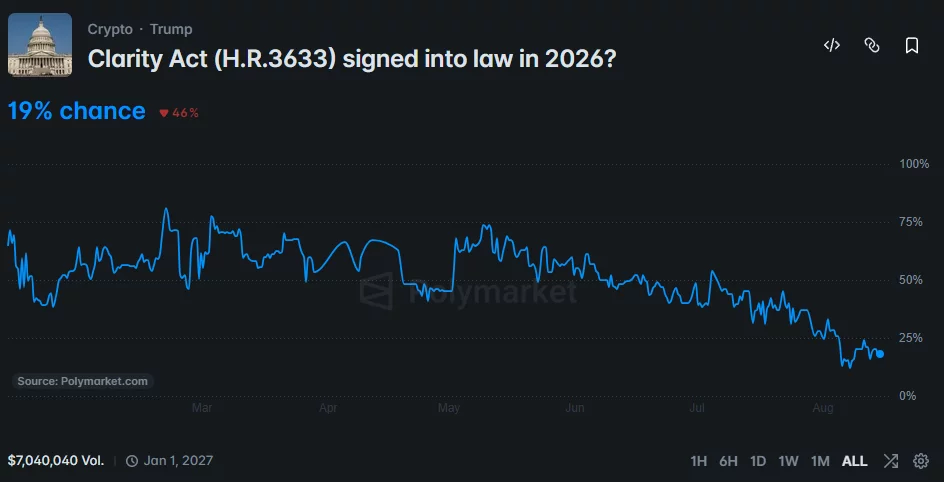
Prediction markets have continued to price in a low chance that the CLARITY Act will become law in 2026, even as the Senate prepares for its September procedural vote.
Polymarket traders placed the probability at 19%. Since such contracts trade continuously, the figure has moved as participants respond to the White House meeting reports and the Senate timetable.
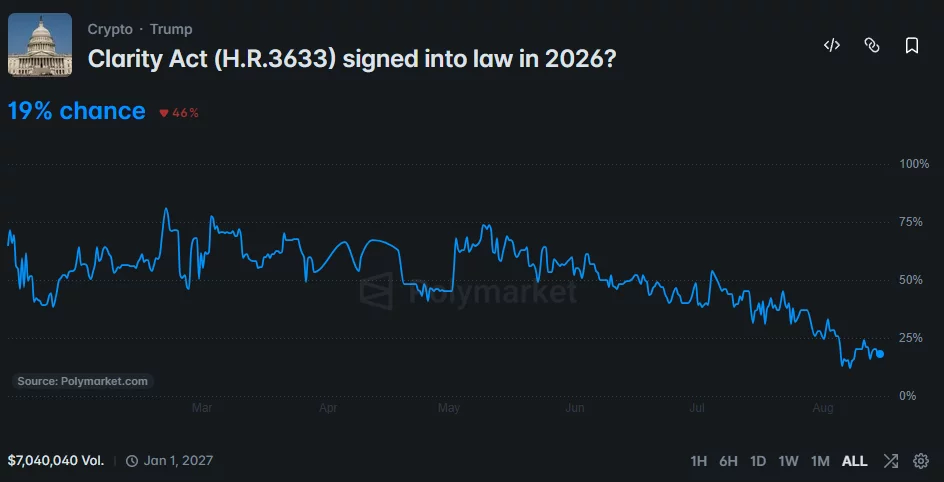
On Aug. 14, the contract briefly showed a 21% probability, rising from 17% one day earlier. Another recent reading placed the chance at 16%, down from an 82% peak in February.
Galaxy Research reportedly assigned a 10% chance of passage during 2026, citing unresolved policy disputes and the limited number of Senate working days before the midterm election recess.
A separate Kalshi contract provided a more favorable reading for an earlier procedural event. As of Aug. 11, traders assigned an 88% probability that the Senate would vote on the legislation before Oct. 1, with about $1.23 million traded on the contract. The date aligns with Thune’s Sept. 15 cloture schedule but does not indicate whether senators will ultimately approve the bill.
CFTC meeting will follow on Aug. 20
People involved in the planning have described the White House event as a kickoff for the CFTC Innovation Advisory Committee’s first meeting, which is scheduled for Aug. 20 in Washington.
According to the CFTC’s published agenda, the three-hour session will run from 1 p.m. to 4 p.m. Eastern time. Committee members will attend in person, while the public will be able to watch the proceedings online.
The first 50-minute panel will examine the history of crypto regulation, state licensing requirements, overlapping jurisdictions, and the lack of a complete federal market structure framework. Members will also discuss how the CFTC could modernize existing rules within its current legal authority and support future legislation from Congress.
A second session will cover artificial intelligence in trading, compliance, surveillance and risk management, including autonomous systems capable of carrying out transactions or managing portfolios.
During the final panel, members will examine prediction markets, event contracts, market surveillance, manipulation risks, and customer protections. The agenda also lists questions involving federal and state authority, an issue directly relevant to Kalshi and other regulated event-contract platforms.
The advisory committee will not vote on a proposed crypto rule, and its recommendations do not automatically become CFTC policy. Members of the public may submit written statements about the meeting through Aug. 27, with qualifying submissions entering the public record.
Separately, the SEC canceled an Aug. 14 open meeting that had been scheduled to consider a proposed offering framework for certain crypto-related investment contracts. The agency’s cancellation notice did not provide a reason or announce another date.
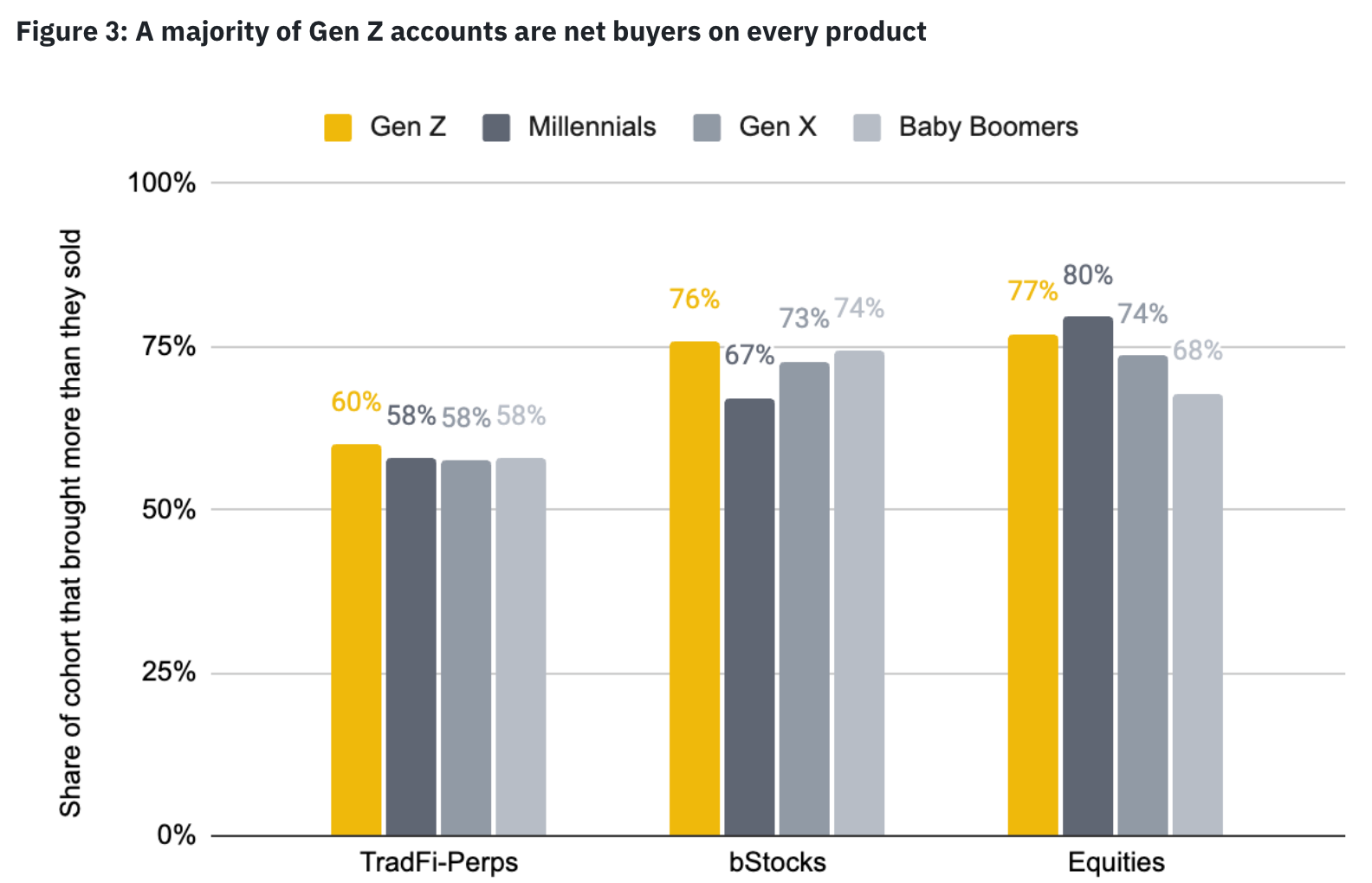
Gen Z traders on Binance are allocating a growing share of their equity activity to exchange-traded funds (ETFs), with the products accounting for 25% of the cohort’s trading volume in early August, according to Binance Research.
ETFs accounted for 21.9% of Gen Z net equity inflows in July, up from 18.5% in June, while the share going to individual stocks fell to 74.2% from 77%.
The analysis examined activity across direct equities, tokenized stocks and traditional finance perpetuals, comparing Gen Z accounts with Millennials, Gen X and Baby Boomers on measures including trading frequency, net flows and leverage use.
The younger cohort traded less frequently than other working-age generations across all three products. Gen Z averaged 13 monthly trades in TradFi perpetuals, compared with 17 for Millennials and 16.5 for Gen X.
Among Gen Z direct-equity accounts, 22% had never placed a sell order, compared with 19% of Gen X accounts and 9% of Baby Boomer accounts. Millennials had the highest share of buy-only accounts at 30%. Among those Gen Z buy-only accounts, top assets by cumulative purchases included Broadcom, Tesla and the Schwab US Dividend Equity ETF, according to Binance.
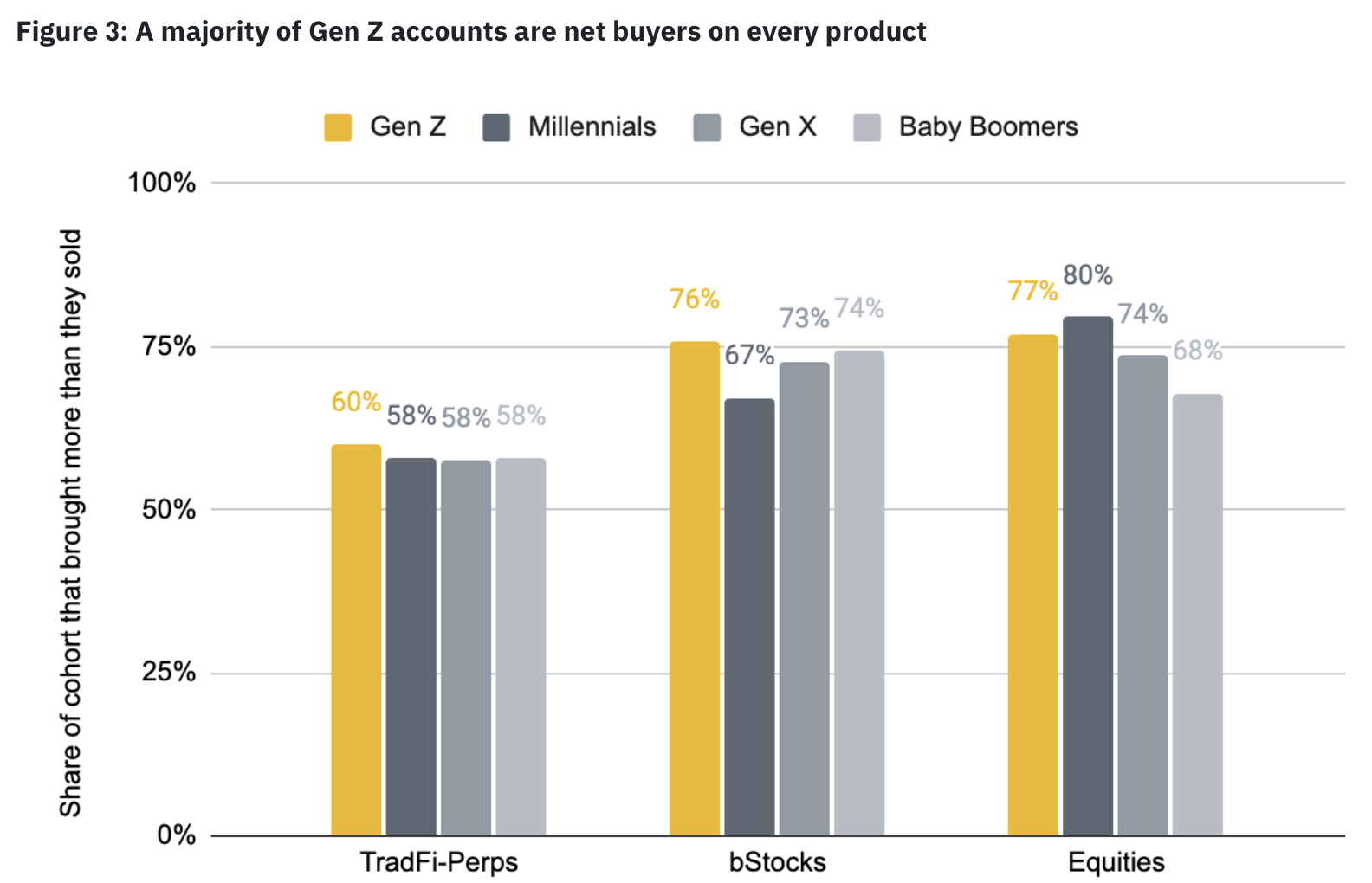
Net buyers by generation and product. Source: Binance
Gen Z also showed relatively little appetite for leveraged and inverse ETFs; 88.2% of Gen Z TradFi perpetual accounts recorded no activity in those products, compared with 84.5% of Millennials and 85.9% of Gen X.
Binance cautioned that its direct-equities product only reached meaningful scale in June, leaving a relatively short data window for establishing longer-term trends.
Related: Binance to restrict transactions involving HTX, 10 other crypto platforms
Binance bStocks briefly overtakes xStocks
Binance’s bStocks briefly overtook Kraken’s xStocks as the second-largest tokenized stock issuer this week, less than two months after launching. As of Tuesday, bStocks held $610.6 million in tokenized stock value, compared with $601.2 million for xStocks, according to Token Terminal data.
The positions had reversed by Friday, with Token Terminal showing xStocks at $610.7 million and bStocks at $579.6 million, representing 22.3% and 21.2% of the roughly $2.7 billion market, respectively. Ondo Finance remained the largest issuer at $971.8 million.
The broader tokenized stock market has continued to expand, with RWA.xyz tracking $2.43 billion in distributed value as of Friday, up about 5% over the past 30 days.
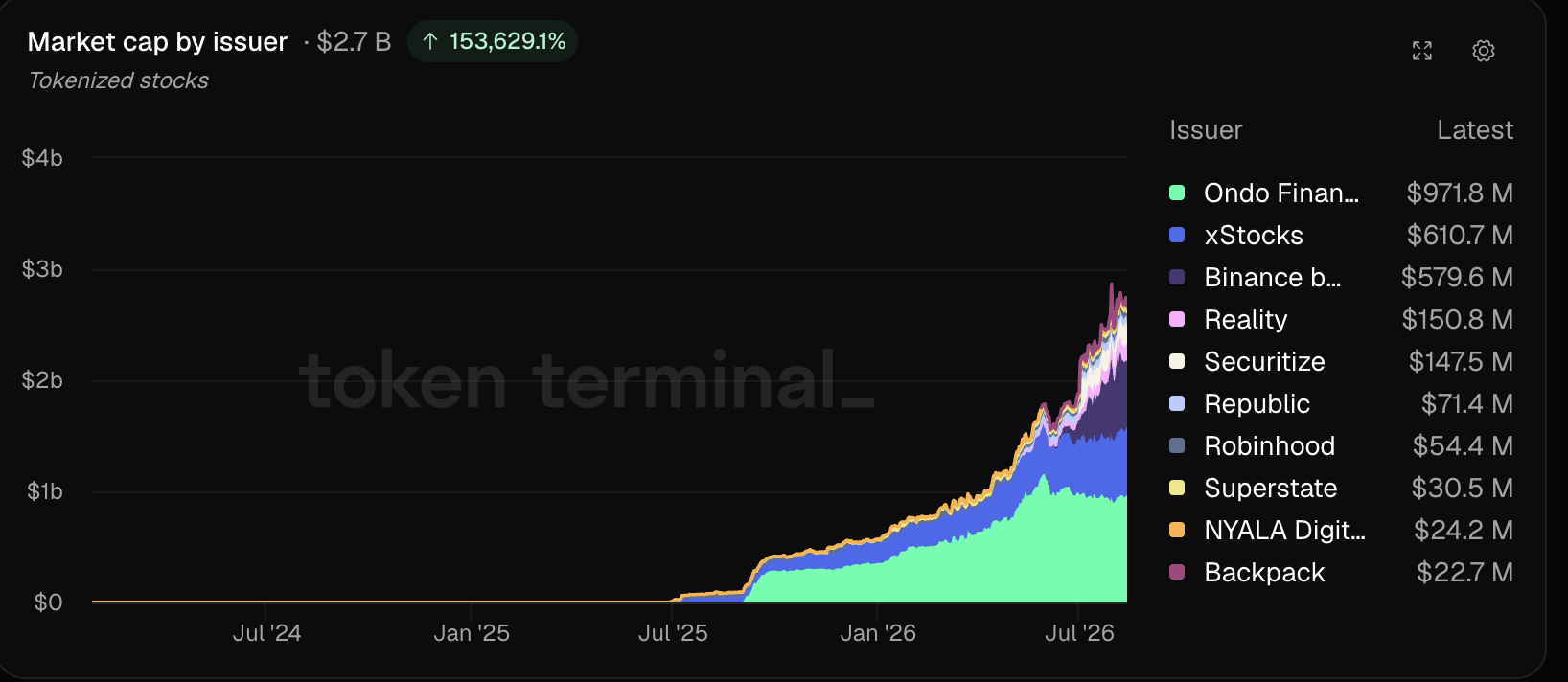
Tokenized stock market cap by issuer. Source: Token Terminal
Magazine: Solana’s fee overhaul increases burn and makes resource hogs pay
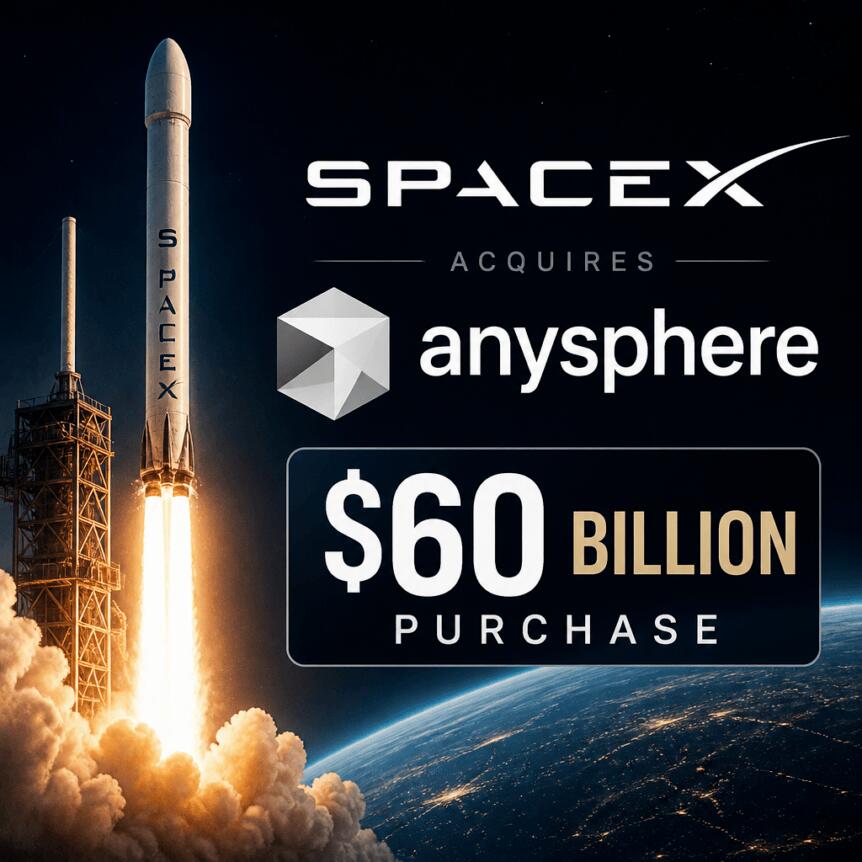
SpaceX has closed its $60 billion all-stock acquisition of Anysphere, the company behind the coding tool Cursor. The company confirmed the merger in a securities filing dated August 14. Cursor now operates as a wholly owned subsidiary under the SpaceX corporate structure.
Merger Terms Take Effect
SpaceX’s subsidiary, X67 Inc., merged directly with Anysphere to complete the transaction. This structure allowed Cursor to convert into a fully owned unit without a lengthy transition period. The filing outlines exact share conversion figures tied to the deal.
Cursor’s common and preferred stock converted into roughly 389.3 million shares of SpaceX stock. That figure reflects the $60 billion valuation set when the deal was first announced in June. SpaceX based the conversion on its average closing price over seven trading days before the merger closed.
Additional equity awards moved through the same process without exception. Vested restricted stock units converted into about 1.75 million shares of Class A common stock. Unvested awards converted into 29.1 million restricted units and 44.4 million stock options for future exercise.
Cursor Moves Under SpaceXAI
Cursor announced the completed deal directly on social media platform X. The company stated it will join the SpaceXAI division going forward. Its stated goal is to strengthen several existing products across the platform.
Those products include Grok Build, Grok Bot, the Grok application programming interface, and Cursor itself. SpaceX intends to fold these tools into a broader development ecosystem. The move follows closely behind the recent release of Grok 4.6.
Analysts see the timing as deliberate rather than coincidental. Grok 4.6 launched just before the merger reached completion. Company leadership positioned that release as an early signal of what a combined engineering team can produce.
Stock Slips Despite Recent Gains
SpaceX shares fell more than 2% at Thursday’s market open. The stock traded near $137 shortly after the opening bell. That dip followed a five-day run in which shares climbed over 23%.
Market watchers linked the earlier rally to anticipation of the merger’s completion. Grok 4.6’s release also contributed to the upward momentum during that stretch. The pullback on merger day reflects a common pattern after major corporate news breaks.
Morgan Stanley issued a bullish note on SpaceX earlier in the week. Analyst Adam Jones set a bull-case price target of $600 per share. He pointed to Cursor as a major driver behind that projected upside.
Jones also highlighted the coding tool’s position in a shifting software market. Code generation continues moving toward automated and commoditised workflows. Cursor, he noted, already holds a dominant position within that specific segment.
The completed deal marks one of the largest technology acquisitions of the year. SpaceX now controls a coding platform used widely across the software industry. How the integration performs will shape the next phase of the company’s expansion into artificial intelligence.
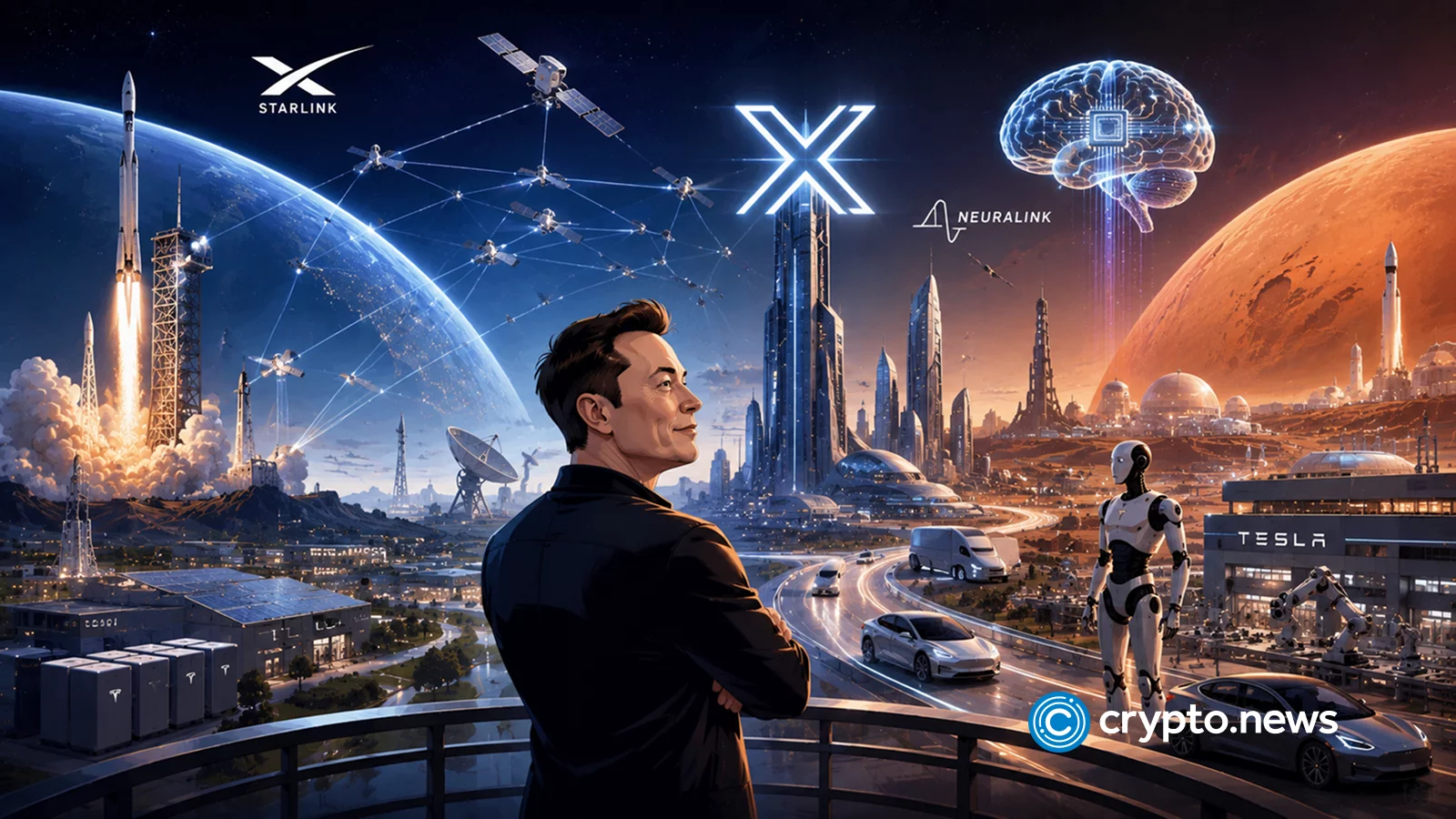
SpaceX has completed its $60 billion stock-based acquisition of Anysphere, bringing the Cursor coding platform into its SpaceXAI business as SPCX shares fell during Friday trading.
Summary
- Cursor has become a wholly owned SpaceX subsidiary after the merger took effect on Aug. 14.
- Cursor investors will receive 389.3 million SpaceX Class A shares under the transaction.
- SpaceX shares traded as low as $135.53 before recovering to about $140.
- Morgan Stanley has retained a $300 target and a $600 bull case for SPCX.
An SEC filing dated Aug. 14 showed that SpaceX completed the acquisition through X67 Inc., a subsidiary formed to carry out the transaction. X67 merged into Anysphere, leaving the Cursor developer as the surviving company and a wholly owned SpaceX subsidiary.
The closing came less than two months after SpaceX signed the merger agreement on June 16. Under its terms, the company valued Anysphere at an implied equity value of $60 billion and agreed to compensate its investors with SpaceX Class A common stock.
SpaceX has issued 389 million shares for Cursor
Cursor’s common and preferred shares outstanding immediately before the merger were automatically converted into rights to receive 389,289,254 SpaceX Class A shares, according to the filing.
SpaceX based the exchange on the volume-weighted average closing price of its Class A shares over the seven consecutive trading days before the acquisition closed. Rather than setting one fixed share price when the agreement was signed, the structure tied the final share count to SPCX’s recent market value.
Vested Cursor restricted stock units were separately converted into rights to receive 1,752,426 SpaceX Class A shares before applicable tax deductions. Holders will receive cash instead of fractional shares where the exchange calculation does not produce a whole share.
Unvested awards will remain tied to future service and vesting requirements. According to the filing, SpaceX assumed the outstanding awards and converted them into about 29,128,326 restricted stock units linked to its Class A shares.
Cursor employees and other holders also received approximately 44,365,047 options to purchase SpaceX Class A stock in place of their previous Anysphere options. Combined with the shares issued to existing investors, the converted awards leave Cursor’s workforce and shareholders exposed to the performance of the publicly traded company.
The SEC disclosure provides a direct U.S. angle for investors because the acquisition consideration consists of Nasdaq-listed SPCX shares. Existing shareholders will absorb the new Class A shares and converted equity awards, while former Cursor investors will gain exposure to SpaceX through the transaction.
The filing said SpaceX issued the merger consideration under Section 4(a)(2) of the Securities Act of 1933, an exemption for transactions that do not involve a public offering. Registration rights attached to the shares are governed by the merger agreement and related documents.
Cursor has joined the SpaceXAI product team
Confirming the closing in an X post, Cursor said its employees would join SpaceXAI and work on several products that already connect the two companies’ AI operations.
“Today, we have officially closed our acquisition. We will join the SpaceXAI team to help make Grok the world’s most useful AI and improve Grok Build, Grok Bot, Grok API, Cursor, and more,” the company said.
The statement points to continued use of the Cursor name, even though Anysphere now sits under SpaceX. Cursor did not announce immediate changes to customer accounts, subscriptions or access to its coding software in the post supplied with the announcement.
Work between the companies began before the merger agreement. SpaceX disclosed in earlier SEC documents that it entered into a compute and option agreement with Anysphere in April, giving the space company the right to buy the startup while the two sides worked together on AI models and related products.
SpaceX said in a quarterly filing that the compute arrangement gave Cursor access to GPU cluster capacity and supported joint work on Grok. The company also said the amount attributable to that collaboration during the three months ended June 30 was not material.
The acquisition plan became public on June 16, when the planned Cursor merger helped push SpaceX shares up more than 17% and briefly lifted the company’s market value to nearly $2.93 trillion, crypto.news reported at the time. SPCX reached an intraday record of $225.64 during the rally.
An earlier report on the company’s IPO filing language noted that SpaceX had warned investors about possible future equity issuance. The Cursor purchase has now shown how the company can use its listed shares to finance a large acquisition without paying the full $60 billion consideration in cash.
SPCX stock has slipped after the merger closed
SPCX opened Friday at $143 and moved between an intraday low of $135.53 and a high of $144.19, according to market data available after the merger announcement. Shares were last trading near $140, down about 0.9% from the previous close, after recovering from the session low.
The retreat left the stock slightly above its $135 initial public offering price but well below its June record. SpaceX sold shares to the public in June before joining the Nasdaq-100, giving American index funds and exchange-traded funds exposure to the company.
Its Nasdaq-100 index entry was expected to generate about $4.3 billion of automatic purchases by passive funds, according to a JPMorgan estimate cited in previous coverage. SPCX also trades through tokenized products and equity-linked perpetual contracts on crypto platforms, although such instruments do not always provide the same ownership or shareholder rights as the underlying stock.
For U.S. investors, the deal adds Cursor’s software business to a company already valued through its launch, satellite internet, defense, AI, and computing operations. The SEC filing does not provide a separate revenue figure, profit contribution, or post-merger valuation for Cursor beyond the $60 billion implied equity value used to calculate the transaction.
Morgan Stanley has tied its bull case to AI growth
Morgan Stanley analyst Adam Jonas has maintained an Overweight rating on SpaceX with a $300 base-case price target and a $600 bull-case target. Reaching the higher figure would value the company at about $8 trillion, according to the firm’s scenario.
In its latest assessment, Morgan Stanley projected that Cursor’s annual recurring revenue could rise from about $4 billion in June to $8 billion by the end of 2026 and approximately $33 billion by 2030. The estimates remain forecasts rather than figures reported by SpaceX in the acquisition filing.
Earlier Wall Street coverage showed that Morgan Stanley’s valuation also depended on Starship, Starlink, and space-based AI infrastructure. Goldman Sachs assigned a $205 price target at the time, while Citigroup set a $200 target.
Jonas said Cursor could account for part of SpaceX’s potential upside as investors receive more information about the company’s AI operations. His bull case also assumes lower costs for placing computing infrastructure in orbit and long-term growth in Starlink connections, conditions that SpaceX has not yet achieved at the scale used in Morgan Stanley’s model.

Cooluli recalls 250,000 minifridges sold on Amazon over fire risk

Robert Kiyosaki Links Bitcoin and AI to an Old Prediction: Who Made It?

Rashford smiling, Sesko and De Ligt back in action – What we spotted in Man United training


-

 News Videos7 days ago
Can Astrology Help Find Gold and Silver Trends? A Financial Astrology Guide
-

 Fashion5 hours ago
Weekend Open Thread: Ann Taylor
-

 Business5 days ago
Datadog: Best Of Breed For Multiple Reasons
-

 Business6 days ago
How to Start a Cleaning Business: A Step-by-Step Guide
-

 Business6 days ago
BDC Weekly Review: Private BDC Q2 Numbers Are Strong
-
 NewsBeat3 days ago
Communication cards help banking customers access services or report scams
-
 Business4 days ago
Oil Price Today (August 11): Crude oil rises to $88 after Trump’s compensation demand dents Hormuz opening. Here’s why
-
 Entertainment7 days ago
10 R-Rated Drama Movies That Can Be Called Masterpieces
-

 Fashion5 days ago
Amazon Sundays: Closet Care Before Fall
-

 Business7 days ago
SharkNinja Keeps Eating
-

 Politics6 days ago
Be quiet, Miriam! – spiked
-

 Business5 days ago
5 Things You Must Know About Jorge Messi, the Father and Longtime Agent Who Shaped Lionel Messi’s Career
-

 Business6 days ago
Mutual Fund Manager Scoops Up Beaten-Down Stocks
-

 Politics5 days ago
Ben-Gvir’s crocodile project halted but abuses at Ketziot Prison continue
-

 Tech7 days ago
Metabase SQLi zero-day exploited in customer data-theft attacks
-

 Politics5 days ago
The Church of England’s ruinous reparations racket
-
 Crypto World4 days ago
Why Did Nvidia Stock Fall on Monday Despite a $500 Billion Wall Street AI Deal?
-

 Politics6 days ago
Calls to permanently pedestrianise central Belfast following festival success
-

 Crypto World6 days ago
A Deep Dive Into One Of The Most Significant Hacks In Recent Memory
-
 Crypto World6 days ago
Bitcoin ETFs draw $853.5M in five-day inflow streak
You must be logged in to post a comment Login