Connect with us

NewsBeat

experts in sex, mental health, nutrition and addiction assess the nation’s changing wellbeing

Published

on

experts in sex, mental health, nutrition and addiction assess the nation’s changing wellbeing

In this fourth part in our series on how the UK has changed in the past 25 years, we look at health.

Life expectancy and illness

Michael Murphy, Emeritus Professor of Demography, London School of Economics

A good way to follow the health of a nation is to glance at what is known as period life-expectancy. This calculates how long a person born today would live if the current death rates remained exactly the same for the rest of their life. This had two major turning points in the UK over the period: a marked slowdown in improvements from around 2011, and a sharp, historically unprecedented fall in 2020 during the COVID-19 pandemic.

The slowdown in improvement from the early 2010s was part of a wider pattern across high-income countries. The UK and the other five largest of these nations, including France, Germany and Italy, experienced similar stagnation, although the UK’s was somewhat more persistent.

Advertisement

How has the UK changed since the start of the century? From Blair to Burnham, from the dotcom era to AI agents, time has certainly not stood still. In this six-part series, a team of some 35 experts look at everything from defence spending to species populations to the rise of populism to try and make sense of the intervening years.


The graph below also shows that contrary to frequent claims that the UK’s mortality performance is uniquely poor, its period life-expectancy gains were broadly similar to these comparator countries and the OECD average between 2000 and 2024. For example, France’s period life-expectancy increased by an annual average of only four days more than UK over that time.

Advertisement

Changing life-expectancy

Life expectancy across high-income countries 2000-25


World Bank Development Indicators, CC BY-SA

The most dramatic disruption occurred with the COVID 19 pandemic. The UK’s 179,000 COVID-related deaths in 2020–21 represented the largest mortality shock since the second world war. As it turned out, the nation’s mortality rate peaked in 2020 and has fallen each year since. By 2024 it had returned to levels close to 2019, the lowest ever, and we’ve seen a similar trend across western Europe.


À lire aussi :
Britain’s quarter century: shrinking families, ethnic tensions and queer winners and losers


The long-term implications of the pandemic remain uncertain, but they are potentially severe and likely to affect all groups of society. Many people have experienced life-changing effects from long COVID. Evidence from earlier pandemics, including the 1918–19 influenza pandemic, also suggests that babies in their mothers’ wombs may have experienced long-term negative health effects from exposure to the virus.

Advertisement

Causes of death

Underlying these mortality trends in the UK are shifts in the major causes of death. In 2024 cardiovascular disease (26%), cancer (26%), respiratory disease (12%) and dementia (9%) accounted for three quarters of deaths in England.

Changes in cause of death classification make it difficult to see whether these have changed long term. But the early 2000s saw rapid declines in cardiovascular mortality, for instance, driven by improvements in treatment, prevention and reductions in smoking.

However, these gains have slowed, and since 2019 progress in reducing cardiovascular deaths has stalled. This reflects a combination of fewer medical breakthroughs in related chronic diseases such as diabetes and high blood pressure, and rising pressures on the health and social care systems.

Advertisement
Surgeons performing heart surgery

Heart disease progress has stalled in recent years.
The Photolibrary Wales

More generally, changing risk factors will be important for the future. We’re smoking much less today, from 26% of adults in 2001 to 11% in 2023, which reduces the scope for further mortality gains from tobacco controls.

In contrast, obesity has become the top lifestyle danger, with the proportion of adults classified as obese in England rising from 20% in 2001 to 30% in 2024. These trends imply a growing future burden of cardiovascular disease, diabetes and also certain cancers, with long lag times before the full effects are observed.

This rise in obesity will also be contributing to rising levels of non-fatal but disabling conditions. As many as 26% of adults report chronic pain, and half of those report high-impact pain (meaning long-term pain that severely limits your ability to function in daily life). Low back pain is now the leading cause of years lived with disability in the UK, mirroring global trends.

Advertisement
Young man at a computer experiencing lower back pain

Lower back pain is now the leading cause of lived-with disabilities.
Krakenimages.com

Mental disorders are rising steadily, with common mental health conditions increasing from 17.5% in 2000 to 22.6% in 2023-24 among working age adults. The rates are higher among younger people: 26% among 16-24 year olds compared with 10% among those aged 75 and over.

There also appears to have been an increase in poor health in general. Witness the fact that healthy life expectancy in England increased modestly between 2000–02 and 2017–18 (the last period that did not include the COVID-19 pandemic), but only around half of additional years gained were spent in good health.

While mortality improvements are likely to resume, they may do so at a slower pace than in the late 20th century. The ageing population, rising obesity and worsening health among younger people all pose risks. The prolonged deterioration in US mortality linked to drug related deaths and “deaths of despair” also illustrates that you certainly can’t assume progress will continue. The UK’s future health will depend on its ability to address chronic disease, reduce risks like obesity and strengthen its ability to respond to future shocks.

Eating and drinking habits

David Dearlove, Principal Researcher, Healthy Life Mission, Nesta

Jurin Katayama, Analyst, Healthy Life Mission, Nesta

Advertisement

Lydia Leon, Senior Mission Manager, Healthy Life Mission, Nesta

In 2001 meal deals were a novelty, phones had buttons, and the Food Standards Agency (FSA) was a year-old watchdog. Twenty-five years on, Britain’s relationship with food is very different, with big changes in the types of food available and how we buy it, as well as how it is promoted and regulated.

When it comes to how people buy their food, supermarkets still dominate. The retail landscape has been disrupted by the rise of discounters like Aldi and Lidl, whose market share climbed from a mere 3% in 2002 to about 14% by 2021. But given that large supermarkets continue to supply over 80% of our average daily calorie intake, their influence over public health remains profound.

Food bought outside of the home has seen large changes. Across Great Britain, the density of fast food outlets – meaning per head of the population – rose by 36% between 2011 and 2024, outpacing the 17% growth in supermarket density. This supply surge reflects shifting demand – while only a quarter of UK adults ate out once a week or more between 2008 and 2012, in 2021 this rose to over 60%.

Advertisement
McDonald's drive through in Skegness

Takeaway consumption has exploded.
Graham Oliver

Unfortunately, food prepared out of home rarely is the healthy choice. Most of these meals exceed the recommended calorie intake for an eating occasion, and about 20% of meals contain over half the total recommended daily intake.

This physical saturation is mirrored in our digital lives, as ordering food to our door has become easier than ever. When Just Eat launched in 2001, ordering food online was a novelty. Today, platforms such as Just Eat, Deliveroo and Uber Eats connect us to thousands of takeaways at any hour, with their market worth £13.9 billion (2024). Online grocery shopping has also risen, from barely existing in 2001 to now making up around 12% of the grocery market.

Ever more marketing

The way food is bought and promoted has not only gone more digital, but is now dominated by pervasive marketing and personalised nudges. Outdoor food and drink advertising, covering everything from billboards to train carriages, has more than tripled in real terms over the past two decades, now accounting for £590 million in advertising-spend a year. The rise of apps and loyalty schemes has also expanded the ways customers can be reached, with regular notifications and time-limited “special” deals designed to make us order more often and in larger amounts.

Advertisement

Of the £2.4 billion spent on UK food advertising in 2024, investment in nutritious alternatives remains negligible. For instance, while advertising focusing on fruit and vegetables now accounts for less than 5% of traditional food and non-alcoholic drink advertising budgets, unhealthy foods account for closer to a third.

Billboard advertising chocolate

Everywhere you look.
David Bagnall

There has also been a shift in the regulatory landscape. We’ve seen a gradual move away from voluntary schemes such as Public Health England’s calorie, salt and sugar reduction programmes towards more interventionist policies, including the 2018 Soft Drinks Industry Levy, which incentivised many manufacturers to reduce sugar content to avoid charges.

Expanding on this, in 2025 the government announced the introduction of the healthy food standard policy. This will require large food businesses, including supermarkets, to report on the healthiness of their sales, and meet mandatory targets for improvement. Yet while the regulatory framework is improving, further intervention will be necessary to get the nation to eat more healthily.

Alcohol and drug use

Ian Hamilton, Honorary Fellow (Associate Professor) in Addiction at the University of York

Advertisement

Drugs, like fashion, change over time. Since the millennium, for instance, we have seen a surge in cocaine use. Once regarded as an expensive drug used by the elite, it is now more affordable than ever and more potent, which explains its greater popularity.

This has been facilitated by increased global supply and organised crime groups able to transport and distribute the drug effectively. Unfortunately, rising use has been accompanied by an equally rapid increase in cocaine fatalities, with nearly 1,300 in 2024 in England and Wales alone.

Cocaine line

Cocaine deaths are surging.
xpixel

The last 25 years has witnessed the emergence of synthetic drugs, particularly synthetic opiates, which are much more potent than the traditional organic opiates such as heroin. Like cocaine, the rise in synthetic drugs has seen an increase in drug-related deaths, with the UK having the highest mortality rate in Europe.

Another group of synthetic drugs that have emerged are novel psychoactive substances, also known as legal highs, even though they were banned a decade ago. Examples include spice, a synthetic form of cannabis, and the stimulant referred to as monkey dust.

Advertisement


À lire aussi :
Britain’s quarter century: wealth and widening inequality


As with all drugs, the negative consequences of using them are not experienced equally. It is the vulnerable, poor, homeless and living in the most deprived areas of the UK that are more likely to die or suffer poor health from using these drugs. Synthetic drugs have caused havoc and misery in prisons and among rough-sleeping populations.

Drug use in the UK 2000-25

Advertisement
Graph showing drug use in the UK since 2000


ONS, CC BY-SA

Cannabis remains the most widely used illicit drug in the UK. Adult use has remained stable over the last 25 years. However, this disguises the trend of falling cannabis use for young people (aged 16-24 years) since 2020.

Alcohol and the internet

Without a doubt, the advent of the internet has directly and indirectly shaped which drugs are widely used and those that are not. For example the data shows that since the millennium, young people have shunned alcohol.

This is thought to be due in part to young people not wanting to be seen to be intoxicated or behaving badly because of drinking on social media. In parallel, this cohort are more health conscious and keen to adopt a healthy lifestyle which doesn’t include alcohol.

Over the same period, consumption of alcohol by adults has remained relatively stable. Older adults are now more likely to drink than their younger counterparts: 84% of those aged 55-64 years old compared to 65% aged 16-24 years old.

Advertisement

Alcohol-related deaths in the UK

Chart showing how alcohol-related deaths in the UK have changed over time.

Age-standardised alcohol-specific death rates in the UK per 100,000 people.
Alcohol Change, CC BY-SA

The internet has also opened access to drugs through platforms like WhatsApp, Facebook and Telegram. People can simply browse dealer menus via Instagram, for example, or message a Telegram bot, and have drugs brought to their door within the hour.

What hasn’t changed is drug policy. Successive governments have stuck with the 1971 Misuse of Drugs Act, despite the fact that applying a 50-year-old policy to contemporary patterns of drug use is a terrible mismatch. When this legislation was enacted many of the most widely used drugs today didn’t exist. There is also nowadays a consensus that drug use should be framed by health rather than penal policy.

Yet there is no political appetite for policy change, just the continued mantra of getting tough on drugs by trying to disrupt supply and distribution. In contrast, organised crime is innovative and adaptable.

Advertisement

Sexual behaviour

Soazig Clifton, Academic Director for Britain’s National Surveys of Sexual Attitudes and Lifestyles (Natsal), University College London

By the early 2000s Britain had experienced decades of social and demographic change dating back to the second world war. Marriage rates had fallen, people were having children later and in smaller numbers, and family structures had become more diverse.

These changes were accompanied by increasingly liberal attitudes towards sexuality. Same-sex relationships were becoming more socially accepted. Younger generations were having sex earlier and marrying or cohabiting later than previous generations.

Public concern had also shifted. The widespread fears around HIV/Aids that had characterised the 1980s and early 1990s were receding. Attention had turned to the UK’s rate of teenage pregnancy, which was among the highest in Europe, and rising levels of chlamydia and other sexually transmitted infections.

Advertisement
Illustration of a man with an STD

Sexually transmitted diseases were a major concern circa 2001.
New Africa

The best evidence on population trends in sexual behaviour comes from Britain’s National Surveys of Sexual Attitudes and Lifestyles (Natsal), one of the largest scientific studies of sexual behaviour in the world. Conducted approximately every decade since 1990, Natsal provides representative snapshots of the population, offering a unique window into Britain’s changing sex lives.

The most recent published survey, Natsal-3 (2010-12), documented substantial changes in women’s sexuality during the 2000s. Women reported higher numbers of sexual partners and more same-sex experiences, with one in six women reporting sexual experience with another woman.

Vaginal and oral sex remained the core of the heterosexual sexual repertoire since the first survey in 1990. However, the 1990s and 2000s also saw increases in heterosexual anal sex, reported by around one in six people by 2010-12.

Yet despite increasing diversity in sexual behaviour, Natsal identified another trend: people were having sex less often. Among 16-44-year-olds in 2010-12, the median frequency of sex was three times per month, compared to four times in the two previous surveys.

Advertisement

Where are we now?

The latest Natsal data, collected between 2022 and 2024, will be published later this year. It will provide the first comprehensive picture of Britain’s sex lives after a decade shaped by economic uncertainty, the COVID pandemic and the growing digitalisation of everyday life. For the first time, Natsal-4 collected data on online sexual activities, including pornography use and sexting, as well as expanding measures of gender to include transgender and non-binary identities.

Other data sources offer clues about what we might find. Natsal-COVID, an online survey conducted during the pandemic, suggested further declines in sexual frequency and potential reductions in behaviour associated with sexually transmitted infections (although these comparisons are limited by methodological differences).


À lire aussi :
Britain’s quarter century: Blair, populism and the battle over human rights

Advertisement

Meanwhile, data from the Office for National Statistics shows increasing numbers of people identify as LGBTQ+. Research with adolescents in Britain and other European countries has also shown declines in sexual experience. These changes sit alongside broader shifts in young people’s lives, including declining rates of smoking and drinking, rising levels of poor mental health and high rates of loneliness, more time online and less time socialising face-to-face.

Whatever Natsal-4 reveals, the picture will probably keep evolving. Societal change and new technologies including AI are likely to shape our sexual behaviour and intimate relationships in ways we cannot yet predict.

Mental health

Kevin Stone, Associate Dean for Partnerships and Business Development (Health and Social Care), University of South Wales

Sarah Vicary, Professor of Social Work and Mental Health, The Open University

Advertisement

In 2000, care in the community was gaining ground, but provision remained uneven. Although the closure of long-stay psychiatric hospitals had reshaped the system, hospital admission remained a dominant response to people experiencing an acute mental health crisis. Patient voices were also beginning to emerge more strongly against a backdrop of stigma, with growing demands for better quality care in both primary and secondary services.

Since then, we have seen significant changes in attitudes and responses to mental health needs. Mental health is no longer seen simply as a private struggle that should be hidden, but increasingly as a public health concern.

Awareness-raising has helped to create a culture in which speaking about mental health is more acceptable than it was in 2001, and more actively encouraged everywhere from workplaces to schools to the home. For those with severe diagnoses, the shift away from institutional care before the 1990s towards community-based support has also been clear.

Nonetheless, we are seeing more children and young people reporting adverse childhood experiences, trauma and neglect, all of which can lead to significant mental health needs. We also continue to see high numbers of detentions under mental health legislation involving people in severe mental distress, with a disproportionate impact on men from ethnic minority groups.

Advertisement

Mental health-related absences from work continue to be a problem – stress, depression and anxiety cost 22 million working days in 2024/25. Societal barriers like stigma still prevent many people from discussing their declining mental health or seeking help early, which undermines effective prevention.

The transformation

Davina McCall

Davina McCall.
Sopa Images Limited

When it comes to raising awareness, anti-stigma campaigns such as Time to Change, led by Mind and Rethink Mental Illness, alongside World Health Organization initiatives, have contributed to changing behaviour and attitudes. World Mental Health Day each October and campaigns led by YoungMinds have helped reinforce this message. The same goes for public figures and people with lived experience, such as Stormzy and Davina McCall.

We have seen the growth of mental health first aiders in the workplace, mental health champions in schools, and helplines offering non-judgmental listening and support.

Advertisement

The principle that mental health should be valued as highly as physical health (known as parity of esteem), has increasingly shaped NHS policy. The NHS commissioners who oversee health services within particular areas have reinvented mental health services to place greater emphasis on community-based support and treatment.

This has included dedicated mental health workers in emergency departments, and doctors connecting patients to non-medical community activities to help improve their outlook (this is known as social prescribing). Access to psychological therapies has also improved and is now recognised through NHS Talking Therapies in GP practices and primary care settings.

Two women in a talking therapies session

NHS Talking Therapies has been a growth sector.
Marco Aslan

The authorities are also giving more attention to societal factors affecting people’s mental health. When patients come to GPs with anxiety triggered by things like debt or poor housing, they are expected to refer them to a link worker to help overcome these problems. It’s now increasingly recognised that responses to mental health needs should never be about medication alone. There has also been growing recognition of the role played by family members, nearest relatives, friends and unpaid carers.

Yet NHS services are still too often forced to respond to crisis rather than prevent it. Funding pressures and workforce shortages have combined with the increased demand for mental health services to place the system under growing strain.

Advertisement

As well as addressing this, the wider challenge is to build a society and system that values prevention, compassion, choice, dignity and timely support. That way, mental health won’t just be protected in moments of crisis, but throughout the course of everyday life.


For you: more from the Britain’s quarter century series:

To hear about new Insights articles, join the hundreds of thousands of people who value The Conversation’s evidence-based news. Subscribe to our newsletter.


Advertisement

Source link

Continue Reading
Click to comment

You must be logged in to post a comment Login

Leave a Reply

NewsBeat

Keely Hodgkinson throws off medal in emotional BBC interview after shock result

Published

on

Wales Online

Keely Hodgkinson was beaten to the 800m gold medal at the European Championships in Birmingham on Friday night

Keely Hodgkinson could not hide her disappointment after finishing second in the 800m final at the European Championships in Birmingham this evening.

Advertisement

The Olympic and reigning European Champion clocked an impressive time of 1:55:01 but was pipped to the post by Swiss runner Audrey Werro in a closely contested race.

Werro bounced back from a dramatic tumble in her semi-final to clock 1:54.81 and establish a new Championship record, possessing just too much for her Team GB opponent.

Femke Broeders-Bol completed the podium and broke the Netherlands’ national record, having only recently made the switch from 400m to 800m.

Hodgkinson couldn’t conceal her frustration in a post-race interview, momentarily removing her silver medal after failing to secure the one she wanted

Advertisement

Speaking after the race, Hodgkinson took off her medal and told the BBC: “I’m kidding, that was a joke. Yeah, a bit of mixed emotions. I think with that level of competition, any medal is a really good achievement.

“So another one to add to my collection. I can never be disappointed with that. But yeah, I’m defending champion, so I wanted to do that.

“I knew it was going to come down to the wire. I really thought I was going to win today, but I guess it just wasn’t meant to be. I didn’t do anything wrong. It’s just one of those things.”

Advertisement

Werro controlled the race from the start and when questioned whether that was the intended strategy, Hodgkinson said: “I think there were so many different ways it could play out.

“It was all down to figuring out the first 100 metres. Audrey wanted to take it on. With that wind, I was happy to let her.

“But yeah, we’re all really great athletes and I knew it was going to be close. I look forward to the next match-up.”

Countdown to Kickoff: The Essential 26/27 Sky Sports Bundle

Advertisement
This article contains affiliate links, we will receive a commission on any sales we generate from it. Learn more
Content Image

£51

£35

Sky

Get the deal here

Sky’s Essential TV and Sky Sports bundle includes at least 215 live Premier League clashes across the 2026/27 season, with more than 1,500 games from the EFL and beyond, plus F1, golf and darts.

This introductory offer saves £384 compared to the standard price, with every package also providing 100 regular channels alongside free Netflix and discovery+ subscriptions.

Advertisement

Despite claiming second place, the 24-year-old said racing against such elite-level athletes brings out her finest performances.

She said: “I’ve said all year it’s really motivating to be in such a competitive event. I love it. I think it brings out the best in me.

“Championship racing is what it’s all about. You don’t know how it’s going to go. Some people can have a good day. Some people can have a bad day.

“I had a pretty good day today, I think. It just didn’t go the way that I wanted it to.”

Advertisement

Source link

Continue Reading

NewsBeat

Victor Osimhen responds to Arsenal transfer approach after apology to Galatasaray fans | Football

Published

on

Victor Osimhen responds to Arsenal transfer approach after apology to Galatasaray fans | Football


Source link

Advertisement
Continue Reading

NewsBeat

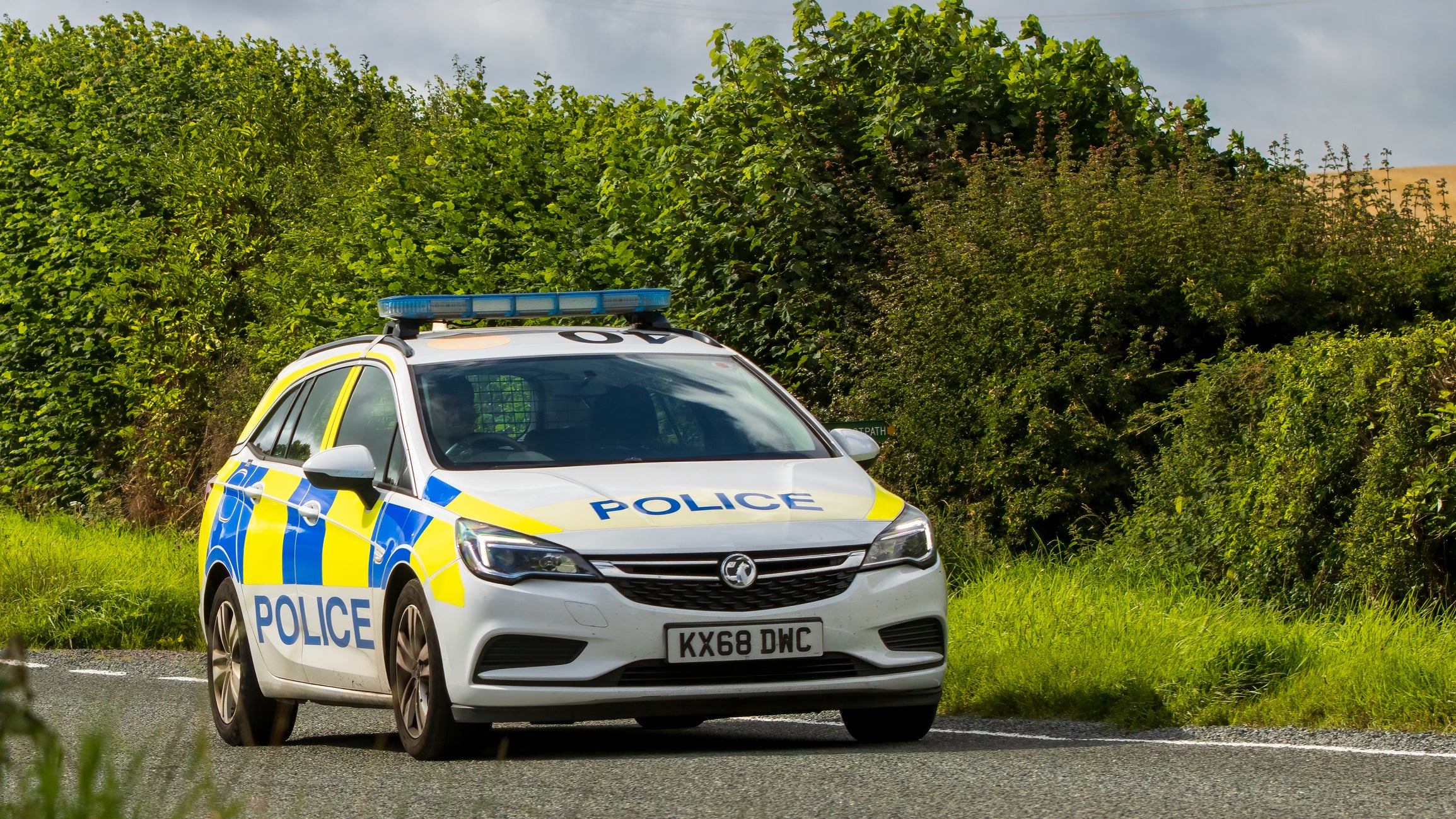
Linslade: Man arrested on suspicion of murder after teen dies in Bedfordshire street

Published

on

Linslade: Man arrested on suspicion of murder after teen dies in Bedfordshire street

A man has been arrested on suspicion of murder after a teenage boy died following reports of a possible burglary, police said.

Officers were called to initial reports of a possible break-in in Soulbury Road, Linslade, near Leighton Buzzard, at around 10.25pm on Thursday, Bedfordshire Police said.

A 17-year-old boy was found unresponsive when emergency services attended the scene.

First aid was provided but he was pronounced dead shortly after, the force said.

Advertisement

A man was arrested at the scene on suspicion of murder and is in custody.

Three other men were also arrested in connection with the incident, which is being investigated by the Bedfordshire, Cambridgeshire and Hertfordshire Major Crime Unit.

Enquiries have so far found “no evidence whatsoever that the victim was carrying out, or attempting to carry out, a burglary”, Bedfordshire Police said.

Three other men were also arrested in connection with the incident, which is being investigated by the Bedfordshire, Cambridgeshire and Hertfordshire Major Crime Unit
Three other men were also arrested in connection with the incident, which is being investigated by the Bedfordshire, Cambridgeshire and Hertfordshire Major Crime Unit (Getty/iStock)

A 76-year-old neighbour, who did not want to be named, told the Press Association (PA) she heard “a lot of noise and shouting going on” on Thursday evening, and “a bit of a bang”.

She thought it was “just drunkards walking home” or a burglary as “there was a bit of movement in gardens”.

Advertisement

She said: “All I knew was there’s a lot of noise and shouting going on.

“And, to me, I thought it was some young lad drunk and looking over gardens, because there was a bit of movement in gardens, and looking for bikes or something to steal.

“But it obviously was not that, it was a lot worse than that.”

She added: “I thought it was just drunkards walking home, and, you know, I thought I heard a bit of a bang, and I think ‘oh my god, my car’s up there’.

Advertisement

“So I went to look out, and then it carried on around the back, and people’s lights were coming on.

“I think I’ve got security lights coming on, and I was a bit worried because I was on my own, so you know you don’t want to go down and look into anything.

“Next thing is a lot of police presence, a lot of people out there, and I just didn’t go down because, well, I just didn’t want to be down.”

Advertisement

Asked if the area was usually safe, the neighbour said: “Yes, there was an incident probably four years ago, maybe about that, not long ago, where again somebody had gone over the gardens between these houses at the back view and taken someone’s lawnmower.

“And, I mean, my sheds weren’t even locked. They are now, I always lock now since then.”

She said the area around a house on Soulbury Road remained cordoned off on Friday evening, with police and forensics outside.

The victim’s next of kin have been informed about the incident, Bedfordshire Police said.

Advertisement

Detective Inspector Caeva Taylor said: “This is an incredibly tragic incident in which a 17-year-old boy has lost his life and our thoughts are with his loved ones at this unimaginably difficult time.

“We currently have one person in custody on suspicion of murder, and three other men are also assisting us with our enquiries.

“Our team is working hard to establish what has led to the boy’s death and we understand the concern this will cause in the community.

“The initial 999 call to police was to report a possible break-in in progress, however our enquiries so far have found no evidence whatsoever that the victim was carrying out, or attempting to carry out, a burglary.

Advertisement

“We have been carrying out a number of enquiries today including reviewing CCTV and speaking to people in the area, and we’re urging the public to help us by letting us know any information they may have. In particular, we’re urging anyone with any doorbell or CCTV footage to get in touch immediately.”

Anyone with information can visit beds.police.uk/ro/report, call 101 and quote reference Operation Breakwater or contact Crimestoppers anonymously on 0800 555 111 or on crimestoppers-uk.org.

Source link

Advertisement
Continue Reading

NewsBeat

The One Show 20th anniversary episode interrupted by Government wildfire alert

Published

on

Wales Online

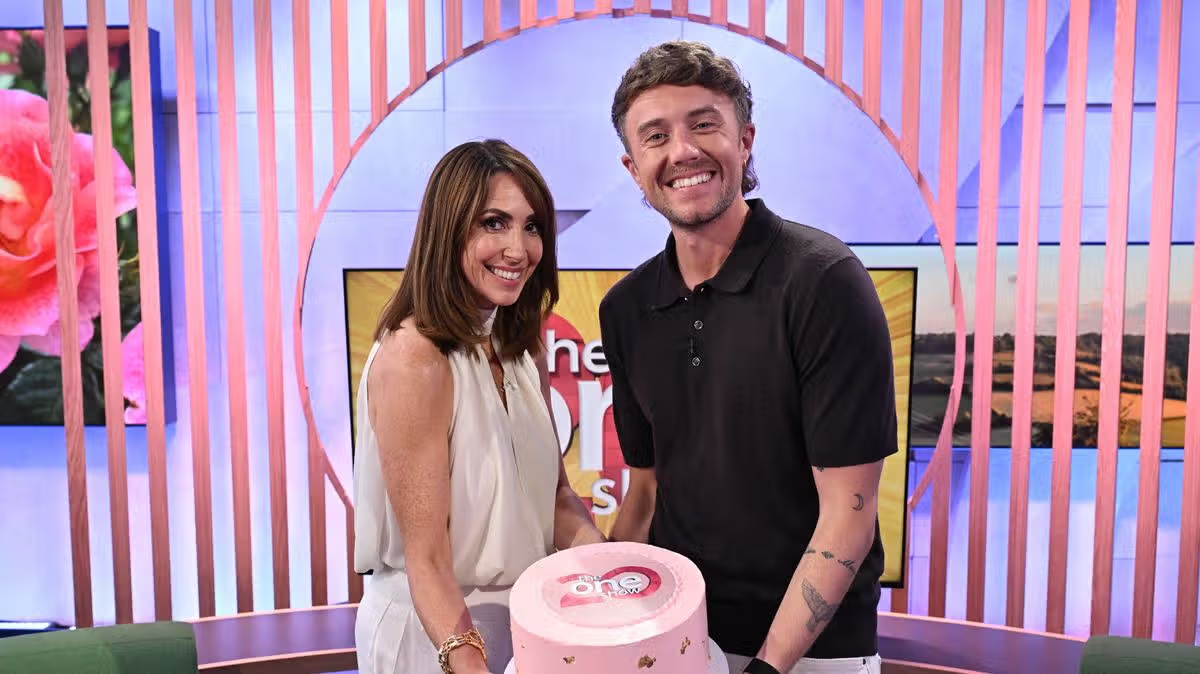
It was a 20th anniversary special show when the Government alert interrupted

The One Show was in the midst of celebrating its 20th anniversary special when the episode was interrupted just minutes later with a blaring alert from the Government.

At about 7pm this evening, mobile phones were issued with an alert about the risk of wildfires. It urged people not to start any fires, such as disposable barbecues or fireworks, to combat the issue that has gripped the country in recent weeks.

Advertisement

The BBC chat show was mere minutes into the start of its extended hour-long anniversary special when hosts Alex Jones and Roman Kemp were drowned out by the loud alarm.

When introducing the segments set to air across the episode, Kemp was explaining how former host Christine Lampard was returning to the studio when the alarm could be heard on the broadcast.

While Kemp pushed through and kept speaking, Jones shook her head and raised her hands, before she said: “You couldn’t make that up could you. Is that a fire alarm?”

Advertisement

Kemp then faced someone off camera and asked: “Is there some sort of fire alarm?”

“We continue,” they both said, before running through the rest of the segment introductions before the alarm cut out and Kemp said: “Ok, it’s stopped”.

The noise was an emergency alert sent out to the phones of people across England and Wales to warn communities from the growing threat posed by wildfires.

The alert, which were sent on a rolling basis from 7pm, warned people not to light anything that could spark a fire, including barbecues, campfires, and fireworks.

Advertisement

Recipients have also been urged to report any fire immediately by calling 999.

Following the airing of a segment, Kemp then told viewers: “As you will probably be aware that was actually a wildfire alert on everyone’s phones.

“You would have heard it on the opening of our show, but as always we hope everyone is staying safe, of course.”

At around the same time, theatregoers taking their seats ahead of a performance of Jesus Christ Superstar at the London Palladium gasped as the alert rang out on phones across the auditorium.

Advertisement

Later in the show presenters Clara Amfo and Angellica Bell also faced disruption.

When presenting a segment outside, an ambulance could be heard driving past with its sirens on, nearly drowning the presenters out for about 15 seconds as they tried to speak.

Elsewhere during the episode, the event celebrated the long-running show, speaking to former presenters, guests and people who have been assisted by the programme.While being reunited with some people she helped in past episodes, Bell broke down in tears, with Jones declaring: “Angellica doesn’t cry often, so that’s a result!”

Advertisement

The episode also looked back at celebrity interviews and past musical performances from artists including Harry Styles, Elton John, Olivia Dean, Stormzy and Take That.

Wrapping up the show, Jones then asked to share a message with viewers, in which she said: “A huge thank you to the team and crew who work relentlessly hard on this programme to make it a brilliant show for all of you every day.

“Thank you for all of the guests for entertaining us, being so generous with their time and just being all-round nice people. Thank you to all of my co-hosts over the years. I’ve been so lucky to sit next to all of them.

She added: “Lastly, thank you to all of you at home. You are the most important people in all of this. Thank you for being with us every weekday. It’s a real privilege for us all to be with you all at seven every night.”

Advertisement

The episode then ended with a performance from Tom Grennan.

Ensure our latest news and sport headlines always appear at the top of your Google Search by making us a Preferred Source. Click here to activate or add us as Preferred Source.

Source link

Advertisement
Continue Reading

NewsBeat

Cambridge professor Jason Arday reportedly found dead amid plagiarism row

Published

on

Cambridgeshire Live

Jason Arday recently quit his role at the University of Cambridge and cancelled his upcoming memoir

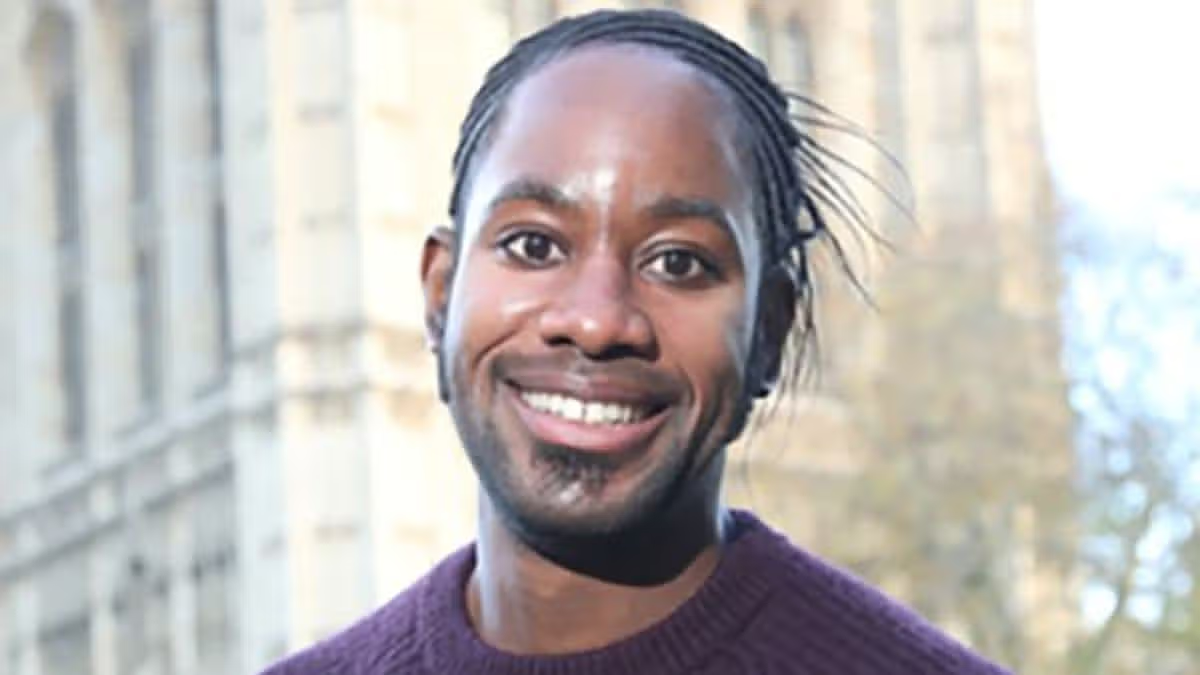
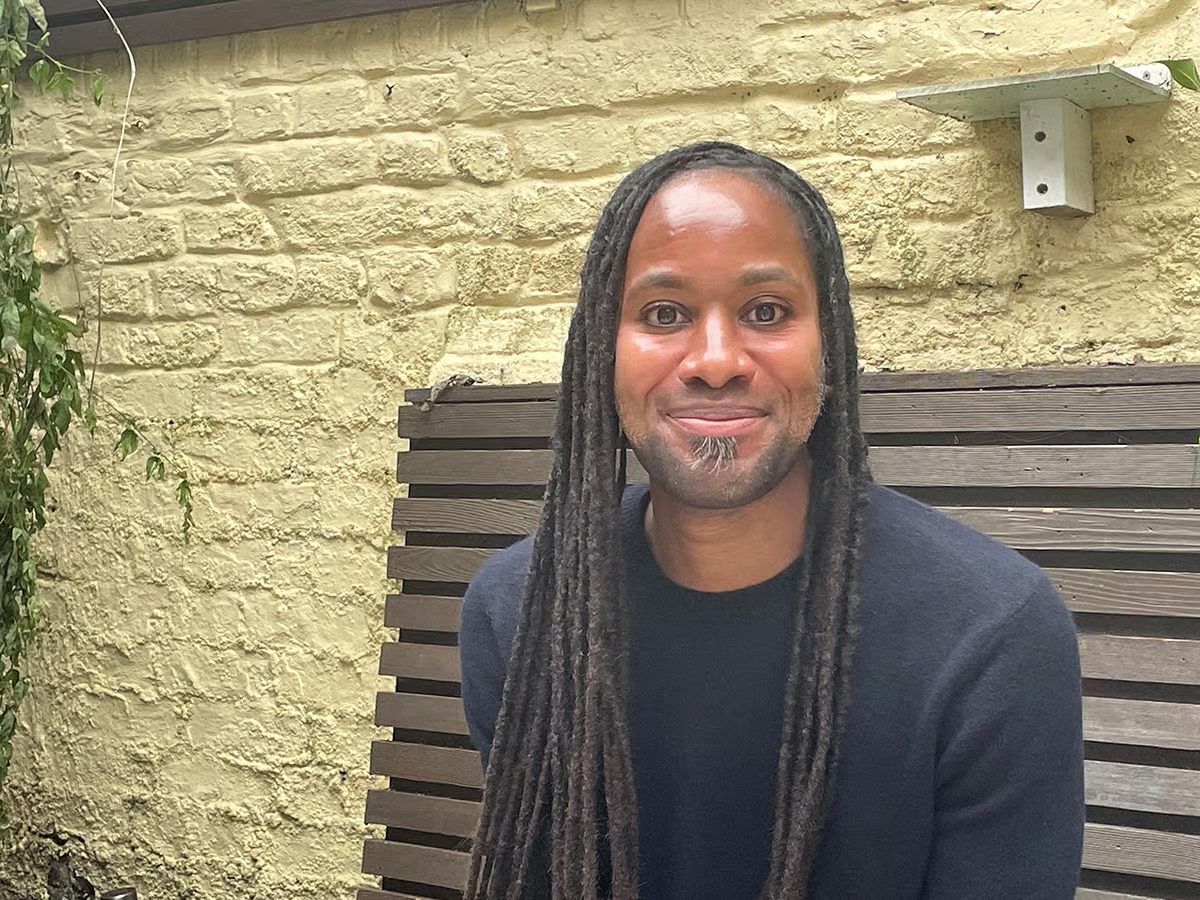
Controversial university professor Jason Arday has reportedly been found dead at his home address. The Metropolitan Police said officers attended Daley Thompson Way in Battersea, where the academic lived, on Friday afternoon.

It was there a 41-year-old man was found “unresponsive” and later pronounced dead at the scene. The force said “Police were called by the London Ambulance Service at 15:12hrs on Friday, 14 August following a report that a man had been found unresponsive inside a property on Daley Thompson Way, SW8.

Advertisement

“Sadly, a 41-year-old man was pronounced dead at the scene. His next-of-kin have been informed and are being supported by officers.

“At this time his death is being treated as unexpected, but is not believed to be suspicious. The case is being investigated by officers from the Met’s Central South Command Unit. A file will be prepared for the coroner.”

A London Ambulance Service spokesman added: “We were called at 3.06pm on Friday 14 August to reports of an incident on Daley Thompson Way, SW8.

“We sent a number of resources to the scene, including an ambulance crew, an advanced paramedic in a fast response car and members of our Hazardous Area Response Team. Sadly, a person was pronounced dead at the scene.”

In a statement, University of Cambridge Vice-Chancellor Professor Deborah Prentice said: “We are desperately saddened to hear this tragic news. Our heartfelt sympathies go to Jason Arday’s family and friends at this incredibly difficult time.”

Prof Arday, a professor of sociology of education who became Cambridge’s youngest black professor in 2023, quit following a series of media reports alleging he plagiarised his PhD thesis – completed at Liverpool John Moores University – and other research.

Further questions were asked in the press about the truth of other claims he made, including saying he ran 600 miles in six days and that he had raised £5.5 million for charity.

Advertisement

An investigation at Liverpool John Moores University cleared Prof Arday of wrongdoing. Durham and Glasgow universities are investigating the circumstances around Prof Arday’s appointment to academic posts there and Cambridge’s Jesus College has accepted his resignation from his fellowship, according to Prof Prentice.

Prof Arday said in his open resignation letter that the “only way to bring this chapter to an end is to step away”.

He said: “This decision should not be interpreted as a loss of faith in scholarship or in the values that first brought me to Cambridge. Nor should it be mistaken for an acceptance of the narratives that have surrounded me.

“It is simply the decision of someone who has reached the limits of what any person should reasonably be expected to endure.”

Advertisement

Over the weekend, he cancelled events promoting his forthcoming memoir. Publisher Simon & Schuster previously said that the book, Great And Unfortunate Things, would be published in the UK on August 27.

Want to see more of the stories you love from the Irish Mirror? Making us your preferred source on Google means you’ll get more of our exclusives… To add Irish Mirror as a preferred source, simply click here.

Source link

Advertisement
Continue Reading

NewsBeat

Former Cambridge professor Jason Arday found dead at south London address

Published

on

Why did Jason Arday resign? All the claims against Londoner as Cambridge's youngest black professor quits

The row first erupted when accusations were voiced by Nathan Cofnas, a US researcher whose own role at Cambridge was terminated after he said that, in a true meritocracy, black people would “disappear from almost all high-profile positions outside of sports and entertainment”.

Source link

Continue Reading

NewsBeat

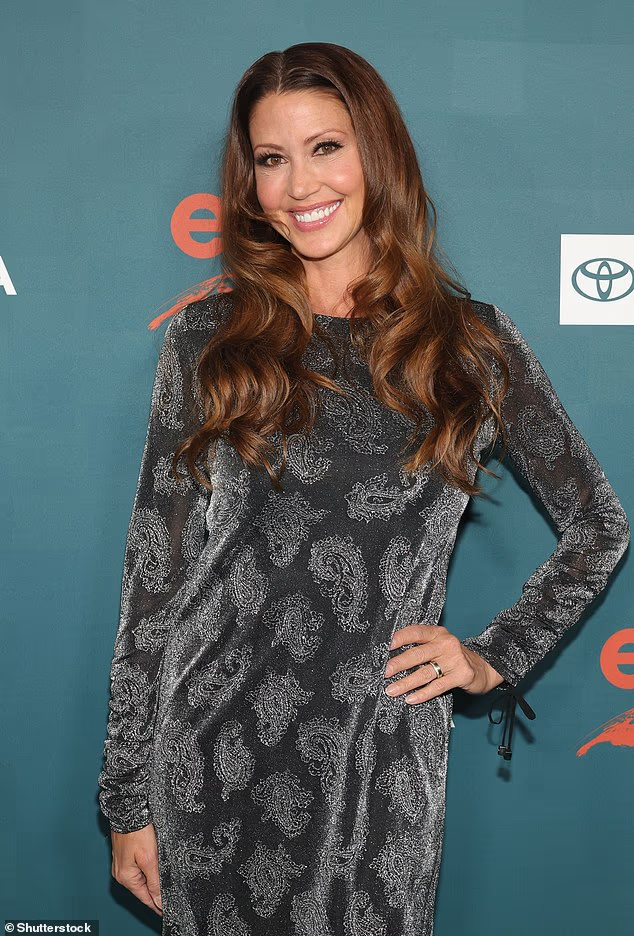
American Pie star Shannon Elizabeth, 52, is now one of Hollywood’s richest OnlyFans stars as she reveals insane income

Published

on

Shannon Elizabeth earned more than $1 million within her first nine days on OnlyFans

American Pie star Shannon Elizabeth is making more money than ever before, and it’s not through her acting career.

Despite starring in some of the biggest hits of the late ’90s and early 2000s, the 52-year-old is now a multimillionaire thanks to OnlyFans.

After joining OnlyFans in April, Elizabeth tells Variety that she earned her first million dollars within just nine days on the adult-oriented platform.

The actress already confirmed that her OnlyFans income has surpassed the money she made on her biggest films, which include American Pie, Love Actually, Scary Movie, and Jay and Silent Bob Strike Back.

Advertisement

Before signing up for OnlyFans, Elizabeth was living off her savings and had barely acted in years.

The star hadn’t done TV work since 2013 and her film work across the last decade has been a few low budget streaming flicks, with the exception of a rebooted Jay and Silent Bob movie in 2019.

Shannon Elizabeth earned more than $1 million within her first nine days on OnlyFans

Advertisement
The actress, 52, is best known for her racy role as Nadia in the American Pie franchise

The actress, 52, is best known for her racy role as Nadia in the American Pie franchise

She’d also left Hollywood for South Africa, where she’s focused on wildlife conservation.

‘For the last ten years I’ve been living off of my savings for the most part because I haven’t been as focused on work,’ she explained.

‘To be able to get myself back to the point where I’m not struggling and am able to choose projects because I like them and not because I need the money — it’s definitely giving me more freedom to do that.’

Advertisement

Elizabeth currently doesn’t post nude or sexually-explicit content on her OnlyFans page, although she says that could change soon.

‘I do all kinds of content, but I don’t even know what my boundaries will be,’ she said.

‘I’m still exploring it and as I become more comfortable with it, I’m going to push those boundaries.’

Elizabeth’s income officially makes her one of the highest-earning actresses currently on OnlyFans. 

Advertisement

Shortly after she signed up, My Name Is Earl actress Jaime Pressly took the plunge just weeks before her 49th birthday, but she has yet to reveal her income. 

The star doesn't currently doesn't post nude or sexually-explicit content on her OnlyFans page, although she says that could change in the future

The star doesn’t currently doesn’t post nude or sexually-explicit content on her OnlyFans page, although she says that could change in the future

My Name Is Earl actress Jaime Pressly took the plunge and joined OnlyFans not long after her American Pie star pal did

My Name Is Earl actress Jaime Pressly took the plunge and joined OnlyFans not long after her American Pie star pal did 

Wild Things star Denise Richards joined the site in 2022 and reportedly raked in several million dollars in her first few months.

Advertisement

And according to recent court filings, Richards is still pulling in almost $300,000 a month from her racy page, meaning that she’ll never have to take another acting job again if she doesn’t want to. 

Another world famous star to join the platform is Drea de Matteo, best known for her role on The Sopranos.

The 54-year-old turned to OnlyFans in 2023 after struggling to find work during the Covid pandemic.

The venture was such a success that she earned $75,000 in her first 75 minutes on the site and used the money to get out of debt and to save her family home. 

Advertisement

The actress and Ultrafree designer had just $10 in her bank account when she joined OnlyFans.

Wild Things actress Denise Richards is believed to be the biggest-earning actress on OnlyFans to date

Wild Things actress Denise Richards is believed to be the biggest-earning actress on OnlyFans to date

Another world famous star to join the platform is Drea de Matteo, best known for her role on The Sopranos

Another world famous star to join the platform is Drea de Matteo, best known for her role on The Sopranos

While she originally stuck to more tame content, the actress recently told People magazine that she’s now started posing fully nude. 

Advertisement

‘I’d never even taken my clothes off for television, but I actually went for it, and it was fine,’ she said.

Other actresses on OnlyFans include Carmen Electra, Amanda Bynes, Whitney Cummings, and even 85-year-old Knots Landing legend Donna Mills.

Mills announced her OnlyFans venture last month, explaining that she was ‘excited’ to cultivate ‘a more personal and direct connection’ with her fans.  

While the soap veteran isn’t doing any nude or sexually-explicit content just yet, that hasn’t stopped her from getting pretty suggestive with her subscribers.

Advertisement

In one image, Mills stares seductively into the camera while posing inside of a gym while wearing skintight black activewear.

‘In case you needed to test your stamina,’ she cheekily captioned it.

Source link

Advertisement
Continue Reading

NewsBeat

BORIS JOHNSON: I’ve met Lissie Harper and, unlike the PM, I feel the rage of millions who want her husband’s killers kept behind bars

Published

on

Boris Johnson met Lissie Harper ¿ the widow of PC Andrew Harper ¿ at Downing Street in November 2021, when he was prime minister

When I met Lissie Harper in No10 Downing Street in November 2021, we didn’t discuss the way in which her husband lost his life at the hands of three teenage thieves exactly seven years ago tomorrow.

We didn’t go into the details – because they were just too horrific.

Lissie had come to see me, as PM, to discuss her proposals for Harper’s Law – how to ensure that in future we properly punish criminals who kill members of the emergency services.

The widow of PC Andrew Harper was dignified, brave and determined. There was no need during the course of our conversation to ask her to relive the cruelty of her husband’s suffering. But it is important for readers to recall the essentials.

Advertisement

PC Harper lost his life late that August evening in 2019, in a narrow rural lane in Berkshire, after heroically trying to stop three members of the ‘travelling community’ from stealing a quad bike.

He tried to grab one of them, who dived through the rear window of the getaway Seat Toledo, shouting to his accomplices to ‘Drive, drive!’. As Henry Long, then 18, floored the accelerator, the 28-year-old police officer was tragically entangled in the towrope used to steal the quad.

For just over a mile, they dragged him behind the car, furiously weaving from side to side in an effort to shake him off. By the time they finally stopped, he was unrecognisable.

Another driver mistook the police officer’s body for the bloodied carcass of a deer.

Advertisement

Boris Johnson met Lissie Harper – the widow of PC Andrew Harper – at Downing Street in November 2021, when he was prime minister

PC Harper lost his life late in August 2019, in a narrow rural lane in Berkshire, after heroically trying to stop the theft of a quad bike

PC Harper lost his life late in August 2019, in a narrow rural lane in Berkshire, after heroically trying to stop the theft of a quad bike

Of course, the criminals later claimed that they did not realise they were dragging a 14st human being behind their car; and, even if you think their denials implausible, that point was hard to establish in court – at least beyond a reasonable doubt.

Advertisement

But whatever exactly they knew or believed, it seemed to Lissie Harper, and it seemed to me, as I listened to her, that they were still morally culpable for his death.

They were habitual criminals who had set out to commit a serious and dangerous crime, with crowbars and other equipment in the boot. They had disabled the rear lights of the Toledo to avoid pursuit.

They had discussed what to do if the police nabbed them, and the importance of fleeing the scene at top speed. Even if – which I seriously doubt – they were initially unaware of what they were doing, they were guilty of killing a police officer in the course of criminal activity. That is, in my view, a particularly heinous crime.

A police officer – or a firefighter or a paramedic – is unlike the rest of us in that they have no choice but to go towards danger. They must deliberately put their own lives at risk – as Andrew Harper did – to protect the rest of us, the public.

Advertisement

That is why the law has always tried to give special protection to the police, in recognition of the risks they run every day. Indeed, it remained a capital offence – a crime that can be punished by the death – to kill a police officer until 1965, years after the death penalty was generally abolished.

So, I agreed with Lissie and the family of PC Harper, and his many supporters, that the sentences for his killers who were found guilty of manslaughter in July 2020 were too soft: only 16 years for the driver, Henry Long, and only 13 years for the two passengers, Albert Bowers and Jessie Cole. It did not seem enough, either as a punishment or a deterrent, and the killers seemed to know that they had got off lightly.

That picture of them leaving the court smirking and laughing has become shockingly familiar to us all.

Five months later we passed Harper’s Law, so that anyone who engages in a dangerous and criminal act and kills a police officer or other member of the emergency services would get a life sentence. I know that Lissie and her family took pride and comfort in their achievement – for the benefit of all families of police officers, and other emergency workers, who may lose their lives to criminals.

Advertisement
Jessie Cole (left) and Albert Bowers were sentenced to 13 years for manslaughter after a trial in 2020 following PC Harper's death

Jessie Cole (left) and Albert Bowers were sentenced to 13 years for manslaughter after a trial in 2020 following PC Harper’s death

I know that Lissie and her family took pride and comfort in their achievement passing Harper's Law ¿ for the benefit of all families of police officers, writes Boris Johnson

I know that Lissie and her family took pride and comfort in their achievement passing Harper’s Law – for the benefit of all families of police officers, writes Boris Johnson

But of course Harper’s Law is not retrospective. We could not change the way the court had interpreted the law as it previously existed; and for years Andrew Harper’s relatives have had to face the sickening fact that his killers would be out relatively soon.

It was infuriating but unavoidable. Nothing, however, can have prepared the Harper family for the farce that is unfolding now.

Advertisement

Never in our wildest dreams did we imagine that a Labour government would come in and change the law – as Starmer did – to allow the release of offenders after serving only half of their sentences.

And it seems utterly incredible that this early-release scheme could apply to people like the killers of PC Harper. But that is what Labour has done.

The new PM, Andy Burnham, was specifically given the option of keeping prisoners with longer sentences in jail. He was told explicitly that this was the way to avoid releasing the killers of PC Harper.

He rejected that option. He knew exactly what that decision entailed – that Bowers and Cole would be among the thousands of serious offenders who would be prematurely disgorged on to the streets of this country, where about 25 per cent of them are statistically bound to reoffend within the first year.

Advertisement

He knew what he was doing, and yet he went ahead. It is only in the face of public outcry that he has backed down.

Having glibly taken the decision to release them, he now says, with equal glibness, that he could not live with his conscience if they were released. My message to Burnham is that the voters may be able to forgive your open-toed sandals – but they simply can’t stomach the flip flops.

He vamoosed for a holiday to somewhere foreign and instructed his hapless Justice Secretary to ‘find a solution’.

Find a solution? How can Alex Norris find a solution? The Prime Minister’s view of the early-release scheme is completely unintelligible. How is Norris supposed to find a solution when Burnham seems to be simultaneously in favour of the early-release scheme – and against it?

Advertisement

It’s Burnham who is PM, not Norris – a man who is probably not even a household name in his own household.

When you get problems like this, with officialdom saying you have no alternative, it is only the Prime Minister who can break the logjam.

Andy Burnham should scrap the early-release scheme, fast, and if he wants to show he cares and understands he should make time to meet Lissie Harper, says Boris Johnson

Andy Burnham should scrap the early-release scheme, fast, and if he wants to show he cares and understands he should make time to meet Lissie Harper, says Boris Johnson

As Kemi Badenoch has said, there are in fact plenty of solutions. Burnham could make space in our prisons for thousands more UK criminals if he got rid of the Human Rights Act, and deported foreign offenders.

Advertisement

Labour could overcome their Lefty squeamishness and revive our plans to rent prison places abroad. Or they could get a grip and build pop-up prisons.

The truth is that Labour is actually indifferent to the strength of public feeling on this issue – as of yesterday, one million people had signed a petition to keep PC Harper’s killers in jail – because in their hearts they don’t care.

Burnham has specifically rejected Blair and Blairism, and it is clear that in rejecting a tough penal policy we are back to the worst of soggy old Labour – soft on crime and soft on the causes of crime.

The PM is failing his first big test. He should scrap the early-release scheme fast and, if he wants to show he cares and understands, he should make time to meet Lissie Harper.

Advertisement

Source link

Continue Reading

NewsBeat

Massachusetts mayor arrested over alleged $1.5m Covid relief loan fraud

Published

on

Massachusetts mayor arrested over alleged $1.5m Covid relief loan fraud

A mayor in Massachusetts was taken into police custody on Friday after being accused of fraudulently securing a pandemic relief loan to settle personal tax obligations, cover high-interest mortgages on multiple properties, and support his own election campaign.

Lawrence Mayor Brian DePena faces single counts of both wire fraud and money laundering following his Friday arrest.

The 61-year-old is accused of fraudulently obtaining a $1.5 million COVID-19 small-business loan meant for his tire sales operation. Rather than using the funds for the business, DePena allegedly spent over $880,000 on high-interest mortgages for several businesses and funneled $90,000 into his mayoral campaign ahead of the 2021 election.

He has been mayor since 2021, having previously served on the Lawrence City Council.

Advertisement
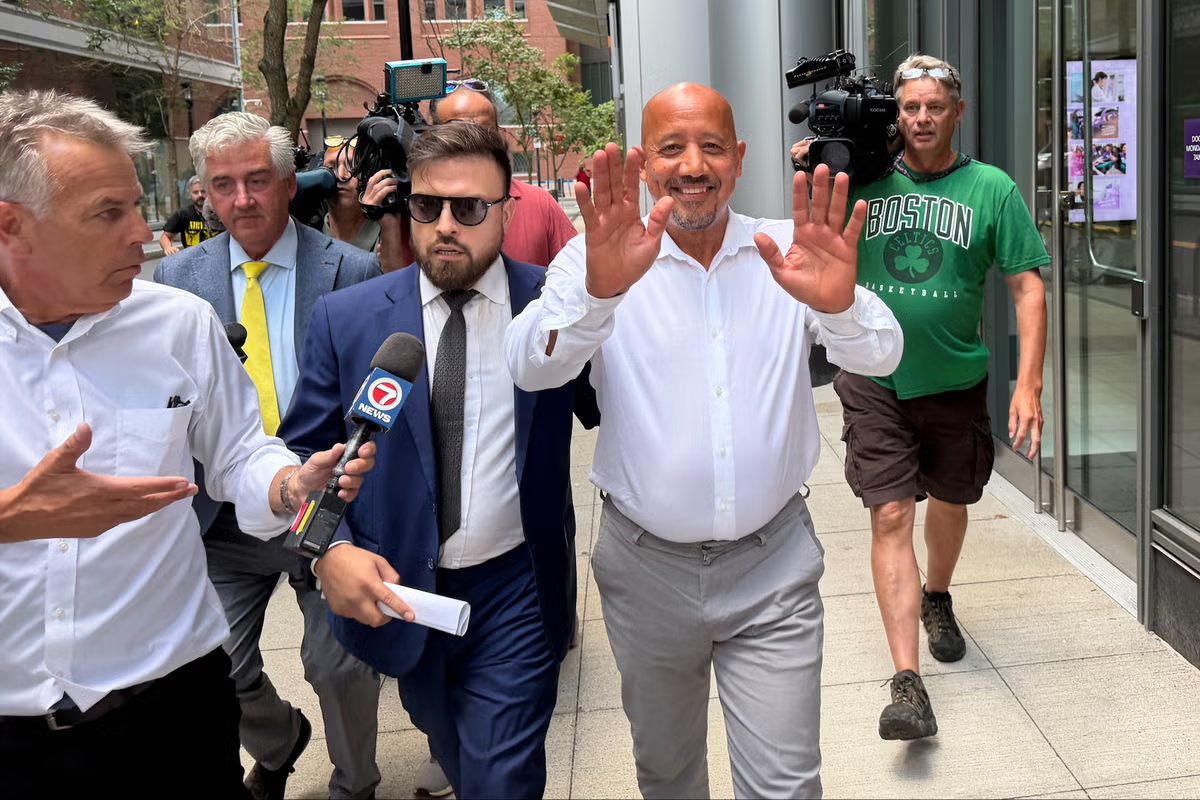
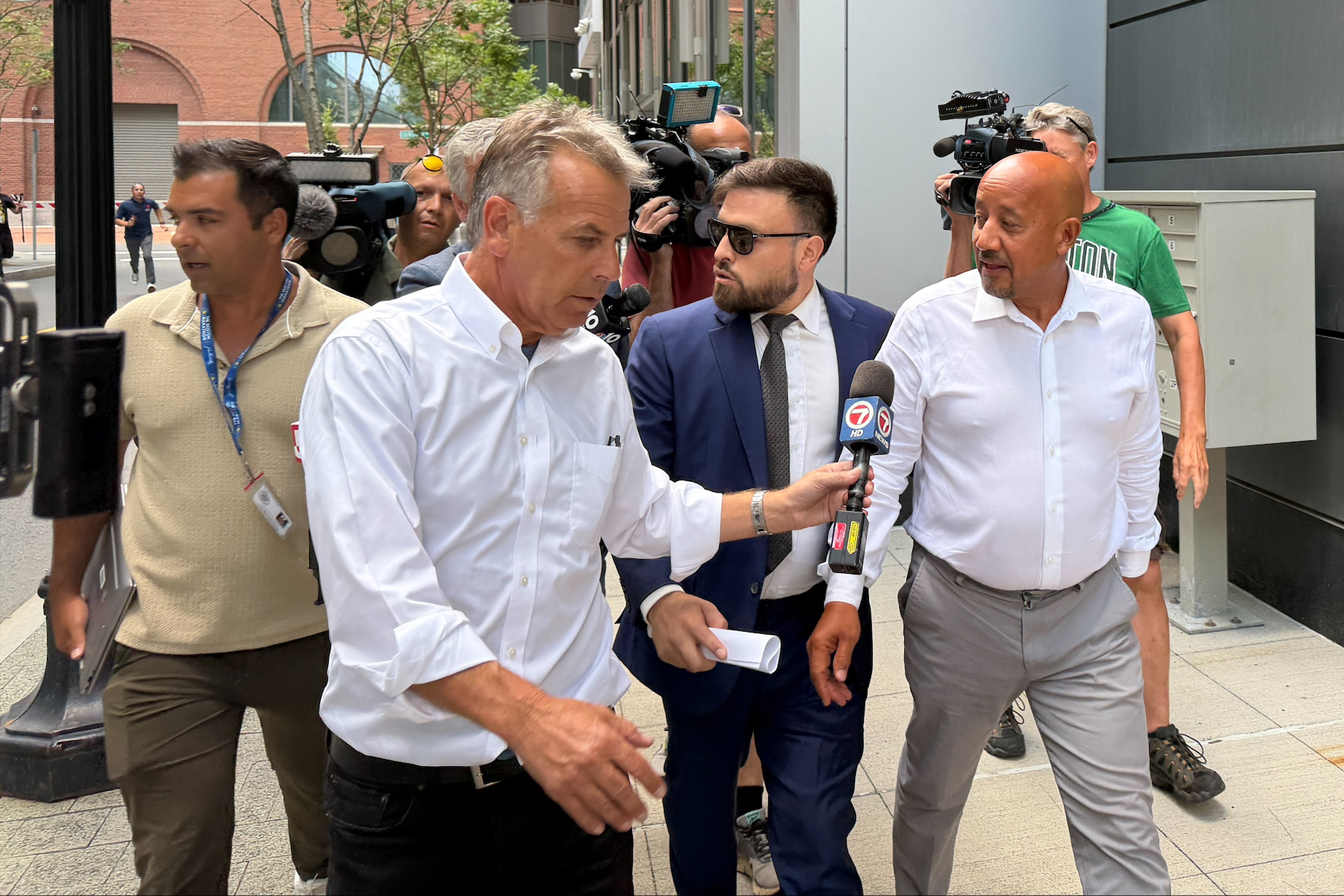
DePena was released after agreeing to several conditions, including turning over his passport and not seeking any loans without court approval
DePena was released after agreeing to several conditions, including turning over his passport and not seeking any loans without court approval (AP Photos/Michael Casey)

Ted Docks, the special agent in charge of the FBI’s Boston Division, accused DePena of “cashing in on a public health crisis and blatantly defrauding a government program meant to keep businesses afloat during the pandemic.”

“When elected officials misuse federal funds for personal gain, they’re breaking the trust of their constituents — and breaking the law,” Docks said in a statement. “Together, with our partners, the FBI will continue to doggedly pursue anyone who defrauds the federal government. You’ll be prosecuted to the fullest extent of the law, and that ‘easy money’ won’t seem so easy after all.”

DePena made an initial appearance in federal court in Boston Friday afternoon. DePena was released after agreeing to several conditions, including turning over his passport and not seeking any loans without court approval.

After leaving court, DePena’s lawyer Carlos Apostle repeatedly responded with “no comment” to questions. DePena, who is a citizen of the United States and Dominican Republic, responded with “God bless” when asked if he would resign. He made no other comments.

In 2020 and 2021, DePena obtained a government disaster loan for Tenares Tire Services Inc., a tire sales and automotive services in Lawrence. During the pandemic, the Small Business Administration offered loans to qualified business that were suffering financial losses.

Advertisement

He used a loan of $150,000 for the business. A year later, prosecutors say, DePena’s mayoral campaign was running short of cash, he owed back taxes and was under pressure to pay back high-interest loans on several of his properties in Lawrence. He then requested several increases to the government loan and allegedly used $1.5 million to cover those expenses unrelated to his tire business.

If convicted on the wire fraud charge, DePena faces up to 20 years in prison, three years of supervised release and a fine of up to $250,000. He faces a sentence of up to 10 years in prison, three years of supervised release and a fine of $250,000 if convicted on the money laudering charge.

Source link

Advertisement
Continue Reading

NewsBeat

Nine dolphins dead and 12 more rescued during horror stranding

Published

on

Daily Record

The Irish Whale and Dolphin Group, which spearheaded the Kerry dolphin rescue operation, have thanked members of the public for their help after 12 dolphins were saved from an Irish beach stranding

Twelve dolphins stranded on an Irish beach have been successfully rescued.

The pod became trapped on a beach west of Daingean Uí Chúis, in Kerry, on Wednesday.

Of the 21 dolphins in total, nine sadly died before rescuers could reach them.

Advertisement

The Irish Whale and Dolphin Group, which led the operation, has expressed gratitude to members of the public for their assistance.

A member of the public initially alerted Oceanworld Aquarium Dingle, who then contacted the IWDG to help return the dolphins to the sea, reports the Irish Mirror.

Gardai, tourists and locals from the surrounding area all played a part in the rescue effort.

In a statement, the IWDG said: “Through the incredible teamwork of both locals and visitors to the area, 12 dolphins… were successfully refloated.

Advertisement

“This is no small achievement and it was all hands on deck including the local Garda who came down to help carry some of the individuals back to sea.

“We would like to extend our most heartfelt thanks to all those that dropped everything to come and help us today.”

Ensure our latest stories always appear at the top of your Google Search by making us a Preferred Source. Click here to activate or add us as your Preferred Source in your Google search settings.

Source link

Advertisement
Continue Reading

Trending

Copyright © 2025