
Business
Scientists Melt Diamond At Record Pressures, Solving A Decades-Old Mystery About How It Behaves

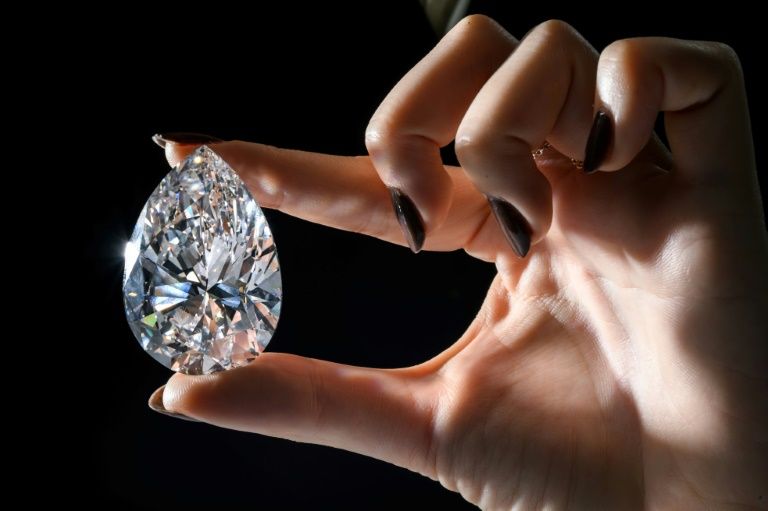
A team of physicists has resolved a long-standing scientific puzzle over exactly how diamond melts under extreme pressure, using powerful laser-driven shock waves to observe the process in unprecedented detail and uncovering behavior researchers say defied expectations.
The research, led by physicist Marius Millot at Lawrence Livermore National Laboratory, was published this week in the journal Nature Physics. The team used the OMEGA Laser Facility at the University of Rochester’s Laboratory for Laser Energetics to blast tiny diamond samples with laser pulses, generating shock waves that produced pressures ranging from 600 gigapascals to 1.8 terapascals, more than three times the pressure found at the center of the Earth.
Diamond, the hardest naturally occurring mineral on Earth, is notoriously difficult to melt, requiring conditions far beyond anything found naturally at the planet’s surface. Scientists first successfully melted diamond in a 2007 experiment using a laser to strike it with a shock wave at 750 gigapascals of pressure, more than double the ambient pressure at Earth’s inner core. A follow-up study in 2009, led by LLNL physicist Jon Eggert, directly measured diamond’s melting temperature for the first time, but that measurement created a new problem: it disagreed with quantum-mechanical theoretical predictions by roughly 20%, a gap that persisted despite years of increasingly sophisticated computer modeling.
Millot’s team set out to resolve that discrepancy using significantly improved diagnostic tools that allowed them to track diamond’s atomic structure in real time as it melted, something earlier experiments lacked the sensitivity to capture. Using X-ray diffraction, the team measured how the diamond’s crystal structure evolved as pressure increased, alongside measurements of shock speed, temperature, density and optical reflectivity, all captured within a window lasting only a billionth of a second.
The new measurements placed diamond’s melting temperature at approximately 7,300 Kelvin at 1 terapascal of pressure, a figure notably lower than earlier experimental results and one that, for the first time, closely matched theoretical predictions. Eggert, a co-author on the new study, acknowledged the significance of the correction. “It was frustrating to discover that our original temperature measurements were off,” Eggert said, adding that the improved data quality made possible by the team’s updated diagnostics ultimately made the correction worthwhile.
Beyond resolving the temperature discrepancy, the experiment answered a second long-standing question about diamond’s behavior under extreme pressure. Theoretical models had predicted that, at pressures around a terapascal, diamond’s rigid atomic lattice should temporarily shift into a different crystalline form of carbon known as BC8 before fully melting into a disordered liquid. Some earlier experiments had been interpreted as possible evidence of that transition occurring above roughly 900 gigapascals.
Millot’s team found no evidence of a substantial BC8 phase. Instead, the X-ray data showed that diamond’s crystal structure remained in its familiar cubic lattice for as long as any solid structure could be detected at all, with solid diamond and liquid carbon simply coexisting until the material had fully melted. Millot attributed the finding to the extremely rapid, single-shock nature of the experiment. “We think that is because the sample does not have time to change when it only experiences a single shock,” Millot said, explaining that the diamond effectively becomes trapped in its original structure rather than transforming into the intermediate BC8 phase theory had predicted.
The researchers say that outcome likely reflects the sheer energy required to break and rearrange diamond’s unusually strong carbon-carbon bonds, a process theory suggests would be needed to form the BC8 structure. Under the fleeting timescale of the shock-compression experiment, the diamond appears to melt before that structural rearrangement has any opportunity to take place.
The findings also revealed an unexpected parallel between diamond and ordinary water ice. Under the extreme pressures studied, solid diamond proved less dense than the liquid carbon it melts into, mirroring the way conventional ice is less dense than liquid water and floats on its surface. The researchers say this implies solid diamond could similarly float atop a pool of molten carbon under the right conditions, and it also produces a related counterintuitive effect: across part of diamond’s melting range, increasing pressure actually lowers the temperature required for it to melt.
Beyond its implications for fundamental physics, the research carries direct practical applications. Diamond is used to encase fuel pellets in inertial confinement fusion experiments, where the material is compressed under pressures similar to those studied in the new experiment. More accurate models of how carbon behaves as those capsules implode could improve the design of future fusion experiments. According to the study’s authors, simulations incorporating the corrected carbon behavior suggest that predicted fusion energy gain could increase by up to threefold. Millot said the findings suggest researchers could achieve full diamond melting in fusion experiments using somewhat slower initial shocks, a change that would make the fusion fuel more compressible and could increase the maximum energy yield achievable using the same amount of laser energy.
The research also carries implications beyond Earth. Scientists believe carbon experiences pressure and temperature conditions similar to those recreated in the experiment deep inside ice giant planets such as Neptune and Uranus, meaning the improved understanding of diamond’s high-pressure behavior could help refine models of those planets’ internal structure and composition.
Separately, researchers at Sandia National Laboratories have conducted related diamond-compression experiments using the extreme magnetic fields generated by that facility’s Z machine, and have reported experimental signatures suggesting diamond may take an additional intermediate step on its way to melting, a finding that appears to differ from the Livermore team’s conclusions and suggests the full picture of diamond’s high-pressure behavior may still require further study to fully resolve.


Finance of America CIO Prahm sells $130,402 in FOA shares

Merck EVP DeLuca sells $5.9m in stock

Avalo Therapeutics CSO Jennifer Riley sells $52,012 in stock

Avalo Therapeutics CMO Mittie Doyle sells $13,580 in stock

Elon Musk has told SpaceX employees that artificial intelligence is poised to become the dominant force in the company’s future, projecting that AI will account for 99 percent of its value within four to five years while already generating substantial and rapidly growing revenue.
In a recent all-hands meeting with staff, the SpaceX chief executive outlined an aggressive shift. “Long-term, probably in four or five years, AI will be 99% of the value of SpaceX. I’d say five years for sure, AI will be 99% the value of SpaceX. And the value of SpaceX will be some astronomical number,” Musk said.
He also forecast a nearer-term milestone. “Definitely our AI revenue will exceed all other space revenue probably in September, like next month,” Musk told employees, adding that the segment “will significantly exceed all other SpaceX revenue in the fourth quarter.”
The comments come as SpaceX, now a publicly traded company, reported strong second-quarter results. Total revenue reached $7.8 billion, up 92 percent from the year-earlier period. The AI segment contributed $2.6 billion, representing roughly one-third of the total and growing about 247 percent year over year. Connectivity services, primarily Starlink, generated about $4.3 billion, while traditional space products and launch activities accounted for the remainder.
SpaceX has been expanding its AI-related offerings, which include access to the Grok family of large language models, cloud computing infrastructure and related services. The company has signed significant cloud services agreements, including deals involving Anthropic and Alphabet’s Google. In the second quarter alone, it reported $14.1 billion in contracted cloud sales. Capital expenditures remain elevated, with a large share directed toward building AI compute capacity.
Musk detailed ambitious infrastructure targets. The company currently operates about 1.4 gigawatts of AI compute power and aims to reach 2 gigawatts by the end of 2026, then approximately 10 gigawatts by the end of 2027. “The value per watt is probably going to be 30 to $50, which means if we bring 10 Gigawatts of AI online by the end of next year, it will be 300 to $500 billion a year in revenue,” he said.
In filings related to its public listing, SpaceX estimated a total addressable market of $28.5 trillion across its businesses, with $26.5 trillion attributed to AI. The projection underscores management’s view that compute infrastructure, model services and related software could far outstrip the scale of launch services and satellite internet over time.
The rapid growth in AI revenue has drawn investor attention, yet it also highlights execution risks. Building large-scale data centers and securing power requires massive ongoing investment. Competition in AI infrastructure is intense, with established cloud providers and specialized players vying for the same customers. Concentration risk exists as well; a single customer has accounted for a notable share of recent AI revenue in some periods.
SpaceX’s traditional businesses continue to advance. Starlink remains a leading provider of low-Earth-orbit broadband, and the company maintains its position as a dominant launch provider with reusable rocket technology. Development of the next-generation Starship vehicle proceeds alongside these efforts. Musk has framed AI success as supportive of the broader multiplanetary goals, suggesting that substantial AI cash flows could help fund long-term space ambitions.
Analysts have noted the dual nature of the opportunity and the challenge. Strong top-line growth in AI, if sustained, could support higher valuations even if near-term profitability remains constrained by heavy capital spending. At the same time, the bullish scenario depends on continued robust demand for AI compute, successful scaling of capacity, and the ability to convert contracted revenue into recurring, high-margin streams.
Musk has emphasized the strategic importance of succeeding in both hardware and software aspects of AI. The company is integrating capabilities across its ecosystem, including training models on internal data and expanding enterprise offerings. Whether the ambitious timelines materialize will depend on execution in an industry known for rapid technological change and significant capital intensity.
For investors, the message from the SpaceX leader is clear: the company that transformed access to space now sees its greatest long-term value in artificial intelligence. The coming months will test whether AI revenue can overtake other segments as quickly as projected, while the multiyear horizon will determine if the 99 percent valuation claim becomes reality. In the meantime, SpaceX continues to operate at the intersection of two of the most capital-intensive and transformative industries of the era—space exploration and artificial intelligence—with the balance between them shifting rapidly according to its chief executive.

Patricia Mulroy sells $37,415 of Bowman Consulting stock

The Mahindra BE 6 has established itself as one of the more distinctive electric SUVs available in India, combining a bold design, rear-wheel-drive dynamics and competitive real-world range in a segment increasingly crowded with options from both domestic and international brands.
Built on Mahindra’s dedicated INGLO electric platform, the BE 6 is a five-seater coupe-style SUV measuring approximately 4,371 mm in length with a 2,775 mm wheelbase. It is offered primarily with two lithium-iron-phosphate battery packs: a 59 kWh unit and a larger 79 kWh pack. Power is delivered by a single rear-mounted permanent-magnet synchronous motor producing 380 Nm of torque across variants. Output stands at roughly 231 horsepower with the smaller battery and climbs to about 286 horsepower with the larger pack. Acceleration from 0 to 100 km/h is claimed at 6.7 seconds in the higher-powered version.
Claimed ARAI ranges reach 556–557 km for the 59 kWh models and up to 682–683 km for the 79 kWh versions. Independent testing has returned more conservative but still competitive real-world figures. One comprehensive road test of the 79 kWh variant recorded an average efficiency of 5.68 km per kWh, translating to a combined city-and-highway range of approximately 449 km. City driving alone yielded around 439–440 km in some evaluations, while highway efficiency held up well under steady speeds. Owners reporting longer-term use have described practical daily ranges in the 400-plus km bracket depending on driving style, climate control use and traffic conditions.
Charging capability is a strong point. The vehicle supports DC fast charging that can take the battery from 20 percent to 80 percent in about 20 minutes when connected to a suitably powerful charger (up to 140–180 kW depending on the pack). AC home charging with a 7.2 kW or 11 kW wallbox typically requires six to 12 hours for a full charge, making overnight top-ups practical for most users.
On the road, the BE 6 stands out for its rear-wheel-drive layout and suspension tuning. Reviewers have consistently praised the balance between ride comfort and handling composure, noting that the car feels more agile than many of its rivals despite its size and weight. Multiple drive modes and adjustable regenerative braking levels, including single-pedal driving options, allow drivers to tailor the experience. Cabin refinement is generally high, with effective isolation from road and motor noise.
The interior adopts a modern, dual-screen layout featuring a pair of 12.3-inch displays. Higher trims add a 16-speaker Harman Kardon audio system with Dolby Atmos support, a panoramic glass roof, ventilated front seats, wireless charging, a 360-degree camera system and Level 2 or Level 2+ advanced driver-assistance features. Safety equipment includes up to seven airbags and a five-star Bharat NCAP rating in tested configurations. Some packaging and ergonomic details, such as rear-seat space and certain control placements, have drawn milder criticism relative to more conventional SUVs.
Pricing has positioned the BE 6 competitively. Earlier variants launched in the range of ₹18.90 lakh to ₹26.90 lakh (ex-showroom), excluding the cost of a home charger. In August 2026, Mahindra introduced Sporteq variants starting at ₹19.45 lakh, expanding battery options in some trims and refining the lineup. On-road prices vary by state incentives, insurance and dealer packages. Lifetime battery warranty coverage for the first private owner has been highlighted as a confidence-building measure.
The BE 6 competes most directly with models such as the Hyundai Creta Electric, MG ZS EV, Tata Curvv EV and upcoming entrants like the Maruti e Vitara. Its combination of performance, distinctive styling and feature content at the quoted price points has earned broadly positive assessments from road testers, who frequently cite the driving experience and equipment levels as key strengths. Practical limitations around rear passenger space and the learning curve associated with some interface elements remain the most commonly noted drawbacks.
For buyers seeking an electric SUV that prioritizes engagement and modern technology over maximum interior volume, the BE 6 presents a compelling case. Real-world range appears sufficient for typical urban and intercity use when paired with access to charging infrastructure, while the rapid DC charging capability reduces downtime on longer journeys. As India’s electric vehicle market continues to expand, the model underscores Mahindra’s shift toward purpose-built EVs rather than adapted combustion platforms.
Ownership reports from the first months of delivery describe reliable daily performance, strong climate control in hot weather and useful ADAS functionality. Service network maturity and long-term software support will remain important factors as the fleet grows. Overall, the BE 6 has carved a clear identity in a segment where differentiation increasingly matters, offering a blend of performance, technology and value that has resonated with early adopters and reviewers alike.
Business
Google Rolls Out Android 17 QPR2 Beta 3 for Pixel With Fraud Protection and Customization Tools

Google has begun rolling out Android 17 QPR2 Beta 3 to eligible Pixel devices, delivering bug fixes, a notable security enhancement against call-forwarding fraud, and expanded interface customization options as the company prepares its next quarterly Feature Drop.
The update, released on Aug. 14, arrives as a relatively uncommon Friday software drop for the public beta program. Builds CP41.260731.005.A2 and CP41.260731.005.B1 carry the August 2026 security patch level of Aug. 5 and include Google Play services version 26.26.34. System images and over-the-air updates are available for a wide range of Pixel hardware, including the Pixel 6a, Pixel 7 series, Pixel 8 series, Pixel 9 series, Pixel 10 series, Pixel Fold, Pixel Tablet and related variants, along with emulator support.
According to official release notes from Android Developers, the beta addresses two significant stability issues reported by testers. Opening the notification shade and Quick Settings menu previously caused visual corruption and unexpected device restarts. Separately, the Device Health and Support tool had been displaying incorrect warnings about battery capacity degradation. Both problems are resolved in this release.
The most prominent platform change focuses on security. Android 17 QPR2 Beta 3 introduces new restrictions designed to harden the system against call-forwarding fraud. The TelephonyManager.sendUssdRequest() API is no longer accessible for call-forwarding codes when an app holds only the CALL_PHONE permission. Background attempts by standard applications to execute such codes are blocked and return a USSD_ERROR_NOT_ALLOWED callback. Users who manually dial call-forwarding codes through the system dialer now encounter an operating-system confirmation dialog before the command proceeds. Non-call-forwarding USSD requests, such as those used for mobile money transfers or account balance checks, remain unaffected.
Beyond the official changelog, the beta expands several user-facing customization features that have drawn attention from early testers. A Quick Settings layout editor allows users to rearrange tiles, including the ability to move the brightness slider and media player controls to more accessible positions. Dynamic Color theming receives broader controls, with a new slider for fine-tuning hue and additional color style options that give greater flexibility over the system’s visual appearance. System blur effects have been extended to the lock screen, applying to shortcuts, the fingerprint indicator and notifications for a more consistent Material design treatment.
A native App Lock feature is also present in the build, enabling users to secure individual applications behind biometric or PIN authentication without relying solely on third-party solutions. These interface refinements continue Google’s pattern of using quarterly platform releases to introduce polished quality-of-life improvements that later ship more widely as Feature Drops.
Android 17 itself reached stable release earlier in 2026. Quarterly Platform Releases, or QPRs, deliver incremental updates to both the open-source Android Open Source Project and to Pixel devices. QPR2 is positioned as the December Feature Drop for the current generation of software. Beta 3 represents the most substantial update in the current QPR2 cycle to date, combining stability work with visible interface enhancements.
Eligible devices already enrolled in the Android Beta Program should receive the update automatically as an over-the-air download. Users who prefer to install the software manually can download factory images or OTA packages from the Android Developers site. As with all beta software, the build is intended for testing and may contain remaining issues. Google continues to solicit feedback through the issue tracker and the public beta community.
The security hardening reflects ongoing industry efforts to close common vectors for social-engineering and automated fraud. Call-forwarding scams have long exploited USSD codes and background API access. By requiring elevated permissions or explicit user confirmation, the system aims to reduce the success rate of such attacks without disrupting legitimate carrier or banking services.
Customization options in the beta align with broader trends in mobile software toward greater personalization of the system interface. The ability to rearrange Quick Settings and refine color themes gives Pixel owners more control over daily interactions, while expanded blur effects reinforce visual continuity across the lock screen and notification surfaces.
Google has not published a firm date for the final public release of Android 17 QPR2, though quarterly Feature Drops have historically arrived in the final month of each quarter. Beta testing is expected to continue with additional builds that refine the new features and address any regressions introduced in the current package.
For developers, the update includes a minor SDK release with no planned behavior changes that would require extensive compatibility work. The focus remains on platform stability and user experience refinements rather than major API surface alterations.
Pixel owners participating in the beta program can expect the update to appear in the coming days, depending on the staged rollout schedule. Those who wish to leave the beta program and return to the latest stable public build can typically do so without a full device wipe, provided they have not yet installed the new software or follow the official opt-out guidance carefully.
The release underscores Google’s dual approach of delivering security-focused platform improvements alongside the visual and interactive refinements that distinguish the Pixel software experience. As testing continues, the features introduced in Beta 3 will help determine the final shape of the December Feature Drop for Android 17.

Get ahead of the market by subscribing to Seeking Alpha’s Wall Street Week Ahead, a preview of key events scheduled for the coming week. The newsletter keeps you informed of the biggest stories set to make headlines, including upcoming IPOs, investor days, earnings reports, and conference presentations.
Wall Street’s major market averages were muted on Friday after the S&P 500 notched another record high in the previous session. On the economic calendar, U.S. retail sales dipped 0.6% M/M to $763.6B in July from the previous month’s 0.2% growth to $768.1B.
The economic calendar will continue to remain largely muted for the next week, barring a few important events. Leading them is the FOMC’s minutes of the meeting, releasing on Wednesday. The Philadelphia Fed’s manufacturing index for August and initial jobless claims data are due on Thursday. S&P Global’s PMI data for August is due on Friday.
Alibaba (BABA), Walmart (WMT), Home Depot (HD), and Baidu (BIDU) are among the firms reporting their earnings next week.
______________________________________________________________
Earnings spotlight: Tuesday: BHP Group (BHP), Home Depot, Baidu. See the full earnings calendar.
Earnings spotlight: Wednesday: Target (TGT), Lowe’s (LOW). See the full earnings calendar.
Earnings spotlight: Thursday: Walmart, Alibaba. See the full earnings calendar.
Volatility watch: Amazon (AMZN) and Mercury Systems (MRCY) have seen options volatility increase over the last week. The most overbought stocks per their 14-day relative strength index include SMJ International (SMJF), Hercules Metals (BADEF), and Varex Imaging (VREX). The most oversold stocks per their 14-day Relative Strength Index include Arko (ARKO) and Emergent Bio (EBS). Short interest is elevated again on Sphere Entertainment (SPHR) and Xponential Fitness (XPOF).
Dividend watch: Companies that have an ex-dividend date coming next week include ConocoPhillips (COP), Chevron (CVX), Applied Materials (AMAT), and Microsoft (MSFT).
IPO watch: IPOs expected to price during the
Business
Ariana Grande Kicks Off Historic 10-Night O2 Arena Residency To Close Eternal Sunshine Tour

LONDON — Ariana Grande launched a landmark 10-night residency at London’s O2 Arena this weekend, bringing her Eternal Sunshine Tour to its European finale in what is being described as one of the most significant pop residencies the venue has hosted in years.
The run, which spans August 15 through September 1, marks Grande’s first UK concert dates since her 2019 Sweetener World Tour and represents the longest single-venue stretch of her career. The 10 shows are also the tour’s only European dates, a decision that has concentrated intense demand onto the London run. All 10 nights sold out within minutes of going on general sale through AXS, with Grande performing in a two-nights-on, one-night-off rotation across the three-week stretch. With the O2 holding roughly 20,000 fans per show, the residency is expected to draw approximately 200,000 concertgoers by the time it concludes.
The final show, on September 1, will close not only the London residency but the entire 41-date Eternal Sunshine Tour worldwide, adding extra emotional weight to the run’s concluding night. Speaking during an earlier tour stop at Oakland Arena, Grande told the crowd, “I don’t know when I’ll do this again,” a comment that has since taken on added significance as the tour approaches its final performance in London.
The Eternal Sunshine Tour supports Grande’s seventh studio album, “Eternal Sunshine,” released in 2024, along with its expanded follow-up, “Eternal Sunshine: Brighter Days Ahead,” which added nine bonus tracks and six new songs the following year. The tour marks Grande’s first major run of live shows in six years, following a Sweetener World Tour that drew more than 1.3 million fans across nearly 100 performances.
Ahead of the O2 shows, coverage from The Sun reported that Grande spent time at a private countryside retreat alongside close friend and fellow pop star Sabrina Carpenter, using the getaway as a chance to unwind away from London before the demanding run of performances began. The two singers have maintained a close friendship dating back to Carpenter’s time opening for Grande’s Dangerous Woman Tour years earlier, a relationship that has remained visible through the pair’s continued public support of one another’s careers and occasional appearances together since.
Security and logistics around the O2 shows have drawn particular attention given the venue’s history. The arena has implemented a strict bag policy for the residency, permitting only clear plastic bags no larger than 30 by 15 by 30 centimeters, a measure that reflects heightened security protocols at Grande’s concerts following the 2017 Manchester Arena bombing, which took place following one of her performances. There is no opening act for the London shows, with doors opening at 6:30 p.m. and Grande expected on stage between 8 p.m. and 8:10 p.m. each night, with performances typically concluding by 10 p.m.
The O2 residency places Grande among a small group of artists to have staged extended, single-venue concert runs of similar scale at the arena. The venue has previously hosted some of the most celebrated residencies in pop music history, including Adele’s acclaimed 2022 and 2024 runs, which became widely cited benchmarks for large-scale concert production.
Grande’s setlist has varied slightly from night to night throughout the broader Eternal Sunshine Tour, drawing from her catalog spanning “Eternal Sunshine” alongside earlier hits from throughout her career. Unlike some previous tour legs, the London shows do not feature a dedicated opening act, with the full evening built around Grande’s own multi-segment performance.
Beyond the concerts themselves, the residency has generated substantial economic activity around the O2 site in North Greenwich, with nearby restaurants, transportation hubs and public spaces filling with fans well ahead of each night’s doors opening, part of what organizers and local businesses have described as a broader citywide moment tied to the shows.
With demand for tickets remaining high even after the official sold-out designation, resale platforms have continued listing available seats, though at a significant premium over face value, reflecting the scale of interest in what has been billed as one of the most anticipated concert events in London this year.
As the residency continues through the coming weeks, all eyes will remain on the September 1 finale, which Grande and her team have positioned as the definitive closing chapter of the Eternal Sunshine era, following a stretch of touring that has taken the show across multiple continents before arriving at its concluding stand in London.

‘A tragedy on so many levels’: Politicians react to sudden death of Jason Arday as Prime Minister calls for a ‘moment of reflection’
Finance of America CIO Prahm sells $130,402 in FOA shares
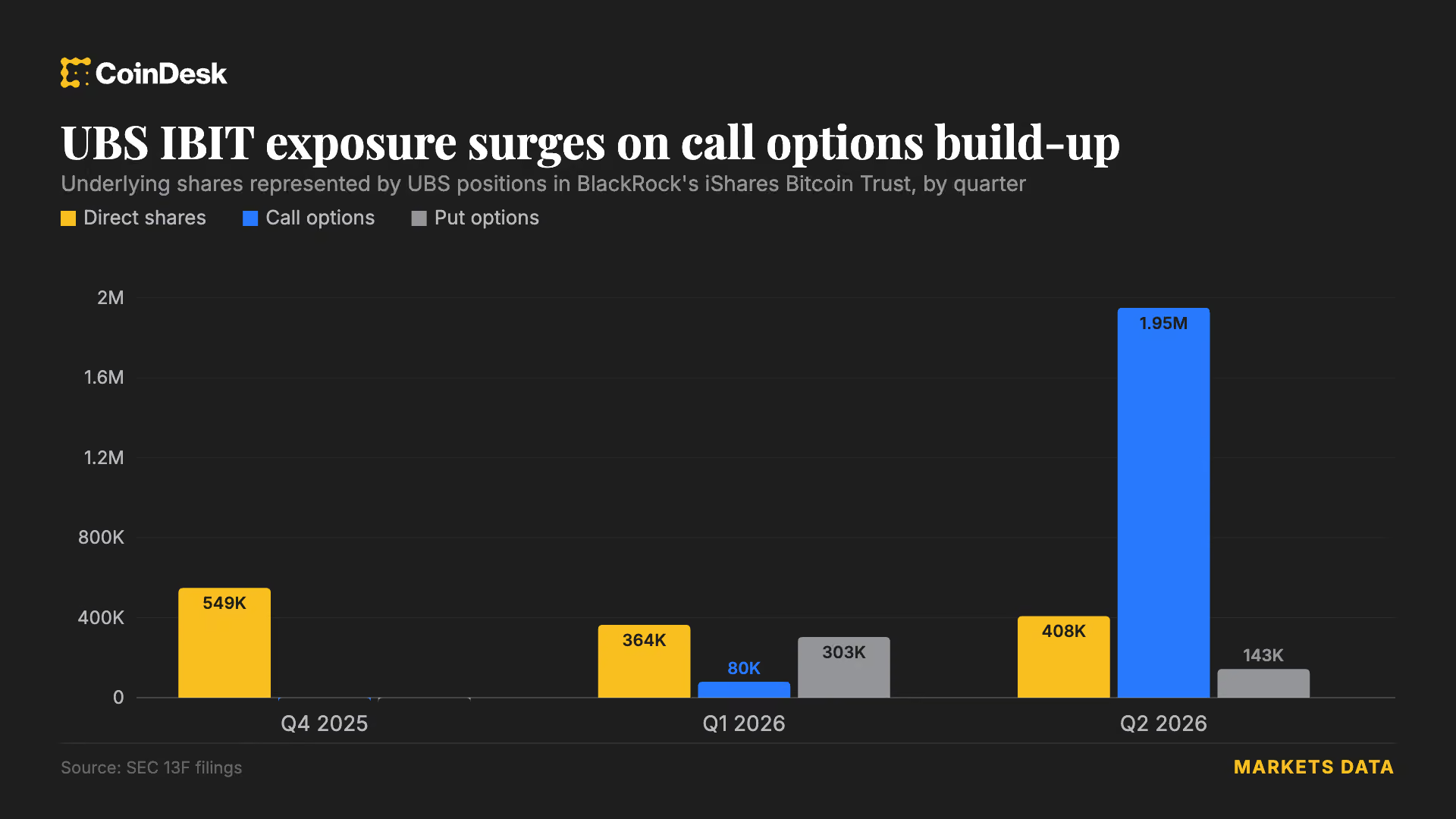
Swiss mega-bank UBS ramps up its Bitcoin exposure with a massive 24-fold surge in ETF call options


-

 Fashion22 hours ago
Weekend Open Thread: Ann Taylor
-

 Business6 days ago
Datadog: Best Of Breed For Multiple Reasons
-

 Business7 days ago
How to Start a Cleaning Business: A Step-by-Step Guide
-

 Business7 days ago
BDC Weekly Review: Private BDC Q2 Numbers Are Strong
-
 NewsBeat4 days ago
Communication cards help banking customers access services or report scams
-
 Business5 days ago
Oil Price Today (August 11): Crude oil rises to $88 after Trump’s compensation demand dents Hormuz opening. Here’s why
-
 Crypto World5 days ago
Why Did Nvidia Stock Fall on Monday Despite a $500 Billion Wall Street AI Deal?
-

 Politics7 days ago
Be quiet, Miriam! – spiked
-

 Fashion6 days ago
Amazon Sundays: Closet Care Before Fall
-
 Entertainment7 days ago
Will Ferrell’s New Netflix Series Just Became One of the Streamer’s Biggest Hits of 2026
-

 Business6 days ago
5 Things You Must Know About Jorge Messi, the Father and Longtime Agent Who Shaped Lionel Messi’s Career
-

 Politics6 days ago
Ben-Gvir’s crocodile project halted but abuses at Ketziot Prison continue
-

 Crypto World5 days ago
Revolut wins French banking licence, creates second EU banking hub
-

 Politics6 days ago
The Church of England’s ruinous reparations racket
-

 Politics6 days ago
Saudi Arabia used 86% of missile stockpile defending Iran attacks
-
 NewsBeat10 hours ago
Myanmar says over 300,000 Rohingya refugees verified for repatriation as exodus enters ninth year
-

 Politics6 days ago
The House Article | Burnham still needs to sell devolution to the public
-

 Politics6 days ago
What’s An EDT? The Rise Of ‘Extreme Day Trips’ As A Travel Trend
-
 Crypto World6 days ago
USDC and USDT Now Own 84% of Crypto Card Spend as the Euro Retreats
-

 Fashion5 days ago
Can You Wear Double Cloth Gauze Clothing To Your Office?
You must be logged in to post a comment Login