
Business
Ariana Grande Kicks Off Historic 10-Night O2 Arena Residency To Close Eternal Sunshine Tour


LONDON — Ariana Grande launched a landmark 10-night residency at London’s O2 Arena this weekend, bringing her Eternal Sunshine Tour to its European finale in what is being described as one of the most significant pop residencies the venue has hosted in years.
The run, which spans August 15 through September 1, marks Grande’s first UK concert dates since her 2019 Sweetener World Tour and represents the longest single-venue stretch of her career. The 10 shows are also the tour’s only European dates, a decision that has concentrated intense demand onto the London run. All 10 nights sold out within minutes of going on general sale through AXS, with Grande performing in a two-nights-on, one-night-off rotation across the three-week stretch. With the O2 holding roughly 20,000 fans per show, the residency is expected to draw approximately 200,000 concertgoers by the time it concludes.
The final show, on September 1, will close not only the London residency but the entire 41-date Eternal Sunshine Tour worldwide, adding extra emotional weight to the run’s concluding night. Speaking during an earlier tour stop at Oakland Arena, Grande told the crowd, “I don’t know when I’ll do this again,” a comment that has since taken on added significance as the tour approaches its final performance in London.
The Eternal Sunshine Tour supports Grande’s seventh studio album, “Eternal Sunshine,” released in 2024, along with its expanded follow-up, “Eternal Sunshine: Brighter Days Ahead,” which added nine bonus tracks and six new songs the following year. The tour marks Grande’s first major run of live shows in six years, following a Sweetener World Tour that drew more than 1.3 million fans across nearly 100 performances.
Ahead of the O2 shows, coverage from The Sun reported that Grande spent time at a private countryside retreat alongside close friend and fellow pop star Sabrina Carpenter, using the getaway as a chance to unwind away from London before the demanding run of performances began. The two singers have maintained a close friendship dating back to Carpenter’s time opening for Grande’s Dangerous Woman Tour years earlier, a relationship that has remained visible through the pair’s continued public support of one another’s careers and occasional appearances together since.
Security and logistics around the O2 shows have drawn particular attention given the venue’s history. The arena has implemented a strict bag policy for the residency, permitting only clear plastic bags no larger than 30 by 15 by 30 centimeters, a measure that reflects heightened security protocols at Grande’s concerts following the 2017 Manchester Arena bombing, which took place following one of her performances. There is no opening act for the London shows, with doors opening at 6:30 p.m. and Grande expected on stage between 8 p.m. and 8:10 p.m. each night, with performances typically concluding by 10 p.m.
The O2 residency places Grande among a small group of artists to have staged extended, single-venue concert runs of similar scale at the arena. The venue has previously hosted some of the most celebrated residencies in pop music history, including Adele’s acclaimed 2022 and 2024 runs, which became widely cited benchmarks for large-scale concert production.
Grande’s setlist has varied slightly from night to night throughout the broader Eternal Sunshine Tour, drawing from her catalog spanning “Eternal Sunshine” alongside earlier hits from throughout her career. Unlike some previous tour legs, the London shows do not feature a dedicated opening act, with the full evening built around Grande’s own multi-segment performance.
Beyond the concerts themselves, the residency has generated substantial economic activity around the O2 site in North Greenwich, with nearby restaurants, transportation hubs and public spaces filling with fans well ahead of each night’s doors opening, part of what organizers and local businesses have described as a broader citywide moment tied to the shows.
With demand for tickets remaining high even after the official sold-out designation, resale platforms have continued listing available seats, though at a significant premium over face value, reflecting the scale of interest in what has been billed as one of the most anticipated concert events in London this year.
As the residency continues through the coming weeks, all eyes will remain on the September 1 finale, which Grande and her team have positioned as the definitive closing chapter of the Eternal Sunshine era, following a stretch of touring that has taken the show across multiple continents before arriving at its concluding stand in London.


Celanese SVP Murray buys $98,004 in common stock

Customers of Mediacom Communications have reported a range of service problems in recent weeks, including internet outages, slow speeds, intermittent connectivity and television disruptions, according to outage tracking sites and consumer review platforms.
Mediacom provides cable television, broadband internet and phone services to residential and business customers in 22 states. The company operates primarily in smaller markets and rural areas where competition from other high-speed providers can be limited. Downdetector, which aggregates user-submitted reports of service disruptions, has indicated elevated problem reports for Mediacom at various points in August 2026. The most frequently cited issues involve Wi-Fi connectivity and broadband internet performance, followed by fixed wireless internet problems.
Individual user comments on tracking platforms describe multi-day outages in locations such as Apache Junction, Arizona, and recurring nighttime interruptions in other service areas. Some customers reported paying for gigabit-level speeds while receiving substantially lower performance, along with frequent disconnections that required repeated modem restarts. Television channel outages have also been noted in certain markets, with some users saying specific channels remained unavailable for extended periods.
Consumer review sites reflect similar patterns of dissatisfaction. Recent submissions on platforms such as ConsumerAffairs describe rising monthly bills alongside declining reliability. One reviewer in early August 2026 noted that internet service had become “choppy” since the start of the year, affecting remote work and online studies, while bills increased. Others reported outages lasting more than 24 hours on multiple occasions over recent years and expressed frustration with response times from customer support.
Better Business Bureau filings and additional customer feedback highlight related concerns, including billing disputes over equipment returns after cancellation, long waits for technician visits, and repeated service calls that fail to resolve underlying problems. Work-from-home users have particularly emphasized the impact of intermittent outages on productivity, with some describing daily or near-daily drops in connectivity.
Mediacom offers tools for customers to check service status, including a mobile care app and online account dashboards. Company support channels advise basic troubleshooting steps such as restarting equipment and verifying connections before escalating to a technician appointment. In areas with limited alternative providers, some customers report feeling constrained in their options despite ongoing frustrations.
The pattern of complaints is not unique to a single region. Reports have surfaced from Midwestern markets, including parts of Iowa, as well as locations in the Southwest and Southeast. Weather-related events, network maintenance and local infrastructure issues can contribute to temporary disruptions, though users frequently describe problems as recurring rather than isolated.
Broadband reliability has become increasingly important as more households rely on high-speed internet for remote work, education, telehealth and streaming entertainment. Cable operators like Mediacom face growing pressure from fiber providers and fixed wireless services in markets where those alternatives expand. In areas where Mediacom remains the primary or only option for high-speed wired service, customer expectations for consistent uptime have risen accordingly.
Industry observers note that cable networks can experience capacity strain during peak usage hours and may require ongoing investment in node splits, equipment upgrades and fiber deep deployments to maintain performance. Customer service responsiveness, particularly the availability of timely technician appointments and clear communication during outages, also influences overall satisfaction scores.
Mediacom has not issued a broad public statement addressing the recent volume of user reports in the materials reviewed. Individual support interactions typically focus on case-by-case troubleshooting. Customers experiencing prolonged outages are generally advised to document the duration of the disruption, as some providers offer credits for extended service interruptions under specific conditions.
For households considering alternatives, options may include checking for fiber availability from competitors, evaluating fixed wireless or satellite services such as those offered by emerging providers, or reviewing local municipal broadband initiatives where they exist. Availability varies significantly by address, and switching costs, equipment returns and contract terms can influence the decision.
The volume of recent reports underscores ongoing challenges for regional cable providers balancing network reliability, customer support capacity and competitive pressures. As digital dependence deepens, consistent broadband performance remains a critical measure of service quality for companies operating in both urban fringes and more rural communities across Mediacom’s 22-state footprint.
Users continue to monitor outage trackers and share experiences on public forums, providing real-time visibility into localized problems even when company systems do not immediately flag a widespread incident. Whether the current wave of reports reflects temporary network issues or deeper systemic concerns will likely become clearer as more data emerges from customer feedback channels and any subsequent network performance metrics released by the provider.
Business
(VIDEO) Apple May Delay Standard iPhone 18 to 2027 as Pro Models and Foldable Set for Fall Launch
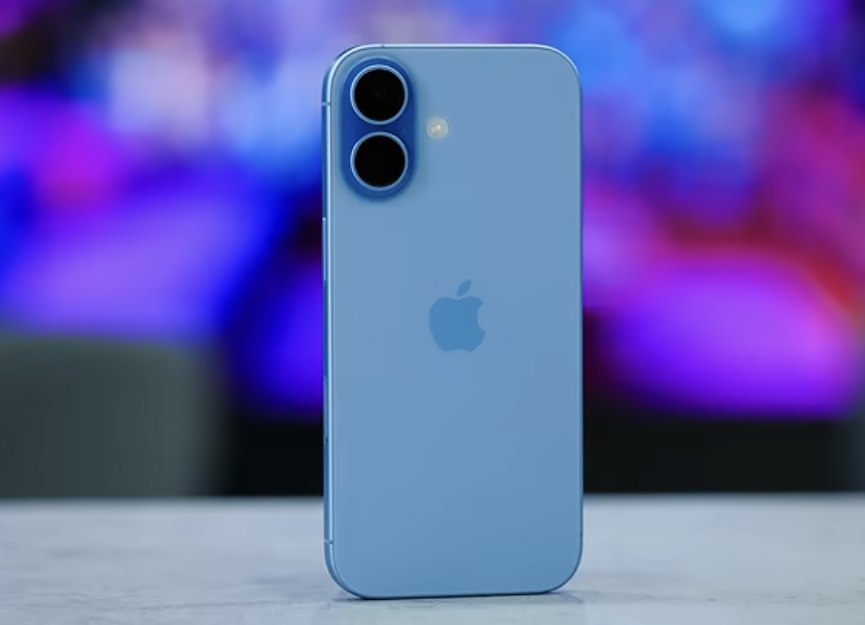
Apple is expected to split its next iPhone generation across two release windows, launching premium models this fall while delaying the standard iPhone 18 until early 2027, according to recent statements from key suppliers and consistent industry reporting.
Taiwanese contract manufacturer Pegatron indicated during its second-quarter 2026 earnings call that the iPhone 18 Pro and Pro Max models remain on track for a traditional September release. The base iPhone 18, however, is now projected to arrive in the first quarter of 2027. The more affordable iPhone 18e and a second-generation iPhone Air are also expected in that later window.
The reports align with earlier signals from the supply chain. Analyst Ming-Chi Kuo and outlets including The Information had previously outlined a strategy in which Apple would prioritize its higher-end devices in the fall of 2026. A chairman of Largan Precision, a major supplier of iPhone camera lenses, earlier noted that a significant U.S. customer had postponed a new product launch to the first quarter of 2027, remarks widely interpreted as referring to Apple’s standard models.
Fall 2026 is instead expected to feature the iPhone 18 Pro, iPhone 18 Pro Max and Apple’s first foldable smartphone, frequently referred to in reports as the iPhone Ultra. This would mark a notable departure from the company’s pattern of the past several years, in which standard and Pro models typically debuted together in September.
Supply constraints appear to be a primary factor. Reports cite ongoing shortages of memory chips and other components, along with bottlenecks in semiconductor production. Pegatron executives pointed to customers adjusting shipment schedules amid these limitations. Higher-margin Pro models are being prioritized to maintain the September launch cadence for Apple’s most profitable smartphones while the broader lineup is staggered.
The shift would leave the current iPhone 17 series, including the standard model and earlier Air variant, on the market for an extended period. Buyers seeking a more affordable new iPhone would face a choice between purchasing a Pro model this fall, holding onto existing devices, or waiting until spring 2027. Carriers that traditionally center fourth-quarter upgrade promotions around a full new iPhone lineup may need to adjust marketing and inventory plans accordingly.
Apple has not publicly confirmed the revised schedule. The company typically unveils its annual iPhone generation in early to mid-September, followed by sales beginning later that month. A dual-window approach would separate premium and mainstream offerings more clearly, potentially allowing the company to focus production capacity and marketing resources on the higher-priced devices during the critical holiday quarter.
The foldable model represents a long-anticipated expansion of Apple’s portfolio. Industry observers have tracked development of a folding iPhone for several years, with recent reports suggesting production readiness for a 2026 debut. Pairing it with the Pro series in the fall would give Apple three distinct high-end options while the standard, entry-level and thinner Air models arrive later.
Component allocation challenges are not limited to Apple. Broader industry tightness in advanced memory and packaging capacity has affected multiple smartphone makers. In this environment, directing scarce supply toward models with higher average selling prices is a pragmatic response that protects near-term revenue even as it extends the wait for lower-priced devices.
For consumers, the practical effect is a longer wait for the standard iPhone 18. Those who upgrade annually or rely on carrier financing cycles may find the Pro models more attractive this year, or they may extend the life of current handsets. The spring 2027 window could also create a secondary sales period, potentially smoothing Apple’s revenue cadence beyond the traditional fourth-quarter peak.
The reported strategy continues a gradual evolution in Apple’s product cadence. The company has previously introduced mid-cycle or early-year models such as the iPhone SE and more recent “e” variants. Expanding that approach into a formal separation of Pro and non-Pro generations would represent a more structural change to the annual calendar.
As September approaches, attention will focus on whether Apple confirms the dual timeline at its fall event. Until then, the combination of Pegatron’s earnings comments and earlier supply-chain indications provides the clearest picture yet of a staggered iPhone 18 rollout, with premium devices arriving on schedule and more accessible models deferred into the following year.

Finance of America CIO Prahm sells $130,402 in FOA shares

Merck EVP DeLuca sells $5.9m in stock

Avalo Therapeutics CSO Jennifer Riley sells $52,012 in stock

Avalo Therapeutics CMO Mittie Doyle sells $13,580 in stock

Elon Musk has told SpaceX employees that artificial intelligence is poised to become the dominant force in the company’s future, projecting that AI will account for 99 percent of its value within four to five years while already generating substantial and rapidly growing revenue.
In a recent all-hands meeting with staff, the SpaceX chief executive outlined an aggressive shift. “Long-term, probably in four or five years, AI will be 99% of the value of SpaceX. I’d say five years for sure, AI will be 99% the value of SpaceX. And the value of SpaceX will be some astronomical number,” Musk said.
He also forecast a nearer-term milestone. “Definitely our AI revenue will exceed all other space revenue probably in September, like next month,” Musk told employees, adding that the segment “will significantly exceed all other SpaceX revenue in the fourth quarter.”
The comments come as SpaceX, now a publicly traded company, reported strong second-quarter results. Total revenue reached $7.8 billion, up 92 percent from the year-earlier period. The AI segment contributed $2.6 billion, representing roughly one-third of the total and growing about 247 percent year over year. Connectivity services, primarily Starlink, generated about $4.3 billion, while traditional space products and launch activities accounted for the remainder.
SpaceX has been expanding its AI-related offerings, which include access to the Grok family of large language models, cloud computing infrastructure and related services. The company has signed significant cloud services agreements, including deals involving Anthropic and Alphabet’s Google. In the second quarter alone, it reported $14.1 billion in contracted cloud sales. Capital expenditures remain elevated, with a large share directed toward building AI compute capacity.
Musk detailed ambitious infrastructure targets. The company currently operates about 1.4 gigawatts of AI compute power and aims to reach 2 gigawatts by the end of 2026, then approximately 10 gigawatts by the end of 2027. “The value per watt is probably going to be 30 to $50, which means if we bring 10 Gigawatts of AI online by the end of next year, it will be 300 to $500 billion a year in revenue,” he said.
In filings related to its public listing, SpaceX estimated a total addressable market of $28.5 trillion across its businesses, with $26.5 trillion attributed to AI. The projection underscores management’s view that compute infrastructure, model services and related software could far outstrip the scale of launch services and satellite internet over time.
The rapid growth in AI revenue has drawn investor attention, yet it also highlights execution risks. Building large-scale data centers and securing power requires massive ongoing investment. Competition in AI infrastructure is intense, with established cloud providers and specialized players vying for the same customers. Concentration risk exists as well; a single customer has accounted for a notable share of recent AI revenue in some periods.
SpaceX’s traditional businesses continue to advance. Starlink remains a leading provider of low-Earth-orbit broadband, and the company maintains its position as a dominant launch provider with reusable rocket technology. Development of the next-generation Starship vehicle proceeds alongside these efforts. Musk has framed AI success as supportive of the broader multiplanetary goals, suggesting that substantial AI cash flows could help fund long-term space ambitions.
Analysts have noted the dual nature of the opportunity and the challenge. Strong top-line growth in AI, if sustained, could support higher valuations even if near-term profitability remains constrained by heavy capital spending. At the same time, the bullish scenario depends on continued robust demand for AI compute, successful scaling of capacity, and the ability to convert contracted revenue into recurring, high-margin streams.
Musk has emphasized the strategic importance of succeeding in both hardware and software aspects of AI. The company is integrating capabilities across its ecosystem, including training models on internal data and expanding enterprise offerings. Whether the ambitious timelines materialize will depend on execution in an industry known for rapid technological change and significant capital intensity.
For investors, the message from the SpaceX leader is clear: the company that transformed access to space now sees its greatest long-term value in artificial intelligence. The coming months will test whether AI revenue can overtake other segments as quickly as projected, while the multiyear horizon will determine if the 99 percent valuation claim becomes reality. In the meantime, SpaceX continues to operate at the intersection of two of the most capital-intensive and transformative industries of the era—space exploration and artificial intelligence—with the balance between them shifting rapidly according to its chief executive.

Patricia Mulroy sells $37,415 of Bowman Consulting stock

The Mahindra BE 6 has established itself as one of the more distinctive electric SUVs available in India, combining a bold design, rear-wheel-drive dynamics and competitive real-world range in a segment increasingly crowded with options from both domestic and international brands.
Built on Mahindra’s dedicated INGLO electric platform, the BE 6 is a five-seater coupe-style SUV measuring approximately 4,371 mm in length with a 2,775 mm wheelbase. It is offered primarily with two lithium-iron-phosphate battery packs: a 59 kWh unit and a larger 79 kWh pack. Power is delivered by a single rear-mounted permanent-magnet synchronous motor producing 380 Nm of torque across variants. Output stands at roughly 231 horsepower with the smaller battery and climbs to about 286 horsepower with the larger pack. Acceleration from 0 to 100 km/h is claimed at 6.7 seconds in the higher-powered version.
Claimed ARAI ranges reach 556–557 km for the 59 kWh models and up to 682–683 km for the 79 kWh versions. Independent testing has returned more conservative but still competitive real-world figures. One comprehensive road test of the 79 kWh variant recorded an average efficiency of 5.68 km per kWh, translating to a combined city-and-highway range of approximately 449 km. City driving alone yielded around 439–440 km in some evaluations, while highway efficiency held up well under steady speeds. Owners reporting longer-term use have described practical daily ranges in the 400-plus km bracket depending on driving style, climate control use and traffic conditions.
Charging capability is a strong point. The vehicle supports DC fast charging that can take the battery from 20 percent to 80 percent in about 20 minutes when connected to a suitably powerful charger (up to 140–180 kW depending on the pack). AC home charging with a 7.2 kW or 11 kW wallbox typically requires six to 12 hours for a full charge, making overnight top-ups practical for most users.
On the road, the BE 6 stands out for its rear-wheel-drive layout and suspension tuning. Reviewers have consistently praised the balance between ride comfort and handling composure, noting that the car feels more agile than many of its rivals despite its size and weight. Multiple drive modes and adjustable regenerative braking levels, including single-pedal driving options, allow drivers to tailor the experience. Cabin refinement is generally high, with effective isolation from road and motor noise.
The interior adopts a modern, dual-screen layout featuring a pair of 12.3-inch displays. Higher trims add a 16-speaker Harman Kardon audio system with Dolby Atmos support, a panoramic glass roof, ventilated front seats, wireless charging, a 360-degree camera system and Level 2 or Level 2+ advanced driver-assistance features. Safety equipment includes up to seven airbags and a five-star Bharat NCAP rating in tested configurations. Some packaging and ergonomic details, such as rear-seat space and certain control placements, have drawn milder criticism relative to more conventional SUVs.
Pricing has positioned the BE 6 competitively. Earlier variants launched in the range of ₹18.90 lakh to ₹26.90 lakh (ex-showroom), excluding the cost of a home charger. In August 2026, Mahindra introduced Sporteq variants starting at ₹19.45 lakh, expanding battery options in some trims and refining the lineup. On-road prices vary by state incentives, insurance and dealer packages. Lifetime battery warranty coverage for the first private owner has been highlighted as a confidence-building measure.
The BE 6 competes most directly with models such as the Hyundai Creta Electric, MG ZS EV, Tata Curvv EV and upcoming entrants like the Maruti e Vitara. Its combination of performance, distinctive styling and feature content at the quoted price points has earned broadly positive assessments from road testers, who frequently cite the driving experience and equipment levels as key strengths. Practical limitations around rear passenger space and the learning curve associated with some interface elements remain the most commonly noted drawbacks.
For buyers seeking an electric SUV that prioritizes engagement and modern technology over maximum interior volume, the BE 6 presents a compelling case. Real-world range appears sufficient for typical urban and intercity use when paired with access to charging infrastructure, while the rapid DC charging capability reduces downtime on longer journeys. As India’s electric vehicle market continues to expand, the model underscores Mahindra’s shift toward purpose-built EVs rather than adapted combustion platforms.
Ownership reports from the first months of delivery describe reliable daily performance, strong climate control in hot weather and useful ADAS functionality. Service network maturity and long-term software support will remain important factors as the fleet grows. Overall, the BE 6 has carved a clear identity in a segment where differentiation increasingly matters, offering a blend of performance, technology and value that has resonated with early adopters and reviewers alike.

Marcus Rashford feelings made clear by Manchester United fans during AC Milan fixture

Five lost Glasgow pubs around in the 80s that locals loved – do you remember them?
Celanese SVP Murray buys $98,004 in common stock


-

 Fashion23 hours ago
Weekend Open Thread: Ann Taylor
-

 Business6 days ago
Datadog: Best Of Breed For Multiple Reasons
-

 Business7 days ago
How to Start a Cleaning Business: A Step-by-Step Guide
-

 Business7 days ago
BDC Weekly Review: Private BDC Q2 Numbers Are Strong
-
 NewsBeat4 days ago
Communication cards help banking customers access services or report scams
-
 Business5 days ago
Oil Price Today (August 11): Crude oil rises to $88 after Trump’s compensation demand dents Hormuz opening. Here’s why
-

 Fashion6 days ago
Amazon Sundays: Closet Care Before Fall
-
 Crypto World5 days ago
Why Did Nvidia Stock Fall on Monday Despite a $500 Billion Wall Street AI Deal?
-

 Politics7 days ago
Be quiet, Miriam! – spiked
-
 Entertainment7 days ago
Will Ferrell’s New Netflix Series Just Became One of the Streamer’s Biggest Hits of 2026
-

 Business6 days ago
5 Things You Must Know About Jorge Messi, the Father and Longtime Agent Who Shaped Lionel Messi’s Career
-

 Politics6 days ago
Ben-Gvir’s crocodile project halted but abuses at Ketziot Prison continue
-

 Crypto World5 days ago
Revolut wins French banking licence, creates second EU banking hub
-

 Politics6 days ago
The Church of England’s ruinous reparations racket
-

 Politics6 days ago
Saudi Arabia used 86% of missile stockpile defending Iran attacks
-
 NewsBeat10 hours ago
Myanmar says over 300,000 Rohingya refugees verified for repatriation as exodus enters ninth year
-

 Politics6 days ago
The House Article | Burnham still needs to sell devolution to the public
-

 Politics6 days ago
What’s An EDT? The Rise Of ‘Extreme Day Trips’ As A Travel Trend
-
 Crypto World6 days ago
USDC and USDT Now Own 84% of Crypto Card Spend as the Euro Retreats
-

 Fashion5 days ago
Can You Wear Double Cloth Gauze Clothing To Your Office?
You must be logged in to post a comment Login