
Business
Ituran Location And Control Remains A Buy After Strong Q2 Growth (NASDAQ:ITRN)



With over 15 years of experience in the markets and a degree in economics, I focus on breaking down companies with clarity and discipline. My goal is to give individual investors a straightforward, honest view—what’s working, what isn’t, and where the risks and opportunities actually are. I don’t chase narratives. I follow the numbers and the business underneath.
Analyst’s Disclosure: I/we have no stock, option or similar derivative position in any of the companies mentioned, and no plans to initiate any such positions within the next 72 hours. I wrote this article myself, and it expresses my own opinions. I am not receiving compensation for it (other than from Seeking Alpha). I have no business relationship with any company whose stock is mentioned in this article.
Seeking Alpha’s Disclosure: Past performance is no guarantee of future results. No recommendation or advice is being given as to whether any investment is suitable for a particular investor. Any views or opinions expressed above may not reflect those of Seeking Alpha as a whole. Seeking Alpha is not a licensed securities dealer, broker or US investment adviser or investment bank. Our analysts are third party authors that include both professional investors and individual investors who may not be licensed or certified by any institute or regulatory body.


Saudi Arabia stocks higher at close of trade; Tadawul All Share up 0.89%
Business
LeBron James Officially Launches New Golf-Themed YouTube Channel With Cavaliers Reunion Trip To Scotland

LeBron James has officially entered the world of golf content creation, launching a new YouTube channel dedicated to documenting his ongoing journey with the sport, with the debut episode built around a reunion trip to Scotland with his 2016 championship-winning Cleveland Cavaliers teammates.
James announced the channel’s launch Saturday in a post on X, writing simply, “Welcome to my YouTube channel! My life on and around the course. Let’s go!!!” The channel, which carries the simple name “LeBron James,” is hosted on a personal YouTube account that had otherwise remained inactive prior to Saturday’s debut.
The first episode features James alongside former Cavaliers teammates Kevin Love, J.R. Smith, Richard Jefferson, Tristan Thompson and Channing Frye, marking the 10-year anniversary of the team’s historic 2016 NBA Finals comeback, in which Cleveland rallied from a 3-1 series deficit to defeat the 73-win Golden State Warriors and deliver the franchise’s first championship. The video documents the group playing a golf scramble format on courses in Scotland, split into two teams, with James, Smith and Frye continuing play into a second morning after rain cut the first day’s session short.
According to The Hollywood Reporter, which was given early access to details about the channel, James and his friends will play rounds at some of the world’s most renowned golf courses, dine at local restaurants, and enjoy various off-course experiences throughout each episode. New episodes are planned to release monthly, always on a Saturday, chronicling what the outlet described as James’ ongoing journey with the sport.
James, 41, has spoken openly in the past about how much golf content he consumes, telling reporters at points during his career that he was more inclined to discuss golf than basketball when given the choice. He has previously appeared as a guest on other creators’ golf channels, including an appearance on the popular “Bob Does Sports” channel earlier this year, an experience that reportedly helped spark his interest in launching a channel of his own. James told The Hollywood Reporter ahead of the launch that he currently plays to roughly a 22 handicap, describing golf as a pursuit that has given him the kind of ongoing competitive challenge he continues to crave even as his basketball career enters its later stages.
The channel’s debut arrives just weeks after James signed a two-year contract with the Philadelphia 76ers, ending an eight-year run with the Los Angeles Lakers and beginning what is expected to be the final chapter of his 24th NBA season. During the free agency process that preceded his decision, multiple private country clubs reportedly offered James complimentary memberships in an effort to help sway his choice of destination, a detail that underscored just how central golf has become to his life away from basketball in recent years.
James’ new venture also follows a separate, widely shared moment from earlier this month, when six-time major champion Rory McIlroy said during a press conference at the FedEx St. Jude Championship that he would love the opportunity to give James a golf lesson, describing him as an extraordinarily gifted athlete whose ability doesn’t always translate to the course. James responded almost immediately on social media, writing that he was “in for that lesson FOR SURE,” a public exchange that added further momentum to the growing attention around James’ golf pursuits just ahead of his channel’s launch.
The move places James within a rapidly growing corner of online content built around golf, a space that has produced massive audiences in recent years through channels and personalities including Rick Shiels, Grant Horvat, Good Good and Paige Spiranac, among others. The PGA Tour has increasingly embraced that shift as well, loosening its own social media policies to encourage players to build more personal online followings, and launching its own Creator Classic event to further bridge professional golf with the creator economy. Even against that already crowded landscape, few, if any, of golf’s existing online personalities carry the built-in name recognition and audience reach James brings as one of basketball’s most decorated and widely followed athletes.
James is no stranger to media production, having co-founded production company SpringHill Entertainment alongside longtime business partner Maverick Carter in 2007. That company became part of the broader SpringHill Company in 2020, which also includes a marketing agency the two co-founded, giving James an existing infrastructure of content experience to draw on as he now turns some of that focus toward his own on-camera golf journey.
With new episodes planned monthly and James still adjusting to his new team in Philadelphia, the channel offers fans an additional, more personal way to follow one of basketball’s biggest stars as he balances the final stretch of his playing career with an increasingly public embrace of his newest hobby.
Business
(PHOTOS) SpaceX Sets New Record By Launching Two Falcon 9 Rockets From Opposite Coasts 38 Minutes Apart

SpaceX set a new company record Saturday evening, launching two Falcon 9 rockets from opposite coasts of the United States just 38 minutes and 31 seconds apart, the shortest gap between orbital launches in the company’s history.
The first liftoff occurred at 9:12 p.m. Eastern time from Cape Canaveral Space Force Station in Florida, carrying eight satellites into low Earth orbit for Louisiana-based telecommunications company Globalstar as part of a mission known as Globalstar 2-R. SpaceX confirmed via social media that all eight spacecraft were deployed successfully, separating from the rocket’s upper stage over a six-minute span beginning roughly 56.5 minutes after launch.
While that first rocket was still making its way toward orbit, a second Falcon 9 lifted off from Vandenberg Space Force Base on California’s central coast at 9:50 p.m. Eastern time, or 6:50 p.m. local time. That launch carried a classified payload for the U.S. Space Force under a mission designated USSF-366.
Saturday’s 38-minute, 31-second turnaround broke SpaceX’s previous record for the shortest interval between two of its orbital launches, a mark set on August 31, 2024, during a pair of back-to-back Starlink missions. The new record beat that previous benchmark by 27 minutes, underscoring the increasingly rapid launch cadence SpaceX has achieved as it continues to expand its Falcon 9 operations across multiple launch sites simultaneously.
Details about the USSF-366 mission’s specific payload remain undisclosed, consistent with standard practice for U.S. national security launches. SpaceX ended its public livestream of the mission shortly after the rocket’s first-stage booster landed, a routine step the company typically takes to keep classified payload deployment details out of public view. Even so, independent rocket-tracking analysts have offered some informed speculation about the mission’s likely purpose. NextSpaceflight.com, a spaceflight tracking website, wrote in its mission description that the payload is possibly a batch of classified low Earth orbit satellites built on SpaceX’s Starshield satellite bus, a variant of the company’s Starlink spacecraft platform modified specifically to carry out national security missions for the U.S. government. The site based that assessment on the rocket’s stage drop zones, which it said closely matched the drop zones used during earlier Starlink Group 15 launches.
Both of Saturday’s missions concluded with successful first-stage booster landings, continuing SpaceX’s now-routine practice of recovering and reusing its Falcon 9 rockets. The booster that launched the Globalstar mission returned to a touchdown at Cape Canaveral approximately eight minutes after liftoff, marking that particular booster’s 14th flight. The booster used for the USSF-366 mission landed on SpaceX’s droneship “Of Course I Still Love You,” stationed in the Pacific Ocean, roughly 8.5 minutes after its own launch, completing its 18th flight. According to reporting on the missions, the two successful recoveries pushed SpaceX’s all-time total of successful booster landings to 650.
Saturday’s dual launch brought SpaceX’s total number of Falcon 9 launches in 2026 to 96, with roughly 75% of those missions dedicated to deploying satellites for the company’s own Starlink broadband internet constellation. Starlink has grown into the largest satellite constellation ever assembled, now consisting of nearly 11,000 satellites in orbit, according to Space.com’s reporting, and continues to expand as SpaceX launches additional batches of satellites on a near-weekly basis alongside its other commercial and government missions.
The record-setting doubleheader adds to a string of operational milestones SpaceX has posted throughout 2026 as the company continues pushing the boundaries of its launch cadence. The company has separately marked notable individual booster reuse records this year, including boosters completing their 35th and 36th flights, reflecting SpaceX’s continued efforts to drive down launch costs and increase flight frequency through extensive rocket reusability.
SpaceX’s rapid pace of launches has increasingly relied on the company’s ability to operate simultaneously across multiple launch sites, including Cape Canaveral and the nearby Kennedy Space Center in Florida, as well as Vandenberg Space Force Base in California. That geographic flexibility allows the company to prepare and execute missions on both coasts in parallel, a capability that proved central to achieving Saturday’s record-breaking turnaround between launches.
With SpaceX continuing to launch at a pace unmatched by any other rocket company in the world, industry observers expect the company to keep setting new operational records throughout the remainder of 2026, as it works to sustain both its expanding Starlink constellation and its growing roster of government and commercial satellite contracts.

Tango Therapeutics: Promising Early Data, But A Long Road Ahead

U.S. said to have negotiated directly with Iran’s IRGC in May


Leo Nelissen is a macro-focused equity strategist and long-term investor with more than a decade of experience on Seeking Alpha, where he has built a following of over 50,000 readers. His work combines big-picture macro analysis, geopolitical insight, and bottom-up research to identify high-quality businesses and long-term investment opportunities. He is the founder of Main Street Alpha, a Seeking Alpha Investing Group focused on macro strategy, real portfolios, dividend investing, and disciplined capital allocation for long-term investors.
Analyst’s Disclosure: I/we have a beneficial long position in the shares of LB, TPL either through stock ownership, options, or other derivatives. I wrote this article myself, and it expresses my own opinions. I am not receiving compensation for it (other than from Seeking Alpha). I have no business relationship with any company whose stock is mentioned in this article.
Seeking Alpha’s Disclosure: Past performance is no guarantee of future results. No recommendation or advice is being given as to whether any investment is suitable for a particular investor. Any views or opinions expressed above may not reflect those of Seeking Alpha as a whole. Seeking Alpha is not a licensed securities dealer, broker or US investment adviser or investment bank. Our analysts are third party authors that include both professional investors and individual investors who may not be licensed or certified by any institute or regulatory body.

IHF: Healthcare Dashboard For August

A large study led by Stanford Medicine researchers has found that women who used estrogen-only menopausal hormone therapy showed significantly less brain evidence of Alzheimer’s disease at autopsy, along with lower odds of receiving a dementia diagnosis during their lifetimes, offering new pathological evidence in a research area that has produced conflicting findings for decades.
The study, published August 12 in Neurology, the medical journal of the American Academy of Neurology, analyzed data from 21,462 women, drawing on two existing research datasets: the National Alzheimer’s Coordinating Center’s autopsy cohort and the Alzheimer’s Disease Neuroimaging Initiative’s living cohort. Within that population, researchers compared 258 women who reported using estrogen-only hormone therapy against roughly 2,701 women who reported no hormone therapy use.
Women who had used estrogen-only therapy showed 35% lower odds of Alzheimer’s disease pathology in their autopsied brain tissue and 39% lower odds of having ever received a clinical dementia diagnosis, according to the study’s findings. Researchers examined brain tissue directly for amyloid plaques, neurofibrillary tangles and amyloid-plaque density, three hallmark physical changes associated with Alzheimer’s disease, rather than relying solely on cognitive test scores or clinical symptom assessments used in many earlier studies on the topic.
Jennifer Bruno, the study’s lead author and an instructor in psychiatry and behavioral sciences at Stanford, said the direct examination of brain tissue set the research apart from prior work in the field. “Women who had used estrogen-only hormone therapy had 35% lower odds,” Bruno said, describing the reduced presence of the disease’s defining brain changes compared with women who had not used the therapy.
Because estrogen-only hormone therapy is generally prescribed to women who have undergone a hysterectomy, given that estrogen alone can raise the risk of endometrial cancer in women who still have a uterus, most participants in the estrogen-only group likely fell into that category, according to the study’s authors, though the datasets used did not include confirmed hysterectomy records.
Senior author Hadi Hosseini, an associate professor of psychiatry and behavioral sciences at Stanford, said examining actual brain tissue offered a more definitive picture than symptom-based measures alone. “By looking where the actual damage is done, the brain, you can see where the Alzheimer’s-associated defining features are,” Hosseini said, describing the approach as a way to more directly locate and quantify disease-related changes rather than inferring them indirectly.
The findings arrive in an area of medical research that has produced notably inconsistent results over the years. Earlier studies, including large trials from the Women’s Health Initiative, had previously linked menopausal hormone therapy, particularly combined estrogen-progesterone regimens, to an increased risk of dementia, guidance that shaped clinical recommendations discouraging hormone therapy use specifically for memory-related concerns. The new findings run counter to that established guidance, at least with respect to estrogen-only regimens.
Researchers cautioned that the study’s observational design means it can demonstrate an association between estrogen-only therapy and reduced Alzheimer’s pathology, but cannot prove that the therapy directly causes that reduction. Hosseini told Fox News Digital that other factors could help explain the pattern, noting it remains possible that women who used hormone therapy differed from non-users in ways researchers could not fully measure, including overall baseline health or general engagement with the health care system.
Timing also complicates how directly the findings apply to women considering hormone therapy today. Participants in the study who used hormone therapy generally began treatment around age 70, according to reporting on the study, whereas current clinical practice typically involves starting therapy in the late 40s or early 50s and discontinuing it before age 60. Because more recent research suggests menopausal hormone therapy may offer greater benefits when started during or shortly after menopause, researchers said the study’s findings, based on a group that started therapy considerably later in life, may actually understate the potential benefit of earlier initiation.
Alzheimer’s disease remains the leading cause of dementia among older adults, with women accounting for roughly two-thirds of all diagnoses. Some research has pointed to the sharp decline in estrogen levels during menopause as a possible contributing factor to increased Alzheimer’s risk among women, a hypothesis the new findings offer additional, though still preliminary, support for.
Despite the notable findings, the study’s authors were clear that the results should not be interpreted as a basis for changing current medical guidance. Bruno said the findings represent meaningful, first-of-their-kind pathological evidence in a genuinely contested area of research, but stressed they serve as a signal calling for further study rather than a reason for women to start or stop hormone therapy specifically for brain health. Both Bruno and Hosseini said the field now needs prospective, biomarker-based clinical trials following women before, during and after menopause to determine more conclusively whether menopausal hormone therapy offers a genuine protective effect against Alzheimer’s disease.
The study was funded by the National Institutes of Health. Researchers said the findings underscore the continued need for well-designed clinical trials capable of establishing a clearer, causal relationship between hormone therapy and long-term brain health outcomes in women.


I write about Macro and fundamentals, with the (painful) awareness momentum and sentiment are what really matters. That’s why I never try to time the market and I only buy stocks if I am willing to hold them for at least 10 years. When it comes to fundamentals, everybody knows the market is forward looking, but few understand what that means. I don’t look at a P/E number and decide to buy if a stock is “cheap”. I see the market as literally just the meeting point between demand and supply and I always try to understand what it sees in a stock beyond the numbers. This often implies trying to understand sectors, industries and long term growth trends. My approach requires ingenuity, curiosity and a good dose of naivete, as well as being comfortable with (sometimes) going against the current.I am based in Geneva, Switzerland (hence my SA name). Friend “Rex Investing” is also a contributor to Seeking Alpha. All opinions and analysis are exclusively my own.You can follow me on Twitter @ x.com/GenevaInvestor. I am also on medium.com/@genevainvestor.
Analyst’s Disclosure: I/we have a beneficial long position in the shares of EUV, SOXX, SOXL either through stock ownership, options, or other derivatives. I wrote this article myself, and it expresses my own opinions. I am not receiving compensation for it (other than from Seeking Alpha). I have no business relationship with any company whose stock is mentioned in this article.
Seeking Alpha’s Disclosure: Past performance is no guarantee of future results. No recommendation or advice is being given as to whether any investment is suitable for a particular investor. Any views or opinions expressed above may not reflect those of Seeking Alpha as a whole. Seeking Alpha is not a licensed securities dealer, broker or US investment adviser or investment bank. Our analysts are third party authors that include both professional investors and individual investors who may not be licensed or certified by any institute or regulatory body.

A new report has documented a rapidly worsening epidemic of silicosis, an incurable and often fatal lung disease, among California workers who cut and fabricate quartz countertops, with case numbers more than doubling over the past 16 months as researchers warn the true national scope of the problem likely extends far beyond the state.
The report, published August 12 in the journal NEJM Evidence, identified 592 cases of silicosis among quartz countertop fabrication workers in California between January 2019 and June 2026. Of those workers, 65 have required lung transplants and 31 have died. The study was authored by researchers from the California Department of Public Health, the University of California, Los Angeles, the University of California, San Francisco, and George Washington University’s Milken Institute School of Public Health.
According to the California Department of Public Health, the median age of workers diagnosed with silicosis is 46, while the median age of those who have died from the disease is 52, a notably young age range for a fatal occupational lung condition. Men account for 99% of all documented cases, and roughly half of all cases identified statewide were reported in Los Angeles County.
The pace of new diagnoses has accelerated sharply in recent years. According to reporting from Tech Times, the state’s tracked case count grew from 259 cases and 15 deaths as of March 2025 to 592 cases and 31 deaths by June 2026, more than doubling in just 16 months. Amy Heinzerling, chief of the health department’s Emerging Workplace Hazards Unit and the study’s lead author, told a state regulatory hearing in May that officials had identified 85 new cases in just the first four months of 2026 alone, a pace that would represent the fastest single-year rate of accumulation since the state began actively tracking the disease.
Quartz, technically known as engineered stone, has become an increasingly popular material for kitchen and bathroom countertops in recent years due to its durability and resistance to scratching and staining compared with natural stone alternatives. The material typically contains more than 90% crystalline silica, far higher than natural stone, and generates fine, breathable silica dust when workers cut, grind or polish it during fabrication, according to health officials.
Silicosis develops when workers inhale extremely small crystalline silica particles that become permanently lodged in lung tissue, gradually reducing the lungs’ ability to absorb oxygen. The disease is progressive, has no cure, and can only be managed through measures like supplemental oxygen or bronchodilators to ease breathing, according to the Cleveland Clinic. In its most severe form, the disease can require a lung transplant or ultimately prove fatal.
David Michaels, a co-author of the report, professor at George Washington University’s Milken Institute School of Public Health, and former head of the federal Occupational Safety and Health Administration, described the underlying cause of the epidemic in blunt terms. “Workers have been sickened making quartz countertops, a product we do not need,” Michaels said in a statement, noting that safer alternative materials are readily available. He added that the documented California cases likely represent only a fraction of the true national total, since California remains the only state actively conducting population-level surveillance for the disease even though stone fabrication shops operate in every major metropolitan area across the country.
California officials have said they are now pursuing regulatory and legislative action in response to the report’s findings, with the study’s authors specifically pointing to Australia as a model worth following. Australia became the first country in the world to fully ban engineered stone products in 2023, a decision made explicitly to protect fabrication workers from silica dust exposure.
The report’s release comes amid a separate, high-stakes legislative fight in Washington that could significantly affect sickened workers’ ability to pursue compensation. A bill sponsored by Rep. Tom McClintock, a California Republican, passed the House Judiciary Committee by a 16-7 vote on June 3, and would prohibit lawsuits against manufacturers, distributors and sellers of crystalline silica engineered stone products. According to Tech Times, the legislation would affect roughly 500 pending California lawsuits filed by workers who have already been diagnosed with silicosis or who have already undergone lung transplants. Michaels has testified against the bill before the House Judiciary Committee, arguing it would strip affected workers of their primary legal recourse against manufacturers even as some of those same companies continue selling safer alternative products in markets like Australia.
The California epidemic first drew significant medical attention following a 2023 study published in JAMA Internal Medicine documenting a cluster of 52 young, predominantly Spanish-speaking countertop workers who developed severe silicosis in California between 2019 and 2022, prompting the state’s public health department to issue a formal hazard alert warning fabrication workers about the risks and encouraging them to seek medical evaluation.
With case counts continuing to climb and the legislative fight over manufacturer liability still unresolved in Congress, public health officials say the epidemic remains an active and growing crisis, one they argue requires urgent national surveillance and stronger workplace protections to prevent further illness and death among a workforce already facing the disease’s devastating, irreversible effects.

Inside The Net Worth Of Britney Spears’ Ex-Husband Sam Asghari

Should We Research Dementia Patients’ Lucidity, Too?

Jays’ Dylan Cease bids to bolster playoff chances, resume in finale vs. Yankees


-

 Fashion2 days ago
Weekend Open Thread: Ann Taylor
-
 NewsBeat5 days ago
Communication cards help banking customers access services or report scams
-
 Business5 days ago
Oil Price Today (August 11): Crude oil rises to $88 after Trump’s compensation demand dents Hormuz opening. Here’s why
-

 Crypto World5 days ago
Revolut wins French banking licence, creates second EU banking hub
-

 Fashion7 days ago
Amazon Sundays: Closet Care Before Fall
-
 Crypto World6 days ago
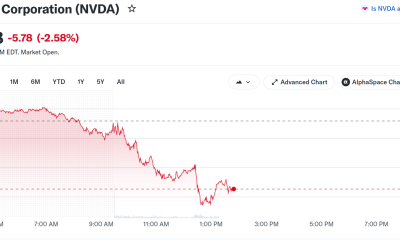
Why Did Nvidia Stock Fall on Monday Despite a $500 Billion Wall Street AI Deal?
-

 Politics7 days ago
Ben-Gvir’s crocodile project halted but abuses at Ketziot Prison continue
-

 Politics7 days ago
The Church of England’s ruinous reparations racket
-

 Politics7 days ago
Saudi Arabia used 86% of missile stockpile defending Iran attacks
-
 NewsBeat1 day ago
Myanmar says over 300,000 Rohingya refugees verified for repatriation as exodus enters ninth year
-

 Politics1 day ago
SEQ Code: The Three Letter Boarding Pass Code That Could Give You The Worst Seat
-

 Crypto World7 days ago
Crypto Made a $9.6 Billion Record, But It’s Hiding a Crucial Truth
-

 Fashion6 days ago
Can You Wear Double Cloth Gauze Clothing To Your Office?
-
 Crypto World7 days ago
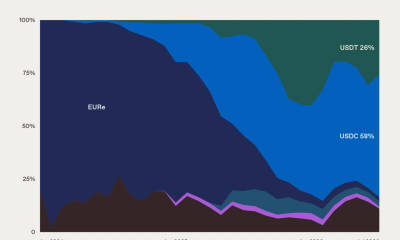
USDC and USDT Now Own 84% of Crypto Card Spend as the Euro Retreats
-

 Crypto World7 days ago
Is Clarity's delay a blessing in disguise?: State of Crypto
-
 Entertainment4 days ago
Keke Palmer Subtly Hints At Sean Evans Drama With Cryptic Post
-

 Crypto World7 days ago
Kraken Delisting Deadline Nears: Holders of 21 Tokens Risk Near-Zero Payouts
-
 Crypto World6 days ago
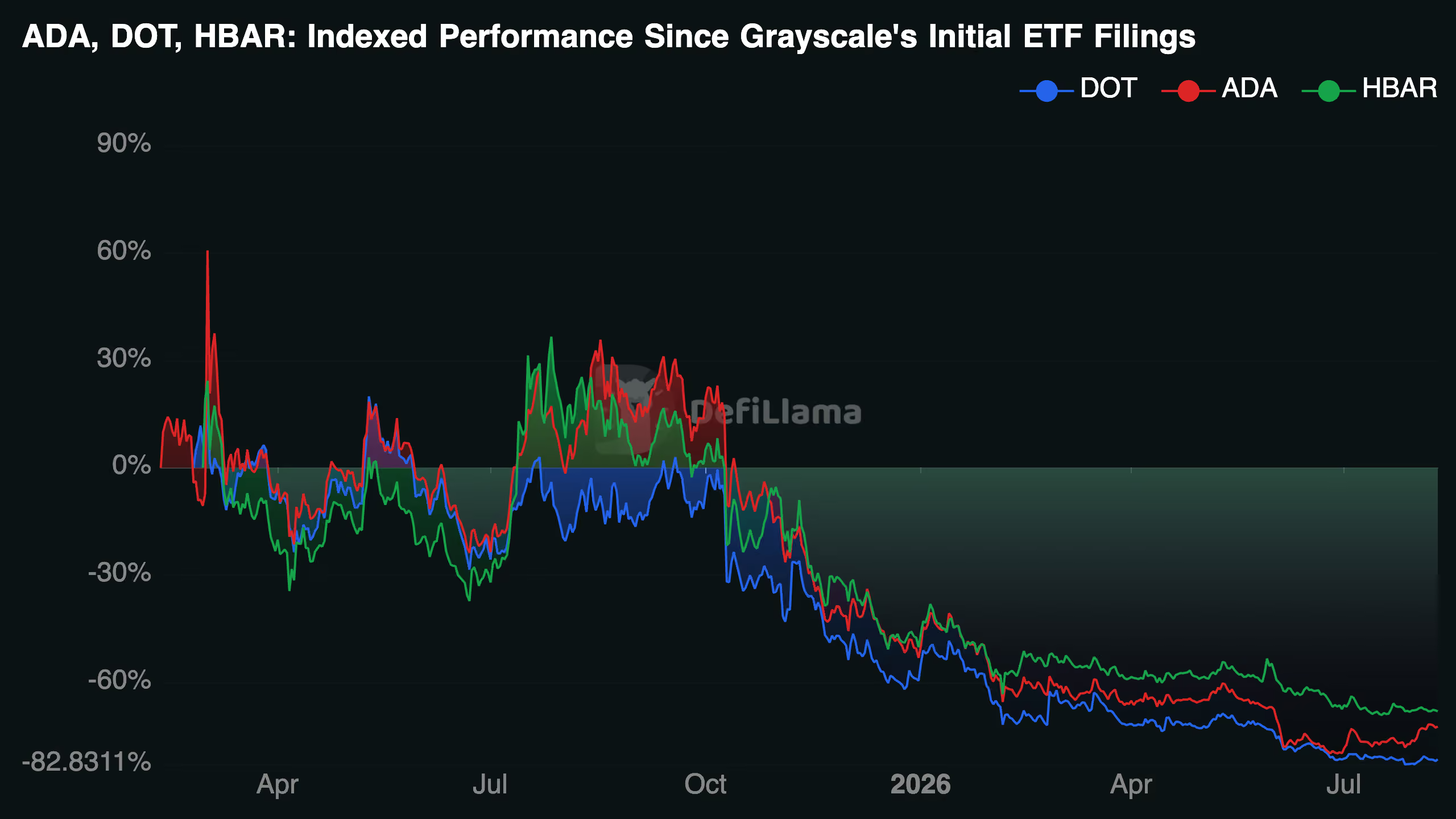
Grayscale quietly drops Cardano, Polkadot and Hedera ETF plans
-
 Entertainment5 days ago
57 Years Later, the Best Sitcom Ever Made Still Deserves a Reboot
-

 Tech5 days ago
Zoom Screen-Sharing Bug Let People Fully Take Over Other Devices On A Call
You must be logged in to post a comment Login