
Business
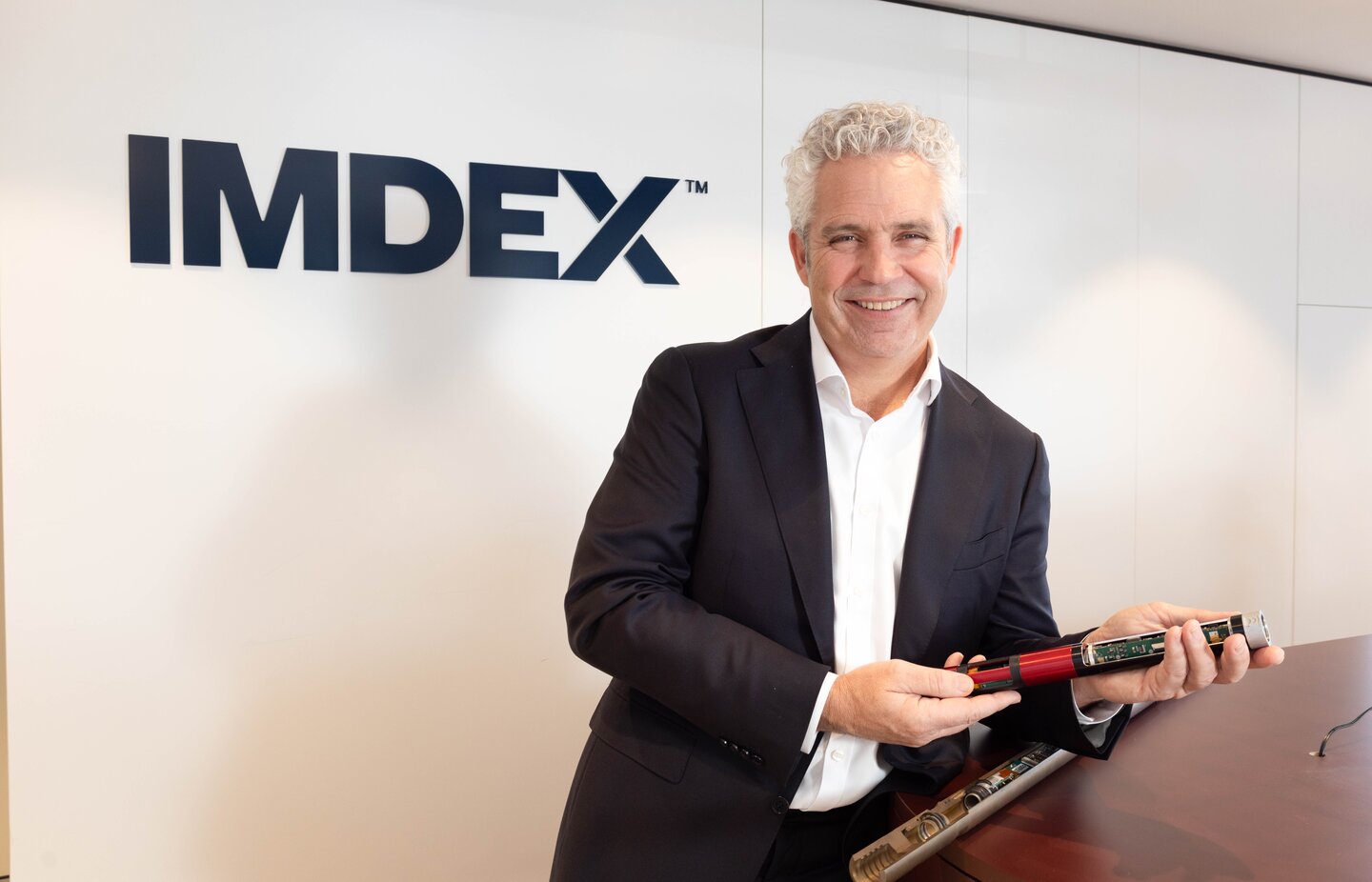
Imdex shares fall despite FY26 success




How whole-food ingredients, texture & culinary inspiration create new opportunities for developers.
Business
TMZ Reports New Details on Hayden Panettiere’s Sudden Death as Police Say No Signs of Foul Play Found Yet

GREENVILLE, S.C. — New details have emerged regarding the death of actress Hayden Panettiere, with local authorities confirming she died at a residence in Greenville, South Carolina, on Sunday, though the exact cause of her death remains undetermined as investigators continue their work.
According to television station WYFF4, police and emergency medical personnel responded to a report of an unresponsive woman at Judson Mill Lofts on Easley Bridge Road at 1:51 p.m. Sunday. Panettiere died at the scene, the station reported. Police told WYFF4 that their preliminary investigation “has not indicated any signs of foul play or suspicious circumstances,” though officials have not released additional information regarding what led to her death.
TMZ, which was first to report Panettiere’s death Sunday night, cited law enforcement sources confirming that police had responded to an incident involving the actress and that an investigation remained open. TMZ also reported that Panettiere and her on-again, off-again boyfriend, Brian Hickerson, had flown from Los Angeles to the South on Saturday, a day before her death, and that Hickerson’s family had been made aware of what happened. A source close to the actress told TMZ that Panettiere had been complaining of back pain over the past year, though the outlet noted it remained unclear whether that detail bore any connection to her death.
Panettiere’s death was formally confirmed by her representative in a statement provided to ABC News on Sunday night. Her father, Skip Panettiere, said in that statement that his daughter had been “an incredible light and a force of nature” to everyone who knew her and to the audiences who watched her on screen throughout her career, and he asked for privacy for the family as they process the loss.
The relationship between Panettiere and Hickerson has drawn renewed attention following her death, given its documented history of domestic violence. According to Variety’s reporting on Panettiere’s recently published memoir, “This Is Me: A Reckoning,” the book detailed what Variety described as her “abusive relationship” with Hickerson, who was served with a five-year restraining order in 2021. Hickerson was sentenced to 45 days in prison for domestic violence that same year. In the memoir, Panettiere recounted the escalation of the abuse, writing about the first time Hickerson slapped her and describing how, over time, “the slaps became hits,” according to Variety’s account of the book. She wrote that during one incident, he injured her face so severely that she did not leave her house for weeks.
Variety further reported that Panettiere and Hickerson reconciled after that period, but he was accused of hitting her again in 2020 while the couple was in Wyoming, resulting in his arrest on a domestic battery charge. It remains unclear, based on currently available reporting, why the two were reportedly together again in the days leading up to Panettiere’s death.
Despite the extensive documented history between Panettiere and Hickerson, no outlet has reported any confirmed connection between that relationship and the specific circumstances of her death, and police in Greenville have not indicated that Hickerson is considered a suspect or person of interest in their preliminary investigation. Authorities have stressed that their early findings have not pointed to foul play, though a full determination of cause of death will likely depend on further investigative steps, including any toxicology testing that may be conducted as part of a standard death investigation.
Speculation regarding a potential link between Panettiere’s death and her previously disclosed struggles with substance use has also circulated following the news, given that she had spoken publicly and repeatedly over the years about past battles with alcohol and drug use, including in her recently published memoir. However, no official source — including police, her family, her representatives or a medical examiner’s office — has indicated that drugs or alcohol played any role in her death. Absent confirmed toxicology results or another official finding, any such connection remains speculative rather than established fact.
Similarly, questions have arisen about whether Panettiere’s death could be connected to any underlying cardiac condition, particularly given that her younger brother, actor Jansen Panettiere, died in February 2023 at age 28 from what his family described at the time as cardiomegaly, an enlarged heart, coupled with aortic valve complications. As of this report, there has been no official evidence or statement connecting Hayden Panettiere’s death to a similar hereditary heart condition, and this possibility likewise remains unconfirmed.
Tributes to Panettiere continued to circulate widely across social media and among former colleagues in the days following news of her death. Actress Selma Blair left comments on one of Panettiere’s final Instagram posts expressing grief over the loss, writing, “I love you. Don’t be gone. Don’t be gone. Please. Please,” followed shortly afterward by a second comment reading, “I love you whale tail my friend.”
Panettiere had published her memoir on May 19, roughly three months before her death, detailing her experiences growing up as a child star, her struggles with postpartum depression following the birth of her daughter, and her path toward recovery from addiction. She had spoken emotionally in past interviews about the difficulty of relinquishing custody of her daughter, Kaya, to her ex-partner, boxer Wladimir Klitschko, in 2018, when Kaya was 7 years old. “I mean it was the worst signing those papers and like the most heartbreaking thing I’ve ever, ever had to do in my life,” Panettiere said in a 2022 interview reflecting on that decision.
As of this report, the Greenville County Coroner’s Office has not released an official cause of death, and authorities have given no timeline for when a final determination might be made public. Additional updates are expected in the coming days as the investigation continues, with police reiterating that their preliminary findings have not identified any indication of criminal wrongdoing in connection with Panettiere’s death.

Nvidia Rows Back on $250 Billion OpenAI Pledge and the Stock Rises

XDTE: The Return Lives Overnight, And That's The Problem Now
Business
Attorney General Todd Blanche Says FBI Won’t Take Over Nancy Guthrie Investigation, but Will Assist Fully
WASHINGTON — U.S. Attorney General Todd Blanche said Sunday that federal authorities do not intend to take over the investigation into the disappearance of Nancy Guthrie, the mother of “TODAY” show co-anchor Savannah Guthrie, even as the FBI continues to provide substantial support to state and local investigators working the monthslong case in Arizona.
Speaking on NBC News’ “Meet the Press,” Blanche outlined the scope of federal involvement in the high-profile investigation, which has drawn national attention since Guthrie was first reported missing earlier this year. “We are working as hard as we can with the state and local law enforcement in every area, and that means not only providing assistance with manpower, but any sort of forensic assistance,” Blanche said.
Blanche made clear that despite the intensity of federal support, the Justice Department has no plans to assume primary control of the case from local authorities. “And so we’re going to continue to do that. Whether we come in with sharp elbows and take it over, that’s not necessarily the right thing to do for her or for anybody, but making sure that it’s done right and making sure that this investigation is being conducted the way that it should be is something that we’re doing,” he said.
Guthrie, 78, was reported missing on Feb. 1 from her home in Tucson, Arizona, according to earlier reporting on the case. Her disappearance quickly became a subject of intense national media coverage, in part because of her family’s connection to one of American television’s most recognizable morning news programs, and prompted a coordinated response involving both local and federal law enforcement resources.
The investigation is currently being led by the Pima County Sheriff’s Department, with the FBI providing supporting assistance rather than direct oversight of the case, according to Blanche’s comments. Investigators have pursued an extensive range of leads over the course of the monthslong search, including analyzing hundreds of tips, reviewing doorbell camera footage from the surrounding area, and examining DNA evidence collected during the course of the investigation. Despite that substantial investigative effort, authorities have not named or arrested any suspects in connection with Guthrie’s disappearance.
During Sunday’s interview, Blanche acknowledged that he had no new public details to offer regarding the status of the search, expressing regret over the continued uncertainty facing Guthrie’s family and the broader public following the case. “I’m sorry to say that because I wish I had an update, and I know that this type of case is heartbreaking, especially when it plays out nationally like this one has,” Blanche said.
The case has seen several notable developments in recent weeks as investigators work to generate new leads in what has become an increasingly difficult and prolonged search. At the end of July, Arizona authorities released two ransom notes publicly in an effort to encourage members of the public to come forward with any relevant information. Law enforcement officials have said they believe the notes were sent by individuals connected to Guthrie’s disappearance shortly after she was reported missing, though the specific content and origin of the notes have not been fully detailed in public statements from investigators.
The investigation has also encountered complications stemming from fraudulent activity connected to the case. Earlier in July, a man from California pleaded guilty to federal charges after sending a fake ransom note in the aftermath of Guthrie’s disappearance, according to prior reporting. The case underscored the challenges investigators have faced in separating credible leads from false or malicious information as the search for Guthrie has continued to attract significant public attention.
Federal and state authorities have continued to urge anyone with information related to Guthrie’s whereabouts to come forward, emphasizing that even seemingly minor details could prove useful to investigators working to piece together what happened to her. The joint investigative effort between the Pima County Sheriff’s Department and the FBI remains active, though officials have offered few specifics regarding the current direction of the inquiry or whether investigators believe they are close to identifying a suspect.
Blanche’s comments Sunday represent one of the more detailed public statements from a senior federal law enforcement official regarding the Justice Department’s approach to the case since Guthrie’s disappearance was first reported in February. His remarks suggest that, despite the substantial resources the FBI has devoted to supporting the investigation, the Justice Department continues to view the case as fundamentally a matter for state and local authorities to lead, with federal agencies serving in a supporting capacity rather than directing the overall investigative strategy.
The distinction Blanche drew between federal assistance and federal takeover reflects a broader pattern in how the Justice Department and FBI typically engage with high-profile missing-persons cases that fall primarily under state jurisdiction. Federal law enforcement agencies commonly provide specialized forensic capabilities, additional investigative manpower and broader database access to support local law enforcement, while formal jurisdiction and lead responsibility for a case often remains with the state or county agency where the underlying incident occurred, absent specific federal charges or a formal determination that federal involvement is warranted.
As the investigation continues without a named suspect more than six months after Guthrie’s disappearance, public interest in the case has remained high, driven in part by her family’s prominent media profile and the emotionally difficult nature of a prolonged, unresolved search. Authorities have not indicated any specific timeline for when additional public updates might be provided, though Blanche’s comments suggest the current arrangement between local and federal investigators is likely to continue unless new developments prompt a change in approach.
Neither the Pima County Sheriff’s Department nor the FBI’s Phoenix field office has issued a separate public statement beyond Blanche’s remarks addressing the current status of the investigation as of this report. Officials have continued to emphasize that the case remains open and active, with authorities urging the public to report any information, however minor it may seem, that could assist in locating Guthrie or identifying those responsible for her disappearance.

S&P 500 Hits New High On Delayed And Reduced Rate Hike Expectations

Xi leads event marking late leader Jiang Zemin’s 100th birth anniversary

Futures for the Dow Jones Industrial Average and the other major stock indexes offered a mixed bag Monday, as the stock market looked to bounce back from Friday’s mild losses. Meanwhile, memory-chip stocks Micron Technology (MU) and Sandisk (SNDK) were big movers on the stock market today. Ahead of Monday’s open, Dow futures fell 0.2%, but S&P 500 futures moved up…
Copyright ©2026 Investor’s Business Daily, LLC. All rights reserved. 87990cbe856818d5eddac44c7b1cdeb8


The television industry is in flux.
Deals, spinouts and partnerships are all reshaping the landscape for traditional TV. While the industry is no stranger to turmoil, the recently rapid pace of change is keeping media investors and onlookers on their toes.
This is the backdrop for CNBC’s Future of TV survey: an update from our 2023 exercise that asks media insiders and executives to forecast the next three years in TV.
Depending on who you ask, the TV industry may be in crisis. The number of cable TV subscribers has been declining for more than a decade. Streaming services are now profitable, but subscriber growth, for the most part, has plateaued.
Pondering the future of TV isn’t just a thought experiment. It’s the underpinning of hundreds of billions of dollars’ worth of mergers and acquisitions.
In February, Paramount Skydance agreed to acquire Warner Bros. Discovery, following a sale process that saw Netflix nearly acquire WBD’s film studio and HBO Max. That deal is now held up due to politicians’ antitrust fears.
In June, Fox said it would acquire streaming platform Roku for $22 billion. Comcast plans to separate out NBCUniversal in 2027, a swift follow-up to the spinout of Versant, its portfolio of cable TV networks, including CNBC. And Charter Communications recently received final regulatory approval for its $34.5 billion merger with Cox Communications, which would create the biggest cable company in the U.S.
Media companies are also thinking about partnerships to generate revenue as the cable TV ecosystem continues its decline. NBCUniversal has already announced a partnership between its Peacock and YouTube.
Disney has a new CEO and is focused on tying together its broad swath of media assets, including ESPN, ABC, FX, Disney+ and Hulu.
And Netflix — the company that upended the pay-TV model more than a decade ago with binge-watching, password-sharing, and no advertisements — has reversed course on many of its previous strategies in an effort to keep investors happy. And yet, its stock is down more than 35% in the past year.
All the while, YouTube continues to take viewing share as the rest of the media industry adjusts to how younger audiences want to consume content.
These big events are redefining strategy for every company in the ecosystem.
To get a read on where TV goes from here, CNBC asked the same five questions of 10 media executives. Some of the 2023 predictions unearthed by our previous canvassing proved quite accurate: Most executives correctly predicted linear pay TV would still be around, albeit with fewer customers; several correctly predicted bundling streaming services together would be challenging; and more than one even predicted Paramount+ and HBO Max, specifically, would be consolidated.
Here’s the 2026 view of television by 2029:
In three years, will we have hit a floor on cable TV subscribers?
Chris Winfrey, Charter Communications president and CEO: I think it’s going to decline dramatically, because the cost of free, over-the-air [retransmission] is now over $30 per customer for something that’s essentially free. But what you’re seeing already is all of that broadcast content and cable content is really all available inside of these apps, and it’s available inside of big streaming bundles that I think will develop over time, and I think that will include Netflix. When you really think about it, Netflix is essentially a big cable programmer that could end up being bundled together with the other streaming apps to provide more choice, more value, and more utility for customers over time.
Chris Winfrey, CEO of Charter Communications.
Courtesy: Charter Communications
Jeff Zucker, RedBird IMI CEO and former NBCUniversal CEO and WarnerMedia News and Sports chairman: I don’t think we’ll have a floor. I do think it will continue to decline, and it’ll probably do so every year until sports rights eventually disappear from cable. But, I think that’s at least a decade off.
Charlie Collier, Roku Media president: Well, nothing truly goes to zero. Somewhere in America there’s probably someone paying for AOL dial-up or renting a DVD from the last Blockbuster, which, by the way, is in Bend, Oregon. But the direction of travel is unmistakable.
Rashida Jones, Uncensored CEO and former MSNBC president: I think it’s difficult to reverse the trend that we’re seeing of consumers choosing to consume content on platforms other than linear television. I think that trend continues. How fast? Frankly, we haven’t been right as an industry to date. It hasn’t been quite as fast and as aggressive as maybe we were forecasting even four or five years ago.
Rashida Jones, then-President of MSNBC, speaks onstage during Voto Latino’s “Our Voices” Celebration at Decatur House in Washington, D.C., April 28, 2023.
Jemal Countess | Getty Images
What’s one thing that will become a TV industry standard that doesn’t exist today?
Jimmy Pitaro, ESPN chairman: Ubiquitous personalization. Personalization exists today, but I’m going to say three years from now, you’re going to see it pretty much everywhere, meaning networks are providing the right content to the right user at the right time, and you’re going to see content being promoted based on a user’s preferences, but you’re also going to see content being created and tailored to a user’s preferences.
Anjali Sud, Tubi CEO: I think you’ll see ads get way more useful and relevant the same way they have on social media. If you think about the experience today on television, it still largely feels like the ads are not personalized, and you can imagine a world where you can see such hyper-personalization that really — it gets to a place where what you see as an ad doesn’t even feel interruptive or like friction. It actually just feels like, wow, that was really helpful and useful, because you know me so well.
Pitaro: Commerce integration, and I think you’re going to see a lot more of that. You know, we have a buy experience, a commerce experience within our enhanced ESPN app today, but I would expect that you’ll see frictionless commerce really emerge over the coming years — more product placement and the opportunity for the customer to deep link directly to a partner site to make a purchase.
John Landgraf, chairman of FX content and studios: Day and date global releases to us seem to be a really important evolution in the television ecosystem. Of course, there’s still going to be shows that premiere primarily in one market, one territory — [in] North America or in Asia or Europe — but I think increasingly what you’re seeing is the biggest shows are premiering everywhere in the world at the same time.
John Landgraf speaks as TCM honors Glenn Close during her Hand and Footprint Ceremony at TCL Chinese Theatre in Hollywood, California, May 1, 2026.
Emma McIntyre | Getty Images
Zucker: I think we’ll see more and more podcasters and livestreaming shows being licensed to cable networks — perhaps even broadcast networks — and I think that will become much more of a TV industry standard.
Jeffrey Hirsch, Starz president and CEO: We’ll continue to see major advancements in language. And so I think you’ll have a world where it’s content without borders, where [artificial intelligence] will allow platforms to allow consumers to watch the content in their native language. Subbing and dubbing will go away, but you’ll be able to toggle or hit a button that says I want to watch it in French, I want to watch it in Spanish, I want to watch it in English. Content without borders becomes a real kind of standard in the industry in three years. (Of note: This was also Hirsch’s answer three years ago.)
Jeffrey Hirsch, president and CEO of Starz.
Courtesy: Starz
Winfrey: I think immersive programming, particularly around sports with 8K [TV], is going to be a feature, or a new set of products and content that’s available, that will continue to reinvigorate the pay-TV industry. If you take a look at what we’re doing with Spectrum Front Row, which is our cooperation with NBA and Apple Vision Pro … it really just gives you a taste of where this could go. The ability to bring a courtside experience into the living room of every household inside the country — I think that’ll be a unique and new experience.
Will there be a major government action to prevent a Big Tech company from getting bigger in the entertainment industry?
Zucker: I don’t think it’s any secret or would surprise anybody that Big Tech has lost a lot of goodwill among the left and Democrats, and so I think that those Big Tech companies will be in for a lot of scrutiny and will find going much more difficult, but I think that depends what happens in the next two elections, in ’26 and ’28.
Jeff Zucker attends CNN Heroes at the American Museum of Natural History in New York, Dec. 8, 2019.
Mike Coppola | Getty Images
Jones: The goal isn’t bigger and better. So, I think what we’re going to see is a consumer and an industry backlash to some of these deals that will then kind of change the course. I think we’re starting to see some of that even recently with the letter that was submitted by 1,000 professionals in Hollywood pushing back at the Paramount[-WBD] deal.
Sud: The convergence between Silicon Valley tech and Hollywood, it’s already happened. The shift has happened. If you look at the platforms that are taking the highest share of time spent and attention, it’s tech platforms. If you look at who has the highest share of television viewing in the living room, it’s YouTube. We’re seeing this convergence — a collision — even more. Instagram is now doing vertical videos on TV, the Oscars are going to be on YouTube, you have creators putting movies out in theaters in the box office. So, my view is, sort of, this is all about where consumers’ tastes and preferences are going, and consumers are already getting very used to the convergence of tech and entertainment, and so I don’t think you can put the genie back in the bottle.
Anjali Sud, chief executive officer of Tubi TV, during the Bloomberg Screentime event in Los Angeles, Oct. 10, 2024.
Kyle Grillot | Bloomberg | Getty Images
Are we in a sports viewership ratings bubble?
Pitaro: The answer is a fast “no.” First off, [ratings] measurement is getting better and much more accurate, including, of course, out-of-home and now streaming usage being accounted for. Every time the industry expects a downturn, numbers continue up and to the right.
ESPN Chairman Jimmy Pitaro, at right, listens as CNBC’s Alex Sherman speaks at the CNBC Game Plan Summit in New York, July 16, 2026.
Shea Kastriner | CNBC
Jones: I think we will get to a point of saturation. Don’t know if this is true — this is a slightly adjacent industry for me — but I think every industry has a ceiling and available audience. I think with the recent distribution deals that have broadened the number of platforms where this content is distributed, I think you get to a ceiling. You get to a peak, and I think we’ll start to see some of that drop down.
Brian Fuhrer, Nielsen senior vice president of product strategy and thought leadership: It’s really important to understand that Nielsen has made some methodological improvements that impact sports and everything in general, but in particular sports. The No. 1 thing there is we’ve expanded our out-of-home measurement … Home markets are super important to sports rates. So, we have seen increases directly attributable to that enhancement that we expect to continue, but we won’t see a big year-to-year bump.
Winfrey: I think you’re going to continue to see ratings go up. Maybe that’s a little bit of a mix of short-form content, long-form content, immersive capabilities of bringing you into the stadium … but I think it’s the one area that’s shown really isn’t the same to be able to watch it after the fact, and I think it’s going to continue to drive ratings inside the system.
Zucker: The reality is that live works. People want live events, they want live news, and they particularly want live sports. They want things that AI is not going to be able to replicate. Live sports is going to continue to be very strong. Whether ratings go up or down depends on matchups and championships, but overall I think sports are going to continue to be very, very strong.
Collier: Live sports remains one of the last true mass reach experiences in our culture. In a fragmented world, sports still create communal moments. Families watch them together, friends text each other in real time, and as we’re seeing, entire cities change moods based on outcomes. So, I suspect premium sports remain incredibly valuable, perhaps even more than today.
Charlie Collier, president of Roku Media, speaks during the Axios Media Trends Live event in New York, Sept. 18, 2025.
Michael Nagle | Bloomberg | Getty Images
There’s broad agreement that the biggest streaming services will probably still be the biggest in three years. What’s another service that you think will gain significant market share?
Debra OConnell, Disney Entertainment Television chairman: Look at Instagram’s recent announcement about TV formats. I think [it’s] likely a service that we’re not thinking of today, but it could be more broadly services that are here today and are expanding the capability of how they engage and connect with audiences, as well as expanding those experiences.
Debra OConnell, Disney Entertainment Television chairman.
Courtesy: Disney
Winfrey: I actually think the real opportunity is for somebody who can pull it all together to be an aggregator of all these different services, much the way that cable TV was originally created to provide value and utility, to be able to provide a bundle of services at a discounted rate. I think that’s the opportunity for a new entrant into the space.
Zucker: We see TikTok videos getting longer and longer, and I think that’s a trend that will continue. I also think that niche casting is also going to continue, and you will see lots of very small communities play very big roles across all of these services.
Fuhrer: Platforms like Roku Channel, Tubi, Pluto — we’ve seen a tremendous adoption and increase in usage across those services. We don’t see a slowing down of that, because as they continue to enhance the services and the different companies add more content to them — original content — and as these [free, ad-supported streaming television] channels gain in popularity, we think that’s an area to really keep an eye on.
Nielsen’s Brian Fuhrer speaks during the Nielsen Presentation portion of the 2017 Summer Television Critics Association Press Tour at The Beverly Hilton Hotel in Beverly Hills, California, Aug. 4, 2017.
Frederick M. Brown | Getty Images
Pitaro: I’m going to say Epic Games. Clearly, Walt Disney Company is invested here. We made a $1.5 billion investment in Epic Games, but from my perspective, really, the possibilities to connect gaming experiences with both entertainment and sports content, including potentially live events, are endless.
Landgraf: Do I really think that a streamer we’ve never heard of is going to be meaningfully competitive in long-form video three years from now? No, I don’t think so.
Hirsch: Starz is my answer.
Disclosure: Versant is the parent company of CNBC.
Business
Samsung’s Galaxy Z Fold 8 Ultra Review Finds Its Toughest Rival Is the Cheaper Galaxy Z Fold 8 Itself

Samsung’s new Galaxy Z Fold 8 Ultra is a capable and well-built flagship foldable smartphone, but according to a new review from Android Police, its biggest competitive threat may not come from rival manufacturers but from within Samsung’s own lineup, in the form of the smaller and less expensive Galaxy Z Fold 8.
The review, conducted by longtime technology journalist Andy Boxall, found that while the Z Fold 8 Ultra represents a refined and powerful device in its own right, the standard Galaxy Z Fold 8 has proven more enjoyable to use in day-to-day scenarios, raising questions about whether the larger, pricier model risks becoming overshadowed by its own sibling. “Its problem is the Galaxy Z Fold 8, which is smaller, lighter, and more enjoyable to use,” the review states, noting that early sales figures already show the standard Z Fold 8 outperforming the Ultra model.
The Galaxy Z Fold 8 Ultra starts at $2,100 for a 12GB RAM and 256GB storage configuration, with pricing rising to $2,300 for a 512GB version and $2,700 for a top-tier 16GB and 1TB model. The device is available through Samsung directly, most major carriers, and retailers including Amazon and Best Buy. Buyers purchasing directly from Samsung can select an exclusive Green Shadow color option, while other retailers offer Violet Shadow, Cream or Graphite finishes.
According to the review, the Z Fold 8 Ultra is functionally the successor to last year’s Galaxy Z Fold 7 rather than a direct evolution of the naming convention suggested by its Ultra branding. The device retains the same tall, narrow cover screen and large productivity-focused interior display that defined its predecessor, and shares an identical size, thickness and weight with the Z Fold 7. The review notes this consistency is not necessarily a negative, given that the Z Fold 7 had already made meaningful improvements in usability and manageability over the earlier Z Fold 6.
However, the review draws a clear contrast between the Ultra model and the standard Galaxy Z Fold 8, describing the newer device’s shape as offering a meaningful departure from the established big-screen foldable design that has defined competitors such as the Oppo Find N6 and Honor Magic V6. “The Galaxy Z Fold 8’s shape means you don’t have to compromise anymore, and it gives the Z Fold 8 Ultra a serious challenger from within,” the review states, suggesting that, for the first time, Samsung’s own product lineup presents consumers with a genuinely distinct choice between two big-screen foldable designs.
On the hardware side, the review praised the Z Fold 8 Ultra’s screen technology, highlighting Samsung’s Flex Titanium display construction, which incorporates a titanium film into the display stack to reduce the visibility of the crease that has historically affected foldable phone screens. Combined with an effective anti-reflective coating, the review found the inner display to be notably pleasant to use, particularly when compared with competitors such as the Motorola Razr Fold. Samsung’s hinge mechanism also received strong marks for its smooth motion and lack of audible sound during use.
The device’s camera system received a more mixed assessment. The review highlighted an upgraded 50-megapixel wide-angle camera as a genuine improvement over the previous 12-megapixel sensor, producing images the reviewer described as punchy, with deep contrast and strong detail. However, the phone’s 10-megapixel telephoto camera, which provides 3x optical zoom, was identified as a clear weak point, particularly in indoor comparisons against the Motorola Razr Fold’s 50-megapixel telephoto sensor. The review noted that outdoor telephoto performance was considerably better, tempering the overall criticism somewhat.
In terms of raw performance, the review found the Z Fold 8 Ultra’s Qualcomm Snapdragon 8 Elite Gen 5 for Galaxy processor to be highly capable, delivering smooth performance across demanding tasks and benchmarking scenarios without signs of overheating, even under sustained stress testing with the phone’s screen closed in high-temperature conditions. Battery life was similarly strong, with the reviewer reporting roughly two days of use per charge under typical daily usage patterns involving three to four hours of screen time. Fast charging performance was also highlighted as a strength, with the device reaching a full charge in approximately 65 minutes when paired with a compatible Super Fast Charging 2.0 adapter, though the review cautioned that not every charger tested delivered consistent fast-charging speeds.
Software-focused features, including Samsung’s Flex Mode, which allows the phone’s hinge to hold a 90-degree angle for use as a makeshift laptop-style device, were highlighted as useful additions, alongside a new version of the Quick Share feature that now supports file transfers with Apple’s AirDrop system, allowing users to move photos and files between the Z Fold 8 Ultra and Apple devices in a matter of seconds. However, the review was less enthusiastic about several of Samsung’s newer artificial intelligence features, including tools called Now Brief and Now Nudge, which the reviewer found provided limited practical value in daily use.
The review also addressed broader questions about Samsung’s decision to use the “Ultra” branding for the device, suggesting the naming choice may be a strategic move aimed at preemptively competing with an anticipated foldable smartphone from Apple, which industry speculation suggests could arrive under a name such as “iPhone Ultra” later this year. The review pointed to Samsung’s history of adjusting its own product naming and positioning in apparent anticipation of Apple’s competitive moves, citing past examples including the Samsung Galaxy S25 Edge and the Galaxy Watch 5 Pro.
Ultimately, the review recommended that prospective buyers strongly consider testing both the Galaxy Z Fold 8 and the Z Fold 8 Ultra in person before making a purchasing decision, given the meaningfully different experiences the two devices offer despite their similar branding and shared release window. While the review characterized the Z Fold 8 Ultra as a well-made and highly capable foldable phone deserving of a strong overall rating, it concluded that the standard Z Fold 8 may represent the more satisfying option for many users, particularly given its lower price and more compact form factor. “I’ve enjoyed the Galaxy Z Fold 8 Ultra, but the hard truth is, I am counting down the days until I can go back to using the Z Fold 8,” the review states in its closing assessment.

Vernon Kay, Heather Small, Alex Bowen at Symphonic Ibiza

Beyond Snacking: How Walnuts Are Powering Innovation
Fans Thrash WNBA For Highlighting Angel Reese, Kelsey Mitchell Despite Indiana Star’s 26-Point Game


-

 Fashion3 days ago
Weekend Open Thread: Ann Taylor
-
 NewsBeat6 days ago
Communication cards help banking customers access services or report scams
-
 Business6 days ago
Oil Price Today (August 11): Crude oil rises to $88 after Trump’s compensation demand dents Hormuz opening. Here’s why
-

 Crypto World6 days ago
Revolut wins French banking licence, creates second EU banking hub
-
 Sports4 days ago
This U.S. Amateur is a glimpse into golf’s future in more ways than you think
-
 Crypto World7 days ago
Why Did Nvidia Stock Fall on Monday Despite a $500 Billion Wall Street AI Deal?
-

 Sports2 days ago
Birmingham 2026: Day 6 Timetable for Irish Athletes
-
 NewsBeat2 days ago
Myanmar says over 300,000 Rohingya refugees verified for repatriation as exodus enters ninth year
-

 Politics2 days ago
SEQ Code: The Three Letter Boarding Pass Code That Could Give You The Worst Seat
-
 Entertainment5 days ago
Keke Palmer Subtly Hints At Sean Evans Drama With Cryptic Post
-
 Crypto World7 days ago
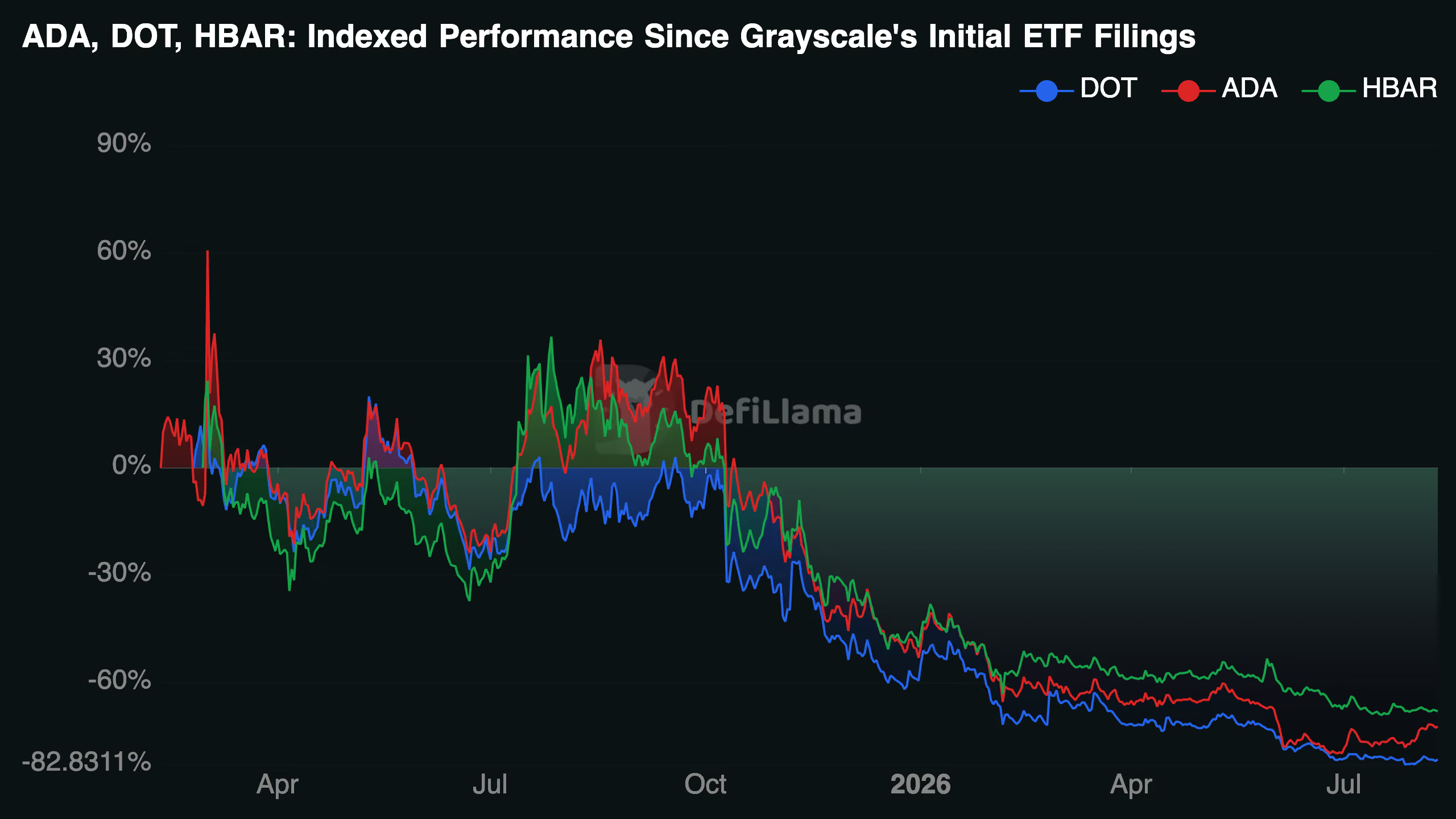
Grayscale quietly drops Cardano, Polkadot and Hedera ETF plans
-

 Fashion7 days ago
Can You Wear Double Cloth Gauze Clothing To Your Office?
-
 Entertainment6 days ago
57 Years Later, the Best Sitcom Ever Made Still Deserves a Reboot
-

 Fashion6 days ago
Coffee Break: The Fonteyn Jane Flat
-
 Crypto World7 days ago
Hormuz Nerves Cost Bitcoin $65,000 Mark Despite Solid Institutional Flows
-
 Crypto World7 days ago
Bitcoin's BIP Editors Remove Luke Dashjr Two Days After BIP-110 Fork Stalled
-

 Tech6 days ago
Zoom Screen-Sharing Bug Let People Fully Take Over Other Devices On A Call
-

 Fashion6 days ago
Claire Life: Kicking Off MVAAFF With the C Suite Luncheon Featuring Phylicia Rashad, Letoya Luckett, and More!
-

 Fashion6 days ago
Should you refinance your debt? Pros, cons, and real numbers
-
 Crypto World5 days ago
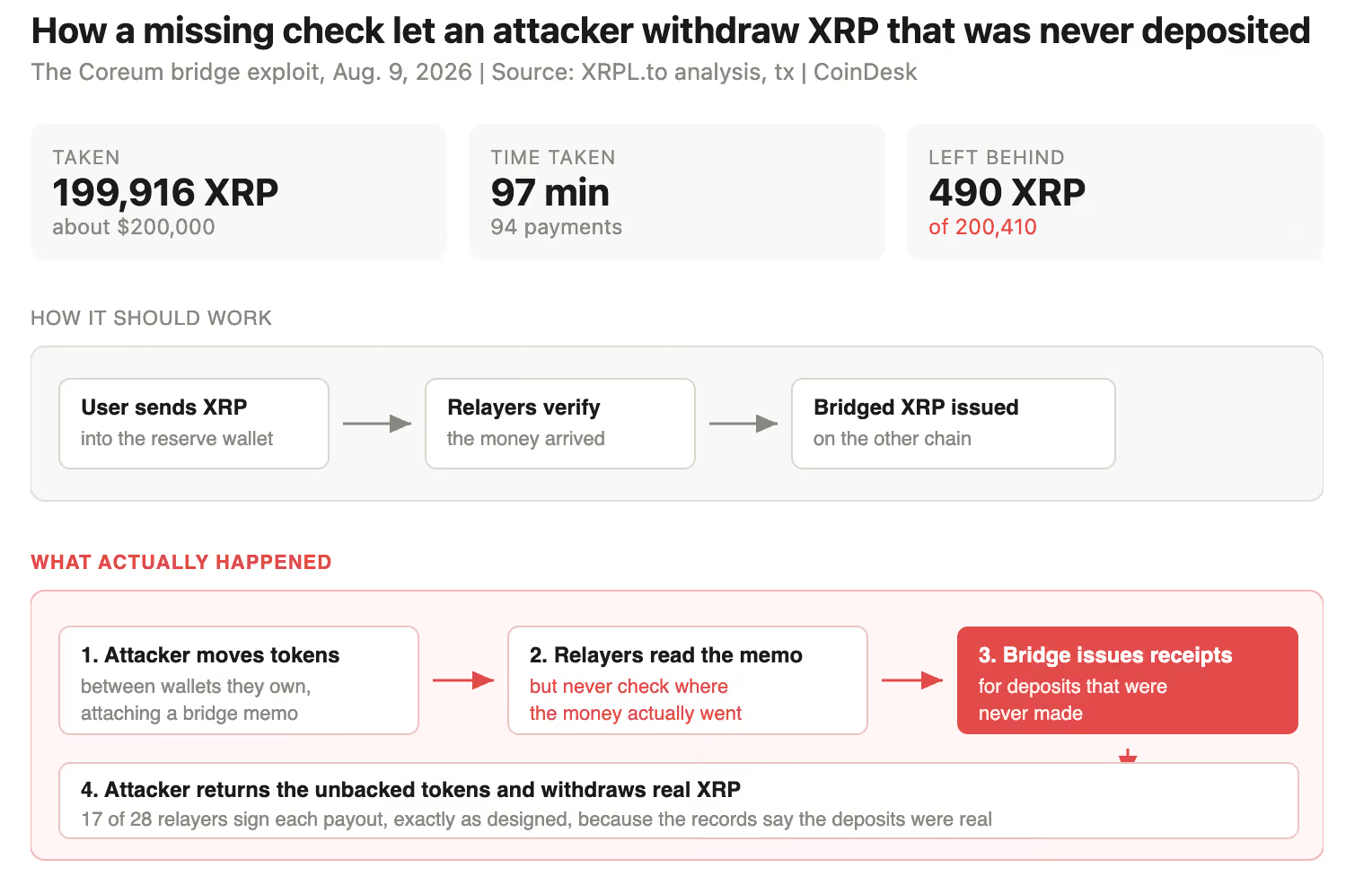
XRP bridge drained after software mistook fake deposits for real ones
You must be logged in to post a comment Login