Connect with us

Tech

Fireflies.ai’s New AI Email Assistant Can Draft Replies Using Your Meeting History

Published

on

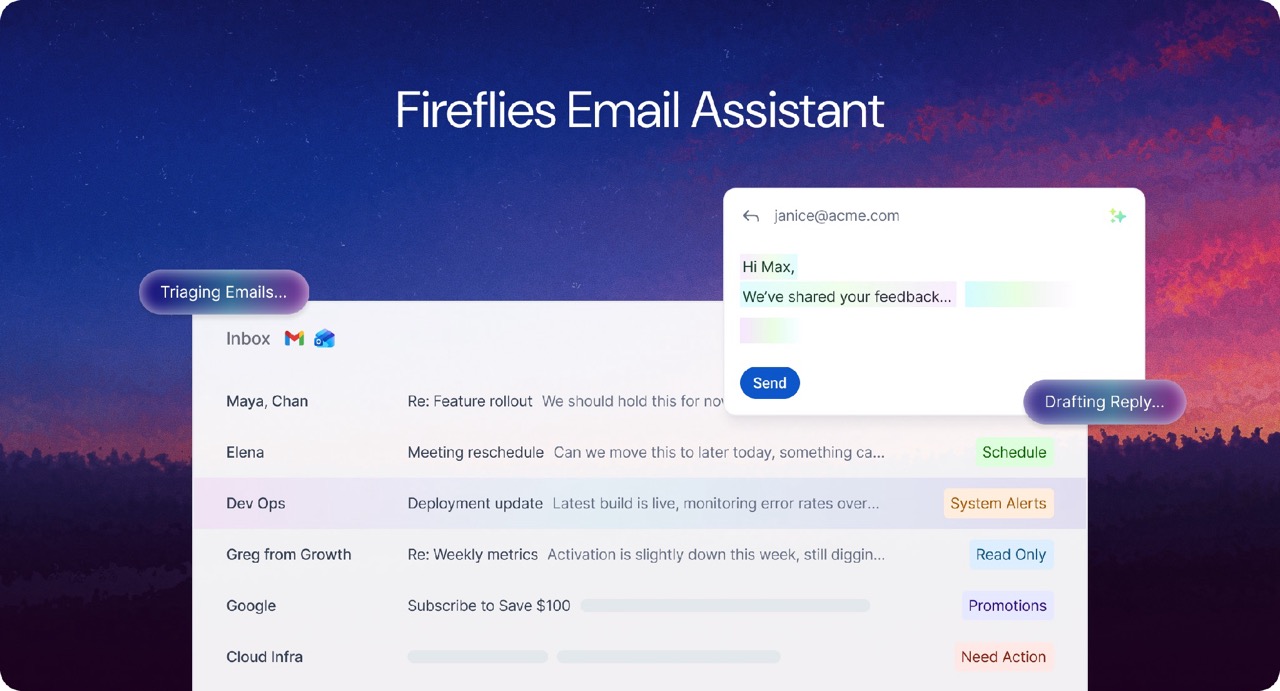
Fireflies.ai is expanding beyond AI meeting notes with a new Email Assistant designed to help users manage their overflowing inboxes. The tool can automatically sort incoming emails, draft replies, and create follow-ups by using context from both email conversations and previous meetings. Here’s everything you need to know about it.

Fireflies Email Assistant Connects Email and Meeting Context

The biggest difference between Fireflies’ Email Assistant and a traditional AI email tool is the context it can use. Instead of relying only on what’s written in an email thread, the assistant can also look at past meetings with the people involved in the conversation.

For example, if a customer follows up about something discussed during a previous meeting, Fireflies can use that meeting context to help draft a response. This means users don’t necessarily have to search through old meeting notes or try to remember what was discussed.

Fireflies has included several features aimed at reducing repetitive inbox work:

Advertisement
  • Auto Labels: Automatically sorts and labels incoming emails so users can identify priorities more easily. It does not modify or delete existing emails, workflows, or rules.
  • Auto Draft Replies: Creates draft responses using the current email thread and relevant past meetings. Users can also set custom Writing Instructions to control the tone and style. Nothing is sent without user approval.
  • Follow-Ups: If an email doesn’t receive a response, the assistant can draft a follow-up in the original thread after a user-configured waiting period.
  • Daily Briefs: Brings email insights and action items into the same daily overview as meetings and Slack activity.
  • AskFred: Users can ask questions in plain English to find emails, summarize conversations, or retrieve action items from the week. The assistant can then drop a relevant draft into the inbox.

The company says its tools now work across meetings, email, Slack, and CRM systems. The idea is to connect information across these services and automate some of the work that happens after a meeting, such as drafting replies, updating records, and flagging important tasks.

Fireflies Email Assistant is available immediately on all Fireflies plans, including the free plan. Users can connect a Gmail or Outlook account through the Email Connector inside Fireflies to get started. For users who need additional features, Fireflies’ Pro plan starts at ₹955 per seat per month when billed annually, according to the company.

Source link

Continue Reading
Click to comment

You must be logged in to post a comment Login

Leave a Reply

Tech

Payments giant Stripe is about to drop over $7 billion to become a gateway to AI token sales

Published

on

Payments biz Stripe has reportedly finalized an agreement to acquire OpenRouter for at least $7 billion, signaling a shift in focus for the AI industry.

OpenRouter provides a way for customers to integrate multiple AI models into their workflow and infrastructure and is, by Ramp’s measure, the most popular of the gateway companies that have sprung up to simplify model integration. By acquiring the AI gateway service, Stripe would become a mediator of AI token sales, fitting its core business while gaining access to valuable data about AI model usage.

Stripe declined to comment, citing a policy of not addressing rumors or speculation. Prior to Bloomberg’s report about the agreement, the Wall Street Journal said acquisition talks were underway.

Akhil Verghese, founder and CEO of Krazimo, a developer of AI software for businesses, told The Register in an email that he found the acquisition fascinating because OpenRouter is to AI models what Stripe has been to financial infrastructure. 

Advertisement

“A key factor for me is the value,” he said. “I won’t pretend to be smart enough to understand how these valuations work, but $7 billion for OpenRouter surprised me. They raised at a $1.3B post money valuation in May, and even if revenue has grown significantly since then and acquisitions often have an additional multiple, 5x in 3 months is nuts.

“There are ways this acquisition makes sense, though. [Stripe CEO] Patrick Collison recently said that metered pricing is the native business model of the AI era. In purchasing OpenRouter, Stripe, which already controls where the money is going, now sees where the tokens are going.”

And there are a lot of tokens going around. An economics paper published last month, AI Premium, estimates total global LLM token consumption to be about 5 to 7 quadrillion per month, with about 2 percent of that being handled by OpenRouter.

While marquee model makers Anthropic and OpenAI have focused on building their own brands and steering customers toward their tooling, the reality is that business customers prefer options that avoid lock-in and maintain negotiating power. That expectation and the potential fees for gatekeeping have led to the proliferation of AI gateway firms and to $113 million in funding for OpenRouter back in May.

Advertisement

Verghese said rival AI gateways may find it more difficult to compete now that OpenRouter has access to so much funding.

Anthropic and OpenAI account for a substantial amount of the tokens processed by virtue of their subsidized flat-rate subscription plans – generally served directly rather than through a gateway or third-party provider. But as they push customers toward API pricing in preparation for going public, they risk driving business toward providers of more affordable, open weight models.

As of December 2025, OpenRouter reported serving more than 5 million developers to route traffic to more than 300 models from more than 70 providers. At the time, open weight models accounted for about 30 percent of tokens served. Today, the biz boasts more than 10 million developers and 80 providers.

OpenAI in October 2025 was serving about 8.6 trillion tokens per day, according to Andreessen Horowitz, and OpenRouter was serving more than 1 trillion tokens per day.

Advertisement

“The competitive frontier is no longer only about accuracy or benchmarks,” said Malika Aubakirova and Anjney Midha from Andreessen Horowitz at the time. “It is about orchestration, control, and a model’s ability to operate as a reliable agent.”

It’s about AI gateways and adjacent services that sit above models in the technical stack.

According to Vercel, which offers its own AI Gateway, open weight models have seen their share of gateway token spend grow from 11 percent in April to 36 percent in July. Meanwhile, the token spend collected by the four largest frontier labs, which had not dipped below 93 percent in seven months, fell to 89 percent last month.

Much of that came at Google’s expense, with Chinese AI labs Z.ai and Moonshot capturing the growth in open weight spending.

Advertisement

“GLM 5.2 and Kimi K3, both released in the last two months, are the first open-weight models running a meaningful share of the workloads historically owned by closed-weight labs,” Vercel said.

Even so, the top four frontier labs in the US continue to capture the lion’s share of spending. Vercel said those companies took 95 percent of spending through its AI Gateway in June. 

“In July, Anthropic collected 65 percent of gateway spending on 30 percent of token volume, at 4.4 times the average price of every other lab’s tokens,” Vercel said.

Open weight models, which have occupied the low end of the market (cheap tokens), have seen their fortunes shift, Vercel said. After their share of gateway token volume almost tripled between April and June, from 11 percent to 29 percent, capturing only four cents for every gateway dollar, they saw spending more than double to nearly nine cents for every dollar.

Advertisement

Open weight models, in other words, are becoming better and are bringing in more revenue even as the average token price declined 13.6 percent in July. If the trend continues and AI usage drifts further toward open weight models and away from proprietary frontier models, the AI gateway business should prosper.

Verghese expressed concern about whether OpenRouter will be able to maintain its neutrality under Stripe’s roof. The workload router isn’t supposed to play favorites in terms of where it directs tokens based on requirements, but should it start doing so, he said, the resulting loss of trust could be harmful. ®

Source link

Advertisement
Continue Reading

Tech

CMF’s next earbuds are coming, and I have a pretty good guess what they are

Published

on

Nothing’s budget-focused spinoff brand CMF has started teasing its next pair of wireless earbuds, and while the company is keeping the name to itself for now, there is a good chance we are looking at the successor to the CMF Buds Pro 2.

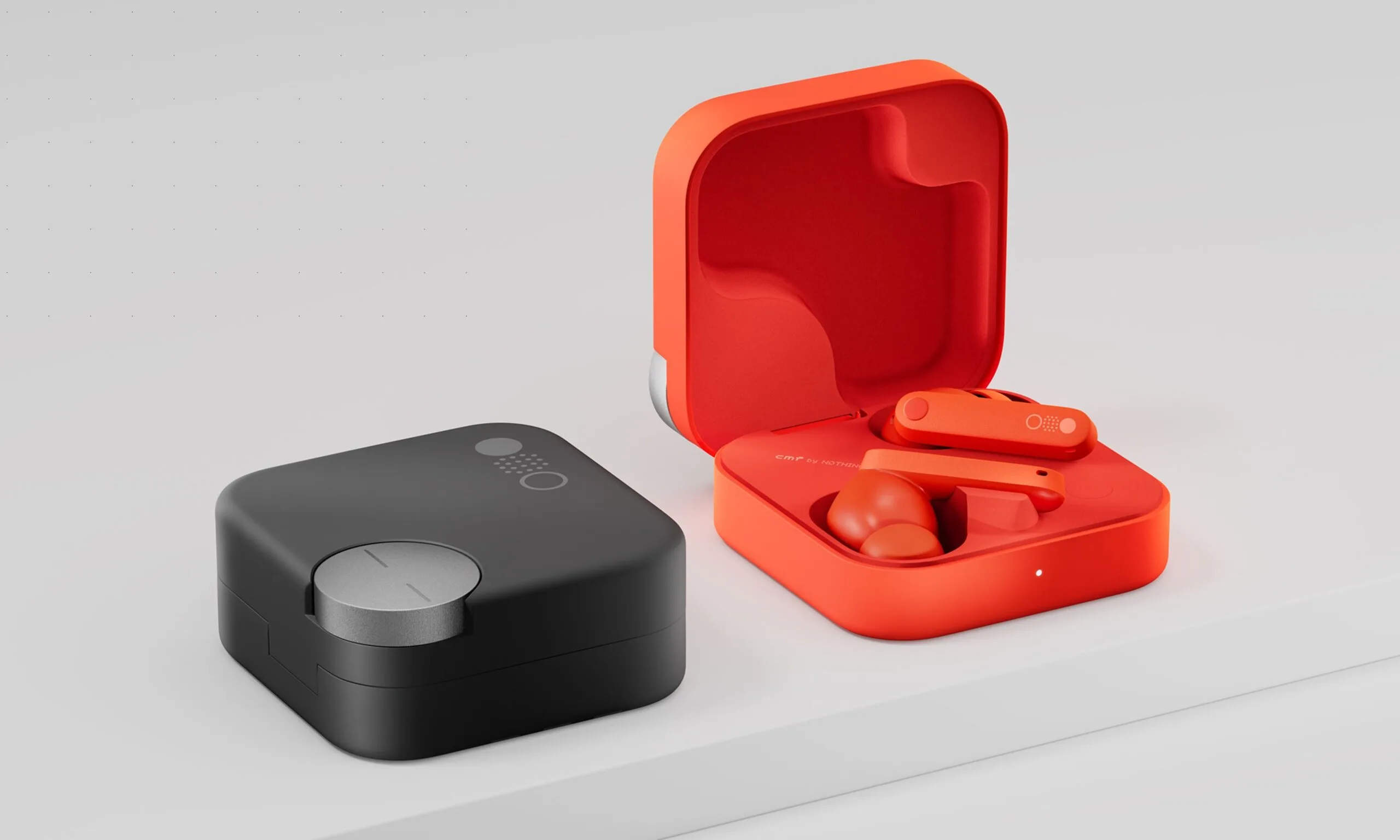
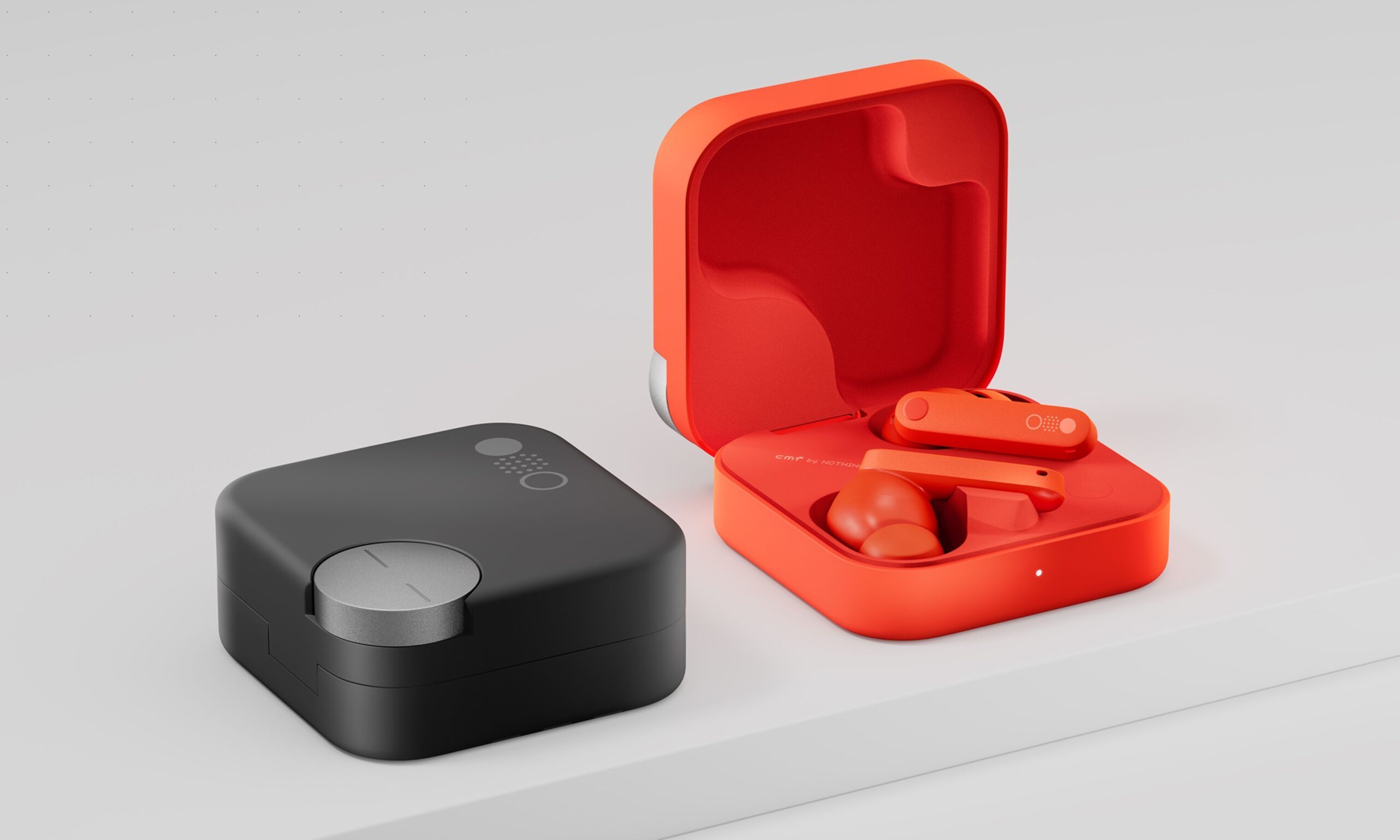
The teaser posted on CMF’s official X account shows a single in-ear earbud from the bottom. It has a metallic silver finish, a stem with what appear to be two microphone openings, and a silicone eartip finished in CMF’s signature orange. CMF simply calls it “a hint of what’s next,” without revealing a launch date or any specifications.

Why I think these could be the CMF Buds Pro 3

CMF could simply be preparing the regular Buds 3, but its previous release schedule makes the Pro model a strong possibility. The original CMF Buds Pro arrived in September 2023, several months before the regular CMF Buds launched in March 2024. CMF repeated the pattern with the next generation. Buds Pro 2 launched in July 2024, while the Buds 2 family followed in April 2025.

If CMF follows the same naming scheme, the teased earbuds would most likely be called CMF Buds Pro 3, rather than Buds 3 or any other 3 series model. There is still no confirmation, though. Other reports have suggested the teaser could simply point to the third-generation CMF Buds, so the exact model remains up in the air.

Advertisement

There is plenty CMF could improve

As a former CMF Buds Pro 2 user, I already have a pretty clear wishlist for whatever CMF is preparing next. The earbuds offered a lot for the money, including dual drivers, LDAC support, strong ANC, long battery life, and the Smart Dial built into the charging case.

The Smart Dial was easily one of my favorite features. Being able to adjust the volume or control playback without reaching for my phone was genuinely useful, but accidental presses did get annoying. I would also like to see CMF tone down the heavy bass and give users more control over the EQ. None of those are deal-breakers at the price point CMF usually targets, but they are areas where a new Pro model could make some meaningful improvements.

Source link

Advertisement
Continue Reading

Tech

Qwen3.8-27B runs frontier-class coding agents and reasoning locally, no cloud API required

Published

on

The biggest AI model release of the past few days, at least among the developers and AI power users on social media, wasn’t a frontier cloud model from OpenAI, Anthropic or Google.

It was a 27-billion-parameter model from Alibaba: Qwen3.8-27B landed on Hugging Face on Friday under an enterprise-friendly, open source Apache 2.0 license, giving developers downloadable weights for a dense multimodal model.

But Qwen3.8-27B isn’t a garden variety small local model: it includes native image and video understanding, a 262,144-token context window, configurable reasoning and support for coding and agentic workflows — a “compact, deployment-friendly” version of the capabilities developed for its Qwen3.8 generation.

That unusually small hardware footprint is a major part of Qwen3.8-27B’s appeal. Running the model at full 16-bit precision requires roughly 56GB of GPU memory, while an FP8 version needs about 28GB. But 4-bit quantization cuts the model itself to roughly 17GB, putting it within reach of high-end consumer machines such as a powerful gaming desktop or well-equipped laptop.

Advertisement

Hitting the sweet spot between capability and size

The outsized reaction among developers has been due to the dynamic combination of its capability and size.

Alibaba’s own launch benchmarks immediately supplied the first jolt. The company reported 61.7 on SWE-bench Pro, 90.3 on LiveCodeBench v6, 70.7 on its CoWorkBench office-work benchmark and 84.3 on OSWorld-Verified.

In Alibaba’s published comparison table, the 27B model even beats the listed Claude Opus 4.6 Max result on SWE-bench Pro and LiveCodeBench, although Opus remains ahead on Terminal-Bench, GPQA Diamond and Humanity’s Last Exam.

Some of Alibaba’s evaluations are internal, and benchmark harnesses are not identical across every comparison, making the numbers poor grounds for declaring a universal winner.

Advertisement

Third-party results show a powerful, local model with performance equivalent to proprietary models from months ago

The conversation changed Monday when third-party results began arriving.

Third-party AI benchmarking outfit Artificial Analysis gave Qwen3.8-27B a score of 52 on its Intelligence Index, a composite of nine evaluations spanning coding, science, reasoning and professional tasks. That happens to be the same score Artificial Analysis currently assigns OpenAI’s low-tier model GPT-5.6 Luna at its maximum reasoning setting — a proprietary offering only available over the cloud.

As open source coding agent Cline put it on X: “This is the first time a local model has scored frontier model capability. We weren’t expecting this pace of local progress anywhere near this soon.”

On Artificial Analysis’ Agentic Index measuring model performance on agentic tasks, meanwhile, Qwen3.8-27B scored 51, beating Claude Opus 4.8 on maximum reasoning effort — a frontier model Anthropic released less than three months ago.

Advertisement

That doesn’t mean these models are equivalent, but it helps explain why developers and AI power users stood up and took notice. As developer and AI podcaster/YouTuber Sero (@0xSero on X, real name Sharif Cherf) wrote on X: “A model that runs on 3k USD of hardware is beating everything from 4 months ago. Including Opus. Permanent underclass is cancelled.”

Developer Joshua “Xenova” Lochner, known for bringing machine-learning models into web browsers, highlighted the result Monday on X alongside an experiment running Qwen3.8-27B with custom WebGPU kernels. His reaction — “What a time to be alive!” — captures much of the mood: a model scoring in the vicinity of proprietary frontier systems can be downloaded, modified and executed locally rather than accessed only through a vendor API.

The appeal becomes clearer when the model is compressed. Developer and AI writer Simon Willison tested a roughly 17GB Q4_K_M quantization on an M5 Max MacBook Pro and Nvidia DGX Spark.

He found that it could write code, interpret images and operate a coding-agent loop through the Pi agent framework. In one experiment, the model navigated a codebase to explain how authentication worked; in another, it wrote and tested a Python utility Willison needed to convert an agent transcript from JSONL to Markdown.

Advertisement

“The fact that a 17GB file can do all of this stuff on my home machines is a miracle,” Willison wrote. His broader point is the one resonating with power users: capabilities that recently felt inseparable from expensive hosted models are moving into files small enough to keep on a workstation.

The reaction is showing up in usage as well. Cybernews reported Monday that Qwen3.8-27B passed 3 million Hugging Face downloads in its first three days, while quantized versions rapidly appeared for local inference tools.

The LocalLLaMA community on Reddit created a dedicated release megathread simply to consolidate the flood of benchmarks, quantizations, configuration advice and comparisons. One user showing a locally generated game described the model as “a different beast.”

Overthinking is an issue

That frenzy comes with an important caveat: Qwen3.8-27B appears to buy some of its quality by thinking a lot.

Advertisement

Artificial Analysis says the model generated 160 million output tokens across its Intelligence Index testing, versus a 43 million median for comparable open-weight models.

Willison encountered an extreme version of the same behavior because Qwen defaults to its xhigh reasoning setting. A request to generate an SVG of a pelican riding a bicycle took 21 minutes and consumed more than 22,000 reasoning tokens before producing the answer. He recommends starting with low or no reasoning for ordinary local use.

Investor and developer Tomasz Tunguz found a similar trade-off in a small nine-task test against DeepSeek V4 Flash: with reasoning enabled, Qwen edged ahead on quality in his agent stack, but he reported that it was roughly 30 times slower and 4.5 times more expensive. He explicitly cautioned that nine tasks were not enough for a verdict.

Inference software may narrow that gap. Qwen3.8-27B includes Multi-Token Prediction, and Willison reported about a 72% performance improvement on his DGX Spark after enabling MTP through llama.cpp compared with his default LM Studio configuration.

Advertisement

Even then, his normal LM Studio runs were producing only around 15 to 30 tokens per second — far below the responsiveness of many hosted models.

That tension is precisely why Qwen3.8-27B matters more than another leaderboard position.

What enterprises should take away from Qwen3.8-27B

For enterprises, the relevant comparison is not simply whether a 27B model “beats” Claude or GPT on a benchmark. It is whether a model small enough to run inside an organization’s own infrastructure can now perform enough coding, document analysis, vision and agent work to replace API calls for meaningful classes of tasks.

That proposition changes privacy, deployment and cost calculations. Apache 2.0 weights can be inspected, modified and hosted behind a company’s own controls, while Alibaba already documents compatibility with serving frameworks including vLLM, SGLang and TokenSpeed. Alibaba says a managed Qwen Cloud version with a 1-million-token default context and built-in tools is coming later.

Advertisement

The small size and accessible hardware requirements mean that enterprises, indie developers, and even curious consumers can easily deploy the model locally without worrying about their data leaving their machine — ensuring greater privacy, information security, governance and control.

There is a broader reason power users are paying attention. Hugging Face data reported by Business Insider this week shows that actual model usage skews dramatically toward smaller models even as enormous frontier releases dominate headlines; models above 70 billion parameters accounted for only a small share of 2026 downloads.

Alibaba’s strategy of publishing Qwen models across multiple practical size classes has helped make the family a recurring part of developers’ local deployment workflows.

Qwen3.8-27B pushes that logic further. Its benchmark scores still need more independent validation, its default reasoning behavior can be painfully inefficient, and no single leaderboard establishes frontier-model parity.

Advertisement

But three days after release, developers are no longer reacting primarily to Alibaba’s benchmark table. They are reacting to the experience of putting a comparatively small file on hardware they control and watching it perform tasks that, not long ago, seemed to belong exclusively to the largest proprietary systems.

For certain developers, AI power users—and yes, even enterprise deployments—that is the benchmark that matters most.

Source link

Advertisement
Continue Reading

Tech

Modder Builds PixelVision AV1000 MkII, a Multi-Input Monitor His Retro Desk Actually Needed

Published

on

PixelVision AV1000 MkII Multi-Input Monitor
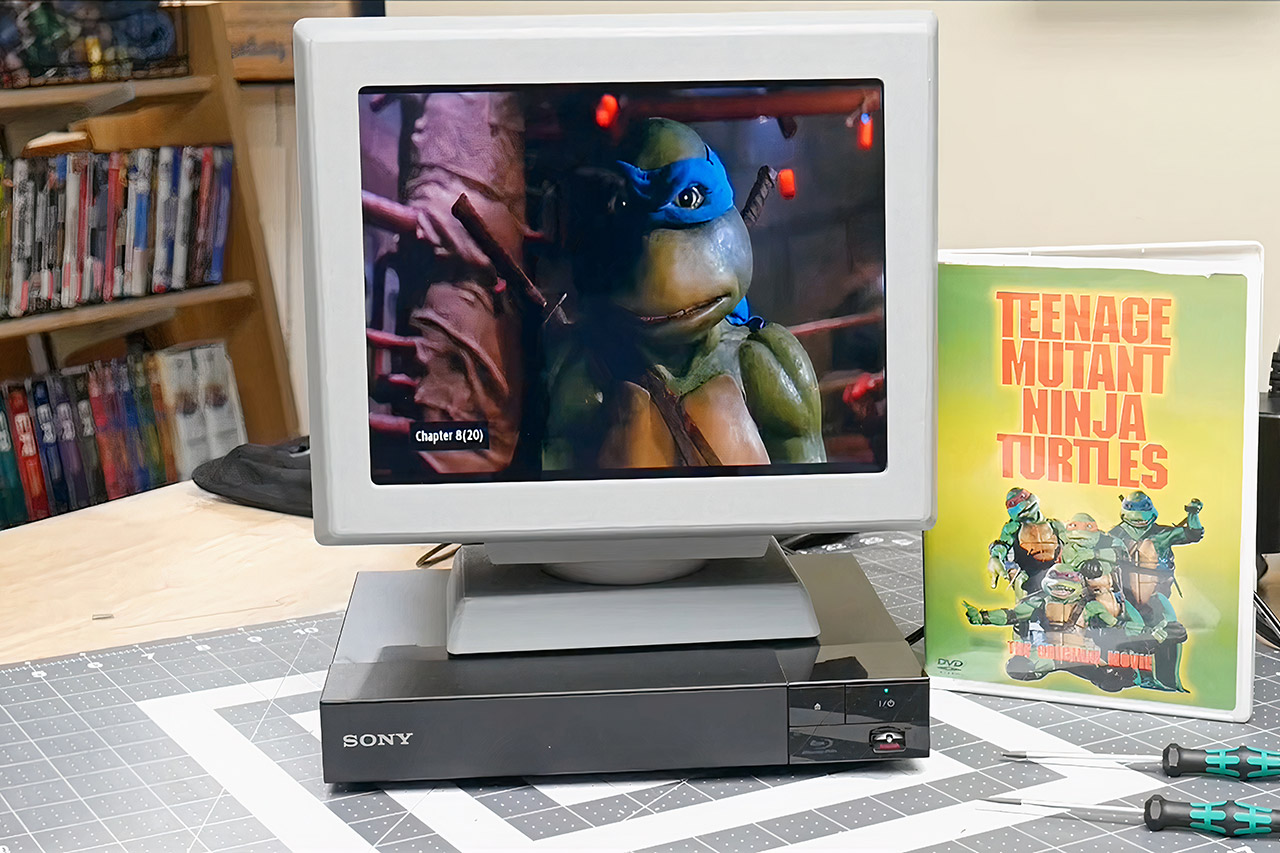
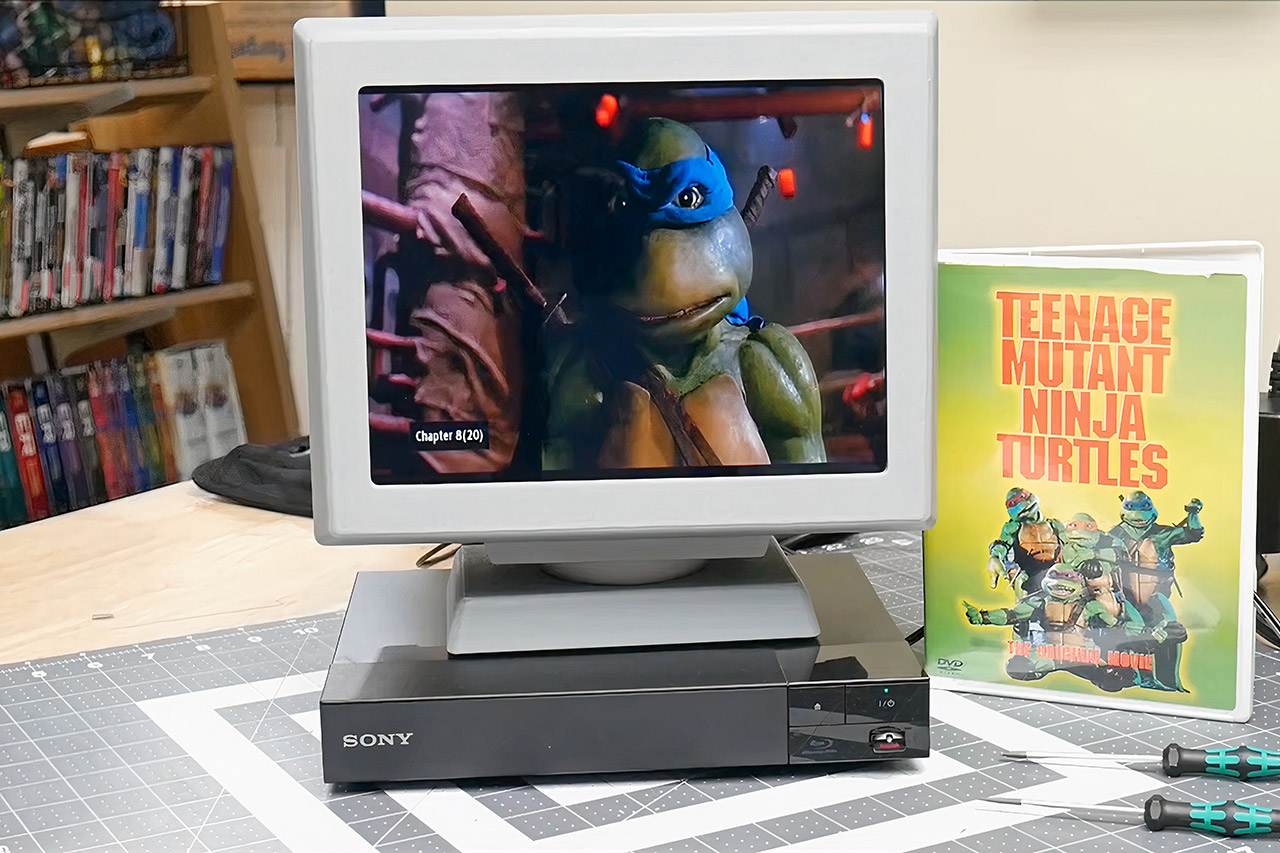
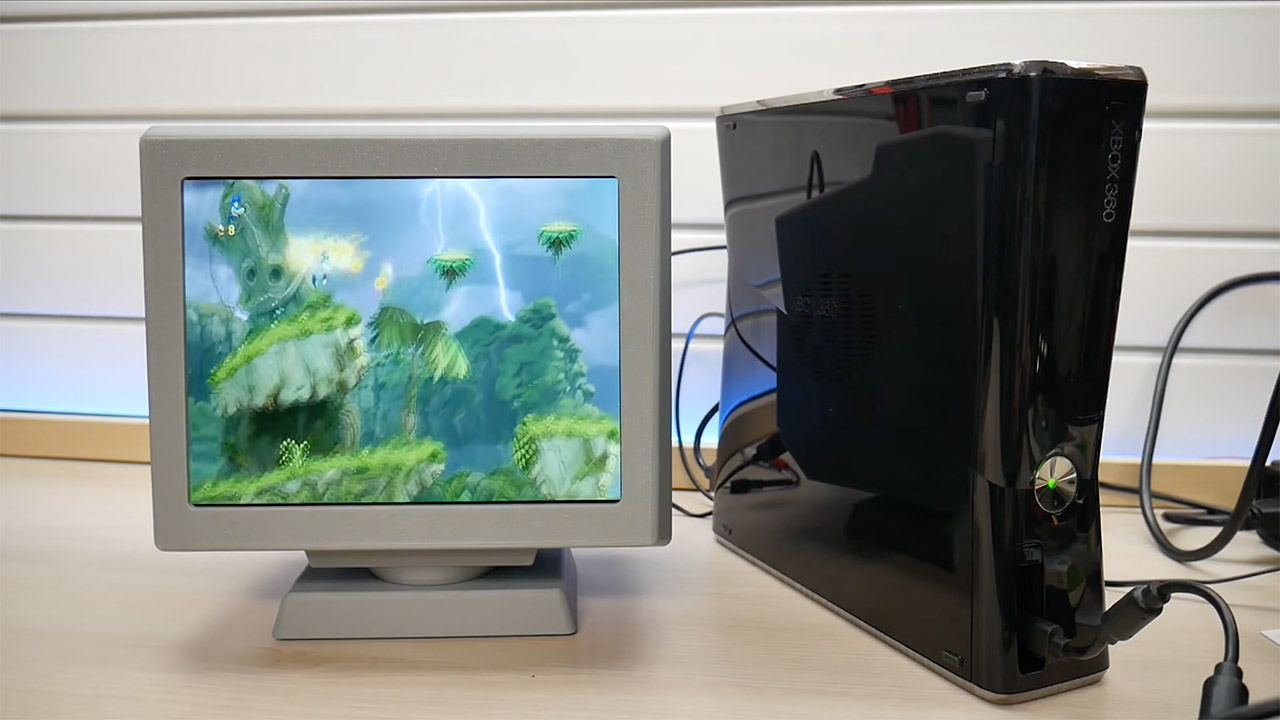
Ryan spent months chasing a single display that could sit on a desk and handle every signal his collection threw at it. The result is the PixelVision AV1000 MkII, a compact 9.7-inch screen that looks like it belongs next to an Amiga 1000 yet accepts modern HDMI alongside the older analog standards most people still keep around.


The heart of this monitor is an IPS panel, specifically an old iPad 3 or 4. It measures 9.7 inches diagonally and has a resolution of 2048 x 1536, giving you 264 pixels per inch and a 4:3 aspect ratio. It’s quite bright at 440 nits, looks beautiful from all angles, and maintains a stable refresh rate of 60Hz. Because to its high pixel density, pixels from antique TVs from the 1980s and 1990s remain crisp and do not become fuzzy blobs.

Sale


Lenovo Idea Tab – College Tablet – 11″ 2.5K IPS Touchscreen Display – 90Hz – MediaTek Dimensity…
  • POWER YOUR STUDY, FUEL YOUR PLAY – Discover smarter learning with the Lenovo Idea Tab. Stay campus-ready with all-day battery life, AI-powered apps…
  • SMOOTH, POWERFUL, IMMERSIVE – The MediaTek Dimensity 6300 processor is more powerful than ever, with the AI-enhanced multitasking you need to stay…
  • CIRCLE IT, SEARCH IT – Use your Lenovo Tab Pen or fingertip to circle items for instant search results or to translate other languages without…

PixelVision AV1000 MkII Multi-Input Monitor
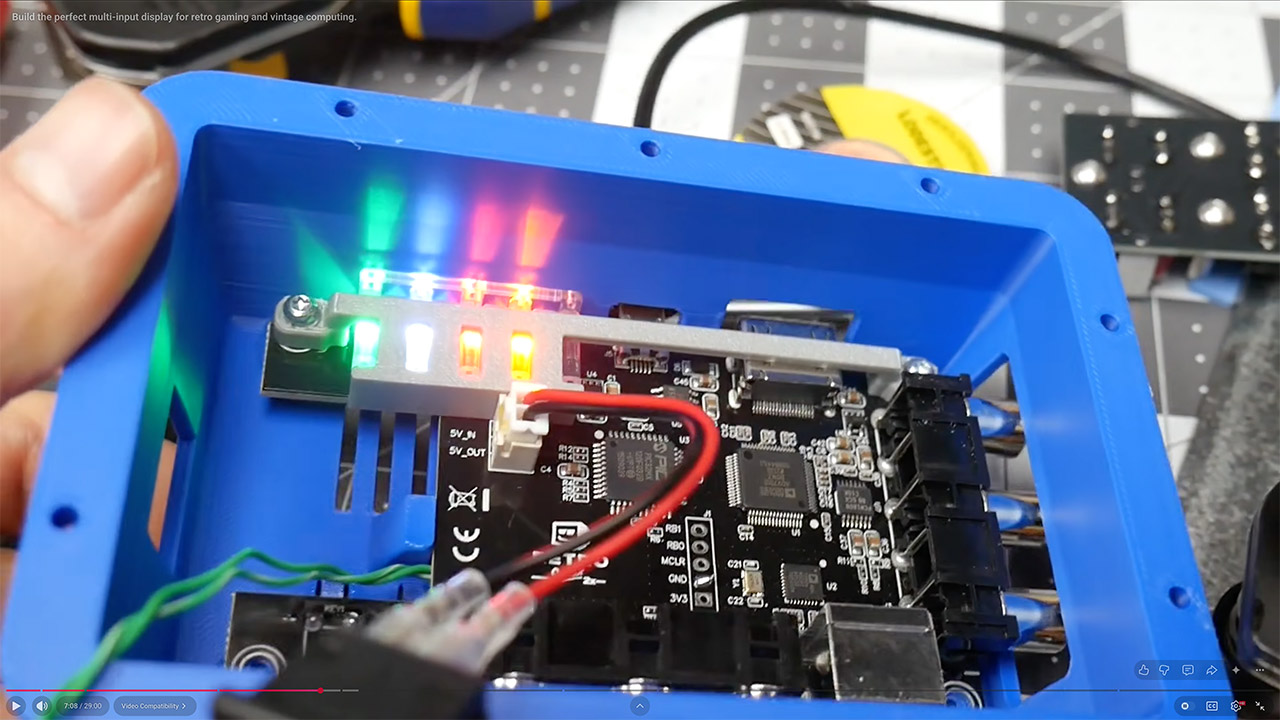
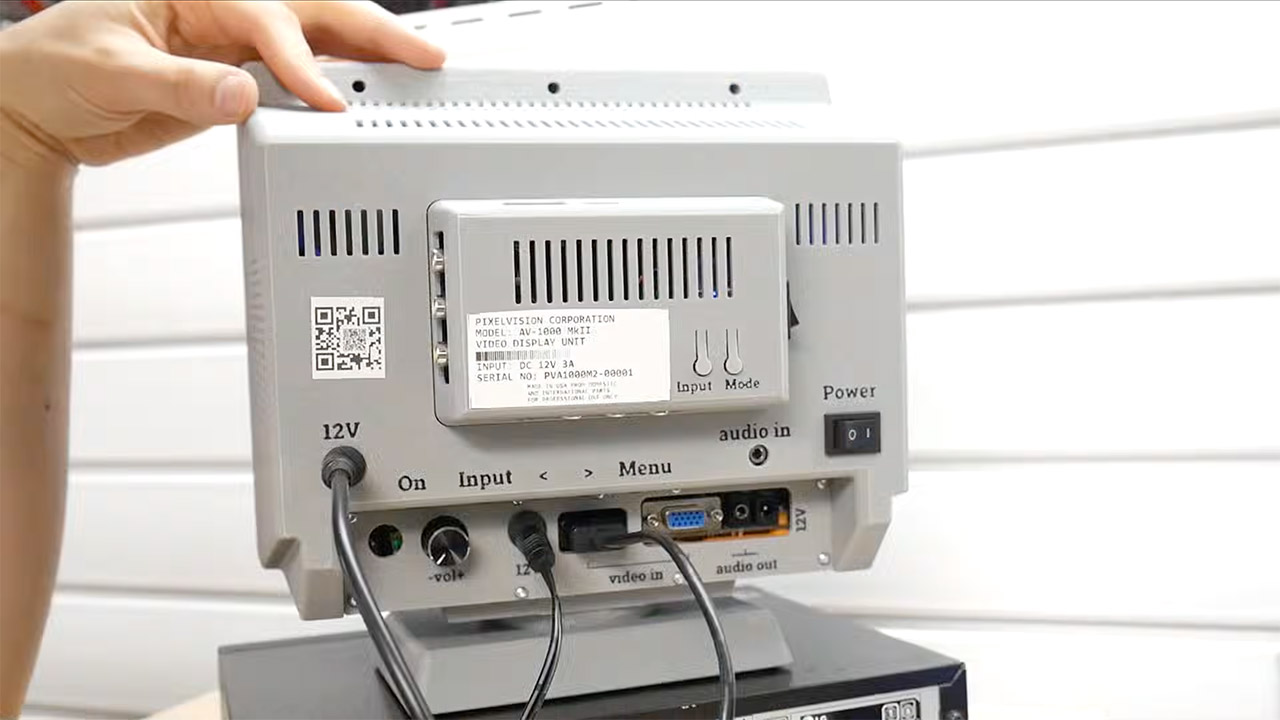
Ryan used a scan-line converter board to make this thing function. It’s essentially a RetroTINK clone that allows you to feed the panel in native resolution using HDMI. You can also give it VGA up to 1920 x 1080, but component, S-Video, and composite all come in at 480p, which is probably sufficient for what this gadget is designed to accomplish. The cords are very neat and short, with no tangles on the back. For music, the PAM8406, a small amplifier, drives two full-range speakers – a 2.5-inch Visaton and a pair of smaller Dayton drivers – providing approximately 5 watts of stereo sound. A 3.5mm jack lets you input and output audio as needed. The power source is simple: a 12v 3amp brick powers everything, consuming about 10 watts when active and 2 watts when in sleep mode. On the back, there is a huge switch and a DC jack set on the panel.

PixelVision AV1000 MkII Multi-Input Monitor
The case is entirely 3D printed in PLA, and Ryan engineered each component so that the most visible parts print flat on the bed. He also made an effort to keep supports to a minimal and went back and altered pieces if he encountered anything that felt difficult to assemble. The back, front bezel, and speaker mounts all attach with standard M2.6 and M3 screws. That strange thing on the rear is where the converter board lives, and there’s enough space in there to easily swap in a single-board computer if you wanted to make this an all-in-one device.

PixelVision AV1000 MkII Multi-Input Monitor
The entire thing features a spring-loaded swivel base, allowing you to tilt and rotate it like previous CRTs did. Four rubber feet protect it from sliding about, and when finished, the item measures around 9.8 by 8.1 by 7.6 inches and weighs slightly more than three pounds. The design files, STEP models, a PCB or two, and the full bill of materials are all available on GitHub, allowing you to print and build your own. There’s a really detailed build video that leads you through the entire process, demonstrating when a long-reach Torx bit comes in handy and how to handle the mirrored LCD brackets so you don’t mess it up.
[Source]

Advertisement

Source link

Continue Reading

Tech

Ferrari’s first electric car sells for a record $40 million at auction

Published

on

In a nutshell: Ferrari’s first electric vehicle sold for $40 million at a charity auction in California, setting a record for a new vehicle sold at auction. The result offers an early sign that Ferrari’s brand power, and its appetite for limited, customized EVs, remain strong despite a contentious launch.

RM Sotheby’s sold the first production example of the Ferrari Luce, a customized version of the company’s new electric model. The buyer was not identified. The proceeds will go to the Ferrari Foundation’s education programs.

The sale price was more than 35 times the Luce’s usual price, and it also topped Ferrari’s previous record for a new vehicle sold at auction. In 2025, a bespoke Daytona SP3 brought in $26 million for Ferrari’s education initiatives.

The Luce is Ferrari’s first move into the electric vehicle market. It was developed with input from former Apple designer Sir Jony Ive and was one of the company’s most closely watched launches in recent years.

Advertisement

The model has drawn criticism since its May debut. Some critics said the five-seat, battery-powered vehicle moves too far from the designs that made Ferrari famous. Italy’s deputy prime minister Matteo Salvini and former Ferrari chairman Luca Cordero di Montezemolo were among those who objected. Montezemolo said Ferrari was “risking the destruction of a legend.”

Ferrari chief design officer Flavio Manzoni said in May that criticism comes with innovation and that he believed people would eventually appreciate the Luce.

The launch received unusual public attention. Italian President Sergio Mattarella and Pope Leo were invited to see the vehicle. Ferrari’s shares, however, fell the day after the unveiling as criticism of the car spread.

Ferrari has not disclosed a sales target for the Luce, though the Financial Times reported that the company has already reached its goal for the year, helped by demand from China.

Advertisement

Sotheby’s said the auction gave one buyer an “unbeatable opportunity” to own the first production Luce. The auction house called the sale a “tangible expression of innovation, responsibility, and long-term vision for future generations.”

Ferraris regularly bring high prices at auction, especially limited-production and customized models, though the $40 million sale falls short of the all-time auction record for any vehicle. That belongs to a 1955 Mercedes-Benz 300 SLR Uhlenhaut Coupé, which sold for $142 million in 2022.

Source link

Advertisement
Continue Reading

Tech

Planned US Data Centers Set to Produce 24M Cars’ Worth Of Carbon Dioxide

Published

on

A new analysis of the 60 largest data centers under construction in the US by Amazon, Google, Meta and Microsoft estimates the sites could produce a cumulative 101.5 million tons of carbon dioxide annually once they’re fully up and running, Financial Times reports. That’s about 7% of all 2025 US power-sector emissions. Put another way, it’s the equivalent of running 27 coal power plants or putting 24 million more gas-powered cars on the road.

The backlash against America’s data center and artificial intelligence boom has been building for a while now, reaching a fever pitch over water use, land grabs and noise complaints. Recently, environmental activist Erin Brockovich has been mapping out communities affected by data center construction and operations, and polling shows that most Americans don’t want AI factories anywhere near them.

Now, it appears there’s a looming carbon problem to add to the pile.

Big Tech companies appeared publicly committed to cutting emissions just five years ago, making the new findings feel like a notable about-face. Financial Times found that Amazon’s emissions climbed 16% from 2024 to 2025, driven by data center construction and a 34% jump in electricity purchases. Microsoft reported a 25% increase in estimated emissions during the same period, while Google’s parent company, Alphabet, reported an 18% year-over-year increase in its emissions figure according to its own adjusted metric.

Advertisement

Researchers point to a mix of causes, from the sheer scale of demand for AI infrastructure to a political environment under the Trump administration that dramatically rolled back climate rules and clean energy tax credits in favor of fossil fuels.

People hold up signs saying "Moratorium Now!" at an anti-AI data center rally in Albany, New York in May 2026.

Data center construction has revitalized local activism. In May, Albany, New York, residents gathered at a rally for the AI data center moratorium.

Will Waldron/Albany Times Union/Getty Images

On the grid side, the numbers tell a similar story. US gas-fired energy capacity under development nearly tripled in 2025, with FT’s analysts predicting the country’s existing gas-burning infrastructure could grow up to 50% if everything currently planned is built.

Researchers say it’s not that clean energy additions have stalled entirely; rather, utilities are racing to meet data center demand with power that’s available now, and that runs around the clock. Fossil fuels (like gas and coal) fit the bill better than wind or solar until large-scale storage tech catches up.

That’s left the tech giants leaning harder on renewable energy credits to make up the dirty differences between their public commitments and what’s actually happening on the grids. But doing so is expensive and exactly the sort of thing likely to be scaled back over time as profitability pressure mounts.

Advertisement

Utilities, meanwhile, are increasing production to meet the mounting and projected demand, preparing to roll out tens of thousands of megawatts of energy capacity across the US specifically to serve data center infrastructure. Three-quarters of the operators serving these 60 sites are building or planning new gas capacity, and a third of those running coal plants are pushing back retirement dates.

This fresh wave of gas and coal plants occupies a small but rapidly growing portion of the US energy generation mix — trending in the opposite direction to what experts expected only a few years ago. The resulting environmental impacts and grid strains from these energy decisions are stacking up to just one more AI boom cost that nobody outside the tech industry signed up for.

Source link

Continue Reading

Tech

What is the release date for Stuart Fails to Save the Universe episode 5 on HBO Max?

Published

on

We’re halfway through The Big Bang Theory spinoff Stuart Fails to Save the Universe, and I still maintain the opinion that it’s better than the original CBS sitcom.

But that hasn’t stopped the two from being heavily intertwined. Over the last four episodes, we’ve seen cameo appearances from Raj (Kunal Nayyar), Penny (Kaley Cuoco), Bernadette (Melissa Rauch) and Amy (Mayim Bialik). Could this week add a fifth member to the growing party?

Source link

Continue Reading

Tech

Challenge and opportunity in Ireland’s regulatory pharma space

Published

on

Viatris’ Suzanne Keating discusses the changing face of pharma frameworks in Ireland and offers advice for young professionals.

“After finishing my university degree in chemistry in the 1990s, employment opportunities in Ireland were few and far between,” explained Suzanne Keating, a regulatory affairs senior director at Viatris.

“I embarked on a graduate development programme at what was then the Welcome Foundation, now part of GlaxoSmithKline, in the UK. My first role was in a product development laboratory as an analytical chemist conducting stability testing to support product shelf life for a wide range of formulation types.”

Soon after, Keating began applying for regulatory affairs roles. After spending some time at various companies – including a veterinary pharmaceutical company and Abbott – she took on a role at Bioniche Pharma. This company was eventually acquired by Mylan, which then combined with Upjohn to become Viatris in November 2020.

Advertisement

“I have been with the company for many years and am fulfilled by the continuous opportunities to learn, develop my skills and get experience with different types of products and global regulations whilst at the same time progressing my career.”

What is the current landscape in Ireland like?

Given the large number of pharmaceutical and medical technology companies in Ireland, there continue to be many diverse career paths in regulatory affairs. From small start-up companies where you may be part of a very small regulatory team to multinational companies like Viatris with a large regulatory department, the opportunities in Ireland are endless.

Investment in research and development in Ireland means there are plenty of opportunities to get involved in new product submissions and support the launch of these products. With Ireland being a hub for pharmaceutical manufacturing, this creates significant demand for life cycle management and regulatory compliance activities to support commercial operations.

What opportunities exist for graduates and professionals in regulatory affairs?

Entry-level graduate roles typically involve preparing documentation and contributing to a regulatory submission under the guidance of a more senior member of the team. As experience builds, there are greater opportunities to lead projects and get involved in the review of regulatory submissions, as well as manage a team if people management is of interest.

Advertisement

There are many possibilities in regulatory affairs, for example preparing and reviewing labelling and ensuring it is kept up to date, reviewing promotional materials to ensure they meet regulatory requirements and preparation of the scientific, clinical or non-clinical content of product applications. Many roles operate on a global scale, providing valuable insight into regulations worldwide.

What kind of applicant is most attractive to an organisation like Viatris?

Viatris is a global company with a vast array of products in its portfolio. Dynamic individuals who have demonstrated their ability to work across different areas of regulatory affairs and have experience with different product types shows adaptability. Applicants with experience of working across different cultures show they will understand how to collaborate in multicultural teams, which is part of everyday life at Viatris. A ‘can do’ attitude and a curious nature are also important.

All new colleagues take part in our induction programme and within regulatory affairs we have our own global regulatory affairs learning and development team who ensure new team members get the necessary training and support to allow them to be successful in their role.

How might a potential applicant stand out in the crowd?

I view a CV as an opportunity for candidates to present their experience clearly and highlight what is most relevant to the role. I want to be able to determine if the applicant has written and/or reviewed regulatory submissions, what life cycle phase the candidate has experience of, the types of products they have worked on and the regulatory frameworks they have worked within. At the interview stage, I am always impressed by applicants who have done their research and know about Viatris, are clear on the role they have applied for and come prepared with thoughtful questions.

Advertisement

A candidate who can communicate how they have navigated complex situations or challenges with real-life examples will stand out. For applicants without prior industry experience, there is a wealth of information easily accessible online about the company as well as regulations applicable to the products Viatris manufactures.

It’s perfectly acceptable to be upfront about not having any practical experience of using the regulations, but candidates who can demonstrate where to find relevant information and explain how they anticipate regulations are applied show strong initiative and potential.

What are the challenges associated with recruitment in this space and how are they overcome?

Often there are a large number of applicants and shortlisting candidates can be challenging. Due to the diverse array of medical products available and the associated regulatory roles, it is not always easy to determine from an application alone whether a candidate has the required experience.

In these situations, the Viatris talent management team can follow up with a quick screening call to find out specifics before a formal interview. Another way to overcome recruitment challenges is to recruit internally; several members of the team have successfully transitioned from laboratory or QA backgrounds, supporting both capability building and internal career development.

Advertisement
How can leaders create productive and cohesive working environments?

Communication is paramount and it is important for leaders to encourage positive interdepartmental relationship building as regulatory affairs offers the opportunity to work cross-functionally within the organisation. Development of a new product culminates in the regulatory submission and to get to this point requires a cross-functional team effort. Being approachable and encouraging openness within regulatory and cross-functional teams is important so that colleagues are comfortable raising potential risks associated with achieving regulatory goals for discussion.

When challenges arise, it is critical to listen and remain positive and solution focused to maintain cohesiveness within the team and keep project goals on track. Being able to clearly communicate the contribution required from the regulatory team to achieve business goals, understanding team members’ career aspirations and aligning these with business goals, all helps to promote productivity.

Have you any predictions for how the regulatory affairs space might evolve over the course of 2026?

I feel the positive business impact of robust regulatory strategies will be increasingly recognised and will result in a greater focus on the strategic importance of the regulatory affairs function. Post Covid there has been a greater focus on supply continuity and regulatory roles will continue to evolve in response to legislation mandating companies to monitor and report shortages.

Artificial intelligence remains a key topic of discussion, so it will be interesting to see how this will impact regulatory affairs; I don’t foresee a significant impact in 2026 but expect to see more information on opportunities for furthering the use of AI in this space.

Advertisement

Don’t miss out on the knowledge you need to succeed. Sign up for the Daily Brief, Silicon Republic’s digest of need-to-know sci-tech news.

Source link

Advertisement
Continue Reading

Tech

Another California Court Has Now Broken Media Advertising, So The Copia Institute Asked Another California Appeals Court To Fix It

Published

on

from the one-more-time-into-the-fray dept

A few years ago a California appeals court produced the unfortunate Liapes v. Facebook decision. In this decision, it gave the go-ahead to age discrimination claims under California’s Unruh Act resulting from ads not being served to users of certain ages. It’s a nonsensical application of anti-discrimination law, because ads are not themselves the goods and services that the Unruh Act governs but instead expression. Furthermore, for more than a century American media has been supported by an advertising model that allows advertisers to target audiences based on their demographic information, including their age. It would upend the media ecosystem if doing so can suddenly tempt legal liability, so surely the First Amendment has something to say about applying anti-discrimination law to expressive businesses.

And so should Section 230, because the decision didn’t involve suing the actual advertiser who chose to target certain potential customers, but Facebook itself, even though it was merely acting as a platform intermediating third party-generated content—in this case, the ads that advertisers wanted to carefully direct in a way they thought would get them the most bang for their buck. Intermediating third party-generated content—even advertising content—is a core activity protected by Section 230, and it threatens to upend the Internet ecosystem if platforms are no longer legally able to do it.

But that was then, and back then the Copia Institute submitted an amicus letter urging the California Supreme Court to review the appeals court decision that reached this troubling conclusion. Unfortunately, the Supreme Court did not take up the review, and so the Liapes decision remained on the books, tempting other courts to follow it down its troubling path.

Which a California superior court has now done, this time allowing a similar sort of claim to proceed against Google based on certain users not getting served all the ads that they would have liked to see. Google appealed the decision, and the Copia Institute this week filed an updated amicus submission pointing out the same infirmities with it that we had in the Liapes case, namely that the First Amendment protects the choices speakers make in how to direct their expression to audiences, and, even if it did not, Section 230 still protects platforms handling expression provided by others from anything that might be wrong with that expression, including that it might violate state anti-discrimination law. But the decision by the superior court here, letting these Unruh Act claims to go forward, essentially ignored all of that statutory and constitutional protection that all expressive businesses need, be they traditional media entities or Internet platforms.

Advertisement

This time around we also pointed out yet another reason why that editorial discretion exercised in choosing how to direct speech must be constitutionally protected: because state actors don’t always agree. Some can want speech to be directed one way, and some can want it to be directed in another, and the First Amendment exists to keep expressive entities from getting caught in a tug-of-war between them. Especially because, as this case shows, it may not even be different state entities who disagree; here it is the state of California itself, who on the one hand has one law suggesting it might be illegal to refuse to provide certain speech based on age, but at the same time has been passing a slew of new laws demanding platforms do exactly that: refuse to serve certain expression based on age.

As the Copia Institute has been arguing, both laws are unconstitutional, and this conflict illustrates why the First Amendment must protect the expressive choices about whom to provide what expression to from any such governmental meddling.

Filed Under: 1st amendment, aadc, advertising, california, liapes, section 230, targeted advertising, unruh act

Companies: google

Advertisement

Source link

Continue Reading

Tech

X Gets One Final Shot at History in a Free Mega Man Fan Game That Feels Straight From the SNES

Published

on

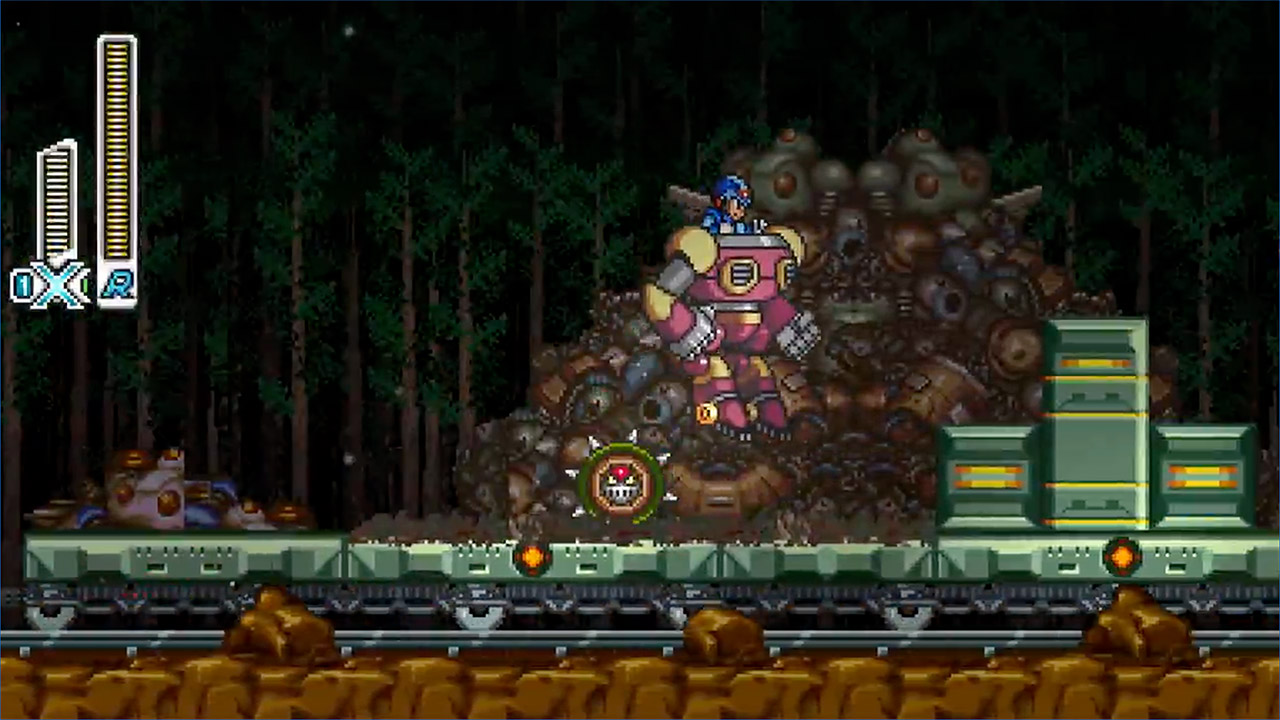
Mega Man X: Regenesis Fan Game Release
Justin Ross has given Mega Man fans something they have waited years to play again. Mega Man X: Regenesis launched today as a free download, and the finished product lands closer to Capcom’s classic 16-bit entries than most people expected from a solo passion project.

You find yourself in a universe where the timeline has taken a dark turn, beginning shortly after the original Mega Man X. Sigma has done the unthinkable; X has vanished, and humanity is on the verge of destruction. Dr. Cain’s last-ditch effort, Project Regenesis, begins, offering X a second chance to turn the tables and defeat the Mavericks who now control the situation.


My Play Watch Mega Man Retro Gaming Smartwatch, Built from Mega Man™ 2
  • Built from Mega Man 2 Authentic sprites, stages, bosses, and music rebuilt for your wrist
  • Multiple Game Modes Classic Mode with full stage progression + Dr. Wily’s Castle, Arcade Mode for endless, high-score gameplay plus Play Time…
  • One-Touch Action Gameplay Auto-run platforming with rapid tap shooting and tap-and-hold jumping


The game follows the classic formula that fans have come to expect: an introduction level followed by a stage choose screen featuring eight all-new Maverick bosses. Each boss has its own level, which has classic platforming action, opponent placement, and environmental hazards to keep you on your toes. Defeating a Maverick unlocks a new Special Weapon that can be swapped out as you progress, ideal for whacking the later monsters. Armor upgrades are buried away in each level, and you’ll need to investigate carefully to uncover them all. Collectibles and secrets await anybody who takes the time to venture off the usual path. Oh, there’s also an accomplishment system to keep you going back for more.


The pixel art on display is expertly created to transport you back to the Super Nintendo era. From the characters to the backdrops and even the effects, everything is vintage 16-bit design with a modern gloss that adds just a little more depth without sacrificing any of the original beauty. The soundtrack is impressive, with over 25 brand new tracks to keep the energy up and memories pouring back. The team that worked on this knows Mega Man X inside and out, and it shows.

Advertisement

Mega Man X: Regenesis Fan Game Screenshot
The controls are as responsive as you’d expect, with X able to dash, wall-jump, charge up his X-Buster, and cycle through his firearms with the same ease you recall. Of course, complete controller functionality is built in from the start, but some users have reported that keyboard input feels smoother right now. Ross has released a fast patch to fix Mac and Linux support, improve Android rotation, and begin addressing all of the comments received from the first wave of players.

Mega Man X: Regenesis Fan Game Screenshot
Everything runs on the Godot engine, and don’t worry, you get the whole kit from the start. Players will not have to deal with demos or unfinished business. You can already get it on Windows, Android, and Steam Deck, and the Mac version went online shortly after the first patch. The best part is that it’s completely free on itch.io, as Ross says the goal is purely non-commercial and unaffiliated with Capcom. It’s simply something he wanted to make and share with the rest of us to play.

Source link

Advertisement
Continue Reading

Trending

Copyright © 2025