ITV Good Morning Britain fans admitted they had no idea about the presenter’s career move.
Good Morning Britain presenter Laura Tobin has shared a glimpse into her private life as she introduced herself to new followers on social media.
Advertisement
The meteorologist has been a firm favourite on ITV after joining Daybreak in 2012 before moving to Good Morning Britain when it launched in 2014.
However, fans have now admitted they weren’t aware of earlier parts of Laura’s career, when she worked for the BBC.
In a post on Instagram, the 44-year-old wrote: “I’ve had lots of new followers lately, so thought I’d do a ‘re introduce’ myself. Thank you to followers old & new, hope you learn something new!”
Content cannot be displayed without consent
Alongside a picture of herself at school, Laura began: “I fell in love with weather aged 14!”
Advertisement
She went on: “I studied Physics and Meteorology at the University of Reading and graduated in 2003.
“I have been a meteorologist for 22 years and one of my first jobs was at RAF Brize Norton.
“I worked at the BBC Weather centre. And have worked at ITV on Good Morning Britain for 14 years!!”
One fan admitted they had no idea about Laura’s career history, sharing: “That’s one thing I didn’t know about you that you worked for the BBC really.”
Advertisement
Someone else asked: “Were you pleased to leave the BBC and join GMB? The clothes and makeup you wear are amazing and I look at the outfits and think I’d like that.”
Another added: “Follows you for a while but still learnt something new!”
Yet another wrote: “Beautiful photo on BBC, cementing you as a brilliant meteorologist.”
Advertisement
This comes after Laura’s latest career move, as she recently revealed she is writing a new book.
The GMB star previously gave fans a peek of the front cover of Come Rain or Shine, sharing: “Aagghhh. So excited to finally say I’ve written a book with everything you need to know about the weather. It’s one of our favourite conversations.”
She went on: “If you’ve ever wanted to know why the sky is blue, how clouds form and which ones mean rain, I’ve written all that and more with fascinating facts, a sprinkle of science & fun stories along the way.”
Advertisement
She added: “Then even be able to predict the weather yourself. I’ve loved writing it and can’t wait for you to read it.”
Laura was showered in support from her co-stars and fans alike, as they rushed to wish her congratulations.
Good Morning Britain airs weekdays from 6am on ITV1 and ITVX.
The developers want to “transform” part of a town and build up to 120 new homes
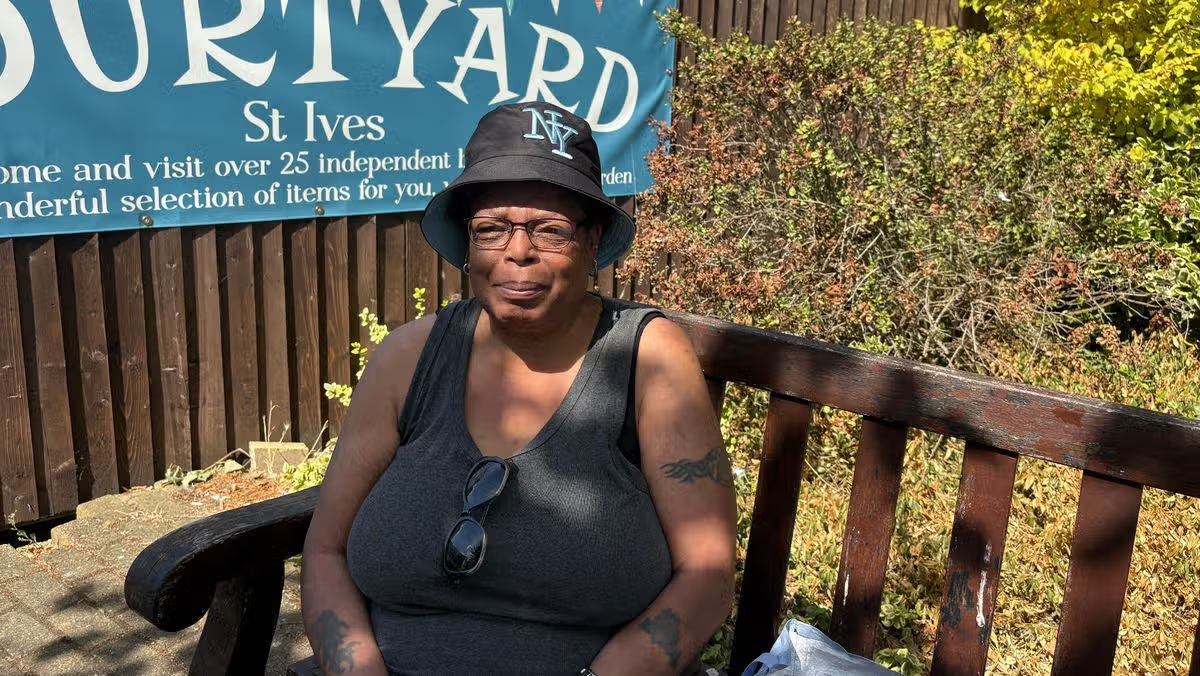
Locals have shared their views on plans to redevelop a Cambridgeshire town area for housing, with some claiming the plans could “kill off the high street”. Capital and Centric have proposed “big plans” for the old cattle market square and gatehouse in St Ives.
Advertisement
The developer says it is working with Huntingdonshire District Council to “transform” part of St Ives with new homes, resident amenities such as a gym, and green spaces. The area is currently home to a bus station and car park.
Capital and Centric seeks to build up to 120 new homes. Other proposals include wild landscaping and green space, which could be surrounded by walking and pedestrian routes to connect the new neighbourhood with the rest of the community.
The developer has submitted similar plans for St Neots and Huntingdon. The plans have upset many people who live in and around St Ives.
Reacting to the plans, 62-year-old Enora Crowe said: “I think it is a waste of time. They should put the money into more useful things, not just cut down and remove things that are already here.” The St Ives resident asked, “where else are they going to park?”
Advertisement
She described the plans as “nonsense”, adding “I don’t think they should build more houses”. The 62-year-old said if the plans do progress, “make more houses for people that need it and not for people who want to buy it”.
Latifat Safiu has lived in St Ives for nearly two years. The 31-year-old said: “I think this space is really good for people to come around the town for sightseeing, relaxing, and shopping. For instance, I don’t know if there would be any accessible car park for people anymore when the new neighbourhood would be built. That’s going to restrict people from doing a lot of things around the town.”
On the other hand, Latifat said “it is a two way thing” because “it is very difficult” to find new homes as “St Ives is a small town and doesn’t have so much access [to homes], most of the ones here are very old so new build houses would be a good idea”.
Advertisement
A spokesperson for Huntingdonshire District Council said: “At this stage, this is an engagement exercise rather than a formal consultation. The purpose is to start a conversation about the ideas being explored, give people the opportunity to understand the emerging proposals, and provide early feedback that can help shape them as they develop.
“We encourage residents, businesses, community groups and other stakeholders to take part in the engagement events and share their views with Capital & Centric. It is important that the people who know the town best have the opportunity to help shape its future, and that local feedback is listened to and carefully considered as plans evolve.”
Jackie Tarr, 67, said: “I think 120 [homes] is too many and if they are going to develop it, maybe use a smaller portion of the car park because where is everyone going to park close enough to the town.”
She added: “Fewer people will come into the town because there’s no parking and there’s not many facilities anyway so they need to put something in to encourage people to come into the town if they take half the car park away. Maybe the back of the car park, right at the other end might be suitable but not for 120 properties.”
Advertisement
Jackie described the proposals as “over-ambitious”. She asked: “What are they going to give this town?”
A woman, in her 40s, who wished to remain anonymous, said the proposals have been very “cloak and dagger”. She feels as though, if they progress, it would “kill off the high street”. The woman, who lives in St Ives, added: “It is such a shame that they want to do it. It has been kept hidden. There could be other places it can go but it is only recently that people found out.
The developer said that if approved, the proposals would also create a “spill out space” with bars, cafes, and restaurants, to “encourage the community to come together”.
Catherine Edwards, 52, has lived in St Ives for around 25 years. She said: “I think it would be really sad to lose a very well-used car park. I don’t see it as underused in any kind of way. I would worry about the infrastructure as in supermarkets, schools, other provision as well as just general domestic maintenance. I was surprised by it, I am not delighted.”
Advertisement
She added: “I think that because it is so central, everybody would know its location. It is going to be right in the middle of the town. I think that the location actually probably had a lot to do with the amount of attention it has got.”
The 52-year-old questioned whether the proposals would be “in fitting with the town”. She described the proposals as “mismanaged” and “not well communicated”.
Teresa Jones, 61, said that if approved, the development would be an “eyesore”. She feels it is an “inappropriate place for a development like that”.
The Fenstanton resident continued: “I just think it will cause a lot of problems for everybody – even developing it is going to take years. So, we are literally going to be living in the middle of it. It will be a building site.
“And, the knock on effect of that: traffic congestion, diversions, people trying to get to school.” Ms Jones recognised that new homes are “needed”, especially if they are affordable but questioned the potential site location. She said she was “quite shocked that they’d even consider it” because it is “a haven of tranquillity”.
Capital and Centric is seeking people’s opinions on the proposals before they submit a planning application towards the end of the year. People are asked to share their views here before September 4.
Martin Crews, development director at Capital and Centric, said: “We’re really pleased to see so many active and engaged comments from the community. People clearly care passionately about St Ives and its future, and that’s exactly why we’re holding the public event on Wednesday.
Advertisement
“We’ve heard quite a lot about what people don’t want, but now we really need to understand what they do want. What is St Ives missing? What would help the high street, support local businesses and make the town a better place to live? What problems and challenges should we be trying to solve?
“We want people to come along, challenge us, ask questions and, most importantly, share their ideas. Good regeneration shouldn’t be done to a town, it should be shaped with the people who know it best, and that’s what Wednesday is about.”
Having lost her father to skin cancer, she is urging people to get skin changes checked and practise sun safety
A skin cancer survivor is encouraging people across Ireland to take a more proactive approach to protecting their skin, as she believes early detection helped save her life.
Advertisement
Skin cancer is the most common cancer in Ireland, with over 11,000 new cases diagnosed every year. The National Cancer Registry of Ireland (NCRI) expects this number to double by 2040.
Liz Farrell, 46, from Castlecomer, Co Kilkenny was diagnosed with skin cancer after she noticed some small red bumps appearing on her forehead in May 2021.
Around the same time, her father, who worked outdoors as a builder and frequently ran outdoors, was living with advanced skin cancer which he later passed away from.
Seeing what her father went through motivated Liz to document and check the skin changes she noticed.
“I went to my GP who referred me to a dermatologist and they removed the spots. It turned out that I had basal cell and squamous cell cancer removed from either side of my forehead. It was a shock.
“Dad’s skin cancer was so severe, it was an eye-opener. Only for my dad, I wouldn’t have been so vigilant about my skin, and it could’ve been a worst-case scenario for me.”
After this experience, Liz, who works as an early years educator, continued to pay close attention to her skin and in 2023 noticed another change that she decided to get checked and, more recently, a mole on her arm.
Advertisement
Liz revealed how being SkinSmart helped her to detect pre-cancerous growths on her skin after she was successfully treated for skin cancer.
“I noticed red spots appeared on my forehead where they’d been before,” Liz recalled.
“They were very small spots with a rough texture, and I noticed they were changing. They were removed and they were pre-cancerous, so I was treated with a chemo cream to be on the safe side.
Advertisement
“There was also a mole on my shoulder that I’d had all my life, but I noticed it started to change shape, and it got bumpier – that was removed last February and was pre-cancerous.
Liz is urging the public to document any skin changes they notice and take pictures of them as early detection is also vital. If spotted early up to 90 per cent of cases are curable. In the case of melanoma skin cancer spotting it early can save your life.
“My skin changes were small, but I took photos so I was able to document how rapidly they were changing and I could see the changes happening and could show my GP,” Liz said.
“They were all caught at an early stage. I’m very lucky. The only reason I’ve been so vigilant about my skin is because I saw what my dad went through with his skin cancer, and I was afraid that if I ignored anything it would grow to that extent.
Advertisement
“I truly believe that being aware of and proactive about skin changes has saved me from the worst-case scenario that my dad went through with skin cancer.”
Liz said she believes her skin cancer may be linked to sunburn she experienced as a child, as sunburn during childhood can increase your risk of developing skin cancer in later years.
Talking about her sunburn in childhood and the importance of being SunSmart, Liz said:”I’m very pale, I was outdoors all the time as a child and using sunscreen wouldn’t have been as regimented then as it is now, so I definitely got sunburnt a few times.
Advertisement
“My son is 20, and I’m always drumming into him the importance of wearing sunscreen, even on cloudy or overcast days. I wear sunscreen throughout the year now, and I’m cautious about being out in the sun.”
Kevin O’Hagan, Cancer Prevention Manager at the Irish Cancer Society, said: “As Liz’s powerful story shows, it’s important to check your skin regularly and go to your GP if you notice any skin changes, even if these changes are painless.
“These can be a new or changing mole, a flat red spot, a firm red lump, an ulcer or spot that is tender to the touch or rough and scaly patches.
“Early detection is vital – the sooner skin cancer is diagnosed, the more treatment options there are and the better the chance of cure. We want to ensure that the public are aware of the signs and symptoms of skin cancer and take action by contacting their GP if they notice any symptoms or have any concerns.”
Advertisement
Symptoms of skin cancer:
A small lump
Flat, red spot
Firm, red lump
A lump or spot that is tender to touch
An ulcer that will not heal
A lump with a scaly or horny top
Rough, scaly patches
A new or changing mole
Anyone with questions or concerns about skin cancer can contact the Irish Cancer Society Support Line on Freephone 1800 200 700 or supportline@irishcancer.ie, or drop into their nearest Daffodil Centre.
The rules are simple. Each day we want you to give us five correct answers inside five minutes.
Will you beat the clock? Take part and return for more tomorrow.
Today’s question is set by BBC Sport’s Joe Rindl.
Advertisement
After more quizzes? Go to our dedicated Football Quizzes and Sports Quizzes pages and sign up for notifications to get the latest quizzes sent straight to your device.
Researchers from Northumbria University are working alongside Bolton Council and Bolton NHS Foundation Trust to evaluate the impact of the Making Every Contact Count (MECC) programme across the borough.
MECC is an approach that encourages health, care and council staff to use everyday interactions with residents to support positive changes to physical and mental well-being.
The idea is that brief conversations during routine appointments and encounters can help people access support, improve their health, and prevent longer-term problems.
Advertisement
As part of the project, a dedicated training programme is being developed for NHS, council and social care staff in Bolton.
The training aims to build confidence in having conversations about health and well-being and ensure staff can make the most of every contact with residents.
Researchers are now seeking feedback from local residents, service users, and stakeholders to better understand how the programme is working and what improvements could be made.
People taking part will be able to share their views and lived experiences through individual or group feedback sessions lasting around an hour.
Advertisement
Sessions can be attended either online or in person.
The information gathered will form part of a wider evaluation of the MECC programme in Bolton and help identify what is working well, where changes may be needed, and how support for staff can be strengthened in the future.
Organisers say the findings could contribute to more effective training, better long-term support for frontline workers, and improved quality of care for local people.
All information provided as part of the study will be anonymised and securely stored, with a summary of the findings used in the final evaluation.
Residents interested in taking part are encouraged to come forward and help influence how health and well-being support is delivered across Bolton in the future.
‘I was only guilty of putting my son first’: Britain’s ‘most evil mum’ who pretended her son was severely ill and forced him to use a wheelchair speaks for first time since release from jail
Britain’s ‘most evil mother’ who pretended her young child was severely ill to gain publicity and financial reward has claimed she was ‘only guilty of putting my son first’.
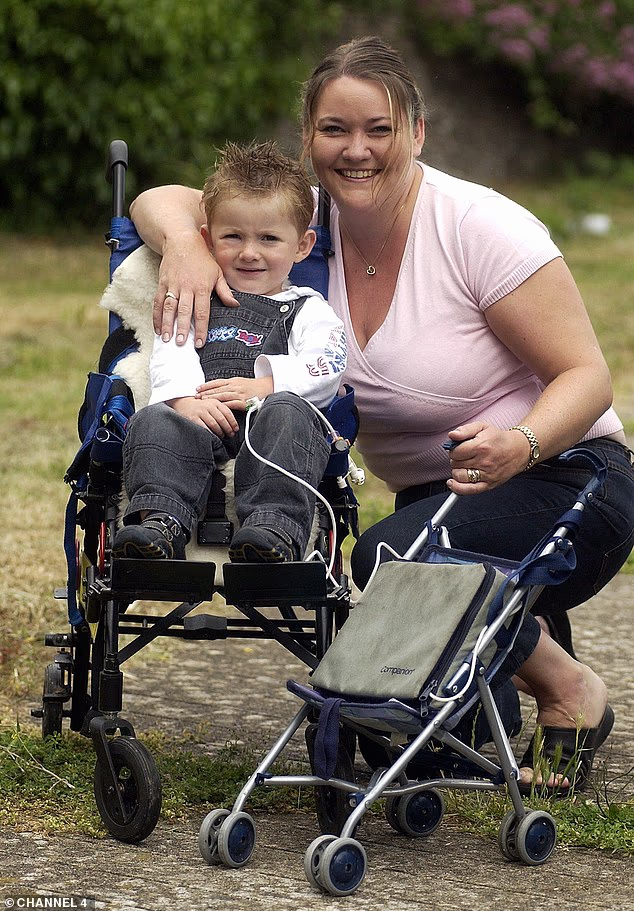
Lisa Hayden-Johnson, 52, forced her son Matthew into a wheelchair and gave him unnecessary drugs to win sympathy from celebrities and charitable donations.
The mother-of-two from Brixham in Devon connected him up to an oxygen tank as part of the fabrication and met Queen Camilla, Sir Tony Blair and Simon Cowell.
But her deception came crashing down when health workers and school staff told police of their concern – leading to her being jailed for more than three years in 2010.
Advertisement
Now, Ms Hayden-Johnson has spoken on camera for the first time since her release in a new Channel 4 documentary called ‘Love You To Death’ airing tomorrow. Her eyes, hands and back are the only parts of her body shown during the programme.
In a trailer shared with the Daily Mail, she says of Matthew’s birth: ‘I always wanted to be a mum. He was such a happy baby. It was the most amazing thing.’
Ms Hayden-Johnson then adds: ‘I’ll answer everything that you can possibly throw at me. The only thing I was guilty of was putting my son first, and I don’t regret that.’
The documentary also hears from Matthew and his sister Laura as well as doctors, police and relatives about how she subjected him to lengthy and enduring cruelty.
Advertisement
Lisa Hayden-Johnson, 52, of Brixham, Devon, pretended her son Matthew needed a wheelchair
Matthew had an oxygen tank which was carted around on a Thomas the Tank Engine trolley
Lisa Hayden-Johnson poses with her husband and their children Matthew and Laura
Advertisement
Laura – who has complex PTSD because of nightmares featuring Matthew’s cries as his feeding tubes are changed – tells the programme: ‘I can still hear him screaming.’
During the pretence, Ms Hayden-Johnson received free tickets to ITV’s The X Factor, thousands in cash donations and benefits, went on free cruises and lobbied for Matthew to receive a national GMTV bravery award.
But she was organising a regime of medical, physiological and psychological mistreatment – amounting to round-the-clock torture for the boy.
Ms Hayden-Johnson frequently described Matthew as ‘the most ill child in Britain’ – and he became convinced he was chronically ill.
Advertisement
I know why Jack the Ripper was protected for so long
Hi, I’m Alex Matthews, Editor of The Crime Desk.
In 2014, we revealed the bombshell evidence identifying Aaron Kosminski as the fabled Jack the Ripper. Now, we can reveal his astonishing connection to the Freemasons and claims this motivated his killings and protected him from life in prison.
She subjected him to 325 medical encounters – including inserting a feeding tube into his stomach under general anaesthetic. He had a total of nine GAs.
Advertisement
Ms Hayden-Johnson also claimed Matthew suffered from illnesses such as diabetes, food allergies, cerebral palsy, cystic fibrosis and an intolerance to sunlight.
After being examined by medics in Devon, Bristol and London, she then forced Matthew to go to school in a wheelchair – even though he could run around with his friends.
Ms Hayden-Johnson also made him wear sunglasses to protect his eyes and a bright yellow and green hat so he could be pulled to safety in case of an emergency.
She wore a green nurse’s uniform at home and filled Matthew’s bedroom with medical supplies and oxygen cylinders – with one expert telling the documentary that the room was ‘like a ward’.
Advertisement
Ms Hayden-Johnson even increased his blood sugar levels so tests would back her claim that he had diabetes.
Together, they met Royal Family members including Camilla, the then-Duchess of Cornwall who gave him a ‘Children of Courage’ medal, and Sarah Ferguson, then Duchess of York – as well as a series of other celebrities and the casts of BBC shows Casualty and EastEnders.
Ms Hayden-Johnson also claimed a total of about £130,000 in benefits.
But when Matthew was six, police arrested her after health professionals and school staff met and discussed their concerns.
Advertisement
Lisa Hayden-Johnson has spoken on camera for the first time since her release from jail
Matthew, now 27, also appears in the documentary which investigates his mother’s deception
Matthew’s sister Laura, 27, has nightmares featuring screams as his feeding tubes are changed
Following the start of an inquiry, Ms Hayden-Johnson wrongly said she had been raped near her home.
Advertisement
But, just as a suspect was about to be arrested, she confessed it was another lie – and later admitted child cruelty as well as perverting the course of justice over the rape claim.
Police then discovered holiday videos of Matthew on a cruise ship running around in his swimming trunks and eating large meals.
When Ms Hayden-Johnson was arrested, Matthew was initially taken by social services to live with foster carers.
But he was later moved back with his sister Laura to live in Sheffield with their father, a supermarket manager who was initially taken in by his wife’s deception.
Advertisement
Their father soon separated from Ms Hayden-Johnson – who now has a new husband – and does not appear in the documentary.
In the present day, Matthew, now 25, works in finance and Laura, now 27 – who was diagnosed with complex PTSD – has a job in childcare.
When Ms Hayden-Johnson was jailed aged 35 at Exeter Crown Court for three years and three months, judge Stephen Wildblood told her: ‘There are five adjectives which describe you.
‘Cruel, manipulative, perverse, disordered and pitiful. Your cruel conduct traversed the fundamental rules of nature and nurture.’
Advertisement
Lisa Hayden-Johnson and Matthew at the Children of Courage Awards at Westminster Abbey
Matthew, who was six when his mother was arrested, sits on the tank in front of his sister Laura
Lisa Hayden-Johnson was jailed in January 2010 for faking her son’s severe illnesses
Devon and Cornwall Police also said at the time that Ms Hayden-Johnson ‘constantly denied being cruel to her son’ and had never apologised for or explained her actions.
Advertisement
The Press dubbed her Britain’s ‘most evil mother’ – while Detective Constable Mark Uren described her as a ‘cruel, manipulative, evil mother who constantly lied to the medical professionals that her son was the sickest child in Britain’.
Ms Hayden-Johnson is one of Britain’s most notable cases of Factitious Disorder Imposed on Another (FDIA) or Fabricated or Induced Illness (FII), formerly known as Munchausen syndrome by proxy.
This is defined by the NHS as a form of child abuse where a parent or carer exaggerates, fabricates or deliberately induces physical or mental health symptoms in a child.
The girl founded the Believe in Magic charity aged 16 in 2011 to help ‘other’ children suffering from severe or terminal illnesses, and ran it with her mother Jean O’Brien, 72 – receiving the backing of various music stars.
But Megan died in 2018 from heart failure – which saw an inquest confirm she did not have a brain tumour after all – and investigations later claimed the girl was in fact also a victim after allegedly being duped into believing she was ill by her mother.
‘Love You To Death’ airs on Channel 4 at 9pm tomorrow
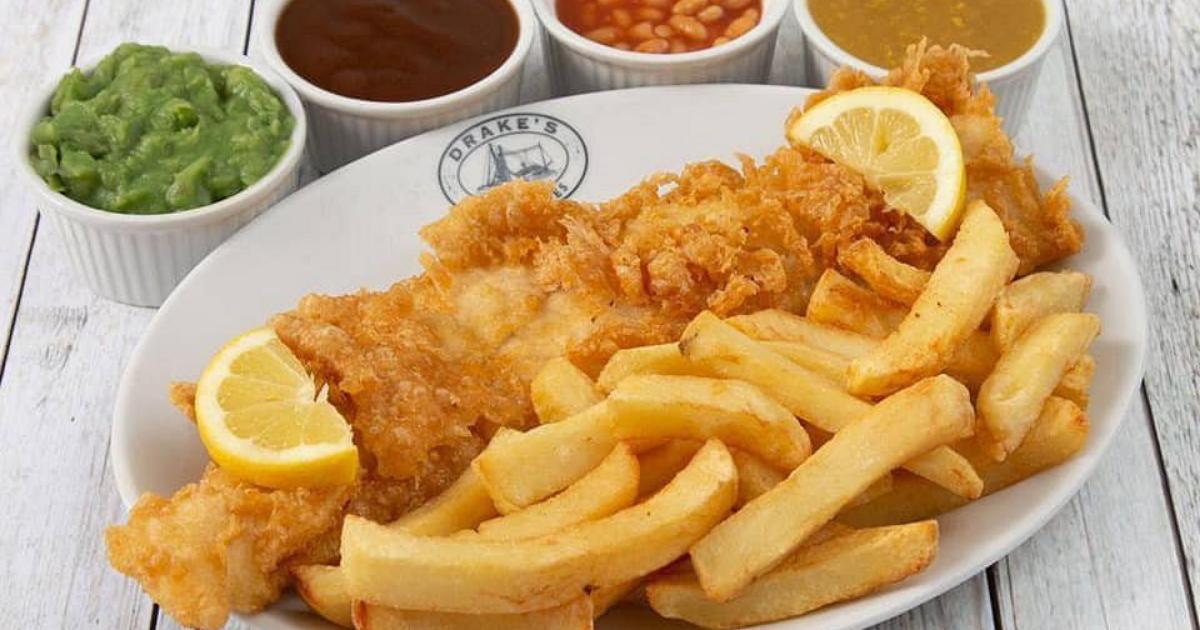
The award-winning fish and chip shop was established in 1984 and opened in York in 2010.
The fish and chip shop also has a location in Leeds, with a Knaresborough shop coming soon and can be enjoyed either as a takeaway or in the restaurant.
While you might not be able to get out of the city, you can enjoy a piece of seaside in the city centre restaurant.
What is Drake’s Fish and Chips like?
Drake’s Fish and Chips’ website reads: “Our close-knit team is ready to provide you an outstanding dining experience, matching our traditional Yorkshire values of hearty food and great value for money with a 21st Century focus on top quality cooking and dedicated customer service.”
All of the restaurant’s fish has been caught around Iceland, Norway, and Finland, with the potatoes being grown in Yorkshire.
Advertisement
The fish is prepared carefully by the team to create “utter perfection”.
The takeaway menu has a range of classic dishes such as haddock, scampi, and pie served with chips.
The food spot also offers burgers, a few sides, and plenty of sauces from gravy and curry sauce to homemade tartare sauce.
If you sit in the restaurant, you can try some of the starters such as garlic mushrooms and prawn cocktail before enjoying your fish and chips.
Advertisement
To end your meal, you might want one of the desserts available, like the brown and blonde chocolate brownie, sticky toffee pudding or even a battered Mars bar.
What do customers think of Drake’s Fish and Chips?
The fish and chip shop has a score of 4.5 out of 5 with 4,460 reviews on Tripadvisor.
One reviewer said: “A great restaurant with generous portions of beautifully cooked food.
“We had haddock and chips and it was delicious.
Advertisement
“A special mention for the mushy peas which were the best I’ve ever tasted.
“The staff were warm and welcoming.
“So good with my elderly mother who has mobility problems.
“Even our dog was offered a bowl of fresh water.
Advertisement
“A very special place in the centre of York.”
You can enjoy the food as a takeaway or in the restaurant. (Image: Tripadvisor)
Another reviewer said: “We were on a two-night trip to York and had looked ahead for a good fish and chip restaurant/shop and Drakes did not disappoint.
“We had the seniors haddock and chips which came with bread and butter and tea/coffee/squash.
“The fish was beautiful, cooked to perfection with clean, crispy batter.
Advertisement
“It was a great portion of fish and chips.
“We also had sticky toffee pudding and ice cream which was delicious.
“Would thoroughly recommend.”
What do you think of Drake’s Fish and Chips? Let us know in the comments.
Arsenal are continuing their business in the summer transfer window ahead of the Premier League season beginning
Arsenal could offer five players to Brighton to land Jack Hinshelwood. Mikel Arteta still aims to add to his squad after spending around £144million so far this summer.
Advertisement
The Gunners boss plans to bring in more transfers ahead of their Premier League opener against Coventry City. Hinshelwood is one of Arsenal’s primary targets and the club could consider swap deals to facilitate the move.
The Gunners may take inspiration from this deal and offer Brighton some of their own squad to land Hinshelwood. Here, Mirror Football has looked at who Arsenal could put forward in a swap deal with the Seagulls to reduce the £51m asking price.
Advertisement
Gabriel Jesus
Gabriel Jesus is one of the most likely options given Brighton’s desire for a centre-forward and Arsenal’s openness to letting him go. The Brazilian was omitted from the Gunners’ Community Shield squad at the weekend and has been heavily linked with a move.
Serie A side Napoli have registered an interest with Arsenal keen to get rid of Jesus’ £265,000-a-week wages. Brighton are in the market for a striker following Danny Welbeck’s move to Chelsea and could consider the 29-year-old.
Myles Lewis-Skelly
Myles Lewis-Skelly was a standout performer in Sunday’s 3-0 win over Manchester City, assisting Riccardo Calafiori’s superb strike in the 23rd second. The versatile star has been heavily involved throughout Arsenal’s pre-season tour but has been linked with a move away from north London.
Advertisement
The England international was offered to Chelsea and Manchester United earlier this window. If Arsenal still want him off the books then he could be used in a deal with Brighton.
Lewis-Skelly’s potential is still sky high, given his youth, and the 19-year-old can play across the middle of the park as well as both full-back positions.
Ethan Nwaneri
Ethan Nwaneri’s departure remains likely this summer after ending up on loan to Marseille last season. The 19-year-old is under contract until 2030 and the Gunners may be leaning more towards another temporary move.
Sky Sports, HBO Max, Netflix and Disney+ with Ultimate TV package
This article contains affiliate links, we will receive a commission on any sales we generate from it. Learn more
Sky has upgraded its Ultimate TV and Sky Sports bundle to now include HBO Max, Netflix, Disney+, discovery+ and Hayu, as well as 135 channels and full Sky coverage of the Premier League and EFL.
Sky broadcasts more than 1,400 live matches across the Premier League, EFL and more with at least 215 live from the top flight alongside Formula 1, darts and golf.
Recent reports suggest that Nwaneri has become a target for AC Milan. Brighton could take the winger to the American Express Stadium to provide competition for Yankuba Minteh.
Advertisement
Martin Zubimendi
Martin Zubimendi has shone for Arsenal since joining from Real Sociedad last summer. The Spaniard won the Premier League title at the first time of asking and Real Madrid have already expressed interest.
With Bruno Guimaraes joining earlier this month for £75m, Zubimendi may see his game time dwindling and could opt to move elsewhere to continue his upward trajectory.
Reiss Nelson
Reiss Nelson is another Arsenal star heavily linked with a move away. The winger’s contract is up at the end of the season and the club are looking to cash in before he becomes a free agent.
Earlier in July, Benfica and Fulhamregistered an interest in Nelson with a cut-price deal potentially available, so he could be a sensible makeweight.
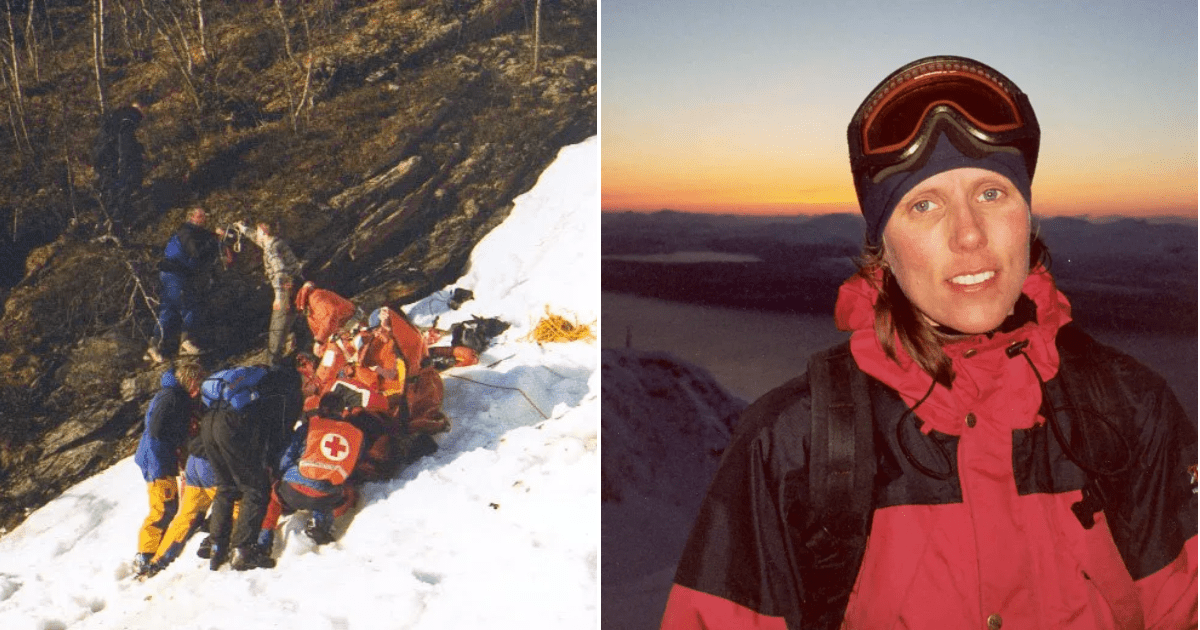
Anna was skiing when she hit a hole in the ice, then her head went under and she was pulled down by her water-filled clothes (Picture: Ketil Singstad/Einar Sund, exclusive to Metro)
For many, the greatest danger is not hypothermia but the body’s immediate response to sudden immersion in cold water: cold shock, which can trigger involuntary gasping, panic and rapid breathing within seconds.
Yet under very different circumstances, the same cold water that can kill can also play a remarkable role in saving a life.
27 years ago, as a woman became trapped beneath ice, profound hypothermia slowed her body’s functions enough to make an extraordinary recovery possible.
Advertisement
Then 28, Anna Bågenholm was skiing in Norway, with friends and fellow junior registrars Torvind and Marie. The trio had hiked 30 minutes from the ski lift to a frozen waterfall gulley in Narvik, in May 1999, which the experienced skiers had descended many times before.
Ask Metro
Use AI to go deeper into the stories you care about – powered by Metro and trusted publications.
Advertisement
‘It wasn’t a dangerous spot, but I started to slip, turned on my back and slid with my skis uphill. I hit a hole in the ice, my head went under and the water filled my clothing, pulling me down’, the 56-year-old radiologist tells Metro from her home in Tromsø.
Anna doesn’t remember anything after getting trapped under ice in May 1999 – the details were later filled in by her friend, Torvind.
Wedged between rocks and overlying thick ice, the area around Anna’s head continued to flood with icy water.
Anna at the top of the ski run in Narvik just days before the accident (Picture: Einar Sund, exclusive to Metro)
Marie grabbed Anna’s hands until the cold meant she lost her grip, then she and Torvind tried to pull her out by the ski boots, with no luck.
The running meltwater pulled Anna under, and at 30cm, the ice was too thick to break. After seven minutes of struggling to get her out, the friends called the nearest hospital – 100 miles away – and volunteers nearby.
Advertisement
For 40 minutes Anna struggled beneath the ice – then she stopped moving. Suffering from hypothermia, her body temperature was later recorded at 13.7 degrees.
‘After around 60 minutes, there were people on skis who had come to help. They had a rope and tried to pull me out by the legs, but that didn’t work,’ explains Anna.
‘Then a local volunteer brought a steel shovel and made it possible to make a hole further down in the ice, so, connected to the rope, they could let me go down under the ice and come back up through the new hole.
Latest heatwave news and guidance
To get the latest news on the hot weather, visit Metro’sheatwave hub.
Advertisement
For 40 minutes Anna struggled beneath the ice as people tried to rescue her, including Torvind and Marie in yellow trousers (Picture: Ketil Singstad, exclusive to Metro)
‘Then they took me up onto the ice.’
By this point Anna was clinically dead. She had been trapped for almost 80 minutes and her heart had stopped.
‘I looked dead, due to hypothermia. I had small pupils, I was pale and had no heartbeat and no respiration. Torvind and a volunteer started CPR.
Advertisement
The rescue helicopter arrived shortly after, a medic intubated her and the team took her to the University Hospital of North Norway in Tromsø, 100 miles away, and they carried out manual CPR throughout the hour-long journey.
Following similar accidents the previous years, medics, led by Dr Mads Gilbert, decided not to take her to the emergency room, taking her straight to the operating theatre instead, where they could connect her to cardiopulmonary bypass and a life support machine and blood rewarmer.
Anna was rushed to hospital where 100 medics spent nine hours working to save her (Picture: Olaf Jacobsen University hospital of North-Norway, exclusive to Metro)
By this point, her heart stopped for two hours and 45 minutes. Yet remarkably, the fact that Anna’s body had been cooled so dramatically, saved her life and her survival proved to be breakthrough in accidental hypothermia.
‘Fifty years ago, when a mountaineer fell into a crevasse and became deeply hypothermic with a severe drop in body temperature he could sustain hypothermic cardiac arrest,’ explains Dr Beat Walpoth, professor of Cardiovascular Surgery, Emeritus at the University of Geneva.
‘These victims were in cardio-respiratory arrest, had no heart action and no brain function, and therefore, unfortunately, they were declared dead.
Advertisement
‘Around the same time cardiac pioneers, working with children with congenital heart defects, cooled children’s body temperature to around 20°C, at which temperature they could be operated and successfully rewarmed by cardiopulmonary bypass.
Dr Mike Tipton explains that hypothermia can actually help protect the brain in some circumstances (Picture: Alex Orrow)
‘The team in which I was working decided to attempt to rewarm these mountaineers using the same technique of cardiopulmonary bypass rewarming and found it worked, with many making a full recovery. This opened a new era of treatment for accidental hypothermia victims.’
Dr Walpoth published his findings in the New England Journal of Medicine, detailing the treatment which helped doctors in Tromsø save Anna.
Mike Tipton, one of the world’s leading experts on human survival in cold water immersion, hypothermia and drowning, adds: ‘The thing that kills the brain, is a lack of oxygen availability, and partly that is how quickly it’s using it. If you cool it, hypothermia becomes protective.’
Anna’s recovery was a remarkable success. After nine hours in the operating room and with help from around 100 medics, she started to regain consciousness a week or so after the accident.
Advertisement
‘It was a big effort. I was among the first people in the world saved following cardiac standstill after hypothermia. Since then, they have used this method on many others, who now have around a 40% survival rate.
‘It is significant because while we are really aware of this in Norway, you read stories in the newspaper from around the world where people have died when they should have been rewarmed.
‘If people are on the scene are not aware of hypothermia, they can declare you dead without rewarming you,’ she says.
It is why many medics follow the maxim – you’re not dead until you’re warm and dead.
Advertisement
Anna’s recovery was a remarkable success (Picture: Erica Lundh, exclusive to Metro)
When Anna regained consciousness, she was confused and paralysed from the neck down. She thought she had been hurt in a sailing trip she was due to take in Greece.
‘I couldn’t move anything. I couldn’t breathe by myself. I had to stay on the respirator,’ Anna remembers.
But she wasn’t scared – just utterly exhausted and focussed on survival.
‘You are so ill. You have no energy. But I was really well taken care of.
‘When I could talk, the first thing I told Torvind was that I thought it was a very bad decision to save me because it was going to be very expensive to have me hospitalised and paralysed.’
Advertisement
But sitting at her bedside, Torvind and Marie read her Dr Walpoth’s article to reassure her that she could make a full recovery.
‘After some weeks I could move a finger, and then suddenly move a shoulder. It came very slowly back.’
Anna and Torvind started dating three years after the accident (Picture: Supplied, exclusive to Metro)
Four months after the accident she was walking in the mountains again and two months later, she was skiing again. Anna was eventually able to return to work after a year.
In 2002, she and Torvind started dating and now lead a full life dominated by outdoor pursuits and travel and extreme water sports like kitesurfing and wing foiling.
The couple have since travelled around giving lectures, with Anna used her experiences to inform her PhD – A description of the potentially severely injured patients met with trauma team activation at the trauma centre in northern Norway in 2015 – in tribute to the hospital that saved her.
Advertisement
Anna still loves skiing, although she says: ‘now in my fifties I am more careful’ (Picture: Erica Lundh, exclusive to Metro)
Despite coming so close to death, she was largely unaffected psychologically.
‘I was dead. And then I was awake. Things got normal again pretty soon,’ Anna says simply.
‘When you are in your twenties you are in the undeadly age. You can do everything. But now in my fifties I am more careful. I don’t want to get ill or hurt myself so I avoid things that I think are stupid.
‘I’m not afraid of skiing. I’m afraid of getting in a position where I can’t take care of myself, because I was hospitalised for so long. So I try to stay healthy.
Apart from that, Anna’s philosophy has not been changed.
Advertisement
‘You might think when you have been through something like that that you should be very happy to be alive, but that feeling ends really fast. Suddenly you’re just back in normal life, and you get irritated by exactly the same things,’ she laughs.
How a greater understanding of hypothermia can save lives this summer in the UK
Professor of human applied physiology, Mike Tipton, explains that there are at least 200 accidental drowning deaths in the UK each year.
‘The trouble with climate change, is that when the air temperature goes above 26 degrees, people head for bodies of water where the temperature is still around 13 degrees. People getting hot and leaping into water provokes the most powerful cold shock response you can get.
‘What kills is that gasping and hyperventilation you get when you first go to cold water. People used to assume it was hypothermia that killed you, but that actually takes at least thirty minutes.
Advertisement
‘The lethal dose of water into the lung is one and a half litres, and your first big breath is sufficient to cross the lethal dose. The cold shock response kills at least 60% of those that die going into cold water.
‘So stop and think before you start charging into water that’s freezing cold. If you must go in, go in slowly. If you find yourself in trouble, fight the instinct to thrash around, because that increases the chances of you aspirating or taking into the lung a very small amount of water.
Instead, float to live. Roll onto your back, tilt your head back in the water, keeping your airway as clear as possible to stay afloat until you get your breathing back under control.
‘And if you see somebody in trouble, phone the emergency services, because the time it takes to start effective resuscitation is directly linked to outcome.’
The Met Office has said exactly where and when to expect rain this week
Neil Shaw Assistant Editor
06:26, 18 Aug 2026
A new hosepipe ban has come into force as forecasters warned parts of the UK could be hit by flooding, with rain set finally to hit drought-stricken land. Some areas in the country will have the “first meaningful rain for a long time” in the coming days, the Met Office said, after weeks of heatwaves and dry weather have left many areas facing water shortages.
On Tuesday, a hosepipe ban begins for all of Wessex Water’s 1.4 million customers across areas in Bath, Somerset, Dorset and Wiltshire. It is the first ban the company has put in place for 50 years, since the summer of 1976.
Advertisement
Announcing the temporary restriction, the company cited increased demand during the dry weather but also longer-term weather forecasts that mean resources must be protected for customers and the environment. More than 27 million people across England have now had hosepipe use restricted in their area.
Following the fifth heatwave of the summer, this week is forecast to be wetter with cooler conditions that are much closer to average for the time of year, the Met Office said. Showers are expected on Tuesday in the north of the country, particularly in the North West, and another area of rain will move into the South West by the evening, the Met Office’s deputy chief forecaster Mike Silverstone said.
This will then likely spread east across the South, bringing the first spell of widespread rain to areas in need the most, he added. “Thursday will be a day of heavy showers across much of the UK, while some of these will be heavy some areas will miss them altogether,” Mr Silverstone said. “As some of these showers could be intense, there is a chance of some surface water flooding as the rain falls on very dry and hard ground.”
By Friday, the conditions are expected to turn drier once again through the weekend before more rain is forecast next week. The change comes after the UK’s fifth heatwave of the summer, during which the hottest day of the year was recorded in Kew Gardens, London, on Thursday when temperatures reached 38.1C.
Advertisement
The forecast rain may bring some welcome relief to parched land and fire-fighters tackling wildfires. But it is unlikely to bring an end to widespread drought conditions that have put severe pressure on wildlife, farmers, transport, emergency services infrastructure and water resources.
Among the driest areas in the UK are Wisley in Surrey, which has recorded 61 consecutive dry days since June 17, and Heathrow in Greater London, which has measured 55 consecutive dry days since June 23, according to Met Office data. Wildfires have ravaged parts of the UK following the hot and dry summer, including in the West Midlands where a blaze in Stourbridge destroyed 19 homes.
Several fire services have asked people to call 999 only to report a genuine emergency. In an update on Monday, the National Fire Chiefs Council said 1,132 wildfires have now been recorded across England and Wales in 2026 so far – a record high for the amount between January and this time of year.
On Friday evening, millions of people in England and Wales received an alert on their mobile devices warning them of a “very high risk of wildfires nationally”.
ROME (AP) — Scientists in Antarctica on Wednesday inaugurated the first global repository of mountain ice cores, preserving the history of the Earth’s atmosphere in a frozen vault for future generations to study as global warming melts glaciers around the world.
An ice core is something of an atmospheric time capsule, containing information about the Earth’s past changes in a frozen climate archive. With global glaciers melting at an unprecedented rate, scientists have raced to preserve ice cores for future study before they disappear altogether.
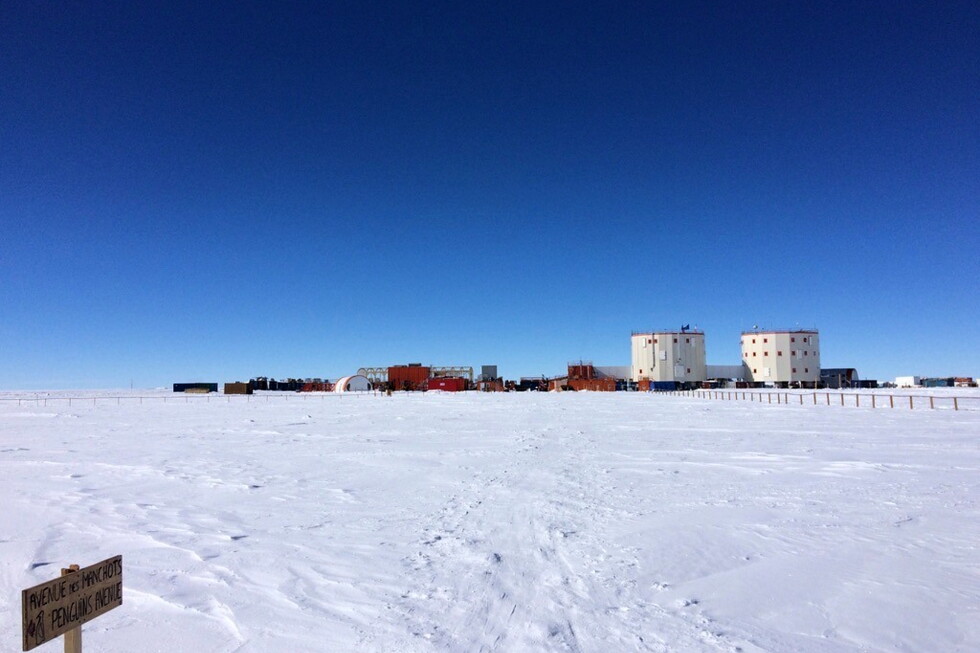
The Ice Memory Foundation, a consortium of European research institutes, inaugurated the frozen sanctuary on Wednesday at the Concordia station in the Antarctic Plateau. The foundation livestreamed the ceremonial ribbon cutting and opening of the frozen cave where the ice samples will be kept for future generations.
The first two sets of samples of Alpine mountain ice cores were drilled out of Mont Blanc in France and Grand Combin in Switzerland and arrived at the station after a 50-day refrigerated icebreaker and plane journey from Trieste, Italy.
Advertisement
During the inauguration ceremony, pairs of foundation team members brought box after box of ice cores into the cave, burrowed deep into a 5-meter (yard) high compacted snow drift at a constant temperature of around -52°C/-61°F.
“By safeguarding physical samples of atmospheric gases, aerosols, pollutants and dust trapped in ice layers, the Ice Memory Foundation ensures that future generations of researchers will be able to study past climate conditions using technologies that may not yet exist,” said Carlo Barbante, vice chair of the Ice Memory Foundation and a professor at Ca’ Foscari University in Venice.
Advertisement
This undated image released on Wednesday, Jan. 14, 2026 by the Ice Memory Foundation, shows the Concordia Station, where the Ice Memory Sanctuary is being built in Antarctica for ice cores from the Alps carrying the memory of Earth’s current atmosphere, which are preserved at a temperature close to -52°C/-61°F for future generations of scientists to study. (ENEA PNRA via AP)
Advertisement
This undated image released on Wednesday, Jan. 14, 2026 by the Ice Memory Foundation, shows the Concordia Station, where the Ice Memory Sanctuary is being built in Antarctica for ice cores from the Alps carrying the memory of Earth’s current atmosphere, which are preserved at a temperature close to -52°C/-61°F for future generations of scientists to study. (ENEA PNRA via AP)
Advertisement
Advertisement
The Ice Memory project was launched in 2015 by a consortium of research institutes: From France, the National Centre for Scientific Research (CNRS), the French National Research Institute for Sustainable Development (IRD) and the University of Grenoble-Alpes; from Italy the National Council of Research (CNR) and the Ca’ Foscari University in Venice, and Switzerland’s Paul Scherrer Institute.
Scientists have already identified and drilled ice cores at 10 glacier sites worldwide and plan to transport them to the cave sanctuary for safekeeping in the coming years. The aim over the coming decade is to craft an international convention to preserve and safeguard the samples for future generations to study.
Advertisement
As temperatures globally rise, glaciers are disappearing at a rapid clip, and with them critical information about the atmosphere: Since 2000, glaciers have lost between 2% and 39% of their ice regionally and about 5% globally, the foundation said.
Advertisement
Sign up for Morning Wire:
Our flagship newsletter breaks down the biggest headlines of the day.
“These ice cores are not relics … they are reference points,” said Celeste Saulo, secretary-general of the U.N. World Meteorological Organisation. “They allow scientists now and in the future to understand what changed, how fast and why.”















































You must be logged in to post a comment Login