Anthropic on Tuesday released Claude Sonnet 4.6, a model that amounts to a seismic repricing event for the AI industry. It delivers near-flagship intelligence at mid-tier cost, and it lands squarely in the middle of an unprecedented corporate rush to deploy AI agents and automated coding tools.
The model is a full upgrade across coding, computer use, long-context reasoning, agent planning, knowledge work, and design. It features a 1M token context window in beta. It is now the default model in claude.ai and Claude Cowork, and pricing holds steady at $3/$15 per million tokens — the same as its predecessor, Sonnet 4.5.
That pricing detail is the headline that matters most. Anthropic’s flagship Opus models cost $15/$75 per million tokens — five times the Sonnet price. Yet performance that would have previously required reaching for an Opus-class model — including on real-world, economically valuable office tasks — is now available with Sonnet 4.6. For the thousands of enterprises now deploying AI agents that make millions of API calls per day, that math changes everything.
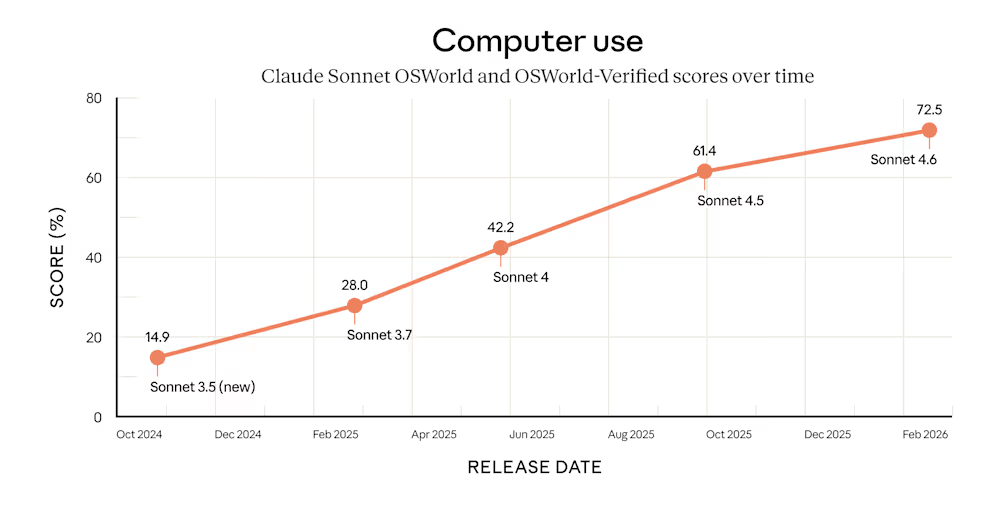
Anthropic’s computer use scores have nearly quintupled in 16 months. The company’s latest model, Sonnet 4.6, scored 72.5 percent on the OSWorld-Verified benchmark, up from 14.9 percent when the capability first launched in October 2024. (Source: Anthropic)
Advertisement
Why the cost of running AI agents at scale just dropped dramatically
To understand the significance of this release, you need to understand the moment it arrives in. The past year has been dominated by the twin phenomena of “vibe coding” and agentic AI. Claude Code — Anthropic’s developer-facing terminal tool — has become a cultural force in Silicon Valley, with engineers building entire applications through natural-language conversation. The New York Times profiled its meteoric rise in January. The Verge recently declared that Claude Code is having a genuine “moment.” OpenAI, meanwhile, has been waging its own offensive with Codex desktop applications and faster inference chips.
The result is an industry where AI models are no longer evaluated in isolation. They are evaluated as the engines inside autonomous agents — systems that run for hours, make thousands of tool calls, write and execute code, navigate browsers, and interact with enterprise software. Every dollar spent per million tokens gets multiplied across those thousands of calls. At scale, the difference between $15 and $3 per million input tokens is not incremental. It is transformational.
The benchmark table Anthropic released paints a striking picture. On SWE-bench Verified, the industry-standard test for real-world software coding, Sonnet 4.6 scored 79.6% — nearly matching Opus 4.6’s 80.8%. On agentic computer use (OSWorld-Verified), Sonnet 4.6 scored 72.5%, essentially tied with Opus 4.6’s 72.7%. On office tasks (GDPval-AA Elo), Sonnet 4.6 actually scored 1633, surpassing Opus 4.6’s 1606. On agentic financial analysis, Sonnet 4.6 hit 63.3%, beating every model in the comparison, including Opus 4.6 at 60.1%.
These are not marginal differences. In many of the categories enterprises care about most, Sonnet 4.6 matches or beats models that cost five times as much to run. An enterprise running an AI agent that processes 10 million tokens per day was previously forced to choose between inferior results at lower cost or superior results at rapidly scaling expense. Sonnet 4.6 largely eliminates that trade-off.
Advertisement
In Claude Code, early testing found that users preferred Sonnet 4.6 over Sonnet 4.5 roughly 70% of the time. Users even preferred Sonnet 4.6 to Opus 4.5, Anthropic’s frontier model from November, 59% of the time. They rated Sonnet 4.6 as significantly less prone to over-engineering and “laziness,” and meaningfully better at instruction following. They reported fewer false claims of success, fewer hallucinations, and more consistent follow-through on multi-step tasks.
Anthropic’s Sonnet 4.6, a mid-tier model, matches or approaches the performance of the company’s flagship Opus line across most benchmark categories — and frequently outperforms rival models from Google and OpenAI. (Source: Anthropic)
How Claude’s computer use abilities went from ‘experimental’ to near-human in 16 months
One of the most dramatic storylines in the release is Anthropic’s progress on computer use — the ability of an AI to operate a computer the way a human does, clicking a mouse, typing on a keyboard, and navigating software that lacks modern APIs.
When Anthropic first introduced this capability in October 2024, the company acknowledged it was “still experimental — at times cumbersome and error-prone.” The numbers since then tell a remarkable story: on OSWorld, Claude Sonnet 3.5 scored 14.9% in October 2024. Sonnet 3.7 reached 28.0% in February 2025. Sonnet 4 hit 42.2% by June. Sonnet 4.5 climbed to 61.4% in October. Now Sonnet 4.6 has reached 72.5% — nearly a fivefold improvement in 16 months.
Advertisement
This matters because computer use is the capability that unlocks the broadest set of enterprise applications for AI agents. Almost every organization has legacy software — insurance portals, government databases, ERP systems, hospital scheduling tools — that was built before APIs existed. A model that can simply look at a screen and interact with it opens all of these to automation without building bespoke connectors.
Jamie Cuffe, CEO of Pace, said Sonnet 4.6 hit 94% on their complex insurance computer use benchmark, the highest of any Claude model tested. “It reasons through failures and self-corrects in ways we haven’t seen before,” Cuffe said in a statement sent to VentureBeat. Will Harvey, co-founder of Convey, called it “a clear improvement over anything else we’ve tested in our evals.”
The safety dimension of computer use also got attention. Anthropic noted that computer use poses prompt injection risks — malicious actors hiding instructions on websites to hijack the model — and said its evaluations show Sonnet 4.6 is a major improvement over Sonnet 4.5 in resisting such attacks. For enterprises deploying agents that browse the web and interact with external systems, that hardening is not optional.
Enterprise customers say the model closes the gap between Sonnet and Opus pricing tiers
The customer reaction has been unusually specific about cost-performance dynamics. Multiple early testers explicitly described Sonnet 4.6 as eliminating the need to reach for the more expensive Opus tier.
Advertisement
Caitlin Colgrove, CTO of Hex Technologies, said the company is moving the majority of its traffic to Sonnet 4.6, noting that with adaptive thinking and high effort, “we see Opus-level performance on all but our hardest analytical tasks with a more efficient and flexible profile. At Sonnet pricing, it’s an easy call for our workloads.”
Ben Kus, CTO of Box, said the model outperformed Sonnet 4.5 in heavy reasoning Q&A by 15 percentage points across real enterprise documents. Michele Catasta, President of Replit, called the performance-to-cost ratio “extraordinary.” Ryan Wiggins of Mercury Banking put it more bluntly: “Claude Sonnet 4.6 is faster, cheaper, and more likely to nail things on the first try. That combination was a surprising combination of improvements, and we didn’t expect to see it at this price point.”
The coding improvements resonate particularly given Claude Code’s dominance in the developer tools market. David Loker, VP of AI at CodeRabbit, said the model “punches way above its weight class for the vast majority of real-world PRs.” Leo Tchourakov of Factory AI said the team is “transitioning our Sonnet traffic over to this model.” GitHub’s VP of Product, Joe Binder, confirmed the model is “already excelling at complex code fixes, especially when searching across large codebases is essential.”
Brendan Falk, Founder and CEO of Hercules, went further: “Claude Sonnet 4.6 is the best model we have seen to date. It has Opus 4.6 level accuracy, instruction following, and UI, all for a meaningfully lower cost.”
Advertisement
In a simulated business environment, Sonnet 4.6 nearly tripled the earnings of its predecessor over the course of a year, suggesting sharply improved decision-making in complex, long-horizon tasks. (Source: Anthropic, Vending-Bench Arena)
A simulated business competition reveals how AI agents plan over months, not minutes
Buried in the technical details is a capability that hints at where autonomous AI agents are heading. Sonnet 4.6’s 1M token context window can hold entire codebases, lengthy contracts, or dozens of research papers in a single request. Anthropic says the model reasons effectively across all that context — a claim the company demonstrated through an unusual evaluation.
The Vending-Bench Arena tests how well a model can run a simulated business over time, with different AI models competing against each other for the biggest profits. Without human prompting, Sonnet 4.6 developed a novel strategy: it invested heavily in capacity for the first ten simulated months, spending significantly more than its competitors, and then pivoted sharply to focus on profitability in the final stretch. The model ended its 365-day simulation at approximately $5,700 in balance, compared to Sonnet 4.5’s roughly $2,100.
This kind of multi-month strategic planning, executed autonomously, represents a qualitatively different capability than answering questions or generating code snippets. It is the type of long-horizon reasoning that makes AI agents viable for real business operations — and it helps explain why Anthropic is positioning Sonnet 4.6 not just as a chatbot upgrade, but as the engine for a new generation of autonomous systems.
Advertisement
Anthropic’s Sonnet 4.6 arrives as the company expands into enterprise markets and defense
This release does not arrive in a vacuum. Anthropic is in the middle of the most consequential stretch in its history, and the competitive landscape is intensifying on every front.
On the same day as this launch, TechCrunch reported that Indian IT giant Infosys announced a partnership with Anthropic to build enterprise-grade AI agents, integrating Claude models into Infosys’s Topaz AI platform for banking, telecoms, and manufacturing. Anthropic CEO Dario Amodei told TechCrunch there is “a big gap between an AI model that works in a demo and one that works in a regulated industry,” and that Infosys helps bridge it. TechCrunch also reported that Anthropic opened its first India office in Bengaluru, and that India now accounts for about 6% of global Claude usage, second only to the U.S. The company, which CNBC reported is valued at $183 billion, has been expanding its enterprise footprint rapidly.
Meanwhile, Anthropic president Daniela Amodei told ABC News last week that AI would make humanities majors “more important than ever,” arguing that critical thinking skills would become more valuable as large language models master technical work. It is the kind of statement a company makes when it believes its technology is about to reshape entire categories of white-collar employment.
The competitive picture for Sonnet 4.6 is also notable. The model outperforms Google’s Gemini 3 Pro and OpenAI’s GPT-5.2 on multiple benchmarks. GPT-5.2 trails on agentic computer use (38.2% vs. 72.5%), agentic search (77.9% vs. 74.7% for Sonnet 4.6’s non-Pro score), and agentic financial analysis (59.0% vs. 63.3%). Gemini 3 Pro shows competitive performance on visual reasoning and multilingual benchmarks, but falls behind on the agentic categories where enterprise investment is surging.
Advertisement
The broader takeaway may not be about any single model. It is about what happens when Opus-class intelligence becomes available for a few dollars per million tokens rather than a few tens of dollars. Companies that were cautiously piloting AI agents with small deployments now face a fundamentally different cost calculus. The agents that were too expensive to run continuously in January are suddenly affordable in February.
Claude Sonnet 4.6 is available now on all Claude plans, Claude Cowork, Claude Code, the API, and all major cloud platforms. Anthropic has also upgraded its free tier to Sonnet 4.6 by default. Developers can access it immediately using claude-sonnet-4-6 via the Claude API.
Babies can be difficult. They eat all the time, pee and poop wherever they want and they may not sleep at night, especially during sleep regressions. According to the American Academy of Pediatrics, playing sounds from a white noise machine can help soothe your baby and get them to settle down, giving you a moment of respite. And if you have an iPhone, you don’t need to spend money on a white noise machine.
When Apple released iOS 15 in 2021, the operating system brought a hidden feature called Background Sounds. It allows you to turn your iPhone into a white noise machine, and you can play these sounds by themselves or under a podcast, music or video streaming app.
When Apple introduced Background Sounds, there were six ambient sounds to play on a loop: rain, stream and ocean waves, which are natural sounds, and bright, balanced and dark noise, which are different pitches of white noise. When the tech giant released iOS 18 in 2024, it added two sounds: night and fire. And iOS 26 brought even more background sounds to devices, including rain on roof and babble, which sounds like a busy cafe.
Advertisement
If you want to use these sounds to lull a baby back to sleep, or for any other reason, here’s how to enable Background Sounds on your iPhone.
How to access Background Sounds from your Control Center
Instead of searching through Settings each time you want to turn Background Sounds on, here’s how you can set up a toggle in the Control Center to turn the feature on to use on your iPhone.
1. Open Control Center. 2. Tap the plus (+) sign in the top left of your screen. 3. Tap Add a Control near the bottom of your screen. 4. Tap Hearing control (ear icon) under Hearing Accessibility to add to Control Center.
Advertisement
You can find the Hearing control under Hearing Accessibility in your Control Center.
Apple/Screenshot by CNET
Once the Hearing control icon is in Control Center, tap it to see three options: Speaker, Background Sounds and Live Listen. Then tap the musical notes next to Background Sounds to turn the feature on. You can also tap on the words Background Sounds to open a menu to choose a different background sound as well as adjust the volume.
These are a few of the sounds you can access in Background Sounds.
Advertisement
Apple/Screenshot by CNET
Use Accessibility Shortcuts for Background Sounds
You can also set up an accessibility shortcut to turn Background Sounds on or off from your home screen or within an app. Here’s how to set it up.
1. Tap Settings. 2. Tap Accessibility. 3. Tap Accessibility Shortcut. 4. Tap Background Sounds.
Now, when you press the side button on your iPhone three times, Background Sounds will turn on. You can tap the button three times again to turn it back off.
Advertisement
Apple/Screenshot by CNET
Discover These Hidden AirPods Features and Boost Your Listening Experience
If you want more control over Background Sounds, here’s where to go.
1. Tap Settings. 2. Tap Accessibility. 3. Tap Audio & Visual. 4. Tap Background Sounds.
Near the top of this menu you can turn Background Sounds on by tapping the Background Sounds toggle, and you can change the Background Sound by tapping Sound and choosing a new sound.
You can play your background sounds while other media is playing if you’d like.
Advertisement
Apple/Screenshot by CNET
There are two toggles in this menu: Use When Media Is Playing and Stop Sounds When Locked. Tapping the toggle next to Use When Media Is Playing allows Background Sounds to keep playing while you watch a video or listen to music. And tapping the toggle next to Stop Sounds When Locked ensures Background Sounds will turn off when your device locks. If you don’t have this enabled, the sounds will continue to play when your device locks.
There are also two new menus in iOS 26: Equalizer and Stop Sounds with a Timer. Equalizer lets you adjust the tone and contour of Background Sounds, as well as balance more toward the right or left speaker or headphone. Stop Sounds with a Timer allows you to turn Background Sounds off at a specific time that you can choose or after a certain amount of time has passed.
The Stop Sounds with a Timer (left) and Equalizer menus in iOS 26.
When you’re finished with work and you need something to do, where do you turn your attention? Some folks build models, others do some coloring. Some relax and watch TV. But if you’re looking for something to pour your free time and attention into, it can be difficult to settle on one thing, or even multiple.
Model trains, running clubs, robotics and coding classes all sound fun — until you realize you’d rather fly, running shoes cost far more than they should and you’re less of a front-end/back-end person and more of a “no end in sight for how boring Java can be” person.
I asked three different AI systems — Claude AI, Google Gemini and ChatGPT — about what my spouse’s next hobby should be using the exact same prompt, and the results were surprising.
Advertisement
Claude: Getting a clue
Here’s the prompt I wrote: “I am a 39-year-old man in the United States of British origin. I live in Los Angeles, California, and am married with a dog and a cat. I live in a house with some backyard space. I enjoy travel, reading, playing video games and am looking to add a new hobby to my list of activities. I also enjoy getting deals, as that’s what my career deals with. Can you suggest three hobbies that I should look into for my review? Please give me information on the financial and time commitments needed, as well as what you would consider to be the plusses and minuses of each one. I work a regular 9-5 job so would need to be done around that constraint as well.”
Gardening is a hobby many people only come to appreciate in their golden years, but all three AI systems recommended it as an easy way to pass the time with minimal effort and expense.
The second suggestion was reselling and thrifting vintage finds, followed by homebrewing beer, cider or mead. It gave a lot of detail into the time and financial commitments, pros and cons as well as why it assumed those hobbies would suit my husband based on that short prompt.
Advertisement
Claude/Screenshot by CNET
Claude/Screenshot by CNET
Claude/Screenshot by CNET
Claude AI was particularly thoughtful in appealing to the prompter’s needs and personality, pointing out that gardening could be a great way to save money — perhaps recognizing that finding a good deal is a deeply entrenched personality trait of my little cheapskate husband.
Gemini: Combining interests
Gemini suggested hunting for and reselling vintage video games, books and other old media as a pastime that could pair well with traveling on points. It also recommended brewing beer as a way to spend time in a backyard already full of plants (in addition to “high-yield urban orchard gardening”).
Gemini/Screenshot by CNET
Gemini/Screenshot by CNET
Gemini was adept at using my spouse’s prompt details to guide its suggestions, creating a nicely packaged, holistic approach to how he might spend his off-hours between a demanding 9-to-5 job.
ChatGPT: Making a night of it
Along with backyard gardening (again), ChatGPT was the only AI system to suggest an evening hobby: amateur astronomy. Most of the other systems focused on ways to pass the weekend hours at estate sales or at home.
Advertisement
ChatGPT/Screenshot by CNET
Stargazing could be a fun way to spend a Friday night, but we live in Los Angeles. Many of the “stars” overhead might actually be satellites, and finding a decent vantage point would likely mean braving traffic and crowds taking selfies over the city skyline.
ChatGPT’s other suggestion was using our backyard for beekeeping:
ChatGPT/Screenshot by CNET
Beekeeping seemed pretty out of left field, considering the original prompt mentioned nothing about an interest in food, insects or anything remotely related to the complex caretaking involved with bees — or bee law. According to ChatGPT, the time commitment is only two to four hours per month (though local beekeepers might dispute that).
Overall, ChatGPT’s recommendations were the least relevant to the prompter’s real interests, and the logic the tool used to explain why it had made the recommendations was very thin.
I just can’t buy that “many full-time professionals” who enjoy playing video games also do a little beekeeping on the side.
Advertisement
Here’s hoping AI can offer some creative ideas for spending your time that don’t involve buying a full-body suit.
Apple has marked its 50th anniversary, although arguably a year too soon but we’ll get into that, plus there’s good news for users of the Apple Vision Pro, hopeful news about Siri, and bad news for certain vibe coders, all on the AppleInsider Podcast.
Looking back at Apple’s history — image credit: Apple
The fiftieth anniversary celebrations are, quite reasonably, marking the half century since the partnership of Steve Jobs, Steve Wozniak, and Ronald Wayne, was founded on April 1, 1976. But the Apple we know today, the corporation, was created in 1977. It seems unlikely that Apple will do another round of parties and events, but we’d be up for it if they did. Continue Reading on AppleInsider | Discuss on our Forums
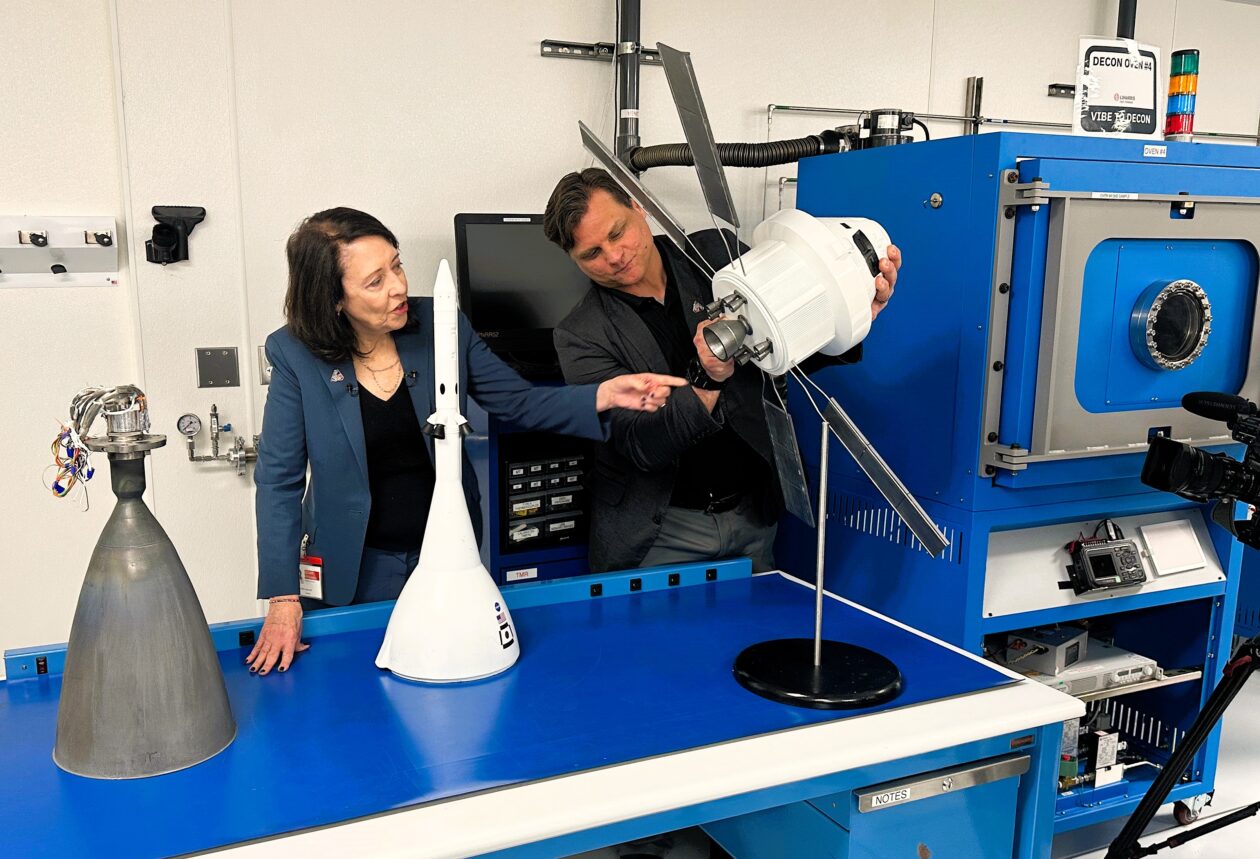
Sen. Maria Cantwell, D-Wash., and Brent Urke, program manager for L3Harris’ facility in Redmond, Wash., check out a model of the Orion spaceship that’s due to take four astronauts around the moon as early as this week. Cantwell is pointing to the model’s set of eight R-4D thrusters. An actual R-4D thruster, manufactured in Redmond, is sitting on the table at far left. (GeekWire Photo / Alan Boyle)
NASA’s most powerful rocket is due to send four astronauts on a round-the-moon journey as early as this week, and although the launch team has to make sure everything goes right in Florida, the mission’s success will also depend on hardware that was built in the Seattle area.
During a visit to two of the contractors for NASA’s Artemis moon program on Monday, U.S. Sen. Maria Cantwell said that when it comes to spaceflight, it’s important to get the little things right.
“A lot of people think, ‘Oh, well, we know how to build big rockets,’ right?” the Washington state Democrat said at Karman Space & Defense’s manufacturing facility in Mukilteo, Wash. “But do we know how to separate payloads and return them, and do all of that? That’s what we’re doing here in Puget Sound. … I think that’s the untold story that people don’t understand.”
NASA’s big story will focus on the first humans to go from the Earth to the moon since the Apollo 17 mission in 1972. Artemis 2’s crew won’t land on the lunar surface during what’s expected to be a 10-day mission. But because their figure-8 route takes them 4,700 miles beyond the moon’s far side, they’ll set a new distance record for human travel beyond Earth.
The first opportunity for liftoff from NASA’s Kennedy Space Center in Florida is scheduled for 6:24 p.m. ET (3:24 p.m. PT) on Wednesday, with backup dates available through April 6. NASA plans to provide live video coverage of the countdown and launch via YouTube, starting at 12:50 p.m. ET (9:50 a.m. PT) on launch day.
Advertisement
This will be the second launch for NASA’s Space Launch System rocket, which sent an uncrewed Orion space capsule around the moon for the Artemis 1 test mission in 2022. The Artemis 2 crew — including NASA astronauts Reid Wiseman, Christina Koch, Victor Glover and Canadian astronaut Jeremy Hansen — will be the first people to ride an Orion into space.
If all goes according to plan, Artemis 2 will clear the way for NASA to test the lunar landers built by Elon Musk’s SpaceX and Jeff Bezos’ Blue Origin space ventures in 2027, then for Artemis 3 to put astronauts on the surface of the moon in 2028. And that’s just the start. “Ultimately, Artemis is about returning to the moon and building a permanent moon base that can then be used for accelerating our travel to Mars,” Cantwell said.
One of the best-known of those Washington state suppliers is L3Harris, which is headquartered in California but operates a facility in Redmond that has built thrusters for nearly every NASA space program. (The facility was operated by Aerojet Rocketdyne until L3Harris acquired that company in 2023. Now L3Harris is in the midst of yet another corporate transition.)
Advertisement
During her visit to the Redmond facility, Cantwell said L3Harris and other space companies exemplify the “engineering mindshare” that’s one of the strengths of the Pacific Northwest’s tech industry. “That is why people have called us the Silicon Valley of space,” she said.
L3Harris’ Redmond team manufactures thrusters for Orion’s European-built service module, Orion’s crew module and the Space Launch System’s upper stage. It’s also been given a leading role in the development of the main engine for future Orion spacecraft.
John Schneider, vice president of operations for L3Harris, acknowledged that most of the rocket engines built to send astronauts to the moon come from other places. “But if you want to come back, you need a Redmond thruster to bring you back and get you back to Earth safely,” he said.
Jonathan Beaudoin, chief operating officer at Karman Space & Defense, says he hopes we’ll never have to see the hatch release system activated for an actual emergency. “But if we do, it had better work,” he added.
Karman Space & Defense CEO Jon Rambeau, chief operating officer Jonathan Beaudoin and U.S. Sen. Maria Cantwell survey hardware for the Orion crew capsule. (GeekWire Photo / Alan Boyle)
Artemis 2 is currently focusing the space spotlight on the teams supporting the Space Launch System and the Orion spacecraft, but Washington state’s space companies are also involved in other aspects of the Artemis program. Blue Origin, for example, is getting its Blue Moon lander ready for missions to the moon and working on a system capable of turning moon dirt into solar cells and electrical wire.
“This is about cutting-edge technology. These guys out here aren’t waiting for somebody to describe to them what comes next. They’re out here solving a problem and then saying to NASA, ‘We’ve got a solution.’ And that’s really fantastic,” Cantwell said.
“Obviously, some of this they don’t want to show for intellectual property protection reasons,” she added. “But we’re just really, really proud that our region is so far ahead, thinking through the problems that we’re going to incur and what the possible solutions should be.”
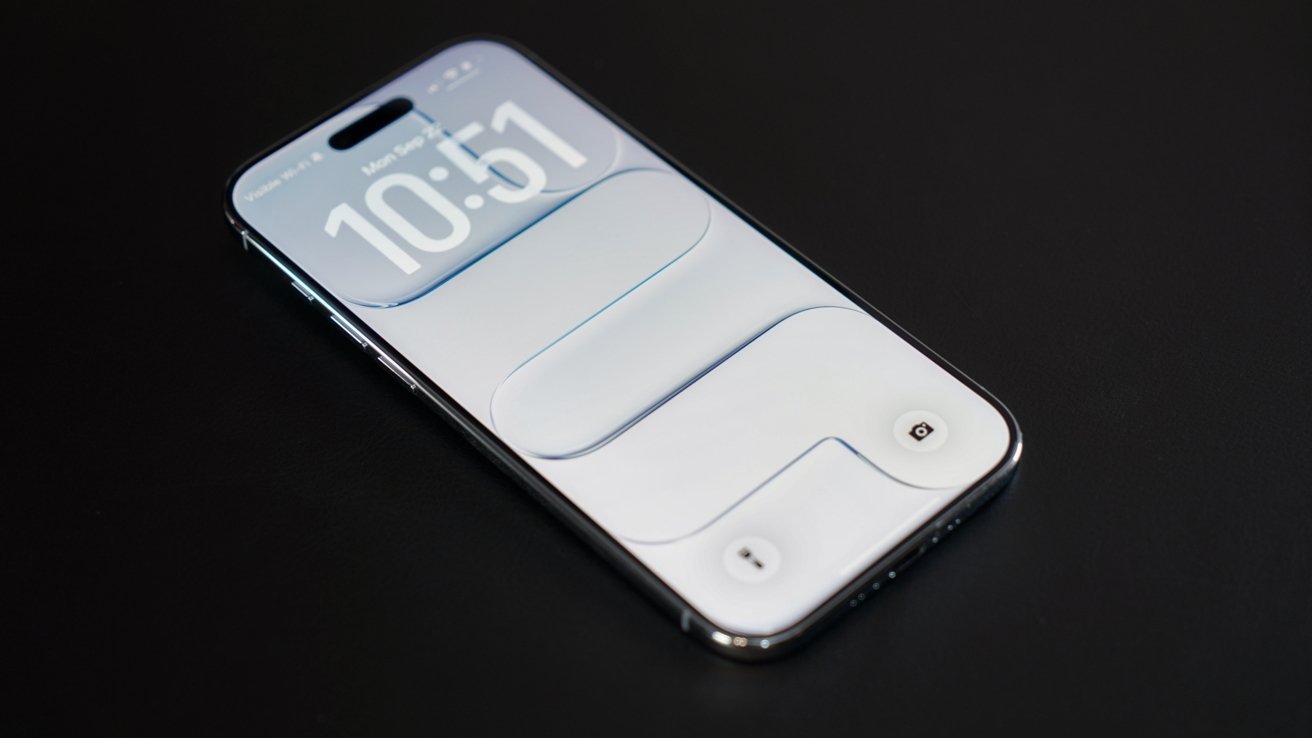
A new version of the first iOS 26.5 beta has now made its way to developers, but what’s been changed is not clear.
The first developer beta of iOS 26.5 has received a revised release.
Following the full public release of iOS 26.4 on March 24, Apple started beta testing of the next major operating system, iOS 26.5. Monday saw the debut of iOS 26.5 beta 1, which inadvertently enabled Apple Intelligence for some iOS users in China. Apple has now deployed an updated variant of the first iOS 26.5 developer beta, which increases the build number to 23F5043k, up from the initial 23F5043g. The relatively similar build numbers suggest that the revised developer beta doesn’t include new features or additional changes. Continue Reading on AppleInsider | Discuss on our Forums
OPINION: The UK government has finally opened the doors to plug-in solar panels in the UK, saying that they’ll be available in shops ‘within months’. Self-installed, and just requiring a simple 13A plug socket, will plug-in solar start a revolution and will the savings stack up?
As of April 1, the price cap has come down, and electricity and gas bills have just got a bit cheaper. Well, until you look at what’s going on in the Middle East and know that this reduction in price is a false dawn, and, unless things change dramatically, energy prices could soar upwards.
No wonder, then, that the demand for solar power has risen dramatically. As I learned from my BOXT Solar review, solar panels are well worth it in the UK, provided you have the right conditions: the right type of roof, facing the right way, and you’re planning to stay in the home that you own for long enough to see the benefits.
That leaves an awful lot of people who aren’t in the optimal situation, including those in flats, those who rent and those who are only going to stay in a place temporarily. It’s for these kinds of people that plug-in solar offers a lifeline.
Advertisement
What is plug-in solar?
With a fixed solar installation, the idea is to fit as many solar panels as possible onto your roof to generate as much electricity as possible. To use this DC current, you need a high-power solar inverter, which converts the incoming power into the AC power you use around your home. All this specialised equipment costs a fair amount, and then there’s professional installation on top of that.
Plug-in solar aims to make life easier, with self-install solar panels that you can hang over a balcony, put on a shed roof or even place in a small terrace or other outdoor space.
Advertisement
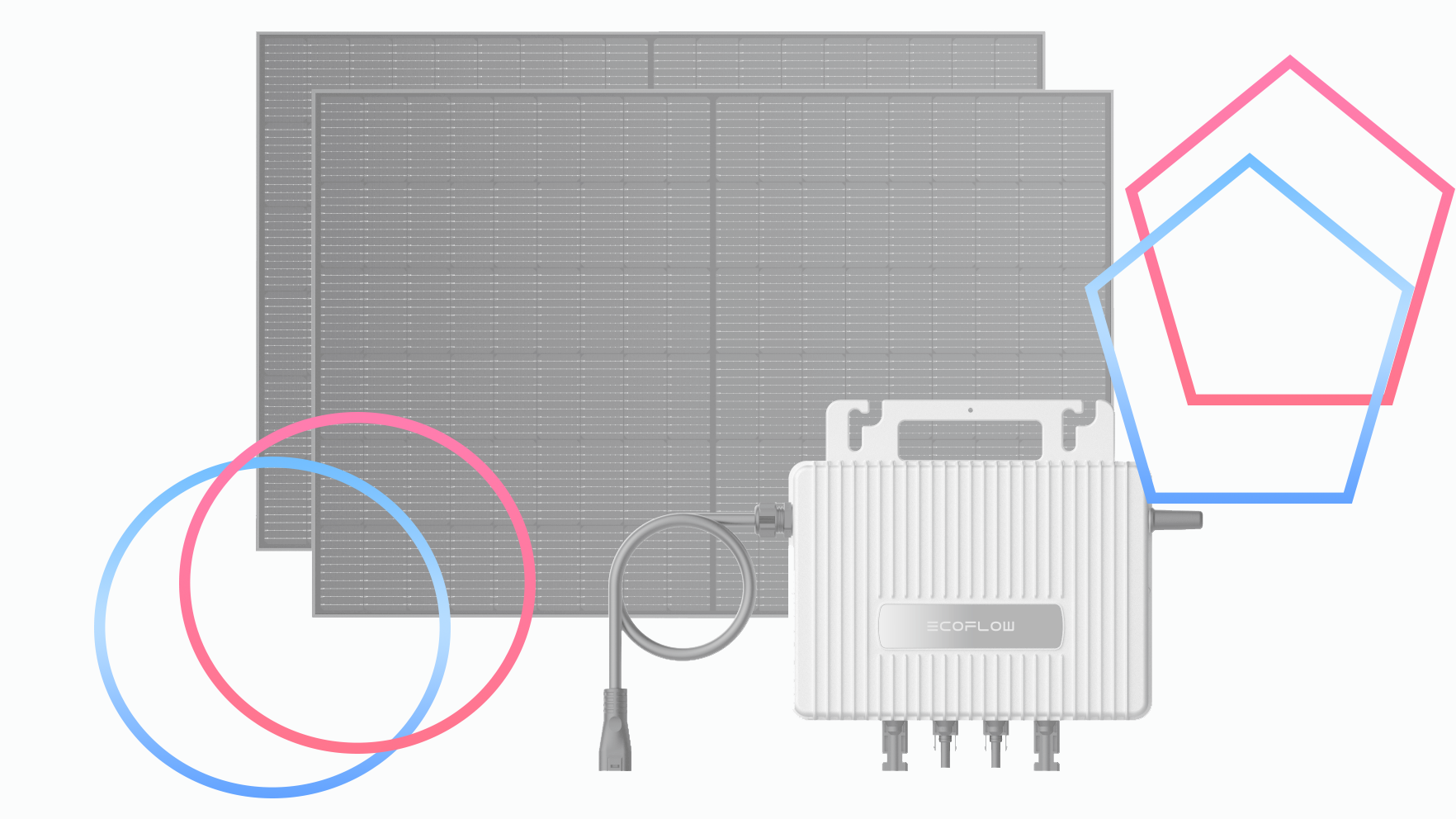
These then connect to a microinverter, which plugs into a standard three-pin socket, with no additional installation required. Under the new government legislation, systems that generate up to 800W can be plugged in without needing an electrician.
Advertisement
How much will plug-in solar cost?
The size of the system you buy and the types of fixing the solar panels buy all make a difference to the price. As you can’t buy many such systems yet, there’s not much to go on, but we do have some initial reports on the types of systems that will be available, and there’s European pricing, as plug-in solar is already available in a lot of other countries.
Initial reports suggest that plug-in solar systems will cost around the £400 mark, but smaller systems could be available at around £200, with the largest system with a battery maxing out at over £ 1000.
How much will plug-in solar save, and will it be worth buying?
Savings depend on the size of system you have and other factors. Most importantly, you still need to have an area suitable for solar panels: south-facing is ideal, with as much sun exposure as possible throughout the day. Essentially, you need direct sunlight; if you have a north-facing balcony, for example, or there’s a lot of shade where you want to put your plug-in system, you won’t generate a lot of power.
With those kinds of variables, typical energy savings could be from £70 a year, although EcoFlow says that you can save up to £115 per year with its STREAM Microinverter. This system is currently offered as a package with two 450W solar panels and a STREAM AC Pro battery (1.92kWh capacity) for £1049, marking a nine-year payback period (note that the current package requires an electrician to install, due to current legislation).
Advertisement
Advertisement
As we get more packages and I’m able to run some reviews, it will be possible to get a better idea of what these kinds of systems can do. The short version is that plug-in solar can’t generate the same kinds of power as rooftop panels, but you’ll still generate free power that will knock your electricity bills down.
It will be worth doing some sums to work out whether it’s worth buying a battery, too. As with a full rooftop solar, whether a battery is worth it will depend on how much power you generate and whether you can use it while it’s being generated or not. This is the kind of information I plan to cover in reviews once samples are available.
Provided you have the right place to mount panels, plug-in solar is a simple way to get started with free electricity generation, and with prices looking like they’re going up, any saving is good.
Reliable technology now rivals pay as a core workplace expectation
Meeting failures continue disrupting workflows across both hybrid and office environments
Time loss from technical issues steadily erodes productivity during routine meetings
The modern British workplace has arrived at an uncomfortable crossroads where employees now rank reliable technology almost as highly as their monthly pay, new research has claimed.
A report from Owl Labs found good technology access is important to 89% of UK workers, placing it just behind compensation at 92% and a supportive manager at 91%.
This near-tie reveals a striking reality: seamless digital tools have become non-negotiable for the workforce.
Technical failures have increasingly become the primary source of frustration for workers participating in hybrid meetings across different environments
Three in four UK employees report experiencing challenges during these interactions, with 79% admitting they lose time to technical difficulties.
Advertisement
Audio echo or distortion affects 78% of workers, while 74% find themselves missing crucial visual cues.
“When meeting technology fails, it doesn’t just cause mild annoyance — it undermines wellbeing and derails collaboration,” notes Frank Weishaupt, CEO of Owl Labs.
Sign up to the TechRadar Pro newsletter to get all the top news, opinion, features and guidance your business needs to succeed!
The report found the average worker wastes six and a half minutes per meeting simply getting equipment to function properly.
Advertisement
Younger employees, despite their reputation as digital natives, are not immune to these struggles – 82% of Gen Z and 79% of Millennials report time lost to tech issues, compared with 73% of Gen X and 72% of Boomers.
Even more surprisingly, full-time office workers face the greatest difficulties, with 83% experiencing technical delays versus 77% of hybrid workers.
The physical office, supposedly designed for productivity, has become a source of unexpected friction, and to tackle these issues, employers are significantly investing in new hardware and AI tools.
Advertisement
Over four in five workers say their organisation made office changes in 2025, including the introduction of AI tools (42%), increased IT support (38%), and upgraded meeting room equipment (35%).
Three-quarters of employees report that their company encourages AI usage. However, this spending spree has not yet solved the underlying problem.
“The UK is at a turning point,” Weishaupt adds. “The real value comes when those tools are intuitive, inclusive and trusted.”
The report noted that instead of investing in smarter meeting technology that alleviates setup challenges, employers are banking on systems that add further complexity.
Advertisement
This suggests employers may be misreading what workers actually prioritise in their daily workflows.
For a workforce already stuck in a cycle of frustration, progress depends on removing friction rather than adding more software layers.
A supportive manager cannot fix a broken audio connection, but a properly functioning camera and microphone just might.
Anthropic is no longer offering a free ride for third-party apps using its Claude AI. Boris Cherny, Anthropic’s creator and head of Claude Code, posted on X that Claude subscriptions will no longer cover using the AI agent for third-party tools, like OpenClaw, for free. As of 3PM ET on April 4, anyone using Claude through third-party apps or software will have to do so with an extra usage bundle or with a Claude API key, according to Cherny.
Most of Claude’s workload may come from simple user questions, but there are those who use the AI chatbot through OpenClaw, a free and open-source AI assistant from the same developer as Moltbook. Unlike more general AI solutions, OpenClaw is designed to automate personal workflows, like clearing inboxes, sending emails or organizing calendars, but leans on external large language models, including Claude, ChatGPT and Google Gemini.
Cherny replied to X users that this change is about engineering constraints and optimization. “We’ve been working hard to meet the increase in demand for Claude, and our subscriptions weren’t built for the usage patterns of these third-party tools,” Cherny explained on X. “Capacity is a resource we manage thoughtfully and we are prioritizing our customers using our products and API.”
If OpenClaw users still want to use Anthropic as its LLM, they will have to buy a usage bundle, which are currently discounted, or switch to another AI integration like xAI, Perplexity or even DeepSeek. Of course, Anthropic has its own alternative, which tackles some similar tasks as OpenClaw, called Claude Cowork.
LinkedIn might be doing a lot more than just showing you job posts and connection requests. If the latest reports are anything to go by, it’s also quietly peeking into your browser setup.
LinkedIn
A new investigation is raising serious privacy concerns, claiming the platform is scanning thousands of Chrome extensions and collecting device-level data in the background. And yeah, it’s as uncomfortable as it sounds.
LinkedIn may be scanning thousands of your browser extensions
According to findings from the BrowserGate report, LinkedIn allegedly injects hidden JavaScript into its website that scans users’ browsers for installed extensions, over 6,000 of them. The way it works is surprisingly simple (and a bit sneaky). The script checks for known extension IDs by attempting to access specific files tied to those extensions. If the file responds, LinkedIn knows the extension is installed, all happening silently in the background without any visible prompt.
LinkedIn gathering information about visitors’ devicesBleepingComputer
But it doesn’t stop there. Independent testing by BleepingComputer further confirmed that the platform is also collecting detailed device information like CPU specs, memory, screen resolution, language settings, and even battery status; essentially building a unique “fingerprint” of your device. And here’s the kicker: because LinkedIn profiles are tied to real identities such as your name, job, and company, this data could potentially be linked back to you directly, making it far more sensitive than typical anonymous tracking.
Why is this raising serious red flags?
The biggest concern isn’t just the data collection, but how quietly it’s happening. Users aren’t clearly informed, and there’s no explicit consent before the scanning begins. There’s also the issue of what this data reveals. Installed extensions can hint at sensitive details like job hunting, finances, or personal interests, making this kind of tracking far more intrusive than it sounds.
Souvik Banerjee / Unsplash
LinkedIn says it’s for security, but critics argue it goes too far. And honestly, it leaves you wondering how private your “professional” life online really is.
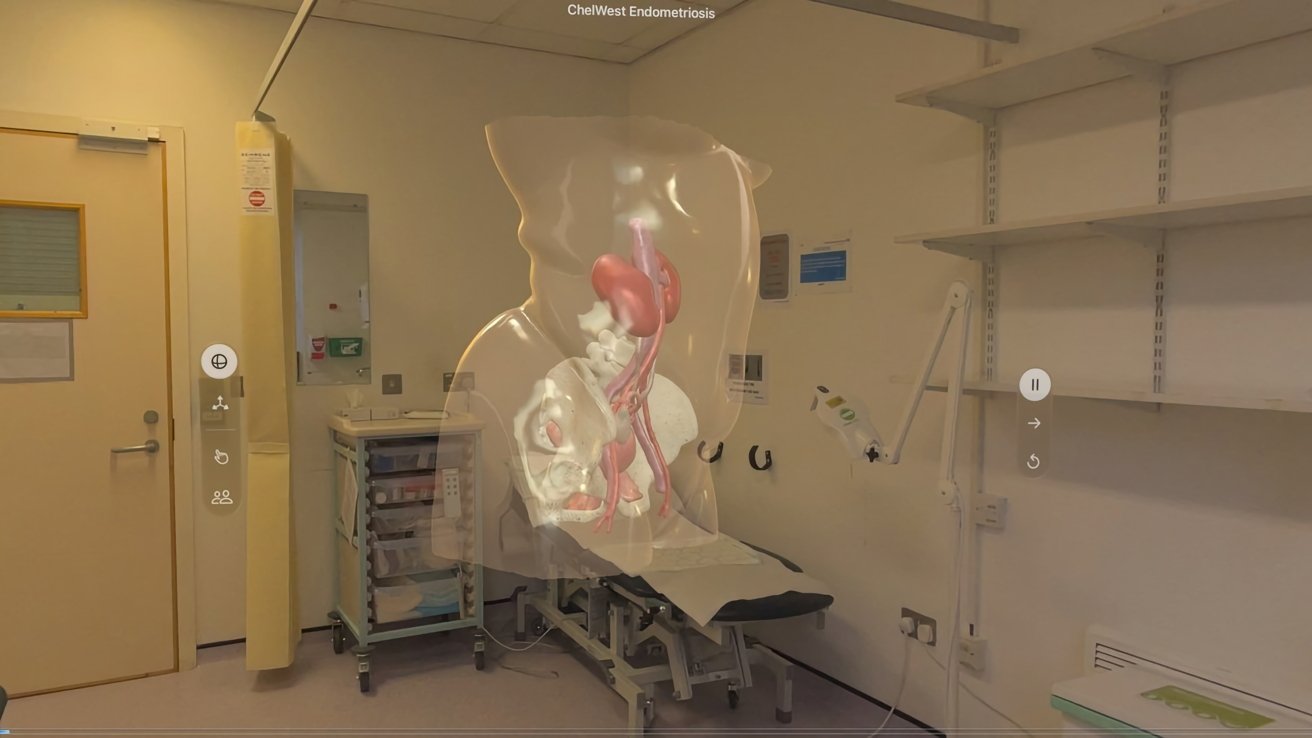
The Apple Vision Pro is being used to help patients in a UK hospital visualize upcoming surgeries, expanding the headset’s use in medicine.
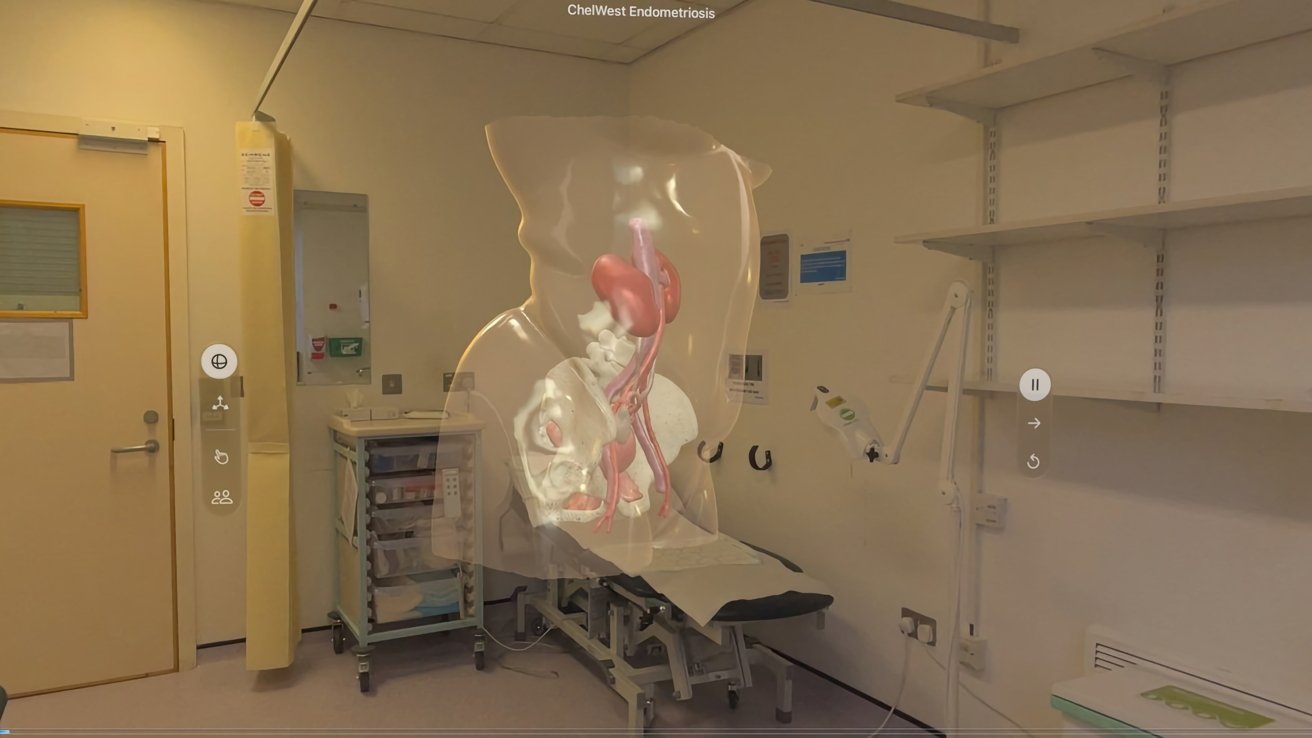
A patient view from the Apple Vision Pro in a pre-surgery consultation – Image credit: Chelsea and Westminster Hospital
One of the problems with medical procedures is explaining what needs to be done to the patients, in a clear and understandable manner. To help some patients suspected of having endometriosis, the Apple Vision Pro is coming into play. An app developed by Medical iSight is being used in the Chelsea and Westminster Hospital, London, UK, in preparation for surgery, reportsBBC News. Patients wear an Apple Vision Pro, and are shown an AR model in pre-surgical consultations. Continue Reading on AppleInsider | Discuss on our Forums





















































You must be logged in to post a comment Login