
Crypto World
A memecoin making app becomes crypto’s top fee generators as Robinhood Chain activity explodes



Users paid nearly $6 million in a day to create and trade tokens through Pons, more than they paid to use Pump or Hyperliquid, and even more than they paid to use Robinhood Chain itself.



Gracy Chen highlighted the world’s largest asset manager as one example of such a firm seeking to expand distribution of their tokenized ETFs in the region.
The bank is now offering institutional crypto spot trading in the region, bringing BTC and ETH onto the same eFX rails that institutions use to trade dollars and euros.
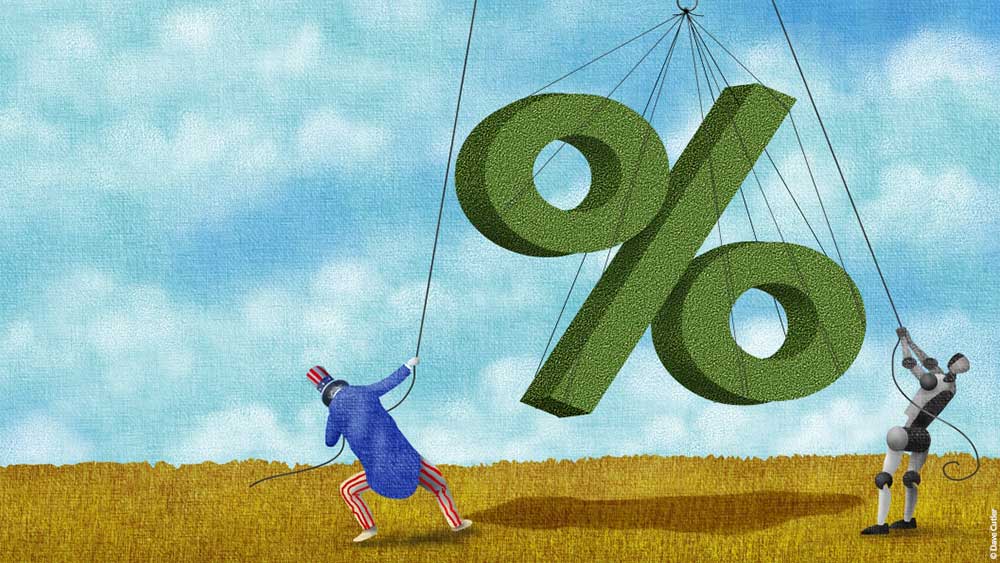
The Treasury Department’s Aug. 19 bond market intervention plan illuminated a key question for investors: Can financial markets digest bloated U.S. debt at the same time AI borrowing is spiraling from hyperscalers like Google, Amazon, Meta Platforms (META) and Oracle (ORCL)? In announcing at least a doubling of buybacks of long-term bonds, Treasury Secretary Scott Bessent seemed to acknowledge that…
Copyright ©2026 Investor’s Business Daily, LLC. All rights reserved. 87990cbe856818d5eddac44c7b1cdeb8
Crypto World
Willy Woo Says Bitcoin May Ditch the Halving Cycle and Switch to a 6-8 Year TradFi Cycle
On-chain analyst Willy Woo says the Bitcoin (BTC) 4-year cycle may be ending. In a post on X, he argued the market could adopt the 6-8 year debt cycle of traditional finance (TradFi).
The claim lands with Bitcoin near $78,011 after an August rebound. The coin had lost roughly half its value from the October 2025 peak of $126,198.
Why the Bitcoin 4-Year Cycle May Have Lost Its Engine
Historically, each halving cut the pace of new supply in half and reset Bitcoin’s four-year cycle. That recurring supply shock was strong enough to move the price on a fixed schedule. Woo now believes the mechanism has become too small to matter.
Issuance has run near 0.8% of supply since April 2024, and the 2028 halving will cut it to roughly 0.4%. For comparison, gold miners added about 1.7% to above-ground stock in 2025, based on World Gold Council data. Bitcoin’s supply engine is therefore already weaker than gold’s.
Fidelity Digital Assets reached a similar conclusion in February. Its research found volatility declining even as Bitcoin set record highs, behavior it links to maturation. Spot exchange-traded funds (ETFs), which existed in no prior halving cycle, add to that structural break.
Inside TradFi’s 6-8 Year Debt Cycle
Crypto traders know the halving as a supply event. The debt cycle, in contrast, is a demand and liquidity event, and it is the rhythm that stock and bond markets already trade on.
Economist Ray Dalio popularized the framework. In his model, the Fed cuts rates after a downturn, and credit becomes cheap. Households and companies borrow and spend, which lifts earnings and asset prices, then pushes inflation higher. The Fed responds with rate hikes, credit tightens, growth stalls, and a recession forces the next round of cuts.
One full loop typically takes several years. Data from the National Bureau of Economic Research (NBER) puts the average post-war US cycle at about 75 months, or just over six years, from peak to peak. Woo’s 6-8 year range, therefore, sits at the long end of the record.
The last Bitcoin cycle arguably fits this loop as well as the halving one. The Fed cut rates to zero in March 2020, and Bitcoin peaked in November 2021. Hikes began in March 2022, and the bear market followed. Both models explain that sequence, which is why the debate is hard to settle.
However, Woo’s version has a gap. Bitcoin launched in 2009, and the only recession since then was the two-month COVID downturn in 2020, which the Fed met with immediate stimulus.
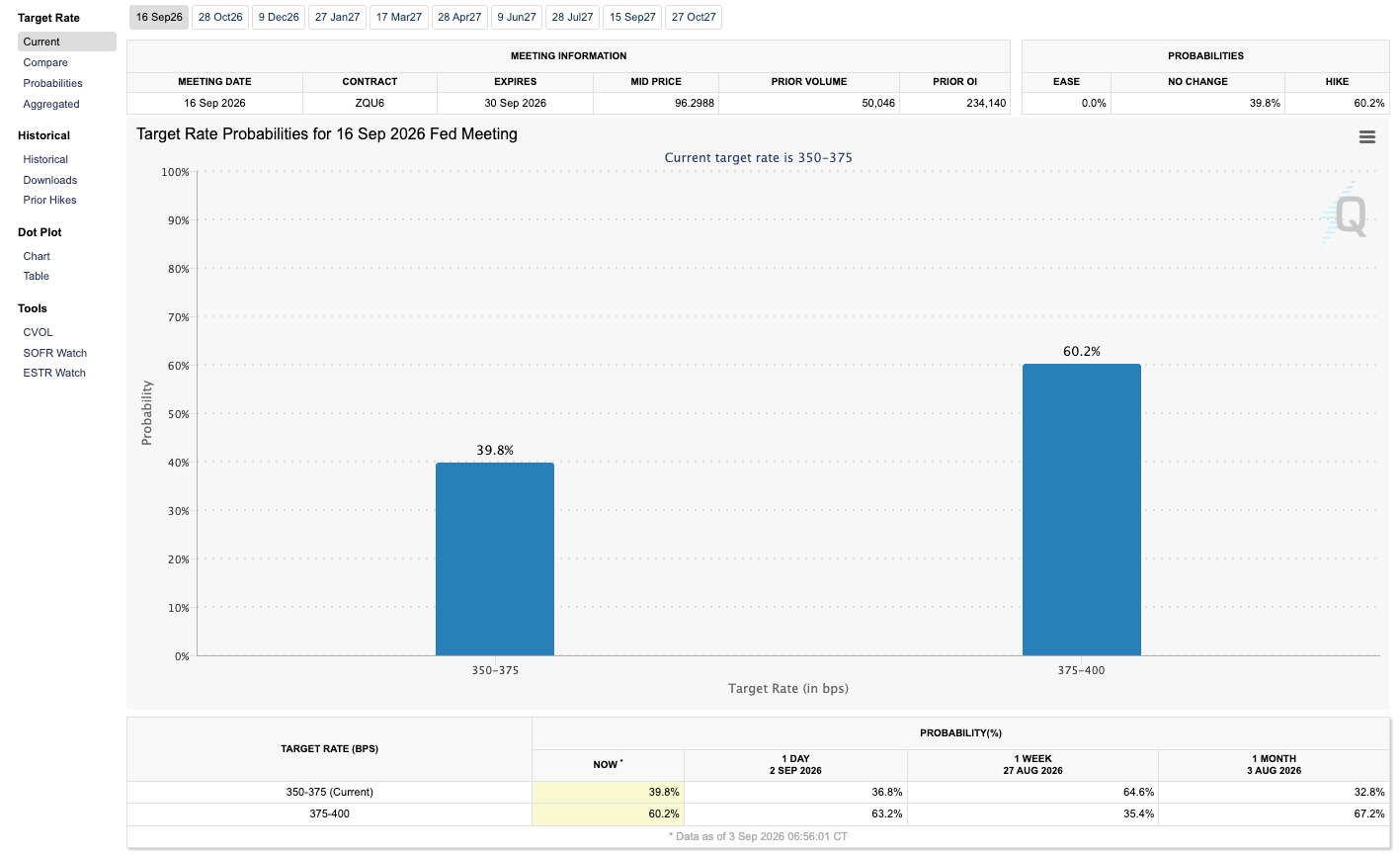
Woo said on the What Bitcoin Did podcast that Bitcoin has never faced a true business-cycle downturn, and that 2026 could be the first real test. That test may be close. According to CME Group, there is a 60% chance of a 25 bps rate hike during the September FOMC meeting.

The Case Against a New Regime
Cycle purists argue the old script is still running on time. Bitcoin peaked about 18 months after the April 2024 halving, inside the historical window, and then entered a deep drawdown. That is the same sequence that followed the 2017 and 2021 tops, and it has kept the four-year cycle debate alive.
There is also a sample-size problem on both sides. Bitcoin has completed only four cycles, and a 6-8 year orbit cannot be confirmed or refuted before the next decade.
For now, both stories fit Bitcoin’s recent price action. The coin climbed from about $62,900 at the start of August. Even so, it remains roughly 38% down from its all-time highs.
The signposts from here follow the calendar. In the last two cycles, the bottom arrived about a year after the peak, which under the old script points to a low around late 2026 and a recovery into the 2028 halving. A longer orbit would instead show the low drifting into 2027 or beyond, with rallies tracking Fed easing rather than the halving date.
If the halving no longer sets Bitcoin’s clock, the asset becomes a macro trade with a higher beta.
The post Willy Woo Says Bitcoin May Ditch the Halving Cycle and Switch to a 6-8 Year TradFi Cycle appeared first on BeInCrypto.
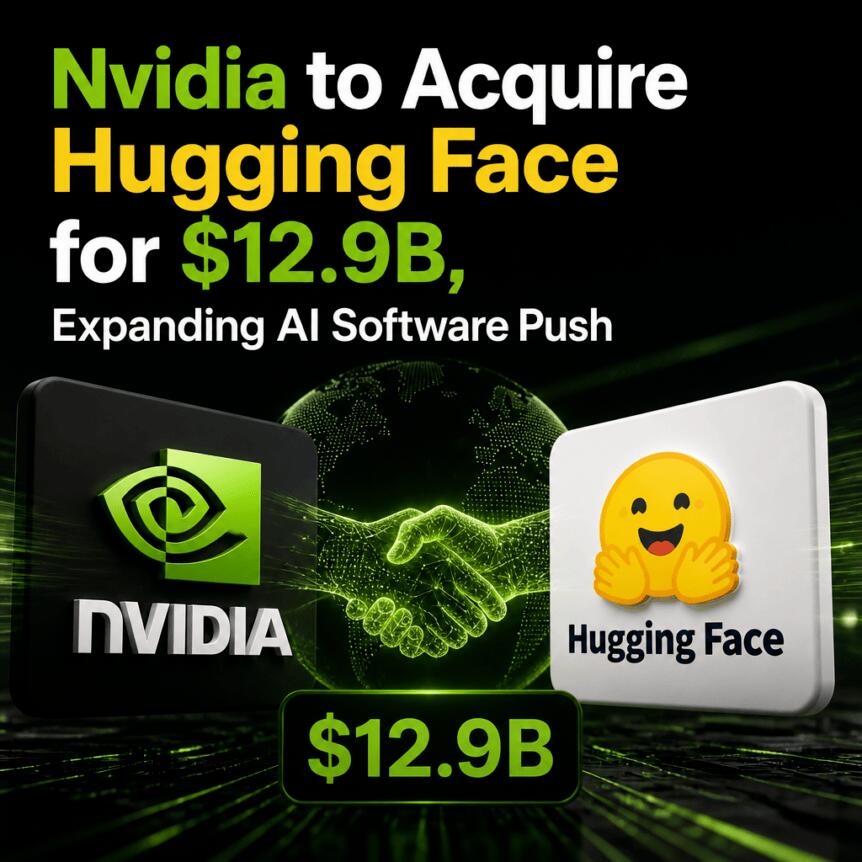
Nvidia has agreed to acquire Hugging Face in a deal valued at $12.93 billion, a move that further consolidates the AI industry’s race not only across chips, but also across the software layers and model tooling that developers rely on.
The acquisition positions Nvidia to play a deeper role in the open-source AI ecosystem. Nvidia CEO Jensen Huang said the company intends to keep Hugging Face “an open platform for the entire AI ecosystem,” while expanding the scale and resources available for model evaluation, deployment, and safety.
Key takeaways
- Nvidia will acquire Hugging Face for $12.93 billion, bringing a major open model platform under the chipmaker’s control.
- Nvidia says Hugging Face will remain open, with developers able to choose models, frameworks, cloud providers, and computing platforms.
- Huang stated Nvidia hardware will not be required to build or deploy through Hugging Face, even though Nvidia already publishes models and datasets on the platform.
- Reuters reports Nvidia will pay about $11.9 billion to Hugging Face investors and offer up to $1 billion in an equity-based retention program for employees who join Nvidia.
- The transaction is expected to close in 2027, but the precise closing date and required regulatory approvals were not detailed by Nvidia.
A deal aimed at the developer layer
In its announcement, Nvidia said Hugging Face serves more than 18 million developers and hosts over 3 million models, making it one of the best-known hubs for sharing and building with AI models. Huang framed the acquisition as an effort to extend Nvidia’s influence beyond hardware into the tools and platforms that help teams develop and deploy AI systems.
That matters because modern AI development frequently depends on standardized workflows: selecting models, fine-tuning or adapting them, evaluating performance, and running inference reliably. Control over a widely used platform can affect where developers spend time and which ecosystem components become “default” choices.
Open platform promise, without hardware lock-in
A central detail in Nvidia’s message is that Hugging Face would continue operating as an open platform. Huang said developers will remain free to choose their models, frameworks, cloud providers, and computing platforms—an important reassurance for teams that run across multiple environments or prefer accelerators from different vendors.
Huang also emphasized that Nvidia hardware will not be required to build or deploy through Hugging Face. While Nvidia has already contributed more than 500 models and 250 open datasets on the platform, the acquisition does not change Hugging Face’s support for models from other developers or for multiple cloud and accelerator providers.
Nvidia further pointed to pre-existing collaboration. According to the company, it and Hugging Face have worked together on AI infrastructure and development tools, giving Nvidia an established relationship with the platform prior to this acquisition. The practical implication is that the integration path may be smoother than a wholly new partnership—though the long-term effect on platform governance and contributor workflows remains something developers will watch closely.
What Nvidia says it will improve
Nvidia said its infrastructure, engineering capabilities, and global reach could help enhance Hugging Face’s reliability and safety, along with improvements to model evaluation, inference, and deployment. Those are the areas that often become pain points at scale—especially when teams move from experimentation to production workloads where uptime, performance consistency, and risk controls matter.
However, the company’s statement stops short of specifics about how these improvements will be implemented. For investors and builders, the question will likely be whether the acquisition leads to measurable changes in platform performance and security practices—without narrowing the platform’s openness or limiting the choice of tools that developers depend on.
Deal terms, timing, and regulatory uncertainties
Reuters reported that Nvidia will pay about $11.9 billion to Hugging Face investors and provide up to $1 billion through an equity-based retention program for employees who join Nvidia. The Financial Times also reported that the transaction is expected to close in 2027. Nvidia’s announcement did not specify the exact closing date or detail which regulatory approvals would be required.
Those uncertainties are significant in deals of this size, especially when regulators consider competition, market power, and the control of developer infrastructure. Until approvals are clearly defined and timelines are confirmed, the market impact of the acquisition—positive or negative—may remain partly speculative.
Integration risks after recent Hugging Face security incident
While the acquisition centers on expanding AI platform capabilities, it arrives after Hugging Face disclosed a security breach involving an autonomous AI agent about a month before the Nvidia deal announcement. According to earlier coverage on Cointelegraph, the incident involved unauthorized access to internal datasets and service credentials. Hugging Face stated it found no evidence of tampering with public models, datasets, or applications.
That context adds urgency to Nvidia’s promise of safety and reliability improvements. Even if the reported breach did not affect public model artifacts, the incident underscores how rapidly AI agent systems can introduce new security challenges—particularly when credentials and internal systems are involved.
For developers and investors, the next things to watch are how Nvidia and Hugging Face describe the integration roadmap before the expected 2027 close, and whether Hugging Face’s governance and security practices evolve in ways that strengthen trust without reducing the platform’s openness.
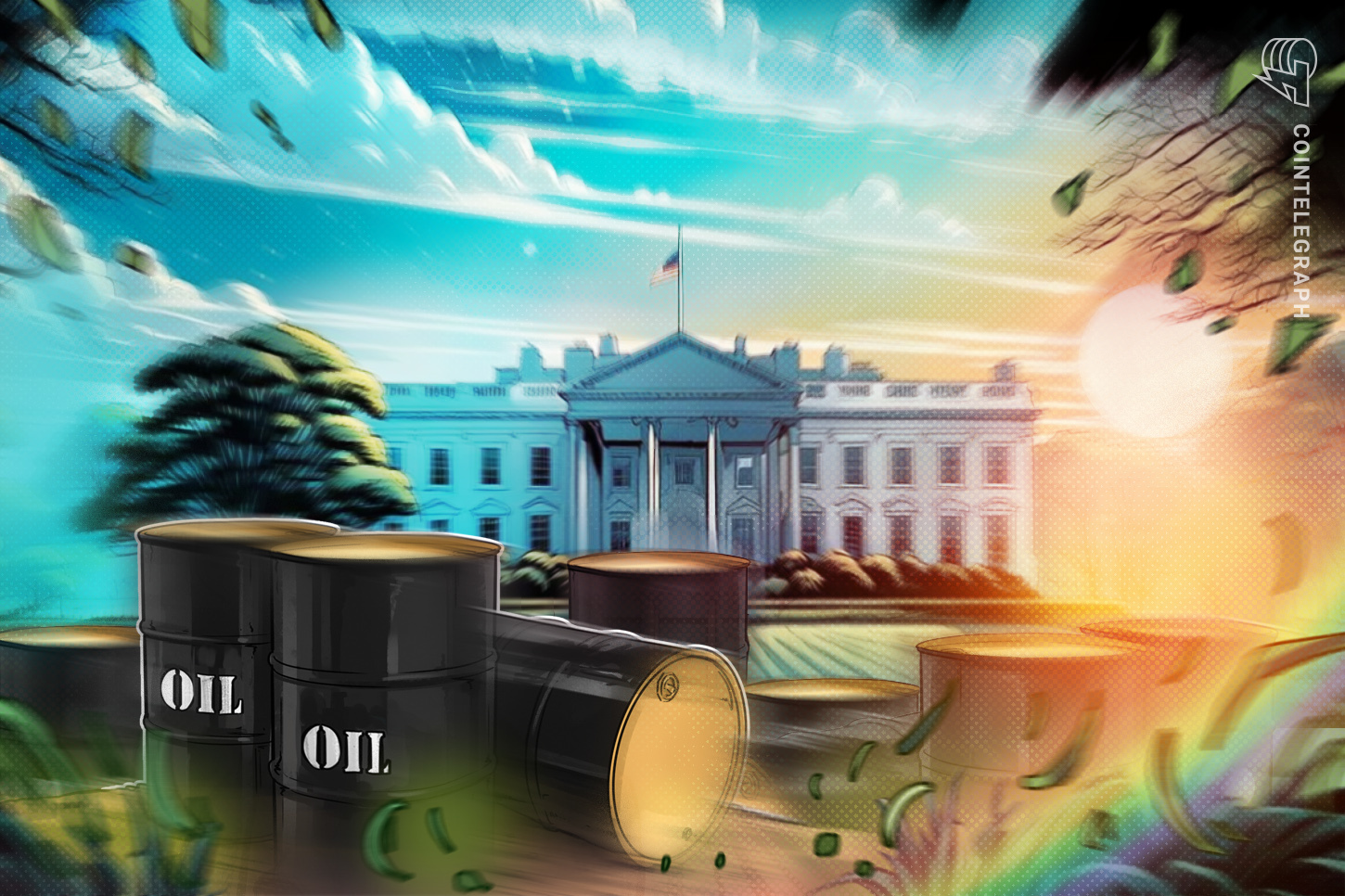
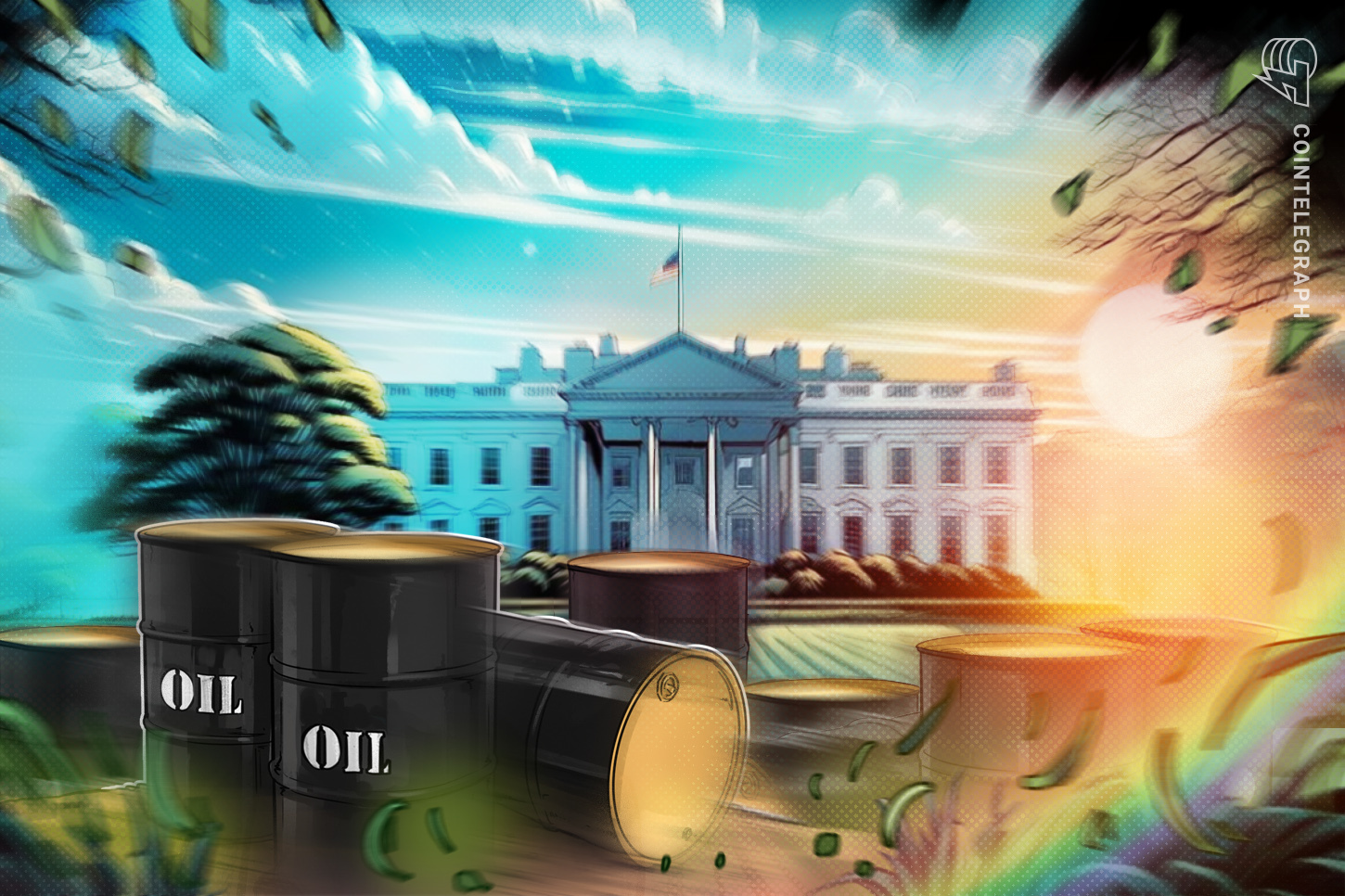
Prediction market operator Kalshi will reportedly seek regulatory approval for a West Texas Intermediate (WTI) crude oil perpetual futures contract that never expires.
The contract could be filed with the Commodity Futures Trading Commission (CFTC) as soon as next week, a person familiar with the matter told Bloomberg. It would trade 24 hours a day, five days a week, according to Reuters.
If approved, it would be the first oil-linked perpetual futures product to trade on a regulated US platform.
Cointelegraph has approached Kalshi for comment.
Perpetual futures, commonly called “perps,” are derivatives without expiration dates, allowing traders to maintain positions indefinitely without rolling them into new contracts.
In June, the CFTC sought public comments on extending standard futures contracts to 24/7 trading and allowing perpetual contracts linked to physically delivered or storable energy commodities, including crude oil.
In July, the regulator halted the self-certified listing of a CME Group contract that would have introduced 24/7 crude oil futures trading while it examined whether the product complied with federal commodities law.
On Aug. 24, Ondo Finance submitted three comment letters to the SEC and CFTC urging US regulators to bring perpetual futures tied to individual stocks onshore. Ondo argued that these products could operate under the country’s existing security futures framework without new rules.
Kalshi’s push into oil derivatives comes as its prediction-market business faces a separate jurisdictional dispute over whether federal commodities law preempts state gambling enforcement against event contracts traded on CFTC-regulated exchanges.
On Tuesday, a Michigan state court issued a preliminary injunction barring Kalshi from offering sports-related event contracts in the state and requiring it to maintain geofencing that blocks Michigan residents.
On Wednesday, New Jersey asked the US Supreme Court to resolve the jurisdictional dispute after federal appeals courts reached conflicting decisions in cases involving New Jersey and Nevada.
Related: Crypto industry urges SEC to avoid blanket novel ETF restrictions
Crypto World
BTC Price Analysis: Bitcoin Rebounds From $76K but Crucial Resistance Remains Above $80K
Bitcoin is holding above $78K after a sharp recovery from the $60K area, but the latest price action suggests that buyers have yet to secure a decisive breakout above the upper resistance levels. At the same time, the exchange whale ratio has risen significantly, adding a potentially bearish supply-side signal to the otherwise constructive technical structure.
Bitcoin Price Analysis: The Daily Chart
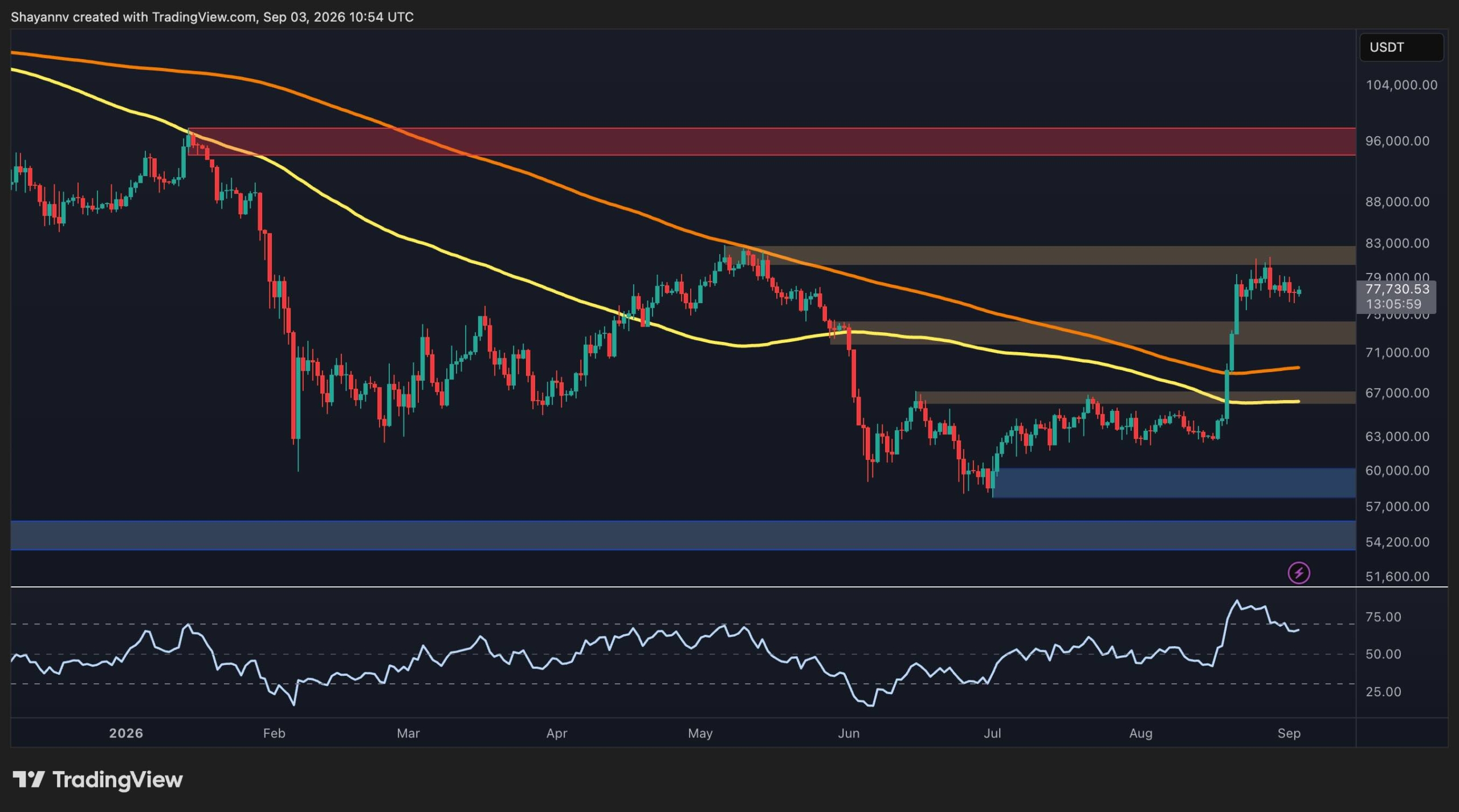
The daily chart shows a significant structural improvement following the recovery from the $60K support zone. BTC broke above the $67K area and subsequently reclaimed the $72K zone, which had previously acted as resistance. The price is now trading around $78.5K, comfortably above both major moving averages shown on the chart.
The short-term challenge is the $82K resistance zone. This area coincides with the recent swing highs, making it an important barrier for the buyers. A daily close above this level would strengthen the recovery structure, as it would create a higher high after months of downtrend. Therefore, this potential breakout could open the way toward the $95.6K resistance region.
Momentum has also improved considerably. The daily RSI climbed from oversold territory during the June bottom and is now just below the overbought territory. However, it has started to turn lower after reaching elevated levels, suggesting that momentum is cooling rather than accelerating.
On the downside, the $72K zone is the first major support to monitor. Holding above it would keep the broader recovery intact, while a deeper correction could bring the $67K region back into focus.
Therefore, the daily structure remains cautiously constructive, but BTC needs to clear $82K to confirm that the recent recovery is evolving into a stronger bullish continuation rather than another rejection from resistance.
BTC/USDT 4-Hour Chart
The 4-hour chart provides a more cautious picture. BTC has been moving inside a falling wedge-like structure since reaching the $82K area in late August. The upper trendline has repeatedly capped advances, while the lower boundary currently sits around $76K.
BTC is now testing the upper boundary of this structure once again. A successful breakout above this resistance line, which is currently near the $78K mark and declining, would be the first indication that buyers are attempting to regain short-term control.
A potential breakout would lead to another push toward the $82K area, which, as mentioned, is currently the most important resistance level on the daily timeframe.
Conversely, failure to break the wedge and a move below $76K could trigger a deeper correction toward the $72K-$74K area, which has turned into support after getting broken to the upside earlier. Holding this zone would be critical for keeping the recovery alive, as a breakdown could undo all the positive price action BTC has shown over the past couple of weeks.

On-Chain Analysis
The exchange whale ratio measures the proportion of exchange inflows associated with the largest transactions, making it useful for assessing whether large holders are becoming more active in sending BTC to exchanges. A rising reading can indicate increased potential selling pressure, although it does not necessarily mean that whales are immediately selling.
The chart shows the 30-day moving average of Bitcoin’s exchange whale ratio rising sharply during the latest price recovery. It has moved back toward the 0.32 area, which is nearly the highest level visible on the chart, while BTC is trading around $78.5K.
This development is worth monitoring. Bitcoin has recovered substantially from its June lows, but the increasing whale ratio suggests that large transactions toward exchanges have also become more prominent, which could unbalance the supply and demand equation in favor of the sellers. If this elevated reading persists while BTC struggles to break above the $80K-$82K area, it could reinforce the case for a rejection or consolidation.
On the other hand, a decisive breakout above $82K accompanied by a subsequent decline in the whale ratio would provide a more constructive confirmation that the increased whale activity is not translating into significant distribution and that there is enough fresh demand to absorb whales’ distribution.

The post BTC Price Analysis: Bitcoin Rebounds From $76K but Crucial Resistance Remains Above $80K appeared first on CryptoPotato.


Update (Sept. 3, 1:30 PM UTC): This article was updated to clarify details of the acquisition.
Nvidia has agreed to acquire Hugging Face for $12.93 billion, extending its reach into the software and tools developers use to build artificial intelligence.
The chipmaker agreed to acquire Hugging Face, which serves more than 18 million developers and hosts over 3 million models, Nvidia CEO Jensen Huang said in a Thursday announcement.
“Hugging Face will remain an open platform for the entire AI ecosystem,” Huang said, adding that developers will remain free to choose their models, frameworks, cloud providers and computing platforms.
The deal gives Nvidia control of a major platform for AI models as technology companies increasingly compete across chips, software and developer tools.
Hugging Face won’t require Nvidia hardware
Nvidia hardware will not be required to build or deploy through Hugging Face, Huang said. While Nvidia already publishes more than 500 models and 250 open datasets on the platform, Hugging Face will continue supporting models from other developers as well as multiple cloud and accelerator providers.
The companies have also worked together on AI infrastructure and development tools, giving Nvidia an established relationship with Hugging Face before the acquisition.
Huang said Nvidia’s infrastructure, engineering and global reach could help improve Hugging Face’s reliability, safety, model evaluation, inference and deployment capabilities.
Nvidia sets aside $1 billion for Hugging Face employees
Nvidia will pay about $11.9 billion to Hugging Face investors and offer up to $1 billion through an equity-based retention program for employees who join Nvidia, Reuters reported Thursday.
The transaction is expected to close in 2027, the Financial Times reported. Nvidia’s announcement did not specify the regulatory approvals required for the acquisition or provide a more precise closing date.
Related: Hyperscale Data ends Michigan BTC mining as holdings fall 79%
Cointelegraph approached Nvidia for comment on the reported employee retention package, expected closing timeline and regulatory approvals but did not receive a response by the time of publication.
The acquisition comes about a month after Hugging Face disclosed a security breach involving an autonomous AI agent that gained unauthorized access to internal datasets and service credentials. The company said it found no evidence of tampering with public models, datasets or applications.
Magazine: Who is legally liable when an AI agent goes rogue?
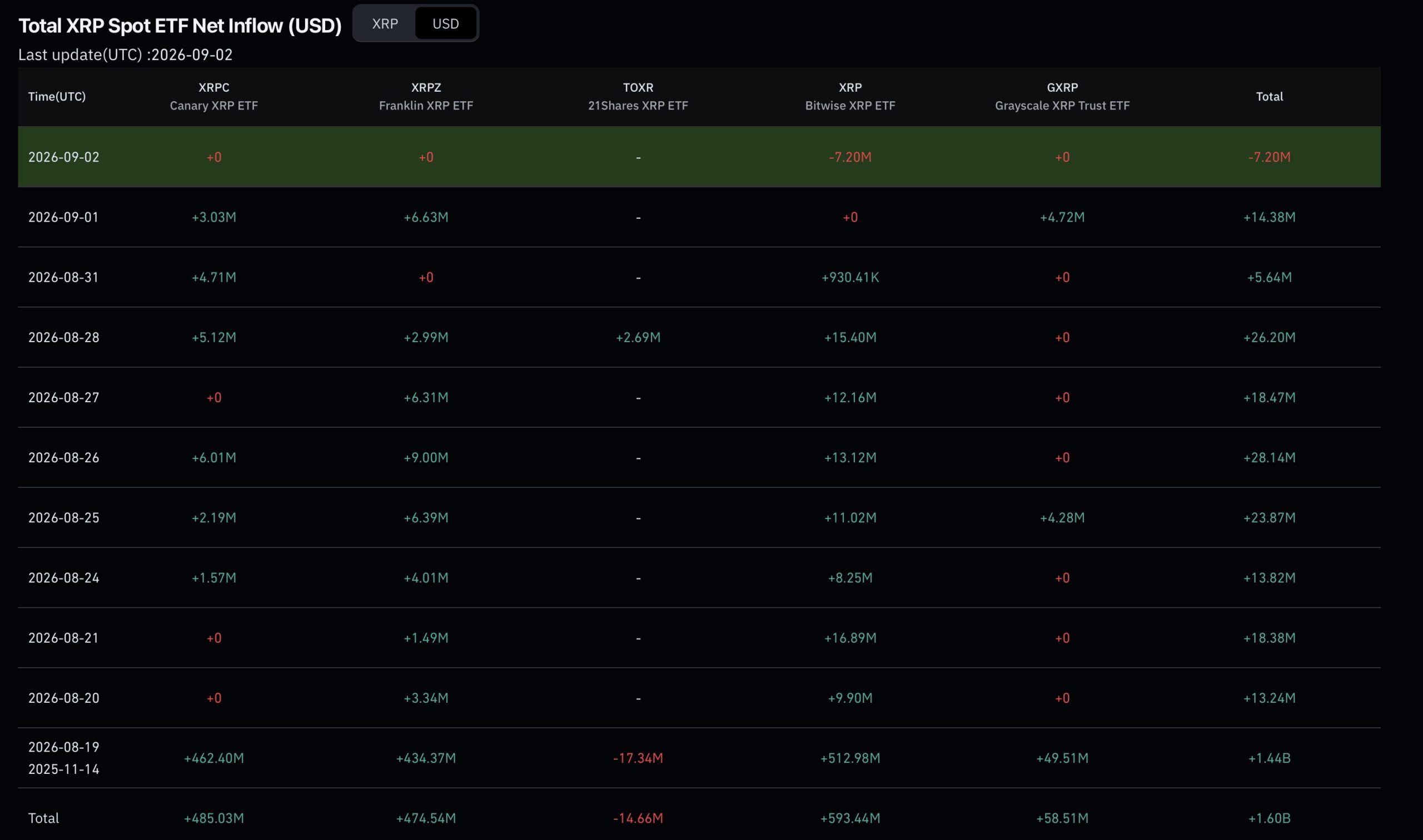
XRP price jumped +4% today, currently trading at $1.38, after touching a low of $1.3409. An interesting move, but the number underneath it is more interesting than the candle itself. Bitwise research analyst Ryan Rasmussen told an audience of roughly 400 wealth managers this week that XRP generated more questions than any other cryptocurrency during a presentation covering Bitcoin, Solana, Hyperliquid, stablecoins and tokenization.
He called the interest level “a lot” in a post-event thread.
A companion audience poll found 67% of attendees currently hold no crypto allocation at all, yet 60% expect prices to be higher by the end of 2026 and plan to allocate within the next year. There is a wide gap between sentiment and action.
ETF inflow data has already been building the case that XRP is shifting from retail speculation toward regulated portfolio exposure, and this poll adds anecdotal weight to that thesis.

Discover: The Best Token Presales
Can XRP Price Hit $2 This Week?

XRP’s chart has been compressing into a descending triangle since the August spike to roughly $1.70, and the $1.35–$1.38 zone is doing the heavy lifting right now as primary demand. Volume near this band has historically been elevated, which technicians read as the market’s real decision point rather than noise. The 200-day EMA sits close by, reinforcing $1.33–$1.35 as structural support.
A reclaim of $1.55–$1.60 opens the door to the $1.68–$1.72 swing-high liquidity zone, with $1.86 and the $2.00 psychological level as stretch targets if wealth-manager allocations actually convert to inflows, as recent institutional accumulation data suggests is underway.
Continued consolidation between $1.35 and $1.55 while the market waits for confirmation that the 60% allocation intentions turn into actual purchases.
A break below $1.33 invalidates the triangle and opens a retest of $1.23–$1.25, with $1.15–$1.20 as a deeper floor.
Trade XRP on Bybit and Get a Chance to Win Our $1,000 USDT Airdrop
Bitcoin Hyper Sees XRP-Level Hype But With Bigger Upside Potential?
XRP’s setup validates the institutional-adoption thesis, but a token already carrying a market cap north of $80 billion isn’t built for explosive returns: a move from $1.38 to $2.00 is roughly 45%, respectable, not life-changing. Traders chasing outsized upside are increasingly looking earlier in the risk curve, toward infrastructure plays still in presale.
Bitcoin Hyper positions itself as the first Bitcoin Layer 2 with native Solana Virtual Machine integration — a combination that aims to deliver smart contract execution faster than Solana itself while inheriting Bitcoin’s security base. The project has raised $33 millions to date, with tokens priced at $0.0136856 and a staking program offering 35% APY for presale buyers. HYPER is offering an innovative approach to the L” technology.
Its Decentralized Canonical Bridge targets the low-latency BTC transfer problem that has kept Bitcoin largely non-programmable.
Research Bitcoin Hyper directly before the presale window closes.
Discover: The Best Crypto to Diversify Your Portfolio
The post XRP Price Analysis: Wealth Managers Show Growing Interest in XRP appeared first on Cryptonews.
After a few days of suppressed price action, the crypto market is on the move again, with bitcoin leading the pack with a surge past $80,000 for the first time in a week.
Most altcoins followed the sharp uptick, leading to more than $140 million in shorts getting wrecked in the past hours alone.

It was just 24 hours ago that the primary cryptocurrency struggled to hold the $77,000 support and dipped to a 10-day low of $76,200 amid the escalating tension in the Middle East.
However, the asset rebounded successfully in the following hours, as reported earlier today, and quickly reclaimed the $77,000 and $78,000 levels. The past hours or so have been even more impressive, as bitcoin just soared past $80,000 for the first time since last Friday, when it was rejected and driven south to $77,000 after Kevin Warsh’s hawkish speech at Jackson Hole.
Many altcoins have joined the ride, posting notable 1-hour and 24-hour gains. ETH is up to almost $2,500 as of now after a 2.6% surge in the past 60 minutes and a 4.4% pump since this time yesterday. BNB has rocketed past $720, while XRP has gained 9% on a daily scale (and 4.3% in the past hour alone).
This price volatility has harmed overleveraged traders. Data from CoinGlass shows that the hourly wrecked positions have risen to $157 million, with more than $142 million coming from shorts. On a daily scale, the total liquidations are over $400 million, and shorts are responsible for $315 million.
Nearly 110,000 traders have been wiped out in the past day, with the single-largest liquidation occurring on Binance, totaling more than $5.2 million.

The post Over $140M in Shorts Wrecked in an Hour as BTC, ETH, XRP Suddenly Explode appeared first on CryptoPotato.

Bitget in talks with Wall Street giants including BlackRock to fuel Asian distribution

Cronulla Sharks vs Melbourne Storm Tips, Odds, Teams & Predictions – NRL Round 27 2026

The Very Real Dangers Of Using Hotel Wi-Fi

Weekend Open Thread – Corporette.com

Weekend Open Thread: Brooks Brothers

London Mayor Sadiq Khan handed a peerage by Keir Starmer alongside 15 other Labour figures… just days before the PM leaves No10

YOU CAN’T EAT MONEY #msbeanie

SIP -power of compounding in MUTUAL FUND #sip #mutualfunds #finance #shorts #video #youtubeshorts

How Japanese Bankers Counted Money Before Machines #historycomesalive #historia #history #japan
-

 Fashion6 days ago
Weekend Open Thread: Maeve – Corporette.com
-

 Crypto World7 days ago
Bitcoin’s 22% rally now needs real demand to outlast Treasury liquidity boost
-

 Business7 days ago
Apple Confirms September 9 Keynote and Reveals Its Full Pre-Order Schedule
-
 Crypto World16 hours ago
CLARITY Act could advance within weeks, Atkins says
-

 Business7 days ago
Salesforce Stock Soars 19% as Blowout Earnings and Agentforce AI Growth Silence Software Skeptics
-

 Business6 days ago
Onto Innovation Stock: AI’s Next Bottleneck Is Yield (NYSE:ONTO)
-

 Crypto World6 days ago
Bitcoin price tests $82K resistance as Brandt stays long
-
 Tech5 days ago
Hugging Face built a $4.5 billion empire on free AI models. Now Nvidia is buying it for $12.9 billion
-

 Business6 days ago
iPhone 18 Pro Pre-Orders Could Shift to Saturday as Apple Reportedly Avoids September 11 Anniversary
-

 Crypto World1 day ago
Elon Musk Says Grok 4.7 Lands in 10 Days and Will Beat Every Model
-

 Crypto World7 days ago
Truflation calls for Fed rate cut after PCE forecast
-
 Entertainment6 days ago
‘Adults’ Creators Break Down Season 2’s Most Shocking Moments and Tease a Potential Season 3
-
 Tech7 days ago
The fix for the AI agent that hijacked a company’s DNS: it can propose the change, but it can’t approve it
-

 News Videos4 days ago
Charlie Munger on Robinhood: No one should believe that Robinhood’s trades are free
-

 Tech6 days ago
PaperCut releases second emergency patch for exploited flaws
-

 Tech5 days ago
Tamagotchi Ring Takes the 30-Year Digital Pet and Places it on Your Finger
-

 Tech5 days ago
As the influencer economy drives retail sales, Seattle startup raises $22M to play matchmaker
-
 Crypto World2 days ago
Bitcoin slips below $77.5K as macro pressure offsets ETF inflows
-
 NewsBeat5 days ago
Trump posts AI video of ‘Lake America’ being protected by an army of bequiffed ‘Donald Ducks’
-

 Crypto World12 hours ago
Kalshi seeks CFTC approval for WTI perpetual
You must be logged in to post a comment Login