
Politics
Gloria Steinem Life And Career: 6 Defining Moments Of The Iconic Feminist

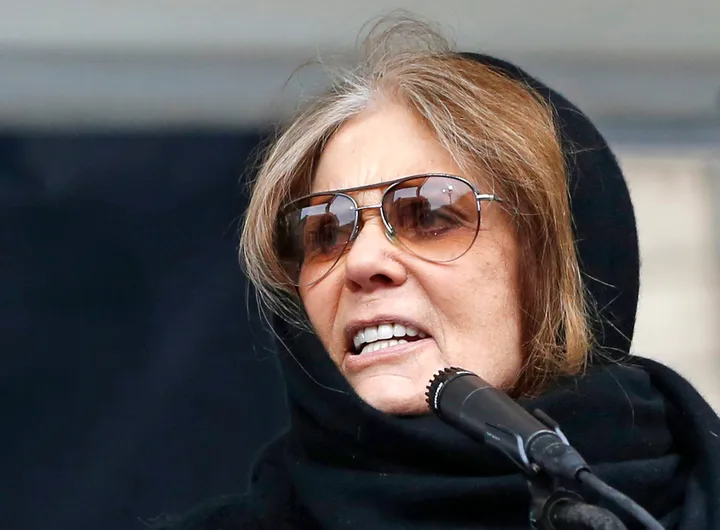
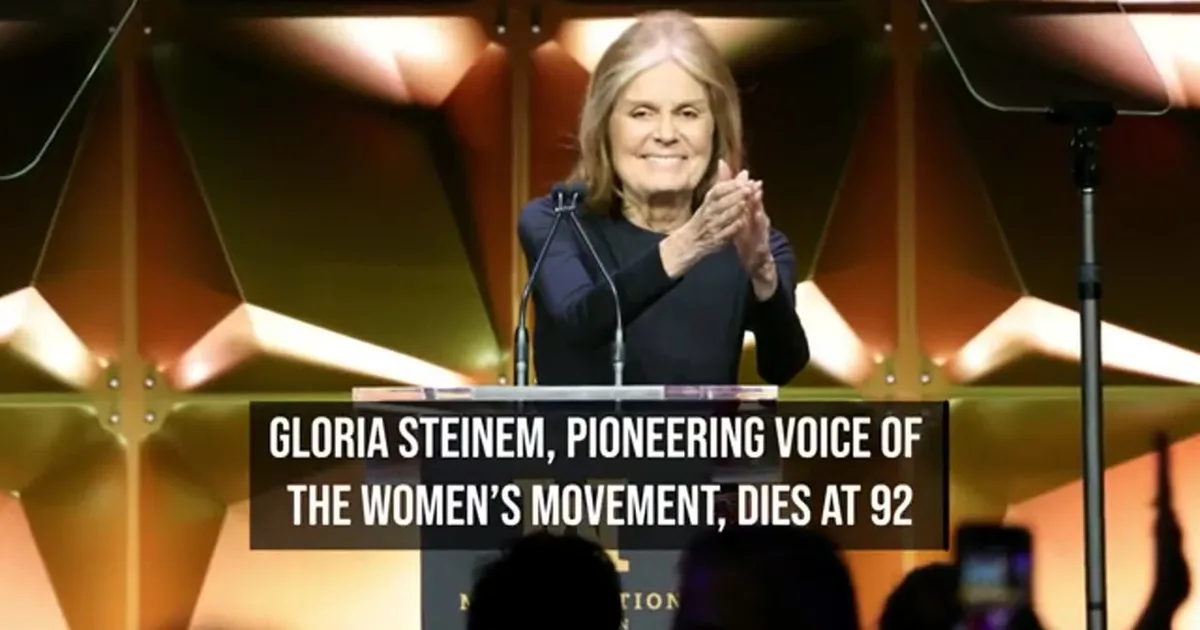
Writer, activist and feminist trailblazer Gloria Steinem has died at the age of 92.
Her spokesperson confirmed that, on 2 September, she passed “peacefully at her home in New York City, surrounded by some of the many who loved her”.
Paying tribute, they wrote on Instagram: “Gloria’s near-century on earth were years well-lived, and she continued working for equality until the very end.
“Gloria’s greatest gift was her ability to listen to others, to make others feel seen and heard.
“Her words, actions, and example gave people permission to be their truest selves. Gloria lived true to her independent spirit, always with curiosity and a great sense of humour.”
Here are six of the defining moments from her life and career, many of which go to show what a pivotal figure she was in amplifying the second-wave feminist movement and ensuring women’s voices were heard.
1. She went undercover as a Playboy Bunny in the 1960s – and wrote an article all about it
Trying to carve out as career as a journalist was no mean feat for a woman in the 1950s and 60s, however Steinem persevered and gained national attention in ’63 when she went undercover as a Playboy Bunny and penned a two-part series for Show magazine on what it was really like for women to work at the Playboy Club, including what they were paid and some of the sexist practices that went on behind the scenes.
2. She penned ‘After Black Power, Women’s Liberation’ for New York Magazine in 1969
In April 1969, Steinem connected the fight for racial equality to that of gender equality in a New York Magazine essay which won her national attention and helped to spread feminist ideas outside of small activist bubbles and into wider public awareness.
3. Steinem co-founded the National Women’s Political Caucus
The National Women’s Political Caucus (NWPC) was founded in 1971 by Steinem and fellow activists Shirley Chisholm; Betty Friedan; Fannie Lou Hamer and Bella Abzug, with an aim of identifying, recruiting, training and supporting women candidates for elected and appointed office in the United States.
In 1971 there were 15 women in US Congress, which rose to 150 women in 2026. Similarly, there were just seven female Mayors of cities with a population of over 30,000 people in 1971, compared to 428 in 2026.
4. She co-founded feminist publication Ms Magazine
In 1972, Steinem launched Ms Magazine, a national feminist publication, as she put it, “for those of us who had the radical idea that women are people”. The magazine covered topics typically unexplored in traditional women’s glossies, such as domestic abuse, sexual harassment, abortion, race and sexuality.
Reflecting on the publication’s success back in 2022, Steinem said: “The response was shocking … It sold out in eight days.”

5. She advocated strongly for reproductive rights
Steinem was a firm believer that women should have control over their bodies and reproductive choices. She opened up about her own abortion, at the age of 22, and even dedicated her book, My Life On The Road, to the London physician Dr John Sharpe, who carried out her abortion back when it was illegal to do so.
In 2011, she told The Guardian: “It [abortion] is supposed to make us a bad person. But I must say, I never felt that. I used to sit and try and figure out how old the child would be, trying to make myself feel guilty. But I never could!
“I think the person who said: ‘Honey, if men could get pregnant, abortion would be a sacrament’ was right. Speaking for myself, I knew it was the first time I had taken responsibility for my own life. I wasn’t going to let things happen to me. I was going to direct my life, and therefore it felt positive.”
6. She repeatedly banged the drum for women’s and girls’ rights and equality
She has spoken publicly at hundreds of events over the years, including the Women’s March on Washington in 2017, all of which helped project women’s rights and issues into the forefront of discussion.
Per the National Women’s History Museum, she also co-founded: the Women’s Action Alliance, the Women’s Media Center, Voters for Choice and the Ms. Foundation for Women, as well as helping to create Take Our Daughters to Work Day, empowering young girls to learn about career opportunities.
In 2013, she was a recipient of the Presidential Medal of Freedom for her work leading the women’s rights movement.

The post Burnham’s backing of the Chagos deal is a major unforced error appeared first on spiked.
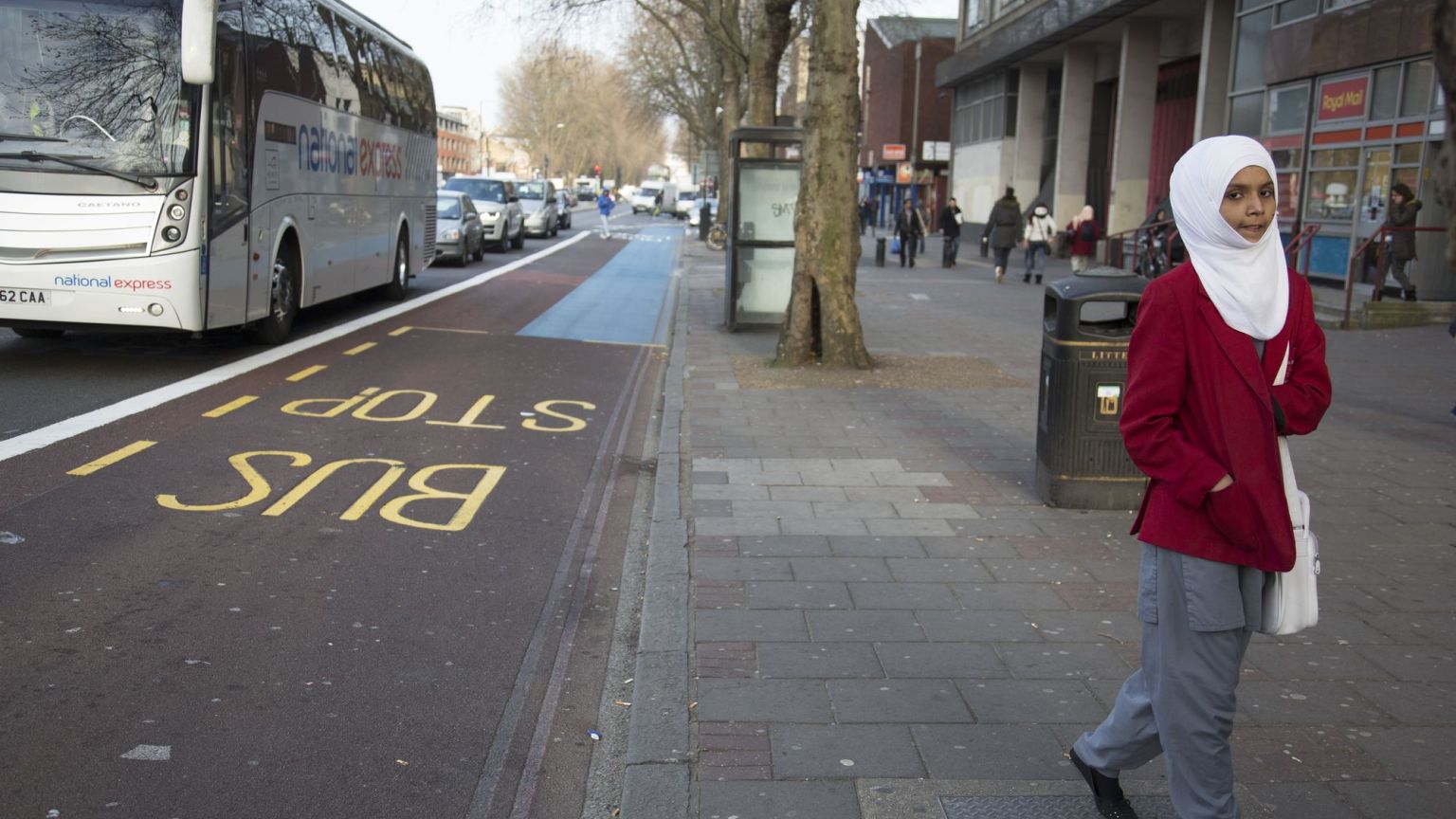
The post Hijabs have no place in a primary school appeared first on spiked.

This article contains major spoilers for the third season of Love Is Blind UK.
If ever there were an argument in favour of Netflix’s Love Is Blind “experiment”, it’d be the third season of the UK edition.
This year, not only did more couples than ever before get engaged in the pods, a record number actually made it down the aisle and said “I do” – all of whom are still together to this day.
However, because of just how much love was in the air on the set of Love Is Blind UK’s third iteration, that meant multiple couples’ romances never actually made it onto our screens.
Among them were Sammy and Jonathan, a wellbeing coach and tech recruiter who met in the pods when filming got underway last year.

Eventually, they were one of the 14 couples who got engaged in the pods, although producers didn’t select them to continue on in the process, meaning it was entirely in their own hands what happened next for their love story.
Ahead of the Love Is Blind UK finale, Sammy and Jonathan shared their journey in an emotional post, revealing that two days after making it back home after filming, things got real for them when they started texting.
Then, a month after getting engaged, they finally met face-to-face for the first time, embarking on a holiday to Malaga together to get to know one another better.
By October, they found themselves in a regular long-distance relationship… albeit one where they’d already agreed to get married before they’d even clapped eyes on each other.

“No pods. No cameras. No producers,” they recalled. “Just us actually figuring out how to be a normal couple after the least normal start imaginable.
“Back to work. Living opposite sides of the country AND secretly engaged, but unable to tell anyone. Let the real experiment begin…”
The post then charted more of the highs and lows of their relationship, including finding out that Sammy was pregnant in April 2026, before suffering a “silent miscarriage” two months later.
Check out their Instagram post for yourself below:
“AND HERE WE ARE,” the post concluded. “Almost one whole year later, we finally get to talk about us.
“We didn’t get picked to continue on Love Is Blind. At the time, that felt like the end of our story. Turns out, it was the beginning of the best bit.
“No cameras. No experiment. No guarantees. We just kept choosing each other. And now you’re finally in on the secret… so, thanks for coming to our VERY hard launch. Follow along for whatever happens next.”
“Petition for Netflix to release our engagement tape starts here,” they joked.
Meanwhile, Sammy also let slip to The Sun that, early on in the process, she almost became embroiled in a love triangle (or, perhaps, love square) with another of this year’s hopefuls.
“As the days went on, Taylor was like my top [choice],” she revealed. “Maybe until, like, day four.
“But as Taylor was starting to come down [in Sammy’s view], Jon was then coming back up.”
She continued: “The first few dates, you just connect with these people. And I think me and Taylor had connected very instantly on the fact that we both lost a parent. And I think that initially connected us.
“And then, as you date more, you start to realise, ‘oh wait, maybe we’re not as compatible as initially we thought’. And the opposite kind of happened with Jon. We had an initial spark, but then as we started to chat more and more, and the dates got longer, the connection just built and built.”
All three seasons of Love Is Blind UK are now streaming on Netflix, with the streaming giant recently giving an update about the franchise’s future.
!function(n){if(!window.cnx){window.cnx={},window.cnx.cmd=[];var t=n.createElement(‘iframe’);t.display=’none’,t.onload=function(){var n=t.contentWindow.document,c=n.createElement(‘script’);c.src=”//cd.connatix.com/connatix.player.js”,c.setAttribute(‘async’,’1′),c.setAttribute(‘type’,’text/javascript’),n.body.appendChild(c)},n.head.appendChild(t)}}(document);(new Image()).src=”https://capi.connatix.com/tr/si?token=19654b65-409c-4b38-90db-80cbdea02cf4″;cnx.cmd.push(function(){cnx({“playerId”:”19654b65-409c-4b38-90db-80cbdea02cf4″,”mediaId”:”cb3982f9-9c9e-4f9d-a047-3ef28a6635c5″}).render(“6a997fe1e4b0bd4d29d2ea99”);});



3 min read
Every government wants growth.
Every government wants growth. But growth is only meaningful if businesses can feel it. As Chair of the APPG for International Trade and Investment, my concern is whether businesses in every postcode across the UK are seeing that ambition translate into opportunity.
A recent report by the APPG for International Trade and Investment titled Navigating the Trade Triangle explores the relationship between the Government’s Modern Industrial Strategy, Trade Strategy and Small Business Plan. Taken separately, each is important. Together, they should provide a path to stronger exports and more resilient businesses. The Industrial Strategy is designed to give businesses confidence about where the UK wants to compete. The Trade Strategy is there to open routes into new and existing markets. The Small Business Plan provides direction for SMEs so that they can access the support they need to grow.
Too often, however, businesses do not experience government policy as a joined-up offer with a clear direction. Our inquiry found that without better coordination, the Trade Triangle risks becoming three good strategies which fail to translate into practical help.
The report is the product of a year-long inquiry that heard from businesses, trade bodies, regional organisations, think tanks and financial providers from across the UK. We held sessions across the country in Teesside, Belfast and Windsor. Indeed, the success of the Government’s growth agenda will be judged in places like those and by the extent to which local businesses can access new markets, attract investment and navigate barriers to trade.
Businesses told us consistently that they want an industrial strategy which provides certainty, a trade strategy that brings opportunities and a small business plan that recognises the realities of life as a small or medium business owner. But they also warned that delivery is complex. Too many businesses do not realise that support is already available, and those that do know about it say that access can be slow and confusing.
This matters because growth is about more than just a measurement of improved GDP. It’s about raising living standards and productivity right across the country. The focus must be on measuring growth in terms of GDP per head, which has been driven by investment and which in turn impacts local economies.
Regional delivery must be at the centre of the Trade Triangle with empowered local institutions capable of translating national policy into practical support. But we must avoid a two-tier system in which businesses in areas with mature devolution settlements receive a clearer route into support, while businesses elsewhere are left navigating a maze. English devolution must be judged not by structures created, but by whether businesses can access the right help at the right time.
The expanded Department for Business, Innovation, Science and Trade has an important convening role here, but every department should play its part. DEFRA should deepen its support for food and farming exporters to reach new markets. DESNZ should back green technology exports. Skills policy should support export-led jobs. The Treasury should consider the impact of taxation, red tape and operating costs on the ability of SMEs to compete.
Ultimately, the call is on government to simplify existing support and to provide clearer guidance on customs and regulatory requirements, along with better promotion of export finance and grants.
If we get the Trade Triangle right, it will amount to more than just three strategies on paper. It will help pave the way to higher productivity, stronger exports and better opportunities for SMEs across the UK.
Politics
The House | “An intensely personal study”: Lord Wallace reviews ‘Cromwell: Parliament’s Crusading Politician’
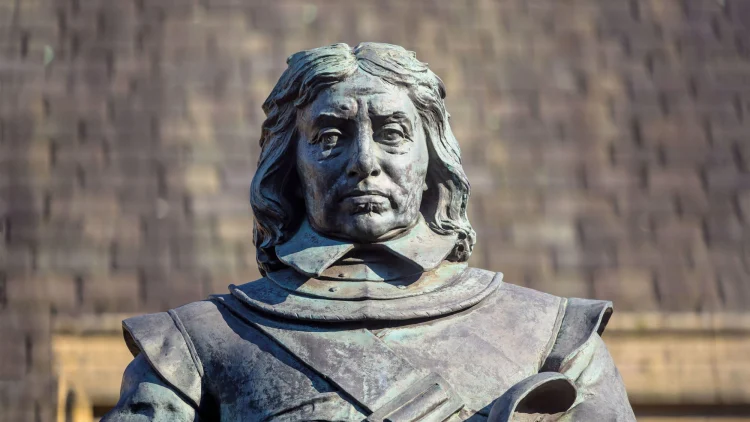
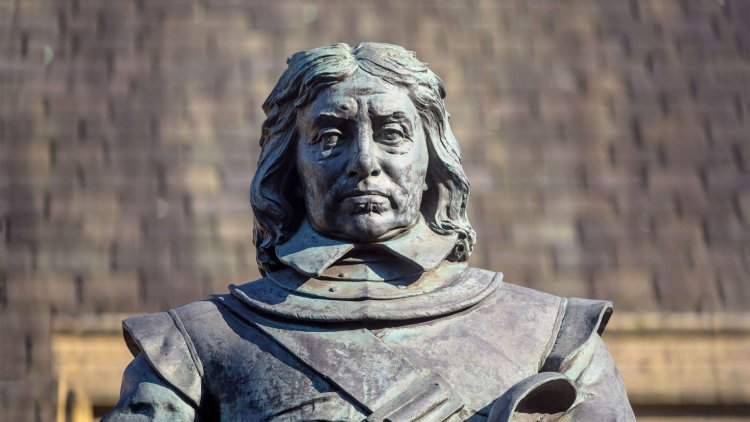
Westminster: 1899 statue of Oliver Cromwell | Image by: PjrStatues / Alamy

4 min read
Rich in fascinating details, committed Cromwellian Lord Naseby has produced a sympathetic portrait of the parliamentary commander
Michael Morris is such a committed Cromwellian that he took the greatest civil war victory as his title when he was nominated to the Lords. As the last sentence of his new book firmly declares, “Oliver Cromwell has always been and will continue to be the guiding inspiration for my entire political life.”
This intensely personal book identifies with Cromwell’s life, faith and hard choices, and seeks to understand them by imagining the difficult decisions that he faced at repeated points in his career, using Lord Naseby’s own lifetime experience as a politician and parliamentarian as comparison. The parallels in their careers, he writes, “lend me, I feel, a truly unique and special perspective” on Cromwell.
Naseby is 14 miles north of Northampton, which Michael Morris represented in the Commons as a Conservative MP for 23 years. After the eponymous battle in 1645, many of the wounded from both sides were treated in churches within his constituency. The author has studied the places Cromwell lived and worked as well as the battlefield, and became patron of the Naseby Battlefield Project Trust.
Naseby is keen to emphasise that Cromwell had been a tenant farmer, civilian and MP until fighting broke out in 1642 – and so it was that, at the age of 43, he and many others were charged with raising troops. His puritan faith, his concern for his men and his involvement in creating the New Model Army, made him a leading commander when others were prevaricating over further offensives against King Charles I. The cavalry charges he led, above all at Naseby, gave him the authority to deliver a firm message to a hesitant Parliament and later to become the ruler of England.
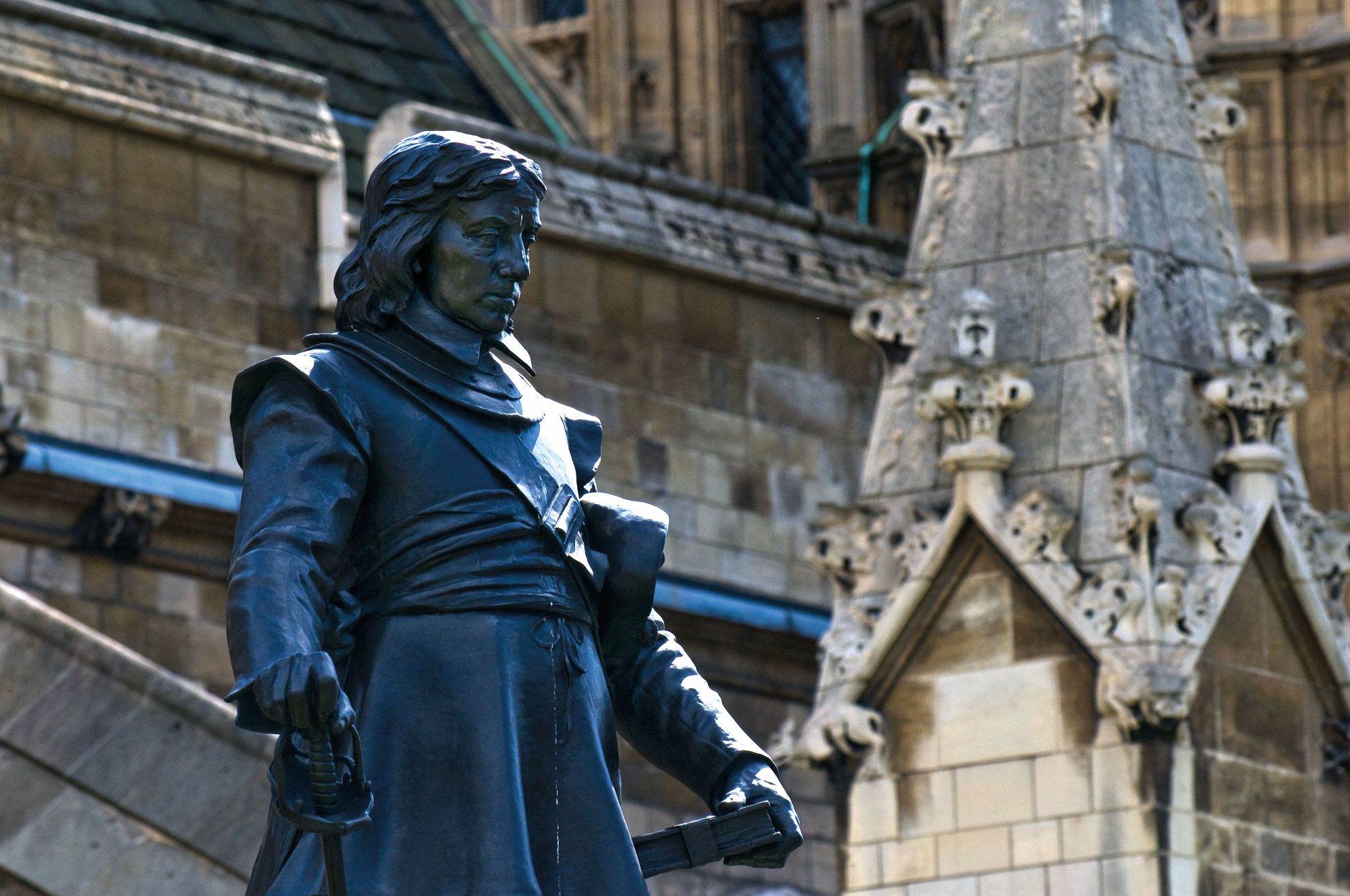
As late as 1894, Conservative MPs voted with Irish members against funding a statue of Cromwell outside Parliament
The core of the book covers the years 1642-49, in which Cromwell is transformed from a backbencher to the commander and defender of the army and the dominant personality in the parliamentarian camp. The description of his activities, dashing from Parliament to take command in suppressing a royalist surge in Wales, then another in Scotland, then back to Westminster to defend the army against proposals to disband many regiments, demonstrated both his determination and his stamina. But Naseby considers it a mistake for Cromwell to have agreed to lead the Irish campaign in 1649, spending six months in bitter fighting rather than shaping the constitutional order for the new Commonwealth.
Naseby’s admiration for Cromwell rests upon his understanding of him as a democrat and a believer in liberty of conscience, and a key figure in the development of our parliamentary democracy. In this he stands out from his party’s tradition; the Tories were royalists and Anglicans. As late as 1894, Conservative MPs voted with Irish members against funding a statue of Cromwell outside Parliament to mark the 300th anniversary of his birth, triggering the collapse of Lord Rosebery’s Liberal government.
 Naseby does not mention that Lord Salisbury then allowed Rosebery to fund the statue himself, though it was unveiled at 7.30am to avoid the risk of Irish protests.
There are a number of other fascinating details in Naseby’s study. We learn that the parliamentary term ‘the other place’ (used in the Commons Chamber when referring to the Lords) originated from Cromwell’s attempt to re-establish a Second Chamber. And that after Charles II sailed back to England on the naval ship Naseby, it was shortly thereafter renamed the Royal Charles.
A staunch parliamentarian throughout his life, Michael Naseby’s book makes plain that he would have fought alongside Cromwell in that cause.
Lord Wallace of Saltaire is a Liberal Democrat peer
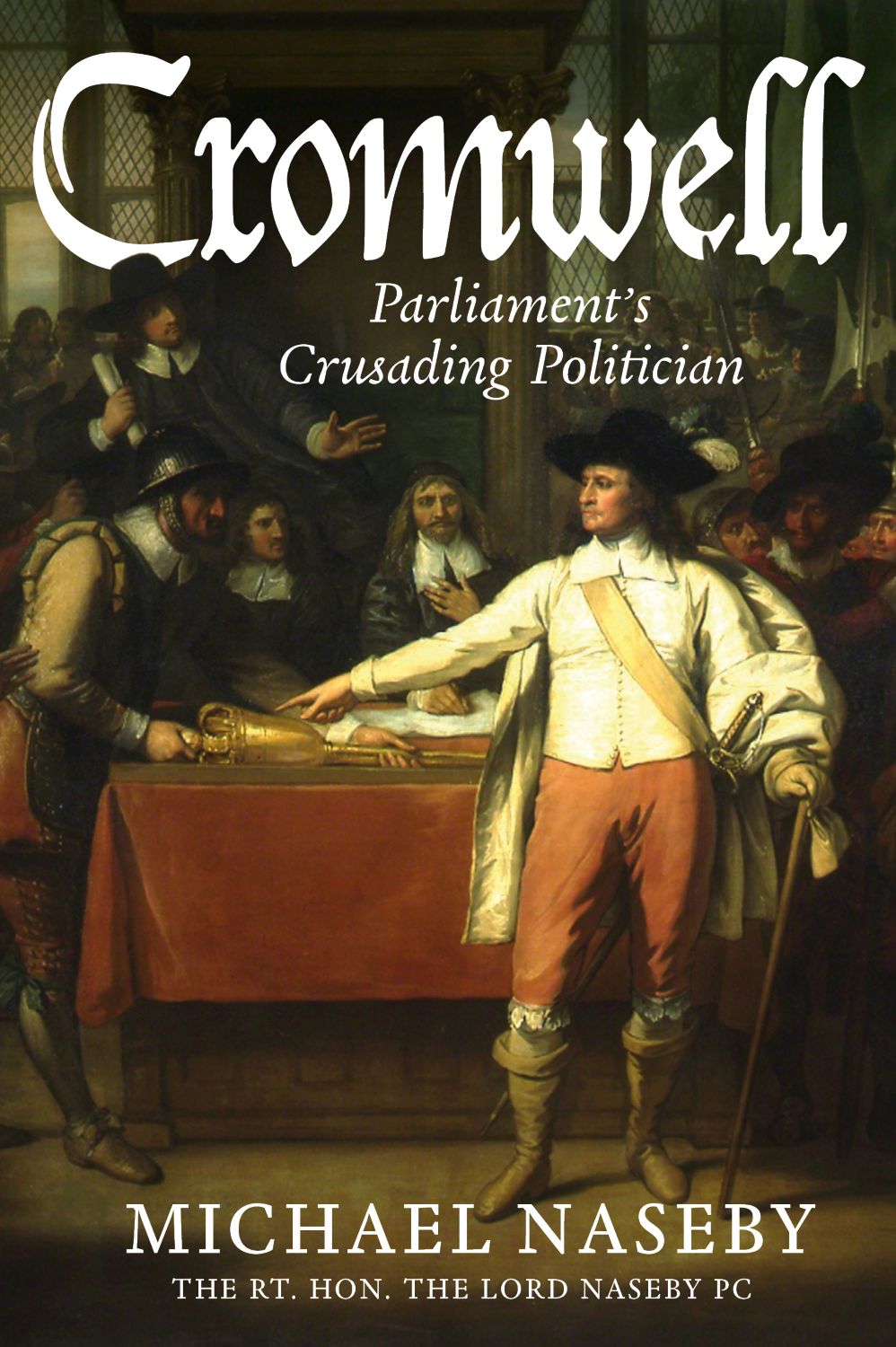
Cromwell: Parliament’s Crusading Politician
By: Michael Naseby
Publisher: Unicorn

If there’s a retailer we can trust to get us feeling festive (so early!), it’s M&S.
The high street powerhouse has proved time and time again that it knows how to do everything just right.
So, when we saw that it had already released its Christmas decorations for this winter, we were naturally ready to fill our baskets.
This year, the brand has really outdone itself. There’s something for everyone, whether you have a tree or not.
Seriously, we’re talking mini M&S classics (Percy Pigs, Colin the Caterpillar, Cookies, and Olive Oil Crisps) immortalised as tree ornaments, sparkly houses, adorable felt woodland creatures, and even kitsch glittery dinosaurs.
It might be a little early to start decorating for the big day – we have Halloween to get through first – but trust us, you’ll want to stock up on these decorations before they sell out.
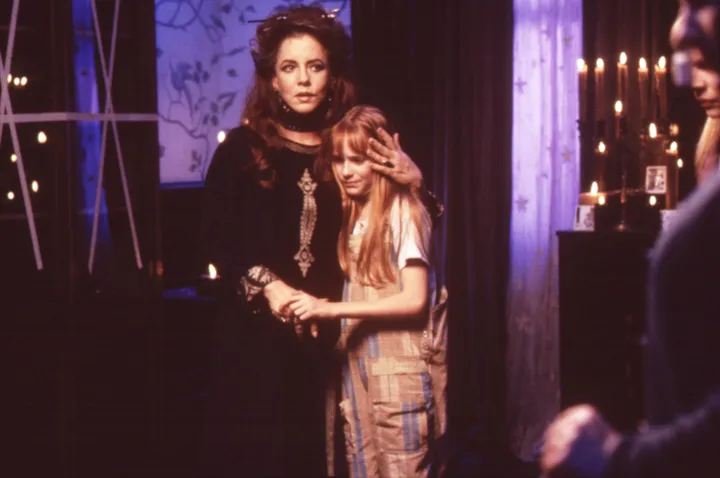
Evan Rachel Wood had some strong words for the team behind the new Practical Magic sequel.
The Westworld actor appeared in the original film alongside Sandra Bullock and Nicole Kidman, and while the majority of the cast were invited back for the upcoming sequel, Evan’s role was recast, with Joey King taking over as Kylie Owens.
While Evan called Joey “a sweetheart” she wasn’t as effusive about others involved in the cult classic’s follow-up.
“I really appreciated Joey King reaching out to me, because no one who worked on the original film did,” Evan shared on her Instagram Stories. “She’s a sweetheart.”
Evan and Alexandra Atrip played Sandra Bullock’s character’s daughters in the 1998 film, but neither reprised their roles in the sequel.
Joining Joey’s Kylie in Practical Magic 2 is Game Of Thrones star Maisie Williams, who has taken on the role of Antonia.

Evan was 11 when she played Kylie in the 1998 witchy favourite, and although the film is set over 25 years later, the character is now being played by an actor 10 years her junior.
At the premiere of her new Ryan Murphy TV show The Shards in July, Evan admitted she felt “sad” that she wasn’t asked back for the sequel.
“We bonded with that cast so much as children, and so to miss out on the opportunity to look at that cast and look at that house as an adult and see the history in our eyes, it’s something that can’t be faked,” she told Entertainment Tonight on the red carpet.
“I’m sad that doesn’t get to exist, especially for the fans.”
She also called out the makers of the sequel for not following the original source novel.
“I think in the book, it would’ve made sense to bring me back. I think in the way they’re redoing it and approaching it, it didn’t make sense,” she said at the premiere.
Evan immediately spoke out on Instagram when the sequel was announced, clearing up why she was not part of the cast.
“I offered my services, even if it was one scene or one line,” she wrote. “I was told they are re-casting. I am sorry to disappoint the fans. It was not in my control or my choice. I would have happily rejoined my sisters.”
Practical Magic 2 is out in cinemas on Friday 11 September.

We now know high-intensity yoga is one of the best exercises you can do to boost sleep quality.
And, according to new research, it turns out you can even rely on movement to help counter the effects of pulling an all-nighter.
Sleep deprivation is no joke and is thought to impact one in three adults globally. Poor quality sleep can impact negatively on our physical and mental health, as well as increasing the risk of accidents.
“Sleep loss affects nearly every aspect of how we think and function, but many people can’t simply stop what they’re doing and get more sleep,” said Professor Marc Roig, from McGill University’s School of Physical and Occupational Therapy.
So, researchers from his team set out to discover whether exercise or a short nap could help mitigate against some of the effects of sleep deprivation on the brain.
What did the study find?
The relatively small study involved 54 healthy young adults who stayed awake for 30 hours under lab supervision.
They were then assigned to one of three groups: a 20-minute cycling session, a 90-minute nap or doing nothing.
Three days later, researchers tested their memory for images they had viewed immediately after each intervention and found those who had exercised or napped had better memory recall.
In fact, they performed about 22% better on memory tests after 30 hours without sleep, than those who did neither.
“Our findings show that even a brief bout of exercise may help preserve one of our most important cognitive abilities,” said Prof Roig.
What’s more, brain recordings revealed that exercise and napping helped memory recall in different ways.
While napping appeared to help the brain recharge, making it easier to take in and remember new information, exercise helped the brain use its remaining resources more efficiently.
Researchers suggested the findings could inform fatigue-management strategies in workplaces where sleep loss is common and mistakes can have serious consequences – for example, in healthcare settings.
“A nap isn’t always possible in the middle of a shift,” said first author Madhura Lotlikar, a doctoral candidate in McGill’s Department of Neurology and Neurosurgery.
“Exercise is accessible, inexpensive and easy to implement. That makes it a promising tool to help people stay cognitively sharp when sleep is limited.”
Previous research has also found that physical activity might counter some of the negative impacts of poor sleep. The study authors said, at the time, that people who did at least 150 minutes of moderate intensity or 75 minutes of vigorous intensity exercise per week “were, to some extent, protected against the detrimental health effects of poor sleep”.
Regular exercise can also improve sleep quality overall.
If you’re chronically sleep deprived, and it’s causing you distress or impacting wellbeing, speak to a specialist who can offer tailored support to your circumstances.
Politics
Lord Ashcroft: Is political news biased? Does social media make things better or worse? And what should leaders say about it?
Lord Ashcroft KCMG PC is an international businessman, philanthropist, author and pollster. For more information on his work, visit lordashcroft.com
How does the media influence British politics?
Many believe the relationship is negative, even toxic – but how do different kinds of voters see things, and what are the implications for Kemi Badenoch and the Conservatives?
My poll last month asked whether political news in the UK is generally impartial or generally biased, and whether it generally does a good job or a bad job at keeping that the public informed. From this, we derive two measures with which to quantify attitudes to the media:
- A “net biased” score – the proportion of any given group that thinks the media is generally biased, minus the proportion which thinks it is generally impartial
- A “net informative” score – the proportion thinking political news generally does a good job at keeping people informed, minus the proportion which thinks does a bad job of doing so
We have deliberately asked the question in general terms, rather than about particular news outlets, in order to remove party political considerations from the question and encourage people to think about the situation in the round.
I found voters as a whole saying the media does a good job rather than a bad job of keeping people informed by 44 per cent to 37 per cent – a “net informative score” of +7. At the same time, people were more than twice as likely to say political news was generally biased than that it was generally impartial – we found a “net biased score” of +32. The chart below shows how these scores distribute among people’s current voting intention:

This shows that the average supporter of every major party considers political news generally biased, albeit to greatly varying extents.
Those currently leaning towards the Conservatives, Labour or the Lib Dems tend to consider political news more informative and less biased than people as a whole. Conversely, Reform and Green supporters take a similarly scornful view of the quality and impartiality of political coverage. SNP and Plaid Cymru voters, meanwhile, took a similar view to the general public about media bias but were more likely to think the news does a poor job keeping the public informed.
There is a striking chasm between the views of political media among Conservative, Labour and Lib Dem voters on the one hand, and Reform and Green voters on the other. The point is not that the respective groups are unduly credulous or cynical – simply the size of the gap. We could hypothesise that such a divide would naturally exist between established and insurgent parties. Has it always been like this? The chart below shows the current supporters and people who backed them at the last three general elections for the five British parties, as well as the two sides of the 2016 referendum (relying on past vote data collected near contemporaneously rather than asking people to recall how they voted several years ago).

This shows that even at the notably polarising 2019 general election and the 2016 EU referendum, the different political camps were divided far less sharply in their views of the media than they are now. We are familiar with the left bloc (Labour, the Lib Dems, the Greens and the SNP and Plaid Cymru in Scotland and Wales) and the right bloc (Reform UK and the Conservatives). But these charts show a second dividing line in British politics: between the traditional three parties (the Conservatives, Labour and the Lib Dems) on the one hand and the and populist parties (primarily Reform and the Greens) on the other.
Has the growth in support for populist parties driven increased scepticism of the media, or the other way round? Are both true – in which case, which driver is more potent? Or is neither true – in which case, what is the root cause? A starting point is to look at some different groups of voters using the framework above:
If support for a populist party drives media scepticism, we could assume this scepticism would endure among those who later switch away from this party. 2024 Reform voters who no longer intend to vote Reform have a net biased score of +57 and a net informative score of –15, whereas the comparable scores for the average 2024 Reform voter has scores of +61 and –23 respectively. Conversely, 2024 Green voters who no longer intend to vote Green have net biased score +46 and net informative score of +21, compared with scores of +58 and –1 respectively for all 2024 Green voters. This suggests enduring media scepticism among Reform switchers, whereas much of the media scepticism drains away from Green switchers, who even appear to have a heightened appreciation for the media’s informative abilities.
We also see that the voters Kemi Badenoch has won back from Labour and the Lib Dems are in the rare position of having average negative net biased scores (that is, they are more likely to consider the media impartial than biased). This territory is also where 2019 Conservatives who switched to the Lib Dems in 2024 are to be found. To complete the picture, those who have switched from a mainstream to a populist party since the 2024 election are generally as sceptical of the media as those who backed a populist party in 2024.
Could social media play a part in this phenomenon?
In our poll, 61 per cent said social media had had a harmful effect on political discussion by enabling false information and extreme views; only 21 per cent said it had improved discussion by allowing a wider range of views to be heard and reducing the power of mainstream media. The chart below shows how this opinion breaks down based upon people’s voting intention:

Supporters of the three established parties are especially negative about the impact of social media – indeed, on this issue, Conservative voters have more in common with Labour and Lib Dem voters than they do with Reform voters. Reform supporters themselves are more evenly divided on the merits of social media, but even they are more likely to think social media damages political discussion than improves it.
Green voters have similar views to the general population, being more hostile to social media than Reform voters but less so than Labour, Lib Dem and Tory voters. The only voter group more likely to think social media has improved political discourse than the opposite comprises those who are going to vote for another party – the category that includes supporters of Restore Britain, which has received vigorous backing from Elon Musk.
For some people, negative views of political media are part their disillusionment with the political system. Two questions can shed some light on this. First, we asked whether they thought Labour and the Conservatives are part of the same failed political system and that new ideas are needed, or whether newer parties and politicians would probably do no better at dealing with the issues facing Britain today. Second, we asked people to indicate on a 0-10 scale whether democracy still basically works even if they don’t always like the results, or if it no longer represents people properly and we need fundamental change.
Based on this, we identify the following groups:
- Insurgents, who say that political news is generally biased, that Labour and the Conservatives are part of the same failed system, and that British democracy is broken. This group makes up 18 per cent of the population
- Semi-insurgents, who say that political news in the UK is generally biased, and who either say that Labour and the Conservatives are part of the same failed system, or that British democracy is broken – but not both. This group constitutes 21 per cent of the population
- Establishment, who say that political news in the UK is generally biased, that new parties would not do any better, and that democracy still basically works (or are neutral). These people make up 17 per cent of the population
- Impartial, who agree that political news in the UK is generally impartial. These people account for 24 per cent of the population
The remaining 19 per cent of the population say that they don’t know whether the media are biased or impartial, and they are considerably less likely than the other groups to vote at elections. They are excluded from this analysis.
Looking at how attitudes differ between these four groups, we see that some two thirds of the insurgent, semi-insurgent and establishment groups agree that the media give undue prominence to personality and drama, and that this is the media’s fault; just 38 per cent of the impartial group think this. The same applies to the impact of the media on elections: 34 to 40 per cent of the former three groups considers the media to have a big influence on the outcome of elections, as against a quarter of the impartial group. However, when we ask whether politicians are treated too softly, too harshly or about right by the media, the breakdown is a lot more revealing:

Unsurprisingly, those who think the media impartial are the most likely to say it is treatment of politicians is tough but fair; those in this group who think otherwise divide roughly evenly between thinking the media treatment of politicians is too hard and that it is too soft. Those who consider the media biased are more likely to think the media is too soft on politicians than too hard. This increases sharply the more anti-establishment the group becomes: a comfortable majority of the insurgent group consider the media too soft. The idea that the media treats politicians too harshly peaks in the establishment group.
The chart below shows how these four groups of voters distribute on the political map based upon voting intention; the size of the group is proportional to the bubble size.
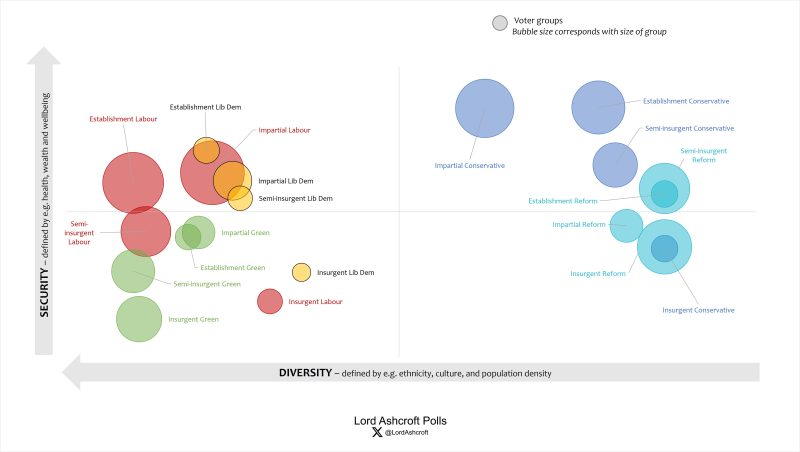
Notably, insurgent supporters of left bloc parties are a very long way down the vertical axis, while insurgent supporters of right bloc parties are in the bottom right quadrant, but much closer to the horizontal axis than the bottom of the chart. Even when we disregard the left/right distinction, there is a fundamental difference in worldview between those insurgents supporting a left bloc party and those insurgents supporting a right bloc party. The former are in a part of the map where pessimism and mistrust of institutions goes with the territory; that is much less so in the case of the latter.
Another striking feature is that the impartial Reform bubble is in the bottom right quadrant, further down than the establishment Reform and semi-insurgent Reform bubbles. The four Reform bubbles are also closer together than those for the other parties, whose insurgent and semi-insurgent bubbles are lowest down the chart. This suggests that there is something distinctive about Reform supporters: their position on the political map gives us much less of a clue about which group they will be in, and thus their views of political media.
What does all this mean for the Conservatives, and for Kemi Badenoch?
First, that there is very little to be gained from attacking the media.
The Reform supporters in the top right quadrant of our political map are those who are nearest to Conservative territory. They are very close to right bloc voters who think the media is biased but has a low influence on the outcome of British elections. For voters in this part of the map, an attack on the media would be an exercise in irrelevance; it would also be trying to compete with Nigel Farage on his home territory. But it could cost support elsewhere: the voters the Tories have won back from Labour and the Lib Dems, and the those for whom they will be competing with the Lib Dems at the next election, will not take kindly to a campaign of media-bashing.
Instead, Badenoch should welcome scrutiny – volunteer for it, even – and challenge her opponents to do the same. The country faces difficult problems and is increasingly polarised and fragmented. It cannot be governed by shallow soundbites or by the politics of victimhood and division. The British political media is far from perfect, but the accountability and scrutiny it brings is essential for anyone serious about leading the country.
The post Lord Ashcroft: Is political news biased? Does social media make things better or worse? And what should leaders say about it? appeared first on Conservative Home.

North Queensland Cowboys vs Canberra Raiders Tips, Odds, Teams & Predictions – NRL Round 27 2026

MartinLogan Motion Discrete Cinema Series Targets Big-Screen Home Theaters With Premium LCR Speakers and Passive Soundbars

Lisbon honors funicular derailment victims as questions remain over restored service

Weekend Open Thread – Corporette.com

Weekend Open Thread: Brooks Brothers

London Mayor Sadiq Khan handed a peerage by Keir Starmer alongside 15 other Labour figures… just days before the PM leaves No10

YOU CAN’T EAT MONEY #msbeanie

SIP -power of compounding in MUTUAL FUND #sip #mutualfunds #finance #shorts #video #youtubeshorts

How Japanese Bankers Counted Money Before Machines #historycomesalive #historia #history #japan
-

 Fashion6 days ago
Weekend Open Thread: Maeve – Corporette.com
-

 Crypto World7 days ago
Bitcoin’s 22% rally now needs real demand to outlast Treasury liquidity boost
-

 Business7 days ago
Apple Confirms September 9 Keynote and Reveals Its Full Pre-Order Schedule
-

 Crypto World16 hours ago
CLARITY Act could advance within weeks, Atkins says
-

 Business7 days ago
Salesforce Stock Soars 19% as Blowout Earnings and Agentforce AI Growth Silence Software Skeptics
-

 Business6 days ago
Onto Innovation Stock: AI’s Next Bottleneck Is Yield (NYSE:ONTO)
-

 Crypto World6 days ago
Bitcoin price tests $82K resistance as Brandt stays long
-
 Tech5 days ago
Hugging Face built a $4.5 billion empire on free AI models. Now Nvidia is buying it for $12.9 billion
-

 Business6 days ago
iPhone 18 Pro Pre-Orders Could Shift to Saturday as Apple Reportedly Avoids September 11 Anniversary
-

 Crypto World1 day ago
Elon Musk Says Grok 4.7 Lands in 10 Days and Will Beat Every Model
-

 Crypto World7 days ago
Truflation calls for Fed rate cut after PCE forecast
-
 Entertainment6 days ago
‘Adults’ Creators Break Down Season 2’s Most Shocking Moments and Tease a Potential Season 3
-

 Tech7 days ago
The fix for the AI agent that hijacked a company’s DNS: it can propose the change, but it can’t approve it
-
 News Videos4 days ago
Charlie Munger on Robinhood: No one should believe that Robinhood’s trades are free
-

 Tech6 days ago
PaperCut releases second emergency patch for exploited flaws
-

 Tech5 days ago
Tamagotchi Ring Takes the 30-Year Digital Pet and Places it on Your Finger
-
 Tech5 days ago
As the influencer economy drives retail sales, Seattle startup raises $22M to play matchmaker
-
 Crypto World2 days ago
Bitcoin slips below $77.5K as macro pressure offsets ETF inflows
-
 NewsBeat5 days ago
Trump posts AI video of ‘Lake America’ being protected by an army of bequiffed ‘Donald Ducks’
-

 Crypto World12 hours ago
Kalshi seeks CFTC approval for WTI perpetual
You must be logged in to post a comment Login