
Politics
JD Vance Wants Everyone To Know He Has Friends

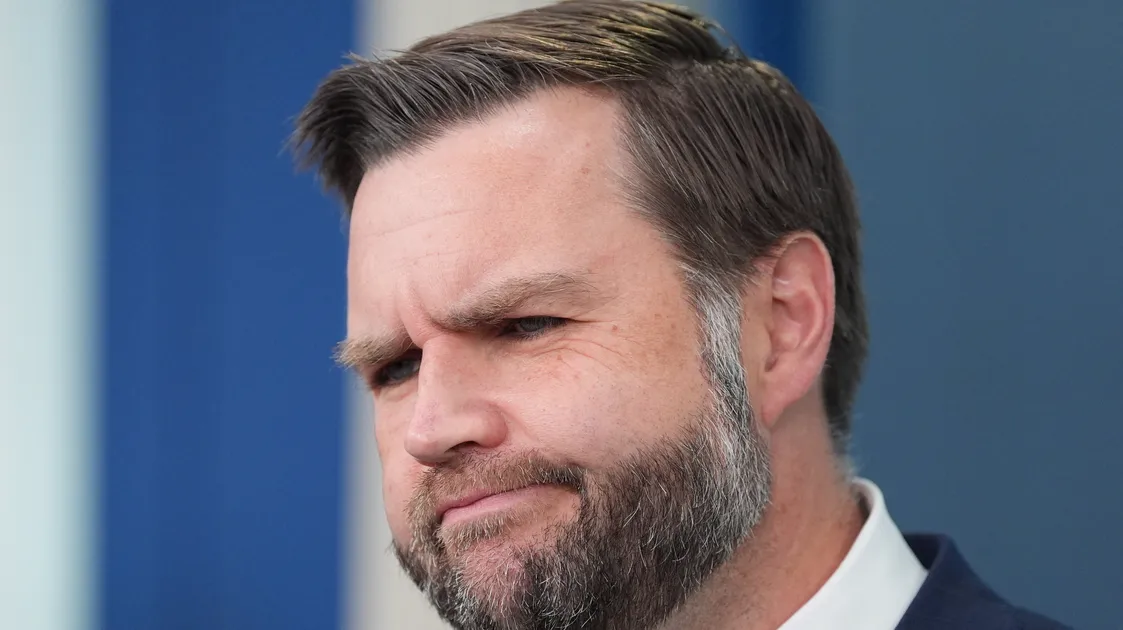
Vice President JD Vance spent part of a Thursday press briefing reminding everyone he definitely has friends.
Asked about the departure of Army Secretary Dan Driscoll, who held the role for 18 months, Vance sidelined the question to talk about friendship.
“Dan is obviously a very good friend of mine,” Vance said. “I think he was a great secretary of the Army.”
But Driscoll’s not his only friend!
“Pete [Hegseth] is also a very good friend of mine, and I think he’s an amazing secretary of war, and fundamentally, there are a lot of issues where I agree with Pete on. The issue where I’m in the most strident agreement with Pete is that we needed to have a culture shift at the Department of War,” Vance elaborated.
Asked later in the briefing about his relationship with conservative pundit Tucker Carlson ― who has called for US President Donald Trump to be removed from office — Vance jumped at the opportunity to extol the power of friendship.
“What a travesty it is, that in the United States of America, we let our political disagreements define who our friends are going to be and not going to be,” Vance said. “So yeah, Tucker is a friend of mine. Tucker is a friend, despite the fact that we disagree on a number of things, and I’m not going to play the game where I throw friends under the bus because I disagree with them.”
Asked about news anchor Maria Bartiromo’s sudden departure from Fox News on Thursday, Vance jumped at the opportunity to name another friend.
“She’s a very, very dear friend,” Vance said. “I haven’t even talked to her, so I don’t know the backstory about why she’s decided to leave Fox News.”
But of all Vance’s friends, Secretary of State Marco Rubio is his number one buddy.
“Marco is my best friend in the administration, and he and I work a lot together,” Vance said during a 2025 podcast.
Listen to Commons People, the podcast that makes politics easy. Every week, Kevin Schofield and Kate Nicholson unpack the week’s biggest stories to keep you informed. Join us for straightforward analysis of what’s going on at Westminster.

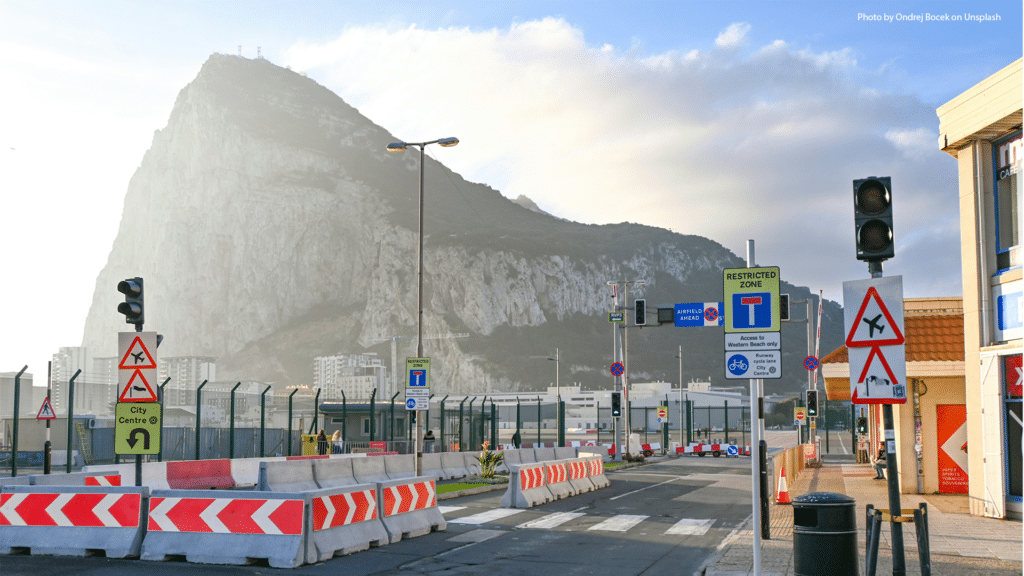
Jamie Trinidad KC explains how the implementation of the UK-EU Agreement in respect of Gibraltar agreed by the UK and EU will affect both Gibraltar and Spain and the border between the two.
Brexit was widely regarded as a disaster in Gibraltar. In the 2016 referendum, 96% of Gibraltarian voters chose Remain, on a turnout of 84%. Gibraltar is British by political choice, but it is geographically and culturally European. Communities on both sides of the Gibraltar-Spain border – now an external border of the EU – depend on its fluidity for their livelihoods. This is not just a question of economics – many families and friendships straddle the border. Brexit therefore posed a unique set of problems, and there was little point viewing them through the ideological prisms of Westminster politics.
Gibraltar was excluded from the scope of the UK-EU Trade and Cooperation Agreement. A ‘Proposed Framework’ agreement concluded by the UK, Gibraltar and Spain on New Year’s Eve of 2020, hours before the end of the Brexit transition period, sketched the outlines of a post-Brexit settlement. However, converting that political understanding into a binding agreement between the UK and EU has taken several years of complex negotiations. The resulting UK-EU Agreement in respect of Gibraltar was signed in Brussels on 14 July 2026 and was applied provisionally (pending ratification) from the following day.
The Treaty contains hundreds of pages of dense legal text, but its central bargain is easy to understand. The physical barriers and routine immigration checks at the Gibraltar–Spain land border disappear, allowing people and goods to move across it far more easily. In return, Gibraltar (or, formally, ‘the UK, in respect of Gibraltar’) accepts substantial regulatory alignment with the EU. This includes rules protecting the integrity of the Schengen Area, and a customs union with the EU. Gibraltar’s services-based economy depends on some 15,000 frontier workers, most of whom are EU nationals, so the removal of restrictions at the border is a ‘win-win’.
Historically, the status of the border has dominated life in Gibraltar, shaping Gibraltarian identity itself. Spain, which has often used border restrictions as a political stick, closed the crossing completely in 1969. It was during the difficult closed-border years that Gibraltar joined the EEC with the UK in 1973, on special terms that excluded Gibraltar from, among other things, the Customs Union, VAT and the Common Agricultural and Fisheries Policies. The border reopened gradually between 1982 and 1985, shortly before Spain joined the EEC. For Gibraltarians who remember the years of enforced isolation, questions concerning border arrangements have profound emotional as well as economic significance.
The most controversial aspect of the Treaty settlement is the issue of EU (i.e. Spanish) officials conducting Schengen-facing border controls on persons who arrive in Gibraltar by air and sea. With the physical infrastructure of the border disappearing, the integrity of the Schengen area had to be protected at Gibraltar’s external points of entry. Under the Treaty, passengers arriving at the Gibraltar airport and port must therefore undergo both Gibraltar checks and Spanish Schengen checks. Maritime passenger volumes (excluding cruise passengers, who are generally exempt from Schengen checks) are tiny, so port arrivals are bussed to the airport border checkpoint.
The presence of Spanish officials exercising regulatory functions at the airport, while Spain continues to claim sovereignty over Gibraltar, is a bitter pill to swallow for many Gibraltarians, and prominent UK Brexiteers have described it as a ‘betrayal’. However, the Treaty expressly states that nothing in it affects the UK or Spanish legal positions on sovereignty or jurisdiction. Spanish and British border officers will perform their respective functions within a small ‘Joint Facility’ attached to the airport and located equidistantly in Gibraltar and Spain. Gibraltar remains outside both the EU and Schengen, so EU law is not directly applicable in Gibraltar. Where alignment is required, Gibraltar gives effect to the relevant rules through its own legal order, and the CJEU has no enforcement jurisdiction.
The Treaty arrangements differ radically from the status quo ante. Before Brexit, Gibraltar was inside the EU but outside the customs union and Schengen; now it is outside the EU but in a customs union with it and applying Schengen border rules. Gibraltar has lost valuable aspects of EU membership, such as participation in the single market for services. However, the Treaty offers new opportunities. Beyond the benefits of a free-flowing border, the Treaty opens the possibility of direct air links between Gibraltar and EU destinations, and provides a framework for cooperation in areas such as policing and the environment.
Neither Gibraltar nor Spain is a party to the Treaty, but both have played important roles in bringing it to fruition. A UK–Gibraltar Concordat records that the UK entered into its Treaty obligations with the Gibraltar government’s consent and following its ‘full participation’ in the negotiations. Gibraltar will carry much of the burden of implementation. And although the UK remains responsible for Gibraltar’s international relations, it has undertaken (‘other than in the most exceptional circumstances’) not to terminate the Treaty without either a three-quarters majority in Gibraltar’s Parliament or majority support in a Gibraltar referendum.
Regardless of the Concordat, democrats across the UK political spectrum ought to respect Gibraltar’s wishes regarding the continuing application of the Treaty, in line with the current UK government’s commitment to Gibraltar of ‘nothing about you without you’.
The fate of the Treaty also depends on Spanish cooperation and goodwill. Within four years of ratification, a committee appointed under the Treaty will submit a report evaluating its implementation, and if Spain asks the EU to terminate the Treaty in the light of that report, the EU must ‘take the necessary steps’ towards termination, ‘in accordance with its internal procedures’.
The success of this Treaty should be judged from the perspective of the people who are most affected by it. Gibraltar did not vote for Brexit, and its interests differ from those of the UK. Considering the actual choices available to Gibraltar – i.e. a hard external Schengen border, or a negotiated accommodation with its European neighbours – the Treaty settlement, for all its compromises, is vastly preferable to a no-deal scenario.
Ultimately, the Treaty does not restore what Gibraltar lost as a result of Brexit, but it does provide a solid foundation for Gibraltar’s future as an open, prosperous, European democracy.
By Professor Jamie Trinidad KC, Fellow of Wolfson College, University of Cambridge. He has advised the Gibraltar Government on aspects of the Treaty, but the views expressed here are personal.
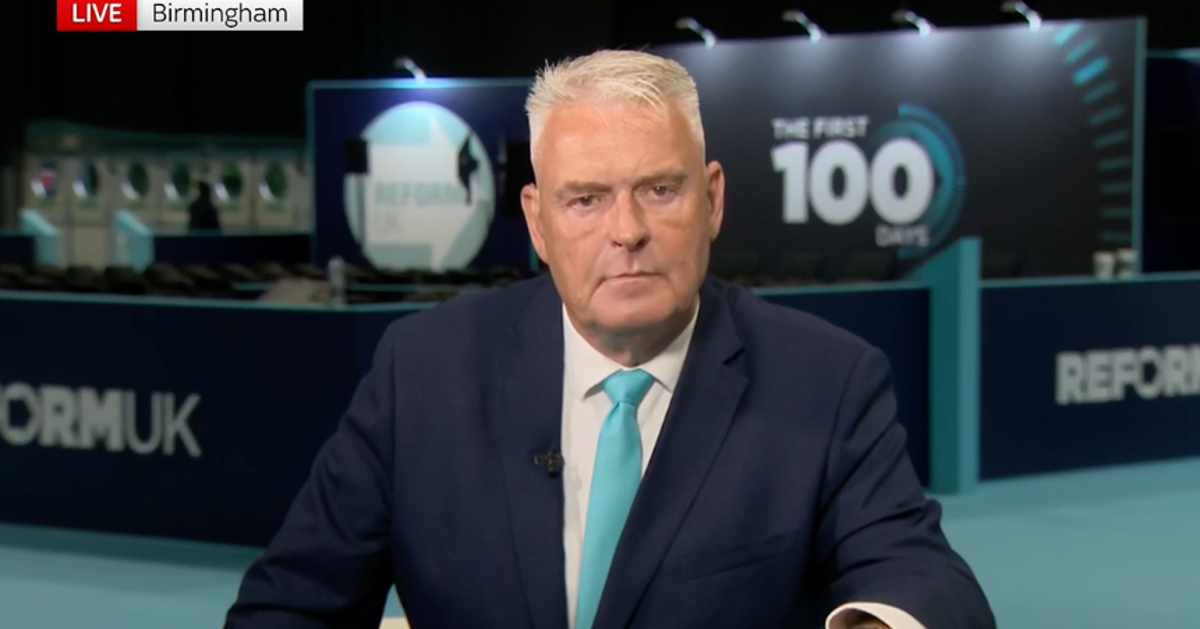
Two Reform UK officials have stepped down after an undercover sting operation raised questions over foreign donations, according to Lee Anderson.
The party chair told Sky News that Reform’s head of policy James Orr and Nigel Farage’s close aide Dan Jukes have both quit following an explosive report from Verbatim.
As first reported by Channel 4 News, Farage’s party took funding from a US company to commission three supposedly independent polls at £32,500 earlier this year.
Orr and Jukes organised the donation. They were not aware the donors were actually undercover reporters from the investigative group Verbatim.
The reporters, posing as an American father and his British son “William Lockwood”, also suggested donating £500,000 to Reform UK.
British electoral law says political donations can only be made by someone eligible to vote in the UK or a UK-registered company.
The party denied any wrongdoing and called the whole operation a “hoax”.
The incident has been reported to the Metropolitan Police who are assessing the reports.
Anderson told Sky News: “The two men involved, James Orr and Dan Jukes, they’ve stepped down from their roles, they’ve stepped away. It’s only fair now we launch a full internal investigation.”
He said the party would remain “fair, open and transparent” while looking into what happened.
“It’s right to get rid of this distraction straight away,” Anderson added, as Reform prepares to open its annual party conference in Birmingham today.
He added that there was “no chance” of the two men coming back as Reform is a “serious party”.
When asked if more senior staff, such as party leader Farage, should take responsibility, Anderson said it “wouldn’t be fair” for him to comment until “the investigation is completely over”.
However, the party chair was unable to say who is leading the internal probe when speaking to other broadcasters.
He also told BBC Breakfast: “We have spoken to our KC which advised no laws have been broken.
“Reform UK has launched an internal investigation to see what we can only describe as far left agitators have got that close to the party to make this documentary.
“One of the other questions we are asking is how is this funded?”
Verbatim, founded by the Centre for Climate Reporting and is funded out of the United States.
Listen to Commons People, the podcast that makes politics easy. Every week, Kevin Schofield and Kate Nicholson unpack the week’s biggest stories to keep you informed. Join us for straightforward analysis of what’s going on at Westminster.
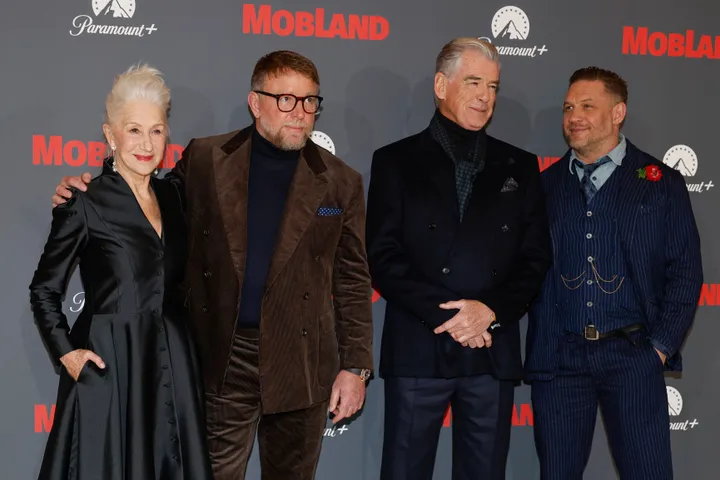
Despite no end of speculation as to whether or not he’d be returning, it’s now been confirmed that Tom Hardy will, in fact, be appearing in the forthcoming third season of MobLand after all.
Last year, Tom made his debut as fixer Harry Da Souza in the Paramount+ crime drama, sharing the screen with Dame Helen Mirren and Pierce Brosnan.
However, in the lead-up to season two’s release, it was initially reported over the summer that the Oscar nominee had parted ways with the show, amid supposed behind-the-scenes tension.
Following this, conflicting reports downplayed this speculation, with bosses finally confirming on Thursday evening that season three will be moving forward – with Tom still part of the cast.
Dame Helen had previously defended her co-star, insisting she’d work with him again in a “heartbeat” despite their “different” creative “processes” on set.
She enthused: “I love Tom. I think he’s the most amazing actor.”

Before the wheels start turning on season three, though, there’s MobLand’s second offering to get out of the way first.
The next episodes of the popular gangster series will begin streaming on Paramount+ later this month, with an official synopsis teasing: “In season two, the Harrigans struggle to show a unified front as rising rivals threaten their fractured criminal empire – and Harry Da Souza, their street-smart and formidable ‘fixer,’ must walk a dangerous tightrope when tensions within the family intensify.
“As violence spills into every corner of their lives, loyalties snap, safety proves temporary, and the battle for power leaves no room for mercy.”
Janet McTeer, Joanne Froggatt, Johnny Flynn, Mandeep Dhillon, Paddy Considine and Toby Jones are among the actors who will also be making appearances in season two.
Take a look at the trailer for MobLand season two – which will premiere on Friday 18 September – below:
Keir Starmer’s resignation as an MP, delivered mere hours before his successor first appeared at the despatch box as prime minister, sets up the sixth by-election of 2026 and the seventh of this parliament.
The coming contest in Holborn and St Pancras follows a series of by-elections of varying significance, including Nigel Farage’s recent brush with self-styled “intergalactic space warrior” and satirical candidate Count Binface. The stakes were undoubtedly higher in Makerfield, which returned Andy Burnham to parliament after years in the relative wilderness. Burnham’s Makerfield victory set in train the sequence of events that led to Starmer’s twin resignations – first as prime minister, then as an MP – and therefore this latest by-election.
Future chroniclers of Starmer’s downfall will also consider the February 2026 contest in Gorton and Denton. Here, the decision by the Labour National Executive Committee (NEC) to block Burnham’s candidacy provided a crucial boost to the Green campaign. Hannah Spencer was elected as the MP for Gorton and Denton, becoming her party’s first parliamentarian to represent a constituency in the north of England. The Green rout in Gorton and Denton set the scene for the May 2026 elections and the Labour leadership crisis that followed.
Taken together, recent by-election results – from Runcorn and Helsby in May 2025 (Reform gain) to Makerfield and Clacton – form a pretty complete narrative of the development of British politics. At the same time, the signals sent by these contests have proved strikingly consistent. Voters used each by-election as a means of registering dissatisfaction with the status quo.
MDU warns Chancellor clinical negligence system ‘not fit for purpose’

Northern Ireland RE curriculum is ‘indoctrination’ – Supreme Court
The lessons of recent contests remain after Starmer’s resignation, but the landscape has changed. Burnham’s succession has translated into polling gains for Labour; Politico’s poll-of-polls metric has Labour tied with Reform UK, while a series of recent surveys have placed the party in the lead.
This “Burnham bounce” is now set for its first real test in Holborn and St Pancras – provided by Zack Polanski.
Starmer’s resignation immediately prompted speculation that Polanski could stand to succeed him. The Green leader chose not to contest Gorton and Denton, instead signalling an interest in standing in a future London seat should one become available. Starmer’s resignation created that opening, and so Polanski has confirmed his intentions. Speaking to the Camden New Journal, Polanski said he was “excited by the prospect of representing this place in parliament.” Only local members stand between the Green leader and his party’s candidacy in Holborn and St Pancras.
Polanski’s declaration changes the shape of the race.
Firstly, his candidacy will ensure a more competitive contest. In Makerfield, we saw how Burnham’s status and strategy transformed the campaign, dispelling initial concerns that the constituency was prime Reform territory.
Labour’s victory in Holborn and St Pancras in 2024 was comfortable but complicated. Andrew Feinstein, the activist and former member of the South African National Assembly, ran in the then-Labour leader’s constituency on a pro-Palestine, anti-austerity platform, placing second with 7,312 votes (18.9%). The Green Party candidate, David Stansell, came third on 4,030 votes (10.4%). Overall, Starmer dropped 17 points on his 2019 result. These totals point to the existence of a meaningful base of support in the constituency to the left of Labour, which could be energised by a high-stakes campaign fronted by Polanski.
Holborn and St Pancras will be the third by-election in a row contested by a leader of a national party or a de facto leadership candidate. Polanski’s status – leader of the Greens since September 2025 – will ensure stronger cut-through and motivate his supporters. His challenge is to construct a progressive coalition in the constituency, consolidating the left-of-Labour vote.
Polanski’s prominence also strengthens the Green pitch. His central message will be that, while voters may like Burnham or at least prefer him to Starmer, his election would maintain pressure on the government to pursue a progressive agenda. According to this framing, the choice in Holborn and St Pancras is not simply Green versus Labour, or even Polanski versus Burnham – but between placing a prominent progressive voice in parliament or increasing Labour’s substantial majority by one.
Labour will plan to continue the momentum of the Makerfield insurgency. The campaign could point to Burnham’s progressive pedigree and even the criticisms he made of Starmer during his long leadership campaign. Labour will want to secure an endorsement for Burnham’s approach to government, treating the campaign as a de facto vote of confidence.
The Holborn and St Pancras by-election will ultimately be shaped by the tension between Labour’s strengthened national position under Burnham and Polanski’s capacity to consolidate and mobilise the constituency’s progressive base.
Above all, Polanski’s challenge means that the outcome will be of immense national significance, whichever party prevails.
For the Green leader, the contest offers a chance to arrest his party’s recent decline and atone for his own missteps. For the prime minister – whose path to power was shaped by the rise of a credible challenger on Starmer’s left – it presents an opportunity to seize on recent polling gains and inflict a significant setback on the Greens, triggering deeper disillusionment within their ranks.
Victory for Labour would also represent a second by-election triumph for Burnham since June: one in a Reform-facing constituency and the other in Green target territory.
A significant loss for Polanski would surely weaken his hold on the Green Party and risk exposing internal tensions. It would undoubtedly reinforce the prevailing narrative that his standing has waned in recent months, and further complicate claims that the Greens are a genuine rival to Labour’s historic dominance of progressive politics.
But the greatest risk for Polanski would have been not standing at all. That decision would have been treated as unequivocal evidence of both his and his party’s relative decline in recent months.
In Holborn and St Pancras, Polanski has placed himself at the centre of British politics again. He stands ready to reap the rewards or suffer the consequences.

Gloria Steinem, the feminist icon, journalist and a defining leader of the women’s movement, died this week at 92.
Beyond her work as a social activist and one of the founders of the National Women’s Political Caucus, Steinem made her legacy by pushing for women’s equality as a co-founder of Ms. Magazine and as a prolific, gifted author of nine books.
Steinem was a pioneering feminist who used her candid speeches and writing to challenge sexism during a time when women still needed a man’s signature to get a credit card.
She made the personal political and often used her platform to advocate for reproductive rights. She was outspoken about getting pregnant and having an illegal abortion in 1957, when she was 22 years old.
Steinem later dedicated her 2015 book, My Life on the Road, to the doctor who recommended her for the abortion: “Dear Dr. Sharpe, I believe you, who knew the law was unjust, would not mind if I say this so long after your death: I’ve done the best I could with my life.”
Here is a selection of her best and most inspiring quotes from her books and interviews:

Janet Fries via Getty Images
On Women
“A liberated woman is one who has sex before marriage and a job after.” ― New York Magazine, 1969
“Any woman who chooses to behave like a full human being should be warned that the armies of the status quo will treat her as something of a dirty joke. That’s their natural and first weapon. She will need her sisterhood.” ― New York Magazine, 1971
“In my heart, I think a woman has two choices: Either she’s a feminist or a masochist.” ― The New York Times, 2001
“Don’t think about making women fit the world — think about making the world fit women.” ― Yale University, 2010
On Speaking Truth To Power
“The truth will set you free, but first it will piss you off.” — The Truth Will Set You Free, But First It Will Piss You Off! 2019
On Equality
“When humans are ranked instead of linked, everyone loses,” — My Life on the Road
On Reproductive Rights
“Listen, honey, if men could get pregnant, abortion would be a sacrament.” — The Guardian, 2015
“[Abortion] is supposed to make us a bad person. But I must say, I never felt that. I used to sit and try and figure out how old the child would be, trying to make myself feel guilty. But I never could!” — The Observer, 2011
“I live for the day when every economic course starts not with production but reproduction.” — Bennington College commencement address, 2015
On Writing
“Writing is the only thing that, when I do it, I don’t feel I should be doing something else.” — Gloria Steinem website
On Learning
“We learn most where we know the least.” — My Life on the Road
On Self-Confidence
“Once we give up searching for approval we often find it easier to earn respect.” ― Outrageous Acts and Everyday Rebellions, 1983
“Somewhere within each of us, buried at varying depths depending on the age and degree of neglect or abuse, shame or coercion we endured, there is a resistant, daydreaming, rebellious, creative, unique child — a true self who is waiting.” — Revolution from Within: A Book of Self-Esteem, 1992
On Attitudes
“It’s said that the biggest determinant of our lives is whether we see the world as welcoming or hostile. Each becomes a self-fulfilling prophecy.” — My Life on the Road
On Legacy
“The future depends entirely on what each of us does every day; a movement is only people moving.” ― Revolution from Within
“People often ask me if I’m ‘passing the torch’ … I’m keeping my torch, thank you very much — and I’m using it to light the torches of others.” –– Outrageous Acts and Everyday Rebellions, 1983
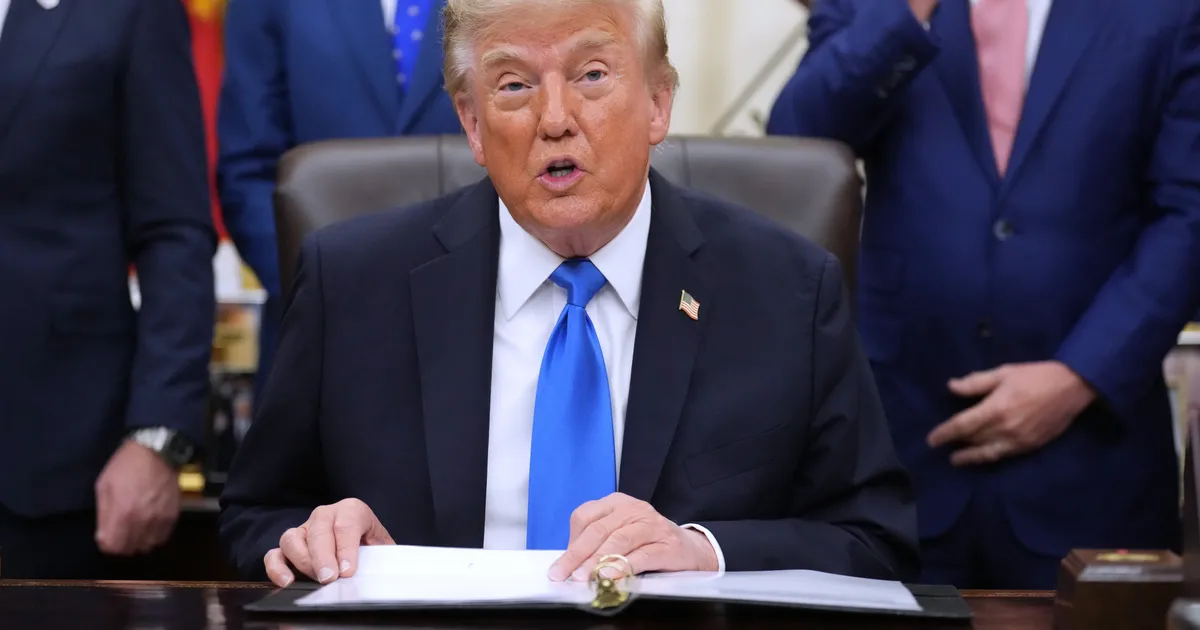
Donald Trump has hinted that he would not provide Britain with support if Argentina invaded the Falkland Islands again.
The US president said the UK wasn’t “there to help me” in Iran – a reference to Keir Starmer’s refusal to send a warship to help America re-open the Strait of Hormuz.
His comments came as Argentine president Javier Milei once again restated his country’s claim to the British Overseas Territory.
Argentina last invaded the Falklands in 1982, but were defeated when the then prime minister Margaret Thatcher sent a taskforce to the South Atlantic to re-take them.
Britain received intelligence and military support from America at that time.
In an interview with GB News, Trump was asked if he would “come to the aid” of the UK in the event of another invasion.
He said: “Well look, I was there when they had the first war.
“That was a long time ago and I watched it so carefully, and you comported yourselves very well.
“You took it back pretty strongly, but it’s a long way away. That’s a big trip, it’s a long way.
“So, your country’s not doing well. Don’t forget, you get a big percentage of your oil from the Strait of Hormuz, and you weren’t there to help me.
“Your country was not there to help me. We didn’t need help, but I did ask Nato, and I asked your former leader, ‘why didn’t you send a couple of ships?’
“He said we don’t have any, and it was pretty sad, the whole thing. So Nato was not there, even though they get – most of those countries get – a big portion of their oil from there. So we’re doing that by ourselves.
Earlier this week, Trump said he was “reviewing” America’s position on the Falklands.
In a referendum in 2013, 99.8% of Falkland Islanders voted to remain British.
But speaking on Argentine television on Friday, Janier Milei said: “I want to be quite clear with everybody. The Falklands are Argentinean. Historically and legally.
“There can be no argument. They are part of the Argentine territory.
“The islanders on their usurped territory do not have a legitimate right to self-determination and any argument on any such self-determination is invalid.”
He said he would introduce sanctions on any oil companies working in the area.
Production at the Sea Lion oilfield in the region, which is owned by an Israeli and a British firm, is due to begin in 2028.
Milei said Trump and the US was “assessing their historical position in regard to the Falklands”.
“That is not empty words as they understand that Argentina is a reliable partner and a valuable ally for decades to come,” he said
“Our role and relevance as a country in the world has changed dramatically.
“The Falklands are our future – we need to recover these islands which are nationally relevant. There is no other path forward.
“It is the best way of paying tribute to those who sacrificed their lives for this cause. It is our obligation as a nation to honour their memory.”
Listen to Commons People, the podcast that makes politics easy. Every week, Kevin Schofield and Kate Nicholson unpack the week’s biggest stories to keep you informed. Join us for straightforward analysis of what’s going on at Westminster.

From chatting about larping to telling mates to ‘call an Uber’, there’s always some new terminology or phrase entering teen vocabulary – often fuelled by the latest TikTok trends and viral memes.
And with the school holidays finally coming to an end, it’s likely you’ve heard – or seen – a lot more of it over the summer.
Research from Tesco Mobile reveals 70% of parents have struggled to understand their child’s texts or social posts because of slang.
You might already know the meaning of some terms – chopped is now another word for ugly apparently, while aura is all about how cool or uncool something is.
But with three in 10 (30% of) parents not knowing what “do you send?” means, we thought we’d weigh in on one of the more dicey slang terms you’ll definitely want to know about.
What does ‘do you send’ mean?
In short, it’s a request to send nude images. Whether you’ve spotted someone asking this in social media comments or direct messages linked to your teen’s account or not, it’s worth having a chat with them about it.
It can be helpful to tell your child that it’s never OK for people to ask for private, body or underwear photos, explaining that once a photo is sent to someone, they lose control of it forever. It’s also worth reiterating to them that people might not always be who they say they are online.
Once an image has been shared, children are at risk of blackmail – and over time, the types of images requested could become more explicit.
Earlier this year, the Internet Watch Foundation (IWF) warned child sexual extortion cases in the UK have soared by 72% in the space of a year.
Criminals are tricking young people into sending nude or sexual images of themselves which are then used to blackmail them. In 97% of cases, the victims are boys.
What to do if your teen has shared nudes with someone online
This is a tricky situation to be in and will likely leave you feeling upset, confused or angry about it. If this does happen, the NSPCC warns against shouting at them or making it feel like it’s their fault, especially as they’re probably already very anxious.
Reassure them that you’ll help support them through it and remind them of who they can talk to, whether that’s you, another adult or Childline.
“Ask open questions such as ‘what happened?’ rather than asking ‘why have you done it?’, as the latter may stop them from opening up to you,” advises the NSPCC.
If your child agrees to it, it can also be helpful to speak to the safeguarding lead at their school, as they may be able to help stop images or videos being shared among classmates.
It’s also worth telling them about the Internet Watch Foundation’s Report Remove tool, which allows young people to discreetly report a nude image or video shared online. The IWF will then review it and work to have it removed if it breaks the law.
Detective Sergeant Dave Moorman, from Warwickshire Police’s Online Child Exploitation Team, previously urged teenagers to tell a trusted adult – like a teacher, parent or the police – as soon as possible after sending a nude image.
“I can’t emphasise this enough, you will not get into trouble, and we can put measures in place to help stop the spread of the image,” he said.
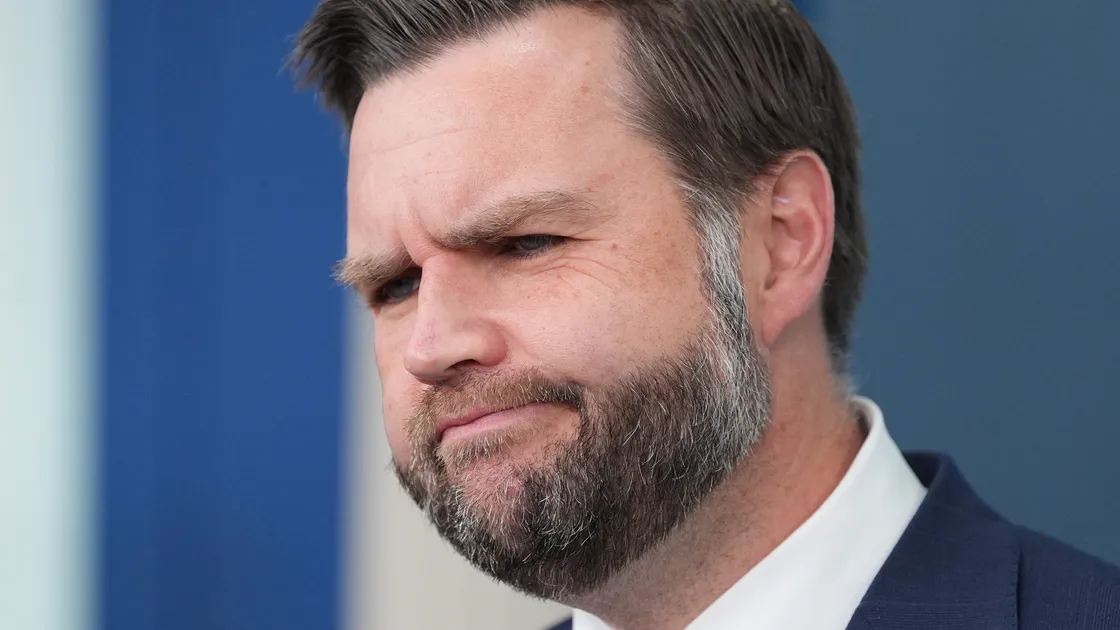
Besides Vance and Biden, former Presidents Barack Obama, George W. Bush and Bill Clinton are planning to be at ground zero.
Initially, Vance attempted to promote the event as bipartisan, saying he thinks the “sense of commonality and common purpose that we all had on 9/11” is “something that we should really try every single day to get back to.”
But Vance couldn’t leave well enough alone and had to make sure people knew his real thoughts by making a joke at Biden’s expense.
“As you guys can probably guess, I’m really looking forward to hanging out with Joe Biden. I’m sure that we’ll have many, many intense intellectual conversations. … We’ll have a great time,” Vance said sarcastically.
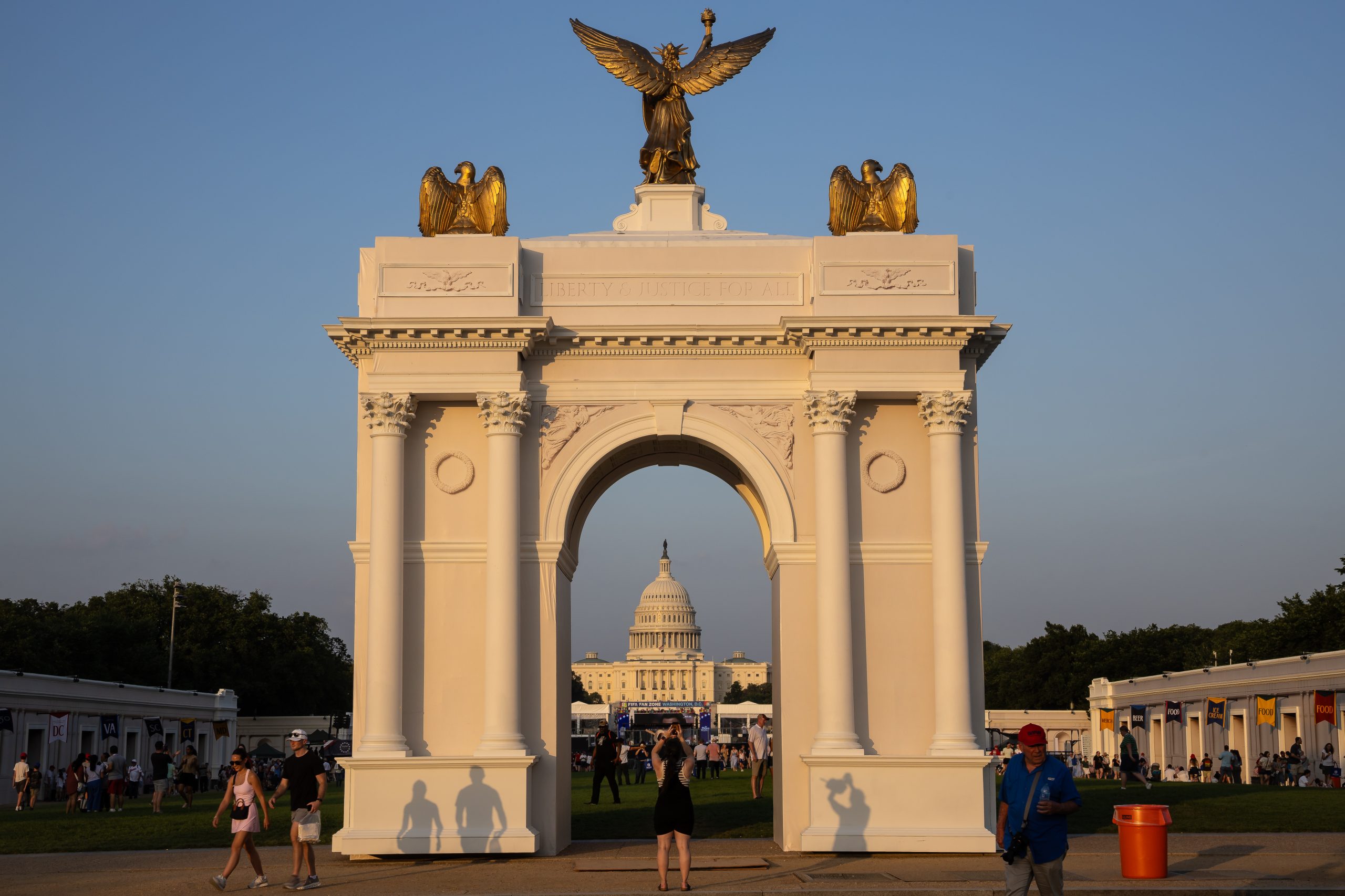

Construction crews could begin the excavation process for what will be President Donald Trump’s massive 250-foot-tall arch in as soon as the next two weeks, Interior Secretary Doug Burgum announced on Thursday.
The monument — which will be erected in a traffic circle at the head of the Memorial Bridge over the Potomac River, coming between the Lincoln Memorial and Arlington Cemetery — has generated controversy as concerns emerged about the design and traffic congestion during construction.
The arch would take two to three years to construct on the proposed schedule, according to documents released in June.
“We are pleased to announce that after a very long wait (over 125 years!), we are preparing to start, over the next two-week period, the excavation work necessary for the Great Triumphal Arch and Military Observation Deck,” Burgum said in a social media post.
The 250-foot-tall arch will be among Trump’s most visible projects, as the administration continues its attempts to remake Washington. Critics, however, have voiced fears that the structure may be too large, and overshadow other monuments, like the Lincoln Memorial on the other side of the Potomac River.
The proposed arch will dwarf the Arc de Triomphe in Paris in size. It is unclear at this time how much construction will cost; the National Endowment for the Humanities earmarked $15 million for the monument.
“This will be one the the Great Pieces of American Architecture, honoring the history and significance of Arlington National Cemetery and befitting the most powerful Capital in the World,” Burgum said.
The monument will be constructed on land overseen by the National Park Service, and critics have argued Trump’s latest project requires explicit congressional approval. However, the Interior secretary continues to rebut these claims.
Instead, Burgum echoed previous statements and said historically “Congress and various congressionally chartered commissions decreed that a monumental work should adorn Columbia Island,” the traffic circle where the monument is planned to be constructed.
“Despite Congress’s intent, the site became and remains today a barren traffic circle lacking any monumental treatment and significant historic value,” he said.
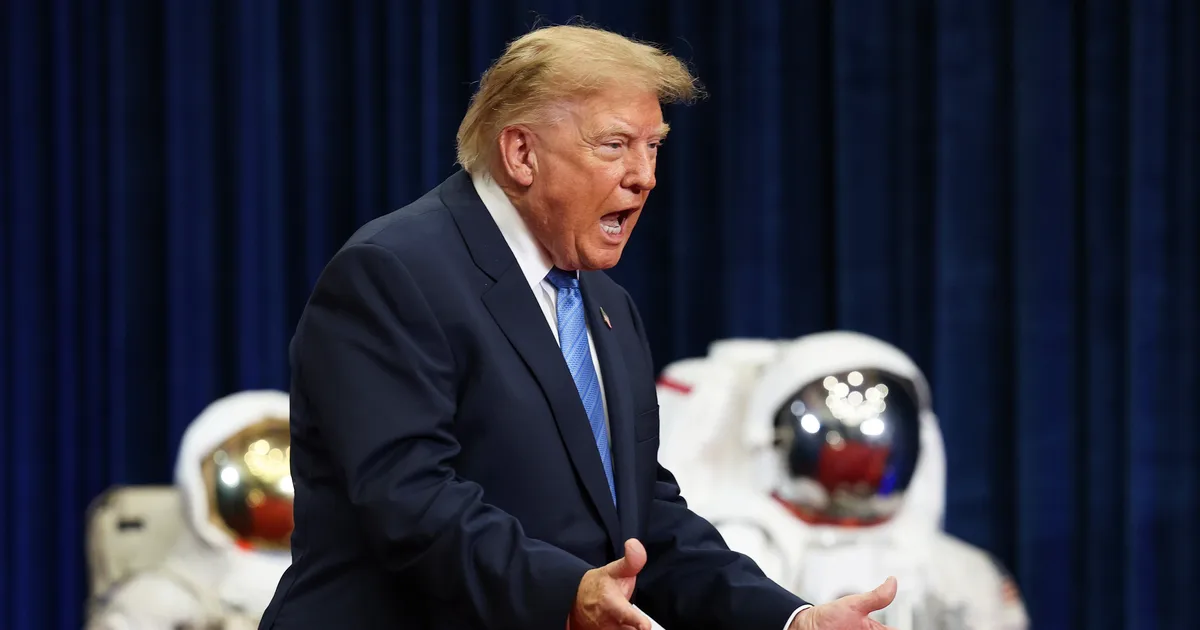
Donald Trump may actually have finally lost it this week.
While the US president already has a reputation for being unpredictable, mercurial and chaotic – to say the least – he seems to have taken it to a new level in the last few days.
The maverick Republican picked a fight with Canada by starting a trade war and then rubbed salt in the wound by renaming Lake Ontario, one of the Great Lakes on the border between their countries, Lake America.
He upped the pettiness by sharing AI videos showing Canadian geese with his trademark blonde hair and carrying machine guns patrolling the shores of “Lake America”.
Trump is also all over the place with the Iran war, a conflict he started in February.
The US-Israeli strikes against Tehran gave the Iranians the chance to seize control of the major oil shipping lane, the Strait of Hormuz.
They have let almost no trade through the major waterway in the last six months and the global economy continues to suffer.
America’s allies in the Gulf are suffering the real-world consequences as Iran has retaliated by hitting US military bases in the region.
But the president seems to be in denial about the reality of the war.
He even posted an AI video of a US attack on an Iranian oil hub which never actually happened.
Trump appears to be testing new UK prime minister Andy Burnham, too.
The president has refused to deny reports America could stop supporting Britain’s claims to the Falkland Islands.
If the States did withdraw its backing for the British Overseas Territory – and instead start supporting Argentina’s claim to the archipelago – then it would spell major trouble for the UK-US “special relationship” and trigger Burnham’s first international crisis.
Could Trump be looking to punish the UK for not supporting his offensive on Iran, as a leaked Pentagon email from April suggested?
Or is it his way of forcing the government to spend more money on defence. With Trump, you simply can never tell.
This is not the first time the president has upended international diplomacy, of course – his insistence Greenland belongs to him continues to rile Nato members – but his behaviour does appear even more illogical than usual.
It hardly seems politically savvy to focus on the international stage when Americans are preparing to elect members to Congress in the November midterm elections.
The president may not be on the ballot paper but he needs Republicans to hold the Senate and the House of Representatives to get key legislation passed.
Current predictions suggest the electorate are poised to deliver a brutal blow to Trump and his party by handing control of Congress to the Democrats.
Americans are concerned about the cost of living and elected Trump on the promise that he would put “America First” and bring prices down.
Instead, his war in Iran has led to a spike in oil prices and pushed up the cost of living both in the US and around the world.
There is growing anger that he rarely seems focused on the everyday problems of the very people who voted him into the White House.
So why is he still doubling down on that bizarre decision this week?
Listen to Commons People as we unpack the fallout from the recent Trump drama and why he cannot continue to ignore his domestic problems.
Listen to Commons People, the podcast that makes politics easy. Every week, Kevin Schofield and Kate Nicholson unpack the week’s biggest stories to keep you informed. Join us for straightforward analysis of what’s going on at Westminster.
One year after its founder’s death, Armani faces challenge of ’inevitable evolution’

Live updates: Bitcoin ETFs take $731 million, their biggest day since January

LSU wins court ruling in eligibility fight with SEC, clearing path for ex-NFL players’ return





-

 Fashion7 days ago
Weekend Open Thread: Maeve – Corporette.com
-
 Crypto World1 day ago
CLARITY Act could advance within weeks, Atkins says
-

 Business6 days ago
Onto Innovation Stock: AI’s Next Bottleneck Is Yield (NYSE:ONTO)
-

 Crypto World2 days ago
Elon Musk Says Grok 4.7 Lands in 10 Days and Will Beat Every Model
-

 Crypto World6 days ago
Bitcoin price tests $82K resistance as Brandt stays long
-
 Tech5 days ago
Hugging Face built a $4.5 billion empire on free AI models. Now Nvidia is buying it for $12.9 billion
-

 Business7 days ago
iPhone 18 Pro Pre-Orders Could Shift to Saturday as Apple Reportedly Avoids September 11 Anniversary
-
 Entertainment7 days ago
‘Adults’ Creators Break Down Season 2’s Most Shocking Moments and Tease a Potential Season 3
-

 Tech6 days ago
PaperCut releases second emergency patch for exploited flaws
-
 News Videos5 days ago
Charlie Munger on Robinhood: No one should believe that Robinhood’s trades are free
-

 Crypto World1 day ago
Kalshi seeks CFTC approval for WTI perpetual
-

 Tech5 days ago
As the influencer economy drives retail sales, Seattle startup raises $22M to play matchmaker
-
 Crypto World2 days ago
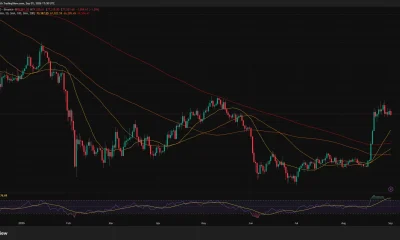
Bitcoin slips below $77.5K as macro pressure offsets ETF inflows
-

 Tech5 days ago
Tamagotchi Ring Takes the 30-Year Digital Pet and Places it on Your Finger
-
 Business2 days ago
Oil Price Today (September 2): Crude oil nears $97 as war tensions escalate. Will it hit $100 again?
-

 News Videos5 days ago
News kii Crypto ugu danbeeyey & Suuqa oo dhaqaaqey
-
 Entertainment4 days ago
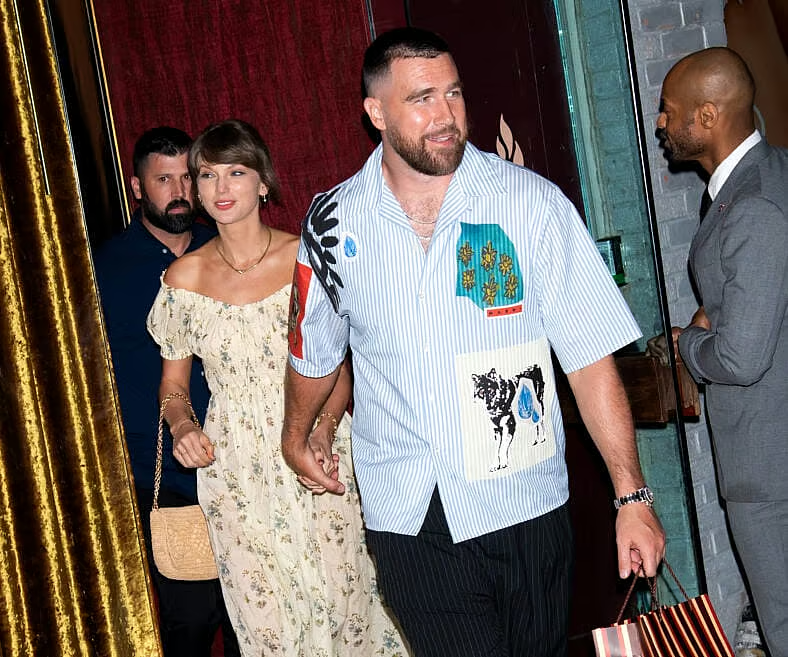
Taylor Swift Reportedly ‘Frustrated’ With Travis Kelce After ‘Short’ Honeymoon
-

 Business6 days ago
Apple Confirms September 9 iPhone Launch Event as Tim Cook Prepares to Hand CEO Reins to John Ternus
-
 NewsBeat5 days ago
Trump posts AI video of ‘Lake America’ being protected by an army of bequiffed ‘Donald Ducks’
-
 Entertainment6 days ago
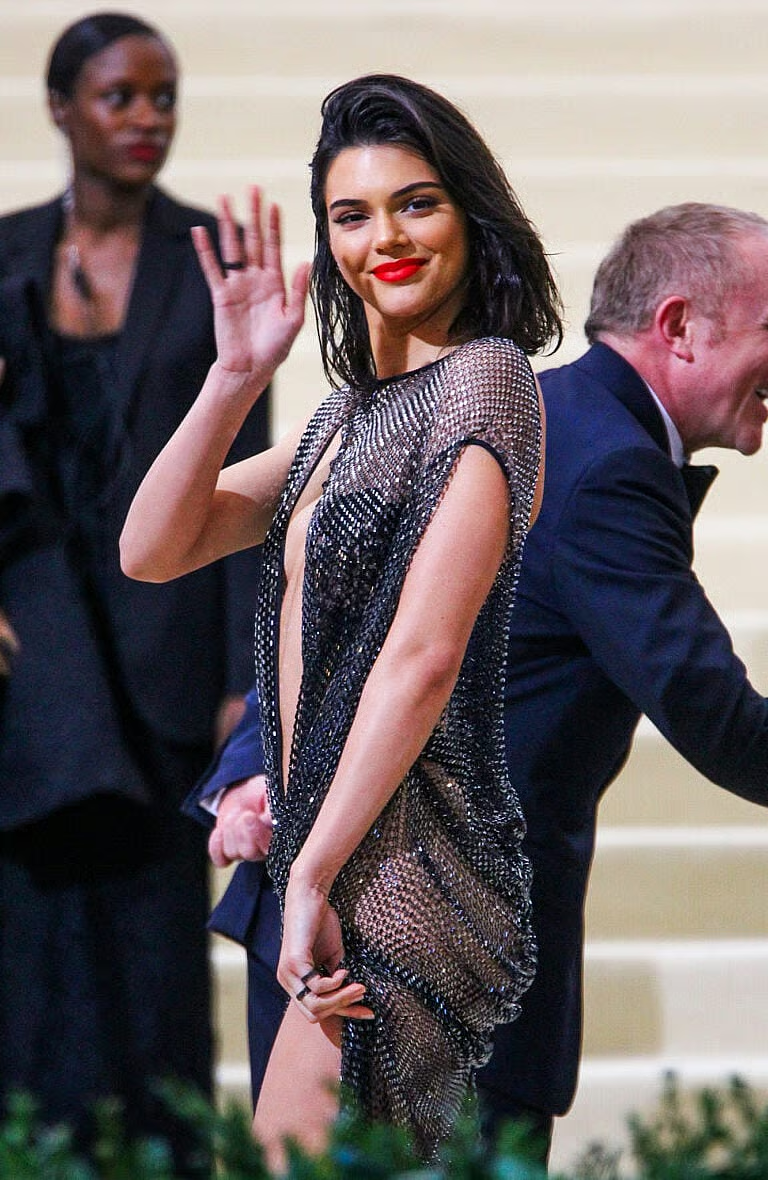
Kendall Jenner’s Circle Concerned About Jacob Elordi Romance
You must be logged in to post a comment Login