
Business
Oil ends week higher on renewed US-Iran strikes, diesel hits record


Brent crude futures settled at $92.68 a barrel, up 76 cents, or 0.8%. West Texas Intermediate crude futures finished at $91.48 a barrel, up 18 cents, or 0.20%.
For the week, Brent crude rose 7.6% while U.S. crude gained nearly 10% as supply routes in the Middle East remain impaired due to the war.
The rally in oil prices combined with a much steeper increase in fuel prices has pushed inflation and government borrowing costs higher around the world and intensified fears that global economic growth might pull back without some relief.
“All sectors of the economy are affected by diesel. This is one of the reasons why the government bond yields in the United States are so high, it’s the expectation that inflation will continue to go up,” said Claudio Galimberti, chief economist at Rystad Energy.

Average U.S. diesel prices hit record highs as renewed U.S.-Iran hostilities and Ukrainian attacks on Russian refineries increased supply disruptions. A gallon of diesel now costs $5.85 on average in the U.S., according to AAA data.
The price of diesel could rise even further due to the sharp drawdown in inventories and as agricultural states in various parts of the country head into harvesting and planting seasons. Diesel is a primary fuel for ag equipment. Its equivalent futures contract, heating oil, has also surged as winter approaches.Citi raised its average Brent crude price forecast for the third quarter to $86 a barrel from $80, saying the reopening of the Strait of Hormuz was taking longer than previously expected.
ANZ analysts raised their short-term Brent crude forecast to $95 a barrel, with upside risk if the Middle East conflict intensifies.
The U.S. economy added 162,000 jobs in August, allaying fears of weakness in the labor market, but bolstering the case for the U.S. Federal Reserve to raise rates later in September.
“The strong employment figures points to an interest rate hike by the Federal Reserve and that was weighing on WTI,” said John Kilduff, partner with Again Capital.
TANKER FLOWS REMAIN IMPAIRED
The U.S. government has said Middle Eastern oil flows have returned to near normal levels in recent weeks, but analysts and tanker trackers indicate that flows remain seriously disrupted.
Four commodity vessels transited the Strait of Hormuz on Thursday, well below the 10-day average tally of about 15, preliminary shipping data showed.
“Oil seems to be in a phase where the conflict’s gridlock and recurring hostilities are regularly awakening a risk premium embedded in prices,” said Norbert Rucker, head of economics and next generation research at Julius Baer.
“So far, there is no indication that this week’s escalation materially impacted exports out of the Middle East and tightened the oil market,” Rucker said. “Oil’s current rally seems mostly mood and fear driven.”
U.S. attacks this week that killed and wounded dozens, including Iranian civilians, were the fiercest clashes between the two countries since July.
The U.S. campaign to throttle Iran’s economy by blockading its oil exports and stopping sanctions evasion is growing increasingly difficult to withstand, three senior Iranian sources said.
Iraq increased its August oil exports to about 2.34 million barrels per day from about 1.35 million bpd in July, two Iraqi energy officials said on Wednesday.

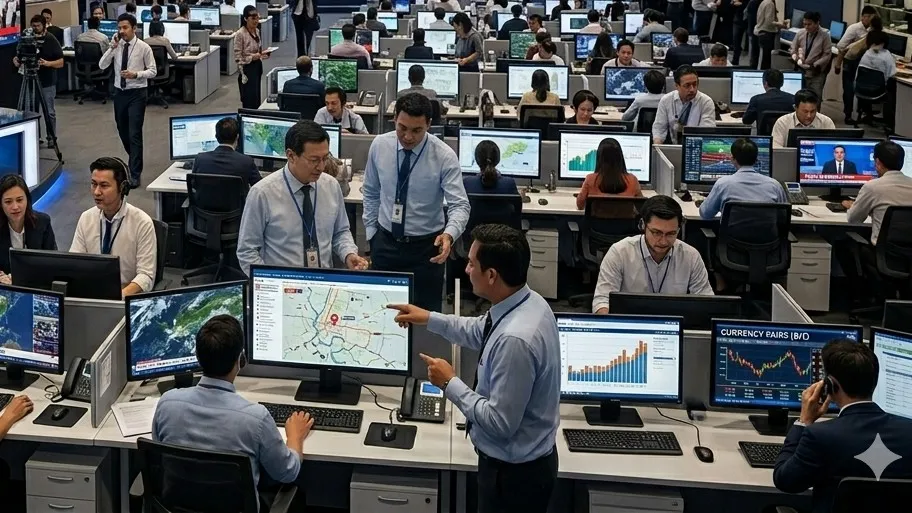
- China has significantly expanded its economic, digital, and informational presence in Thailand through infrastructure investment, media content-sharing agreements, Confucius Institutes, and state-linked technology companies. Chinese firms have built core components of Thailand’s 5G network and data infrastructure, while Beijing’s influence extends into Thai media, academia, and political circles.
- Despite deep economic entanglement, Thai public sentiment toward Chinese influence is notably skeptical. A 2026 regional survey found 90.6% of Thais expressed concern about China’s growing economic clout, the highest rate in Southeast Asia. This gap between government policy and public opinion represents a significant and growing political risk for businesses and investors operating in Thailand.
China’s global influence campaign has been particularly evident in Southeast Asia, including Thailand. Historically, the Thai public and many elites have had relatively warm views of China. However, Beijing has launched a multitude of efforts to expand its influence within Thailand’s society and politics.
Key Takeaways
- Media Environment: China has sought to influence Thailand’s media environment. Efforts include signing content-sharing deals that enable Xinhua, China’s official news agency, to be picked up by many elite Thai outlets. Additionally, state media expansion in Thailand has been part of this strategy.
- Local Business Community: Beijing has extensively cultivated the local business community in Thailand. This engagement helps support the military and monarchy.
- Confucius Institutes: China has established Confucius Institutes in Thailand, which serve as cultural and educational centers. These institutes promote Chinese language and culture but are also part of China’s broader soft power efforts.
- Lese Majeste Laws: Many of these influence efforts indirectly support the Thai military and monarchy. As a result, they help maintain the draconian lese majeste laws (Article 112) in place in Thailand.
- Social Media Influence: Social media plays a crucial role in extending China’s influence. It serves as a tool to obscure and amplify propaganda, monitor dissidents, censor information, and shape global public opinion. In 2022, approximately 52 million Thai citizens (72.8% of the population) were active on social media.
China’s effort to shape perceptions, build dependencies, and extend its reach across foreign societies is one of the defining strategic undertakings of the 21st century. In Southeast Asia, that campaign is executed with particular persistence. And in Thailand — a country whose government has welcomed Chinese investment, whose infrastructure is increasingly built on Chinese technology, and whose history is largely free of colonial-era grievance toward Beijing — the effects are both deep and, in some dimensions, quietly contested.
Understanding those effects is not merely an academic exercise. For businesses, investors, and policymakers operating in Thailand, the layers of Chinese influence — economic, digital, informational, and cultural — constitute a material operating environment that shapes market dynamics, regulatory decisions, and geopolitical risk in ways that are not always visible in headline trade figures.
The Economic Footprint: Dependency by Design
The most visible layer of Chinese influence in Thailand is economic, and its scale is significant. Chinese buyers account for 10.8% of condominium ownership in Thailand, and Chinese investment continues to flow across manufacturing, logistics, real estate, and digital infrastructure. Nearly 4.5 million Chinese tourists visited Thailand in 2025, making China one of the top three source markets for inbound tourism.
Huawei built much of the 5G network backbone across Thailand’s Eastern Economic Corridor. Alibaba Cloud operates extensive data centre infrastructure across the Bangkok metropolitan area. ByteDance received BOI approval for a USD 25 billion data infrastructure investment in 2026 — one of the largest single digital investments in Thai history — spanning server installation and data processing across Bangkok, Samut Prakan, and Chachoengsao. That followed a 127-billion-baht data-hosting project approved in 2025.
Combined, these investments represent a Chinese-built digital operating environment that underlies Thailand’s fastest-growing economic sectors: e-commerce, cloud technology, digital payments, and AI-driven logistics.
This is not accidental. China’s Digital Silk Road, an essential component of the Belt and Road Initiative, seeks to position China as the digital architect of the Asia-Pacific region. Concerns about national security, sovereignty, and geopolitical influence are growing alongside the expansion of 5G networks, undersea cables, and data centres throughout Southeast Asia.
Southeast Asian countries face a structural tension: they are increasingly adopting Chinese software while remaining more reluctant to adopt Chinese-made hardware. Ultimately, these countries must choose between cost and risk — and China’s digital push also creates an opportunity for Beijing to spread its own model of cyber governance, which runs counter to principles of free and accountable governance.
The Information Environment: Narratives and Media Penetration
Beyond infrastructure, China has invested heavily in shaping the information environment in Thailand. Beijing has signed content-sharing deals enabling Xinhua to be syndicated across many elite Thai outlets, cultivated the local business community, deployed Confucius Institutes, and expanded Chinese state media operations in the country. Many of these efforts have aligned with the interests of Thailand’s military establishment and, by extension, have reinforced the country’s restrictive lese-majeste laws.
Chinese disinformation is now growing in Thailand, with Chinese narratives — whether fabricated content or state-sponsored propaganda — gradually seeping into Thai media, academia, and political and business circles. Researchers note that, unlike Russia’s state-directed model, China’s disinformation work is diffuse and often delegated to various departments or outsourced to private contractors, making attribution difficult.
Beijing’s influence toolkit falls broadly into five categories: straightforward propaganda, outright disinformation using fake accounts and manipulative social media tactics, censorship pressure on foreign media via Chinese diplomats, infrastructure controlled by companies with ties to the Communist Party, and Confucius Institutes that reinforce cultural appeal and access to study-abroad opportunities.
Student-led initiatives promoting democratic values in Thailand have faced pressure from Chinese business interests to cease activities. Partnerships between Thai media outlets and Chinese state-run media raise impartiality questions, particularly around sensitive topics such as the Hong Kong protests and human rights abuses in Xinjiang.
The Education and Cultural Layer
The number of Chinese students enrolled in Thai universities grew by 455% between 2013 and 2023 — a demographic shift that reshapes campus dynamics, institutional funding priorities, and the kinds of academic discussions that feel professionally safe.
As of 2022, there were over 400 Confucius Institutes and classrooms overseas that promote Chinese language and culture, with Europe and Asia holding the largest concentrations. China has used these in tandem with study-abroad opportunities and scholarship programs to build long-term networks of influence among future professionals, researchers, and decision-makers.
The Public Opinion Paradox
Perhaps the most analytically important finding in China’s influence story in Thailand is the gap between the depth of economic entanglement and the breadth of public unease.
Thailand takes the crown as the wariest country in Southeast Asia of China’s growing economic clout, with a 90.6% rate of apprehension in the ISEAS State of Southeast Asia 2026 Survey. While every other regional state records a double-digit approval figure for China’s increasing economic influence, only 9.4% of Thais welcome it. On China’s growing political and strategic influence, Thailand ranks as the second most worried in the region, behind only Vietnam.
Thai concern over China’s militarisation and assertive actions in the South China Sea jumped from 28.1% in 2025 to 40.4% in 2026 — a striking shift in a single year.
The 90.6% concern figure is not an outlier. It reflects consistent polling trends showing public unease about Chinese economic dominance, Chinese land ownership, Chinese labour practices at Chinese-owned facilities, and the displacement of Thai manufacturers by Chinese competitors. This sentiment has already produced concrete policy responses: proposed VAT on low-priced Chinese goods, stricter enforcement of foreign business ownership rules, and parliamentary scrutiny of Chinese-funded infrastructure projects.
The gap between Thailand’s government posture toward China and Thai public opinion about Chinese influence is one of the most significant political risks in the country’s business environment. Thailand is deeply economically integrated with a partner it does not entirely trust, dependent on relationships it cannot afford to lose, and acutely aware of the risks that come with both.
The Strategic Calculus: A Country at a Crossroads
The ISEAS 2026 Survey describes a Southeast Asia that is increasingly cautious and determined to preserve room for manoeuvre in a contested strategic landscape — neither fully aligning with Beijing nor dismissing the economic realities of its presence. Thailand sits at the sharper end of that dynamic.
The Thai government has navigated this terrain through studied ambiguity: accepting Chinese investment and infrastructure while maintaining formal treaty alliance status with the United States, welcoming Chinese tourists and students while facing growing domestic pressure to regulate Chinese economic practices. That balancing act has served Bangkok’s interests for years. Whether it remains sustainable — as digital dependencies deepen, public opinion hardens, and the US-China rivalry intensifies — is the central strategic question Thailand will face through the remainder of this decade.
For the business community, the implications are practical. Supply chain decisions, data infrastructure choices, and market entry strategies in Thailand increasingly carry a geopolitical dimension that was absent a decade ago. Understanding the full architecture of Chinese influence — its economic depth, its informational reach, its cultural investment, and the Thai public’s profound ambivalence about all of it — is no longer optional background knowledge. It is operational due diligence.
Sources: ISEAS-Yusof Ishak Institute State of Southeast Asia 2026 Survey; Council on Foreign Relations; Friedrich Naumann Foundation; Radio Free Asia; CSIS; The Diplomat; Thailand Business News
Business
Just One Drink A Day Doubles Alcohol’s Share Of Cancer Deaths Over 33 Years, Study Finds Doctors Say

Alcohol may play a considerably larger role in cancer deaths across the United States than previously understood, according to a new study finding that even a single standard drink per day contributes meaningfully to alcohol-related cancer risk.
Researchers found that while overall cancer mortality in the United States has declined in recent decades, the proportion of cancer deaths attributable to alcohol has changed dramatically over time. Dr. Chinmay Jani, the study’s first author and chief clinical fellow in hematology and oncology at the Sylvester Comprehensive Cancer Center of the University of Miami, said the shift was striking even amid broader improvements in cancer survival.
“While it’s true that overall cancer mortality has declined, we found the percentage of cancer deaths proportionally attributable to alcohol doubled in people 20 and older over the last 33 years,” Jani said.
The study drew on data from the Global Burden of Disease study, a large-scale international research effort that measures health outcomes, mortality and disability tied to hundreds of risk factors, diseases and conditions across more than 200 countries and territories. Using that dataset, researchers found that the increased risk of cancer death tied to alcohol consumption applied broadly across multiple cancer types, including breast, prostate, colon, rectum, stomach, pancreatic and liver cancers, as well as cancers affecting the head and neck.
Jani noted that alcohol’s connection to liver cancer mortality specifically has long been well established within the medical community.
“Overall, we know alcohol is closely related to liver cancer mortality,” Jani said.
The research also identified a particularly strong association between alcohol consumption and cancers of the head and neck, a category that includes malignant tumors of the lip, oral cavity, pharynx, larynx and esophagus. According to the study, alcohol serves as a risk factor in up to one-fourth of all head and neck cancers, a proportion Jani emphasized carries direct implications for prevention efforts.
“Which obviously could be prevented,” Jani said of the substantial share of head and neck cancers tied to alcohol use.
Despite the scale of the association the study identified, Jani was careful to note that the research did not establish that complete abstinence from alcohol is necessary to meaningfully reduce cancer risk, instead emphasizing a more incremental message about moderation.
“While our study does not have the data to show you should completely stop drinking alcohol, the message we want to deliver is that lowering your alcohol use to the lowest possible level will be best for your health,” Jani said.
A co-author of the study, whose comments were included in reporting on the research, framed the findings within a broader context of accumulating scientific evidence pointing toward alcohol-related cancer risk.
“This study in concert with several others suggests that the risks associated with consumption need much wider recognition,” the co-author said.
The findings drew a direct response from the alcohol industry. The Distilled Spirits Council of the United States, a trade group representing distillers, pushed back against broader claims sometimes associated with alcohol research suggesting there is no safe level of alcohol consumption whatsoever, telling CNN in an emailed statement that such a claim “is not supported by this study.”
Amanda Berger, senior vice president of science and research for the Distilled Spirits Council, offered a more detailed critique of how the study’s findings have been characterized in public discussion.
“It misrepresents the body of scientific evidence and the complex relationship between alcohol and health,” Berger said.
Medical researchers have identified several biological mechanisms through which alcohol is understood to contribute to cancer development, according to the National Cancer Institute. Alcohol consumption alters levels of certain hormones, including estrogen, which researchers cite as a key factor underlying the established link between drinking and breast cancer risk specifically.
Beyond hormonal effects, alcohol also contributes to oxidative stress within the body, a process that damages DNA, proteins and overall cell function while promoting inflammation, according to the National Cancer Institute. Alcohol consumption additionally weakens cells within the mouth and throat, making those tissues more vulnerable to damage from carcinogens, an effect researchers note becomes considerably more pronounced among individuals who also smoke cigarettes, given that smoking introduces additional carcinogenic compounds, including acetaldehyde, into the same tissues.
Alcohol consumption has also been found to interfere with the body’s ability to properly break down and absorb several key nutrients believed to help lower cancer risk, including vitamins A, C, D and E, along with folates within the vitamin B complex, according to the National Cancer Institute.
The study’s findings add to a growing body of research over the past several years reexamining long-held assumptions about moderate alcohol consumption and health, following decades during which some earlier research had suggested potential cardiovascular benefits associated with light-to-moderate drinking. More recent research, including this latest study, has increasingly emphasized cancer risk as a significant and underrecognized consequence of alcohol consumption, even at levels many people might not consider excessive.
Public health researchers have noted that raising broader public awareness of alcohol’s role in cancer risk remains an ongoing challenge, given how deeply embedded moderate alcohol consumption is within many social and cultural practices in the United States and other countries. Unlike tobacco, which has undergone decades of sustained public health messaging specifically linking its use to cancer risk, alcohol’s connection to cancer has received comparatively less sustained public attention despite a substantial and growing body of supporting research.
For individuals concerned about their own personal cancer risk related to alcohol consumption, medical experts generally recommend discussing personal drinking habits directly with a health care provider, particularly for those with additional risk factors such as a family history of alcohol-related cancers, tobacco use, or preexisting liver conditions, given that individual risk can vary considerably based on a range of personal health factors beyond alcohol consumption alone.

U.S. IPO Weekly Recap: SB Energy And Oura Headline A Pickup In Filings

Iran’s oil blockade leverage weakens as U.S. keeps Gulf crude flowing

Alistair Berg/DigitalVision via Getty Images

By Detlef Glow
At the end of last week, the chair of the Financial Stability Board (FSB), Andrew Bailey, sent a letter to the finance ministers of the G20 countries, as well as to central banks in which he

With combined experience of covering technology companies on Wall Street and working in Silicon Valley, and serving as an outside adviser to several seed-round startups, Gary Alexander has exposure to many of the themes shaping the industry today. He has been a regular contributor on Seeking Alpha since 2017. He has been quoted in many web publications and his articles are syndicated to company pages in popular trading apps like Robinhood.
Analyst’s Disclosure: I/we have no stock, option or similar derivative position in any of the companies mentioned, and no plans to initiate any such positions within the next 72 hours. I wrote this article myself, and it expresses my own opinions. I am not receiving compensation for it (other than from Seeking Alpha). I have no business relationship with any company whose stock is mentioned in this article.
Seeking Alpha’s Disclosure: Past performance is no guarantee of future results. No recommendation or advice is being given as to whether any investment is suitable for a particular investor. Any views or opinions expressed above may not reflect those of Seeking Alpha as a whole. Seeking Alpha is not a licensed securities dealer, broker or US investment adviser or investment bank. Our analysts are third party authors that include both professional investors and individual investors who may not be licensed or certified by any institute or regulatory body.

Xos director Dietmar Ostermann sells $45,220 in company stock

Hong Kong targets bigger offshore yuan role, mainland links, in first 5-year plan

Spot gold slipped 1.1% to $4,422.91 per ounce by 10:50 a.m. EDT (1447 GMT), putting it on track for a mild weekly decline. After the data, bullion fell more than 2% to an intraday low of $4,364.99 per ounce.
U.S. gold futures for December delivery dropped 1.5% to $4,469.80 per ounce.
U.S. job growth accelerated sharply in August while the unemployment rate held steady at 4.1%, pointing to a still stable labor market and keeping an interest rate hike from the Federal Reserve this month on the table.
“Gold stumbles badly as a huge headline print, and an overall strong report, makes a September rate hike much more likely unless we get a weak CPI report,” independent analyst Tai Wong said.
Short-term interest rate futures prices now imply about a 65% chance of an increase in the U.S. policy rate at the Fed’s September 15 to 16 meeting, up from about 55% before the Bureau of Labor Statistics report.
The focus now shifts to next week’s U.S. consumer and producer price inflation data, which could provide further clues on the Federal Reserve’s policy path.”This latest jobs report follows Chair Warsh’s hawkish speech at Jackson Hole and appears to have cracked the door even wider for the Fed to follow through with its hiking bias, perhaps as soon as this month,” said Han Tan, chief market analyst at Bybit.
“With the price stability mandate at the forefront of policymakers’ minds, next week’s U.S. CPI prints may yet trigger bigger moves for the precious metal,” added Han.
Meanwhile, the U.S. dollar jumped after the report, making greenback-denominated gold more expensive for holders of other currencies. [USD/]
Among other metals, spot silver fell 1.7% to $65.79 per ounce, platinum slipped 0.8% to $1,811.83 per ounce, and palladium dropped 1.6% to $1,397.75. All three metals were headed for a weekly decline.
Business
TScan Therapeutics, Inc. (TCRX) Discusses Strategic Refocus on In Vivo Cell Therapy for Solid Tumors and Pausing of Phase III Heme Study – Slideshow

TScan Therapeutics, Inc. (TCRX) Discusses Strategic Refocus on In Vivo Cell Therapy for Solid Tumors and Pausing of Phase III Heme Study – Slideshow

China’s Expanding Influence in Thailand: Economy, Data, and Public Trust

Wallace & Gromit Creator Reveals Dog Character Was Originally A Cat

Alex Dunne Claims Third on Monza Formula 2 Grid





-
 Crypto World16 hours ago
Bitcoin price stalls near $82K as key resistance holds
-

 Politics16 hours ago
Best Gaming Laptops, CPUs, TVs, And Keyboards To Upgrade Your Set Up For GTA VI
-

 Tech17 hours ago
The Birds Outside, Drawn For You Automatically
-

 Crypto World20 hours ago
IMF Says El Salvador’s Post-Review Bitcoin Purchases Used No Public Funds
-
 Crypto World16 hours ago
U.S. added stronger than expected 162,000 jobs in August as labor market bounced back
-

 Sports20 hours ago
Alexandre Pato consortium’s Northampton Town investment approved
-

 Sports15 hours ago
Golden Eaglets Drawn in Group B for 2026 WAFU B U17 Championship
-

 Sports21 hours ago
Commanders’ Chig Okonkwo is a top breakout fantasy football candidate
-
 Crypto World15 hours ago
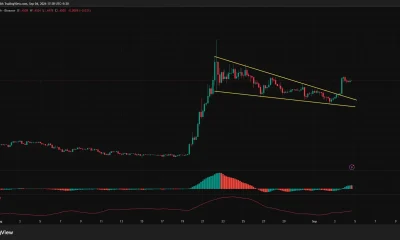
XRP price breaks falling channel as bulls target $1.53
-

 Politics22 hours ago
A new European chapter for Gibraltar
-
 Politics18 hours ago
The House | Bin the lectures, bring gossip and be ready to banter: how the new PM should prepare for his Trump encounter
-

 Politics15 hours ago
How To Avoid Winter Colds: 4 Everyday Habits That Spread Germs, Says Pharmacist
-

 Crypto World15 hours ago
From warning to listing: UK’s largest retail investment platform opens access to crypto ETNs
-

 Tech17 hours ago
A Worthy Android Ereader, With Some Tradeoffs
-

 Crypto World16 hours ago
FinCEN flags $12.7B tied to Southeast Asia crypto investment scams
-

 Crypto World15 hours ago
Trezor Data Breach Impacts 67,000 More US Customers
-

 Politics20 hours ago
33 Cosy Autumn Home Decor Ideas: Blankets, Pumpkin Decorations, And Candles
-

 Sports21 hours ago
Seven wickets in 21 balls: Sri Lanka’s Chamari Athapaththu scripts history with record-breaking spell
-

 Tech16 hours ago
How To Edit Claude’s Memory
-

 Tech15 hours ago
beyerdynamic AVENTHO Y Debuts at IFA 2026 and Makes Wireless Headphones Less Disposable
You must be logged in to post a comment Login